

Linking Light Exposure and Subsequent Sleep: A Field Polysomnography Study in Humans
Open accessThe DOI matches its Crossref record; 74 of the 78 references it cites were found in a registry or an index.
Abstract
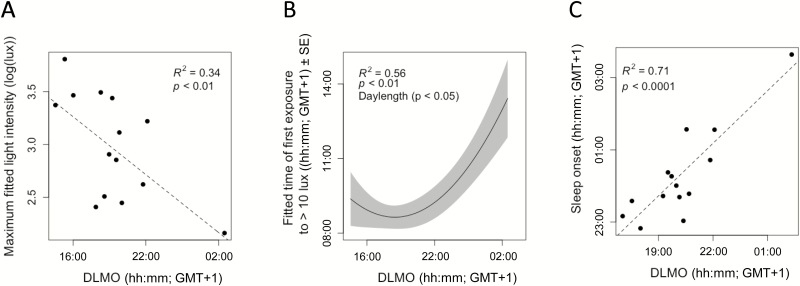
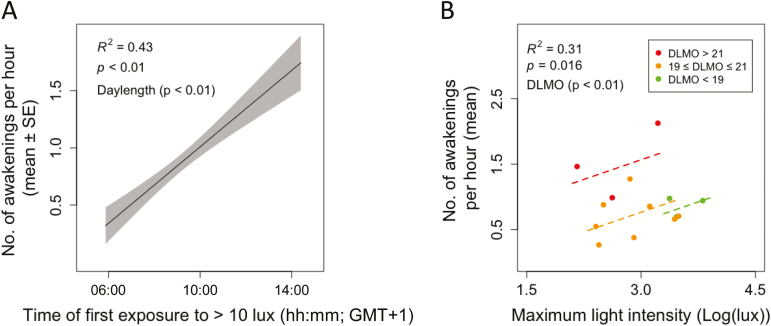
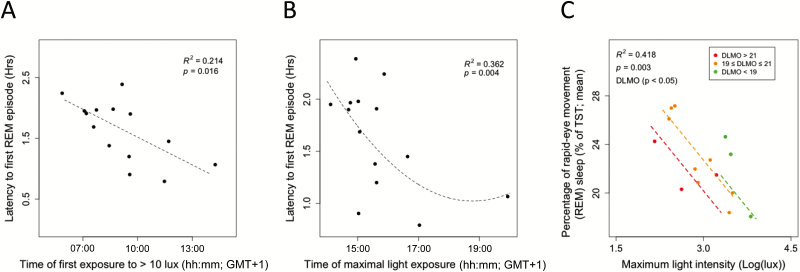
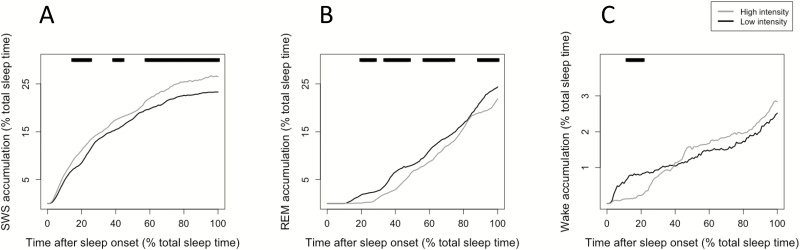
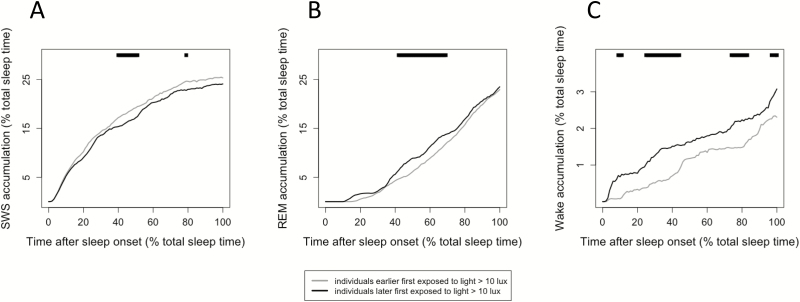
Study objectives: To determine the effect of light exposure on subsequent sleep characteristics under ambulatory field conditions. Methods: Twenty healthy participants were fitted with ambulatory polysomnography (PSG) and wrist-actigraphs to assess light exposure, rest-activity, sleep quality, timing, and architecture. Laboratory salivary dim-light melatonin onset was analyzed to determine endogenous circadian phase. Results: Later circadian clock phase was associated with lower intensity (R2 = 0.34, χ2(1) = 7.19, p < .01), later light exposure (quadratic, controlling for daylength, R2 = 0.47, χ2(3) = 32.38, p < .0001), and to later sleep timing (R2 = 0.71, χ2(1) = 20.39, p < .0001). Those with later first exposure to more than 10 lux of light had more awakenings during subsequent sleep (controlled for daylength, R2 = 0.36, χ2(2) = 8.66, p < .05). Those with later light exposure subsequently had a shorter latency to first rapid eye movement (REM) sleep episode (R2 = 0.21, χ2(1) = 5.77, p < .05). Those with less light exposure subsequently had a higher percentage of REM sleep (R2 = 0.43, χ2(2) = 13.90, p < .001) in a clock phase modulated manner. Slow-wave sleep accumulation was observed to be larger after preceding exposure to high maximal intensity and early first light exposure (p < .05). Conclusions: The quality and architecture of sleep is associated with preceding light exposure. We propose that light exposure timing and intensity do not only modulate circadian-driven aspects of sleep but also homeostatic sleep pressure. These novel ambulatory PSG findings are the first to highlight the direct relationship between light and subsequent sleep, combining knowledge of homeostatic and circadian regulation of sleep by light. Upon confirmation by interventional studies, this hypothesis could change current understanding of sleep regulation and its relationship to prior light exposure. Clinical trial details: This study was not a clinical trial. The study was ethically approved and nationally registered (NL48468.042.14).
Overview
The claims and statistics of this paper haven’t been checked yet.
Free: it reads the open-access text and checks the first 5 claims that cite a source we can check. Create a free account to check every claim.
Integrity signals
Registry
Cites
Statistics
Figures
Verification
Claims the paper makes
The claims and statistics of this paper haven’t been checked yet.
Free: it reads the open-access text and checks the first 5 claims that cite a source we can check. Create a free account to check every claim.
Claims other papers make about this one
Each is checked against this paper’s own text: does it say what the citing paper says it does?
The source backs part of the claim, not all of it — or backs it for a different population, condition or comparison.
In the citing paper
“Several studies report that daytime exposure to white light enriched in short-wavelength content was associated with increased evening fatigue [91], and sleep quality [16, 39, 91], decreased sleep-onset latency [39], and increased slow-wave sleep accumulation [92], which is related to the dissipation of the homeostatic sleep pressure [1, 14, 34].”
From Effects of light on human circadian rhythms, sleep and mood (2019) · cites this paper as [92]
Experimental — accuracy not yet measuredThe cited source says what the claim attributes to it.
In the citing paper
“In this context, Wams and colleagues [92] report that participants with later exposure to light >10 lx had more nocturnal awakenings and less slow-wave sleep.”
From Effects of light on human circadian rhythms, sleep and mood (2019) · cites this paper as [92]
Self-check
Percentages, sums and reported differences re-computed from the paper’s own numbers.
The self-check needs the paper’s full text.
Citations
Cites
Fitting Linear Mixed-Effects Models Using lme4
Bates, D., Mächler, M., Bolker, B., & Walker, S. (2015) · Journal of Statistical Software · doi:10.18637/jss.v067.i01 · Cited by 86,835
The Pittsburgh Sleep Quality Index: a new instrument for psychiatric practice and research
Buysse, D. J., Reynolds, C. F., Monk, T. H., Berman, S. R., & Kupfer, D. J. (1989) · Psychiatry Research · doi:10.1016/0165-1781(89)90047-4 · Cited by 35,234
Simultaneous Inference in General Parametric Models
Hothorn, T., Bretz, F., & Westfall, P. (2008) · Biometrical Journal · doi:10.1002/bimj.200810425 · Cited by 13,847 · cited 1×
“The resulting p-values were corrected for multiplicity using the single-step method.(61) Throughout the results section, all results are written as +quadratic term if the quadratic of the independent variable (either light parameter or DLMO) significantly contributed to the model; +daylength if daylength significantly…”
MethodPhototransduction by retinal ganglion cells that set the circadian clock
Berson, D. M., Dunn, F. A., & Takao, M. (2002) · Science · doi:10.1126/science.1067262 · Cited by 3,629 · cited 1×
“In mammals, light information is projected to the circadian pacemaker or synchronizer (located in the hypothalamic suprachiasmatic nucleus, SCN(1)) via intrinsically photosensitive retinal ganglion cells (ipRGCs).(2) Light entrainment is modulated, not only by the duration of light exposure, but also by its intensity…”
BackgroundLife between Clocks: Daily Temporal Patterns of Human Chronotypes
Roenneberg, T., Wirz-Justice, A., & Merrow, M. (2003) · Journal of Biological Rhythms · doi:10.1177/0748730402239679 · Cited by 2,662
Fitting Linear Mixed-Effects Models Using lme4
Bates, D. M., Maechler, M., Bolker, B. M., & Walker, S. (2014) · arXiv (Cornell University) · doi:10.3929/ethz-b-000105397 · Cited by 2,541
A psychometric evaluation of the Beck Depression Inventory–II.
Dozois, D. J. A., Dobson, K. S., & Ahnberg, J. L. (1998) · Psychological Assessment · doi:10.1037/1040-3590.10.2.83 · Cited by 1,517
Exogenous and Endogenous Components in Circadian Rhythms
Aschoff, J. (1960) · Cold Spring Harbor Symposia on Quantitative Biology · doi:10.1101/sqb.1960.025.01.004 · Cited by 1,479 · cited 1×
“Moreover, according to Aschoff’s rule, diurnal animals will lengthen intrinsic period with lower light intensity.(69,70) Although we only found that lower maximal light intensities were associated with subsequent longer rest durations, studies with high intensity light interventions have previously focused on the timi…”
BackgroundChang, A.-M., Aeschbach, D., Duffy, J. F., & Czeisler, C. A. (2015) · Proceedings of the National Academy of Sciences · doi:10.1073/pnas.1418490112 · Cited by 1,430
Timing of human sleep: recovery process gated by a circadian pacemaker
Daan, S., Beersma, D. G., & Borbely, A. A. (1984) · American Journal of Physiology-Regulatory, Integrative and Comparative Physiology · doi:10.1152/ajpregu.1984.246.2.r161 · Cited by 1,419 · cited 1×
“These relationships are most probably due to the influence of light on the entrainment of the circadian clock, which drives process C in sleep regulation, which in turn will shift the timing of sleep.(6,7) Because humans have on average an intrinsic circadian period longer than 24 hours (24.”
BackgroundSelf-citationDijk, D., & Czeisler, C. (1995) · The Journal of Neuroscience · doi:10.1523/jneurosci.15-05-03526.1995 · Cited by 1,356 · cited 1×
“DLMO was added to our models to assess the impact of clock phase and explain the variance in sleep architecture dependent on the circadian clock to allow for a better analysis of the effect of previous light on subsequent sleep.(62) We found that later endogenous clock timing was related to later timing and lower leve…”
MethodThapan, K., Arendt, J., & Skene, D. J. (2001) · The Journal of Physiology · doi:10.1111/j.1469-7793.2001.t01-1-00261.x · Cited by 1,320
The visual scoring of sleep in adults
Silber, M. H., Ancoli-Israel, S., Bonnet, M. H., Chokroverty, S., Grigg-Damberger, M. M., Hirshkowitz, M., Kapen, S., Keenan, S. A., Kryger, M. H., Penzel, T., et al. (2007) · Journal of Clinical Sleep Medicine · doi:10.5664/jcsm.26814 · Cited by 1,064
A Phase Response Curve to Single Bright Light Pulses in Human Subjects
Khalsa, S. B. S., Jewett, M. E., Cajochen, C., & Czeisler, C. A. (2003) · The Journal of Physiology · doi:10.1113/jphysiol.2003.040477 · Cited by 1,040 · cited 2×
“Later exposure to light has been observed experimentally to result in a later clock phase.(3,10,39) This finding confirms light interventions in the field(12,14,15) and the finding that manipulated reduction of blue light in the morning was associated with later clock phases.”
BackgroundCentral projections of melanopsin‐expressing retinal ganglion cells in the mouse
Hattar, S., Kumar, M., Park, A., Tong, P., Tung, J., Yau, K., & Berson, D. M. (2006) · Journal of Comparative Neurology · doi:10.1002/cne.20970 · Cited by 996
Extension of Nakagawa & Schielzeth's R2GLMM to random slopes models
Johnson, P. C. D. (2014) · Methods in Ecology and Evolution · doi:10.1111/2041-210x.12225 · Cited by 948
Entrainment of the Human Circadian Clock to the Natural Light-Dark Cycle
Wright, K. P., McHill, A. W., Birks, B. R., Griffin, B. R., Rusterholz, T., & Chinoy, E. D. (2013) · Current Biology · doi:10.1016/j.cub.2013.06.039 · Cited by 783 · cited 1×
“Earlier light timing also resulted in earlier sleep phase,(15) and repeated bright daytime light exposure has been observed to lead to earlier sleep phase in Alzheimer’s disease patients in real-life settings.(31) Consistent with this, later and lower intensity light exposure has also been linked to later sleep phases…”
BackgroundDaan, S., & Pittendrigh, C. S. (1976) · Journal of Comparative Physiology ? A · doi:10.1007/bf01417857 · Cited by 672
Sex difference in the near-24-hour intrinsic period of the human circadian timing system
Duffy, J. F., Cain, S. W., Chang, A.-M., Phillips, A. J. K., Münch, M. Y., Gronfier, C., Wyatt, J. K., Dijk, D.-J., Wright, K. P., & Czeisler, C. A. (2011) · Proceedings of the National Academy of Sciences · doi:10.1073/pnas.1010666108 · Cited by 607
Intrinsically photosensitive retinal ganglion cells: many subtypes, diverse functions
Schmidt, T. M., Chen, S.-K., & Hattar, S. (2011) · Trends in Neurosciences · doi:10.1016/j.tins.2011.07.001 · Cited by 558 · cited 1×
“Additionally, light can influence sleep timing, duration, structure, and quality.(5) These sleep characteristicsand the intensity of sleep(9) are controlled by the circadian drive for wakefulness and the accumulation of homeostatic sleep pressure during preceding wakefulness.”
BackgroundZavada, A., Gordijn, M. C. M., Beersma, D. G. M., Daan, S., & Roenneberg, T. (2005) · Chronobiology International · doi:10.1081/cbi-200053536 · Cited by 527
Self-citationDijk, D., Duffy, J. F., Riel, E., Shanahan, T. L., & Czeisler, C. A. (1999) · The Journal of Physiology · doi:10.1111/j.1469-7793.1999.0611v.x · Cited by 465
Gooley, J. J., Rajaratnam, S. M. W., Brainard, G. C., Kronauer, R. E., Czeisler, C. A., & Lockley, S. W. (2010) · Science Translational Medicine · doi:10.1126/scitranslmed.3000741 · Cited by 447 · cited 1×
“Light entrainment is modulated, not only by the duration of light exposure, but also by its intensity and spectral composition.(3,4) Additionally, light can influence sleep timing, duration, structure, and quality.”
BackgroundIndirect bright light improves circadian rest-activity rhythm disturbances in demented patients
Van Someren, E. J. W., Kessler, A., Mirmiran, M., & Swaab, D. F. (1997) · Biological Psychiatry · doi:10.1016/s0006-3223(97)89928-3 · Cited by 440
Boubekri, M., Cheung, I. N., Reid, K. J., Wang, C.-H., & Zee, P. C. (2014) · Journal of Clinical Sleep Medicine · doi:10.5664/jcsm.3780 · Cited by 418
Natural Sleep and Its Seasonal Variations in Three Pre-industrial Societies
Yetish, G., Kaplan, H., Gurven, M., Wood, B., Pontzer, H., Manger, P. R., Wilson, C., McGregor, R., & Siegel, J. M. (2015) · Current Biology · doi:10.1016/j.cub.2015.09.046 · Cited by 395
Dijk, D. J., Beersma, D. G. M., & Daan, S. (1987) · Journal of Biological Rhythms · doi:10.1177/074873048700200304 · Cited by 368
Self-citationAncoli-Israel, S., Gehrman, P., Martin, J. L., Shochat, T., Marler, M., Corey-Bloom, J., & Levi, L. (2003) · Behavioral Sleep Medicine · doi:10.1207/s15402010bsm0101_4 · Cited by 347 · cited 1×
“Increased daytime light exposure through additional lighting in Alzheimer care homes has confirmed laboratory study findings that bright light during the day results in a reduction of sleep disturbances(42) and an increase in sleep consolidation.(43) These sleep parameters are key experimental targets for improving he…”
BackgroundCarroll, B. T., Kathol, R. G., Noyes, R., Wald, T. G., & Clamon, G. H. (1993) · General Hospital Psychiatry · doi:10.1016/0163-8343(93)90099-a · Cited by 331
Oster, H., Damerow, S., Hut, R. A., & Eichele, G. (2006) · Journal of Biological Rhythms · doi:10.1177/0748730406293053 · Cited by 233
Self-citationGooley, J. J., Ho Mien, I., St. Hilaire, M. A., Yeo, S.-C., Chua, E. C.-P., van Reen, E., Hanley, C. J., Hull, J. T., Czeisler, C. A., & Lockley, S. W. (2012) · The Journal of Neuroscience · doi:10.1523/jneurosci.1321-12.2012 · Cited by 229 · cited 1×
“This probably results in lower light exposure,(27,33) and probably a reduction in exposure to approximately 460–490 nm photons, which are important for entraining the circadian system.(63) In both our dataset and in previous studies, later sleep timing has been shown to be related later clock phase(54,55) and later pr…”
BackgroundSanthi, N., Thorne, H. C., van der Veen, D. R., Johnsen, S., Mills, S. L., Hommes, V., Schlangen, L. J. M., Archer, S. N., & Dijk, D. (2012) · Journal of Pineal Research · doi:10.1111/j.1600-079x.2011.00970.x · Cited by 219
Hut, R. A., Kronfeld-Schor, N., van der Vinne, V., & De la Iglesia, H. (2012) · Progress in Brain Research · doi:10.1016/b978-0-444-59427-3.00017-4 · Cited by 218
Self-citationMünch, M., Kobialka, S., Steiner, R., Oelhafen, P., Wirz-Justice, A., & Cajochen, C. (2006) · American Journal of Physiology-Regulatory, Integrative and Comparative Physiology · doi:10.1152/ajpregu.00478.2005 · Cited by 202
Human Activity and Rest In Situ
Roenneberg, T., Keller, L. K., Fischer, D., Matera, J. L., Vetter, C., & Winnebeck, E. C. (2015) · Methods in Enzymology · doi:10.1016/bs.mie.2014.11.028 · Cited by 175 · cited 2×
“and less time outdoors.(32) This probably results in lower light exposure,(27,33) and probably a reduction in exposure to approximately 460–490 nm photons, which are important for entraining the circadian system.”
Backgroundde la Iglesia, H. O., Fernández-Duque, E., Golombek, D. A., Lanza, N., Duffy, J. F., Czeisler, C. A., & Valeggia, C. R. (2015) · Journal of Biological Rhythms · doi:10.1177/0748730415590702 · Cited by 156
Cho, J. R., Joo, E. Y., Koo, D. L., & Hong, S. B. (2013) · Sleep Medicine · doi:10.1016/j.sleep.2013.09.007 · Cited by 151 · cited 1×
“Later light was associated with more awakenings, in line with laboratory studies observing evening light being related to more arousals.(39,73) It is unclear why late DLMO correlates with less sleep transitions (Supplementary Table S2), but the complex quadratic relationship of this correlation suggests that more data…”
ResultGolden hamsters are nocturnal in captivity but diurnal in nature
Gattermann, R., Johnston, R. E., Yigit, N., Fritzsche, P., Larimer, S., Özkurt, S., Neumann, K., Song, Z., Colak, E., Johnston, J., et al. (2008) · Biology Letters · doi:10.1098/rsbl.2008.0066 · Cited by 151
Natural light exposure of young adults
Savides, T. J., Messin, S., Senger, C., & Kripke, D. F. (1986) · Physiology & Behavior · doi:10.1016/0031-9384(86)90427-0 · Cited by 140
Relationship of Chronotype to Sleep, Light Exposure, and Work-Related Fatigue in Student Workers
Martin, J. S., Hébert, M., Ledoux, É., Gaudreault, M., & Laberge, L. (2012) · Chronobiology International · doi:10.3109/07420528.2011.653656 · Cited by 138 · cited 2×
“In both our dataset and in previous studies, later sleep timing has been shown to be related later clock phase(54,55) and later preceding light exposure.(33,34) These relationships are most probably due to the influence of light on the entrainment of the circadian clock, which drives process C in sleep regulation, whi…”
BackgroundThe Effects of Red and Blue Lights on Circadian Variations in Cortisol, Alpha Amylase, and Melatonin
Figueiro, M. G., & Rea, M. S. (2010) · International Journal of Endocrinology · doi:10.1155/2010/829351 · Cited by 138 · cited 1×
“This finding confirms light interventions in the field(12,14,15) and the finding that manipulated reduction of blue light in the morning was associated with later clock phases.(13) Spectral light composition information would help us to further elucidate this relationship.”
ResultColin Pittendrigh, Jürgen Aschoff, and the Natural Entrainment of Circadian Systems
Daan, S. (2000) · Journal of Biological Rhythms · doi:10.1177/074873040001500301 · Cited by 136
The Ishihara Test for Color Blindness.
Clark, J. (1924) · Cited by 122
Beersma, D. G. M., Daan, S., & Hut, R. A. (1999) · Journal of Biological Rhythms · doi:10.1177/074873099129000740 · Cited by 116 · cited 1×
“In addition, entrainment models would predict a bigger role for parametric entrainment in diurnal animals.(67,68) Moreover, according to Aschoff’s rule, diurnal animals will lengthen intrinsic period with lower light intensity.”
BackgroundSelf-citationDaily Light Exposure in Morning-Type and Evening-Type Individuals
Goulet, G., Mongrain, V., Desrosiers, C., Paquet, J., & Dumont, M. (2007) · Journal of Biological Rhythms · doi:10.1177/0748730406297780 · Cited by 115
Bright morning light advances the human circadian system without affecting NREM sleep homeostasis
Dijk, D. J., Beersma, D. G., Daan, S., & Lewy, A. J. (1989) · American Journal of Physiology-Regulatory, Integrative and Comparative Physiology · doi:10.1152/ajpregu.1989.256.1.r106 · Cited by 113 · cited 2×
“The influence of the circadian drive for wake promotion on sleep offset timing has been reported to result in a reduction of REM sleep, with non-REM sleep appearing unaffected.(8,25) Sleep structure appears to be related to preceding light exposure in our dataset.”
BackgroundSelf-citationLevy, O., Dayan, T., & Kronfeld‐Schor, N. (2007) · Chronobiology International · doi:10.1080/07420520701534640 · Cited by 108
Daily Light Exposure Patterns Reveal Phase and Period of the Human Circadian Clock
Woelders, T., Beersma, D. G. M., Gordijn, M. C. M., Hut, R. A., & Wams, E. J. (2017) · Journal of Biological Rhythms · doi:10.1177/0748730417696787 · Cited by 106 · cited 5×
“We have described before that people with a late clock phase sleep early relative to DLMO.51 This may indicate that their sleep partially overlaps with the circadian drive for wakefulness, resulting in more awakenings.7 The influence of the circadian drive for wake promotion on sleep offset timing has been reported to…”
BackgroundMethodInfluentialSelf-citationNaturalistic studies of human light exposure
Okudaira, N., Kripke, D. F., & Webster, J. B. (1983) · American Journal of Physiology-Regulatory, Integrative and Comparative Physiology · doi:10.1152/ajpregu.1983.245.4.r613 · Cited by 105
Exposure to dim artificial light at night increases REM sleep and awakenings in humans
Cho, C.-H., Lee, H.-J., Yoon, H.-K., Kang, S.-G., Bok, K.-N., Jung, K.-Y., Kim, L., & Lee, E.-I. (2016) · Chronobiology International · doi:10.3109/07420528.2015.1108980 · Cited by 105
Cedernaes, J., Schiöth, H. B., & Benedict, C. (2015) · Diabetes · doi:10.2337/db14-1475 · Cited by 103
Tomotani, B. M., Flôres, D. E. F. L., Tachinardi, P., Paliza, J. D., Oda, G. A., & Valentinuzzi, V. S. (2012) · PLoS ONE · doi:10.1371/journal.pone.0037918 · Cited by 102
The Neurobiology of Circadian Timing
Hut, R. A., Kronfeld‐Schor, N., van der Vinne, V., & de la Iglesia, H. O. (2012) · Progress in brain research · Cited by 99
Self-citationObayashi, K., Saeki, K., Iwamoto, J., Ikada, Y., & Kurumatani, N. (2014) · Chronobiology International · doi:10.3109/07420528.2014.900501 · Cited by 98
Harb, F., Hidalgo, M. P., & Martau, B. (2015) · Chronobiology International · doi:10.3109/07420528.2014.982757 · Cited by 95
Reduction of human sleep duration after bright light exposure in the morning
Dijk, D., Visscher, C., Bloem, G. M., Beersma, D. G. M., & Daan, S. (1987) · Neuroscience Letters · doi:10.1016/0304-3940(87)90014-0 · Cited by 90 · cited 1×
“The influence of the circadian drive for wake promotion on sleep offset timing has been reported to result in a reduction of REM sleep, with non-REM sleep appearing unaffected.(8,25) Sleep structure appears to be related to preceding light exposure in our dataset.”
BackgroundSelf-citationEntrainment Concepts Revisited
Roenneberg, T., Hut, R., Daan, S., & Merrow, M. (2010) · Journal of Biological Rhythms · doi:10.1177/0748730410379082 · Cited by 81 · cited 1×
“In addition, entrainment models would predict a bigger role for parametric entrainment in diurnal animals.(67,68) Moreover, according to Aschoff’s rule, diurnal animals will lengthen intrinsic period with lower light intensity.”
BackgroundSelf-citationHome Lighting Before Usual Bedtime Impacts Circadian Timing: A Field Study
Burgess, H. J., & Molina, T. A. (2014) · Photochemistry and Photobiology · doi:10.1111/php.12241 · Cited by 78
Temporal dynamics of late-night photic stimulation of the human circadian timing system
Zeitzer, J. M., Khalsa, S. B. S., Boivin, D. B., Duffy, J. F., Shanahan, T. L., Kronauer, R. E., & Czeisler, C. A. (2005) · American Journal of Physiology-Regulatory, Integrative and Comparative Physiology · doi:10.1152/ajpregu.00232.2005 · Cited by 75
Corbett, R., Middleton, B., & Arendt, J. (2012) · Neuroscience Letters · doi:10.1016/j.neulet.2012.06.046 · Cited by 72
Short blue light pulses (30 min) in the morning support a sleep-advancing protocol in a home setting
Geerdink, M., Walbeek, T. J., Beersma, D. G. M., Hommes, V., & Gordijn, M. C. M. (2016) · Journal of Biological Rhythms · doi:10.1177/0748730416657462 · Cited by 63
Self-citationUnderexposure to light at work and its association to insomnia and sleepiness
Léger, D., Bayon, V., Elbaz, M., Philip, P., & Choudat, D. (2010) · Journal of Psychosomatic Research · doi:10.1016/j.jpsychores.2010.09.006 · Cited by 59
Münch, M., Scheuermaier, K. D., Zhang, R., Dunne, S. P., Guzik, A. M., Silva, E. J., Ronda, J. M., & Duffy, J. F. (2011) · Behavioural Brain Research · doi:10.1016/j.bbr.2011.05.029 · Cited by 58
Acute and Phase-Shifting Effects of Ocular and Extraocular Light in Human Circadian Physiology
Rüger, M., Gordijn, M. C. M., Beersma, D. G. M., de Vries, B., & Daan, S. (2003) · Journal of Biological Rhythms · doi:10.1177/0748730403256650 · Cited by 58
Self-citationEffects of light exposure and sleep displacement on dim light melatonin onset
Gordijn, M. C. M., Beersma, D. G. M., Korte, H. J., & VAN DEN Hoofdakker, R. H. (1999) · Journal of Sleep Research · doi:10.1046/j.1365-2869.1999.00156.x · Cited by 53 · cited 1×
“Later exposure to light has been observed experimentally to result in a later clock phase.(3,10,39) This finding confirms light interventions in the field(12,14,15) and the finding that manipulated reduction of blue light in the morning was associated with later clock phases.”
BackgroundSelf-citationThe effects of chronotype, sleep schedule and light/dark pattern exposures on circadian phase
Figueiro, M. G., Plitnick, B., & Rea, M. S. (2014) · Sleep Medicine · doi:10.1016/j.sleep.2014.07.009 · Cited by 52
Sleep propensity and sleep architecture after bright light exposure at three different times of day
CARRIER, J., & DUMONT, M. (1995) · Journal of Sleep Research · doi:10.1111/j.1365-2869.1995.tb00171.x · Cited by 50 · cited 2×
“Later exposure to light has been observed experimentally to result in a later clock phase.(3,10,39) This finding confirms light interventions in the field(12,14,15) and the finding that manipulated reduction of blue light in the morning was associated with later clock phases.”
BackgroundResultPhotic Sensitivity Ranges of Hamster Pupillary and Circadian Phase Responses Do Not Overlap
Hut, R. A., Oklejewicz, M., Rieux, C., & Cooper, H. M. (2008) · Journal of Biological Rhythms · doi:10.1177/0748730407311851 · Cited by 33
Self-citationEffects of bright light pre‐exposure on sleep onset process
Komada, Y., Tanaka, H., Yamamoto, Y., Shirakawa, S., & Yamazaki, K. (2000) · Psychiatry and Clinical Neurosciences · doi:10.1046/j.1440-1819.2000.00717.x · Cited by 26
Cajochen, C., Biase, R. D., & Imai, M. (2008) · American Journal of Physiology-Regulatory, Integrative and Comparative Physiology · doi:10.1152/ajpregu.00747.2007 · Cited by 25
Cell Division Cycles and Orcadian Oscillators in Euglena
Edmunds, L. N., & Laval‐Martin, D. L. (1984) · Chronobiology International · doi:10.3109/07420528409059112 · Cited by 25
AtmPlug-In for Distributed Text Mining inR
Theußl, S., Feinerer, I., & Hornik, K. (2012) · Journal of Statistical Software · doi:10.18637/jss.v051.i05 · Cited by 19
Basic Principles Underlying Biological Oscillations and Their Entrainment
Floessner, T., & Hut, R. A. (2017) · Springer eBooks · doi:10.1007/978-81-322-3688-7_3 · Cited by 17
Self-citationStebelová, K., Molčan, Ľ., Okuliarová, M., Hanuliak, P., Hartman, P., Hraška, J., & Zeman, M. (2014) · Biological Rhythm Research · doi:10.1080/09291016.2014.963949 · Cited by 15 · cited 1×
“In both our dataset and in previous studies, later sleep timing has been shown to be related later clock phase(54,55) and later preceding light exposure.(33,34) These relationships are most probably due to the influence of light on the entrainment of the circadian clock, which drives process C in sleep regulation, whi…”
Background
Research works printed but not linked: 4
- Daan S, Hut RA Circadian Clock, Program, Oscillator, Pacemaker, Synchroniser? In: Honma K, Honma S, eds. Circadian Clocks. Hokkaido University Press; 2016: 21– 32.
- Dijk D, Edgar DM Circadian and homeostatic control of wakefulness and sleep. In: Turek F, Zee P, eds. Regulation of Sleep and Wakefulness. New York: Marcel Dekker, Inc; 1999: 111– 147.
- Cleveland WS, Grosse E, Shyu WM Local regression models. In: Chambers JM, Hastie TJ, eds. Statistical Models in S. Wadsworth & Brooks/Cole. California, USA: Pacific Grove; 1992.
- de la Iglesia HO, Fernández-Duque E, Golombek DA Access to electric light is associated with shorter sleep duration in a traditionally hunter-gatherer community. J Biol Rhythms. 2015; 30(4): 342– 350. 26092820 PMC5320422 · DOI · Paper page
Cited by
Effects of light on human circadian rhythms, sleep and mood
Blume, C., Garbazza, C., & Spitschan, M. (2019) · Somnologie · doi:10.1007/s11818-019-00215-x · Cited by 695
“In this context, Wams and colleagues [92] report that participants with later exposure to light >10 lx had more nocturnalawakeningsand less slow-wave sleep.”
BackgroundThe role of insufficient sleep and circadian misalignment in obesity
Chaput, J.-P., McHill, A. W., Cox, R. C., Broussard, J. L., Dutil, C., da Costa, B. G. G., Sampasa-Kanyinga, H., & Wright, K. P. (2023) · Nature Reviews Endocrinology · doi:10.1038/s41574-022-00747-7 · Cited by 649
The relevance of daylight for humans
Wirz-Justice, A., Skene, D. J., & Münch, M. (2021) · Biochemical Pharmacology · doi:10.1016/j.bcp.2020.114304 · Cited by 204
A review of the environmental parameters necessary for an optimal sleep environment
Caddick, Z. A., Gregory, K., Arsintescu, L., & Flynn-Evans, E. E. (2018) · Building and Environment · doi:10.1016/j.buildenv.2018.01.020 · Cited by 198
“Later first exposure to morning light is associated with increased waking, shorter REM latency, and reduced self-reported sleep quality compared to earlier exposure to morning light (category 2A) [116].”
BackgroundBurns, A. C., Saxena, R., Vetter, C., Phillips, A. J. K., Lane, J. M., & Cain, S. W. (2021) · Journal of Affective Disorders · doi:10.1016/j.jad.2021.08.056 · Cited by 193
Metadata
- Authors
- Wams, E. J., Woelders, T., Marring, I., van Rosmalen, L., Beersma, D. G. M., Gordijn, M. C. M., & Hut, R. A.
- Affiliations
- University of Groningen (NL)
- Corresponding author
- Wams, Emma J
- Venue
- Sleep
- Publisher
- Oxford University Press (OUP)
- Published
- 2017-10-11
- Volume
- 40
- Issue
- 12
- ISSN
- 0161-8105 (ISSN-L)
- 1550-9109
- PMC
- PMC5806586
- OpenAlex
- W2766454292
- Cited by
- 143
- References
- 78
- Citations by year
- 2026: 14 · 2025: 12 · 2024: 23 · 2023: 16 · 2022: 24 · 2021: 21 · 2020: 14 · 2019: 11 · 2018: 7
- FWCI
- 5.37
- Type
- journal article
- Language
- en
- Open access
- hybrid
- doi.org
- Licence
- cc-by-nc
- Locations
- SLEEP (publishedVersion, cc-by-nc)
- PubMed Central (publishedVersion, cc-by-nc)
- PubMed (publishedVersion)
- University of Groningen research database (University of Groningen / Centre for Information Technology) (submittedVersion, cc-by-nc)
- Funders
- Nederlandse Organisatie voor Wetenschappelijk Onderzoek (12185)
- Topics
- Life Sciences › Neuroscience › Endocrine and Autonomic Systems › Circadian rhythm and melatonin
- Social Sciences › Psychology › Experimental and Cognitive Psychology › Sleep and related disorders
- Life Sciences › Neuroscience › Cognitive Neuroscience › Sleep and Wakefulness Research
- Keywords
- light exposure, sleep timing, circadian phase, light intensity, sleep architecture, REM sleep, slow-wave sleep, sleep latency, sleep awakenings, homeostatic sleep pressure, dim light melatonin onset, ambulatory polysomnography
- MeSH terms
- Adult, Circadian Rhythm, Female, Humans, Lighting, Male, Melatonin, Saliva, Sleep, Sleep, REM, Polysomnography, Actigraphy, Circadian Clocks
About these checks
Registry, retraction, Cites and statistics results are computed, not judged, with one exception: a printed reference that no index lists is read once by a model before it counts as a citation error. Claims are extracted by a model and kept only when their quote appears verbatim in the text; each cited source is then checked, with a model’s help, for whether it says what the claim relies on. Those verdicts can be wrong — read the claim’s quote and the cited source before relying on one.
Statistics and arithmetic are recomputed, not judged.
Confidence bands are shown only for fields calibrated on our annotated test set. None is calibrated yet, so no band is shown.
What counts as a claim ›How we measure confidence ›How we check this ›
Are you an author, or do you see a problem with this page? Request a review
Data sources
Bibliographic data: Semantic Scholar, OpenAlex, Crossref.
Contains information from the Semantic Scholar Academic Graph Datasets, made available under the ODC Attribution License (ODC-BY 1.0).
Semantic Scholar’s data is described in: Kinney, R., et al. (2023). The Semantic Scholar Open Data Platform. arXiv:2301.10140.
