

Psychological Therapy for People with Tinnitus: A Scoping Review of Treatment Components.
Open accessThe DOI matches its Crossref record; 64 of the 72 references it cites were found in a registry or an index; 5 of the 22 sources its claims cite were checked for support.
Abstract
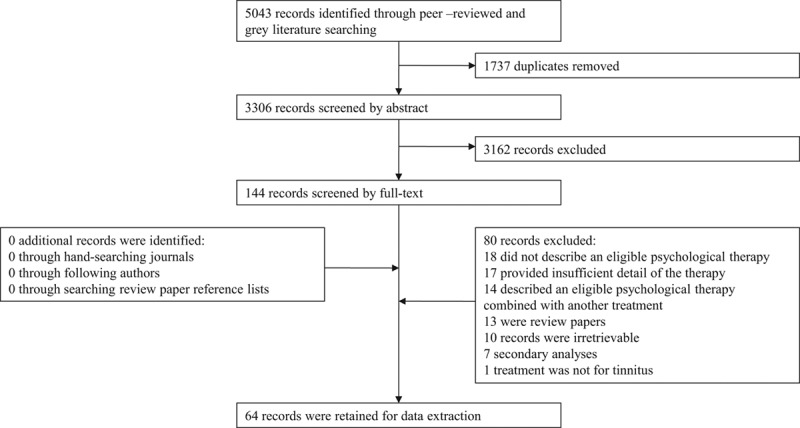
Background: Tinnitus is associated with depression and anxiety disorders, severely and adversely affecting the quality of life and functional health status for some people. With the dearth of clinical psychologists embedded in audiology services and the cessation of training for hearing therapists in the UK, it is left to audiologists to meet the psychological needs of many patients with tinnitus. However, there is no universally standardized training or manualized intervention specifically for audiologists across the whole UK public healthcare system and similar systems elsewhere across the world.Objectives: The primary aim of this scoping review was to catalog the components of psychological therapies for people with tinnitus, which have been used or tested by psychologists, so that they might inform the development of a standardized audiologist-delivered psychological intervention. Secondary aims of this article were to identify the types of psychological therapy for people with tinnitus, who were reported but not tested in any clinical trial, as well as the job roles of clinicians who delivered psychological therapy for people with tinnitus in the literature.Design: The authors searched the Cochrane Ear, Nose and Throat Disorders Group Trials Register; Cochrane Central Register of Controlled Trials; PubMed; EMBASE; CINAHL; LILACS; KoreaMed; IndMed; PakMediNet; CAB Abstracts; Web of Science; BIOSIS Previews; ISRCTN; ClinicalTrials.gov; IC-TRP; and Google Scholar. In addition, the authors searched the gray literature including conference abstracts, dissertations, and editorials. No records were excluded on the basis of controls used, outcomes reached, timing, setting, or study design (except for reviews-of the search results. Records were included in which a psychological therapy intervention was reported to address adults (≤18 years) tinnitus-related distress. No restrictive criteria were placed upon the term tinnitus. Records were excluded in which the intervention included biofeedback, habituation, hypnosis, or relaxation as necessary parts of the treatment.Results: A total of 5043 records were retrieved of which 64 were retained. Twenty-five themes of components that have been included within a psychological therapy were identified, including tinnitus education, psychoeducation, evaluation treatment rationale, treatment planning, problem-solving behavioral intervention, thought identification, thought challenging, worry time, emotions, social comparison, interpersonal skills, self-concept, lifestyle advice, acceptance and defusion, mindfulness, attention, relaxation, sleep, sound enrichment, comorbidity, treatment reflection, relapse prevention, and common therapeutic skills. The most frequently reported psychological therapies were cognitive behavioral therapy, tinnitus education, and internet-delivered cognitive behavioral therapy. No records reported that an audiologist delivered any of these psychological therapies in the context of an empirical trial in which their role was clearly delineated from that of other clinicians.Conclusions: Scoping review methodology does not attempt to appraise the quality of evidence or synthesize the included records. Further research should therefore determine the relative importance of these different components of psychological therapies from the perspective of the patient and the clinician.
Overview
CoChat Summary
## TL;DR
This scoping review mapped psychological therapy components reported for people with tinnitus and found a large, diverse set of themes across 64 eligible records. It also found a lack of literature on audiologist-delivered psychological interventions, with most therapy in the literature delivered by psychologists.
## Key findings
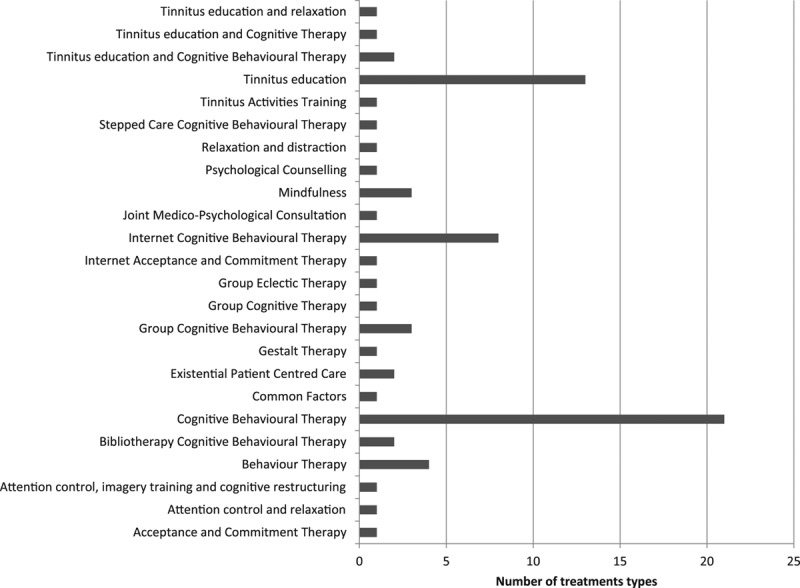
- 64 records were eligible for data extraction, yielding 73 treatment arms and 24 different types of psychological intervention.
- The review derived 25 themes of therapy components, made up of 138 subthemes; themes included tinnitus education, psychoeducation, thought challenging, acceptance and defusion, mindfulness, relaxation, sleep, and relapse prevention.
- The most frequently reported therapy types were face-to-face CBT (n = 21), tinnitus education (n = 13), and internet-delivered CBT (n = 8).
- The authors report that 14 types of psychological therapy had been tested in an RCT, while 8 other types were reported but not tested in any trials, case series, or reports.
## Methods
- Design: Scoping review; the authors state they used scoping review methodology to map components of psychological therapies rather than appraise quality or synthesize efficacy.
- Data/sample: Electronic databases and gray literature were searched in November 2014; eligible records were English-language, adult-only, from 1980 onward, and addressed tinnitus-related distress. A total of 64 records were included.
- Main analysis: Two researchers independently screened records and extracted data; therapy components were grouped into themes using inductive thematic analysis (Braun and Clarke phases).
## Limitations
- The paper states that scoping review methodology does not appraise the quality of evidence or synthesize the included records according to efficacy.
- The authors note that the literature base for audiologist-delivered psychological interventions is limited; they report no records of audiologist-delivered psychological therapy in an empirical trial with clearly delineated audiologist roles.
- Evident from the text: the review’s search and extraction were restricted to English-language records and adults only, so non-English studies and pediatric populations were not covered.
Model-written summary. Check it against the paper before relying on it.
Integrity signals
Registry
Cites
Statistics
Figures
Verification
Claims the paper makes
4 Valid · 0 Not valid · 15 Not checked · 30 Own results and interpretations
The cited sources support only part of this claim — read each source’s verdict below.
In the paper
“Presently, many audiology departments in the UK (52%) do not employ any staff trained in CBT”
§ Psychological Therapy for People with Tinnitus: A Scoping Review of Treatment Components > INTRODUCTION
What the sources say
- Partly supportedcites Hoare et al. 2012 matched to “Management of tinnitus in English NHS audiology departments: An evaluation of current practice.” (2012) sourceExperimental — accuracy not yet measured
In Results > Clinical skill in tinnitus care (page unavailable), the paper reports that 31% of respondents had taken a CBT training course and that 17% reported no staff trained in any form of counselling. Neither figure establishes that 52% of departments employ no CBT-trained staff. The survey covered NHS audiology departments in England, not the UK as a whole. (LLM, conf=0.88)
- Not checked — no full text of the sourcecites Hoare et al. 2015 matched to “Equity and person-centeredness in provision of tinnitus services in UK National Health Service audiology departments” (2015) source
plain- Asserted: passes — The authors put it forward as true.
- Checkable: passes — It can be checked against evidence.
- Load-bearing: unclear — It is unclear whether the paper’s conclusions depend on it.
- Based: passes — The paper gives a reason why it holds.
- Partly supported
The cited sources support only part of this claim — read each source’s verdict below.
In the paper
“Research evidence consistently demonstrates a superiority of clinical psychologist-delivered CBT over other treatments and waiting list control conditions for improving tinnitus-related distress, depression, and quality of life (Martinez-Devesa et al. 2010; Hesser et al. 2011; Hoare et al. 2011).”
§ Psychological Therapy for People with Tinnitus: A Scoping Review of Treatment Components > INTRODUCTION
What the sources say
- Partly supportedcites Martinez-Devesa et al. 2010 matched to “Cognitive behavioural therapy for tinnitus” (2010) sourceExperimental — accuracy not yet measured
The Background and Discussion (page not provided) report that CBT may reduce tinnitus-related impact and depression compared with waiting-list and some active controls. But the review does not establish these benefits specifically for clinical psychologist-delivered CBT: its Discussion says the evidence cannot determine whether the provider matters. It also distinguishes reduced tinnitus impact from improvement in general health-related quality of life, for which the evidence is uncertain. (LLM, conf=0.88)
- Not checked — no full text of the sourcecites Hesser et al. 2011 matched to “A systematic review and meta-analysis of randomized controlled trials of cognitive-behavioral therapy for tinnitus distress” (2011) source
- Partly supportedcites Hoare et al. 2011 matched to “Systematic review and meta-analyses of randomized controlled trials examining tinnitus management.” (2011) sourceExperimental — accuracy not yet measured
The Results (Cognitive Behavioral Therapy; page unavailable) report that psychologist-delivered CBT improved tinnitus distress measures compared with education, relaxation, and waiting-list controls. But the review finds little evidence of benefit for depression and does not establish the claimed improvement in quality of life. (LLM, conf=0.90)
boostedstates a cause- Asserted: passes — The authors put it forward as true.
- Checkable: passes — It can be checked against evidence.
- Load-bearing: passes — The paper’s conclusions depend on it.
- Based: passes — The paper gives a reason why it holds.
- Partly supported
A result the paper states — it cites no source for it, so there is none to check. The quote shows it is in the paper.
In the paper
“Sixty-four records were eligible for data extraction.”
§ Psychological Therapy for People with Tinnitus: A Scoping Review of Treatment Components > RESULTS
- Asserted: passes — The authors put it forward as true.
- Checkable: passes — It can be checked against evidence.
- Load-bearing: unclear — It is unclear whether the paper’s conclusions depend on it.
- Based: passes — The paper gives a reason why it holds.
None of the sources cited for this claim have been checked yet.
In the paper
“One record detailed a psychological therapy for audiologists to deliver with one relevant case study (Sweetow 1986).”
§ Psychological Therapy for People with Tinnitus: A Scoping Review of Treatment Components > RESULTS > Job Roles of Clinicians Who Have Delivered Psychological Therapy
plainSingle case- Asserted: passes — The authors put it forward as true.
- Checkable: passes — It can be checked against evidence.
- Load-bearing: unclear — It is unclear whether the paper’s conclusions depend on it.
- Based: passes — The paper gives a reason why it holds.
A result the paper reports from its own data — it cites no other source for it, so there is none to check. The quote shows it is in the paper.
In the paper
“Eight different types of psychological therapy were reported but not tested in any trials, case series, or reports”
§ Psychological Therapy for People with Tinnitus: A Scoping Review of Treatment Components > RESULTS > Types of Psychological Therapies Reported and Their Components
plain- Asserted: passes — The authors put it forward as true.
- Checkable: passes — It can be checked against evidence.
- Load-bearing: unclear — It is unclear whether the paper’s conclusions depend on it.
- Based: passes — The paper gives a reason why it holds.
24 more claims
Create a free account to see all 49 claims and every source verdict.
- Probably not a substantial claim. 15
- It may state two separate claims as one. 11
Citations
Cites
Using thematic analysis in psychology
Braun, V., & Clarke, V. (2006) · Qualitative Research in Psychology · doi:10.1191/1478088706qp063oa · Cited by 194,414
Clinical practice guideline: tinnitus
Tunkel, D. E., Bauer, C. A., Sun, G. H., Rosenfeld, R. M., Chandrasekhar, S. S., Cunningham, E. R., Archer, S. M., Blakley, B. W., Carter, J. M., Granieri, E. C., et al. (2014) · Otolaryngology–Head and Neck Surgery · doi:10.1177/0194599814545325 · Cited by 769
Cognitive behavioural therapy for tinnitus
Martinez-Devesa, P., Perera, R., Theodoulou, M., & Waddell, A. (2010) · Cochrane Database of Systematic Reviews · doi:10.1002/14651858.cd005233.pub3 · Cited by 477
DBT, FAP, and ACT: How empirically oriented are the new behavior therapy technologies?
Hayes, S. C., Masuda, A., Bissett, R., Luoma, J., & Guerrero, L. F. (2004) · Behavior Therapy · doi:10.1016/s0005-7894(04)80003-0 · Cited by 342
Hesser, H., Weise, C., Westin, V. Z., & Andersson, G. (2011) · Clinical Psychology Review · doi:10.1016/j.cpr.2010.12.006 · Cited by 340 · cited 1×
“Research evidence consistently demonstrates a superiority of clinical psychologist-delivered CBT over other treatments and waiting list control conditions for improving tinnitus-related distress, depression, and quality of life (MartinezDevesa et al. 2010; Hesser et al. 2011; Hoare et al. 2011).”
BackgroundCima, R. F., Maes, I. H., Joore, M. A., Scheyen, D. J., El Refaie, A., Baguley, D. M., Anteunis, L. J., van Breukelen, G. J., & Vlaeyen, J. W. (2012) · The Lancet · doi:10.1016/s0140-6736(12)60469-3 · Cited by 317 · cited 4×
“(Cima et al. 2012), tinnitus education (Henry et al. 2012), and behavior therapy (Scott et al. 1985) trials although in a limited or unspecified capacity (e.g., involved in posttherapy interviews only).”
BackgroundMethodInfluentialAndersson, G. (2002) · Psychosomatic Medicine · doi:10.1097/01.psy.0000031577.42041.f8 · Cited by 312 · cited 2×
“2008; Tucker 2013), internet-delivered CBT (Andersson et al. 2002; Kaldo et al. 2008; Abbott et al. 2009; Hesser et al. 2012; Nyenhuis et al. 2013; Jasper et al. 2014), group CBT (Kaldo et al.”
MethodHesser, H., Gustafsson, T., Lundén, C., Henrikson, O., Fattahi, K., Johnsson, E., Westin, V. Z., Carlbring, P., Mäki-Torkko, E., Kaldo, V., et al. (2012) · Journal of Consulting and Clinical Psychology · doi:10.1037/a0027021 · Cited by 257 · cited 15×
“This was not so in the case of existential PCT; Mohr and Hedelund (2006) noted that this type of therapy does not lend itself to Acceptance and defusion (5) Concerns engaging in acceptance and cognitive defusion techniques, that is, to teach the patient to accept private experiences and to distance themselves from pri…”
BackgroundMethodInfluentialSystematic review and meta-analyses of randomized controlled trials examining tinnitus management.
Hoare, D. J., Kowalkowski, V. L., Kang, S., & Hall, D. A. (2011) · The Laryngoscope · doi:10.1002/lary.21825 · Cited by 255 · cited 2×
“Research evidence consistently demonstrates a superiority of clinical psychologist-delivered CBT over other treatments and waiting list control conditions for improving tinnitus-related distress, depression, and quality of life (MartinezDevesa et al. 2010; Hesser et al. 2011; Hoare et al. 2011).”
BackgroundSelf-citationA scientific cognitive-behavioral model of tinnitus: Novel conceptualizations of tinnitus distress.
McKenna, L., Handscomb, L., Hoare, D. J., & Hall, D. A. (2014) · Frontiers in Neurology · doi:10.3389/fneur.2014.00196 · Cited by 232 · cited 1×
“One recent model of tinnitus posits that cognitions and behaviors cause and maintain tinnitusrelated distress (McKenna et al. 2014).”
BackgroundSelf-citationWhat do psychotherapists really do in practice? An internet study of over 2,000 practitioners
Cook, J. M., Biyanova, T., Elhai, J., Schnurr, P. P., & Coyne, J. C. (2010) · Psychotherapy: Theory, Research, Practice, Training · doi:10.1037/a0019788 · Cited by 177 · cited 1×
“Indeed, a survey of psychotherapists’ therapeutic orientation indicated that eclectic approaches are predominant (Cook et al. 2010).”
BackgroundWestin, V. Z., Schulin, M., Hesser, H., Karlsson, M., Noe, R. Z., Olofsson, U., Stalby, M., Wisung, G., & Andersson, G. (2011) · Behaviour Research and Therapy · doi:10.1016/j.brat.2011.08.001 · Cited by 175 · cited 6×
“…of mindfulness meditation techniques “Mindfulness exercises involved approaching the tinnitus sound and related reactions in a nonjudgmental way” (Westin et al. 2011, pp. 739) Attention (95) Concerns the clinician guiding the patient in positive visual imagery exercises, attention-shifting…”
BackgroundMethodInfluentialKaldo, V., Levin, S., Widarsson, J., Buhrman, M., Larsen, H.-C., & Andersson, G. (2008) · Behavior Therapy · doi:10.1016/j.beth.2007.10.003 · Cited by 162 · cited 2×
“…1995, 2003; Zachriat & Kröner-Herwig 2004; Andersson et al. 2005; Robinson et al. 2008; Tucker 2013), internet-delivered CBT (Andersson et al. 2002; Kaldo et al. 2008; Abbott et al. 2009; Hesser et al. 2012; Nyenhuis et al. 2013; Jasper et al. 2014), group CBT (Kaldo et al. 2008; Nyenhuis et al.…”
MethodTinnitus and its association with psychiatric disorders: Systematic review.
Pinto, P. C. L., Marcelos, C. M., Mezzasalma, M. A., Osterne, F. J. V., de Melo Tavares de Lima, M. A., & Nardi, A. E. (2014) · The Journal of Laryngology & Otology · doi:10.1017/s0022215114001030 · Cited by 132 · cited 2×
“This association with anxiety has subsequently been investigated, replicated, and the evidence collated in a systematic review demonstrating a relation between tinnitus and anxiety or depression (Pinto et al. 2014).”
BackgroundResultSearchfield, G. D., Kaur, M., & Martin, W. H. (2010) · International Journal of Audiology · doi:10.3109/14992021003777267 · Cited by 128 · cited 1×
“…did report on audiologist-delivered tinnitus education protocols or trials (Dineen et al. 1997; Henry et al. 2005, 2007, 2009; Aazh et al. 2008; Searchfield et al. 2010) and five records of expert opinions, protocols, or gray literature did propose the potential for audiologists to use their…”
BackgroundJasper, K., Weise, C., Conrad, I., Andersson, G., Hiller, W., & Kleinstäuber, M. (2014) · Psychotherapy and Psychosomatics · doi:10.1159/000360705 · Cited by 126 · cited 4×
“2008; Tucker 2013), internet-delivered CBT (Andersson et al. 2002; Kaldo et al. 2008; Abbott et al. 2009; Hesser et al. 2012; Nyenhuis et al. 2013; Jasper et al. 2014), group CBT (Kaldo et al.”
BackgroundMethodInfluentialThe management of chronic tinnitus
Kröner‐Herwig, B., Frenzel, A., Fritsche, G., Schilkowsky, G., & Esser, G. (2003) · Journal of Psychosomatic Research · doi:10.1016/s0022-3999(02)00400-2 · Cited by 124 · cited 3×
“…ACT (Westin et al. 2011); internetdelivered ACT (Hesser et al. 2012); mindfulness (Kreuzer et al. 2012); tinnitus education (Mason et al. 1996; Kröner-Herwig et al. 2003; Henry et al. 2007; Tucker 2013; Argstatter et al. 2015), tinnitus education with cognitive therapy (Henry & Wilson 1996),…”
BackgroundMethodLongitudinal Follow-up of Tinnitus Complaints
Andersson, G., Vretblad, P., Larsen, H. C., & Lyttkens, L. (2001) · Archives of Otolaryngology–Head & Neck Surgery · doi:10.1001/archotol.127.2.175 · Cited by 110 · cited 1×
“…were also detailed in case series, case reports, and in the descriptions of interventions; namely CBT (Andersson & Larsen 1997; Wilson & Henry 2000; Andersson et al. 2001; Lain 2006; Graul et al. 2008; Greimel & Kröner-Herwig 2011; Zenner et al. 2013; Hubbard 2014), internet-delivered CBT…”
BackgroundCognitive behavioural therapy for tinnitus
Martinez-Devesa, P., Waddell, A., Perera, R., & Theodoulou, M. (2007) · Cochrane Database of Systematic Reviews · doi:10.1002/14651858.cd005233.pub2 · Cited by 107
Management of tinnitus in English NHS audiology departments: An evaluation of current practice.
Hoare, D. J., Gander, P. E., Collins, L., Smith, S., & Hall, D. A. (2012) · Journal of Evaluation in Clinical Practice · doi:10.1111/j.1365-2753.2010.01566.x · Cited by 107 · cited 2×
“Some audiologists admit concerns that a gap in the literature persists and that the evidence-base is lacking to support incorporating psychological therapies for tinnitus into their clinical practice (Hoare et al. 2012).”
BackgroundSelf-citationThe effects of reassurance, relaxation training and distraction on chronic tinnitus sufferers
Jakes, S. C., Hallam, R., Rachman, S., & HINCHCLIFFE, R. (1986) · Behaviour Research and Therapy · doi:10.1016/0005-7967(86)90029-x · Cited by 106 · cited 2×
“attention control with relaxation (Jakes et al. 1986), tinnitus”
BackgroundKaldo, V., Cars, S., Rahnert, M., Larsen, H. C., & Andersson, G. (2007) · Journal of Psychosomatic Research · doi:10.1016/j.jpsychores.2007.04.007 · Cited by 105 · cited 2×
“2014), bibliotherapy CBT (Kaldo et al. 2007; Nyenhuis et al. 2013), stepped care CBT (Cima et al.”
BackgroundInternet‐based cognitive behavioral therapy for tinnitus
Andersson, G., & Kaldo, V. (2004) · Journal of Clinical Psychology · doi:10.1002/jclp.10243 · Cited by 103 · cited 1×
“…2000; Andersson et al. 2001; Lain 2006; Graul et al. 2008; Greimel & Kröner-Herwig 2011; Zenner et al. 2013; Hubbard 2014), internet-delivered CBT (Andersson & Kaldo 2004), behavior therapy (Lindberg et al. 1989), mindfulness (Sadlier et al. 2008), and tinnitus education (Greimel & KrönerHerwig…”
BackgroundBrown, L. A., Gaudiano, B. A., & Miller, I. W. (2011) · Behavior Modification · doi:10.1177/0145445510393730 · Cited by 103 · cited 1×
“However there were no major differences in the clinician’s background or attitude whether delivering traditional CBT and its contemporaries (Brown et al. 2011).”
BackgroundThe management of chronic tinnitus—Comparison of a cognitive-behavioural group training with yoga.
Kröner-Herwig, B., Hebing, G., Van Rijn-Kalkmann, U., Frenzel, A., Schilkowsky, G., & Esser, G. (1995) · Journal of Psychosomatic Research · doi:10.1016/0022-3999(94)00098-p · Cited by 101 · cited 1×
“These 14 were comprised of more traditional second-wave CBT including face-to-face CBT (Kröner-Herwig et al. 1995, 2003; Zachriat & Kröner-Herwig 2004; Andersson et al. 2005; Robinson et al. 2008; Tucker 2013), internet-delivered CBT (Andersson et al. 2002; Kaldo et al. 2008; Abbott et al. 2009;…”
MethodPsychological Treatment of Tinnitus An Experimental Group Study
Scott, B., Lindberg, P., Lyttkens, L., & Melin, L. (1985) · Scandinavian Audiology · doi:10.3109/01050398509045945 · Cited by 90 · cited 2×
“(Cima et al. 2012), tinnitus education (Henry et al. 2012), and behavior therapy (Scott et al. 1985) trials although in a limited or unspecified capacity (e.g., involved in posttherapy interviews only).”
BackgroundTreating chronic tinnitus: Comparison of cognitive-behavioural and habituation-based treatments
Zachriat, C., & Kröner-Herwig, B. (2004) · Cognitive Behaviour Therapy · doi:10.1080/16506070410029568 · Cited by 89 · cited 1×
“These 14 were comprised of more traditional second-wave CBT including face-to-face CBT (Kröner-Herwig et al. 1995, 2003; Zachriat & Kröner-Herwig 2004; Andersson et al. 2005; Robinson et al. 2008; Tucker 2013), internet-delivered CBT (Andersson et al. 2002; Kaldo et al. 2008; Abbott et al. 2009;…”
MethodHenry, J. L., & Wilson, P. H. (1996) · PubMed · Cited by 86
Cognitive Aspects of Tinnitus Patient Management
Sweetow, R. W. (1986) · Ear and Hearing · doi:10.1097/00003446-198612000-00008 · Cited by 76 · cited 5×
“(Sweetow 1986, pp. 393) Thought challenging (72) Concerns cognitive techniques that require change on the part of the patient, including the clinician instructing the patient on “thought stopping” exercises; “cognitive restructuring” exercises that is, teaching the patient to identify and modify or…”
BackgroundMethodInfluentialCognitive Behavioral Therapy for Tinnitus: Evidence and Efficacy
Jun, H. J., & Park, M. K. (2013) · Korean Journal of Audiology · doi:10.7874/kja.2013.17.3.101 · Cited by 76 · cited 1×
“Eligible records also included articles that were published in the English language, sampling adults only and originating from the year 1980 onward, that is, because psychological therapies first began to emerge in the 1980s with the introduction of CBT for tinnitus (Jun & Park 2013).”
BackgroundAbbott, J.-A. M., Kaldo, V., Klein, B., Austin, D., Hamilton, C., Piterman, L., Williams, B., & Andersson, G. (2009) · Cognitive Behaviour Therapy · doi:10.1080/16506070902763174 · Cited by 71 · cited 5×
“…& Kröner-Herwig 2004; Andersson et al. 2005; Robinson et al. 2008; Tucker 2013), internet-delivered CBT (Andersson et al. 2002; Kaldo et al. 2008; Abbott et al. 2009; Hesser et al. 2012; Nyenhuis et al. 2013; Jasper et al. 2014), group CBT (Kaldo et al. 2008; Nyenhuis et al. 2013; Jasper et al.…”
BackgroundMethodInfluentialTinnitus rehabilitation: a mindfulness meditation cognitive behavioural therapy approach
Sadlier, M., Stephens, S. D. G., & Kennedy, V (2008) · The Journal of Laryngology & Otology · doi:10.1017/s0022215107007438 · Cited by 70 · cited 2×
“…Andersson et al. 2001; Lain 2006; Graul et al. 2008; Greimel & Kröner-Herwig 2011; Zenner et al. 2013; Hubbard 2014), internet-delivered CBT (Andersson & Kaldo 2004), behavior therapy (Lindberg et al. 1989), mindfulness (Sadlier et al. 2008), and tinnitus education (Greimel & KrönerHerwig 2011).”
BackgroundAndersson, G., Porsaeus, D., Wiklund, M., Kaldo, V., & Christian Larsen, H. (2005) · International Journal of Audiology · doi:10.1080/14992020500266720 · Cited by 68 · cited 2×
“…14 were comprised of more traditional second-wave CBT including face-to-face CBT (Kröner-Herwig et al. 1995, 2003; Zachriat & Kröner-Herwig 2004; Andersson et al. 2005; Robinson et al. 2008; Tucker 2013), internet-delivered CBT (Andersson et al. 2002; Kaldo et al. 2008; Abbott et al. 2009;…”
BackgroundMethodGroup cognitive therapy for medical patients: An application to tinnitus
Jakes, S. C., Hallam, R., McKenna, L., & HINCHCLIFFE, R. (1992) · Cognitive Therapy and Research · doi:10.1007/bf01172957 · Cited by 67 · cited 2×
“2012), group cognitive therapy (Jakes et al. 1992), behavior therapy (Lindberg 1988; Lindberg et al.”
BackgroundRandomized clinical trial: Group counseling based on tinnitus retraining therapy
Henry, J. A., Loovis, C., Montero, M., Kaelin, C., Anselmi, K.-A., Coombs, R., Hensley, J., & James, K. E. (2007) · The Journal of Rehabilitation Research and Development · doi:10.1682/jrrd.2006.02.0018 · Cited by 59 · cited 3×
“…internetdelivered ACT (Hesser et al. 2012); mindfulness (Kreuzer et al. 2012); tinnitus education (Mason et al. 1996; Kröner-Herwig et al. 2003; Henry et al. 2007; Tucker 2013; Argstatter et al. 2015), tinnitus education with cognitive therapy (Henry & Wilson 1996), attention control, imagery…”
BackgroundClinical management of tinnitus using a "progressive intervention" approach
Henry, J. A., Schechter, M. A., Loovis, C. L., Zaugg, T. L., Kaelin, C., & Montero, M. (2005) · The Journal of Rehabilitation Research and Development · doi:10.1682/jrrd.2005.01.0005 · Cited by 58 · cited 1×
“However, six records did report on audiologist-delivered tinnitus education protocols or trials (Dineen et al. 1997; Henry et al. 2005, 2007, 2009; Aazh et al. 2008; Searchfield et al. 2010) and five records of expert opinions, protocols, or gray literature did propose the potential for…”
BackgroundThe psychological treatment of tinnitus: An experimental evaluation
Lindberg, P., Scott, B., Melin, L., & Lyttkens, L. (1989) · Behaviour Research and Therapy · doi:10.1016/0005-7967(89)90143-5 · Cited by 57 · cited 2×
“…Andersson et al. 2001; Lain 2006; Graul et al. 2008; Greimel & Kröner-Herwig 2011; Zenner et al. 2013; Hubbard 2014), internet-delivered CBT (Andersson & Kaldo 2004), behavior therapy (Lindberg et al. 1989), mindfulness (Sadlier et al. 2008), and tinnitus education (Greimel & KrönerHerwig 2011).”
BackgroundHall, D. A., Mohamad, N., Firkins, L., Fenton, M., & Stockdale, D. (2013) · Clinical Investigation · doi:10.4155/cli.12.129 · Cited by 55 · cited 4×
“…and develop a list of the potential components of such a treatment, and confirm the claim made by the James Lind Alliance Tinnitus Priority Setting Partnership (Hall et al. 2013), namely that there is limited evidence of audiologist-delivered psychological interventions in the literature.”
BackgroundResultInfluentialSelf-citationBehavioural therapy in the clinical management of tinnitus
Lindberg, P., Scott, B., Melin, L., & Lyttkens, L. (1988) · British Journal of Audiology · doi:10.3109/03005368809076463 · Cited by 55 · cited 1×
“…al. 2007; Nyenhuis et al. 2013), stepped care CBT (Cima et al. 2012), group cognitive therapy (Jakes et al. 1992), behavior therapy (Lindberg 1988; Lindberg et al. 1988); ACT (Westin et al. 2011); internetdelivered ACT (Hesser et al. 2012); mindfulness (Kreuzer et al. 2012); tinnitus education…”
The Efficacy of Minimal Contact Interventions for Acute Tinnitus: A Randomised Controlled Study
Nyenhuis, N., Zastrutzki, S., Weise, C., Jäger, B., & Kröner-Herwig, B. (2013) · Cognitive Behaviour Therapy · doi:10.1080/16506073.2012.655305 · Cited by 54 · cited 3×
“…et al. 2013; Jasper et al. 2014), group CBT (Kaldo et al. 2008; Nyenhuis et al. 2013; Jasper et al. 2014), bibliotherapy CBT (Kaldo et al. 2007; Nyenhuis et al. 2013), stepped care CBT (Cima et al. 2012), group cognitive therapy (Jakes et al. 1992), behavior therapy (Lindberg 1988; Lindberg et…”
BackgroundMethodInfluentialKreuzer, P. M., Goetz, M., Holl, M., Schecklmann, M., Landgrebe, M., Staudinger, S., & Langguth, B. (2012) · BMC Complementary and Alternative Medicine · doi:10.1186/1472-6882-12-235 · Cited by 51 · cited 1×
“…1992), behavior therapy (Lindberg 1988; Lindberg et al. 1988); ACT (Westin et al. 2011); internetdelivered ACT (Hesser et al. 2012); mindfulness (Kreuzer et al. 2012); tinnitus education (Mason et al. 1996; Kröner-Herwig et al. 2003; Henry et al. 2007; Tucker 2013; Argstatter et al. 2015),…”
BackgroundAn Evaluation of Two Types of Cognitive Intervention in the Management of Chronic Tinnitus
Henry, J. L., & Wilson, P. H. (1998) · Scandinavian Journal of Behaviour Therapy · doi:10.1080/02845719808408510 · Cited by 50 · cited 1×
“…Kröner-Herwig et al. 2003; Henry et al. 2007; Tucker 2013; Argstatter et al. 2015), tinnitus education with cognitive therapy (Henry & Wilson 1996), attention control, imagery training, and cognitive restructuring (Henry & Wilson 1998), and relaxation and distraction (Kröner-Herwig et al. 2003).”
BackgroundHenry, J. A., Zaugg, T. L., Myers, P. J., Kendall, C. J., & Turbin, M. B. (2009) · Noise and Health · doi:10.4103/1463-1741.45311 · Cited by 45 · cited 4×
“…realistically achieved and measured” (Olsson 2001, pp. 134) Problem solving (8) Concerns engaging the patient in collaborative systematic problem solving, breaking complex tasks into smaller more achievable ones “engage in collaborative problem solving” (Henry et al. 2009, pp. 36) Behavioral…”
BackgroundInfluentialSimplified form of tinnitus retraining therapy in adults: a retrospective study
Aazh, H., Moore, B. C., & Glasberg, B. R. (2008) · BMC Ear, Nose and Throat Disorders · doi:10.1186/1472-6815-8-7 · Cited by 44
Hoare, D. J., Broomhead, E., Stockdale, D., & Kennedy, V. (2015) · European Journal for Person Centered Healthcare · doi:10.5750/ejpch.v3i3.984 · Cited by 43 · cited 4×
“(Hoare et al. 2015).”
BackgroundInfluentialSelf-citation(2008) · PubMed · Cited by 42
Argstatter, H., Grapp, M., Hutter, E., Plinkert, P. K., & Bolay, H. V. (2014) · Journal of Psychosomatic Research · doi:10.1016/j.jpsychores.2014.08.012 · Cited by 39 · cited 1×
“…et al. 2012); mindfulness (Kreuzer et al. 2012); tinnitus education (Mason et al. 1996; Kröner-Herwig et al. 2003; Henry et al. 2007; Tucker 2013; Argstatter et al. 2015), tinnitus education with cognitive therapy (Henry & Wilson 1996), attention control, imagery training, and cognitive…”
BackgroundMindfulness Based Tinnitus Stress Reduction Pilot Study: A Symptom Perception-Shift Program
Gans, J. J., O’Sullivan, P., & Bircheff, V. (2014) · Mindfulness · doi:10.1007/s12671-012-0184-4 · Cited by 36 · cited 2×
“…and “sleep hygiene,” that is, making behavioral, dietary, and environmental changes to facilitate sleep “education about sleep and sleep hygiene” (Gans et al. 2014, pp. 325) Sound enrichment (51) Concerns the provision of education on hyperacusis and noise sensitivity, advising the patient…”
BackgroundHenry, J. A., Zaugg, T. L., Myers, P. J., Schmidt, C. J., Griest, S. E., Legro, M. W., Kaelin, C., Thielman, E. J., Storzbach, D. M., McMillan, G. P., et al. (2012) · The Journal of Rehabilitation Research and Development · doi:10.1682/jrrd.2010.07.0125 · Cited by 34 · cited 2×
“…but not tested in any trials, case series, or reports; namely, attention control with relaxation (Jakes et al. 1986), tinnitus education with CBT (Henry et al. 2009, 2012), tinnitus activities treatment (Tyler et al. 2006), common factors (Tyler et al. 2001), joint medico-psychological…”
BackgroundManaging Tinnitus: A Comparison of Different Approaches to Tinnitus Management Training
Dineen, R., Doyle, J., & Bench, J. (1997) · British Journal of Audiology · doi:10.3109/03005364000000027 · Cited by 32 · cited 4×
“…of lifestyle on tinnitus, hearing and general health, and how to maintain good general health “information on … pharmacological and dietary influences on tinnitus” (Dineen et al. 1997, pp. 334) (Continued) Copyright © 2016 Wolters Kluwer Health, Inc. Unauthorized reproduction of this article…”
BackgroundMethodInfluentialNurturing Patient Expectations to Enhance the Treatment of Tinnitus
Tyler, R. S., Haskell, G. B., Preece, J. P., & Bergan, C. (2001) · Seminars in Hearing · doi:10.1055/s-2001-13017 · Cited by 27 · cited 3×
“…can be successful by sharing other’s experiences “Hope can be increased by assuring the patient that … others have benefited from similar treatments” (Tyler et al. 2001, pp. 19) Interpersonal skills (23) Concerns the clinician exploring the patient’s quality of social interaction and…”
BackgroundClient centred hypnotherapy in the management of tinnitus – is it better than counselling?
Mason, J., Rogerson, D. R., & Butler, J. D. (1996) · The Journal of Laryngology & Otology · doi:10.1017/s002221510013292x · Cited by 27 · cited 1×
“…Lindberg et al. 1988); ACT (Westin et al. 2011); internetdelivered ACT (Hesser et al. 2012); mindfulness (Kreuzer et al. 2012); tinnitus education (Mason et al. 1996; Kröner-Herwig et al. 2003; Henry et al. 2007; Tucker 2013; Argstatter et al. 2015), tinnitus education with cognitive therapy…”
BackgroundZenner, H.-P., Vonthein, R., Zenner, B., Leuchtweis, R., Plontke, S. K., Torka, W., Pogge, S., & Birbaumer, N. (2012) · Hearing Research · doi:10.1016/j.heares.2012.11.013 · Cited by 27 · cited 5×
“(Tucker 2013, pp. 71) Sleep (35) Concerns the provision of education on sleep and practicing sleep restriction and “sleep hygiene,” that is, making behavioral, dietary, and environmental changes to facilitate sleep “education about sleep and sleep hygiene” (Gans et al. 2014, pp. 325) Sound enrichment (51) Concerns the…”
BackgroundInfluentialGraul, J., Klinger, R., Greimel, K. V., Rustenbach, S. J., & Nutzinger, D. O. (2008) · PubMed · Cited by 23
The Role of Psychology in Managing Tinnitus: A Cognitive Behavioral Approach
Andersson, G. (2001) · Seminars in Hearing · doi:10.1055/s-2001-13021 · Cited by 20 · cited 4×
“…et al. 2010) and five records of expert opinions, protocols, or gray literature did propose the potential for audiologists to use their protocols of CBT (Andersson 2001; Olsson 2001) and tinnitus education (Tyler et al. 1989; Tyler 2006; Searchfield et al. 2011) although this remains untested.”
BackgroundInfluentialBenefits from group psychotherapy in the treatment of severe refractory tinnitus
Zöger, S., Erlandsson, S., Svedlund, J., et al. (2008) · Hearing Balance and Communication · doi:10.1080/16513860801959092 · Cited by 17 · cited 4×
“…therapy were tested in trials where either a historical control group was used as a comparator or where multiple experimental interventions were tested without a control comparator including tinnitus education with relaxation (Dineen et al. 1997) and group eclectic therapy (Zoger et al. 2008).”
BackgroundMethodInfluentialMeasuring the effectiveness of an audiological counseling program.
English, K., & Archbold, S. (2014) · International Journal of Audiology · doi:10.3109/14992027.2013.837224 · Cited by 15 · cited 2×
“…and “sleep hygiene,” that is, making behavioral, dietary, and environmental changes to facilitate sleep “education about sleep and sleep hygiene” (Gans et al. 2014, pp. 325) Sound enrichment (51) Concerns the provision of education on hyperacusis and noise sensitivity, advising the patient…”
BackgroundReflections on tinnitus by an existential psychologist
Mohr, A.-M. (2008) · Hearing Balance and Communication · doi:10.1080/16513860801945265 · Cited by 5
Cognitive-behavioural treatment for tinnitus: A difficult case
Andersson, G. (1997) · Scandinavian Journal of Behaviour Therapy · doi:10.1080/16506079708412040 · Cited by 5 · cited 2×
“…ground rules, and informing them of other treatment options for their tinnitus “The therapist … elucidated their own role, that is, why both took part in each session and how they as group leaders preferred to sometimes stay in the background” (Zoger et al. 2008, pp. 66) Treatment planning…”
BackgroundEffects of Self-Control Training on Tinnitus in a Deaf Patient — A Case Study
Lindberg, P. (1988) · Scandinavian Journal of Behaviour Therapy · doi:10.1080/16506078809455830 · Cited by 5 · cited 1×
“…CBT (Kaldo et al. 2007; Nyenhuis et al. 2013), stepped care CBT (Cima et al. 2012), group cognitive therapy (Jakes et al. 1992), behavior therapy (Lindberg 1988; Lindberg et al. 1988); ACT (Westin et al. 2011); internetdelivered ACT (Hesser et al. 2012); mindfulness (Kreuzer et al. 2012);…”
MethodCognitive-Behavioural Treatment of Tinnitus in Otosclerosis: A Case Report
Andersson, G., & Larsen, H.-C. (1997) · Behavioural and Cognitive Psychotherapy · doi:10.1017/s1352465800015411 · Cited by 3
Joint Medico-Psychological Consultation for Patients Suffering from Tinnitus
Degive, C., & Kós, M.-I. (2006) · ORL · doi:10.1159/000090489 · Cited by 3 · cited 1×
“…et al. 2009, 2012), tinnitus activities treatment (Tyler et al. 2006), common factors (Tyler et al. 2001), joint medico-psychological consultation (Degive & Kos 2006), psychological counseling (Lain 2008), Gestalt therapy (Amendt-Lyon 2004), and existential patient-centered therapy (PCT; Mohr &…”
BackgroundAmendt‐Lyon, N. (2004) · Gestalt Review · doi:10.5325/gestaltreview.8.3.0308 · Cited by 2 · cited 2×
“(Amendt-Lyon 2004), and existential patient-centered ther-”
BackgroundInternet-Based Cognitive—Behavioral Self-Help Treatment of Tinnitus
Kaldo-Sandström, V., Larsen, H. C., & Andersson, G. (2004) · American Journal of Audiology · doi:10.1044/1059-0889(2004/023 · cited 2×
“Advice regarding concentration (i.e., taking breaks, dividing tasks into smaller steps, problem solving)” (Kaldo-Sandström et al. 2004, pp. 188) Relaxation (111) Concerns physical techniques designed to reduce autonomic arousal including progressive muscle relaxation and breathing exercises,…”
Background
Research works printed but not linked: 17
- Andersson G. Kaldo V Tyler R. S Cognitive-behavioral therapy with applied relaxation. In Tinnitus Treatment: Clinical Protocols, (2006). New York, NY: Thieme pp. 97 115.
- Davis A. El Rafaie A Tyler R. S Epidemiology of tinnitus. In Tinnitus Handbook, (2000). San Diego, CA: Singular Publishing Group pp. 1 23.
- Girard L Aran J. M Dauman R Cognitive and behavioral audiological intervention in adults with tinnitus and deafness. In Proceedings of the Fourth International Tinnitus Seminar, (1992). Amsterdam, The Netherlands: Kugler Publications pp. 493 495.
- Greimel K. V. Kröner-Herwig B Møller A. R. Langguth B. DeRidder D Tinnitus from the perspective of the psychologist. In Textbook of Tinnitus, (2011). New York, NY: Springer pp. 223 228.
- Hallam R. S. Rachman S. Hinchcliffe R. Rachman S Psychological aspects of tinnitus. In Contributions to Medical Psychology, (1984). Oxford, United Kingdom: Pergamon pp. 31 53.
- Lain D. R A bridge of hope: Cognitive behavioural therapy—Learning how to live while having tinnitus. Tinnitus Today, (2006). 31, 17 18, 22.
- Lain D. R The bridge to hope: The psychologist’s role in treating tinnitus. Tinnitus Today, (2008). 33, 14 15, 18.
- Mays N. Roberts E. Popay J Fulop N. Allen P. Clarke A. Black N Synthesising research evidence. In Studying the Organisation and Delivery of Health Services: Research Methods, (2001). London, UK: Routledge pp. 188 220.
- Mohr A. M. Hedelund U Tyler R. S Tinnitus person-centred therapy. In Tinnitus Treatment: Clinical Protocols, (2006). New York, NY: Thieme pp. 198 216.
- Olsson R. J A practical guide to managing the tinnitus patient. Unpublished doctoral dissertation, (2001). USA: Central Michigan University.
- Searchfield G. D. Magnusson J. Shakes G. Møller A. R. Langguth B. DeRidder D. Counseling and psycho-education for tinnitus management. In Textbook of Tinnitus, (2011). New York, NY: Springer pp. 535 556.
- Sweetow R. W Cognitive-behavioral modification in tinnitus management. Hear Instrum, (1984). 35, 14 18.
- Tucker E. M Tinnitus in cochlear implantees: Cognitive behavioural therapy for cochlear implant users. Unpublished doctoral dissertation, (2013). UK: University of Southampton.
- Tyler R. S Tyler R. S Neurophysiological models, psychological models, and treatments for tinnitus. In Tinnitus Treatment: Clinical Protocols, (2006). New York, NY: Thieme pp. 1 22.
- Tyler R. S. Stouffer J. L. Schum R Audiological rehabilitation of the tinnitus client. J Acad Rehabil Audiol, (1989). 22, 30 42.
- Tyler R. S. Gehringer A.K. William N. Tyler R. S Tinnitus activities treatment. In Tinnitus Treatment: Clinical Protocols, (2006). New York, NY: Thieme pp. 117 132.
- Wilson P. H. Henry J. L Tyler R Psychological management of tinnitus. In Tinnitus Handbook, (2000). San Diego, CA: Singular Publishing Group pp. 263 278.
Cited by
Cognitive behavioural therapy for tinnitus
Fuller, T., Cima, R., Langguth, B., Mazurek, B., Vlaeyen, J. W., & Hoare, D. J. (2020) · Cochrane Database of Systematic Reviews · doi:10.1002/14651858.cd012614.pub2 · Cited by 212
Self-citationHall, D. A., Smith, H. L., Hibbert, A., Colley, V., Haider, H. F., Horobin, A. J., Londero, A., Mazurek, B., Thacker, B., Fackrell, K., et al. (2018) · Trends in Hearing · doi:10.1177/2331216518814384 · Cited by 95
Self-citationLandry, E. C., Sandoval, X. C. R., Simeone, C. N., Tidball, G., Lea, J., & Westerberg, B. D. (2020) · Otology & Neurotology · doi:10.1097/mao.0000000000002472 · Cited by 82
Rationale and Efficacy of Sound Therapies for Tinnitus and Hyperacusis
Pienkowski, M. (2018) · Neuroscience · doi:10.1016/j.neuroscience.2018.09.012 · Cited by 86
Tinnitus services in the United Kingdom: a survey of patient experiences
McFerran, D., Hoare, D. J., Carr, S., Ray, J., & Stockdale, D. (2018) · BMC Health Services Research · doi:10.1186/s12913-018-2914-3 · Cited by 58
“It is not standardised however and there is currently no research evidence for the effectiveness of an audiologist or hearing therapist psychological intervention [31].”
BackgroundSelf-citation
Metadata
- Authors
- Thompson, D. M., Hall, D. A., Walker, D.-M., & Hoare, D. J.
- Affiliations
- University of Nottingham (GB)
- University of Southampton (GB)
- Corresponding author
- Thompson, Dean M.
- Venue
- Ear & Hearing
- Published
- 2017-03
- Volume
- 38
- Issue
- 2
- Pages
- 149-158
- ISSN
- 0196-0202 (ISSN-L)
- PMC
- PMC5325252
- OpenAlex
- W2508065595
- Cited by
- 59
- References
- 72
- Citations by year
- 2026: 3 · 2025: 2 · 2024: 6 · 2023: 3 · 2022: 5 · 2021: 5 · 2020: 12 · 2019: 7 · 2018: 10 · 2017: 6
- FWCI
- 1.18
- Type
- journal article
- Language
- en
- Open access
- hybrid
- doi.org
- Licence
- Locations
- Ear and Hearing (publishedVersion, cc-by-nc-nd)
- Europe PMC (PubMed Central) (publishedVersion, cc-by-nc-nd)
- PubMed Central (publishedVersion, cc-by-nc-nd)
- PubMed (publishedVersion)
- ePrints Soton (University of Southampton) (acceptedVersion)
- Nottingham ePrints (University of Nottingham) (submittedVersion, cc-by-nc-nd)
- Repository@Nottingham (University of Nottingham) (submittedVersion, cc-by-nc-nd)
- University of Birmingham Research Portal (University of Birmingham) (submittedVersion, cc-by-nc-nd)
- Funders
- British Association for Behavioural and Cognitive Psychotherapies
- National Institute for Health and Care Research (PB-PG-0613-31106)
- University of Warwick
- University of Nottingham
- Research for Patient Benefit Programme
- Topics
- Life Sciences › Neuroscience › Sensory Systems › Hearing, Cochlea, Tinnitus, Genetics
- Health Sciences › Health Professions › Speech and Hearing › Hearing Loss and Rehabilitation
- Physical Sciences › Physics and Astronomy › Acoustics and Ultrasonics › Noise Effects and Management
- Keywords
- tinnitus, psychotherapy, standardized treatment, cognitive behavioral therapy, internet-based cognitive behavioral therapy, acceptance and commitment therapy, mindfulness, tinnitus distress, treatment components, clinician role, comorbid depression and anxiety, relapse prevention, psychoeducation, self-concept, social comparison
- MeSH terms
- Anxiety Disorders, Depressive Disorder, Humans, Patient Education as Topic, Psychotherapy, Tinnitus, Cognitive Behavioral Therapy
About these checks
Registry, retraction, Cites and statistics results are computed, not judged, with one exception: a printed reference that no index lists is read once by a model before it counts as a citation error. Claims are extracted by a model and kept only when their quote appears verbatim in the text; each cited source is then checked, with a model’s help, for whether it says what the claim relies on. Those verdicts can be wrong — read the claim’s quote and the cited source before relying on one.
The claim verdicts this report counts are experimental: their accuracy is not yet measured.
A language model drew the claims from the paper on 2026-10-11, under version 3 of the claim definition (model deepseek-v4.1-flash, prompt extract-v3).
A second model labelled each claim on 2026-10-11 (model jev-1.13-20260917, definition revision gold-guideline-v0.2).
Cited sources are checked with a language model’s help (gpt-6-sol).
Statistics and arithmetic are recomputed, not judged.
Confidence bands are shown only for fields calibrated on our annotated test set. None is calibrated yet, so no band is shown.
What counts as a claim ›How we measure confidence ›How we check this ›
Are you an author, or do you see a problem with this page? Request a review
Data sources
Bibliographic data: Semantic Scholar, OpenAlex, Crossref.
Contains information from the Semantic Scholar Academic Graph Datasets, made available under the ODC Attribution License (ODC-BY 1.0).
Semantic Scholar’s data is described in: Kinney, R., et al. (2023). The Semantic Scholar Open Data Platform. arXiv:2301.10140.
