

Gut hormones in microbiota-gut-brain cross-talk
Open accessThe DOI matches its Crossref record; 63 of the 63 references it cites were found in a registry or an index.
Abstract
The homeostasis of the gut-brain axis has been shown to exert several effects on physiological and psychological health. The gut hormones released by enteroendocrine cells scattered throughout the gastrointestinal tract are important signaling molecules within the gut-brain axis. The interaction between gut microbiota and gut hormones has been greatly appreciated in gut-brain cross-talk. The microbiota plays an essential role in modulating many gut-brain axis-related diseases, ranging from gastrointestinal disorders to psychiatric diseases. Similarly, gut hormones also play pleiotropic and important roles in maintaining health, and are key signals involved in gut-brain axis. More importantly, gut microbiota can affect the release and functions of gut hormones. This review highlights the role of gut microbiota in the gut-brain axis and focuses on how microbiota-related gut hormones modulate various physiological functions. Future studies could target the microbiota-hormones-gut brain axis to develop novel therapeutics for different psychiatric and gastrointestinal disorders, such as obesity, anxiety, and depression.
Overview
The claims and statistics of this paper haven’t been checked yet.
Free: it reads the open-access text and checks the first 5 claims that cite a source we can check. Create a free account to check every claim.
Integrity signals
Registry
Cites
Statistics
Figures
Verification
Claims the paper makes
The claims and statistics of this paper haven’t been checked yet.
Free: it reads the open-access text and checks the first 5 claims that cite a source we can check. Create a free account to check every claim.
Claims other papers make about this one
Each is checked against this paper’s own text: does it say what the citing paper says it does?
The cited source says what the claim attributes to it.
In the citing paper
“It is also already known the important physiological role of gut microbiota in the metabolic homeostasis, hormones secretion, and brain function of the host [118–121].”
From NAD+ Precursors Nicotinamide Mononucleotide (NMN) and Nicotinamide Riboside (NR): Potential Dietary Contribution to Health (2023) · cites this paper as [119]
Self-check
Percentages, sums and reported differences re-computed from the paper’s own numbers.
The self-check needs the paper’s full text.
Citations
Cites
The Microbial Metabolites, Short-Chain Fatty Acids, Regulate Colonic T reg Cell Homeostasis
Smith, P. M., Howitt, M. R., Panikov, N., Michaud, M., Gallini, C. A., Bohlooly-Y, M., Glickman, J. N., & Garrett, W. S. (2013) · Science · doi:10.1126/science.1241165 · Cited by 5,413 · cited 1×
“It has been reported that SCFAs could play roles in glucose homeostasis, reduction of food intake, and modulation of lymphocyte function([13,14]) either through G-protein-coupled receptors (GPCRs) or acting as epigenetic modulators of histone deacetylases.”
BackgroundCryan, J. F., O'Riordan, K. J., Cowan, C. S. M., Sandhu, K. V., Bastiaanssen, T. F. S., Boehme, M., Codagnone, M. G., Cussotto, S., Fulling, C., Golubeva, A. V., et al. (2019) · Physiological Reviews · doi:10.1152/physrev.00018.2018 · Cited by 5,286 · cited 1×
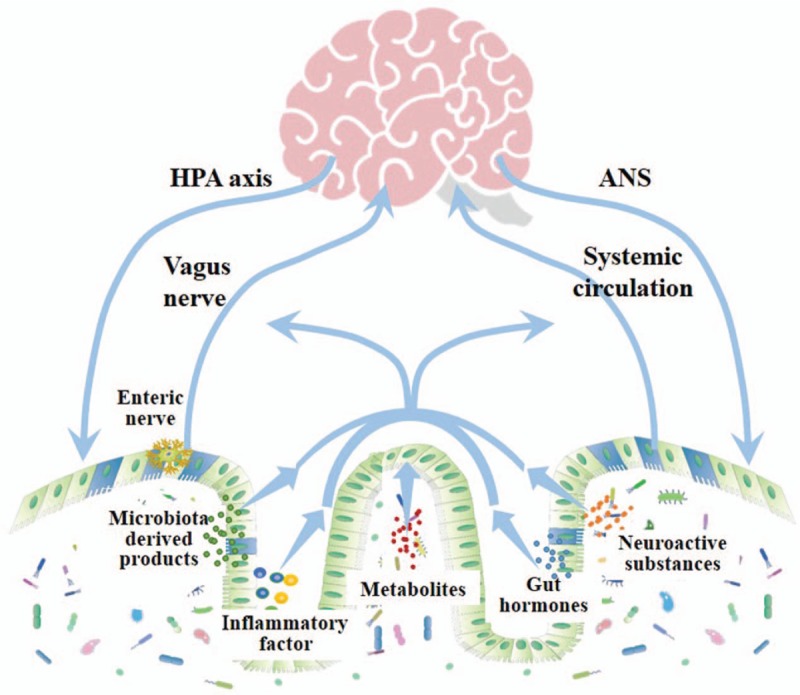
“Current evidence indicates that the gut modulates CNS functions primarily through the immune system and neuroimmune mechanisms, neurotransmitters, and ANS, which usually involves the vagus nerve, enteric nervous system, enteroendocrine signaling, and metabolites originating from the gut microbiota.([9]) For example, t…”
BackgroundA role for ghrelin in the central regulation of feeding
Nakazato, M., Murakami, N., Date, Y., Kojima, M., Matsuo, H., Kangawa, K., & Matsukura, S. (2001) · Nature · doi:10.1038/35051587 · Cited by 3,443 · cited 1×
“Ghrelin binds to the growth hormone secretagogue receptor 1a isoform (GHS-R1a) and plays various roles in food intake and memory regulation.([33]) Our previous study in obese patients included 30 individuals who underwent laparoscopic sleeve gastrectomy (LSG).”
BackgroundZelante, T., Iannitti, R. G., Cunha, C., De Luca, A., Giovannini, G., Pieraccini, G., Zecchi, R., D’Angelo, C., Massi-Benedetti, C., Fallarino, F., et al. (2013) · Immunity · doi:10.1016/j.immuni.2013.08.003 · Cited by 2,614 · cited 1×
“These indole compounds have been found to activate the aryl hydrocarbon receptor (AHR), and play extensive roles in the cell cycle, mucosal barrier, and immune regulation.([20,21]) Some species (Lactobacillus reuteri, Lactobacillus johnsonii, and Lactobacillus murinus) have been identified to provide indole derivative…”
BackgroundTolhurst, G., Heffron, H., Lam, Y. S., Parker, H. E., Habib, A. M., Diakogiannaki, E., Cameron, J., Grosse, J., Reimann, F., & Gribble, F. M. (2012) · Diabetes · doi:10.2337/db11-1019 · Cited by 2,404
Gut hormone PYY3-36 physiologically inhibits food intake
Batterham, R. L., Cowley, M. A., Small, C. J., Herzog, H., Cohen, M. A., Dakin, C. L., Wren, A. M., Brynes, A. E., Low, M. J., Ghatei, M. A., et al. (2002) · Nature · doi:10.1038/nature00887 · Cited by 2,351
Zheng, P., Zeng, B., Zhou, C., Liu, M., Fang, Z., Xu, X., Zeng, L., Chen, J., Fan, S., Du, X., et al. (2016) · Molecular Psychiatry · doi:10.1038/mp.2016.44 · Cited by 2,023 · cited 1×
“GF mice received fecal microbiota transplantation (FMT) showed the similar phenotypes as the “donors,” for examples, FMT of GF mice with microbiota frommajor depressive disorders patients results in increased depression-like behaviors.([11]) Colonization with the microbiota from patients with schizophrenia induces sch…”
BackgroundInteractions between the microbiota, immune and nervous systems in health and disease
Fung, T. C., Olson, C. A., & Hsiao, E. Y. (2017) · Nature Neuroscience · doi:10.1038/nn.4476 · Cited by 1,900 · cited 1×
“827 and Parkinson’s disease.([10]) GF mice received fecal microbiota transplantation (FMT) showed the similar phenotypes as the “donors,” for examples, FMT of GF mice with microbiota frommajor depressive disorders patients results in increased depression-like behaviors.”
BackgroundThe short-chain fatty acid acetate reduces appetite via a central homeostatic mechanism
Frost, G., Sleeth, M. L., Sahuri-Arisoylu, M., Lizarbe, B., Cerdan, S., Brody, L., Anastasovska, J., Ghourab, S., Hankir, M., Zhang, S., et al. (2014) · Nature Communications · doi:10.1038/ncomms4611 · Cited by 1,771 · cited 1×
“Acetate has been implied to play a direct role in the central appetite regulation,([18]) however, a study has shown that acetate produced by gut microbes could stimulate the parasympathetic nervous system and secretion of ghrelin, thereby increasing food intake.”
BackgroundKimura, I., Ozawa, K., Inoue, D., Imamura, T., Kimura, K., Maeda, T., Terasawa, K., Kashihara, D., Hirano, K., Tani, T., et al. (2013) · Nature Communications · doi:10.1038/ncomms2852 · Cited by 1,512 · cited 1×
“GPR43 was expressed in white adipose tissue, which allows SCFAs act as hormonal molecules and stimulate energy expenditure in the skeletal muscles and liver.([17]) More importantly, the effects of different SCFAs on the host physiology are distinct and the results are inconsistent.”
Background
Cited by
Items 101–151 of 151
Guo, H., Zhou, X., Zhou, L., Zhi, J., Fu, C., Liu, X., Wu, Y., Liu, F., & Feng, N. (2025) · PeerJ · doi:10.7717/peerj.19486 · Cited by 2
“Similarly, changes in the microbiota might impact the production of neurotransmitters and hormones involved in hunger signaling, further influencing feeding behavior ( Sun, Li & Nie, 2020 ; Smitka et al., 2021 ).”
Host-microbiota interactions and oncogenesis: Crosstalk and its implications in etiology
Khan, A. A., Nema, V., & Ashraf, M. T. (2023) · Microbial Pathogenesis · doi:10.1016/j.micpath.2023.106063 · Cited by 2
Zhang, F., Tao, Z., Chen, C., & Chow, B. (2023) · Frontiers in Cellular and Infection Microbiology · doi:10.3389/fcimb.2023.1257857 · Cited by 2
“Gut microbiota and GI hormones are two key components of the GI system that play important roles in regulating various physiological processes such as digestion, metabolism, and immune response (Clarke et al., 2014; Fukui et al., 2018; Sun et al., 2020; Woz ́ niak et al., 2021).”
BackgroundThe Microbial and Metabolic Link Between Gut and Brain
Salamalek, R., Shareef, Y., Abdulridha, F., & Soliman, S. S. M. (2025) · Springer eBooks · doi:10.1007/978-981-96-1305-2_17 · Cited by 1
Gut Microbiota–Leptin crosstalk in obesity and metabolic dysregulation
Singh, L. S., & Sharma, L. A. (2025) · Obesity Medicine · doi:10.1016/j.obmed.2025.100671 · Cited by 1
Unveiling the gut: microbiota and derived metabolites’ role in the rising tide of precocious puberty
Zhang, A., Wang, X., Wang, Z., Zhang, L., Zhu, X., Zhu, Y., Liu, Y., Zhu, C., Xu, D., Wang, H., et al. (2026) · Frontiers in Microbiology · doi:10.3389/fmicb.2026.1766234 · Cited by 3
“Thus, GM dysbiosis may cause neurotransmitter dysregulation, thereby linking GM imbalance to depression and anxiety (Sun et al., 2020).”
Devi, S., Debnath, N., Yadav, P., Satyavolu, S., Yadav, A. K., & Tyagi, N. (2026) · Comprehensive physiology · doi:10.1002/cph4.70165 · Cited by 1
Using gut neuron health as a predictive indicator of neurodegenerative disease
Langerová, T., & Gregory, J. M. (2026) · Future Neurology · doi:10.1080/14796708.2026.2684938 · Cited by 1
Tian, X., Song, E., Li, X. C., Fu, W., He, H., Gao, Z., & Gao, B. (2026) · Trends in Food Science & Technology · doi:10.1016/j.tifs.2026.105902 · Cited by 1
Microbiota–Gut–Brain Axis: An Integrative Overview of Communication Pathways
Martínez‐Porchas, M., Medina‐Félix, D., Olivas-Bernal, C. A., Guirado-Flores, J. S. O., Vargas‐Albores, F., Porchas‐Quijada, M., & Garibay-Valdéz, E. (2026) · Advanced Gut & Microbiome Research · doi:10.1155/agm3/8142006 · Cited by 1
Gut Microbiome Regulation of Appetite and Role in Neurological Disorders
Singh, A., Verma, O. P., & Tripathi, R. (2022) · Nutritional neurosciences · doi:10.1007/978-981-19-4530-4_6 · Cited by 1
Thergarajan, G., & Bhassu, S. (2022) · IntechOpen eBooks · doi:10.5772/intechopen.105866 · Cited by 1
Probiotic Agents for Alzheimer and Dementia
Pourranjbar, S., Mameghani, A. S., Gholami, M., & Abbasi-Maleki, S. (2024) · Nutritional neurosciences · doi:10.1007/978-981-97-4117-5_11 · Cited by 1
Microbiota and the Cardiovascular System
Lorenzo, Ó., Lumpuy‐Castillo, J., Espadas, C., Parascinet, O., & Martínez-Albaladejo, S. (2024) · Springer eBooks · doi:10.1007/978-3-031-65650-7_7 · Cited by 1
Cholecystokinin and the gut-brain axis
Browning, K. N., & Page, A. J. (2025) · Elsevier eBooks · doi:10.1016/b978-0-443-23720-1.00005-8 · Cited by 1
The Relationship Between Gut Health and Sports Performance
Bhattacharjee, B., Surendran, S., Khaitan, J., Patil, M., & Shathi, M. A. (2025) · IGI Global eBooks · doi:10.4018/979-8-3693-8699-6.ch010 · Cited by 1
BARBQTCM Survey: Einfluss von Schlafstörungen auf die TCM-Akzeptanz bei Übergewicht und Adipositas
Panhofer, P., Vlasak, T., Pfefferkorn, U., Stockert, K., Bijak, M., Stockenhuber, D., & Rothe, S. (2021) · Deutsche Zeitschrift für Akupunktur · doi:10.1007/s42212-020-00343-8
“Das Psycho-SoziALe Metabolische Syndrom (PSALMS) umfasst eine Vielzahl metabolischer [6], endokriner [17, 81] und psychosozialer Störungen [14, 83]: Fettleber [19], Insulinresistenz [42] und Diabetes mellitus [6], Bluthochdruck [32, 45], Dyslipidämie [86], Depressionen [27], (soziale) Phobien [84], Stress [8, 47] sowi…”
BackgroundThe Role of Prebiotics on Nutrient Sensing and Metabolic Homeostasis in the Small Intestine
Berthiaume, K. A. (2020) · UA Campus Repository (The University of Arizona)
Microbiome Management of Neurological Disorders
Ortíz, G. G., Bitzer-Quintero, O. K., Niño, C. L. C., Ramírez-Jirano, L. J., González-Usigli, H., Pacheco-Moisés, F. P., Torres-Mendoza, B. M., Mireles-Ramírez, M. A., Hernández-Cruz, J. J., & Delgado-Lara, D. L. C. (2020) · Elsevier eBooks · doi:10.1016/b978-0-12-819265-8.00003-6
Kaitan Antara Gangguan Perkembangan dan Perilaku Anak dengan Gut-Brain Axis
Anindya, P., & Diarsvitri, W. (2022) · Surabaya Biomedical Journal · doi:10.30649/sbj.v1i2.21
“[10,11] Sebaliknya. otak juga menggunakan jalur yang sama dalam mempengaruhi komposisi mikrobiota di saluran cerna.”
BackgroundAging Gut Microbiota and Sarcopenia Signaling
Jain, S. M., Das, A., Banerjee, A., Castillo, M. J., Marotta, F., Radhakrishnan, A., & Pathak, S. (2023) · Healthy ageing and longevity · doi:10.1007/978-3-031-14023-5_12
Symbiotic microbes from pig gut
Jeya, K. R., Veerapagu, M., Khalifa, A. Y. Z., & Sankaranarayanan, A. (2023) · Elsevier eBooks · doi:10.1016/b978-0-323-99334-0.00032-3
Régulation et fonctions du facteur de transcription ChREBP dans l'épithélium intestinal
Charifi, W. (2021) · theses.fr (ABES) · doi:10.70675/89543c3fz31abz4d56zaa7bz77c2c07ffd69
The Connection Between What We Eat and Our Brains Throughout the Whole Life Journey
Taha, A. (2024) · Nutritional neurosciences · doi:10.1007/978-981-97-2681-3_11
Gut–brain communication through microbes
Green, M., & Foster, J. A. (2024) · Elsevier eBooks · doi:10.1016/b978-0-323-90144-4.00002-1
The enteric nervous system's (ENS) impact on the neurobiology of infectious diseases
Obadia, N., Estato, V., & Neto, H. C. D. C. F. (2024) · Elsevier eBooks · doi:10.1016/b978-0-443-19130-5.00002-2
COLONIC IRRIGATION AND AGING: HYPOTHETICAL INSIGHTS INTO INFLAMMATION REDUCTION
Benlidayı, İ. C. (2024) · Anti-Aging Eastern Europe · doi:10.56543/aaeeu.2024.3.4.07
Salim, M., Singh, V. K., & Singh, R. G. (2025) · European Journal of Medical and Health Research · doi:10.59324/ejmhr.2025.3(2).15
Effects and mechanisms of esketamine on depression by targeting gut microbiota: A narrative review
Liu, J., & Zhou, C. (2025) · New discovery. · doi:10.61958/ndfs6517
Nutritional Care Process in Hospitalized Patients with Obesity-Related Multimorbidity
Rivera-Carranza, T., Girón, A. L.-T., Mimiaga-Hernández, C., & Aguilar‐Vargas, A. (2025) · Obesities · doi:10.3390/obesities5020039
Emerging Insights into Gut-Brain Axis Dysregulation in Neurodegenerative Disorders
Wadan, A. S., gemaie, D. S. A. E. E., & Ahmed, M. A. (2024) · Neuroscience Updates · doi:10.47176/update.2024.108
Smith, C. J., & Perfetti, T. A. (2025) · Springer eBooks · doi:10.1007/978-3-031-52641-1_18-1 · Cited by 1
The Role of Diet in Supporting Neuroplasticity and Promoting Brain Resilience
Lashin, B. I., Aldalil, S. S., Hefnawy, M. T., Elattar, M., Ghahremanpour, G. K., Mahmoud, A., & Hammad, Y. (2025) · Nutritional neurosciences · doi:10.1007/978-981-95-1983-5_7 · Cited by 1
郭, 沛. (2025) · Traditional Chinese Medicine · doi:10.12677/tcm.2025.1412768
Zhang, B., Ando, M., Kawano, K., Iwasaki, Y., Inoue, K., & Ohinata, K. (2025) · The FASEB Journal · doi:10.1096/fj.202503006r
“The gastrointestinal (GI) tract is responsible for releasing gut hormones in response to nutrient sensing, in conjunction with the gut microbiota, which has gained significant research attention due to its potential impact on brain health [9].”
SCF complex: Master regulator of metabolic adaptations in cancer cells
Bandaru, N., Bhatt, S., Dudhe, P. B., & Gambhire, M. S. (2025) · Elsevier eBooks · doi:10.1016/b978-0-443-33459-7.00007-7
Current evidence on the relationship between gut microbiota (GM) and neurodegenerative diseases
Muñoz, S. C. (2024) · UCrea (University of Cantabria)
Gut-brain axis in metabolic control
Singh, S. P., Ghosh, S., Singh, K. K., & Sinha, J. K. (2026) · Elsevier eBooks · doi:10.1016/b978-0-443-32848-0.00024-8
Microbial-derived mediators of the gut–brain axis: Implications for neurological disorders
Abady, M. M., Shawky, A. M., & Mohammed, D. M. (2026) · The Journal of Nutritional Biochemistry · doi:10.1016/j.jnutbio.2026.110394
Qian, Y. (2024) · Carolina Digital Repository (University of North Carolina at Chapel Hill) · doi:10.17615/09qr-gq50
Pan, Y., Wang, Y., Liu, Y., Deng, M., Liu, J., Lou, Y., & Qiu, Y. (2026) · Progress in Neuro-Psychopharmacology and Biological Psychiatry · doi:10.1016/j.pnpbp.2026.111806
Gut Microbiome-Mediated Inter-Organ Crosstalk in Obesity and Aging
Mehta, O., & Ghosh, T. S. (2026) · Healthy ageing and longevity · doi:10.1007/978-3-032-24097-2_10
Zinc and Depression: From Neurobiological Functions to Gut–Brain Interactions
Li, H., Huang, J., Zhang, T., Tang, Z., Xu, Q., Gong, D., Wang, L., & Zhang, Y. (2026) · Nutrients · doi:10.3390/nu18162584
Ren, F., Hong, K., Yu, X., Chen, L., Luo, Y., Zeng, Y., Gan, L., Hu, X., & Ruan, L. (2026) · Chinese Medical Journal · doi:10.1097/cm9.0000000000004276
Intestinal Stem Cells: Regulation, Plasticity, and Therapeutic Potential
Sagadevan, S., Cohen-Almagor, R., & Ordóñez‐Morán, P. (2026) · Methods in molecular biology · doi:10.1007/978-1-0716-5412-5_1
Shen, S., Zhou, Y., Qian, J., Li, T., Hu, X., Ji, X., Zhang, X., & Zhou, D. (2026) · Journal of Neuroimmunology · doi:10.1016/j.jneuroim.2026.579102
Perspective Chapter: Gut–Brain Axis and Psychobiotics – New Horizons in the Treatment of Depression
Işık, M. (2026) · IntechOpen eBooks · doi:10.5772/intechopen.1015811
The rated sweetness of infant formulas and childhood anthropometric measures
Olson, C. (2024) · K-State Research Exchange (Kansas State University)
Intestinal Microbiota and Multiple Sclerosis: towards new therapeutic approaches
Rosso, R. (n.d.) · Institutional Research Information System University of Turin (University of Turin)
From gut microbiome to aging brain: Butyrate as a neurogeroscience effector
Mitrea, L., Calinoiu, L.-F., Martau, G.-A., Teleky, B.-E., Cocean, A.-M., Odocheanu, R., Stefanescu, B.-E., & Vodnar, D.-C. (2026) · Neuroscience & Biobehavioral Reviews · doi:10.1016/j.neubiorev.2026.107037
Fuli, H., Luo, J., Zhu, X., Jia, Z., Zhou, Y., Meng, X., Li, S., Hu, C., Yu, L., & Chen, Z. (2026) · Chinese Herbal Medicines · doi:10.1016/j.chmed.2026.11.001
Metadata
- Authors
- Sun, L.-J., Li, J.-N., & Nie, Y.-Z.
- Affiliations
- State Key Laboratory of Cancer Biology, National Clinical Research Center for Digestive Diseases and Xijing Hospital of Digestive Diseases, The Fourth Military Medical University, Xi’an, Shaanxi 710032, China
- Department of Gastroenterology, Chinese Academy of Medical Sciences, Peking Union Medical College Hospital, Beijing 100730, China.
- Venue
- Chinese Medical Journal
- Published
- 2020-03-02
- Volume
- 133
- Issue
- 7
- Pages
- 826-833
- ISSN
- 0366-6999 (ISSN-L)
- 2542-5641
- PMC
- PMC7147657
- OpenAlex
- W3012468462
- Semantic Scholar
- ddf0f8df7797419d80bced352f449901a2e7dc28
- Cited by
- 145
- References
- 63
- Citations by year
- 2026: 17 · 2025: 38 · 2024: 31 · 2023: 22 · 2022: 19 · 2021: 8 · 2020: 9
- FWCI
- 1.39
- Type
- journal article
- Language
- en
- Open access
- gold
- doi.org
- Licence
- Locations
- Chinese Medical Journal (publishedVersion, cc-by-nc-nd)
- PubMed Central (publishedVersion, cc-by-nc-nd)
- PubMed (publishedVersion)
- DOAJ (DOAJ: Directory of Open Access Journals) (submittedVersion, cc-by-sa)
- Topics
- Life Sciences › Biochemistry, Genetics and Molecular Biology › Molecular Biology › Gut microbiota and health
- Health Sciences › Medicine › Gastroenterology › Gastrointestinal motility and disorders
- Life Sciences › Neuroscience › Endocrine and Autonomic Systems › Regulation of Appetite and Obesity
- Keywords
- gastrointestinal hormones, gut microbiota, gut-brain axis, enteroendocrine cells, mental illness, gastrointestinal diseases, obesity, anxiety, depression
- MeSH terms
- Gastrointestinal Microbiome, Animals, Anxiety, Appetite, Depression, Humans, Gastrointestinal Tract, Microbiota
About these checks
Registry, retraction, Cites and statistics results are computed, not judged, with one exception: a printed reference that no index lists is read once by a model before it counts as a citation error. Claims are extracted by a model and kept only when their quote appears verbatim in the text; each cited source is then checked, with a model’s help, for whether it says what the claim relies on. Those verdicts can be wrong — read the claim’s quote and the cited source before relying on one.
Statistics and arithmetic are recomputed, not judged.
Confidence bands are shown only for fields calibrated on our annotated test set. None is calibrated yet, so no band is shown.
What counts as a claim ›How we measure confidence ›How we check this ›
Are you an author, or do you see a problem with this page? Request a review
Data sources
Bibliographic data: Semantic Scholar, OpenAlex, Crossref.
Contains information from the Semantic Scholar Academic Graph Datasets, made available under the ODC Attribution License (ODC-BY 1.0).
Semantic Scholar’s data is described in: Kinney, R., et al. (2023). The Semantic Scholar Open Data Platform. arXiv:2301.10140.
