

ChatGPT and other artificial intelligence applications speed up scientific writing
Open accessThe DOI matches its Crossref record; 15 of the 15 references it cites were found in a registry or an index.
Abstract
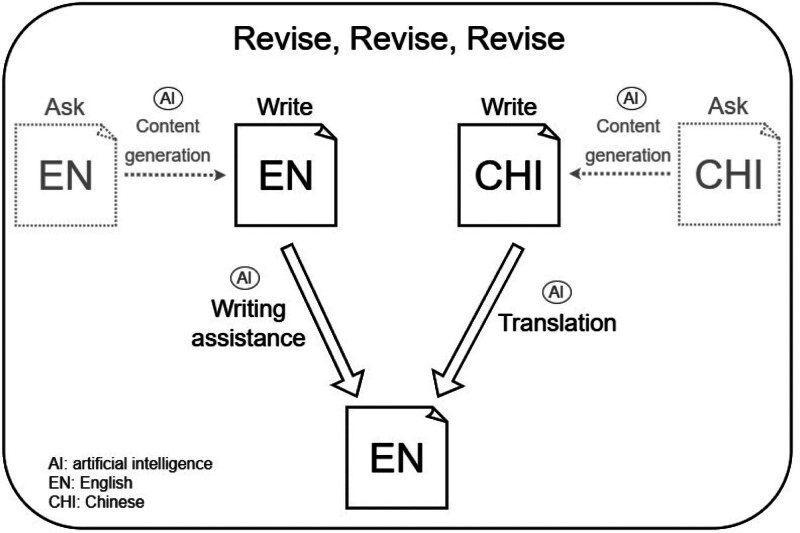
The launch of ChatGPT (Chat Generative Pre-trained Transformer, OpenAI Limited Partnership, San Francisco, USA) on November 30, 2022, has sparked a wave of enthusiasm.1,2 People from all walks of life are eager to experiment with this novel application and discussions are lively, especially in the education sector.3–5 In contrast, discussion of this topic in medical journals has lagged behind,6–9 and much of the discussion has focused on ghostwriting by ChatGPT, involving academic ethics, originality, and authorship.10–12 In fact, the use of artificial intelligence (AI) technology in texts has become increasingly mature in recent years,13 dramatically changing the way scientific writing works (Table 1). Table 1 - Examples of artificial intelligence applications in scientific writing Tool Web address (accessed on February 5, 2023) Writing assistance DeepL Write https://www.deepl.com/write Ludwig https://ludwig.guru/ Grammarly https://app.grammarly.com/ QuillBot https://quillbot.com/ Trinka https://www.trinka.ai/ Microsoft Editor https://www.microsoft.com/zh-tw/microsoft-365/microsoft -editor Translation DeepL Translator https://www.deepl.com/translator Google Translate https://translate.google.com/ Bing Translator https://www.bing.com/translator Reverso Translation https://www.reverso.net/text-translation Youdao Translate https://fanyi.youdao.com/ Baidu Translate https://fanyi.baidu.com/ Content generation ChatGPT https://chat.openai.com/ Copy.ai https://www.copy.ai/ Texta https://www.texta.ai/ ChatSonic https://writesonic.com/chat Writier https://writier.io/ Writerly https://writerly.ai/ English has been the dominant scientific language (lingua franca) for decades.14 It is undeniable that the vast majority of scientists who do not speak English as their mother tongue still have difficulty or are much less proficient in writing in English. Machine translation, especially natural language processing using neural networks and deep learning, can almost help overcome language barriers. The following demonstrates three AI-powered approaches to writing in English for native Chinese speakers (Fig. 1).Fig. 1: Use of artificial intelligence applications in scientific writing.The tools available now for writing assistance, particularly in English, go well beyond simple grammar, punctuation, and spelling checks. They can provide immediate synonym searches to suggest word choices, as well as paraphrasing to alter the tone and style of the text. Take as an example DeepL Write (DeepL GmbH, Cologne, Germany), the public beta version of which has been launched on January 17, 2023. The moment the user types a word, the software automatically suggests various synonyms or related terms. Once the user has written a few words, the software offers a number of additional word choices that can be used to complete the sentence. For an entire sentence, dozens of different ways to write that sentence will be available. AI provides contextualized examples for reference through the sentence search engine and natural language processing. In translation, AI has dramatically improved the accuracy of machine translation in recent years, with DeepL Translator (DeepL GmbH) being probably the leader.15 DeepL Translator uses an algorithm called a convolutional neural network in deep learning. In August 2017, DeepL Translator launched the free online translation service. By the end of 2022, it has supported 29 languages, with Chinese in March 2020. A variety of comparable products are available on the internet. Users can paste the Chinese text into various translation tools, compare the results, and choose the right one. More importantly, try to rewrite the original Chinese text repeatedly so that the translation software can understand it and then provide appropriate results. The use of AI to write scientific papers is clearly unethical, and its accuracy is currently in doubt. Generally speaking, writing is only a small part of the overall research. The core of the research should be the idea together with its results. In addition, science is based on previous research and citation is very important. Currently, AI content generation tools are not yet able to automatically provide correct citing sources. There is no denying that for many people, writing is not easy. ChatGPT and other AI-powered content generation tools can write various versions of text in a few seconds, perhaps inspiring the authors to overcome the writer’s block. Regarding the role of AI in scientific writing, we should bravely embrace the new world with an open mind. Physicians do not need to understand the physics of computed tomography and magnetic resonance imaging in detail, but only how to interpret the images. Researchers do not need to understand the mathematical principles underlying statistical models; instead, they must understand how to apply statistical formulae. Similarly, scientists do not need to be embarrassed about not knowing AI algorithms; rather, they shou
Overview
The claims and statistics of this paper haven’t been checked yet.
Free: it reads the open-access text and checks the first 5 claims that cite a source we can check. Create a free account to check every claim.
Integrity signals
Registry
Cites
Statistics
Figures
Verification
Claims the paper makes
The claims and statistics of this paper haven’t been checked yet.
Free: it reads the open-access text and checks the first 5 claims that cite a source we can check. Create a free account to check every claim.
Claims other papers make about this one
Each is checked against this paper’s own text: does it say what the citing paper says it does?
The source backs part of the claim, not all of it — or backs it for a different population, condition or comparison.
In the citing paper
“Fifth, the risk of research fraud (e.g., ghostwriting, falsified or fake research) involving ChatGPT should be considered seriously [23,37,38,66,72,79]”
From ChatGPT Utility in Healthcare Education, Research, and Practice: Systematic Review on the Promising Perspectives and Valid Concerns (2023) · cites this paper as [23]
Experimental — accuracy not yet measuredThe source backs part of the claim, not all of it — or backs it for a different population, condition or comparison.
In the citing paper
“Additionally, learners can expedite their writing development as AI tools help them identify and rectify grammatical and lexical errors, while also suggesting alternative sentence structures to enhance the overall writing quality and structure (Zhao, 2022; Chen, 2023; Salvagno et al., 2023).”
From Enhancing academic writing skills and motivation: assessing the efficacy of ChatGPT in AI-assisted language learning for EFL students (2023) · cites this paper as Chen, 2023
Experimental — accuracy not yet measuredThe source backs part of the claim, not all of it — or backs it for a different population, condition or comparison.
In the citing paper
“In particular, differences between domestic and international students are likely to be significant, as international students often face unique challenges in the learning process and have reported viewing tools such as ChatGPT as valuable for overcoming language barriers and accessing personalised academic support (Chen 2023).”
From Widely used but barely trusted: understanding student perceptions on the use of generative AI in higher education (2025) · cites this paper as Chen 2023
Experimental — accuracy not yet measuredThe source backs part of the claim, not all of it — or backs it for a different population, condition or comparison.
In the citing paper
“Moreover, the utility of ChatGPT extends to involve an improvement in language and a better ability to express and communicate research ideas and results, ultimately speeding up the publication process with the faster availability of research results [23,25,29,40,48,63,66].”
From ChatGPT Utility in Healthcare Education, Research, and Practice: Systematic Review on the Promising Perspectives and Valid Concerns (2023) · cites this paper as [23]
Experimental — accuracy not yet measuredThe source backs part of the claim, not all of it — or backs it for a different population, condition or comparison.
In the citing paper
“Second, several records mentioned the current problems regarding citation inaccuracies, insufficient references, and ChatGPT referencing to non-existent sources [23,26].”
From ChatGPT Utility in Healthcare Education, Research, and Practice: Systematic Review on the Promising Perspectives and Valid Concerns (2023) · cites this paper as [23]
Experimental — accuracy not yet measured
3 more claims about this paper
Create a free account to see every claim other papers make about this one.
Self-check
Percentages, sums and reported differences re-computed from the paper’s own numbers.
The self-check needs the paper’s full text.
Citations
Cites
ChatGPT and other large language models are double-edged swords
Shen, Y., Heacock, L., Elias, J., Hentel, K. D., Reig, B., Shih, G., & Moy, L. (2023) · Radiology · doi:10.1148/radiol.230163 · Cited by 1,008
ChatGPT listed as author on research papers: many scientists disapprove
Stokel-Walker, C. (2023) · Nature · doi:10.1038/d41586-023-00107-z · Cited by 868
Abstracts written by ChatGPT fool scientists
Else, H. (2023) · Nature · doi:10.1038/d41586-023-00056-7 · Cited by 611
A Conversation on Artificial Intelligence, Chatbots, and Plagiarism in Higher Education
King, M. R., & chatGPT (2023) · Cellular and Molecular Bioengineering · doi:10.1007/s12195-022-00754-8 · Cited by 602
Open artificial intelligence platforms in nursing education: Tools for academic progress or abuse?
O’Connor, S., & ChatGPT (2023) · Nurse Education in Practice · doi:10.1016/j.nepr.2022.103537 · Cited by 585
AI bot ChatGPT writes smart essays — should professors worry?
Stokel-Walker, C. (2022) · Nature · doi:10.1038/d41586-022-04397-7 · Cited by 543
Flanagin, A., Bibbins-Domingo, K., Berkwits, M., & Christiansen, S. L. (2023) · JAMA · doi:10.1001/jama.2023.1344 · Cited by 420
ChatGPT: Evolution or revolution?
Gordijn, B., & Have, H. T. (2023) · Medicine, Health Care and Philosophy · doi:10.1007/s11019-023-10136-0 · Cited by 317
The Future of AI in Medicine: A Perspective from a Chatbot
King, M. R. (2023) · Annals of Biomedical Engineering · doi:10.1007/s10439-022-03121-w · Cited by 299
Baethge, C. (2008) · Deutsches Ärzteblatt international · doi:10.3238/arztebl.2008.0037 · Cited by 108
Cited by
Items 101–200 of 244
Wu, T., & Chang, M. (2023) · International Conference on Engineering and Emerging Technologies (ICEET) · doi:10.1109/iceet60227.2023.10525933 · Cited by 18
Akyön, Ş. H., Akyön, F. Ç., Camyar, A. S., Hızlı, F., Sari, T., & Hızlı, Ş. (2024) · JMIR Medical Informatics · doi:10.2196/59258 · Cited by 17
“AI can improve the data analysis and publication process in scientific research while also being used to generate medical papers [16].”
BackgroundMarcel, F., & Kang, P. (2024) · Discourse and Writing/Rédactologie · doi:10.31468/dwr.1051 · Cited by 28
“…documents were analyzed and coded systematically based on each of the categories within the themes of the research questions drawing on iterative qualitative and thematic Discourse and Writing/Rédactologie Volume 34, 2024 http://journals.sfu.ca/dwr 102 coding methods (Charmaz, 2006; Saldaña, 2021).”
MethodSadowsky, S. J. (2025) · Journal of Prosthetic Dentistry · doi:10.1016/j.prosdent.2025.03.025 · Cited by 15
Avello, D., & Estrada-Palavecino, L. (2023) · Cadernos Brasileiros de Terapia Ocupacional · doi:10.1590/2526-8910.ctoen271035342 · Cited by 18
“This technology is based on mathematical models and algorithms, which allows it to learn from data and improve its performance over time (Chen, 2023; Crawford et al., 2023; Sallam, 2023).”
MethodPresence and consequences of positive words in scientific abstracts
Edlinger, M., Buchrieser, F., & Wood, G. M. D. O. (2023) · Scientometrics · doi:10.1007/s11192-023-04864-6 · Cited by 15
“Advances in artificial intelligence such as chatGPT only complicate the picture for they accelerate further paper production (Chen, 2023; Hosseini & Horbach, 2023) and are the basis for tools to summarize scientific papers.”
BackgroundDíaz-Cuevas, A. P., & Rodríguez-Herrera, J. D. (2024) · Cuaderno de Pedagogía Universitaria · doi:10.29197/cpu.v21i42.595 · Cited by 37
Mahama, I., Baidoo-Anu, D., Eshun, P. A., Ayimbire, B., & Eggley, V. E. (2023) · Indonesian Journal of Innovation and Applied Sciences (IJIAS) · doi:10.47540/ijias.v3i3.1005 · Cited by 45
“Since it was first made available, GPT-3 has been used in many different fields, such as language translation, content creation, and linguistic modelling (Chen, 2023).”
MethodIt takes one to know one—Machine learning for identifying OBGYN abstracts written by ChatGPT
Levin, G., Meyer, R., Guigue, P., & Brezinov, Y. (2024) · International Journal of Gynecology & Obstetrics · doi:10.1002/ijgo.15365 · Cited by 12
Patil, D. (2025) · SSRN Electronic Journal · doi:10.2139/ssrn.5057408 · Cited by 28
Avello, D., Lucero-González, N., & Villagrán, I. (2024) · Revista Médica Clínica Las Condes · doi:10.1016/j.rmclc.2024.06.003 · Cited by 28
Pressman, S. M., Garcia, J. P., Borna, S., Gomez-Cabello, C. A., Haider, S. A., Haider, C. R., & Forte, A. J. (2025) · Aesthetic Plastic Surgery · doi:10.1007/s00266-025-04836-6 · Cited by 11
“Specifically, ChatGPT can assist with grammar, syntax, spelling, paraphrasing, and rewriting [5, 6].”
SCOPE AND LIMITATIONS OF CHATGPT IN RESEARCH AND ACADEMIC WRITING
Singh, S. P., Khan, I. A., & Mitra, S. (2024) · Digital Journal of Clinical Medicine · doi:10.55691/2582-3868.1177 · Cited by 17
Demirkol, M., & Malkoç, N. (2023) · Educational Process International Journal · doi:10.22521/edupij.2023.124.3 · Cited by 11
“…addition, there is a growing interest in the use of ChatGPT for research and scientific publication, and there are several concerns over the ethical and responsible integration of this new chatbot to promote scientific quest and publications (Burger et al., 2023; Chen, 2023; Tülübaş et al., 2023).”
BackgroundExploring ChatGPT usage amongst female academics and researchers in the academia
Adewale, S. (2024) · International Journal of Information and Learning Technology · doi:10.1108/ijilt-01-2024-0012 · Cited by 19
A Review of ChatGPT and its Impact in Different Domains
Aggarwal, S. (2023) · International Journal of Applied Engineering Research · doi:10.37622/ijaer/18.2.2023.119-123 · Cited by 25
The Usage of Artificial Intelligence in Education in Light of the Spread of ChatGPT
Hassan, A. (2023) · Contributions to management science · doi:10.1007/978-981-99-6101-6_50 · Cited by 15
Uses and Misuses of ChatGPT as an AI-Language Model in Academic Writing
Mahdi, R., Salehi, H., & Tabatabaei, O. (2024) · 2024 10th International Conference on Artificial Intelligence and Robotics (QICAR) · doi:10.1109/qicar61538.2024.10496607 · Cited by 17
“The versatility of GPT-3 has allowed it to be utilized in diverse fields with varying requirements and objectives (Chen, 2023).”
BackgroundCasey, J. C., Dworkin, M. S., Winschel, J. M., Bacic, J. D., Daher, M., Katarincic, J. A., Gil, J. A., & Akelman, E. (2024) · Hand surgery & rehabilitation · doi:10.1016/j.hansur.2024.101757 · Cited by 9
ChatGPT surges ahead: GPT-4 has arrived in the arena of medical research
Wang, Y., & Chen, T. (2023) · Journal of the Chinese Medical Association · doi:10.1097/jcma.0000000000000955 · Cited by 9
Self-citationPatil, D. (2025) · SSRN Electronic Journal · doi:10.2139/ssrn.5057410 · Cited by 26
Akrimi, S., Schwensfeier, L., Düking, P., Kreutz, T., & Brinkmann, C. K. (2025) · Sports · doi:10.3390/sports13040092 · Cited by 14
“While ChatGPT offers significant potential, it also has certain limitations, such as the generation of fictitious references and artificial hallucinations [8,9].”
Hassan, A. (2026) · Education and Information Technologies · doi:10.1007/s10639-026-13946-w · Cited by 34
“Studies highlight AI’s capacity to enhance formative feedback, adaptive learning pathways, and self-regulated learning processes, all of which are strongly associated with improved academic outcomes (Chen, 2023; Crompton & Burke, 2023; Zawacki-Richter et al., 2019).”
THE USE OF ARTIFICIAL INTELLIGENCE APPLICATIONS FOR EDUCATION AND SCIENTIFIC RESEARCH
Segovia-Juarez, J. L., & Baumgartner, R. (2023) · Hatun Yachay Wasi · doi:10.57107/hyw.v3i1.61 · Cited by 25
“It is an efficient language bot that generates text by linguistic connections (Buriak et al., 2023), which is helpful for second language writing (Chen, 2023).”
BackgroundChatGPT and the healthcare industry: a comprehensive analysis of its impact on medical writing
Awal, S. S., & Awal, S. S. (2023) · Journal of Public Health · doi:10.1007/s10389-023-02170-2 · Cited by 10
“ChatGPT has the potential to transform the field of medical writing by streamlining the process and saving time (Chen 2023).”
Lee, N., & Lee, K. (2024) · Information Technology & Tourism · doi:10.1007/s40558-024-00296-x · Cited by 11
“Moreover, as AI technology advances, MT has been improving its grammar and vocabulary accuracy in translation (Chen 2023).”
Yalçın, A. (2024) · Uluslararası Karamanoğlu Mehmetbey Eğitim Araştırmaları Dergisi · doi:10.47770/ukmead.1485504 · Cited by 7
Bıdık, N. Ü. (2024) · European Journal of Education · doi:10.1111/ejed.12848 · Cited by 8
Kohl, G., Ulate, M. M., Bhatt, J., Lynch, J. K., Scior, K., & Charlesworth, G. M. (2024) · The Gerontologist · doi:10.1093/geront/gnae186 · Cited by 7
Constantin, F., Pop, A.-M., & Sim, M.-A. (2024) · Springer proceedings in business and economics · doi:10.1007/978-3-031-51038-0_27 · Cited by 10
Mustofa, M. B., Wuryan, S., Jaya, M. A. M., Saputra, S. J., & Putri, M. C. (2024) · KnE Social Sciences · doi:10.18502/kss.v9i12.15829 · Cited by 15
Pathak, A. (2023) · SSRN Electronic Journal · doi:10.2139/ssrn.4499278 · Cited by 10
Patil, D. (2025) · SSRN Electronic Journal · doi:10.2139/ssrn.5057424 · Cited by 19
Wang, G., Shakibaei, G., & Çakmak, F. (2025) · British Educational Research Journal · doi:10.1002/berj.4190 · Cited by 8
RetractedUsing the Chat Generative Pre-trained Transformer in academic writing in health: a scoping review
Costa, I. C. P., do Nascimento, M. C., Treviso, P., Chini, L. T., Roza, B. D. A., Barbosa, S. D. F. F., & Mendes, K. D. S. (2024) · Revista Latino-Americana de Enfermagem · doi:10.1590/1518-8345.7133.4194 · Cited by 20
Ehrett, C., Hegde, S., André, K., Liu, D., & Wilson, T. (2024) · JMIR Medical Education · doi:10.2196/51433 · Cited by 11
“…LLMs have been used to aid revolutionizing medical curriculum development [8,9], teaching methodologies [10], personalized study plans and learning materials [11], assessments and evaluation [12,13], medical writing and assistance [14,15], and medical research and literature review [16,17].”
Artificial intelligence in scientific writing: opportunities and ethical considerations
Sharma, A. K., Rao, P., Ahmed, M. Z., & Chaturvedi, K. K. (2024) · International Journal of Research in Medical Sciences · doi:10.18203/2320-6012.ijrms20244167 · Cited by 8
Fu, C., & Damonte, J. (2024) · Lecture notes in operations research · doi:10.1007/978-3-031-61589-4_3 · Cited by 5
Rashidov, A., & Rashidova, F. (2024) · International Conference on Computing, Communication and Networking Technologies (ICCCNT) · doi:10.1109/icccnt61001.2024.10724588 · Cited by 9
Reply to “Comment on ChatGPT failed Taiwan’s Family Medicine Board Exam”
Weng, T.-L., & Chen, T. (2023) · Journal of the Chinese Medical Association · doi:10.1097/jcma.0000000000000956 · Cited by 6
Self-citationMedical ChatGPT – A systematic Meta-ReviewPreprint
Egger, J., Sallam, M., Luijten, G., Gsaxner, C., Pepe, A., Kleesiek, J., Puladi, B., & Li, J. (2024) · medRxiv · doi:10.1101/2024.04.02.24304716 · Cited by 6
Exploring AI: Transforming medical practice, education and research
Haid, B., Nelson, C. P., Dönmez, M. İ., Cascio, S., Garriboli, M., Nieuwhof-Leppink, A. J., Ching, C. B., Braga, L. H., Rosoklija, I., & Harper, L. (2024) · Journal of Pediatric Urology · doi:10.1016/j.jpurol.2024.12.013 · Cited by 4
AI Tools for Efficient Writing and Editing in Academic Research
Abinaya, M., & Vadivu, G. (2024) · Advances in educational technologies and instructional design book series · doi:10.4018/979-8-3693-1798-3.ch009 · Cited by 10
Heriyawati, D. F., & Romadhon, M. G. E. (2025) · Computer-Assisted Language Learning Electronic Journal · doi:10.54855/callej.252614 · Cited by 6
“As temporal epochs unfold, the escalating ease of integration with ChatGPT within the educational milieu precipitates inherent hazards that impinge upon the essential pedagogical objectives surrounding the cultivation of proficient writing skill among students (Chen, 2022).”
Unleashing AI's Potential for Optimal Student Learning in Education: Ethical Implications
Sandhya, H., & Varghese, B. (2023) · Advances in educational technologies and instructional design book series · doi:10.4018/979-8-3693-0205-7.ch005 · Cited by 4
Large Language Models and OpenLogos: An Educational Case Scenario
Pavlova, A., Gerazov, B., & Barreiro, A. M. (2024) · Open Research Europe · doi:10.12688/openreseurope.17605.1 · Cited by 4
“These models aid as translating tools and can help students and teachers effectively navigate language barriers 20 .”
MethodSingh, S., Prasad, P., Joshi, K., Singh, J., Garg, N., & Jain, K. (2024) · Cancer Research Statistics and Treatment · doi:10.4103/crst.crst_330_23 · Cited by 4
Board 66: Impact of ChatGPT on Student Writing in Construction Management: A Study of Applied Risks
Zhao, T., Wang, G. C., Chance, R., & Buckhalter, C. (2024) · ASEE Annual Conference & Exposition · doi:10.18260/1-2--48363 · Cited by 8
Bull, D., & Okaygoun, D. (2024) · Cureus · doi:10.7759/cureus.73003 · Cited by 7
Stadnik, M., Coskovic, A. L., Banko, T., & Ružak, D. (2025) · Interdisciplinary Description of Complex Systems · doi:10.7906/indecs.23.1.3 · Cited by 6
AI’s deep research revolution: Transforming biomedical literature analysis
Wang, Y.-M., & Chen, T. (2025) · Journal of the Chinese Medical Association · doi:10.1097/jcma.0000000000001231 · Cited by 4
Self-citationPark, S.-Y., & Kim, C.-E. (2023) · 동의생리병리학회지 · doi:10.15188/kjopp.2023.10.37.5.134 · Cited by 5
Cabrera, C., & Neville, R. (2025) · Perspectives: Policy and Practice in Higher Education · doi:10.1080/13603108.2025.2595453 · Cited by 4
A bibliometric analysis of large language model-based AI chatbots in surgery
Wang, Z., Zhou, H., & Song, T. (2025) · Annals of Medicine and Surgery · doi:10.1097/ms9.0000000000003234 · Cited by 3
“These advancements contribute to a more efficient publication process, enabling the expedited dissemination of research findings [ 32 , 33 ] .”
Artificial Intelligence and Publishing Ethics: A Narrative Review and SWOT Analysis
Gurnal, P., & Rana, L. (2025) · Cureus · doi:10.7759/cureus.84098 · Cited by 5
“Further, it can provide nonexistent references, the information provided is not free of plagiarism and bias, and, at present, AI-generated text detectors appear to have a low success rate [31,41].”
Artificial intelligence: A game-changer in writing research papers in physical education and sports
Sagre, S., & Ahlawat, R. P. (2023) · International Journal of Yogic Human Movement and Sports Sciences · doi:10.22271/yogic.2023.v8.i2d.1471 · Cited by 6
Avello, D., & Estrada-Palavecino, L. (2023) · Cadernos Brasileiros de Terapia Ocupacional · doi:10.1590/2526-8910.ctoen271035343 · Cited by 8
Zhao, T., Chance, R., Buckhalter, C., & Wang, G. C. (2024) · EPiC series in built environment · doi:10.29007/4d7m · Cited by 8
“For example, assisting in literature search, data management (Chen, 2023; Huang & Tan, 2023; Nguyen, 2023; Salvagno, Taccone, & Gerli, 2023; Shah, 2023), reviewing and correcting grammatical errors (Choi et al., 2023; Farhat, Sohail, & Madsen, 2023; Fitria, 2023; Hargreaves, 2023), speeding up…”
Wu, X., Whittington, D., Chen, Y. J., & Zuo, R. (2024) · Journal of Asian Public Policy · doi:10.1080/17516234.2024.2425874 · Cited by 5
“Generative AI has also been applied to facilitate various stages of the research process, such as literature review (McGee, 2023), hypothesis generation (Park et al., 2024), and scientific writing (Chen, 2023; Dergaa et al., 2023).”
A Comparative Study of Large Language Models in Explaining Intrinsically Disordered ProteinsPreprint
Gonzalez, D. T., Djulbegovic, M. B., Kim, C. K., Antonietti, M., Gameiro, G. R., & Uversky, V. N. (2023) · Preprints.org · doi:10.20944/preprints202308.1014.v1 · Cited by 2
Salimi, E. A., & Hajinia, M. (2024) · Research Square · doi:10.21203/rs.3.rs-5534554/v1 · Cited by 9
Patil, D. (2025) · SSRN Electronic Journal · doi:10.2139/ssrn.5057418 · Cited by 9
GenAI language corpora in foreign language teaching: advantages and disadvantages
Shults, O. E., Pervova, G. M., & Hausmann-Ushkova, N. V. (2024) · Вестник Тамбовского университета. Серия: Гуманитарные науки · doi:10.20310/1810-0201-2024-29-3-608-616 · Cited by 2
ChatGPT’nin Diş Hekimliğinde Kullanım Alanları ve Sınırlamaları
Özdemir, Ö. T., & Güven, Y. (2025) · Selcuk Dental Journal · doi:10.15311/selcukdentj.1503653 · Cited by 2
Factors influencing readiness for the incorporation of artificial intelligence at school context
Karan, B., & Angadi, G. R. (2025) · African Journal of Science Technology Innovation and Development · doi:10.1080/20421338.2025.2490321 · Cited by 5
“Its potential abilities to offer individualized learning experiences, to support in generating educational content, and to overcome language barriers can have a substantial influence on teaching and learning outcomes (Adıgüzel, Kaya, and Cansu 2023; Chen 2023).”
Üretken Yapay Zekânın Akademik Yazma Becerisi Üzerindeki Etkisi: Bir SWOT Analizi
Kayhan, S., & Eyüp, B. (2025) · Abant İzzet Baysal Üniversitesi Eğitim Fakültesi Dergisi · doi:10.17240/aibuefd.2025..-1563495 · Cited by 3
Şimşek, A. C., Anders, G., Göth, J., Specht, L., & Huff, M. (2025) · Computers and Education Artificial Intelligence · doi:10.1016/j.caeai.2025.100512 · Cited by 8
Gruszczyński, D., Nijakowski, K., Halupczok-Żyła, J., Ruchała, M., Walkowiak, J., & Sawicka‐Gutaj, N. (2026) · Journal of Medical Science · doi:10.20883/medical.e1571 · Cited by 3
A Inteligência Artificial, a inteligência humana e a pesquisa em comunicação
Magno, M. I. C., & Romancini, R. (2023) · Matrizes · doi:10.11606/issn.1982-8160.v17i1p3-8 · Cited by 5
Chamurliyski, P. (2023) · Acta Scientifica Naturalis · doi:10.2478/asn-2023-0023 · Cited by 2
APPLICATION OF AI WRITING ASSISTANT SOFTWARE IN EFL WRITING IN CHINA: A REVIEW
Li, Q., Swanto, S., Said, N. B., & Din, W. A. (2023) · International Journal of Modern Education · doi:10.35631/ijmoe.519023 · Cited by 7
Opportunities and Challenges of Education Based on AI – The Case of ChatGPT
Zhong, J., Shu, H., & Han⊗, X. (2024) · Lecture notes of the Institute for Computer Sciences, Social Informatics and Telecommunications Engineering · doi:10.1007/978-3-031-50580-5_3 · Cited by 3
Artificial Intelligence as a Tool to Support the Translator’s Work. Bibliometric Analysis
Greńczuk, A., Tryczyńska, K., Sahinguvy, W., Nkunzimana, H., Ogonowski, P., & Chomiak-Orsa, I. (2024) · Lecture notes in networks and systems · doi:10.1007/978-3-031-78465-1_7 · Cited by 4
Naeem, S., Nabeel, A. N., Beg, W., Ali, S., Kanojiya, R. N., Mandawade, S. S., Yewale, C. R., Kulkarni, S., Salunke, V., & Patil, A. (2025) · Polytechnic Journal · doi:10.59341/2707-7799.1846 · Cited by 4
CHAT GPT: EXPLORING THE CAPABILITIES AND LIMITATIONS OF A LARGE LANGUAGE MODEL
Singh, S., Tiwari, S., Yadav, P. K., Kumar, A., & Srivastava, V. (2023) · International Journal of Engineering Applied Sciences and Technology · doi:10.33564/ijeast.2023.v07i12.019 · Cited by 5
Chatgpt as a Research Assistant in Experimental LinguisticsPreprint
Bae, H. J. (2023) · SSRN Electronic Journal · doi:10.2139/ssrn.4585546 · Cited by 5
Evaluación del uso de ChatGPT en la investigación quirúrgica
Sánchez-Cordero, S., & Mayol, J. M. (2024) · Cirugía Española · doi:10.1016/j.ciresp.2024.01.005 · Cited by 2
Artificial intelligence: The researcher's assistant or sheep in wolf's clothing?
Anthea, P., & Campani, C. (2024) · United European Gastroenterology Journal · doi:10.1002/ueg2.12689 · Cited by 3
Unlocking BERT's Potential: AI-driven Essay Corrections for Enhanced EducationPreprint
Campino, J. (2025) · SSRN Electronic Journal · doi:10.2139/ssrn.5235654 · Cited by 2
Transformative Horizons: Exploring ChatGPT's Impact on Scientific Research
Pathak, A., Mishra, S., & Quttainah, M. A. (2024) · Advances in educational technologies and instructional design book series · doi:10.4018/979-8-3693-1798-3.ch012 · Cited by 1
Sasikumar, P., Karpagam, S. S., Soundarya, S. P., Nagarathinam, K., & Balamurugan, S. (2023) · International Conference on Image Information Processing (ICIIP) · doi:10.1109/iciip61524.2023.10537698 · Cited by 2
“Chatbots can be a helpful tool for learning English as a second language [21-23].”
An Empirical Study on the Application of ChatGPT in Writing Learning for English Major Students
Deng, X. (2025) · Journal of Educational Research and Policies · doi:10.53469/jerp.2025.07(01).08 · Cited by 3
“Chen explored the application of ChatGPT in the medical field, focusing on the issue of ghostwriting in academic writing, covering issues such as academic ethics, originality, and authorship [8].”
Ruelas, A. M. R., Quiñones, J., Barra, M. A. Q., & Ruelas, J. (2025) · Smart innovation, systems and technologies · doi:10.1007/978-3-031-92651-8_26 · Cited by 2
Classification of Automatic Modulations using Deep Learning and Machine Learning
Naveen, A. R. K., Padmapriya, M., Vijay, M., Babu, G. V., Ganesan, P., & Elamaran, V. (2025) · International Conference on Radio Frequency Communication and Networks (RFCoN) · doi:10.1109/rfcon62306.2025.11085249 · Cited by 1
“To identify the latest trends in the RF field, various AI-powered chatbots were used [7].”
da Silva, J. A. T., & Wang, J. (2025) · AI and Ethics · doi:10.1007/s43681-025-00823-4 · Cited by 6
Gantana, E. J., Musekwa, E., Cassim, S., Nell, E., & Chapanduka, Z. C. (2025) · Next research. · doi:10.1016/j.nexres.2025.101002 · Cited by 2
Ignjatović, A., Apostolovic, M. A., Stevanović, L., Radovanović, P., Sidharth, Topalović, M., & Filipović, T. (2025) · Journal of Medical Education and Curricular Development · doi:10.1177/23821205251409530 · Cited by 2
“5,23,24 Given these advancements, it is not surprising that students ’ awareness of ChatGPT has increased.”
Perceptions challenges and ethical concerns of ChatGPT use in Indian higher education institutions
Singh, A., Bajpai, A., & Singh, S. (2026) · Discover Education · doi:10.1007/s44217-026-01300-8 · Cited by 4
Dong, H., Ngai, C. S. B., Yi, L., & Liu, M. (2026) · Higher Education · doi:10.1007/s10734-026-01624-2 · Cited by 3
Mao, L., Kong, B., & Chu, S. (2026) · Acta Psychologica · doi:10.1016/j.actpsy.2026.106616 · Cited by 7
Need for Translation Services in the Globalized World: A Periphery-Informed Explanation
Mazlum, F., Shadman, N., & Khademnabi, M. M. (2024) · Sustainable Multilingualism · doi:10.2478/sm-2024-0009 · Cited by 1
Uso do Chat Generative Pre-trained Transformer na escrita acadêmica em saúde: uma revisão do escopo
Costa, I. C. P., do Nascimento, M. C., Treviso, P., Chini, L. T., Roza, B. D. A., Barbosa, S. D. F. F., & Mendes, K. D. S. (2024) · Revista Latino-Americana de Enfermagem · doi:10.1590/1518-8345.7133.4195 · Cited by 3
Costa, I. C. P., do Nascimento, M. C., Treviso, P., Chini, L. T., Roza, B. D. A., Barbosa, S. D. F. F., & Mendes, K. D. S. (2024) · Revista Latino-Americana de Enfermagem · doi:10.1590/1518-8345.7133.4193 · Cited by 1
Digital Technology for Medical Education
Freeburg, T., & Chang, T. P. (2025) · Springer eBooks · doi:10.1007/978-3-031-83526-1_16 · Cited by 1
The Use of ChatGPT in Academic Writing Skills for EFL Learners: A Systematic Literature Review
Ganesha, U. P., Kirana, N. P. Y., Ganesha, U. P., & Hery, H. (2024) · Education of English as A Foreign Language · doi:10.21776/ub.educafl.2024.007.02.04 · Cited by 8
Singh, N., Neubronner, S., Kanayan, S., Illanes, S. E., Choolani, M. A., & Kemp, M. W. (2025) · Singapore Medical Journal · doi:10.4103/singaporemedj.smj-2024-173 · Cited by 3
Why do Academic Publishers Need to Rethink their Approach to ChatGPT?
Fatima, A. (2023) · Trends in Scholarly Publishing · doi:10.21124/tsp.2023.25.26 · Cited by 1
Advancing Education through AI: The Role of ChatGPT as Virtual Tutors in the Future of Learning
Graefen, B., & Fazal, N. (2023) · Annals of Pharmacy Education Safety and Public Health Advocacy · doi:10.51847/luftksf1zo · Cited by 2
ChatGPT research hotspots, frontiers, and trends - Analysis of WOS data based on CiteSpace
Zheng, Y., Song, B., & Tang, A. (2023) · International Conference on Computer Engineering and Distance Learning (CEDL) · doi:10.1109/cedl60560.2023.00020 · Cited by 2
Evaluation of ChatGPT in surgical research
Sánchez-Cordero, S., & Mayol, J. M. (2024) · Cirugía Española (English Edition) · doi:10.1016/j.cireng.2024.01.010 · Cited by 1
Metadata
- Authors
- Chen, T.-J.
- Affiliations
- National Chung Hsing University (TW)
- Corresponding author
- Chen, Tzeng-Ji
- ORCID
- Chen, Tzeng-Ji
- Venue
- Journal of the Chinese Medical Association
- Published
- 2023-02-14
- Volume
- 86
- Issue
- 4
- Pages
- 351-353
- ISSN
- 1726-4901 (ISSN-L)
- PMC
- PMC12755446
- OpenAlex
- W4320895630
- Semantic Scholar
- a799caac53cdab687d3748dea4b7106fe654a7e6
- Cited by
- 240
- References
- 15
- Citations by year
- 2026: 17 · 2025: 52 · 2024: 88 · 2023: 80
- Type
- journal article
- Language
- en
- Open access
- hybrid
- doi.org
- Licence
- Locations
- Journal of the Chinese Medical Association (publishedVersion, cc-by-nc-nd)
- PubMed Central (publishedVersion, cc-by-nc-nd)
- PubMed (publishedVersion)
- Topics
- Social Sciences › Library and Information Sciences › Academic Writing and Publishing
- Health Sciences › Medicine › Health Informatics › Artificial Intelligence in Healthcare and Education
- Social Sciences › Library and Information Sciences › Academic Publishing and Open Access
- Keywords
- ChatGPT, artificial intelligence in scientific writing, scientific writing, machine translation, writing assistance tools, paraphrase, ghostwriting, academic ethics, authorship, English as a lingua franca, AI-generated text, deep learning, natural language processing
- MeSH terms
- Artificial Intelligence, Writing, Mobile Applications
About these checks
Registry, retraction, Cites and statistics results are computed, not judged, with one exception: a printed reference that no index lists is read once by a model before it counts as a citation error. Claims are extracted by a model and kept only when their quote appears verbatim in the text; each cited source is then checked, with a model’s help, for whether it says what the claim relies on. Those verdicts can be wrong — read the claim’s quote and the cited source before relying on one.
Statistics and arithmetic are recomputed, not judged.
Confidence bands are shown only for fields calibrated on our annotated test set. None is calibrated yet, so no band is shown.
What counts as a claim ›How we measure confidence ›How we check this ›
Are you an author, or do you see a problem with this page? Request a review
Data sources
Bibliographic data: Semantic Scholar, OpenAlex, Crossref.
Contains information from the Semantic Scholar Academic Graph Datasets, made available under the ODC Attribution License (ODC-BY 1.0).
Semantic Scholar’s data is described in: Kinney, R., et al. (2023). The Semantic Scholar Open Data Platform. arXiv:2301.10140.
