

ChatGPT and other artificial intelligence applications speed up scientific writing
Open accessThe DOI matches its Crossref record; 15 of the 15 references it cites were found in a registry or an index.
Abstract
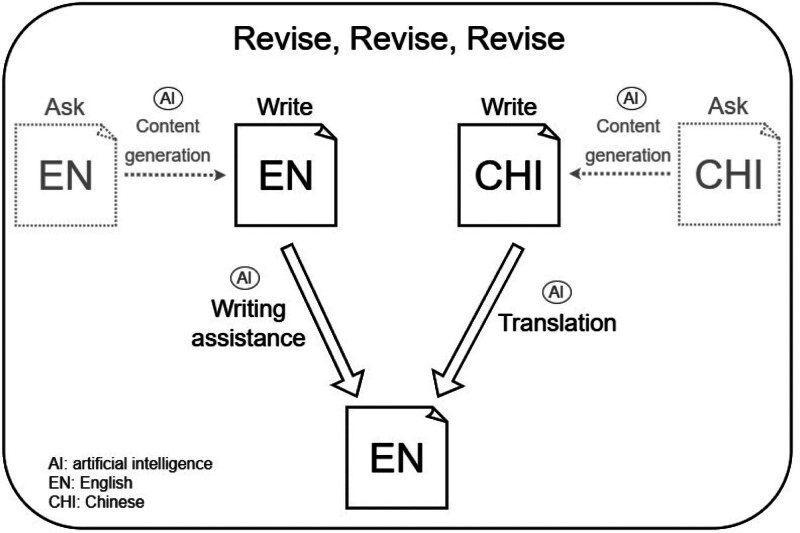
The launch of ChatGPT (Chat Generative Pre-trained Transformer, OpenAI Limited Partnership, San Francisco, USA) on November 30, 2022, has sparked a wave of enthusiasm.1,2 People from all walks of life are eager to experiment with this novel application and discussions are lively, especially in the education sector.3–5 In contrast, discussion of this topic in medical journals has lagged behind,6–9 and much of the discussion has focused on ghostwriting by ChatGPT, involving academic ethics, originality, and authorship.10–12 In fact, the use of artificial intelligence (AI) technology in texts has become increasingly mature in recent years,13 dramatically changing the way scientific writing works (Table 1). Table 1 - Examples of artificial intelligence applications in scientific writing Tool Web address (accessed on February 5, 2023) Writing assistance DeepL Write https://www.deepl.com/write Ludwig https://ludwig.guru/ Grammarly https://app.grammarly.com/ QuillBot https://quillbot.com/ Trinka https://www.trinka.ai/ Microsoft Editor https://www.microsoft.com/zh-tw/microsoft-365/microsoft -editor Translation DeepL Translator https://www.deepl.com/translator Google Translate https://translate.google.com/ Bing Translator https://www.bing.com/translator Reverso Translation https://www.reverso.net/text-translation Youdao Translate https://fanyi.youdao.com/ Baidu Translate https://fanyi.baidu.com/ Content generation ChatGPT https://chat.openai.com/ Copy.ai https://www.copy.ai/ Texta https://www.texta.ai/ ChatSonic https://writesonic.com/chat Writier https://writier.io/ Writerly https://writerly.ai/ English has been the dominant scientific language (lingua franca) for decades.14 It is undeniable that the vast majority of scientists who do not speak English as their mother tongue still have difficulty or are much less proficient in writing in English. Machine translation, especially natural language processing using neural networks and deep learning, can almost help overcome language barriers. The following demonstrates three AI-powered approaches to writing in English for native Chinese speakers (Fig. 1).Fig. 1: Use of artificial intelligence applications in scientific writing.The tools available now for writing assistance, particularly in English, go well beyond simple grammar, punctuation, and spelling checks. They can provide immediate synonym searches to suggest word choices, as well as paraphrasing to alter the tone and style of the text. Take as an example DeepL Write (DeepL GmbH, Cologne, Germany), the public beta version of which has been launched on January 17, 2023. The moment the user types a word, the software automatically suggests various synonyms or related terms. Once the user has written a few words, the software offers a number of additional word choices that can be used to complete the sentence. For an entire sentence, dozens of different ways to write that sentence will be available. AI provides contextualized examples for reference through the sentence search engine and natural language processing. In translation, AI has dramatically improved the accuracy of machine translation in recent years, with DeepL Translator (DeepL GmbH) being probably the leader.15 DeepL Translator uses an algorithm called a convolutional neural network in deep learning. In August 2017, DeepL Translator launched the free online translation service. By the end of 2022, it has supported 29 languages, with Chinese in March 2020. A variety of comparable products are available on the internet. Users can paste the Chinese text into various translation tools, compare the results, and choose the right one. More importantly, try to rewrite the original Chinese text repeatedly so that the translation software can understand it and then provide appropriate results. The use of AI to write scientific papers is clearly unethical, and its accuracy is currently in doubt. Generally speaking, writing is only a small part of the overall research. The core of the research should be the idea together with its results. In addition, science is based on previous research and citation is very important. Currently, AI content generation tools are not yet able to automatically provide correct citing sources. There is no denying that for many people, writing is not easy. ChatGPT and other AI-powered content generation tools can write various versions of text in a few seconds, perhaps inspiring the authors to overcome the writer’s block. Regarding the role of AI in scientific writing, we should bravely embrace the new world with an open mind. Physicians do not need to understand the physics of computed tomography and magnetic resonance imaging in detail, but only how to interpret the images. Researchers do not need to understand the mathematical principles underlying statistical models; instead, they must understand how to apply statistical formulae. Similarly, scientists do not need to be embarrassed about not knowing AI algorithms; rather, they shou
Overview
The claims and statistics of this paper haven’t been checked yet.
Free: it reads the open-access text and checks the first 5 claims that cite a source we can check. Create a free account to check every claim.
Integrity signals
Registry
Cites
Statistics
Figures
Verification
Claims the paper makes
The claims and statistics of this paper haven’t been checked yet.
Free: it reads the open-access text and checks the first 5 claims that cite a source we can check. Create a free account to check every claim.
Claims other papers make about this one
Each is checked against this paper’s own text: does it say what the citing paper says it does?
The source backs part of the claim, not all of it — or backs it for a different population, condition or comparison.
In the citing paper
“Fifth, the risk of research fraud (e.g., ghostwriting, falsified or fake research) involving ChatGPT should be considered seriously [23,37,38,66,72,79]”
From ChatGPT Utility in Healthcare Education, Research, and Practice: Systematic Review on the Promising Perspectives and Valid Concerns (2023) · cites this paper as [23]
Experimental — accuracy not yet measuredThe source backs part of the claim, not all of it — or backs it for a different population, condition or comparison.
In the citing paper
“Additionally, learners can expedite their writing development as AI tools help them identify and rectify grammatical and lexical errors, while also suggesting alternative sentence structures to enhance the overall writing quality and structure (Zhao, 2022; Chen, 2023; Salvagno et al., 2023).”
From Enhancing academic writing skills and motivation: assessing the efficacy of ChatGPT in AI-assisted language learning for EFL students (2023) · cites this paper as Chen, 2023
Experimental — accuracy not yet measuredThe source backs part of the claim, not all of it — or backs it for a different population, condition or comparison.
In the citing paper
“In particular, differences between domestic and international students are likely to be significant, as international students often face unique challenges in the learning process and have reported viewing tools such as ChatGPT as valuable for overcoming language barriers and accessing personalised academic support (Chen 2023).”
From Widely used but barely trusted: understanding student perceptions on the use of generative AI in higher education (2025) · cites this paper as Chen 2023
Experimental — accuracy not yet measuredThe source backs part of the claim, not all of it — or backs it for a different population, condition or comparison.
In the citing paper
“Moreover, the utility of ChatGPT extends to involve an improvement in language and a better ability to express and communicate research ideas and results, ultimately speeding up the publication process with the faster availability of research results [23,25,29,40,48,63,66].”
From ChatGPT Utility in Healthcare Education, Research, and Practice: Systematic Review on the Promising Perspectives and Valid Concerns (2023) · cites this paper as [23]
Experimental — accuracy not yet measuredThe source backs part of the claim, not all of it — or backs it for a different population, condition or comparison.
In the citing paper
“Second, several records mentioned the current problems regarding citation inaccuracies, insufficient references, and ChatGPT referencing to non-existent sources [23,26].”
From ChatGPT Utility in Healthcare Education, Research, and Practice: Systematic Review on the Promising Perspectives and Valid Concerns (2023) · cites this paper as [23]
Experimental — accuracy not yet measured
3 more claims about this paper
Create a free account to see every claim other papers make about this one.
Self-check
Percentages, sums and reported differences re-computed from the paper’s own numbers.
The self-check needs the paper’s full text.
Citations
Cites
ChatGPT and other large language models are double-edged swords
Shen, Y., Heacock, L., Elias, J., Hentel, K. D., Reig, B., Shih, G., & Moy, L. (2023) · Radiology · doi:10.1148/radiol.230163 · Cited by 1,008
ChatGPT listed as author on research papers: many scientists disapprove
Stokel-Walker, C. (2023) · Nature · doi:10.1038/d41586-023-00107-z · Cited by 868
Abstracts written by ChatGPT fool scientists
Else, H. (2023) · Nature · doi:10.1038/d41586-023-00056-7 · Cited by 611
A Conversation on Artificial Intelligence, Chatbots, and Plagiarism in Higher Education
King, M. R., & chatGPT (2023) · Cellular and Molecular Bioengineering · doi:10.1007/s12195-022-00754-8 · Cited by 602
Open artificial intelligence platforms in nursing education: Tools for academic progress or abuse?
O’Connor, S., & ChatGPT (2023) · Nurse Education in Practice · doi:10.1016/j.nepr.2022.103537 · Cited by 585
AI bot ChatGPT writes smart essays — should professors worry?
Stokel-Walker, C. (2022) · Nature · doi:10.1038/d41586-022-04397-7 · Cited by 543
Flanagin, A., Bibbins-Domingo, K., Berkwits, M., & Christiansen, S. L. (2023) · JAMA · doi:10.1001/jama.2023.1344 · Cited by 420
ChatGPT: Evolution or revolution?
Gordijn, B., & Have, H. T. (2023) · Medicine, Health Care and Philosophy · doi:10.1007/s11019-023-10136-0 · Cited by 317
The Future of AI in Medicine: A Perspective from a Chatbot
King, M. R. (2023) · Annals of Biomedical Engineering · doi:10.1007/s10439-022-03121-w · Cited by 299
Baethge, C. (2008) · Deutsches Ärzteblatt international · doi:10.3238/arztebl.2008.0037 · Cited by 108
Cited by
Sallam, M. (2023) · doi:10.1101/2023.02.19.23286155 · Cited by 3,123
“Moreover, the utility of ChatGPT extends to involve the improvement in language and better ability to express and communicate the research ideas and results, ultimately speeding up the publication process with faster availability of research results [26,29,35,36,44,49,77].”
BackgroundInfluentialSallam, M. (2023) · Healthcare · doi:10.3390/healthcare11060887 · Cited by 3,126
Ray, P. P. (2023) · Internet of Things and Cyber-Physical Systems · doi:10.1016/j.iotcps.2023.04.003 · Cited by 2,463
A Review of the Role of Artificial Intelligence in Healthcare
Al Kuwaiti, A., Nazer, K., Al-Reedy, A., Al-Shehri, S., Al-Muhanna, A., Subbarayalu, A. V., Al Muhanna, D., & Al-Muhanna, F. A. (2023) · Journal of Personalized Medicine · doi:10.3390/jpm13060951 · Cited by 915
Large Language Models in Medical Education: Opportunities, Challenges, and Future Directions
Abd-alrazaq, A., AlSaad, R., Alhuwail, D., Ahmed, A., Healy, P. M., Latifi, S., Aziz, S., Damseh, R., Alabed Alrazak, S., & Sheikh, J. (2023) · JMIR Medical Education · doi:10.2196/48291 · Cited by 722
“As an example of misinformation, studies showed that LLMs, such as GPT-4, either include citations that do not exist in generated articles or include citations that are irrelevant to the topic [41,50-52].”
(2023) · doi:10.2196/preprints.48291 · Cited by 722
Haleem, A., Javaid, M., & Singh, R. P. (2022) · BenchCouncil Transactions on Benchmarks, Standards and Evaluations · doi:10.1016/j.tbench.2023.100089 · Cited by 694
Song, C., & Song, Y. (2023) · Frontiers in Psychology · doi:10.3389/fpsyg.2023.1260843 · Cited by 717
“Additionally, learners can expedite their writing development as AI tools help them identify and rectify grammatical and lexical errors, while also suggesting alternative sentence structures to enhance the overall writing quality and structure (Zhao, 2022; Chen, 2023; Salvagno et al., 2023).”
Unlocking the opportunities through ChatGPT Tool towards ameliorating the education system
Javaid, M., Haleem, A., Singh, R. P., Khan, S., & Khan, I. H. (2023) · BenchCouncil Transactions on Benchmarks, Standards and Evaluations · doi:10.1016/j.tbench.2023.100115 · Cited by 535
Choudhury, A., & Shamszare, H. (2023) · doi:10.2196/preprints.47184 · Cited by 473
Investigating the impact of user trust on the adoption and use of ChatGPT: Survey analysis
Choudhury, A., & Shamszare, H. (2023) · Journal of Medical Internet Research · doi:10.2196/47184 · Cited by 470
ChatGPT for healthcare services: An emerging stage for an innovative perspective
Javaid, M., Haleem, A., & Singh, R. P. (2023) · BenchCouncil Transactions on Benchmarks, Standards and Evaluations · doi:10.1016/j.tbench.2023.100105 · Cited by 429
Májovský, M., Černý, M., Kasal, M., Komarc, M., & Netuka, D. (2023) · Journal of Medical Internet Research · doi:10.2196/46924 · Cited by 301
A comprehensive survey of ChatGPT: Advancements, applications, prospects, and challenges
Nazir, A., & Wang, Z. (2023) · Meta-Radiology · doi:10.1016/j.metrad.2023.100022 · Cited by 245
Sánchez-Ruiz, L. M., Moll-López, S., Nuñez-Pérez, A., Moraño-Fernández, J. A., & Vega-Fleitas, E. (2023) · Applied Sciences · doi:10.3390/app13106039 · Cited by 229
“5 and GPT-4 has represented a significant advancement in AI technology, which has subsequently raised concerns about their potential impact on academic integrity [2,12–19].”
BackgroundThe Use of Artificial Intelligence in Writing Scientific Review Articles
Kacena, M. A., Plotkin, L. I., & Fehrenbacher, J. C. (2024) · Current Osteoporosis Reports · doi:10.1007/s11914-023-00852-0 · Cited by 193
Sohail, S. S., Farhat, F., Himeur, Y., Nadeem, M., Madsen, D. Ø., Singh, Y., Atalla, S., & Mansoor, W. (2023) · Journal of King Saud University - Computer and Information Sciences · doi:10.1016/j.jksuci.2023.101675 · Cited by 192
“Following its launch, ChatGPT quickly gained a lot of popularity in a variety of disciplines (Cox, 2023; Dwivedi et al., 2023; Tlili et al., 2023), including academia (Chen, 2023b) and science (Morreel et al., 2023).”
Let’s Have a Chat! A Conversation with ChatGPT: Technology, Applications, and Limitations
Shahriar, S., & Hayawi, K. (2023) · Artificial Intelligence and Applications · doi:10.47852/bonviewaia3202939 · Cited by 167
“Chen [50] discussed some of the ethical concerns and potential benefits of using AI tools for scientific writing.”
BackgroundLet's have a chat! A Conversation with ChatGPT: Technology, Applications, and Limitations
Shahriar, S., & Hayawi, K. (2023) · arXiv · doi:10.48550/arxiv.2302.13817 · Cited by 167
“Chen [50] discussed some of the ethical concerns and potential benefits of using AI tools for scientific writing.”
BackgroundChoudhury, A., & Chaudhry, Z. (2024) · Journal of Medical Internet Research · doi:10.2196/56764 · Cited by 159
“Although LLMs have shown promise in medical assessments [6-10], scientific writing, eHealth care, and patient classification [11-13], their integration marks a shift in paradigm introducing new AI complexities [14-17].”
ChatGPT in education: a discourse analysis of worries and concerns on social media
Li, L., Ma, Z., Fan, L., Lee, S., Yu, H., & Hemphill, L. (2024) · Education and Information Technologies · doi:10.1007/s10639-023-12256-9 · Cited by 141
A study on ChatGPT for Industry 4.0: Background, potentials, challenges, and eventualities
Javaid, M., Haleem, A., & Singh, R. P. (2023) · Journal of Economy and Technology · doi:10.1016/j.ject.2023.08.001 · Cited by 138
ChatGPT in medicine: prospects and challenges: a review article
Tan, S., Xin, X., & Wu, D. (2024) · International Journal of Surgery · doi:10.1097/js9.0000000000001312 · Cited by 126
“Similar results have also been reported in other studies [55 – 57] .”
ResultAI for social science and social science of AI: A survey
Xu, R. F., Sun, Y., Ren, M., Guo, S., Pan, R., Lin, H., Sun, L., & Han, X. (2024) · Information Processing & Management · doi:10.1016/j.ipm.2024.103665 · Cited by 227
ChatGPT for Future Medical and Dental Research
Fatani, B. (2023) · Cureus · doi:10.7759/cureus.37285 · Cited by 121
“With the use of AI-powered content generation tools like ChatGPT, authors can generate multiple versions of their text in just a few seconds, which could potentially help them overcome writer's block [9].”
MethodA review of deep learning in dentistry
Huang, C., Wang, J., Wang, S., & Zhang, Y. (2023) · Neurocomputing · doi:10.1016/j.neucom.2023.126629 · Cited by 128
Kendall, G., & Teixeira da Silva, J. A. (2024) · Learned Publishing · doi:10.1002/leap.1578 · Cited by 100
ChatGPT FOR PROGRAMMING NUMERICAL METHODS
Kashefi, A., & Mukerji, T. (2023) · Journal of Machine Learning for Modeling and Computing · doi:10.1615/jmachlearnmodelcomput.2023048492 · Cited by 100
ChatGPT failed Taiwan’s Family Medicine Board Exam
Weng, T.-L., Wang, Y.-M., Chang, S., Chen, T.-J., & Hwang, S.-J. (2023) · Journal of the Chinese Medical Association · doi:10.1097/jcma.0000000000000946 · Cited by 100
Self-citationBarman, D., Guo, Z., & Conlan, O. (2024) · Machine Learning with Applications · doi:10.1016/j.mlwa.2024.100545 · Cited by 92
Spennemann, D. H. R. (2023) · Knowledge · doi:10.3390/knowledge3030032 · Cited by 93
Sallam, M., El‐Sayed, W., Al‐Shorbagy, M. Y., Barakat, M. M., Khatib, S. E., Ghach, W., Alwan, N. H., Hallit, S. R., & Malaeb, D. N. (2024) · Frontiers in Education · doi:10.3389/feduc.2024.1414758 · Cited by 176
Chen, C., & Gong, Y. (. (2025) · Education Sciences · doi:10.3390/educsci15020141 · Cited by 90
“These tools can help learners to identify and re‑ vise grammatical and lexical errors and suggest alternative sentence structures to enhance overall writing quality, structure, and presentation (Chen, 2023; Zhao, 2023).”
Mohammadkarimi, E. (2023) · Journal of Applied Learning and Teaching · doi:10.37074/jalt.2023.6.2.10 · Cited by 90
“In 2023, a substantial number of scholarly articles (e.g. Bishop, 2023; Chan & Hu, 2023; Chan & Tsi, 2023; Chen, 2023; Cotton et al., 2023; Dergaa et al., 2023; Fitria, 2023; Huang & Tan, 2023; Khalil & Er, 2023; Limna et al., 2023; Manley, 2023; Möller, 2023; Perkins, 2023; Rudolph et al., 2023a; Shen et al., 2023; Z…”
BackgroundFatima, A., Shafique, M. A., Alam, K., Fadlalla Ahmed, T. K., & Mustafa, M. S. (2024) · Medicine · doi:10.1097/md.0000000000039250 · Cited by 81
Nelson, A. S., Santamaría, P. V., Javens, J. S., & Ricaurte, M. (2025) · Education Sciences · doi:10.3390/educsci15050611 · Cited by 79
Shi, J., Liu, W., & Hu, K. (2025) · Behavioral Sciences · doi:10.3390/bs15050705 · Cited by 77
“It can also save time and offer personalized feedback and automated evaluation (Lund & Wang, 2023; Chen, 2023; Salvagno et al., 2023; Zawacki-Richter et al., 2019).”
ChatGPT as an important tool in organizational management: A review of the literature
Ayinde, L., Wibowo, M. P., Ravuri, B., & Emdad, F. B. (2023) · Business Information Review · doi:10.1177/02663821231187991 · Cited by 75
The Potential Usefulness of ChatGPT in Oral and Maxillofacial Radiology
Mago, J., & Sharma, M. (2023) · Cureus · doi:10.7759/cureus.42133 · Cited by 101
“The major threats include ethical concerns, copyright issues, and legal and regulatory issues, which were also mentioned by many researchers [14-19].”
BackgroundSalih, S., Husain, O., Hamdan, M., Abdelsalam, S., Elshafie, H., & Motwakel, A. (2025) · Results in Engineering · doi:10.1016/j.rineng.2024.103837 · Cited by 74
ChatGPT in nursing education: opportunities and challenges
Athilingam, P. R., & He, H. G. (2023) · Teaching and learning in nursing · doi:10.1016/j.teln.2023.11.004 · Cited by 93
Choudhury, A., & Shamszare, H. (2024) · JMIR Human Factors · doi:10.2196/55399 · Cited by 104
“These risks include the potential for inaccuracies and lack of citation relevance in scientific content generated by ChatGPT [10], ethical issues (copyright, attribution, plagiarism, and authorship) [11], the risk of hallucination (inaccurate information that sounds plausible scientifically) [12],…”
BackgroundThe use of Generative AI in qualitative analysis: Inductive thematic analysis with ChatGPT
(2024) · Journal of Applied Learning & Teaching · doi:10.37074/jalt.2024.7.1.22 · Cited by 70
The Emerging Role of Generative Artificial Intelligence in Medical Education, Research, and Practice
Shoja, M. M., Van de Ridder, J. M. M., & Rajput, V. (2023) · Cureus · doi:10.7759/cureus.40883 · Cited by 69
“Chen maintains that using GAI to write scientific papers is clearly unethical [20].”
A systematic review and meta-analysis on ChatGPT and its utilization in medical and dental research
Bagde, H., Dhopte, A., Alam, M. K., & Basri, R. (2023) · Heliyon · doi:10.1016/j.heliyon.2023.e23050 · Cited by 66
Zhao, Y., Li, Y., Xiao, Y., Chang, H., & Liu, B. (2024) · SAGE Open · doi:10.1177/21582440241289835 · Cited by 94
“Chat Generative Pre-Trained Transformer (ChatGPT), an emerging technology spanning various industries, has become one of the most popular AI applications on the Internet since it was launched by OpenAI on November 30, 2022 (Chen, 2023).”
ChatGPT for research and publication: Opportunities and challenges
(2023) · Journal of Applied Learning & Teaching · doi:10.37074/jalt.2023.6.1.20 · Cited by 53
ChatGPT and conversational artificial intelligence: Friend, foe, or future of research?
Gottlieb, M., Kline, J. A., Schneider, A. J., & Coates, W. C. (2023) · The American Journal of Emergency Medicine · doi:10.1016/j.ajem.2023.05.018 · Cited by 51
Abi-Rafeh, J., Xu, H. H., Kazan, R., Tevlin, R., & Furnas, H. (2024) · Aesthetic Surgery Journal · doi:10.1093/asj/sjad260 · Cited by 49
ChatGPT for Research and Publication: Opportunities and ChallengesPreprint
Xames, M. D., & Shefa, J. (2023) · SSRN Electronic Journal · doi:10.2139/ssrn.4381803 · Cited by 51
Giray, L., Silos, P. Y. L. D., Adornado, A., Buelo, R. J. V., Galas, E. M., Reyes-Chua, E., Santiago, C. S., & Ulanday, M. L. P. (2024) · Internet Reference Services Quarterly · doi:10.1080/10875301.2024.2352746 · Cited by 91
You, Y., Chen, Y., You, Y., Zhang, Q., & Cao, Q. (2023) · Sustainability · doi:10.3390/su15129355 · Cited by 53
A descriptive study based on the comparison of ChatGPT and evidence-based neurosurgeons
Liu, J., Zheng, J., Cai, X., Wu, D., & Yin, C. (2023) · iScience · doi:10.1016/j.isci.2023.107590 · Cited by 44
“literature reviews and involve improved language and the ability to express and communicate research ideas and results.(7) Regardingmedical education, ChatGPT can provide professional academic guidance in the qualification examination for physicians,(20) medical student education,(23) and communication skills.”
BackgroundUncovering the Reasons behind Willingness to Pay for ChatGPT-4 Premium
Jo, H. (2025) · International Journal of Human–Computer Interaction · doi:10.1080/10447318.2024.2307692 · Cited by 37
“User satisfaction has been shown to be directly influenced by the perceived intelligence of a system (Adam et al., 2021; T.-J. Chen, 2023).”
Dorta-González, P., López-Puig, A. J., Dorta-González, M. I., & González-Betancor, S. M. (2024) · Telematics and Informatics · doi:10.1016/j.tele.2024.102187 · Cited by 36
“While some advocate for AI as a valuable writing aid, many scientists and publishers oppose the idea of AI solely producing papers or being credited as the sole author (Altmäe et al., 2023; Chen, 2023; Lee, 2023; Salvagno et al., 2023).”
BackgroundPatil, D. (2025) · SSRN Electronic Journal · doi:10.2139/ssrn.5057420 · Cited by 58
Current applications and future potential of C hat GPT in radiology: A systematic review
Temperley, H. C., O’Sullivan, N. J., Curtain, B. M. M., Corr, A., Meaney, J. F., Kelly, M. E., & Brennan, I. M. (2024) · Journal of Medical Imaging and Radiation Oncology · doi:10.1111/1754-9485.13621 · Cited by 41
“30,31 While research and development efforts are ongoing, it is crucial to acknowledge that the current utilization of ChatGPT in radiology is still at an early stage, and more work needs to be done to translate its potential into meaningful applications for improving patient care.”
BackgroundDong, L. (2024) · Current Psychology · doi:10.1007/s12144-024-05728-9 · Cited by 50
“By contrast, while acknowledging the ethical concerns associated with employing AI in scientific writing, Chen (2023) has suggested that such technologies have brought about significant advancements in the field, including immediate synonym searches, paraphrasing, and increased accuracy.”
InfluentialHuman vs machine: identifying ChatGPT-generated abstracts in Gynecology and Urogynecology
Pan, E. T., & Rodriguez, M. E. F. (2024) · American Journal of Obstetrics and Gynecology · doi:10.1016/j.ajog.2024.04.045 · Cited by 48
Raman, R. (2025) · Accountability in Research · doi:10.1080/08989621.2023.2273377 · Cited by 33
“The utility of this tool lies in its capacity to generate human-like text, providing valuable assistance in academic writing (Alkaissi and McFarlane 2023; Chen 2023; Macdonald et al. 2023).”
How to mitigate the risks of deployment of artificial intelligence in medicine?
İlikhan, S. U., Özer, M., Tanberkan, H., & Bozkurt, V. (2024) · TURKISH JOURNAL OF MEDICAL SCIENCES · doi:10.55730/1300-0144.5814 · Cited by 55
“Moreover, the potential use of these systems as writing assistants leads to an increase in plagiarism issues in scientific articles, undermining academic integrity [29,66].”
BackgroundChatGPT applications in Academic Research: A Review of Benefits, Concerns, and Recommendations
AlZaabi, A., ALAmri, A., Albalushi, H., Aljabri, R., & AalAbdulsalam, A. (2023) · doi:10.1101/2023.08.17.553688 · Cited by 32
“concern is that the tool tend to provide citations to the provided falsified response which are themselves are fake and non-existing [19], [20], [22], [24], [28], [29], [34], [39], [41], [43], [45], [52], [53], [59], [63], [64], [69], [72], [77], [81], [84], [93], [102], [103], [110], [117], [135], [137], [138], [141]…”
MethodAllehyani, S. H., & Algamdi, M. A. (2023) · International Journal of Learning Teaching and Educational Research · doi:10.26803/ijlter.22.11.18 · Cited by 62
Alyasiri, O. M., Salisu, S., Younis, H., Salman, A. M., Sahib, T. M., Akhtom, D., & Hayder, I. M. (2024) · Journal of Stomatology Oral and Maxillofacial Surgery · doi:10.1016/j.jormas.2024.101842 · Cited by 42
Khalifa, A. A., & Ibrahim, M. A. (2024) · Arab Gulf Journal of Scientific Research · doi:10.1108/agjsr-09-2023-0423 · Cited by 43
Tülübaş, T., Demirkol, M., Özdemir, T. Y., Polat, H., Karakose, T., & Yirci, R. (2023) · Educational Process International Journal · doi:10.22521/edupij.2023.122.6 · Cited by 28
Chat bots to Virtual Tutors: An Overview of Chat GPT's Role in the Future of Education
Graefen, B., & Fazal, N. (2024) · Archives of Pharmacy Practice · doi:10.51847/touppjedsx · Cited by 28
“Its advanced language understanding allows it to grasp complex language structures and understand context, enabling it to generate responses that are virtually indistinguishable from those of a human [9, 10].”
BackgroundHow Do Software Developers Use ChatGPT? An Exploratory Study on GitHub Pull Requests
Chouchen, M., Bessghaier, N., Begoug, M., Ouni, A., AlOmar, E. A., & Mkaouer, M. W. (2024) · International Conference on Mining Software Repositories (MSR) · doi:10.1145/3643991.3645084 · Cited by 43
“To answer RQ2, we perform a thematic analysis [23], a commonly used technique in software engineering research [21, 22, 38] to characterize the topics of the questions that developers usually ask in their ChatGPT prompts.”
MethodPatil, D. (2025) · SSRN Electronic Journal · doi:10.2139/ssrn.5057412 · Cited by 47
THE USE OF CHATGPT IN ACADEMIC WRITING: A BLESSING OR A CURSE IN DISGUISE?
Alberth, N. A. (2023) · TEFLIN Journal - A publication on the teaching and learning of English · doi:10.15639/teflinjournal.v34i2/337-352 · Cited by 63
“…artificial intelligence (henceforth AI) such as ChatGPT (Generative Pretrained Transformer) has sparked a surge of interest, controversies and heated debates worldwide, and this is particularly true in the realm of education (Arif et al., 2023; Chen, 2023; Lim et al., 2023; Tlili et al., 2023).”
BackgroundInfluentialChatGPT or Gemini: Who Makes the Better Scientific Writing Assistant?
AlSagri, H. S., Farhat, F., Sohail, S. S., & Saudagar, A. K. J. (2024) · Journal of Academic Ethics · doi:10.1007/s10805-024-09549-0 · Cited by 39
“Moreover, the essence of research should lie in the conceptualization of ideas and the generation of corresponding results, not to carry concerns regarding the restricted familiarity of researchers with AI algorithms (Chen, 2023).”
Generative artificial intelligence and academic writing: friend or foe?
Cohen, J. F., & Moher, D. (2024) · Journal of Clinical Epidemiology · doi:10.1016/j.jclinepi.2024.111646 · Cited by 36
Critical literacy in artificial intelligence assisted writing instruction: A systematic review
Arseven, T., & Bal, M. (2025) · Thinking Skills and Creativity · doi:10.1016/j.tsc.2025.101850 · Cited by 42
Evaluating The Role of ChatGPT as a Study Aid in Medical Education in Surgery
Araji, T., & Brooks, A. D. (2024) · Journal of surgical education · doi:10.1016/j.jsurg.2024.01.014 · Cited by 25
Applications and Implication of Generative AI in Non-STEM Disciplines in Higher Education
Wu, T., & Zhang, S. H. (2023) · Communications in computer and information science · doi:10.1007/978-981-99-7587-7_29 · Cited by 32
Cazzato, G., Capuzzolo, M., Parente, P., Arezzo, F., Loizzi, V., Macorano, E., Marzullo, A., Cormio, G., & Ingravallo, G. (2023) · AI · doi:10.3390/ai4040051 · Cited by 25
“Finally, it is important to consider that ChatGPT may generate nonexistent references, as pointed out by Chen T.J. [24] and Lubowitz [25].”
BackgroundNazzal, M. K., Morris, A. J., Parker, R. S., White, F. A., Natoli, R. M., Fehrenbacher, J. C., & Kacena, M. A. (2024) · Current Osteoporosis Reports · doi:10.1007/s11914-023-00854-y · Cited by 21
Huang, L., Zhang, X., Wang, Q., Chen, Z., & Liu, Y. (2024) · Journal of the Knowledge Economy · doi:10.1007/s13132-024-01755-w · Cited by 23
“Intelligent search dialogue systems will bring positive changes to the news publishing industry in terms of knowledge extraction, knowledge production, and knowledge dissemination (Chen, 2023; Curtis, 2023).”
Bonfitto, G. R., Roletto, A., Savardi, M., Fasulo, S. V., Catania, D., & Signoroni, A. (2024) · Radiography · doi:10.1016/j.radi.2024.02.015 · Cited by 24
Continuous use of AI technology: the roles of trust and satisfaction
Lam, T. K. (2025) · Aslib Journal of Information Management · doi:10.1108/ajim-07-2024-0548 · Cited by 26
ChatGPT en Educación Superior: explorando sus potencialidades y sus limitaciones
Galli, M. G., & Kanobel, M. C. (2023) · Revista Educación Superior y Sociedad (ESS) · doi:10.54674/ess.v35i2.815 · Cited by 48
Sobaih, A. E. (2024) · Journal of Applied Learning & Teaching · doi:10.37074/jalt.2024.7.1.21 · Cited by 33
Yapay Zekâ Destekli Dil İşleme Teknolojisi Olan ChatGPT’nin Sağlık Hizmetlerinde Kullanımı
Yiğit, S., Berşe, S., & Dіrgar, E. (2023) · Eurasian Journal of Health Technology Assessment · doi:10.52148/ehta.1302000 · Cited by 27
Based on Medicine, The Now and Future of Large Language Models
Su, Z., Tang, G., Huang, R., Yang, Q. W., Zhang, Z., & Dai, X. (2024) · Cellular and Molecular Bioengineering · doi:10.1007/s12195-024-00820-3 · Cited by 20
“…the coherence of logical structure when writing papers, ensuring clear and strong arguments, and providing customized suggestions based on the user's research field and writing style, such as optimizing language expression [50, 52], which greatly helps authors who struggle with writing [53].”
Baucon, A., & de Carvalho, C. N. (2024) · Geoheritage · doi:10.1007/s12371-024-01011-2 · Cited by 27
“ChatGPT can write various versions of a given text in a few seconds, and it is likely to help authors overcome writer’s block (Chen 2023 ).”
ChatGPT Evaluation: Can It Replace Grammarly and Quillbot Tools?
A. younis, H., Mohammed, O., Muthmainnah, Sahib, T. M., Akhtom, D., Hayder, I. M., Salisu, S., & Shahid, M. (2023) · British Journal of Applied Linguistics · doi:10.32996/bjal.2023.3.2.4 · Cited by 17
Amani, N., & Bisriyah, M. (2025) · IJELTAL (Indonesian Journal of English Language Teaching and Applied Linguistics) · doi:10.21093/ijeltal.v10i1.1942 · Cited by 17
“Research conducted by Chen (2023) and Salvagno et al. (2023) supports the ability of AI to detect errors and simplify the usage of words.”
Effects of human-AI collaborative writing strategy on EFL students’ argumentative writing skills
Pratama, R. D., Widiati, U., & Hakim, L. N. (2025) · Computer Assisted Language Learning · doi:10.1080/09588221.2025.2503900 · Cited by 35
ChatGPT in medical writing: A game-changer or a gimmick?
Ahaley, S. S., Pandey, A., Juneja, S. K., Gupta, T., & Vijayakumar, S. (2023) · Perspectives in Clinical Research · doi:10.4103/picr.picr_167_23 · Cited by 21
Lawrence, K. W., Habibi, A. A., Ward, S. A., Lajam, C. M., Schwarzkopf, R. M., & Rozell, J. C. (2024) · International Journal of Medical Robotics and Computer Assisted Surgery · doi:10.1002/rcs.2621 · Cited by 19
“7,8,21,22 While a preponderance of commentaries/editorials on the topic have emerged since 2022, scientifically rigorous appraisal of LLM ‐ generated academic literature remains limited.”
BackgroundEnhancing Classroom Learning: ChatGPT's Integration and Educational Challenges
AlAli, R. M., & Wardat, Y. (2024) · International Journal of Religion · doi:10.61707/znwnxd43 · Cited by 33
“Similarly, Chen (2023) tested ChatGPT in the field of scientific writing, demonstrating its potential usefulness for language translation.”
BackgroundDoes using artificial intelligence take the person out of personal statements? We can't tell
Whitrock, J. N., Pratt, C. G., Carter, M. M., Chae, R. C., Price, A. D., Justiniano, C. F., Haren, R. M. V., Silski, L. S., Quillin, R. C., & Shah, S. A. (2024) · Surgery · doi:10.1016/j.surg.2024.08.018 · Cited by 17
Pham, N. N. H. (2025) · International journal of AI in language education. · doi:10.54855/ijaile.25213 · Cited by 31
“Additionally, AI tools are able to help students improve their writing skills rapidly by finding and fixing grammar and vocabulary mistakes and then offering fixed-error sentences with general quality and structure writing (Zhao, 2022; Chen, 2023; Salvagno et al., 2023).”
Spennemann, D. H. R. (2023) · Preprints.org · doi:10.20944/preprints202308.1271.v1 · Cited by 14
Patil, D. (2025) · SSRN Electronic Journal · doi:10.2139/ssrn.5057414 · Cited by 29
Threats and opportunities of using ChatGPT in scientific writing—The risk of getting spine less
Ambrosio, L., Schol, J., Pietra, V. A. L., Russo, F., Vadalà, G., & Sakai, D. (2023) · JOR Spine · doi:10.1002/jsp2.1296 · Cited by 18
“8 Due to serious threats to the integrity of scientific literature, the World Association of Medical Editors has recently released specific recommendations on the use of chatbots in scholarly publications.”
BackgroundNew evidence-based practice: Artificial intelligence as a barrier breaker
Ferreira, R. M. (2023) · World Journal of Methodology · doi:10.5662/wjm.v13.i5.384 · Cited by 17
ChatGPT and Its Role in Academic Libraries: A Discussion
Panda, S. K., Bhatt, A., & Satapathy, A. (2024) · New Review of Academic Librarianship · doi:10.1080/13614533.2024.2381510 · Cited by 24
“In 2013 Chen, Reported that ChatGPT overcomes traditional chatbots and performs better library reference service jobs (Chen, 2023b).”
Sallam, M., El‐Sayed, W., Al‐Shorbagy, M. Y., Barakat, M. M., Khatib, S. E., Ghach, W., Alwan, N. H., Hallit, S. R., & Malaeb, D. N. (2024) · Research Square · doi:10.21203/rs.3.rs-3905717/v1 · Cited by 13
Comparison of three chatbots as an assistant for problem-solving in clinical laboratory
Abuşoğlu, S., Serdar, M. A., Ünlü, A., & Abuşoğlu, G. (2023) · Clinical Chemistry and Laboratory Medicine (CCLM) · doi:10.1515/cclm-2023-1058 · Cited by 15
Metadata
- Authors
- Chen, T.-J.
- Affiliations
- National Chung Hsing University (TW)
- Corresponding author
- Chen, Tzeng-Ji
- ORCID
- Chen, Tzeng-Ji
- Venue
- Journal of the Chinese Medical Association
- Published
- 2023-02-14
- Volume
- 86
- Issue
- 4
- Pages
- 351-353
- ISSN
- 1726-4901 (ISSN-L)
- PMC
- PMC12755446
- OpenAlex
- W4320895630
- Semantic Scholar
- a799caac53cdab687d3748dea4b7106fe654a7e6
- Cited by
- 240
- References
- 15
- Citations by year
- 2026: 17 · 2025: 52 · 2024: 88 · 2023: 80
- Type
- journal article
- Language
- en
- Open access
- hybrid
- doi.org
- Licence
- Locations
- Journal of the Chinese Medical Association (publishedVersion, cc-by-nc-nd)
- PubMed Central (publishedVersion, cc-by-nc-nd)
- PubMed (publishedVersion)
- Topics
- Social Sciences › Library and Information Sciences › Academic Writing and Publishing
- Health Sciences › Medicine › Health Informatics › Artificial Intelligence in Healthcare and Education
- Social Sciences › Library and Information Sciences › Academic Publishing and Open Access
- Keywords
- ChatGPT, artificial intelligence in scientific writing, scientific writing, machine translation, writing assistance tools, paraphrase, ghostwriting, academic ethics, authorship, English as a lingua franca, AI-generated text, deep learning, natural language processing
- MeSH terms
- Artificial Intelligence, Writing, Mobile Applications
About these checks
Registry, retraction, Cites and statistics results are computed, not judged, with one exception: a printed reference that no index lists is read once by a model before it counts as a citation error. Claims are extracted by a model and kept only when their quote appears verbatim in the text; each cited source is then checked, with a model’s help, for whether it says what the claim relies on. Those verdicts can be wrong — read the claim’s quote and the cited source before relying on one.
Statistics and arithmetic are recomputed, not judged.
Confidence bands are shown only for fields calibrated on our annotated test set. None is calibrated yet, so no band is shown.
What counts as a claim ›How we measure confidence ›How we check this ›
Are you an author, or do you see a problem with this page? Request a review
Data sources
Bibliographic data: Semantic Scholar, OpenAlex, Crossref.
Contains information from the Semantic Scholar Academic Graph Datasets, made available under the ODC Attribution License (ODC-BY 1.0).
Semantic Scholar’s data is described in: Kinney, R., et al. (2023). The Semantic Scholar Open Data Platform. arXiv:2301.10140.
