

The DOI matches its Crossref record; 75 of the 79 references it cites were found in a registry or an index.
Prevalence of mental health problems among medical students in China: A meta-analysis
Open accessAbstract
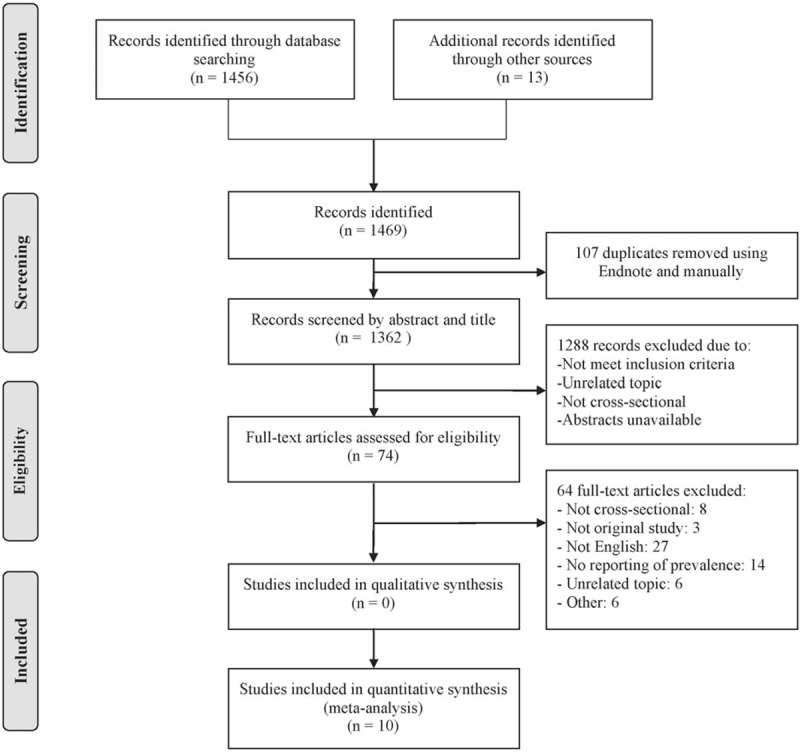
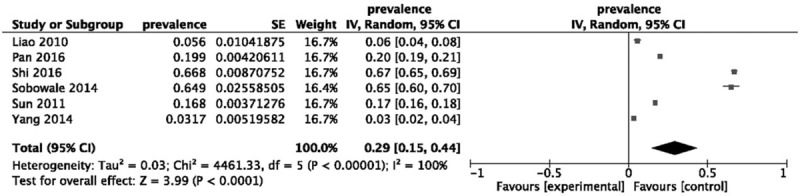
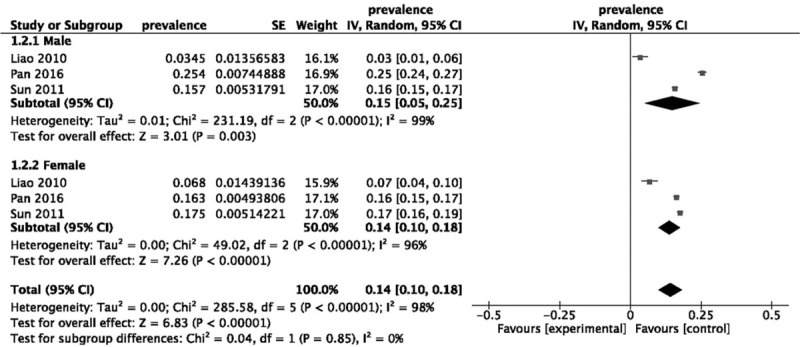
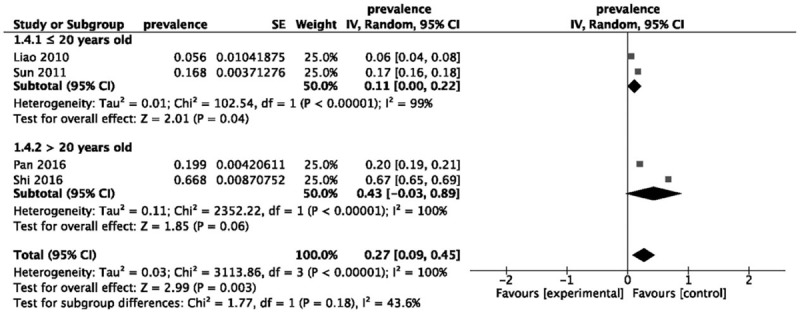
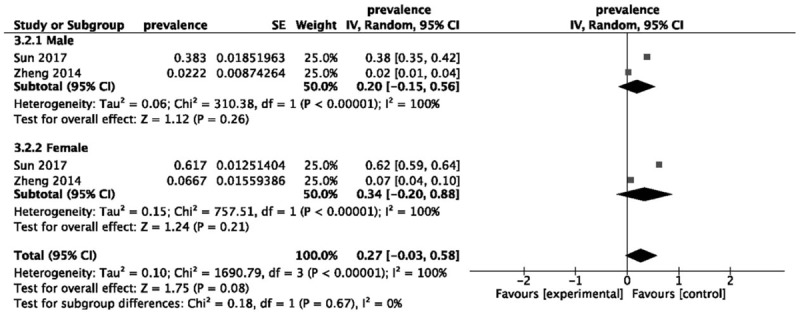
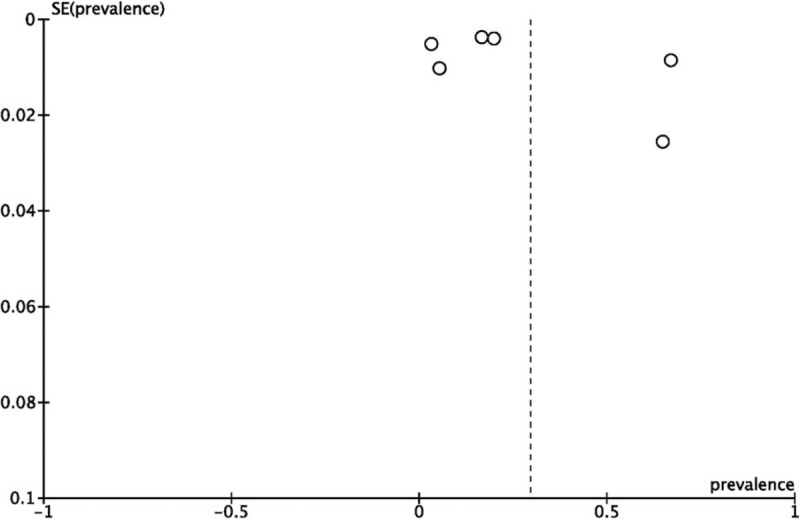
Background: The prevalence of mental health problems in medical students has continuously increased and is higher than the prevalence of mental health problems in students with other majors, which could lead to undesirable consequences for the students and their future patients. In China, the current states of medical education and healthcare workplaces differ in certain areas from those in Western or other Asian countries. However, the mental health status of Chinese medical students has not been systematically analyzed. Objectives: The purpose of this meta-analysis was to summarize the prevalence of mental health problems in Chinese medical students. Methods: All cross-sectional studies that investigated the prevalence of any mental health problem among Chinese medical students were retrieved from the following databases: EMBASE, PubMed, PsycINFO, OVID, the Cochrane Database of Systematic Reviews, and the Cochrane Central Register of Controlled Trials. We accepted each individual trial's inclusion and exclusion criteria for participants. The National Institutes of Health Quality Assessment Tool for Observational Cohort and Cross-Sectional Studies was adopted to appraise the methodological quality of each study. RevMan (version 5.3) was used to analyze the data. Results: Ten cross-sectional studies involving a total of 30,817 Chinese medical students were included. The prevalence of depression, anxiety, suicidal ideation, and eating disorders were 29%, 21%, 11%, and 2%, respectively. Subgroup analysis revealed no significant differences in the prevalence of depression and suicidal ideation between genders and no significant difference in the prevalence of depression between individuals of different ages (20 years and older or younger than 20 years). Conclusions and implications of key findings: Chinese medical students have relatively high prevalence of depression, anxiety, and suicidal ideation but a low prevalence of eating disorders. Mental health problems in Chinese medical students should be taken seriously, and timely screening of and proper intervention in these mental health problems are highly recommended.
Overview
The claims and statistics of this paper haven’t been checked yet.
Run the check — free, no account needed. It reads the open-access text and checks the sources it cites.
Integrity signals
Registry
Cites
Statistics
Figures



Verification
Claims the paper makes
The claims and statistics of this paper haven’t been checked yet.
Run the check — free, no account needed. It reads the open-access text and checks the sources it cites.
Claims other papers make about this one
Each is checked against this paper’s own text: does it say what the citing paper says it does?
The cited source says what the claim attributes to it.
In the citing paper
“A meta-analysis of 10 cross-sectional studies, which together engaged over 30,000 Chinese medical students, reported the prevalence of depression at 29%, anxiety at 21%, suicidal ideation at 11%, and eating disorders at 2% [5].”
From Promoting the mental health of university students in China: Protocol for contextual assessment to inform intervention design and adaptation (2021) · cites this paper as [5]
The check wasn’t confident either way, so it gives no verdict — never disputed.
In the citing paper
“In contrast, the situation in South Asia, particularly among its college students, remains under-researched, although existing studies reveal a comparable incidence of psychiatric symptoms. 7”
From Mental Health, Suicidality, Health, and Social Indicators Among College Students Across Nine States in India (2025) · cites this paper as [7]
Experimental — accuracy not yet measured
Self-check
Percentages, sums and reported differences re-computed from the paper’s own numbers.
The self-check needs the paper’s full text.
Citations
Cites
Preferred Reporting Items for Systematic Reviews and Meta-Analyses: the PRISMA statement
Moher, D., Liberati, A., Tetzlaff, J., Altman, D. G., & for the PRISMA Group (2009) · BMJ · doi:10.1136/bmj.b2535 · Cited by 83,823
Measuring inconsistency in meta-analyses
Higgins, J. P. T., Thompson, S. G., Deeks, J. J., & Altman, D. G. (2003) · BMJ · doi:10.1136/bmj.327.7414.557 · Cited by 63,139
Preferred reporting items for systematic reviews and meta-analyses: the PRISMA Statement.
(2009) · PubMed Central · Cited by 44,859
Preferred reporting items for systematic reviews and meta-analyses: The PRISMA statement
Moher, D., Liberati, A., Tetzlaff, J., Altman, D. G., & the PRISMA Group* (2009) · Annals of Internal Medicine · doi:10.7326/0003-4819-151-4-200908180-00135 · Cited by 37,554
Preferred Reporting Items for Systematic Reviews and Meta-Analyses: The PRISMA Statement
Moher, D., Liberati, A., Tetzlaff, J., & Altman, D. G. (2009) · Journal of Clinical Epidemiology · doi:10.1016/j.jclinepi.2009.06.005 · Cited by 19,575
The combination of estimates from different experiments
Cochran, W. G. (1954) · Biometrics · doi:10.2307/3001666 · Cited by 5,380 · cited 1×
“Heterogeneity was analyzed by the I(2) test, which describes the proportion of variation across the studies that is due not to chance but rather to the heterogeneity.([30,31]) The higher the percentage, the higher the level of heterogeneity was.”
MethodDyrbye, L. N., Thomas, M. R., & Shanafelt, T. D. (2006) · Academic Medicine · doi:10.1097/00001888-200604000-00009 · Cited by 2,909 · cited 1×
“, they can impair their quality of life and increase the risk of suicidal ideation and decrease academic performance, professionalism, and empathy toward their patients).([12,19,20]) The current state of the medical education system and healthcare working environment in China differs in some areas compared to those in…”
ResultThe ESEMeD/MHEDEA 2000 Investigators, Alonso, J., Angermeyer, M. C., Bernert, S., Bruffaerts, R., Brugha, T. S., Bryson, H., de Girolamo, G., de Graaf, R., Demyttenaere, K., et al. (2004) · Acta Psychiatrica Scandinavica · doi:10.1111/j.1600-0047.2004.00327.x · Cited by 1,825
GRADE guidelines: 5. Rating the quality of evidence—publication bias
Guyatt, G. H., Oxman, A. D., Montori, V., Vist, G., Kunz, R., Brozek, J., Alonso-Coello, P., Djulbegovic, B., Atkins, D., Falck-Ytter, Y., et al. (2011) · Journal of Clinical Epidemiology · doi:10.1016/j.jclinepi.2011.01.011 · Cited by 1,819 · cited 1×
“The funnel plots indicate possible publication bias, evidence of asymmetry, and other small study effects.([32]) Finally, we followed PRISMA guidelines to report our findings.”
MethodThe Three-Step Theory (3ST): A New Theory of Suicide Rooted in the “Ideation-to-Action” Framework
Klonsky, E. D., & May, A. M. (2015) · International Journal of Cognitive Therapy · doi:10.1521/ijct.2015.8.2.114 · Cited by 1,799
Research works printed but not linked: 1
- Gallagher, 2012, National survey of counseling center directors, International Association of Counseling Service
Cited by
Sorted by citations
Items 101–200 of 285
Su, X., Yang, Y., Ren, Y., Li, J., & Wang, Q. (2023) · Psychology Health & Medicine · doi:10.1080/13548506.2023.2224581 · Cited by 9
Tao, X., Chen, D., Fan, Y., Zhang, L., Shan, H., Wei, Y., Yu, X., Zhong, T., Wang, L., Chung, S. K., et al. (2021) · PeerJ · doi:10.7717/peerj.12520 · Cited by 9
“Medical students had solid knowledge of the COVID-19 pandemic prevention, so their psychological pressure was lighter ( Zeng et al., 2019 ).”
Rafsanjanipoor, S. M. H., Zakeri, M. A., Dehghan, M., Kahnooji, M., & Zakeri, M. (2021) · Journal of Occupational Health and Epidemiology · doi:10.52547/johe.10.4.274 · Cited by 9
Chen, Y. Y., Bakar, S. M. A., Saimon, R., & Safii, R. (2024) · Journal of College Student Mental Health · doi:10.1080/87568225.2022.2134073 · Cited by 8
Huang, R., Li, Y., Gong, M., Zhang, W., Xian, S., Tang, J., Lu, B., Yang, Y., Jin, M., Qian, W., et al. (2024) · Frontiers in Medicine · doi:10.3389/fmed.2024.1299805 · Cited by 8
Self-citationPrevalence of Depression and Generalized Anxiety Among LGBTQ+ Medical Students in Thailand
Vadhanavikkit, P., Srifuengfung, M., Wiwattarangkul, T., Wiwattanaworaset, P., Oon‐arom, A., Chiddaycha, M., Piyavhatkul, N., & Wainipitapong, S. (2024) · Journal of Homosexuality · doi:10.1080/00918369.2024.2389905 · Cited by 8
Marufi, N., Malekzadeh, R., Naderi, F., Garmabi, M., Sharifnezhad, A., Darrudi, F., Andishmand, Z., & Gholami, A. (2024) · Scientific Reports · doi:10.1038/s41598-024-76503-w · Cited by 11
Wang, S., & Jin, C. (2025) · Acta Psychologica · doi:10.1016/j.actpsy.2025.105300 · Cited by 8
Marquez, L. V., Hernandes, R. A., Rodrigues, A. S. D., Raimondi, G. A., & Paulino, D. B. (2022) · Revista Brasileira de Educação Médica · doi:10.1590/1981-5271v46.1-20210292 · Cited by 8
Beyond the Smile: Exploring the Mental Well‐Being of Dental Students Across Institutions
Ali, K., Zahra, D., Bashir, U., Raja, H. Z., Sana, U., Shakoor, A., Khalid, M., Mansoor, A., & Raja, M. (2025) · European Journal Of Dental Education · doi:10.1111/eje.13085 · Cited by 8
Chumakov, E. M., Петрова, Н. Н., Mamatkhodjaeva, T., Ventriglio, A., Bhugra, D., & Molodynski, A. (2021) · Middle East Current Psychiatry · doi:10.1186/s43045-021-00118-4 · Cited by 8
El-Khodary, B., Alshawamreh, S., Salah, M. A. A., Hamada, A. M. A., Alhendawi, B. H. M., Alhabil, M., Alemour, Y., Zaqout, H., & Wadi, E. A. (2021) · Middle East Current Psychiatry · doi:10.1186/s43045-021-00146-0 · Cited by 9
A Structural Equation Modeling of Mental Health Literacy in Healthcare Students
Lu, C.-M., Lien, Y., Chao, H.-J., Lin, H.-S., & Tsai, I.-C. (2021) · International Journal of Environmental Research and Public Health · doi:10.3390/ijerph182413264 · Cited by 8
Measurement Properties and Optimal Cutoff Point of the WHO-5 Among Chinese Healthcare Students
Yang, N., Ma, H., Huang, M., Lau, E. Y. Y., Fong, D., Wang, M., Wang, P., Xu, S., Xu, J., Jiang, C., et al. (2023) · Psychology Research and Behavior Management · doi:10.2147/prbm.s437219 · Cited by 8
Arabatzis, T. J., Marsidi, J. L., Ashraf, M. J., Supino, C., & Smith, R. (2022) · Journal of Medical Education and Curricular Development · doi:10.1177/23821205211055391 · Cited by 12
EFFECT OF EXERCISE INTERVENTION AND REHABILITATION ON PATIENTS WITH DEPRESSION
Shen, Y. (2022) · Revista Brasileira de Medicina do Esporte · doi:10.1590/1517-8692202329012022_0157 · Cited by 8
Qiang, S., Wu, J., Zheng, D., Xu, T., Hou, Y., Wen, J., & Liu, J. (2025) · Frontiers in Psychology · doi:10.3389/fpsyg.2025.1517522 · Cited by 8
Lv, Y., Gao, Y., Tang, B., Fan, C., Chen, Z., Wu, J., Yang, H., & Liu, X. (2022) · Archives of Public Health · doi:10.1186/s13690-022-00863-w · Cited by 8
Constantinou, C. S., Thrastardottir, T. O., Baidwan, H. K., Makenete, M. S., Papageorgiou, A., & Georgiades, S. (2022) · Behavioral Sciences · doi:10.3390/bs12090305 · Cited by 11
Hou, L., Long, F., Zhou, W., & Zhou, R. (2023) · Biological Psychology · doi:10.1016/j.biopsycho.2023.108710 · Cited by 7
Silişteanu, S. C., Silișteanu, A. E., Antonescu, O. R., & DUICA, L. C. (2021) · Balneo and PRM Research Journal · doi:10.12680/balneo.2021.474 · Cited by 7
Depression, anxiety, and stress among students of Sriwijaya University
Habibah, U., Syakurah, R. A., Ikhsan, D. S., Zulissetiana, E. F., & Aini, S. (2021) · Indigenous Jurnal Ilmiah Psikologi · doi:10.23917/indigenous.v6i3.12629 · Cited by 14
Examining Mental Health and Wellbeing Policies in Australian Universities
Ryan, T., Marangell, S., & Baik, C. (2023) · Rethinking higher education · doi:10.1007/978-981-19-8951-3_12 · Cited by 9
Fathers' mental Ill-health and child maltreatment: A systematic review of the literature
Holdroyd, I., Bywaters, P., Duschinsky, R., Drayak, T., Taylor, J. L., & Coughlan, B. (2023) · Children and Youth Services Review · doi:10.1016/j.childyouth.2023.107317 · Cited by 7
“Depression is a common MH problem and thus it makes sense it is the focus of much of the literature (Subramaniam et al., 2019; Zeng, Chen, Wang, Zhang, & Deng, 2019), still much more investigation is needed concerning less common MH disorders.”
BackgroundJabari, Z., Eslami, M., Nadoushan, A. H. J., Goharinezhad, S., Tavallaei, M. J., Khodadoust, E., & Mahmoodi, S. M. H. (2025) · Frontiers in Psychiatry · doi:10.3389/fpsyt.2025.1538476 · Cited by 6
Psychometric Properties of the Thai Mental Health Literacy Scale in Sixth-Year Medical Students
Sittironnarit, G., Sripen, R., & Phattharayuttawat, S. (2022) · Siriraj Medical Journal/San Sirirat · doi:10.33192/smj.2022.13 · Cited by 6
What medical students want from Mental Health Self-Help Resources: A focus group study
Edwin, J., Cornwall, J., & Plooy, K. D. (2024) · Mental Health & Prevention · doi:10.1016/j.mhp.2024.200353 · Cited by 8
Barański, K., Szemik, S., Kaleta-Pilarska, A. P., & Kowalska, M. (2023) · Frontiers in Public Health · doi:10.3389/fpubh.2023.1178124 · Cited by 6
Carletto, S., Miniotti, M., Persico, A., & Leombruni, P. (2021) · Journal of Education and Health Promotion · doi:10.4103/jehp.jehp_612_21 · Cited by 6
Ho, R., Olszewska-Guizzo, A. (., Roberts, A. C. (., Russo, A. (., & Kühn, S. (2023) · Frontiers research topics · doi:10.3389/978-2-8325-3324-6 · Cited by 9
Comparison of mental health networks across different educational stages
Wang, S., Yu, M.-L., Zhang, X.-M., Huang, W., Wang, T.-T., Liu, K.-Z., & Xiang, B. (2025) · European Child and Adolescent Psychiatry · doi:10.1007/s00787-025-02731-8 · Cited by 5
Waclawovsky, A. J., de Oliveira, J., de Carvalho, C. P., Guimarães, M. E. A., dos Santos, E., Wolf, S., Cristi‐Montero, C., Teychenne, M. J., Stubbs, B., Deslandes, A. C., et al. (2026) · Journal of Affective Disorders · doi:10.1016/j.jad.2026.121319 · Cited by 5
Guo, Z., Zhang, Y., Pi, P., Zhu, X., Cui, Y., Miao, D., & Lü, H. (2024) · Current Psychology · doi:10.1007/s12144-024-05912-x · Cited by 5
“%) among medical students (Xiao et al., 2020; Zeng et al., 2019).”
Zhang, R., Yin, Y., Zhang, Y., Feng, Y., Meng, H., Wang, J., Zhang, M., & Zhang, J. (2024) · PLoS ONE · doi:10.1371/journal.pone.0302894 · Cited by 5
Digital medical education and students’ mental health: effects of the COVID-19 pandemic in Germany
Michaeli, D. T., Keough, G., Strotzer, Q., & Michaeli, T. (2021) · The Journal of Mental Health Training Education and Practice · doi:10.1108/jmhtep-03-2021-0035 · Cited by 5
Moneke, A. N., Ezeh, C. C., & Obi, C. J. (2022) · Air Quality Atmosphere & Health · doi:10.1007/s11869-022-01221-z · Cited by 5
Effects of MBCT training on anxiety-related personality traits in medical students: a pilot study
Yin, D., Wang, H., Xu, X., Jin, C., Wang, Z., & Wang, T. (2023) · Current Psychology · doi:10.1007/s12144-023-05300-x · Cited by 4
Wan, J., & Liu, F. (2024) · Journal of Psycholinguistic Research · doi:10.1007/s10936-024-10045-0 · Cited by 8
RetractedFactors associated with suicide risk and attempts in healthcare students: A cross-sectional study
Castro, S., Pastene, C., Vásquez, N., Galleguillos, P., Salas, M., & Alvarado, R. (2024) · Medwave · doi:10.5867/medwave.2024.05.2756 · Cited by 5
Li, H., Tong, J., Jiang, X. X., Gu, D., Zhang, X., & Hu, B. (2025) · PLoS ONE · doi:10.1371/journal.pone.0325146 · Cited by 5
“Fourthly, Chinese medical college students exhibit a higher prevalence of poor mental health compared to their peers in other majors and medical students from other countries [39,40].”
Harrafa, N., Berrada, B., & Ouahidi, I. (2025) · Journal of Education and Health Promotion · doi:10.4103/jehp.jehp_793_24 · Cited by 4
“[30,31] Indeed, the rates of mental disorders discovered remain lower compared to a study conducted in India among nursing students, [32] also among first‑year pharmacy, medicine, and nursing students at a Nigerian university.”
Li, Y., Jin, S., Li, Y., Guo, F., Luo, T., Pan, B., Lei, M., & Liu, Y. (2022) · Frontiers in Psychiatry · doi:10.3389/fpsyt.2022.796697 · Cited by 4
Karki, S., Shrestha, O., Thapa, N., Gupta, S., Chaudhary, A., Yadav, A., & Manandhar, P. (2023) · Health Science Reports · doi:10.1002/hsr2.1262 · Cited by 4
Mahapatra, M., Panda, A., Kumar, H., Barman, D., Talukdar, R., & Dakshinakabat, P. (2023) · Cureus · doi:10.7759/cureus.51008 · Cited by 4
“P) ∕ n), P=proportions, n=population size [14].”
Wiguna, T., Dirjayanto, V. J., Maharani, Z. S., Faisal, E. G., Teh, S. D., & Kinzie, E. (2024) · BMC Psychiatry · doi:10.1186/s12888-024-05512-w · Cited by 8
Evaluation of mental health of students in healthcare education programs at Qatar University
Hayk, O. A., Mansoor, A. F., Al-Najdi, S., Daud, A., Shami, R., Al-Hashimi, N., & Ali, K. (2024) · MedEdPublish · doi:10.12688/mep.20055.1 · Cited by 3
“Finally, one study conducted in China, found that Chinese medical students’ mental health issues should be handled seriously as they reported that the prevalence of depression, anxiety, suicidal ideation, and eating disorders in Chinese medical students were 29%, 21%, 11%, and 2% respectively 36 .”
BackgroundDong, C., Chen, H., Li, Y., Sun, Y., Pan, Y., Xu, Q., & Sun, H. (2024) · Psychological Reports · doi:10.1177/00332941241258922 · Cited by 4
Pang, Y., Robbs, C. M., & Wang, J. (2024) · PLoS ONE · doi:10.1371/journal.pone.0300144 · Cited by 4
Cybulski, M., Cybulski, Ł., Krajewska-Kułak, E., Orzechowska, M., Cwalina, U., & Kowalewska, B. (2020) · Annals of General Psychiatry · doi:10.1186/s12991-020-00285-4 · Cited by 5
Association between medical students’ psychological distress and intention to practice
Li, C., & Wu, H. (2026) · BMC Medical Education · doi:10.1186/s12909-026-09257-w · Cited by 3
Mohamed, R. M. P., Mohamed, I. N., Kumar, J., & Teh, N. (2024) · Tobacco Induced Diseases · doi:10.18332/tid/185751 · Cited by 3
Morimoto, T., Murakami, T., Sasaki, T., Yokoyama, K., Ishii, T., & Ikeda, N. (2024) · OTJR Occupational Therapy Journal of Research · doi:10.1177/15394492241282790 · Cited by 3
Faghihzadeh, E., Eghtesad, A., Fawad, M., & Xu, X. (2024) · JMIR Medical Education · doi:10.2196/58008 · Cited by 3
“Consequently, studies report substantial rates of depression (11% ‐ 37%), anxiety (7.4% ‐ 30%), and other issues in this population internationally [13-15].”
InfluentialLin, M. J., Yu, H., Liu, M., Zhang, J., Feng, R., Ren, L., Li, X., Feng, Z., & Li, K. (2025) · BMC Psychology · doi:10.1186/s40359-025-03596-x · Cited by 4
Buathong, N. (2024) · Chulalongkorn Medical Journal · doi:10.56808/2673-060x.5435 · Cited by 3
Wang, W., & Liu, H. (2025) · Scientific Reports · doi:10.1038/s41598-025-01499-w · Cited by 3
Sousa, J., Santiago, L. M., & López, V. M. (2020) · Educación Médica · doi:10.1016/j.edumed.2020.04.001 · Cited by 3
Yan, X., Gao, Y., Zhang, H., Liang, C., Yu, H., Wang, L., Li, S., Li, Y., & Tong, H. (2022) · Frontiers in Psychology · doi:10.3389/fpsyg.2022.899880 · Cited by 3
‘Giving a piece of you’: the lecturer experience of aiding student wellbeing
Pavoni, K., & Phillips, L. (2022) · Journal of Paramedic Practice · doi:10.12968/jpar.2022.14.5.188 · Cited by 3
Azzam, H., Awad, K., Ata, A. H., Elagouz, M., Nabih, M. H., Elkaffas, M., Hafiz, M., & Ibrahim, I. M. A. (2025) · Research Square · doi:10.21203/rs.3.rs-5510628/v1 · Cited by 3
Pan, B., Zhang, H., Li, D., Yu, X., Cai, B., & Deng, J. (2023) · doi:10.1109/ccat59108.2023.00037 · Cited by 2
“These problems have a significantly negative impact on individuals [3], families, and society as a whole [4].”
BackgroundAl-bawah, N., Baklola, M. I., Khalifeh, A. H., Al-Eryani, A., Nourelden, A. Z., Alaribi, S., sharyan, E., Al-wesabi, F., Wesabi, A. A. A., Al-Jaberi, A., et al. (2026) · PLoS ONE · doi:10.1371/journal.pone.0345771 · Cited by 2
Prevalence of Eating Disorders in University Going Students of Islamabad/ Rawalpindi
Abid, J., Latif, H. S. A. A. E., Sohail, A., Syed, S. F. T., Ahmad, S., Asif, T., & Farooq, M. (2022) · Journal of Innovative Sciences · doi:10.17582/journal.jis/2022/8.1.131.145 · Cited by 2
Safi, E., Htira, Y., & Faïka, B. M. (2022) · Nutrition Clinique et Métabolisme · doi:10.1016/j.nupar.2022.08.002 · Cited by 2
The Impact of COVID-19 on the Mental Health of Foreign Students Stranded from Chinese Universities
Abbas, S., Tan, Q., Safdar, A., & Teng, L. (2022) · Quality in Sport · doi:10.12775/qs.2021.08.02.002 · Cited by 2
Mental Health Issues Among Medical Students
Grover, S. (2022) · Journal of Mental Health and Human Behaviour · doi:10.4103/jmhhb.jmhhb_297_22 · Cited by 2
Burlacu, C.-C., Chelaru, V.-F., Drugan, T., & Bădulescu, A.-V. (2023) · Medicine and Pharmacy Reports · doi:10.15386/mpr-2411 · Cited by 2
Sharma, R. S., Mirzakhalov, J., Bharti, P., Goyal, R., Schmidt, T., & Chellappan, S. (2023) · ACM Journal on Computing and Sustainable Societies · doi:10.1145/3616382 · Cited by 3
Liu, Q., Chang, R.-J., Fang, S.-J., & Peng, J. (2024) · Medicine · doi:10.1097/md.0000000000039781 · Cited by 2
“[19] Therefore, they are at a higher risk of psychological crises; moreover, negative emotions such as burnout, depression, and anxiety [20] are inconducive to the cultivation of crisis tolerance and meaning in life.”
BackgroundWang, W., & Liu, H. (2025) · Scientific Reports · doi:10.1038/s41598-025-91294-4 · Cited by 6
Verma, P., Jani, H., Bhanderi, P., Patel, B., & Parlewar, R. (2025) · Journal of Pharmacy And Bioallied Sciences · doi:10.4103/jpbs.jpbs_310_25 · Cited by 2
“[5] Varying prevalence of different sleep problems among medical students have been observed from Asian countries, Europe, North and South America.”
Kaushal, A., & Dogra, P. (2021) · Information Discovery and Delivery · doi:10.1108/idd-09-2020-0113 · Cited by 2
Alarming state of suicide among medical students, residents and early career physicians in China
Yang, J. (2022) · Asian Journal of Psychiatry · doi:10.1016/j.ajp.2022.103336 · Cited by 2
Sleep quality, fatigue and sleepiness in medical students
Baljak, A., Nikolić, A., & Grujičić, S. Š. (2023) · Zdravstvena zastita · doi:10.5937/zdravzast52-43569 · Cited by 2
Camarillo-Nava, V. M., López-Rojas, E., de León, S. H.-C., Gutiérrez-Muñoz, C. I., Andrade-Pineda, J. E., Quiroz-Cortés, G. D., & Pérez-López, D. (2024) · Atención Familiar · doi:10.22201/fm.14058871p.2024.287953 · Cited by 2
Cvjetković, S., Bjegovic-Mikanovic, V. M., & Langher, V. (2020) · Health Promotion International · doi:10.1093/heapro/daaa119 · Cited by 1
Namjoo, M., Farid, M., & Kamrani, M. A. (2023) · Journal of Kermanshah University of Medical Sciences · doi:10.5812/jkums-138068 · Cited by 1
Castro, A. O., Pérez, R. P. B., Vargas-Huicochea, I., Márquez, A. F., & Castro, J. C. F. (2025) · Salud Mental · doi:10.17711/sm.0185-3325.2025.004 · Cited by 1
“Thus, for example, the percentage of depression in medical students ranges from 14.3 to 57.6%, while the percentage for anxiety in this same group ranges from 7.7 to 65.5% (Kumar et al., 2019; Tian-Ci et al., 2019; Zeng et al., 2019; Kunwar et al., 2016; Hope & Henderson, 2014).”
InfluentialZhang, J., Zhang, X., Hu, F., Li, K., Luo, M., Yu, Y., & Feng, Z. (2025) · Frontiers in Psychiatry · doi:10.3389/fpsyt.2025.1581827 · Cited by 1
“…on Chinese medical undergraduates as the sample, as this population is particularly susceptible to mental health problems such as insomnia and SI due to multiple stress (e.g., academic overload, unclear identity, occupational stress, and irregular sleep patterns) compared to other groups (53, 54).”
Chumakov, E. M., Pchelin, I. Y., Makarova, P., Ventriglio, A., Torales, J. C., Bhugra, D. K., & Петрова, Н. Н. (2025) · Academic Psychiatry · doi:10.1007/s40596-025-02173-z · Cited by 1
Kotera, Y., Wilkes, J., & Colman, R. D. (2025) · Cambridge University Press eBooks · doi:10.1017/9781009407427.013 · Cited by 1
Guo, M., Wang, Q., Chen, X., Liu, Q., Chen, M., Fu, Y., Wang, J., & Su, J. J. (2026) · BMC Medical Education · doi:10.1186/s12909-026-08635-8 · Cited by 1
Xu, C., Pan, H., Huang, X., Liu, J., Bao, Y., Song, X., & Fang, L. (2026) · Acta Psychologica · doi:10.1016/j.actpsy.2026.106658 · Cited by 4
Barros, L. D. O., & Muniz, A. E. (2026) · Psicologia Ciência e Profissão · doi:10.1590/1982-3703003287425 · Cited by 1
Karim, M. R., Haque, S. A. S., Rumeen, F., & Aruneema, P. (2026) · PLoS ONE · doi:10.1371/journal.pone.0347306 · Cited by 1
“Additionally, we employed a conditional dependence network with centrality analysis [Fig 5].”
Contemporary Issues in Well-being of Undergraduate Clinical Students: A Systematic Review
Lin, C. T., Ming, L. W., & Kyi, T. K. (2021) · Education in Medicine Journal · doi:10.21315/eimj2021.13.1.2 · Cited by 1
The prevalence of chronic fatigue syndrome and depression in Guilan medical students in 2020
Abdollahi, E., Soleimani, R., Taherzadeh, H., & Eslamdoust-Siahestalkhi, F. (2021) · Research and Development in Medical Education · doi:10.34172/rdme.2021.025 · Cited by 1
Social anxiety and eating disorders in medical students
Афанасьев, С. О., Ширяев, О. Ю., & Махортова, И. С. (2021) · Neurology Bulletin · doi:10.17816/nb71580 · Cited by 1
Čanković, S., Mijatović-Jovanović, V., Harhaji, S., Šušnjević, S., Ukropina, S., Kvrgić, S., & Čanković, D. (2022) · Vojnosanitetski pregled · doi:10.2298/vsp220209046c · Cited by 1
Level of Anxiety among Medical Students of the Preclinical and the Clinical Years in Saudi Arabia
Alrubayii, M. A., Elsaid, O., Zakaria, O. M., Alhashim, L. A., Alateeq, S. K., Almulhim, S. A., & Almulhim, A. Y. (2022) · Journal of Pharmaceutical Research International · doi:10.9734/jpri/2022/v34i627279 · Cited by 2
Frequency of Anxiety and Depression Among Medical Students During Viva Exam
Rafi, M. A., Shahzadi, N., Imtiaz, I., Fatima, M., Batool, M., Gul, S., & Naeem, A. (2023) · Pakistan Journal of Health Sciences · doi:10.54393/pjhs.v4i03.559 · Cited by 1
Narnaware, Y., & Cuschieri, S. (2023) · Indian Journal of Clinical Anatomy and Physiology · doi:10.18231/j.ijcap.2023.005 · Cited by 1
Fadel, N. M., Stoner, A. M., Berreta, K., Wilson, A., Ridgeway, L. M., Biber, D., & Garner, H. R. (2024) · Cureus · doi:10.7759/cureus.63054 · Cited by 1
“This epidemic of mental illness among medical students is present in schools across the United States and extends internationally [9,10].”
BackgroundLi, L., Meng, W., Wang, L., Jiang, Y., Qingfang, K., & Shi, Z. (2024) · Teaching and learning in nursing · doi:10.1016/j.teln.2024.11.017 · Cited by 3
Levels and influencing variables of adaptation of students in medical university
Zhu, L.-Y., Huang, H., Kuang, Y., Huang, D., & Tang, C. (2024) · Work · doi:10.1177/10519815241289680 · Cited by 1
Su, P., Zhu, X., Zheng, X. R., Liu, N., Li, R., & Wang, A. (2025) · Medicine · doi:10.1097/md.0000000000045500 · Cited by 1
“[19,20] For instance, a meta-analysis by Zeng et al reported pooled prevalence rates of 29% for depression and 21% for anxiety among medical students in China, [19] while studies focusing on residents during the COVID-19 pandemic also documented elevated but comparatively lower psychological…”
Anthropometric characteristics and health self-assessment of female university students
Spasojević, O. P., Ponorac, N., Spremo, M., & Radojčić, T. (2020) · Scripta Medica · doi:10.5937/scriptamed51-23360 · Cited by 1
Early warning analysis of mental health based on spatial density and rapid clustering
Gao, J., & Shi, G. (2021) · International Conference on Measuring Technology and Mechatronics Automation (ICMTMA) · doi:10.1109/icmtma52658.2021.00110 · Cited by 1
Factors predicting participation in higher education in Malaysia
Hashim, I. H. M., Alvani, S. R., Bono, S. A., Zaharim, N. M., Karupiah, P., Selamat, N. H., & Taib, F. M. (2022) · International Review of Education · doi:10.1007/s11159-022-09943-z · Cited by 1
Liu, Z., Zhang, Y., Zhang, R., Liu, R., Liang, L., Wang, Y., Wei, Y., Zhu, R., & Wang, F. (2021) · Research Square · doi:10.21203/rs.3.rs-209660/v1 · Cited by 1
Metadata
- Authors
- Zeng, W., Chen, R., Wang, X., Zhang, Q., & Deng, W.
- Affiliations
- Department of Graduate Medical Education
- Department of Neurosurgery
- Sichuan University (CN)
- Corresponding author
- Deng, Wei
- Venue
- Medicine
- Published
- 2019-05
- Volume
- 98
- Issue
- 18
- Pages
- e15337
- ISSN
- 0025-7974 (ISSN-L)
- 1536-5964
- PMC
- PMC6504335
- OpenAlex
- W2942994841
- Cited by
- 286
- References
- 79
- Citations by year
- 2026: 28 · 2025: 42 · 2024: 49 · 2023: 45 · 2022: 45 · 2021: 46 · 2020: 29 · 2019: 2
- FWCI
- 5.59
- Type
- journal article
- Language
- en
- Open access
- gold
- doi.org
- Licence
- Locations
- Medicine (publishedVersion, cc-by-nc-nd)
- Europe PMC (PubMed Central) (publishedVersion, cc-by-nc-nd)
- PubMed Central (publishedVersion, cc-by-nc-nd)
- PubMed (publishedVersion)
- Funders
- Health and Family Planning Commission of Sichuan Province
- Fundamental Research Funds for the Central Universities (2012017yjsy200)
- Topics
- Health Sciences › Health Professions › General Health Professions › Healthcare professionals’ stress and burnout
- Health Sciences › Medicine › Psychiatry and Mental health › Mental Health Treatment and Access
- Social Sciences › Psychology › Clinical Psychology › COVID-19 and Mental Health
- Keywords
- mental illness, medical students, depression, anxiety, suicidal ideation, eating disorders, prevalence, Chinese medical students, gender differences, age differences, mental health screening
- MeSH terms
- Adolescent, Adult, Anxiety, Feeding and Eating Disorders, Mental Disorders, China, Cross-Sectional Studies, Depression, Education, Medical, Female, Humans, Male, Mental Health, Students, Medical, Prevalence, Workplace, Young Adult, Suicidal Ideation
About these checks
Registry, retraction, Cites and statistics results are computed, not judged, with one exception: a printed reference that no index lists is read once by a model before it counts as a citation error. Claims are extracted by a model and kept only when their quote appears verbatim in the text; each cited source is then checked, with a model’s help, for whether it says what the claim relies on. Those verdicts can be wrong — read the claim’s quote and the cited source before relying on one.
Statistics and arithmetic are recomputed, not judged.
Confidence bands are shown only for fields calibrated on our annotated test set. None is calibrated yet, so no band is shown.
What counts as a claim ›How we measure confidence ›How we check this ›
Are you an author, or do you see a problem with this page? Request a review
