

The DOI matches its Crossref record; 75 of the 79 references it cites were found in a registry or an index.
Prevalence of mental health problems among medical students in China: A meta-analysis
Open accessAbstract
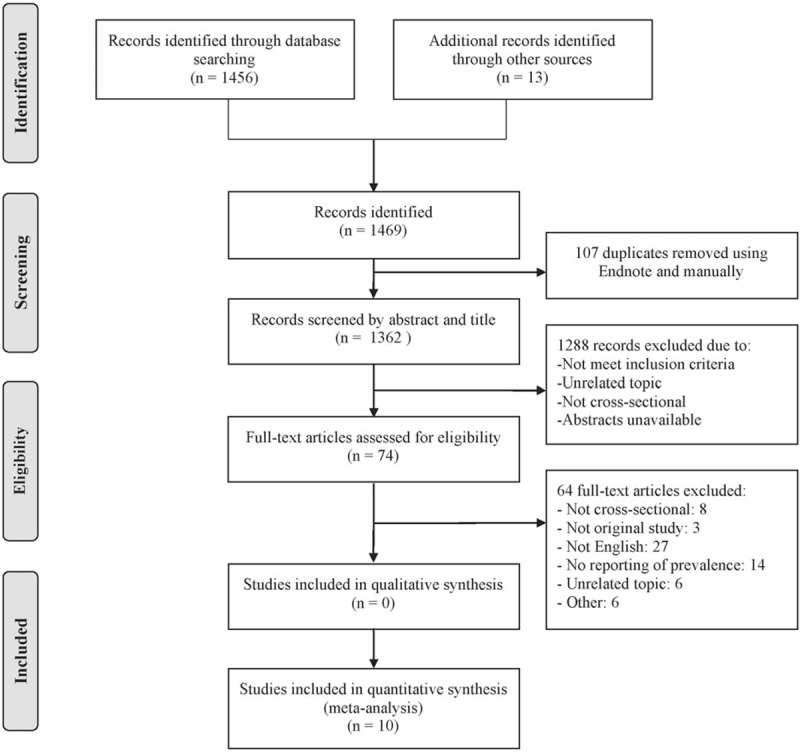
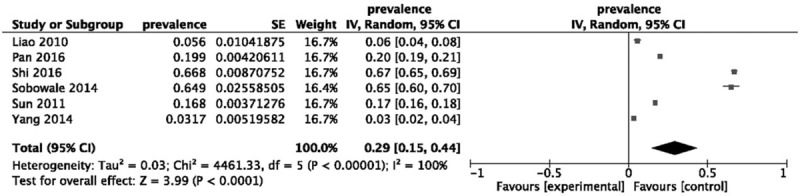
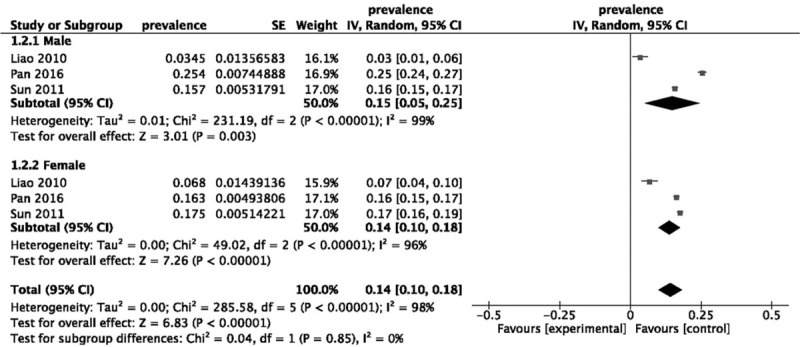
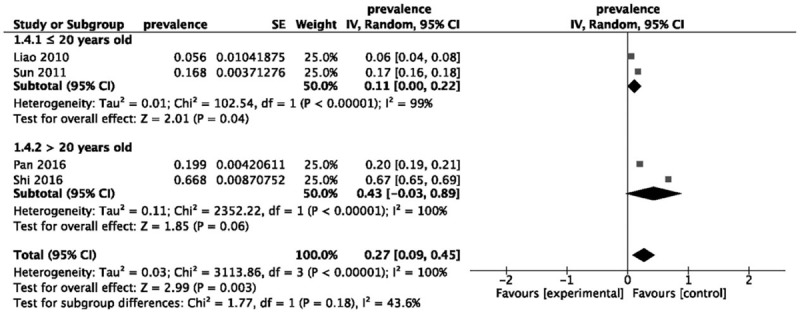
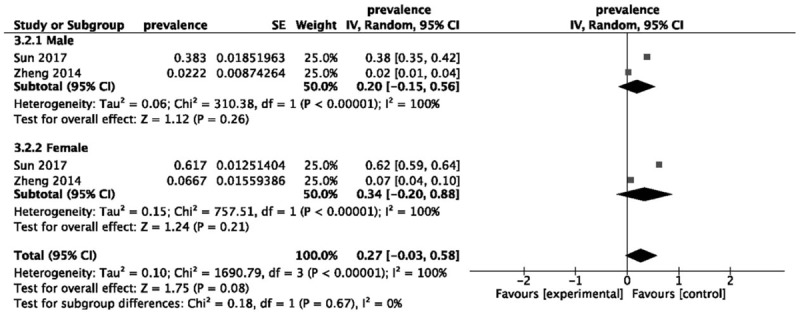
Background: The prevalence of mental health problems in medical students has continuously increased and is higher than the prevalence of mental health problems in students with other majors, which could lead to undesirable consequences for the students and their future patients. In China, the current states of medical education and healthcare workplaces differ in certain areas from those in Western or other Asian countries. However, the mental health status of Chinese medical students has not been systematically analyzed. Objectives: The purpose of this meta-analysis was to summarize the prevalence of mental health problems in Chinese medical students. Methods: All cross-sectional studies that investigated the prevalence of any mental health problem among Chinese medical students were retrieved from the following databases: EMBASE, PubMed, PsycINFO, OVID, the Cochrane Database of Systematic Reviews, and the Cochrane Central Register of Controlled Trials. We accepted each individual trial's inclusion and exclusion criteria for participants. The National Institutes of Health Quality Assessment Tool for Observational Cohort and Cross-Sectional Studies was adopted to appraise the methodological quality of each study. RevMan (version 5.3) was used to analyze the data. Results: Ten cross-sectional studies involving a total of 30,817 Chinese medical students were included. The prevalence of depression, anxiety, suicidal ideation, and eating disorders were 29%, 21%, 11%, and 2%, respectively. Subgroup analysis revealed no significant differences in the prevalence of depression and suicidal ideation between genders and no significant difference in the prevalence of depression between individuals of different ages (20 years and older or younger than 20 years). Conclusions and implications of key findings: Chinese medical students have relatively high prevalence of depression, anxiety, and suicidal ideation but a low prevalence of eating disorders. Mental health problems in Chinese medical students should be taken seriously, and timely screening of and proper intervention in these mental health problems are highly recommended.
Overview
The claims and statistics of this paper haven’t been checked yet.
Run the check — free, no account needed. It reads the open-access text and checks the sources it cites.
Integrity signals
Registry
Cites
Statistics
Figures



Verification
Claims the paper makes
The claims and statistics of this paper haven’t been checked yet.
Run the check — free, no account needed. It reads the open-access text and checks the sources it cites.
Claims other papers make about this one
Each is checked against this paper’s own text: does it say what the citing paper says it does?
The cited source says what the claim attributes to it.
In the citing paper
“A meta-analysis of 10 cross-sectional studies, which together engaged over 30,000 Chinese medical students, reported the prevalence of depression at 29%, anxiety at 21%, suicidal ideation at 11%, and eating disorders at 2% [5].”
From Promoting the mental health of university students in China: Protocol for contextual assessment to inform intervention design and adaptation (2021) · cites this paper as [5]
The check wasn’t confident either way, so it gives no verdict — never disputed.
In the citing paper
“In contrast, the situation in South Asia, particularly among its college students, remains under-researched, although existing studies reveal a comparable incidence of psychiatric symptoms. 7”
From Mental Health, Suicidality, Health, and Social Indicators Among College Students Across Nine States in India (2025) · cites this paper as [7]
Experimental — accuracy not yet measured
Self-check
Percentages, sums and reported differences re-computed from the paper’s own numbers.
The self-check needs the paper’s full text.
Citations
Cites
Preferred Reporting Items for Systematic Reviews and Meta-Analyses: the PRISMA statement
Moher, D., Liberati, A., Tetzlaff, J., Altman, D. G., & for the PRISMA Group (2009) · BMJ · doi:10.1136/bmj.b2535 · Cited by 83,823
Measuring inconsistency in meta-analyses
Higgins, J. P. T., Thompson, S. G., Deeks, J. J., & Altman, D. G. (2003) · BMJ · doi:10.1136/bmj.327.7414.557 · Cited by 63,139
Preferred reporting items for systematic reviews and meta-analyses: the PRISMA Statement.
(2009) · PubMed Central · Cited by 44,859
Preferred reporting items for systematic reviews and meta-analyses: The PRISMA statement
Moher, D., Liberati, A., Tetzlaff, J., Altman, D. G., & the PRISMA Group* (2009) · Annals of Internal Medicine · doi:10.7326/0003-4819-151-4-200908180-00135 · Cited by 37,554
Preferred Reporting Items for Systematic Reviews and Meta-Analyses: The PRISMA Statement
Moher, D., Liberati, A., Tetzlaff, J., & Altman, D. G. (2009) · Journal of Clinical Epidemiology · doi:10.1016/j.jclinepi.2009.06.005 · Cited by 19,575
The combination of estimates from different experiments
Cochran, W. G. (1954) · Biometrics · doi:10.2307/3001666 · Cited by 5,380 · cited 1×
“Heterogeneity was analyzed by the I(2) test, which describes the proportion of variation across the studies that is due not to chance but rather to the heterogeneity.([30,31]) The higher the percentage, the higher the level of heterogeneity was.”
MethodDyrbye, L. N., Thomas, M. R., & Shanafelt, T. D. (2006) · Academic Medicine · doi:10.1097/00001888-200604000-00009 · Cited by 2,909 · cited 1×
“, they can impair their quality of life and increase the risk of suicidal ideation and decrease academic performance, professionalism, and empathy toward their patients).([12,19,20]) The current state of the medical education system and healthcare working environment in China differs in some areas compared to those in…”
ResultThe ESEMeD/MHEDEA 2000 Investigators, Alonso, J., Angermeyer, M. C., Bernert, S., Bruffaerts, R., Brugha, T. S., Bryson, H., de Girolamo, G., de Graaf, R., Demyttenaere, K., et al. (2004) · Acta Psychiatrica Scandinavica · doi:10.1111/j.1600-0047.2004.00327.x · Cited by 1,825
GRADE guidelines: 5. Rating the quality of evidence—publication bias
Guyatt, G. H., Oxman, A. D., Montori, V., Vist, G., Kunz, R., Brozek, J., Alonso-Coello, P., Djulbegovic, B., Atkins, D., Falck-Ytter, Y., et al. (2011) · Journal of Clinical Epidemiology · doi:10.1016/j.jclinepi.2011.01.011 · Cited by 1,819 · cited 1×
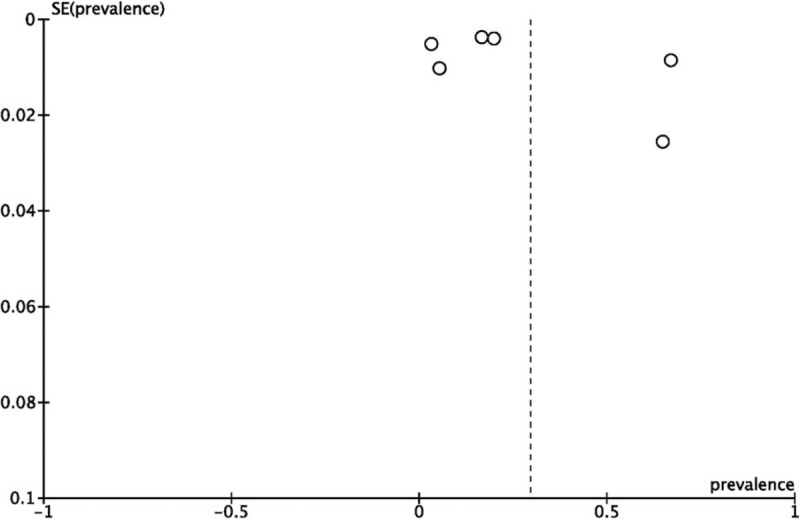
“The funnel plots indicate possible publication bias, evidence of asymmetry, and other small study effects.([32]) Finally, we followed PRISMA guidelines to report our findings.”
MethodThe Three-Step Theory (3ST): A New Theory of Suicide Rooted in the “Ideation-to-Action” Framework
Klonsky, E. D., & May, A. M. (2015) · International Journal of Cognitive Therapy · doi:10.1521/ijct.2015.8.2.114 · Cited by 1,799
Research works printed but not linked: 1
- Gallagher, 2012, National survey of counseling center directors, International Association of Counseling Service
Cited by
Sorted by citations
Items 201–285 of 285
Maliha, Z. T., Nahar, S. N., Mitra, D. K., Kakoly, N. S., Koly, K. N., Talukder, M. H. K., Ahmed, H. U., Gupta, R. D., & Hasan, M. T. (2025) · medRxiv · doi:10.1101/2025.01.30.25321378 · Cited by 1
Dmitriev, M., Nikitenko, E., Mamedova, М. М., & Spryshkov, N. (2020) · E3S Web of Conferences · doi:10.1051/e3sconf/202021019022
Афанасьев, С. О., Shiryaev, O. Y., & Махортова, И. С. (2021) · Collection of scientific papers · doi:10.18411/scienceconf-03-2021-12
Cyberchondria and Medical Student Syndrome
Aulia, A., & Pratiti, B. (2021) · Advances in media, entertainment and the arts (AMEA) book series · doi:10.4018/978-1-7998-8630-3.ch006
(2022) · International Journal of Development Research · doi:10.37118/ijdr.23895.06.2022
Li, X., Wang, S., & Luo, X. M. (2022) · doi:10.2991/978-94-6463-034-3_46
Hu, S., Zhang, L., Liu, X., Li, Y., & Ma, J. (2023) · Research Square · doi:10.21203/rs.3.rs-2987441/v1
Pahari, S., Barman, D., & Talukdar, R. (2023) · medRxiv · doi:10.1101/2023.06.11.23291246
Ismail, N. A., & Jamil, N. A. (2023) · Journal of Medical Education Development · doi:10.52547/edcj.16.49.5
Shkurti, E., & Shtiza, D. (2023) · Shiraz E-Medical Journal · doi:10.5812/semj-137263
Engajamento e qualidade de vida dos graduandos de enfermagem e medicina
Spina, G., Pinto, M. H., Beccária, L. M., Parro, M. C., Galisteu, K. J., & Pereira, A. P. D. S. (2023) · Acta Paulista de Enfermagem · doi:10.37689/acta-ape/2023ao027734
“Em consequência, comprometer a sua qualidade de vida (QV), bem-estar, satisfação, seu engajamento na universidade e, consequentemente, prejudicar o seu desempenho nos estudos.(1) Engajamento acadêmico e QV referem-se ao bem-estar psicológico e compromisso com o estudo.”
BackgroundEffect of Positive Emotions on the Quality of Life of Chinese College Students
Hu, Z., Chen, P., & Liu, J. (2023) · International Journal of Higher Education · doi:10.5430/ijhe.v12n5p42
AlEdani, E. M., Bhangu, J. K., Javed, K., Manshahia, P. K., Nahar, S., Kanda, S., Chatha, U., Odoma, V. A., Pitliya, A., & Khan, S. (2023) · Journal For International Medical Graduates · doi:10.56570/jimgs.v2i2.132
Liu, Q., Chang, R., & Peng, J. (2023) · Research Square · doi:10.21203/rs.3.rs-3359476/v1
Tutors visualized through metaphorical narratives: a role unquestioned?
Hernández-Amorós, M. J., Ruiz, M. Á. M., & Sauleda, L. A. (2023) · Mentoring & Tutoring Partnership in Learning · doi:10.1080/13611267.2023.2263392 · Cited by 1
“…for mental health, continue to remind us of how valuable tutoring becomes in a situation and setting in which mental health problems are very common among students (Campbell et al., 2022, Gavurova, Khouri, Ivankova, Rigelsky, & Mudarri, 2022, Salinas-Oñate et al., 2023, Zeng et al., 2019).”
BackgroundUndergraduate Anatomy Education: Improving Course Assessment to Reduce Student Stress
Liu, C., Shao, Z., & Li, L. (2023) · Lecture Notes in Education Psychology and Public Media · doi:10.54254/2753-7048/14/20230991
Comportamento suicida em alunos de graduação em medicina e em outras profissões de saúde
Schlittler, L. X. D. C. (2021) · doi:10.47749/t/unicamp.2021.1262413
Islam, M. M., Wesonga, R., Hasani, I. A., & Manei, A. A. (2023) · Maǧallaẗ ǧāmiʿaẗ al-Sulṭān Qābūs li-l-ʿulūm/Sultan Qaboos University journal for science · doi:10.53539/squjs.vol28iss1pp56-73
“Even before the COVID-19 pandemic, many studies across the globe reported higher levels of depression, anxiety, and stress among students than the general population [29,57,58].”
BackgroundNawi, H. M. (2023) · iRASD Journal of Management · doi:10.52131/jom.2023.0504.0118
Faghihzadeh, E., & Eghtesad, A. (2024) · doi:10.2196/preprints.58008
The exploratory factor analysis (EFA) of modified DASS-21 index: A case study of UiTM students
Rauf, U. F. A., Wahid, S. N. S., Hasan, H., Fauzi, M. F., & Aminuddin, A. S. (2024) · AIP conference proceedings · doi:10.1063/5.0192246
Araújo, J. P. G., & da Silva, R. C. D. S. (2024) · Research Society and Development · doi:10.33448/rsd-v13i3.45379
Camarillo-Nava, V. M., López-Rojas, E., de León, S. H.-C., Gutiérrez-Muñoz, C. I., Andrade-Pineda, J. E., Quiroz-Cortés, G. D., & Pérez-López, D. (2024) · Atención Familiar · doi:10.22201/fm.14058871p.2024.287952
Mental Disorders Among Healthcare Students Attending a Large University Hospital in Milan, Italy
Mendola, M., Masi, F., Castiglione, R., Soriano, A., Zazou, S., Tonelli, F., & Carrer, P. (2024) · La Medicina del Lavoro · doi:10.23749/mdl.v115i2.15168
Study of Chinese Adolescents with Mental Health Problems from the perspective of social inclusion
Tu, Y. (2024) · Transactions on Social Science Education and Humanities Research · doi:10.62051/3d2ym388
Chaudhary, N. I., & Rafiq, D. M. (2020) · PJPPRP · doi:10.62663/pjpprp.v11i2.53
朱, 可. (2024) · Advances in Clinical Medicine · doi:10.12677/acm.2024.1482195
Luo, L., Xu, R., Mu, F., Li, H., Liu, Y., Gao, J., Wu, Y., Wang, K., Liu, Y., Zhang, Y., et al. (2024) · Journal of Affective Disorders · doi:10.1016/j.jad.2024.08.065
Zulfiqar, S., Shukr, U. I., Khan, J., Baig, F. A., Waheed, A., Habib, M. F., & Raisani, S. A. (2024) · Pakistan Journal of Health Sciences · doi:10.54393/pjhs.v5i08.1656
A study on the efficacy of Group PM+ on depressed mood in medical studentsPreprint
Zhang, B., Ji, S., Cui, Y., Guo, Y., Jiang, C., Yang, T., Yu, F., & He, K. (2024) · Research Square · doi:10.21203/rs.3.rs-4858811/v1
¿Cómo enfrentar de la mejor manera los desafíos de la salud mental en la educación médica?
Rubio-Romero, J. A., & Gaitán‐Duarte, H. (2024) · Revista Colombiana de Obstetricia y Ginecología · doi:10.18597/rcog.4332
The Influential Role of Baduanjin on the Mental Health of Medical Students: A Review
Zhang, J., Xie, X., Zhao, M., & Liu, W. (2024) · International Journal of Public Health and Medical Research · doi:10.62051/ijphmr.v2n2.02
Афанасьев, С. О., & Shiryaev, O. Y. (2024) · Vestnik nevrologii psihiatrii i nejrohirurgii (Bulletin of Neurology Psychiatry and Neurosurgery) · doi:10.33920/med-01-2408-05
Mental health problems in medical students around the world
Голенков, А. В., & Nikolaev, E. E. (2023) · Meditsinskaya sestra · doi:10.29296/25879979-2023-03-03 · Cited by 1
Уварова, О., & Нігрецкул, В. В. (2024) · Професійно-прикладні дидактики · doi:10.37406/2521-6449/2024-2-9
Hulu, V. A., Saputri, A., & Elista, A. (2025) · Research on Social Work Practice · doi:10.1177/10497315241312893
Hu, S., Zhang, L., Liu, X., Li, Y., & Ma, J. (2025) · Research Square · doi:10.21203/rs.3.rs-2987441/v2
Yang, X., Mei, S., Wu, L., Dai, Z., Huang, J., Zheng, Y., Fang, J., Tang, J., Wang, W., & Chen, L. (2025) · BMC Medical Education · doi:10.1186/s12909-025-07111-z
Montoya-Cáceres, P., Báez-Quiñones, Y., Carrasco-Riffo, E., Carreño-Toro, N., & Pérez-Sepúlveda, R. (2025) · Revista Médica de Risaralda · doi:10.22517/25395203.25656
Chen, E.-N., & Zhao, Y.-F. (2025) · World Chinese Journal of Digestology · doi:10.11569/wcjd.v33.i6.458
Exploring loneliness: Prevalence and determinants among medical students in Bangladesh
Maliha, Z. T., Nahar, S. N., Mitra, D. K., Kakoly, N. S., Koly, K. N., Talukder, M. H. K., Ahmed, H. U., Gupta, R. D., & Hasan, M. T. (2025) · PLOS mental health. · doi:10.1371/journal.pmen.0000379
“Globally, studies have revealed alarming trends: in China, 29% of medical students experienced depression, 21% anxiety, and 11% suicidal ideation [4]; similarly, the British Medical Association reported six suicides among medical students in 2018 alone [5].”
Al‐Huseini, S., Qutishat, M., Jahan, F., Saadi, A. A., Albalushi, M., Al-Kalbani, M., Al-Ruhail, I., & Al-Maqbali, M. (2025) · Research Square · doi:10.21203/rs.3.rs-7023519/v1
Takrooni, W., Bakhsh, E., Hariri, N. H., & Elahi, I. N. (2025) · F1000Research · doi:10.12688/f1000research.169319.1
Effects of Perceived Stress and Insomnia on Emotional Intelligence of Medical Students
Jawale, D., Khadkikar, R. M., Sawant, M., & Shinde, S. (2025) · Cureus · doi:10.7759/cureus.94715
Niu, M., Zhao, X., Wang, T., Sun, S., Wang, Y., & Zhang, X. (2025) · BMC Geriatrics · doi:10.1186/s12877-025-06523-2
Toledo, P. D. M. E. S., Lucchetti, G., Grünewald, S. T. F., Ezequiel, O. D. S., & Lucchetti, A. L. G. (2025) · International Journal of Social Psychiatry · doi:10.1177/00207640251384081
Vásquez, G. I. V., Ochoa, E. D. Q., Quizhpe, C. F. B., & Orellana, S. M. (2025) · Salud Ciencia y Tecnología · doi:10.56294/saludcyt20262366 · Cited by 3
Evolving trends in medical trainee wellbeing research from 2014 to 2023: A bibliometric analysis
Xu, H., Liu, C., Shi, W., Li, X., Huang, X., & Jiao, Y. (2025) · Medicine · doi:10.1097/md.0000000000046358
“[3,4,6,7] 8] As clinician wellbeing is related to the quality of medical care delivered and patient welfare, the United Kingdom, Australia, and New Zealand have all issued practice guidelines to support medical students’ psychological, social, and physical wellbeing.”
PREVALENCE OF GENERALIZED ANXIETY DISORDER AMONG MEDICAL STUDENTS
de Abreu, J. S., & Bispo, C. B. D. S. (2025) · Health and Society · doi:10.51249/hs.v5i06.2729
Guzmán‐González, M., Rivera-Ottenberger, D., Garrido-Rojas, L., Bahamondes, J., Cárcamo, R. A., Fernández, A. M., & Valarezo-Bravo, O. F. (2025) · The Journal of Psychology · doi:10.1080/00223980.2025.2603476
Chen, J., Tuersun, Y., Yang, J., Xiong, M., Wang, Y., Rao, X., & Jiang, S. (2022) · Figshare · doi:10.6084/m9.figshare.20514840
Chen, J., Tuersun, Y., Yang, J., Xiong, M., Wang, Y., Rao, X., & Jiang, S. (2022) · Figshare · doi:10.6084/m9.figshare.20514834
Guo, F., Yi, M., Sun, L., Luo, T., Han, R., Zheng, L., Jin, S., Wang, J., Lei, M., & Gao, C. (2021) · Figshare · doi:10.6084/m9.figshare.17020938
Chen, J., Tuersun, Y., Yang, J., Xiong, M., Wang, Y., Rao, X., & Jiang, S. (2022) · Figshare · doi:10.6084/m9.figshare.20514837
Chen, J., Tuersun, Y., Yang, J., Xiong, M., Wang, Y., Rao, X., & Jiang, S. (2022) · Figshare · doi:10.6084/m9.figshare.20514831
Ramirez, O. M. C., Navarro, J. C. C., Henao, M. A. G., Giraldo-Álvarez, A. B., Villamil, A. P., Arias, M. P., & Porras, L. F. C. (2025) · Hacia la Promoción de la Salud · doi:10.17151/hpsal.2025.30.1.2
Assessment of Sleep Quality and Depression Among Medical Students: A Cross-Sectional Study
Alsalloum, T., Alawaisheh, A., Daoud, A., Alnajjar, A. Z., Meky, A., & Funjan, K. (2025) · Avicenna Journal of Medicine · doi:10.1055/s-0045-1815851 · Cited by 1
How to Predict the Onset of Anxiety and Depression in Pediatric Residents? -- A Survey From China
Liu, X., Song, C., Li, H. Q., Jiang, Z., & Feng, L. (2026) · Neuropsychiatric Disease and Treatment · doi:10.2147/ndt.s573146
Cordero, C. X. T., Santillán, M. A., Guarderas, B. M., & Guananga, D. (2025) · Journal of the Academy · doi:10.47058/joa13.7
Ozbahar, F. N., Keten, H. S., & Tayşi, S. (2026) · Early Intervention in Psychiatry · doi:10.1111/eip.70165
Klemm, S.-L., Dreiack, S., Prado, A. D. S., Endres, K. J., Kohls, E., & Rummel‐Kluge, C. (2026) · PLOS mental health. · doi:10.1371/journal.pmen.0000576
“Studies on students’ mental health often focus on students from specific fields (e.g., medical, nursing, or psychology students [ 15,49,50], whereas this study included students from six Saxonian universities, covering eight faculties overall [5].”
Wu, M., Li, Z., Wang, X. M., Xu, H., Liu, Y., Li, M., Yuan, W., Peng, H., Wu, Q., & Liu, T. (2026) · Depression and Anxiety · doi:10.1155/da/3424408
Self-citationPandolphi, R., Marques, B. R., Signori, P. M., & de Oliveira, G. M. C. (2026) · Cognitus Interdisciplinary Journal · doi:10.71248/t5yyce95
Autohypnose et santé mentale des étudiants en odontologie : étude prospective
Mialon, M., Sturaro, E., Canceill, T., Marty, M., Fournier, G., & Diemer, F. (2026) · Santé Publique · doi:10.3917/spub.262.0065
Poor sleep quality in basic Medical students
Passos, J. P. U., Saadi, P. D. D., de Sousa, J. V. N., Morais, L. H. C., & da Rocha, A. P. M. (2026) · Research Society and Development · doi:10.33448/rsd-v15i5.51153
Zhang, R., Wu, W., Huang, Y., Li, Y., Yang, Y., Huang, M., Aisaiti, A., Xie, J., Huang, R., Yan, J., et al. (2026) · Frontiers in Medicine · doi:10.3389/fmed.2026.1823631
“Research indicates significant mental health issues among Chinese medical and health-related students, with a depression prevalence of 29% and an anxiety prevalence of 21% among (8, 9), highlighting a latent crisis within this high-pressure educational environment (10).”
Jeftic, I., Jackson, B., Rebar, A. L., Furzer, B. J., Dimmock, J. A., Budden, T., Wright, K. E., Boyd, C., Rosenberg, M., Sabiston, C. M., et al. (2026) · Journal of Applied Sport Psychology · doi:10.1080/10413200.2026.2686714
Mental Health of Medical Students in Portugal: The Role of Sexual Orientation
Moura, A., Ferreira, M. M., D’Alva-Teixeira, V., Macedo, R., & Morgado, P. F. (2026) · Healthcare · doi:10.3390/healthcare14132023
“Regarding the prevalence of anxiety, the rates are similar to those reported in other studies [36,37,41].”
Bacchi, G. N. V., Furukawa, L. H., Soares, A. B., Turatti, A. P., Horst, E. G., Fillmann, G. P., dos Santos, V. B., Karpovich, E., Pereira, V., Vieira, M., et al. (2026) · medRxiv · doi:10.64898/2026.07.14.26357843
Frough, Z., Yaqubi, A. S., Matin, A. B., Watandost, A. R., & Binam, S. (2026) · Salamat Academic & Research Journal · doi:10.61438/sarj.v3i2.297
Afshar, K., Schneider, N., & Tsikas, S. A. (2026) · Medical Teacher · doi:10.1080/0142159x.2026.2701128
Maghbouli, N., Dokesh, A. M. J., Lorzadeh, N., & Vaziri-harami, R. (2026) · Health Science Reports · doi:10.1002/hsr2.72941
Xie, J., Li, L., Liu, X., Yue, W., & Guo, J. (2026) · Psychological Medicine · doi:10.1017/s0033291726104735
Chen, S., Chen, Y., Peng, Y., Chen, L., & Lin, Y. (2026) · Nursing Open · doi:10.1002/nop2.70719
“AP is particularly common among medical students, with an incidence rate as high as 52.5% (Zeng et al. 2019; Tahir et al. 2022).”
InfluentialAlghamdi, A. H., Almadani, A. H., Aljaffer, M. A., Alghamdi, S. A., AlDrees, A., Almansour, M., AlMuraikhi, N. A., Fiaar, H. A. A., Ibrahim, E. O., Alshadwi, A. M., et al. (2026) · Frontiers in Psychiatry · doi:10.3389/fpsyt.2026.1879787
“Internationally, our fi ndings are broadly consistent with those of studies conducted on medical students in China and Italy (36, 37), reinforcing the global nature of the issue.”
Wang, Z., Wang, S., & Wen, D. (2026) · Depression and Anxiety · doi:10.1155/da/9727081
Global Prevalence of Depression Among University Students: A Comprehensive Umbrella Review
Sam, G. Y. K., Soh, X. C., Balaji, H., Tan, G. X. D., Diong, S. F., Hu, M., Hartanto, A., & Majeed, N. M. (2026) · Education Sciences · doi:10.3390/educsci16081316 · Cited by 1
“%) than in men ( Mdn = 27.90%, Range = 16.43–50.00%), while 7 (Gao et al., 2020; Jaafari et al., 2021; Jiang et al., 2015; Jin et al., 2022; Lei et al., 2016; Sarokhani et al., 2013; Zeng et al., 2019) found the prevalence of depression to be higher in men ( Mdn = 29.45%, Range = 15.00–51.30”
InfluentialJing, L., Zhang, W., Lee, D. P., Sun, M., Wu, G., Ouyang, X., & Liu, Z. (2026) · Mental Wellness · doi:10.4081/mw.2026.44
Prevalence of mental health disorders among university students in northern Morocco
Bousgheïri, F., Sammoud, K., Lemrabett, S., Echater, S., Benhaddouch, Y., Belaatar, M., Senhaji, M., Ammouri, A. E., & Najdi, A. (2026) · Discover Public Health · doi:10.1186/s12982-026-02949-0
Metadata
- Authors
- Zeng, W., Chen, R., Wang, X., Zhang, Q., & Deng, W.
- Affiliations
- Department of Graduate Medical Education
- Department of Neurosurgery
- Sichuan University (CN)
- Corresponding author
- Deng, Wei
- Venue
- Medicine
- Published
- 2019-05
- Volume
- 98
- Issue
- 18
- Pages
- e15337
- ISSN
- 0025-7974 (ISSN-L)
- 1536-5964
- PMC
- PMC6504335
- OpenAlex
- W2942994841
- Cited by
- 286
- References
- 79
- Citations by year
- 2026: 28 · 2025: 42 · 2024: 49 · 2023: 45 · 2022: 45 · 2021: 46 · 2020: 29 · 2019: 2
- FWCI
- 5.59
- Type
- journal article
- Language
- en
- Open access
- gold
- doi.org
- Licence
- Locations
- Medicine (publishedVersion, cc-by-nc-nd)
- Europe PMC (PubMed Central) (publishedVersion, cc-by-nc-nd)
- PubMed Central (publishedVersion, cc-by-nc-nd)
- PubMed (publishedVersion)
- Funders
- Health and Family Planning Commission of Sichuan Province
- Fundamental Research Funds for the Central Universities (2012017yjsy200)
- Topics
- Health Sciences › Health Professions › General Health Professions › Healthcare professionals’ stress and burnout
- Health Sciences › Medicine › Psychiatry and Mental health › Mental Health Treatment and Access
- Social Sciences › Psychology › Clinical Psychology › COVID-19 and Mental Health
- Keywords
- mental illness, medical students, depression, anxiety, suicidal ideation, eating disorders, prevalence, Chinese medical students, gender differences, age differences, mental health screening
- MeSH terms
- Adolescent, Adult, Anxiety, Feeding and Eating Disorders, Mental Disorders, China, Cross-Sectional Studies, Depression, Education, Medical, Female, Humans, Male, Mental Health, Students, Medical, Prevalence, Workplace, Young Adult, Suicidal Ideation
About these checks
Registry, retraction, Cites and statistics results are computed, not judged, with one exception: a printed reference that no index lists is read once by a model before it counts as a citation error. Claims are extracted by a model and kept only when their quote appears verbatim in the text; each cited source is then checked, with a model’s help, for whether it says what the claim relies on. Those verdicts can be wrong — read the claim’s quote and the cited source before relying on one.
Statistics and arithmetic are recomputed, not judged.
Confidence bands are shown only for fields calibrated on our annotated test set. None is calibrated yet, so no band is shown.
What counts as a claim ›How we measure confidence ›How we check this ›
Are you an author, or do you see a problem with this page? Request a review
