

Impact of physical exercise on children with attention deficit hyperactivity disorders: Evidence through a meta-analysis
Open accessThe DOI matches its Crossref record, with a small difference in title or year; 47 of the 49 references it cites were found in a registry or an index.
Abstract
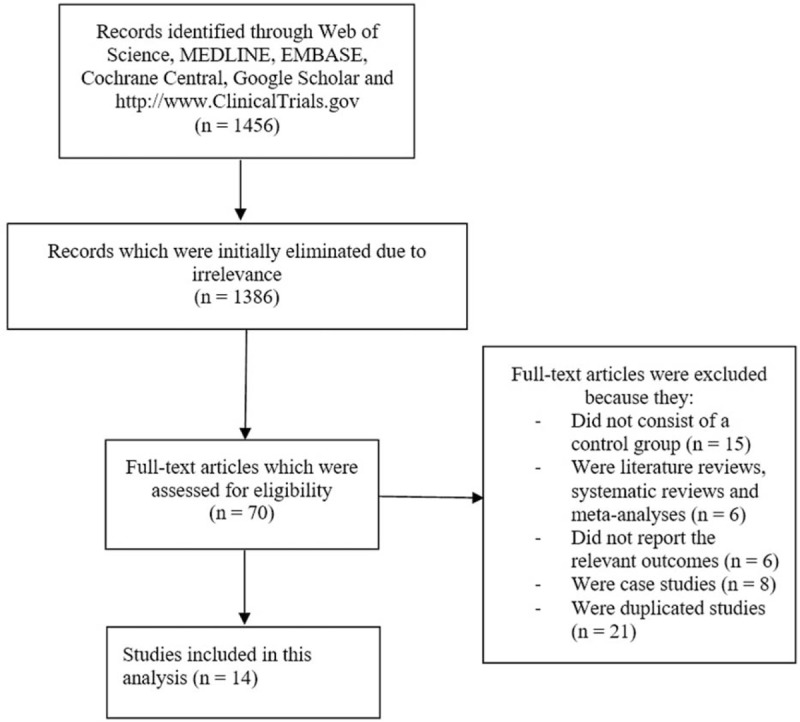
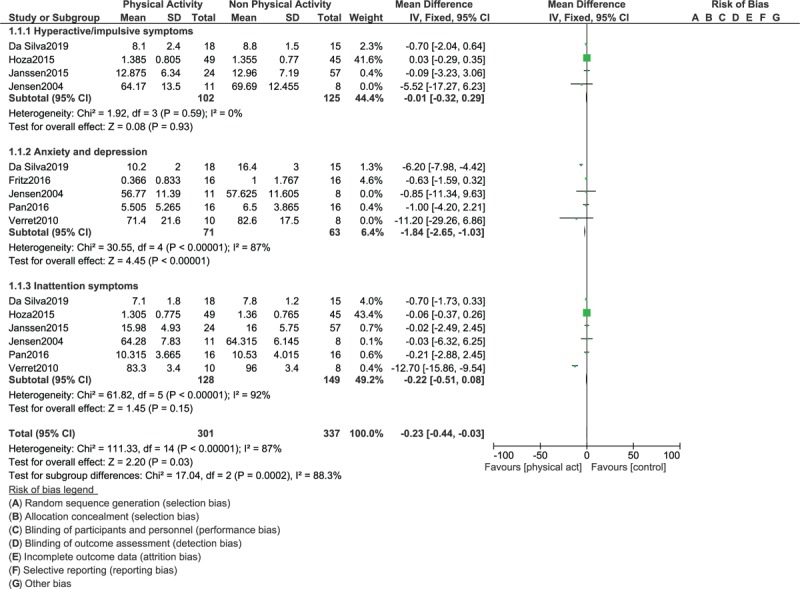
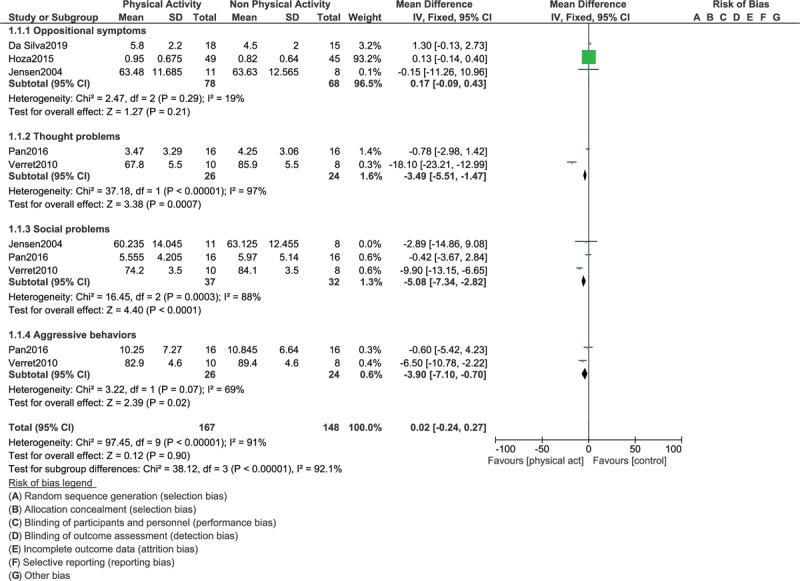
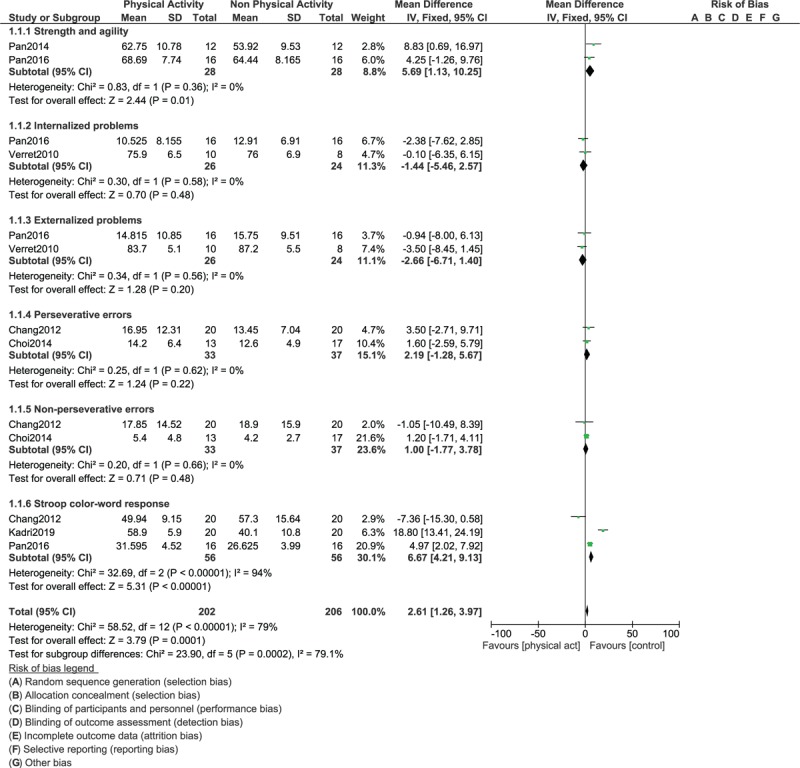
Background: Attention deficit hyperactivity disorder (ADHD) which is characterized by developmentally inappropriate levels of attention, hyperactivity and impulsivity, is considered as the most common neurodevelopmental disorder in childhood. Physical exercise has shown to have several benefits in the improvement of children with ADHD. In this meta-analysis, we aimed to systematically show, with evidence, the impact of physical exercise on children with ADHD. Methods: Web of Science, MEDLINE, EMBASE, Google Scholar, Cochrane Central and http://www.ClinicalTrials.gov were the searched sources for studies which were based on the impact of physical exercise on children with ADHD. Relevant endpoints were assessed. This evidence based meta-analysis was carried out by the most relevant RevMan 5.3 software. Due to the involvement of continuous data (mean and standard deviation), weight mean difference (WMD) with 95% confidence intervals (CI) were used to represent the final analysis. A significant level of P≤ .05 was set and a fixed statistical effect model was used throughout the analysis. Results: Fourteen studies with a total number of 574 participants with ADHD were included in this evidenced based meta-analysis. Two hundred and seventy six (276) participants were assigned to the physical activity group whereas 298 participants were assigned to the control group. Results of this analysis showed that anxiety and depression were significantly improved with physical activity in these children with ADHD (WMD: -1.84; 95% CI: [-2.65 – (-1.03)],P = .00001). Hyperactive/impulsive symptoms (WMD: -0.01; 95% CI: [-0.32 – 0.29],P = .93) and inattention symptoms (WMD: -0.22; 95% CI: [-0.51 – 0.08],P = .15) were also improved with physical exercise but the results were not statistically significant. This evidence based analysis showed thought problems (WMD: -3.49; 95% CI: [-5.51 – (-1.47)],P = .0007), social problems (WMD: -5.08; 95% CI: [-7.34 – (-2.82)],P = .0001), and aggressive behaviors (WMD: -3.90; 95% CI: [-7.10 – (-0.70)],P = .02) to have significantly been improved in participants with ADHD who were assigned to physical activity group. Conclusions: This current meta-analysis showed with evidence, that physical exercise has a major contribution owing to significant improvement in anxiety and depression, aggressive behaviors, thought and social problems among children suffering from ADHD. Therefore, physical exercise should be incorporated in the daily life of children with ADHD. Further future research should be able to confirm this hypothesis.
Overview
The claims and statistics of this paper haven’t been checked yet.
Free: it reads the open-access text and checks the first 5 claims that cite a source we can check. Create a free account to check every claim.
Integrity signals
Registry
Cites
Statistics
Figures
Verification
Claims the paper makes
The claims and statistics of this paper haven’t been checked yet.
Free: it reads the open-access text and checks the first 5 claims that cite a source we can check. Create a free account to check every claim.
Claims other papers make about this one
Each is checked against this paper’s own text: does it say what the citing paper says it does?
The source backs part of the claim, not all of it — or backs it for a different population, condition or comparison.
In the citing paper
“but significant reductions in anxiety and depression (5 studies, 164 participants) (Zang, 2019).”
From The World Federation of ADHD International Consensus Statement: 208 Evidence-based conclusions about the disorder (2021) · cites this paper as Zang, 2019
Experimental — accuracy not yet measuredThe cited source says what the claim attributes to it.
In the citing paper
“Another meta-analysis found no significant effect of exercise on either hyperactivity/impulsivity (4 studies, 227 participants) or inattention symptoms (6 studies, 277 participants), but significant reductions in anxiety and depression (5 studies, 164 participants) (Zang, 2019).”
From The World Federation of ADHD International Consensus Statement: 208 Evidence-based conclusions about the disorder (2021) · cites this paper as Zang, 2019
The cited source says what the claim attributes to it.
In the citing paper
“Another meta-analysis found no significant effect of exercise on either hyperactivity/impulsivity (4 studies, 227 participants) or inattention symptoms (6 studies, 277 participants), but significant reductions in anxiety and depression (5 studies, 164 participants) (Zang, 2019).”
From The World Federation of ADHD International Consensus Statement: 208 Evidence-based conclusions about the disorder (2021) · cites this paper as Zang, 2019
Self-check
Percentages, sums and reported differences re-computed from the paper’s own numbers.
The self-check needs the paper’s full text.
Citations
Cites
Liberati, A., Altman, D. G., Tetzlaff, J., Mulrow, C., Gøtzsche, P. C., Ioannidis, J. P. A., Clarke, M., Devereaux, P. J., Kleijnen, J., & Moher, D. (2009) · PLoS Medicine · doi:10.1371/journal.pmed.1000100 · Cited by 28,164
Liberati, A., Altman, D. G., Tetzlaff, J., Mulrow, C., Gotzsche, P. C., Ioannidis, J. P. A., Clarke, M., Devereaux, P. J., Kleijnen, J., & Moher, D. (2009) · BMJ · doi:10.1136/bmj.b2700 · Cited by 17,648
Stang, A. (2010) · European Journal of Epidemiology · doi:10.1007/s10654-010-9491-z · Cited by 17,396 · cited 1×
“The quality assessment of the randomized trials was carried out with reference to the criteria suggested by the Cochrane Collaboration([19]) and the quality assessment of the observational studies was carried out by the Newcastle Ottawa Scale (NOS).([20])”
MethodMolina, B. S. G., Hinshaw, S. P., Swanson, J. M., Arnold, L. E., Vitiello, B., Jensen, P. S., Epstein, J. N., Hoza, B., Hechtman, L., Abikoff, H. B., et al. (2009) · Journal of the American Academy of Child & Adolescent Psychiatry · doi:10.1097/chi.0b013e31819c23d0 · Cited by 1,182 · cited 1×
“Poor adherence,([12]) partial or non-response to medications,([13]) and uncertainty about the long-term costs of medications,([14]) beneficial and side effects are the other limitations of pharmacological therapy for ADHD.”
BackgroundDalsgaard, S., Østergaard, S. D., Leckman, J. F., Mortensen, P. B., & Pedersen, M. G. (2015) · The Lancet · doi:10.1016/s0140-6736(14)61684-6 · Cited by 681 · cited 1×
“This disorder is also associated with substantial long-term depressive outcomes and mortality.([9]) To improve the symptoms of ADHD in these children, pharmacological treatment is associated with long-term beneficial effects and has been considered as first line therapy.”
BackgroundThe epidemiology of attention‐deficit/hyperactivity disorder (ADHD): A public health view
Rowland, A. S., Lesesne, C. A., & Abramowitz, A. J. (2002) · Mental Retardation and Developmental Disabilities Research Reviews · doi:10.1002/mrdd.10036 · Cited by 495 · cited 1×
“The diagnosis is mainly based on parents’ and teachers’ reports, with reference to learning disabilities, anxiety and conduction disorders.([2]) Children with ADHD often have significant impairment in occupational,([3]) health,([4]) social([5]) and academic([6]) domains contributing to motivational and learning disabi…”
BackgroundYoung Adult Educational and Vocational Outcomes of Children Diagnosed with ADHD
Kuriyan, A. B., Pelham, W. E., Molina, B. S. G., Waschbusch, D. A., Gnagy, E. M., Sibley, M. H., Babinski, D. E., Walther, C., Cheong, J., Yu, J., et al. (2013) · Journal of Abnormal Child Psychology · doi:10.1007/s10802-012-9658-z · Cited by 406 · cited 1×
“Children with ADHD often have significant impairment in occupational,([3]) health,([4]) social([5]) and academic([6]) domains contributing to motivational and learning disabilities and anxiety disorders as well as impulsive behaviors resulting in a negative impact on themselves and therefore contribute to the developm…”
BackgroundMortality, ADHD, and Psychosocial Adversity in Adults With Childhood ADHD: A Prospective Study
Barbaresi, W. J., Colligan, R. C., Weaver, A. L., Voigt, R. G., Killian, J. M., & Katusic, S. K. (2013) · Pediatrics · doi:10.1542/peds.2012-2354 · Cited by 401
Review of Medication Adherence in Children and Adults with ADHD
Adler, L. D., & Nierenberg, A. A. (2010) · Postgraduate Medicine · doi:10.3810/pgm.2010.01.2112 · Cited by 295 · cited 1×
“Poor adherence,([12]) partial or non-response to medications,([13]) and uncertainty about the long-term costs of medications,([14]) beneficial and side effects are the other limitations of pharmacological therapy for ADHD.”
BackgroundVerret, C., Guay, M.-C., Berthiaume, C., Gardiner, P., & Béliveau, L. (2012) · Journal of Attention Disorders · doi:10.1177/1087054710379735 · Cited by 294 · cited 1×
“responses (-), perseverative errors (-), non-perseverative errors (-), conceptual level responses (+), categories completed (+) Verret, 2010([25]) Anxiety-depression, withdrawal-depression, somatic complaints, social problems, thought problems, attention problems, rule-breaking”
BackgroundJensen, P. S., & Kenny, D. T. (2004) · Journal of Attention Disorders · doi:10.1177/108705470400700403 · Cited by 292 · cited 1×
“pondered, score pondered, walk/do not walk pondered Jensen 2004([26]) Oppositional, cognitive problems-inattention, hyperactivity, anxious/shy, perfectionism, psychosomatic, social problems, impulsive, inattentive, total problem Pan, 2014([17]) Total motor composite, fine manual control, manual coordination, body coor…”
BackgroundCerrillo‐Urbina, A. J., García‐Hermoso, A., Sánchez‐López, M., Pardo‐Guijarro, M. J., Santos Gómez, J. L., & Martínez‐Vizcaíno, V. (2015) · Child: Care, Health and Development · doi:10.1111/cch.12255 · Cited by 284 · cited 1×
“6 Similarly, another meta-analysis involving 8 randomized trials based on aerobic and yoga exercises showed yoga and aerobic exercises to effectively improve hyperactivity, anxiety, impulsive disorders and social problems in children with ADHD.([36]) The authors stated that aerobic exercise had a major impact compared…”
BackgroundBolaños, C. A., Barrot, M., Berton, O., Wallace-Black, D., & Nestler, E. J. (2003) · Biological Psychiatry · doi:10.1016/s0006-3223(03)00570-5 · Cited by 268 · cited 1×
“However, the use of pharmacological drugs have potentially serious adverse events limiting their use in certain cases.([11]) Poor adherence,([12]) partial or non-response to medications,([13]) and uncertainty about the long-term costs of medications,([14]) beneficial and side effects are the other limitations of pharm…”
BackgroundChang, Y.-K., Liu, S., Yu, H.-H., & Lee, Y.-H. (2012) · Archives of Clinical Neuropsychology · doi:10.1093/arclin/acr094 · Cited by 261 · cited 1×
“Hoza, 2015([22]) Hyperactivity/impulsivity symptoms, inattention symptoms, oppositional symptoms, moodiness, peer behavior, peer reputation Da Silva 2019([23]) Depression, stress, anxiety, flexibility cognitive, selective attention, inattentive, hyperactive, opponent, balance Chang, 2012([24]) Stroop test: stroop word…”
BackgroundVeldhuijzen van Zanten, J. J. C. S., Rouse, P. C., Hale, E. D., Ntoumanis, N., Metsios, G. S., Duda, J. L., & Kitas, G. D. (2015) · Sports Medicine · doi:10.1007/s40279-015-0363-2 · Cited by 259 · cited 1×
“Physical exercise has always been beneficial and is considered as a preventive measure for developing or the exacerbation of several chronic medical conditions, and disabilities.([15]) Several recent studies support the benefits of physical exercise on the cognitive performance and the management of behavioral symptom…”
BackgroundDas, D., Cherbuin, N., Butterworth, P., Anstey, K. J., & Easteal, S. (2012) · PLoS ONE · doi:10.1371/journal.pone.0031500 · Cited by 249 · cited 1×
“Children with ADHD often have significant impairment in occupational,([3]) health,([4]) social([5]) and academic([6]) domains contributing to motivational and learning disabilities and anxiety disorders as well as impulsive behaviors resulting in a negative impact on themselves and therefore contribute to the developm…”
BackgroundComparing the efficacy of medications for ADHD using meta-analysis.
(2006) · PubMed Central · Cited by 230
Zwi, M., Jones, H., Thorgaard, C., York, A., & Dennis, J. A. (2011) · Cochrane Database of Systematic Reviews · doi:10.1002/14651858.cd003018.pub3 · Cited by 229 · cited 1×
“Parental stress will decrease and parental confidence in their children with ADHD will be increased.([43]) Social skill training is important in children with ADHD.”
BackgroundThe effects of physical activity on attention deficit hyperactivity disorder symptoms: The evidence
Gapin, J. I., Labban, J. D., & Etnier, J. L. (2011) · Preventive Medicine · doi:10.1016/j.ypmed.2011.01.022 · Cited by 197 · cited 1×
“Several recent studies support the benefits of physical exercise on the cognitive performance and the management of behavioral symptoms in children with ADHD.([16,17]) However, there is limited evidence to show the effects of physical activities on childhood ADHD.”
BackgroundDuration of untreated depression influences clinical outcomes and disability
Ghio, L., Gotelli, S., Cervetti, A., Respino, M., Natta, W., Marcenaro, M., Serafini, G., Vaggi, M., Amore, M., & Belvederi Murri, M. (2015) · Journal of Affective Disorders · doi:10.1016/j.jad.2015.01.014 · Cited by 171 · cited 1×
“period was associated with better favorable outcomes and these patients responded well to the treatment given.([40]) Moreover, another review was also in favor of this current analysis.”
ResultGapin, J., & Etnier, J. L. (2010) · Journal of Sport and Exercise Psychology · doi:10.1123/jsep.32.6.753 · Cited by 160 · cited 1×
“1 tion, hyperactivity and impulsivity, is considered as one of the most common psychiatric disorders and as the most common neurodevelopmental disorder in childhood.([1]) ADHD cannot often be diagnosed through medical laboratory tests.”
BackgroundSilva, L. A. D., Doyenart, R., Henrique Salvan, P., Rodrigues, W., Felipe Lopes, J., Gomes, K., Thirupathi, A., Pinho, R. A. D., & Silveira, P. C. (2020) · International Journal of Environmental Health Research · doi:10.1080/09603123.2019.1612041 · Cited by 159
Hoza, B., Smith, A. L., Shoulberg, E. K., Linnea, K. S., Dorsch, T. E., Blazo, J. A., Alerding, C. M., & McCabe, G. P. (2015) · Journal of Abnormal Child Psychology · doi:10.1007/s10802-014-9929-y · Cited by 153 · cited 1×
“Hoza, 2015([22]) Hyperactivity/impulsivity symptoms, inattention symptoms, oppositional symptoms, moodiness, peer behavior, peer reputation Da Silva 2019([23]) Depression, stress, anxiety, flexibility cognitive, selective attention, inattentive, hyperactive, opponent, balance Chang, 2012([24]) Stroop test: stroop word…”
BackgroundAcute Physical Activity Enhances Executive Functions in Children with ADHD
Benzing, V., Chang, Y.-K., & Schmidt, M. (2018) · Scientific Reports · doi:10.1038/s41598-018-30067-8 · Cited by 153 · cited 1×
“aggressive behaviors, internalized problems, externalized problems, total problems, stroop color word test Bening, 2018([34]) Flank task accuracy (correct response): congruent, inhibition, switching Zang Medicine (2019) 98:46 www.”
BackgroundStorebø, O. J., Skoog, M., Damm, D., Thomsen, P. H., Simonsen, E., & Gluud, C. (2011) · Cochrane Database of Systematic Reviews · doi:10.1002/14651858.cd008223.pub2 · Cited by 149
Pan, C.-Y., Chu, C.-H., Tsai, C.-L., Lo, S.-Y., Cheng, Y.-W., & Liu, Y.-J. (2016) · Research in Developmental Disabilities · doi:10.1016/j.ridd.2016.06.009 · Cited by 143 · cited 1×
“number, /go-error number, No go-true number, No go-error number Choi, 2014([32]) Total errors, perseverative responses, perseverative errors, non-perseverative errors Pan, 2016([33]) Final manual control, manual coordination, body coordination, strength and agility, total motor composite, anxiety-depression,”
BackgroundStorebø, O. J., Elmose Andersen, M., Skoog, M., Joost Hansen, S., Simonsen, E., Pedersen, N., Tendal, B., Callesen, H. E., Faltinsen, E., & Gluud, C. (2019) · Cochrane Database of Systematic Reviews · doi:10.1002/14651858.cd008223.pub3 · Cited by 135 · cited 1×
“Social skill training is important in children with ADHD.([44,45]) Our current analysis showed physical exercise to significantly improve social problems in children with ADHD.”
BackgroundMemarmoghaddam, M., Torbati, H. T., Sohrabi, M., Mashhadi, A., & Kashi, A. (2016) · PubMed Central · Cited by 127
Sports Therapy for Attention, Cognitions and Sociality
Kang, K., Choi, J., Kang, S., & Han, D. (2011) · International Journal of Sports Medicine · doi:10.1055/s-0031-1283175 · Cited by 125 · cited 1×
“In a 6week prospective trial, including 12 sessions of education and sports therapy whereby the participants were involved in a 90 minutes athletic activity twice a week, the authors demonstrated a strong so-relation of physical sports with improvement of symptoms of attention, cognitive and social skills in children…”
BackgroundAerobic Exercise and Attention Deficit Hyperactivity Disorder: Brain Research
CHOI, J. W., HAN, D. H., KANG, K. D., JUNG, H. Y., & RENSHAW, P. F. (2015) · Medicine & Science in Sports & Exercise · doi:10.1249/mss.0000000000000373 · Cited by 118 · cited 1×
“number, /go-error number, No go-true number, No go-error number Choi, 2014([32]) Total errors, perseverative responses, perseverative errors, non-perseverative errors Pan, 2016([33]) Final manual control, manual coordination, body coordination, strength and agility, total motor composite, anxiety-depression,”
BackgroundKadri, A., Slimani, M., Bragazzi, N., Tod, D., & Azaiez, F. (2019) · International Journal of Environmental Research and Public Health · doi:10.3390/ijerph16020204 · Cited by 105 · cited 1×
“motivation Janssen, 2015([29]) Inattention, hyperactivity/impulsivity, mean reaction time, omission Kadri, 2019([30]) Color block test, color-word interference test, word test, interference, error, automatic detection (correct response), controlled searched”
BackgroundBerwid, O. G., & Halperin, J. M. (2012) · Current Psychiatry Reports · doi:10.1007/s11920-012-0297-4 · Cited by 99 · cited 1×
“Researchers have found intense exercise or physical activity to have major beneficial effects in children with ADHD.([35]) In our current meta-analysis, we aimed to show, with evidence, the benefits of physical exercise in children with ADHD.”
BackgroundPan, C., Chang, Y., Tsai, C., Chu, C.-H., Cheng, Y.-W., & Sung, M. (2014) · Journal of Attention Disorders · doi:10.1177/1087054714533192 · Cited by 90 · cited 2×
“Several recent studies support the benefits of physical exercise on the cognitive performance and the management of behavioral symptoms in children with ADHD.([16,17]) However, there is limited evidence to show the effects of physical activities on childhood ADHD.”
BackgroundAcute Exercise Improves Mood and Motivation in Young Men with ADHD Symptoms
Fritz, K., & O’Connor, P. J. (2016) · Medicine & Science in Sports & Exercise · doi:10.1249/mss.0000000000000864 · Cited by 90 · cited 1×
“motor integration, balance, running speed and agility Chou, 2017([27]) Visual pursuit test: accuracy rate, reaction time, Determination test: accuracy rate and reaction time Fritz, 2016([28]) Primary task: accuracy, false alarm errors, reaction time, omission errors, tension, depression, anger, vigor, fatigue, confusi…”
MethodBrevik, E. J., Lundervold, A. J., Halmøy, A., Posserud, M. ‐., Instanes, J. T., Bjorvatn, B., & Haavik, J. (2017) · Acta Psychiatrica Scandinavica · doi:10.1111/acps.12756 · Cited by 76 · cited 1×
“Children with ADHD often have significant impairment in occupational,([3]) health,([4]) social([5]) and academic([6]) domains contributing to motivational and learning disabilities and anxiety disorders as well as impulsive behaviors resulting in a negative impact on themselves and therefore contribute to the developm…”
BackgroundChou, C.-C., & Huang, C.-J. (2017) · PeerJ · doi:10.7717/peerj.2883 · Cited by 75 · cited 1×
“motor integration, balance, running speed and agility Chou, 2017([27]) Visual pursuit test: accuracy rate, reaction time, Determination test: accuracy rate and reaction time Fritz, 2016([28]) Primary task: accuracy, false alarm errors, reaction time, omission errors, tension, depression, anger, vigor, fatigue, confusi…”
MethodKamp, C. F., Sperlich, B., & Holmberg, H. (2014) · Acta Paediatrica · doi:10.1111/apa.12628 · Cited by 66
Janssen, T. W. P., Bink, M., Geladé, K., van Mourik, R., Maras, A., & Oosterlaan, J. (2016) · Journal of Child and Adolescent Psychopharmacology · doi:10.1089/cap.2015.0144 · Cited by 58 · cited 1×
“motivation Janssen, 2015([29]) Inattention, hyperactivity/impulsivity, mean reaction time, omission Kadri, 2019([30]) Color block test, color-word interference test, word test, interference, error, automatic detection (correct response), controlled searched”
BackgroundPhysical Exercise as a Reinforcer to Promote Calmness of an ADHD Child
Azrin, N. H., Ehle, C. T., & Beaumont, A. L. (2006) · Behavior Modification · doi:10.1177/0145445504267952 · Cited by 55 · cited 1×
“Similarly, another study showed physical activity to increase attention and calmness in a 4 year old ADHD boy.([38]) Another study has even demonstrated a possibly hypoactive attentional system in children with ADHD that could be induced and enhanced through engagement in physical exercise.”
BackgroundKirino, E., Imagawa, H., Goto, T., & Montgomery, W. (2015) · PLOS ONE · doi:10.1371/journal.pone.0132233 · Cited by 49
Attention Improves During Physical Exercise in Individuals With ADHD
Rassovsky, Y., & Alfassi, T. (2019) · Frontiers in Psychology · doi:10.3389/fpsyg.2018.02747 · Cited by 45 · cited 1×
“Another study has even demonstrated a possibly hypoactive attentional system in children with ADHD that could be induced and enhanced through engagement in physical exercise.([39]) Our current analysis showed that physical activities could reduce and improve anxiety and depression among children with ADHD.”
BackgroundNational Trends in Psychotropic Medication Use in Young Children: 1994–2009
Chirdkiatgumchai, V., Xiao, H., Fredstrom, B. K., Adams, R. E., Epstein, J. N., Shah, S. S., Brinkman, W. B., Kahn, R. S., & Froehlich, T. E. (2013) · Pediatrics · doi:10.1542/peds.2013-1546 · Cited by 44 · cited 1×
“To improve the symptoms of ADHD in these children, pharmacological treatment is associated with long-term beneficial effects and has been considered as first line therapy.([10])”
BackgroundCross-cultural Parenting: Reflections on Autonomy and Interdependence
Johnson, L., Radesky, J. S., & ZUCKERMAN, B. S. (2013) · PEDIATRICS · doi:10.1542/peds.2012-3451 · Cited by 37
Nagata, M., Nagata, T., Inoue, A., Mori, K., & Matsuda, S. (2019) · Frontiers in Psychiatry · doi:10.3389/fpsyt.2019.00166 · Cited by 25
Zheng, Y., Liang, J., Gao, H., Yang, Z.-W., Jia, F., Liang, Y., Fang, F., Li, R., Xie, S., & Zhuo, J. (2015) · Chinese Medical Journal · doi:10.4103/0366-6999.168948 · Cited by 17 · cited 1×
“A higher risk of academic failure, and poor psychological and occupational outcomes have strictly been related to ADHD.([8]) This disorder is also associated with substantial long-term depressive outcomes and mortality.”
Lakić, A. (2012) · Vojnosanitetski pregled · doi:10.2298/vsp1202201l · Cited by 12 · cited 1×
“However, this unwanted condition was resolved when the drug was withdrawn.([46]) Therefore, improving depression through physical exercise by these children with ADHD will result in far less use of pharmacological drugs, thus sparing these children from adverse drug events representing another benefit of physical acti…”
BackgroundZhang, M., Liu, Z., Ma, H., & Zhang, D. (2019) · Medicine · doi:10.1097/md.0000000000015097 · Cited by 9
Research works printed but not linked: 1
- Higgins JP Assessing risk of bias in included studies, in Cochrane handbook for systematic reviews of interventions. Wiley 2008; 187– 241.
Cited by
Faraone, S. V., Banaschewski, T., Coghill, D., Zheng, Y., Biederman, J., Bellgrove, M. A., Newcorn, J. H., Gignac, M., Al Saud, N. M., Manor, I., et al. (2021) · Neuroscience & Biobehavioral Reviews · doi:10.1016/j.neubiorev.2021.01.022 · Cited by 1,545
Sun, W., Yu, M., & Zhou, X. (2022) · Psychiatry Research · doi:10.1016/j.psychres.2022.114509 · Cited by 210
“Studies have also shown that physical activity can significantly relieve anxiety, depression, aggressive behavior, as well as improve mind-set and social problems in children with ADHD (Zang, 2019).”
BackgroundResultSeiffer, B., Hautzinger, M., Ulrich, R., & Wolf, S. (2021) · Journal of Attention Disorders · doi:10.1177/10870547211017982 · Cited by 176
Zhao, L., Agazzi, H. C., Du, Y., Meng, H., Maku, R., Li, K. Z., Aspinall, P. A., GARVAN, C. W., & Fang, S. (2024) · Journal of Medical Internet Research · doi:10.2196/55569 · Cited by 123
Nazarova, V. A., Sokolov, A. V., Chubarev, V. N., Tarasov, V. V., & Schiöth, H. B. (2022) · Frontiers in Pharmacology · doi:10.3389/fphar.2022.1066988 · Cited by 111
“In some trials, a substantial improvement in anxiety and depression symptoms, aggressive behaviors, and social problems were observed (Zang, 2019).”
BackgroundMethod
Metadata
- Authors
- Zang, Y.
- Affiliations
- Nanjing University (CN)
- Corresponding author
- Zang, Yu
- Venue
- Medicine
- Published
- 2019-11
- Volume
- 98
- Issue
- 46
- Pages
- e17980
- ISSN
- 0025-7974 (ISSN-L)
- 1536-5964
- PMC
- PMC6867774
- OpenAlex
- W2986647495
- Semantic Scholar
- 93da4f51f27ea2ce301a3188e9a670734d9e1307
- Cited by
- 89
- References
- 49
- Citations by year
- 2026: 9 · 2025: 19 · 2024: 14 · 2023: 12 · 2022: 17 · 2021: 13 · 2020: 4 · 2019: 1
- FWCI
- 1.47
- Type
- journal article
- Language
- en
- Open access
- gold
- doi.org
- Locations
- Medicine (publishedVersion, cc-by)
- Europe PMC (PubMed Central) (publishedVersion, cc-by)
- PubMed Central (publishedVersion, cc-by)
- PubMed (publishedVersion)
- Topics
- Health Sciences › Medicine › Psychiatry and Mental health › Attention Deficit Hyperactivity Disorder
- Health Sciences › Medicine › Public Health, Environmental and Occupational Health › Physical Activity and Health
- Life Sciences › Neuroscience › Cognitive Neuroscience › Autism Spectrum Disorder Research
- Keywords
- attention deficit hyperactivity disorder, physical activity, children, anxiety, depression, hyperactive-impulsive symptoms, inattentive symptoms, aggression, social problems, thought problems, neurodevelopmental disorders, exercise intervention outcomes, non-pharmacological treatment, academic performance, motor coordination, motor speed, motor agility, motor endurance, motor flexibility
- MeSH terms
- Aggression, Anxiety, Attention, Attention Deficit Disorder with Hyperactivity, Child, Depression, Humans, Interpersonal Relations, Mental Health, Exercise
About these checks
Registry, retraction, Cites and statistics results are computed, not judged, with one exception: a printed reference that no index lists is read once by a model before it counts as a citation error. Claims are extracted by a model and kept only when their quote appears verbatim in the text; each cited source is then checked, with a model’s help, for whether it says what the claim relies on. Those verdicts can be wrong — read the claim’s quote and the cited source before relying on one.
Statistics and arithmetic are recomputed, not judged.
Confidence bands are shown only for fields calibrated on our annotated test set. None is calibrated yet, so no band is shown.
What counts as a claim ›How we measure confidence ›How we check this ›
Are you an author, or do you see a problem with this page? Request a review
Data sources
Bibliographic data: Semantic Scholar, OpenAlex, Crossref.
Contains information from the Semantic Scholar Academic Graph Datasets, made available under the ODC Attribution License (ODC-BY 1.0).
Semantic Scholar’s data is described in: Kinney, R., et al. (2023). The Semantic Scholar Open Data Platform. arXiv:2301.10140.
