

Long-Term Outcome of Bodily Distress Syndrome in Primary Care: A Follow-Up Study on Health Care Costs, Work Disability, and Self-Rated Health
Open accessThe DOI matches its Crossref record; 55 of the 55 references it cites were found in a registry or an index; 2 of the 11 sources its claims cite were checked for support.
Abstract
OBJECTIVE: The upcoming International Classification of Diseases, 11th Revision for primary care use suggests inclusion of a new diagnostic construct, bodily (di)stress syndrome (BDS), for individuals with medically unexplained symptoms. We aimed to explore the long-term outcome of BDS in health care costs, work disability, and self-rated health. METHODS: Consecutive patients consulting their family physician for a new health problem were screened for physical and mental symptoms by questionnaires (n = 1785). A stratified subsample was examined with a standardized diagnostic interview (n = 701). Patients with single-organ BDS (n = 124) and multiorgan BDS (n = 35), and a reference group with a family physician-verified medical condition (n = 880) were included. All included patients completed a questionnaire at 3, 12, and 24 months of follow-up. Register data on health care costs and work disability were obtained after 2 and 10 years of follow-up, respectively. RESULTS: Patients with BDS displayed poorer self-rated health and higher illness worry at index consultation and throughout follow-up than the reference group (p ≤ .001). The annual health care costs were higher in the BDS groups (2270 USD and 4066 USD) than in the reference group (1392 USD) (achieved significance level (ASL) ≤ 0.001). Both BDS groups had higher risk of sick leave during the first 2 years of follow-up (RRsingle-organ BDS = 3.0; 95% confidence interval [CI] = 1.8-5.0; RRmultiorgan BDS = 3.4; 95% CI = 1.5-7.5) and substantially higher risk of newly awarded disability pension than the reference group (HRsingle-organ BDS = 4.9; 95% CI = 2.8-8.4; HRmultiorgan BDS = 8.7; 95% CI = 3.7-20.7). CONCLUSIONS: Patients with BDS have poor long-term outcome of health care costs, work disability, and subjective suffering. These findings stress the need for adequate recognition and management of BDS.
Overview
CoChat Summary
## TL;DR
This follow-up study of primary care patients found that bodily distress syndrome (BDS) was associated with worse self-rated health, more illness worry, higher health care costs, and greater work disability over follow-up. The adverse outcomes were generally more pronounced for multiorgan BDS than for single-organ BDS.
## Key findings
- At baseline and all follow-up time points, patients with BDS had lower self-rated physical and mental health and higher illness worry than patients with a well-defined medical condition.
- Total annual health care costs were higher in both BDS groups than in the medical condition group: single-organ BDS mean = 2270 USD, ASL = 0.001; multiorgan BDS mean = 4066 USD, ASL < 0.001.
- In the first 3 months after the index consultation, risk of sick leave was higher for single-organ BDS (RR = 4.9; 95% CI = 2.7–8.9) and multiorgan BDS (RR = 6.7; 95% CI = 3.1–14.4) than for the medical condition group.
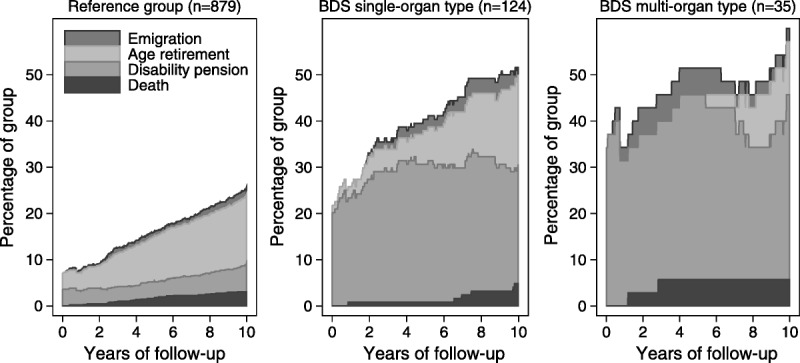
- Over 10 years, patients with multiorgan BDS (HR = 8.7; 95% CI = 3.7–20.7) and single-organ BDS (HR = 4.9; 95% CI = 2.8–8.4) were more likely to receive a new disability pension than patients with a well-defined medical condition.
## Methods
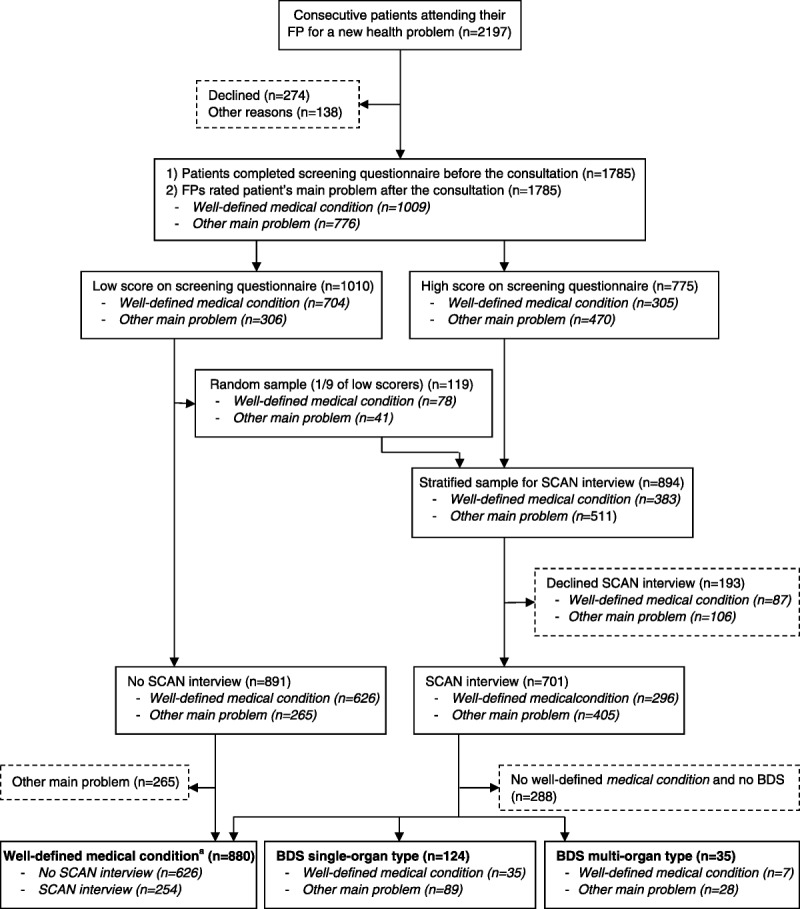
- Questionnaire- and register-based longitudinal follow-up of a cohort from the 2000 Functional Illness in Primary Care (FIP) study in Danish primary care; adult patients aged 18 to 65 years who consulted 38 family physicians for a new health problem were included (n = 1785).
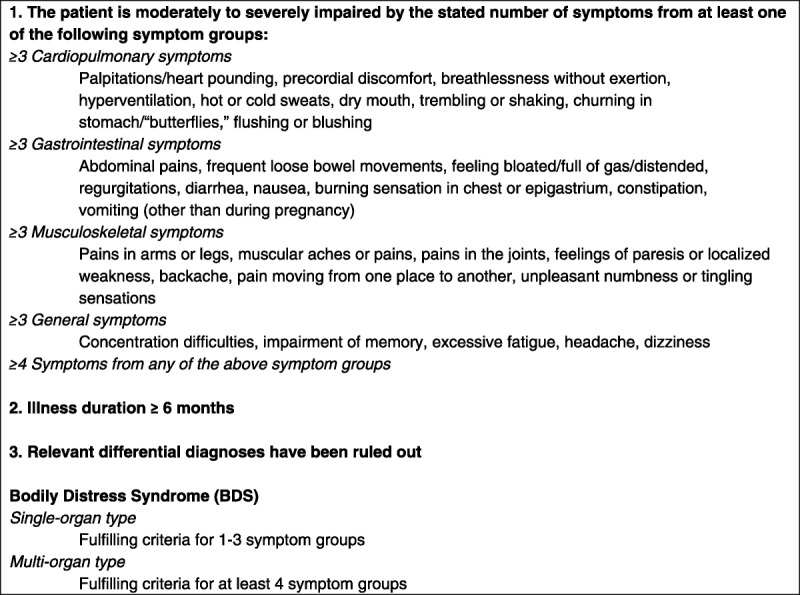
- BDS classification was based on SCAN psychiatric research interviews; final groups were 880 patients with a well-defined medical condition, 124 with single-organ BDS, and 35 with multiorgan BDS.
- Outcomes included self-rated health and illness worry at 3, 12, and 24 months; health care costs for 3 years before to 2 years after the index consultation; and sick leave/disability pension over 10 years. Analyses used mixed models, bootstrap cost comparisons, generalized linear models for sick leave, and Cox proportional hazards models for disability pension, adjusted for age, sex, chronic illness, depression, anxiety, and intervention.
## Limitations
- The paper states that health care cost analyses could not adjust for FP-rated chronic illness because the family physician did not specify the illness; thus, the share of costs attributable to comorbid medical conditions is unknown.
- The paper states that BDS status was not remeasured at follow-up, so it cannot conclude whether patients continued to meet BDS criteria or whether their condition worsened or improved over time.
- Evident from the text: some patients in the medical condition group were not SCAN interviewed, so some BDS cases may have been misclassified into the reference group; the authors note this would bias differences toward the null.
Model-written summary. Check it against the paper before relying on it.
Integrity signals
Registry
Cites
Statistics
Figures
Verification
Claims the paper makes
1 Valid · 2 Not valid · 4 Not checked · 27 Own results and interpretations
The cited sources that could be checked couldn’t confirm or dispute this claim.
In the paper
“The degree of impairment in both BDS groups was remarkably higher than previously found for chronic physical conditions such as arthritis, chronic lung disease, diabetes, and chronic heart disease in the general population (27).”
§ Long-Term Outcome of Bodily Distress Syndrome in Primary Care: A Follow-Up Study on Health Care Costs, Work Disability, and Self-Rated Health > DISCUSSION
What the sources say
- Could not verifycites [27] Alonso J Ferrer M Gandek B Ware JE Jr. Aaronson NK Mosconi P Rasmussen NK Bullinger M Fukuhara S Kaasa S Leplège A; IQOLA Project Group. Health-related quality of life associated with chronic conditions in eight countries: results from the International Quality of Life Assessment (IQOLA) Project. Qual Life Res 2004; 13: 283– 98. 15085901 sourceExperimental — accuracy not yet measured
The Methods and Discussion passages describe a focus-group study of general practitioners’ perceptions of patients with persistent medically unexplained symptoms. Searches for BDS-group impairment and comparisons with arthritis, lung disease, diabetes, and heart disease found no passage addressing the claimed comparison. (LLM, conf=0.76)
boostedstates an association- Asserted: passes — The authors put it forward as true.
- Checkable: passes — It can be checked against evidence.
- Load-bearing: unclear — It is unclear whether the paper’s conclusions depend on it.
- Based: passes — The paper gives a reason why it holds.
- Could not verify
The cited sources support only part of this claim — read each source’s verdict below.
In the paper
“A Dutch study found that sick-listed patients with a high somatic symptom burden and decreased functioning were at higher risk of redundancy (37).”
§ Long-Term Outcome of Bodily Distress Syndrome in Primary Care: A Follow-Up Study on Health Care Costs, Work Disability, and Self-Rated Health > DISCUSSION
What the sources say
- Partly supportedcites [37] Hoedeman R Blankenstein AH Krol B Koopmans PC Groothoff JW The contribution of high levels of somatic symptom severity to sickness absence duration, disability and discharge. J Occup Rehabil 2010; 20: 264– 73. 20373134 PMC2887510 sourceExperimental — accuracy not yet measured
Our copy of Rask et al. (2015) is a Danish, register-based 10-year follow-up of Danish primary care patients (FIP study, §2.1–2.2), with outcomes of temporary and permanent health-related benefits (sick leave, full/partial disability pension) from DREAM (§2.7, §3.2) — it contains no measure of redundancy/dismissal and no 'decreased functioning' predictor. The only Dutch sick-listed material it carries is reported second-hand: the Introduction states that severe MUS measured by the PHQ had a prevalence of 15% in a population of Dutch sick-listed employees and was associated with longer sick leave duration and continued work disability after 2 years [refs 15,16 = Hoedeman et al.], and §4.2 adds that somatoform disorder has been shown to be associated with more frequent sickness spells and discharge. Thus the 'Dutch sick-listed, high somatic symptom burden, adverse work outcome' element is present but as another study's result, while the specific redundancy finding attributed here is not supported by this source. (LLM, conf=0.68)
plainstates an association- Asserted: passes — The authors put it forward as true.
- Checkable: passes — It can be checked against evidence.
- Load-bearing: passes — The paper’s conclusions depend on it.
- Based: passes — The paper gives a reason why it holds.
- Partly supported
A result the paper reports from its own data — it cites no other source for it, so there is none to check. The quote shows it is in the paper.
In the paper
“The average risk of sick leave in the first 3 months after the index consultation was higher in patients with single-organ BDS (RR = 4.9; 95% CI = 2.7–8.9) and multiorgan BDS (RR = 6.7; 95% CI = 3.1–14.4) than in patients with a well-defined medical condition (Table 4).”
§ Long-Term Outcome of Bodily Distress Syndrome in Primary Care: A Follow-Up Study on Health Care Costs, Work Disability, and Self-Rated Health > RESULTS > Work Disability
plainstates an association- Asserted: passes — The authors put it forward as true.
- Checkable: passes — It can be checked against evidence.
- Load-bearing: passes — The paper’s conclusions depend on it.
- Based: passes — The paper gives a reason why it holds.
A result the paper reports from its own data — it cites no other source for it, so there is none to check. The quote shows it is in the paper.
In the paper
“A higher proportion of patients with BDS received disability pension, most pronounced in the multiorgan BDS group, compared to patients with a well-defined medical condition.”
§ Long-Term Outcome of Bodily Distress Syndrome in Primary Care: A Follow-Up Study on Health Care Costs, Work Disability, and Self-Rated Health > RESULTS > Work Disability
plainstates an association- Asserted: passes — The authors put it forward as true.
- Checkable: passes — It can be checked against evidence.
- Load-bearing: passes — The paper’s conclusions depend on it.
- Based: passes — The paper gives a reason why it holds.
A result the paper reports from its own data — it cites no other source for it, so there is none to check. The quote shows it is in the paper.
In the paper
“The total annual healthcare costs incurred by the 2 BDS groups were higher than the costs incurred by the medical condition group (follow-up estimates: single-organ BDS: mean = 2270 USD, ASL = 0.001; multiorgan BDS: mean = 4066 USD, ASL < 0.001) (Table 3).”
§ Long-Term Outcome of Bodily Distress Syndrome in Primary Care: A Follow-Up Study on Health Care Costs, Work Disability, and Self-Rated Health > RESULTS > Health Care Costs
plain- Asserted: passes — The authors put it forward as true.
- Checkable: passes — It can be checked against evidence.
- Load-bearing: passes — The paper’s conclusions depend on it.
- Based: passes — The paper gives a reason why it holds.
11 more claims
Create a free account to see all 34 claims and to verify the 9 references still open.
- Borderline: one of the tests for a substantial claim is unclear. 1
- It may state two separate claims as one. 16
- Probably not a substantial claim. 4
Claims other papers make about this one
Each is checked against this paper’s own text: does it say what the citing paper says it does?
The source backs part of the claim, not all of it — or backs it for a different population, condition or comparison.
In the citing paper
“The diagnosis is based on the identification of a characteristic symptom pattern as no diagnostic blood tests or other paraclinical tests, exist [1,2].”
From Internet-delivered treatment for patients suffering from severe functional somatic disorders: Protocol for a randomized controlled trial (2023) · cites this paper as [2]
Experimental — accuracy not yet measuredThe source backs part of the claim, not all of it — or backs it for a different population, condition or comparison.
In the citing paper
“The condition causes suffering and reduced quality of life and is associated with substantial socioeconomic costs, involving expensive diagnostic examinations, sick leave, and long-term disability [2,13,14].”
From Internet-delivered treatment for patients suffering from severe functional somatic disorders: Protocol for a randomized controlled trial (2023) · cites this paper as [2]
Experimental — accuracy not yet measuredThe source backs part of the claim, not all of it — or backs it for a different population, condition or comparison.
In the citing paper
“The course of FSD multi-organ type is often chronic as only few patients receive treatment [2,15,16].”
From Internet-delivered treatment for patients suffering from severe functional somatic disorders: Protocol for a randomized controlled trial (2023) · cites this paper as [2]
Experimental — accuracy not yet measuredThe source backs part of the claim, not all of it — or backs it for a different population, condition or comparison.
In the citing paper
“Moreover, adult patients presenting with multiple symptoms from several organ systems have a poorer prognosis and a higher risk of chronification.22–24”
From Comparing group-based acceptance and commitment therapy (ACT) with enhanced usual care for adolescents with functional somatic syndromes: A study protocol for a randomised trial (2016) · cites this paper as [24]
Experimental — accuracy not yet measured
1 more claim about this paper
Create a free account to see every claim other papers make about this one.
Citations
Cites
(1992) · PubMed · Cited by 33,716
The MOS 36-ltem Short-Form Health Survey (SF-36): I. Conceptual Framework and Item Selection
Ware, J. E., & Sherbourne, C. D. (1992) · Medical Care · doi:10.1097/00005650-199206000-00002 · Cited by 30,033 · cited 1×
“Included patients also completed the Medical Outcome Study's Short Form Health Survey (SF-36), which assesses physical and mental health (17), and sociodemographic data were obtained.”
MethodThe Structured Clinical Interview for DSM-III-R (SCID): I: History, Rationale, and Description
Spitzer, R. L. (1992) · Archives of General Psychiatry · doi:10.1001/archpsyc.1992.01820080032005 · Cited by 4,336 · cited 1×
“The SCID and WHO-CIDI are both diagnosis focused and include only symptoms that are relevant for DSM-IV or ICD-10 psychiatric diagnoses (48,49), whereas the SCAN interview is symptom driven with a bottom-up approach focusing on psychopathology rather than on specific diagnoses (18).”
MethodThe Danish National Patient Register
Lynge, E., Sandegaard, J. L., & Rebolj, M. (2011) · Scandinavian Journal of Public Health · doi:10.1177/1403494811401482 · Cited by 3,968 · cited 1×
“Danish Register for Evaluation of Marginalization has formerly been found to provide valid and high-quality data on disability pension and sickness benefits (22,44), and the completeness of the registers used for the calculations of health care costs are generally considered to be high because the data are continuousl…”
BackgroundRobins, L. N. (1988) · Archives of General Psychiatry · doi:10.1001/archpsyc.1988.01800360017003 · Cited by 2,909 · cited 1×
“The SCID and WHO-CIDI are both diagnosis focused and include only symptoms that are relevant for DSM-IV or ICD-10 psychiatric diagnoses (48,49), whereas the SCAN interview is symptom driven with a bottom-up approach focusing on psychopathology rather than on specific diagnoses (18).”
MethodRegression standard errors in clustered samples
Rogers, W. H. (1993) · Stata technical bulletin · Cited by 2,694
SCAN: Schedules fonr Clinical Assessment in Neuropsychiatry
Wing, J. K. (1990) · Archives of General Psychiatry · doi:10.1001/archpsyc.1990.01810180089012 · Cited by 2,517 · cited 1×
“The SCID and WHO-CIDI are both diagnosis focused and include only symptoms that are relevant for DSM-IV or ICD-10 psychiatric diagnoses (48,49), whereas the SCAN interview is symptom driven with a bottom-up approach focusing on psychopathology rather than on specific diagnoses (18).”
MethodPsychosomatic medicine in Germany: more timely than ever
Zipfel, S., Herzog, W., Kruse, J., & Henningsen, P. (2016) · Psychotherapy and Psychosomatics · doi:10.1159/000447701 · Cited by 2,323
Barsky, A. J., Orav, E. J., & Bates, D. W. (2005) · Archives of General Psychiatry · doi:10.1001/archpsyc.62.8.903 · Cited by 911 · cited 2×
“In general, our findings are consistent with the existing literature, as both former population-based studies and clinical studies demonstrate high health care use and increased costs for patients with functional somatic symptoms or somatoform disorders (4,33,34).”
BackgroundResultThe Danish National Health Service Register
Sahl Andersen, J., De Fine Olivarius, N., & Krasnik, A. (2011) · Scandinavian Journal of Public Health · doi:10.1177/1403494810394718 · Cited by 890 · cited 1×
“Danish Register for Evaluation of Marginalization has formerly been found to provide valid and high-quality data on disability pension and sickness benefits (22,44), and the completeness of the registers used for the calculations of health care costs are generally considered to be high because the data are continuousl…”
Background
Cited by
Petersen, M. W., Schröder, A., Jørgensen, T., Ørnbøl, E., Meinertz Dantoft, T., Eliasen, M., Benros, M. E., & Fink, P. (2020) · Scientific Reports · doi:10.1038/s41598-020-60318-6 · Cited by 170
Self-citationRosendal, M., Olde Hartman, T. C., Aamland, A., van der Horst, H., Lucassen, P., Budtz-Lilly, A., & Burton, C. (2017) · BMC Family Practice · doi:10.1186/s12875-017-0592-6 · Cited by 129
Self-citationBodily distress syndrome: a new diagnosis for functional disorders in primary care?
Budtz-Lilly, A., Schröder, A., Rask, M. T., Fink, P., Vestergaard, M., & Rosendal, M. (2015) · BMC Family Practice · doi:10.1186/s12875-015-0393-8 · Cited by 115
Self-citationRoenneberg, C., Sattel, H., Schaefert, R., Henningsen, P., & Hausteiner-Wiehle, C. (2019) · Deutsches Ärzteblatt international · doi:10.3238/arztebl.2019.0553 · Cited by 111
Häuser, W., Hausteiner‐Wiehle, C., Henningsen, P., Brähler, E., Schmalbach, B., & Wolfe, F. (2020) · Journal of Psychosomatic Research · doi:10.1016/j.jpsychores.2020.110111 · Cited by 89
Petersen, M. W., Schröder, A., Jørgensen, T., Ørnbøl, E., Dantoft, T. M., Eliasen, M., Carstensen, T. W., Falgaard Eplov, L., & Fink, P. (2020) · Scandinavian Journal of Public Health · doi:10.1177/1403494819868592 · Cited by 76
“Furthermore, the lack of objective clinical or paraclinical findings makes them highly resource-demanding for society in terms of high health care use and costs [2,3].”
BackgroundResultSelf-citationDifferentiating Psychosomatic, Somatopsychic, Multisystem Illnesses and Medical Uncertainty
Bransfield, R. C., & Friedman, K. J. (2019) · Healthcare · doi:10.3390/healthcare7040114 · Cited by 98
olde Hartman, T. C., Rosendal, M., Aamland, A., van der Horst, H. E., Rosmalen, J. G., Burton, C. D., & Lucassen, P. L. (2017) · BJGP Open · doi:10.3399/bjgpopen17x101061 · Cited by 55
“In addition, MUS are associated with reduced health-related quality of life, higher healthcare and social costs, and costs associated with lost productivity.(9,10) The effects of many treatment strategies have been studied in recent decades.”
BackgroundSelf-citationPrevalence of functional disorders across Europe: a systematic review and meta-analysis
Rometsch, C., Mansueto, G., Bermpohl, F. M. G., Martin, A., & Cosci, F. (2024) · European Journal of Epidemiology · doi:10.1007/s10654-024-01109-5 · Cited by 64
“Patients with FD suffer from a reduced quality of life [5], high work disability and illness worries [6].”
BackgroundImpaired emotion processing and a reduction in trust in patients with somatic symptom disorder
Erkic, M., Bailer, J., Fenske, S. C., Schmidt, S. N. L., Trojan, J., Schröder, A., Kirsch, P., & Mier, D. U. (2017) · Clinical Psychology & Psychotherapy · doi:10.1002/cpp.2151 · Cited by 52
Dantoft, T. M., Nordin, S., Andersson, L., Petersen, M. W., Skovbjerg, S., & Jørgensen, T. (2021) · PLoS ONE · doi:10.1371/journal.pone.0246461 · Cited by 37
“These educational and occupational characteristics are similar to previous studies of both MCS [2,55–57] and other types of FSS [58,59], and it has been suggested that the typical MCS patient is a middle-aged well-educated female [56,60,61].”
ResultFink, P. (2017) · Journal of Psychosomatic Research · doi:10.1016/j.jpsychores.2017.04.012 · Cited by 40
Self-citationEliasen, M., Schröder, A., Fink, P., Kreiner, S., Dantoft, T. M., Poulsen, C. H., Petersen, M. W., Eplov, L. F., Skovbjerg, S., & Jørgensen, T. (2018) · Journal of Psychosomatic Research · doi:10.1016/j.jpsychores.2018.03.002 · Cited by 33
Self-citationTesting the influence of cultural determinants on help-seeking theory.
Arnault, D. S., & Woo, S. (2018) · American Journal of Orthopsychiatry · doi:10.1037/ort0000353 · Cited by 32
Barends, H., Dessel, N. C.-V., van der Wouden, J. C., Twisk, J. W. R., Terluin, B., van der Horst, H. E., & Dekker, J. (2020) · Journal of Psychosomatic Research · doi:10.1016/j.jpsychores.2020.110131 · Cited by 30
Leutgeb, R., Berger, S. J., Szécsényi, J., & Laux, G. (2018) · PLoS ONE · doi:10.1371/journal.pone.0202546 · Cited by 31
Schröder, A., Ørnbøl, E., Jensen, J. S., Sharpe, M., & Fink, P. (2017) · Journal of Psychosomatic Research · doi:10.1016/j.jpsychores.2017.01.005 · Cited by 25
Self-citationPedersen, H. F., Agger, J. L., Frostholm, L., Jensen, J. S., Ørnbøl, E., Fink, P., & Schröder, A. (2019) · Psychological Medicine · doi:10.1017/s0033291718001666 · Cited by 24
“Recent studies have shown an unfavourable prognosis of untreated multi-organ BDS in terms of high healthcare expenditure and a high risk of new disability pension awards (Budtz-Lilly et al., 2015; Rask et al., 2017; Schröder et al., 2017).”
ResultSelf-citationFacing somatic symptom disorder in the emergency department
Cozzi, G., & Barbi, E. (2018) · Journal of Paediatrics and Child Health · doi:10.1111/jpc.14246 · Cited by 24
Kallesøe, K. H., Schröder, A., Wicksell, R. K., Fink, P., Ørnbøl, E., & Rask, C. U. (2016) · BMJ Open · doi:10.1136/bmjopen-2016-012743 · Cited by 23
Self-citationEvaluating Commonalities Across Medically Unexplained Symptoms
Guo, D., Kleinstäuber, M., Johnson, M. H., & Sundram, F. (2019) · International Journal of Environmental Research and Public Health · doi:10.3390/ijerph16050818 · Cited by 35
“Sufferers of MUS have a greater likelihood of impairments in health-related quality of life [28], long-term occupational functioning [5], and self-rated health [4].”
BackgroundRask, M. T., Jakobsen, P. R., Clemensen, J., Rosendal, M., & Frostholm, L. (2021) · BMC Family Practice · doi:10.1186/s12875-021-01380-5 · Cited by 28
Self-citationClaassen-van Dessel, N., van der Wouden, J. C., Twisk, J. W. R., Dekker, J., & van der Horst, H. E. (2018) · Journal of Psychosomatic Research · doi:10.1016/j.jpsychores.2018.02.009 · Cited by 20
Poloni, N., Caselli, I., Ielmini, M., Mattia, M., Leo, A. D., Sarno, M. D., Isella, C., Bellini, A., & Callegari, C. (2019) · Behavioral Sciences · doi:10.3390/bs9070080 · Cited by 22
“The present study confirms the gender trend observed in another primary care study [19,21,25] with a high prevalence of females with MUPS.”
BackgroundMethodResultInfluentialPetersen, M. W., Carstensen, T. B. W., Frostholm, L., Wellnitz, K. B., Ørnbøl, E., Jørgensen, T., Eplov, L. F., Dantoft, T. M., & Fink, P. (2023) · Clinical Epidemiology · doi:10.2147/clep.s399914 · Cited by 20
“Patients with severe cases of FSD are severely impaired and emotionally distressed and have an excessive use of healthcare services in terms of repeated hospitalizations, medical investigations, and fruitless treatment attempts.(1,3,4) The etiology of FSD is considered multifactorial and in a previous study, we have s…”
BackgroundSelf-citationHow to recognize and manage psychosomatic pain in the pediatric emergency department
Cozzi, G., Lucarelli, A., Borrometi, F., Corsini, I., Passone, E., Pusceddu, S., Morabito, G., Barbi, E., & Benini, F. (2021) · The Italian Journal of Pediatrics/Italian journal of pediatrics · doi:10.1186/s13052-021-01029-0 · Cited by 20
Krempel, L., & Martin, A. (2022) · Psychosomatic Medicine · doi:10.1097/psy.0000000000001143 · Cited by 19
“, 25 years (27)) and produce high health care costs (28).”
BackgroundPatients’ experiences with fluctuations in persistent physical symptoms: a qualitative study
Barends, H., Walstock, E., Botman, F., de Kruif, A. J. T. C. M., Dessel, N. C.-V., van der Wouden, J. C., Hartman, T. O., Dekker, J., & van der Horst, H. E. (2020) · BMJ Open · doi:10.1136/bmjopen-2019-035833 · Cited by 16
Terluin, B., Barends, H., van der Horst, H. E., Dekker, J., & van der Wouden, J. C. (2022) · Journal of Psychosomatic Research · doi:10.1016/j.jpsychores.2022.111031 · Cited by 15
Examine the public health impacts of functional somatic disorders using the DanFunD study
Jørgensen, T., Dantoft, T. M., Petersen, M. W., Benros, M. E., Poulsen, C. H., Eplov, L. F., Gormsen, L. K., Frostholm, L., Carstensen, T. B. W., Eliasen, M., et al. (2022) · Scandinavian Journal of Public Health · doi:10.1177/14034948221122886 · Cited by 17
“It is estimated that patients with fsD account for considerable expenses in the health care and social security systems [25].”
BackgroundSelf-citationIs psychotherapy for functional somatic syndromes harmful? A mixed methods study on negative effects
Holsting, A. F., Pedersen, H. F., Rask, M. T., Frostholm, L., & Schröder, A. (2017) · Journal of Psychosomatic Research · doi:10.1016/j.jpsychores.2017.05.010 · Cited by 16
Self-citationPetersen, M. W., Skovenborg, E. L., Rask, C. U., Høeg, M. D., Ørnbøl, E., & Schröder, A. (2017) · Journal of Psychosomatic Research · doi:10.1016/j.jpsychores.2017.11.005 · Cited by 15
Self-citationRasmussen, S., Jensen, C. T., Rosendal, M., Vægter, H. B., Søndergaard, J., & Jarbøl, D. E. (2020) · Journal of Psychosomatic Research · doi:10.1016/j.jpsychores.2020.109941 · Cited by 16
Self-citationSenger, K., Schröder, A., Kleinstäuber, M., Rubel, J. A., Rief, W., & Heider, J. (2021) · Psychotherapy Research · doi:10.1080/10503307.2021.1916120 · Cited by 13
Broddadóttir, E., Flóvenz, S. Ó., Gylfason, H. F., Þormar, Þ., Einarsson, H., Salkovskis, P. M., & Sigurðsson, J. F. (2021) · International Journal of Environmental Research and Public Health · doi:10.3390/ijerph18168657 · Cited by 13
“PPSs are common in all health care settings [48–50] and are associated with high rates of disability [51–53], comorbid psychological disorders [54–58], unemployment [59,60] and work disability [55,58,61,62].”
BackgroundPetersen, M. W., Carstensen, T. B. W., Frostholm, L., Wellnitz, K. B., Ørnbøl, E., Lamm, T. T., Dantoft, T. M., Eplov, L. F., Jørgensen, T., & Fink, P. (2022) · Scientific Reports · doi:10.1038/s41598-022-24213-6 · Cited by 14
Self-citationBarends, H., Dekker, J., van Dessel, N. C., Twisk, J. W. R., van der Horst, H. E., & van der Wouden, J. C. (2023) · Journal of Psychosomatic Research · doi:10.1016/j.jpsychores.2023.111343 · Cited by 10
Roth‐Rawald, J., Maaß, U., Mai, S., & Weck, F. (2023) · Journal of Clinical Psychology · doi:10.1002/jclp.23587 · Cited by 14
Petersen, M. W., Wellnitz, K. B., Carstensen, T. B. W., Dantoft, T. M., Ørnbøl, E., Bjerregaard, A. A., Jørgensen, T., & Fink, P. (2025) · Journal of Psychosomatic Research · doi:10.1016/j.jpsychores.2025.112073 · Cited by 7
Self-citationWeerdesteijn, K. H. N., Schaafsma, F. G., Louwerse, I., Huysmans, M. A., van der Beek, A. J., & Anema, J. R. (2019) · Journal of Psychosomatic Research · doi:10.1016/j.jpsychores.2019.109792 · Cited by 6
Abrahamsen, C., Lindbæk, M., & Werner, E. L. (2022) · Scandinavian Journal of Primary Health Care · doi:10.1080/02813432.2022.2076396 · Cited by 8
Madsen, M. M., Trolle, C., Fynne, L. V., Ørnbøl, E., Fink, P., & Gormsen, L. K. (2024) · PLoS ONE · doi:10.1371/journal.pone.0307057 · Cited by 5
Self-citationBarends, H., van der Horst, H. E., van der Wouden, J. C., Dessel, N. C.-V., Dekker, J., & Hoekstra, T. (2025) · BMJ Open · doi:10.1136/bmjopen-2023-083276 · Cited by 5
Li, H., Wang, J., Yang, Y., Yu, Y., Feng, Z., & Yang, Z. (2025) · Humanities and Social Sciences Communications · doi:10.1057/s41599-025-04859-z · Cited by 5
“…in heavy physical labor and high-risk tasks, WAH reports higher rates of chronic diseases, functional disabilities, and occupational comorbidities (Tonelli et al., 2014), resulting in lower self-rated health compared to other socioeconomic groups (van Oostrom et al., 2021; Rask et al., 2017).”
Flóvenz, S. Ó., Broddadóttir, E., Brynjólfsson, S., Agnarsdóttir, A. S., Primary Health Care of the Capital area, I., Salkovskis, P. M., & Sigurðsson, J. F. (2021) · Læknablaðið · doi:10.17992/lbl.2021.02.620 · Cited by 7
FuncData - A national database for functional somatic disorders in Denmark
Eefsen, A. M., Petersen, M. W., Vægter, H. B., Fonager, K., Skjernov, M., Gormsen, L. K., & Schröder, A. (2022) · Journal of Psychosomatic Research · doi:10.1016/j.jpsychores.2022.111092 · Cited by 7
Pedersen, H. F., Lamm, T. T., Fink, P., Ørnbøl, E., & Frostholm, L. (2023) · Contemporary Clinical Trials Communications · doi:10.1016/j.conctc.2023.101069 · Cited by 4
Self-citationSeifert, M. H., Šebela, A., & Hartman, T. O. (2025) · BMC Family Practice · doi:10.1186/s12875-025-02768-3 · Cited by 4
“Patients with persistent somatic symptoms (PSS) make up a significant proportion of patients in general practice, and can be very burdensome for doctors as well as the whole health and social care system [1, 2].”
Psychedelics in functional disorders: A scoping review
Bhagavan, C., Carter, O. L., Bryson, A., Dandash, O., & Kanaan, R. (2026) · Progress in Neuro-Psychopharmacology and Biological Psychiatry · doi:10.1016/j.pnpbp.2026.111642 · Cited by 4
Хадарцев, А. А., Tokarev, A. R., Токарева, С. В., & Hromushin, V. (2019) · Problems of Balneology Physiotherapy and Exercise Therapy · doi:10.17116/kurort20199602139 · Cited by 4
Bodily Distress Syndrome After Routine Vaccination: A Case Report
Kuriyama, A. (2021) · Journal of the Academy of Consultation-Liaison Psychiatry · doi:10.1016/j.jaclp.2021.03.002 · Cited by 4
Haun, M. W., Tönnies, J., Graue, L., Hartmann, M., Wensing, M., Szécsényi, J., Wild, B., & Friederich, H. (2022) · BMJ Open · doi:10.1136/bmjopen-2021-058150 · Cited by 5
Lipid metabolism and functional somatic disorders in the general population. The DanFunD study
Jørgensen, T., Jacobsen, R. K., Sæbye, D., Petersen, M. W., Fink, P., Gormsen, L. K., Linneberg, A. R., Bjerregaard, A. A., Schovsbo, S. U., Benros, M. E., et al. (2024) · PLoS ONE · doi:10.1371/journal.pone.0296799 · Cited by 4
Self-citationMeasuring functional recovery in somatic symptom and related disorders: a scoping review
Winarizal, A. S., Horvath, A. J., & Sawyer, S. M. (2020) · Archives of Disease in Childhood · doi:10.1136/archdischild-2020-318955 · Cited by 4
Kallesøe, K. H., Ørnbøl, E., Wellnitz, K. B., & Rask, C. U. (2025) · Cognitive Behaviour Therapy · doi:10.1080/16506073.2025.2521719 · Cited by 5
“This may be of particular clinical value, as patients, including adolescents, who present with multiple symptoms spanning various organ systems, have been shown to have a heightened risk of chronicity and a less favourable prognosis (Budtz-Lilly et al., 2015; Creed et al., 2013; Rask et al., 2017).”
Self-citationMaroti, D., Ljungdahl, M., Petersen, H., Rööst, M., Falkenström, F., & Lilliengren, P. (2025) · Psychosomatic Medicine · doi:10.1097/psy.0000000000001424 · Cited by 2
Maroti, D., Ljungdahl, M., Petersen, H., Rööst, M., Lumley, M. A., Falkenström, F., & Lilliengren, P. (2026) · Internet Interventions · doi:10.1016/j.invent.2026.100942 · Cited by 3
Henningsen, P., Bouman, T. K., & Hausteiner‐Wiehle, C. (2023) · Oxford University Press eBooks · doi:10.1093/med-psych/9780197542521.003.0022 · Cited by 3
Agger, J. L., Schröder, A., Ørnbøl, E., Jensen, J. S., Pedersen, H. F., Fink, P., & Gormsen, L. K. (2022) · Psychiatry Research · doi:10.1016/j.psychres.2022.114474 · Cited by 1
Self-citationBrund, R. B. K., Jensen, L. S., Gladvind, K. M., & Fonager, K. (2023) · Journal of Psychosomatic Research · doi:10.1016/j.jpsychores.2023.111561 · Cited by 4
Støve, M. P., Larsen, L. L., Magnusson, S. P., Thomsen, J. L., & Riis, A. (2025) · Rheumatology International · doi:10.1007/s00296-025-05921-4 · Cited by 3
“FM is also associated with poor quality of life, increased prevalence of depression and diabetes, poor self-rated health, increased illness worry and Morten Pallisgaard Støve mps@ucn.dk extensive utilisation of medical services [6–8].”
Madsen, M. M., Trolle, C., Fynne, L. V., Colombo, M., Pedersen, R. L., Sørensen, V., Christensen, S. R., Fink, P., & Gormsen, L. K. (2025) · Contemporary Clinical Trials · doi:10.1016/j.cct.2025.108082 · Cited by 1
Self-citationPetersen, M. W., Wellnitz, K. B., Oernboel, E., Carstensen, T. B. W., Dantoft, T. M., Bjerregaard, A. A., Joergensen, T., & Fink, P. (2025) · BMJ Public Health · doi:10.1136/bmjph-2025-003318 · Cited by 3
Self-citationCaselli, I., Poloni, N., Ielmini, M., Mattia, M., Leo, A. D., Sarno, M. D., Bellini, A., & Callegari, C. (2019) · Minerva Psichiatrica · doi:10.23736/s0391-1772.19.02016-8 · Cited by 1
Krankheitsängste bei Psychologiestudierenden
Roth‐Rawald, J., Kühne, F., Lazarides, R., & Weck, F. (2020) · Zeitschrift für Klinische Psychologie und Psychotherapie · doi:10.1026/1616-3443/a000578 · Cited by 1
Vuokko, A., Immonen, M., Lappalainen, P., Keinonen, K., Sainio, M., Lappalainen, R., Paunio, T., & Selinheimo, S. (2026) · Journal of Occupational Rehabilitation · doi:10.1007/s10926-026-10400-z
Outcomes for Patients with Medically Unexplained Symptoms
Yager, J. (2016) · Journal watch · doi:10.1056/nejm-jw.na42665
Nieuw onderzoek naar beloop van SOLK
Barends, H. (2018) · Huisarts en Wetenschap · doi:10.1007/s12445-018-0316-8
KUŠINGO SINDROMAS, IŠSIVYSTĘS DĖL PIKTNAUDŽIAVIMO PREDNIZOLONU: KLINIKINIS ATVEJIS
Budrytė, K., & Karnickas, M. (2019) · Sveikatos mokslai · doi:10.5200/sm-hs.2019.035
“Ši problema lemia blogėjančią pacientų gyvenimo kokybę, nedarbingumą, socialinį atsiskyrimą, tuo pačiu eikvojami sveikatos sistemos kaštai ir patiriama didelė našta visuomenei (7).”
Krankheitsängste bei Psychotherapeut_innen
Roth‐Rawald, J., & Weck, F. (2021) · Zeitschrift für Klinische Psychologie und Psychotherapie · doi:10.1026/1616-3443/a000624
Medically Unexplained Symptoms
Dowrick, C. F., & Rosendal, M. (2018) · Cambridge University Press eBooks · doi:10.1017/9781911623038.011
Self-citationFlóvenz, S. Ó., Salkovskis, P. M., Gregory, J. D., Valdimarsdottir, H. B., Sigurðsson, E., & Sigurðsson, J. F. (2024) · Nordic Psychology · doi:10.1080/19012276.2024.2342345
“PPS are associated with high rates of disability (den Boeft et al., 2016; Harris et al., 2009; Hoedeman et al., 2010; Rask et al., 2017) and psychological distress (Budtz-Lilly et al., 2015; Harris et al., 2009) and many tend to follow a chronic course with high levels of psychiatric comorbidity,…”
InfluentialWalking backwards into the future of health professional practice
Wilson, H. J., O’Hagan, L., & Williamson, M. I. (2023) · Focus on Health Professional Education A Multi-Professional Journal · doi:10.11157/fohpe.v24i4.701
Akamine, L. N. L., & de Oliveira, J. C. (2025) · Revista Brasileira de Medicina de Família e Comunidade · doi:10.5712/rbmfc20(47)3369
Bjerregaard, A. A., Petersen, M. W., Gormsen, L. K., Skovbjerg, S., Jørgensen, T., & Dantoft, T. M. (2025) · Journal of Psychosomatic Research · doi:10.1016/j.jpsychores.2025.112431
Rask, M. T., Jakobsen, P. R., Clemensen, J., Rosendal, M., & Frostholm, L. (2021) · Figshare · doi:10.6084/m9.figshare.13728502
Self-citationWhatever happened to Briquet's syndrome?
Bass, C. (2026) · Journal of Psychosomatic Research · doi:10.1016/j.jpsychores.2026.112586
de Souza, D. T. V., Geraldo, L. C. F., de Macedo, F. E. R., Franco, C. A. G. D. S., dos Santos, D. V. D., Petta, H. L., & Stefanello, S. (2026) · Education for Primary Care · doi:10.1080/14739879.2026.2633730
“These patients are associated with high service use, frustration for both sides, and significant healthcare costs from tests and treatments [10–16].”
A nationwide healthcare program for functional somatic disorders (FSD) in Denmark
Gormsen, L. K., Rosendal, M., & Fink, P. (2026) · Journal of Psychosomatic Research · doi:10.1016/j.jpsychores.2026.112664
Self-citationBuratta, L., Sciabica, G. M., Martin, R., Venturino, C., Capuozzo, P., Ricci, G., BANDELLONI, L., Crocco, M., Luyten, P., Mazzeschi, C., et al. (2026) · Clinical Psychology & Psychotherapy · doi:10.1002/cpp.70327 · Cited by 1
“In paediatric age, SSD is associated with diverse short-and long-term physical and mental health outcomes (Díez-Suárez and Hernández-González 2025; Gureje et al. 2001; Rask et al. 2017).”
Madsen, M. M., Connelly, E. D. S., Ørnbøl, E., Wellnitz, K. B., Trolle, C., Colombo, M., Rosendal, M., Fink, P., & Gormsen, L. K. (2026) · Research Square · doi:10.21203/rs.3.rs-10775422/v1
Self-citation
Metadata
- Authors
- Rask, M. T., Ørnbøl, E., Rosendal, M., & Fink, P.
- Affiliations
- Aarhus University (DK)
- Venue
- Psychosomatic Medicine
- Published
- 2017-04
- Volume
- 79
- Issue
- 3
- Pages
- 345-357
- ISSN
- 0033-3174 (ISSN-L)
- 1534-7796
- PMC
- PMC5642326
- OpenAlex
- W2537238316
- Semantic Scholar
- ac96577312f7793fafac8f457f57640c1168d815
- Cited by
- 81
- References
- 55
- Citations by year
- 2026: 8 · 2025: 11 · 2024: 4 · 2023: 7 · 2022: 8 · 2021: 9 · 2020: 7 · 2019: 9 · 2018: 8 · 2017: 7
- FWCI
- 7.69
- Type
- journal article
- Language
- en
- Open access
- hybrid
- doi.org
- Licence
- Locations
- Psychosomatic Medicine (publishedVersion, cc-by-nc-nd)
- PubMed Central (publishedVersion, cc-by-nc-nd)
- PubMed (publishedVersion)
- Scopus (Elsevier) (submittedVersion, other-oa)
- Topics
- Health Sciences › Medicine › Psychiatry and Mental health › Psychosomatic Disorders and Their Treatments
- Health Sciences › Medicine › Psychiatry and Mental health › Fibromyalgia and Chronic Fatigue Syndrome Research
- Health Sciences › Medicine › Epidemiology › Chronic Disease Management Strategies
- Keywords
- bodily distress syndrome, medically unexplained symptoms, long-term outcomes, health care costs, work disability, sick leave, disability pension, self-rated health, primary care, ICD-11
- MeSH terms
- Medically Unexplained Symptoms, Adult, Denmark, Female, Follow-Up Studies, Persons with Disabilities, Humans, Male, Middle Aged, Pensions, Primary Health Care, Registries, Somatoform Disorders, Health Care Costs, Outcome Assessment, Health Care, Sick Leave, Young Adult
About these checks
Registry, retraction, Cites and statistics results are computed, not judged, with one exception: a printed reference that no index lists is read once by a model before it counts as a citation error. Claims are extracted by a model and kept only when their quote appears verbatim in the text; each cited source is then checked, with a model’s help, for whether it says what the claim relies on. Those verdicts can be wrong — read the claim’s quote and the cited source before relying on one.
The claim verdicts this report counts are experimental: their accuracy is not yet measured.
A language model drew the claims from the paper on 2026-10-11, under version 3 of the claim definition (model deepseek-v4.1-flash, prompt extract-v3).
A second model labelled each claim on 2026-10-11 (model jev-1.13-20260917, definition revision gold-guideline-v0.2).
Cited sources are checked with a language model’s help (gpt-6-sol and qwen3.8-omni-flash).
Statistics and arithmetic are recomputed, not judged.
Confidence bands are shown only for fields calibrated on our annotated test set. None is calibrated yet, so no band is shown.
What counts as a claim ›How we measure confidence ›How we check this ›
Are you an author, or do you see a problem with this page? Request a review
Data sources
Bibliographic data: Semantic Scholar, OpenAlex, Crossref.
Contains information from the Semantic Scholar Academic Graph Datasets, made available under the ODC Attribution License (ODC-BY 1.0).
Semantic Scholar’s data is described in: Kinney, R., et al. (2023). The Semantic Scholar Open Data Platform. arXiv:2301.10140.
