

The DOI matches its Crossref record; 103 of the 104 references it cites were found in a registry or an index.
The social brain: allowing humans to boldly go where no other species has been
Open accessAbstract
The biological basis of complex human social interaction and communication has been illuminated through a coming together of various methods and disciplines. Among these are comparative studies of other species, studies of disorders of social cognition and developmental psychology. The use of neuroimaging and computational models has given weight to speculations about the evolution of social behaviour and culture in human societies. We highlight some networks of the social brain relevant to two-person interactions and consider the social signals between interacting partners that activate these networks. We make a case for distinguishing between signals that automatically trigger interaction and cooperation and ostensive signals that are used deliberately. We suggest that this ostensive signalling is needed for ‘closing the loop’ in two-person interactions, where the partners each know that they have the intention to communicate. The use of deliberate social signals can serve to increase reputation and trust and facilitates teaching. This is likely to be a critical factor in the steep cultural ascent of mankind.
Overview
The claims and statistics of this paper haven’t been checked yet.
Run the check — free, no account needed. It reads the open-access text and checks the sources it cites.
Integrity signals
Registry
Cites
Statistics
Figures
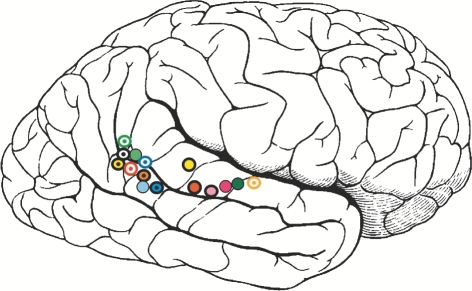
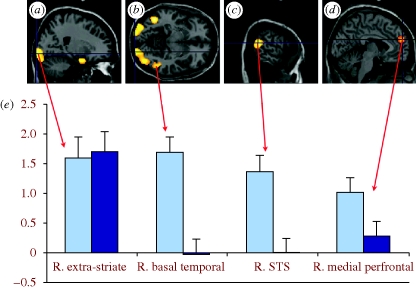
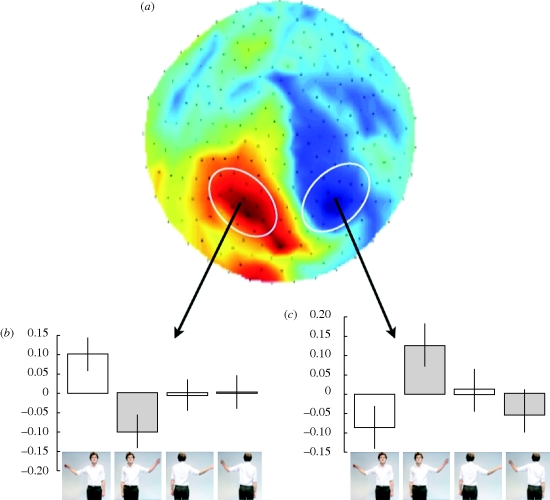
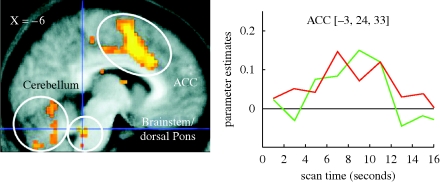
Verification
Claims the paper makes
The claims and statistics of this paper haven’t been checked yet.
Run the check — free, no account needed. It reads the open-access text and checks the sources it cites.
Claims other papers make about this one
Each is checked against this paper’s own text: does it say what the citing paper says it does?
In the citing paper
“Intriguingly, these four seemingly disparate psychological categories summarize what sets humans probably apart from non-human primates (Tomasello 2001; Frith and Frith 2010).”
From Parsing the neural correlates of moral cognition: ALE meta-analysis on morality, theory of mind, and empathy (2012) · cites this paper as Frith and Frith 2010
Self-check
Percentages, sums and reported differences re-computed from the paper’s own numbers.
The self-check needs the paper’s full text.
Citations
Cites
Axelrod, R., & Hamilton, W. D. (1981) · Science · doi:10.1126/science.7466396 · Cited by 20,065
Does the chimpanzee have a theory of mind?
Premack, D., & Woodruff, G. (1978) · Behavioral and Brain Sciences · doi:10.1017/s0140525x00076512 · Cited by 8,743
Does the autistic child have a “theory of mind” ?
Baron-Cohen, S., Leslie, A. M., & Frith, U. (1985) · Cognition · doi:10.1016/0010-0277(85)90022-8 · Cited by 8,599
Rizzolatti, G., & Craighero, L. (2004) · Annual Review of Neuroscience · doi:10.1146/annurev.neuro.27.070203.144230 · Cited by 7,433
Wimmer, H. (1983) · Cognition · doi:10.1016/0010-0277(83)90004-5 · Cited by 6,305
Premotor cortex and the recognition of motor actions
Rizzolatti, G., Fadiga, L., Gallese, V., & Fogassi, L. (1996) · Cognitive Brain Research · doi:10.1016/0926-6410(95)00038-0 · Cited by 4,870
(1989) · Cited by 4,498
Visual perception of biological motion and a model for its analysis
Johansson, G. (1973) · Perception & Psychophysics · doi:10.3758/bf03212378 · Cited by 4,441
Empathy for Pain Involves the Affective but not Sensory Components of Pain
Singer, T., Seymour, B., O'Doherty, J., Kaube, H., Dolan, R. J., & Frith, C. D. (2004) · Science · doi:10.1126/science.1093535 · Cited by 3,929
Self-citationMeeting of minds: the medial frontal cortex and social cognition
Amodio, D. M., & Frith, C. D. (2006) · Nature Reviews Neuroscience · doi:10.1038/nrn1884 · Cited by 3,782 · cited 1×
“We have speculated that anterior rostral medial prefrontal cortex (arMPFC), in which activity is elicited by many mentalizing tasks, may have a critical role in the special kind of representation that closes the loop between minds (Amodio & Frith 2006).”
BackgroundSelf-citation
Research works printed but not linked: 1
- Hoffman E., 1996, Social distance and other-regarding behaviour in dictator games, Am. Econ. Rev., 86, 653
Cited by
Sorted by citations
Items 201–300 of 442
A statistical model of competing motivations affecting relative clause extraposition in German
Strunk, J. (2014) · Oxford University Press eBooks · doi:10.1093/acprof:oso/9780198709848.003.0006 · Cited by 18
Apprenticeship in Massively Multiplayer Online Games
Steinkuehler, C. A., & Oh, Y. (2012) · Cambridge University Press eBooks · doi:10.1017/cbo9781139031127.016 · Cited by 19
An investigation of social factors related to online mentalizing in a human‐robot competitive game
Takahashi, H., Saito, C., Okada, H., & Omori, T. (2013) · Japanese Psychological Research · doi:10.1111/jpr.12007 · Cited by 18
Etchepare, A., Merceron, K., Amieva, H., Cady, F., Roux, S., & Prouteau, A. (2014) · Revue de neuropsychologie · doi:10.3917/rne.062.0138 · Cited by 18
What’s in a Hub?—Representing Identity in Language and Mathematics
Arora, A., Pletzer, B. A., Aichhorn, M., & Perner, J. (2020) · Neuroscience · doi:10.1016/j.neuroscience.2020.02.032 · Cited by 17
Donnarumma, F., Dindo, H., & Pezzulo, G. (2017) · IEEE Transactions on Cognitive and Developmental Systems · doi:10.1109/tcds.2017.2756107 · Cited by 18
Wende, K. C., Nagels, A., Blos, J., Stratmann, M., Chatterjee, A. K., Kircher, T. T. J., & Straube, B. (2013) · Neuropsychologia · doi:10.1016/j.neuropsychologia.2013.07.027 · Cited by 17
Dyadic movement synchronization while performing incongruent trajectories requires mutual adaptation
Lorenz, T., Vlaskamp, B. N. S., Kasparbauer, A., Mörtl, A., & Hirche, S. (2014) · Frontiers in Human Neuroscience · doi:10.3389/fnhum.2014.00461 · Cited by 17
Effect of Cultural Priming on Social Behavior and EEG Correlates of Self-Processing
Knyazev, G. G., Алексеевна, М. Е., Savostyanov, A. N., Bocharov, A. V., & Сапрыгин, А. Е. (2018) · Frontiers in Behavioral Neuroscience · doi:10.3389/fnbeh.2018.00236 · Cited by 17
How Dynamic Brain Networks Tune Social Behavior in Real Time
Silston, B., Bassett, D. S., & Mobbs, D. (2018) · Current Directions in Psychological Science · doi:10.1177/0963721418773362 · Cited by 18
Bornkessel‐Schlesewsky, I., Krauspenhaar, S., & Schlesewsky, M. (2013) · PLoS ONE · doi:10.1371/journal.pone.0069173 · Cited by 18
Rogers, S. J., Vivanti, G., & Rocha, M. (2017) · Autism and child psychopathology series · doi:10.1007/978-3-319-62995-7_13 · Cited by 16
Locating Culture in the Brain and in the World
Seligman, R. A., Choudhury, S., & Kirmayer, L. J. (2016) · Oxford University Press eBooks · doi:10.1093/oxfordhb/9780199357376.013.3 · Cited by 17
Abnormal Global Functional Connectivity Patterns in Medication-Free Major Depressive Disorder
Zhang, L., Wu, H., Xu, J., & Shang, J. (2018) · Frontiers in Neuroscience · doi:10.3389/fnins.2018.00692 · Cited by 15
Medial Prefrontal Cortex Activation Is Commonly Invoked by Reputation of Self and Romantic Partners
Kawamichi, H., Sasaki, A. T., Matsunaga, M., Yoshihara, K., Takahashi, H. K., Tanabe, H. C., & Sadato, N. (2013) · PLoS ONE · doi:10.1371/journal.pone.0074958 · Cited by 16
Ferrucci, L., Nougaret, S., Falcone, R., Cirillo, R., Ceccarelli, F., & Genovesio, A. (2021) · Cerebral Cortex · doi:10.1093/cercor/bhab253 · Cited by 15
Christian, P., Kaiser, J., Taylor, P. C., George, M., Schütz‐Bosbach, S., & Soutschek, A. (2024) · Journal of Neuroscience · doi:10.1523/jneurosci.1669-23.2024 · Cited by 15
Colle, L., Pellecchia, G., Moroni, F., Carcione, A., Nicolò, G., Semerari, A., & Procacci, M. (2017) · Frontiers in Psychiatry · doi:10.3389/fpsyt.2017.00263 · Cited by 15
When borders overlap: Composite identities in children in international schools
Pearce, R. (2011) · Journal of Research in International Education · doi:10.1177/1475240911412291 · Cited by 19
Wang, R., Lu, X., & Jiang, Y. (2023) · Cerebral Cortex · doi:10.1093/cercor/bhad136 · Cited by 16
Beyond human-likeness: Socialness is more influential when attributing mental states to robots
Jastrzab, L. E., Chaudhury, B., Ashley, S. A., Koldewyn, K., & Cross, E. S. (2024) · iScience · doi:10.1016/j.isci.2024.110070 · Cited by 19
Zajner, C., Spreng, R. N., & Bzdok, D. (2022) · Social Cognitive and Affective Neuroscience · doi:10.1093/scan/nsac006 · Cited by 13
A Neurocognitive Perspective on the Development of Social Decision-Making
Will, G., & Güroğlu, B. (2016) · Studies in neuroscience, psychology and behavioral economics · doi:10.1007/978-3-642-35923-1_15 · Cited by 15
Imagining triadic interactions simultaneously activates mirror and mentalizing systems
Trapp, K., Spengler, S., Wüstenberg, T., Wiers, C. E., Busch, N. A., & Bermpohl, F. (2014) · NeuroImage · doi:10.1016/j.neuroimage.2014.05.003 · Cited by 14
Visual Experience Determines the Use of External Reference Frames in Joint Action Control
Dolk, T., Liepelt, R., Prinz, W., & Fiehler, K. (2013) · PLoS ONE · doi:10.1371/journal.pone.0059008 · Cited by 13
Working memory in autism spectrum disorders: does the type of stimulus matter?
Nejati, V. (2019) · Early Child Development and Care · doi:10.1080/03004430.2019.1670656 · Cited by 13
Luckhardt, C., Schütz, M., Mühlherr, A. M., Mössinger, H., Boxhoorn, S., Dempfle, A., Salvador, R., Ruffini, G., Pereira, H. C., Castelo-Branco, M. S., et al. (2021) · Trials · doi:10.1186/s13063-021-05172-1 · Cited by 14
Superior temporal sulcus and social cognition in dangerous drivers
Zelinková, J., Shaw, D. J., Mareček, R., Mikl, M., Urbánek, T., Peterková, L., Zámečník, P., & Brázdil, M. (2013) · NeuroImage · doi:10.1016/j.neuroimage.2013.07.063 · Cited by 13
Proposal for a Critical Neuroscience
Slaby, J., & Choudhury, S. (2011) · Wiley eBooks · doi:10.1002/9781444343359.ch1 · Cited by 15
Steklis, H. D., & Lane, R. D. (2012) · The Science of the Mind · doi:10.1007/978-4-431-54123-3_8 · Cited by 12
Development of dopaminergic genetic associations with visuospatial, verbal and social working memory
Dumontheil, I., Kilford, E. J., & Blakemore, S. (2019) · Developmental Science · doi:10.1111/desc.12889 · Cited by 12
Krönke, K., Mohr, H., Wolff, M., Kräplin, A., Smolka, M. N., Bühringer, G., Ruge, H., & Goschke, T. (2021) · Cognitive Affective & Behavioral Neuroscience · doi:10.3758/s13415-021-00913-w · Cited by 12
Biological adaptations for cultural transmission?
Scott‐Phillips, T. (2022) · Biology Letters · doi:10.1098/rsbl.2022.0439 · Cited by 14
Matusall, S. (2013) · Frontiers in Human Neuroscience · doi:10.3389/fnhum.2013.00236 · Cited by 12
Hao, Z., Shi, Y., Huang, L., Sun, J., Li, M., Gao, Y., Li, J., Wang, Q., Zhan, L., Ding, Q., et al. (2022) · Frontiers in Neuroscience · doi:10.3389/fnins.2022.927556 · Cited by 11
Directed causal effect with PCMCI in hyperscanning EEG time series
Silfwerbrand, L., Koike, Y., Nyström, P., & Gingnell, M. (2024) · Frontiers in Neuroscience · doi:10.3389/fnins.2024.1305918 · Cited by 14
The intentional stance as structure learning: a computational perspective on mindreading
Dindo, H., Donnarumma, F., Chersi, F., & Pezzulo, G. (2015) · Biological Cybernetics · doi:10.1007/s00422-015-0654-6 · Cited by 11
Namikawa, J., Nishimoto, R., Arie, H., & Tani, J. (2013) · Springer eBooks · doi:10.1007/978-94-007-4792-0_82 · Cited by 11
Taking the Scientist’s Perspective
Larison, K. D. (2018) · Science & Education · doi:10.1007/s11191-018-9957-z · Cited by 13
From automata to animate beings: The scope and limits of attributing socialness to artificial agentsPreprint
Hortensius, R., & Cross, E. S. (2018) · PsyArXiv (OSF Preprints) · doi:10.31234/osf.io/sr2c8 · Cited by 13
Adaptive Solutions to the Problem of Vulnerability During Sleep
Wichlinski, L. J. (2022) · Evolutionary Psychological Science · doi:10.1007/s40806-022-00330-3 · Cited by 13
Rodríguez-Rajo, P., García‐Rudolph, A., Sánchez-Carrión, R., Aparicio-López, C., Cantallops, A. E., & García‐Molina, A. (2022) · Applied Neuropsychology Adult · doi:10.1080/23279095.2022.2042693 · Cited by 10
Frontotemporal dementia presentation in patients with heterozygous p.H157Y variant of TREM2
Ogonowski, N. S., Santamaría‐García, H. A., Báez, S., López, A., Laserna, A., Garcia-Cifuentes, E. R., Ayala‐Ramírez, P., Zarante, I., Suárez‐Obando, F., Reyes, P. A., et al. (2023) · Journal of Medical Genetics · doi:10.1136/jmg-2022-108627 · Cited by 11
Assigning a social status from face adornments: an fMRI study
Salagnon, M., d’Errico, F., Rigaud, S., & Mellet, E. (2024) · Brain Structure and Function · doi:10.1007/s00429-024-02786-4 · Cited by 10
Moravcsik, E. A. (2014) · Oxford University Press eBooks · doi:10.1093/acprof:oso/9780198709848.003.0001 · Cited by 10
Causal role of the right temporoparietal junction in selfishness depends on the social partner
Brethel-Haurwitz, K. M., Oathes, D. J., & Kable, J. W. (2021) · Social Cognitive and Affective Neuroscience · doi:10.1093/scan/nsab136 · Cited by 9
Neural Correlates of Group Versus Individual Problem Solving Revealed by fMRI
Шпуров, И. Ю., Vlasova, R., Rumshiskaya, A. D., Rozovskaya, R., Mershina, E. A., Sinitsyn, V. E., & Pechenkova, E. (2020) · Frontiers in Human Neuroscience · doi:10.3389/fnhum.2020.00290 · Cited by 9
Stefanatos, G. A. (2012) · Cambridge University Press eBooks · doi:10.1017/cbo9780511978616.005 · Cited by 9
Culture, neurobiology, and human behavior: new perspectives in anthropology
Sarto‐Jackson, I., Larson, D. O., & Callebaut, W. (2017) · Biology & Philosophy · doi:10.1007/s10539-017-9574-2 · Cited by 11
Quemada, J. I., Rusu, O., & Fonseca, P. (2017) · Revista Colombiana de Psiquiatría · doi:10.1016/j.rcp.2017.05.005 · Cited by 9
On my right or on your left? Spontaneous spatial perspective taking in blind people
Tinti, C., Chiesa, S., Cavaglià, R., Dalmasso, S., Pia, L., & Schmidt, S. (2018) · Consciousness and Cognition · doi:10.1016/j.concog.2018.03.016 · Cited by 9
Brilmayer, I., & Schumacher, P. B. (2021) · Frontiers in Psychology · doi:10.3389/fpsyg.2021.623648 · Cited by 9
Roerig, S., van Wesel, F., Evers, S. J. T. M., & A, L. K. M. (2015) · Frontiers in Neuroscience · doi:10.3389/fnins.2015.00261 · Cited by 9
Kawamichi, H., Yoshihara, K., Sugawara, S. K., Matsunaga, M., Makita, K., Hamano, Y. H., Tanabe, H. C., & Sadato, N. (2015) · Social Neuroscience · doi:10.1080/17470919.2015.1049709 · Cited by 9
Straulino, E., Scaravilli, T., & Castiello, U. (2016) · Cortex · doi:10.1016/j.cortex.2016.01.016 · Cited by 9
Animate object fronting in Dutch: A production study
Lamers, M. J. A., & de Hoop, H. (2014) · Oxford University Press eBooks · doi:10.1093/acprof:oso/9780198709848.003.0003 · Cited by 11
Large-scale functional brain networks for consciousness
Han, M.-E., Park, S. Y., & Oh, S.-O. (2021) · Anatomy & Cell Biology · doi:10.5115/acb.20.305 · Cited by 9
Crutcher, J., Martin, A. D., & Wallace, G. L. (2018) · Autism Research · doi:10.1002/aur.1969 · Cited by 8
Lee, J., Wilson, J. M., Oosterhoff, B. J., & Shook, N. J. (2024) · PLoS ONE · doi:10.1371/journal.pone.0298461 · Cited by 8
The neurosociological paradigm of the metaverse
Maslova, O., Shusharina, N. N., & Pyatin, V. F. (2025) · Frontiers in Psychology · doi:10.3389/fpsyg.2024.1371876 · Cited by 8
An Interaction Theory Account of (Mediated) Social Touch
Huisman, G. (2022) · Frontiers in Psychology · doi:10.3389/fpsyg.2022.830193 · Cited by 9
Discovering prominence and its role in language processing: An individual (differences) approach
Alday, P. M., Schlesewsky, M., & Bornkessel‐Schlesewsky, I. (2015) · Linguistics Vanguard · doi:10.1515/lingvan-2014-1013 · Cited by 8
Affective Twist in Irony Processing
Bromberek-Dyzman, K. (2012) · Cited by 8
Sleep in Social Cognition and Judgment
Satterfield, B. C., Raikes, A. C., & Killgore, W. D. S. (2019) · Springer eBooks · doi:10.1007/978-3-030-30628-1_4 · Cited by 8
Developmental trajectories of social cognition from preschool to adolescence
de la Osa, N., Penelo, E., Navarro, J. B., Trepat, E., & Ezpeleta, L. (2021) · European Child & Adolescent Psychiatry · doi:10.1007/s00787-021-01719-4 · Cited by 8
Communicative Signals Promote Object Recognition Memory and Modulate the Right Posterior STS
Redcay, E., Ludlum, R. S., Velnoskey, K. R., & Kanwal, S. (2015) · Journal of Cognitive Neuroscience · doi:10.1162/jocn_a_00875 · Cited by 9
Making our ends meet: shared intention, goal adoption and the third-person perspective
Tummolini, L. (2013) · Phenomenology and the Cognitive Sciences · doi:10.1007/s11097-013-9318-y · Cited by 8
Educational Leadership and Emotion
Lakomski, G., & Evers, C. (2017) · Wiley eBooks · doi:10.1002/9781118956717.ch3 · Cited by 4
Chou, Y.-J., & Chen, T.-Y. (2021) · Neuropsychologia · doi:10.1016/j.neuropsychologia.2021.107858 · Cited by 7
The attribution of animacy and agency in frontotemporal dementia versus Alzheimer's disease
Fong, S. S., Paholpak, P., Daianu, M., Deutsch, M. B., Riedel, B. C., Carr, A. R., Jimenez, E. E., Mather, M. J., Thompson, P. M., & Mendez, M. F. (2017) · Cortex · doi:10.1016/j.cortex.2017.03.019 · Cited by 8
Sandre, A., Morningstar, M. A., Farrell‐Reeves, A., Dirks, M. A., & Weinberg, A. (2022) · Psychophysiology · doi:10.1111/psyp.14060 · Cited by 11
Davidson, M., & Berninger, V. W. (2016) · Cogent Psychology · doi:10.1080/23311908.2016.1276514 · Cited by 7
Moral Reasoning in Children with Focal Brain Insults to Frontotemporal Regions
Chiasson, V., Elkaim, L. M., Weil, A. G., Crevier, L., & Beauchamp, M. H. (2017) · Brain Impairment · doi:10.1017/brimp.2016.33 · Cited by 7
Ticini, L. F., Dolk, T., Waszak, F., & Schütz‐Bosbach, S. (2018) · Scientific Reports · doi:10.1038/s41598-018-30480-z · Cited by 7
Colquhoun, B., Lord, A., & Bacon, A. M. (2018) · Journal of Forensic Psychology Research and Practice · doi:10.1080/24732850.2018.1510280 · Cited by 7
Vivanti, G. (2020) · Best practices in child and adolescent behavioral health care · doi:10.1007/978-3-030-41160-2_1 · Cited by 10
Luckhardt, C., Schütz, M., Mühlherr, A. M., Boxhoorn, S., Ecker, C., Mössinger, H., Siemann, J., Schlechter, F., Castelo-Branco, M. S., Pereira, H. C., et al. (2025) · Autism Research · doi:10.1002/aur.70084 · Cited by 6
Verbs Are Associated With Agency
Pietraszkiewicz, A., & Formanowicz, M. (2023) · Social Psychology · doi:10.1027/1864-9335/a000522 · Cited by 6
Coleman, & Thomas, J. C. (2016) · Cited by 6
Rodríguez-Rajo, P., García‐Rudolph, A., Sánchez-Carrión, R., Aparicio-López, C., Cantallops, A. E., & García‐Molina, A. (2020) · Applied Neuropsychology Adult · doi:10.1080/23279095.2020.1845171 · Cited by 8
What is the relationship between collective memory and metacognition?
Lund, A. E., & Russell, C. (2022) · Progress in brain research · doi:10.1016/bs.pbr.2022.07.006 · Cited by 6
An fMRI-study of leading and following using rhythmic tapping
Silfwerbrand, L., Ogata, Y., Yoshimura, N., Koike, Y., & Gingnell, M. (2022) · Social Neuroscience · doi:10.1080/17470919.2023.2189615 · Cited by 7
Neuroeducation: Guidelines for Computational Thinking training
Araújo, C., Henriques, P. R., & Cerqueira, J. (2023) · International Symposium on Computers in Education · doi:10.1109/siie59826.2023.10423685 · Cited by 6
The verb–self link: An implicit association test study
Weis, P. P., Nikadon, J., Herbert, C., & Formanowicz, M. (2022) · Psychonomic Bulletin & Review · doi:10.3758/s13423-022-02105-0 · Cited by 6
Vanlangendonck, F., Takashima, A., Willems, R. M., & Peter Hagoort, A. (2017) · Neuropsychologia · doi:10.1016/j.neuropsychologia.2017.12.008 · Cited by 6
Autonomic arousal tracks outcome salience not valence in monkeys making social decisions.
Basile, B. M., Joiner, J. A., Monte, O. D., Fagan, N. A., Karaskiewicz, C. L., Lucas, D. R., Chang, S. W. C., & Murray, E. A. (2021) · Behavioral Neuroscience · doi:10.1037/bne0000424 · Cited by 6
A Social Cognitive Perspective on ‘Understanding' and ‘Explaining'
Vogeley, K. T. (2013) · Psychopathology · doi:10.1159/000351839 · Cited by 6
Social interactions between attachment partners increase inter-brain plasticity
Schwartz, L., Lévy, J., Salomonski, C., Peleg, I., Hayut, O., Zagoory‐Sharon, O., & Feldman, R. (2025) · Brain Research · doi:10.1016/j.brainres.2025.149856 · Cited by 5
Modeling a Social Brain for Interactive Agents: Integrating Mirroring and Mentalizing
Kahl, S., & Kopp, S. (2015) · Lecture notes in computer science · doi:10.1007/978-3-319-21996-7_8 · Cited by 5
Zheng, L., & Lu, C. (2025) · NeuroImage · doi:10.1016/j.neuroimage.2025.121326 · Cited by 5
Ichikawa, T., Shigeta, M., Urakawa, T., Sawatome, A., Tanaka, M., Kurita, Y., Araki, O., Ichikawa, H., & Takemura, H. (2019) · Annual International Conference of the IEEE Engineering in Medicine and Biology Society (EMBC) · doi:10.1109/embc.2019.8857577 · Cited by 5
The cognitive-emotional brain is an embodied and social brain
Kiverstein, J. D., & Miller, M. (2015) · Behavioral and Brain Sciences · doi:10.1017/s0140525x14000922 · Cited by 5
Kawamichi, H., Sugawara, S. K., Hamano, Y. H., Makita, K., Kochiyama, T., Kikuchi, Y., Ogino, Y., Saito, S., & Sadato, N. (2018) · Social Neuroscience · doi:10.1080/17470919.2018.1553797 · Cited by 6
The self in self-regulated writing of fourth to ninth graders with dysgraphia
Dunn, M. W., Zajic, M. C., & Berninger, V. W. (2020) · International Journal of School & Educational Psychology · doi:10.1080/21683603.2020.1721384 · Cited by 5
Morel‐Kohlmeyer, S., Thillay, A., Roux, S., Amado, I., Brénugat-Herné, L., Carteau‐Martin, I., Danset-Alexandre, C., Gaudelus, B., Graux, J., Peyroux, É., et al. (2021) · Frontiers in Psychiatry · doi:10.3389/fpsyt.2021.643551 · Cited by 6
Evans, B. (2017) · Manchester University Press eBooks · doi:10.26530/oapen_625488 · Cited by 35
Inokuchi, R., Ichikawa, T., Ichikawa, H., Yamamoto, M., & Takemura, H. (2022) · Annual International Conference of the IEEE Engineering in Medicine and Biology Society (EMBC) · doi:10.1109/embc48229.2022.9871294 · Cited by 5
Formanowicz, M., Witkowska, M., Bettinsoli, M. L., & Jurek, P. (2023) · Journal of Experimental Social Psychology · doi:10.1016/j.jesp.2023.104490 · Cited by 5
Behavioural Synchronisation between Dogs and Humans: Unveiling Interspecific Motor Resonance?
Lamontagne, A., & Gaunet, F. (2024) · Animals · doi:10.3390/ani14040548 · Cited by 7
Human-Agent Interaction and Human Dependency: Possible New Approaches for Old Challenges
Carli, R., Najjar, A., & Al‐Thani, D. (2024) · International Conference on Human-Agent Interaction (HAI) · doi:10.1145/3687272.3688308 · Cited by 5
Metadata
- Authors
- Frith, U., & Frith, C.
- Affiliations
- ICN, UCL, 17 Queen Square, London, UK
- Wellcome Centre for Human Neuroimaging (GB)
- ORCID
- Frith, Chris
- Venue
- Philosophical Transactions of the Royal Society B: Biological Sciences
- Publisher
- The Royal Society
- Published
- 2010-01-12
- Volume
- 365
- Issue
- 1537
- Pages
- 165-176
- ISSN
- 0962-8436 (ISSN-L)
- 1471-2970
- PMC
- PMC2842701
- OpenAlex
- W2124884997
- Cited by
- 443
- References
- 104
- Citations by year
- 2026: 3 · 2025: 17 · 2024: 24 · 2023: 20 · 2022: 23 · 2021: 50 · 2020: 20 · 2019: 21 · 2018: 28 · 2017: 28 · 2016: 24 · 2015: 28 · 2014: 49 · 2013: 42 · 2012: 34
- FWCI
- 38.46
- Type
- journal article
- Language
- en
- Open access
- hybrid
- doi.org
- Locations
- Philosophical Transactions of the Royal Society B Biological Sciences (publishedVersion, cc-by)
- PubMed Central (publishedVersion, cc-by)
- PubMed (publishedVersion)
- UCL Discovery (University College London) (submittedVersion)
- Funders
- National Research Foundation
- Danmarks Grundforskningsfond
- Topics
- Social Sciences › Psychology › Developmental and Educational Psychology › Child and Animal Learning Development
- Social Sciences › Psychology › Social Psychology › Action Observation and Synchronization
- Life Sciences › Agricultural and Biological Sciences › Ecology, Evolution, Behavior and Systematics › Primate Behavior and Ecology
- Keywords
- social brain, social cognition, social communication, two-person interaction, cooperation, reputation, trust, teaching, cultural evolution, evolution of social behavior, social brain network
- MeSH terms
- Brain, Cognition, Humans, Interpersonal Relations, Nerve Net, Social Behavior
About these checks
Registry, retraction, Cites and statistics results are computed, not judged, with one exception: a printed reference that no index lists is read once by a model before it counts as a citation error. Claims are extracted by a model and kept only when their quote appears verbatim in the text; each cited source is then checked, with a model’s help, for whether it says what the claim relies on. Those verdicts can be wrong — read the claim’s quote and the cited source before relying on one.
Statistics and arithmetic are recomputed, not judged.
Confidence bands are shown only for fields calibrated on our annotated test set. None is calibrated yet, so no band is shown.
What counts as a claim ›How we measure confidence ›How we check this ›
Are you an author, or do you see a problem with this page? Request a review
