

The DOI matches its Crossref record; 103 of the 104 references it cites were found in a registry or an index.
The social brain: allowing humans to boldly go where no other species has been
Open accessAbstract
The biological basis of complex human social interaction and communication has been illuminated through a coming together of various methods and disciplines. Among these are comparative studies of other species, studies of disorders of social cognition and developmental psychology. The use of neuroimaging and computational models has given weight to speculations about the evolution of social behaviour and culture in human societies. We highlight some networks of the social brain relevant to two-person interactions and consider the social signals between interacting partners that activate these networks. We make a case for distinguishing between signals that automatically trigger interaction and cooperation and ostensive signals that are used deliberately. We suggest that this ostensive signalling is needed for ‘closing the loop’ in two-person interactions, where the partners each know that they have the intention to communicate. The use of deliberate social signals can serve to increase reputation and trust and facilitates teaching. This is likely to be a critical factor in the steep cultural ascent of mankind.
Overview
The claims and statistics of this paper haven’t been checked yet.
Run the check — free, no account needed. It reads the open-access text and checks the sources it cites.
Integrity signals
Registry
Cites
Statistics
Figures
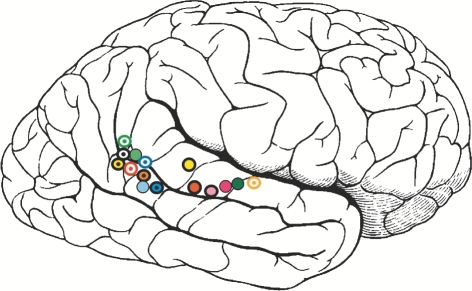
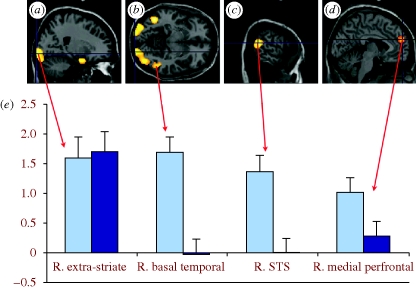
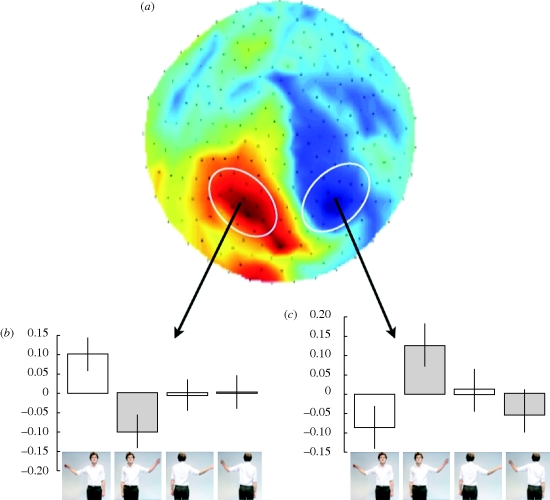
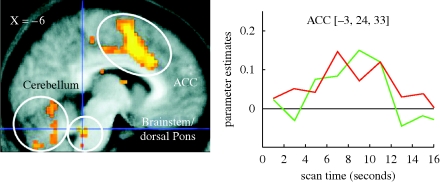
Verification
Claims the paper makes
The claims and statistics of this paper haven’t been checked yet.
Run the check — free, no account needed. It reads the open-access text and checks the sources it cites.
Claims other papers make about this one
Each is checked against this paper’s own text: does it say what the citing paper says it does?
In the citing paper
“Intriguingly, these four seemingly disparate psychological categories summarize what sets humans probably apart from non-human primates (Tomasello 2001; Frith and Frith 2010).”
From Parsing the neural correlates of moral cognition: ALE meta-analysis on morality, theory of mind, and empathy (2012) · cites this paper as Frith and Frith 2010
Self-check
Percentages, sums and reported differences re-computed from the paper’s own numbers.
The self-check needs the paper’s full text.
Citations
Cites
Axelrod, R., & Hamilton, W. D. (1981) · Science · doi:10.1126/science.7466396 · Cited by 20,065
Does the chimpanzee have a theory of mind?
Premack, D., & Woodruff, G. (1978) · Behavioral and Brain Sciences · doi:10.1017/s0140525x00076512 · Cited by 8,743
Does the autistic child have a “theory of mind” ?
Baron-Cohen, S., Leslie, A. M., & Frith, U. (1985) · Cognition · doi:10.1016/0010-0277(85)90022-8 · Cited by 8,599
Rizzolatti, G., & Craighero, L. (2004) · Annual Review of Neuroscience · doi:10.1146/annurev.neuro.27.070203.144230 · Cited by 7,433
Wimmer, H. (1983) · Cognition · doi:10.1016/0010-0277(83)90004-5 · Cited by 6,305
Premotor cortex and the recognition of motor actions
Rizzolatti, G., Fadiga, L., Gallese, V., & Fogassi, L. (1996) · Cognitive Brain Research · doi:10.1016/0926-6410(95)00038-0 · Cited by 4,870
(1989) · Cited by 4,498
Visual perception of biological motion and a model for its analysis
Johansson, G. (1973) · Perception & Psychophysics · doi:10.3758/bf03212378 · Cited by 4,441
Empathy for Pain Involves the Affective but not Sensory Components of Pain
Singer, T., Seymour, B., O'Doherty, J., Kaube, H., Dolan, R. J., & Frith, C. D. (2004) · Science · doi:10.1126/science.1093535 · Cited by 3,929
Self-citationMeeting of minds: the medial frontal cortex and social cognition
Amodio, D. M., & Frith, C. D. (2006) · Nature Reviews Neuroscience · doi:10.1038/nrn1884 · Cited by 3,782 · cited 1×
“We have speculated that anterior rostral medial prefrontal cortex (arMPFC), in which activity is elicited by many mentalizing tasks, may have a critical role in the special kind of representation that closes the loop between minds (Amodio & Frith 2006).”
BackgroundSelf-citationThe chameleon effect: the perception–behavior link and social interaction
Chartrand, T. L., & Bargh, J. A. (1999) · Journal of Personality and Social Psychology · doi:10.1037/0022-3514.76.6.893 · Cited by 3,674
The Theory of Moral Sentiments
Smith, A. (1759) · Oxford University Press eBooks · doi:10.1093/oseo/instance.00042831 · Cited by 3,629
An Experimental Study of Apparent Behavior
Heider, F., & Simmel, M. (1944) · The American Journal of Psychology · doi:10.2307/1416950 · Cited by 3,340
Cattaneo, L., & Rizzolatti, G. (2009) · Archives of Neurology · doi:10.1001/archneurol.2009.41 · Cited by 3,137
(1989) · UCL Discovery (University College London) · Cited by 2,724
Social perception from visual cues: Role of the STS region
Allison, T., Puce, A., & McCarthy, G. (2000) · Trends in Cognitive Sciences · doi:10.1016/s1364-6613(00)01501-1 · Cited by 2,461
Do 15-month-old infants understand false beliefs?
Onishi, K. H., & Baillargeon, R. (2005) · Science · doi:10.1126/science.1107621 · Cited by 2,350
People thinking about thinking peopleThe role of the temporo-parietal junction in “theory of mind”
Saxe, R., & Kanwisher, N. (2003) · NeuroImage · doi:10.1016/s1053-8119(03)00230-1 · Cited by 2,316
Development and neurophysiology of mentalizing
Frith, U., & Frith, C. D. (2003) · Philosophical Transactions of the Royal Society of London. Series B: Biological Sciences · doi:10.1098/rstb.2002.1218 · Cited by 2,306
Self-citationA unifying view of the basis of social cognition
GALLESE, V, KEYSERS, C., & RIZZOLATTI, G. (2004) · Trends in Cognitive Sciences · doi:10.1016/j.tics.2004.07.002 · Cited by 2,236
How Children Learn the Meanings of Words
Bloom, P. (2000) · The MIT Press eBooks · doi:10.7551/mitpress/3577.001.0001 · Cited by 1,995
Joint action: bodies and minds moving together
SEBANZ, N., BEKKERING, H., & KNOBLICH, G. (2006) · Trends in Cognitive Sciences · doi:10.1016/j.tics.2005.12.009 · Cited by 1,950
Pust, L. (1997) · Language · doi:10.2307/415932 · Cited by 1,912
The social brain in adolescence
Blakemore, S.-J. (2008) · Nature Reviews Neuroscience · doi:10.1038/nrn2353 · Cited by 1,896
Unconscious facial reactions to emotional facial expressions
Dimberg, U., Thunberg, M., & Elmehed, K. (2000) · Psychological Science · doi:10.1111/1467-9280.00221 · Cited by 1,788
The Neural Basis of Altruistic Punishment
de Quervain, D. J.-F., Fischbacher, U., Treyer, V., Schellhammer, M., Schnyder, U., Buck, A., & Fehr, E. (2004) · Science · doi:10.1126/science.1100735 · Cited by 1,768
Humans Have Evolved Specialized Skills of Social Cognition: The Cultural Intelligence Hypothesis
Herrmann, E., Call, J., Hernàndez-Lloreda, M. V., Hare, B., & Tomasello, M. (2007) · Science · doi:10.1126/science.1146282 · Cited by 1,582
Public Information: From Nosy Neighbors to Cultural Evolution
Danchin, É., Giraldeau, L., Valone, T. J., & Wagner, R. H. (2004) · Science · doi:10.1126/science.1098254 · Cited by 1,513
Castelli, F. (2002) · Brain · doi:10.1093/brain/awf189 · Cited by 1,377
Using nonconscious behavioral mimicry to create affiliation and rapport
Lakin, J. L., & Chartrand, T. L. (2003) · Psychological Science · doi:10.1111/1467-9280.14481 · Cited by 1,297
Castelli, F., Happe, F. G. E., Frith, U., & Frith, C. (2000) · NeuroImage · doi:10.1006/nimg.2000.0612 · Cited by 1,289
Self-citationCommunicative competence and theory of mind in autism: A test of relevance theory
Happe, F. G. E. (1993) · Cognition · doi:10.1016/0010-0277(93)90026-r · Cited by 1,161
Perceptual causality and animacy
Scholl, B. J., & Tremoulet, P. D. (2000) · Trends in Cognitive Sciences · doi:10.1016/s1364-6613(00)01506-0 · Cited by 1,104
Colby, K. M. (1981) · Behavioral and Brain Sciences · doi:10.1017/s0140525x00000030 · Cited by 966
Associative learning of social value
Behrens, T. E. J., Hunt, L. T., Woolrich, M. W., & Rushworth, M. F. S. (2008) · Nature · doi:10.1038/nature07538 · Cited by 925
Social cognition and the human brain
Adolphs, R. (1999) · Trends in Cognitive Sciences · doi:10.1016/s1364-6613(99)01399-6 · Cited by 895
Recognizing the sex of a walker from a dynamic point-light display
Kozlowski, L. T., & Cutting, J. E. (1977) · Perception & Psychophysics · doi:10.3758/bf03198740 · Cited by 866
An Interference Effect of Observed Biological Movement on Action
Kilner, J. M., Paulignan, Y., & Blakemore, S. J. (2003) · Current Biology · doi:10.1016/s0960-9822(03)00165-9 · Cited by 844
Representing others' actions: just like one's own?
Sebanz, N., Knoblich, G., & Prinz, W. (2003) · Cognition · doi:10.1016/s0010-0277(03)00043-x · Cited by 816
Attribution of Beliefs by 13-Month-Old Infants
Surian, L., Caldi, S., & Sperber, D. (2007) · Psychological Science · doi:10.1111/j.1467-9280.2007.01943.x · Cited by 811
Relevance: Communication and cognition, 2nd ed.
Sperber, D., & Wilson, D. (1995) · Cited by 808
Mindblind eyes: an absence of spontaneous theory of mind in Asperger syndrome
Senju, A., Southgate, V., White, S., & Frith, U. (2009) · Science · doi:10.1126/science.1176170 · Cited by 769
Gaze Following in Human Infants Depends on Communicative Signals
Senju, A., & Csibra, G. (2008) · Current Biology · doi:10.1016/j.cub.2008.03.059 · Cited by 749
Seeing it their way: Evidence for rapid and involuntary computation of what other people see.
Samson, D., Apperly, I. A., Braithwaite, J. J., Andrews, B. J., & Scott, S. (2010) · Journal of Experimental Psychology Human Perception & Performance · doi:10.1037/a0018729 · Cited by 739
Understanding Other Minds: Linking Developmental Psychology and Functional Neuroimaging
Saxe, R., Carey, S., & Kanwisher, N. (2004) · Annual Review of Psychology · doi:10.1146/annurev.psych.55.090902.142044 · Cited by 726
Perception of Emotion from Dynamic Point-Light Displays Represented in Dance
Dittrich, W. H., Trościanko, T., Lea, S. E. G., & Morgan, D. (1996) · Perception · doi:10.1068/p250727 · Cited by 723
Electrophysiology and brain imaging of biological motion
Puce, A., & Perrett, D. (2003) · Philosophical Transactions of the Royal Society of London. Series B: Biological Sciences · doi:10.1098/rstb.2002.1221 · Cited by 693
Mimicry and Prosocial Behavior
van Baaren, R. B., Holland, R. W., Kawakami, K., & van Knippenberg, A. (2004) · Psychological Science · doi:10.1111/j.0963-7214.2004.01501012.x · Cited by 683
Goal attribution without agency cues: the perception of ‘pure reason’ in infancy
Csibra, G., Gergely, G., Bı́ró, S., Koós, O., & Brockbank, M. (1999) · Cognition · doi:10.1016/s0010-0277(99)00039-6 · Cited by 664
The Rupture and Repair of Cooperation in Borderline Personality Disorder
King‐Casas, B., Sharp, C., Lomax-Bream, L., Lohrenz, T. M., Fonagy, P., & Montague, P. R. (2008) · Science · doi:10.1126/science.1156902 · Cited by 632
Social learning and social cognition: The case for pedagogy
Csibra, G., & Gergely, G. (2006) · Oxford University Press eBooks · doi:10.1093/oso/9780198568742.003.0011 · Cited by 621
From emotion resonance to empathic understanding: A social developmental neuroscience account
Decety, J., & Meyer, M. (2008) · Development and Psychopathology · doi:10.1017/s0954579408000503 · Cited by 597
Out of the Pits: Traders and Technology from Chicago to London
Larson, E. W. (2007) · Contemporary Sociology A Journal of Reviews · doi:10.1177/009430610703600621 · Cited by 592
Chimpanzees understand psychological states – the question is which ones and to what extent
Tomasello, M., Call, J., & Hare, B. (2003) · Trends in Cognitive Sciences · doi:10.1016/s1364-6613(03)00035-4 · Cited by 573
The emergence of social cognitive neuroscience.
Ochsner, K. N., & Lieberman, M. D. (2001) · American Psychologist · doi:10.1037/0003-066x.56.9.717 · Cited by 559
Chimpanzee minds: suspiciously human?
Povinelli, D. J., & Vonk, J. M. (2003) · Trends in Cognitive Sciences · doi:10.1016/s1364-6613(03)00053-6 · Cited by 549
Evidence of Mirror Neurons in Human Inferior Frontal Gyrus
Kilner, J. M., Neal, A., Weiskopf, N., Friston, K. J., & Frith, C. (2009) · Journal of Neuroscience · doi:10.1523/jneurosci.2668-09.2009 · Cited by 537
Self-citationThe Social Brain: A Project for Integrating Primate Behavior and Neurophysiology in a New Domain
Brothers, L. (2002) · Foundations in Social Neuroscience · doi:10.7551/mitpress/3077.003.0029 · Cited by 532
Cooperation and human cognition: the Vygotskian intelligence hypothesis.
Moll, H., & Tomasello, M. (2007) · Philosophical Transactions of the Royal Society B: Biological Sciences · doi:10.1098/rstb.2006.2000 · Cited by 531
Neural correlates of mentalizing-related computations during strategic interactions in humans
Hampton, A. N., Bossaerts, P. L., & O’Doherty, J. P. (2008) · Proceedings of the National Academy of Sciences · doi:10.1073/pnas.0711099105 · Cited by 522
Sabbagh, M. A., & Baldwin, D. A. (2001) · Child Development · doi:10.1111/1467-8624.00334 · Cited by 502
Relevance. Communication and cognition
Jucker, A. H. (1997) · Journal of Pragmatics · doi:10.1016/s0378-2166(97)88003-4 · Cited by 489
"I show how you feel": Motor mimicry as a communicative act.
Bavelas, J. B., Black, A., Lemery, C. R., & Mullett, J. (1986) · Journal of Personality and Social Psychology · doi:10.1037/0022-3514.50.2.322 · Cited by 473
Pelphrey, K. A., Morris, J. P., & McCarthy, G. (2004) · Journal of Cognitive Neuroscience · doi:10.1162/0898929042947900 · Cited by 454 · cited 1×
“Second, pSTS activity is greater when the movement does not fit with the expected intention, suggesting that this activity reflects prediction error (Pelphrey et al. 2003, 2004; Saxe et al. 2004).”
BackgroundImplicit and Explicit Processes in Social Cognition
Frith, C., & Frith, U. (2008) · Neuron · doi:10.1016/j.neuron.2008.10.032 · Cited by 446
Self-citationKampe, K. K. W., Frith, C. D., & Frith, U. (2003) · The Journal of Neuroscience · doi:10.1523/jneurosci.23-12-05258.2003 · Cited by 406
Self-citationInfants' Reliance on a Social Criterion for Establishing Word-Object Relations
Baldwin, D. A., Markman, E. M., Bill, B., Desjardins, R. N., Irwin, J. M., & Tidball, G. (1996) · Child Development · doi:10.1111/j.1467-8624.1996.tb01906.x · Cited by 398
Infants' Reliance on a Social Criterion for Establishing Word-Object Relations
Baldwin, D. A., Markman, E. M., Bill, B., Desjardins, R. N., Irwin, J. M., & Tidball, G. (1996) · Child Development · doi:10.2307/1131771 · Cited by 398
Making up the mind: how the brain creates our mental world
(2008) · Choice Reviews Online · doi:10.5860/choice.45-3771 · Cited by 392
Autism, the superior temporal sulcus and social perception
Zilbovicius, M., Meresse, I., Chabane, N., Brunelle, F., Samson, Y., & Boddaert, N. (2006) · Trends in Neurosciences · doi:10.1016/j.tins.2006.06.004 · Cited by 392
Synchrony in the Onset of Mental-State Reasoning: Evidence From Five Cultures
Callaghan, T., Rochat, P., Lillard, A., Claux, M. L., Odden, H., Itakura, S., Tapanya, S., & Singh, S. (2005) · Psychological Science · doi:10.1111/j.0956-7976.2005.01544.x · Cited by 351
Passingham, R. E. (1973) · Behaviour Research and Therapy · doi:10.1016/0005-7967(73)90086-7 · Cited by 350
Deception and Sabotage in Autistic, Retarded and Normal Children
Sodian, B., & Frith, U. (1992) · Journal of Child Psychology and Psychiatry · doi:10.1111/j.1469-7610.1992.tb00893.x · Cited by 344
Yoshida, W., Dolan, R. J., & Friston, K. J. (2008) · PLoS Computational Biology · doi:10.1371/journal.pcbi.1000254 · Cited by 342
Brain activation evoked by perception of gaze shifts: the influence of context
Pelphrey, K. A., Singerman, J. D., Allison, T., & McCarthy, G. (2003) · Neuropsychologia · doi:10.1016/s0028-3932(02)00146-x · Cited by 341
The mirror neuron system is more active during complementary compared with imitative action
Newman-Norlund, R. D., van Schie, H. T., van Zuijlen, A. M. J., & Bekkering, H. (2007) · Nature Neuroscience · doi:10.1038/nn1911 · Cited by 337
Processes of change in brain and cognitive development
Johnson, M. H., & Munakata, Y. (2005) · Trends in Cognitive Sciences · doi:10.1016/j.tics.2005.01.009 · Cited by 337
Resonance behaviors and mirror neurons.
Rizzolatti, G., Fadiga, L., Fogassi, L., & D, V. G. M. (1999) · PubMed · Cited by 329
Detecting deception by manipulating cognitive load
Vrij, A., Fisher, R. P., Mann, S. A., & Leal, S. (2006) · Trends in Cognitive Sciences · doi:10.1016/j.tics.2006.02.003 · Cited by 319
Kana, R. K., Keller, T. A., Cherkassky, V. L., Minshew, N. J., & Just, M. A. (2009) · Social Neuroscience · doi:10.1080/17470910802198510 · Cited by 319
The mirror-neuron system: a Bayesian perspective
Kilner, J. M., Friston, K. J., & Frith, C. (2007) · Neuroreport · doi:10.1097/wnr.0b013e3281139ed0 · Cited by 291
Self-citationOut of the pits : traders and technology from Chicago to London
Zaloom, C. (2006) · Cited by 269
Dinstein, I., Thomas, C., Behrmann, M., & Heeger, D. J. (2008) · Current Biology · doi:10.1016/j.cub.2007.11.004 · Cited by 266
(1999) · doi:10.1093/oso/9780198524465.001.0001 · Cited by 261
Wheatley, T. P., Milleville, S. C., & Martin, A. D. (2007) · Psychological Science · doi:10.1111/j.1467-9280.2007.01923.x · Cited by 240
Mindreading, Communication and the Learning of Names for Things
Bloom, P. (2002) · Mind & Language · doi:10.1111/1468-0017.00188 · Cited by 229
Do visual perspective tasks need theory of mind?
Aichhorn, M., Perner, J., Kronbichler, M., Staffen, W., & Ladurner, G. (2006) · NeuroImage · doi:10.1016/j.neuroimage.2005.10.026 · Cited by 227
Fairness and Cooperation Are Rewarding: Evidence from Social Cognitive Neuroscience
TABIBNIA, G., & LIEBERMAN, M. D. (2007) · Annals of the New York Academy of Sciences · doi:10.1196/annals.1412.001 · Cited by 211
Chiu, P. H., Kayali, M. A., Kishida, K. T., Tomlin, D., Klinger, L. G., Klinger, M. R., & Montague, P. R. (2008) · Neuron · doi:10.1016/j.neuron.2007.12.020 · Cited by 209
Arginine Vasopressin and Oxytocin Modulate Human Social Behavior
Ebstein, R. P., Israel, S., Lerer, E., Uzefovsky, F., Shalev, I., Gritsenko, I., Riebold, M., Salomon, S., & Yirmiya, N. (2009) · Annals of the New York Academy of Sciences · doi:10.1111/j.1749-6632.2009.04541.x · Cited by 196
Similarities and differences between cultures in expressive movements
Eibl‐Eibesfeldt, I. (1979) · MPG.PuRe (Max Planck Society) · Cited by 187
Johnson, S. C. (2003) · Philosophical Transactions of the Royal Society B Biological Sciences · doi:10.1098/rstb.2002.1237 · Cited by 163
Effects of agency on movement interference during observation of a moving dot stimulus.
Stanley, J., Gowen, E., & Miall, R. C. (2007) · Journal of Experimental Psychology Human Perception & Performance · doi:10.1037/0096-1523.33.4.915 · Cited by 152
Modulation of the mirror system by social relevance
Kilner, J. M., Agustus, J. L., & Frith, C. (2006) · Social Cognitive and Affective Neuroscience · doi:10.1093/scan/nsl017 · Cited by 145
Self-citationHow to overcome the detrimental effects of noise in social interaction: The benefits of generosity.
Lange, P. A. M. V., Ouwerkerk, J. W., & Tazelaar, M. J. A. (2002) · Journal of Personality and Social Psychology · doi:10.1037/0022-3514.82.5.768 · Cited by 123
Making up the Mind: How the Brain Creates our Mental World
Wilson, B. A. (2008) · Neuropsychological Rehabilitation · doi:10.1080/09602010802348997 · Cited by 107
Race, Behavior, and the Brain: The Role of Neuroimaging in Understanding Complex Social Behaviors
Phelps, E. A., & Thomas, L. A. (2003) · Political Psychology · doi:10.1046/j.1467-9221.2003.00350.x · Cited by 79
Spacks, P. M. (1982) · The Hudson Review · doi:10.2307/3851309 · Cited by 75
Maestripieri, D., Ross, S. K., & Megna, N. L. (2002) · Journal of comparative psychology · doi:10.1037/0735-7036.116.3.219 · Cited by 52
(1904) · The Lancet · doi:10.1016/s0140-6736(01)49925-9 · Cited by 43
On the Possibility of Animal Empathy
de Waal, F. Β. Μ. (2004) · Cambridge University Press eBooks · doi:10.1017/cbo9780511806582.022 · Cited by 39
The Self and Its Reputation in Autism
Frith, C., & Frith, U. (2008) · Neuron · doi:10.1016/j.neuron.2008.01.014 · Cited by 35
Self-citationKrauss, L. M. (1997) · Cited by 4
Research works printed but not linked: 1
- Hoffman E., 1996, Social distance and other-regarding behaviour in dictator games, Am. Econ. Rev., 86, 653
Cited by
Sorted by citations
Toward a second-person neuroscience
Schilbach, L., Timmermans, B., Reddy, V., Costall, A., Bente, G., Schlicht, T., & Vogeley, K. (2013) · Behavioral and Brain Sciences · doi:10.1017/s0140525x12000660 · Cited by 1,510
Bzdok, D., Schilbach, L., Vogeley, K., Schneider, K., Laird, A. R., Langner, R., & Eickhoff, S. B. (2012) · Brain Structure and Function · doi:10.1007/s00429-012-0380-y · Cited by 653
Social cognition and the anterior temporal lobes: a review and theoretical framework
Olson, I. R., McCoy, D., Klobusicky, E., & Ross, L. A. (2013) · Social Cognitive and Affective Neuroscience · doi:10.1093/scan/nss119 · Cited by 452
The Structure of Social Cognition: In(ter)dependence of Sociocognitive Processes
Happe, F. G. E., Cook, J. L., & Bird, G. (2016) · Annual Review of Psychology · doi:10.1146/annurev-psych-010416-044046 · Cited by 478
Burnett, S., Sebastian, C., Cohen Kadosh, K., & Blakemore, S.-J. (2011) · Neuroscience & Biobehavioral Reviews · doi:10.1016/j.neubiorev.2010.10.011 · Cited by 391
Metadata
- Authors
- Frith, U., & Frith, C.
- Affiliations
- ICN, UCL, 17 Queen Square, London, UK
- Wellcome Centre for Human Neuroimaging (GB)
- ORCID
- Frith, Chris
- Venue
- Philosophical Transactions of the Royal Society B: Biological Sciences
- Publisher
- The Royal Society
- Published
- 2010-01-12
- Volume
- 365
- Issue
- 1537
- Pages
- 165-176
- ISSN
- 0962-8436 (ISSN-L)
- 1471-2970
- PMC
- PMC2842701
- OpenAlex
- W2124884997
- Cited by
- 443
- References
- 104
- Citations by year
- 2026: 3 · 2025: 17 · 2024: 24 · 2023: 20 · 2022: 23 · 2021: 50 · 2020: 20 · 2019: 21 · 2018: 28 · 2017: 28 · 2016: 24 · 2015: 28 · 2014: 49 · 2013: 42 · 2012: 34
- FWCI
- 38.46
- Type
- journal article
- Language
- en
- Open access
- hybrid
- doi.org
- Locations
- Philosophical Transactions of the Royal Society B Biological Sciences (publishedVersion, cc-by)
- PubMed Central (publishedVersion, cc-by)
- PubMed (publishedVersion)
- UCL Discovery (University College London) (submittedVersion)
- Funders
- National Research Foundation
- Danmarks Grundforskningsfond
- Topics
- Social Sciences › Psychology › Developmental and Educational Psychology › Child and Animal Learning Development
- Social Sciences › Psychology › Social Psychology › Action Observation and Synchronization
- Life Sciences › Agricultural and Biological Sciences › Ecology, Evolution, Behavior and Systematics › Primate Behavior and Ecology
- Keywords
- social brain, social cognition, social communication, two-person interaction, cooperation, reputation, trust, teaching, cultural evolution, evolution of social behavior, social brain network
- MeSH terms
- Brain, Cognition, Humans, Interpersonal Relations, Nerve Net, Social Behavior
About these checks
Registry, retraction, Cites and statistics results are computed, not judged, with one exception: a printed reference that no index lists is read once by a model before it counts as a citation error. Claims are extracted by a model and kept only when their quote appears verbatim in the text; each cited source is then checked, with a model’s help, for whether it says what the claim relies on. Those verdicts can be wrong — read the claim’s quote and the cited source before relying on one.
Statistics and arithmetic are recomputed, not judged.
Confidence bands are shown only for fields calibrated on our annotated test set. None is calibrated yet, so no band is shown.
What counts as a claim ›How we measure confidence ›How we check this ›
Are you an author, or do you see a problem with this page? Request a review
