

The DOI matches its Crossref record; 103 of the 104 references it cites were found in a registry or an index.
The social brain: allowing humans to boldly go where no other species has been
Open accessAbstract
The biological basis of complex human social interaction and communication has been illuminated through a coming together of various methods and disciplines. Among these are comparative studies of other species, studies of disorders of social cognition and developmental psychology. The use of neuroimaging and computational models has given weight to speculations about the evolution of social behaviour and culture in human societies. We highlight some networks of the social brain relevant to two-person interactions and consider the social signals between interacting partners that activate these networks. We make a case for distinguishing between signals that automatically trigger interaction and cooperation and ostensive signals that are used deliberately. We suggest that this ostensive signalling is needed for ‘closing the loop’ in two-person interactions, where the partners each know that they have the intention to communicate. The use of deliberate social signals can serve to increase reputation and trust and facilitates teaching. This is likely to be a critical factor in the steep cultural ascent of mankind.
Overview
The claims and statistics of this paper haven’t been checked yet.
Run the check — free, no account needed. It reads the open-access text and checks the sources it cites.
Integrity signals
Registry
Cites
Statistics
Figures
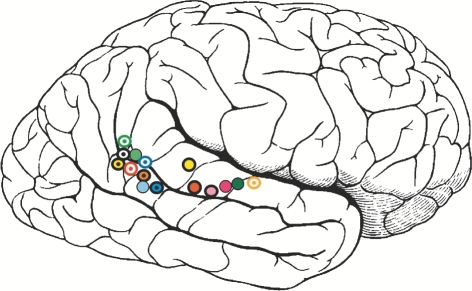
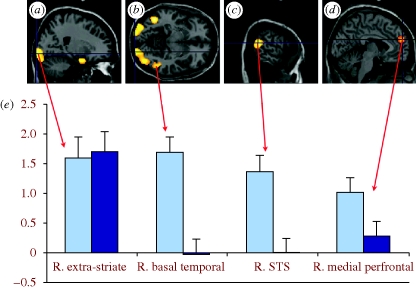
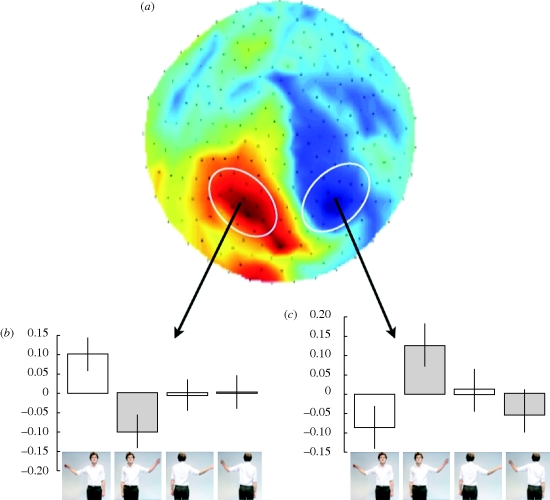
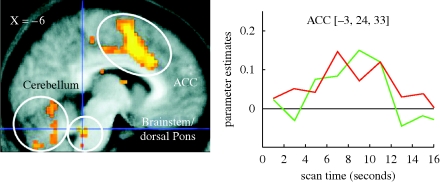
Verification
Claims the paper makes
The claims and statistics of this paper haven’t been checked yet.
Run the check — free, no account needed. It reads the open-access text and checks the sources it cites.
Claims other papers make about this one
Each is checked against this paper’s own text: does it say what the citing paper says it does?
In the citing paper
“Intriguingly, these four seemingly disparate psychological categories summarize what sets humans probably apart from non-human primates (Tomasello 2001; Frith and Frith 2010).”
From Parsing the neural correlates of moral cognition: ALE meta-analysis on morality, theory of mind, and empathy (2012) · cites this paper as Frith and Frith 2010
Self-check
Percentages, sums and reported differences re-computed from the paper’s own numbers.
The self-check needs the paper’s full text.
Citations
Cites
Axelrod, R., & Hamilton, W. D. (1981) · Science · doi:10.1126/science.7466396 · Cited by 20,065
Does the chimpanzee have a theory of mind?
Premack, D., & Woodruff, G. (1978) · Behavioral and Brain Sciences · doi:10.1017/s0140525x00076512 · Cited by 8,743
Does the autistic child have a “theory of mind” ?
Baron-Cohen, S., Leslie, A. M., & Frith, U. (1985) · Cognition · doi:10.1016/0010-0277(85)90022-8 · Cited by 8,599
Rizzolatti, G., & Craighero, L. (2004) · Annual Review of Neuroscience · doi:10.1146/annurev.neuro.27.070203.144230 · Cited by 7,433
Wimmer, H. (1983) · Cognition · doi:10.1016/0010-0277(83)90004-5 · Cited by 6,305
Premotor cortex and the recognition of motor actions
Rizzolatti, G., Fadiga, L., Gallese, V., & Fogassi, L. (1996) · Cognitive Brain Research · doi:10.1016/0926-6410(95)00038-0 · Cited by 4,870
(1989) · Cited by 4,498
Visual perception of biological motion and a model for its analysis
Johansson, G. (1973) · Perception & Psychophysics · doi:10.3758/bf03212378 · Cited by 4,441
Empathy for Pain Involves the Affective but not Sensory Components of Pain
Singer, T., Seymour, B., O'Doherty, J., Kaube, H., Dolan, R. J., & Frith, C. D. (2004) · Science · doi:10.1126/science.1093535 · Cited by 3,929
Self-citationMeeting of minds: the medial frontal cortex and social cognition
Amodio, D. M., & Frith, C. D. (2006) · Nature Reviews Neuroscience · doi:10.1038/nrn1884 · Cited by 3,782 · cited 1×
“We have speculated that anterior rostral medial prefrontal cortex (arMPFC), in which activity is elicited by many mentalizing tasks, may have a critical role in the special kind of representation that closes the loop between minds (Amodio & Frith 2006).”
BackgroundSelf-citation
Research works printed but not linked: 1
- Hoffman E., 1996, Social distance and other-regarding behaviour in dictator games, Am. Econ. Rev., 86, 653
Cited by
Sorted by citations
Toward a second-person neuroscience
Schilbach, L., Timmermans, B., Reddy, V., Costall, A., Bente, G., Schlicht, T., & Vogeley, K. (2013) · Behavioral and Brain Sciences · doi:10.1017/s0140525x12000660 · Cited by 1,510
Bzdok, D., Schilbach, L., Vogeley, K., Schneider, K., Laird, A. R., Langner, R., & Eickhoff, S. B. (2012) · Brain Structure and Function · doi:10.1007/s00429-012-0380-y · Cited by 653
Social cognition and the anterior temporal lobes: a review and theoretical framework
Olson, I. R., McCoy, D., Klobusicky, E., & Ross, L. A. (2013) · Social Cognitive and Affective Neuroscience · doi:10.1093/scan/nss119 · Cited by 452
The Structure of Social Cognition: In(ter)dependence of Sociocognitive Processes
Happe, F. G. E., Cook, J. L., & Bird, G. (2016) · Annual Review of Psychology · doi:10.1146/annurev-psych-010416-044046 · Cited by 478
Burnett, S., Sebastian, C., Cohen Kadosh, K., & Blakemore, S.-J. (2011) · Neuroscience & Biobehavioral Reviews · doi:10.1016/j.neubiorev.2010.10.011 · Cited by 391
Santiesteban (2012) · doi:10.1016/j.cub.2012.10.018 · Cited by 357
Brain mechanisms for processing affective touch
Gordon, I., Voos, A. C., Bennett, R. H., Bolling, D. Z., Pelphrey, K. A., & Kaiser, M. D. (2011) · Human Brain Mapping · doi:10.1002/hbm.21480 · Cited by 374
Essentials of a Theory of Language Cognition
Ellis, N. C. (2019) · Modern Language Journal · doi:10.1111/modl.12532 · Cited by 340
Insensitivity to social reputation in autism
Izuma, K., Matsumoto, K., Camerer, C. F., & Adolphs, R. (2011) · Proceedings of the National Academy of Sciences · doi:10.1073/pnas.1107038108 · Cited by 243
Impairments in Social Cognition Following Severe Traumatic Brain Injury
McDonald, S. (2013) · Journal of the International Neuropsychological Society · doi:10.1017/s1355617712001506 · Cited by 283
Neural mirroring systems: Exploring the EEG mu rhythm in human infancy
Marshall, P. J., & Meltzoff, A. N. (2010) · Developmental Cognitive Neuroscience · doi:10.1016/j.dcn.2010.09.001 · Cited by 251
The Neurobiology of Social Distance
Bzdok, D., & Dunbar, R. I. M. (2020) · Trends in Cognitive Sciences · doi:10.1016/j.tics.2020.05.016 · Cited by 258
Building a neuroscience of pleasure and well-being
Berridge, K. C., & Kringelbach, M. L. (2011) · Psychology of Well-Being: Theory, Research and Practice · doi:10.1186/2211-1522-1-3 · Cited by 229
Thomsen, K. R., Whybrow, P. C., & Kringelbach, M. L. (2015) · Frontiers in Behavioral Neuroscience · doi:10.3389/fnbeh.2015.00049 · Cited by 256
Schilbach, L., Bzdok, D., Timmermans, B., Fox, P. T., Laird, A. R., Vogeley, K. T., & Eickhoff, S. B. (2012) · PLoS ONE · doi:10.1371/journal.pone.0030920 · Cited by 234
The joint Simon effect: a review and theoretical integration
Dolk, T., Hommel, B., Colzato, L. S., Schütz‐Bosbach, S., Prinz, W., & Liepelt, R. (2014) · Frontiers in Psychology · doi:10.3389/fpsyg.2014.00974 · Cited by 223
Bambini, V., Gentili, C., Ricciardi, E., Bertinetto, P. M., & Pietrini, P. (2011) · Brain Research Bulletin · doi:10.1016/j.brainresbull.2011.07.015 · Cited by 225
Representation of Others' Action by Neurons in Monkey Medial Frontal Cortex
Yoshida, K., Saito, N., Iriki, A., & Isoda, M. (2011) · Current Biology · doi:10.1016/j.cub.2011.01.004 · Cited by 200
Exploring the ‘fractionation’ of autism at the cognitive level
Brunsdon, V. E. A., & Happe, F. G. E. (2013) · Autism · doi:10.1177/1362361313499456 · Cited by 205
ALE meta-analysis on facial judgments of trustworthiness and attractiveness
Bzdok, D., Langner, R., Caspers, S., Kurth, F., Habel, U., Zilles, K., Laird, A., & Eickhoff, S. B. (2011) · Brain Structure and Function · doi:10.1007/s00429-010-0287-4 · Cited by 183
Riedl, R., & Javor, A. (2011) · Journal of Neuroscience Psychology and Economics · doi:10.1037/a0026318 · Cited by 193
Computing the Social Brain Connectome Across Systems and States
Alcalá-López, D., Smallwood, J., Jefferies, E., Overwalle, F. V., Vogeley, K. T., Mars, R. B., Turetsky, B. I., Laird, A. R., Fox, P. T., Eickhoff, S. B., et al. (2017) · Cerebral Cortex · doi:10.1093/cercor/bhx121 · Cited by 182
Competing Motivations in Grammar and Usage
MacWhinney, B., Malʹčukov, A. L., & Moravcsik, E. A. (2014) · doi:10.1093/acprof:oso/9780198709848.001.0001 · Cited by 185
Carhart-Harris, R. L., Murphy, K., Leech, R., Erritzøe, D., Wall, M. B., Ferguson, B., Williams, L. T. J., Roseman, L., Brugger, S. P., Meer, I. D., et al. (2014) · Biological Psychiatry · doi:10.1016/j.biopsych.2013.12.015 · Cited by 187
Competing motivation models and diachrony: What evidence for what motivations?
Cristofaro, S. (2014) · Oxford University Press eBooks · doi:10.1093/acprof:oso/9780198709848.003.0017 · Cited by 174
Inter-brain synchrony in mother-child dyads during cooperation: An fNIRS hyperscanning study
Miller, J. G., Vrtička, P., Cui, X., Shrestha, S. B., Hosseini, S. M. H., Baker, J. M., & Reiss, A. L. (2018) · Neuropsychologia · doi:10.1016/j.neuropsychologia.2018.12.021 · Cited by 180
Grasping intentions: from thought experiments to empirical evidence
Becchio, C., Manera, V., Sartori, L., Cavallo, A., & Castiello, U. (2012) · Frontiers in Human Neuroscience · doi:10.3389/fnhum.2012.00117 · Cited by 188
Trusting Humans and Avatars: A Brain Imaging Study Based on Evolution Theory
Riedl, R., Mohr, P. N. C., Kenning, P. H., Davis, F. D., & Heekeren, H. R. (2014) · Journal of Management Information Systems · doi:10.2753/mis0742-1222300404 · Cited by 179
The body social: an enactive approach to the self
Kyselo, M. (2014) · Frontiers in Psychology · doi:10.3389/fpsyg.2014.00986 · Cited by 170
Spikman, J. M., Timmerman, M. E., Milders, M. V., Veenstra, W. S., & van der Naalt, J. (2011) · Journal of Neurotrauma · doi:10.1089/neu.2011.2084 · Cited by 179
O’Dell, L., Rosqvist, H. B., Ortega, F., Brownlow, C., & Orsini, M. (2016) · Disability & Society · doi:10.1080/09687599.2016.1164026 · Cited by 161
Language in dialogue: when confederates might be hazardous to your data
Kuhlen, A. K., & Brennan, S. E. (2012) · Psychonomic Bulletin & Review · doi:10.3758/s13423-012-0341-8 · Cited by 172
The neural dynamics of updating person impressions
Mende‐Siedlecki, P., Cai, Y., & Todorov, A. T. (2012) · Social Cognitive and Affective Neuroscience · doi:10.1093/scan/nss040 · Cited by 148
Brain Connectivity and Neuroimaging of Social Networks in Autism
Müller, R., & Fishman, I. (2018) · Trends in Cognitive Sciences · doi:10.1016/j.tics.2018.09.008 · Cited by 154
Lifespan aging and belief reasoning: Influences of executive function and social cue decoding
Phillips, L. H., Bull, R., Allen, R., Insch, P. M., Burr, K., & Ogg, W. (2011) · Cognition · doi:10.1016/j.cognition.2011.05.003 · Cited by 150
The functional neuroanatomy of the evolving parent–infant relationship
Parsons, C. E., Young, K. S., Murray, L., Stein, A. L., & Kringelbach, M. L. (2010) · Progress in Neurobiology · doi:10.1016/j.pneurobio.2010.03.001 · Cited by 149
Pragmatics in Action: Indirect Requests Engage Theory of Mind Areas and the Cortical Motor Network
van Ackeren, M. J., Casasanto, D. J., Harold Bekkering, A., Peter Hagoort, A., & Rueschemeyer, S. (2012) · Journal of Cognitive Neuroscience · doi:10.1162/jocn_a_00274 · Cited by 145
The macaque lateral grasping network: A neural substrate for generating purposeful hand actions
Borra, E., Gerbella, M., Rozzi, S., & Luppino, G. (2017) · Neuroscience & Biobehavioral Reviews · doi:10.1016/j.neubiorev.2017.01.017 · Cited by 149
Hulstijn, J. H., Young, R., Ortega, L., Bigelow, M., DEKEYSER, R. M., Ellis, N. C., Lantolf, J. P., Mackey, A., & Talmy, S. (2014) · Studies in Second Language Acquisition · doi:10.1017/s0272263114000035 · Cited by 166
Connectivity-Based Parcellation of the Human Temporal Pole Using Diffusion Tensor Imaging
Fan, L., Wang, J., Zhang, Y., Han, W., Yu, C., & Jiang, T. (2013) · Cerebral Cortex · doi:10.1093/cercor/bht196 · Cited by 144
Reputation management in the age of the world-wide web
Tennie, C., Frith, U., & Frith, C. (2010) · Trends in Cognitive Sciences · doi:10.1016/j.tics.2010.07.003 · Cited by 150
Self-citationSensory and semantic category subdivisions within the anterior temporal lobes
Skipper‐Kallal, L. M., Ross, L. A., & Olson, I. R. (2011) · Neuropsychologia · doi:10.1016/j.neuropsychologia.2011.07.033 · Cited by 134
A Tale of Two Types of Perspective Taking
Tarampi, M. R., Heydari, N. D., & Hegarty, M. (2016) · Psychological Science · doi:10.1177/0956797616667459 · Cited by 135
What have economists learned about valuing nature? A review essay
Parks, S., & Gowdy, J. M. (2012) · Ecosystem Services · doi:10.1016/j.ecoser.2012.12.002 · Cited by 133
McGettigan, C., Walsh, E., Jessop, R., Agnew, Z. K., Sauter, D. A., Warren, J. E., & Scott, S. K. (2013) · Cerebral Cortex · doi:10.1093/cercor/bht227 · Cited by 140
Social cognitive deficits and their neural correlates in progressive supranuclear palsy
Ghosh, B. C. P., Calder, A. J., Peers, P. V., Lawrence, A. D., Acosta-Cabronero, J., Pereira, J. M., Hodges, J. R., & Rowe, J. B. (2012) · Brain · doi:10.1093/brain/aws128 · Cited by 123
The ultrasocial origin of the Anthropocene
Gowdy, J. M., & Krall, L. (2013) · Ecological Economics · doi:10.1016/j.ecolecon.2013.08.006 · Cited by 130
Learning-Induced Plasticity in Medial Prefrontal Cortex Predicts Preference Malleability
Garvert, M. M., Moutoussis, M., Kurth-Nelson, Z. L., Behrens, T. E. J., & Dolan, R. J. (2015) · Neuron · doi:10.1016/j.neuron.2014.12.033 · Cited by 128
Roots of a social brain: Developmental models of emerging animacy-detection mechanisms
Rosa Salva, O., Mayer, U., & Vallortigara, G. (2015) · Neuroscience & Biobehavioral Reviews · doi:10.1016/j.neubiorev.2014.12.015 · Cited by 123
Boucher, J. (2012) · Autism · doi:10.1177/1362361311430403 · Cited by 141
Direct modulation of aberrant brain network connectivity through real-time NeuroFeedback
Ramot, M., Kimmich, S., González-Castillo, J., Roopchansingh, V., Popal, H. S., White, E. I., Gotts, S. J., & Martin, A. D. (2017) · eLife · doi:10.7554/elife.28974 · Cited by 111
Binney, R. J., & Ramsey, R. (2020) · Neuroscience & Biobehavioral Reviews · doi:10.1016/j.neubiorev.2020.01.030 · Cited by 113
Changes of the brain’s bioelectrical activity in cognition, consciousness, and some mental disorders
Azizi, M. R., Azimi, L., Heysieattalab, S., & Amidfar, M. (2017) · Medical Journal of the Islamic Republic of Iran · doi:10.14196/mjiri.31.53 · Cited by 118
Amygdala in action: Relaying biological and social significance to autobiographical memory
Markowitsch, H. J., & Staniloiu, A. (2010) · Neuropsychologia · doi:10.1016/j.neuropsychologia.2010.10.007 · Cited by 121
Heimann, K. S., Umiltà, M. A., Guerra, M., & Gallese, V. (2014) · Journal of Cognitive Neuroscience · doi:10.1162/jocn_a_00602 · Cited by 122
Abnormal Brain Activation During Theory of Mind Tasks in Schizophrenia: A Meta-Analysis
Kronbichler, L., Tschernegg, M., Martin, A., Schurz, M., & Kronbichler, M. (2017) · Schizophrenia Bulletin · doi:10.1093/schbul/sbx073 · Cited by 120
Old World Monkeys Compare to Apes in the Primate Cognition Test Battery
Schmitt, V., Pankau, B., & Fischer, J. (2012) · PLoS ONE · doi:10.1371/journal.pone.0032024 · Cited by 112
Distinguishing Self and Other in Joint Action. Evidence from a Musical Paradigm
Novembre, G., Ticini, L. F., Schutz-Bosbach, S., & Keller, P. E. (2012) · Cerebral Cortex · doi:10.1093/cercor/bhr364 · Cited by 114
Diagnostic Value Underlies Asymmetric Updating of Impressions in the Morality and Ability Domains
Mende‐Siedlecki, P., Baron, S. G., & Todorov, A. T. (2013) · Journal of Neuroscience · doi:10.1523/jneurosci.2334-13.2013 · Cited by 118
Xue, K., Liang, S., Yang, B., Zhu, D., Xie, Y., Qin, W., Liu, F., Zhang, Y., & Yu, C. (2020) · Psychological Medicine · doi:10.1017/s0033291720003876 · Cited by 112
Atypical Social Modulation of Imitation in Autism Spectrum Conditions
Cook, J. L., & Bird, G. (2012) · Journal of Autism and Developmental Disorders · doi:10.1007/s10803-011-1341-7 · Cited by 111
The economic origins of ultrasociality
Gowdy, J. M., & Krall, L. (2015) · Behavioral and Brain Sciences · doi:10.1017/s0140525x1500059x · Cited by 113
Autologous Bone Marrow Mononuclear Cell Therapy for Autism: An Open Label Proof of Concept Study
Sharma, A., Gokulchandran, N., Sane, H., Nagrajan, A., Paranjape, A., Kulkarni, P., Shetty, A., Mishra, P., Kali, M., Biju, H., et al. (2013) · Stem Cells International · doi:10.1155/2013/623875 · Cited by 110
From automata to animate beings: the scope and limits of attributing socialness to artificial agents
Hortensius, R., & Cross, E. S. (2018) · Annals of the New York Academy of Sciences · doi:10.1111/nyas.13727 · Cited by 117
Deafness, thought bubbles, and theory-of-mind development.
Wellman, H. M., & Peterson, C. C. (2013) · Developmental Psychology · doi:10.1037/a0032419 · Cited by 104
When gaze opens the channel for communication: Integrative role of IFG and MPFC
Cavallo, A., Lungu, O., Becchio, C., Ansuini, C., Rustichini, A., & Fadiga, L. (2015) · NeuroImage · doi:10.1016/j.neuroimage.2015.06.025 · Cited by 104
Eye contact marks the rise and fall of shared attention in conversation
Wohltjen, S., & Wheatley, T. P. (2021) · Proceedings of the National Academy of Sciences · doi:10.1073/pnas.2106645118 · Cited by 124
Expression unleashed: The evolutionary and cognitive foundations of human communication
Heintz, C., & Scott‐Phillips, T. (2022) · Behavioral and Brain Sciences · doi:10.1017/s0140525x22000012 · Cited by 112
Towards a Computational Model of Actor-Based Language Comprehension
Alday, P. M., Schlesewsky, M., & Bornkessel‐Schlesewsky, I. (2013) · Neuroinformatics · doi:10.1007/s12021-013-9198-x · Cited by 101
A broad assessment of theory of mind in adolescence: The complexity of mindreading
Bosco, F. M., Gabbatore, I., & Tirassa, M. (2014) · Consciousness and Cognition · doi:10.1016/j.concog.2014.01.003 · Cited by 115
On the relationship of online and offline social cognition
Schilbach, L. (2014) · Frontiers in Human Neuroscience · doi:10.3389/fnhum.2014.00278 · Cited by 107
An Extended Framework for Characterizing Social Robots
Baraka, K., Alves‐Oliveira, P., & Ribeiro, T. (2020) · Springer series on bio- and neurosystems · doi:10.1007/978-3-030-42307-0_2 · Cited by 114
Nonhuman Primate Communication, Pragmatics, and the Origins of Language
Scott‐Phillips, T. C. (2015) · Current Anthropology · doi:10.1086/679674 · Cited by 107
Social attitudes differentially modulate imitation in adolescents and adults
Cook, J., & Bird, G. (2011) · Experimental Brain Research · doi:10.1007/s00221-011-2584-4 · Cited by 92
Kaiser, M. D., & Pelphrey, K. A. (2011) · Developmental Cognitive Neuroscience · doi:10.1016/j.dcn.2011.05.005 · Cited by 98
The shaping of social perception by stimulus and knowledge cues to human animacy
Cross, E. S., Ramsey, R., Liepelt, R., Prinz, W., & Hamilton, A. F. D. C. (2015) · Philosophical Transactions of the Royal Society B Biological Sciences · doi:10.1098/rstb.2015.0075 · Cited by 97
Understanding the human parental brain: A critical role of the orbitofrontal cortex
Parsons, C. E., Stark, E. A., Young, K. S., Stein, A. L., & Kringelbach, M. L. (2013) · Social Neuroscience · doi:10.1080/17470919.2013.842610 · Cited by 91
Can Generative AI Chatbots Emulate Human Connection? A Relationship Science Perspective
Smith, M. G., Bradbury, T. N., & Karney, B. R. (2025) · Perspectives on Psychological Science · doi:10.1177/17456916251351306 · Cited by 88
Klapper, A., Ramsey, R., Wigboldus, D., & Cross, E. S. (2014) · Journal of Cognitive Neuroscience · doi:10.1162/jocn_a_00651 · Cited by 85
Loke, S. W. (2019) · IEEE Transactions on Intelligent Vehicles · doi:10.1109/tiv.2019.2938107 · Cited by 85
Berkum, V. E. C., & Alferes, J. J. (2010) · Max Planck Institute for Plasma Physics · Cited by 84
The Measure of All Minds: Evaluating Natural and Artificial Intelligence
Hernández‐Orallo, J. (2017) · Cited by 88
Group Cooperation, Carrying-Capacity Stress, and Intergroup Conflict
Dreu, C. K. W. D., Gross, J., Fariña, A., & Ma, Y. (2020) · Trends in Cognitive Sciences · doi:10.1016/j.tics.2020.06.005 · Cited by 84
Effort shapes social cognition and behaviour: A neuro-cognitive framework
Contreras-Huerta, L. S., Pisauro, M. A., & Apps, M. A. J. (2020) · Neuroscience & Biobehavioral Reviews · doi:10.1016/j.neubiorev.2020.08.003 · Cited by 91
Zwickel, J., White, S. J., Coniston, D., Senju, A., & Uta Frith, A. (2010) · Social Cognitive and Affective Neuroscience · doi:10.1093/scan/nsq088 · Cited by 82
Social Preferences and the Brain
Fehr, E. (2009) · Elsevier eBooks · doi:10.1016/b978-0-12-374176-9.00015-4 · Cited by 86
Neural correlates of non-verbal social interactions: A dual-EEG study
Ménoret, M., Varnet, L., Fargier, R., Cheylus, A., Curie, A., Portes, V. D., Nazir, T. A., & Paulignan, Y. (2013) · Neuropsychologia · doi:10.1016/j.neuropsychologia.2013.10.001 · Cited by 86
On system pressure competing with economic motivation
Haspelmath, M. (2014) · Oxford University Press eBooks · doi:10.1093/acprof:oso/9780198709848.003.0012 · Cited by 81
Kemmerer, D. L. (2012) · Language and Linguistics Compass · doi:10.1002/lnc3.322 · Cited by 75
Learning in Infancy Is Active, Endogenously Motivated, and Depends on the Prefrontal Cortices
Raz, G., & Saxe, R. R. (2020) · Annual Review of Developmental Psychology · doi:10.1146/annurev-devpsych-121318-084841 · Cited by 79
Fotopoulou, A. (2013) · Journal of Neuropsychology · doi:10.1111/jnp.12010 · Cited by 83
Action simulation in the human brain: Twelve questions
Pezzulo, G., Candidi, M., Dindo, H., & Barca, L. (2013) · New Ideas in Psychology · doi:10.1016/j.newideapsych.2013.01.004 · Cited by 78
Conflicting vs. convergent vs. interdependent motivations in morphology
Dressler, W. U., Libben, G., & Korecky‐Kröll, K. (2014) · Oxford University Press eBooks · doi:10.1093/acprof:oso/9780198709848.003.0011 · Cited by 73
Oxytocin and vasopressin: Social neuropeptides with complex neuromodulatory functions
Benarroch, E. E. (2013) · Neurology · doi:10.1212/wnl.0b013e31828cfb15 · Cited by 74
Gallese, V. (2016) · Wiley eBooks · doi:10.1002/9781118609378.ch14 · Cited by 72
Sentence grammar vs. thetical grammar: Two competing domains?
Kaltenböck, G., & Heine, B. (2014) · Oxford University Press eBooks · doi:10.1093/acprof:oso/9780198709848.003.0021 · Cited by 73
Money Affects Theory of Mind Differently by Gender
Ridinger, G., & McBride, M. T. (2015) · PLoS ONE · doi:10.1371/journal.pone.0143973 · Cited by 72
Young, K. S., Parsons, C. E., Stein, A. L., Vuust, P., Craske, M. G., & Kringelbach, M. L. (2016) · Behavioural Brain Research · doi:10.1016/j.bbr.2016.09.012 · Cited by 70
Sacheli, L. M., Candidi, M., Pavone, E. F., Tidoni, E., & Aglioti, S. M. (2012) · PLoS ONE · doi:10.1371/journal.pone.0050223 · Cited by 67
Economic Cosmology and the Evolutionary Challenge
Gowdy, J., Dollimore, D. E., Wilson, D., & Witt, U. (2013) · Journal of Economic Behavior & Organization · doi:10.1016/j.jebo.2012.12.009 · Cited by 73
Metadata
- Authors
- Frith, U., & Frith, C.
- Affiliations
- ICN, UCL, 17 Queen Square, London, UK
- Wellcome Centre for Human Neuroimaging (GB)
- ORCID
- Frith, Chris
- Venue
- Philosophical Transactions of the Royal Society B: Biological Sciences
- Publisher
- The Royal Society
- Published
- 2010-01-12
- Volume
- 365
- Issue
- 1537
- Pages
- 165-176
- ISSN
- 0962-8436 (ISSN-L)
- 1471-2970
- PMC
- PMC2842701
- OpenAlex
- W2124884997
- Cited by
- 443
- References
- 104
- Citations by year
- 2026: 3 · 2025: 17 · 2024: 24 · 2023: 20 · 2022: 23 · 2021: 50 · 2020: 20 · 2019: 21 · 2018: 28 · 2017: 28 · 2016: 24 · 2015: 28 · 2014: 49 · 2013: 42 · 2012: 34
- FWCI
- 38.46
- Type
- journal article
- Language
- en
- Open access
- hybrid
- doi.org
- Locations
- Philosophical Transactions of the Royal Society B Biological Sciences (publishedVersion, cc-by)
- PubMed Central (publishedVersion, cc-by)
- PubMed (publishedVersion)
- UCL Discovery (University College London) (submittedVersion)
- Funders
- National Research Foundation
- Danmarks Grundforskningsfond
- Topics
- Social Sciences › Psychology › Developmental and Educational Psychology › Child and Animal Learning Development
- Social Sciences › Psychology › Social Psychology › Action Observation and Synchronization
- Life Sciences › Agricultural and Biological Sciences › Ecology, Evolution, Behavior and Systematics › Primate Behavior and Ecology
- Keywords
- social brain, social cognition, social communication, two-person interaction, cooperation, reputation, trust, teaching, cultural evolution, evolution of social behavior, social brain network
- MeSH terms
- Brain, Cognition, Humans, Interpersonal Relations, Nerve Net, Social Behavior
About these checks
Registry, retraction, Cites and statistics results are computed, not judged, with one exception: a printed reference that no index lists is read once by a model before it counts as a citation error. Claims are extracted by a model and kept only when their quote appears verbatim in the text; each cited source is then checked, with a model’s help, for whether it says what the claim relies on. Those verdicts can be wrong — read the claim’s quote and the cited source before relying on one.
Statistics and arithmetic are recomputed, not judged.
Confidence bands are shown only for fields calibrated on our annotated test set. None is calibrated yet, so no band is shown.
What counts as a claim ›How we measure confidence ›How we check this ›
Are you an author, or do you see a problem with this page? Request a review
