

The DOI matches its Crossref record; 115 of the 117 references it cites were found in a registry or an index.
Neural Mechanisms of Acceptance and Commitment Therapy for Chronic Pain: A Network-Based fMRI Approach
Open accessAbstract
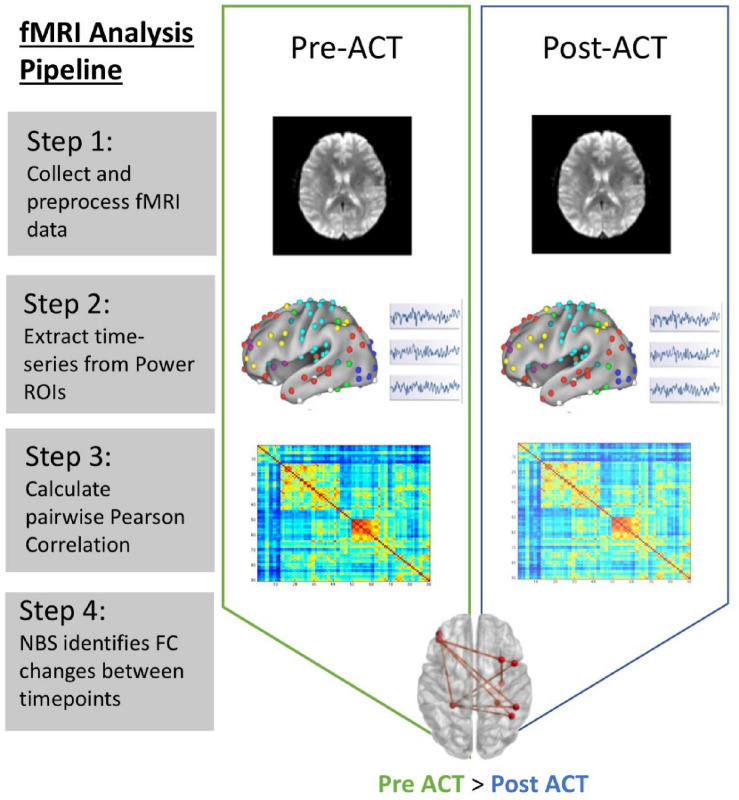
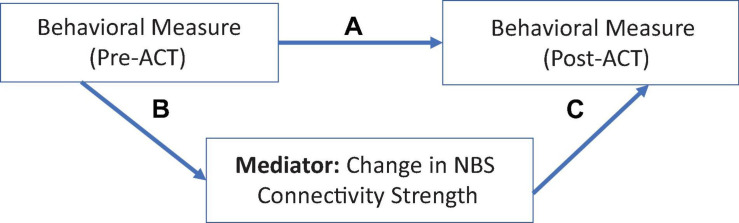
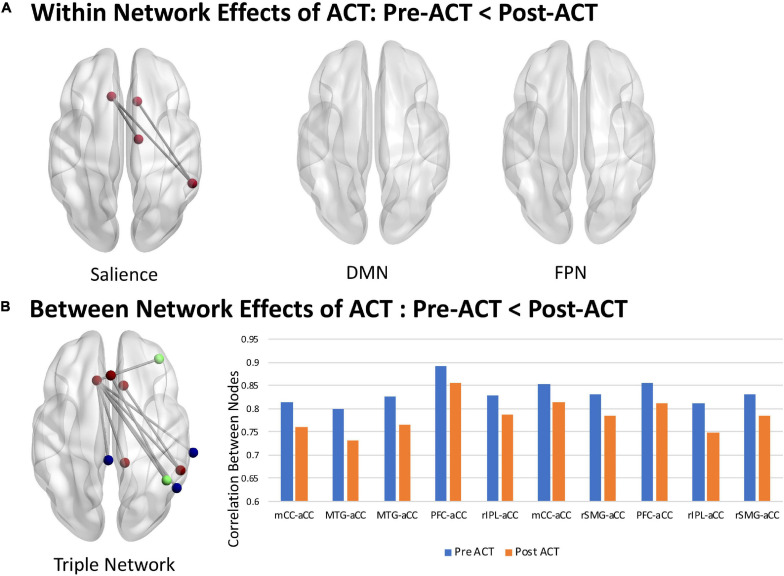
Over 100 million Americans suffer from chronic pain (CP), which causes more disability than any other medical condition in the U.S. at a cost of $560-$635 billion per year (IOM, 2011). Opioid analgesics are frequently used to treat CP. However, long term use of opioids can cause brain changes such as opioid-induced hyperalgesia that, over time, increase pain sensation. Also, opioids fail to treat complex psychological factors that worsen pain-related disability, including beliefs about and emotional responses to pain. Cognitive behavioral therapy (CBT) can be efficacious for CP. However, CBT generally does not focus on important factors needed for long-term functional improvement, including attainment of personal goals and the psychological flexibility to choose responses to pain. Acceptance and Commitment Therapy (ACT) has been recognized as an effective, non-pharmacologic treatment for a variety of CP conditions. However, little is known about the neurologic mechanisms underlying ACT. We conducted an ACT intervention in women (n=9) with chronic musculoskeletal pain. Functional magnetic resonance imaging (fMRI) data were collected pre- and post-ACT, and changes in functional connectivity (FC) were measured using Network-Based Statistics (NBS). Behavioral outcomes were measured using validated assessments such as the Acceptance & Action Questionnaire (AAQ-II), the Chronic Pain Acceptance Questionnaire (CPAQ), the Center for Epidemiologic Studies Depression Scale (CES-D), and the NIH Toolbox Neuro-QoL™ (Quality of Life in Neurological Disorders) scales. Results suggest that, following the four-week ACT intervention, participants exhibited reductions in brain activation within and between key networks including self-reflection (default mode, DMN), emotion (salience, SN), and cognitive control (frontal parietal, FPN). These changes in connectivity strength were correlated with changes in behavioral outcomes including decreased depression and pain interference, and increased participation in social roles. This study is one of the first to demonstrate that improved function across the DMN, SN, and FPN may drive the positive outcomes associated with ACT. This study contributes to the emerging evidence supporting the use of neurophysiological indices to characterize treatment effects of alternative and complementary mind-body therapies. Perspective: This article identifies neural mechanisms that may mediate behavioral changes associated with Acceptance and Commitment Therapy (ACT) in persons with chronic musculoskeletal pain. This information could potentially help clinicians to determine which mind-body therapies may benefit specific patients as part of an integrative pain management approach.
Overview
The claims and statistics of this paper haven’t been checked yet.
Run the check — free, no account needed. It reads the open-access text and checks the sources it cites.
Integrity signals
Registry
Cites
Statistics
Figures
Verification
Claims the paper makes
The claims and statistics of this paper haven’t been checked yet.
Run the check — free, no account needed. It reads the open-access text and checks the sources it cites.
Claims other papers make about this one
Each is checked against this paper’s own text: does it say what the citing paper says it does?
The source backs part of the claim, not all of it — or backs it for a different population, condition or comparison.
In the citing paper
“In our initial report [21] we tested for changes in brain networks underlying ACT-related outcomes in those with CMP using only triple network nodes without the inclusion of pain nodes (t > 2.1 for the 101 nodes of the DMN, FPN, and SN). We observed effects in 10 nodes out of 101 triple network nodes and used those same 10 for the following analysis in conjunction with Waller and colleagues’ [35]”
From Graph theory analysis of induced neural plasticity post-Acceptance and Commitment Therapy for chronic pain (2020) · cites this paper as [21]
Experimental — accuracy not yet measuredThe source backs part of the claim, not all of it — or backs it for a different population, condition or comparison.
In the citing paper
“These functional connectivity changes involving regions of the DMN, FPN, SN, and pain network (alongside previously reported positive behavioral outcomes, [21]) are convincing underlying reasons for the way ACT effectively alleviates chronic pain symptomology.”
From Graph theory analysis of induced neural plasticity post-Acceptance and Commitment Therapy for chronic pain (2020) · cites this paper as [21]
Experimental — accuracy not yet measuredThe source backs part of the claim, not all of it — or backs it for a different population, condition or comparison.
In the citing paper
“So, decreased functional connectivity in these regions may contribute to enhanced quality of life that is reported post-ACT [21,40].”
From Graph theory analysis of induced neural plasticity post-Acceptance and Commitment Therapy for chronic pain (2020) · cites this paper as [21]
Experimental — accuracy not yet measuredThe source backs part of the claim, not all of it — or backs it for a different population, condition or comparison.
In the citing paper
“Those results suggest that levels of heightened connectivity between the triple network returned to a lower, healthier level of connectivity post-ACT.”
From Graph theory analysis of induced neural plasticity post-Acceptance and Commitment Therapy for chronic pain (2020) · cites this paper as [21]
Experimental — accuracy not yet measuredThe cited source says what the claim attributes to it.
In the citing paper
“Additionally, available evidence points to the neurophysiological brain correlates of clinical improvement after ACT in chronic pain [88,89], supporting the usefulness of ACT in chronic pain populations such as CPSS.”
From Effectiveness of acceptance and commitment therapy in central pain sensitization syndromes: A systematic review (2021) · cites this paper as [88]
The cited source says what the claim attributes to it.
In the citing paper
“A study exploring the mechanisms of ACT for persistent pain revealed statistically significant improvements in depression, satisfaction with social role and pain acceptance pre-to-post ACT [22].”
The check wasn’t confident either way, so it gives no verdict — never disputed.
In the citing paper
“Individual sensitivity to sound varies considerably: while some individuals are highly sensitive to even minor sounds, others benefit from gentle background noise that masks disturbances [54,55].”
From Pre-Sleep Anxiety: Mechanisms and Therapeutic Approaches in Clinical Practice. (2026) · cites this paper as [55]
Experimental — accuracy not yet measured
Self-check
Percentages, sums and reported differences re-computed from the paper’s own numbers.
The self-check needs the paper’s full text.
Citations
Cites
Baron, R. M., & Kenny, D. A. (1986) · Journal of Personality and Social Psychology · doi:10.1037/0022-3514.51.6.1173 · Cited by 91,532
The CES-D Scale: A Self-Report Depression Scale for Research in the General Population
Radloff, L. S. (1977) · Applied Psychological Measurement · doi:10.1177/014662167700100306 · Cited by 53,267
Complex brain networks: graph theoretical analysis of structural and functional systems
Bullmore, E., & Sporns, O. (2009) · Nature Reviews Neuroscience · doi:10.1038/nrn2575 · Cited by 11,820
Complex network measures of brain connectivity: Uses and interpretations
Rubinov, M., & Sporns, O. (2010) · NeuroImage · doi:10.1016/j.neuroimage.2009.10.003 · Cited by 11,522
The human brain is intrinsically organized into dynamic, anticorrelated functional networks
Fox, M. D., Snyder, A. Z., Vincent, J. L., Corbetta, M., Van Essen, D. C., & Raichle, M. E. (2005) · Proceedings of the National Academy of Sciences · doi:10.1073/pnas.0504136102 · Cited by 8,553
MacKinnon, D. P., Fairchild, A. J., & Fritz, M. S. (2007) · Annual Review of Psychology · doi:10.1146/annurev.psych.58.110405.085542 · Cited by 5,688
Pain assessment: global use of the Brief Pain Inventory.
Cs, C., & Km, R. (1994) · PubMed · Cited by 5,178
Cella, D., Riley, W., Stone, A., Rothrock, N., Reeve, B., Yount, S., Amtmann, D., Bode, R., Buysse, D., Choi, S., et al. (2010) · Journal of Clinical Epidemiology · doi:10.1016/j.jclinepi.2010.04.011 · Cited by 5,128
Functional Network Organization of the Human Brain
Power, J. D., Cohen, A. L., Nelson, S. M., Wig, G. S., Barnes, K. A., Church, J. A., Vogel, A. C., Laumann, T. O., Miezin, F. M., Schlaggar, B. L., et al. (2011) · Neuron · doi:10.1016/j.neuron.2011.09.006 · Cited by 4,124
Bond, F. W., Hayes, S. C., Baer, R. A., Carpenter, K. M., Guenole, N., Orcutt, H. K., Waltz, T., & Zettle, R. D. (2011) · Behavior Therapy · doi:10.1016/j.beth.2011.03.007 · Cited by 3,950
Research works printed but not linked: 1
- Schabenberger, O (1996). Introducing the GLIMMIX Procedure for Generalized Linear Mixed Models. SAS Institute Inc., Cary, NC Paper 196–30. Retrieved from https://support.sas.com/resources/papers/proceedings/proceedings/sugi30/196-30.pdf
Cited by
Sorted by citations
New generation psychological treatments in chronic pain
McCracken, L. M., Yu, L., & Vowles, K. E. (2022) · BMJ · doi:10.1136/bmj-2021-057212 · Cited by 123
Aboushaar, N., & Serrano, N. (2024) · Frontiers in Pain Research · doi:10.3389/fpain.2024.1445280 · Cited by 78
Galvez-Sánchez, C. M., Montoro, C. I., Moreno-Padilla, M., Reyes del Paso, G. A., & de la Coba, P. (2021) · Journal of Clinical Medicine · doi:10.3390/jcm10122706 · Cited by 45
“Additionally, available evidence points to the neurophysiological brain correlates of clinical improvement after ACT in chronic pain [88,89], supporting the usefulness of ACT in chronic pain populations such as CPSS.”
BackgroundAdvances in targeting central sensitization and brain plasticity in chronic pain
Bazzari, A. H., & Bazzari, F. H. (2022) · The Egyptian Journal of Neurology Psychiatry and Neurosurgery · doi:10.1186/s41983-022-00472-y · Cited by 40
Rao, Y., Liu, W., Zhu, Y., Lin, Q., Kuang, C., Huang, H., Jiao, B., Ma, L., & Lin, J. (2023) · Scientific Reports · doi:10.1038/s41598-023-36437-1 · Cited by 26
Metadata
- Authors
- Aytur, S. A., Ray, K. L., Meier, S. K., Campbell, J., Gendron, B., Waller, N., & Robin, D. A.
- Affiliations
- University of New Hampshire (US)
- The University of Texas at Austin (US)
- Wentworth Douglass Hospital (US)
- Corresponding author
- Aytur, Semra A.
- Venue
- Frontiers in Human Neuroscience
- Publisher
- openRxiv
- Published
- 2020-08-13
- Volume
- 15
- Pages
- 587018-587018
- ISSN
- 1662-5161 (ISSN-L)
- PMC
- PMC7892587
- OpenAlex
- W3129133049
- Cited by
- 49
- References
- 117
- Citations by year
- 2026: 4 · 2025: 10 · 2024: 7 · 2023: 12 · 2022: 10 · 2021: 5 · 2020: 1
- FWCI
- 5.80
- Type
- journal article
- Language
- en
- Open access
- gold
- doi.org
- Licence
- cc-by
- Locations
- Frontiers in Human Neuroscience (publishedVersion, cc-by)
- medRxiv (acceptedVersion, cc-by-nc-nd)
- PubMed Central (publishedVersion, cc-by)
- PubMed (publishedVersion)
- DOAJ (DOAJ: Directory of Open Access Journals) (submittedVersion, cc-by-sa)
- Topics
- Social Sciences › Psychology › Clinical Psychology › Mindfulness and Compassion Interventions
- Life Sciences › Neuroscience › Cognitive Neuroscience › Pain Management and Placebo Effect
- Health Sciences › Medicine › Physiology (medical) › Pain Mechanisms and Treatments
- Keywords
- acceptance and commitment therapy, chronic pain, chronic musculoskeletal pain, functional connectivity, default mode network, salience network, frontoparietal network, psychological flexibility, pain interference, depression, quality of life, mind-body interventions, network-based statistics
About these checks
Registry, retraction, Cites and statistics results are computed, not judged, with one exception: a printed reference that no index lists is read once by a model before it counts as a citation error. Claims are extracted by a model and kept only when their quote appears verbatim in the text; each cited source is then checked, with a model’s help, for whether it says what the claim relies on. Those verdicts can be wrong — read the claim’s quote and the cited source before relying on one.
Statistics and arithmetic are recomputed, not judged.
Confidence bands are shown only for fields calibrated on our annotated test set. None is calibrated yet, so no band is shown.
What counts as a claim ›How we measure confidence ›How we check this ›
Are you an author, or do you see a problem with this page? Request a review
