

The DOI matches its Crossref record; 35 of the 35 references it cites were found in a registry or an index.
Robust deep learning based protein sequence design using ProteinMPNN
Open accessPreprint — published as 10.1126/science.add2187 · Paper page
Abstract
While deep learning has revolutionized protein structure prediction, almost all experimentally characterized de novo protein designs have been generated using physically based approaches such as Rosetta. Here we describe a deep learning based protein sequence design method, ProteinMPNN, with outstanding performance in both in silico and experimental tests. The amino acid sequence at different positions can be coupled between single or multiple chains, enabling application to a wide range of current protein design challenges. On native protein backbones, ProteinMPNN has a sequence recovery of 52.4%, compared to 32.9% for Rosetta. Incorporation of noise during training improves sequence recovery on protein structure models, and produces sequences which more robustly encode their structures as assessed using structure prediction algorithms. We demonstrate the broad utility and high accuracy of ProteinMPNN using X-ray crystallography, cryoEM and functional studies by rescuing previously failed designs, made using Rosetta or AlphaFold, of protein monomers, cyclic homo-oligomers, tetrahedral nanoparticles, and target binding proteins. One-sentence summary: A deep learning based protein sequence design method is described that is widely applicable to current design challenges and shows outstanding performance in both in silico and experimental tests.
Overview
The claims and statistics of this paper haven’t been checked yet.
Run the check — free, no account needed. It reads the open-access text and checks the sources it cites.
Integrity signals
Registry
Cites
Statistics
Figures
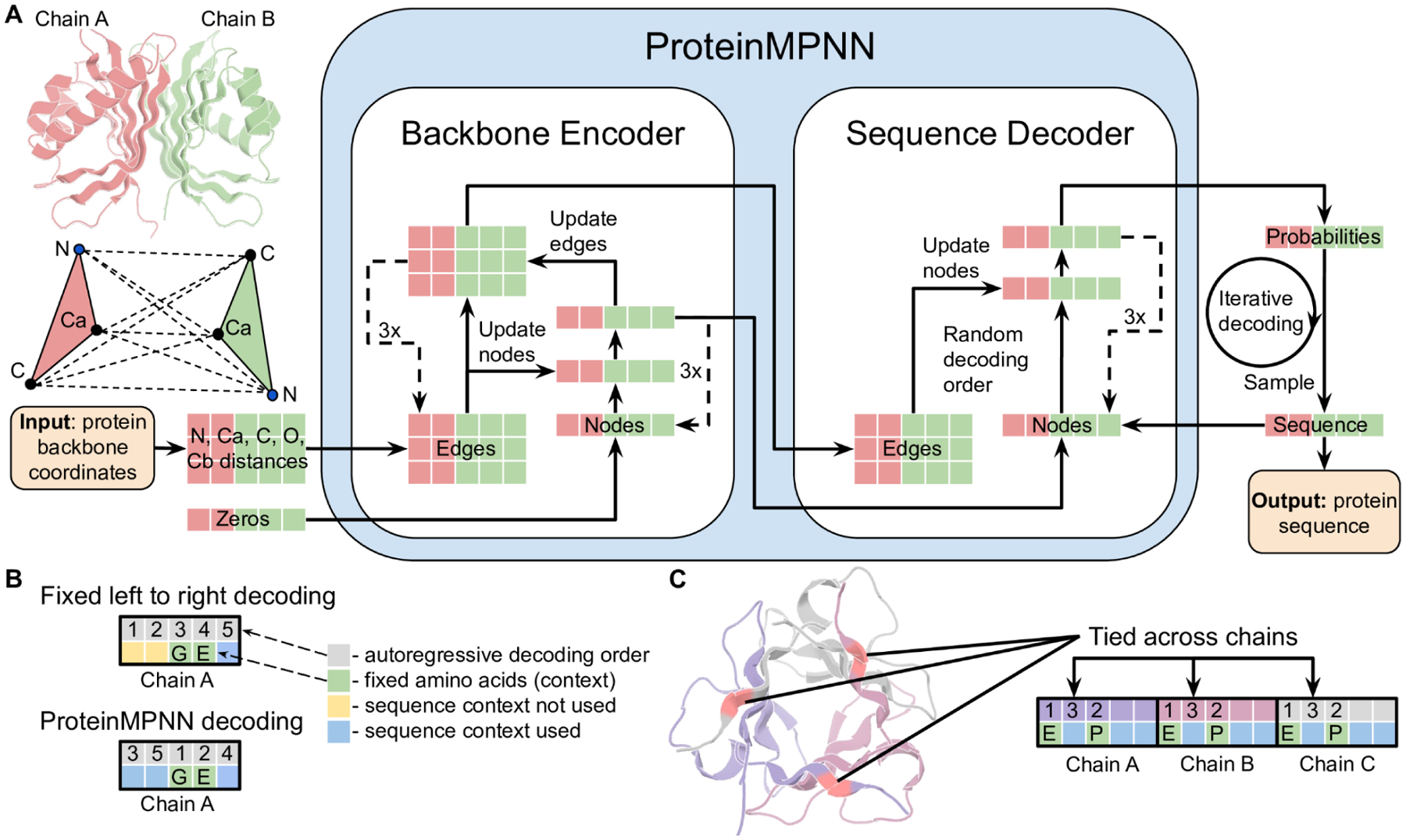
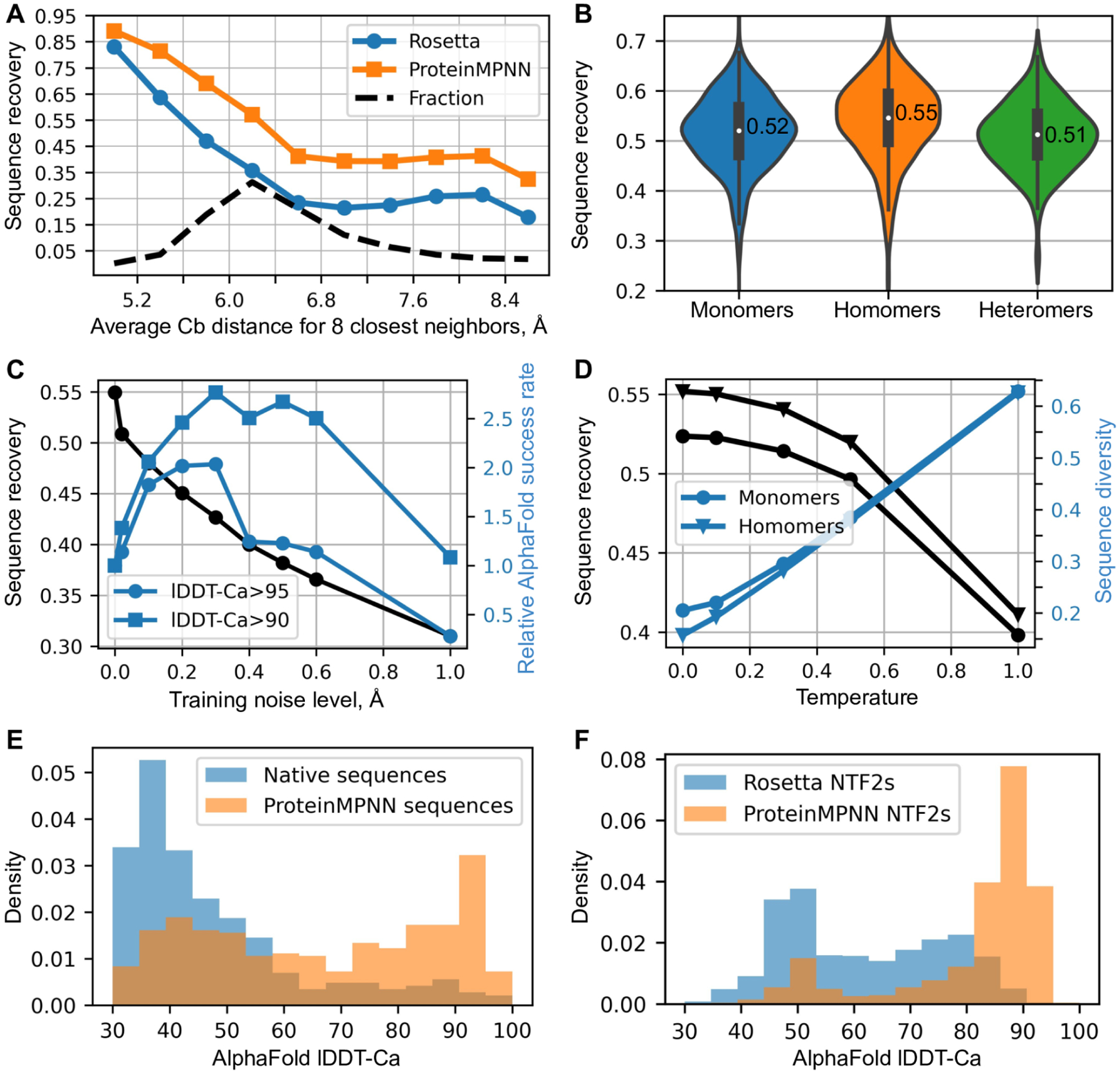
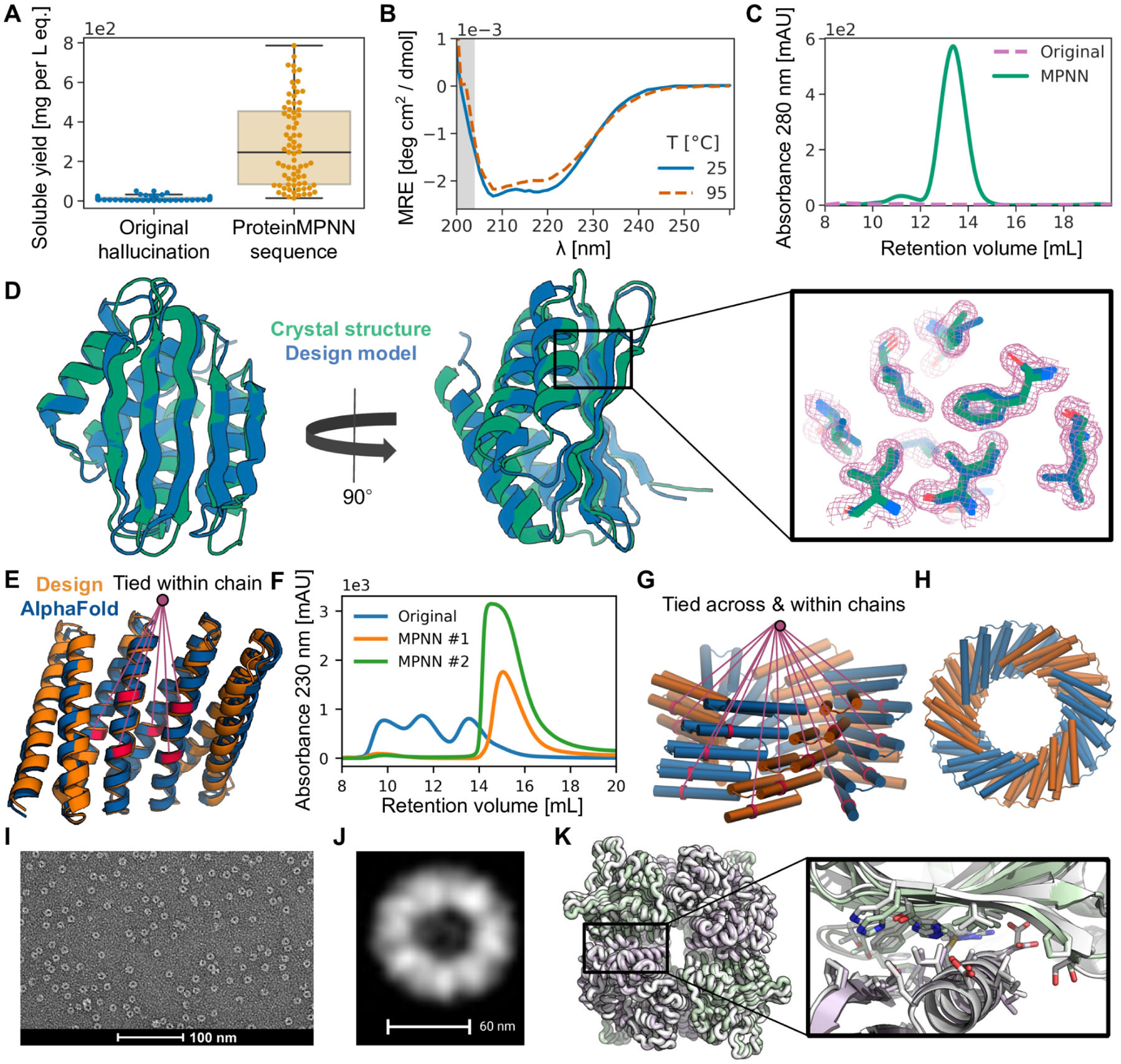
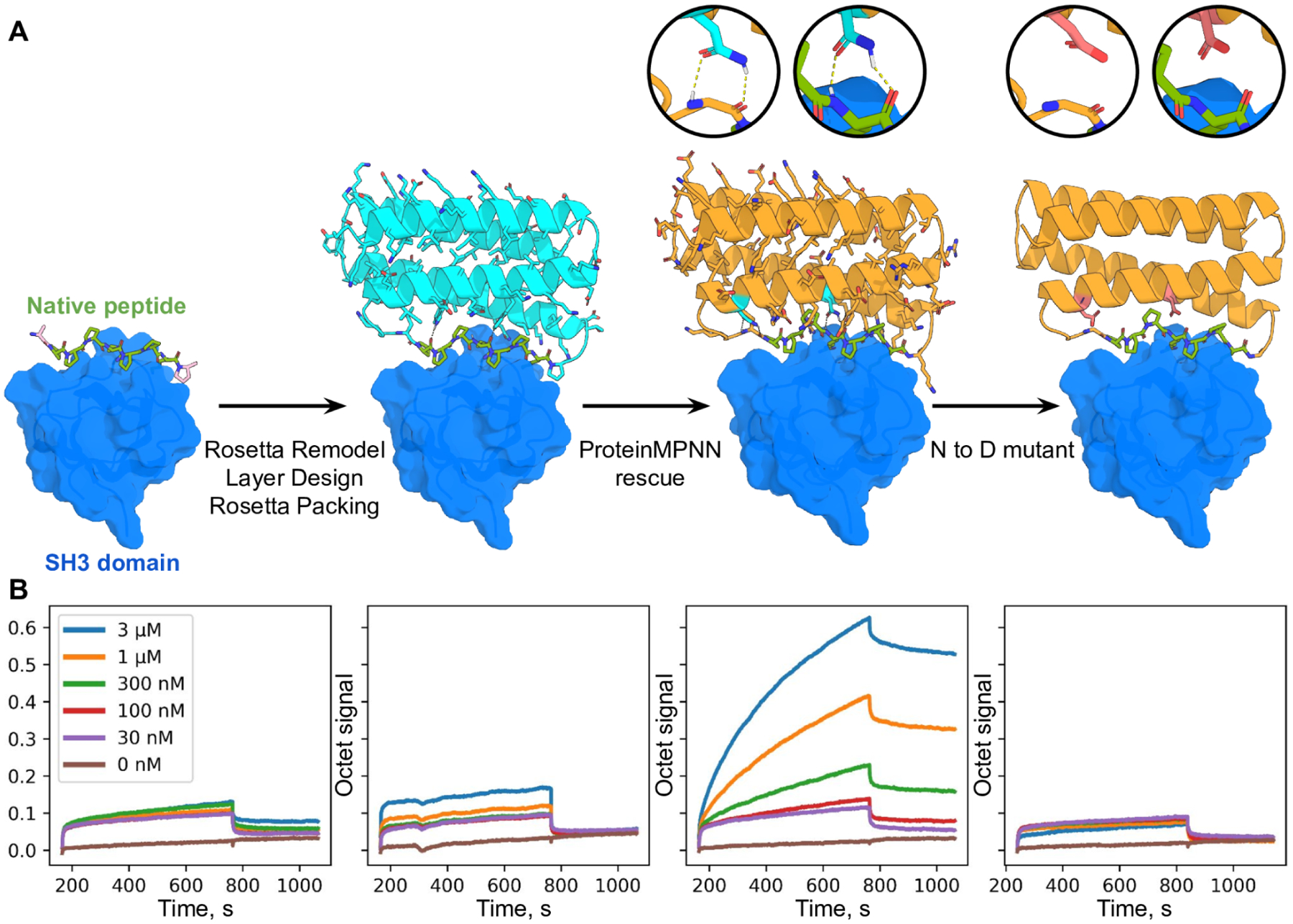
Verification
Claims the paper makes
The claims and statistics of this paper haven’t been checked yet.
Run the check — free, no account needed. It reads the open-access text and checks the sources it cites.
Self-check
Percentages, sums and reported differences re-computed from the paper’s own numbers.
The self-check needs the paper’s full text.
Citations
Cites
Vaswani, A., Shazeer, N., Parmar, N., Uszkoreit, J., Jones, L., Gomez, A. N., Kaiser, L., & Polosukhin, I. (2017) · arXiv · doi:10.48550/arxiv.1706.03762 · Cited by 120,404
Highly accurate protein structure prediction with AlphaFold
Jumper, J., Evans, R., Pritzel, A., Green, T., Figurnov, M., Ronneberger, O., Tunyasuvunakool, K., Bates, R., Žídek, A., Potapenko, A., et al. (2021) · Nature · doi:10.1038/s41586-021-03819-2 · Cited by 43,764
(2014) · Cited by 33,419
Rethinking the Inception Architecture for Computer Vision
Szegedy, C., Vanhoucke, V., Ioffe, S., Shlens, J., & Wojna, Z. (2016) · 2016 IEEE Conference on Computer Vision and Pattern Recognition (CVPR) · doi:10.1109/cvpr.2016.308 · Cited by 32,138
PyTorch: An Imperative Style, High-Performance Deep Learning Library
Paszke, A., Gross, S., Massa, F., Lerer, A., Bradbury, J., Chanan, G., Killeen, T., Lin, Z., Gimelshein, N., Antiga, L., et al. (2019) · arXiv · doi:10.48550/arxiv.1912.01703 · Cited by 31,473
Coot : model-building tools for molecular graphics
Emsley, P., & Cowtan, K. (2004) · Acta Crystallographica Section D Biological Crystallography · doi:10.1107/s0907444904019158 · Cited by 30,571
PHENIX : a comprehensive Python-based system for macromolecular structure solution
Adams, P. D., Afonine, P. V., Bunkóczi, G., Chen, V. B., Davis, I. W., Echols, N., Headd, J. J., Hung, L.-W., Kapral, G. J., Grosse-Kunstleve, R. W., et al. (2010) · Acta Crystallographica Section D Biological Crystallography · doi:10.1107/s0907444909052925 · Cited by 23,716
Phaser crystallographic software
McCoy, A. J., Grosse-Kunstleve, R. W., Adams, P. D., Winn, M. D., Storoni, L. C., & Read, R. J. (2007) · Journal of Applied Crystallography · doi:10.1107/s0021889807021206 · Cited by 20,612
Kabsch, W. (2010) · Acta Crystallographica Section D Biological Crystallography · doi:10.1107/s0907444909047337 · Cited by 16,463
Overview of the CCP 4 suite and current developments
Winn, M. D., Ballard, C. C., Cowtan, K. D., Dodson, E. J., Emsley, P., Evans, P. R., Keegan, R. M., Krissinel, E. B., Leslie, A. G. W., McCoy, A., et al. (2011) · Acta Crystallographica Section D Biological Crystallography · doi:10.1107/s0907444910045749 · Cited by 12,353
Research works printed but not linked: 1
- 2013, In Methods in enzymology, 523, 109
Cited by
Sorted by citations
Items 201–300 of 997
Engineering status of protein for improving microbial cell factories
Zhou, P., Gao, C., Song, W., Wei, W., Wu, J., Liu, L., & Chen, X. (2023) · Biotechnology Advances · doi:10.1016/j.biotechadv.2023.108282 · Cited by 35
Meta learning addresses noisy and under-labeled data in machine learning-guided antibody engineering
Minot, M., & Reddy, S. T. (2024) · Cell Systems · doi:10.1016/j.cels.2023.12.003 · Cited by 35
Cytochrome P450 Enzyme Design by Constraining the Catalytic Pocket in a Diffusion Model
Wang, Q., Liu, X., Zhang, H., Chu, H., Shi, C., Zhang, L. J., Liu, P., Liu, P., Zhu, X., Liu, Y., et al. (2024) · Research · doi:10.34133/research.0413 · Cited by 37
Advances in stress-tolerance elements for microbial cell factories
Kuang, Z., Yan, X., Yuan, Y., Wang, R., Zhu, H., Wang, Y., Li, J., Ye, J., Yue, H., & Yang, X. (2024) · Synthetic and Systems Biotechnology · doi:10.1016/j.synbio.2024.06.008 · Cited by 37
Democratizing protein language model training, sharing and collaboration
Su, J., Li, Z., Tao, T., Han, C., He, Y., Dai, F., Yuan, Q., Gao, Y., Si, T., Zhang, X., et al. (2026) · Nature Biotechnology · doi:10.1038/s41587-025-02859-7 · Cited by 35
Aligning protein generative models with experimental fitness via Direct Preference OptimizationPreprint
Widatalla, T., Rafailov, R., & Hie, B. (2024) · bioRxiv (Cold Spring Harbor Laboratory) · doi:10.1101/2024.05.20.595026 · Cited by 35
Design and Synthesis of Electrocatalysts Base on Catalysis‐Unit Engineering
Zhang, Z., Zhang, Z., Chen, C., Xu, R., Chen, X., Lu, H., Shi, Z., Han, Y., & Feng, S. (2024) · Advanced Materials · doi:10.1002/adma.202403549 · Cited by 35
Sun, J., Zhu, T., Cui, Y., & Wu, B. (2025) · The Innovation · doi:10.1016/j.xinn.2024.100750 · Cited by 45
AntiFold: improved structure-based antibody design using inverse folding
Høie, M. H., Hummer, A. M., Olsen, T. H., Aguilar-Sanjuan, B., Nielsen, M., & Deane, C. M. (2024) · Bioinformatics Advances · doi:10.1093/bioadv/vbae202 · Cited by 47
The role and pathway of VQ family in plant growth, immunity, and stress response
Tian, J., Zhang, J., & Francis, F. (2023) · Planta · doi:10.1007/s00425-023-04292-z · Cited by 34
Lipid vesicle-based molecular robots
Peng, Z., Iwabuchi, S., Izumi, K., Takiguchi, S., Yamaji, M., Fujita, S., Suzuki, H., Kambara, F., Fukasawa, G., Cooney, A., et al. (2024) · Lab on a Chip · doi:10.1039/d3lc00860f · Cited by 35
Design of high-affinity binders to immune modulating receptors for cancer immunotherapy
Yang, W., Hicks, D. R., Ghosh, A., Schwartze, T. A., Conventry, B., Goreshnik, I., Allen, A., Halabiya, S. F., Kim, C. J., Hinck, C. S., et al. (2025) · Nature Communications · doi:10.1038/s41467-025-57192-z · Cited by 40
Self-citationPeptide-functionalized nanoparticles for brain-targeted therapeutics
Tang, S. N., Han, E. L., & Mitchell, M. J. (2025) · Drug Delivery and Translational Research · doi:10.1007/s13346-025-01840-w · Cited by 39
Applications of Artificial Intelligence in Biotech Drug Discovery and Product Development
Liu, Y., Zhang, L., Jiang, Z., Tian, X., Li, P., Wu, P., Du, W., Yuan, B., Xie, C., Bu, G., et al. (2025) · MedComm · doi:10.1002/mco2.70317 · Cited by 42
Fast and versatile sequence-independent protein docking for nanomaterials design using RPXDock
Sheffler, W., Yang, E. C., Dowling, Q. M., Hsia, Y., Fries, C. N., Stanislaw, J., Langowski, M. D., Brandys, M., Li, Z., Skotheim, R., et al. (2023) · PLoS Computational Biology · doi:10.1371/journal.pcbi.1010680 · Cited by 31
Self-citationAkpinaroglu, D., Seki, K., Guo, A., Zhu, E., Kelly, M. J. S., & Kortemme, T. (2023) · bioRxiv (Cold Spring Harbor Laboratory) · doi:10.1101/2023.12.15.571823 · Cited by 36
Zhou, B., Zheng, L., Wu, B., Yi, K., Zhong, B., Tan, Y., Liu, Q., Lió, P., & Hong, L. (2024) · Cell Discovery · doi:10.1038/s41421-024-00728-2 · Cited by 36
Efficient generation of protein pockets with PocketGen
Zhang, Z., Shen, W. X., Liu, Q., & Zitnik, M. (2024) · Nature Machine Intelligence · doi:10.1038/s42256-024-00920-9 · Cited by 32
The Application of Machine Learning on Antibody Discovery and Optimization
Zheng, J., Wang, Y., Liang, Q., Cui, L., & Wang, L. (2024) · Molecules · doi:10.3390/molecules29245923 · Cited by 34
Programmable enzyme catalysis based on multiscale confinements
Cao, Y., Qiao, W., Zhang, C., Zhu, M., Wu, Q., Lou, W.-Y., Willner, I., Zare, R. N., & Ge, J. (2025) · Nature Synthesis · doi:10.1038/s44160-025-00898-1 · Cited by 34
A systematical review on antimicrobial peptides and their food applications
Xu, K., Zhao, X., Tan, Y., Wu, J., Cai, Y., Zhou, J., & Wang, X. (2023) · Biomaterials Advances · doi:10.1016/j.bioadv.2023.213684 · Cited by 34
Raffele, D. D., & Ilie, I. M. (2023) · Chemical Communications · doi:10.1039/d3cc04630c · Cited by 32
Protein‐Based Controllable Nanoarchitectonics for Desired Applications
Li, L., Zhang, Y., Wu, Y., Wang, Z., Cui, W., Zhang, C., Wang, J., Liu, Y., & Yang, P. (2024) · Advanced Functional Materials · doi:10.1002/adfm.202315509 · Cited by 31
Accelerating drug discovery, development, and clinical trials by artificial intelligence
Zhang, Y., Mastouri, M., & Zhang, Y. (2024) · Med · doi:10.1016/j.medj.2024.07.026 · Cited by 32
Zhou, B., Li, X., Pan, Y., He, B., & Gao, B. (2025) · Colloids and Surfaces B Biointerfaces · doi:10.1016/j.colsurfb.2025.114970 · Cited by 36
Computational design of conformation-biasing mutations to alter protein functions
Cavanagh, P. E., Xue, A. G., Dai, S. A., Qiang, A., Matsui, T., & Ting, A. Y. (2026) · Science · doi:10.1126/science.adv7953 · Cited by 34
Artificial Intelligence-Driven Enzyme Engineering from Structural Prediction to De Novo Design
Shi, H., Bai, X., Tian, F., Li, Y., Li, D., Yao, L., Xue, C., & Tang, C. (2026) · Journal of Agricultural and Food Chemistry · doi:10.1021/acs.jafc.6c01781 · Cited by 31
Beyond sequence: Structure-based machine learning
Durairaj, J., de Ridder, D., & van Dijk, A. D. J. (2022) · Computational and Structural Biotechnology Journal · doi:10.1016/j.csbj.2022.12.039 · Cited by 32
π Learning: A Performance‐Informed Framework for Microstructural Electrode Design
Niu, Z., Zhao, W., Wu, B., Wang, H., Lin, W., Pinfield, V. J., & Xuan, J. (2023) · Advanced Energy Materials · doi:10.1002/aenm.202300244 · Cited by 31
De novo design of knotted tandem repeat proteins
Doyle, L., Takushi, B. N., Kibler, R. D., Milles, L. F., Orozco, C. T., Jones, J. D., Jackson, S., Stoddard, B. L., & Bradley, P. H. (2023) · Nature Communications · doi:10.1038/s41467-023-42388-y · Cited by 31
Self-citationComputational Design of Peptide Assemblies
Min, J., Rong, X., Zhang, J., Su, R., Wang, Y., & Qi, W. D. (2024) · Journal of Chemical Theory and Computation · doi:10.1021/acs.jctc.3c01054 · Cited by 31
Accurate and robust protein sequence design with CarbonDesign
Ren, M., Yu, C., Bu, D., & Zhang, H. (2024) · Nature Machine Intelligence · doi:10.1038/s42256-024-00838-2 · Cited by 30
Knowledge-reused transfer learning for molecular and materials science
Chen, A., Wang, Z., Vidaurre, K. L. L., Han, Y., Ye, S., Tao, K., Wang, S., Gao, J., & Li, J. (2024) · Journal of Energy Chemistry · doi:10.1016/j.jechem.2024.06.013 · Cited by 33
RiboDiffusion: tertiary structure-based RNA inverse folding with generative diffusion models
Huang, H., Lin, Z., He, D., Hong, L., & Li, Y. (2024) · Bioinformatics · doi:10.1093/bioinformatics/btae259 · Cited by 35
Design of linear and cyclic peptide binders from protein sequence information
Li, Q., Vlachos, E. N., & Bryant, P. (2025) · Communications Chemistry · doi:10.1038/s42004-025-01601-3 · Cited by 46
Precisely patterned nanofibres made from extendable protein multiplexes
Bethel, N. P., Borst, A. J., Parmeggiani, F., Bick, M. J., Brunette, T., Nguyen, H., Kang, A., Bera, A. K., Carter, L. P., Miranda, M. C., et al. (2023) · Nature Chemistry · doi:10.1038/s41557-023-01314-x · Cited by 31
Self-citationGenerative models for protein structures and sequences
Hsu, C., Fannjiang, C., & Listgarten, J. (2024) · Nature Biotechnology · doi:10.1038/s41587-023-02115-w · Cited by 32
Structure and design of Langya virus glycoprotein antigens
Wang, Z., McCallum, M., Yan, L., Gibson, C. A., Sharkey, W., Park, Y.-J., Dang, H. V., Amaya, M., Person, A., Broder, C. C., et al. (2024) · Proceedings of the National Academy of Sciences · doi:10.1073/pnas.2314990121 · Cited by 32
Deep learning for metabolic pathway design
Ryu, G. U., Kim, G. B., Yu, T., & Lee, S. Y. (2023) · Metabolic Engineering · doi:10.1016/j.ymben.2023.09.012 · Cited by 29
Machine Learning-Assisted Protein Structure Prediction: An AI Approach for Biochemical Insights
Mahendran, R., Dogra, A., Mendhe, D., Babu, S. B. G. T., Dixit, S., & Singh, S. P. (2024) · International Conference on Science Technology Engineering and Mathematics (ICONSTEM) · doi:10.1109/iconstem60960.2024.10568895 · Cited by 29
Integrating Computational Design and Experimental Approaches for Next-Generation Biologics
Son, A., Park, J., Kim, W., Lee, W., Yoon, Y., Ji, J., & Kim, H. (2024) · Biomolecules · doi:10.3390/biom14091073 · Cited by 29
Leveraging protein structural information to improve variant effect prediction
Gerasimavicius, L., Teichmann, S. A., & Marsh, J. A. (2025) · Current Opinion in Structural Biology · doi:10.1016/j.sbi.2025.103023 · Cited by 34
Seven critical challenges in synthetic one-carbon assimilation and their potential solutions
Puiggené, Ò., Favoino, G., Federici, F., Partipilo, M., Orsi, E., Alván-Vargas, M. V. G., Hernández-Sancho, J. M., Dekker, N. J., Ørsted, E. C., Bozkurt, E. U., et al. (2025) · FEMS Microbiology Reviews · doi:10.1093/femsre/fuaf011 · Cited by 31
Zahid, A., Ismail, H., Wilson, J. C., & Grice, I. D. (2025) · Vaccines · doi:10.3390/vaccines13070767 · Cited by 31
Protein Function Analysis through Machine Learning
Avery, C., Patterson, J., Grear, T. J., Frater, T. D., & Jacobs, D. J. (2022) · Biomolecules · doi:10.3390/biom12091246 · Cited by 30
EvoBind: in silico directed evolution of peptide binders with AlphaFoldPreprint
Bryant, P., & Elofsson, A. (2022) · bioRxiv (Cold Spring Harbor Laboratory) · doi:10.1101/2022.07.23.501214 · Cited by 33
Highly multiplexed design of an allosteric transcription factor to sense new ligands
Nishikawa, K. K., Chen, J., Acheson, J. F., Harbaugh, S. V., Huss, P., Frenkel, M. P. C., Novy, N., Sieren, H. R., Lodewyk, E. C., Lee, D. H., et al. (2024) · Nature Communications · doi:10.1038/s41467-024-54260-8 · Cited by 33
Engineering a New Generation of Gene Editors: Integrating Synthetic Biology and AI Innovations
Chia, B. S., Seah, S., Wang, B., Shen, K., Srivastava, D., & Chew, W. L. (2025) · ACS Synthetic Biology · doi:10.1021/acssynbio.4c00686 · Cited by 31
Shanehsazzadeh, A., Alverio, J., Kasun, G. W., Levine, S., Calman, I., Khan, J. A., Chung, C., Diaz, N., Luton, B. K., Tarter, Y., et al. (2023) · bioRxiv (Cold Spring Harbor Laboratory) · doi:10.1101/2023.12.08.570889 · Cited by 27
gRNAde: Geometric Deep Learning for 3D RNA inverse designPreprint
Joshi, C. K., Jamasb, A. R., Viñas, R., Harris, C., Mathis, S. V., Morehead, A., Anand, R., & Lió, P. (2024) · bioRxiv (Cold Spring Harbor Laboratory) · doi:10.1101/2024.03.31.587283 · Cited by 37
Protein Language Models: Is Scaling Necessary?Preprint
Fournier, Q., Vernon, R. M., van der Sloot, A. M., Schulz, B., Chandar, S., & LANGMEAD, C. J. (2024) · bioRxiv (Cold Spring Harbor Laboratory) · doi:10.1101/2024.09.23.614603 · Cited by 42
Greene, L. A., Zhou, Q., Siegelin, M. D., & Angelastro, J. M. (2023) · Cells · doi:10.3390/cells12040581 · Cited by 28
DeepAlgPro: an interpretable deep neural network model for predicting allergenic proteins
Chun, H., Ye, X., Yang, Y., Hu, L., Si, Y., Zhao, X., Chen, L., Fang, Q., Wei, Y., Wu, F. Q., et al. (2023) · Briefings in Bioinformatics · doi:10.1093/bib/bbad246 · Cited by 28
Opportunities and challenges of graph neural networks in electrical engineering
Chien, E., Li, M., Aportela, A., Ding, K., Jia, S., Maji, S., Zhao, Z., Duarte, J. M., Fung, V., Hao, C., et al. (2024) · Nature Reviews Electrical Engineering · doi:10.1038/s44287-024-00076-z · Cited by 31
Protein stability models fail to capture epistatic interactions of double point mutations
Dieckhaus, H., & Kuhlman, B. A. (2024) · Protein Science · doi:10.1002/pro.70003 · Cited by 27
Lin, K., Zhang, C., Bai, R., & Duan, H. (2025) · Journal of Medicinal Chemistry · doi:10.1021/acs.jmedchem.5c00712 · Cited by 30
Falcioni, F., Humphreys, L., Lloyd, R. C., Wu, H., Martínez, I., Jones, J., McKenna, S. M., Neufeld, K., Phelan, R. M., Rosenthal, T., et al. (2025) · ACS Catalysis · doi:10.1021/acscatal.5c01646 · Cited by 33
ProtMamba: a homology-aware but alignment-free protein state space model
Sgarbossa, D., Malbranke, C., & Bitbol, A.-F. (2025) · Bioinformatics · doi:10.1093/bioinformatics/btaf348 · Cited by 27
Artificial Intelligence-Driven de Novo Design of Robust Enzymes to Enhance Their Performance
Tang, M., Ge, F., Li, A., Hu, L., Wang, C., Tang, J., Song, X., Liu, X., Shi, H. S., & Tan, Z. (2025) · ACS Synthetic Biology · doi:10.1021/acssynbio.5c00452 · Cited by 29
Accelerating the Discovery and Design of Antimicrobial Peptides with Artificial Intelligence
Aguilera‐Puga, M. D. C., Cancelarich, N. L., Marani, M. M., de la Fuente‐Núñez, C., & Plisson, F. (2023) · Methods in molecular biology · doi:10.1007/978-1-0716-3441-7_18 · Cited by 29
Engineering of GH11 Xylanases for Optimal pH Shifting for Industrial Applications
Kim, I. J., Kim, S. R., Bornscheuer, U. T., & Nam, K. H. (2023) · Catalysts · doi:10.3390/catal13111405 · Cited by 27
Substrate recognition principles for the PP2A-B55 protein phosphatase
Kruse, T., Garvanska, D. H., Varga, J. K., Garland, W., McEwan, B. C., Hein, J. B., Weisser, M. B., Benavides-Puy, I., Chan, C. B., Sotelo-Parrilla, P., et al. (2024) · Science Advances · doi:10.1126/sciadv.adp5491 · Cited by 26
Computational Stabilization of a Non‐Heme Iron Enzyme Enables Efficient Evolution of New Function
King, B. R., Sumida, K. H., Caruso, J. L., Baker, D., & Zalatan, J. G. (2025) · Angewandte Chemie International Edition · doi:10.1002/anie.202414705 · Cited by 26
Self-citationLarge language models facilitating modern molecular biology and novel drug development
Liu, X., Lü, Z., Wang, T., & Liu, F. (2024) · Frontiers in Pharmacology · doi:10.3389/fphar.2024.1458739 · Cited by 28
Harnessing hyperaccumulator plants to recover technology‐critical metals: where are we at?
Rylott, E. L., & van der Ent, A. (2025) · New Phytologist · doi:10.1111/nph.20449 · Cited by 32
Artificial intelligence methods for protein folding and design
Zhang, Z., Ou, C., Cho, Y., Akiyama, Y., & Ovchinnikov, S. (2025) · Current Opinion in Structural Biology · doi:10.1016/j.sbi.2025.103066 · Cited by 29
Artificial intelligence-driven computational methods for antibody design and optimization
Vecchietti, L. F., Wijaya, B. N., Armanuly, A., Hangeldiyev, B., Jung, H., Lee, S., Cha, M., & Kim, H. M. (2025) · mAbs · doi:10.1080/19420862.2025.2528902 · Cited by 32
From traditional to AI-driven: The evolution of intelligent enzyme engineering for biocatalysis
Lv, F., Zhang, J., You, S., & Qi, W. (2025) · Biotechnology Advances · doi:10.1016/j.biotechadv.2025.108788 · Cited by 31
HelixGAN a deep-learning methodology for conditional de novo design of α-helix structures
Xie, X., Valiente, P. A., & Kim, P. M. (2023) · Bioinformatics · doi:10.1093/bioinformatics/btad036 · Cited by 26
Atomically Accurate Design of Metalloproteins with Predefined Coordination Geometries
Hoffnagle, A. M., & Tezcan, F. A. (2023) · Journal of the American Chemical Society · doi:10.1021/jacs.3c04047 · Cited by 27
Efficient and scalable de novo protein design using a relaxed sequence spacePreprint
Frank, C., Khoshouei, A., de Stigter, Y., Schiewitz, D., Feng, S., Ovchinnikov, S., & Dietz, H. (2023) · bioRxiv (Cold Spring Harbor Laboratory) · doi:10.1101/2023.02.24.529906 · Cited by 26
Crowdsourced Protein Design: Lessons From the Adaptyv EGFR Binder CompetitionPreprint
Cotet, T., Krawczuk, I., Stocco, F., Ferruz, N., Gitter, A., Kurumida, Y., Machado, L. D. A., Paesani, F., Calia, C. N., Challacombe, C. A., et al. (2025) · bioRxiv (Cold Spring Harbor Laboratory) · doi:10.1101/2025.04.17.648362 · Cited by 32
Ding, N., Yuan, Z., Ma, Z., Wu, Y., & Yin, L. (2024) · Molecules · doi:10.3390/molecules29153512 · Cited by 27
Enhancing recombinant growth factor and serum protein production for cultivated meat manufacturing
Mainali, P., Chua, M. S.-W., Tan, D.-J., Loo, B. L.-W., & Ow, D. S. (2025) · Microbial Cell Factories · doi:10.1186/s12934-025-02670-8 · Cited by 27
Recent advances in engineering microbial lipases for industrial applications
Wang, G., Abdella, A., Fakhari, M. A., Dong, J. N., Yang, K., & Yang, S. (2025) · Biotechnology Advances · doi:10.1016/j.biotechadv.2025.108658 · Cited by 25
The Sabatier principle as a tool for discovery and engineering of industrial enzymes
Kari, J., Schaller, K., Molina, G. A., Borch, K., & Westh, P. (2022) · Current Opinion in Biotechnology · doi:10.1016/j.copbio.2022.102843 · Cited by 27
Steering and controlling evolution — from bioengineering to fighting pathogens
Lässig, M., Mustonen, V., & Nourmohammad, A. (2023) · Nature Reviews Genetics · doi:10.1038/s41576-023-00623-8 · Cited by 24
How can we discover developable antibody-based biotherapeutics?
Bauer, J., Rajagopal, N., Gupta, P., Gupta, P. K., Nixon, A. E., & Kumar, S. (2023) · Frontiers in Molecular Biosciences · doi:10.3389/fmolb.2023.1221626 · Cited by 28
Zhou, X., Chen, G., Ye, J., Wang, E., Zhang, J., Mao, C., Li, Z., Hao, J., Huang, X., Tang, J., et al. (2023) · Nature Communications · doi:10.1038/s41467-023-43166-6 · Cited by 27
HybridGCN for protein solubility prediction with adaptive weighting of multiple features
Chen, L., Wu, R., Zhou, F., Zhang, H., & Liu, J. K. (2023) · Journal of Cheminformatics · doi:10.1186/s13321-023-00788-8 · Cited by 25
IgGM: A Generative Model for Functional Antibody and Nanobody DesignPreprint
Wang, R., Wu, F., Gao, X., Wu, J., Zhao, P., & Yao, J. (2024) · bioRxiv (Cold Spring Harbor Laboratory) · doi:10.1101/2024.09.19.613838 · Cited by 27
De novo design of buttressed loops for sculpting protein functions
Jiang, H., Jude, K. M., Wu, K., Fallas, J. A., Ueda, G., Brunette, T., Hicks, D. R., Pyles, H., Yang, A., Carter, L. P., et al. (2024) · Nature Chemical Biology · doi:10.1038/s41589-024-01632-2 · Cited by 24
Self-citationAI-driven antibody design with generative diffusion models: current insights and future directions
He, X., Li, J.-R., Xu, J., Shan, H., Shen, S.-Y., Gao, S.-H., & Xu, H. E. (2024) · Acta Pharmacologica Sinica · doi:10.1038/s41401-024-01380-y · Cited by 28
Gu, J., Mu, W., Xu, Y., & Nie, Y. (2024) · Biotechnology Advances · doi:10.1016/j.biotechadv.2024.108496 · Cited by 27
Reading the repertoire: Progress in adaptive immune receptor analysis using machine learning
O’Donnell, T. J., Kanduri, C., Isacchini, G., Limenitakis, J. P., Brachman, R. A., Alvarez, R. A., Haff, I. H., Sandve, G. K., & Greiff, V. (2024) · Cell Systems · doi:10.1016/j.cels.2024.11.006 · Cited by 24
Campbell, M. E., Ohler, A. R., McGill, M. J., & Buller, A. R. (2025) · Angewandte Chemie International Edition · doi:10.1002/anie.202422109 · Cited by 25
Systems Human Immunology and AI: Immune Setpoint and Immune Health
Lei, Y., & Tsang, J. S. (2025) · Annual Review of Immunology · doi:10.1146/annurev-immunol-090122-042631 · Cited by 27
AI.zymes: A Modular Platform for Evolutionary Enzyme Design
Merlicek, L. P., Neumann, J., Lear, A., Degiorgi, V., de Waal, M. M., Cotet, T., Mulholland, A. J., & Bunzel, H. A. (2025) · Angewandte Chemie International Edition · doi:10.1002/anie.202507031 · Cited by 30
AI-driven innovation in antibody-drug conjugate design
Noriega, H. A., & Wang, X. S. (2025) · Frontiers in Drug Discovery · doi:10.3389/fddsv.2025.1628789 · Cited by 26
Tuning insulin receptor signaling using de novo-designed agonists
Wang, X., Cardoso, S., Cai, K., Venkatesh, P., Hung, A., Ng, M., Hall, C., Coventry, B., Lee, D. S., Chowhan, R., et al. (2025) · Molecular Cell · doi:10.1016/j.molcel.2025.09.020 · Cited by 24
Self-citationArtificial intelligence in bioinformatics: a survey
Jiang, J., Li, Y., Cao, S., Shan, Y., Liu, Y., Fei, T., Yu, Y., Feng, Y., Li, Y., Li, Y., et al. (2025) · Briefings in Bioinformatics · doi:10.1093/bib/bbaf576 · Cited by 26
Computational design of superstable proteins through maximized hydrogen bonding
Zheng, B., Lu, Z., Wang, S., Liu, L., Ao, M., Zhou, Y., Tang, G., Wang, R., Liu, Y., Zhang, H., et al. (2025) · Nature Chemistry · doi:10.1038/s41557-025-01998-3 · Cited by 28
Generative AI for the Design of Molecules: Advances and Challenges
Sun, Y., Chen, L., Jing, Z., Li, Y. Y., Kim, D., Gao, J.-Y., Noroozi, R., Yi, G. Y., Feugmo, C. G. T., Klinkova, A., et al. (2025) · Journal of Chemical Information and Modeling · doi:10.1021/acs.jcim.5c02234 · Cited by 29
On synergy between ultrahigh throughput screening and machine learning in biocatalyst engineering
Gantz, M., Mathis, S. V., Nintzel, F. E. H., Lió, P., & Hollfelder, F. (2024) · Faraday Discussions · doi:10.1039/d4fd00065j · Cited by 26
Rationally seeded computational protein design of ɑ-helical barrels
Albanese, K. I., Petrenas, R., Pirro, F., Naudin, E. A., Borucu, U., Dawson, W., Scott, D. A., Leggett, G. J., Weiner, O. D., Oliver, T. A. A., et al. (2024) · Nature Chemical Biology · doi:10.1038/s41589-024-01642-0 · Cited by 30
Diffusing protein binders to intrinsically disordered proteins
Liu, C., Wu, K., Choi, H., Han, H., Zhang, X., Watson, J. L., Shijo, S., Bera, A. K., Kang, A., Brackenbrough, E., et al. (2024) · doi:10.1101/2024.07.16.603789 · Cited by 24
Self-citationAdapting protein language models for structure-conditioned designPreprint
Ruffolo, J. A., Bhatnagar, A., Beazer, J., Nayfach, S., Russ, J., Hill, E., Hussain, R., Gallagher, J. P., & Madani, A. (2024) · bioRxiv (Cold Spring Harbor Laboratory) · doi:10.1101/2024.08.03.606485 · Cited by 24
Efficient generation of epitope-targeted de novo antibodies with GerminalPreprint
Mille, L. S., Driscoll, C. L., Wang, J. N., Dai, H., Widatalla, T., Zhang, J. L., Zhang, X., Rao, B., Feng, L., Hie, B., et al. (2025) · bioRxiv (Cold Spring Harbor Laboratory) · doi:10.1101/2025.09.19.677421 · Cited by 24
Metadata
- Authors
- Dauparas, J., Anishchenko, I., Bennett, N., Bai, H., Ragotte, R. J., Milles, L. F., Wicky, B. I. M., Courbet, A., de Haas, R. J., Bethel, N., Leung, P. J. Y., Huddy, T. F., Pellock, S., Tischer, D., Chan, F., Koepnick, B., Nguyen, H., Kang, A., Sankaran, B., Bera, A. K., King, N. P., & Baker, D.
- Affiliations
- University of Washington (US)
- Howard Hughes Medical Institute (US)
- Wageningen University & Research (NL)
- Lawrence Berkeley National Laboratory (US)
- Corresponding author
- Baker, D.
- ORCID
- Venue
- Science
- Publisher
- openRxiv
- Published
- 2022-06-04
- Volume
- 378
- Issue
- 6615
- Pages
- 49-56
- ISSN
- 0036-8075 (ISSN-L)
- PMC
- PMC9997061
- OpenAlex
- W4296032638
- Cited by
- 2,107
- References
- 35
- Citations by year
- 2026: 802 · 2025: 655 · 2024: 407 · 2023: 210 · 2022: 32
- FWCI
- 106.46
- Type
- journal article
- Language
- en
- Open access
- green
- doi.org
- Licence
- cc-by-nc-nd
- Locations
- Science (publishedVersion)
- bioRxiv (Cold Spring Harbor Laboratory) (acceptedVersion, cc-by-nc-nd)
- PubMed (publishedVersion)
- PubMed Central (acceptedVersion, cc-by)
- Socio-Environmental Systems Modeling (acceptedVersion)
- OSTI OAI (U.S. Department of Energy Office of Scientific and Technical Information) (submittedVersion)
- Data Archiving and Networked Services (DANS) (submittedVersion)
- Funders
- National Science Foundation (DEAC02-05CH11231, DGE-214-0004, 1937533, P30 GM124169, 2140004)
- Howard Hughes Medical Institute (P30 GM124169-01, DE-AC02-05CH11231, GT11817)
- U.S. Department of Energy (-AC02-05CH11231, 05CH11231, DE AC02 05CH11231, GM124169, DE-AC02-)
- Alfred P. Sloan Foundation (g-2021-16899, DE-AC02-05CH11231)
- Washington Research Foundation
- Open Philanthropy Project
- National Institutes of Health (DE-AC02–05CH11231, P30-GM124169-01, GM124169)
- Office of Science (DEAC02–05CH11231, AC02-05CH11231, DE-AC02)
- National Institute of General Medical Sciences (DE-AC02-05CH11231, GM124169-01, GM124169, P30GM124169)
- Basic Energy Sciences (DE-AC02, DE-AC02-05CH11231., AC02–05CH11231)
- Topics
- Life Sciences › Biochemistry, Genetics and Molecular Biology › Molecular Biology › Protein Structure and Dynamics
- Life Sciences › Biochemistry, Genetics and Molecular Biology › Molecular Biology › Machine Learning in Bioinformatics
- Life Sciences › Pharmacology, Toxicology and Pharmaceutics › Drug Discovery › Computational Drug Discovery Methods
- Keywords
- protein sequence design, de novo protein design, ProteinMPNN, deep learning, protein structure prediction, sequence recovery, tetrahedral nanoparticles
- MeSH terms
- Deep Learning, Amino Acid Sequence, Protein Conformation, Proteins, Protein Engineering, Crystallography, X-Ray, Cryoelectron Microscopy
About these checks
Registry, retraction, Cites and statistics results are computed, not judged, with one exception: a printed reference that no index lists is read once by a model before it counts as a citation error. Claims are extracted by a model and kept only when their quote appears verbatim in the text; each cited source is then checked, with a model’s help, for whether it says what the claim relies on. Those verdicts can be wrong — read the claim’s quote and the cited source before relying on one.
Statistics and arithmetic are recomputed, not judged.
Confidence bands are shown only for fields calibrated on our annotated test set. None is calibrated yet, so no band is shown.
What counts as a claim ›How we measure confidence ›How we check this ›
Are you an author, or do you see a problem with this page? Request a review
