

The DOI matches its Crossref record; 2 of the 2 references it cites were found in a registry or an index.
Branched DNA Processing by a Thermostable CAS-Cas4 from Thermococcus onnurineus: Expanding Biochemical Landscape of Nuclease Activity
Open accessPreprint — published as 10.1016/j.jbc.2025.110701
Abstract
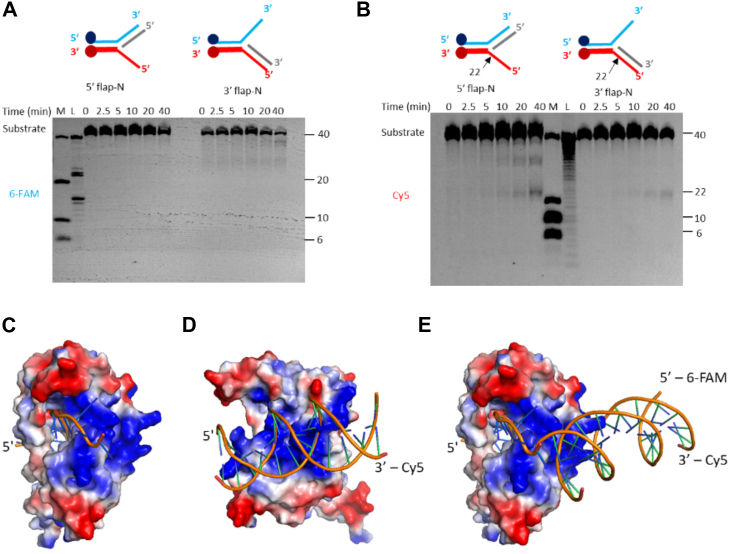
The adaptive immune function of CRISPR-Cas systems in bacteria and archaea is mediated through CRISPR-Associated Proteins (Cas). The adaptation module, typically involving Cas1, Cas2, and Cas4, helps integrate viral spacer sequences into the host genome. Cas4 proteins are classified into two types based on neighboring genes: CAS-Cas4, flanked by other cas genes, and Solo-Cas4, which exist independently. While CAS-Cas4 proteins are implicated in adaptation, they remain biochemically uncharacterized in archaea, unlike archaeal Solo-Cas4 proteins. This study biochemically characterizes TON_0321, a CAS-Cas4 protein from the Type IV-C CRISPR cassette of Thermococcus onnurineus. TON_0321 exhibits 5' to 3' exonuclease activity and unique structure-dependent endonuclease activity, shedding light on CAS-Cas4 functional diversity. A distinct spatial organization of the catalytic site, angled with the positively charged patch on the protein surface, enables TON_0321 to recognize branching points in DNA substrates. Furthermore, this spatial arrangement facilitates cleavage 2 to 3 nucleotides away from the branch point in the 5' direction, demonstrating structure-specific endonuclease activity.
Overview
The claims and statistics of this paper haven’t been checked yet.
Run the check — free, no account needed. It reads the open-access text and checks the sources it cites.
Integrity signals
Registry
Cites
Statistics
Figures
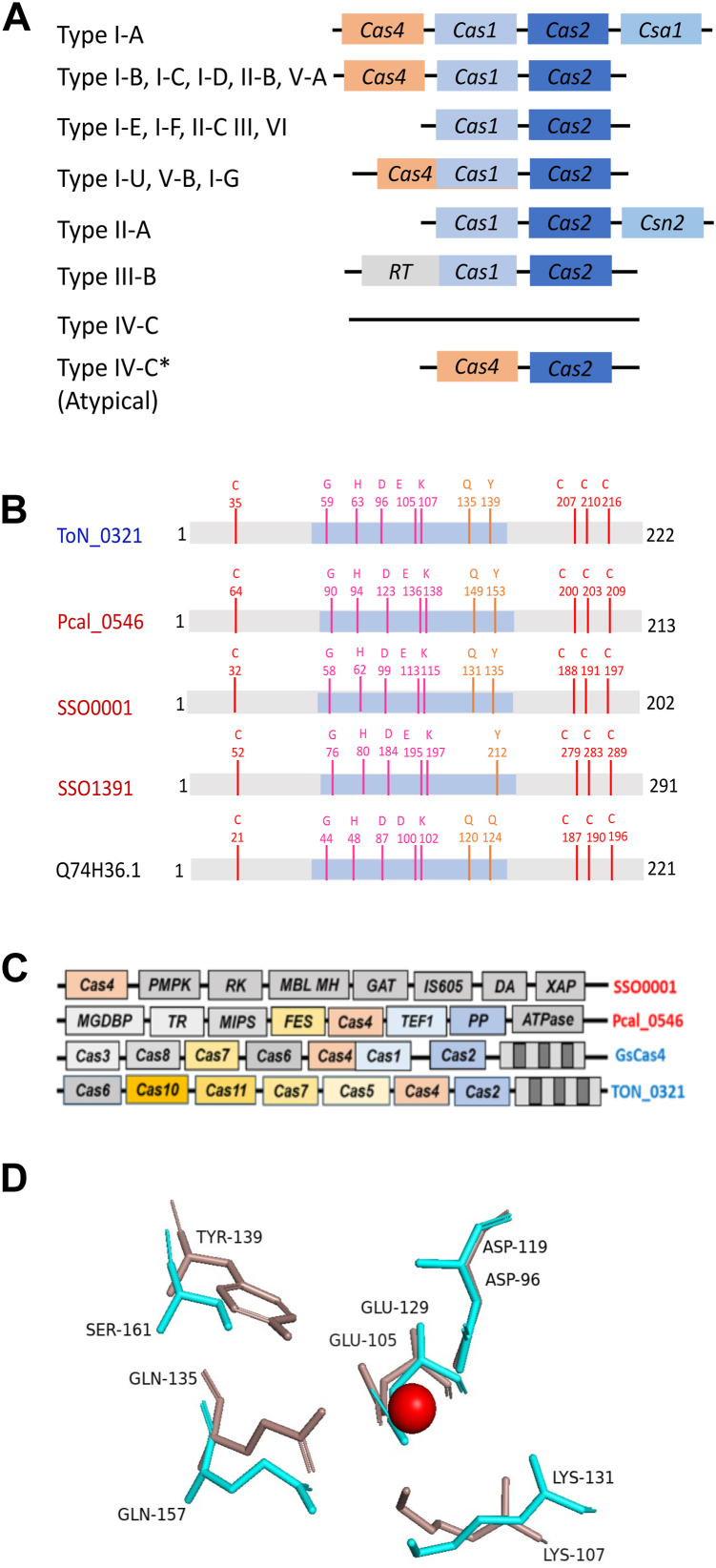
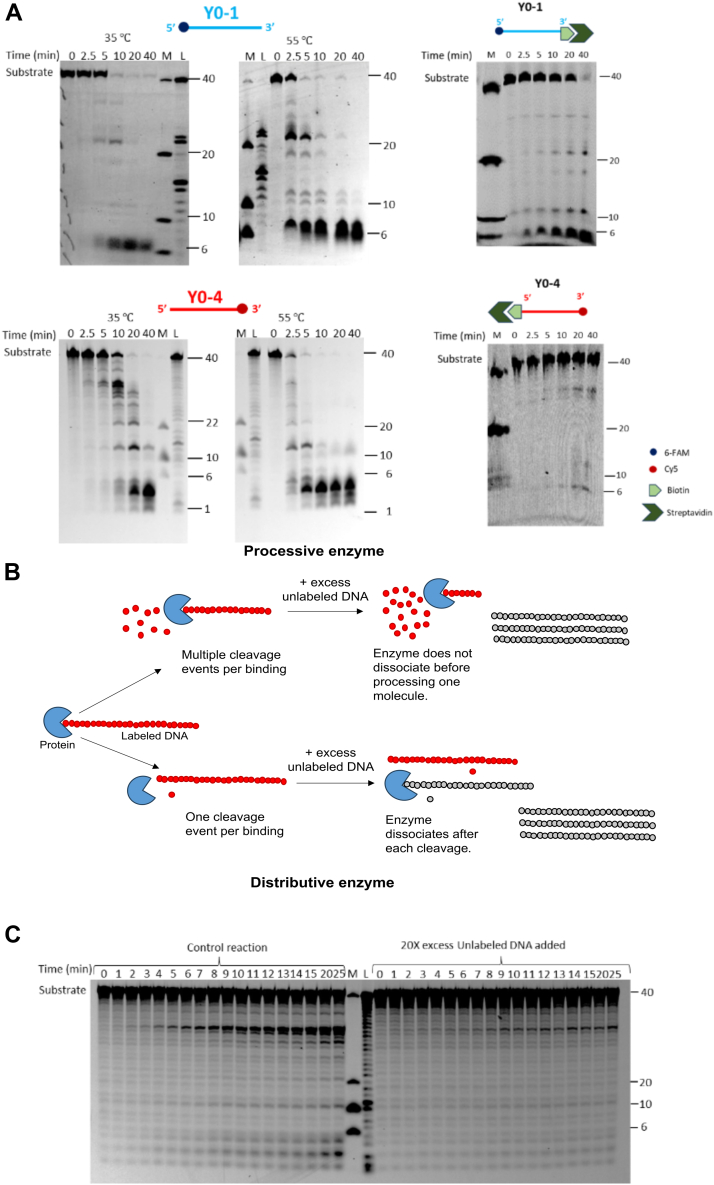
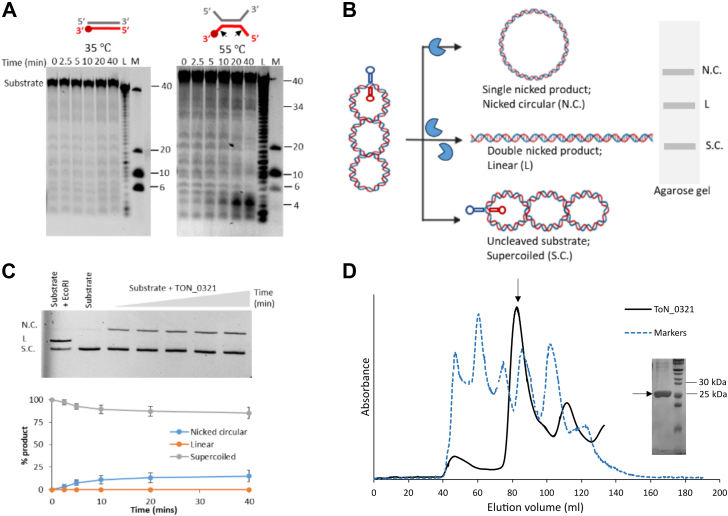
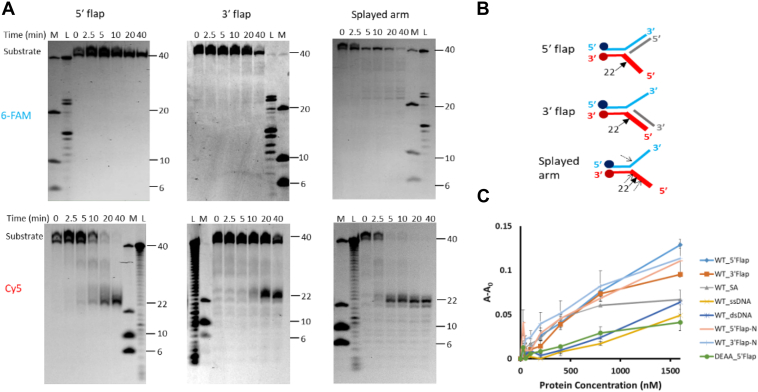
Verification
Claims the paper makes
The claims and statistics of this paper haven’t been checked yet.
Run the check — free, no account needed. It reads the open-access text and checks the sources it cites.
Self-check
Percentages, sums and reported differences re-computed from the paper’s own numbers.
The self-check needs the paper’s full text.
Citations
Cites
Highly accurate protein structure prediction with AlphaFold
Jumper, J., Evans, R., Pritzel, A., Green, T., Figurnov, M., Ronneberger, O., Tunyasuvunakool, K., Bates, R., Žídek, A., Potapenko, A., et al. (2021) · Nature · doi:10.1038/s41586-021-03819-2 · Cited by 43,764
Varadi, M., Bertoni, D., Magana, P., Paramval, U., Pidruchna, I., Radhakrishnan, M., Tsenkov, M., Nair, S., Mirdita, M., Yeo, J., et al. (2024) · Nucleic Acids Research · doi:10.1093/nar/gkad1011 · Cited by 2,052
Research works printed but not linked: 66
- 10.1016/j.visres.2023.108317 · DOI
- 10.1620/tjem.2023.J011 · DOI
- 10.1016/j.ggedit.2024.100031 · DOI
- 10.1186/s13059-023-02907-y · DOI
- 10.1007/s11033-023-08240-8 · DOI
- 10.1093/nar/gkac1192 · DOI · Paper page
- 2023, Recent advances in CRISPR-based genome editing technology and its applications in cardiovascular research, Mil. Med. Res, 10, 12
- 10.1186/s12943-022-01518-8 · DOI · Paper page
- 10.1016/j.sbi.2022.102466 · DOI
- 10.1016/j.cell.2009.07.040 · DOI · Paper page
- 10.1146/annurev-genet-110711-155447 · DOI
- 10.1126/science.1159689 · DOI · Paper page
- 10.1126/science.1225829 · DOI · Paper page
- 10.1038/nature09523 · DOI
- Jackson, S.A. , McKenzie, R.E. , Fagerlund, R.D. , Kieper, S.N. , Fineran, P.C. and Brouns, S.J.J. (2017) CRISPR-Cas: adapting to change. Science (80 -. )., 356, eaal5056. · DOI
- 10.1038/nrmicro.2015.14 · DOI
- 10.1038/s41586-021-03951-z · DOI
- 10.1016/j.molcel.2018.03.003 · DOI
- Zhang, Z. , Pan, S. , Liu, T. , Li, Y. and Peng, N. (2019) Cas4 Nucleases Can Effect Specific Integration of CRISPR Spacers. 201(12), 10–1128. · DOI
- 10.1016/j.celrep.2018.02.103 · DOI
- 10.1016/j.molcel.2018.05.002 · DOI
- 10.1093/nar/gks382 · DOI
- 10.1093/nar/gkn175 · DOI
- 10.1093/nar/28.18.3417 · DOI
- 10.1016/S1097-2765(00)80267-1 · DOI
- 10.1073/pnas.97.12.6306 · DOI
- 10.1093/emboj/17.5.1526 · DOI
- 10.1111/j.1742-4658.2009.07374.x · DOI
- 10.1186/s12862-017-0890-6 · DOI
- 10.1021/ja408729b · DOI
- 10.1093/nar/gku797 · DOI
- 10.1371/journal.pone.0047232 · DOI
- 10.1016/j.mib.2017.05.008 · DOI · Paper page
- 10.1093/nar/gkx612 · DOI
- 10.1016/j.molcel.2022.09.030 · DOI · Paper page
- Dhingra, Y. , Sashital, D.G. and Carver, R.J. Cas4/1 dual nuclease activities enable prespacer maturation and directional integration in 1 a type I-G CRISPR-Cas system. J. Biol. Chem., 299(9). · DOI
- 10.1093/nar/gkz217 · DOI
- 10.7554/elife.39324 · DOI · Paper page
- 10.1101/gad.585310 · DOI
- 10.1093/nar/13.5.1443 · DOI
- 10.1093/nar/gkh340 · DOI · Paper page
- 10.1093/MOLBEV/MSAB120 · DOI
- 10.1074/jbc.M808526200 · DOI
- 10.1093/NAR/GKAB301 · DOI
- 10.1038/nrmicro3569 · DOI · Paper page
- 10.1093/nar/gks216 · DOI · Paper page
- 10.1146/annurev-genet-022120-112523 · DOI
- 10.1038/nature15386 · DOI
- 10.1038/nsmb.3289 · DOI
- 10.1038/nature14237 · DOI · Paper page
- 10.1038/nature24020 · DOI
- 10.1017/S0033583510000181 · DOI · Paper page
- Zhang, J. , Mccabe, K.A. and Bell, C.E. Crystal structures of λ exonuclease in complex with DNA suggest an electrostatic ratchet mechanism for processivity. Proc. Natl. Acad. Sci., 108(29), 11872–11877. · DOI
- 1997, Toroidal structure of λ-exonuclease, Science, 80, 1824
- 10.4161/15384101.2014.950892 · DOI
- 10.1529/biophysj.107.110866 · DOI
- 10.1006/jmbi.1997.1128 · DOI
- 10.1016/j.pep.2009.09.003 · DOI
- 10.1038/s41586-020-2018-1 · DOI
- 10.1093/nar/gkac239 · DOI
- 10.1016/j.celrep.2015.02.019 · DOI
- 10.1093/nar/gkz842 · DOI
- 10.3389/fmicb.2021.666584 · DOI
- 10.1093/nar/gkz1197 · DOI
- 10.1146/annurev-biochem-072511-122603 · DOI
- Vallur, A.C. and Maizels, N. (2010) Distinct activities of exonuclease 1 and flap endonuclease 1 at telomeric G4 DNA. PLoS One, 5. · DOI
Metadata
- Authors
- Jain, M., Pattnayak, A. K., Aggarwal, S., Rai, P., J, K., Chandrayan, S., Goel, M., & Gaur, V.
- Affiliations
- University of Delhi (IN)
- National Institute of Plant Genome Research (IN)
- Institute of Chemical Technology (IN)
- Corresponding author
- Goel, Manisha
- Gaur, Vineet
- ORCID
- Venue
- Journal of Biological Chemistry
- Publisher
- openRxiv
- Published
- 2024-11-29
- Volume
- 301
- Issue
- 10
- Pages
- 110701-110701
- ISSN
- 0021-9258 (ISSN-L)
- PMC
- PMC12538437
- OpenAlex
- W4414142587
- Cited by
- 0
- References
- 2
- FWCI
- 0.00
- Type
- journal article
- Language
- en
- Open access
- gold
- doi.org
- Licence
- Locations
- Journal of Biological Chemistry (publishedVersion, cc-by)
- bioRxiv (Cold Spring Harbor Laboratory) (acceptedVersion)
- Europe PMC (PubMed Central) (publishedVersion, cc-by)
- PubMed (publishedVersion)
- Funders
- Department of Biotechnology, Ministry of Science and Technology, India (BT/RLF/Re-entry/27/2017)
- Department of Science and Technology, Ministry of Science and Technology, India
- University of Delhi (IOE /2021/12/ FRP, IOE/2023-2024/12/FRP)
- Montana Institute on Ecosystems
- Science and Engineering Research Board (CRG/2019/001310, CRG/2020/000335)
- Topics
- Life Sciences › Biochemistry, Genetics and Molecular Biology › Molecular Biology › CRISPR and Genetic Engineering
- Life Sciences › Biochemistry, Genetics and Molecular Biology › Genetics › Bacterial Genetics and Biotechnology
- Life Sciences › Biochemistry, Genetics and Molecular Biology › Molecular Biology › Biochemical and Structural Characterization
- Keywords
- Thermococcus onnurineus, CRISPR adaptation, 5' to 3' exonuclease, structure-specific endonuclease, branched DNA
- MeSH terms
- Endonucleases, Enzyme Stability, DNA, Archaeal, Thermococcus, Archaeal Proteins, Catalytic Domain, CRISPR-Cas Systems, CRISPR-Associated Proteins
About these checks
Registry, retraction, Cites and statistics results are computed, not judged, with one exception: a printed reference that no index lists is read once by a model before it counts as a citation error. Claims are extracted by a model and kept only when their quote appears verbatim in the text; each cited source is then checked, with a model’s help, for whether it says what the claim relies on. Those verdicts can be wrong — read the claim’s quote and the cited source before relying on one.
Statistics and arithmetic are recomputed, not judged.
Confidence bands are shown only for fields calibrated on our annotated test set. None is calibrated yet, so no band is shown.
What counts as a claim ›How we measure confidence ›How we check this ›
Are you an author, or do you see a problem with this page? Request a review
