

The DOI matches its Crossref record; 44 of the 44 references it cites were found in a registry or an index.
Biomni: A General-Purpose Biomedical AI Agent
Open accessAbstract
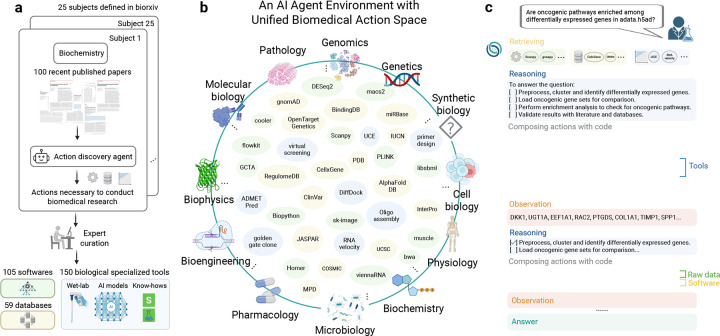
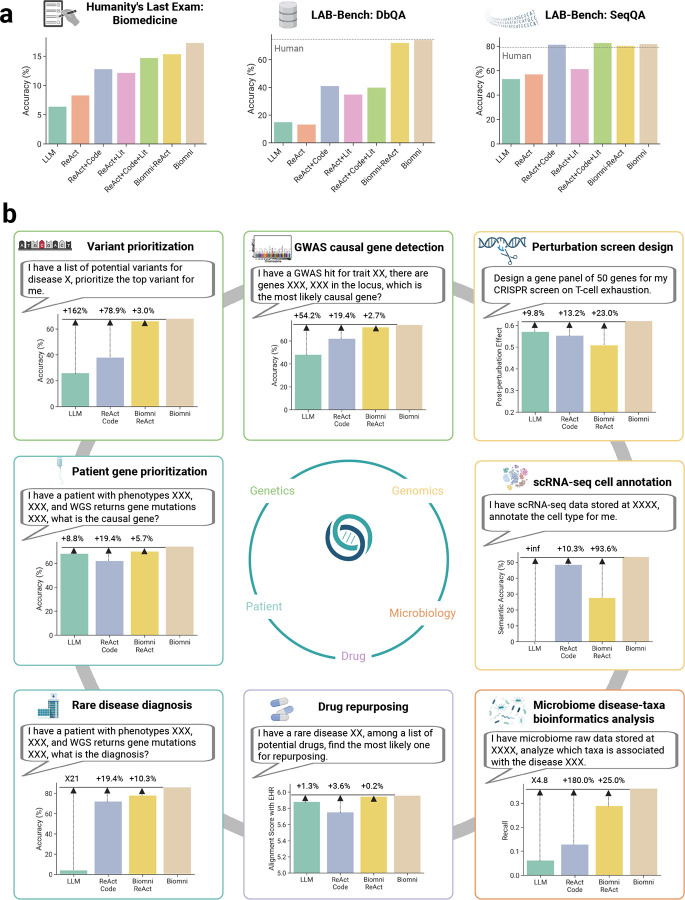
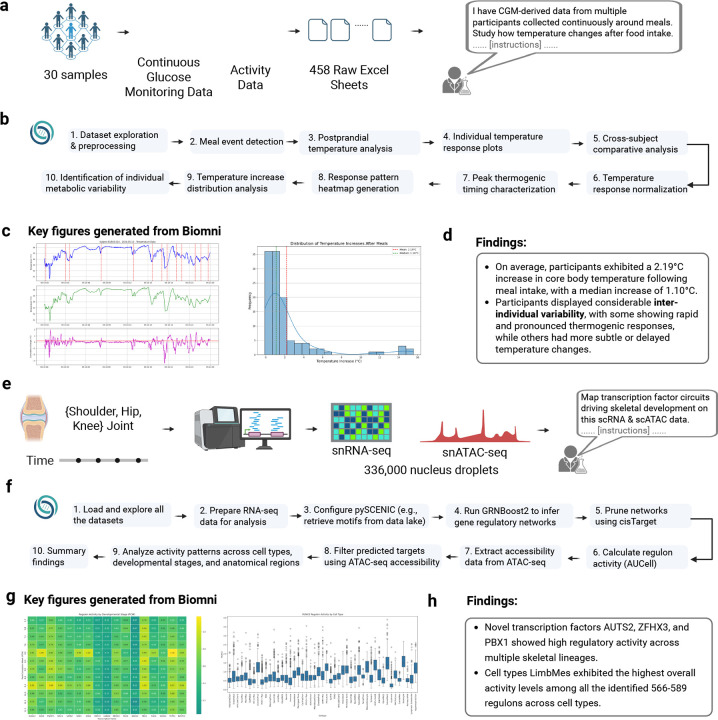
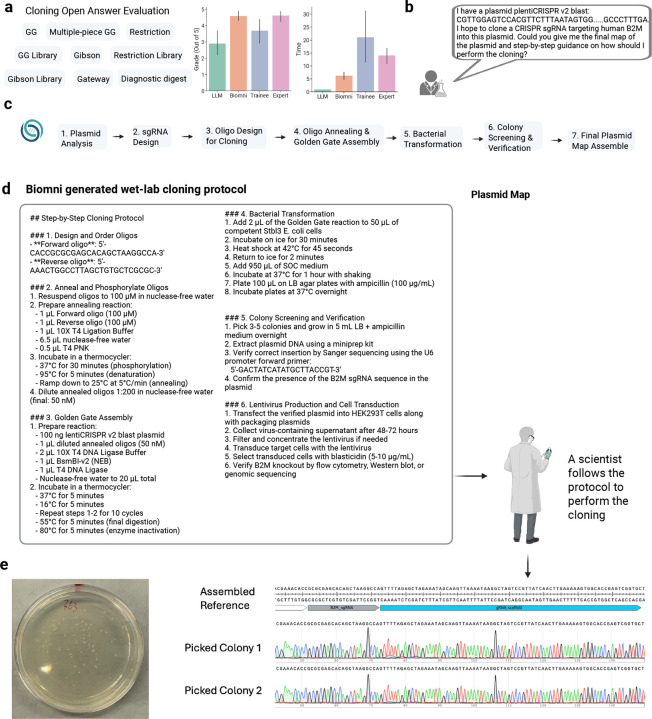
Biomedical research underpins progress in our understanding of human health and disease, drug discovery, and clinical care. However, with the growth of complex lab experiments, large datasets, many analytical tools, and expansive literature, biomedical research is increasingly constrained by repetitive and fragmented workflows that slow discovery and limit innovation, underscoring the need for a fundamentally new way to scale scientific expertise. Here, we introduce Biomni, a general-purpose biomedical AI agent designed to autonomously execute a wide spectrum of research tasks across diverse biomedical subfields. To systematically map the biomedical action space, Biomni first employs an action discovery agent to create the first unified agentic environment – mining essential tools, databases, and protocols from tens of thousands of publications across 25 biomedical domains. Built on this foundation, Biomni features a generalist agentic architecture that integrates large language model (LLM) reasoning with retrieval-augmented planning and code-based execution, enabling it to dynamically compose and carry out complex biomedical workflows – entirely without relying on predefined templates or rigid task flows. Systematic benchmarking demonstrates that Biomni achieves strong generalization across heterogeneous biomedical tasks – including causal gene prioritization, drug repurposing, rare disease diagnosis, micro-biome analysis, and molecular cloning – without any task-specific prompt tuning. Real-world case studies further showcase Biomni’s ability to interpret complex, multi-modal biomedical datasets and autonomously generate experimentally testable protocols. Biomni envisions a future where virtual AI biologists operate alongside and augment human scientists to dramatically enhance research productivity, clinical insight, and healthcare. Biomni is ready to use at https://biomni.stanford.edu , and we invite scientists to explore its capabilities, stress-test its limits, and co-create the next era of biomedical discoveries.
Overview
The claims and statistics of this paper haven’t been checked yet.
Run the check — free, no account needed. It reads the open-access text and checks the sources it cites.
Integrity signals
Registry
Cites
Statistics
Figures
Verification
Claims the paper makes
The claims and statistics of this paper haven’t been checked yet.
Run the check — free, no account needed. It reads the open-access text and checks the sources it cites.
Claims other papers make about this one
Each is checked against this paper’s own text: does it say what the citing paper says it does?
The source backs part of the claim, not all of it — or backs it for a different population, condition or comparison.
In the citing paper
“In scientific discovery, agents dynamically compose and execute hypothesis-testing pipelines spanning simulations, lab protocols, and data analysis [61, 62, 63, 64].”
From Code as Agent Harness (2026) · cites this paper as [64]
Experimental — accuracy not yet measuredThe source backs part of the claim, not all of it — or backs it for a different population, condition or comparison.
In the citing paper
“El Agente Q [449] and Biomni [64] exemplify hierarchical memory: short-lived tool outputs are cached in an episodic buffer, while structured artifacts (plasmid maps, optimized geometries, fitted models) are written to durable file stores that subsequent agent steps can re-load.”
From Code as Agent Harness (2026) · cites this paper as [64]
Experimental — accuracy not yet measuredThe source backs part of the claim, not all of it — or backs it for a different population, condition or comparison.
In the citing paper
“Biomni's action-discovery agent [64] mines tens of thousands of bioRxiv papers to populate a unified tool registry across 25 biomedical subfields”
From Code as Agent Harness (2026) · cites this paper as [64]
Experimental — accuracy not yet measuredThe cited source says what the claim attributes to it.
In the citing paper
“In biology, Biomni [64] generates end-to-end molecular-cloning protocols that human reviewers rated comparable to a senior Stanford postdoc”
From Code as Agent Harness (2026) · cites this paper as [64]
Self-check
Percentages, sums and reported differences re-computed from the paper’s own numbers.
The self-check needs the paper’s full text.
Citations
Cites
Highly accurate protein structure prediction with AlphaFold
Jumper, J., Evans, R., Pritzel, A., Green, T., Figurnov, M., Ronneberger, O., Tunyasuvunakool, K., Bates, R., Žídek, A., Potapenko, A., et al. (2021) · Nature · doi:10.1038/s41586-021-03819-2 · Cited by 43,764
Multiplex Genome Engineering Using CRISPR/Cas Systems
Cong, L., Ran, F. A., Cox, D., Lin, S., Barretto, R., Habib, N., Hsu, P. D., Wu, X., Jiang, W., Marraffini, L. A., et al. (2013) · Science · doi:10.1126/science.1231143 · Cited by 15,339 · cited 1×
“Biomedical research is a key pillar of modern science and medicine, driving discoveries in disease mechanisms, diagnostics, and therapeutics 1–4 .”
Self-citationA core gut microbiome in obese and lean twins
Turnbaugh, P. J., Hamady, M., Yatsunenko, T., Cantarel, B. L., Duncan, A., Ley, R. E., Sogin, M. L., Jones, W. J., Roe, B. A., Affourtit, J. P., et al. (2009) · Nature · doi:10.1038/nature07540 · Cited by 7,823 · cited 1×
“Dataset 2 curated from a well-known Nature study, offers microbial abundance data in mice alongside metadata such as diet and sex, making it valuable for modeling host-microbiome interactions 36 .”
Hallmarks of aging: An expanding universe
López-Otín, C., Blasco, M. A., Partridge, L., Serrano, M., & Kroemer, G. (2023) · Cell · doi:10.1016/j.cell.2022.11.001 · Cited by 6,549 · cited 1×
“Biomedical research is a key pillar of modern science and medicine, driving discoveries in disease mechanisms, diagnostics, and therapeutics 1–4 .”
Turnbaugh, P. J., Ley, R. E., Hamady, M., Fraser-Liggett, C. M., Knight, R., & Gordon, J. I. (2007) · Nature · doi:10.1038/nature06244 · Cited by 6,091 · cited 1×
“Finally, Dataset 5 is an in-house resource derived from the Human Microbiome Project 39 .”
Lecanemab in early Alzheimer's disease
van Dyck, C. H., Swanson, C. J., Aisen, P., Bateman, R. J., Chen, C., Gee, M., Kanekiyo, M., Li, D., Reyderman, L., Cohen, S., et al. (2023) · New England Journal of Medicine · doi:10.1056/nejmoa2212948 · Cited by 5,678
Chain-of-Thought Prompting Elicits Reasoning in Large Language Models
Wei, J., Wang, X., Schuurmans, D., Bosma, M., Ichter, B., Xia, F., Chi, E., Le, Q., & Zhou, D. (2022) · arXiv · doi:10.48550/arxiv.2201.11903 · Cited by 4,263 · cited 1×
“Enabling an AI agent to handle a broad range of biomedical tasks introduces substantial technical chal-50 lenges – most notably, the need to tightly couple advanced reasoning 20 with the ability to exe-51 cute highly specialized biomedical actions 21 .”
Scientific discovery in the age of artificial intelligence.
Wang, H., Fu, T., Du, Y., Gao, W., Huang, K., Liu, Z., Chandak, P., Liu, S., Van Katwyk, P., Deac, A., et al. (2023) · Nature · doi:10.1038/s41586-023-06221-2 · Cited by 1,823
Self-citationA protocol for generating a high-quality genome-scale metabolic reconstruction
Thiele, I., & Palsson, B. Ø. (2010) · Nature Protocols · doi:10.1038/nprot.2009.203 · Cited by 1,789 · cited 1×
“Yet, with the growth in large-scale experiments, data, tools, and literature, progress is increasingly slowed by fragmented, complex workflows that require specialized tools, exhaustive literature reviews, intricate experimental design, and careful statistical modeling 5,6 .”
DeepSeek-R1 incentivizes reasoning in LLMs through reinforcement learning
Guo, D., Yang, D., Zhang, H., Song, J., Wang, P., Zhu, Q., Xu, R., Zhang, R., Ma, S., Bi, X., et al. (2025) · Nature · doi:10.1038/s41586-025-09422-z · Cited by 1,701 · cited 1×
“Although LLM-based reasoning has seen significant advancements 22 , such LLMs need access to an environment that explicitly defines the biomedical action space, which is inherently diverse, domain-specific, and complex.”
Self-citation
Research works printed but not linked: 4
- 10.1056/NEJ-Moa2212948 · DOI
- Cui, J. , Li, Z. , Yan, Y. , Chen, B. & Yuan, L . Chatlaw: Open-source legal large language model with integrated external knowledge bases. CoRR (2023).
- Qu, Y. et al. Crispr-gpt: An llm agent for automated design of gene-editing experiments. bioRxiv 2024–04 (2024). · DOI
- 10.1161/circ.150.suppl_1.4143199 · DOI
Cited by
Sorted by citations
Predicting cellular responses to perturbation across diverse contexts with State
Adduri, A. K., Gautam, D., Bevilacqua, B., Naghipourfar, M., Imran, A., Shah, R., Teyssier, N., Verma, R., Carpenter, C., Eraslan, B., et al. (2026) · Cell · doi:10.1016/j.cell.2026.07.052 · Cited by 100
Self-citationFLEX: Continuous Agent Evolution via Forward Learning from ExperiencePreprint
Cai, Z., Guo, X., Pei, Y., Feng, J., Su, J., Chen, J., Zhang, Y.-Q., Ma, W.-Y., Wang, M., & Zhou, H. (2025) · arXiv (Cornell University) · doi:10.48550/arxiv.2511.06449 · Cited by 59
“…have achieved remarkable advances across diverse domains, including code generation (e.g., Claude Code [1]), scientific discovery (e.g., Biomni [2], STELLA [3], and SciMaster [4]), and in-depth research (e.g., Tongyi, OpenAI, and Gemini DeepResearch [5–7]), showcasing their immense potential…”
Self-citationMeasuring Agents in ProductionPreprint
Pan, M. Z., Arabzadeh, N., Cogo, R., Zhu, Y., Xiong, A., Agrawal, L. A., Mao, H., Shen, E., Pallerla, S., Patel, L., et al. (2025) · arXiv (Cornell University) · doi:10.48550/arxiv.2512.04123 · Cited by 79
“Significant evidence shows interest in post-training for agents [6, 87–93], yet Section 5.1 shows fine-tuning and reinforcement learning remain uncommon in deployment despite potential benefits.”
InfluentialChai, J., Tang, S., Ye, R., Du, Y., Zhu, X., Zhou, M., Wang, Y., Weinan, E., Zhang, Y., Zhang, L., et al. (2025) · arXiv (Cornell University) · doi:10.48550/arxiv.2507.05241 · Cited by 61
SKILLFOUNDRY: Building Self-Evolving Agent Skill Libraries from Heterogeneous Scientific Resources
Shen, S., Cheng, W.-D., Ma, M., Turcan, A., Zhang, M. J., & Ma, J. (2026) · arXiv.org · doi:10.48550/arxiv.2604.03964 · Cited by 42
“More general systems such as Biomni (Huang et al., 2025) aim to support a broader range of biomedical tasks through larger tool ecosystems.”
CASCADE: Cumulative Agentic Skill Creation through Autonomous Development and EvolutionPreprint
Huang, X., Chen, J., Fei, Y., Li, Z., Schwaller, P., & Ceder, G. (2025) · arXiv (Cornell University) · doi:10.48550/arxiv.2512.23880 · Cited by 51
Harnessing artificial intelligence to advance CRISPR-based genome editing technologies
Thomson, T., Li, G. L., Strilchuk, A. W., Cui, H., Wang, B., & Li, B. (2025) · Nature Reviews Genetics · doi:10.1038/s41576-025-00907-1 · Cited by 34
“experimental protocol design and bioinformatic analyses 146 .”
Self-citationPaper2Agent: Reimagining Research Papers As Interactive and Reliable AI AgentsPreprint
Miao, J.-C., Davis, J. R., Zhang, Y.-H., Pritchard, J. K., & Zou, J. Y. (2025) · arXiv.org · doi:10.48550/arxiv.2509.06917 · Cited by 34
“Biomni is an AI agent for diverse biological tasks [12].”
OriGene: A Self-Evolving Virtual Disease Biologist Automating Therapeutic Target DiscoveryPreprint
Zhang, Z.-Y., Qiu, Z.-J., Wu, Y.-C., Li, S., Wang, D.-Y., Liu, Y., Zhou, Z., Hu, Y.-S., Chen, Y., An, D., et al. (2026) · bioRxiv · doi:10.1101/2025.06.03.657658 · Cited by 33
“OriGene continued its strong performance on the TRQA-lit (short answer) benchmark, designed to assess the generation of concise and accurate literature-derived responses, scoring 82.76%, which again surpassed all other models, including DeepSeek-V3 and GPT-4o.”
InfluentialSelf-citationLeveraging Biomolecule and Natural Language through Multi-Modal Learning: A SurveyPreprint
Pei, Q., Zhou, Z., Gao, K., Jinhua, Z., Wang, Y., Wang, Z., Qin, T., Lijun, W., & Yan, R. (2024) · arXiv (Cornell University) · doi:10.48550/arxiv.2403.01528 · Cited by 28
“Frameworks like Biomni [295] and SciToolAgent [276] establish comprehensive environments to integrate specialized tools and databases, enabling agents to autonomously execute diverse tasks ranging from gene prioritization to protein engineering.”
Agentic AI and the rise of in silico team science in biomedical research
Li, B., Saini, A. K., Hernandez, J. G., & Moore, J. H. (2026) · Nature Biotechnology · doi:10.1038/s41587-026-03035-1 · Cited by 29
“Community-developed agentic AI systems 101,144,145,153,163 are led by academic institutes, non-profit organizations or consortia and are characterized by a focus on transparency, open access, ethical alignment and strict regulatory compliance.”
STELLA: Towards a Biomedical World Model with Self-Evolving Multimodal AgentsPreprint
Jin, R., Xu, M., Meng, F., Wan, G., Cai, Q., Jiang, Y., Han, J., Chen, Y., Lu, W., Wang, M., et al. (2025) · bioRxiv (Cold Spring Harbor Laboratory) · doi:10.1101/2025.07.01.662467 · Cited by 14
Self-citationAn agentic AI framework for ingestion and standardization of single-cell RNA-seq data analysis
Nouri, N., Artzi, R., & Savova, V. (2026) · npj Artificial Intelligence · doi:10.1038/s44387-025-00064-0 · Cited by 22
“…in single-cell analysis spans three trajectories: (i) targeted automation of labor-intensive, subjective steps (e.g., cell type annotation 71,72 ), (ii) end-to-end pipelines assembled from automated modules 73 , and (iii) most recently, broad-scope, LLM-enabled code-generation work fl ows 24 .”
Graph-based Agent Memory: Taxonomy, Techniques, and ApplicationsPreprint
Yang, C., Zhou, C., Xiao, Y., Dong, S., Zhuang, L., Zhang, Y., Wang, Z., Hong, Z., Yuan, Z., Xiang, Z., et al. (2026) · arXiv (Cornell University) · doi:10.48550/arxiv.2602.05665 · Cited by 60
“In biological research domain, Biomni [187] advances beyond task-level assistance by supporting complex biomedical research workflows, enabling agents to automatically identify, compose, and execute multi-step experimental pipelines.”
Yue, L., Somasekharan, N., Zhang, T., Cao, Y., & Pan, S. (2025) · arXiv (Cornell University) · doi:10.48550/arxiv.2509.18178 · Cited by 26
Scientific Algorithm Discovery by Augmenting AlphaEvolve with Deep ResearchPreprint
Liu, G., Zhu, Y., Chen, J., & Jiang, M. (2025) · arXiv (Cornell University) · doi:10.48550/arxiv.2510.06056 · Cited by 24
“LLM agents have been applied to autonomous chemical research (Boiko et al., 2023), biological data analysis with protocol generation (Huang et al., 2025), and AI research (Kon et al., 2025).”
BioML-bench: Evaluation of AI Agents for End-to-End Biomedical MLPreprint
Miller, H. E., Greenig, M., Tenmann, B., & Wang, B. (2025) · bioRxiv (Cold Spring Harbor Laboratory) · doi:10.1101/2025.09.01.673319 · Cited by 19
“Here, STELLA is highly competitive with Biomni, outperforming it on most metrics.”
InfluentialIlluminating the universe of enzyme catalysis in the era of artificial intelligence
Yang, J., Li, F.-Z., Long, Y., & Arnold, F. H. (2025) · Cell Systems · doi:10.1016/j.cels.2025.101372 · Cited by 18
Xu, X., & Sankar, R. (2025) · Information · doi:10.3390/info16100894 · Cited by 20
Autonomous Agents for Scientific Discovery: Orchestrating Scientists, Language, Code, and PhysicsPreprint
Zhou, L., Ling, H., Fu, C., Huang, Y., Sun, M., Yu, W., Wang, X., Li, X., Su, X., Zhang, J., et al. (2025) · arXiv (Cornell University) · doi:10.48550/arxiv.2510.09901 · Cited by 32
“…analyses (dimensionality reduction, clustering, DE, enrichment), producing ready-to-use figures and reports with minimal user intervention. scBaseCount [Youngblut et al., 2025] uses an agentic, hierarchical workflow to continuously mine, standardize, and expand a single-cell compendium now…”
InfluentialSelf-citationYang, T., Xiao, Y., Bao, Z., Hao, J., & Peng, J. (2025) · Briefings in Bioinformatics · doi:10.1093/bib/bbaf601 · Cited by 27
E-valuator: Reliable Agent Verifiers with Sequential Hypothesis Testing
Sadhuka, S., Prinster, D., Fannjiang, C., Scalia, G., Berger, B., Regev, A., & Wang, H.-C. (2025) · arXiv.org · doi:10.48550/arxiv.2512.03109 · Cited by 18
“Agents have wide applications, and have delivered promising early results in diverse fields including drug discovery [14, 52], cell biology and genomics [61, 19], and hypothesis verification [18].”
Self-citationBiomniBench: Process-level Evaluation of LLM Agents for Real-world Biomedical ResearchPreprint
Qu, Y.-H., Lu, Y.-Z., Tu, X.-M., Zhang, S., She, T.-W., Shaw, A., Shih, J.-H., Zhao, B., Shen, M.-J., Yang, H.-C., et al. (2026) · bioRxiv · doi:10.64898/2026.05.12.724604 · Cited by 17
“We analyzed 32,014 user queries collected from the open-source Biomni platform [Huang et al., 2025].”
InfluentialSelf-citationThe Virtual Biotech: A Multi-Agent AI Framework for Therapeutic Discovery and DevelopmentPreprint
Zhang, H. G., Eckmann, P., Miao, J.-C., Mahon, A. B., & Zou, J. (2026) · bioRxiv · doi:10.64898/2026.02.23.707551 · Cited by 17
“In biology, agents have been applied to automate gene editing [18], omics analysis [19, 20], nanobody design [21], and biological data analysis [22].”
Artificial Intelligence agents for biological research: a survey
Qi, C., Wang, W., Jiang, S., Liu, Q., Song, X., Fang, H., & Wei, Z. (2026) · Briefings in Bioinformatics · doi:10.1093/bib/bbag075 · Cited by 11
“Multi-agent architectures such as Biomni [37], CellAgent [10], and Co-Scientist [97] emphasize collaborative reasoning and distributed task decomposition, while neuro-symbolic models including AutoMAxO [52],Tokensome[99],andmergen[101]embedsymbolicconstraintsor ontology structures within…”
Dip, S. A., Mallick, D., Shuvo, U. A., Soumma, S. B., Rafsani, F., Paul, B. K., Moumi, N. A., Ahmed, S., & Zhang, L. (2026) · Briefings in Bioinformatics · doi:10.1093/bib/bbag110 · Cited by 18
“Biomni [40] combines planning, retrieval, code execution, and multi-omics tool-use within a single modular agent capable of gene prioritization, variant interpretation, and enrichment analysis.”
How Far Are AI Scientists from Changing the World? A Survey of Autonomous Scientific Discovery
Xie, Q., Weng, Y., Zhu, M., 方俊英, Shen, F., Huang, S., Lin, Z., Wang, Z., Li, S., Zhou, J., et al. (2026) · Conference on Empirical Methods in Natural Language Processing (EMNLP) · doi:10.48550/arxiv.2507.23276 · Cited by 24
“Experimental designs generated by these AI Scientist systems often lack scientific rigor, innovation, and practicality, making it difficult to meet the demands of high-level research (Huang et al., 2025a, Weng et al., 2025).”
Self-citationXu, R., Zhuang, Y., Zhong, Y., Yu, Y., Wang, Z., Tang, X., Wu, H., Wang, M. D., Ruan, P., Yang, D. M., et al. (2025) · arXiv (Cornell University) · doi:10.48550/arxiv.2506.04405 · Cited by 41
“1-8B-Instruct ) (Wu et al., 2025a), Baichuan-M1-14B-Instruct (Wang et al., 2025a), and Baichuan-M2-32B (Dou et al., 2025).”
InfluentialSelf-citationStructure-Based Drug Design with Geometric Deep Learning: A Comprehensive Survey
Zhang, Z., Yan, J., Huang, Y., Liu, Q., Chen, E., Wang, M., & Žitnik, M. (2025) · ACM Computing Surveys · doi:10.1145/3769677 · Cited by 33
“— Incorporate Knowledge with AI Agents : A paradigm-shifting future direction is the deep integration of GDL with Biomedical AI agents like Stella [98], Biomni [83], BioMiner [208], and BioLab [97].”
Self-citationJin, R., Guo, Y., Qu, Y., Yang, M., Shang, C., Yang, Q., Chao, L., Zhou, Y., Xu, R. M., Xu, Z., et al. (2025) · bioRxiv (Cold Spring Harbor Laboratory) · doi:10.1101/2025.09.03.674085 · Cited by 5
Self-citationHeurekaBench: A Benchmarking Framework for AI Co-scientistPreprint
Panigrahi, S. S., Videnović, J., & Brbić, M. (2026) · arXiv (Cornell University) · doi:10.48550/arxiv.2601.01678 · Cited by 12
“This intermediate step avoids overwhelming the planner with the extensive set of tools available in Biomni-E1.”
InfluentialAgentic systems are adept at solving well-scoped, verifiable problems in computational biologyPreprint
Nair, S., Gunsalus, L., Orcutt-Jahns, B. T., Rossen, J., Lal, A., de Donno, C., Çelik, M. H., Fletez-Brant, K., Xie, X.-M., Bravo, H. C., et al. (2026) · bioRxiv · doi:10.64898/2026.04.06.716850 · Cited by 13
“However, alternate approaches include pre-installing a comprehensive range of tools and datasets 8 , or providing “skill” files to the agents that outline high-level analytical strategies 25,26 .”
Gruson, D., Gouget, B., Lee, W.-C., Greaves, R., Liu, Y., Ebert, S., Yang, H. S., & Shah, S. (2025) · Clinical Chemistry and Laboratory Medicine · doi:10.1515/cclm-2025-1314 · Cited by 13
“Traditional AI models often struggle with this heterogeneity, but agentic AI can navigate complexity by retrieving literature, linking datasets, and generating adaptive insights [1, 7].”
LARC: Towards Human-level Constrained Retrosynthesis Planning through an Agentic Framework
Baker, F. N., Adu-Ampratwum, D., Averly, R., Yu, B.-T., Sun, H., & Ning, X. (2025) · EPiC Series in Technology · doi:10.48550/arxiv.2508.11860 · Cited by 13
“Additional LLM-based efforts, such as TextGrad [48], STELLA [25], and BIOMNI [22], have also been used in biomedical and chemistry applications; however, none of these methods are equipped for retrosynthesis planning tasks.”
SP-Mind: An Autonomous Reasoning Agent for Spatial Proteomics Analysis
Yuan, Y.-C., Ji, Y.-F., Li, Z., & Li, R.-J. (2026) · arXiv.org · doi:10.48550/arxiv.2606.24235 · Cited by 12
“Furthermore, SP-Mind outperforms the strongest specialized baseline, Biomni-SP (55.4%), by a substantial margin.”
InfluentialSelf-citationAutoScientists: Self-Organizing Agent Teams for Long-Running Scientific ExperimentationPreprint
Gao, S., Fang, A., & Žitnik, M. (2026) · arXiv (Cornell University) · doi:10.48550/arxiv.2605.28655 · Cited by 13
“In contrast, we run A UTO S CIENTISTS , Autoresearch, and rerun Biomni [10] under a unified experimental-compute setting of 4 hours on 1 H100 GPU with 16 CPUs and 48 GB memory for all tasks except for biomedical imaging which had a wall-clock budget of 16 hours instead.”
InfluentialGeneralist biological artificial intelligence in modeling the language of life
Rao, V. M., Zhang, S., Plosky, B. S., Hsu, P. D., Wang, B., Zou, J., Žitnik, M., Topol, E. J., & Rajpurkar, P. (2026) · Nature Biotechnology · doi:10.1038/s41587-026-03064-w · Cited by 14
“…in areas such as drug repurposing, causal gene detection, single-cell annotation and disease diagnosis, but, while it excels at tasks such as database querying and sequence analysis, it is less effective for more complicated processes that require deeper biological reasoning and thought 148 .”
Self-citationMartinek, V., Gariboldi, A., Tzimotoudis, D., Galea, M., Zacharopoulou, E., Escudero, A. A., Blake, E., Čechák, D., Cassar, L., Balestrucci, A., et al. (2026) · Bioinformatics · doi:10.1093/bioinformatics/btag250 · Cited by 9
“These were categorised (Miller et al., 2025) as ‘generalist’ ML coding agents (AIDE (Jiang et al., 2025), MLAgentBench (Huang et al., 2024)), or more specialised ‘biomedical’ ML coding agents (STELLA (Jin et al., 2025), Biomni (Huang et al., 2025)).”
Generative AI for Biosciences: Emerging Threats and Roadmap to Biosecurity
Zhang, Z.-X., Chakraborty, S., Bedi, A. S., Mathew, E. M., Saravanan, V., Cong, L., Velasquez, A., Lin-Gibson, S., Blewett, M., Hendrycs, D., et al. (2025) · arXiv.org · doi:10.48550/arxiv.2510.15975 · Cited by 12
“Recent systems like Biomni and OriGene exemplify this evolution 40,41 .”
Self-citationEigen-Agent: Adaptive Multi-Agent Scientific Reasoning with Monitor-Based RAGPreprint
Tang, X., Xu, W., Wang, Y., Guo, Z., Shao, D., Chen, J., Zhang, C., Wang, Z., Zhang, L., Wan, G., et al. (2025) · arXiv (Cornell University) · doi:10.48550/arxiv.2509.21193 · Cited by 13
Self-citationBenchmarking AI scientists for omics data–driven biological discovery
Luo, E., Jia, J., Xiong, Y., Li, X., Guo, X., Yu, B., Hao, M., Wei, L., & Zhang, X. (2026) · Bioinformatics · doi:10.1093/bioinformatics/btag227 · Cited by 26
“This indicates that current AI scientists have largely mastered the procedural aspects of standard single-cell analysis workflows.”
Agentic Lab: An Agentic-physical AI system for cell and organoid experimentation and manufacturingPreprint
Wang, W., Swain, S., Lee, J., Lin, Z., Canales, B., Aljović, A., Liu, Y., Li, Q., Marin‐Llobet, A., Liu, M., et al. (2025) · bioRxiv (Cold Spring Harbor Laboratory) · doi:10.1101/2025.11.11.686354 · Cited by 10
You, K., Li, R.-Y., Lian, R., Li, Y., Yang, H., Zhou, Y., Chen, Y., Wang, L.-K., Fan, Z., Ma, L.-W., et al. (2025) · Nucleic Acids Research · doi:10.1093/nar/gkaf973 · Cited by 11
“These technologies offer a powerful solution to speed up the extraction and structuring of complex information from scientific texts, a capability that has been successfully explored in fields like materials science [ 20 ] and genomics [ 21 ].”
Self-citationZephyrus: An Agentic Framework for Weather Science
Varambally, S., Fisher, M., Thakker, J., Chen, Y.-W., Xia, Z.-R., Jafari, Y., Niu, R.-J., Jain, M., Manivannan, V., Novack, Z., et al. (2025) · arXiv.org · doi:10.48550/arxiv.2510.04017 · Cited by 11
“Biomedical agents extend the approach across literature, databases, and analysis workflows (e.g., Biomni (Huang et al., 2025)).”
Open and sustainable AI: challenges, opportunities and the road ahead in the life sciences
Farrell, G., Adamidi, E. S., Buono, R. A., Anton, M., Attafi, O. A., Capella-Gutiérrez, S., Capriotti, E., Castro, L. J., Cirillo, D., Crossman, L. C., et al. (2026) · Nature Methods · doi:10.1038/s41592-026-03037-6 · Cited by 12
“More complex agentic AI systems like Biomni 106 have demonstrated the ability to perform biomedical research tasks ranging from generating wet-lab cloning protocols to analyzing heterogeneous datasets for rare disease diagnosis.”
ABC-Bench: An Agentic Bio-Capabilities Benchmark for BiosecurityPreprint
Liu, A. B., Nedungadi, S., Cai, B., Kleinman, A., Bhasin, H., & Donoughe, S. (2026) · arXiv.org · doi:10.48550/arxiv.2606.11150 · Cited by 10
“These augmented systems, referred to hereafter as “AI agents”, include OpenAI’s ChatGPT Agent, Biomni (Huang et al., 2025), CRISPR-GPT (Qu et al., 2026), STELLA (Jin et al., 2025), and BioDiscoveryAgent (Roohani et al., 2025).”
AutoResearch AI: Towards AI-Powered Research Automation for Scientific DiscoveryPreprint
Tie, G., Shi, J., Song, D., Huang, Y., Sheng, Z., Zhou, X., Liu, D., Zhou, P., Chen, Y., Xu, R., et al. (2026) · arXiv (Cornell University) · doi:10.48550/arxiv.2605.23204 · Cited by 19
“Biomni [103] belongs here because it couples biomedical reasoning to external tools and scientific resources, and MM-Agent [104] is relevant because it emphasizes scientific tool integration across multimodal settings.”
Self-citationExperiences with Model Context Protocol Servers for Science and High Performance ComputingPreprint
Pan, H., Chard, R., Mello, R., Grams, C., He, T., Brace, A., Price-Skelly, O., Engler, W., Holbrook, H., Oh, S. Y., et al. (2025) · arXiv (Cornell University) · doi:10.48550/arxiv.2508.18489 · Cited by 11
“Biomni [27] couples an agentic planner with a curated execution environment.”
PromptBio: A Multi-Agent AI Platform for Bioinformatics Data AnalysisPreprint
Zhang, M.-Z., Gu, W.-H., Han, B.-W., Guo, V., Addoni, C., Chen, J.-Y., Ma, Y.-J., Leng, Y., Li, K., Lin, X. B., et al. (2025) · bioRxiv · doi:10.1101/2025.07.05.663295 · Cited by 10
“In contrast, emerging AI-first platforms—such as Biomni [4], FutureHouse [5], Kepler AI [6], and Potato AI [7]— offer flexible, intelligent systems that broaden access to data-driven discovery.”
Deterministic access to global viral sequence data enables robust agentic scientific discovery
Nasri, F., Gurev, S., Varilly, P., Ramesh, K., O'Leary, N., Cool, J., Renard, B. Y., Sabeti, P., & Luebbert, L. (2026) · doi:10.48550/arxiv.2606.06749 · Cited by 9
“…relies on automated pipelines and artificial intelligence (AI)-driven systems, including emerging autonomous scientific agents such as Biomni [6] and Edison Scientific’s Kosmos [7], and the underlying large language models (LLMs) that enable them, including GPT and Claude, to construct…”
scPilot: Large Language Model Reasoning Toward Automated Single-Cell Analysis and Discovery
Gao, Y.-M., Wang, Z., Chen, J., Antkowiak, M., Hu, M.-Z., Kong, J., Pratt, D., Liu, J.-Y., Ma, E.-Z., Hu, Z.-T., et al. (2026) · Neural Information Processing Systems · doi:10.48550/arxiv.2602.11609 · Cited by 9
“General-purpose biomedical agents such as Biomni [31] demonstrate autonomous problem-solving across domains.”
InfluentialMedea: An AI agent for therapeutic reasoning across biological contextsPreprint
Sui, P., Li, M. M., Munson, B. P., Gao, S., Shen, W., Giunchiglia, V., Shen, A. N., Huang, Y., Kong, Z., Licon, K., et al. (2026) · bioRxiv (Cold Spring Harbor Laboratory) · doi:10.64898/2026.01.16.696667 · Cited by 13
“As a result, an analysis can run successfully but still be wrong, for example, when differential expression uses mismatched covariates that are propagated into downstream pathway ranking [22, 23].”
CXRAgent: Director-Orchestrated Multi-Stage Reasoning for Chest X-Ray Interpretation
Lou, J., Yang, Y. Q., Zhou, Y., Fu, Z., Han, W., Huang, Q., & Yu, J. (2026) · IEEE Transactions on Medical Imaging · doi:10.1109/tmi.2026.3713585 · Cited by 8
“Medical agent systems [24]–[26] have emerged as a promising paradigm to overcome the limitations of monolithic models by orchestrating multiple specialized components.”
Agentic Systems in Radiology: Design, Applications, Evaluation, and Challenges
Bluethgen, C., Veen, D. V., Truhn, D., Kather, J., Moor, M., Polacin, M., Chaudhari, A. S., Frauenfelder, T., Langlotz, C. P., Krauthammer, M., et al. (2025) · arXiv.org · doi:10.48550/arxiv.2510.09404 · Cited by 9
Empowering biomedical evidence exploration and synthesis with deep knowledge graph research
Wang, Z., Chen, Z., Yang, Z., Wang, X., Jin, Q., Peng, Y., Lu, Z., & Sun, J. (2026) · Nature Machine Intelligence · doi:10.1038/s42256-026-01266-0 · Cited by 8
AssayBench: An Assay-Level Virtual Cell Benchmark for LLMs and AgentsPreprint
Brouwer, E. D., Edwards, C., Wu, A., Collier, J., Heimberg, G., Li, X., Subramaniam, M., Hajiramezanali, E., Richmond, D., Hütter, J.-C., et al. (2026) · arXiv (Cornell University) · doi:10.48550/arxiv.2605.10876 · Cited by 7
“We additionally evaluate the performance of C2S--Scale [Rizvi et al., 2026], a language model fine-tuned on single-cell tasks, and Biomni [Huang et al., 2025], a biomedical agent with access to biology-relevant tools.”
Zhang, L., Wang, L., Sun, X., Tang, W., Su, H., Qian, Y., Yang, Q., Li, Q., Tang, Z., Sun, H., et al. (2026) · bioRxiv (Cold Spring Harbor Laboratory) · doi:10.64898/2026.04.03.716272
“Biomni’s performance pattern provides a striking corroboration: it achieved 74% on scriptable property filtering but fell to 24.3% on binding affinity (below chance) and produced zero valid docking outputs [29], failing precisely on tasks requiring structured workflow orchestration.”
InfluentialEvolving Medical Imaging Agents via Experience-driven Self-skill Discovery
Fan, L., Dai, P.-Y., Deng, Z.-P., Wang, H.-L., Gong, X., Zheng, Y.-F., & Ou, Y. (2026) · arXiv.org · doi:10.48550/arxiv.2603.05860 · Cited by 8
“In biomedical research, the Biomni [17] agent goes further: it uses an LLM to scan thousands of research papers and build a unified action space of hundreds of tools and databases, enabling dynamic composition of complex workflows.”
Self-citationMozi: Governed Autonomy for Drug Discovery LLM AgentsPreprint
Cao, H., Liu, S., Zhang, F., Liu, Z., (31608), H. L., Feng, B., Bai, S., Chen, L., Xie, K., & Li, Y. (2026) · arXiv (Cornell University) · doi:10.48550/arxiv.2603.03655 · Cited by 11
“In this domain, Biomni [44] addresses this via a unified space of 150+ verified tools and code generation for complex logic.”
InfluentialFrom modality-specific to compositional foundation models for cell biology
Bahrami, M., Richter, T., Schmacke, N. A., Lavandera, A. E., & Theis, F. J. (2026) · Cell Systems · doi:10.1016/j.cels.2026.101534 · Cited by 7
Xiao, K., Zhang, H., Mao, R., Li, H., & Chen, Z. X. (2026) · arXiv (Cornell University) · doi:10.48550/arxiv.2601.01357 · Cited by 6
“Although significant progress has been made in developing such agents for both general research contexts [3, 4] and specialized fields such as mathematics [5], chemistry [6], and life sciences [7], the combustion research community notably still lacks a practical and accessible AI agent system.”
HealthFlow: A Self-Evolving AI Agent with Meta Planning for Autonomous Healthcare ResearchPreprint
Zhu, Y., Qi, Y., Wang, Z., Gu, L., Sui, D., Hu, H., Zhang, X., He, Z., He, J., Ma, L., et al. (2025) · arXiv (Cornell University) · doi:10.48550/arxiv.2508.02621 · Cited by 19
“Existing agents may learn to refine a specific tool’s usage (Qiu et al. 2025; Jin et al. 2025) or improve a reasoning template for a sub-problem (Zhang et al. 2025b), but they operate within a fixed cognitive architecture.”
InfluentialLearning to Rewrite Tool Descriptions for Reliable LLM-Agent Tool Use
Guo, R.-C., Dong, K., Gao, X., & Das, K. (2026) · arXiv.org · doi:10.48550/arxiv.2602.20426 · Cited by 7
“With external tools, an LLM can retrieve up-to-date information, perform calculations, and execute code (Huang et al., 2025a).”
Measuring Mid-2025 LLM-Assistance on Novice Performance in BiologyPreprint
Hong, S. Z., Kleinman, A., Mathiowetz, A. J., Howes, A., Cohen, J. V., Ganta, S., Letizia, A., Liao, D., Pahari, D., Roberts-Gaal, X., et al. (2026) · arXiv (Cornell University) · doi:10.48550/arxiv.2602.16703 · Cited by 13
“Since this study, newer biology-specific models like Biomni Lab leverage their specialized training on genomic and protocol data to significantly reduce errors in sequence analysis, protocol generation, and biomedical data analysis (Huang et al. 2025).”
Zhou, Y., Su, J., Zhang, J., Hu, W., Tao, T., Li, G., Zhou, X., Fan, L., & Yuan, F. (2025) · bioRxiv (Cold Spring Harbor Laboratory) · doi:10.1101/2025.09.22.677756 · Cited by 6
“We then compared the performance of our system against Biomni [23], a prominent biology-focused agent, and Gemini#net, a state-of-the-art generalist model with web access based on Gemini 2.5 Pro [24].”
InfluentialSelf-citationEarthLink: A Self-Evolving AI Agent for Climate Science
Guo, Z.-J., Wang, J., Yue, X.-Y., Wei, W.-X., Jiang, Z., Xu, W., Fei, B., Zhang, W.-L., Gu, X.-Y., Cheng, L., et al. (2025) · arXiv.org · doi:10.48550/arxiv.2507.17311 · Cited by 7
“These new paradigms have already achieved great successes in automating complex scientific workflows across a range of fields, such as biomedicine [29], chemistry [30], and materials science [31].”
ProteinMCP : An agentic AI framework for autonomous protein engineering
Xu, X., Feng, C., Zha, C., He, W., He, M., Xiao, B., & Gao, X. (2026) · Protein Science · doi:10.1002/pro.70547 · Cited by 6
The Agentic Garden of Forking Paths
Miao, J.-C., Pritchard, J. K., & Zou, J. Y. (2026) · arXiv.org · doi:10.48550/arxiv.2607.01507 · Cited by 6
“Large language model (LLM) coding agents can write analysis code, fit statistical models, interpret results, and draft reports, and are increasingly being incorporated into scientific work-flows [10, 16, 21, 33, 41].”
PromptBio-Bench: Benchmarking LLM-based Bioinformatics Agents for End-to-End Data AnalysisPreprint
Guo, W.-B., Zhang, M.-Z., Han, B.-W., Ma, Y.-J., Leng, Y., Hebbar, S., Zhou, X.-Y., Gu, W.-H., Yang, X., & Dhar, S. (2026) · bioRxiv · doi:10.64898/2026.05.05.723092 · Cited by 6
Self-citationJozani, K. A., Shen, K., Anvari, N., Hocevar, D., Jiang, R., Zhang, B., Yakavets, I., & Zhao, Y. (2026) · Advanced Drug Delivery Reviews · doi:10.1016/j.addr.2026.115835 · Cited by 7
Planner-R1: Reward Shaping Enables Efficient Agentic RL with Smaller LLMsPreprint
Zhu, S., Jiang, Y., Sang, H., Tang, S., Song, Q., He, B., Jain, R., Wang, Z., & Geramifard, A. (2025) · arXiv (Cornell University) · doi:10.48550/arxiv.2509.25779 · Cited by 8
Toward generalizable and interpretable AI in regulatory genomics
NAGAI, M., Murphy, A. E., Rizzo, K., & Koo, P. K. (2026) · Nature Genetics · doi:10.1038/s41588-026-02670-3 · Cited by 11
“Emerging directions include chat-based interfaces for natural-language querying 167,168 , automated analysis pipe-lines 169 and agentic AI systems for experiment design and execution 170 .”
Back to basics: Observed statistics are sufficient to predict drug responses
Svensson, V., Khan, U., Heydari, H., Ubas, A. A., Thomas, N., Merico, D., Goodarzi, H., Yu, J., Alidoust, N., & Gandhi, S. (2026) · bioRxiv · doi:10.64898/2026.06.09.731197 · Cited by 5
“Three gaps remain: zeroshot prediction, reaching more complex phenotypes, and pace of training / prediction for integration of these models as grounding data in agentic reasoning [8], [9].”
An Evidence-Grounded Research Assistant for Functional Genomics and Drug Target AssessmentPreprint
Sokolova, K., Kosenkov, D., Nallamotu, K., Vedula, S., Sokolov, D., Sapiro, G., & Troyanskaya, O. G. (2025) · bioRxiv (Cold Spring Harbor Laboratory) · doi:10.64898/2025.12.30.697073 · Cited by 7
LangChain-Parsl: Connect Large Language Model Agents to High Performance Computing Resource
Ma, H., Brace, A., Siebenschuh, C., Foster, I. T., & Ramanathan, A. (2025) · International Conference for High Performance Computing, Networking, Storage and Analysis (SC) · doi:10.1145/3731599.3767349 · Cited by 1
“[3, 5, 8, 19, 21, 41] Another important feature is the tool-calling capability of the latest LLM models offered by OpenAI, Anthropic, Google Gemini, and Mistral.”
An LLM-Powered Cooperative Framework for Large-Scale Multi-Vehicle Navigation
Zhou, Y.-P., Lai, S.-Q., Han, J.-D., & Liu, H. (2025) · The Web Conference · doi:10.1145/3774904.3792418 · Cited by 5
“To overcome these limitations, we explore the potential of large language models (LLMs), which have recently demonstrated strong reasoning, flexible communication, and generalization capabilities across diverse domains [16, 23, 31].”
DrugSAGE:Self-evolving Agent Experience for Efficient State-of-the-Art Drug DiscoveryPreprint
Zhang, Y., Cheng, X., Liu, T., Du, Y., & Jin, W. (2026) · arXiv (Cornell University) · doi:10.48550/arxiv.2605.15461 · Cited by 4
“The second paradigm consists of agents that develop a full solution pipeline from scratch: two ML-automation agents , MLEvolve [16] and AIRA-Dojo [12]; one general-purpose coding agent , Claude Code [38]; three scientific-discovery agents , Biomni [2] 2 , STELLA [3], and Agentomics [36].”
Rank-and-Reason: Multi-Agent Collaboration Accelerates Zero-Shot Protein Mutation Prediction
Tan, Y., Yu, Y.-X., Wu, C., Zhong, B., Li, M.-C., Fan, G.-S., Zhu, J., Liang, Y., Dong, N.-Q., & Hong, L. (2026) · arXiv.org · doi:10.48550/arxiv.2602.00197 · Cited by 4
DeepEvidence: Empowering Biomedical Discovery with Deep Knowledge Graph Research
Wang, Z., Chen, Z., Yang, Z.-W., Wang, X., Jin, Q., Peng, Y.-F., Lu, Z., & Sun, J.-M. (2025) · arXiv.org · doi:10.48550/arxiv.2601.11560 · Cited by 4
“Alongside these efforts, several general-purpose biomedical agents have also been developed [16, 17].”
Li, C., Lai, Z., An, D. U., Hu, J., & Wen, Z. (2026) · Journal of Scientific Computing · doi:10.1007/s10915-026-03493-4
“Beyond theorem proving, many recent efforts use AI to assist scientific research, with most systems targeting applied areas such as biomedicine [15], the natural sciences [48], and machine learning [25].”
Yu, X., Yang, Y., Liu, Q., Du, Y., McSweeney, S., & Lin, Y. (2025) · arXiv (Cornell University) · doi:10.48550/arxiv.2510.13896 · Cited by 4
“Most recently, CRISPR-GPT [42] was proposed for automatic gene-editing experiments, and Biomni [43], a general-purpose biomedical AI agent designed to autonomously execute a wide spectrum of research tasks across diverse biomedical subfields.”
TusoAI: Agentic Optimization for Scientific MethodsPreprint
Turcan, A., Huang, K., Li, L., & Zhang, M. J. (2025) · arXiv (Cornell University) · doi:10.48550/arxiv.2509.23986 · Cited by 5
“Biomni runs on a CPU and can take input files up to a limit, has a runtime execution of 1 hour per iteration.”
InfluentialSelf-citationKe, Y., George, K., Pandya, K., Blumenthal, D., Sprang, M., Großmann, G., Vollmer, S. J., & Selby, D. A. (2025) · IJCAI/ECAI · doi:10.48550/arxiv.2508.01285 · Cited by 4
“In the biomedical domain, AI agents like Biomni (Huang et al. 2025b) offer generalist capabilities from literature curation to experimental design.”
Community-based biomedical context to unlock agentic systems
Kuehl, M., Schaub, D. P., Carli, F., Heumos, L., Fernández-Zapata, C., Kaiser, N., Schaul, J., Panzer, U., Bonn, S., Lobentanzer, S., et al. (2025) · bioRxiv · doi:10.1101/2025.07.21.665729 · Cited by 4
“This limitation has been recognized [8], and specialized software that leverages retrieval-augmented generation (RAG) [9], custom-developed tool suites [10, 11], or LLMs fine-tuned on biomedical data [12] to integrate previous knowledge has been developed.”
Exploring Modularity of Agentic Systems for Drug DiscoveryPreprint
van Weesep, L., Genheden, S., Engkvist, O., & Sjölund, J. (2025) · arXiv (Cornell University) · doi:10.48550/arxiv.2506.22189 · Cited by 6
“While this may suggest that a better domain understanding in the underlying LLM enhances the tool orchestrating capabilities in that domain, a counterexample is the general-purpose biomedical AI agent Biomini for which this was not observed [13].”
Fork-and-Flush: Escaping Idea Basins in Autoresearch AgentsPreprint
Cai, Z., Ziakas, C., Kontonis, V., Pearce, T., Sen, S., Krishnamurthy, A., Garg, S., & Papailiopoulos, D. (2026) · arXiv (Cornell University) · doi:10.48550/arxiv.2610.07447 · Cited by 3
“…from automated paper writing (Lu et al., 2024; Schmidgall et al., 2025) to evolutionary program search (Romera-Paredes et al., 2024; Novikov et al., 2025; Lange et al., 2025) and autonomous experimentation (Boiko et al., 2023; Swanson et al., 2025; Gottweis et al., 2025; Huang et al., 2025).”
Locating Hidden Failures Makes Long-Horizon Agents More Reliable
Rahman, S., Kim, Y., Parmar, M., Heydari, A., Liu, G., Lee, S. A., Zhang, W.-Z., Hosseini, A., Metwally, A. A., Yang, Y.-Z., et al. (2026) · doi:10.48550/arxiv.2609.17930 · Cited by 3
BrainPilot: Automating Brain Discovery with Agentic ResearchPreprint
Li, H., Gao, T., Li, J., Fan, Y., Shi, R., Wang, W., Zhao, T., Wu, Z. Z., Jiang, X., Zhang, Q., et al. (2026) · arXiv (Cornell University) · doi:10.48550/arxiv.2607.15079 · Cited by 2
“In broader computational science, tool-oriented agents have been developed to select and execute specialized scientific tools across domains (Huang et al., 2025).”
El agente cuántico: automating quantum simulations
Gustín, I., Calderón, L., Pérez-Sánchez, J. B., Crebolder, C., Gonthier, J. F., Vakili, M. G., Nakamura, Y., Panicker, K., Ramprasad, M., Yin, A., et al. (2026) · Reports on Progress in Physics · doi:10.1088/1361-6633/ae8933 · Cited by 16
“General-purpose agents now demonstrate end-to-end research loops that integrate reasoning with tool use, encompassing literature survey, hypothesis generation, verification, implementation, and reporting [46].”
Towards Diverse Scientific Hypothesis Search with Large Language ModelsPreprint
Wang, H., Shojaee, P., Meidani, K., Sun, K., Hernández-Lobato, J. M., Head-Gordon, T. L., He, J., Reddy, C. K., Zhang, C., & Du, Y. (2026) · arXiv (Cornell University) · doi:10.48550/arxiv.2606.10587 · Cited by 4
“…aiming to automate scientific workflows (Boiko et al., 2023; Lu et al., 2024; Mitchener et al., 2025), and frameworks iteratively searching and refining scientific hypotheses (Wang et al., 2025b; Shojaee et al., 2025a; Wang et al., 2025a; Lu et al., 2025; Gan et al., 2025; Du et al., 2025).”
Self-citationEvaluating agentic AI for biological discovery in autonomous and copilot settingsPreprint
Johri, S., Pimenta, E., Yates, J., Fu, J.-X., Bao, E. L., Jun, H., Reardon, B., Bacot, S., Shady, M., Fu, D., et al. (2026) · bioRxiv · doi:10.64898/2026.06.04.729919 · Cited by 3
“By integrating natural language reasoning with dynamic tool invocation, these systems can orchestrate specialized bioinformatic pipelines, query curated biological databases, and synthesize rapidly evolving scientific literature within a unified computational framework 1–6 .”
Large Language Models Lack Temporal Awareness of Medical Knowledge
Guan, Z., Jin, Q., Xiong, G.-Z., Chen, F., Hu, M.-X., Chen, Q.-Y., Peng, Y.-F., Lu, Z.-Y., & Vullikanti, A. (2026) · arXiv.org · doi:10.48550/arxiv.2605.13045 · Cited by 3
“In the era of agentic AI, an intuitive solution to the above problems seems to be integrating the LLMs with retrieval tools (e.g., ToolUniverse [10] and Biomni [13]), which can retrieve additional relevant guideline information (e.g., from PubMed and PMC) to the context.”
InfluentialSTAT: A multi-agent framework for integrated and interactive spatial transcriptomics analysisPreprint
Chen, Y. H., Han, S., Chao, Z., Liu, Y., Zhang, F., Chen, H., Wang, J., Xiao, J., & Yang, C. (2026) · bioRxiv (Cold Spring Harbor Laboratory) · doi:10.64898/2026.05.01.722244 · Cited by 3
“A side-by-side comparison with seven prior biomedical and spatial analysis agents [26], [27], [28], [29], [30], [31], [32] is given in Supplementary Tables 1 and 2.”
BioVeil MATRIX: Uncovering and categorizing vulnerabilities of agentic biological AI scientists
Provatas, K., Self, A., Mouratidis, I., & Georgakopoulos-Soares, I. (2026) · doi:10.48550/arxiv.2605.00927 · Cited by 3
“Among these, Biomni is presented as a general-purpose biomedical AI agent, whereas K-Dense Analyst is presented as a hierarchical multi-agent system for autonomous bioinformatics analysis [1, 2].”
InfluentialDeepER-Med: Advancing Deep Evidence-Based Research in Medicine Through Agentic AI
Wang, Z.-Z., Wei, C.-H., Chan, J., Leaman, R., Day, C.-P., Wu, C., Knepper, M., Farias, A. S., Rincon-Torroella, J., Slika, H., et al. (2026) · arXiv.org · doi:10.48550/arxiv.2604.15456 · Cited by 3
“Recent agentic biomedical research platforms such as Biomni 39 , DeepEvidence 40 , and Alvessa 41 have demonstrated the feasibility of coordinated tool-based reasoning, but their evaluations primarily emphasize black-box task-level accuracy ( Append Table 1 ).”
Figures as Interfaces: Toward LLM-Native Artifacts for Scientific Discovery
Wang, Y., Sheng, R., Shao, E., Qian, Y., Li, H.-T., Cao, N., & Wang, D.-S. (2026) · arXiv.org · doi:10.48550/arxiv.2604.08491 · Cited by 3
“Existing systems either overlook these requirements or rely on users to interact directly with low-level code and data schemas 65 .”
OpenScientist: evaluating an open agentic AI co-scientist to accelerate biomedical discoveryPreprint
Roberts, K. F., Abrams, Z., Cappelletti, L., Moqri, M., Heugel, N., Caufield, J., Bourdenx, M., Li, Y., Banerjee, J., Foschini, L., et al. (2026) · medRxiv · doi:10.64898/2026.03.15.26348338 · Cited by 3
Progressive Multi-Agent Reasoning for Biological Perturbation Prediction
Kim, H., Hwang, S.-Y., Lim, J., Piao, Y., Oh, Y., Kim, W., Park, C., Ahn, S., & Jeon, J. (2026) · arXiv.org · doi:10.48550/arxiv.2602.07408 · Cited by 3
“…and machine learning communities have developed benchmarks (Young-blut et al., 2025; Zhang et al., 2025a; Wu et al., 2025b; Levine et al., 2024; Wu et al., 2025a) and methods (Roohani et al., 2024; Lu et al., 2025; Adduri et al., 2025; Wenkel Work conducted during HITS internship by H. Kim and Y.”
BiOmics: A Foundational Agent for Grounded and Autonomous Multi-omics InterpretationPreprint
Cao, L., Li, Y., Qin, H., Shang, Y., Zhang, Y., Jovanovic, B., Djokic, L., Xia, T., Hu, L., Hou, H., et al. (2026) · bioRxiv (Cold Spring Harbor Laboratory) · doi:10.64898/2026.01.17.699830 · Cited by 1
“BiOmics was compared against LLMs (GPT-4o)[68], biological agents (Biomni)[10], and specialized bioinformatic toolkits.”
InfluentialQMBench: A Research Level Benchmark for Quantum Materials ResearchPreprint
Wang, Y., Jiang, Y., Golovanova, D., Das, K., Bae, H., Zhao, Y., Le, H.-T., Chatterjee, A., Liu, Y., Liu, C., et al. (2025) · arXiv (Cornell University) · doi:10.48550/arxiv.2512.19753 · Cited by 5
“More and more attempts have been made to build AI scientist agents in multiple fields including biology[6, 7, 8], chemistry[9, 10] and more generic tasks[11, 12, 13, 14].”
Metadata
- Authors
- Huang, K., Zhang, S., Wang, H., Qu, Y., Lu, Y., Roohani, Y., Li, R., Qiu, L., Li, G., Zhang, J., Yin, D., Marwaha, S., Carter, J. N., Zhou, X., Wheeler, M., Bernstein, J. A., Wang, M., He, P., Zhou, J., Snyder, M., Cong, L., Regev, A., & Leskovec, J.
- Affiliations
- Stanford University (US)
- Genentech (US)
- Stanford Medicine (US)
- Arc Research Institute (US)
- University of Washington (US)
- Princeton University (US)
- University of California, San Francisco (US)
- Corresponding author
- Huang, Kexin
- ORCID
- Venue
- bioRxiv (Cold Spring Harbor Laboratory)
- Publisher
- openRxiv
- Published
- 2025-06-02
- PMC
- PMC12157518
- OpenAlex
- W4411005431
- Cited by
- 125
- References
- 43
- Citations by year
- 2026: 101 · 2025: 24
- Type
- posted content
- Language
- en
- Open access
- green
- doi.org
- Licence
- Locations
- bioRxiv (Cold Spring Harbor Laboratory) (acceptedVersion, cc-by)
- PubMed (publishedVersion)
- PubMed Central (submittedVersion, cc-by)
- Funders
- Stanford Data Applications Initiative
- Wu Tsai Neurosciences Institute
- Stanford Institute for Human-Centered AI
- Chan Zuckerberg Initiative
- Amazon
- Genentech
- GSK
- Hitachi
- SAP
- UCB
- Stanford Bio-X fellowship
- National Institute of Neurological Disorders and Stroke (U01NS134358)
- Topics
- Health Sciences › Medicine › Health Informatics › Biomedical Text Mining and Ontologies
- Health Sciences › Medicine › Health Informatics › Artificial Intelligence in Healthcare and Education
- Social Sciences › Decision Sciences › Information Systems and Management › Scientific Computing and Data Management
- Keywords
- large language model reasoning, gene prioritization, drug repurposing, rare disease diagnosis, microbiome analysis, gene cloning
About these checks
Registry, retraction, Cites and statistics results are computed, not judged, with one exception: a printed reference that no index lists is read once by a model before it counts as a citation error. Claims are extracted by a model and kept only when their quote appears verbatim in the text; each cited source is then checked, with a model’s help, for whether it says what the claim relies on. Those verdicts can be wrong — read the claim’s quote and the cited source before relying on one.
Statistics and arithmetic are recomputed, not judged.
Confidence bands are shown only for fields calibrated on our annotated test set. None is calibrated yet, so no band is shown.
What counts as a claim ›How we measure confidence ›How we check this ›
Are you an author, or do you see a problem with this page? Request a review
