

The DOI matches its Crossref record; 13 of the 13 references it cites were found in a registry or an index.
Cancer stem cells in glioblastoma
Abstract
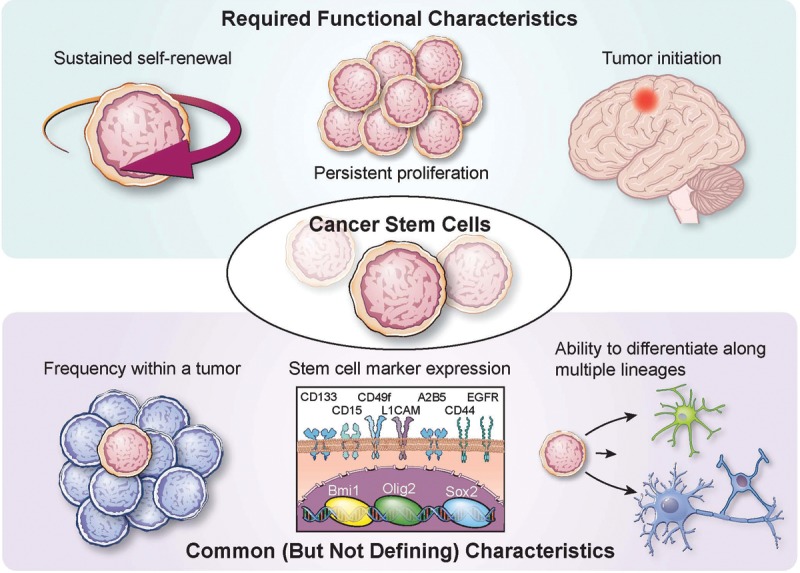
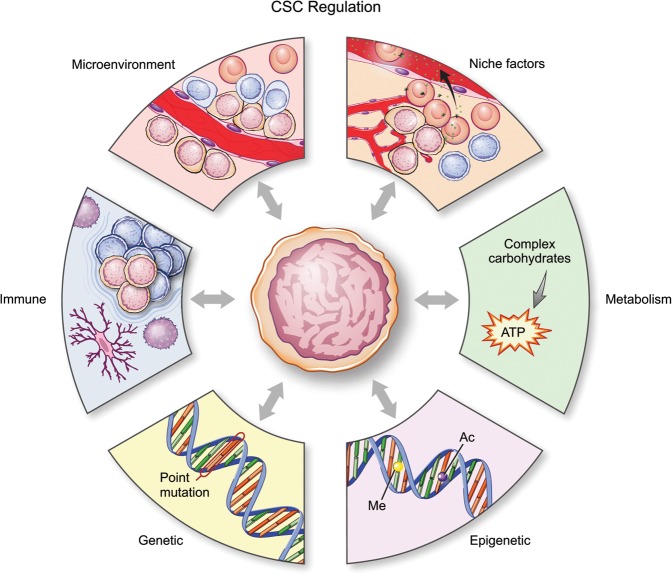
Tissues with defined cellular hierarchies in development and homeostasis give rise to tumors with cellular hierarchies, suggesting that tumors recapitulate specific tissues and mimic their origins. Glioblastoma (GBM) is the most prevalent and malignant primary brain tumor and contains self-renewing, tumorigenic cancer stem cells (CSCs) that contribute to tumor initiation and therapeutic resistance. As normal stem and progenitor cells participate in tissue development and repair, these developmental programs re-emerge in CSCs to support the development and progressive growth of tumors. Elucidation of the molecular mechanisms that govern CSCs has informed the development of novel targeted therapeutics for GBM and other brain cancers. CSCs are not self-autonomous units; rather, they function within an ecological system, both actively remodeling the microenvironment and receiving critical maintenance cues from their niches. To fulfill the future goal of developing novel therapies to collapse CSC dynamics, drawing parallels to other normal and pathological states that are highly interactive with their microenvironments and that use developmental signaling pathways will be beneficial.
Overview
The claims and statistics of this paper haven’t been checked yet.
Run the check — free, no account needed. It reads the open-access text and checks the sources it cites.
Integrity signals
Registry
Cites
Statistics
Figures
Verification
Claims the paper makes
The claims and statistics of this paper haven’t been checked yet.
Run the check — free, no account needed. It reads the open-access text and checks the sources it cites.
Claims other papers make about this one
Each is checked against this paper’s own text: does it say what the citing paper says it does?
The source backs part of the claim, not all of it — or backs it for a different population, condition or comparison.
In the citing paper
“They are considered tumor-initiating cells that render cancer resistant to conventional anti-glioblastoma therapies,90,91,92,93 leading to inevitable recurrence and fatal outcomes.94,95”
From MiR-128-3p – a gray eminence of the human central nervous system (2024) · cites this paper as [91]
Experimental — accuracy not yet measured
Self-check
Percentages, sums and reported differences re-computed from the paper’s own numbers.
The self-check needs the paper’s full text.
Citations
Cites
Hallmarks of Cancer: The Next Generation
Hanahan, D., & Weinberg, R. A. (2011) · Cell · doi:10.1016/j.cell.2011.02.013 · Cited by 66,590
Comprehensive genomic characterization defines human glioblastoma genes and core pathways
The Cancer Genome Atlas Research Network (2008) · Nature · doi:10.1038/nature07385 · Cited by 7,735
Verhaak, R. G. W., Hoadley, K. A., Purdom, E., Wang, V., Qi, Y., Wilkerson, M. D., Miller, C. R., Ding, L., Golub, T., Mesirov, J. P., et al. (2010) · Cancer Cell · doi:10.1016/j.ccr.2009.12.020 · Cited by 7,575
Single-cell RNA-seq highlights intratumoral heterogeneity in primary glioblastoma
Patel, A. P., Tirosh, I., Trombetta, J. J., Shalek, A. K., Gillespie, S. M., Wakimoto, H., Cahill, D. P., Nahed, B. V., Curry, W. T., Martuza, R. L., et al. (2014) · Science · doi:10.1126/science.1254257 · Cited by 5,063
The Somatic Genomic Landscape of Glioblastoma
Brennan, C. W., Verhaak, R. G. W., McKenna, A., Campos, B., Noushmehr, H., Salama, S. R., Zheng, S., Chakravarty, D., Sanborn, J. Z., Berman, S. H., et al. (2013) · Cell · doi:10.1016/j.cell.2013.09.034 · Cited by 5,016
A Randomized Trial of Bevacizumab for Newly Diagnosed Glioblastoma
Gilbert, M. R., Dignam, J. J., Armstrong, T. S., Wefel, J. S., Blumenthal, D. T., Vogelbaum, M. A., Colman, H., Chakravarti, A., Pugh, S., Won, M., et al. (2014) · New England Journal of Medicine · doi:10.1056/nejmoa1308573 · Cited by 2,834
A restricted cell population propagates glioblastoma growth after chemotherapy
Chen, J., Li, Y., Yu, T.-S., McKay, R. M., Burns, D. K., Kernie, S. G., & Parada, L. F. (2012) · Nature · doi:10.1038/nature11287 · Cited by 2,354
IDH mutation impairs histone demethylation and results in a block to cell differentiation
Lu, C., Ward, P. S., Kapoor, G. S., Rohle, D., Turcan, S., Abdel-Wahab, O., Edwards, C. R., Khanin, R., Figueroa, M. E., Melnick, A., et al. (2012) · Nature · doi:10.1038/nature10860 · Cited by 1,985
Hypoxia-inducible factors regulate tumorigenic capacity of glioma stem cells
Li, Z., Bao, S., Wu, Q., Wang, H., Eyler, C., Sathornsumetee, S., Shi, Q., Cao, Y., Lathia, J., McLendon, R. E., et al. (2009) · Cancer Cell · doi:10.1016/j.ccr.2009.03.018 · Cited by 1,354
Self-citationZhou, W., Ke, S. Q., Huang, Z., Flavahan, W., Fang, X., Paul, J., Wu, L., Sloan, A. E., McLendon, R. E., Li, X., et al. (2015) · Nature Cell Biology · doi:10.1038/ncb3090 · Cited by 940
Coactivation of receptor tyrosine kinases affects the response of tumor cells to targeted therapies
Stommel, J. M., Kimmelman, A. C., Ying, H., Nabioullin, R., Ponugoti, A. H., Wiedemeyer, R., Stegh, A. H., Bradner, J. E., Ligon, K. L., Brennan, C., et al. (2007) · Science · doi:10.1126/science.1142946 · Cited by 938
p53 and Pten control neural and glioma stem/progenitor cell renewal and differentiation
Zheng, H., Ying, H., Yan, H., Kimmelman, A. C., Hiller, D. J., Chen, A.-J., Perry, S. R., Tonon, G., Chu, G. C., Ding, Z., et al. (2008) · Nature · doi:10.1038/nature07443 · Cited by 767
Chudnovsky, Y., Kim, D., Zheng, S., Whyte, W. A., Bansal, M., Bray, M.-A., Gopal, S., Theisen, M. A., Bilodeau, S., Thiru, P., et al. (2014) · Cell Reports · doi:10.1016/j.celrep.2013.12.032 · Cited by 136
Research works printed but not linked: 135
- 10.1016/j.ccr.2010.10.023 · DOI
- 10.1038/cdd.2014.31 · DOI
- 10.1093/neuonc/nou027 · DOI
- 10.1038/nature05236 · DOI
- 10.1158/0008-5472.CAN-06-1010 · DOI
- 10.1158/0008-5472.CAN-08-1079 · DOI · Paper page
- 2007, Cyclopamine-mediated hedgehog pathway inhibition depletes stem-like cancer cells in glioblastoma, Stem Cells, 10, 2524
- 10.1186/1748-717X-8-65 · DOI
- 10.1016/j.stem.2010.11.016 · DOI
- 10.1016/j.ccr.2006.11.021 · DOI · Paper page
- 10.1158/0008-5472.CAN-06-4180 · DOI
- 10.1158/0008-5472.CAN-07-6878 · DOI
- 10.1038/ng.127 · DOI
- 10.1007/s12032-014-0985-5 · DOI
- 10.1016/j.ccr.2013.08.001 · DOI
- 10.1016/j.ccr.2012.11.005 · DOI
- 10.1038/nrm3625 · DOI
- 10.1016/j.stem.2009.01.007 · DOI
- 10.1158/0008-5472.CAN-11-0153 · DOI
- 10.1038/nm0797-730 · DOI
- 10.1002/stem.582 · DOI
- 10.1016/j.ccr.2007.08.032 · DOI
- 10.1016/j.chom.2008.02.003 · DOI
- 10.1016/j.ccr.2006.11.020 · DOI
- 10.1016/j.celrep.2012.07.012 · DOI · Paper page
- 10.1038/nature06965 · DOI
- 10.1016/j.stem.2010.01.001 · DOI · Paper page
- 10.1371/journal.pcbi.1002337 · DOI
- 10.1016/j.cell.2013.02.021 · DOI · Paper page
- 10.1016/j.cub.2006.11.033 · DOI
- 10.1634/theoncologist.2009-0121 · DOI
- 10.1016/j.semcancer.2013.12.004 · DOI
- 10.1016/j.ccr.2013.01.007 · DOI
- 10.1093/neuonc/nop027 · DOI
- 10.1586/erv.11.177 · DOI
- 10.1158/1078-0432.CCR-09-2730 · DOI
- 10.1038/sj.onc.1210359 · DOI
- 10.1038/nm.2415 · DOI
- 10.1016/j.cell.2011.06.006 · DOI
- 10.1158/0008-5472.CAN-06-0858 · DOI
- 2010, NOTCH pathway blockade depletes CD133-positive glioblastoma cells and inhibits growth of tumor neurospheres and xenografts, Stem Cells, 28, 5, 10.1002/stem.254 · DOI
- 10.1002/stem.1730 · DOI
- 10.1158/0008-5472.CAN-05-3773 · DOI
- 10.1038/nn.3510 · DOI
- 10.1158/0008-5472.CAN-04-1364 · DOI
- 10.1158/0008-5472.CAN-12-1881 · DOI
- 10.1634/stemcells.2008-0493 · DOI
- 10.1016/j.ccr.2013.03.030 · DOI · Paper page
- 10.1038/nature09587 · DOI
- 10.1093/brain/awt025 · DOI
- 10.1084/jem.183.4.1797 · DOI
- 10.1097/nen.0b013e31802d9000 · DOI
- 10.4161/cc.8.20.9701 · DOI · Paper page
- 10.1038/cdd.2011.109 · DOI
- 10.1073/pnas.2036535100 · DOI
- 10.1371/journal.pbio.1000319 · DOI
- 10.1038/cdd.2010.150 · DOI
- 10.1002/glia.10094 · DOI
- 10.1016/j.stem.2009.08.018 · DOI
- 10.1101/gad.1668708 · DOI
- 10.1158/1538-7445.AM2012-3828 · DOI
- 10.1002/stem.1358 · DOI
- 10.1002/stem.1554 · DOI
- 10.1007/s00401-013-1173-y · DOI
- 10.1215/S1152851704001115 · DOI · Paper page
- 10.1158/0008-5472.CAN-09-1820 · DOI
- 10.1016/j.cell.2010.09.010 · DOI
- 10.1101/gad.193565.112 · DOI
- 10.1016/j.ccr.2013.04.008 · DOI
- 10.1016/j.stemcr.2014.12.006 · DOI
- 10.1073/pnas.0307618100 · DOI
- 10.1158/1078-0432.CCR-10-1693 · DOI
- 10.1016/j.stem.2010.02.018 · DOI
- 10.1007/s12015-010-9194-6 · DOI
- 10.1016/j.cell.2013.12.029 · DOI
- 10.1016/j.ccr.2006.03.030 · DOI
- 10.1016/j.ccr.2007.12.005 · DOI
- 10.1074/jbc.R900013200 · DOI
- 10.1016/j.neuron.2007.01.009 · DOI
- 10.1186/1476-4598-5-67 · DOI
- 10.1158/0008-5472.CAN-09-1707 · DOI
- 10.1016/j.ccr.2013.12.006 · DOI
- 10.1016/j.celrep.2014.10.055 · DOI
- 10.1038/nature12624 · DOI
- 10.1073/pnas.1320611111 · DOI
- 10.1016/j.semcancer.2009.02.005 · DOI · Paper page
- 10.1038/431899a · DOI
- 10.1016/j.ccr.2010.03.017 · DOI · Paper page
- 10.1227/01.neu.0000316019.28421.95 · DOI
- 10.1111/j.1574-6976.2009.00200.x · DOI
- 10.1016/j.stem.2011.04.007 · DOI
- 10.1158/0008-5472.CAN-06-2048 · DOI
- 10.1016/j.ccr.2006.02.019 · DOI
- 10.1007/s00262-012-1319-0 · DOI
- 10.1038/nature05349 · DOI
- 10.1002/1097-0029(20010215)52:4<401::AID-JEMT1025>3.0.CO;2-C · DOI
- 10.1016/j.stem.2009.03.014 · DOI · Paper page
- 10.1038/cdd.2011.95 · DOI · Paper page
- 10.1038/nri3265 · DOI
- 10.1093/neuonc/nou212 · DOI
- 10.1038/35102167 · DOI · Paper page
- 10.1016/j.celrep.2013.04.021 · DOI
- 10.1038/nature09611 · DOI
- 10.1038/nn.3597 · DOI
- 10.1016/j.critrevonc.2004.04.007 · DOI
- 2009, STAT3 is required for proliferation and maintenance of multipotency in glioblastoma stem cells, Stem Cells, 10, 2383
- 2003, Identification of a cancer stem cell in human brain tumors, Cancer Res, 63, 5821
- 10.1038/nature03128 · DOI
- 10.1016/j.stem.2009.03.003 · DOI
- 10.1073/pnas.1219747110 · DOI · Paper page
- 10.1016/S1470-2045(09)70025-7 · DOI
- 10.1371/journal.pone.0005498 · DOI
- 10.1016/j.cell.2014.02.030 · DOI
- 10.1200/JCO.2010.29.7499 · DOI
- 10.1186/1476-4598-3-25 · DOI
- 10.1073/pnas.97.26.14720 · DOI
- 10.1002/glia.21185 · DOI
- 10.1038/cdd.2013.136 · DOI
- 2013, Transcription factors FOXG1 and Groucho/TLE promote glioblastoma growth, Nat Commun, 4, 2956, 10.1038/ncomms3956 · DOI
- 10.1073/pnas.1106704108 · DOI
- 10.1371/journal.pone.0003769 · DOI
- 10.1002/stem.188 · DOI
- 2010, Notch promotes radioresistance of glioma stem cells, Stem Cells, 28, 17, 10.1002/stem.261 · DOI
- 10.1158/1078-0432.CCR-09-1983 · DOI
- 10.1073/pnas.1217002110 · DOI
- 10.1016/S1470-2045(13)70168-2 · DOI
- 10.1093/neuonc/noq082 · DOI
- 10.1016/j.stem.2009.11.002 · DOI
- 10.1038/nn.3960 · DOI
- 10.1002/stem.102 · DOI
- 10.1101/gad.235515.113 · DOI
- 10.1016/j.canlet.2008.02.010 · DOI
- 10.1038/emboj.2010.137 · DOI
- 10.1016/j.ccr.2010.03.020 · DOI
- 10.1158/0008-5472.CAN-10-4269 · DOI
Cited by
Sorted by citations
Epigenetic plasticity and the hallmarks of cancer
Flavahan, W. A., Gaskell, E., & Bernstein, B. E. (2017) · Science · doi:10.1126/science.aal2380 · Cited by 1,340
Challenges to curing primary brain tumours
Aldape, K., Brindle, K. M., Chesler, L., Chopra, R., Gajjar, A., Gilbert, M. R., Gottardo, N., Gutmann, D. H., Hargrave, D., Holland, E. C., et al. (2019) · Nature Reviews Clinical Oncology · doi:10.1038/s41571-019-0177-5 · Cited by 959
Self-citationAdvances in the molecular genetics of gliomas — implications for classification and therapy
Reifenberger, G., Wirsching, H.-G., Knobbe-Thomsen, C. B., & Weller, M. (2017) · Nature Reviews Clinical Oncology · doi:10.1038/nrclinonc.2016.204 · Cited by 662
Stem cell programs in cancer initiation, progression, and therapy resistance
Huang, T., Song, X., Xu, D., Tiek, D., Goenka, A., Wu, B., Sastry, N., Hu, B., & Cheng, S.-Y. (2020) · Theranostics · doi:10.7150/thno.41648 · Cited by 524
Targeting Cancer Stemness in the Clinic: From Hype to Hope
Saygin, C., Matei, D., Majeti, R., Reizes, O., & Lathia, J. D. (2019) · Cell Stem Cell · doi:10.1016/j.stem.2018.11.017 · Cited by 517
Self-citation
Metadata
- Authors
- Lathia, J. D., Mack, S. C., Mulkearns-Hubert, E. E., Valentim, C. L. L., & Rich, J. N.
- Venue
- Genes & Development
- Publisher
- Cold Spring Harbor Laboratory
- Published
- 2015-06-15
- Volume
- 29
- Issue
- 12
- Pages
- 1203-1217
- ISSN
- 0890-9369
- 1549-5477
- PMC
- PMC4495393
- Cited by
- 1,520
- References
- 13
- Language
- en
- Funders
- National Institutes of Health (CA154130, CA171652, CA169117, NS087913, NS089272, CA157948, NS083629)
- Sontag Foundation
- Cleveland Clinic
- James S. McDonnell Foundation
- Canadian Institutes of Health Research
- Lerner Research Institute
- Case Comprehensive Cancer Center
- Voices Against Brain Cancer
- Blast GBM
- Ohio Cancer Research Associates
- American Cancer Society (V Scholar Award)
- V Foundation for Cancer Research (IRG-91-022-18)
About these checks
Registry, retraction, Cites and statistics results are computed, not judged, with one exception: a printed reference that no index lists is read once by a model before it counts as a citation error. Claims are extracted by a model and kept only when their quote appears verbatim in the text; each cited source is then checked, with a model’s help, for whether it says what the claim relies on. Those verdicts can be wrong — read the claim’s quote and the cited source before relying on one.
Statistics and arithmetic are recomputed, not judged.
Confidence bands are shown only for fields calibrated on our annotated test set. None is calibrated yet, so no band is shown.
What counts as a claim ›How we measure confidence ›How we check this ›
Are you an author, or do you see a problem with this page? Request a review
