

The DOI matches its Crossref record; 45 of the 45 references it cites were found in a registry or an index.
Gene disruption by cell-penetrating peptide-mediated delivery of Cas9 protein and guide RNA
Open accessAbstract
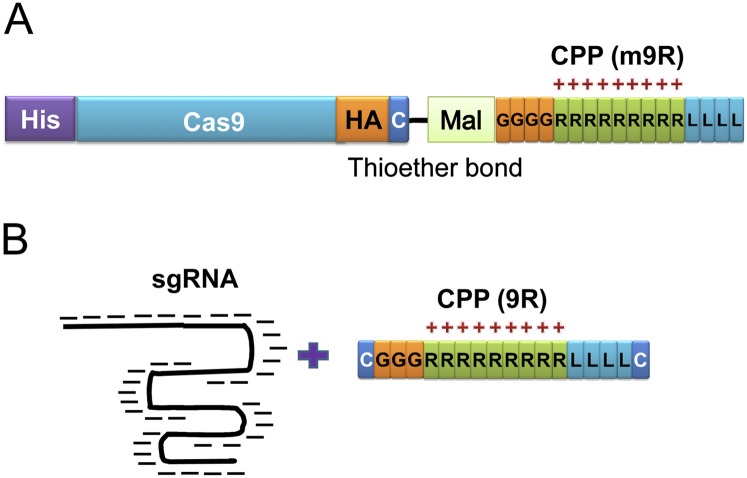
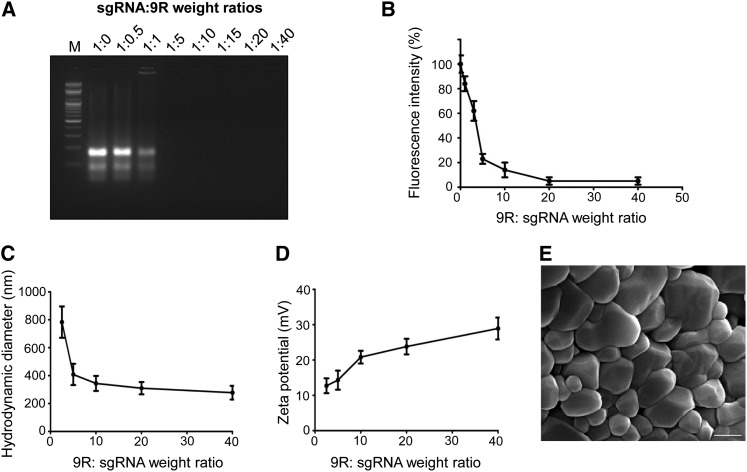
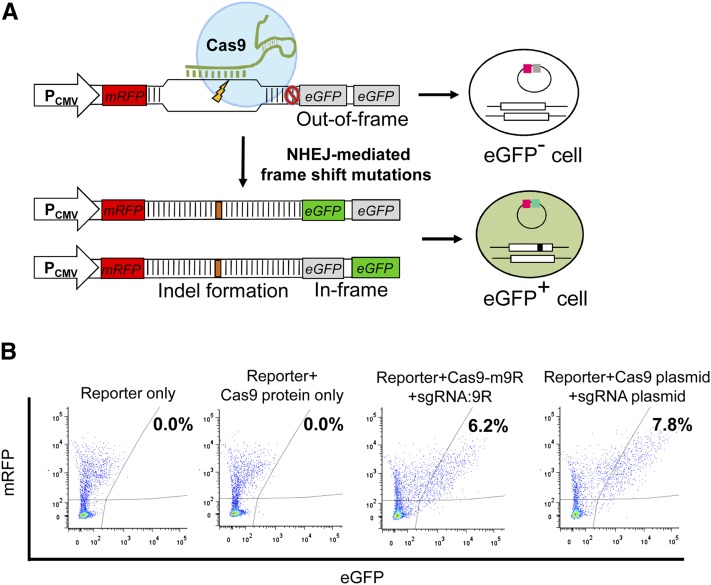
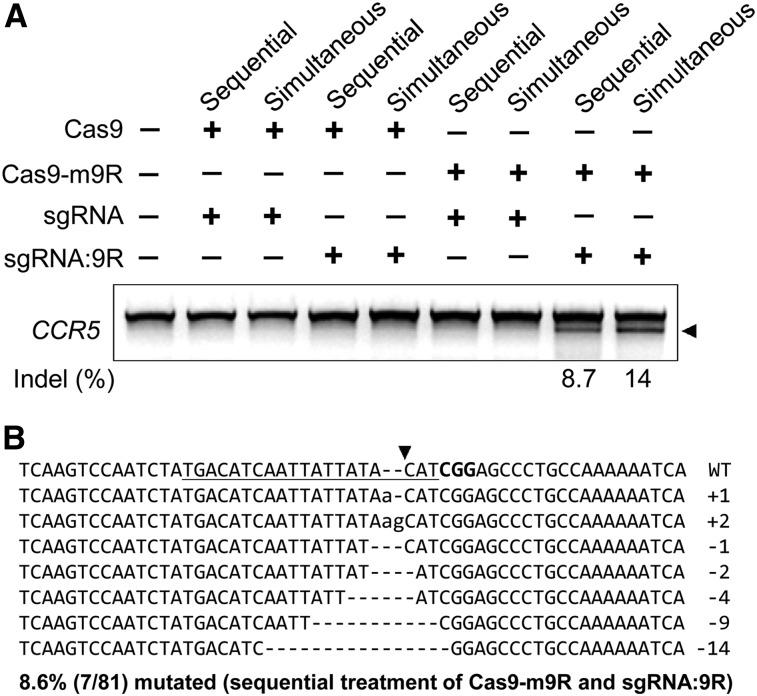
RNA-guided endonucleases (RGENs) derived from the CRISPR/Cas system represent an efficient tool for genome editing. RGENs consist of two components: Cas9 protein and guide RNA. Plasmid-mediated delivery of these components into cells can result in uncontrolled integration of the plasmid sequence into the host genome, and unwanted immune responses and potential safety problems that can be caused by the bacterial sequences. Furthermore, this delivery method requires transfection tools. Here we show that simple treatment with cell-penetrating peptide (CPP)-conjugated recombinant Cas9 protein and CPP-complexed guide RNAs leads to endogenous gene disruptions in human cell lines. The Cas9 protein was conjugated to CPP via a thioether bond, whereas the guide RNA was complexed with CPP, forming condensed, positively charged nanoparticles. Simultaneous and sequential treatment of human cells, including embryonic stem cells, dermal fibroblasts, HEK293T cells, HeLa cells, and embryonic carcinoma cells, with the modified Cas9 and guide RNA, leads to efficient gene disruptions with reduced off-target mutations relative to plasmid transfections, resulting in the generation of clones containing RGEN-induced mutations. Our CPP-mediated RGEN delivery process provides a plasmid-free and additional transfection reagent-free method to use this tool with reduced off-target effects. We envision that our method will facilitate RGEN-directed genome editing.
Overview
The claims and statistics of this paper haven’t been checked yet.
Run the check — free, no account needed. It reads the open-access text and checks the sources it cites.
Integrity signals
Registry
Cites
Statistics
Figures
Verification
Claims the paper makes
The claims and statistics of this paper haven’t been checked yet.
Run the check — free, no account needed. It reads the open-access text and checks the sources it cites.
Claims other papers make about this one
Each is checked against this paper’s own text: does it say what the citing paper says it does?
The cited source doesn’t support the claim as written.
In the citing paper
“RNP electroporation exhibits higher on-target editing efficiency and lower off-target mutations than the other delivery methods”
From Off-target effects in CRISPR/Cas9 gene editing (2023) · cites this paper as Ramakrishna et al., 2014
Checked by a reasoning model — may be wrong.
Experimental — accuracy not yet measuredThe source backs part of the claim, not all of it — or backs it for a different population, condition or comparison.
In the citing paper
“A powerful advantage of the CRISPR/Cas9 system is the ability to target any ∼23-bp sequence that contains a PAM motif on either strand of DNA.”
From Delivering CRISPR: a review of the challenges and approaches (2018) · cites this paper as Ramakrishna et al., 2014
Experimental — accuracy not yet measuredThe source backs part of the claim, not all of it — or backs it for a different population, condition or comparison.
In the citing paper
“cell-penetrating peptides (CPP), conjugated with Cas9 and complexed with gRNA enabled efficient gene silencing in human cell lines and disease models featuring fewer off-target effects when compared to plasmid transfection [153,154].”
From CRISPR-Cas: Converting A Bacterial Defence Mechanism into A State-of-the-Art Genetic Manipulation Tool (2019) · cites this paper as [153]
Experimental — accuracy not yet measuredIn the citing paper
“Ramakrishna et al. demonstrated that conjugating Cas9 and sgRNA with cell-penetrating peptides (CPPs) enhanced intracellular delivery efficiency because of the membrane-disturbed properties of CPPs.[227]”
From RNA delivery biomaterials for the treatment of genetic and rare diseases (2019) · cites this paper as [227]
In the citing paper
“Some work with CPPs and CRISPR/Cas9 was accomplished as early as 2014 by Ramakrishna et al. (2014), who showed separate delivery of CPP–Cas9 and CPP–sgRNA to multiple human cell lines.”
From Delivering CRISPR: a review of the challenges and approaches (2018) · cites this paper as Ramakrishna et al., 2014
In the citing paper
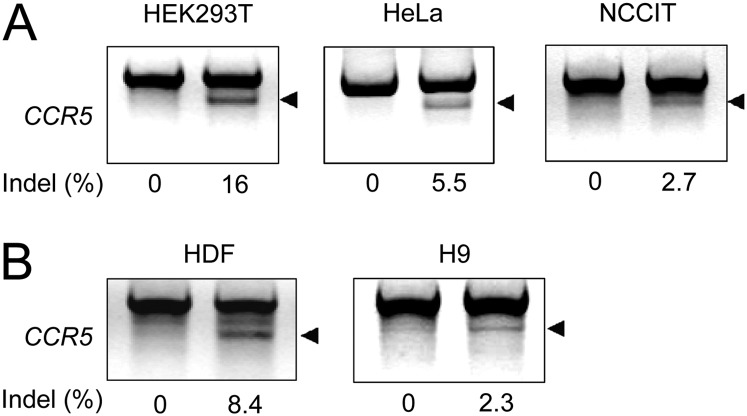
“Ramakrishna et al. developed cell-penetrating peptide (CPP)-conjugated recombinant Cas9 protein and CPP-complexed guide RNAs for gene disruptions of CCR5 locus in human cell lines, including HEK293T, HeLa, NCCIT (a human pluripotent embryonal carcinoma cell line), human dermal fibroblasts and human embryonic stem cells.”
From Non-viral delivery systems for CRISPR/Cas9-based genome editing: challenges and opportunities (2018) · cites this paper as [96]
In the citing paper
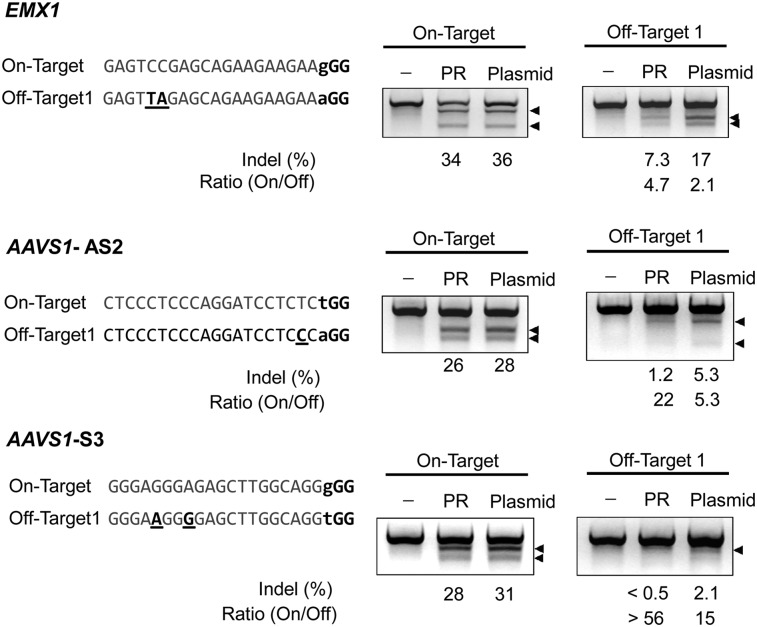
“Cell-penetrate-peptide-mediated delivery was reported to achieve higher on-to off-target activity ratio compared with plasmid-mediated delivery.53”
From CRISPR-Cas9: a new and promising player in gene therapy (2015) · cites this paper as [53]
Self-check
Percentages, sums and reported differences re-computed from the paper’s own numbers.
The self-check needs the paper’s full text.
Citations
Cites
A Programmable Dual-RNA–Guided DNA Endonuclease in Adaptive Bacterial Immunity
Jinek, M., Chylinski, K., Fonfara, I., Hauer, M., Doudna, J. A., & Charpentier, E. (2012) · Science · doi:10.1126/science.1225829 · Cited by 17,116
Multiplex Genome Engineering Using CRISPR/Cas Systems
Cong, L., Ran, F. A., Cox, D., Lin, S., Barretto, R., Habib, N., Hsu, P. D., Wu, X., Jiang, W., Marraffini, L. A., et al. (2013) · Science · doi:10.1126/science.1231143 · Cited by 15,339
RNA-Guided Human Genome Engineering via Cas9
Mali, P., Yang, L., Esvelt, K. M., Aach, J., Guell, M., DiCarlo, J. E., Norville, J. E., & Church, G. M. (2013) · Science · doi:10.1126/science.1232033 · Cited by 9,210
A Toll-like receptor recognizes bacterial DNA
Hemmi, H., Takeuchi, O., Kawai, T., Kaisho, T., Sato, S., Sanjo, H., Matsumoto, M., Hoshino, K., Wagner, H., Takeda, K., et al. (2000) · Nature · doi:10.1038/35047123 · Cited by 6,491 · cited 3×
“responses (Hemmi et al. 2000; Wagner 2001) caused by bacterial sequences, and safety problems if the antibiotic-resistance gene is taken up by pathogenic bacteria.”
BackgroundInfluentialDNA targeting specificity of RNA-guided Cas9 nucleases
Hsu, P. D., Scott, D. A., Weinstein, J. A., Ran, F. A., Konermann, S., Agarwala, V., Li, Y., Fine, E. J., Wu, X., Shalem, O., et al. (2013) · Nature Biotechnology · doi:10.1038/nbt.2647 · Cited by 4,741
Wang, H., Yang, H., Shivalila, C. S., Dawlaty, M. M., Cheng, A. W., Zhang, F., & Jaenisch, R. (2013) · Cell · doi:10.1016/j.cell.2013.04.025 · Cited by 3,495
Double nicking by RNA-guided CRISPR Cas9 for enhanced genome editing specificity
Ran, F. A., Hsu, P. D., Lin, C.-Y., Gootenberg, J. S., Konermann, S., Trevino, A. E., Scott, D. A., Inoue, A., Matoba, S., Zhang, Y., et al. (2013) · Cell · doi:10.1016/j.cell.2013.08.021 · Cited by 3,299
High-Frequency off-Target Mutagenesis Induced by CRISPR-Cas Nucleases in Human Cells
Fu, Y., Foden, J. A., Khayter, C., Maeder, M. L., Reyon, D., Joung, J. K., & Sander, J. D. (2013) · Nature Biotechnology · doi:10.1038/nbt.2623 · Cited by 3,292
Efficient genome editing in zebrafish using a CRISPR-Cas system
Hwang, W. Y., Fu, Y., Reyon, D., Maeder, M. L., Tsai, S. Q., Sander, J. D., Peterson, R. T., Yeh, J.-R. J., & Joung, J. K. (2013) · Nature Biotechnology · doi:10.1038/nbt.2501 · Cited by 2,937
CRISPR/Cas, the Immune System of Bacteria and Archaea
Horvath, P., & Barrangou, R. (2010) · Science · doi:10.1126/science.1179555 · Cited by 2,471
Cited by
Sorted by citations
Items 101–200 of 653
Efficient delivery of nuclease proteins for genome editing in human stem cells and primary cells
Liu, J., Gaj, T., Yang, Y., Wang, N., Shui, S., Kim, S., Kanchiswamy, C. N., Kim, J., & Barbas, C. F. (2015) · Nature Protocols · doi:10.1038/nprot.2015.117 · Cited by 129
CRISPR/Cas9 for Cancer Therapy: Hopes and Challenges
Martínez-Lage, M., Puig-Serra, P., Menéndez, P. R., Torres-Ruiz, R., & Rodríguez, S. (2018) · Biomedicines · doi:10.3390/biomedicines6040105 · Cited by 128
Rohiwal, S. S., Dvořáková, N., Klı́ma, J., Vaškovičová, M., Šenigl, F., Šlouf, M., Pavlová, E., Štěpánek, P., Babuka, D., Beneš, H., et al. (2020) · Scientific Reports · doi:10.1038/s41598-020-61465-6 · Cited by 124
CRISPR/dCas9-Based Systems: Mechanisms and Applications in Plant Sciences
Karlson, C. K. S., Noor, S. N. M., Nolte, N., & Tan, B. C. (2021) · Plants · doi:10.3390/plants10102055 · Cited by 139
Therapeutic gene editing: delivery and regulatory perspectives
Shim, G., Kim, D., Park, G. T., Jin, H., Suh, S., & Oh, Y. (2017) · Acta Pharmacologica Sinica · doi:10.1038/aps.2017.2 · Cited by 125
Applications of CRISPR-Cas Enzymes in Cancer Therapeutics and Detection
Huang, C., Lee, K.-C., & Doudna, J. A. (2018) · Trends in cancer · doi:10.1016/j.trecan.2018.05.006 · Cited by 119
CRISPR/Cas9-mediated noncoding RNA editing in human cancers
Yang, J., Meng, X., Pan, J., Jiang, N., Zhou, C., Wu, Z., & Gong, Z. (2017) · RNA Biology · doi:10.1080/15476286.2017.1391443 · Cited by 122
Genome editing by natural and engineered CRISPR-associated nucleases
Wu, W. Y., Lebbink, J. H. G., Kanaar, R., Geijsen, N., & John van der, O. O. S. T. (2018) · Nature Chemical Biology · doi:10.1038/s41589-018-0080-x · Cited by 119
Lyu, P., Javidi-Parsijani, P., Atala, A., & Lu, B. (2019) · Nucleic Acids Research · doi:10.1093/nar/gkz605 · Cited by 123
VSV-G-Enveloped Vesicles for Traceless Delivery of CRISPR-Cas9
Montagna, C., Petris, G., Casini, A., Maule, G., Franceschini, G. M., Zanella, I., Conti, L., Arnoldi, F., Burrone, O. R., Zentilin, L., et al. (2018) · Molecular Therapy Nucleic Acids · doi:10.1016/j.omtn.2018.05.010 · Cited by 117
Wan, T. Y., Niu, D., Wu, C., Xu, F., Church, G. M., & Yuan, P. (2019) · Materials Today · doi:10.1016/j.mattod.2018.12.003 · Cited by 119
DNA-binding-domain fusions enhance the targeting range and precision of Cas9
Bolukbasi, M. F., Gupta, A., Oikemus, S., Derr, A. G., Garber, M. G., Brodsky, M. H., Zhu, L. J., & Wolfe, S. A. (2015) · Nature Methods · doi:10.1038/nmeth.3624 · Cited by 117
CRISPR/Cas9 Genome-Editing System in Human Stem Cells: Current Status and Future Prospects
Zhang, Z., Zhang, Y., Gao, F., Han, S., Cheah, K. S. E., Tse, H., & Lian, Q. (2017) · Molecular Therapy — Nucleic Acids · doi:10.1016/j.omtn.2017.09.009 · Cited by 122
Liu, W., Rudis, M. R., Cheplick, M. H., Millwood, R. J., Yang, J., Ondzighi‐Assoume, C. A., Montgomery, G. A., Burris, K. P., Mazarei, M., Chesnut, J. D., et al. (2019) · Plant Cell Reports · doi:10.1007/s00299-019-02488-w · Cited by 118
Park, S. M., Lim, J. S., Ramakrishina, S., Kim, S. H., Kim, W. K., Lee, J., Kang, H.-C., Reiter, J. F., Kim, D. S., Kim, H. (., et al. (2018) · Neuron · doi:10.1016/j.neuron.2018.05.039 · Cited by 114
Self-citationPeptide/Cas9 nanostructures for ribonucleoprotein cell membrane transport and gene edition
Lostalé‐Seijo, I., Louzao, I., Juanes, M., & Montenegro, J. (2017) · Chemical Science · doi:10.1039/c7sc03918b · Cited by 115
Non-Viral Delivery To Enable Genome Editing
Rui, Y., Wilson, D. R., & Green, J. J. (2018) · Trends in biotechnology · doi:10.1016/j.tibtech.2018.08.010 · Cited by 115
Creating and evaluating accurate CRISPR-Cas9 scalpels for genomic surgery
Bolukbasi, M. F., Gupta, A., & Wolfe, S. A. (2015) · Nature Methods · doi:10.1038/nmeth.3684 · Cited by 112
CRISPR/Cas9 therapeutics: a cure for cancer and other genetic diseases
Khan, F. A., Pandupuspitasari, N. S., Huang, C., Ao, Z., Jamal, M., Zohaib, A., Khan, F. A., Hakim, M. R., & ShuJun, Z. (2016) · Oncotarget · doi:10.18632/oncotarget.9646 · Cited by 115
CRISPR-mediated Activation of Latent HIV-1 Expression
Limsirichai, P., Gaj, T., & Schaffer, D. V. (2015) · Molecular Therapy · doi:10.1038/mt.2015.213 · Cited by 112
Non-viral delivery of genome-editing nucleases for gene therapy
Wang, M., Glass, Z., & Xu, Q. (2016) · Gene Therapy · doi:10.1038/gt.2016.72 · Cited by 113
New CRISPR Mutagenesis Strategies Reveal Variation in Repair Mechanisms among Fungi
Vyas, V. K., Bushkin, G. G., Bernstein, D. A., Getz, M. A., Sewastianik, M., Barrasa, M. I., Bartel, D. P., & Fink, G. R. (2018) · mSphere · doi:10.1128/msphere.00154-18 · Cited by 107
dCas9: A Versatile Tool for Epigenome Editing
Brocken, D. J. W., Tark‐Dame, M., & Dame, R. T. (2017) · Current Issues in Molecular Biology · doi:10.21775/cimb.026.015 · Cited by 113
Comparison of the Feasibility, Efficiency, and Safety of Genome Editing Technologies
Castro, N. G. G., Bjelic, J., Malhotra, G., Huang, C., & Alsaffar, S. H. (2021) · International Journal of Molecular Sciences · doi:10.3390/ijms221910355 · Cited by 110
Carrier strategies boost the application of CRISPR/Cas system in gene therapy
Xu, Z., Wang, Q., Zhong, H., Jiang, Y., Shi, X., Yuan, B., Yu, N., Zhang, S., Yuan, X., Guo, S., et al. (2022) · Exploration · doi:10.1002/exp.20210081 · Cited by 105
Efficient engineering of human and mouse primary cells using peptide-assisted genome editing
Zhang, Z., Baxter, A. E., Ren, D., Qin, K., Chen, Z., Collins, S. M., Huang, H., Komar, C. A., Bailer, P. F., Parker, J. B., et al. (2023) · Nature Biotechnology · doi:10.1038/s41587-023-01756-1 · Cited by 113
Enabling functional genomics with genome engineeringPreprint
Hilton, I. B., & Gersbach, C. A. (2015) · Genome Research · doi:10.1101/gr.190124.115 · Cited by 106
Different Effects of sgRNA Length on CRISPR-mediated Gene Knockout Efficiency
Zhang, J., Li, X., Neises, A., Chen, W., Hu, L., Ji, G., Yu, J.-Y., Xu, J., Yuan, W., Cheng, T., et al. (2016) · Scientific Reports · doi:10.1038/srep28566 · Cited by 104
Ultrasound-Controlled CRISPR/Cas9 System Augments Sonodynamic Therapy of Hepatocellular Carcinoma
Yin, H., Sun, L., Pu, Y., Yu, J., Feng, W., Dong, C., Zhou, B., Du, D., Zhang, Y., Chen, Y., et al. (2021) · ACS Central Science · doi:10.1021/acscentsci.1c01143 · Cited by 102
CRISPR/Cas9 Methodology for the Generation of Knockout Deletions in Caenorhabditis elegans
Au, V., Li-Leger, E., Raymant, G., Flibotte, S., Chen, G., Martin, K., Fernando, L., Doell, C., Rosell, F. I., Wang, S., et al. (2018) · G3 Genes Genomes Genetics · doi:10.1534/g3.118.200778 · Cited by 95
Mashel, T. V., Tarakanchikova, Y. V., Muslimov, A. R., Zyuzin, M. V., Timin, A. S., Lepik, K. V., & Fehse, B. (2020) · Biomaterials · doi:10.1016/j.biomaterials.2020.120282 · Cited by 102
Homology-directed repair in rodent zygotes using Cas9 and TALEN engineered proteins
Ménoret, S., Cian, A. D., Tesson, L., Remy, S., Usal, C., Boulé, J.-B., Boix, C., Fontanière, S., Crénéguy, A., Nguyen, T. H., et al. (2015) · Scientific Reports · doi:10.1038/srep14410 · Cited by 96
CRISPR/Cas System and Factors Affecting Its Precision and Efficiency
Javaid, N., & Choi, S. (2021) · Frontiers in Cell and Developmental Biology · doi:10.3389/fcell.2021.761709 · Cited by 106
In Vivo Delivery Systems for Therapeutic Genome Editing
Wang, L., Li, F., Dang, L., Liang, C., Wang, C., He, B., Liu, J., Li, D., Wu, X., Xu, X., et al. (2016) · International Journal of Molecular Sciences · doi:10.3390/ijms17050626 · Cited by 101
CRISPR-Cas9 therapeutics in cancer: promising strategies and present challenges
Yi, L., & Li, J. (2016) · Biochimica et Biophysica Acta (BBA) - Reviews on Cancer · doi:10.1016/j.bbcan.2016.09.002 · Cited by 96
Tadić, V., Josipović, G., Zoldoš, V., & Vojta, A. (2019) · Methods · doi:10.1016/j.ymeth.2019.05.003 · Cited by 99
Hit and go CAS9 delivered through a lentiviral based self-limiting circuit
Petris, G., Casini, A., Montagna, C., Lorenzin, F., Prandi, D., Romanel, A., Zasso, J., Conti, L., Demichelis, F., & Cereseto, A. (2017) · Nature Communications · doi:10.1038/ncomms15334 · Cited by 98
Li, Y., Bolinger, J., Yu, Y., Glass, Z., Shi, N., Yang, L., Wang, M., & Xu, Q. (2018) · Biomaterials Science · doi:10.1039/c8bm00637g · Cited by 96
The Promise and Challenge of In Vivo Delivery for Genome Therapeutics
Wilson, R. C., & Gilbert, L. A. (2017) · ACS Chemical Biology · doi:10.1021/acschembio.7b00680 · Cited by 98
Lu, B., Javidi-Parsijani, P., Makani, V. S., Mehraein‐Ghomi, F., Sarhan, W. M., Sun, D., Yoo, K. W., Atala, Z., Lyu, P., & Atala, A. (2019) · Nucleic Acids Research · doi:10.1093/nar/gkz093 · Cited by 94
Chemical and Biophysical Modulation of Cas9 for Tunable Genome Engineering
Nuñez, J. K., Harrington, L. B., & Doudna, J. A. (2016) · ACS Chemical Biology · doi:10.1021/acschembio.5b01019 · Cited by 92
Sanz, D. J., Hollywood, J. A., Scallan, M. F., & Harrison, P. T. (2017) · PLOS ONE · doi:10.1371/journal.pone.0184009 · Cited by 92
Zou, G., Xiao, M., Chai, S., Zhu, Z., Wang, Y., & Zhou, Z. (2020) · Microbial Biotechnology · doi:10.1111/1751-7915.13652 · Cited by 93
CRISPR/Cas systems: Delivery and application in gene therapy
Huang, J., Zhou, Y., Li, J., Lü, A., & Liang, C. (2022) · Frontiers in Bioengineering and Biotechnology · doi:10.3389/fbioe.2022.942325 · Cited by 102
Versatility of chemically synthesized guide RNAs for CRISPR-Cas9 genome editing
Kelley, M. L., Strezoska, Ž., He, K., Vermeulen, A., & Smith, A. V. B. (2016) · Journal of Biotechnology · doi:10.1016/j.jbiotec.2016.06.011 · Cited by 89
Rádis‐Baptista, G., Campelo, I. S., Morlighem, J.-É. R. L., Melo, L. M., & Freitas, V. J. D. F. (2017) · Journal of Biotechnology · doi:10.1016/j.jbiotec.2017.05.002 · Cited by 95
Suresh (2017) · doi:10.1007/978-1-4939-6518-2_7 · Cited by 78
Self-citationNagy, G., Szebenyi, C., Csernetics, Á., Vaz, A. G., Tóth, E. J., Vágvölgyi, C., & Papp, T. (2017) · Scientific Reports · doi:10.1038/s41598-017-17118-2 · Cited by 88
Biomaterials as vectors for the delivery of CRISPR–Cas9
Eoh, J. H., & Gu, L. (2019) · Biomaterials Science · doi:10.1039/c8bm01310a · Cited by 92
Gaj, T., Staahl, B. T., Rodrigues, G. M. C., Limsirichai, P., Ekman, F. K., Doudna, J. A., & Schaffer, D. V. (2017) · Nucleic Acids Research · doi:10.1093/nar/gkx154 · Cited by 89
Intracellular Protein Delivery: Approaches, Challenges, and Clinical Applications
Chan, A., & Tsourkas, A. (2023) · BME Frontiers · doi:10.34133/bmef.0035 · Cited by 93
Kim, J. (2016) · Nature Protocols · doi:10.1038/nprot.2016.104 · Cited by 89
Dubey, A. K., Gupta, V. K., Kujawska, M., Orive, G., Kim, N., Li, C.-Z., Mishra, Y. K., & Kaushik, A. K. (2022) · Journal of nanostructure in chemistry · doi:10.1007/s40097-022-00472-7 · Cited by 88
Genome editing in crop improvement: Present scenario and future prospects
Miglani, G. S. (2017) · Journal of Crop Improvement · doi:10.1080/15427528.2017.1333192 · Cited by 86
Li, Y., Yang, T., Yu, Y., Shi, N., Yang, L., Glass, Z., Bolinger, J., Finkel, I. J., Li, W., & Xu, Q. (2018) · Biomaterials · doi:10.1016/j.biomaterials.2018.03.011 · Cited by 85
Combating Antibiotic Tolerance Through Activating Bacterial Metabolism
Liu, Y., Yang, K., Zhang, H., Jia, Y., & Wang, Z. (2020) · Frontiers in Microbiology · doi:10.3389/fmicb.2020.577564 · Cited by 90
RNA delivery biomaterials for the treatment of genetic and rare diseases
Zhao, W., Hou, X., Vick, O. G., & Dong, Y. (2019) · Biomaterials · doi:10.1016/j.biomaterials.2019.119291 · Cited by 82
Harnessing nanoparticles for the efficient delivery of the CRISPR/Cas9 system
Rahimi, H., Salehiabar, M., Charmi, J., Barsbay, M., Ghaffarlou, M., Razlighi, M. R., Davaran, S., Khalilov, R. I., Sugiyama, M., Nosrati, H., et al. (2020) · Nano Today · doi:10.1016/j.nantod.2020.100895 · Cited by 83
Lopes, R., & Prasad, M. K. (2024) · Frontiers in Bioengineering and Biotechnology · doi:10.3389/fbioe.2023.1339189 · Cited by 82
Genetic and epigenetic control of gene expression by CRISPR–Cas systems
Lo, A., & Qi, L. (2017) · F1000Research · doi:10.12688/f1000research.11113.1 · Cited by 72
Controlled CRISPR‐Cas9 Ribonucleoprotein Delivery for Sensitized Photothermal Therapy
Chen, C., Ma, Y., Du, S., Wu, Y., Shen, P., Yan, T., Li, X., Song, Y., Zha, Z., & Han, X. (2021) · Small · doi:10.1002/smll.202101155 · Cited by 80
Virus-Like Particle Mediated CRISPR/Cas9 Delivery for Efficient and Safe Genome Editing
Lyu, P., Wang, L., & Lu, B. (2020) · Life · doi:10.3390/life10120366 · Cited by 79
Current approaches in CRISPR-Cas9 mediated gene editing for biomedical and therapeutic applications
Bhattacharjee, G., Gohil, N., Khambhati, K., Mani, I., Maurya, R., Karapurkar, J. K., Gohil, J., Chu, D., Vu‐Thi, H., Alzahrani, K. J., et al. (2022) · Journal of Controlled Release · doi:10.1016/j.jconrel.2022.02.005 · Cited by 84
Self-citationAdvanced Nanotheranostics of CRISPR/Cas for Viral Hepatitis and Hepatocellular Carcinoma
Kong, H., Ju, E., Yi, K., Xu, W., Lao, Y., Cheng, D., Zhang, Q., Tao, Y., Li, M., & Ding, J. (2021) · Advanced Science · doi:10.1002/advs.202102051 · Cited by 77
Brain-targeted CRISPR/Cas9 nanomedicine for effective glioblastoma therapy
静香, 前., Jiao, M., Xu, S., Ismail, M., Xie, X., An, Y., Guo, H., Qian, R., Shi, B., & Zheng, M. (2022) · Journal of Controlled Release · doi:10.1016/j.jconrel.2022.09.046 · Cited by 78
Genome Editing and Its Applications in Model Organisms
Ma, D., & Liu, F. (2015) · Genomics Proteomics & Bioinformatics · doi:10.1016/j.gpb.2015.12.001 · Cited by 81
Rayner, E., Durin, M.-A., Thomas, R. J., Moralli, D., O'Cathail, S. M., Tomlinson, I. P. M., Green, C., & Lewis, A. (2019) · The CRISPR Journal · doi:10.1089/crispr.2019.0006 · Cited by 80
The molecular mechanism for nuclear transport and its application
Kim, Y. H., Han, M., & Oh, S. (2017) · Anatomy & Cell Biology · doi:10.5115/acb.2017.50.2.77 · Cited by 74
Inner Ear Drug Delivery for Sensorineural Hearing Loss: Current Challenges and Opportunities
Liu, S. S., & Yang, R. (2022) · Frontiers in Neuroscience · doi:10.3389/fnins.2022.867453 · Cited by 79
Synthetic epigenetics—towards intelligent control of epigenetic states and cell identity
Jurkowski, T. P., Ravichandran, M., & Stepper, P. (2015) · Clinical Epigenetics · doi:10.1186/s13148-015-0044-x · Cited by 73
Emerging landscape of cell penetrating peptide in reprogramming and gene editing
Liu, H., Zeng, F., Zhang, M. X., Huang, F., Wang, J., Guo, J., Liu, C.-B., & Wang, H. (2016) · Journal of Controlled Release · doi:10.1016/j.jconrel.2016.02.002 · Cited by 73
Different Methods of Delivering CRISPR/Cas9 Into Cells
Chandrasekaran, A. P., Song, M., Kim, K.-S., & Ramakrishna, S. (2018) · Progress in molecular biology and translational science · doi:10.1016/bs.pmbts.2018.05.001 · Cited by 73
Self-citationPotent Protein Delivery into Mammalian Cells via a Supercharged Polypeptide
Yin, J., Qun, W., Hou, S., Bao, L., Yao, W., & Gao, X. (2018) · Journal of the American Chemical Society · doi:10.1021/jacs.8b10299 · Cited by 70
Nanotechnology based CRISPR/Cas9 system delivery for genome editing: Progress and prospect
Deng, H., Huang, W., & Zhang, Z. (2019) · Nano Research · doi:10.1007/s12274-019-2465-x · Cited by 70
Geng, J., Xia, X., Teng, L., Wang, L., Chen, L., Guo, X., Belingon, B., Li, J., Feng, X., Li, X., et al. (2021) · Journal of Controlled Release · doi:10.1016/j.jconrel.2021.11.032 · Cited by 70
Overcoming doxorubicin resistance of cancer cells by Cas9-mediated gene disruption
Ha, J. S., Byun, J., & Ahn, D. (2016) · Scientific Reports · doi:10.1038/srep22847 · Cited by 69
Das, S., Chandrasekaran, A. P., Suresh, B., Haq, S., Kang, J.-H., Lee, S., Kim, J., Kim, J., Lee, S., Kim, S., et al. (2020) · Cell Death and Differentiation · doi:10.1038/s41418-020-0557-5 · Cited by 69
Self-citationGene editing and its applications in biomedicine
Li, G., Li, X., Zhuang, S., Wang, L., Zhu, Y., Chen, Y., Sun, W. C., Wu, Z., Zhou, Z. L., Chen, J., et al. (2022) · Science China Life Sciences · doi:10.1007/s11427-021-2057-0 · Cited by 66
Cavazza, A., Molina-Estévez, F. J., Reyes, Á. P., Ronco-Díaz, V., Naseem, A., Malenšek, Š., Pečan, P., Santini, A., Heredia, P., Aguilar-González, A., et al. (2025) · Molecular Therapy — Nucleic Acids · doi:10.1016/j.omtn.2025.102457 · Cited by 78
CRISPR/Cas9-Mediated Genome Editing of Epigenetic Factors for Cancer Therapy
Yao, S., He, Z., & Chen, C. (2015) · Human Gene Therapy · doi:10.1089/hum.2015.067 · Cited by 70
Yen, J. S., Fiorino, M., Liu, Y., Paula, S., Clarkson, S., Quinn, L., Tschantz, W. R., Klock, H. E., Guo, N., Russ, C., et al. (2018) · Scientific Reports · doi:10.1038/s41598-018-34601-6 · Cited by 65
Guidelines for Optimized Gene Knockout Using CRISPR/Cas9
Campenhout, C. V., Cabochette, P., Veillard, A.-C., Laczik, M., Zelisko-Schmidt, A., Sabatel, C., Dhainaut, M., Vanhollebeke, B., Gueydan, C., & Kruys, V. (2019) · BioTechniques · doi:10.2144/btn-2018-0187 · Cited by 73
Allemailem, K. S., Alsahli, M. A., Almatroudi, A., Alrumaihi, F., Alkhaleefah, F. K., Rahmani, A. H., & Khan, A. A. (2022) · 癌症:英文版 · doi:10.1002/cac2.12366 · Cited by 69
Improved Delivery of CRISPR/Cas9 System Using Magnetic Nanoparticles into Porcine Fibroblast
Hryhorowicz, M., Grześkowiak, B. F., Ryczek, N., Śledziński, P., Lipiński, D., & Słomski, R. (2018) · Molecular Biotechnology · doi:10.1007/s12033-018-0145-9 · Cited by 67
Tan, Z., Jiang, Y., Ganewatta, M. S., Kumar, R., Keith, A. R., Twaroski, K., Pengo, T., Tolar, J., Lodge, T. P., & Reineke, T. M. (2019) · Macromolecules · doi:10.1021/acs.macromol.9b01645 · Cited by 69
Perspectives in primary hyperoxaluria — historical, current and future clinical interventions
Shee, K., & Stoller, M. L. (2021) · Nature Reviews Urology · doi:10.1038/s41585-021-00543-4 · Cited by 68
Recent Advances in Improving Gene-Editing Specificity through CRISPR–Cas9 Nuclease Engineering
Huang, X., Yang, D., Zhang, J., Xu, J., & Chen, Y. E. (2022) · Cells · doi:10.3390/cells11142186 · Cited by 68
CRISPR Spherical Nucleic Acids
Huang, C., Han, Z., Evangelopoulos, M., & Mirkin, C. A. (2022) · Journal of the American Chemical Society · doi:10.1021/jacs.2c07913 · Cited by 67
CRISPR-Cas9-Based Technology and Its Relevance to Gene Editing in Parkinson’s Disease
Rahman, M. U., Bilal, M., Shah, J. A., Kaushik, A. K., Teissèdre, P., & Kujawska, M. (2022) · Pharmaceutics · doi:10.3390/pharmaceutics14061252 · Cited by 65
Application of CRISPR/Cas9 genome editing to the study and treatment of disease
Pellagatti, A., Dolatshad, H., Valletta, S., & Boultwood, J. (2015) · Archives of Toxicology · doi:10.1007/s00204-015-1504-y · Cited by 65
Designed nucleases for targeted genome editing
Lee, J., Chung, J., Kim, H. M., Kim, S., & Kim, S. (2015) · Plant Biotechnology Journal · doi:10.1111/pbi.12465 · Cited by 70
Self-citationDelivery of CRISPR/Cas9 by Novel Strategies for Gene Therapy
Wang, L., Zheng, W., Liu, S., Li, B. J., & Jiang, X. (2018) · ChemBioChem · doi:10.1002/cbic.201800629 · Cited by 66
Non-viral strategies for delivering genome editing enzymes
Li, J., Røise, J. J., He, M., Das, R., & Murthy, N. (2020) · Advanced Drug Delivery Reviews · doi:10.1016/j.addr.2020.09.004 · Cited by 63
Matsumoto, D., Rao, S. R., Kato, Y., Silberberg, Y. R., Kawamura, R., Iwata, F., Kobayashi, T., & Nakamura, C. (2015) · Scientific Reports · doi:10.1038/srep15325 · Cited by 63
Kim, S. M., Shin, S. C., Kim, E. E., Kim, S., Park, K., Oh, S. J., & Jang, M. (2018) · ACS Nano · doi:10.1021/acsnano.8b01670 · Cited by 63
The era of gene therapy: From preclinical development to clinical application
Alhakamy, N. A., Curiel, D. T., & Berkland, C. J. (2021) · Drug Discovery Today · doi:10.1016/j.drudis.2021.03.021 · Cited by 66
CRISPR-Cas9 gene editing: Delivery aspects and therapeutic potential
Blenke, E. O., Evers, M. J. W., Mastrobattista, E., & John van der, O. O. S. T. (2016) · Journal of Controlled Release · doi:10.1016/j.jconrel.2016.08.002 · Cited by 63
Efficient Recreation of t(11;22) EWSR1-FLI1+ in Human Stem Cells Using CRISPR/Cas9
Torres-Ruiz, R., Martínez-Lage, M., Martin, M. C., Garcia, A., Bueno, C., Castaño, J., Ramı́rez, J. C., Menéndez, P. R., Cigudosa, J. C., & Rodríguez, S. (2017) · Stem Cell Reports · doi:10.1016/j.stemcr.2017.04.014 · Cited by 66
Genome editing reagent delivery in plants
Ghogare, R., Ludwig, Y., Bueno, G. M., Slamet-Loedin, I. H., & Dhingra, A. (2021) · Transgenic Research · doi:10.1007/s11248-021-00239-w · Cited by 61
Improved Cell-Penetrating Zinc-Finger Nuclease Proteins for Precision Genome Engineering
Liu, J., Gaj, T., Wallen, M. C., & Barbas, C. F. (2015) · Molecular Therapy — Nucleic Acids · doi:10.1038/mtna.2015.6 · Cited by 61
Metadata
- Authors
- Ramakrishna, S., Kwaku Dad, A.-B., Beloor, J., Gopalappa, R., Lee, S.-K., & Kim, H.
- Affiliations
- Hanyang University (KR)
- Venue
- Genome Research
- Publisher
- Cold Spring Harbor Laboratory
- Published
- 2014-04-02
- Volume
- 24
- Issue
- 6
- Pages
- 1020-1027
- ISSN
- 1088-9051 (ISSN-L)
- PMC
- PMC4032848
- OpenAlex
- W2103609218
- Cited by
- 655
- References
- 45
- Citations by year
- 2026: 16 · 2025: 31 · 2024: 41 · 2023: 46 · 2022: 64 · 2021: 76 · 2020: 66 · 2019: 60 · 2018: 77 · 2017: 60 · 2016: 56 · 2015: 50 · 2014: 11
- Type
- posted content
- Language
- en
- Open access
- hybrid
- doi.org
- Licence
- cc-by-nc
- Locations
- Genome Research (publishedVersion, cc-by-nc)
- PubMed Central (publishedVersion, cc-by-nc)
- PubMed (publishedVersion)
- HighWire Press Open Archive (submittedVersion)
- Funders
- National Research Foundation
- Hanyang University
- Yonsei University
- Korea Basic Science Institute
- National Research Foundation of Korea (2013M3A9B4076544, 2011‐0019357)
- Korea Advanced Institute of Science and Technology
- Topics
- Life Sciences › Biochemistry, Genetics and Molecular Biology › Molecular Biology › CRISPR and Genetic Engineering
- Life Sciences › Biochemistry, Genetics and Molecular Biology › Molecular Biology › RNA Interference and Gene Delivery
- Life Sciences › Biochemistry, Genetics and Molecular Biology › Molecular Biology › RNA regulation and disease
- Keywords
- CRISPR/Cas9, cell-penetrating peptides, gene disruption, genome editing, guide RNA delivery, off-target mutations, embryonic stem cells, human cell lines
- MeSH terms
- RNA, Guide, CRISPR-Cas Systems, Humans, Transfection, Genome, Human, Mutagenesis, Site-Directed, RNA Editing, RNA, Guide, Kinetoplastida, Cell Line, Tumor, Nanoparticles, HEK293 Cells, Cell-Penetrating Peptides, CRISPR-Cas Systems
About these checks
Registry, retraction, Cites and statistics results are computed, not judged, with one exception: a printed reference that no index lists is read once by a model before it counts as a citation error. Claims are extracted by a model and kept only when their quote appears verbatim in the text; each cited source is then checked, with a model’s help, for whether it says what the claim relies on. Those verdicts can be wrong — read the claim’s quote and the cited source before relying on one.
Statistics and arithmetic are recomputed, not judged.
Confidence bands are shown only for fields calibrated on our annotated test set. None is calibrated yet, so no band is shown.
What counts as a claim ›How we measure confidence ›How we check this ›
Are you an author, or do you see a problem with this page? Request a review
