

LSTM-Based Battery Remaining Useful Life Prediction With Multi-Channel Charging Profiles
Open accessThe DOI matches its Crossref record; 32 of the 33 references it cites were found in a registry or an index.
Abstract
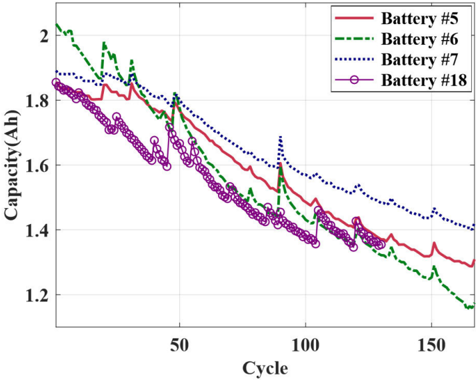
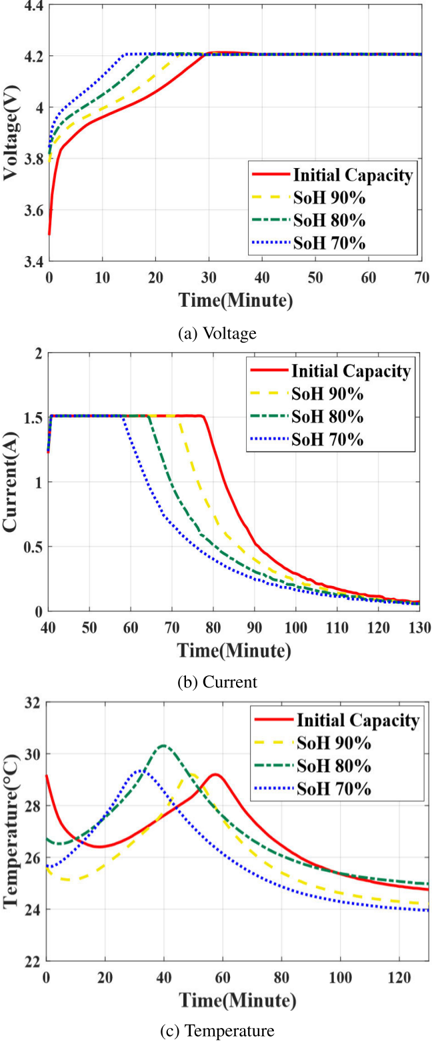
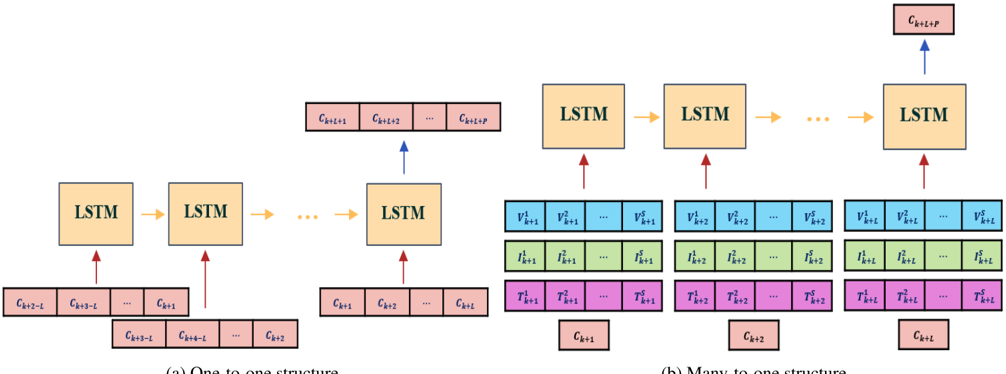
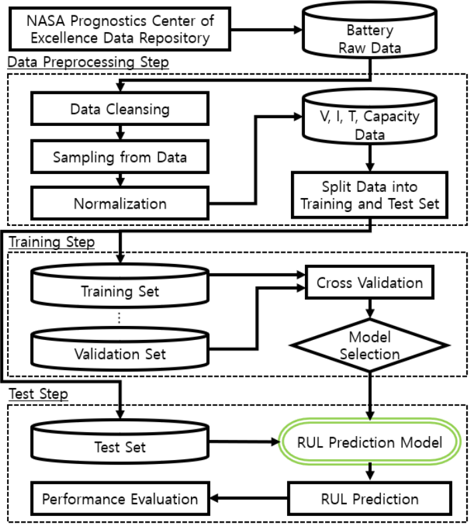
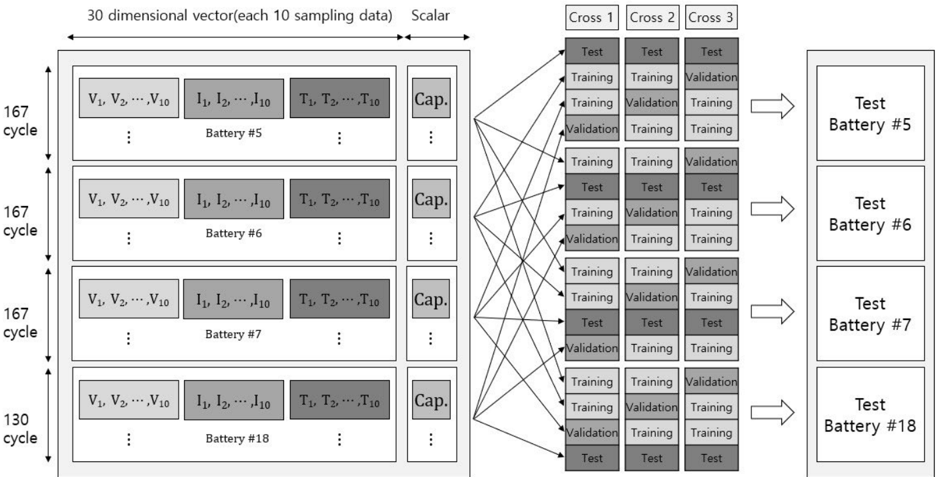
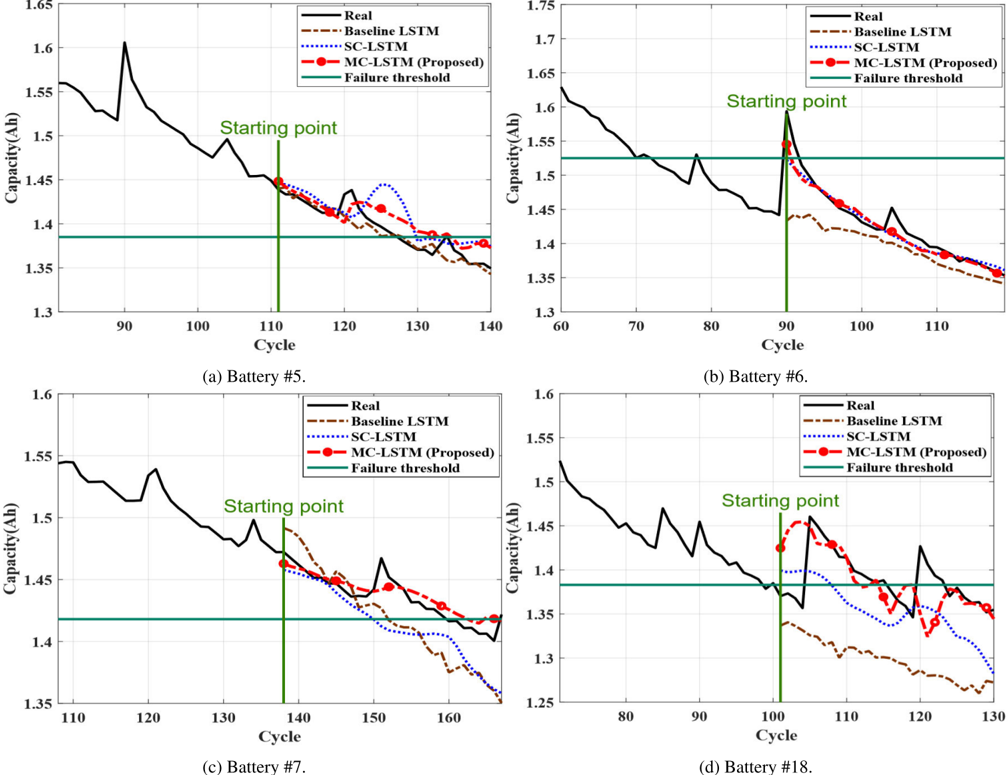
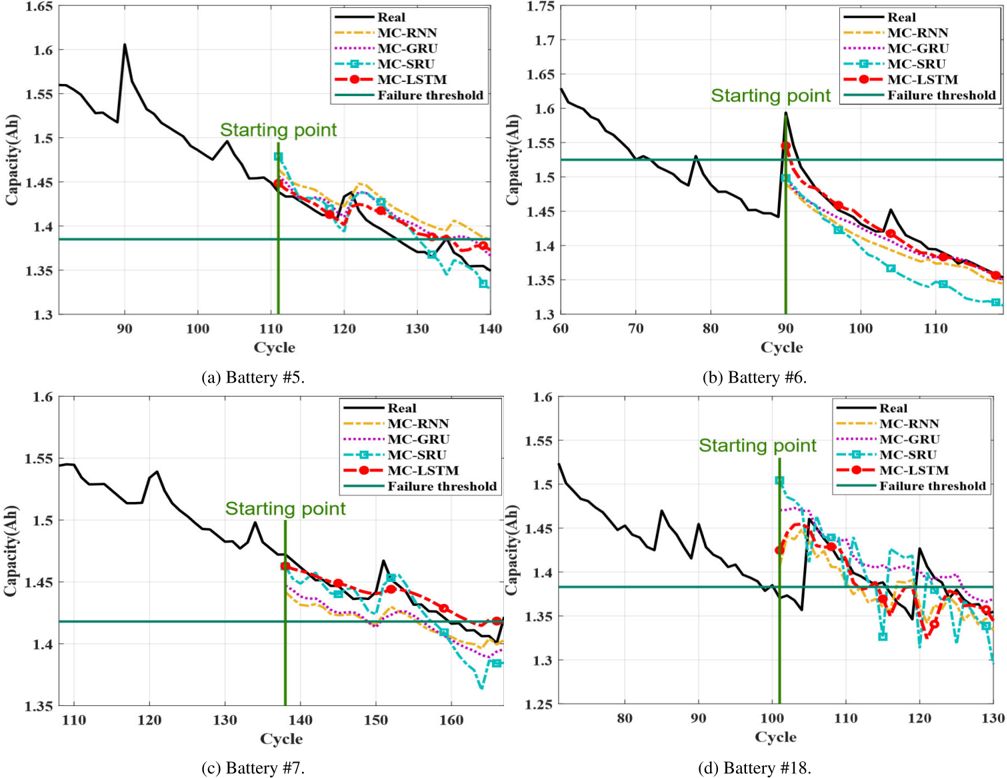
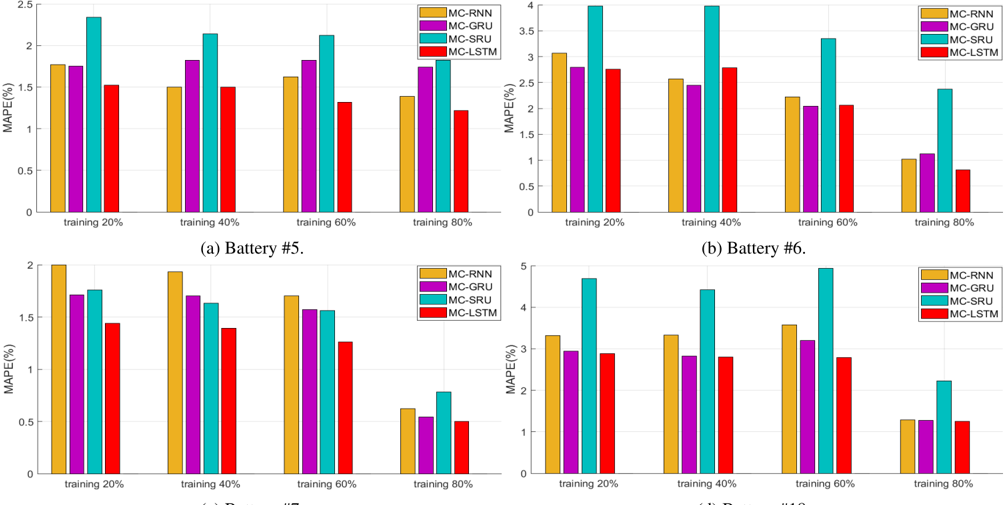
Remaining useful life (RUL) prediction of lithium-ion batteries can reduce the risk of battery failure by predicting the end of life. In this paper, we propose novel RUL prediction techniques based on long short-term memory (LSTM). To estimate RUL even in the presence of capacity regeneration phenomenon, we consider multiple measurable data from battery management system such as voltage, current and temperature charging profiles whose patterns vary as aging. Unlike the traditional LSTM prediction that matches input layer with output layer as one-to-one structure, we leverage many-to-one structure to be flexible for various input types and to substantially reduce the number of parameters for better generalization. Using the NASA lithium-ion battery datasets, we verify the accuracy of the proposed LSTM-based RUL prediction. The experimental results show that the proposed single-channel LSTM model improves the mean absolute percentage error (MAPE) by 39.2% compared to the baseline LSTM model. Furthermore, the proposed multi-channel LSTM model significantly improves the MAPE, e.g., by 63.7% compared to the baseline; the proposed model achieves 0.47-1.88% of MAPE while the state-of-the-art baseline LSTM shows 0.6-6.45% of MAPE.
Overview
The claims and statistics of this paper haven’t been checked yet.
Free: it reads the open-access text and checks the first 5 claims that cite a source we can check. Create a free account to check every claim.
Integrity signals
Registry
Cites
Statistics
Figures



Verification
Claims the paper makes
The claims and statistics of this paper haven’t been checked yet.
Free: it reads the open-access text and checks the first 5 claims that cite a source we can check. Create a free account to check every claim.
Claims other papers make about this one
Each is checked against this paper’s own text: does it say what the citing paper says it does?
The source backs part of the claim, not all of it — or backs it for a different population, condition or comparison.
In the citing paper
“The direct capacity measurement method (the remaining capacity measurement) for SOH estimation is one of the most straightforward and most accurate methods if the battery's current is measured accurately to count the columns and if the measurements are performed under a controlled set of parameters, such as temperature.”
From An Electrochemical Impedance Spectrum-Based State of Health Differential Indicator with Reduced Sensitivity to Measurement Errors for Lithium–Ion Batteries (2024) · cites this paper as [23]
Experimental — accuracy not yet measured
Self-check
Percentages, sums and reported differences re-computed from the paper’s own numbers.
The self-check needs the paper’s full text.
Citations
Cites
Adam: A Method for Stochastic Optimization
Kingma, D. P., & Ba, J. (2014) · arXiv · doi:10.48550/arxiv.1412.6980 · Cited by 98,946 · cited 1×
“001 [32].”
(2010) · International Conference on Machine Learning · Cited by 13,995
TensorFlow: A system for large-scale machine learning
Abadi, M., Barham, P., Chen, J., Chen, Z., Davis, A., Dean, J., Devin, M., Ghemawat, S., Irving, G., Isard, M., et al. (2016) · arXiv (Cornell University) · doi:10.48550/arxiv.1605.08695 · Cited by 11,822
Learning long-term dependencies with gradient descent is difficult
Bengio, Y., Simard, P., & Frasconi, P. (1994) · IEEE Transactions on Neural Networks · doi:10.1109/72.279181 · Cited by 8,542 · cited 1×
“However, RNN has the long-term dependency problem [16] as the number of cycles (i.”
BackgroundScore normalization in multimodal biometric systems
Jain, A., Nandakumar, K., & Ross, A. (2005) · Pattern Recognition · doi:10.1016/j.patcog.2005.01.012 · Cited by 2,154 · cited 1×
“In our work, min-max normalization is used as follows [26]:”
MethodZhang, Y., Xiong, R., He, H., & Pecht, M. G. (2018) · IEEE Transactions on Vehicular Technology · doi:10.1109/tvt.2018.2805189 · Cited by 1,326
Prechelt, L. (2012) · Lecture Notes in Computer Science · doi:10.1007/978-3-642-35289-8_5 · Cited by 951
A review on prognostics and health monitoring of Li-ion battery
Zhang, J., & Lee, J. (2011) · Journal of Power Sources · doi:10.1016/j.jpowsour.2011.03.101 · Cited by 792 · cited 1×
“However, battery degradation begins immediately after batteries are manufactured, and when 70% or 80% of initial capacity remains, batteries need be replaced for safe operation [3].”
Nuhic, A., Terzimehic, T., Soczka-Guth, T., Buchholz, M., & Dietmayer, K. (2013) · Journal of Power Sources · doi:10.1016/j.jpowsour.2012.11.146 · Cited by 664 · cited 2×
“Specifically, data-driven methods rely solely on historical capacity degradation data rather than requiring explicit mathematical models of battery degradation or internal mechanisms of the battery [10]–[12].”
MethodPatil, M. A., Tagade, P., Hariharan, K. S., Kolake, S. M., Song, T., Yeo, T., & Doo, S. (2015) · Applied Energy · doi:10.1016/j.apenergy.2015.08.119 · Cited by 626 · cited 2×
“Specifically, data-driven methods rely solely on historical capacity degradation data rather than requiring explicit mathematical models of battery degradation or internal mechanisms of the battery [10]–[12].”
Method
Cited by
Items 101–200 of 402
Counterfactual explanations for remaining useful life estimation within a Bayesian framework
Andringa, J., Baptista, M. L., & Santos, B. F. (2025) · Information Fusion · doi:10.1016/j.inffus.2025.102972 · Cited by 32
Zhang, W., Jia, J., Pang, X., Wen, J., Shi, Y., & Zeng, J. (2024) · Electronics · doi:10.3390/electronics13081423 · Cited by 35
“…lithium battery reference discharge cycles and RUL pred is battery actual discharge Figure 8 The primary lithium-ion batteries based on cycles application of certain mathematical techniques to the battery’s historical data to calculate the remaining life of time required for the conditions [28,29].”
Reza, M. S., Hannan, M. A., Mansor, M., Ker, P. J., Kiong, T. S., & Hossain, M. J. (2024) · IEEE Transactions on Industry Applications · doi:10.1109/tia.2024.3429452 · Cited by 29
“[20] introduced LSTM-based RUL prediction algorithms where capacity regeneration was efficiently captured utilizing a many-to-one structure instead of one-to-one.”
MethodBhatt, A., Ongsakul, W., Nimal Madhu, M., & Singh, J. G. (2021) · International Journal of Energy Research · doi:10.1002/er.7160 · Cited by 29
“22 Several factors affect the aging phenomenon such as variation in temperature, charging and discharging current/voltage, state of charge (SOC), different charging/discharging techniques, etc.”
BackgroundMethodInfluentialAkram, A. S., Sohaib, M., & Choi, W. (2025) · Batteries · doi:10.3390/batteries11050183 · Cited by 24
“The Long Short-Term Memory (LSTM) model is a type of neural network designed for sequential data, with a unique memory feature that enables it to retain and update relevant information over time [21–23].”
Self-citationPandey, S. V., Parikh, N., Prochowicz, D., Akın, S., Satapathi, S., Tavakoli, M. M., Kalam, A., & Yadav, P. (2023) · Sustainable Energy & Fuels · doi:10.1039/d2se01209j · Cited by 27
Samanta, A., & Williamson, S. S. (2023) · IEEJ Journal of Industry Applications · doi:10.1541/ieejjia.22004793 · Cited by 33
Wang, R., Zhu, M., & Zhang, X. (2024) · Journal of Energy Storage · doi:10.1016/j.est.2023.110376 · Cited by 26
Battery capacity trajectory prediction by capturing the correlation between different vehicles
Li, J., Deng, Z., Liu, H., Xie, Y., Liu, C., & Lu, C. (2022) · Energy · doi:10.1016/j.energy.2022.125123 · Cited by 25
Physics-informed hybrid reinforcement learning for estimating lithium-ion battery state of health
Salem, N. M., & Mohamed, A. (2025) · Scientific Reports · doi:10.1038/s41598-025-30602-4 · Cited by 30
“Unlike traditional RNNs, which suffer from vanishing or exploding gradients during training, LSTM networks 23,24 incorporate gating mechanisms, namely the input, forget, and output gates, which regulate the flow of information through the cell.”
Crafting Adversarial Examples for Deep Learning Based Prognostics
Mode, G. R., & Hoque, K. A. (2020) · International Conference on Machine Learning and Applications · doi:10.1109/icmla51294.2020.00079 · Cited by 30
A Review on the Prediction of Health State and Serving Life of Lithium‐Ion Batteries
Pang, X., Zhong, S., Wang, Y., Yang, W. B., Zheng, W., & Sun, G. (2022) · The Chemical Record · doi:10.1002/tcr.202200131 · Cited by 28
A Critical Review of AI-Based Battery Remaining Useful Life Prediction for Energy Storage Systems
Yang, K., Wang, S., Zhou, L., Fernández, C., & Blaabjerg, F. (2025) · Batteries · doi:10.3390/batteries11100376 · Cited by 30
Sravanthi, C. L., Sekhar, J. N. C., Alluraiah, N. C., Dhanamjayulu, C., Pujari, H. K., & Khan, B. (2025) · International Transactions on Electrical Energy Systems · doi:10.1155/etep/2242749 · Cited by 31
Du, M., Zhang, Y., & Miao, Q. (2025) · Reliability Engineering & System Safety · doi:10.1016/j.ress.2025.111392 · Cited by 28
Li, Y., Garg, A., Shevya, S., Li, W., Gao, L., & Lam, J. S. L. (2021) · Journal of Electrochemical Energy Conversion and Storage · doi:10.1115/1.4051802 · Cited by 22
Development of a Data-Driven Method for Online Battery Remaining-Useful-Life Prediction
Hell, S. M., & Kim, C. D. (2022) · Batteries · doi:10.3390/batteries8100192 · Cited by 26
“However, the prediction interval is set to a fixed value [18].”
BackgroundIntelligence Techniques in Sustainable Energy: Analysis of a Decade of Advances
Velasquez, J. D., Cadavid, L., & Franco, C. J. (2023) · Energies · doi:10.3390/en16196974 · Cited by 25
Grade Prediction of Froth Flotation Based on Multistep Fusion Transformer Model
Peng, C., Liu, Y., Ouyang, Y., Tang, Z., Luo, L., & Gui, W. (2023) · IEEE Transactions on Industrial Informatics · doi:10.1109/tii.2023.3342458 · Cited by 22
Estimation of SOH of Lithium-Ion Batteries Based on PSO-Bi GRU-Attention Network
Hou, Z., Xu, W., Jia, G., Wang, J., & Cai, M. (2024) · Journal of The Electrochemical Society · doi:10.1149/1945-7111/ad29c4 · Cited by 22
SOC Estimation of Lithium-Ion Battery for Electric Vehicle Based on Deep Multilayer Perceptron
Li, X., Jiang, H., Su-fen, G., Xu, J., Li, M., Liu, X., & Zhang, X. (2022) · Computational Intelligence and Neuroscience · doi:10.1155/2022/3920317 · Cited by 28
Ansari, S., Hannan, M. A., Ayob, A., Abdolrasol, M. G. M., & Dar, M. A. (2025) · Journal of Energy Storage · doi:10.1016/j.est.2024.114711 · Cited by 20
Xie, W., & Zeng, Y. (2024) · Complex & Intelligent Systems · doi:10.1007/s40747-024-01458-4 · Cited by 28
“In contrast, deep learning methodologies, such as Deep Neural Networks (DNN) [31], Convolutional Neural Networks (CNNs) [32], LSTMs [33], and Transformer [34] alleviate this issue.”
Zhang, S., Liu, M., Guo, R., Tian, J., Man, Z., & Shen, W. (2025) · IEEE Transactions on Transportation Electrification · doi:10.1109/tte.2025.3626389 · Cited by 28
“Park et al. [14], for instance, utilized an LSTM network to capture temporal dependencies in multichannel charging profiles, significantly improving RUL prediction performance.”
Ke, L., Fang, L., Meng, J., Peng, J., Wu, J., Lin, M., & Stroe, D. (2024) · Journal of Energy Storage · doi:10.1016/j.est.2024.110999 · Cited by 24
Jafari, S., Kim, J., & Byun, Y.-C. (2024) · Energy Reports · doi:10.1016/j.egyr.2024.09.010 · Cited by 22
Chen, Z., & Qian, Q. (2024) · Energy and AI · doi:10.1016/j.egyai.2024.100462 · Cited by 21
A Hybrid CNN-LSTM for Battery Remaining Useful Life Prediction with Charging Profiles Data
Hafizhahullah, H., Yuliani, A. R., Pardede, H. F., Ramdan, A., Zilvan, V., Krisnandi, D., & Kadar, J. A. (2022) · International Conference on Computer, Control, Informatics and its Applications · doi:10.1145/3575882.3575903 · Cited by 21
“For this reason, it is suggested to examine the capacity regeneration to build an accurate RUL prediction model [1, 13].”
BackgroundAn IoT-based predictive model for improved battery management system using advanced LSTM model
Krishna, G., Singh, R., Gehlot, A., & Akram, S. V. (2024) · Journal of Energy Storage · doi:10.1016/j.est.2024.113694 · Cited by 21
Shi, G., Chen, S., Yuan, H. S., You, H., Wang, X., Dai, H., & Wei, X. (2021) · Frontiers in Energy Research · doi:10.3389/fenrg.2021.690266 · Cited by 19
“Moreover, falloff of the battery terminal voltage (Zhou et al., 2016), curves of the terminal voltage during charging (Liu and Chen, 2019; Park et al., 2020), and time spent on a charging/discharging process (Yun and Qin, 2020) are also investigated as the SOH indicators.”
BackgroundHe, N., Qian, C., & He, L. (2022) · Journal of Electrochemical Energy Conversion and Storage · doi:10.1115/1.4053141 · Cited by 18
Zhang, Z., Yang, Y., Zhao, H., & Xiao, R. (2022) · IET Generation Transmission & Distribution · doi:10.1049/gtd2.12590 · Cited by 17
Real-Time Solar Power Estimation Through RNN-Based Attention Models
Park, K., Yim, J., Lee, H., Park, M., & Kim, H. (2023) · IEEE Access · doi:10.1109/access.2023.3233951 · Cited by 17
Self-citationJiang, J., Peng, C., Liu, W., Liu, S., Luo, Z., & Chen, N. (2023) · Processes · doi:10.3390/pr11030776 · Cited by 17
Li, L., Li, Y. G., & Zhang, J. (2024) · Measurement Science and Technology · doi:10.1088/1361-6501/ad282e · Cited by 22
Yang, J., Boroojeni, N. A., Chahardeh, M. K., Por, L. Y., Alizadehsani, R., & Acharya, U. R. (2025) · Engineering Applications of Artificial Intelligence · doi:10.1016/j.engappai.2025.110285 · Cited by 19
Cheng, F., Liu, H., & Lv, X. (2025) · Advanced Engineering Informatics · doi:10.1016/j.aei.2025.103292 · Cited by 20
Ali, H., Khan, H. A., & PECHT, M. G. (2020) · IEEE Access · doi:10.1109/access.2020.2988728 · Cited by 18
“This in turn stresses the battery system, which is widely considered as one of the weakest link in a modern mobile phone [4], [5].”
BackgroundWang, X., Li, R., Dai, H., Zhang, N., Chen, Q., & Wei, X. (2021) · International Journal of Energy Research · doi:10.1002/er.6746 · Cited by 19
Zhang, X., Xu, Y., & Gong, Z. (2023) · Energy Reports · doi:10.1016/j.egyr.2023.04.033 · Cited by 17
Hu, W., Zhang, C., Liu, S., Jin, L., & Xu, Z. (2024) · Journal of Energy Storage · doi:10.1016/j.est.2024.110785 · Cited by 19
Lai, S., Li, J., Guo, G., Hu, X., Li, Y., Tan, Y., Song, Z., Liu, Y., Ren, Z., Wang, C., et al. (2024) · International Joint Conference on Neural Networks (IJCNN) · doi:10.1109/ijcnn60899.2024.10651442 · Cited by 21
“This linear layer takes the fused features as input and generates the desired predictions based on the specific task at hand.”
BackgroundTransformer-based Capacity Prediction for Lithium-ion Batteries with Data Augmentation
Modekwe, G., Al-Wahaibi, S. S. S., & Lu, Q. (2024) · IFAC-PapersOnLine · doi:10.1016/j.ifacol.2025.01.080 · Cited by 18
Falai, A., Giuliacci, T. A., Misul, D. A., & Anselma, P. G. (2022) · Batteries · doi:10.3390/batteries8110209 · Cited by 20
“In [46], an LSTM for remaning useful life (RUL) estimation by using multichannel full charge profiles is presented, with considerable improvements over the baseline LSTM and a significant reduction in the amount of the parameters considered for the model.”
MethodZhang, M., Wang, S., Xie, Y., Yang, X. G., Hao, X., & Fernández, C. (2023) · Ionics · doi:10.1007/s11581-023-05072-1 · Cited by 16
“Park [25] investigated the long-term dependence of the capacity degradation process of lithium-ion batteries utilizing long short-term memory (LSTM) networks, modeled with experimental data of multiple lithium-ion batteries at two diverse temperatures, and the method is capable of predicting the RUL of lithium-ion bat…”
MethodJeon, J., Cheon, H., Jung, B., & Kim, H. (2024) · Applied Energy · doi:10.1016/j.apenergy.2024.123757 · Cited by 16
Self-citationFault-Tolerant Framework for State-of-Health Prediction of Lithium Batteries
Tiane, A., Okar, C., & Chaoui, H. (2022) · IEEE Transactions on Power Electronics · doi:10.1109/tpel.2022.3191626 · Cited by 16
“A quantitative comparison is carried out against the results obtained using the NASA dataset, as presented in [36], [40], and [42].”
MethodYamaçlı, V. (2024) · Heliyon · doi:10.1016/j.heliyon.2024.e39121 · Cited by 17
A novel RUL prediction framework based on the adaptability feature perception fusion model method
Li, J., Wang, Z., Tian, D., Sun, Z., & Niu, Y. (2025) · Journal of Energy Storage · doi:10.1016/j.est.2025.116322 · Cited by 16
Pham, T., Le, T., Dang, D., Bui, H., Pham, H. N., Truong, L., Nguyen, M., Vo, T.-H., & Quan, T. (2022) · IEEE Access · doi:10.1109/access.2022.3217478 · Cited by 16
“[13], an approach that combined multi-channel charging profiles and an LSTM model to improve the accuracy of the SoH prediction task is introduced.”
BackgroundMethodInfluentialReview on Machine Learning Methods for Remaining Useful Lifetime Prediction of Lithium-ion Batteries
Su, N., Juwono, F. H., Wong, W. K., & Chew, I. M. (2022) · International Conference on Green Energy, Computing and Sustainable Technology (GECOST) · doi:10.1109/gecost55694.2022.10010569 · Cited by 16
“[34] used a Long Short-Term Memory (LSTM) model to predict RUL.”
MethodAbu Qahouq, J. (2024) · Batteries · doi:10.3390/batteries10100368 · Cited by 13
“Category #1 includes, but is not limited to, methods that require the information of the complete charging/discharging cycle of the battery (or a large portion of it), such as the direct capacity measurement method by Coulomb Counting, among others [4,5,11,22,23].”
Yang, Z., Ding, Q., Zhang, Y., & Zhang, Y. (2025) · Journal of Energy Storage · doi:10.1016/j.est.2025.119560 · Cited by 15
Ibrahim, A.-W., Al-Shamma’a, A. A., Farh, H. M. H., Shi, Z., Abu-Rub, H., Kotb, H., & Mekhilef, S. (2026) · Journal of Energy Storage · doi:10.1016/j.est.2026.120976 · Cited by 17
LSTM‐based adaptive robust nonlinear controller design of a single‐axis hydraulic shaking table
Wen, J., Zhao, C., & Shi, Z. (2022) · IET Control Theory and Applications · doi:10.1049/cth2.12410 · Cited by 13
Physics-Informed Markov Chain Model to Identify Degradation Pathways of Lithium-Ion Cells
Kim, J., Kwak, E., Jeong, J., & Oh, K. (2023) · IEEE Transactions on Transportation Electrification · doi:10.1109/tte.2023.3302433 · Cited by 15
“NASA degradation datasets are public datasets that have been commonly used to validate the performance of prognostic methods [41], [42], [43], [44], [45].”
MethodChen, C., & Aleem, M. (2024) · PeerJ Computer Science · doi:10.7717/peerj-cs.1869 · Cited by 14
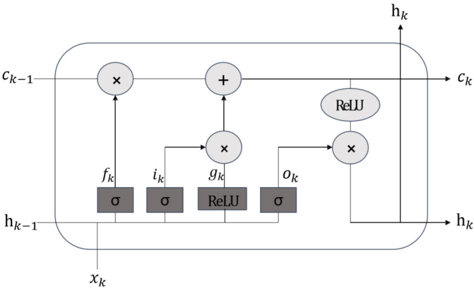
“(5) – (10) ( Park et al., 2020 ): The LSTM process shown in Fig.”
BackgroundMishra, S., Choubey, A., Reddy, B. A., & Misra, R. (2024) · The Journal of Supercomputing · doi:10.1007/s11227-024-06264-w · Cited by 18
“SOH plays a significant role in assessing the extent of battery degradation, often quantified by the capacity ratio [55].”
Xu, Y.-J. (2024) · Journal of The Institution of Engineers (India) Series B · doi:10.1007/s40031-024-01123-x · Cited by 17
“We compare our newly introduced algorithm against five state-of-the-art models, consisting of MC-LSTM [78], SVM-DE [79], LSTM-BLS [80], TTN [81], and MEDNNF [82].”
Yu, X., Ma, Z., & Wen, J. (2024) · International Journal of Electrochemical Science · doi:10.1016/j.ijoes.2024.100842 · Cited by 15
Sengupta, J., & Alzbutas, R. (2022) · BioMed Research International · doi:10.1155/2022/5416726 · Cited by 13
“Park et al. [58] developed a LSTM-based battery for Remaining Useful Life (RUL) prediction with the help multichannel charging pro fi les.”
BackgroundRetractedRemaining Useful Life Prediction of Lithium-Ion Battery Based on LSTM and GRU
Yuliani, A. R., Ramdan, A., Zilvan, V., Supianto, A. A., Krisnandi, D., Yuwana, R. S., Prajitno, D. R., & Pardede, H. F. (2021) · International Conference on Computer, Control, Informatics and its Applications · doi:10.1145/3489088.3489092 · Cited by 18
“[3, 9] proposed LSTM model with multi-channel charging profiles (i.”
BackgroundMethodChoi, S.-H., & Yoo, S. (2021) · IEEE Access · doi:10.1109/access.2021.3113298 · Cited by 12
“Vanilla RNNs suffer from the problem of vanishing gradients when it has long data sequences, which results in poor learning [29], [30].”
BackgroundDigital Image Encryption Algorithm Based on Double Chaotic Map and LSTM
Feng, L., Du, J., & Fu, C. (2023) · Computers, materials & continua/Computers, materials & continua (Print) · doi:10.32604/cmc.2023.042630 · Cited by 15
Real-Time Lithium Battery Aging Prediction Based on Capacity Estimation and Deep Learning Methods
de la Vega, J., Riba, J., & Ortega, J. A. (2023) · Batteries · doi:10.3390/batteries10010010 · Cited by 14
“Furthermore, the proposed approach is used to predict the degradation of the battery in conjunction with other state-of-the-art predictive techniques, such as recurrent neural networks (RNNs) [23,24].”
MethodA Novel Energy Performance-Based Diagnostic Model for Centrifugal Compressor using Hybrid ML Model
Shar, M. A., Muhammad, M. B., Mokhtar, A. A., & Soomro, M. (2024) · Arabian Journal for Science and Engineering · doi:10.1007/s13369-024-08793-1 · Cited by 12
“Decision Tree based ML approaches have been widely used PdM, fault diagnosis, and prognosis such as remaining useful life predictions (RUL) [50, 51].”
Xia, F., Chen, X., & Chen, J. (2022) · Journal of Energy Engineering · doi:10.1061/(asce)ey.1943-7897.0000865 · Cited by 12
A Long Short-Term Memory-Based Prototype Model for Drought Prediction
Villegas-Ch, W. E., & García-Ortiz, J. (2023) · Electronics · doi:10.3390/electronics12183956 · Cited by 13
Bârã, A., Oprea, S., & Băroiu, A.-C. (2023) · International Journal of Computational Intelligence Systems · doi:10.1007/s44196-023-00309-3 · Cited by 17
“[36] propose an LSTM based architecture that leverages many-to-one structure to substantially reduce the number of parameters for better generalization and to be flexible for various input types.”
BackgroundWang, L., Zheng, K., Li, Y., Yang, Z., Zhou, F., Guo, J., & Meng, J. (2024) · Chinese Journal of Electrical Engineering · doi:10.23919/cjee.2024.000085 · Cited by 14
Alsuwian, T. M., Ansari, S., Zainuri, M. A. A. M., Ayob, A., Abdolrasol, M. G. M., Sudaryanto, S., Alhawari, A. R. H., Almawgani, A. H. M., Almasabi, S., & Hindi, A. T. (2025) · Journal of Energy Storage · doi:10.1016/j.est.2025.116152 · Cited by 12
A Comprehensive Review on Data‐Driven Methods of Lithium‐Ion Batteries State‐of‐Health Forecasting
Pham, T., Bui, H. N., Nguyen, M., Pham, Q., Vu, V., Le, T. M., & Quan, T. (2025) · Wiley Interdisciplinary Reviews Data Mining and Knowledge Discovery · doi:10.1002/widm.70009 · Cited by 18
Kamboj, R. K., Singh, M. K., Singh, A., & Bala, A. (2025) · Ionics · doi:10.1007/s11581-025-06707-1 · Cited by 12
Li, J., Khalatbarisoltani, A., Che, Y., Yang, Y., & Hu, X. (2025) · Energy storage materials · doi:10.1016/j.ensm.2025.104681 · Cited by 11
Li, Q. '. (2022) · Structural Health Monitoring · doi:10.1177/14759217221122331 · Cited by 11
Adversarial Defensive Framework for State-of-Health Prediction of Lithium Batteries
Tiane, A., Okar, C., & Chaoui, H. (2023) · IEEE Transactions on Power Electronics · doi:10.1109/tpel.2023.3288979 · Cited by 11
“The gates are calculated using (1), (2), and (5) [36]”
MethodA Study on LSTM-Based Lithium Battery SoH Estimation in Urban Railway Vehicle Operating Environments
Oh, H.-S., Kim, J.-M., & Chang, C. Y. (2024) · Journal of Electrical Engineering and Technology · doi:10.1007/s42835-024-01864-1 · Cited by 11
“12, LSTM is a memory model in which four layers remember necessary information through interaction and is a deep learning technique that compensates for the problem of learning not taking place at some point when the procedure becomes long [14, 15].”
Degradation Trend Prediction of Pumped Storage Unit Based on MIC-LGBM and VMD-GRU Combined Model
Chen, P., Deng, Y., Zhang, X., Ma, L., Yan, Y., Wu, Y., & Li, C. (2022) · Energies · doi:10.3390/en15020605 · Cited by 11
Gao, K., Sun, J., Huang, Z., & Liu, C. (2024) · Ionics · doi:10.1007/s11581-024-05768-y · Cited by 10
“To verify the superiority of the proposed method, the proposed method is compared with the traditional prediction methods (CNN, LSTM, VMD-LSTM-GPR) [37–39], and the results are shown in Fig.”
FPCA-SETCN: A Novel Deep Learning Framework for Remaining Useful Life Prediction
Chen, J., Wen, Y., Sun, X., Zeb, A., Meiabadi, M. S., & Karganroudi, S. S. (2024) · IEEE Sensors Journal · doi:10.1109/jsen.2024.3447717 · Cited by 11
“Considering the temporality in degradation signals, Park et al. [15] proposed an LSTM model to perform RUL prediction of batteries.”
MethodLale, T. (2026) · Ionics · doi:10.1007/s11581-026-06980-8 · Cited by 11
“Park et al. [18] developed an LSTM-based RUL prediction approach employing multi-channel charge profiles and achieved a 63.7% MAPE improvement on the NASA dataset.”
InfluentialLin, H., Quan, P., Liang, Z., Lou, Y., Wei, D., & Di, S. (2022) · Sensors · doi:10.3390/s22093439 · Cited by 10
“To illustrate the effectiveness of the proposed DCNN–SVM algorithm, we compared the results with a long short-term memory (LSTM) model [55] and the plain CNN in DCNN–SVM.”
ResultRemaining Useful Life Prediction of Aviation Lithium-ion Battery Based on SVR-MC
Cui, J., Zhao, J., Cui, X., Liu, D., Du, W., Yu, M., Jiang, L., & Wang, J. (2022) · Chinese Control and Decision Conference (CCDC) · doi:10.1109/ccdc55256.2022.10034028 · Cited by 11
Wang, H., Gao, M., Zhang, X., Long, H., & Zhou, Z. (2025) · Journal of Energy Storage · doi:10.1016/j.est.2025.117930 · Cited by 13
Ship Attitude Prediction Model Based on Cross-Parallel Algorithm Optimized Neural Network
Jiang, Y., Jia, M., Zhang, B., & Deng, L. (2022) · IEEE Access · doi:10.1109/access.2022.3193573 · Cited by 9
Degradation-Aware Ensemble of Diverse Predictors for Remaining Useful Life Prediction
Nemani, V. P., Thelen, A., Hu, C. K., & Daining, S. (2022) · Journal of Mechanical Design · doi:10.1115/1.4056149 · Cited by 9
Liu, J., Ma, Q., & Zhang, Q. (2024) · Energy · doi:10.1016/j.energy.2024.131024 · Cited by 12
Cost prediction for water reuse equipment using interpretable machine learning models
Chen, K., Zhang, Y., Hu, N., Ye, C., Ma, J., & Zheng, T. (2024) · Journal of Water Process Engineering · doi:10.1016/j.jwpe.2024.105474 · Cited by 14
Power System Decision Making in the Age of Deep Learning: A Comprehensive Review
Lim, Y., Son, M., Park, K., Kim, M., Song, K., Lee, H., & Kim, H. (2025) · Energies · doi:10.3390/en18184867 · Cited by 10
Self-citationZheng, W., Wu, D., Yuan, C., Jiang, H., & Wang, S. (2025) · Journal of Power Sources · doi:10.1016/j.jpowsour.2025.238192 · Cited by 8
Zhao, X., Lin, X., Yao, Z., Li, Y., Li, Y., & Gong, N. (2025) · Science China Materials · doi:10.1007/s40843-025-3502-2 · Cited by 8
Abbas, M., Cho, I., & Kim, J. (2020) · Applied Soft Computing · doi:10.1016/j.asoc.2020.107073 · Cited by 8
Pham, T., Truong, L., Bui, H. N., Tran, T. Q., Garg, A., Gao, L., & Quan, T. (2022) · Electronics · doi:10.3390/electronics12010098 · Cited by 9
Guo, X., Yang, Z., Liu, Y., Fang, Z., & Wei, Z. (2023) · IEEE Transportation Electrification Conference and Expo · doi:10.1109/itec55900.2023.10187083 · Cited by 8
“The implementation of the recursive LSTM prediction process can be found in [18].”
BackgroundMethodWang, H., Liu, J., Dong, Z., Song, J., & Zhu, Z. (2023) · Italian Journal of Animal Science · doi:10.1080/1828051x.2023.2236132 · Cited by 9
“When the connection weight value is 0, the forget gate will not perform any operation (Park et al. 2020).”
BackgroundLithium-Ion Battery State-of-Health Estimation Method Using Isobaric Energy Analysis and PSO-LSTM
Zhao, S., Luo, L., Jiang, S., & Zhang, C. (2023) · Journal of Electrical and Computer Engineering · doi:10.1155/2023/5566965 · Cited by 8
“Terefore, an appropriate learning rate is very important [33].”
BackgroundEnhancing Lithium-Ion Battery Health Predictions by Hybrid-Grained Graph Modeling
Xing, C., Liu, H., Zhang, Z., Wang, J., & Wang, J. (2024) · Sensors · doi:10.3390/s24134185 · Cited by 8
“Multi-channel LSTM enhances flexibility in lifespan prediction, showcasing deep learning’s advantages in handling complex patterns and temporal dependencies [39].”
BackgroundMeng, X., & Zhang, Y. (2024) · Sustainability · doi:10.3390/su162310359 · Cited by 7
Yang, J., Wang, X., Zhang, M., & Jiang, L. (2025) · IEEE Transactions on Transportation Electrification · doi:10.1109/tte.2025.3563217 · Cited by 10
“The experimental parameters and results of the existing methods are taken from the literature [39], [40], [41], [42], [43], [44], [45], [46], [47], [48].”
Xue, T., Li, X., Xi, L., & Zhang, J. (2025) · Measurement Science and Technology · doi:10.1088/1361-6501/add48a · Cited by 9
“To understand the degradation pattern of the battery, a LSTM [7] is applied to the capacity sequence and trained for predicting SOH of Li-ion batteries.”
Metadata
- Authors
- Park, K., Choi, Y., Choi, W. J., Ryu, H.-Y., & Kim, H.
- Affiliations
- Sogang University (KR)
- Hyundai Motor Group (South Korea) (KR)
- Venue
- IEEE Access
- Published
- 2020
- Volume
- 8
- Pages
- 20786-20798
- ISSN
- 2169-3536 (ISSN-L)
- OpenAlex
- W3001479960
- Cited by
- 397
- References
- 33
- Citations by year
- 2026: 52 · 2025: 73 · 2024: 95 · 2023: 65 · 2022: 66 · 2021: 34 · 2020: 12
- FWCI
- 16.37
- Type
- journal article
- Language
- en
- Open access
- gold
- doi.org
- Locations
- IEEE Access (publishedVersion, cc-by)
- DOAJ (DOAJ: Directory of Open Access Journals) (submittedVersion, cc-by-sa)
- Funders
- National Research Foundation of Korea
- Ministry of Science, ICT and Future Planning (NRF-2017R1A1A1A05001377)
- Hyundai Motors
- Topics
- Physical Sciences › Engineering › Automotive Engineering › Battery Modeling and Management
- Physical Sciences › Engineering › Electrical and Electronic Engineering › Advancements in Battery Materials
- Physical Sciences › Engineering › Safety, Risk, Reliability and Quality › Reliability and Maintenance Optimization
- Keywords
- remaining useful life prediction, lithium-ion batteries, long short-term memory, battery degradation, capacity recovery, charging profiles, NASA battery dataset
About these checks
Registry, retraction, Cites and statistics results are computed, not judged, with one exception: a printed reference that no index lists is read once by a model before it counts as a citation error. Claims are extracted by a model and kept only when their quote appears verbatim in the text; each cited source is then checked, with a model’s help, for whether it says what the claim relies on. Those verdicts can be wrong — read the claim’s quote and the cited source before relying on one.
Statistics and arithmetic are recomputed, not judged.
Confidence bands are shown only for fields calibrated on our annotated test set. None is calibrated yet, so no band is shown.
What counts as a claim ›How we measure confidence ›How we check this ›
Are you an author, or do you see a problem with this page? Request a review
Data sources
Bibliographic data: Semantic Scholar, OpenAlex, Crossref.
Contains information from the Semantic Scholar Academic Graph Datasets, made available under the ODC Attribution License (ODC-BY 1.0).
Semantic Scholar’s data is described in: Kinney, R., et al. (2023). The Semantic Scholar Open Data Platform. arXiv:2301.10140.
