

Zero-Centered Fixed-Point Quantization With Iterative Retraining for Deep Convolutional Neural Network-Based Object Detectors
Open accessThe DOI matches its Crossref record; 49 of the 63 references it cites were found in a registry or an index, and 1 are not checked yet; 13 of the 27 sources its claims cite were checked for support.
Abstract
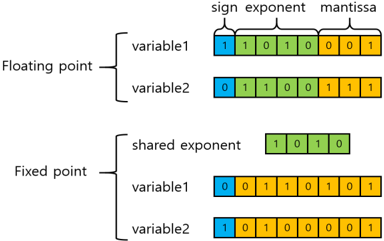
In the field of object detection, deep learning has greatly improved accuracy compared to previous algorithms and has been used widely in recent years. However, object detection using deep learning requires many hardware (HW) resources due to the huge computations for high performance, making it very difficult to run real-time on embedded platforms. Therefore, various compression methods have been studied to solve this problem. In particular, quantization methods greatly reduce the computational burden of deep learning by reducing the number of bits used for weights and activation functions in deep learning. However, most of these existing studies targeted only object classification and cannot be applied to object detection. Furthermore, most of the existing quantization studies are based on floating-point operations, which requires additional effort when implementing HW accelerators. This paper proposes an HW-friendly fixed-point-based quantization method that can also be applied to object detection. In the proposed method, the center of the weight distribution is adjusted to zero by subtracting the mean of weight parameters before quantization, and the retraining process is iteratively applied to minimize the accuracy drop caused by quantization. Furthermore, while applying the proposed method to object detection, performance degradation is minimized by considering the minimum and maximum values of weight parameters of deep learning networks. When applying the proposed quantization method to representative one-stage object detectors, You Only Look Once v3 and v4 (YOLOv3 and YOLOv4), detection accuracy similar to the original networks (i.e., YOLOv3 and YOLOv4) with a single-precision floating-point format (32-bit) is maintained despite expressing weights with only about 20% of the bits compared to a single-precision floating-point format in COCO dataset.
Verified 2026-11-19 · 1 reference not checked yet
Overview
CoChat Summary
## TL;DR
The paper proposes an HW-friendly fixed-point quantization method for deep CNNs that combines zero-centering of weights and iterative retraining, and extends it to object detectors with layer-wise bit allocation. On COCO, it reports near-original mAP for YOLOv3 and YOLOv4 while using only about 20% of the original weight bits.
## Key findings
- On CIFAR-10 with VGG-7, applying both zero-centered quantization and iterative retraining reduced accuracy drop to 0.1% at 4/4 bits; the paper reports 91.97% accuracy versus 92.07% for the original network.
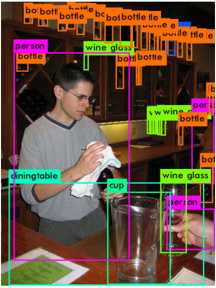
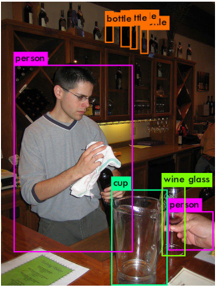
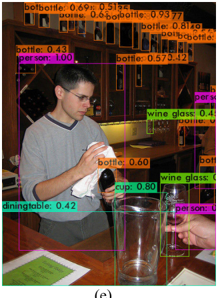
- On YOLOv3 with COCO, the proposed method achieved 54.52 mAP at 6.58 average weight bits, compared with 54.64 mAP and 32 bits for the original model; the basic 8-bit quantized model was 52.60 mAP, while the proposed 8-bit model was 54.52 mAP.
- On YOLOv4 with COCO, the proposed method achieved 62.9 mAP at 8 bits versus 64.17 mAP for the original; with bit allocation, it reached 63.54 mAP at 5.99 average weight bits.
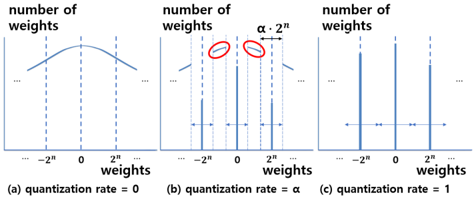
- The paper reports that iterative retraining reduced the portion of ambiguous weights from 23.33% to 8.73% in VGG-7, 22.95% to 18.01% in YOLOv3, and 20.06% to 14.65% in YOLOv4.
## Methods
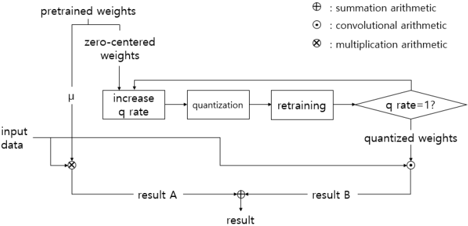
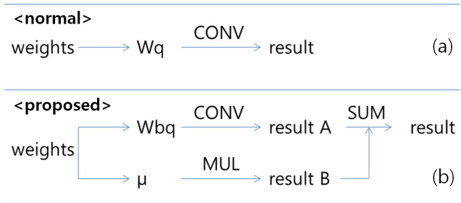
- Proposed a fixed-point quantization scheme that subtracts the mean of layer weights to center them around zero, then quantizes and retrains iteratively while gradually increasing the quantization rate.
- Evaluated on CIFAR-10 with VGG-7 for image classification and COCO with YOLOv3/YOLOv4 for object detection; experiments were run on a Linux server with a GeForce RTX 2080Ti.
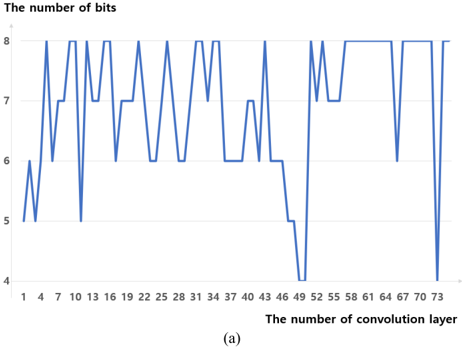
- For object detection, added a layer-wise bit allocation strategy using grid search to choose per-layer weight bitwidths that maximize mAP.
## Limitations
- The paper states that basic quantization without the proposed zero-centered and iterative retraining techniques causes severe performance degradation on object detection, even at 8 bits.
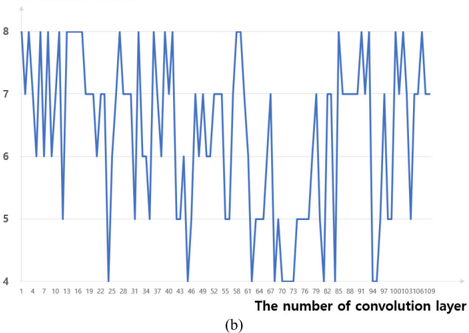
- The text makes evident that the method still has noticeable mAP loss at lower bitwidths for object detection: for example, YOLOv3 drops to 50.05 mAP at 6 bits, 46.95 at 5 bits, and 42.02 at 4 bits even with the proposed method.
Model-written summary. Check it against the paper before relying on it.
Integrity signals
Registry
Cites
Statistics
Figures


Verification
Claims the paper makes
5 Valid · 3 Not valid · 11 Not checked · 60 Own results and interpretations
The cited sources support only part of this claim — read each source’s verdict below.
In the paper
“Most recent quantization studies [21] [23] have focused on INT quantization with integer parameters and oatingpoint scale factors to prevent an accuracy decrease in networks that perform image classi cation.”
What the sources say
- Partly supportedcites [21] [21] S. Jung, C. Son, S. Lee, J. Son, J. J. Han, Y . Kwak, S. J. Hwang, and C. Choi, ''Learning to quantize deep networks by optimizing quantization intervals with task loss,'' in Proc. IEEE Conf. Comput. Vis. Pattern Recognit. (CVPR) , Jun. 2019, pp. 4350 4359. - sourceExperimental — accuracy not yet measured
The Related Work survey (Sec. 2, p. 2) and Sec. 3.1 (p. 3) do support part of the claim: recent quantization work is described as fixed-point/low-bit quantization of weights and activations that adds scaling factors (BWN's 'several scaling factors on the binary filters', XNOR-Net's 'filter-wise scaling factor', SYQ's 'pixel-wise or row-wise scaling') and is motivated by avoiding the 'severe accuracy degradation' of low-precision networks on image classification (Introduction, p. 1; Abstract, p. 1). But our copy nowhere states that MOST recent studies focus specifically on integer parameters with FLOATING-POINT scale factors — it never characterises the scale factors as floating-point, and much of what it surveys (BinaryConnect, INQ's logarithmic weights, DoReFa-Net's bitwidth study, Gupta's 16-bit fixed-point training, and its own EXP-Net training strategy) falls outside that description. The sweeping 'most recent studies' framing is therefore an overstatement of what this source reports. (LLM, conf=0.72)
- Could not verifycites [23] [23] S. Han, H. Mao, and W. J. Dally, ''Deep compression: Compressing deep neural networks with pruning, trained quantization and Huffman coding,'' 2015, arXiv:1510.00149 . [Online]. Available: http://arxiv.org/abs/1510.00149 - sourceExperimental — accuracy not yet measured
Our copy of Gaussian YOLOv3 contains no discussion of network quantization: it addresses localization uncertainty in object detection (Sec. 3.1 Gaussian modeling, Sec. 3.3 utilization of uncertainty) and accuracy/speed comparisons on KITTI and BDD (Sec. 4.2, Tables 2-4). Searches for 'quantization / INT quantization / fixed-point integer parameters / floating-point scale factors / image classification' returned only semantic neighbours about detection mAP, FLOPs and Gaussian bbox modeling, with no passage on quantized parameters or scale factors. The claim's point is therefore not addressed by this source, and no alternative work is named in our copy to credit it to. (LLM, conf=0.75)
plain- Asserted: passes — The authors put it forward as true.
- Checkable: passes — It can be checked against evidence.
- Load-bearing: unclear — It is unclear whether the paper’s conclusions depend on it.
- Based: passes — The paper gives a reason why it holds.
- Partly supported
Every source the paper cites for this claim was checked and supports it.
In the paper
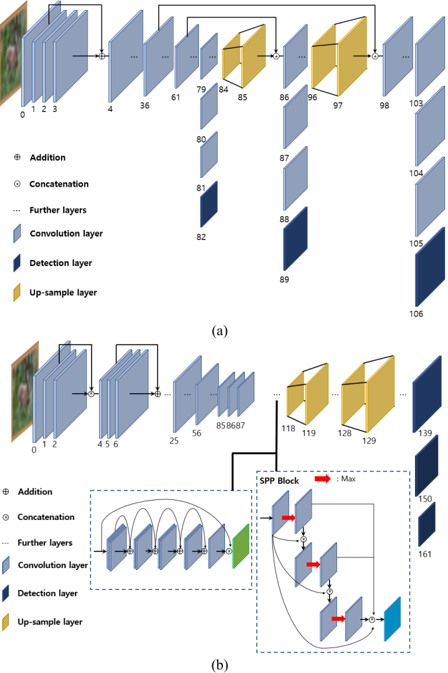
“The proposed technique can be easily applied to various object detectors including YOLOv3 [10] and YOLOv4 [11].”
What the sources say
- Supportedcites [10] [10] J. Redmon and A. Farhadi, ''YOLOv3: An incremental improvement,'' 2018, arXiv:1804.02767 . [Online]. Available: http://arxiv.org/abs/1804.02767 - source
The citation is attached to YOLOv3 as an example of an object detector. The paper identifies and describes YOLOv3 as a detector in “3. How We Do” (p. 3); the citing authors’ assertion about applying their proposed technique is not attributed to this source. (LLM, conf=0.91)
- Supportedcites [11] [11] A. Bochkovskiy, C.-Y. Wang, and H.-Y. M. Liao, ''YOLOv4: Optimal speed and accuracy of object detection,'' 2020, arXiv:2004.10934 . [Online]. Available: http://arxiv.org/abs/2004.10934 - source
The citation is attached to YOLOv3 as an example of an object detector, not to the citing authors’ claim that their proposed technique is easily applicable. Section 2.3 (p. 2) describes YOLOv3 predicting bounding boxes across three scales, confirming that identification. (LLM, conf=0.94)
plain- Asserted: passes — The authors put it forward as true.
- Checkable: passes — It can be checked against evidence.
- Load-bearing: passes — The paper’s conclusions depend on it.
- Based: passes — The paper gives a reason why it holds.
- Supported
The cited sources that could be checked couldn’t confirm or dispute this claim.
In the paper
“However, despite using 1 bit more for the activation parameter than the proposed method, the accuracy drop of Miyashita et al. [39] is greater by 0.21% than that of the proposed method.”
What the sources say
- Could not verifycites [39] [39] D. Miyashita, E. H. Lee, and B. Murmann, ''Convolutional neural networks using logarithmic data representation,'' 2016, arXiv:1603.01025 . [Online]. Available: https://arxiv.org/abs/1603.01025 - sourceExperimental — accuracy not yet measured
Our copy of Nayak et al. (2019) contains no comparison with Miyashita et al.: searches for 'Miyashita', for the 0.21% accuracy-drop differential, and for activation-bit comparisons returned nothing. The closest passages are IV.a (p. Table 1), which only says ResNet-18 CIFAR-10 results are shown 'at byte boundary for comparison purposes with published results' without naming any work or giving a differential, and III/IV.b, which describe quantization of model parameters only (convolution kernels, batch-norm and dense layers) with accuracy drops of '~4% up to 6-bit' — no activation bit-widths are reported. Thus neither the 0.21% figure nor the 1-bit activation difference can be checked against this source; nothing in our copy contradicts it either. (LLM, conf=0.68)
plain- Asserted: passes — The authors put it forward as true.
- Checkable: passes — It can be checked against evidence.
- Load-bearing: passes — The paper’s conclusions depend on it.
- Based: passes — The paper gives a reason why it holds.
- Could not verify
The cited sources that could be checked couldn’t confirm or dispute this claim.
In the paper
“In particular, through the comparison result with Gaussian YOLOv3-tiny [13], which enhances the accuracy of a small-scale network, it can be seen that effectively reducing the size of a large-scale network is more ef cient than improving the performance of a smallscale network.”
What the sources say
- Could not verifycites [13] [13] J. Choi, D. Chun, H.-J. Lee, and H. Kim, ''Uncertainty-based object detector for autonomous driving embedded platforms,'' in Proc. 2nd IEEE Int. Conf. Artif. Intell. Circuits Syst. (AICAS) , Aug. 2020, pp. 16 20. - sourceExperimental — accuracy not yet measured
The Methodology and Selection of architecture sections (p. 5) discuss balancing speed, accuracy, and model size, but do not compare shrinking a large network with improving a small one. Searches for Gaussian YOLOv3-tiny and the claimed efficiency comparison found no passage addressing that conclusion. (LLM, conf=0.76)
plainstates a causeSingle case- Asserted: passes — The authors put it forward as true.
- Checkable: passes — It can be checked against evidence.
- Load-bearing: passes — The paper’s conclusions depend on it.
- Based: passes — The paper gives a reason why it holds.
- Could not verify
A result the paper reports from its own data — it cites no other source for it, so there is none to check. The quote shows it is in the paper.
In the paper
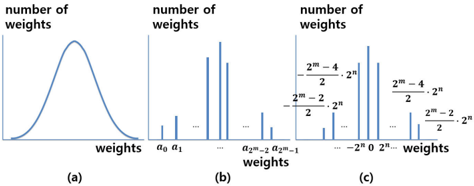
“The results illustrate that the portion of the ambiguous weight parameters is signi cantly reduced during retraining from 23.33%, 22.95%, and 20.06% to 8.73%, 18.01%, and 14.65% in VGG-7, YOLOv3, and YOLOv4, respectively”
plainstates a cause- Asserted: passes — The authors put it forward as true.
- Checkable: passes — It can be checked against evidence.
- Load-bearing: passes — The paper’s conclusions depend on it.
- Based: passes — The paper gives a reason why it holds.
30 more claims
Create a free account to see all 79 claims and to verify the 9 references still open.
- It may state two separate claims as one. 37
- The quote only partly states this claim. 4
- Probably not a substantial claim. 11
Citations
Cites
Deep Residual Learning for Image Recognition
He, K., Zhang, X., Ren, S., & Sun, J. (2016) · 2016 IEEE Conference on Computer Vision and Pattern Recognition (CVPR) · doi:10.1109/cvpr.2016.90 · Cited by 235,474
Very Deep Convolutional Networks for Large-Scale Image Recognition
Simonyan, K., & Zisserman, A. (2014) · arXiv · doi:10.48550/arxiv.1409.1556 · Cited by 114,148 · cited 1×
“Table 2 illustrates the accuracy results of the existing VGG-7 network ( i.e. , 32-bit full decision) [2] and the quantized VGG-7 networks with the various options in the second column.”
BackgroundImageNet classification with deep convolutional neural networks
Krizhevsky, A., Sutskever, I., & Hinton, G. E. (2017) · Communications of the ACM · doi:10.1145/3065386 · Cited by 112,155 · cited 1×
“detection and classification increases dramatically [1]–[4].”
ImageNet: A large-scale hierarchical image database
Deng, J., Dong, W., Socher, R., Li, L.-J., Li, K., & Fei-Fei, L. (2009) · 2009 IEEE Conference on Computer Vision and Pattern Recognition · doi:10.1109/cvpr.2009.5206848 · Cited by 65,333 · cited 1×
“Especially, Jung et al. [21] found that a reduction in accuracy does not occur when using only four bits for both weight and activation parameters, even for the ImageNet dataset [32].”
BackgroundYou Only Look Once: Unified, Real-Time Object Detection
Redmon, J., Divvala, S., Girshick, R., & Farhadi, A. (2016) · 2016 IEEE Conference on Computer Vision and Pattern Recognition (CVPR) · doi:10.1109/cvpr.2016.91 · Cited by 53,803 · cited 2×
“In other words, YOLOv3 is a fully-convolutional network composed of only 1 × 1 and 3 × 3 size convolution filters and illustrates outstanding accuracy for objects of various sizes while maintaining a high processing speed similar to YOLO [33] and YOLOv2 [34].”
MethodResultMicrosoft COCO: Common Objects in Context
Lin, T.-Y., Maire, M., Belongie, S., Hays, J., Perona, P., Ramanan, D., Dollár, P., & Zitnick, C. L. (2014) · Lecture Notes in Computer Science · doi:10.1007/978-3-319-10602-1_48 · Cited by 45,460 · cited 1×
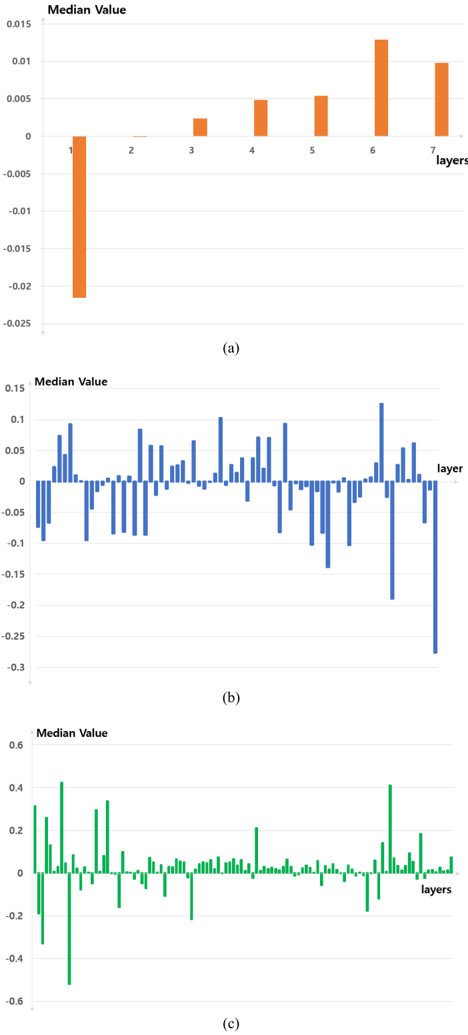
“5 illustrates the medians of maximum and minimum weight parameters for each layer when training the VGG-7 network with Cifar-10 dataset [35] and the YOLOv3/v4 networks with COCO dataset [36].”
Rich Feature Hierarchies for Accurate Object Detection and Semantic Segmentation
Girshick, R., Donahue, J., Darrell, T., & Malik, J. (2014) · 2014 IEEE Conference on Computer Vision and Pattern Recognition · doi:10.1109/cvpr.2014.81 · Cited by 32,684 · cited 1×
“In particular, for DNNbased object detection, classification, and localization are performed simultaneously, which requires vast computation [8]–[11].”
Background(2016) · Cited by 31,590
Learning Multiple Layers of Features from Tiny Images
Krizhevsky, A. (2024) · doi:10.57702/zp44cu3g · Cited by 23,395
SSD: Single Shot MultiBox Detector
Liu, W., Anguelov, D., Erhan, D., Szegedy, C., Reed, S., Fu, C.-Y., & Berg, A. C. (2016) · Lecture Notes in Computer Science · doi:10.1007/978-3-319-46448-0_2 · Cited by 22,128
YOLO9000: Better, Faster, Stronger
Redmon, J., & Farhadi, A. (2017) · 2017 IEEE Conference on Computer Vision and Pattern Recognition (CVPR) · doi:10.1109/cvpr.2017.690 · Cited by 19,892 · cited 3×
“The YOLOv2 algorithm [34] proposed to solve these problems by improving detection accuracy by adding batch normalization to all convolution layers, an anchor box, multi-scale training, and fine-grained features while maintaining operating speed by changing the filter sizes of the existing YOLO to 1 ×…”
BackgroundMethodResultInfluentialYOLOv3: An Incremental Improvement
Redmon, J., & Farhadi, A. (2018) · arXiv · doi:10.48550/arxiv.1804.02767 · Cited by 17,141 · cited 8×
“5 presents the mAP results of the original YOLOv4 network [10] and the quantized YOLOv4 network with the various options.”
BackgroundMethodResultInfluentialA Multi-Modal Distributed Real-Time IoT System for Urban Traffic Control (Invited Paper)
Khanam, Z., Achari, V. P. S., Boukhennoufa, I., Jindal, A., & Singh, A. K. (2024) · DROPS (Schloss Dagstuhl – Leibniz Center for Informatics) · doi:10.4230/oasics.ng-res.2024.2 · Cited by 14,040
YOLOv4: Optimal Speed and Accuracy of Object Detection
Bochkovskiy, A., Wang, C.-Y., & Liao, H.-Y. M. (2020) · arXiv · doi:10.48550/arxiv.2004.10934 · Cited by 10,307 · cited 4×
“In particular, for DNN-based object detection, classification, and localization are performed simultaneously, which requires vast computation [8]–[11].”
BackgroundMethodInfluentialHan, S., Mao, H., & Dally, W. J. (2015) · arXiv · doi:10.48550/arxiv.1510.00149 · Cited by 4,662 · cited 3×
“For the weight quantization techniques that have been most actively studied, the value of the weight is expressed in a single-precision floating-point format ( i.e. , 32-bit), and the number of weight parameter types used in the network is reduced through quantization [21]–[23].”
BackgroundEfficient Processing of Deep Neural Networks: A Tutorial and Survey
Sze, V., Chen, Y.-H., Yang, T.-J., & Emer, J. S. (2017) · Proceedings of the IEEE · doi:10.1109/jproc.2017.2761740 · Cited by 4,215 · cited 3×
“In HW architectures, floating-point arithmetic requires much more energy consumption for addition and multiplication operations than fixed-point arithmetic [24].”
BackgroundMethodInfluentialDeep Residual Learning for Image Recognition
He, K., Zhang, X., Ren, S., & Sun, J. (2015) · arXiv · doi:10.48550/arxiv.1512.03385 · Cited by 4,196
ImageNet: A large-scale hierarchical image database
Deng, J. H., Dong, W. F., Socher, R., Li, L.-J., Li, K., & Fei-Fei, L. (2009) · IEEE Computer Society Conference on Computer Vision and Pattern Recognition/Proceedings - IEEE Computer Society Conference on Computer Vision and Pattern Recognition/Proceedings · doi:10.1109/cvprw.2009.5206848 · Cited by 2,714
Channel Pruning for Accelerating Very Deep Neural Networks
He, Y., Zhang, X., & Sun, J. (2017) · 2017 IEEE International Conference on Computer Vision (ICCV) · doi:10.1109/iccv.2017.155 · Cited by 2,647
Microsoft COCO: Common Objects in Context
Lin, T.-Y., Maire, M., Belongie, S., Bourdev, L., Girshick, R., Hays, J., Perona, P., Ramanan, D., Zitnick, C. L., & Dollár, P. (2014) · arXiv · doi:10.48550/arxiv.1405.0312 · Cited by 2,579
Fixed Point Quantization of Deep Convolutional Networks
Lin, D. D., Talathi, S. S., & Annapureddy, V. S. (2015) · arXiv · doi:10.48550/arxiv.1511.06393 · Cited by 684 · cited 3×
“Compared with the proposed method and Lin et al. [26], both studies allocate the same number of bits to weight and activation parameters, and the accuracy of the proposed method is 0.27% higher than that of Lin et al. [26].”
BackgroundMethodInfluentialPost training 4-bit quantization of convolutional networks for rapid-deployment
Banner, R., Nahshan, Y., & Soudry, D. (2019) · neural information processing systems · Cited by 679
Angel-Eye: A Complete Design Flow for Mapping CNN Onto Embedded FPGA
Guo, K., Sui, L., Qiu, J., Yu, J., Wang, J., Yao, S., Han, S., Wang, Y., & Yang, H. (2018) · IEEE Transactions on Computer-Aided Design of Integrated Circuits and Systems · doi:10.1109/tcad.2017.2705069 · Cited by 562 · cited 1×
“tion, and pruning, have been actively conducted [12]–[31].”
BackgroundChoi, J., Chun, D., Kim, H., & Lee, H.-J. (2019) · 2019 IEEE/CVF International Conference on Computer Vision (ICCV) · doi:10.1109/iccv.2019.00059 · Cited by 505 · cited 1×
“detection and classification increases dramatically [1]–[4].”
Self-citationDeep Learning with Low Precision by Half-Wave Gaussian Quantization
Cai, Z., He, X., Sun, J., & Vasconcelos, N. (2017) · 2017 IEEE Conference on Computer Vision and Pattern Recognition (CVPR) · doi:10.1109/cvpr.2017.574 · Cited by 498
YOLO9000: Better, Faster, Stronger
Redmon, J., & Farhadi, A. (2016) · arXiv · doi:10.48550/arxiv.1612.08242 · Cited by 488
A High-Throughput and Power-Efficient FPGA Implementation of YOLO CNN for Object Detection
Nguyen, D. T., Nguyen, T. N., Kim, H., & Lee, H.-J. (2019) · IEEE Transactions on Very Large Scale Integration (VLSI) Systems · doi:10.1109/tvlsi.2019.2905242 · Cited by 435 · cited 1×
“By reducing the bits for the parameters in CNNs, which are composed mostly of convolution layers, it is possible to significantly reduce the network capacity and the amount of computation and power in HW design [6].”
BackgroundSelf-citationLearning to Quantize Deep Networks by Optimizing Quantization Intervals With Task Loss
Jung, S., Son, C., Lee, S., Son, J., Han, J.-J., Kwak, Y., Hwang, S. J., & Choi, C. (2019) · 2019 IEEE/CVF Conference on Computer Vision and Pattern Recognition (CVPR) · doi:10.1109/cvpr.2019.00448 · Cited by 385 · cited 5×
“Several studies applying quantization to CNNs have been conducted because of their advantages of robustness against performance degradation, ease of applying the concept of approximate computing, and lack of needing to change the network structure [21]–[26].”
BackgroundInfluentialConvolutional Neural Networks using Logarithmic Data Representation
Miyashita, D., Lee, E. H., & Murmann, B. (2016) · arXiv (Cornell University) · doi:10.48550/arxiv.1603.01025 · Cited by 329 · cited 1×
“[39] used log-scale quantization to replace multiplication operations with add operations in HW design.”
MethodPredicting the Computational Cost of Deep Learning Models
Justus, D., Brennan, J., Bonner, S., & Mcgough, A. (2018) · 2018 IEEE International Conference on Big Data (Big Data) · doi:10.48550/arxiv.1811.11880 · Cited by 302
[DL] A Survey of FPGA-based Neural Network Inference Accelerators
Guo, K., Zeng, S., Yu, J., Wang, Y., & Yang, H. (2019) · ACM Transactions on Reconfigurable Technology and Systems · doi:10.1145/3289185 · Cited by 292
Predicting the Computational Cost of Deep Learning Models
Justus, D., Brennan, J., Bonner, S., & McGough, A. S. (2018) · 2018 IEEE International Conference on Big Data (Big Data) · doi:10.1109/bigdata.2018.8622396 · Cited by 278 · cited 1×
“However, because a DNN uses many layers, a large number The associate editor coordinating the review of this manuscript and approving it for publication was Jun Li . of parameters are required, which significantly increases computational complexity [5]–[7].”
SYQ: Learning Symmetric Quantization for Efficient Deep Neural Networks
Faraone, J., Fraser, N., Blott, M., & Leong, P. H. W. (2018) · 2018 IEEE/CVF Conference on Computer Vision and Pattern Recognition · doi:10.1109/cvpr.2018.00452 · Cited by 134 · cited 1×
“This results in the advantage of reducing HW complexity by making the distribution of quantization points symmetric [27], but this also makes it difficult to avoid performance degradation.”
BackgroundAn FPGA-Based Reconfigurable CNN Accelerator for YOLO
Zhang, S., Cao, J., Zhang, Q., Zhang, Q., Zhang, Y., & Wang, Y. (2020) · International Conference on Electronics Technology (ICET) · doi:10.1109/icet49382.2020.9119500 · Cited by 97 · cited 1×
“Compared to YOLOv2 network [34] and its quantized model [40],”
BackgroundNguyen, D. T., Kim, H., & Lee, H.-J. (2021) · IEEE Transactions on Circuits and Systems for Video Technology · doi:10.1109/tcsvt.2020.3020569 · Cited by 97 · cited 1×
“However, because a DNN uses many layers, a large number The associate editor coordinating the review of this manuscript and approving it for publication was Jun Li . of parameters are required, which significantly increases computational complexity [5]–[7].”
Self-citationDeep Convolutional Neural Network Inference with Floating-point Weights and Fixed-point Activations
Lai, L., Suda, N., & Chandra, V. (2017) · arXiv · doi:10.48550/arxiv.1703.03073 · Cited by 81 · cited 1×
“Usually, in HW implementation, the Relu function is used more widely than leaky Relu to express more numbers by removing the sign bit [37].”
MethodAn Approximate Memory Architecture for Energy Saving in Deep Learning Applications
Nguyen, D. T., Hung, N. H., Kim, H., & Lee, H. (2020) · IEEE Transactions on Circuits and Systems I Regular Papers · doi:10.1109/tcsi.2019.2962516 · Cited by 59
Self-citationNguyen, D. T., Kim, H., Lee, H.-J., & Chang, I.-J. (2018) · 2018 IEEE International Symposium on Circuits and Systems (ISCAS) · doi:10.1109/iscas.2018.8351021 · Cited by 51
Self-citationBit Efficient Quantization for Deep Neural Networks
Nayak, P., Zhang, D., & Chai, S. (2019) · 2019 Fifth Workshop on Energy Efficient Machine Learning and Cognitive Computing - NeurIPS Edition (EMC2-NIPS) · doi:10.1109/emc2-nips53020.2019.00020 · Cited by 51
Bit Efficient Quantization for Deep Neural Networks
Nayak, P., Zhang, D., & Chai, S. (2019) · arXiv · doi:10.48550/arxiv.1910.04877 · Cited by 51
Uncertainty-based Object Detector for Autonomous Driving Embedded Platforms
Choi, J., Chun, D., Lee, H.-J., & Kim, H. (2020) · 2020 2nd IEEE International Conference on Artificial Intelligence Circuits and Systems (AICAS) · doi:10.1109/aicas48895.2020.9073907 · Cited by 43 · cited 4×
“Compared to YOLOv3-tiny [10], Gaussian YOLOv3-tiny [13], and Nayak et al. [41], the weight size of the proposed network is approximately one-third larger, but the mAP of the proposed network is much higher than that of YOLOv3-tiny [10], Gaussian YOLOv3-tiny [13], and Nayak et al. [41] by 21.42,…”
BackgroundResultInfluentialSelf-citationWeighted Quantization-Regularization in DNNs for Weight Memory Minimization Toward HW Implementation
Wess, M., Dinakarrao, S. M. P., & Jantsch, A. (2018) · IEEE Transactions on Computer-Aided Design of Integrated Circuits and Systems · doi:10.1109/tcad.2018.2857080 · Cited by 38
Iterative Deep Neural Network Quantization With Lipschitz Constraint
Xu, Y., Dai, W., Qi, Y., Zou, J., & Xiong, H. (2019) · IEEE Transactions on Multimedia · doi:10.1109/tmm.2019.2949857 · Cited by 24
Quantized Deep Residual Convolutional Neural Network for Image-Based Dietary Assessment
Tan, R. Z., Chew, X., & Khaw, K. W. (2020) · IEEE Access · doi:10.1109/access.2020.3003518 · Cited by 19 · cited 1×
“To satisfy these requirements, various network compression studies, such as approximate computing, data quantization, and pruning, have been actively conducted [12]–[31].”
BackgroundHybrid Fixed-Point/Binary Deep Neural Network Design Methodology for Low-Power Object Detection
Guo, J.-I., Tsai, C., Zeng, J.-L., Peng, S.-W., & Chang, E.-C. (2020) · IEEE Journal on Emerging and Selected Topics in Circuits and Systems · doi:10.1109/jetcas.2020.3015753 · Cited by 13
Progressive Learning of Low-Precision Networks for Image Classification
Zhou, Z., Zhou, W., Lv, X., Huang, X., Wang, X., & Li, H. (2021) · IEEE Transactions on Multimedia · doi:10.1109/tmm.2020.2990087 · Cited by 10
SYMOG: Learning symmetric mixture of Gaussian modes for improved fixed-point quantization
Enderich, L., Timm, F., & Burgard, W. (2020) · Neurocomputing · doi:10.1016/j.neucom.2019.11.114 · Cited by 9 · cited 1×
“Compared to Enderich et al. [25] and SYMOG [38], where only the weights are quantized with a fixed-point format, although the proposed method used two more bits for the weight parameters, the bits used for activation parameters are significantly reduced to 1/8, and the accuracy degradation is also…”
MethodSYMOG: learning symmetric mixture of Gaussian modes for improved fixed-point quantization
Enderich, L., Timm, F., & Burgard, W. (2020) · Neurocomputing · doi:10.48550/arxiv.2002.08204 · Cited by 7
A Quantized Neural Network Library for Proper Implementation of Hardware Emulation
Kiyama, M., Nakahara, Y., Amagasaki, M., & Iida, M. (2019) · 2019 Seventh International Symposium on Computing and Networking Workshops (CANDARW) · doi:10.1109/candarw.2019.00032 · Cited by 5
Learning Multimodal Fixed-Point Weights using Gradient Descent
Enderich, L., Timm, F., Rosenbaum, L., & Burgard, W. (2019) · arXiv · doi:10.48550/arxiv.1907.07220
Cited by
A Survey on Adversarial Attack in the Age of Artificial Intelligence
Kong, Z., Xue, J., Wang, Y., Huang, L., Niu, Z., & Li, F. (2021) · Wireless Communications and Mobile Computing · doi:10.1155/2021/4907754 · Cited by 98
“Then, the neural network model is attacked, and the process is repeated [81].”
Toward AI-Assisted UAV for Human Detection in Search and Rescue Missions
Rizk, M., Slim, F., & Charara, J. (2021) · International Conference on Decision Aid Sciences and Applications (DASA) · doi:10.1109/dasa53625.2021.9682412 · Cited by 58
“1 shows the network architecture of YOLOv3 [16].”
BackgroundKim, N. J., & Kim, H. (2022) · IEEE Transactions on Multimedia · doi:10.1109/tmm.2022.3189496 · Cited by 56
Self-citationA survey of FPGA and ASIC designs for transformer inference acceleration and optimization
Kang, B. J., Lee, H. I., Yoon, S. K., Kim, Y. C., Jeong, S. B., Jeong, S. B., & Kim, H. (2024) · Journal of Systems Architecture · doi:10.1016/j.sysarc.2024.103247 · Cited by 63
HAWQ-V3: Dyadic Neural Network Quantization
Yao, Z., Dong, Z., Zheng, Z., Gholaminejad, A., Yu, J., Tan, E., Wang, L., Huang, Q., Wang, Y., Mahoney, M. W., et al. (2021) · International Conference on Machine Learning · Cited by 281
Metadata
- Authors
- Kim, S., & Kim, H.
- Affiliations
- Seoul National University of Science and Technology (KR)
- Venue
- IEEE Access
- Published
- 2021
- Volume
- 9
- Pages
- 20828-20839
- ISSN
- 2169-3536 (ISSN-L)
- OpenAlex
- W3122390253
- Cited by
- 71
- References
- 63
- Citations by year
- 2026: 3 · 2025: 8 · 2024: 22 · 2023: 11 · 2022: 15 · 2021: 11
- FWCI
- 4.52
- Type
- journal article
- Language
- en
- Open access
- gold
- doi.org
- Locations
- IEEE Access (publishedVersion, cc-by)
- DOAJ (DOAJ: Directory of Open Access Journals) (submittedVersion, cc-by-sa)
- Funders
- Institute of Information & Communications Technology Planning & Evaluation (IITP) Grant funded by the Korean Government (MSIT) (2020-0-01305)
- Basic Science Research Program through the National Research Foundation of Korea (NRF) funded by the Ministry of Education (NRF-2019R1A6A1A03032119)
- Topics
- Physical Sciences › Computer Science › Computer Vision and Pattern Recognition › Advanced Neural Network Applications
- Physical Sciences › Computer Science › Artificial Intelligence › Domain Adaptation and Few-Shot Learning
- Physical Sciences › Computer Science › Computational Theory and Mathematics › Numerical Methods and Algorithms
- Keywords
- fixed-point quantization, object detection, model compression, YOLOv3, YOLOv4, weight distribution, embedded hardware acceleration, low-bit precision, accuracy degradation
About these checks
Registry, retraction, Cites and statistics results are computed, not judged, with one exception: a printed reference that no index lists is read once by a model before it counts as a citation error. Claims are extracted by a model and kept only when their quote appears verbatim in the text; each cited source is then checked, with a model’s help, for whether it says what the claim relies on. Those verdicts can be wrong — read the claim’s quote and the cited source before relying on one.
The claim verdicts this report counts are experimental: their accuracy is not yet measured.
A language model drew the claims from the paper on 2026-10-10, under version 3 of the claim definition (model deepseek-v4.1-flash, prompt extract-v3).
A second model labelled each claim on 2026-10-10 (model jev-1.13-20260917, definition revision gold-guideline-v0.2).
Cited sources are checked with a language model’s help (qwen3.8-omni-flash and gpt-6-sol).
Statistics and arithmetic are recomputed, not judged.
Confidence bands are shown only for fields calibrated on our annotated test set. None is calibrated yet, so no band is shown.
What counts as a claim ›How we measure confidence ›How we check this ›
Are you an author, or do you see a problem with this page? Request a review
Data sources
Bibliographic data: Semantic Scholar, OpenAlex, Crossref.
Contains information from the Semantic Scholar Academic Graph Datasets, made available under the ODC Attribution License (ODC-BY 1.0).
Semantic Scholar’s data is described in: Kinney, R., et al. (2023). The Semantic Scholar Open Data Platform. arXiv:2301.10140.
