

A Critical Overview of Industrial Internet of Things Security and Privacy Issues Using a Layer-Based Hacking Scenario
Open accessThe DOI matches its Crossref record; 187 of the 187 references it cites were found in a registry or an index; 31 of the 79 sources its claims cite were checked for support.
Abstract
We have witnessed significant technological advancement over the past few years, including the Internet of Things (IoT). The IoT’s ability to connect consumer appliances to the internet has changed the way we live. As a result of the significant benefits that IoT has brought to household usage, it has become a topic of discussion for research departments, leading to its expansion into industrial sectors, commonly known as the Industrial Internet of Things (IIoT). IIoT enables automation and the use of intelligent machines to improve product manufacturing processes and enhance our lives as customers. However, as IIoT-enabling technology and applications continue to grow, security issues and privacy protection challenges become harder to manage, which frequently results in data breaches and sensitive information disclosures. This paper first explains what the reader needs to know about the IIoT system architecture in Industry 4.0 to make it easier for them to understand. Second, a hacking scenario is utilized as a methodology to conduct an in-depth analysis of various security issues, as well as their impacts and countermeasures, for each level of the IIoT architecture. Additionally, our hacking scenarios present a variety of targets from which malicious actors can launch their assaults. Third, we provide a thorough review of the various blockchain solutions currently being employed to protect IIoT systems. Finally, this paper draws to a close by outlining certain gaps and potential solutions that could be investigated in subsequent studies to strengthen security and enhance privacy for IIoT systems.
Overview
CoChat Summary
TL;DR
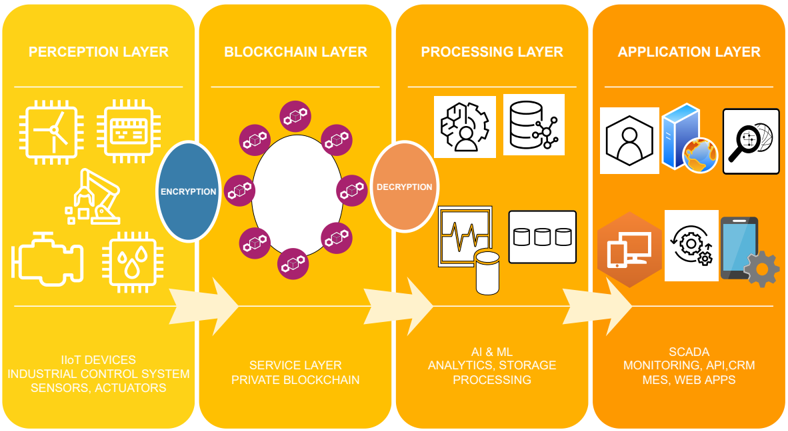
This paper is a review of Industrial Internet of Things (IIoT) security and privacy issues organized around a four-layer architecture and illustrated with layer-specific hacking scenarios for a hypothetical factory, Prime MotorX. It also surveys blockchain-based privacy approaches and proposes directions such as stronger public-key randomness, differential privacy optimization, AI-assisted defenses, and a unified IIoT security architecture.
Key findings
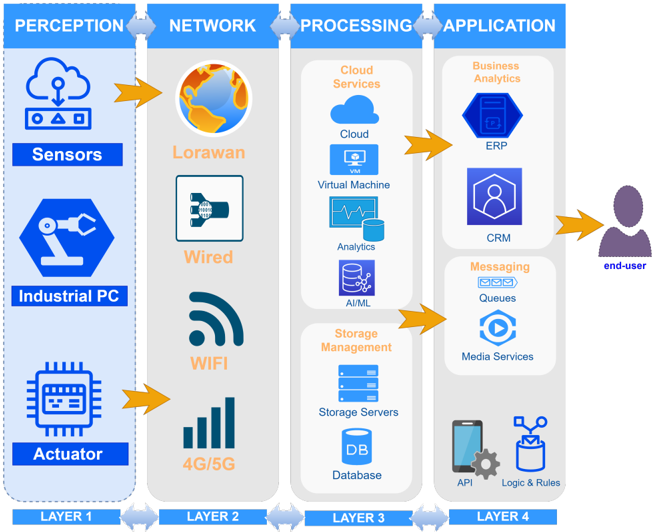
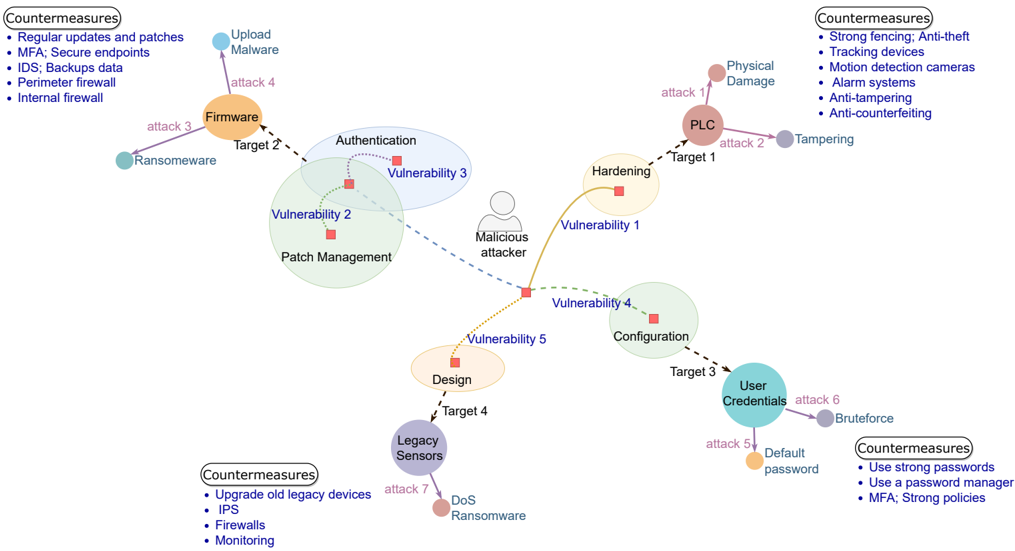
- The paper structures IIoT risks into four layers—perception, network, processing, and application—and summarizes attacks, vulnerabilities, effects, and countermeasures in Table II.
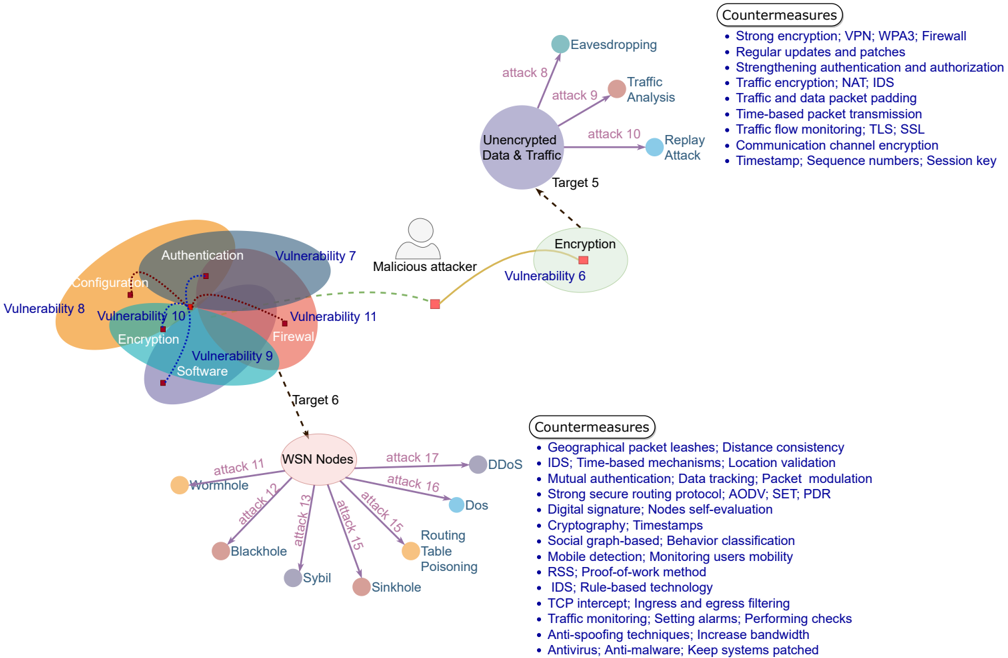
- In the network-layer scenario, unencrypted sensor data enables eavesdropping; after encryption, the attacker can still perform traffic analysis and replay attacks. The paper states that these are passive attacks except replay, which is active.
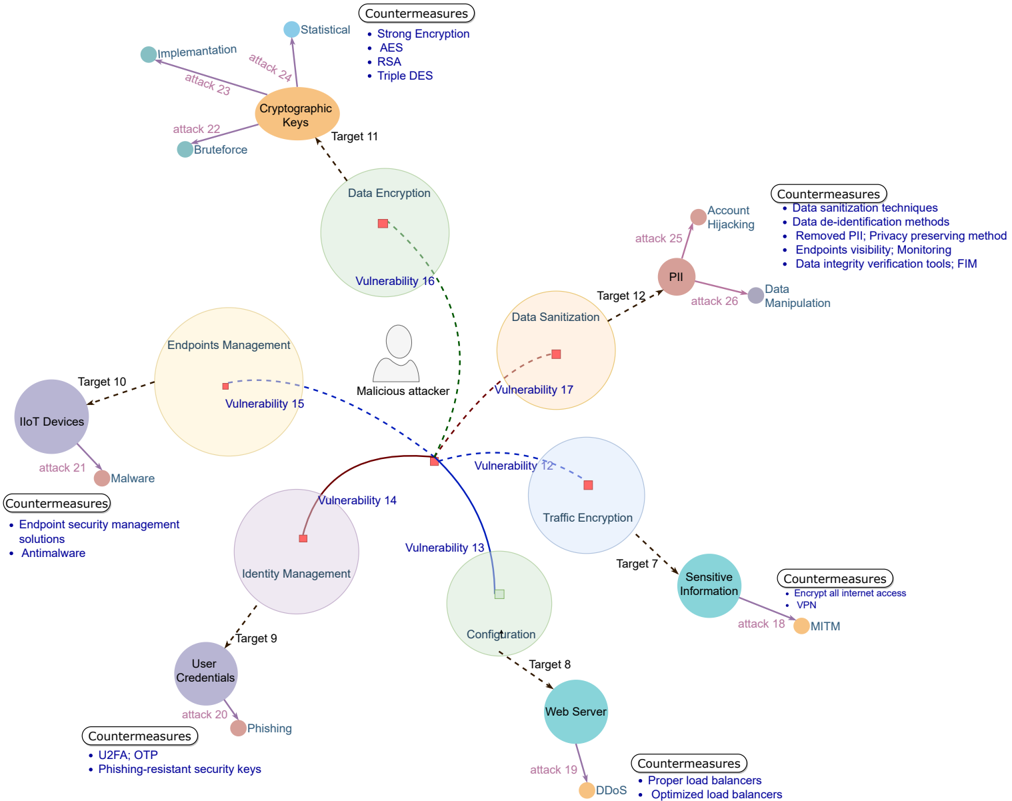
- In the processing-layer scenario, the paper describes MITM, DDoS, phishing, malware, brute force, implementation, statistical, account hijacking, and data manipulation attacks, with impacts including credential theft, production disruption, and financial losses.
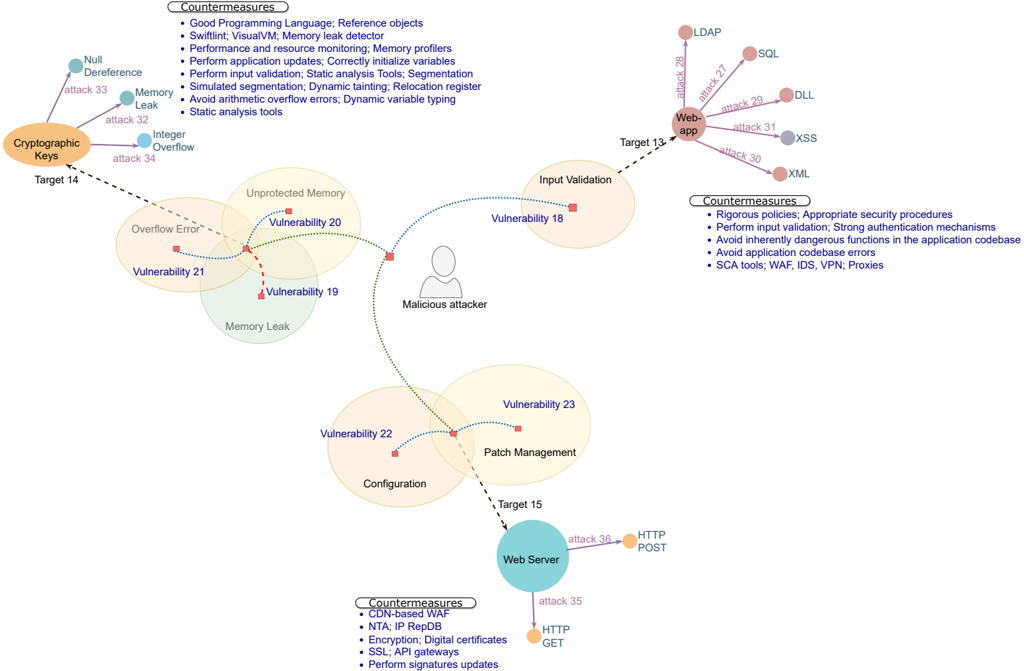
- In the application-layer scenario, the paper identifies code-injection and HTTP-flooding threats such as SQL injection, LDAP injection, DLL injection, XML injection, XSS, HTTP GET, and HTTP POST attacks, and links them to data breaches, malfunction, and reputational damage.
Methods
- Literature review / survey: the paper gives a “comprehensive overview” of IIoT security and privacy literature, with emphasis on blockchain-based privacy protection strategies.
- Layer-based analytic framework: it develops a taxonomy of IIoT’s layered modular architecture and uses hypothetical hacking scenarios on each layer to explain vulnerabilities, attack paths, impacts, and countermeasures.
- Case-based illustration: it uses the fictional Prime MotorX factory and real-world examples (e.g., Hirotec, DHL, Alibaba, Bombardier, WannaCry, Triton) to illustrate benefits, attacks, and security challenges.
Limitations
- The paper states that many reviewed security and privacy solutions, especially blockchain-based ones, are still in the experimental stage and may remain open to security and privacy issues.
- It explicitly notes open problems including pattern recognition among public keys, insecurity against impersonation/session-specific attacks, and optimization difficulty in selecting the differential-privacy parameter ϵ.
- Evident from the text: the paper is conceptual and review-based, with no original empirical dataset, controlled experiment, or quantitative evaluation of the proposed countermeasures.
Model-written summary. Check it against the paper before relying on it.
Integrity signals
Registry
Cites
Statistics
Figures



Verification
Claims the paper makes
15 Valid · 9 Not valid · 31 Not checked · 43 Own results and interpretations
The cited sources support only part of this claim — read each source’s verdict below.
In the paper
“The heterogeneity of devices and data formats conveyed via IIoT networks raises the possibility of data parsing mistakes in the processing layer, which could result in inaccurate processing results [39].”
§ A Critical Overview of Industrial Internet of Things Security and Privacy Issues Using a Layer-Based Hacking Scenario > F. Limitations of IIoT System Architecture
What the sources say
- Partly supportedcites [39] 40. S. N. Deshpande and R. M. Jogdand, "A survey on internet of things (iot), industrial iot (iiot) and industry 4.0," International Journal of Computer Applications, vol. 175, no. 27, pp. 20-27, 2020. sourceExperimental — accuracy not yet measured
Section 6.3 says heterogeneity makes IoT data management, processing, and analysis complex, and section 3.2.2 describes a processing layer. Neither passage says that differing data formats cause parsing mistakes or inaccurate processing results in IIoT networks. (LLM, conf=0.83)
hedgedstates a possible cause- Asserted: passes — The authors put it forward as true.
- Checkable: passes — It can be checked against evidence.
- Load-bearing: unclear — It is unclear whether the paper’s conclusions depend on it.
- Based: passes — The paper gives a reason why it holds.
- Partly supported
The cited sources that could be checked couldn’t confirm or dispute this claim.
In the paper
“Insufficient anomaly detection techniques and data integrity checks further exacerbate reliability concerns [39].”
§ A Critical Overview of Industrial Internet of Things Security and Privacy Issues Using a Layer-Based Hacking Scenario > F. Limitations of IIoT System Architecture
What the sources say
- Could not verifycites [39] 40. S. N. Deshpande and R. M. Jogdand, "A survey on internet of things (iot), industrial iot (iiot) and industry 4.0," International Journal of Computer Applications, vol. 175, no. 27, pp. 20-27, 2020. sourceExperimental — accuracy not yet measured
Section 6.4 identifies security and data privacy as IoT challenges, and Section 6.3 discusses difficulties in data management. Neither addresses insufficient anomaly detection techniques or data integrity checks as causes of reliability concerns. Searches for those specific mechanisms found no supporting passage; page numbers were not available in our copy. (LLM, conf=0.74)
plainstates a cause- Asserted: passes — The authors put it forward as true.
- Checkable: passes — It can be checked against evidence.
- Load-bearing: unclear — It is unclear whether the paper’s conclusions depend on it.
- Based: passes — The paper gives a reason why it holds.
- Could not verify
The cited sources that could be checked couldn’t confirm or dispute this claim.
In the paper
“The present methods for time-slotted packet scheduling, which are frequently used in IIoT systems to achieve the appropriate Quality of Service (QoS), are hampered by network overhead and scalability issues [37].”
§ A Critical Overview of Industrial Internet of Things Security and Privacy Issues Using a Layer-Based Hacking Scenario > F. Limitations of IIoT System Architecture
What the sources say
- Could not verifycites [37] 38. A. A. Mirani, G. Velasco-Hernandez, A. Awasthi, and J. Walsh, "Key challenges and emerging technologies in industrial iot architectures: A review," Sensors, vol. 22, no. 15, p. 5836, 2022. sourceExperimental — accuracy not yet measured
Section 3.3 discusses QoS-based communication and scalability in IIoT architectures, but does not address time-slotted packet scheduling or attribute network overhead and scalability problems to those methods. Searches for time-slotted scheduling, packet scheduling, and network overhead found no passage establishing the claim. (LLM, conf=0.74)
plainstates a cause- Asserted: passes — The authors put it forward as true.
- Checkable: passes — It can be checked against evidence.
- Load-bearing: unclear — It is unclear whether the paper’s conclusions depend on it.
- Based: passes — The paper gives a reason why it holds.
- Could not verify
The cited sources support only part of this claim — read each source’s verdict below.
In the paper
“Lack of patch management is one of the main causes of inherent IIoT security vulnerabilities [16].”
§ A Critical Overview of Industrial Internet of Things Security and Privacy Issues Using a Layer-Based Hacking Scenario > I. INTRODUCTION
What the sources say
- Partly supportedcites [16] 17. G. McDonald, P. Papadopoulos, N. Pitropakis, J. Ahmad, and W. J. Buchanan, "Ransomware: Analysing the impact on windows active directory domain services," Sensors, vol. 22, no. 3, p. 953, 2022. sourceExperimental — accuracy not yet measured
The Literature Review (§2.1; page unavailable) says organisations neglect software updates and that patching addresses security vulnerabilities in Windows domain controllers. It does not identify lack of patch management as a main cause of inherent IIoT vulnerabilities; its discussion concerns Windows servers, not IIoT devices. (LLM, conf=0.86)
plainstates a cause- Asserted: passes — The authors put it forward as true.
- Checkable: passes — It can be checked against evidence.
- Load-bearing: unclear — It is unclear whether the paper’s conclusions depend on it.
- Based: passes — The paper gives a reason why it holds.
- Partly supported
The cited sources support only part of this claim — read each source’s verdict below.
In the paper
“However, relying on outdated Central Processing Units (CPUs) and inadequate technology may compromise security against cyber threats like ransomware, malware, data breaches, or server takeovers due to insufficient processing power [14], [15].”
§ A Critical Overview of Industrial Internet of Things Security and Privacy Issues Using a Layer-Based Hacking Scenario > I. INTRODUCTION
What the sources say
- Partly supportedcites [14] 15. --, "Lightweight authentication protocol for m2m communications of resource-constrained devices in industrial internet of things," Sen- sors, vol. 20, no. 2, p. 501, 2020. sourceExperimental — accuracy not yet measured
The Introduction says legacy, resource-constrained IIoT devices can become a security weak link, and that limited processing power makes some security protocols difficult to implement. It does not identify outdated CPUs specifically or link insufficient processing power to ransomware, malware, data breaches, or server takeovers. (LLM, conf=0.86)
- Partly supportedcites [15] 16. I. Mugarza, J. L. Flores, and J. L. Montero, "Security issues and software updates management in the industrial internet of things (iiot) era," Sensors, vol. 20, no. 24, p. 7160, 2020. sourceExperimental — accuracy not yet measured
The Introduction says security countermeasures in long-lived industrial systems can become obsolete, and §5.4 notes that outdated or legacy systems may be difficult to upgrade. Those passages support the general concern about aging technology and security, but they do not link outdated CPUs or insufficient processing power to ransomware, malware, data breaches, or server takeovers. Searches for CPU and ransomware found no such link. (LLM, conf=0.84)
hedgedstates a possible cause- Asserted: passes — The authors put it forward as true.
- Checkable: passes — It can be checked against evidence.
- Load-bearing: unclear — It is unclear whether the paper’s conclusions depend on it.
- Based: passes — The paper gives a reason why it holds.
- Partly supported
43 more claims · 10 with their cited sources checked
Create a free account to see all 98 claims and to verify the 6 references still open.
- Probably not a substantial claim. 34
- It may state two separate claims as one. 35
- The quote only partly states this claim. 1
Self-check
Percentages, sums and reported differences re-computed from the paper’s own numbers.
Self-check results appear here once an independent check has confirmed them.
Cited works that were retracted
Works this paper cites that were later retracted, from the retraction notices publishers deposit. Major when the notice came out before this paper was published.
Rated major: it would touch a result — a value a result rests on, reported and recomputed p-values on opposite sides of the significance level, two passages that conflict with no sign which is right, or a cited work retracted before this paper was published.
In the paper
“These constraints can result in energy consumption and time delay issues during computation offloading, further exacerbating reliability concerns [33].”
Cited work 10.1155/2022/6469380 · retracted 2023-12-06 · notice 10.1155/2023/9842763 · this paper published 2023-12-15
A note, not an issue: for example, a cited work that was retracted only after this paper was published, which its authors could not have known.
In the paper
“Additionally, deploying antimalware software enhances the overall defense against malware, ensuring the integrity and security of the IIoT processing layer and safeguarding the smooth operation of essential industrial processes [119], [120], [121].”
Cited work 10.1117/1.jei.31.6.061802 · retraction date not known · this paper published 2023-12-15
Citations
Cites
2 retracted
RETRACTED: Secure framework against cyber attacks on cyber-physical robotic systems
Bhardwaj, A., Alshehri, M. D., Kaushik, K., Alyamani, H. J., & Kumar, M. (2022) · Journal of Electronic Imaging · doi:10.1117/1.jei.31.6.061802 · Cited by 26 · cited 1×
“Additionally, deploying antimalware software enhances the overall defense against malware, ensuring the integrity and security of the IIoT processing layer and safeguarding the smooth operation of essential industrial processes [119], [120], [121].”
MethodRetractedRafiq, A., Wang, P., Wei, M., Ali Muthanna, M. S., & Josbert, N. N. (2022) · Security and Communication Networks · doi:10.1155/2022/6469380 · Cited by 7 · cited 1×
“These constraints can result in energy consumption and time delay issues during computation offloading, further exacerbating reliability concerns [33].”
BackgroundRetractedIndustrial Internet of Things: Challenges, Opportunities, and Directions
Sisinni, E., Saifullah, A., Han, S., Jennehag, U., & Gidlund, M. (2018) · IEEE Transactions on Industrial Informatics · doi:10.1109/tii.2018.2852491 · Cited by 2,380 · cited 2×
“However, the architecture itself poses difficulties in terms of communication protocol inefficiencies, network congestion, and latency problems [34], [35], [36].”
BackgroundMQTT-S — A publish/subscribe protocol for Wireless Sensor Networks
Hunkeler, U., Truong, H. L., & Stanford-Clark, A. (2008) · 2008 3rd International Conference on Communication Systems Software and Middleware and Workshops (COMSWARE '08) · doi:10.1109/comswa.2008.4554519 · Cited by 813 · cited 1×
“The MQTT [17] is an efficient messaging protocol tailored for the IIoT ecosystem, offering scalability and wide-ranging application support.”
MethodA survey on security challenges in cloud computing: issues, threats, and solutions
Tabrizchi, H., & Kuchaki Rafsanjani, M. (2020) · The Journal of Supercomputing · doi:10.1007/s11227-020-03213-1 · Cited by 538 · cited 1×
“…the attacker may also compromise the personally identifiable information (PII) of Prime MotorX employees or customers, hijacking their accounts through Account Hijacking attack [110], [111], and damaging their identity integrity due to the lack of adequate data sanitization mechanisms by the CSP.”
BackgroundIndustrial Internet of Things and its Applications in Industry 4.0: State of The Art
Malik, P. K., Sharma, R., Singh, R., Gehlot, A., Satapathy, S. C., Alnumay, W. S., Pelusi, D., Ghosh, U., & Nayak, J. (2021) · Computer Communications · doi:10.1016/j.comcom.2020.11.016 · Cited by 523 · cited 1×
“Various technology-driven sectors like manufacturing, IT industries, automotive, healthcare, agriculture, and retail have started adopting IIoT technology to transform their businesses digitally [26].”
BackgroundDRAMA: Exploiting DRAM Addressing for Cross-CPU AttacksPreprint
Pessl, P., Gruss, D., Maurice, C., Schwarz, M., & Mangard, S. (2015) · arXiv (Cornell University) · doi:10.48550/arxiv.1511.08756 · Cited by 505
Kaur, K., Garg, S., Aujla, G. S., Kumar, N., Rodrigues, J. J. P. C., & Guizani, M. (2018) · IEEE Communications Magazine · doi:10.1109/mcom.2018.1700622 · Cited by 353 · cited 2×
“However, the architecture itself poses difficulties in terms of communication protocol inefficiencies, network congestion, and latency problems [34], [35], [36].”
BackgroundWu, Y., Dai, H.-N., & Wang, H. (2021) · IEEE Internet of Things Journal · doi:10.1109/jiot.2020.3025916 · Cited by 323 · cited 1×
“Data format incompatibility and the handling of big data introduce additional challenges to interoperability [37], [41].”
BackgroundTask Co-Offloading for D2D-Assisted Mobile Edge Computing in Industrial Internet of Things
Dai, X., Xiao, Z., Jiang, H., Alazab, M., Lui, J. C. S., Dustdar, S., & Liu, J. (2023) · IEEE Transactions on Industrial Informatics · doi:10.1109/tii.2022.3158974 · Cited by 304
Research works printed but not linked: 7
- 14. E. Lara, L. Aguilar, M. A. Sanchez, and J. A. García, "Lightweight au- thentication protocol for m2m communications of resource-constrained devices in industrial internet of things," Sensors, vol. 20, no. 2, p. 501, 2020.
- 25. T. Roccia, "Triton malware spearheads latest attacks on industrial systems," Technical report, McAfee, Tech. Rep., 2018.
- 33. L. Gant, "Airworthiness directives: The boeing company airplanes," Federal Register. https://public-inspection. federalregister. gov/2022- 03967. pdf, 2022.
- 41. P. Manna and R. K. Das, "Scalability in internet of things: Techniques, challenges and solutions," International Journal for Research in Engi- neering Application & Management (IJREAM), pp. 259-261, 2021.
- 118. S. Ciolino, S. Parkin, and P. Dunphy, "Of two minds about {Two- Factor}: Understanding everyday {FIDO}{U2F} usability through device comparison and experience sampling," in Fifteenth Symposium on Usable Privacy and Security (SOUPS 2019), 2019, pp. 339-356.
- 139. Y. Yu, Z. Chen, S. Gan, and X. Qin, "Research on the technologies of security analysis technologies on the embedded device firmware," Chin. J. Comput, vol. 44, no. 05, pp. 859-881, 2021.
- 152. M. ALAHMAD, A. ALKANDARI, and N. ALAWADHI, "Survey of os command injection web application vulnerability attack," Journal of Engineering Science and Technology, vol. 17, no. 1, pp. 0075-0084, 2022.
Cited by
Zhukabayeva, T. K., Zholshiyeva, L., Karabayev, N., Khan, S., & Alnazzawi, N. (2025) · Sensors · doi:10.3390/s25010213 · Cited by 204
SYNTHESIZING AI'S IMPACT ON CYBERSECURITY IN TELECOMMUNICATIONS: A CONCEPTUAL FRAMEWORK
Shoetan, P. O., Amoo, O. O., Okafor, E. S., & Olorunfemi, O. L. (2024) · Computer Science & IT Research Journal · doi:10.51594/csitrj.v5i3.908 · Cited by 67
Yalli, J. S., Hasan, M. H., Jung, L. T., Yerima, A. I., Aliyu, D. A., Maiwada, U. D., Al-Selwi, S. M., & Shaikh, M. U. R. (2025) · IEEE Internet of Things Journal · doi:10.1109/jiot.2025.3545737 · Cited by 51
“Among other numerous challenges of the IoT, there are software and network constraints [40].”
QuIDS: A Quantum Support Vector machine-based Intrusion Detection System for IoT networks
Kumar, R., & Swarnkar, M. (2024) · Journal of Network and Computer Applications · doi:10.1016/j.jnca.2024.104072 · Cited by 40
Aslam, M. M., Tufail, A., Gul, H., Irshad, M. N., & Namoun, A. (2025) · Artificial Intelligence Review · doi:10.1007/s10462-025-11320-9 · Cited by 41
Shahin, M., Hosseinzadeh, A., & Chen, F. F. (2025) · IoT · doi:10.3390/iot6030048 · Cited by 45
Ramadan, M. N. A., Ali, M. A. H., Khoo, S. Y., & AlKhedher, M. A. (2024) · Alexandria Engineering Journal · doi:10.1016/j.aej.2024.11.069 · Cited by 27
Dynamic Spectrum Control-Based Covert Integrated Air–Ground Communication
Li, Z., Ling, Y., Li, C., et al. (2025) · IEEE Journal on Selected Areas in Communications · doi:10.1109/jsac.2025.3639014 · Cited by 10
“Recent advances in eavesdropping and jamming techniques have greatly escalated security risks in IAGC systems [8], [9], [10].”
Trust-Enhanced Lightweight Security Framework for Resource-Constrained Intelligent IoT Systems
Rehman, A. U., Awan, K. A., Alruwaili, F. F., Ara, A., Song, H. H., & Saba, T. (2024) · IEEE Internet of Things Journal · doi:10.1109/jiot.2024.3514374 · Cited by 7
Silent Sabotage: A Stealthy Control Logic Injection in IIoT Systems
Alsabbagh, W., Kim, C., & Langendörfer, P. (2024) · Silicon Valley Cybersecurity Conference (SVCC) · doi:10.1109/svcc61185.2024.10637363 · Cited by 8
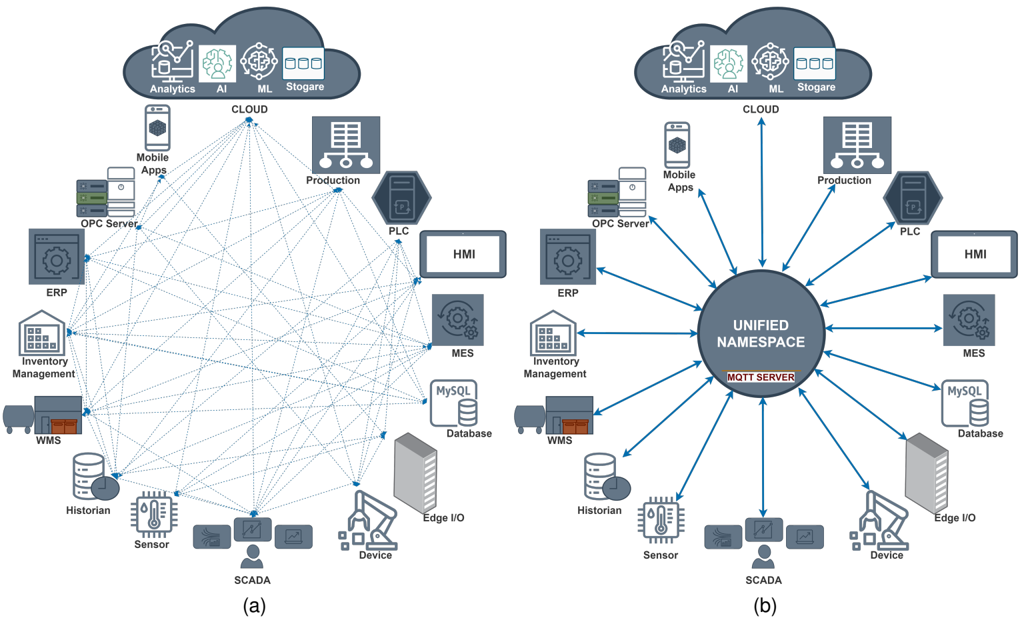
“It follows a publish-subscribe model (see Figure 3), where clients communicate through a central broker [12].”
BackgroundInternet of things-based secure architecture to automate industry
Aljumah, A. A., Ahanger, T. A., & Ullah, I. (2024) · Cluster Computing · doi:10.1007/s10586-024-04499-z · Cited by 7
“IoT presents a complex web of inter-connected devices, sensors, and management systems [6, 7].”
Pirates of the MQTT: Raiding IIoT Systems with a Rogue Client
Alsabbagh, W., Amogbonjaye, S., Kim, C., & Langendörfer, P. (2024) · Cyber Security in Networking Conference (CSNet) · doi:10.1109/csnet64211.2024.10851733 · Cited by 5
“MQTT is a lightweight messaging protocol designed for low bandwidth, high latency, or unreliable networks [14].”
A Payload of Lies: False Data Injection Attacks on MQTT-based IIoT Systems
Alsabbagh, W., Kim, C., & Langendörfer, P. (2024) · Annual Conference of the IEEE Industrial Electronics Society (IECON) · doi:10.1109/iecon55916.2024.10905487 · Cited by 10
“MQTT stands out as a lightweight messaging protocol explicitly crafted for deployment in scenarios characterized by low bandwidth, high latency, or unreliable network conditions [12].”
A systematic mapping study on privacy in IoT-based systems
Shaheen, Y. Y., Hornos, M. J., & Rodríguez-Domínguez, C. (2025) · International Journal of Information Security · doi:10.1007/s10207-025-01150-9 · Cited by 5
“Numerous security attacks on IoTSs have been documented in the literature, such as Denial of Service (DoS), eavesdropping, Man-in-the-Middle (MITM), and replay attacks.”
Cui, Y., Zhou, H., Zhang, Y., et al. (2024) · IEEE Internet of Things Journal · doi:10.1109/jiot.2024.3521372 · Cited by 2
“This study addresses the gaps [10] in current RPL and external defense mechanisms [11].”
A Trust-Based Privacy-Preserving Data Retrieval Scheme in Edge-Cloud Computing
Huang, Q.-A., & Si, Y. (2026) · IEEE Transactions on Dependable and Secure Computing · doi:10.1109/tdsc.2026.3662007 · Cited by 2
“The leakage of industrial IoT business data or sensitive personal information during data retrieval can lead to severe financial and reputational losses [7], [18].”
Challenges of Engineering Skillsets Essential for Driving Circularity of Smart Cities
Neale, B., Kaewunruen, S., Li, D., Çavdar, A. D., Askar, R., Tambovceva, T., & Bajāre, D. (2025) · Applied Sciences · doi:10.3390/app15020809 · Cited by 5
Navigating Privacy and Security in Internet of Medical Things With Machine-to-Machine Interactions
Arunachalam, M., Akella, S., Satvik, D. A., & Babu, R. T. S. (2025) · Advances in computational intelligence and robotics book series · doi:10.4018/979-8-3693-6180-1.ch018 · Cited by 2
Privacy and Security Concerns in Edge-Cloud Systems: An In-Depth Analysis
Kaki, S. S., Kantareddygari, J. R., & Aishwarya, R. (2025) · International Conference on Intelligent Data Communication Technologies and Internet of Things (IDCIoT) · doi:10.1109/idciot64235.2025.10914885 · Cited by 2
“A layered hacking scenario analysis depicts possible security breaches and countermeasures at [10] various levels of IIoT architecture.”
Manufacturing Cybersecurity for SMEs: Implementing Zero Trust in Legacy Industrial Environments
Akinsanya, A. (2026) · Research Square · doi:10.21203/rs.3.rs-8846670/v1 · Cited by 1
Jagadeesan, A., Gowrishankar, V., Yesodha, K. R. K., et al. (2024) · IEEE World Conference on Applied Intelligence and Computing (AIC) · doi:10.1109/aic61668.2024.10731069 · Cited by 1
“One method for providing better facts protection in supply chain management is through the block chain era [14].”
MethodDas, J. K., Herwig, D., Fowler, J., & Chen, L. (2025) · IEEE International Workshop on Radio Frequency and Antenna Technologies (iWRF&AT) · doi:10.1109/iwrfat65352.2025.11102956 · Cited by 2
“Anselme Eyeleko and Tao Feng [11] examined current privacy issues from a hacker’s point of view.”
Multiparty Computation for Privacy Preserving Multisource Data Mining in Industrial IoT
Yin, H., Jiang, Y., Zhang, L., Wang, H., Guo, G., & Hao, Y. (2025) · IEEE Transactions on Industrial Informatics · doi:10.1109/tii.2025.3609108 · Cited by 2
“Trends like “Industry 4.0” and the Internet of Things (IoT) involve the handling of security-critical and privacy-sensitive data, making them vulnerable to attacks [2].”
InfluentialLNNIDS: A Hybrid Liquid Neural Network based IDS for Known and Unknown IoT Attacks
Kumar, R., Swarnkar, M., & Muskan, M. (2025) · ACM Transactions on Internet Technology · doi:10.1145/3771739 · Cited by 1
A New Encryption Scheme Using Blockchain for Secured Accessing of Sensitive Health Care Records
Ansar, S., Natarajan, P., Guran, L., & Rus, R. V. (2025) · Journal of Advances in Information Technology · doi:10.12720/jait.16.4.510-526 · Cited by 2
“Procedures for access control will be essential in determining who has access to and can alter medical records [6, 7].”
Pillai, R. K. S., O’Connell, E., Denny, P., & Jaferkhan, P. (2025) · Research Square · doi:10.21203/rs.3.rs-8276185/v1 · Cited by 3
Kumari, A. (2024) · INTERANTIONAL JOURNAL OF SCIENTIFIC RESEARCH IN ENGINEERING AND MANAGEMENT · doi:10.55041/ijsrem31557
Microaggregation-Based Defense Against Synonymous Linkages in IIoT Asset Tracking
Eyeleko, A. H., Feng, T., Yan, Y., & Ghilan, S. F. A. (2024) · IEEE Internet of Things Journal · doi:10.1109/jiot.2024.3417950 · Cited by 1
Self-citationIIoT Security Using Industrial Identity Management System
Alrawashdeh, K., & Al-Haija, Q. S. A. (2024) · IEEE National Aerospace and Electronics Conference (NAECON) · doi:10.1109/naecon61878.2024.10670628
Weinberg, A. I., & Faccia, A. (2024) · SSRN Electronic Journal · doi:10.2139/ssrn.5034930 · Cited by 3
Exploring Security and Data Privacy Issues in Industrial Internet of Things (IIoT)—A Review
Sohoni, A., & Prasad, P. W. C. (2024) · Lecture notes in electrical engineering · doi:10.1007/978-3-031-71773-4_19 · Cited by 1
Xiong, X., Guo, X., Wu, Y., Peng, W., & Zhou, L. (2026) · IEEE Internet of Things Journal · doi:10.1109/jiot.2026.3673327
“While these techniques improve authenticity by modeling statistical features or topological relationships, they face significant limitations in IoT environments [14].”
Barpute, J. V., Gupta, N., Suryawanshi, S., Bhosale, D. G., Kshirsagar, V. G., & Patil, P. (2026) · Communications in computer and information science · doi:10.1007/978-3-032-20907-8_7
Adil, M., Shoukat, S., Javeed, D., & Khan, I. A. (2026) · Computer Networks · doi:10.1016/j.comnet.2026.112504
Systematic firmware extraction techniques for forensic analysis of industrial embedded devices
Karincic, E., Linkous, L., Will, A., Elks, C., Manic, M., & Topsakal, E. (2026) · Forensic Science International Reports · doi:10.1016/j.fsir.2026.100492 · Cited by 1
Differential Encryption Scheme for Continuous Monitoring Image Sequences in the Internet of Things
Man, Z.-L., Yang, L., Yu, Z., & Zhou, Y. (2026) · IEEE Internet of Things Journal · doi:10.1109/jiot.2026.3709248
“Once critical monitoring images are maliciously modified, they may lead to erroneous decision-making and compromise the security and reliability of industrial systems [4], [5], [6], [7].”
PureChain-Based Real-Time Intrusion Detection for Secure Industrial Humanoid IIoT Communication
Ibrahim, H., Ahakonye, L. A. C., Lee, J. M., & Kim, D. (2026) · International Conference on Ubiquitous and Future Networks · doi:10.1109/icufn69619.2026.11628501
“Similarly, collaborative robot studies show that misconfiguration can enable program manipulation and safety bypass mechanisms [24], [25].”
Singhal, S., & Kumar, K. A. (2026) · Frontiers in Big Data · doi:10.3389/fdata.2026.1938279 · Cited by 4
“Application-layer targeted software exploits can evade lower-layer security and cause persistent disruptions (Eyeleko and Feng, 2023; Priyadarshini et al., 2023).”
Metadata
- Authors
- Eyeleko, A. H., & Feng, T.
- Affiliations
- Lanzhou University of Technology (CN)
- Venue
- IEEE Internet of Things Journal
- Published
- 2023-12-15
- Volume
- 10
- Issue
- 24
- Pages
- 21917-21941
- ISSN
- 2327-4662 (ISSN-L)
- 2372-2541
- OpenAlex
- W4386132186
- Cited by
- 38
- References
- 185
- Citations by year
- 2026: 9 · 2025: 14 · 2024: 15
- FWCI
- 4.23
- Type
- journal article
- Language
- en
- Open access
- hybrid
- doi.org
- Licence
- Locations
- IEEE Internet of Things Journal (publishedVersion, cc-by-nc-nd)
- Funders
- National Natural Science Foundation of China (62162039, 61762060)
- Topics
- Physical Sciences › Computer Science › Computer Networks and Communications › IoT and Edge/Fog Computing
- Physical Sciences › Computer Science › Information Systems › Blockchain Technology Applications and Security
- Physical Sciences › Computer Science › Information Systems › Internet of Things and AI
- Keywords
- Industrial Internet of Things, IIoT security, privacy preservation, IIoT architecture, Industry 4.0, blockchain security, data breaches, security countermeasures
About these checks
Registry, retraction, Cites and statistics results are computed, not judged, with one exception: a printed reference that no index lists is read once by a model before it counts as a citation error. Claims are extracted by a model and kept only when their quote appears verbatim in the text; each cited source is then checked, with a model’s help, for whether it says what the claim relies on. Those verdicts can be wrong — read the claim’s quote and the cited source before relying on one.
The claim verdicts this report counts are experimental: their accuracy is not yet measured.
A language model drew the claims from the paper on 2026-10-06, under version 3 of the claim definition (model deepseek-v4.1-flash, prompt extract-v3).
A second model labelled each claim on 2026-10-06 (model jev-1.13-20260917, definition revision gold-guideline-v0.2).
Cited sources are checked with a language model’s help (gpt-6-sol).
Statistics and arithmetic are recomputed, not judged.
Confidence bands are shown only for fields calibrated on our annotated test set. None is calibrated yet, so no band is shown.
What counts as a claim ›How we measure confidence ›How we check this ›
Are you an author, or do you see a problem with this page? Request a review
Data sources
Bibliographic data: Semantic Scholar, OpenAlex, Crossref.
Contains information from the Semantic Scholar Academic Graph Datasets, made available under the ODC Attribution License (ODC-BY 1.0).
Semantic Scholar’s data is described in: Kinney, R., et al. (2023). The Semantic Scholar Open Data Platform. arXiv:2301.10140.
