

Sim-to-Real Transfer in Deep Reinforcement Learning for Robotics: a Survey
Open accessThe DOI matches its Crossref record; 99 of the 99 references it cites were found in a registry or an index; 49 of the 90 sources its claims cite were checked for support.
Abstract
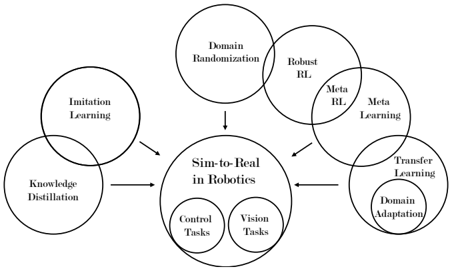
Deep reinforcement learning has recently seen huge success across multiple areas in the robotics domain. Owing to the limitations of gathering real-world data, i.e., sample inefficiency and the cost of collecting it, simulation environments are utilized for training the different agents. This not only aids in providing a potentially infinite data source, but also alleviates safety concerns with real robots. Nonetheless, the gap between the simulated and real worlds degrades the performance of the policies once the models are transferred into real robots. Multiple research efforts are therefore now being directed towards closing this sim-toreal gap and accomplish more efficient policy transfer. Recent years have seen the emergence of multiple methods applicable to different domains, but there is a lack, to the best of our knowledge, of a comprehensive review summarizing and putting into context the different methods. In this survey paper, we cover the fundamental background behind sim-to-real transfer in deep reinforcement learning and overview the main methods being utilized at the moment: domain randomization, domain adaptation, imitation learning, meta-learning and knowledge distillation. We categorize some of the most relevant recent works, and outline the main application scenarios. Finally, we discuss the main opportunities and challenges of the different approaches and point to the most promising directions.
Overview
CoChat Summary
TL;DR
This survey reviews sim-to-real transfer in deep reinforcement learning for robotics, covering domain randomization, domain adaptation, imitation learning, meta-learning, and knowledge distillation. It identifies domain randomization as the most widely adopted method and outlines application scenarios, challenges, and promising directions.
Key findings
- The main sim-to-real methods reviewed are domain randomization, domain adaptation, imitation learning, meta-learning, and knowledge distillation; domain randomization is identified as the most widely adopted method.
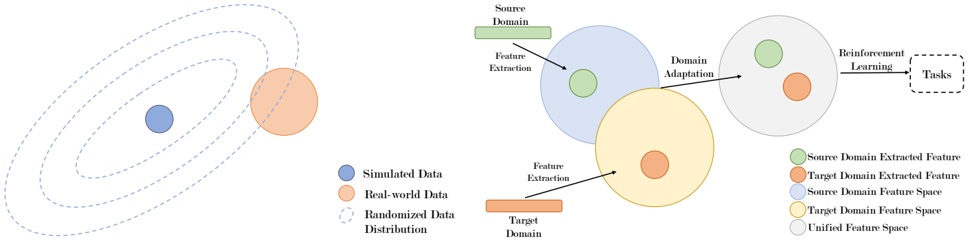
- Domain randomization is divided into visual randomization and dynamics randomization: visual randomization targets robotic vision tasks such as object localization, detection, pose estimation, and semantic segmentation, while dynamics randomization helps acquire robust control policies. For dexterous in-hand manipulation, one work randomizes object dimensions, object and robot link masses, surface friction coefficients, robot joint damping coefficients, and actuator force gains.
- Application scenarios include dexterous robotic manipulation (e.g., peg-in-hole, deformable object manipulation, multi-fingered hands, force control) and robotic navigation (e.g., six-legged robots, depth-based mapless navigation, soccer competitions), plus other applications such as plasma jet control, tactile sensing, and multi-agent manipulation.
- Stated challenges include the lack of formal explanation for why domain randomization works, the homogeneous feature-space assumption in most domain adaptation algorithms, and the need for wider theoretical and empirical studies; promising directions include integrating different methods and using incremental complexity learning, continual learning, and reward shaping.
Methods
- This is a survey/review paper, not an experimental study; it reviews fundamental background and recent works on sim-to-real transfer in DRL for robotics.
- It classifies relevant publications in Table I by real robot/platform, learning algorithm, knowledge transfer, simulator/engine, multi-agent learning, and sim-to-real transfer/learning details.
- The analysis is a qualitative synthesis of literature covering zero-shot transfer, system identification, domain randomization, domain adaptation, learning with disturbances, simulation environments, and application areas; no dataset or sample size is reported.
Limitations
- The paper states that for domain randomization it is hard to formally explain how and why it works, making efficient simulation and randomization distribution design difficult; for domain adaptation, most existing algorithms focus on homogeneous deep domain adaptation and assume the same feature spaces between source and target domains, which may not hold in many applications.
- The paper states that wider theoretical and empirical studies are required to better understand these techniques, and that generalization of existing results with more comprehensive analysis is lacking.
- The paper states its scope excludes specific simulators or techniques for direct learning in real-world settings, focuses on works specifically tackling sim-to-real transfer, and notes that sim-to-real literature for robotic navigation is sparse. Evident from the text: as a survey, it presents no primary experimental validation or quantitative benchmark results; Table I is a classification rather than a comparative performance evaluation.
Model-written summary. Check it against the paper before relying on it.
Integrity signals
Registry
Cites
Statistics
Figures
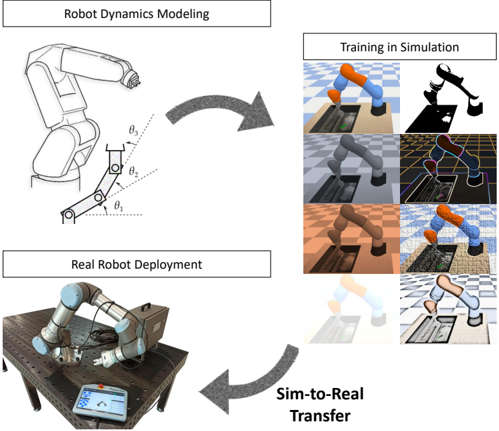
Verification
Claims the paper makes
24 Valid · 8 Not valid · 17 Not checked · 26 Own results and interpretations
The cited sources support only part of this claim — read each source’s verdict below.
In the paper
“From the literature, we summarize three common methods for domain adaptation regardless of their tasks. They are discrepancy-based , adversarial-based , and reconstructionbased methods, which can be also used crossly.”
What the sources say
- Partly supportedcites [65] [65] Eric Tzeng, Judy Hoffman, Ning Zhang, Kate Saenko, and Trevor Darrell. Deep domain confusion: Maximizing for domain invariance. arXiv:1412.3474 , 2014. 67. sourceExperimental — accuracy not yet measured
The Introduction (p. 1) and Section 3 (p. 3) describe a domain-adaptation method that minimizes maximum mean discrepancy, supporting the discrepancy-based part of the claim. The paper does not present adversarial-based and reconstruction-based methods alongside it as three common categories of domain adaptation. (LLM, conf=0.82)
- Not checked yetcites [68] [68] Yaroslav Ganin, Evgeniya Ustinova, Hana Ajakan, Pascal Germain, Hugo Larochelle, Franc ¸ois Laviolette, Mario Marchand, and Victor Lempitsky. Domain-adversarial training of neural networks. The Journal of Machine Learning Research , 17(1), 2016. - source
Checked before — its earlier verdict is held back until a new check runs.
- Partly supportedcites [71] [71] Konstantinos Bousmalis, George Trigeorgis, Nathan Silberman, Dilip Krishnan, and Dumitru Erhan. Domain separation networks. In Advances in neural information processing systems , 2016. - sourceExperimental — accuracy not yet measured
Related Work (p. 2) discusses adversarial training and MMD-based alignment, while the Discussion (p. 8) describes a reconstruction loss used with either DANN or MMD. The paper therefore illustrates the three approaches and their combination, but it does not present them as a three-part classification of common domain-adaptation methods regardless of task; its review focuses on CNN-based unsupervised adaptation. (LLM, conf=0.84)
plain- Asserted: passes — The authors put it forward as true.
- Checkable: passes — It can be checked against evidence.
- Load-bearing: unclear — It is unclear whether the paper’s conclusions depend on it.
- Based: passes — The paper gives a reason why it holds.
- Partly supported
The cited sources support only part of this claim — read each source’s verdict below.
In the paper
“In those cases where system identification for one-shot transfer is the objective, researchers have often built or customized specific simulations that meet problem-specific requirements and constraints [32], [36], [41].”
What the sources say
- Not checked — no full text of the sourcecites [32] [32] Matthew Witman, Dogan Gidon, David B Graves, Berend Smit, and Ali Mesbah. Sim-to-real transfer reinforcement learning for control of thermal effects of an atmospheric pressure plasma jet. Plasma Sources Science and Technology , 28(9), 2019. - source
- Partly supportedcites [36] [36] Hansenclever F Bassani, Renie A Delgado, Jose Nilton de O Lima Junior, Heitor R Medeiros, Pedro HM Braga, and Alain Tapp. Learning to play soccer by reinforcement and applying sim-to-real to compete in the real world. arXiv:2003.11102 , 2020. - sourceExperimental — accuracy not yet measured
The passages labeled 25 and 44 describe a customized soccer simulation environment designed for the paper’s RL and sim-to-real problem. They do not describe system identification or one-shot transfer as its objective, or establish that researchers have often taken this approach. (LLM, conf=0.86)
- Partly supportedcites [41] [41] Andrew Hundt, Benjamin Killeen, Heeyeon Kwon, Chris Paxton, and Gregory D Hager. ' good robot!': Efficient reinforcement learning for multi-step visual tasks via reward shaping. arXiv:1909.11730 , 2019. - sourceExperimental — accuracy not yet measured
The Simulation Experiments section (p. 5) describes two simulated tasks of the authors’ design, and the Real World Experiments section (p. 7) reports direct transfer of models trained in simulation. The paper does not describe system identification as the objective or establish that researchers often build or customize simulations to meet problem-specific constraints. (LLM, conf=0.76)
plainstates an association- Asserted: passes — The authors put it forward as true.
- Checkable: passes — It can be checked against evidence.
- Load-bearing: unclear — It is unclear whether the paper’s conclusions depend on it.
- Based: passes — The paper gives a reason why it holds.
The sources with a verdict support this claim; the rest weren’t checked yet, have no full text we could read, or their verdicts aren’t rated yet.
In the paper
“An exception to this is, however, robotic tasks involving object manipulation [5], [6].”
What the sources say
- Not checked — no full text of the sourcecites [5] [5] Aravind Rajeswaran, Vikash Kumar, Abhishek Gupta, Giulia Vezzani, John Schulman, Emanuel Todorov, and Sergey Levine. Learning complex dexterous manipulation with deep reinforcement learning and demonstrations. arXiv:1709.10087 , 2017. - source
- Supportedcites [6] [6] Jan Matas, Stephen James, and Andrew J Davison. Sim-to-real reinforcement learning for deformable object manipulation. arXiv:1806.07851 , 2018. - source
Section 5.3 (p. 8) reports testing simulation-trained policies on a real robot for three cloth-manipulation tasks. Table 2 (p. 8) reports real-world successes without additional training, supporting this paper as an example of deep reinforcement learning succeeding beyond simulation in object manipulation. (LLM, conf=0.90)
plain- Asserted: passes — The authors put it forward as true.
- Checkable: passes — It can be checked against evidence.
- Load-bearing: unclear — It is unclear whether the paper’s conclusions depend on it.
- Based: passes — The paper gives a reason why it holds.
The cited sources support only part of this claim — read each source’s verdict below.
In the paper
“In robotic vision tasks including object localization [53], object detection [54], pose estimation [55], and semantic segmentation [56], the training data from simulator always have different textures, lighting, and camera positions from the realistic environments.”
What the sources say
- Partly supportedcites [53] [53] Josh Tobin, Rachel Fong, Alex Ray, Jonas Schneider, Wojciech Zaremba, and Pieter Abbeel. Domain randomization for transferring deep neural networks from simulation to the real world. In IROS , 2017. - sourceExperimental — accuracy not yet measured
The Introduction (p. 1) describes a reality gap between simulated camera images and real-world images, and its Fig. 1 caption says this study randomizes camera positions, lighting, and non-realistic textures. But the claim's “always” extends that description to all simulator training data; Bridging the reality gap (p. 2) also describes approaches that make simulation closely match physical reality. (LLM, conf=0.88)
- Could not verifycites [54] [54] Jonathan Tremblay, Aayush Prakash, David Acuna, Mark Brophy, Varun Jampani, Cem Anil, Thang To, Eric Cameracci, Shaad Boochoon, and Stan Birchfield. Training deep networks with synthetic data: Bridging the reality gap by domain randomization. In CVPR Workshops , 2018. - sourceExperimental — accuracy not yet measured
Our copy of Arndt et al. (ICRA 2020) deals only with dynamics-side sim-to-real transfer: the Introduction (p. 1) frames the problem as the need for 'an accurate match between the simulation and real-world... because the simulation may not model some of the physical phenomena present in real world,' and the paper explicitly 'consider[s] tasks that are heavily dependent on the dynamic parameters of the environment' (hockey-puck friction/mass, Sections III-V). The nearest passage is Section II-B (p. 2), noting that domain randomization 'can be applied both to perception [8], [21]-[23] and to the dynamics of the system [24], [25]' — it credits perception work but never states that simulator training data differ in textures, lighting, or camera positions, and it does not discuss object localization, detection, pose estimation, or semantic segmentation. Searched: textures/lighting/camera positions, visual appearance gap, perception domain randomization; no passage in our copy addresses the claim's specific point, so it can be neither confirmed nor contradicted here. (LLM, conf=0.70)
- Not checked yetcites [55] [55] Martin Sundermeyer, Zoltan-Csaba Marton, Maximilian Durner, Manuel Brucker, and Rudolph Triebel. Implicit 3d orientation learning for 6d object detection from rgb images. In ECCV , 2018. - source
Checked before — its earlier verdict is held back until a new check runs.
plain- Asserted: passes — The authors put it forward as true.
- Checkable: passes — It can be checked against evidence.
- Load-bearing: passes — The paper’s conclusions depend on it.
- Based: passes — The paper gives a reason why it holds.
- Partly supported
Every source the paper cites for this claim was checked and supports it.
In the paper
“Moreover, a relevant conclusion from this work is that excessive domain randomization can be detrimental. Specifically, when the number of different colors that were being used for each texture was too large, the performance of the real robot was significantly worse.”
What the sources say
- Supportedcites [6] [6] Jan Matas, Stephen James, and Andrew J Davison. Sim-to-real reinforcement learning for deformable object manipulation. arXiv:1806.07851 , 2018. - source
Section 5.3 (p. 8) reports that heavy domain randomisation was detrimental: sampling texture colours uniformly across all colours made the agent’s performance after transfer significantly worse. This supports the citing sentence’s description of excessive colour variation harming real-robot performance. (LLM, conf=0.93)
plainstates a cause- Asserted: passes — The authors put it forward as true.
- Checkable: passes — It can be checked against evidence.
- Load-bearing: passes — The paper’s conclusions depend on it.
- Based: passes — The paper gives a reason why it holds.
- Supported
8 more claims
Create a free account to see all 75 claims and to verify the 19 references still open.
- Probably not a substantial claim. 48
- It may state two separate claims as one. 27
Claims other papers make about this one
Each is checked against this paper’s own text: does it say what the citing paper says it does?
The cited source says what the claim attributes to it.
In the citing paper
“Simulation-based approaches provide a cheap and safe development environment for RMSes, but there are challenges to deploying simulation-trained systems into real-world settings [62].”
From Data-Driven Robotic Manipulation of Cloth-like Deformable Objects: The Present, Challenges and Future Prospects (2023) · cites this paper as [62]
The cited source says what the claim attributes to it.
In the citing paper
“Consequently, simulation-to-reality (Sim2Real) transfer [62] (Section 3.4) becomes a key technology in modern robotics for bridging the gap between the simulation-trained policy and the real-world deployment.”
From Data-Driven Robotic Manipulation of Cloth-like Deformable Objects: The Present, Challenges and Future Prospects (2023) · cites this paper as [62]
Citations
Cites
Continuous control with deep reinforcement learning
Lillicrap, T. P., Hunt, J. J., Pritzel, A., Heess, N., Erez, T., Tassa, Y., Silver, D., & Wierstra, D. (2015) · arXiv · doi:10.48550/arxiv.1509.02971 · Cited by 10,782
Proximal Policy Optimization Algorithms
Schulman, J., Wolski, F., Dhariwal, P., Radford, A., & Klimov, O. (2017) · arXiv · doi:10.48550/arxiv.1707.06347 · Cited by 10,625 · cited 2×
“The variability in terms of learning algorithms is higher, with DRL using proximal policy optimization (PPO) [45], trust region policy optimization (TRPO) [46], maximum a-posteriori policy optimization (MPO) [47], asynchronous actor critic (A3C) methods [48], soft actor critic (SAC) [49], or deep deterministic policy…”
BackgroundDomain-Adversarial Training of Neural Networks
Ganin, Y., Ustinova, E., Ajakan, H., Germain, P., Larochelle, H., Laviolette, F., Marchand, M., & Lempitsky, V. (2017) · Advances in Computer Vision and Pattern Recognition · doi:10.1007/978-3-319-58347-1_10 · Cited by 8,318
Asynchronous Methods for Deep Reinforcement Learning
Mnih, V., Badia, A. P., Mirza, M., Graves, A., Lillicrap, T. P., Harley, T., Silver, D., & Kavukcuoglu, K. (2016) · arXiv · doi:10.48550/arxiv.1602.01783 · Cited by 7,132 · cited 1×
“The variability in terms of learning algorithms is higher, with DRL using proximal policy optimization (PPO) [45], trust region policy optimization (TRPO) [46], maximum aposteriori policy optimization (MPO) [47], asynchronous actor critic (A3C) methods [48], soft actor critic (SAC) [49], or deep deterministic policy g…”
BackgroundA Comprehensive Survey on Transfer Learning
Zhuang, F., Qi, Z., Duan, K., Xi, D., Zhu, Y., Zhu, H., Xiong, H., & He, Q. (2021) · Proceedings of the IEEE · doi:10.1109/jproc.2020.3004555 · Cited by 6,678 · cited 2×
“Transfer learning aims at improving the performance of target learners on target domains by transferring the knowledge contained in different but related source domains [18].”
BackgroundSoft actor-critic Off-policy maximum entropy deep reinforcement learning with a stochastic actor
Haarnoja, T., Zhou, A., Abbeel, P., & Levine, S. (2018) · arXiv · doi:10.48550/arxiv.1801.01290 · Cited by 5,594 · cited 2×
“The variability in terms of learning algorithms is higher, with DRL using proximal policy optimization (PPO) [45], trust region policy optimization (TRPO) [46], maximum a-posteriori policy optimization (MPO) [47], asynchronous actor critic (A3C) methods [48], soft actor critic (SAC) [49], or deep deterministic policy…”
BackgroundMuJoCo: A physics engine for model-based control
Todorov, E., Erez, T., & Tassa, Y. (2012) · 2012 IEEE/RSJ International Conference on Intelligent Robots and Systems · doi:10.1109/iros.2012.6386109 · Cited by 4,767 · cited 3×
“The most widely used simulators in the literature are Gazebo [74], Unity3D, and PyBullet [75] or MuJoCo [17].”
BackgroundMethodDeep Reinforcement Learning: A Brief Survey
Arulkumaran, K., Deisenroth, M. P., Brundage, M., & Bharath, A. A. (2017) · IEEE Signal Processing Magazine · doi:10.1109/msp.2017.2743240 · Cited by 4,733
A Brief Survey of Deep Reinforcement Learning
Arulkumaran, K., Deisenroth, M. P., Brundage, M., & Bharath, A. A. (2017) · arXiv · doi:10.48550/arxiv.1708.05866 · Cited by 4,733
Trust region policy optimization
Schulman, J., Levine, S., Moritz, P., Jordan, M. I., & Abbeel, P. (2015) · arXiv · doi:10.48550/arxiv.1502.05477 · Cited by 4,578
Research works printed but not linked: 6
- [75] Erwin Coumans and Yunfei Bai. Pybullet, a python module for physics simulation for games, robotics and machine learning. 2016. -
- [35] J van Baar, R Corcodel, A Sullivan, D Jha, D Romeres, and D Nikovski. Simulation to real transfer learning with robustified policies for robot tasks. 2018. -
- [52] Joshua P Tobin. Real-World Robotic Perception and Control Using Synthetic Data . PhD thesis, UC Berkeley, 2019. -
- [40] Manuel Kaspar and J¨ urgen Bock. Reinforcement learning with cartesian commands and sim to real transfer for peg in hole tasks. -
- [4] Javier Garcıa and Fernando Fern´ andez. A comprehensive survey on safe reinforcement learning. Journal of Machine Learning Research , 16(1), 2015. -
- [42] Ole-Magnus Pedersen. Sim-to-real transfer of robotic gripper pose estimation-using deep reinforcement learning, generative adversarial networks, and visual servoing. Master's thesis, NTNU, 2019. -
Cited by
Items 101–200 of 778
Liang, C., Kamat, V. R., Menassa, C. C., & McGee, W. (2021) · Journal of Computing in Civil Engineering · doi:10.1061/(asce)cp.1943-5487.0001004 · Cited by 25
Marchesini, E., & Farinelli, A. (2022) · Proceedings - IEEE International Conference on Robotics and Automation/Proceedings · doi:10.1109/icra46639.2022.9812341 · Cited by 34
“However, state-of-the-art results in DRL, robotics, and combined approaches in general, are mainly achieved using simulation and transferring the policy on real platforms [29], [30].”
BackgroundHMDRL: Hierarchical Mixed Deep Reinforcement Learning to Balance Vehicle Supply and Demand
Xi, J., Zhu, F., Ye, P., Lv, Y., Tang, H., & Wang, F. (2022) · IEEE Transactions on Intelligent Transportation Systems · doi:10.1109/tits.2022.3191752 · Cited by 21
“Deep reinforcement learning has been demonstrated to be effective in solving complex decision problems such as the game of Go, video games, autonomous driving and robot control [13]–[16].”
BackgroundYu, X., Salimpour, S., Queralta, J. P., & Westerlund, T. (2023) · Sensors · doi:10.3390/s23062936 · Cited by 33
“Deep learning (DL) has revolutionized computer vision over the last decade within the robotics field, from advanced perception [10] to novel end-to-end control architectures based on deep reinforcement learning [11], including odometry and localization [9].”
Self-citationAxis-space framework for cable-driven soft continuum robot control via reinforcement learning
Wei, D., Zhou, J., Zhu, Y., Ma, J., & Ma, S. (2023) · Communications Engineering · doi:10.1038/s44172-023-00110-2 · Cited by 29
“Although many studies have focused on the simulation-to-real world transition to narrow the reality gap in various robot control problems 21 – 24 , there is still a long way to go before fi lling this gap.”
Shakerimov, A., Alizadeh, T., & Varol, H. A. (2023) · IEEE Access · doi:10.1109/access.2023.3339568 · Cited by 39
“Another strategy would be increasing the robustness of the RL algorithms to discrepancies between simulations and real-world environments [19].”
BackgroundMethodInfluentialEmerging Trends in Realistic Robotic Simulations: A Comprehensive Systematic Literature Review
Kargar, S. M., Yordanov, B., Harvey, C., & Asadipour, A. (2024) · IEEE Access · doi:10.1109/access.2024.3404881 · Cited by 45
“Once a simulation environment has been established, it is simple to duplicate, allowing AI training to be carried out at scale without facing the additional expenses associated with the real-world deployment [4], [6].”
InfluentialLearning Controllers for Continuum Soft Manipulators: Impact of Modeling and Looming Challenges
Falotico, E., Donato, E., Alessi, C., Setti, E., Nazeer, M. S., Agabiti, C., Caradonna, D., Bianchi, D., Piqué, F., Ansari, Y. T., et al. (2024) · Advanced Intelligent Systems · doi:10.1002/aisy.202400344 · Cited by 35
Robust Deep Reinforcement Learning for Quadcopter Control
Deshpande, A. M., Minai, A. A., & Kumar, M. (2021) · IFAC-PapersOnLine · doi:10.1016/j.ifacol.2021.11.158 · Cited by 24
“Hence, the transfer of RL policies from one environment to another requires special attention [Zhao et al. (2020)].”
BackgroundYang, W., Zhang, L., & Zhang, Z. (2022) · The Annals of Statistics · doi:10.1214/22-aos2225 · Cited by 105
SRL-TR 2 : A Safe Reinforcement Learning Based TRajectory TRacker Framework
Wang, C., Wang, L., Lu, Z., Chu, X., Shi, Z., Deng, J., Su, T., Shou, G., & Wen, X. (2023) · IEEE Transactions on Intelligent Transportation Systems · doi:10.1109/tits.2023.3250720 · Cited by 29
“According to [52], numerous efforts have been made to address the sim-to-real transfer problems for RL policies, e.g., system identification, domain adaptation, domain randomization, and so on.”
BackgroundSim-to-Real Transfer for Quadrupedal Locomotion via Terrain Transformer
Lai, H., Zhang, W., He, X., Chen, Y., Tian, Z., Yu, Y. H., & Wang, J. (2023) · Proceedings - IEEE International Conference on Robotics and Automation/Proceedings · doi:10.1109/icra48891.2023.10160497 · Cited by 43
UAV Indoor Exploration for Fire-Target Detection and Extinguishing
Unlu, H. U., Chaikalis, D., Τσουκαλάς, Α., & Tzes, A. P. (2023) · Journal of Intelligent & Robotic Systems · doi:10.1007/s10846-023-01835-0 · Cited by 25
“This problem is commonly referred to as simulation to reality gap, and recent developments have been surveyed in [36].”
BackgroundKadi, H. A., & Terzić, K. (2023) · Sensors · doi:10.3390/s23052389 · Cited by 27
“We refer to Zhao et al.’s (2020) review [62] for further details on Sim2Real .”
BackgroundMethodInfluentialSim-to-real transfer of adaptive control parameters for AUV stabilisation under current disturbance
Chaffre, T., Wheare, J., Lammas, A., Santos, P. E., Chenadec, G. L., Sammut, K., & Clément, B. (2024) · The International Journal of Robotics Research · doi:10.1177/02783649241272115 · Cited by 31
Gou, Y., Zhang, T., Liu, J., Yang, T., Song, S., & Cui, J. (2023) · IEEE Transactions on Mobile Computing · doi:10.1109/tmc.2023.3310476 · Cited by 24
“Duetothelimitationsofreal-world datacollection,i.e.,samplinginefficiencyandcost,simulation environmentsareusedtotrainthevariousagents[52].”
Examining the simulation-to-reality gap of a wheel loader digging in deformable terrain
Aoshima, K., & Servin, M. (2024) · Multibody System Dynamics · doi:10.1007/s11044-024-10005-5 · Cited by 27
“If the gap is significant, a solution developed in simulation will exhibit a simulation bias and causing it to perform differently, and usually poorly, when transferred to the real system [5].”
BackgroundDaniel, M., Magassouba, A., Aranda, M., Lequièvre, L., Ramón, J. A. C., Iglesias, R., & Mezouar, Y. (2023) · IEEE Robotics and Automation Letters · doi:10.1109/lra.2023.3342672 · Cited by 31
“Similarly to many DRL frameworks, MultiAC6 is trained in a simulator, for safer interaction and shorter training time [23].”
BackgroundMethodThe New Agronomists: Language Models are Experts in Crop Management
Wu, J., Lai, Z., Chen, S., Tao, R., Pan, Z., & Hovakimyan, N. (2024) · IEEE/CVF Conference on Computer Vision and Pattern Recognition Workshops (CVPRW) · doi:10.1109/cvprw63382.2024.00543 · Cited by 47
“This phenomenon, known as the sim-to-real gap [82], highlights a common challenge in applying RL policies, developed and refined in simulated settings, to practical, real-world environments.”
A Survey on Sim-to-Real Transfer Methods for Robotic Manipulation
Pitkevich, A. V., & Makarov, I. (2024) · IEEE International Symposium on Intelligent Systems and Informatics (SISY) · doi:10.1109/sisy62279.2024.10737545 · Cited by 17
Overcoming the Sim-to-Real Gap in Autonomous Robots
Trentsios, P., Wolf, M., & Gerhard, D. (2022) · Procedia CIRP · doi:10.1016/j.procir.2022.05.251 · Cited by 28
Learning to Throw With a Handful of Samples Using Decision Transformers
Monastirsky, M., Azulay, O., & Sintov, A. (2022) · IEEE Robotics and Automation Letters · doi:10.1109/lra.2022.3229266 · Cited by 27
“More recently, domain randomization was proposed where various properties in an existing simulation are constantly changed [9].”
BackgroundMethodWu, G., Fang, W., Wang, J., Ge, P., Cao, J., Yang, P., & Gou, P. (2022) · Applied Intelligence · doi:10.1007/s10489-022-04354-x · Cited by 24
“However, learning policies via DRL in real-world systems is still very challenging [4].”
BackgroundGPDAN: Grasp Pose Domain Adaptation Network for Sim-to-Real 6-DoF Object Grasping
Zheng, L., Ma, W., Cai, Y., Lu, T., & Wang, S. (2023) · IEEE Robotics and Automation Letters · doi:10.1109/lra.2023.3286816 · Cited by 22
“methods based on geometric feature learning, including featurebased methods [9], [10], reconstruction-based methods [11], [12] and adversarial-based methods [13], [14], [15].”
MethodJoint Delay-Energy Optimization for Multi-Priority Random Access in Machine-Type Communications
Fan, W., Fan, P., & Long, Y. (2023) · IEEE Transactions on Wireless Communications · doi:10.1109/twc.2023.3289314 · Cited by 21
“To this end, policy transfer (PT), as an important part of transfer reinforcement learning [28], can train multiple policies through policy reuse.”
BackgroundPark, B., Chen, A., & Mishra, S. (2024) · IEEE Transactions on Automation Science and Engineering · doi:10.1109/tase.2024.3386882 · Cited by 25
Residual Physics and Post-Posed Shielding for Safe Deep Reinforcement Learning Method
Zhang, Q., Mahbod, M. H. B., Chng, C.-B., Lee, P. S., & Chui, C. (2022) · IEEE Transactions on Cybernetics · doi:10.1109/tcyb.2022.3178084 · Cited by 22
“While building a simulation model is a potential solution, concerns about the transferability of agents trained in simulation to a real system application (sim2real) is a well-known issue [19].”
BackgroundQi, J., Gao, H., Su, H., Huo, M., Yu, H., & Deng, Z. (2024) · IEEE Transactions on Industrial Electronics · doi:10.1109/tie.2024.3360604 · Cited by 19
“As noted in recent surveys, mainstream solutions include domain randomization, domain adaptation, imitation learning and transfer learning [19], [20].”
BackgroundDomain adaptive Sim-to-Real segmentation of oropharyngeal organs
Wang, G., Ren, T.-A., Lai, J., Bai, L., & Ren, H. (2023) · Medical & Biological Engineering & Computing · doi:10.1007/s11517-023-02877-0 · Cited by 16
“In the virtual environment, one can conveniently generate an abundance of datasets [11] of different types for deep learning.”
BackgroundA Real-World Reinforcement Learning Framework for Safe and Human-Like Tactical Decision-Making
Yavas, M. U., Kumbasar, T., & Üre, N. K. (2023) · IEEE Transactions on Intelligent Transportation Systems · doi:10.1109/tits.2023.3292981 · Cited by 22
“One means of coping with the simulation–reality gap is Sim2Real transfer [16], in which DRL agents are trained in simulation and then deployed into the real world with little or no tuning.”
BackgroundComputational design towards energy efficient optimization in overconstrained robotic limbs
Gu, Y., Wang, Z., Feng, S., Sun, H., Lu, H., Pan, J., Wan, F., & Song, C. (2023) · Journal of Computational Design and Engineering · doi:10.1093/jcde/qwad083 · Cited by 21
“Mor eov er, the Sim2Real ga p might degr ade the performance of the policies when transferring the models into real robots (Zhao et al. , 2020b ).”
BackgroundMethodGong, A., Chen, Y., Zhang, J., & Li, X. (2024) · Nuclear Engineering and Technology · doi:10.1016/j.net.2024.01.003 · Cited by 27
Causal Reasoning in Simulation for Structure and Transfer Learning of Robot Manipulation Policies
Lee, T. E., Zhao, J. A., Sawhney, A. S., Girdhar, S., & Kroemer, O. (2021) · Proceedings - IEEE International Conference on Robotics and Automation/Proceedings · doi:10.1109/icra48506.2021.9561439 · Cited by 50
“Current approaches to learning versatile manipulation skills often utilize simulation-to-real (sim-to-real) transfer learning [1]–[4], wherein the skill is learned in a simulation”
BackgroundCover-source mismatch in steganalysis: systematic review
Mallet, A., Beneš, M., & Cogranne, R. (2024) · EURASIP Journal on Information Security · doi:10.1186/s13635-024-00171-6 · Cited by 23
Josifovski, J., Malmir, M., Klarmann, N., Žagar, B. L., Navarro-Guerrero, N., & Knoll, A. (2022) · IEEE/RSJ International Conference on Intelligent Robots and Systems (IROS) · doi:10.1109/iros47612.2022.9981951 · Cited by 34
“We select three parameters that are commonly used in Sim2Real transfer in robotics [20] [34], [11], i.”
BackgroundMethodSafe reinforcement learning for high-speed autonomous racing
Evans, B., Jordaan, H. W., & Engelbrecht, H. A. (2023) · Cognitive Robotics · doi:10.1016/j.cogr.2023.04.002 · Cited by 24
“Training agents in simulation before transferring them to real-world vehicles, called the sim-to-real problem, causes worse performance in reality compared to the simulation due to the difference in dynamics [6] .”
BackgroundIn silico simulation: a key enabling technology for next-generation intelligent surgical systems
Killeen, B. D., Cho, S. M., Armand, M., Taylor, R. H., & Unberath, M. (2023) · Progress in Biomedical Engineering · doi:10.1088/2516-1091/acd28b · Cited by 22
“This approach is already prominent in related problems of general robotic manipulation [41, 42] and self-driving [43], each of which contends with challenges specific to the given task, environment, and data modality.”
BackgroundValencia, D., Jia, J., Li, R., Hayashi, A., Lecchi, M., Terezakis, R., Gee, T., Liarokapis, M. V., MacDonald, B. A., & Williams, H. A. (2023) · Proceedings - IEEE International Conference on Robotics and Automation/Proceedings · doi:10.1109/icra48891.2023.10160983 · Cited by 18
“Instead, it derives a suitable solution via interactions with the environment [52].”
BackgroundA Sim-to-Real Deep Learning-Based Framework for Autonomous Nano-Drone Racing
Lamberti, L., Cereda, E., Abbate, G., et al. (2024) · IEEE Robotics and Automation Letters · doi:10.1109/lra.2024.3349814 · Cited by 15
“…for obstacle avoidance derived from the open-source PULP-Dronet [9] and trained only on simulation images; iii ) mitigation of the sim-to-real gap [12] via aggressive photometric augmentation, label balancing, and comprehensive data generation; iv ) three alternative navigation policies , which…”
MethodLearning Locomotion for Quadruped Robots via Distributional Ensemble Actor-Critic
Li, S.-C., Pang, Y., Bai, P.-J., Li, J., Liu, Z.-J., Hu, S., Wang, L.-Q., & Wang, G. (2024) · IEEE Robotics and Automation Letters · doi:10.1109/lra.2024.3349934 · Cited by 11
“Reinforcement learning for quadrupedal locomotion: Controllers trained with Reinforcement learning in simulations are difficult to deploy on real robots [15].”
MethodSelf-supervised Learning for Joint Pushing and Grasping Policies in Highly Cluttered Environments
Wang, Y., Mokhtar, K., Heemskerk, C. J. M., & Kasaei, H. (2024) · Proceedings - IEEE International Conference on Robotics and Automation/Proceedings · doi:10.1109/icra57147.2024.10611650 · Cited by 30
“2) Sim-to-Sim: CoppeliaSim is well-known for robust robotic testing due to its versatile models and interface [60], [61].”
BackgroundSpaceHopper: A Small-Scale Legged Robot for Exploring Low-Gravity Celestial Bodies
Spiridonov, A., Buehler, F., Berclaz, M., Schelbert, V., Geurts, J., Krasnova, E., Steinke, E., Toma, J., Wuethrich, J., Polat, R., et al. (2024) · Proceedings - IEEE International Conference on Robotics and Automation/Proceedings · doi:10.1109/icra57147.2024.10610057 · Cited by 36
“Typically, DRL-based locomotion controllers are trained in simulation and then transferred to the real world using sim-to-real techniques [36].”
MethodLi, D., & Okhrin, O. (2024) · Communications Engineering · doi:10.1038/s44172-024-00292-3 · Cited by 25
“The DRL agent is fi rst trained on a simple circular map within the Gazebo simulator 39 , then directly transferred for validation to another environment namely the Gym-Duckietown environment 40 and fi nally tested in the real-world scenario without any additional efforts.”
MethodComputational Models for In-Vehicle User Interface Design: A Systematic Literature Review
Lorenz, M., Amorim, T., Dey, D., Sadeghi, M., & Ebel, P. (2024) · International Conference on Automotive User Interfaces and Interactive Vehicular Applications (AutomotiveUI) · doi:10.1145/3640792.3675735 · Cited by 21
“Thus, future research and future models should address what is known in robotics as the Sim2Real gap [100] by including more diverse and realistic scenarios, which helps to increase traffic safety through models that generalize to real-world conditions.”
BackgroundFederated Learning for Vision-based Obstacle Avoidance in the Internet of Robotic Things
Yu, X., Queralta, J. P., & Westerlund, T. (2022) · International Conference on Fog and Mobile Edge Computing (FMEC) · doi:10.1109/fmec57183.2022.10062657 · Cited by 16
“Sim-to-real research has mostly focused on policies obtained through DRL [14], and specifically in areas related to robotic manipulation [15].”
BackgroundInfluentialSelf-citationLearning to Assist Bimanual Teleoperation Using Interval Type-2 Polynomial Fuzzy Inference
Wang, Z., Fei, H., Huang, Y., Rouxel, Q., Xiao, B. J., Li, Z., & Burdet, E. (2023) · IEEE Transactions on Cognitive and Developmental Systems · doi:10.1109/tcds.2023.3272730 · Cited by 14
“Different from transfer learning [8], [9], [10], learning from demonstration [11], [12], [13], [14] or human posture prediction in physical human–robot interaction [15], our idea is to generate human–robot assistive control based on the coordination observed in bimanual control or in the…”
Yan, S., Zhang, P., Huang, S., Wang, J., Sun, H., Zhang, Y., & Tolba, A. K. R. (2023) · Electronics · doi:10.3390/electronics12112478 · Cited by 20
“In deep reinforcement learning, unlike supervised learning, we do not have label information in the training data to guide the training process [31,32].”
BackgroundPath following for Autonomous Ground Vehicle Using DDPG Algorithm: A Reinforcement Learning Approach
Cao, Y., Ni, K., Jiang, X., Kuroiwa, T., Zhang, H., Kawaguchi, T., Hashimoto, S., & Jiang, W. Y. (2023) · Applied Sciences · doi:10.3390/app13116847 · Cited by 22
“In recent years, RL has achieved significant accomplishments in many fields, such as gaming and robotics, which have brought it great attention and widespread recognition [11,12].”
BackgroundSim-to-Real Application of Reinforcement Learning Agents for Autonomous, Real Vehicle Drifting
Tóth, S. H., Viharos, Z. J., Bárdos, Á., & Szalay, Z. (2024) · Vehicles · doi:10.3390/vehicles6020037 · Cited by 22
“However, there are some methods in the current state of the art [55] for robotics applications where the above issue is present.”
MethodReinforcement Learning-Based Control of DC-DC Buck Converter Considering Controller Time Delay
Lee, D., Kim, B., Kwon, S., Nguyen, N.-D., Sim, M. K., & Lee, Y. I. (2024) · IEEE Access · doi:10.1109/access.2024.3448535 · Cited by 16
“Specifically, subtle differences between simulation environment and the actual operating environment, such as processing time or external disturbances, can significantly degrade the performance of trained agents [13], [22].”
BackgroundZero-Shot Policy Transfer in Autonomous Racing: Reinforcement Learning vs Imitation Learning
Hamilton, N. P., Musau, P., Lopez, D. M., & Johnson, T. T. (2022) · IEEE International Conference on Assured Autonomy (ICAA) · doi:10.1109/icaa52185.2022.00011 · Cited by 23
Robotic Control of the Deformation of Soft Linear Objects Using Deep Reinforcement Learning
Daniel, M., Aranda, M., Lequièvre, L., Lengagne, S., Ramón, J. A. C., & Mezouar, Y. (2022) · IEEE International Conference on Automation Science and Engineering (CASE) · doi:10.1109/case49997.2022.9926667 · Cited by 23
“Usually, the training of the agent is done in simulation, using a physics-based simulation engine [13].”
MethodSimulation Driven AI: From Artificial to Actual and Vice Versa
Li, L., Lin, Y., Wang, Y., & Wang, F. (2023) · IEEE Intelligent Systems · doi:10.1109/mis.2023.3235676 · Cited by 15
“Besides, if the simulation cannot be easily tuned, some other studies addressed how to design new transfer learning models to fix the possible gap/inconsistency between real systems and virtual systems with a special focus on simulation-to-real (sim-to-real) applications.(12) Typical approaches include domain adaptati…”
BackgroundVLATest: Testing and Evaluating Vision-Language-Action Models for Robotic Manipulation
Wang, Z., Zhou, Z., Song, J., Huang, Y., Shu, Z., & Ma, L. (2025) · Proceedings of the ACM on Software Engineering · doi:10.1145/3729343 · Cited by 14
“In contrast, our study initiates a testing framework tailored for VLA models in the context of different robotic manipulation tasks.”
Rule-Guided DRL for UAV-Assisted Wireless Sensor Networks With No-Fly Zones Safety
Bai, Z., Shi, J. D., Li, Z., Li, M., & Chen, K. (2024) · IEEE Transactions on Cognitive Communications and Networking · doi:10.1109/tccn.2024.3460759 · Cited by 19
“Additionally, it may also face the challenge of sim-to-real [42] issues more frequently.”
Witte, S. D., Hauwermeiren, T. V., Lefebvre, T., & Crevecoeur, G. (2022) · IEEE/ASME Transactions on Mechatronics · doi:10.1109/tmech.2022.3175484 · Cited by 21
Chen, Y., Zeng, C., Wang, Z., Lu, P., & Yang, C. (2022) · Robotica · doi:10.1017/s0263574722001230 · Cited by 17
“While some researchers train robots directly in reality, others train the policy in simulation first and then transfer the trained model to reality [1].”
BackgroundFine-tuning Deep Reinforcement Learning Policies with r-STDP for Domain Adaptation
Akl, M., Sandamirskaya, Y., Ergene, D., Walter, F., & Knoll, A. (2022) · International Conference on Neuromorphic Systems (ICONS) · doi:10.1145/3546790.3546804 · Cited by 15
“To overcome this gap, multiple methods have been suggested [48].”
MethodYavas, M. U., Kumbasar, T., & Üre, N. K. (2023) · IEEE Access · doi:10.1109/access.2023.3245831 · Cited by 17
A Dual-Agent Scheduler for Distributed Deep Learning Jobs on Public Cloud via Reinforcement Learning
Xing, M., Mao, H., Yin, S., Pan, L., Zhang, Z., Xiao, Z., & Long, J. (2023) · ACM SIGKDD Conference on Knowledge Discovery and Data Mining (KDD) · doi:10.1145/3580305.3599241 · Cited by 22
Flato, Y., Harel, R., Tamar, A., Nathan, R., & Beatus, T. (2024) · Nature Communications · doi:10.1038/s41467-024-48670-x · Cited by 22
“Most of the time, the critic ’ s estimate is utilized to calculate the temporal difference (TD) error or advantage function.”
MethodAn interactive platform of deep reinforcement learning and wind tunnel testing
Dong, X., Wang, Z., Lin, P., Wang, Q., & Hu, G. (2024) · Physics of Fluids · doi:10.1063/5.0238959 · Cited by 14
An architecture for sim-to-real and real-to-sim experimentation in robotic systems
Vrabič, R., Škulj, G., Malus, A., Kozjek, D., Selak, L., Bračun, D., & Podržaj, P. (2021) · Procedia CIRP · doi:10.1016/j.procir.2021.11.057 · Cited by 16
Controlling Fleets of Autonomous Mobile Robots with Reinforcement Learning: A Brief Survey
Wesselhöft, M., Hinckeldeyn, J., & Kreutzfeldt, J. (2022) · Robotics · doi:10.3390/robotics11050085 · Cited by 21
“It is necessary to generate scenarios, which are also performed in reality [80].”
BackgroundStable skill improvement of quadruped robot based on privileged information and curriculum guidance
Jiang, H. X., Chen, T., Cao, J., Bi, J. Q., Lu, G., Zhang, G., Rong, X., & Li, Y. (2023) · Robotics and Autonomous Systems · doi:10.1016/j.robot.2023.104550 · Cited by 17
Delta Hedging of Derivatives using Deep Reinforcement LearningPreprint
Giurca, A., & Borovkova, S. (2021) · SSRN Electronic Journal · doi:10.2139/ssrn.3847272 · Cited by 21
Intelligent Attitude Control for Morphing Flight Vehicle: A Deep Reinforcement Learning Approach
Cao, C., Li, F., Ding, R., Huang, T., Yang, C., & Gui, W. (2025) · IEEE Transactions on Vehicular Technology · doi:10.1109/tvt.2025.3541606 · Cited by 14
“Remark 5: By generating a variety of simulated environments, the domain randomization method trains the agent to adapt to multiple environmental changes, facilitating its transfer to the real world [32].”
DR-MPC: Deep Residual Model Predictive Control for Real-World Social Navigation
Han, J. R., Thomas, H., Zhang, J., Rhinehart, N., & Barfoot, T. D. (2025) · IEEE Robotics and Automation Letters · doi:10.1109/lra.2025.3546106 · Cited by 41
“These deficiencies create a significant sim-to-real gap, where models trained in simulation often perform differently—–and usually worse—–when applied in the real world [14].”
Reinforcement learning with model-based feedforward inputs for robotic table tennis
Ma, H., Büchler, D., Schölkopf, B., & Muehlebach, M. (2023) · Autonomous Robots · doi:10.1007/s10514-023-10140-6 · Cited by 25
“Additionally, sim-to-real learning has gained significant traction as a widely adopted technique in the realm of reinforcement learning (Zhao et al., 2020; Matas et al., 2018).”
BackgroundevoBOT – Design and Learning-Based Control of a Two-Wheeled Compound Inverted Pendulum Robot
Klokowski, P., Eßer, J., Gramse, N., Pschera, B., Plitt, M., Feldmeier, F., Bajpai, S., Jestel, C., Bach, N., Urbann, O., et al. (2023) · IEEE/RSJ International Conference on Intelligent Robots and Systems (IROS) · doi:10.1109/iros55552.2023.10342128 · Cited by 17
“To transfer trained policies from simulation to the real robots, the idea of domain randomization is to highly ran-domize the simulation [34] and first has been proposed for randomizing visual features [29].”
BackgroundMethodXiao, R., Yang, C., Jiang, Y., & Zhang, H. (2024) · Robotica · doi:10.1017/s0263574724000092 · Cited by 15
“As in survey [17], the main methods of sim-to-real transfer in DRL being utilized at the moment include these aspects: domain randomization, domain adaptation, imitation learning, meta-learning, and knowledge distillation.”
MethodRen, Y., Zhu, F., Sui, S., Yi, Z., & Chen, K. (2024) · Drones · doi:10.3390/drones8070315 · Cited by 16
Jia, W., & Xu, H. (2024) · Physics of Fluids · doi:10.1063/5.0218408 · Cited by 12
“22 Overall, DRL offers the potential to develop adaptive and intelligent control strategies that can adapt to changing environments and optimize performance in a wide range of applications.”
BackgroundLiang, X., Liu, F., Zhang, Y., Li, Y., Lin, S., & Yip, M. C. (2024) · Proceedings - IEEE International Conference on Robotics and Automation/Proceedings · doi:10.1109/icra57147.2024.10610263 · Cited by 39
“on closing the gap through effective policy transfer in a reinforcement learning (RL) setup, as reviewed in [14], [15].”
BackgroundEfficient Real2Sim2Real of Continuum Robots Using Deep Reinforcement Learning With Koopman Operator
Ji, G., Gao, Q., Xiao, Y., & Sun, Z. (2025) · IEEE Transactions on Industrial Electronics · doi:10.1109/tie.2025.3532733 · Cited by 14
“This gap is specifically reflected in the fact that the model of a robot used to derive the RL policy in simulation is different from the real-world model, as well as the inability to simulate the unforeseen external disturbance [15].”
Coach-assisted multi-agent reinforcement learning framework for unexpected crashed agents
Zhao, J., Zhao, Y., Wang, W., Yang, M., Hu, X., Zhou, W., Hao, J., & Li, H. (2022) · Frontiers of Information Technology & Electronic Engineering · doi:10.1631/fitee.2100594 · Cited by 16
“One non-trivial reason is that there always exists a gap between simulated and real-world scenarios, which degrades the performance of the policies once the models are transferred into real-world applications (Zhao et al., 2020).”
BackgroundLee, G., Kim, M., Lee, M.-S., & Zhang, B. (2022) · Proceedings - IEEE International Conference on Robotics and Automation/Proceedings · doi:10.1109/icra46639.2022.9811858 · Cited by 18
“Even though RL is one of the major machine learning technologies and has produced promising results in robotics domain [11], [12], [13], [14], the usage of RL for low-level control of realworld robots for drawing has not yet been conducted.”
BackgroundLearning Interactive Real-World Simulators
Yang, S., Du, Y., Ghasemipour, K., Tompson, J., Kaelbling, L., Schuurmans, D., & Abbeel, P. (2023) · arXiv · doi:10.48550/arxiv.2310.06114 · Cited by 346
“• We formulate the action-in-video-out framework as an observation prediction model conditioned on finite history and parametrized by a video diffusion model.”
MethodCooperative multi-agent reinforcement learning for robotic systems: A review
Low, D., & Zhou, Y. (2025) · Multiagent and Grid Systems · doi:10.1177/15741702251370050 · Cited by 21
“94,95 Small model errors may accumulate and lead to a fast divergence of the simulated robot from the real-world system, 96 a problem magnified when multiple agents interact.”
Sim2Real Transfer of Reinforcement Learning for Concentric Tube Robots
Iyengar, K., Sadati, S. M. H., Bergeles, C., Spurgeon, S. K., & Stoyanov, D. V. (2023) · IEEE Robotics and Automation Letters · doi:10.1109/lra.2023.3303714 · Cited by 16
“In terms of simulation data effectiveness, Sim2Real learning-based methods [14] can aid neural networks and reinforcement learning (RL) policies to adapt-on-the-fly to changing CTR hardware systems.”
BackgroundBezerra, C. D. D. S., Carneiro, D. P., & Vieira, F. H. T. (2023) · Applied Sciences · doi:10.3390/app132212350 · Cited by 16
Domain Randomization for Robust, Affordable and Effective Closed-Loop Control of Soft Robots
Tiboni, G., Protopapa, A., Tommasi, T., & Averta, G. (2023) · IEEE/RSJ International Conference on Intelligent Robots and Systems (IROS) · doi:10.1109/iros55552.2023.10342537 · Cited by 19
“Domain randomization has become a popular approach for transferring learned policies from simulation to real-world hardware for rigid robotic systems [18].”
BackgroundRobot Grasp Planning: A Learning from Demonstration-Based Approach
Wang, K., Fan, Y., & Sakuma, I. (2024) · Sensors · doi:10.3390/s24020618 · Cited by 16
“The advent of advanced computer graphics has further facilitated this process, allowing researchers to train grasping policies in simulation environments and then transfer them to real-world applications [10].”
BackgroundBayesian Strategy Networks Based Soft Actor-Critic Learning
Yang, Q., & Parasuraman, R. N. (2024) · ACM Transactions on Intelligent Systems and Technology · doi:10.1145/3643862 · Cited by 14
“Although achieving some progress in those domains, DRL is still hard to explain formally how and why the randomization works, which brings the difficulty of designing efficient models expressing the relationships between various strategies (policies) [66].”
BackgroundQi, X., Chen, D., Li, Z., & Tan, X. (2024) · IEEE Robotics and Automation Letters · doi:10.1109/lra.2024.3427550 · Cited by 15
“For future work, we will apply the proposed RL approach with BER to a physical soft snake robot system, to explore the simulation-to-reality gap and minimize such a gap using techniques like [24].”
MethodVMP: Versatile Motion Priors for Robustly Tracking Motion on Physical Characters
Serifi, A., Grandia, R., Knoop, E., Groß, M. H., & Bächer, M. (2024) · Computer Graphics Forum · doi:10.1111/cgf.15175 · Cited by 43
“Recent progress in robotics in bridging the so-called sim-to-real gap [ZQW20] provides evidence that extended domain randomization [PAZA18] and the inclusion of actuator dynamics in the simulation [HLD ∗ 19] can facilitate real world deployment at the expense of presenting the RL algorithm with a…”
BackgroundA Brief Survey of Sim2Real Methods for Robot Learning
Dimitropoulos, K., Hatzilygeroudis, I., & Chatzilygeroudis, K. I. (2022) · Mechanisms and machine science · doi:10.1007/978-3-031-04870-8_16 · Cited by 32
Mitriakov, A., Papadakis, P., & Garlatti, S. (2022) · Advanced Robotics · doi:10.1080/01691864.2022.2076570 · Cited by 14
“This makes the trained policy more robust and transferable to varying simulated and real-world environments [10,13,27,28].”
BackgroundA taxonomy for similarity metrics between Markov decision processes
García, J., Visús, Á., & Fernández, F. (2022) · Machine Learning · doi:10.1007/s10994-022-06242-4 · Cited by 31
“Transferring learned models from simulation to the real world remains one of the hardest problems in control theory (Zhao et al., 2020).”
BackgroundMethodSontakke, N., Chae, H., Lee, S. J., Huang, T., Hong, D. W., & Hal, S. (2023) · IEEE/RSJ International Conference on Intelligent Robots and Systems (IROS) · doi:10.1109/iros55552.2023.10342062 · Cited by 27
“However, successfully deploying these controllers on hardware is still an active area of research [26], [27], which is not straightforward due to the discrepancy between the simulation and the real world [6].”
BackgroundReinforcement learning for end-to-end UAV slung-load navigation and obstacle avoidance
Mohiuddin, M. B., Boiko, I. M., Tran, V. P., Garratt, M., Abdallah, A. M., & Zweiri, Y. (2025) · Scientific Reports · doi:10.1038/s41598-025-18220-6 · Cited by 11
“This gap arises when an agent trained in simulation does not perform effectively in the real world, often due to discrepancies between simulated and actual system dynamics 29 .”
What matters in building vision–language–action models for generalist robots
Li, X., Li, P., Qian, L., Liu, M., Wang, D., Liu, J., Kang, B., Ma, X., Wang, X., Guo, D., et al. (2026) · Nature Machine Intelligence · doi:10.1038/s42256-025-01168-7 · Cited by 188
“However, although VLAs perform well in simulation, it is still an open problem whether VLAs are suitable for real-robot applications due to the sim-to-real gap [52].”
MetaSTNet: Multimodal Meta-Learning for Cellular Traffic Conformal Prediction
Ma, H., & Yang, K. (2023) · IEEE Transactions on Network Science and Engineering · doi:10.1109/tnse.2023.3335626 · Cited by 15
“Although methods such as domain randomization [19] and domain adaptation [20] can somewhat alleviate this problem, they introduce a certain degree of randomness.”
MethodAn Adaptive Control Method and Learning Strategy for Ultrasound-Guided Puncture Robot
Li, T., Zeng, Q., Li, J., et al. (2024) · Electronics · doi:10.3390/electronics13030580 · Cited by 10
“Furthermore, the challenges presented by soft contact between deformable objects have only been explored by a limited number of research teams [26].”
Hu, J., Hendrix, R. C., Farhadi, A., Kembhavi, A., Martín-Martín, R., Stone, P., Zeng, K.-H., & Ehsani, K. (2025) · Proceedings - IEEE International Conference on Robotics and Automation/Proceedings · doi:10.1109/icra55743.2025.11127934 · Cited by 80
Wei, Z., Xu, Z., Guo, J., Hou, Y., Gao, C., Cai, Z., Luo, J., & Shao, L. (2025) · Proceedings - IEEE International Conference on Robotics and Automation/Proceedings · doi:10.1109/icra55743.2025.11127754 · Cited by 95
“The sim-to-real gap [19], [20] further complicates policy transfer, with some works only reporting simulation results without real-world validation.”
Learning to walk autonomously via reset-free quality-diversity
Lim, B., Reichenbach, A., & Cully, A. (2022) · Genetic and Evolutionary Computation Conference (GECCO) · doi:10.1145/3512290.3528715 · Cited by 13
“Furthermore, even with extensive modelling of different scenarios, there is still the difficult problem of sim-to-real transfer (Zhao et al., 2020; Akkaya et al., 2019; Lee et al., 2020).”
BackgroundDeploying Deep Reinforcement Learning Systems: A Taxonomy of Challenges
Yahmed, A. H., Abbassi, A. A., Nikanjam, A., Li, H., & Khomh, F. (2023) · IEEE International Conference on Software Maintenance (ICSM) · doi:10.1109/icsme58846.2023.00015 · Cited by 19
“This category accounts for 6.7% of browser platform questions.”
BackgroundInfluentialKegeleirs, M., Ramos, D. G., Hasselmann, K., Garattoni, L., Francesca, G., & Birattari, M. (2024) · IEEE Robotics and Automation Letters · doi:10.1109/lra.2024.3360013 · Cited by 18
“Several ideas have been proposed to address this problem—for recent reviews focusing on reinforcement learning, see [1], [2].”
BackgroundInfluentialSim–Real Mapping of an Image-Based Robot Arm Controller Using Deep Reinforcement Learning
Sasaki, M., Muguro, J. K., Kitano, F., Njeri, W., & Matsushita, K. (2022) · Applied Sciences · doi:10.3390/app122010277 · Cited by 14
“That is, deciding what randomization to add with a concrete parsimonious explanation for how and why the randomization works [2].”
Background
Metadata
- Authors
- Zhao, W., Queralta, J. P., & Westerlund, T.
- Affiliations
- University of Turku (FI)
- ORCID
- Westerlund, Tomi
- Venue
- 2020 IEEE Symposium Series on Computational Intelligence (SSCI)
- Publisher
- IEEE
- Published
- 2020-12-01
- Pages
- 737-744
- OpenAlex
- W3088310808
- Cited by
- 941
- References
- 52
- Citations by year
- 2026: 164 · 2025: 217 · 2024: 216 · 2023: 162 · 2022: 133 · 2021: 48 · 2020: 1
- FWCI
- 32.84
- Type
- conference paper
- Language
- en
- Open access
- green
- arxiv.org
- Licence
- Locations
- IEEE Symposium Series on Computational Intelligence (SSCI) (publishedVersion)
- arXiv (Cornell University) (submittedVersion)
- arXiv (Cornell University)
- Funders
- Academy of Finland
- Topics
- Physical Sciences › Computer Science › Artificial Intelligence › Reinforcement Learning in Robotics
- Physical Sciences › Computer Science › Artificial Intelligence › Domain Adaptation and Few-Shot Learning
- Physical Sciences › Engineering › Control and Systems Engineering › Robot Manipulation and Learning
- Keywords
- sim-to-real transfer, deep reinforcement learning, robotics, domain randomization, domain adaptation, imitation learning, meta-learning, knowledge distillation, sample inefficiency
About these checks
Registry, retraction, Cites and statistics results are computed, not judged, with one exception: a printed reference that no index lists is read once by a model before it counts as a citation error. Claims are extracted by a model and kept only when their quote appears verbatim in the text; each cited source is then checked, with a model’s help, for whether it says what the claim relies on. Those verdicts can be wrong — read the claim’s quote and the cited source before relying on one.
The claim verdicts this report counts are experimental: their accuracy is not yet measured.
A language model drew the claims from the paper on 2026-10-10, under version 3 of the claim definition (model deepseek-v4.1-flash, prompt extract-v3).
A second model labelled each claim on 2026-10-10 (model jev-1.13-20260917, definition revision gold-guideline-v0.2).
Cited sources are checked with a language model’s help (gpt-6-sol and qwen3.8-omni-flash).
Statistics and arithmetic are recomputed, not judged.
Confidence bands are shown only for fields calibrated on our annotated test set. None is calibrated yet, so no band is shown.
What counts as a claim ›How we measure confidence ›How we check this ›
Are you an author, or do you see a problem with this page? Request a review
Data sources
Bibliographic data: Semantic Scholar, OpenAlex, Crossref.
Contains information from the Semantic Scholar Academic Graph Datasets, made available under the ODC Attribution License (ODC-BY 1.0).
Semantic Scholar’s data is described in: Kinney, R., et al. (2023). The Semantic Scholar Open Data Platform. arXiv:2301.10140.
