

Sim-to-Real Transfer in Deep Reinforcement Learning for Robotics: a Survey
Open accessThe DOI matches its Crossref record; 99 of the 99 references it cites were found in a registry or an index; 49 of the 90 sources its claims cite were checked for support.
Abstract
Deep reinforcement learning has recently seen huge success across multiple areas in the robotics domain. Owing to the limitations of gathering real-world data, i.e., sample inefficiency and the cost of collecting it, simulation environments are utilized for training the different agents. This not only aids in providing a potentially infinite data source, but also alleviates safety concerns with real robots. Nonetheless, the gap between the simulated and real worlds degrades the performance of the policies once the models are transferred into real robots. Multiple research efforts are therefore now being directed towards closing this sim-toreal gap and accomplish more efficient policy transfer. Recent years have seen the emergence of multiple methods applicable to different domains, but there is a lack, to the best of our knowledge, of a comprehensive review summarizing and putting into context the different methods. In this survey paper, we cover the fundamental background behind sim-to-real transfer in deep reinforcement learning and overview the main methods being utilized at the moment: domain randomization, domain adaptation, imitation learning, meta-learning and knowledge distillation. We categorize some of the most relevant recent works, and outline the main application scenarios. Finally, we discuss the main opportunities and challenges of the different approaches and point to the most promising directions.
Overview
CoChat Summary
TL;DR
This survey reviews sim-to-real transfer in deep reinforcement learning for robotics, covering domain randomization, domain adaptation, imitation learning, meta-learning, and knowledge distillation. It identifies domain randomization as the most widely adopted method and outlines application scenarios, challenges, and promising directions.
Key findings
- The main sim-to-real methods reviewed are domain randomization, domain adaptation, imitation learning, meta-learning, and knowledge distillation; domain randomization is identified as the most widely adopted method.
- Domain randomization is divided into visual randomization and dynamics randomization: visual randomization targets robotic vision tasks such as object localization, detection, pose estimation, and semantic segmentation, while dynamics randomization helps acquire robust control policies. For dexterous in-hand manipulation, one work randomizes object dimensions, object and robot link masses, surface friction coefficients, robot joint damping coefficients, and actuator force gains.
- Application scenarios include dexterous robotic manipulation (e.g., peg-in-hole, deformable object manipulation, multi-fingered hands, force control) and robotic navigation (e.g., six-legged robots, depth-based mapless navigation, soccer competitions), plus other applications such as plasma jet control, tactile sensing, and multi-agent manipulation.
- Stated challenges include the lack of formal explanation for why domain randomization works, the homogeneous feature-space assumption in most domain adaptation algorithms, and the need for wider theoretical and empirical studies; promising directions include integrating different methods and using incremental complexity learning, continual learning, and reward shaping.
Methods
- This is a survey/review paper, not an experimental study; it reviews fundamental background and recent works on sim-to-real transfer in DRL for robotics.
- It classifies relevant publications in Table I by real robot/platform, learning algorithm, knowledge transfer, simulator/engine, multi-agent learning, and sim-to-real transfer/learning details.
- The analysis is a qualitative synthesis of literature covering zero-shot transfer, system identification, domain randomization, domain adaptation, learning with disturbances, simulation environments, and application areas; no dataset or sample size is reported.
Limitations
- The paper states that for domain randomization it is hard to formally explain how and why it works, making efficient simulation and randomization distribution design difficult; for domain adaptation, most existing algorithms focus on homogeneous deep domain adaptation and assume the same feature spaces between source and target domains, which may not hold in many applications.
- The paper states that wider theoretical and empirical studies are required to better understand these techniques, and that generalization of existing results with more comprehensive analysis is lacking.
- The paper states its scope excludes specific simulators or techniques for direct learning in real-world settings, focuses on works specifically tackling sim-to-real transfer, and notes that sim-to-real literature for robotic navigation is sparse. Evident from the text: as a survey, it presents no primary experimental validation or quantitative benchmark results; Table I is a classification rather than a comparative performance evaluation.
Model-written summary. Check it against the paper before relying on it.
Integrity signals
Registry
Cites
Statistics
Figures
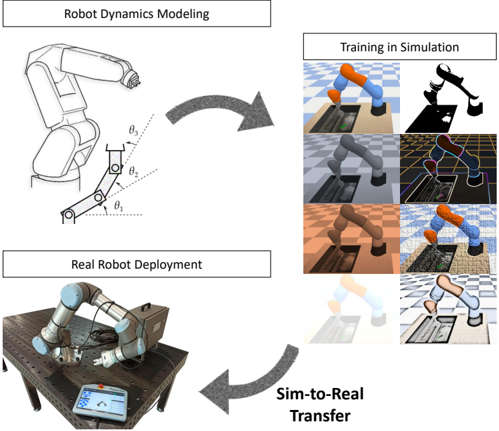
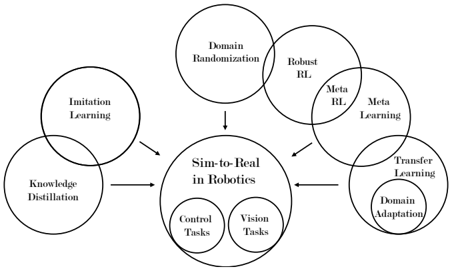
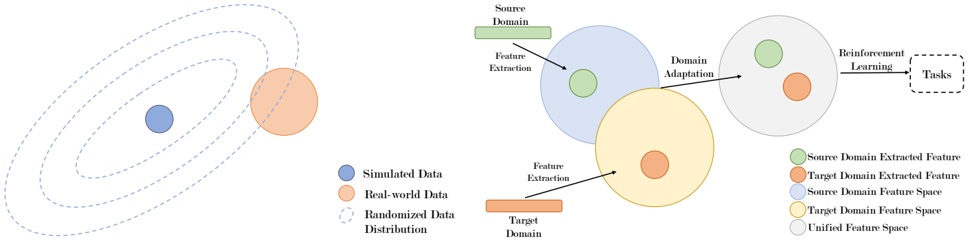
Verification
Claims the paper makes
24 Valid · 8 Not valid · 17 Not checked · 26 Own results and interpretations
The cited sources support only part of this claim — read each source’s verdict below.
In the paper
“From the literature, we summarize three common methods for domain adaptation regardless of their tasks. They are discrepancy-based , adversarial-based , and reconstructionbased methods, which can be also used crossly.”
What the sources say
- Partly supportedcites [65] [65] Eric Tzeng, Judy Hoffman, Ning Zhang, Kate Saenko, and Trevor Darrell. Deep domain confusion: Maximizing for domain invariance. arXiv:1412.3474 , 2014. 67. sourceExperimental — accuracy not yet measured
The Introduction (p. 1) and Section 3 (p. 3) describe a domain-adaptation method that minimizes maximum mean discrepancy, supporting the discrepancy-based part of the claim. The paper does not present adversarial-based and reconstruction-based methods alongside it as three common categories of domain adaptation. (LLM, conf=0.82)
- Not checked yetcites [68] [68] Yaroslav Ganin, Evgeniya Ustinova, Hana Ajakan, Pascal Germain, Hugo Larochelle, Franc ¸ois Laviolette, Mario Marchand, and Victor Lempitsky. Domain-adversarial training of neural networks. The Journal of Machine Learning Research , 17(1), 2016. - source
Checked before — its earlier verdict is held back until a new check runs.
- Partly supportedcites [71] [71] Konstantinos Bousmalis, George Trigeorgis, Nathan Silberman, Dilip Krishnan, and Dumitru Erhan. Domain separation networks. In Advances in neural information processing systems , 2016. - sourceExperimental — accuracy not yet measured
Related Work (p. 2) discusses adversarial training and MMD-based alignment, while the Discussion (p. 8) describes a reconstruction loss used with either DANN or MMD. The paper therefore illustrates the three approaches and their combination, but it does not present them as a three-part classification of common domain-adaptation methods regardless of task; its review focuses on CNN-based unsupervised adaptation. (LLM, conf=0.84)
plain- Asserted: passes — The authors put it forward as true.
- Checkable: passes — It can be checked against evidence.
- Load-bearing: unclear — It is unclear whether the paper’s conclusions depend on it.
- Based: passes — The paper gives a reason why it holds.
- Partly supported
The cited sources support only part of this claim — read each source’s verdict below.
In the paper
“In those cases where system identification for one-shot transfer is the objective, researchers have often built or customized specific simulations that meet problem-specific requirements and constraints [32], [36], [41].”
What the sources say
- Not checked — no full text of the sourcecites [32] [32] Matthew Witman, Dogan Gidon, David B Graves, Berend Smit, and Ali Mesbah. Sim-to-real transfer reinforcement learning for control of thermal effects of an atmospheric pressure plasma jet. Plasma Sources Science and Technology , 28(9), 2019. - source
- Partly supportedcites [36] [36] Hansenclever F Bassani, Renie A Delgado, Jose Nilton de O Lima Junior, Heitor R Medeiros, Pedro HM Braga, and Alain Tapp. Learning to play soccer by reinforcement and applying sim-to-real to compete in the real world. arXiv:2003.11102 , 2020. - sourceExperimental — accuracy not yet measured
The passages labeled 25 and 44 describe a customized soccer simulation environment designed for the paper’s RL and sim-to-real problem. They do not describe system identification or one-shot transfer as its objective, or establish that researchers have often taken this approach. (LLM, conf=0.86)
- Partly supportedcites [41] [41] Andrew Hundt, Benjamin Killeen, Heeyeon Kwon, Chris Paxton, and Gregory D Hager. ' good robot!': Efficient reinforcement learning for multi-step visual tasks via reward shaping. arXiv:1909.11730 , 2019. - sourceExperimental — accuracy not yet measured
The Simulation Experiments section (p. 5) describes two simulated tasks of the authors’ design, and the Real World Experiments section (p. 7) reports direct transfer of models trained in simulation. The paper does not describe system identification as the objective or establish that researchers often build or customize simulations to meet problem-specific constraints. (LLM, conf=0.76)
plainstates an association- Asserted: passes — The authors put it forward as true.
- Checkable: passes — It can be checked against evidence.
- Load-bearing: unclear — It is unclear whether the paper’s conclusions depend on it.
- Based: passes — The paper gives a reason why it holds.
The sources with a verdict support this claim; the rest weren’t checked yet, have no full text we could read, or their verdicts aren’t rated yet.
In the paper
“An exception to this is, however, robotic tasks involving object manipulation [5], [6].”
What the sources say
- Not checked — no full text of the sourcecites [5] [5] Aravind Rajeswaran, Vikash Kumar, Abhishek Gupta, Giulia Vezzani, John Schulman, Emanuel Todorov, and Sergey Levine. Learning complex dexterous manipulation with deep reinforcement learning and demonstrations. arXiv:1709.10087 , 2017. - source
- Supportedcites [6] [6] Jan Matas, Stephen James, and Andrew J Davison. Sim-to-real reinforcement learning for deformable object manipulation. arXiv:1806.07851 , 2018. - source
Section 5.3 (p. 8) reports testing simulation-trained policies on a real robot for three cloth-manipulation tasks. Table 2 (p. 8) reports real-world successes without additional training, supporting this paper as an example of deep reinforcement learning succeeding beyond simulation in object manipulation. (LLM, conf=0.90)
plain- Asserted: passes — The authors put it forward as true.
- Checkable: passes — It can be checked against evidence.
- Load-bearing: unclear — It is unclear whether the paper’s conclusions depend on it.
- Based: passes — The paper gives a reason why it holds.
The cited sources support only part of this claim — read each source’s verdict below.
In the paper
“In robotic vision tasks including object localization [53], object detection [54], pose estimation [55], and semantic segmentation [56], the training data from simulator always have different textures, lighting, and camera positions from the realistic environments.”
What the sources say
- Partly supportedcites [53] [53] Josh Tobin, Rachel Fong, Alex Ray, Jonas Schneider, Wojciech Zaremba, and Pieter Abbeel. Domain randomization for transferring deep neural networks from simulation to the real world. In IROS , 2017. - sourceExperimental — accuracy not yet measured
The Introduction (p. 1) describes a reality gap between simulated camera images and real-world images, and its Fig. 1 caption says this study randomizes camera positions, lighting, and non-realistic textures. But the claim's “always” extends that description to all simulator training data; Bridging the reality gap (p. 2) also describes approaches that make simulation closely match physical reality. (LLM, conf=0.88)
- Could not verifycites [54] [54] Jonathan Tremblay, Aayush Prakash, David Acuna, Mark Brophy, Varun Jampani, Cem Anil, Thang To, Eric Cameracci, Shaad Boochoon, and Stan Birchfield. Training deep networks with synthetic data: Bridging the reality gap by domain randomization. In CVPR Workshops , 2018. - sourceExperimental — accuracy not yet measured
Our copy of Arndt et al. (ICRA 2020) deals only with dynamics-side sim-to-real transfer: the Introduction (p. 1) frames the problem as the need for 'an accurate match between the simulation and real-world... because the simulation may not model some of the physical phenomena present in real world,' and the paper explicitly 'consider[s] tasks that are heavily dependent on the dynamic parameters of the environment' (hockey-puck friction/mass, Sections III-V). The nearest passage is Section II-B (p. 2), noting that domain randomization 'can be applied both to perception [8], [21]-[23] and to the dynamics of the system [24], [25]' — it credits perception work but never states that simulator training data differ in textures, lighting, or camera positions, and it does not discuss object localization, detection, pose estimation, or semantic segmentation. Searched: textures/lighting/camera positions, visual appearance gap, perception domain randomization; no passage in our copy addresses the claim's specific point, so it can be neither confirmed nor contradicted here. (LLM, conf=0.70)
- Not checked yetcites [55] [55] Martin Sundermeyer, Zoltan-Csaba Marton, Maximilian Durner, Manuel Brucker, and Rudolph Triebel. Implicit 3d orientation learning for 6d object detection from rgb images. In ECCV , 2018. - source
Checked before — its earlier verdict is held back until a new check runs.
plain- Asserted: passes — The authors put it forward as true.
- Checkable: passes — It can be checked against evidence.
- Load-bearing: passes — The paper’s conclusions depend on it.
- Based: passes — The paper gives a reason why it holds.
- Partly supported
Every source the paper cites for this claim was checked and supports it.
In the paper
“Moreover, a relevant conclusion from this work is that excessive domain randomization can be detrimental. Specifically, when the number of different colors that were being used for each texture was too large, the performance of the real robot was significantly worse.”
What the sources say
- Supportedcites [6] [6] Jan Matas, Stephen James, and Andrew J Davison. Sim-to-real reinforcement learning for deformable object manipulation. arXiv:1806.07851 , 2018. - source
Section 5.3 (p. 8) reports that heavy domain randomisation was detrimental: sampling texture colours uniformly across all colours made the agent’s performance after transfer significantly worse. This supports the citing sentence’s description of excessive colour variation harming real-robot performance. (LLM, conf=0.93)
plainstates a cause- Asserted: passes — The authors put it forward as true.
- Checkable: passes — It can be checked against evidence.
- Load-bearing: passes — The paper’s conclusions depend on it.
- Based: passes — The paper gives a reason why it holds.
- Supported
8 more claims
Create a free account to see all 75 claims and to verify the 19 references still open.
- Probably not a substantial claim. 48
- It may state two separate claims as one. 27
Claims other papers make about this one
Each is checked against this paper’s own text: does it say what the citing paper says it does?
The cited source says what the claim attributes to it.
In the citing paper
“Simulation-based approaches provide a cheap and safe development environment for RMSes, but there are challenges to deploying simulation-trained systems into real-world settings [62].”
From Data-Driven Robotic Manipulation of Cloth-like Deformable Objects: The Present, Challenges and Future Prospects (2023) · cites this paper as [62]
The cited source says what the claim attributes to it.
In the citing paper
“Consequently, simulation-to-reality (Sim2Real) transfer [62] (Section 3.4) becomes a key technology in modern robotics for bridging the gap between the simulation-trained policy and the real-world deployment.”
From Data-Driven Robotic Manipulation of Cloth-like Deformable Objects: The Present, Challenges and Future Prospects (2023) · cites this paper as [62]
Citations
Cites
Continuous control with deep reinforcement learning
Lillicrap, T. P., Hunt, J. J., Pritzel, A., Heess, N., Erez, T., Tassa, Y., Silver, D., & Wierstra, D. (2015) · arXiv · doi:10.48550/arxiv.1509.02971 · Cited by 10,782
Proximal Policy Optimization Algorithms
Schulman, J., Wolski, F., Dhariwal, P., Radford, A., & Klimov, O. (2017) · arXiv · doi:10.48550/arxiv.1707.06347 · Cited by 10,625 · cited 2×
“The variability in terms of learning algorithms is higher, with DRL using proximal policy optimization (PPO) [45], trust region policy optimization (TRPO) [46], maximum a-posteriori policy optimization (MPO) [47], asynchronous actor critic (A3C) methods [48], soft actor critic (SAC) [49], or deep deterministic policy…”
BackgroundDomain-Adversarial Training of Neural Networks
Ganin, Y., Ustinova, E., Ajakan, H., Germain, P., Larochelle, H., Laviolette, F., Marchand, M., & Lempitsky, V. (2017) · Advances in Computer Vision and Pattern Recognition · doi:10.1007/978-3-319-58347-1_10 · Cited by 8,318
Asynchronous Methods for Deep Reinforcement Learning
Mnih, V., Badia, A. P., Mirza, M., Graves, A., Lillicrap, T. P., Harley, T., Silver, D., & Kavukcuoglu, K. (2016) · arXiv · doi:10.48550/arxiv.1602.01783 · Cited by 7,132 · cited 1×
“The variability in terms of learning algorithms is higher, with DRL using proximal policy optimization (PPO) [45], trust region policy optimization (TRPO) [46], maximum aposteriori policy optimization (MPO) [47], asynchronous actor critic (A3C) methods [48], soft actor critic (SAC) [49], or deep deterministic policy g…”
BackgroundA Comprehensive Survey on Transfer Learning
Zhuang, F., Qi, Z., Duan, K., Xi, D., Zhu, Y., Zhu, H., Xiong, H., & He, Q. (2021) · Proceedings of the IEEE · doi:10.1109/jproc.2020.3004555 · Cited by 6,678 · cited 2×
“Transfer learning aims at improving the performance of target learners on target domains by transferring the knowledge contained in different but related source domains [18].”
BackgroundSoft actor-critic Off-policy maximum entropy deep reinforcement learning with a stochastic actor
Haarnoja, T., Zhou, A., Abbeel, P., & Levine, S. (2018) · arXiv · doi:10.48550/arxiv.1801.01290 · Cited by 5,594 · cited 2×
“The variability in terms of learning algorithms is higher, with DRL using proximal policy optimization (PPO) [45], trust region policy optimization (TRPO) [46], maximum a-posteriori policy optimization (MPO) [47], asynchronous actor critic (A3C) methods [48], soft actor critic (SAC) [49], or deep deterministic policy…”
BackgroundMuJoCo: A physics engine for model-based control
Todorov, E., Erez, T., & Tassa, Y. (2012) · 2012 IEEE/RSJ International Conference on Intelligent Robots and Systems · doi:10.1109/iros.2012.6386109 · Cited by 4,767 · cited 3×
“The most widely used simulators in the literature are Gazebo [74], Unity3D, and PyBullet [75] or MuJoCo [17].”
BackgroundMethodDeep Reinforcement Learning: A Brief Survey
Arulkumaran, K., Deisenroth, M. P., Brundage, M., & Bharath, A. A. (2017) · IEEE Signal Processing Magazine · doi:10.1109/msp.2017.2743240 · Cited by 4,733
A Brief Survey of Deep Reinforcement Learning
Arulkumaran, K., Deisenroth, M. P., Brundage, M., & Bharath, A. A. (2017) · arXiv · doi:10.48550/arxiv.1708.05866 · Cited by 4,733
Trust region policy optimization
Schulman, J., Levine, S., Moritz, P., Jordan, M. I., & Abbeel, P. (2015) · arXiv · doi:10.48550/arxiv.1502.05477 · Cited by 4,578
Research works printed but not linked: 6
- [75] Erwin Coumans and Yunfei Bai. Pybullet, a python module for physics simulation for games, robotics and machine learning. 2016. -
- [35] J van Baar, R Corcodel, A Sullivan, D Jha, D Romeres, and D Nikovski. Simulation to real transfer learning with robustified policies for robot tasks. 2018. -
- [52] Joshua P Tobin. Real-World Robotic Perception and Control Using Synthetic Data . PhD thesis, UC Berkeley, 2019. -
- [40] Manuel Kaspar and J¨ urgen Bock. Reinforcement learning with cartesian commands and sim to real transfer for peg in hole tasks. -
- [4] Javier Garcıa and Fernando Fern´ andez. A comprehensive survey on safe reinforcement learning. Journal of Machine Learning Research , 16(1), 2015. -
- [42] Ole-Magnus Pedersen. Sim-to-real transfer of robotic gripper pose estimation-using deep reinforcement learning, generative adversarial networks, and visual servoing. Master's thesis, NTNU, 2019. -
Cited by
Items 301–400 of 778
Learning a data-efficient model for a single agent in homogeneous multi-agent systems
Gurevich, A., Bamani, E., & Sintov, A. (2023) · Neural Computing and Applications · doi:10.1007/s00521-023-08838-w · Cited by 5
“Training in simulation, on the other hand, is a compelling solution where the data is acquired at a lower cost [8].”
BackgroundControl of Fab Lifters via Deep Reinforcement Learning: A Semi-MDP Approach
Kim, G., Shin, J.-U., Kim, G., Kim, J., & Yang, I. (2023) · IEEE Transactions on Automation Science and Engineering · doi:10.1109/tase.2023.3308849 · Cited by 6
“To overcome these challenges, sim-to-real strategies [53] may be used, which are designed to reduce the gap between the simulated model and the real-world environment.”
BackgroundAppleby, S., Crane, K., Bergami, G., et al. (2023) · IEEE Conference on Games (CoG) · doi:10.1109/cog57401.2023.10333168 · Cited by 5
“When used for real-world applications e.g. self-driving cars, it is common to first train the DRL agent within a simulation [5], reducing time, cost and impact associated with real-world environments.”
BackgroundSimulation Modeling of Highly Dynamic Omnidirectional Mobile Robots Based on Real-World Data
Wiedemann, M., Ahmed, O., Dieckhöfer, A., Gasoto, R., & Kerner, S. (2024) · Proceedings - IEEE International Conference on Robotics and Automation/Proceedings · doi:10.1109/icra57147.2024.10611459 · Cited by 6
“Modeling complex robots [1] and bridging the gap between simulation and reality, known as the sim-to-real gap [2], [3], are the main challenges within the usage of simulation.”
BackgroundSafe and Robust Simulation-to-Reality Transfer for Mobile Robots
Valdivia, J. P., Hata, A., & Terra, A. (2024) · IEEE International Conference on Emerging Technologies and Factory Automation (ETFA) · doi:10.1109/etfa61755.2024.10711026 · Cited by 7
“The difference between these two values indicates the performance degradation when transitioning from simulation to reality [17].”
BackgroundDigital Twin‐Enabled Deep Reinforcement Learning for Safety‐Guaranteed Flocking Motion of UAV Swarm
Li, Z., Lei, L., Shen, G., Liu, X., & Liu, X. (2024) · Transactions on Emerging Telecommunications Technologies · doi:10.1002/ett.70011 · Cited by 10
“Consequently, the sim-to-real problem inevitably restricts the application of MADRL to multi-agent systems (MAS) in real-world environments, including the flocking motion of UAV swarm [18].”
Otto—Design and Control of an 8-DoF SEA-Driven Quadrupedal Robot
Scaldaferri, A., Tolomei, S., Iotti, F., Gambino, P., Pierallini, M., Angelini, F., & Garabini, M. (2025) · IEEE Open Journal of the Industrial Electronics Society · doi:10.1109/ojies.2025.3567112 · Cited by 5
“We employ different techniques to close the Sim2Real gap [59], [60], [61], [62] and successfully deploy the trained policy on the real robot.”
Accelerated Robot Skill Acquisition by Reinforcement Learning-Aided Sim-to-Real Domain Adaptation
Loncarcvic, Z., Ude, A., & Gams, A. (2021) · International Conference on Advanced Robotics (ICAR) · doi:10.1109/icar53236.2021.9659351 · Cited by 6
“However, the overall approach is not different than transfer learning for visual tasks, where one utilizes the already learned feature extraction of a given, trained network [11], where taking a pretrained network and using it as a starting point to learn a new task is typically much faster.”
BackgroundInfluentialA Simulated Environment for Robot Vision Experiments
Sevastopoulos, C., Konstantopoulos, S., Balaji, K., Zadeh, M. Z., & Makedon, F. S. (2022) · Technologies · doi:10.3390/technologies10010007 · Cited by 5
Curriculum Adversarial Training for Robust Reinforcement Learning
Sheng, J., Zhai, P., Dong, Z., Kang, X., Chen, C., & Zhang, L. (2022) · International Joint Conference on Neural Networks (IJCNN) · doi:10.1109/ijcnn55064.2022.9892908 · Cited by 12
“However, current studies show that compared with traditional control methods, DRL has more obvious performance advantages in simulation, it is not satisfactory in the practical applications [6].”
ResultMore for Less: Safe Policy Improvement with Stronger Performance Guarantees
Wienhöft, P., Suilen, M., Simão, T. D., Dubslaff, C., Baier, C., & Jansen, N. (2023) · International Joint Conference on Artificial Intelligence · doi:10.24963/ijcai.2023/490 · Cited by 19
Wen, Y., Wan, Z., Zhou, M. Q., Hou, S., Cao, Z., Le, C., Chen, J., Tian, Z., Zhang, W., & Wang, Y.-X. (2023) · CAAI Artificial Intelligence Research · doi:10.26599/air.2023.9150026 · Cited by 17
Balanced Domain Randomization for Safe Reinforcement Learning
Kang, C., Chang, W., & Choi, J. (2024) · Applied Sciences · doi:10.3390/app14219710 · Cited by 7
Efficient Tactile Perception With Soft Electrical Impedance Tomography and Pretrained Transformer
Dong, H., Liu, R. B., Teng, S., Hu, D., Sharel Peisan, E., Giorgio-Serchi, F., & Yang, Y. (2025) · IEEE Transactions on Industrial Electronics · doi:10.1109/tie.2025.3613656 · Cited by 7
“This paradigm has shown success in control [27], navigation [28], visual perception [29], and sim-to-real transfer [30].”
Generalization in Reinforcement Learning for Radio Access Networks
Demirel, B., Wang, Y., Tatino, C., & Soldati, P. (2026) · IEEE Transactions on Machine Learning in Communications and Networking · doi:10.1109/tmlcn.2026.3655335 · Cited by 16
“…approach is sim-to-sim (sim2sim) skill transfer [19], which enables RL agents to transfer policies across simulated environments with varying characteristics, thereby enhancing generalization and increasing the likelihood of successful real-world deployment without repeated retraining [20].”
InfluentialLiu, Y., Xiong, Z., Yang, L., & Shen, T. (2026) · Array · doi:10.1016/j.array.2026.100812 · Cited by 5
Autoencoder and Partially Impossible Reconstruction Losses
Cruz, S., Taetz, B., Stifter, T., & Stricker, D. (2022) · Sensors · doi:10.3390/s22134862 · Cited by 6
“A good overview on reinforcement-learning-based simulation to real transferability is provided in Zhao et al. [31].”
BackgroundSubequivariant Reinforcement Learning Framework for Coordinated Motion Control
Wang, H., Tan, X., Qiu, X., & Qu, C. (2024) · Proceedings - IEEE International Conference on Robotics and Automation/Proceedings · doi:10.1109/icra57147.2024.10610563 · Cited by 7
“It has applications in domains like robot control and game AI[21].”
MethodShakebot: A Low-cost, Open-source Robotic Shake Table for Earthquake Research and Education
Chen, Z., Keating, D., Shethwala, Y., et al. (2024) · 2022 IEEE 18th International Conference on Automation Science and Engineering (CASE) · doi:10.1109/case59546.2024.10711613 · Cited by 4
“, in the arena of reinforcement learning [22, 23]).”
BackgroundHow Architecture Builds Intelligence: Lessons from AI
Salingaros, N. A. (2024) · Multimodal Technologies and Interaction · doi:10.3390/mti9010002 · Cited by 6
“When the training environment is too restricted, it is possible to train a mobile robot to perform well in a specific setting, but it then becomes lost in a more complex situation with more varied visual information [65].”
Spatio-Temporal Motion Retargeting for Quadruped Robots
Yoon, T., Kang, D., Kim, S., Cheng, J., Ahn, M., Coros, S., & Choi, S. (2025) · IEEE Transactions on Robotics · doi:10.1109/tro.2025.3600123 · Cited by 23
“3 To bridge the sim-to-real gap, we applied domain randomization [48] and introduced additional observations for the control policy.”
Sim-to-Real Reinforcement Learning for Local Mobile Robot Navigation in Dynamic Environments
Salimpour, S., Peña-Queralta, J., GRANADOS, D. F. P., et al. (2025) · European Conference on Mobile Robots · doi:10.1109/ecmr65884.2025.11163286 · Cited by 4
“The level of standardization and the depth of the study of sim-to-real transfer for navigation task, however, is shallower [9].”
Self-citationMianji, E. M., Muntean, G., & Tal, I. (2025) · IEEE Transactions on Intelligent Transportation Systems · doi:10.1109/tits.2025.3612202 · Cited by 16
“Nonetheless, this procedure can be time-consuming and data-intensive, especially for intricate tasks [80].”
Khôi, P. B., Giang, N. T., & Ngoc, D. N. (2022) · Applied Sciences · doi:10.3390/app12062948 · Cited by 5
On the Training of Reinforcement Learning-based Algorithms in 5G and Beyond Radio Access Networks
Vilà, I., Pérez-Romero, J., & Sallent, O. (2022) · IEEE International Conference on Network Softwarization (NetSoft) · doi:10.1109/netsoft54395.2022.9844032 · Cited by 7
Safe residual reinforcement learning for helicopter aerial refueling
Jayarathne, D., Paternain, S., & Mishra, S. (2023) · IEEE/ASME International Conference on Advanced Intelligent Mechatronics · doi:10.1109/aim46323.2023.10196137 · Cited by 5
“This issue may be mitigated by employing techniques such as domain randomization [22] and retraining on the full-scale model.”
MethodAdaptive Asynchronous Control Using Meta-Learned Neural Ordinary Differential Equations
Salehi, A., Ruehl, S. W., & Doncieux, S. (2023) · IEEE Transactions on Robotics · doi:10.1109/tro.2023.3326350 · Cited by 9
“Furthermore, policies trained in this simulation or more generally with Gazebo simulation can be successfully transferred to real systems, although strategies, such as domain randomization are often necessary to avoid overfitting to the simulator [46], [47], [48].”
MethodFang, Z., Zhao, J., Zhou, W., & Li, H. (2023) · IEEE Conference on Games (CoG) · doi:10.1109/cog57401.2023.10333171 · Cited by 17
“Common in real-world scenes, these tasks can be integrated into wide-range applications, such as autonomous driving [6], intelligent robotics [7], and drone controlling [8].”
BackgroundZhou, Z., Lu, Y., Tortós-Vinocour, P. E., Qin, R., Kokubu, S., Matsunaga, F., Xie, Q., & Yu, W. (2024) · Frontiers in Bioengineering and Biotechnology · doi:10.3389/fbioe.2024.1334643 · Cited by 4
A substructure transfer reinforcement learning method based on metric learning
Chai, P., Chen, B., Zeng, Y., & Yu, S. (2024) · Neurocomputing · doi:10.1016/j.neucom.2024.128071 · Cited by 4
Adaptive Robot Behavior Based on Human Comfort Using Reinforcement Learning
Gonzalez-Santocildes, A., Vázquez, J. I., & Eguíluz, A. (2024) · IEEE Access · doi:10.1109/access.2024.3451663 · Cited by 6
“Gazebo, often used with ROS, is favored in research for simulating various robotic systems [34].”
MethodSpinelli, F., Egli, P., Nubert, J., Nan, F., Bleumer, T., Goegler, P., Brockes, S., Hofmann, F., & Hutter, M. (2024) · IEEE/RSJ International Conference on Intelligent Robots and Systems (IROS) · doi:10.1109/iros58592.2024.10802199 · Cited by 10
“3) Domain Randomization: We use domain randomization to bridge the sim-to-real gap [34], [35].”
Design of Hybrid MPC-PID Controller Based on Fractional Order Model of AMR
Çelik, O. M., Deniz, F. N., & Köseoğlu, M. (2025) · IEEE Access · doi:10.1109/access.2025.3570947 · Cited by 4
“Thus, system identification provides an effective approach for modeling a robot’s dynamics and behavior [5], [14], [15].”
The Computational Evolution of Cognitive Architectures
Kotseruba, I., & Tsotsos, J. K. (2025) · doi:10.1093/oso/9780192844835.001.0001 · Cited by 7
Real-Time Predictive Scheduling for Networked Robot Control Using Digital Twins and OpenRAN
Wagner, N. A., Eßer, J., Priyanta, I. F., Kurtz, F., Roidl, M., & Wietfeld, C. (2024) · IEEE Globecom Workshops (GC Wkshps) · doi:10.1109/gcwkshp64532.2024.11100462 · Cited by 5
“Subsequently, extensive randomization within the simulation environment is often used to increase the overall robustness of the trained control policies for real-world settings [15].”
RL-OGM-Parking: Lidar OGM-Based Hybrid Reinforcement Learning Planner for Autonomous Parking
Wang, Z., Chen, Z., Jiang, M., Qin, T., & Yang, M. Z. (2025) · Proceedings - IEEE International Conference on Robotics and Automation/Proceedings · doi:10.1109/icra55743.2025.11128703 · Cited by 13
“Sim-to-Real (Simulation-to-Reality) refers to the process of applying reinforcement learning strategies or models, trained in simulation environments, to real-world scenarios [11].”
Salvato, E., Fenu, G., Medvet, E., & Pellegrino, F. A. (2021) · International Convention on Information and Communication Technology, Electronics and Microelectronics · doi:10.23919/mipro52101.2021.9596864 · Cited by 5
Li, Z., Xin, J., & Li, N. (2022) · IEEE International Conference on Real-time Computing and Robotics (RCAR) · doi:10.1109/rcar54675.2022.9872253 · Cited by 7
“The gap between simulation and reality has always been an attractive problem in the field of DRL [23].”
BackgroundMasKGrasp: Mask-based Grasping for Scenes with Multiple General Real-world Objects
Lee, J., Hur, J., Hwang, I., & Kim, Y. M. (2022) · IEEE/RSJ International Conference on Intelligent Robots and Systems (IROS) · doi:10.1109/iros47612.2022.9982130 · Cited by 5
“For example, the sim-to-real gap commonly appears when a method is trained in a simulated environment [38], [39] and transferred to a target domain where annotated data is not available.”
BackgroundEvent-based neural learning for quadrotor control
Carvalho, E., Susbielle, P., Marchand, N., Hably, A., & Dibangoye, J. (2023) · Autonomous Robots · doi:10.1007/s10514-023-10115-7 · Cited by 4
“In simulation, one needs first to explore a lot of possibilities and, then, to transfer the learning from simulation to experimentation (Zhao et al., 2020a).”
BackgroundSchperberg, A. V., Tanaka, Y., Xu, F. H., Menner, M., & Hong, D. W. (2023) · International Conference on Ubiquitous Robots (UR) · doi:10.1109/ur57808.2023.10202521 · Cited by 12
“In previous work (see Section II), there have been numerous approaches to close this reality gap [1], however, these approaches still require intricate hand-tuning and substantial data collection.”
BackgroundCao, H.-G., Lee, I., Hsu, B.-J., Lee, Z. Y., Shih, Y.-W., Wang, H., & Wu, I. (2023) · IEEE/RSJ International Conference on Intelligent Robots and Systems (IROS) · doi:10.1109/iros55552.2023.10342029 · Cited by 5
Master of Puppets: Multi-modal Robot Activity Segmentation from Teleoperated Demonstrations
Coppola, C., & Jamone, L. (2022) · IEEE International Conference on Development and Learning (ICDL) · doi:10.1109/icdl53763.2022.9962193 · Cited by 4
“more, robot behaviours have to be learned on a simulator and then finalised on the real robot once the policy is stabilised [3].”
BackgroundTactile Imprint Simulation of GelStereo Visuotactile Sensors
Cui, S., Wang, Y., Wang, S., Li, Q., Wang, R., & Zhang, C. (2023) · IEEE International Conference on Mechatronics and Automation (ICMA) · doi:10.1109/icma57826.2023.10216245 · Cited by 9
“However, this can be challenging, and thus there is a growing demand for high-fidelity visuotactile simulation to support tactile robots leaning [10].”
BackgroundImproving Offline Reinforcement Learning with Inaccurate Simulators
Hou, Y., Sun, H., Ma, J., & Wu, F. (2024) · Proceedings - IEEE International Conference on Robotics and Automation/Proceedings · doi:10.1109/icra57147.2024.10610833 · Cited by 8
“Our work is also related to sim-to-real transfer [37].”
BackgroundSelf-supervised Vision-driven Trajectory Planning for Intelligent Robotic Deburring
Tafuro, A., Molinaro, M., Zanchettin, A. M., & Rocco, P. (2025) · Machine Intelligence Research · doi:10.1007/s11633-025-1560-6 · Cited by 3
Mori, T., Yoshimoto, T., & Yoshida, H. (2025) · IEEE Access · doi:10.1109/access.2025.3585182 · Cited by 5
“To overcome these problems, Egli et al. [12], [13] proposed a sim-to-real method [14] that utilizes a lower-fidelity but computationally faster simulation to train a control policy with a domain randomization method.”
From abstraction to reality: DARPA's vision for robust sim‐to‐real autonomy
Noorani, E., Serlin, Z., Price, B., & Velasquez, A. (2025) · AI Magazine · doi:10.1002/aaai.70015 · Cited by 10
Engineering Application Progress of Multi-Agent Deep Reinforcement Learning
Bao, K.-H., Shi, T., & Wang, S. J. (2025) · International Conference on Control and Automation · doi:10.1109/icca65672.2025.11129859 · Cited by 2
“Reinforcement learning (RL) [8], as a classic machine learning method, has been widely applied in various fields such as industrial manufacturing [9], machine translation, robot control [10], game playing [11], real-time strategy games [12], and autonomous driving [13] in the past five years.”
Robust and Efficient Walking of a Bipedal Humanoid Robot via Reinforcement Learning
Ji, C., Liu, D., Gao, W., & Zhang, S. (2025) · IEEE International Conference on Real-time Computing and Robotics (RCAR) · doi:10.1109/rcar65431.2025.11139510 · Cited by 5
“To reduce the sim-to-real gap, it is necessary to address the discrepancy between the desired torque in the simulator and the actual response torque [30], [31], [32], [33].”
Grasp Control of Dexterous Hands Based on Bibliometric Analysis: A Survey
Xu, Z., Huang, S., Yao, L., Zhu, J., Wang, G., & Yan, Y. (2025) · Chinese Journal of Mechanical Engineering · doi:10.1186/s10033-025-01346-z · Cited by 3
“Despite demonstrating exceptional task learning and execution capabilities in simulation environments, reinforcement learning meth-ods still exhibit limited generalization performance in real-world scenarios [18].”
Tanaka, Y. Z., Zhu, A., Wang, Q., & Hong, D. W. (2025) · IEEE-RAS International Conference on Humanoid Robots (Humanoids) · doi:10.1109/humanoids65713.2025.11203130 · Cited by 10
“˙ q L,R denote the actuator velocities, and ρ L,R represent the gear ratios between the left/right drive bevel gears and the central idler gear.”
Reinforcement learning and the Metaverse: a symbiotic collaboration
Elsokkary, N., Khan, W., Shurrab, M., Mizouni, R., Singh, S., Bentahar, J., Mourad, A., & Otrok, H. (2025) · Artificial Intelligence Review · doi:10.1007/s10462-025-11433-1 · Cited by 8
Zhou, S., Liu, J., Lu, Y., Yang, J., Zhang, Y., & Chen, J. (2025) · Frontiers of Information Technology & Electronic Engineering · doi:10.1631/fitee.2500100 · Cited by 12
Machine Learning Achieves Accurate and Smooth Navigation Control for Microrobots
Li, Y., Ge, R., Wang, Y., Yangmin, L. I., & Yang, L. (2026) · IEEE Transactions on Automation Science and Engineering · doi:10.1109/tase.2026.3650946 · Cited by 5
“This limitation makes it di ffi cult to collect large-scale episodes directly in physical environments, forcing the reliance on simulation-based training, which further exacerbates the sim-to-real gap [37], leading to inaccurate motion control.”
Smart Optogenetics for Real‐Time Automated Control of Cardiac Electrical Activity
Deng, S., Harlaar, N. J., Zhang, J., Dekker, S. O., Kudryashova, N., Zhou, H., Bart, C. I., Jin, T., Derevyanko, G., van Driel, W. D., et al. (2026) · Advanced Science · doi:10.1002/advs.202522759 · Cited by 6
“This approach to data augmentation is widely used in engineering applications [ 28 ], such as training of self-driving cars [ 29 ] or robotics [ 30 ].”
ROSBag MCP Server: Analyzing Robot Data with LLMs for Agentic Embodied AI Applications
Fu, L., Salimpour, S., Militano, L., Edelman, H., Queralta, J. P., & Toffetti, G. (2025) · International Conference on Robotic Computing and Communication (RoboticCC) · doi:10.1109/roboticcc68732.2025.00025 · Cited by 7
“Such LLM-powered robot learning (as agentic applications) solutions are emerging as opposed to other research areas in RL [13], [14] or Vision-Language-Action (VLA) transformer-based models [5], [15], [16].”
Self-citationAlroobaea, R., Binmahfoudh, A., Alzahrani, S. M., et al. (2022) · Journal of Electronic Imaging · doi:10.1117/1.jei.31.6.061809 · Cited by 3
Offline reinforcement learning methods for real-world problems
Kim, T., Suk, H., & Kim, S. (2023) · Advances in computers · doi:10.1016/bs.adcom.2023.03.001 · Cited by 6
Learning Sim-to-Real Dense Object Descriptors for Robotic Manipulation
Cao, H.-G., Zeng, W., & Wu, I. (2023) · Proceedings - IEEE International Conference on Robotics and Automation/Proceedings · doi:10.1109/icra48891.2023.10161477 · Cited by 6
Parameterized Quasi-Physical Simulators for Dexterous Manipulations Transfer
Liu, X., Lyu, K., Zhang, J., Du, T., & Yi, L. (2024) · Lecture notes in computer science · doi:10.1007/978-3-031-73229-4_10 · Cited by 21
A Methodology to Quantify Simulation- Versus-Reality Differences in Images for Autonomous Robots
Elmquist, A., Serban, R., & Negruţ, D. (2024) · IEEE Sensors Journal · doi:10.1109/jsen.2024.3522050 · Cited by 3
“Mitigating this gap when training perception algorithms has subsequently become an active area of research [5], [7], [8], [9], [10].”
Generalized reinforcement learning control algorithm for fully automated insulin delivery system
Rachim, V. P., Yoo, J., Lee, J., Lee, Y., & Park, S. (2025) · Expert Systems with Applications · doi:10.1016/j.eswa.2025.126909 · Cited by 5
Blies, P., Keller, S., Kuenzer, U., Manyari, Y. E., Maier, F. M., Sause, M. G. R., Wasserer, M., & Hinterhölzl, R. (2025) · Journal of Manufacturing Processes · doi:10.1016/j.jmapro.2025.02.063 · Cited by 5
Ju, D., Lee, J., & Lee, Y. S. (2025) · Mathematics · doi:10.3390/math13121996 · Cited by 7
Automating experimental optics with sample-efficient machine learning methods
Saha, A., Charoensombutamon, B., Michel, T., Vijendran, V., Walker, L., Furusawa, A., Assad, S. M., Buchler, B. C., Lam, P. K., & Tranter, A. D. (2025) · Optica · doi:10.1364/optica.562734 · Cited by 11
“Sim-to-real methods provide an effective strategy to accelerate the learning process, where an agent is trained on a simulation and adapted to deploy in real systems [43].”
ReBot: Scaling Robot Learning with Real-to-Sim-to-Real Robotic Video Synthesis
Yu, F., Yang, Y., Zhu, X., Zheng, K., Bertasius, G., Szafir, D. J., & Ding, M. (2025) · IEEE/RSJ International Conference on Intelligent Robots and Systems (IROS) · doi:10.1109/iros60139.2025.11246305 · Cited by 40
“Unfortunately, these datasets often introduce significant sim-to-real gap [12], limiting their effectiveness in real-world applications.”
Sim-to-Real Transfer for Underwater Wireless Optical Communication Alignment Policy between AUVs
Weng, Y., Matsuda, T., Sekimori, Y., et al. (2022) · OCEANS 2022 - Chennai · doi:10.1109/oceanschennai45887.2022.9775437 · Cited by 3
“However, the gap between the simulation and real environment degrades the performance once the policy is implemented in the real world [12].”
BackgroundControlling a Double-Pendulum Crane by Combining Reinforcement Learning and Conventional Control
Eaglin, G., Poche, T., & Vaughan, J. (2023) · Proceedings of the ... American Control Conference/Proceedings of the American Control Conference · doi:10.23919/acc55779.2023.10156044 · Cited by 3
“Agents are often trained to be robust to modeling error using domain randomization [9], [10].”
BackgroundRAMRL: Towards Robust On-Ramp Merging via Augmented Multimodal Reinforcement Learning
Bagwe, G., Yuan, X., Chen, X., & Zhang, L. (2023) · IEEE International Conference on Mobility, Operations, Services and Technologies (MOST) · doi:10.1109/most57249.2023.00011 · Cited by 7
“Instead, RL algorithms, especially the model-free ones, can automatically learn from the environment’s observation under the supervision based on the environment’s reward returns [3].”
BackgroundLearning Tactilemotor Policy for Robotic Cable Following via Sim-to-Real Transfer
Sun, C., Duan, B., Qian, K., & Zhao, Y. (2023) · Lecture notes in computer science · doi:10.1007/978-981-99-6495-6_6 · Cited by 3
Robust Safe Reinforcement Learning under Adversarial Disturbances
Li, Z., Hu, C., Li, S. E., Cheng, J., & Wang, Y. (2023) · IEEE Conference on Decision and Control (CDC) · doi:10.1109/cdc49753.2023.10383375 · Cited by 13
“There can always be uncertainties, such as model errors, sensory noises and environmental perturbations, which may lead to severe violations of safety constraints when transferring policies from simulators to real-world control tasks [23].”
BackgroundModel Predictive Control-Based Value Estimation for Efficient Reinforcement Learning
Wu, Q., Liu, K., & Chen, L. (2024) · IEEE Intelligent Systems · doi:10.1109/mis.2024.3386204 · Cited by 4
Decentralized Collaborative Navigation With Enhanced Positioning Update for Mobile Robots
Miron, Y., Etzion, A., Goldfracht, Y., et al. (2024) · IEEE Transactions on Intelligent Vehicles · doi:10.1109/tiv.2024.3408097 · Cited by 3
“Generally,amodelwouldbeconsideredagoodmodeloncethe Sim-to-Real gap is low - meaning the results in simulation and on a real experiment as of same behaviour [4], [5], [6].”
Mortensen, A. B., Pedersen, E., Benedicto, L. V., Burg, L., Madsen, M. R., & Bøgh, S. (2024) · International Conference on Space Robotics (iSpaRo) · doi:10.1109/isparo60631.2024.10687660 · Cited by 3
“Transferring policies from simulation to the actual world may face performance issues [5].”
BackgroundOn the Robustness Enhancement of DRL Controller for DC-DC Converters in Practical Applications
Yang, T., Cui, C., & Zhang, C. (2022) · International Conference on Control and Automation · doi:10.1109/icca54724.2022.9831887 · Cited by 3
Time-delay estimation in unresolved lensed quasars
Biggio, L., Domi, A., Tosi, S., Vernardos, G., Ricci, D., Paganin, L., & Bracco, G. (2022) · Monthly Notices of the Royal Astronomical Society · doi:10.1093/mnras/stac2034 · Cited by 5
Online vs. Offline Adaptive Domain Randomization Benchmark
Tiboni, G., Arndt, K., Averta, G., Kyrki, V., & Tommasi, T. (2023) · Springer proceedings in advanced robotics · doi:10.1007/978-3-031-22731-8_12 · Cited by 7
Bayesian Safety Validation for Black-Box Systems
Moss, R. J., Kochenderfer, M. J., Gariel, M., et al. (2023) · AIAA AVIATION Forum · doi:10.2514/6.2023-3596 · Cited by 3
Human-inspired Perspectives: A Survey on AI Long-term Memory
He, Z., Lin, W., Zheng, H., Zhang, F., Jones, M. W., Aitchison, L., Xu, X., Liu, M., Kristensson, P. O., & Shen, J. (2024) · arXiv · doi:10.48550/arxiv.2411.00489 · Cited by 3
Reinforcement Learning for Scientific Application: A Survey
Xin, Z., Wu, Z., Zhu, D., Wang, X., Wang, J., & Wang, Y. (2024) · Lecture notes in computer science · doi:10.1007/978-981-97-5489-2_17 · Cited by 2
Sorghum segmentation and leaf counting using in silico trained deep neural model
Ostermann, I., Beneš, B., Gaillard, M., Li, B., Davis, J. M., Grove, R. J., Shrestha, N., Tross, M. C., & Schnable, J. C. (2024) · The Plant Phenome Journal · doi:10.1002/ppj2.70002 · Cited by 3
“We use a computer graphics-based synthetic algorithm to bridge the sim-to-real gap in deep learning (Zhao et al., 2020) by providing highly detailed 3D geometric models of sorghum with spectral reflectance on the surface.”
Message Action Adapter Framework in Multi-Agent Reinforcement Learning
Park, B., & Choi, J. (2024) · Applied Sciences · doi:10.3390/app142110079 · Cited by 2
Zhu, H., Rong, C., & Liu, H. (2025) · Scientific Reports · doi:10.1038/s41598-025-99213-3 · Cited by 8
Zhang, N., Zhao, Y., Yang, M., & Dai, S. (2025) · Robotica · doi:10.1017/s026357472510177x · Cited by 3
“In view of longevity and safety considerations, direct real robot training is often impractical, prompting a shift to simulation-based learning for contact-rich tasks [41].”
Yoon, K.-I., Yang, J.-H., & Lim, S. (2025) · IEEE Sensors Journal · doi:10.1109/jsen.2025.3598269 · Cited by 2
“Tactile magnetic sensors are increasingly garnering attention in slip detection research due to their ability to precisely sense changes in contact state [5], [7], [8].”
Visual-Based Forklift Learning System Enabling Zero-Shot Sim2Real Without Real-World Data
Oishi, K., Kato, T., Makino, H., & Ito, S. (2025) · Proceedings - IEEE International Conference on Robotics and Automation/Proceedings · doi:10.1109/icra55743.2025.11127682 · Cited by 6
“Common tasks in DRL applications include navigation and dexterous manipulation [5], [15].”
Multi-Robot Collaboration Through Reinforcement Learning and Abstract Simulation
Labiosa, A., & Hanna, J. P. (2025) · Proceedings - IEEE International Conference on Robotics and Automation/Proceedings · doi:10.1109/icra55743.2025.11127323 · Cited by 3
“Therefore, many works adopt the sim2real paradigm – training policies in simulation and transferring the fixed policies to physical robots [34], [35].”
Efficient Online Learning of Contact Force Models for Connector Insertion
Tracy, K., Manchester, Z. R., Jain, A., Go, K., Schaal, S., Erez, T., & Tassa, Y. (2025) · Proceedings - IEEE International Conference on Robotics and Automation/Proceedings · doi:10.1109/icra55743.2025.11127717 · Cited by 9
“Modern robotics simulators like MuJoCo [5], Bullet [6], Dart [7], Dojo [8], and Isaac Gym [9], approximate all bodies as rigid, where friction is either the idealized Coulomb friction or a closely related approximation.”
Ribeiro, T. T., Conceição, A. G. S., Honório, L. D. M., et al. (2025) · Sensors · doi:10.3390/s25185689 · Cited by 2
Liu, Y., Li, Y., Du, J., Rui, Y., & Li, Y. (2025) · Biomimetics · doi:10.3390/biomimetics10110725 · Cited by 4
“However, challenges remain in bridging the sim-to-real gaps [6] for practical applications.”
Jin, S., Ke, K., Gao, B., Fu, L., & Huang, X. (2025) · Chinese Journal of Mechanical Engineering · doi:10.1186/s10033-025-01356-x · Cited by 5
“Therefore, many researchers have focused their efforts on investigating the simulation transfer process [102].”
Ultsch, J., Ahmic, K., & Brembeck, J. (2025) · IEEE Access · doi:10.1109/access.2025.3636787 · Cited by 5
“This technique is called domain randomization and is used to enhance the robustness of the trained agent [55] by altering the environment parametrization.”
Suárez, A., Pozas-Guerra, J., Tapia, R., & Ollero, A. (2025) · IEEE/RSJ International Conference on Intelligent Robots and Systems (IROS) · doi:10.1109/iros60139.2025.11246384 · Cited by 2
“Surveys cover transfer learning [14], sim-to-real transfer [15], and transferring learned skills [16].”
A Biophysical-Model-Informed Source Separation Framework For EMG Decomposition
Halatsis, D., Mamidanna, P., Pereira, J. S., & Farina, D. (2025) · Annual International Conference of the IEEE Engineering in Medicine and Biology Society (EMBC) · doi:10.1109/embc58623.2025.11251560 · Cited by 3
“These models are often leveraged either by training in a simulated environment and transferring the learned knowledge to real-world applications [10] or by using synthetic data generated from forward models to approximate posterior distributions of parameters [11].”
Zakeri, E., Spilkin, A., Elmekki, H., et al. (2026) · IEEE Transactions on Medical Robotics and Bionics · doi:10.1109/tmrb.2025.3646715 · Cited by 2
“The CS-Net is then deployed on the real system based on sim-to-real transfer concept [18].”
Bialas, J., Mohebbi, M. R., van Veelen, M. J., Mejía-Aguilar, A., Kathrein, R., & Döller, M. (2026) · Drones · doi:10.3390/drones10020079 · Cited by 2
Choi, J., Li, M., & Li, M. Z. (2026) · AIAA SciTech Forum · doi:10.2514/6.2026-2884 · Cited by 4
Ebrahimi, A., Azimi, A., & Aghdam, M. M. (2026) · Engineering With Computers · doi:10.1007/s00366-025-02252-7 · Cited by 2
“However, excessive violations increase the sim-to-real gap, posing challenges in robotics applications [34].”
Liang, B., Wang, X., Kang, L., & Xie, D. (2026) · Journal of Power Sources · doi:10.1016/j.jpowsour.2026.239804 · Cited by 3
Metadata
- Authors
- Zhao, W., Queralta, J. P., & Westerlund, T.
- Affiliations
- University of Turku (FI)
- ORCID
- Westerlund, Tomi
- Venue
- 2020 IEEE Symposium Series on Computational Intelligence (SSCI)
- Publisher
- IEEE
- Published
- 2020-12-01
- Pages
- 737-744
- OpenAlex
- W3088310808
- Cited by
- 941
- References
- 52
- Citations by year
- 2026: 164 · 2025: 217 · 2024: 216 · 2023: 162 · 2022: 133 · 2021: 48 · 2020: 1
- FWCI
- 32.84
- Type
- conference paper
- Language
- en
- Open access
- green
- arxiv.org
- Licence
- Locations
- IEEE Symposium Series on Computational Intelligence (SSCI) (publishedVersion)
- arXiv (Cornell University) (submittedVersion)
- arXiv (Cornell University)
- Funders
- Academy of Finland
- Topics
- Physical Sciences › Computer Science › Artificial Intelligence › Reinforcement Learning in Robotics
- Physical Sciences › Computer Science › Artificial Intelligence › Domain Adaptation and Few-Shot Learning
- Physical Sciences › Engineering › Control and Systems Engineering › Robot Manipulation and Learning
- Keywords
- sim-to-real transfer, deep reinforcement learning, robotics, domain randomization, domain adaptation, imitation learning, meta-learning, knowledge distillation, sample inefficiency
About these checks
Registry, retraction, Cites and statistics results are computed, not judged, with one exception: a printed reference that no index lists is read once by a model before it counts as a citation error. Claims are extracted by a model and kept only when their quote appears verbatim in the text; each cited source is then checked, with a model’s help, for whether it says what the claim relies on. Those verdicts can be wrong — read the claim’s quote and the cited source before relying on one.
The claim verdicts this report counts are experimental: their accuracy is not yet measured.
A language model drew the claims from the paper on 2026-10-10, under version 3 of the claim definition (model deepseek-v4.1-flash, prompt extract-v3).
A second model labelled each claim on 2026-10-10 (model jev-1.13-20260917, definition revision gold-guideline-v0.2).
Cited sources are checked with a language model’s help (gpt-6-sol and qwen3.8-omni-flash).
Statistics and arithmetic are recomputed, not judged.
Confidence bands are shown only for fields calibrated on our annotated test set. None is calibrated yet, so no band is shown.
What counts as a claim ›How we measure confidence ›How we check this ›
Are you an author, or do you see a problem with this page? Request a review
Data sources
Bibliographic data: Semantic Scholar, OpenAlex, Crossref.
Contains information from the Semantic Scholar Academic Graph Datasets, made available under the ODC Attribution License (ODC-BY 1.0).
Semantic Scholar’s data is described in: Kinney, R., et al. (2023). The Semantic Scholar Open Data Platform. arXiv:2301.10140.
