

Sim-to-Real Transfer in Deep Reinforcement Learning for Robotics: a Survey
Open accessThe DOI matches its Crossref record; 99 of the 99 references it cites were found in a registry or an index; 49 of the 90 sources its claims cite were checked for support.
Abstract
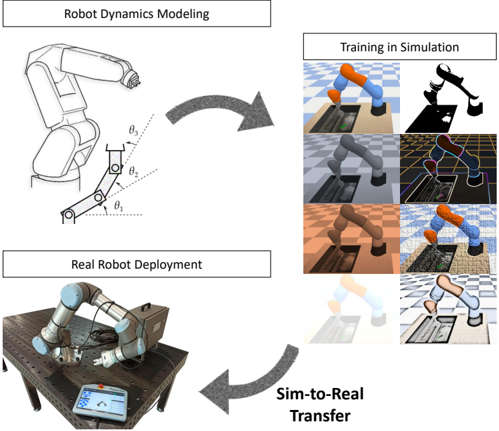
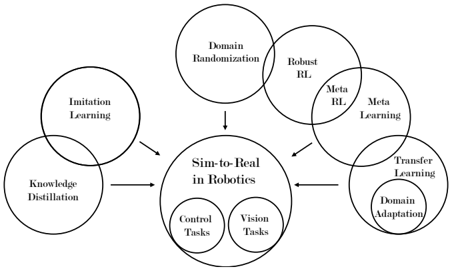
Deep reinforcement learning has recently seen huge success across multiple areas in the robotics domain. Owing to the limitations of gathering real-world data, i.e., sample inefficiency and the cost of collecting it, simulation environments are utilized for training the different agents. This not only aids in providing a potentially infinite data source, but also alleviates safety concerns with real robots. Nonetheless, the gap between the simulated and real worlds degrades the performance of the policies once the models are transferred into real robots. Multiple research efforts are therefore now being directed towards closing this sim-toreal gap and accomplish more efficient policy transfer. Recent years have seen the emergence of multiple methods applicable to different domains, but there is a lack, to the best of our knowledge, of a comprehensive review summarizing and putting into context the different methods. In this survey paper, we cover the fundamental background behind sim-to-real transfer in deep reinforcement learning and overview the main methods being utilized at the moment: domain randomization, domain adaptation, imitation learning, meta-learning and knowledge distillation. We categorize some of the most relevant recent works, and outline the main application scenarios. Finally, we discuss the main opportunities and challenges of the different approaches and point to the most promising directions.
Overview
CoChat Summary
TL;DR
This survey reviews sim-to-real transfer in deep reinforcement learning for robotics, covering domain randomization, domain adaptation, imitation learning, meta-learning, and knowledge distillation. It identifies domain randomization as the most widely adopted method and outlines application scenarios, challenges, and promising directions.
Key findings
- The main sim-to-real methods reviewed are domain randomization, domain adaptation, imitation learning, meta-learning, and knowledge distillation; domain randomization is identified as the most widely adopted method.
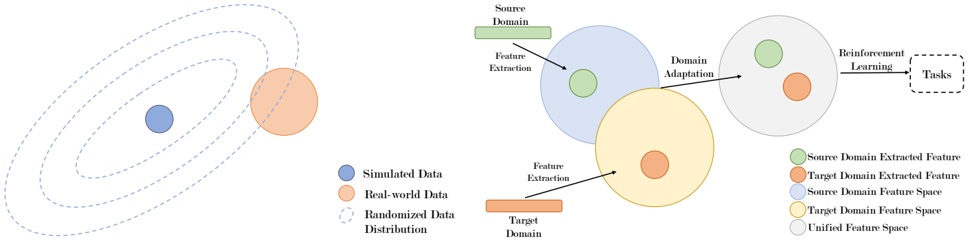
- Domain randomization is divided into visual randomization and dynamics randomization: visual randomization targets robotic vision tasks such as object localization, detection, pose estimation, and semantic segmentation, while dynamics randomization helps acquire robust control policies. For dexterous in-hand manipulation, one work randomizes object dimensions, object and robot link masses, surface friction coefficients, robot joint damping coefficients, and actuator force gains.
- Application scenarios include dexterous robotic manipulation (e.g., peg-in-hole, deformable object manipulation, multi-fingered hands, force control) and robotic navigation (e.g., six-legged robots, depth-based mapless navigation, soccer competitions), plus other applications such as plasma jet control, tactile sensing, and multi-agent manipulation.
- Stated challenges include the lack of formal explanation for why domain randomization works, the homogeneous feature-space assumption in most domain adaptation algorithms, and the need for wider theoretical and empirical studies; promising directions include integrating different methods and using incremental complexity learning, continual learning, and reward shaping.
Methods
- This is a survey/review paper, not an experimental study; it reviews fundamental background and recent works on sim-to-real transfer in DRL for robotics.
- It classifies relevant publications in Table I by real robot/platform, learning algorithm, knowledge transfer, simulator/engine, multi-agent learning, and sim-to-real transfer/learning details.
- The analysis is a qualitative synthesis of literature covering zero-shot transfer, system identification, domain randomization, domain adaptation, learning with disturbances, simulation environments, and application areas; no dataset or sample size is reported.
Limitations
- The paper states that for domain randomization it is hard to formally explain how and why it works, making efficient simulation and randomization distribution design difficult; for domain adaptation, most existing algorithms focus on homogeneous deep domain adaptation and assume the same feature spaces between source and target domains, which may not hold in many applications.
- The paper states that wider theoretical and empirical studies are required to better understand these techniques, and that generalization of existing results with more comprehensive analysis is lacking.
- The paper states its scope excludes specific simulators or techniques for direct learning in real-world settings, focuses on works specifically tackling sim-to-real transfer, and notes that sim-to-real literature for robotic navigation is sparse. Evident from the text: as a survey, it presents no primary experimental validation or quantitative benchmark results; Table I is a classification rather than a comparative performance evaluation.
Model-written summary. Check it against the paper before relying on it.
Integrity signals
Registry
Cites
Statistics
Figures
Verification
Claims the paper makes
24 Valid · 8 Not valid · 17 Not checked · 26 Own results and interpretations
The cited sources support only part of this claim — read each source’s verdict below.
In the paper
“From the literature, we summarize three common methods for domain adaptation regardless of their tasks. They are discrepancy-based , adversarial-based , and reconstructionbased methods, which can be also used crossly.”
What the sources say
- Partly supportedcites [65] [65] Eric Tzeng, Judy Hoffman, Ning Zhang, Kate Saenko, and Trevor Darrell. Deep domain confusion: Maximizing for domain invariance. arXiv:1412.3474 , 2014. 67. sourceExperimental — accuracy not yet measured
The Introduction (p. 1) and Section 3 (p. 3) describe a domain-adaptation method that minimizes maximum mean discrepancy, supporting the discrepancy-based part of the claim. The paper does not present adversarial-based and reconstruction-based methods alongside it as three common categories of domain adaptation. (LLM, conf=0.82)
- Not checked yetcites [68] [68] Yaroslav Ganin, Evgeniya Ustinova, Hana Ajakan, Pascal Germain, Hugo Larochelle, Franc ¸ois Laviolette, Mario Marchand, and Victor Lempitsky. Domain-adversarial training of neural networks. The Journal of Machine Learning Research , 17(1), 2016. - source
Checked before — its earlier verdict is held back until a new check runs.
- Partly supportedcites [71] [71] Konstantinos Bousmalis, George Trigeorgis, Nathan Silberman, Dilip Krishnan, and Dumitru Erhan. Domain separation networks. In Advances in neural information processing systems , 2016. - sourceExperimental — accuracy not yet measured
Related Work (p. 2) discusses adversarial training and MMD-based alignment, while the Discussion (p. 8) describes a reconstruction loss used with either DANN or MMD. The paper therefore illustrates the three approaches and their combination, but it does not present them as a three-part classification of common domain-adaptation methods regardless of task; its review focuses on CNN-based unsupervised adaptation. (LLM, conf=0.84)
plain- Asserted: passes — The authors put it forward as true.
- Checkable: passes — It can be checked against evidence.
- Load-bearing: unclear — It is unclear whether the paper’s conclusions depend on it.
- Based: passes — The paper gives a reason why it holds.
- Partly supported
The cited sources support only part of this claim — read each source’s verdict below.
In the paper
“In those cases where system identification for one-shot transfer is the objective, researchers have often built or customized specific simulations that meet problem-specific requirements and constraints [32], [36], [41].”
What the sources say
- Not checked — no full text of the sourcecites [32] [32] Matthew Witman, Dogan Gidon, David B Graves, Berend Smit, and Ali Mesbah. Sim-to-real transfer reinforcement learning for control of thermal effects of an atmospheric pressure plasma jet. Plasma Sources Science and Technology , 28(9), 2019. - source
- Partly supportedcites [36] [36] Hansenclever F Bassani, Renie A Delgado, Jose Nilton de O Lima Junior, Heitor R Medeiros, Pedro HM Braga, and Alain Tapp. Learning to play soccer by reinforcement and applying sim-to-real to compete in the real world. arXiv:2003.11102 , 2020. - sourceExperimental — accuracy not yet measured
The passages labeled 25 and 44 describe a customized soccer simulation environment designed for the paper’s RL and sim-to-real problem. They do not describe system identification or one-shot transfer as its objective, or establish that researchers have often taken this approach. (LLM, conf=0.86)
- Partly supportedcites [41] [41] Andrew Hundt, Benjamin Killeen, Heeyeon Kwon, Chris Paxton, and Gregory D Hager. ' good robot!': Efficient reinforcement learning for multi-step visual tasks via reward shaping. arXiv:1909.11730 , 2019. - sourceExperimental — accuracy not yet measured
The Simulation Experiments section (p. 5) describes two simulated tasks of the authors’ design, and the Real World Experiments section (p. 7) reports direct transfer of models trained in simulation. The paper does not describe system identification as the objective or establish that researchers often build or customize simulations to meet problem-specific constraints. (LLM, conf=0.76)
plainstates an association- Asserted: passes — The authors put it forward as true.
- Checkable: passes — It can be checked against evidence.
- Load-bearing: unclear — It is unclear whether the paper’s conclusions depend on it.
- Based: passes — The paper gives a reason why it holds.
The sources with a verdict support this claim; the rest weren’t checked yet, have no full text we could read, or their verdicts aren’t rated yet.
In the paper
“An exception to this is, however, robotic tasks involving object manipulation [5], [6].”
What the sources say
- Not checked — no full text of the sourcecites [5] [5] Aravind Rajeswaran, Vikash Kumar, Abhishek Gupta, Giulia Vezzani, John Schulman, Emanuel Todorov, and Sergey Levine. Learning complex dexterous manipulation with deep reinforcement learning and demonstrations. arXiv:1709.10087 , 2017. - source
- Supportedcites [6] [6] Jan Matas, Stephen James, and Andrew J Davison. Sim-to-real reinforcement learning for deformable object manipulation. arXiv:1806.07851 , 2018. - source
Section 5.3 (p. 8) reports testing simulation-trained policies on a real robot for three cloth-manipulation tasks. Table 2 (p. 8) reports real-world successes without additional training, supporting this paper as an example of deep reinforcement learning succeeding beyond simulation in object manipulation. (LLM, conf=0.90)
plain- Asserted: passes — The authors put it forward as true.
- Checkable: passes — It can be checked against evidence.
- Load-bearing: unclear — It is unclear whether the paper’s conclusions depend on it.
- Based: passes — The paper gives a reason why it holds.
The cited sources support only part of this claim — read each source’s verdict below.
In the paper
“In robotic vision tasks including object localization [53], object detection [54], pose estimation [55], and semantic segmentation [56], the training data from simulator always have different textures, lighting, and camera positions from the realistic environments.”
What the sources say
- Partly supportedcites [53] [53] Josh Tobin, Rachel Fong, Alex Ray, Jonas Schneider, Wojciech Zaremba, and Pieter Abbeel. Domain randomization for transferring deep neural networks from simulation to the real world. In IROS , 2017. - sourceExperimental — accuracy not yet measured
The Introduction (p. 1) describes a reality gap between simulated camera images and real-world images, and its Fig. 1 caption says this study randomizes camera positions, lighting, and non-realistic textures. But the claim's “always” extends that description to all simulator training data; Bridging the reality gap (p. 2) also describes approaches that make simulation closely match physical reality. (LLM, conf=0.88)
- Could not verifycites [54] [54] Jonathan Tremblay, Aayush Prakash, David Acuna, Mark Brophy, Varun Jampani, Cem Anil, Thang To, Eric Cameracci, Shaad Boochoon, and Stan Birchfield. Training deep networks with synthetic data: Bridging the reality gap by domain randomization. In CVPR Workshops , 2018. - sourceExperimental — accuracy not yet measured
Our copy of Arndt et al. (ICRA 2020) deals only with dynamics-side sim-to-real transfer: the Introduction (p. 1) frames the problem as the need for 'an accurate match between the simulation and real-world... because the simulation may not model some of the physical phenomena present in real world,' and the paper explicitly 'consider[s] tasks that are heavily dependent on the dynamic parameters of the environment' (hockey-puck friction/mass, Sections III-V). The nearest passage is Section II-B (p. 2), noting that domain randomization 'can be applied both to perception [8], [21]-[23] and to the dynamics of the system [24], [25]' — it credits perception work but never states that simulator training data differ in textures, lighting, or camera positions, and it does not discuss object localization, detection, pose estimation, or semantic segmentation. Searched: textures/lighting/camera positions, visual appearance gap, perception domain randomization; no passage in our copy addresses the claim's specific point, so it can be neither confirmed nor contradicted here. (LLM, conf=0.70)
- Not checked yetcites [55] [55] Martin Sundermeyer, Zoltan-Csaba Marton, Maximilian Durner, Manuel Brucker, and Rudolph Triebel. Implicit 3d orientation learning for 6d object detection from rgb images. In ECCV , 2018. - source
Checked before — its earlier verdict is held back until a new check runs.
plain- Asserted: passes — The authors put it forward as true.
- Checkable: passes — It can be checked against evidence.
- Load-bearing: passes — The paper’s conclusions depend on it.
- Based: passes — The paper gives a reason why it holds.
- Partly supported
Every source the paper cites for this claim was checked and supports it.
In the paper
“Moreover, a relevant conclusion from this work is that excessive domain randomization can be detrimental. Specifically, when the number of different colors that were being used for each texture was too large, the performance of the real robot was significantly worse.”
What the sources say
- Supportedcites [6] [6] Jan Matas, Stephen James, and Andrew J Davison. Sim-to-real reinforcement learning for deformable object manipulation. arXiv:1806.07851 , 2018. - source
Section 5.3 (p. 8) reports that heavy domain randomisation was detrimental: sampling texture colours uniformly across all colours made the agent’s performance after transfer significantly worse. This supports the citing sentence’s description of excessive colour variation harming real-robot performance. (LLM, conf=0.93)
plainstates a cause- Asserted: passes — The authors put it forward as true.
- Checkable: passes — It can be checked against evidence.
- Load-bearing: passes — The paper’s conclusions depend on it.
- Based: passes — The paper gives a reason why it holds.
- Supported
8 more claims
Create a free account to see all 75 claims and to verify the 19 references still open.
- Probably not a substantial claim. 48
- It may state two separate claims as one. 27
Claims other papers make about this one
Each is checked against this paper’s own text: does it say what the citing paper says it does?
The cited source says what the claim attributes to it.
In the citing paper
“Simulation-based approaches provide a cheap and safe development environment for RMSes, but there are challenges to deploying simulation-trained systems into real-world settings [62].”
From Data-Driven Robotic Manipulation of Cloth-like Deformable Objects: The Present, Challenges and Future Prospects (2023) · cites this paper as [62]
The cited source says what the claim attributes to it.
In the citing paper
“Consequently, simulation-to-reality (Sim2Real) transfer [62] (Section 3.4) becomes a key technology in modern robotics for bridging the gap between the simulation-trained policy and the real-world deployment.”
From Data-Driven Robotic Manipulation of Cloth-like Deformable Objects: The Present, Challenges and Future Prospects (2023) · cites this paper as [62]
Citations
Cites
Continuous control with deep reinforcement learning
Lillicrap, T. P., Hunt, J. J., Pritzel, A., Heess, N., Erez, T., Tassa, Y., Silver, D., & Wierstra, D. (2015) · arXiv · doi:10.48550/arxiv.1509.02971 · Cited by 10,782
Proximal Policy Optimization Algorithms
Schulman, J., Wolski, F., Dhariwal, P., Radford, A., & Klimov, O. (2017) · arXiv · doi:10.48550/arxiv.1707.06347 · Cited by 10,625 · cited 2×
“The variability in terms of learning algorithms is higher, with DRL using proximal policy optimization (PPO) [45], trust region policy optimization (TRPO) [46], maximum a-posteriori policy optimization (MPO) [47], asynchronous actor critic (A3C) methods [48], soft actor critic (SAC) [49], or deep deterministic policy…”
BackgroundDomain-Adversarial Training of Neural Networks
Ganin, Y., Ustinova, E., Ajakan, H., Germain, P., Larochelle, H., Laviolette, F., Marchand, M., & Lempitsky, V. (2017) · Advances in Computer Vision and Pattern Recognition · doi:10.1007/978-3-319-58347-1_10 · Cited by 8,318
Asynchronous Methods for Deep Reinforcement Learning
Mnih, V., Badia, A. P., Mirza, M., Graves, A., Lillicrap, T. P., Harley, T., Silver, D., & Kavukcuoglu, K. (2016) · arXiv · doi:10.48550/arxiv.1602.01783 · Cited by 7,132 · cited 1×
“The variability in terms of learning algorithms is higher, with DRL using proximal policy optimization (PPO) [45], trust region policy optimization (TRPO) [46], maximum aposteriori policy optimization (MPO) [47], asynchronous actor critic (A3C) methods [48], soft actor critic (SAC) [49], or deep deterministic policy g…”
BackgroundA Comprehensive Survey on Transfer Learning
Zhuang, F., Qi, Z., Duan, K., Xi, D., Zhu, Y., Zhu, H., Xiong, H., & He, Q. (2021) · Proceedings of the IEEE · doi:10.1109/jproc.2020.3004555 · Cited by 6,678 · cited 2×
“Transfer learning aims at improving the performance of target learners on target domains by transferring the knowledge contained in different but related source domains [18].”
BackgroundSoft actor-critic Off-policy maximum entropy deep reinforcement learning with a stochastic actor
Haarnoja, T., Zhou, A., Abbeel, P., & Levine, S. (2018) · arXiv · doi:10.48550/arxiv.1801.01290 · Cited by 5,594 · cited 2×
“The variability in terms of learning algorithms is higher, with DRL using proximal policy optimization (PPO) [45], trust region policy optimization (TRPO) [46], maximum a-posteriori policy optimization (MPO) [47], asynchronous actor critic (A3C) methods [48], soft actor critic (SAC) [49], or deep deterministic policy…”
BackgroundMuJoCo: A physics engine for model-based control
Todorov, E., Erez, T., & Tassa, Y. (2012) · 2012 IEEE/RSJ International Conference on Intelligent Robots and Systems · doi:10.1109/iros.2012.6386109 · Cited by 4,767 · cited 3×
“The most widely used simulators in the literature are Gazebo [74], Unity3D, and PyBullet [75] or MuJoCo [17].”
BackgroundMethodDeep Reinforcement Learning: A Brief Survey
Arulkumaran, K., Deisenroth, M. P., Brundage, M., & Bharath, A. A. (2017) · IEEE Signal Processing Magazine · doi:10.1109/msp.2017.2743240 · Cited by 4,733
A Brief Survey of Deep Reinforcement Learning
Arulkumaran, K., Deisenroth, M. P., Brundage, M., & Bharath, A. A. (2017) · arXiv · doi:10.48550/arxiv.1708.05866 · Cited by 4,733
Trust region policy optimization
Schulman, J., Levine, S., Moritz, P., Jordan, M. I., & Abbeel, P. (2015) · arXiv · doi:10.48550/arxiv.1502.05477 · Cited by 4,578
Research works printed but not linked: 6
- [75] Erwin Coumans and Yunfei Bai. Pybullet, a python module for physics simulation for games, robotics and machine learning. 2016. -
- [35] J van Baar, R Corcodel, A Sullivan, D Jha, D Romeres, and D Nikovski. Simulation to real transfer learning with robustified policies for robot tasks. 2018. -
- [52] Joshua P Tobin. Real-World Robotic Perception and Control Using Synthetic Data . PhD thesis, UC Berkeley, 2019. -
- [40] Manuel Kaspar and J¨ urgen Bock. Reinforcement learning with cartesian commands and sim to real transfer for peg in hole tasks. -
- [4] Javier Garcıa and Fernando Fern´ andez. A comprehensive survey on safe reinforcement learning. Journal of Machine Learning Research , 16(1), 2015. -
- [42] Ole-Magnus Pedersen. Sim-to-real transfer of robotic gripper pose estimation-using deep reinforcement learning, generative adversarial networks, and visual servoing. Master's thesis, NTNU, 2019. -
Cited by
Items 501–600 of 778
Shengliang, D., Guan, X., Sun, Z., Zhao, S., Shen, T., Chen, X., Duan, T., Wang, Y., Pan, J., Wu, Y., et al. (2022) · IEEE Internet of Things Journal · doi:10.1109/jiot.2022.3140400 · Cited by 5
“It is widely reported [33], [35] that models trained in simulated or known environments often have unsatisfactory performance in the real world or unknown environments.”
BackgroundGrothoff, J., Torres, N. C., & Kleinert, T. (2022) · at - Automatisierungstechnik · doi:10.1515/auto-2021-0118 · Cited by 1
Two-Policy Cooperative Transfer for Alleviation of Sim-to-Real Gap
Wu, L., Xiong, F., & Liu, Z. (2022) · International Conference on Artificial Intelligence in Information and Communication (ICAIIC) · doi:10.1109/icaiic54071.2022.9722630 · Cited by 1
Investigation of Factorized Optical Flows as Mid-Level Representations
Yang, H.-K., Hsiao, T.-C., Liao, T.-H., Liu, H.-S., Tsao, L.-Y., Wang, T.-W., Yang, S.-Y., Chen, Y., Liao, H.-R., & Lee, C. (2022) · IEEE/RSJ International Conference on Intelligent Robots and Systems (IROS) · doi:10.1109/iros47612.2022.9981638 · Cited by 2
“Due to these characteristics, several types of mid-level representations, such as semantic segmentation, depth map, and raw optical flow, have long been utilized to transfer information from the perception modules to the control modules for several robotic applications [28], [29].”
BackgroundA DRL Approach for Object Transportation in Complex Environments
da Silva, A. R., Rezeck, P. A. F., Luz, G. S., Alves, T. D. R., Macharet, D. G., & Chaimowicz, L. (2022) · Latin American Robotics Symposium, Brazilian Symposium on Robotics and Workshop on Robotics in Education (LARS/SBR/WRE) · doi:10.1109/lars/sbr/wre56824.2022.9995823 · Cited by 1
“For this purpose, Zhao et al. [20] and Zhang et al. [21] explore sim-to-real applications to train agents in a simulated environment and extrapolate its learned policy into real robots, with successful results.”
BackgroundStructure-Aware Policy to Improve Generalization among Various Robots and Environments
Xu, W., Gao, Y., & Nie, B. (2022) · IEEE International Conference on Robotics and Biomimetics (ROBIO) · doi:10.1109/robio55434.2022.10011945 · Cited by 1
“With the growing interest and development in deep reinforcement learning (DRL), we have seen remarkable progresses and achievements of DRL in various application scenarios, including video games [1], autonomous vehicles [2], and robotics control [3]–[5].”
BackgroundFew-Shot Object Detection in Unseen Domains
Guirguis, K., Eskandar, G., Kayser, M., Yang, B., & Beyerer, J. (2022) · International Conference on Signal-Image Technology & Internet-Based Systems (SITIS) · doi:10.1109/sitis57111.2022.00023 · Cited by 1
“DR [48], on the other hand, learns domain-invariant features via rendering images with random illumination, pose, background, etc, which attempts to mimic the real world distribution.”
BackgroundAccelerating Self-Imitation Learning from Demonstrations via Policy Constraints and Q-Ensemble
Li, C., Wu, F., & Zhao, J. (2023) · International Joint Conference on Neural Networks (IJCNN) · doi:10.1109/ijcnn54540.2023.10191691 · Cited by 5
Robotic Assembly with Deformable Objects
Shneor, R., & Berman, S. (2023) · Automation, collaboration, and e-services · doi:10.1007/978-3-031-44373-2_13 · Cited by 3
Offline Reinforcement Learning for Quadrotor Control: Overcoming the Ground Effect
Sacchetto, L., Korte, M., Gronauer, S., Kissel, M., & Diepold, K. J. (2023) · IEEE/RSJ International Conference on Intelligent Robots and Systems (IROS) · doi:10.1109/iros55552.2023.10341599 · Cited by 1
“A fairly popular solution to these problems comes in the form of so-called sim-to-real transfer approaches [2].”
BackgroundSchwendeman, L., SaLoutos, A., Stanger–Jones, E., & Kim, S. (2023) · IEEE-RAS International Conference on Humanoid Robots (Humanoids) · doi:10.1109/humanoids57100.2023.10375233 · Cited by 5
“This is commonly called the “sim-to-real gap”, and it is cited as an open challenge in robot control [1], [2].”
BackgroundSharma, A., Bisht, D. S., Devalia, D., et al. (2023) · International Conference on Communication, Security and Artificial Intelligence (ICCSAI) · doi:10.1109/iccsai59793.2023.10421231 · Cited by 1
“In the context of sim-to-real transfer for robotics, Zhao et al. (2020) [8] presented an extensive survey discussing DRL methods like domain randomization, meta-learning, and domain adaptation.”
MethodSnackBot: A modular miniature robot design and simulation
Chen, Z., & Zhao, C. (2024) · Advances in Complex Systems · doi:10.1142/s1793962324500302 · Cited by 1
Qian, P., & Unhelkar, V. V. (2024) · ACM/IEEE International Conference on Human-Robot Interaction (HRI) · doi:10.1145/3610978.3640656 · Cited by 2
Learning to bag with a simulation‐free reinforcement learning framework for robots
Munguia‐Galeano, F., Zhu, J., Hernández, J. D., & Ji, Z. (2024) · IET Cyber-Systems and Robotics · doi:10.1049/csy2.12113 · Cited by 1
Modeling and Simulation Technologies for Effective Multi-agent Research
Schaefer, K. E., Brewer, R. W., Wickwire, J., Scalise, R., & Kessens, C. C. (2024) · Lecture notes in computer science · doi:10.1007/978-3-031-61044-8_7 · Cited by 1
Domain Adaptation of Visual Policies with a Single Demonstration
Wang, W., & Hager, G. D. (2024) · Proceedings - IEEE International Conference on Robotics and Automation/Proceedings · doi:10.1109/icra57147.2024.10610569 · Cited by 1
“However, the discrepancies between the simulated data and the real-world, the well-known sim-to-real gap [6], often leads to poor real-world performance [7].”
BackgroundSystematic Review of Smart Robotic Manufacturing in the Context of Industry 4.0
Phan, L. A. D., & Ngo, H. Q. T. (2024) · Lecture notes of the Institute for Computer Sciences, Social Informatics and Telecommunications Engineering · doi:10.1007/978-3-031-58878-5_2 · Cited by 3
Transfer Learning for Dynamical Systems Models via Autoencoders and GANs
Damiani, A., Viera-López, G., Manganini, G., Metelli, A. M., & Restelli, M. (2024) · Proceedings of the ... American Control Conference/Proceedings of the American Control Conference · doi:10.23919/acc60939.2024.10644658 · Cited by 1
“TL research has also been increasingly applied to the Reinforcement Learning (RL) [19] paradigm, exploring how RL algorithms can take advantage of knowledge transfer [9], [34] in contexts like robotics [33] or IoT [15].”
MethodGonzalez-Santocildes, A., Vázquez, J. I., Eguíluz, A., & Bringas, P. G. (2024) · Lecture notes in computer science · doi:10.1007/978-3-031-74186-9_20 · Cited by 1
ECoDe: A Sample-Efficient Method for Co-design of Robotic Agents
Nagiredla, K. R., Semage, B. L., Venkatesh, A. K. A., Karimpanal, T. G., & Rana, S. (2024) · Lecture notes in computer science · doi:10.1007/978-981-96-0351-0_1 · Cited by 4
“Although their ability to learn complex policies without supervision is desirable, deep RL deals solely with policy optimization, and is as such, sample inefficient by nature.”
A Fast Adaptive AUV Control Policy Based on Progressive Networks with Context Information
Xu, C., Fang, T., Xu, D., Yang, S., Zhang, Q., & Li, S. (2024) · Journal of Marine Science and Engineering · doi:10.3390/jmse12122159 · Cited by 2
Choi, M.-H., Kim, D., Moon, J., Kim, M., & Um, J. (2024) · Lecture notes in mechanical engineering · doi:10.1007/978-3-031-74482-2_12 · Cited by 2
Zero-Shot Transfer of a Tactile-based Continuous Force Control Policy from Simulation to Robot
Lach, L., Haschke, R., Tateo, D., Peters, J., Ritter, H. J., Borràs, J., & Torras, C. (2024) · IEEE/RSJ International Conference on Intelligent Robots and Systems (IROS) · doi:10.1109/iros58592.2024.10802386 · Cited by 1
“We employ an inductive bias [23], [24] and domain randomization [25], [26] to facilitate zero-shot sim-to-real transfer.”
Adaptive Trajectory Database Learning for Nonlinear Control with Hybrid Gradient Optimization
Tseng, K.-Y., Zhang, M., Hauser, K. K., & Dullerud, G. E. (2024) · IEEE/RSJ International Conference on Intelligent Robots and Systems (IROS) · doi:10.1109/iros58592.2024.10801717 · Cited by 1
“However, the mismatch between the simulated model and the real system could hinder the performance of the learned policies, which is known as the sim-to-real gap [16].”
Bridging the Sim-to-Real Gap with Bayesian Inference
Rothfuss, J., Sukhija, B., Treven, L., Dörfler, F., Coros, S., & Krause, A. (2024) · IEEE/RSJ International Conference on Intelligent Robots and Systems (IROS) · doi:10.1109/iros58592.2024.10801505 · Cited by 10
“1) Bridging the sim-to-real gap: Methods such as domain randomization, meta-RL, and system identification are typically used to bridge the sim-to-real gap in robotics and RL (cf., [10]).”
Petropoulakis, P., Gräf, L., Malmir, M., Josifovski, J., & Knoll, A. (2024) · Conference proceedings/Conference proceedings - IEEE International Conference on Systems, Man, and Cybernetics · doi:10.1109/smc54092.2024.10832053 · Cited by 4
“Training RL agents in idealized simulation environments is insufficient to transfer their policy into real-world systems due to the sim2real gap [24], [25].”
BackgroundHu, J., Mao, J., Zhou, X., et al. (2025) · Lecture notes in computer science · doi:10.1007/978-981-96-0795-2_12 · Cited by 1
Feng, H., Wang, Y., Zhong, S., Yuan, T., & Quan, Z. (2025) · IEEE Access · doi:10.1109/access.2025.3538859 · Cited by 3
“In addition, reinforcement learning has showcased promising outcomes across diverse domains, spanning games, robotics, and finance [5], [15], [16].”
Achieving time-critical control in Edge Robotics Systems over 5G
Baxi, A., Mageshkumar, V., Murthy, G. S., Merwaday, A., Raju, A., Hosamane, G., Prabhu, S., Natarajan, V., Sudhakaran, S., Cavalcanti, D. A., et al. (2025) · International Conference on Communication Systems & Networks (COMSNETS) · doi:10.1109/comsnets63942.2025.10885713 · Cited by 2
“Researchers have explored domain randomization [11][12] or domain adaptation [13] to improve robustness of pretrained agents, however, some of these strategies might not be feasible as a single policy may not generalize in different environments.”
Zhang, Y., Chen, D., Petrilli-Barceló, A. E., Luces, J. V. S., & Hirata, Y. (2024) · IEEE International Conference on Robotics and Biomimetics (ROBIO) · doi:10.1109/robio64047.2024.10907753 · Cited by 1
“In this context, sim-to-real research is essential [5].”
Safe Resetless Reinforcement Learning: Enhancing Training Autonomy with Risk-Averse Agents
Gottwald, T., Schier, M., & Rosenhahn, B. (2024) · ECCV Workshops · doi:10.1007/978-3-031-92591-7_7 · Cited by 3
“Sim2Real approaches [27, 43] try to bridge this gap between the simulation and the real world.”
BackgroundEnhancing Robot Navigation in Crowded Environments with Deep Reinforcement Learning
Ouamane, F. Z., Cherif, F., & Zouai, M. (2025) · Arabian Journal for Science and Engineering · doi:10.1007/s13369-025-10519-w · Cited by 2
“The process of simulation-to-reality transfer, as described by Zhao [27], greatly decreases training expenses and is widely utilized by most approaches that employ deep reinforcement learning (DRL) in robotics.”
Reservoir Computing Encodes Physical Adaptations for Reinforcement Learning
Giannetto, C., Atadjanov, I. R., Iida, F., & Abdulali, A. (2025) · Proceedings - IEEE International Conference on Robotics and Automation/Proceedings · doi:10.1109/icra55743.2025.11127876 · Cited by 1
“However, applying RL to real-world robotic systems remains challenging due to difficulties in generalizing learned behaviors across different body dynamics and bridging the simulation-to-reality (sim2real) gap [4].”
Embedded IPC: Fast and Intersection-Free Simulation in Reduced Subspace for Robot Manipulation
Du, W., Yu, C., Ma, S., Jiang, Y., Zong, Z., Yang, Y. P., Masterjohn, J., Castro, A., Han, X., & Jiang, C. (2025) · Proceedings - IEEE International Conference on Robotics and Automation/Proceedings · doi:10.1109/icra55743.2025.11128485 · Cited by 9
“From a practical standpoint, the simula-tor’s runtime must be fast enough to facilitate efficient data generation [12] for deep learning and reinforcement learning tasks [13].”
Physical State Exploration for Reinforcement Learning from Scratch
Pinosky, A., Berrueta, T. A., Li, O., & Murphey, T. D. (2025) · IEEE International Conference on Automation Science and Engineering (CASE) · doi:10.1109/case58245.2025.11164095 · Cited by 1
“Two common algorithmic approaches to address the challenges of real-world data collection include learning from demonstrations [4]–[7] and sim-to-real transfer [8]–[11].”
Optimal Control and Reinforcement Learning for Robot: A Survey
Feng, H., Yu, L., & Chen, Y. (2021) · Lecture notes of the Institute for Computer Sciences, Social Informatics and Telecommunications Engineering · doi:10.1007/978-3-030-92635-9_4 · Cited by 1
Skill Reward for Safe Deep Reinforcement Learning
Cheng, J., Yu, F., Zhang, H., & Dai, Y. (2022) · Communications in computer and information science · doi:10.1007/978-981-19-0468-4_15 · Cited by 1
A Study on Efficient Reinforcement Learning Through Knowledge Transfer
Glatt, R., da Silva, F. L., Bianchi, R. A. C., & Costa, A. H. R. (2022) · Adaptation, learning, and optimization · doi:10.1007/978-3-031-11748-0_14 · Cited by 7
Solving a Simple Geduldspiele Cube with a Robotic Gripper via Sim-to-Real Transfer
Yoo, J.-H., Jung, H.-J., Kim, J.-H., Sim, D.-H., & Yoon, H. U. (2022) · Applied Sciences · doi:10.3390/app121910124 · Cited by 1
Artificial Stupidity in Robotics: Something Unwanted or Somehow Useful?
Roldán, J. J. (2022) · Lecture notes in networks and systems · doi:10.1007/978-3-031-21062-4_3 · Cited by 4
Mahmoud, S., Billing, E., Svensson, H., & Thill, S. (2023) · Frontiers in Artificial Intelligence · doi:10.3389/frai.2023.1098982 · Cited by 1
Kadi, H. A., & Terzić, K. (2022) · Preprints.org · doi:10.20944/preprints202212.0305.v1 · Cited by 1
Gong, P. L., Shi, D., Xue, C., & Chen, X. (2021) · International Conference on Innovation in Artificial Intelligence (ICIAI) · doi:10.1145/3461353.3461373 · Cited by 1
“DR is usually divided into two categories: visual randomization and dynamics randomization,[24] but most of them change the value of the corresponding data by superimposing (Gaussian) noise on robot dynamics parameters or visual environment data.”
BackgroundPlaat, A. (2022) · Springer eBooks · doi:10.1007/978-981-19-0638-1_10
Real-time synthetic-to-real human detection for robotics applications
Tzelepi, M., Symeonidis, C., Nikolaidis, N., & Tefas, A. (2022) · International Conference on Information, Intelligence, Systems & Applications (IISA) · doi:10.1109/iisa56318.2022.9904394
“Thus, synthetic data have been utilized in a wide range of robotics applications, e.g., [11]– [14].”
BackgroundUniversal Notice Networks: Transferring Learned Skills Through a Broad Panel of Applications
Mounsif, M., Lengagne, S., Thuilot, B., & Adouane, L. (2023) · Journal of Intelligent & Robotic Systems · doi:10.1007/s10846-023-01809-2
“Various works aim at mitigating this issue, such as [24],OpenAIDextrous [25] and [26] that leverage domain randomization to help the policy become insensitive to world lighting and texturing, which helps transfer a learned policy for manipulating a cube from a simulated environment to the real-world.”
BackgroundIt’s Just Semantics: How to Get Robots to Understand the World the Way We Do
Chung, J. J., Förster, J., Wulkop, P., Ott, L., Lawrance, N., & Siegwart, R. (2023) · Springer proceedings in advanced robotics · doi:10.1007/978-3-031-25555-7_1
Adapt to Non-stationary Environments via Multi-teacher and Single-Student Process
Yue, W., Zhou, Y., & Kou, G. (2022) · 2022 International Conference on Computers and Artificial Intelligence Technologies (CAIT) · doi:10.1109/cait56099.2022.10072083
“However, when it comes to real-world applications, RL approaches have not yet made much headway because of model inaccuracies between the simulation and the real system [8] as well as noise of the real system itself [9].”
BackgroundInteractive decision-making for autonomous vehicles based on a theory of order
Cai, J. (2023) · DR-NTU (Nanyang Technological University) · doi:10.32657/10356/169912
Saito, D., Nagatomo, E., Pardomuan, J., & Koike, H. (2023) · IEEE RO-MAN · doi:10.1109/ro-man57019.2023.10309408
“Additionally, the sim-to-real problem [22] should be considered.”
BackgroundRomero, A. C. F., Gaytán, C. A. B., Chong-Quero, J. E., Cervantes-Culebro, H., & Villar, C. A. C. (2023) · World Engineering Education Forum - Global Engineering Deans Council (WEEF-GEDC) · doi:10.1109/weef-gedc59520.2023.10344273
“RL refines control policies over time, improving performance through experience [21].”
BackgroundIntegrating 3Ds Max with Robot Technology: A Case Study on the Robot Palletizer System
Ponde, E. C., Zhang, L., Wang, B., Shi, X., & Chang, F. (2023) · International Conference on Robotics, Control and Automation Engineering (RCAE) · doi:10.1109/rcae59706.2023.10398753
“The framework provides an excellent platform for future robotic research [10] , serves as training platforms [11] and enables engineers to conduct virtual prototyping [12, 13] .”
BackgroundReview of AI-Based Vision Detection Algorithms for Autonomous Mobile Robots
Moveh, S., & Merchán-Cruz, E. A. (2024) · Lecture notes in networks and systems · doi:10.1007/978-3-031-53598-7_12
On the Influence of Time-Correlation in Initial Training Data for Model-Based Policy Search
Hanna, E., & Doncieux, S. (2023) · International Conference on Advanced Robotics · doi:10.1109/icar58858.2023.10406430
“Such techniques that transfer to real robots [2] thus usually rely on accurate enough simulators, such that the discrepancies between the simulation and the real robotic setup are not too large.”
BackgroundKazazis, G., Chronis, C., Diou, C., & Varlamis, I. (2023) · Pan-Hellenic Conference on Progress in Computing and Informatics (PCI) · doi:10.1145/3635059.3635064
“Porting simulation results to the real-world is a challenging task [23], which requires a lot of experimentation and testing.”
BackgroundRobotic Learning for Informative Path PlanningPreprint
Popović, M., Ott, J., Rückin, J., & Kochenderfer, M. J. (2024) · SSRN Electronic Journal · doi:10.2139/ssrn.4798912
ECoDe: A Sample-Efficient Method for Co-Design of Robotic AgentsPreprint
Nagiredla, K. R., kumar.V, A., Karimpanal, T. G., Semage, B. L., & Rana, S. (2024) · Research Square · doi:10.21203/rs.3.rs-4487442/v1
Adversarial imitation learning-based network for category-level 6D object pose estimation
Sun, S., Bao, X., & Kaushik, A. (2024) · Machine Vision and Applications · doi:10.1007/s00138-024-01592-6
Motion Planning for Dynamic Three-Dimensional Manipulation for Unknown Flexible Linear Object
Tabata, K., Miyagusuku, R., & Seki, H. (2024) · Journal of Robotics and Mechatronics · doi:10.20965/jrm.2024.p0950
Accelerating Digital Twin Calibration with Warm-Start Bayesian Optimization
Konar, A., Feriani, A., Wu, D., Jang, S., Liu, X., & Dudek, G. (2024) · International Conference on Communications · doi:10.1109/icc51166.2024.10622967 · Cited by 1
“This is an important step to bridge the sim-to-real gap [6], especially in the context of reinforcement learning where the KPIs are used as reward signals [7].”
BackgroundJi, C.-H., Lim, G., Han, Y., & Moon, S. (2024) · IEEE Access · doi:10.1109/access.2024.3473935
“For this reason, various research has been conducted to achieve stable sim-to-real transfer in RL [7], [8].”
Mixed Reinforcement Learning and Sliding Mode Controller Design for Robot Application
Amine, M., & Mohamed, Z. (2024) · International Conference on Control, Decision and Information Technologies (CoDIT) · doi:10.1109/codit62066.2024.10708572
“However, this reliance on trial and error as well as rewards for learning poses problems in real world applications outside of simulations due to time and safety constraints [23], [13].”
BackgroundReview of Self-driving Car Based on NEAT Algorithm
Hotkar, O., Nambiar, P., Dhumane, A. V., Chiwhane, S., Sharma, A., Dharrao, D. S., & Meshram, V. A. (2024) · Lecture notes in networks and systems · doi:10.1007/978-981-97-6106-7_23
Performance–Robustness Tradeoffs in Adversarially Robust Control and Estimation
Lee, B. D., Zhang, T. T. C. K., Hassani, H., & Matni, N. (2024) · IEEE Transactions on Automatic Control · doi:10.1109/tac.2024.3492318 · Cited by 2
“As observed in optimal con-trol, the policies fit in simulation may fail to achieve satisfactory performance in the real world due to unmodeled phenomena [5].”
Towards Verification-Driven Control Learning
Mitsch, S. (2024) · International Conference on Applied Algorithms · doi:10.1109/icaa64256.2024.00023
“…of ModelPlex monitors is vital for shielding learned controllers during training and during operation [3]. a) Challenge—Sim-to-Real Transfer Monitoring: Sim-to-real transfer in reinforcement learning (see [29] for a survey) typically addresses feature or efficiency loss of a trained controller.”
Lowering reinforcement learning barriers for quadruped locomotion in the task space
Cooke, L. H., & Fisher, C. (2024) · MATEC Web of Conferences · doi:10.1051/matecconf/202440604007
“This method involves the deliberate variation of environmental conditions to produce policies that are more robust to model discrepancies and external disturbances [12].”
Communication-Efficient Federated Reinforcement Learning: Recent Advances and Open Challenges
Fabbro, N. D., Mitra, A., & Pappas, G. J. (2024) · Elsevier eBooks · doi:10.1016/b978-0-443-14081-5.00071-4
Visual Forecasting as a Mid-level Representation for Avoidance
Yang, H.-K., Chiang, T.-C., Liu, T.-R., Huang, C., Liu, J.-M., & Lee, C. (2024) · IEEE/RSJ International Conference on Intelligent Robots and Systems (IROS) · doi:10.1109/iros58592.2024.10801799
Weiß, M., Pawluchin, A., Seel, T., & Boblan, I. W. (2024) · International Conference on Control, Automation, Robotics and Vision (ICARCV) · doi:10.1109/icarcv63323.2024.10821620
Research on Intelligent Dynamic Obstacle Avoidance Strategy for Space Collaborative Robots
Wang, Y., Xie, F., Zhang, Y., et al. (2025) · Lecture notes in computer science · doi:10.1007/978-981-96-0783-9_2
A Survey of Validation and Verification Methods for AI-Based Vehicle Functions
Aslandere, T., & Durak, U. (2025) · SAE International Journal of Connected and Automated Vehicles · doi:10.4271/12-08-04-0031
Deep Reinforcement Learning-Based Physical Verification of Autonomous Landing for UAV
Xu, Y., Yu, Y., Wang, J., et al. (2024) · IEEE International Conference on Unmanned Systems (ICUS) · doi:10.1109/icus61736.2024.10840073
“The main reason lies on the trial and error mechanism of reinforcement learning itself [2], and training control policy has to be tested on the UAV [3].”
An Open-source Sim2Real Approach for Sensor-independent Robot Navigation in a Grid
Abrar, M. M., Mondal, S., & Hickner, M. K. (2024) · International Conference on Robotics and Automation Engineering (ICRAE) · doi:10.1109/icrae64368.2024.10851595 · Cited by 1
“Many studies in the literature introduced various techniques for the effective transfer of simulated results to real hardware [6], [14], [15].”
Hörger, T., Dresia, K., Waxenegger-Wilfing, G., & Schlechtriem, S. (2025) · AIAA SciTech Forum · doi:10.2514/6.2025-2636 · Cited by 2
Reinforcement Learning-Based Control of Multivariable Processes with Time Delays
Patil, D. D., Joshi, T., Pinnamaraju, V. S., et al. (2024) · Indian Control Conference · doi:10.1109/icc64753.2024.10883689
“The application of RL has achieved significant success in gaming [2]–[4], robotics [5]–[7], and autonomous driving [8].”
Huang, K., Liang, H., Xia, J., et al. (2024) · IEEE International Conference on Robotics and Biomimetics (ROBIO) · doi:10.1109/robio64047.2024.10907744
“Compared with supervised learning and traditional calibration methods, R L does not require data labels and has low data dependency and excellent generalization ability [10]–[12].”
Underwater Autonomous Grasping Strategy with Constrained Visual Information
Wang, T., Luo, Y., Xie, F., Zhao, N., & Shen, Y. (2024) · IEEE International Conference on Robotics and Biomimetics (ROBIO) · doi:10.1109/robio64047.2024.10907589
“The transition from simulation to physical environment [19] has always been a hot topic in the field of robotics.”
Ranasinghe, U., Islam, R., Anavatti, S. G., & Garratt, M. (2025) · SSRN Electronic Journal · doi:10.2139/ssrn.5183855 · Cited by 1
RoboDA: A Dataset for Domain Adaptation in Robot Vision
Pandey, S. K., & Nair, S. B. (2025) · IETE Technical Review · doi:10.1080/02564602.2025.2485900
Lim, M. C., & Choi, H. (2025) · International Journal of Advanced Robotic Systems · doi:10.1177/17298806251332359
“For 3 – 6 Despite these advances, applying reinforcement learning to real-world robotic problems remains challenging, particularly in achieving generalization — the ability to transfer learned behaviors from training environments to unseen, semantically equivalent environments.”
Imran, A., & Gopalakrishnan, K. (2025) · Apress eBooks · doi:10.1007/979-8-8688-0989-7_5
Waite, J. R., Hasan, M. Z., Liu, Q., Jiang, Z., Hegde, C., & Sarkar, S. (2025) · ACM/IEEE International Conference on Cyber-Physical Systems (ICCPS) · doi:10.1145/3716550.3722033 · Cited by 5
“Additionally, synthetic data has proven effective in training models for deployment in a variety of real-world applications [24, 32, 34, 40].”
General-Purpose Sim2Real Protocol for Marker-Based Visuotactile Sensing
Xu, J. L., Su, H., Chen, R., & Hou, Z. (2025) · Research on intelligent manufacturing · doi:10.1007/978-981-96-2657-1_3
Li, H., Luo, M., Luo, W., Li, H., & Cong, S. (2025) · PLoS ONE · doi:10.1371/journal.pone.0324341
“IRL was also employed to model the car-following behavior of human drivers, which was subsequently integrated into personalized adaptive cruise control systems [25].”
InfluentialGhinoiu, B., Vlădăreanu, L., Pop, A., et al. (2025) · Signals and communication technology · doi:10.1007/978-3-031-88634-8_11
Enforcing Specific Behaviours via Constrained DRL and Scenario-Based Programming
Corsi, D., Yerushalmi, R., Amir, G., Farinelli, A., Harel, D., & Katz, G. (2025) · Lecture notes in computer science · doi:10.1007/978-981-96-6606-5_20 · Cited by 1
LIANG, B., Wang, X., Kang, L., XIE, D., Wang, L., WANG, S., & ZHANG, M. (2025) · SSRN Electronic Journal · doi:10.2139/ssrn.5347256
Kotseruba, I., & Tsotsos, J. K. (2025) · Oxford University Press eBooks · doi:10.1093/oso/9780192844835.002.0005
Kotseruba, I., & Tsotsos, J. K. (2025) · Oxford University Press eBooks · doi:10.1093/oso/9780192844835.002.0007
Kotseruba, I., & Tsotsos, J. K. (2025) · Oxford University Press eBooks · doi:10.1093/oso/9780192844835.003.0007
Kotseruba, I., & Tsotsos, J. K. (2025) · Oxford University Press eBooks · doi:10.1093/oso/9780192844835.003.0001
Taxonomies of Cognitive Architectures
Kotseruba, I., & Tsotsos, J. K. (2025) · Oxford University Press eBooks · doi:10.1093/oso/9780192844835.003.0004
Practical Applications of Cognitive Architectures
Kotseruba, I., & Tsotsos, J. K. (2025) · Oxford University Press eBooks · doi:10.1093/oso/9780192844835.003.0010
Cognitive Architectures, AI, and Cognitive Science
Kotseruba, I., & Tsotsos, J. K. (2025) · Oxford University Press eBooks · doi:10.1093/oso/9780192844835.003.0003
Kotseruba, I., & Tsotsos, J. K. (2025) · Oxford University Press eBooks · doi:10.1093/oso/9780192844835.002.0004
Kotseruba, I., & Tsotsos, J. K. (2025) · Oxford University Press eBooks · doi:10.1093/oso/9780192844835.003.0008
Challenges of the Past and Opportunities Ahead
Kotseruba, I., & Tsotsos, J. K. (2025) · Oxford University Press eBooks · doi:10.1093/oso/9780192844835.003.0013
Kotseruba, I., & Tsotsos, J. K. (2025) · Oxford University Press eBooks · doi:10.1093/oso/9780192844835.003.0006
Cognitive Architectures in the Deep Learning Era
Kotseruba, I., & Tsotsos, J. K. (2025) · Oxford University Press eBooks · doi:10.1093/oso/9780192844835.003.0012
Metadata
- Authors
- Zhao, W., Queralta, J. P., & Westerlund, T.
- Affiliations
- University of Turku (FI)
- ORCID
- Westerlund, Tomi
- Venue
- 2020 IEEE Symposium Series on Computational Intelligence (SSCI)
- Publisher
- IEEE
- Published
- 2020-12-01
- Pages
- 737-744
- OpenAlex
- W3088310808
- Cited by
- 941
- References
- 52
- Citations by year
- 2026: 164 · 2025: 217 · 2024: 216 · 2023: 162 · 2022: 133 · 2021: 48 · 2020: 1
- FWCI
- 32.84
- Type
- conference paper
- Language
- en
- Open access
- green
- arxiv.org
- Licence
- Locations
- IEEE Symposium Series on Computational Intelligence (SSCI) (publishedVersion)
- arXiv (Cornell University) (submittedVersion)
- arXiv (Cornell University)
- Funders
- Academy of Finland
- Topics
- Physical Sciences › Computer Science › Artificial Intelligence › Reinforcement Learning in Robotics
- Physical Sciences › Computer Science › Artificial Intelligence › Domain Adaptation and Few-Shot Learning
- Physical Sciences › Engineering › Control and Systems Engineering › Robot Manipulation and Learning
- Keywords
- sim-to-real transfer, deep reinforcement learning, robotics, domain randomization, domain adaptation, imitation learning, meta-learning, knowledge distillation, sample inefficiency
About these checks
Registry, retraction, Cites and statistics results are computed, not judged, with one exception: a printed reference that no index lists is read once by a model before it counts as a citation error. Claims are extracted by a model and kept only when their quote appears verbatim in the text; each cited source is then checked, with a model’s help, for whether it says what the claim relies on. Those verdicts can be wrong — read the claim’s quote and the cited source before relying on one.
The claim verdicts this report counts are experimental: their accuracy is not yet measured.
A language model drew the claims from the paper on 2026-10-10, under version 3 of the claim definition (model deepseek-v4.1-flash, prompt extract-v3).
A second model labelled each claim on 2026-10-10 (model jev-1.13-20260917, definition revision gold-guideline-v0.2).
Cited sources are checked with a language model’s help (gpt-6-sol and qwen3.8-omni-flash).
Statistics and arithmetic are recomputed, not judged.
Confidence bands are shown only for fields calibrated on our annotated test set. None is calibrated yet, so no band is shown.
What counts as a claim ›How we measure confidence ›How we check this ›
Are you an author, or do you see a problem with this page? Request a review
Data sources
Bibliographic data: Semantic Scholar, OpenAlex, Crossref.
Contains information from the Semantic Scholar Academic Graph Datasets, made available under the ODC Attribution License (ODC-BY 1.0).
Semantic Scholar’s data is described in: Kinney, R., et al. (2023). The Semantic Scholar Open Data Platform. arXiv:2301.10140.
