

Sim-to-Real Transfer in Deep Reinforcement Learning for Robotics: a Survey
Open accessThe DOI matches its Crossref record; 99 of the 99 references it cites were found in a registry or an index; 49 of the 90 sources its claims cite were checked for support.
Abstract
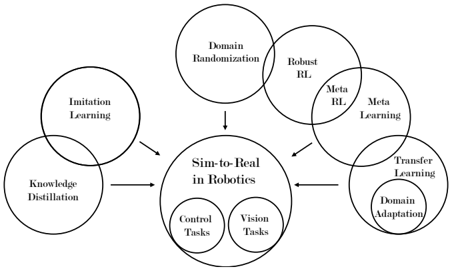
Deep reinforcement learning has recently seen huge success across multiple areas in the robotics domain. Owing to the limitations of gathering real-world data, i.e., sample inefficiency and the cost of collecting it, simulation environments are utilized for training the different agents. This not only aids in providing a potentially infinite data source, but also alleviates safety concerns with real robots. Nonetheless, the gap between the simulated and real worlds degrades the performance of the policies once the models are transferred into real robots. Multiple research efforts are therefore now being directed towards closing this sim-toreal gap and accomplish more efficient policy transfer. Recent years have seen the emergence of multiple methods applicable to different domains, but there is a lack, to the best of our knowledge, of a comprehensive review summarizing and putting into context the different methods. In this survey paper, we cover the fundamental background behind sim-to-real transfer in deep reinforcement learning and overview the main methods being utilized at the moment: domain randomization, domain adaptation, imitation learning, meta-learning and knowledge distillation. We categorize some of the most relevant recent works, and outline the main application scenarios. Finally, we discuss the main opportunities and challenges of the different approaches and point to the most promising directions.
Overview
CoChat Summary
TL;DR
This survey reviews sim-to-real transfer in deep reinforcement learning for robotics, covering domain randomization, domain adaptation, imitation learning, meta-learning, and knowledge distillation. It identifies domain randomization as the most widely adopted method and outlines application scenarios, challenges, and promising directions.
Key findings
- The main sim-to-real methods reviewed are domain randomization, domain adaptation, imitation learning, meta-learning, and knowledge distillation; domain randomization is identified as the most widely adopted method.
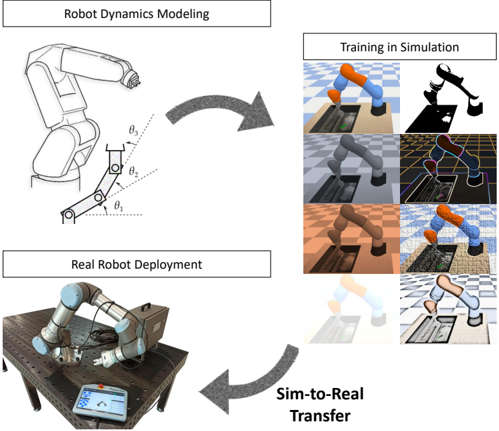
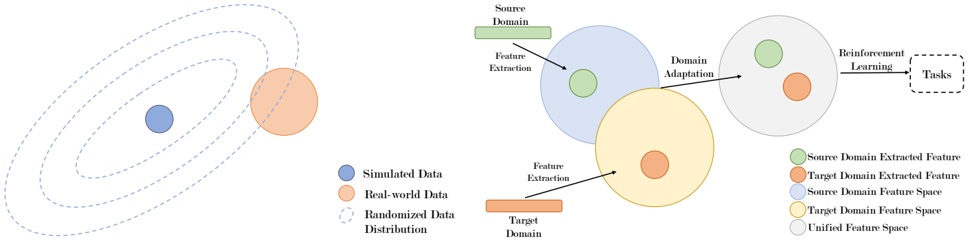
- Domain randomization is divided into visual randomization and dynamics randomization: visual randomization targets robotic vision tasks such as object localization, detection, pose estimation, and semantic segmentation, while dynamics randomization helps acquire robust control policies. For dexterous in-hand manipulation, one work randomizes object dimensions, object and robot link masses, surface friction coefficients, robot joint damping coefficients, and actuator force gains.
- Application scenarios include dexterous robotic manipulation (e.g., peg-in-hole, deformable object manipulation, multi-fingered hands, force control) and robotic navigation (e.g., six-legged robots, depth-based mapless navigation, soccer competitions), plus other applications such as plasma jet control, tactile sensing, and multi-agent manipulation.
- Stated challenges include the lack of formal explanation for why domain randomization works, the homogeneous feature-space assumption in most domain adaptation algorithms, and the need for wider theoretical and empirical studies; promising directions include integrating different methods and using incremental complexity learning, continual learning, and reward shaping.
Methods
- This is a survey/review paper, not an experimental study; it reviews fundamental background and recent works on sim-to-real transfer in DRL for robotics.
- It classifies relevant publications in Table I by real robot/platform, learning algorithm, knowledge transfer, simulator/engine, multi-agent learning, and sim-to-real transfer/learning details.
- The analysis is a qualitative synthesis of literature covering zero-shot transfer, system identification, domain randomization, domain adaptation, learning with disturbances, simulation environments, and application areas; no dataset or sample size is reported.
Limitations
- The paper states that for domain randomization it is hard to formally explain how and why it works, making efficient simulation and randomization distribution design difficult; for domain adaptation, most existing algorithms focus on homogeneous deep domain adaptation and assume the same feature spaces between source and target domains, which may not hold in many applications.
- The paper states that wider theoretical and empirical studies are required to better understand these techniques, and that generalization of existing results with more comprehensive analysis is lacking.
- The paper states its scope excludes specific simulators or techniques for direct learning in real-world settings, focuses on works specifically tackling sim-to-real transfer, and notes that sim-to-real literature for robotic navigation is sparse. Evident from the text: as a survey, it presents no primary experimental validation or quantitative benchmark results; Table I is a classification rather than a comparative performance evaluation.
Model-written summary. Check it against the paper before relying on it.
Integrity signals
Registry
Cites
Statistics
Figures
Verification
Claims the paper makes
24 Valid · 8 Not valid · 17 Not checked · 26 Own results and interpretations
The cited sources support only part of this claim — read each source’s verdict below.
In the paper
“From the literature, we summarize three common methods for domain adaptation regardless of their tasks. They are discrepancy-based , adversarial-based , and reconstructionbased methods, which can be also used crossly.”
What the sources say
- Partly supportedcites [65] [65] Eric Tzeng, Judy Hoffman, Ning Zhang, Kate Saenko, and Trevor Darrell. Deep domain confusion: Maximizing for domain invariance. arXiv:1412.3474 , 2014. 67. sourceExperimental — accuracy not yet measured
The Introduction (p. 1) and Section 3 (p. 3) describe a domain-adaptation method that minimizes maximum mean discrepancy, supporting the discrepancy-based part of the claim. The paper does not present adversarial-based and reconstruction-based methods alongside it as three common categories of domain adaptation. (LLM, conf=0.82)
- Not checked yetcites [68] [68] Yaroslav Ganin, Evgeniya Ustinova, Hana Ajakan, Pascal Germain, Hugo Larochelle, Franc ¸ois Laviolette, Mario Marchand, and Victor Lempitsky. Domain-adversarial training of neural networks. The Journal of Machine Learning Research , 17(1), 2016. - source
Checked before — its earlier verdict is held back until a new check runs.
- Partly supportedcites [71] [71] Konstantinos Bousmalis, George Trigeorgis, Nathan Silberman, Dilip Krishnan, and Dumitru Erhan. Domain separation networks. In Advances in neural information processing systems , 2016. - sourceExperimental — accuracy not yet measured
Related Work (p. 2) discusses adversarial training and MMD-based alignment, while the Discussion (p. 8) describes a reconstruction loss used with either DANN or MMD. The paper therefore illustrates the three approaches and their combination, but it does not present them as a three-part classification of common domain-adaptation methods regardless of task; its review focuses on CNN-based unsupervised adaptation. (LLM, conf=0.84)
plain- Asserted: passes — The authors put it forward as true.
- Checkable: passes — It can be checked against evidence.
- Load-bearing: unclear — It is unclear whether the paper’s conclusions depend on it.
- Based: passes — The paper gives a reason why it holds.
- Partly supported
The cited sources support only part of this claim — read each source’s verdict below.
In the paper
“In those cases where system identification for one-shot transfer is the objective, researchers have often built or customized specific simulations that meet problem-specific requirements and constraints [32], [36], [41].”
What the sources say
- Not checked — no full text of the sourcecites [32] [32] Matthew Witman, Dogan Gidon, David B Graves, Berend Smit, and Ali Mesbah. Sim-to-real transfer reinforcement learning for control of thermal effects of an atmospheric pressure plasma jet. Plasma Sources Science and Technology , 28(9), 2019. - source
- Partly supportedcites [36] [36] Hansenclever F Bassani, Renie A Delgado, Jose Nilton de O Lima Junior, Heitor R Medeiros, Pedro HM Braga, and Alain Tapp. Learning to play soccer by reinforcement and applying sim-to-real to compete in the real world. arXiv:2003.11102 , 2020. - sourceExperimental — accuracy not yet measured
The passages labeled 25 and 44 describe a customized soccer simulation environment designed for the paper’s RL and sim-to-real problem. They do not describe system identification or one-shot transfer as its objective, or establish that researchers have often taken this approach. (LLM, conf=0.86)
- Partly supportedcites [41] [41] Andrew Hundt, Benjamin Killeen, Heeyeon Kwon, Chris Paxton, and Gregory D Hager. ' good robot!': Efficient reinforcement learning for multi-step visual tasks via reward shaping. arXiv:1909.11730 , 2019. - sourceExperimental — accuracy not yet measured
The Simulation Experiments section (p. 5) describes two simulated tasks of the authors’ design, and the Real World Experiments section (p. 7) reports direct transfer of models trained in simulation. The paper does not describe system identification as the objective or establish that researchers often build or customize simulations to meet problem-specific constraints. (LLM, conf=0.76)
plainstates an association- Asserted: passes — The authors put it forward as true.
- Checkable: passes — It can be checked against evidence.
- Load-bearing: unclear — It is unclear whether the paper’s conclusions depend on it.
- Based: passes — The paper gives a reason why it holds.
The sources with a verdict support this claim; the rest weren’t checked yet, have no full text we could read, or their verdicts aren’t rated yet.
In the paper
“An exception to this is, however, robotic tasks involving object manipulation [5], [6].”
What the sources say
- Not checked — no full text of the sourcecites [5] [5] Aravind Rajeswaran, Vikash Kumar, Abhishek Gupta, Giulia Vezzani, John Schulman, Emanuel Todorov, and Sergey Levine. Learning complex dexterous manipulation with deep reinforcement learning and demonstrations. arXiv:1709.10087 , 2017. - source
- Supportedcites [6] [6] Jan Matas, Stephen James, and Andrew J Davison. Sim-to-real reinforcement learning for deformable object manipulation. arXiv:1806.07851 , 2018. - source
Section 5.3 (p. 8) reports testing simulation-trained policies on a real robot for three cloth-manipulation tasks. Table 2 (p. 8) reports real-world successes without additional training, supporting this paper as an example of deep reinforcement learning succeeding beyond simulation in object manipulation. (LLM, conf=0.90)
plain- Asserted: passes — The authors put it forward as true.
- Checkable: passes — It can be checked against evidence.
- Load-bearing: unclear — It is unclear whether the paper’s conclusions depend on it.
- Based: passes — The paper gives a reason why it holds.
The cited sources support only part of this claim — read each source’s verdict below.
In the paper
“In robotic vision tasks including object localization [53], object detection [54], pose estimation [55], and semantic segmentation [56], the training data from simulator always have different textures, lighting, and camera positions from the realistic environments.”
What the sources say
- Partly supportedcites [53] [53] Josh Tobin, Rachel Fong, Alex Ray, Jonas Schneider, Wojciech Zaremba, and Pieter Abbeel. Domain randomization for transferring deep neural networks from simulation to the real world. In IROS , 2017. - sourceExperimental — accuracy not yet measured
The Introduction (p. 1) describes a reality gap between simulated camera images and real-world images, and its Fig. 1 caption says this study randomizes camera positions, lighting, and non-realistic textures. But the claim's “always” extends that description to all simulator training data; Bridging the reality gap (p. 2) also describes approaches that make simulation closely match physical reality. (LLM, conf=0.88)
- Could not verifycites [54] [54] Jonathan Tremblay, Aayush Prakash, David Acuna, Mark Brophy, Varun Jampani, Cem Anil, Thang To, Eric Cameracci, Shaad Boochoon, and Stan Birchfield. Training deep networks with synthetic data: Bridging the reality gap by domain randomization. In CVPR Workshops , 2018. - sourceExperimental — accuracy not yet measured
Our copy of Arndt et al. (ICRA 2020) deals only with dynamics-side sim-to-real transfer: the Introduction (p. 1) frames the problem as the need for 'an accurate match between the simulation and real-world... because the simulation may not model some of the physical phenomena present in real world,' and the paper explicitly 'consider[s] tasks that are heavily dependent on the dynamic parameters of the environment' (hockey-puck friction/mass, Sections III-V). The nearest passage is Section II-B (p. 2), noting that domain randomization 'can be applied both to perception [8], [21]-[23] and to the dynamics of the system [24], [25]' — it credits perception work but never states that simulator training data differ in textures, lighting, or camera positions, and it does not discuss object localization, detection, pose estimation, or semantic segmentation. Searched: textures/lighting/camera positions, visual appearance gap, perception domain randomization; no passage in our copy addresses the claim's specific point, so it can be neither confirmed nor contradicted here. (LLM, conf=0.70)
- Not checked yetcites [55] [55] Martin Sundermeyer, Zoltan-Csaba Marton, Maximilian Durner, Manuel Brucker, and Rudolph Triebel. Implicit 3d orientation learning for 6d object detection from rgb images. In ECCV , 2018. - source
Checked before — its earlier verdict is held back until a new check runs.
plain- Asserted: passes — The authors put it forward as true.
- Checkable: passes — It can be checked against evidence.
- Load-bearing: passes — The paper’s conclusions depend on it.
- Based: passes — The paper gives a reason why it holds.
- Partly supported
Every source the paper cites for this claim was checked and supports it.
In the paper
“Moreover, a relevant conclusion from this work is that excessive domain randomization can be detrimental. Specifically, when the number of different colors that were being used for each texture was too large, the performance of the real robot was significantly worse.”
What the sources say
- Supportedcites [6] [6] Jan Matas, Stephen James, and Andrew J Davison. Sim-to-real reinforcement learning for deformable object manipulation. arXiv:1806.07851 , 2018. - source
Section 5.3 (p. 8) reports that heavy domain randomisation was detrimental: sampling texture colours uniformly across all colours made the agent’s performance after transfer significantly worse. This supports the citing sentence’s description of excessive colour variation harming real-robot performance. (LLM, conf=0.93)
plainstates a cause- Asserted: passes — The authors put it forward as true.
- Checkable: passes — It can be checked against evidence.
- Load-bearing: passes — The paper’s conclusions depend on it.
- Based: passes — The paper gives a reason why it holds.
- Supported
8 more claims
Create a free account to see all 75 claims and to verify the 19 references still open.
- Probably not a substantial claim. 48
- It may state two separate claims as one. 27
Claims other papers make about this one
Each is checked against this paper’s own text: does it say what the citing paper says it does?
The cited source says what the claim attributes to it.
In the citing paper
“Simulation-based approaches provide a cheap and safe development environment for RMSes, but there are challenges to deploying simulation-trained systems into real-world settings [62].”
From Data-Driven Robotic Manipulation of Cloth-like Deformable Objects: The Present, Challenges and Future Prospects (2023) · cites this paper as [62]
The cited source says what the claim attributes to it.
In the citing paper
“Consequently, simulation-to-reality (Sim2Real) transfer [62] (Section 3.4) becomes a key technology in modern robotics for bridging the gap between the simulation-trained policy and the real-world deployment.”
From Data-Driven Robotic Manipulation of Cloth-like Deformable Objects: The Present, Challenges and Future Prospects (2023) · cites this paper as [62]
Citations
Cites
Continuous control with deep reinforcement learning
Lillicrap, T. P., Hunt, J. J., Pritzel, A., Heess, N., Erez, T., Tassa, Y., Silver, D., & Wierstra, D. (2015) · arXiv · doi:10.48550/arxiv.1509.02971 · Cited by 10,782
Proximal Policy Optimization Algorithms
Schulman, J., Wolski, F., Dhariwal, P., Radford, A., & Klimov, O. (2017) · arXiv · doi:10.48550/arxiv.1707.06347 · Cited by 10,625 · cited 2×
“The variability in terms of learning algorithms is higher, with DRL using proximal policy optimization (PPO) [45], trust region policy optimization (TRPO) [46], maximum a-posteriori policy optimization (MPO) [47], asynchronous actor critic (A3C) methods [48], soft actor critic (SAC) [49], or deep deterministic policy…”
BackgroundDomain-Adversarial Training of Neural Networks
Ganin, Y., Ustinova, E., Ajakan, H., Germain, P., Larochelle, H., Laviolette, F., Marchand, M., & Lempitsky, V. (2017) · Advances in Computer Vision and Pattern Recognition · doi:10.1007/978-3-319-58347-1_10 · Cited by 8,318
Asynchronous Methods for Deep Reinforcement Learning
Mnih, V., Badia, A. P., Mirza, M., Graves, A., Lillicrap, T. P., Harley, T., Silver, D., & Kavukcuoglu, K. (2016) · arXiv · doi:10.48550/arxiv.1602.01783 · Cited by 7,132 · cited 1×
“The variability in terms of learning algorithms is higher, with DRL using proximal policy optimization (PPO) [45], trust region policy optimization (TRPO) [46], maximum aposteriori policy optimization (MPO) [47], asynchronous actor critic (A3C) methods [48], soft actor critic (SAC) [49], or deep deterministic policy g…”
BackgroundA Comprehensive Survey on Transfer Learning
Zhuang, F., Qi, Z., Duan, K., Xi, D., Zhu, Y., Zhu, H., Xiong, H., & He, Q. (2021) · Proceedings of the IEEE · doi:10.1109/jproc.2020.3004555 · Cited by 6,678 · cited 2×
“Transfer learning aims at improving the performance of target learners on target domains by transferring the knowledge contained in different but related source domains [18].”
BackgroundSoft actor-critic Off-policy maximum entropy deep reinforcement learning with a stochastic actor
Haarnoja, T., Zhou, A., Abbeel, P., & Levine, S. (2018) · arXiv · doi:10.48550/arxiv.1801.01290 · Cited by 5,594 · cited 2×
“The variability in terms of learning algorithms is higher, with DRL using proximal policy optimization (PPO) [45], trust region policy optimization (TRPO) [46], maximum a-posteriori policy optimization (MPO) [47], asynchronous actor critic (A3C) methods [48], soft actor critic (SAC) [49], or deep deterministic policy…”
BackgroundMuJoCo: A physics engine for model-based control
Todorov, E., Erez, T., & Tassa, Y. (2012) · 2012 IEEE/RSJ International Conference on Intelligent Robots and Systems · doi:10.1109/iros.2012.6386109 · Cited by 4,767 · cited 3×
“The most widely used simulators in the literature are Gazebo [74], Unity3D, and PyBullet [75] or MuJoCo [17].”
BackgroundMethodDeep Reinforcement Learning: A Brief Survey
Arulkumaran, K., Deisenroth, M. P., Brundage, M., & Bharath, A. A. (2017) · IEEE Signal Processing Magazine · doi:10.1109/msp.2017.2743240 · Cited by 4,733
A Brief Survey of Deep Reinforcement Learning
Arulkumaran, K., Deisenroth, M. P., Brundage, M., & Bharath, A. A. (2017) · arXiv · doi:10.48550/arxiv.1708.05866 · Cited by 4,733
Trust region policy optimization
Schulman, J., Levine, S., Moritz, P., Jordan, M. I., & Abbeel, P. (2015) · arXiv · doi:10.48550/arxiv.1502.05477 · Cited by 4,578
Research works printed but not linked: 6
- [75] Erwin Coumans and Yunfei Bai. Pybullet, a python module for physics simulation for games, robotics and machine learning. 2016. -
- [35] J van Baar, R Corcodel, A Sullivan, D Jha, D Romeres, and D Nikovski. Simulation to real transfer learning with robustified policies for robot tasks. 2018. -
- [52] Joshua P Tobin. Real-World Robotic Perception and Control Using Synthetic Data . PhD thesis, UC Berkeley, 2019. -
- [40] Manuel Kaspar and J¨ urgen Bock. Reinforcement learning with cartesian commands and sim to real transfer for peg in hole tasks. -
- [4] Javier Garcıa and Fernando Fern´ andez. A comprehensive survey on safe reinforcement learning. Journal of Machine Learning Research , 16(1), 2015. -
- [42] Ole-Magnus Pedersen. Sim-to-real transfer of robotic gripper pose estimation-using deep reinforcement learning, generative adversarial networks, and visual servoing. Master's thesis, NTNU, 2019. -
Cited by
Transfer Learning in Deep Reinforcement Learning: A Survey
Zhu, Z., Lin, K., Jain, A. K., & Zhou, J. (2023) · IEEE Transactions on Pattern Analysis and Machine Intelligence · doi:10.1109/tpami.2023.3292075 · Cited by 861
“For instance, [70] consolidated sim-to-real TL methods.”
BackgroundSelf-Driving Laboratories for Chemistry and Materials Science
Tom, G., Schmid, S. P., Baird, S. G., Cao, Y., Darvish, K., Hao, H., Lo, S., Pablo-García, S., Rajaonson, E. M., Skreta, M., et al. (2024) · Chemical Reviews · doi:10.1021/acs.chemrev.4c00055 · Cited by 707
Deep reinforcement learning in smart manufacturing: A review and prospects
Li, C., Zheng, P., Yin, Y., Wang, B., & Wang, L. (2023) · CIRP Journal of Manufacturing Science and Technology · doi:10.1016/j.cirpj.2022.11.003 · Cited by 327
Deep Multi-Agent Reinforcement Learning for Highway On-Ramp Merging in Mixed Traffic
Chen, D., Hajidavalloo, M. R., Li, Z., Chen, K., Wang, Y., Jiang, L., & Wang, Y. (2023) · IEEE Transactions on Intelligent Transportation Systems · doi:10.1109/tits.2023.3285442 · Cited by 257
“Interested readers are referred to an extensive survey on sim-to-real paradigms for reinforcement learning [62].”
BackgroundA Comprehensive Survey on Artificial Intelligence Empowered Edge Computing on Consumer Electronics
Syu, J.-H., Lin, J. C.-W., Srivastava, G., & Yu, K. (2023) · IEEE Transactions on Consumer Electronics · doi:10.1109/tce.2023.3318150 · Cited by 212
“The flexibility and generality of reinforcement learning make it broadly used in various fields, especially in automated systems [39], robots [40], and finance [41], [42].”
BackgroundSalvato, E., Fenu, G., Medvet, E., & Pellegrino, F. A. (2021) · IEEE Access · doi:10.1109/access.2021.3126658 · Cited by 200
“Although a sketch of the current state of the art is already proposed in [22], here we conduct a more in-depth analysis.”
BackgroundA Survey of Zero-shot Generalisation in Deep Reinforcement Learning
Kirk, R., Zhang, A., Grefenstette, E., & Rocktäschel, T. (2023) · Journal of Artificial Intelligence Research · doi:10.1613/jair.1.14174 · Cited by 193
Deep reinforcement learning in recommender systems: A survey and new perspectives
Chen, X., Yao, L., McAuley, J., Zhou, G., & Wang, X. (2023) · Knowledge-Based Systems · doi:10.1016/j.knosys.2023.110335 · Cited by 323
Transferring policy of deep reinforcement learning from simulation to reality for robotics
Ju, H., Juan, R., Gomez, R., Nakamura, K., & Li, G. (2022) · Nature Machine Intelligence · doi:10.1038/s42256-022-00573-6 · Cited by 147
Deep Reinforcement Learning for Flocking Motion of Multi-UAV Systems: Learn From a Digital Twin
Shen, G., Lei, L., Li, Z., Cai, S., Zhang, L., Cao, P., & Liu, X. (2021) · IEEE Internet of Things Journal · doi:10.1109/jiot.2021.3127873 · Cited by 154
Ten questions concerning reinforcement learning for building energy management
Nagy, Z., Henze, G. P., Dey, S., Arroyo, J., Helsen, L., Zhang, X., Chen, B., Amasyali, K., Kurte, K. R., Zamzam, A. S., et al. (2023) · Building and Environment · doi:10.1016/j.buildenv.2023.110435 · Cited by 168
Dong, L., He, Z., Song, C., & Sun, C. (2023) · Journal of Systems Engineering and Electronics · doi:10.23919/jsee.2023.000051 · Cited by 170
“At present, many scholars in Robotics have devoted to the research of innovative Sim-to-Real methods [111].”
BackgroundGao, C., Killeen, B. D., Hu, Y., Grupp, R. B., Taylor, R. H., Armand, M., & Unberath, M. (2023) · Nature Machine Intelligence · doi:10.1038/s42256-023-00629-1 · Cited by 183
Shen, G., Lei, L., Zhang, X., Li, Z., Cai, S., & Zhang, L. (2023) · IEEE Transactions on Vehicular Technology · doi:10.1109/tvt.2023.3245120 · Cited by 124
“The sim-to-real problem, i.e., the trade-off between training speed and environment fidelity, limits the application of MADRL to the MCTS problem [11].”
MethodAgentic AI: A Comprehensive Survey of Technologies, Applications, and Societal Implications
Pati, A. K. (2025) · IEEE Access · doi:10.1109/access.2025.3585609 · Cited by 100
“See [61], [62] Quantum computing: Quantum machine learning can help to learn complex patterns in data, quantum multi-agent reinforcement learning can help in scalability, and parallel and fast computing can be useful in agentic AI systems.”
The neuromechanics of animal locomotion: From biology to robotics and back
Ramdya, P., & Ijspeert, A. J. (2023) · Science Robotics · doi:10.1126/scirobotics.adg0279 · Cited by 92
Hierarchical Reinforcement Learning for Air Combat at DARPA's AlphaDogfight Trials
Pope, A. P., Ide, J. S., Mićović, D., Díaz, H., Twedt, J. C., Alcedo, K., Walker, T. T., Rosenbluth, D., Ritholtz, L., & Javorsek, D. (2022) · IEEE Transactions on Artificial Intelligence · doi:10.1109/tai.2022.3222143 · Cited by 128
“Narrowing the gap between simulation and real-world deployment (sim2real) is critical to rapid-prototyping and validation, as shown by several recent studies [64], [65], [66], [67], [68].”
Recent Progress in Modeling and Control of Bio-Inspired Fish Robots
Sun, B., Li, W., Wang, Z., Zhu, Y., He, Q., Guan, X., Dai, G., Yuan, D., Li, A., Cui, W., et al. (2022) · Journal of Marine Science and Engineering · doi:10.3390/jmse10060773 · Cited by 106
“They proposed that the effectiveness of interactive data collection also hinders the further development of model-free control, and a sim-to-real transfer method [183] was introduced to address this issue.”
Backgrounddel Real, A. J., Andreiana, D. S., Roldán, Á. O., Bustos, A. H., & Acevedo, L. (2022) · Applied Sciences · doi:10.3390/app122312377 · Cited by 129
“The selection of the simulator is crucial for attaining a successful transfer from simulation to reality [200].”
BackgroundTransformer in reinforcement learning for decision-making: a survey
Yuan, W., Chen, J., Chen, S., Lu, L., Hu, Z., Li, P., Feng, D., Liu, F., & Chen, J. (2024) · Frontiers of Information Technology & Electronic Engineering · doi:10.1631/fitee.2300548 · Cited by 127
“However, TransRL focuses on applications in simulators, and few TransRL studies currently explore the simulation-to-reality (sim-to-real) (Zhao WS et al., 2020) transfer process, which leads to a gap between the simulated and real worlds.”
Self-citationAl-Hamadani, M. N. A., Fadhel, M. A., Alzubaidi, L., & Harangi, B. (2024) · Sensors · doi:10.3390/s24082461 · Cited by 125
Hybrid Robotic Grasping With a Soft Multimodal Gripper and a Deep Multistage Learning Scheme
Liu, F., Sun, F., Fang, B., Li, X., Sun, S., & Liu, H. (2023) · IEEE Transactions on Robotics · doi:10.1109/tro.2023.3238910 · Cited by 96
“Learning grasping policies through simulations can alleviate the problem of data collection, but the simulation-to-real-world (sim-to-real) transfer still remains challenging [13], [17], [18],”
BackgroundIbrahim, S., Mostafa, M., Jnadi, A., Salloum, H., & Osinenko, P. (2024) · IEEE Access · doi:10.1109/access.2024.3504735 · Cited by 178
Bøhn, E., Coates, E. M., Reinhardt, D. P., & Johansen, T. A. (2023) · IEEE Transactions on Neural Networks and Learning Systems · doi:10.1109/tnnls.2023.3263430 · Cited by 107
“For a recent survey on sim-to-real methods in the context of control and robotics, see [11].”
Delgado, J. M. D., & Oyedele, L. O. (2022) · Advanced Engineering Informatics · doi:10.1016/j.aei.2022.101787 · Cited by 107
Parallel Learning: Overview and Perspective for Computational Learning Across Syn2Real and Sim2Real
Miao, Q., Lv, Y., Huang, M., Wang, X., & Wang, F. (2023) · IEEE/CAA Journal of Automatica Sinica · doi:10.1109/jas.2023.123375 · Cited by 92
Federated Learning in Robotic and Autonomous Systems
Xianjia, Y., Queralta, J. P., Heikkonen, J., & Westerlund, T. (2021) · Procedia Computer Science · doi:10.1016/j.procs.2021.07.041 · Cited by 79
“Adversarial attacks to the algorithms, and model reconstruction attacks are other examples.”
Self-citationLiu, J., Borja, P., & Santina, C. D. (2024) · Advanced Intelligent Systems · doi:10.1002/aisy.202300385 · Cited by 110
del Río, A., Jiménez, D., & Serrano, J. (2024) · IEEE Access · doi:10.1109/access.2024.3472473 · Cited by 95
“Highlighting methods such as policy transfer [77], [78], value function transfer [79], and model transfer [80], [81], [82].”
MethodA Survey of Robot Intelligence with Large Language Models
Jeong, H., Lee, H., Kim, C., & Shin, S. (2024) · Applied Sciences · doi:10.3390/app14198868 · Cited by 121
Deep Reinforcement Learning of Mobile Robot Navigation in Dynamic Environment: A Review
Zhu, Y., Hasan, W. Z. W., Ramli, H. R., Norsahperi, N. M. H., Kassim, M. S. M., & Yao, Y. (2025) · Sensors · doi:10.3390/s25113394 · Cited by 117
“Finally, most DRL models assume perfect observability and stationary dynamics—conditions rarely met in practice—resulting in failures to adapt during execution [149].”
Adaptive Control and Intersections with Reinforcement Learning
Annaswamy, A. M. (2023) · Annual Review of Control Robotics and Autonomous Systems · doi:10.1146/annurev-control-062922-090153 · Cited by 84
Robotics Dexterous Grasping: The Methods Based on Point Cloud and Deep Learning
Duan, H., Wang, P., Huang, Y.-Y., Xu, G., Wei, W., & Shen, X. (2021) · Frontiers in Neurorobotics · doi:10.3389/fnbot.2021.658280 · Cited by 93
“Simulation-based training provides data at low-cost, but involves inherent mismatches with real-world settings (Zhao W. et al., 2020).”
BackgroundMethodVesNet-RL: Simulation-Based Reinforcement Learning for Real-World US Probe Navigation
Bi, Y., Jiang, Z., Gao, Y., Wendler, T., Karlas, A., & Navab, N. (2022) · IEEE Robotics and Automation Letters · doi:10.1109/lra.2022.3176112 · Cited by 78
A review on interaction control for contact robots through intent detection
Li, Y., Sena, A., Wang, Z., Xing, X., Babič, J., van Asseldonk, E. H. F., & Burdet, E. (2022) · Progress in Biomedical Engineering · doi:10.1088/2516-1091/ac8193 · Cited by 66
“In sim-to-real transfer learning, the goal is to learn a policy in simulation, where data is cheap and exploration is safe, then transfer this policy to a real robot system for deployment [86, 87].”
BackgroundNew era towards autonomous additive manufacturing: a review of recent trends and future perspectives
Fan, H., Liu, C., Bian, S., Ma, C., Huang, J., Liu, X., Doyle, M., Lu, T., Chow, E., Chen, L., et al. (2025) · International Journal of Extreme Manufacturing · doi:10.1088/2631-7990/ada8e4 · Cited by 75
“Advanced techniques such as zero-shot transfer, system identification, domain randomization, domain adaptation, and learning with disturbances introduce greater variations than those found in real-life data, further strengthening the robustness of the trained agents [259].”
Noack, B. R. (2023) · Physics of Fluids · doi:10.1063/5.0152777 · Cited by 53
Weng, Y., Pajarinen, J., Akrour, R., Matsuda, T., Peters, J., & Maki, T. (2022) · IEEE Journal of Oceanic Engineering · doi:10.1109/joe.2022.3165805 · Cited by 56
“The gap between the simulated environment (source domain) and the real world (target domain) may degrade the adaptability of the RL policy in the real environment [50].”
BackgroundOrientation and Decision-Making for Soccer Based on Sports Analytics and AI: A Systematic Review
Pu, Z., Pan, Y., Wang, S., Liu, B., Chen, M., Ma, H., & Cui, Y. (2024) · IEEE/CAA Journal of Automatica Sinica · doi:10.1109/jas.2023.123807 · Cited by 82
A model-free deep reinforcement learning approach for control of exoskeleton gait patterns
Rose, L., Bazzocchi, M. C. F., & Nejat, G. (2021) · Robotica · doi:10.1017/s0263574721001600 · Cited by 52
Libsignal: an open library for traffic signal control
Mei, H., Lei, X., Da, L., Shi, B., & Wei, H. (2023) · Machine Learning · doi:10.1007/s10994-023-06412-y · Cited by 58
“This makes LibSignal a possible testbed for Sim-to-Real transfer [32, 12], which is not covered by this paper.”
MethodChung, J., Fayyad, J., Younes, Y. A., & Najjaran, H. (2024) · Artificial Intelligence Review · doi:10.1007/s10462-023-10670-6 · Cited by 79
“…given a batch of one-step transition as { s t , a t , r t , s t + 1 } where s t is state, a t is action, r t is reward, and s t + 1 is the next state, the dynamics function can take on different forms (Moerland et al. 2023): • Standard Markovian transition model: ( s t , a t ) → ( s t + 1 , r t ) .”
Virtual to Real-World Transfer Learning: A Systematic Review
Ranaweera, M., & Mahmoud, Q. H. (2021) · Electronics · doi:10.3390/electronics10121491 · Cited by 53
“Traditionally, the aim of transfer learning is to improve the performance of a target domain (Ds) by transferring the learned knowledge that is contained in different but related source domains (Ds) [3].”
BackgroundInfluentialChen, S., Qiu, X., Tan, X., Fang, Z., & Jin, Y. (2022) · Information Sciences · doi:10.1016/j.ins.2022.08.028 · Cited by 58
Zhou, Z., Liu, G., & Zhou, M. (2023) · IEEE Transactions on Neural Networks and Learning Systems · doi:10.1109/tnnls.2023.3278715 · Cited by 61
“Robust DRL methods can also be used to improve the generalization of algorithms [38].”
MethodLearning-based methods for adaptive informative path planning
Popović, M., Ott, J., Rückin, J., & Kochenderfer, M. J. (2024) · Robotics and Autonomous Systems · doi:10.1016/j.robot.2024.104727 · Cited by 90
Kochdumper, N., Krasowski, H., Wang, X., Bak, S., & Althoff, M. (2023) · IEEE Open Journal of Control Systems · doi:10.1109/ojcsys.2023.3256305 · Cited by 73
A Review on the Applications of Reinforcement Learning Control for Power Electronic Converters
Chen, P., Zhao, J., Liu, K., Zhou, J., Dong, K., Li, Y., Guo, X., & Pan, X. (2024) · IEEE Transactions on Industry Applications · doi:10.1109/tia.2024.3435170 · Cited by 66
“Furthermore, there are limited papers that explicitly present the detailed experimental validation process and discuss methods employed to overcome discrepancies between simulation training environments and real world application conditions [121], [122], [123].”
MethodChen, S., Liu, G., Zhou, Z., Zhang, K., & Wang, J. (2023) · IEEE Transactions on Intelligent Vehicles · doi:10.1109/tiv.2023.3307134 · Cited by 54
“According to the work in [11] and [12], the domain randomization method [13] is such an effective bridge.”
BackgroundAutonomous Advanced Aerial Mobility—An End-to-End Autonomy Framework for UAVs and Beyond
Mishra, S., & Palanisamy, P. (2023) · IEEE Access · doi:10.1109/access.2023.3339631 · Cited by 62
Sim-to-real transfer and reality gap modeling in model predictive control for autonomous driving
Daza, I. G., Izquierdo, R., Martínez, L. M., Benderius, O., & Llorca, D. F. (2022) · Applied Intelligence · doi:10.1007/s10489-022-04148-1 · Cited by 58
“present in [12] a survey on sim-to-real transfer techniques applied in robotics by developing control systems in simulated robotic systems based on reinforcement learning.”
BackgroundLin, H., Yang, L., Guo, H. X., & Cao, J. (2024) · IEEE Transactions on Computers · doi:10.1109/tc.2024.3377912 · Cited by 50
“Deploying models trained through DRL directly into operational environments, especially within the realms of the Internet of Vehicles (IoV) and robotics, presents considerable challenges [32].”
Transfer learning in robotics: An upcoming breakthrough? A review of promises and challenges
Jaquier, N., Welle, M. C., Gams, A., Yao, K., Fichera, B., Billard, A., Ude, A., Asfour, T., & Kragić, D. (2024) · The International Journal of Robotics Research · doi:10.1177/02783649241273565 · Cited by 59
“Even so, one-shot transfer learning is seldom successful (Zhao et al. 2020), and additional learning is required, for example using reinforcement learning (Ada et al. 2022), back-propagation (Chen et al. 2018) or both (Lonarevi et al. 2022).”
Grand challenges in industrial and systems engineering
Karwowski, W., Salvendy, G., Albert, L. A., Kim, W. C., Denton, B. T., Dessouky, M. M., Dolgui, A. B., Duffy, V. G., Kumara, S. R. T., Li, J., et al. (2025) · International Journal of Production Research · doi:10.1080/00207543.2024.2432463 · Cited by 52
“This approach, called simto-real transfer (Zhao, Queralta, and Westerlund 2020), is motivated by two main considerations.”
Exploiting Multi-Modal Fusion for Urban Autonomous Driving Using Latent Deep Reinforcement Learning
Khalil, Y. H., & Mouftah, H. T. (2022) · IEEE Transactions on Vehicular Technology · doi:10.1109/tvt.2022.3217299 · Cited by 50
Indoor Synthetic Data Generation: A Systematic Review
Schieber, H., Demir, K. C., Kleinbeck, C., Yang, S. H., & Roth, D. (2024) · Computer Vision and Image Understanding · doi:10.1016/j.cviu.2023.103907 · Cited by 55
Will your next surgeon be a robot? Autonomy and AI in robotic surgery
Schmidgall, S., Opfermann, J. D., Kim, J. W., & Krieger, A. (2025) · Science Robotics · doi:10.1126/scirobotics.adt0187 · Cited by 77
Transferring Multi-Agent Reinforcement Learning Policies for Autonomous Driving using Sim-to-Real
Candela, E., Parada, L., Marques, L., Georgescu, T.-A., Demiris, Y., & Angeloudis, P. (2022) · IEEE/RSJ International Conference on Intelligent Robots and Systems (IROS) · doi:10.1109/iros47612.2022.9981319 · Cited by 57
“Several approaches have been proposed for bridging the reality gap in single-agent tasks, particularly in robotic manipulation [5], [6].”
BackgroundDeep reinforcement learning towards real-world dynamic thermal management of data centers
Zhang, Q., Zeng, W., Lin, Q., Chng, C.-B., Chui, C., & Lee, P. S. (2022) · Applied Energy · doi:10.1016/j.apenergy.2022.120561 · Cited by 52
A Comparison of PPO, TD3 and SAC Reinforcement Algorithms for Quadruped Walking Gait Generation
Mock, J. W., & Muknahallipatna, S. (2023) · Journal of Intelligent Learning Systems and Applications · doi:10.4236/jilsa.2023.151003 · Cited by 61
Feriani, A., Wu, D., Xu, Y. T., Li, J., Jang, S., Hossain, E., Liu, X., & Dudek, G. (2022) · IEEE Journal on Selected Areas in Communications · doi:10.1109/jsac.2022.3191114 · Cited by 46
“This may result in a gap in performance and safety concerns [57].”
BackgroundLatent Imagination Facilitates Zero-Shot Transfer in Autonomous Racing
Brunnbauer, A., Berducci, L., Brandstatter, A., Lechner, M., Hasani, R., Rus, D., & Grosu, R. (2022) · 2022 International Conference on Robotics and Automation (ICRA) · doi:10.1109/icra46639.2022.9811650 · Cited by 36
Zhou, Z., Liu, G., & Tang, Y. G. (2024) · IEEE Transactions on Intelligent Vehicles · doi:10.1109/tiv.2024.3408257 · Cited by 85
“point out the challenges faced by human-compatible MARL, followed by the conclusion in Section VI.”
Malashin, I. P., Martysyuk, D., Тынченко, В. С., Gantimurov, A., Nelyub, V., & Бородулин, А. С. (2025) · Polymers · doi:10.3390/polym17182557 · Cited by 40
“Extensions to anisotropic multilayer fabrics and advanced representations (e.g., graph networks) are promising directions [137].”
Learning Interaction-Aware Guidance for Trajectory Optimization in Dense Traffic Scenarios
Brito, B., Agarwal, A., & Alonso–Mora, J. (2022) · IEEE Transactions on Intelligent Transportation Systems · doi:10.1109/tits.2022.3160936 · Cited by 72
“However, their sample inefficiency [63] and transferability issues [64] makes it hard to apply them in real-world settings.”
BackgroundWang, S., Cao, Y., Zheng, X., & Zhang, T. (2022) · IEEE Robotics and Automation Letters · doi:10.1109/lra.2022.3152698 · Cited by 48
Rauch, L., & Braml, T. (2023) · Applied Sciences · doi:10.3390/app13169146 · Cited by 32
“For example, the effect known as the “Sim2Real (sim-to-real) gap” [182,183] describes the discrepancy between simulated and real environment data, a phenomenon that can result in bad performance if training the network with synthetic data but applying the model to the real world [184].”
BackgroundLi, Y., He, H., Khajepour, A., Chen, Y., Huo, W., & Wang, H. (2024) · IEEE Transactions on Transportation Electrification · doi:10.1109/tte.2024.3377809 · Cited by 46
Arcieri, G., Hoelzl, C., Schwery, O., Straub, D., Papakonstantinou, K. G., & Chatzi, E. (2024) · Machine Learning · doi:10.1007/s10994-024-06559-2 · Cited by 38
“When the trained RL agent is deployed to the real-world, the performance can deteriorate, or altogether fail, due to the “simulation-to-reality” gap (Zhao et al., 2020; Sal-vato et al., 2021), if the solution is not robust to model uncertainty.”
Learning to Calibrate Battery Models in Real-Time with Deep Reinforcement Learning
Unagar, A., Tian, Y., Chao, M. A., & Fink, O. (2021) · Energies · doi:10.3390/en14051361 · Cited by 33
“Sim-to-real transfer of the RL agent is an active research topic [38], and our proposed algorithm needs to be further tested on the real degradation process data.”
BackgroundShi, Y., Yuan, C., Tsitos, A., Cong, L., Hadjar, H., Chen, Z., & Zhang, J. (2023) · IEEE Transactions on Cognitive and Developmental Systems · doi:10.1109/tcds.2023.3237734 · Cited by 40
Zhang, T., Gou, Y., Liu, J., Song, S., Yang, T., & Cui, J. (2024) · IEEE Transactions on Mobile Computing · doi:10.1109/tmc.2024.3368425 · Cited by 41
“This allows RL agents pre-trained in these simulators to be directly deployed in real-life scenarios without requiring additional training or adjustments [58].”
BackgroundDong, X., Hong, H., Deng, X., Zhong, W., & Hu, G. (2023) · Physics of Fluids · doi:10.1063/5.0170316 · Cited by 36
A Review of Reinforcement Learning in Financial Applications
Bai, Y., Gao, Y., Wan, R., Zhang, S., & Song, R. (2024) · Annual Review of Statistics and Its Application · doi:10.1146/annurev-statistics-112723-034423 · Cited by 85
Eßer, J., Bach, N., Jestel, C., Urbann, O., & Kerner, S. (2022) · IEEE Robotics & Automation Magazine · doi:10.1109/mra.2022.3207664 · Cited by 47
“Instead of carefully modeling the real-world parameters in simulation, the real world simply appears as just another variation of these distributions [144].”
BackgroundInfluentialMarkerless Camera-to-Robot Pose Estimation via Self-Supervised Sim-to-Real Transfer
Lu, J., Richter, F., & Yip, M. C. (2023) · IEEE Computer Society Conference on Computer Vision and Pattern Recognition/Proceedings - IEEE Computer Society Conference on Computer Vision and Pattern Recognition/Proceedings · doi:10.1109/cvpr52729.2023.02040 · Cited by 56
Deep Representation Learning: Fundamentals, Technologies, Applications, and Open Challenges
Payandeh, A., Baghaei, K. T., Fayyazsanavi, P., Ramezani, S. B., Chen, Z., & Rahimi, S. (2023) · IEEE Access · doi:10.1109/access.2023.3335196 · Cited by 64
“A helpful example might be applying the knowledge gained from the simulation data to real-world data [443].”
BackgroundAssessing the value of deep reinforcement learning for irrigation scheduling
Kelly, T. D., Foster, T., & Schultz, D. M. (2024) · Smart Agricultural Technology · doi:10.1016/j.atech.2024.100403 · Cited by 53
Towards Adaptive Continuous Control of Soft Robotic Manipulator using Reinforcement Learning
Li, Y., Wang, X., & Kwok, K. (2022) · IEEE/RSJ International Conference on Intelligent Robots and Systems (IROS) · doi:10.1109/iros47612.2022.9981335 · Cited by 39
“Simulation could generate abundant virtual data fast, therefore greatly shortening the training time, but it may suffer from a considerable Sim2Real gap [26].”
BackgroundLi, G., Ijspeert, A. J., & Hayashibe, M. (2024) · IEEE Robotics and Automation Letters · doi:10.1109/lra.2024.3388842 · Cited by 45
“Deep reinforcement learning (DRL), a machine learning al-gorithm has gained significant attention in recent years owing to its potential to solve complex problems in various fields, including robotics [7], [8].”
BackgroundÖzalp, R., Uçar, A., & Guzelis, C. (2024) · IEEE Access · doi:10.1109/access.2024.3385426 · Cited by 34
“In the problems experienced in the transfer from the simulation to the real environment, the simulation environment dynamics [105] and the visuals cannot match the real environment [98].”
BackgroundPushing with Soft Robotic Arms via Deep Reinforcement Learning
Alessi, C., Bianchi, D., Stano, G., Cianchetti, M., & Falotico, E. (2024) · Advanced Intelligent Systems · doi:10.1002/aisy.202300899 · Cited by 40
Path Planning of Mobile Robot Based on Improved TD3 Algorithm
Li, P., Wang, Y., & Gao, Z. (2022) · IEEE International Conference on Mechatronics and Automation (ICMA) · doi:10.1109/icma54519.2022.9856399 · Cited by 25
“Thus, by combining it with reinforcement learning, deep reinforcement learning [13] (DRL) with complementary advantages can not only process high-dimensional environmental information, but also carry out corresponding planning tasks.”
BackgroundChen, W., Xu, J. L., Xiang, F., Yuan, X., Su, H., & Chen, R. (2024) · IEEE Transactions on Robotics · doi:10.1109/tro.2024.3352969 · Cited by 52
“Sim2Real addresses this problem by enabling robots to be trained in simulation and transferring the learned policies to real robots with minimal or zero real-world data [7], [8], [9].”
BackgroundDing, H., Zhuang, W., Dong, H., et al. (2024) · IEEE Transactions on Transportation Electrification · doi:10.1109/tte.2024.3396122 · Cited by 24
“Due to relatively low sample efficiency and safety-critical concerns, the practical implementation of RL in real-life eco-driving applications is limited [26], [27].”
DRL-Optimized Optical Communication for a Reliable UAV-Based Maritime Data Transmission
Luo, H., Ma, S., Tao, H., Ruby, R., Zhou, J., & Wu, K. (2024) · IEEE Internet of Things Journal · doi:10.1109/jiot.2024.3365863 · Cited by 27
“In harsh dynamic marine environments, deploying the simulation-trained agents directly in real-world scenarios often presents practical challenges due to the dynamic difference between simulation environments and real environments, known as the reality gap [38], [39].”
BackgroundLearning-Based Navigation and Collision Avoidance Through Reinforcement for UAVs
Azzam, R., Chehadeh, M. S., Hay, O. A., Humais, M. A., Boiko, I. M., & Zweiri, Y. (2023) · IEEE Transactions on Aerospace and Electronic Systems · doi:10.1109/taes.2023.3294889 · Cited by 25
“Two main types of sim2real gaps have been identified in the literature; mismatch of dynamics, and mismatch of vision sensors [16].”
BackgroundMüller, M. S., Jazdi, N., & Weyrich, M. (2022) · IFAC-PapersOnLine · doi:10.1016/j.ifacol.2022.04.181 · Cited by 31
“Moreover, (Zhao et al., 2020) and (Rao et al., 2020) consider the area from a deep reinforcement learning perspective with the intention to train the agents in simulation environment and apply them to real systems.”
BackgroundEmbodied Active Domain Adaptation for Semantic Segmentation via Informative Path Planning
Zurbrügg, R., Blum, H., Cadena, C., Siegwart, R., & Schmid, L. (2022) · IEEE Robotics and Automation Letters · doi:10.1109/lra.2022.3188901 · Cited by 30
Viroonluecha, P., Egea-López, E., & Santa, J. (2022) · PLoS ONE · doi:10.1371/journal.pone.0274608 · Cited by 31
“It can only be tested on virtual patients and how to transfer it to real patients is a difficult matter [53].”
BackgroundVillarreal, R., Vlassis, N. N., Phan, N. N., Catanach, T. A., Jones, R. E., Trask, N., Kramer, S., & Sun, W. (2023) · Computational Mechanics · doi:10.1007/s00466-023-02335-6 · Cited by 23
“The MDP is the foundation of reinforcement learning and has been successfully used for real-time decision making in robotics, control, and other fields [20, 23, 37, 72].”
BackgroundDevelopment of AI-assisted microscopy frameworks through realistic simulation with pySTED
Bilodeau, A., Michaud-Gagnon, A., Chabbert, J., Turcotte, B., Heine, J., Durand, A., & Lavoie‐Cardinal, F. (2024) · Nature Machine Intelligence · doi:10.1038/s42256-024-00903-w · Cited by 31
“PPO is considered to be the state of the art for many control tasks, and is widely used in robotics 51 .”
BackgroundWang, H., Qiu, Y., Hou, Y., Shi, Q., Huang, H., Huang, Q., & Fukuda, T. (2024) · IEEE Transactions on Automation Science and Engineering · doi:10.1109/tase.2024.3470810 · Cited by 28
“These approaches allow agents to learn complex and nonlinear mappings, enabling them to adapt to intricate environments [35].”
Simultaneous Control and Guidance of an AUV Based on Soft Actor–Critic
Sola, Y., Chenadec, G. L., & Clément, B. (2022) · Sensors · doi:10.3390/s22166072 · Cited by 29
Gong, X., Chen, W., & Chen, Z. (2023) · Aerospace · doi:10.3390/aerospace10020133 · Cited by 30
Wu, C., Bi, X., Pfrommer, J., Cebulla, A., Mangold, S., & Beyerer, J. (2023) · IEEE Winter Conference on Applications of Computer Vision · doi:10.1109/wacv56688.2023.00451 · Cited by 43
“A more detailed survey is given in [53].”
Review of machine learning applications for crystal growth research
Kutsukake, K. (2024) · Journal of Crystal Growth · doi:10.1016/j.jcrysgro.2024.127598 · Cited by 21
On the Role of the Action Space in Robot Manipulation Learning and Sim-to-Real Transfer
Aljalbout, E., Frank, F., Karl, M., & van der Smagt, P. (2024) · IEEE Robotics and Automation Letters · doi:10.1109/lra.2024.3398428 · Cited by 50
“Alternatively, such skills can be safely learned in simulation and transferred later to the real world [1], [2].”
BackgroundZhang, Z., Hong, J., Enayati, A. M. S., & Najjaran, H. (2024) · IEEE Transactions on Robotics · doi:10.1109/tro.2024.3468770 · Cited by 29
“Efforts to resolve these issues include developing high-fidelity simulation platforms [13] or designing sim-to-real schemes to improve its adaptability and robustness [14].”
BackgroundA review of learning-based dynamics models for robotic manipulation
Ai, B., Tian, S., Shi, H., Wang, Y., Pfaff, T., Tan, C., Christensen, H. I., Su, H., Wu, J., & Li, Y. (2025) · Science Robotics · doi:10.1126/scirobotics.adt1497 · Cited by 92
“Despite decades of progress, these models often diverge from real-world behavior—a challenge known as the simulation- to-reality (sim- to-real) gap ( 32 ) This gap arises because many physical effects, such as frictional contact or actuator drift, are difficult to model precisely or require…”
Metadata
- Authors
- Zhao, W., Queralta, J. P., & Westerlund, T.
- Affiliations
- University of Turku (FI)
- ORCID
- Westerlund, Tomi
- Venue
- 2020 IEEE Symposium Series on Computational Intelligence (SSCI)
- Publisher
- IEEE
- Published
- 2020-12-01
- Pages
- 737-744
- OpenAlex
- W3088310808
- Cited by
- 941
- References
- 52
- Citations by year
- 2026: 164 · 2025: 217 · 2024: 216 · 2023: 162 · 2022: 133 · 2021: 48 · 2020: 1
- FWCI
- 32.84
- Type
- conference paper
- Language
- en
- Open access
- green
- arxiv.org
- Licence
- Locations
- IEEE Symposium Series on Computational Intelligence (SSCI) (publishedVersion)
- arXiv (Cornell University) (submittedVersion)
- arXiv (Cornell University)
- Funders
- Academy of Finland
- Topics
- Physical Sciences › Computer Science › Artificial Intelligence › Reinforcement Learning in Robotics
- Physical Sciences › Computer Science › Artificial Intelligence › Domain Adaptation and Few-Shot Learning
- Physical Sciences › Engineering › Control and Systems Engineering › Robot Manipulation and Learning
- Keywords
- sim-to-real transfer, deep reinforcement learning, robotics, domain randomization, domain adaptation, imitation learning, meta-learning, knowledge distillation, sample inefficiency
About these checks
Registry, retraction, Cites and statistics results are computed, not judged, with one exception: a printed reference that no index lists is read once by a model before it counts as a citation error. Claims are extracted by a model and kept only when their quote appears verbatim in the text; each cited source is then checked, with a model’s help, for whether it says what the claim relies on. Those verdicts can be wrong — read the claim’s quote and the cited source before relying on one.
The claim verdicts this report counts are experimental: their accuracy is not yet measured.
A language model drew the claims from the paper on 2026-10-10, under version 3 of the claim definition (model deepseek-v4.1-flash, prompt extract-v3).
A second model labelled each claim on 2026-10-10 (model jev-1.13-20260917, definition revision gold-guideline-v0.2).
Cited sources are checked with a language model’s help (gpt-6-sol and qwen3.8-omni-flash).
Statistics and arithmetic are recomputed, not judged.
Confidence bands are shown only for fields calibrated on our annotated test set. None is calibrated yet, so no band is shown.
What counts as a claim ›How we measure confidence ›How we check this ›
Are you an author, or do you see a problem with this page? Request a review
Data sources
Bibliographic data: Semantic Scholar, OpenAlex, Crossref.
Contains information from the Semantic Scholar Academic Graph Datasets, made available under the ODC Attribution License (ODC-BY 1.0).
Semantic Scholar’s data is described in: Kinney, R., et al. (2023). The Semantic Scholar Open Data Platform. arXiv:2301.10140.
