

Satellite Pose Estimation Challenge: Dataset, Competition Design, and Results
Open accessThe DOI matches its Crossref record; 66 of the 74 references it cites were found in a registry or an index; 3 of the 15 sources its claims cite were checked for support.
Abstract
This paper describes the Satellite Pose Estimation Dataset (SPEED), the first publicly available machine learning set of synthetic and real spacecraft imagery of the Tango spacecraft. It assesses 48 competitor solutions for monocular pose estimation.
Overview
CoChat Summary
TL;DR
The Satellite Pose Estimation Challenge (SPEC) benchmarked monocular satellite pose estimation using the synthetic-and-real SPEED dataset, with 48 teams submitting results. The analysis found that PnP-based keypoint methods and a separate localization step improved accuracy, while Earth backgrounds and large target distances were the hardest conditions.
Key findings
- 48 teams participated; top teams improved by two orders of magnitude over the baseline. UniAdelaide won on the synthetic test set with \(E_{syn}=0.0094\), \(e_q=0.41\pm1.50^\circ\), and \(e_t=0.032\pm0.095\) m; EPFL_cvlab achieved the best real-image score (\(E_{real}=0.1140\)).
- PnP-based solutions significantly outperformed direct pose estimation: average orientation errors were \(9.76^\circ\pm18.51^\circ\) for direct methods versus \(1.31^\circ\pm2.24^\circ\) for PnP methods, and relative position errors were \(0.0328\pm0.0430\) m versus \(0.0083\pm0.0269\) m.
- A separate localization step improved orientation accuracy: mean orientation error was \(29.66^\circ\pm46.10^\circ\) with separate localization versus \(48.03^\circ\pm49.38^\circ\) for combined localization-and-pose architectures, while position error distributions were nearly identical.
- The most difficult samples had Earth background and small apparent target size due to large inter-spacecraft distance; black-background images were easier. The “super pose estimator” across all submissions had average orientation error \(0.34^\circ\pm0.38^\circ\) and average position error \(0.09\pm0.09\) m.
Methods
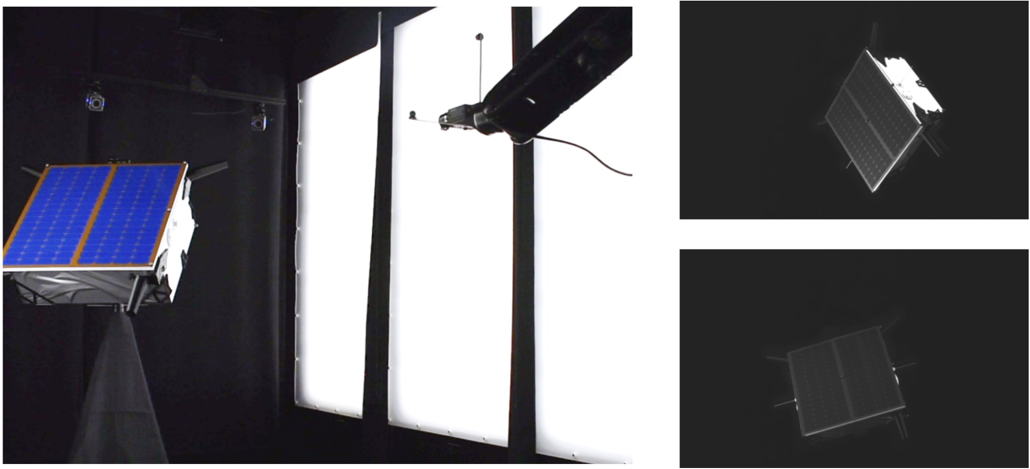
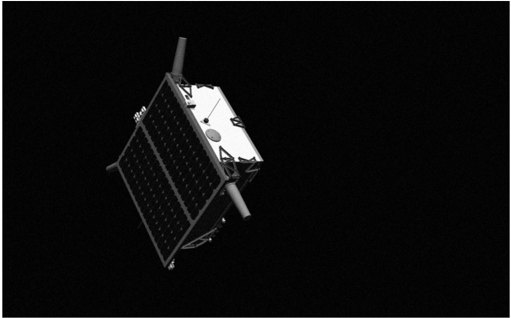
- SPEC was hosted on the ESA Kelvins platform and used the Spacecraft Pose Estimation Dataset (SPEED): synthetic images generated with an OpenGL-based optical stimulator and real images captured with the TRON facility using a Tango spacecraft mockup. The dataset contained almost 15,000 synthetic and 300 real images, partitioned into 12,000 synthetic + 5 real training images and 2,998 synthetic + 300 real test images; all images were grayscale at \(1920\times1200\) pixels.
- The competition metric combined orientation angular error and normalized position error into a single pose error, averaged over the test set. Submissions were primarily ranked on the synthetic test set and also evaluated on real images; during the competition only 20% of the test set was used for leaderboard evaluation.
- The paper analyzes submissions from 48 teams and a post-competition survey answered by 20 teams, including the top 13. It compares top submissions, top 4 approaches, PnP versus direct pose estimation, the effect of separate localization, and sample difficulty using the best prediction across submissions for each test image.
Limitations
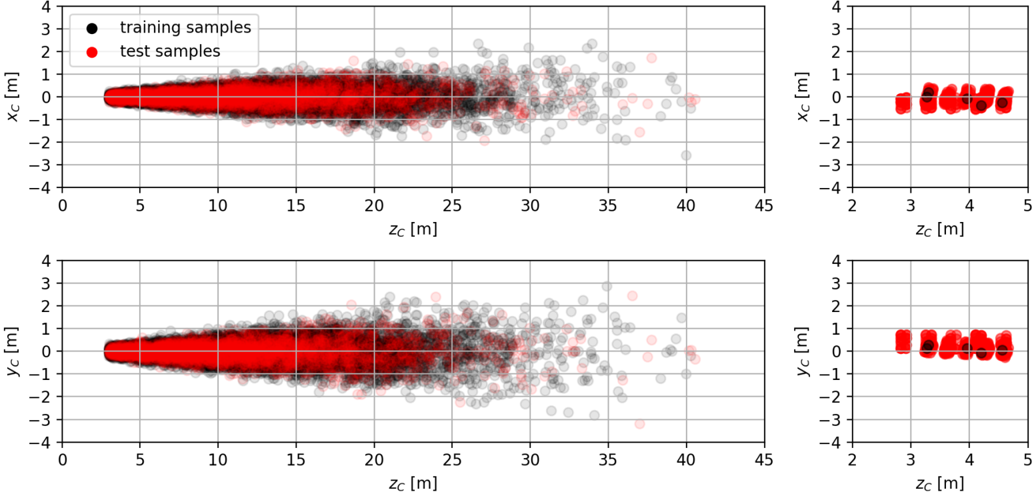
- The paper states that real images are scarce, with only five labeled real training images, and that the real-image pose distribution is constrained by physical limitations of the TRON facility. It also notes discrepancies between synthetic and real images in texture, illumination, and eclipse of spacecraft features, and that real-image performance was weaker for most teams due to the domain gap.
- The paper states that the competition metric’s balance between position and orientation sensitivity depends on the test set’s distance distribution, and that only 20% of the test set was used during the competition to prevent overfitting.
- Evident from the text: the survey covered only 20 of 48 teams, so the approach comparison may not represent all submissions; the real test set contains 300 images and only five labeled real training images, limiting conclusions about generalization to real spaceborne imagery.
Model-written summary. Check it against the paper before relying on it.
Integrity signals
Registry
Cites
Statistics
Figures






Verification
Claims the paper makes
2 Valid · 3 Not valid · 9 Not checked · 70 Own results and interpretations
A result the paper reports from its own data — it cites no other source for it, so there is none to check. The quote shows it is in the paper.
In the paper
“These top three solutions were the only submissions to outperform the SLAB baseline.”
plain- Asserted: passes — The authors put it forward as true.
- Checkable: passes — It can be checked against evidence.
- Load-bearing: unclear — It is unclear whether the paper’s conclusions depend on it.
- Based: passes — The paper gives a reason why it holds.
A result the paper states — it cites no source for it, so there is none to check. The quote shows it is in the paper.
In the paper
“Due to physical limitations of the TRON facility in combination with the size of the satellite mockup, the distance distribution of real images is much more constrained, ranging from 2.8 to 4.7 meters.”
plainstates a cause- Asserted: passes — The authors put it forward as true.
- Checkable: passes — It can be checked against evidence.
- Load-bearing: unclear — It is unclear whether the paper’s conclusions depend on it.
- Based: passes — The paper gives a reason why it holds.
A result the paper states — it cites no source for it, so there is none to check. The quote shows it is in the paper.
In the paper
“Results on real images are weaker compared to those on synthetic images for most teams, except for three of the solutions.”
plain- Asserted: passes — The authors put it forward as true.
- Checkable: passes — It can be checked against evidence.
- Load-bearing: unclear — It is unclear whether the paper’s conclusions depend on it.
- Based: passes — The paper gives a reason why it holds.
- Rests on an assumption not shown here.
A result the paper states — it cites no source for it, so there is none to check. The quote shows it is in the paper.
In the paper
“Including a separate detection step was also found to be an important element of high performing pose estimation pipelines.”
plainstates an association- Asserted: passes — The authors put it forward as true.
- Checkable: passes — It can be checked against evidence.
- Load-bearing: passes — The paper’s conclusions depend on it.
- Based: passes — The paper gives a reason why it holds.
A result the paper reports from its own data — it cites no other source for it, so there is none to check. The quote shows it is in the paper.
In the paper
“Likewise, 1 ◦ orientation error was shown to be equivalent to 0 . 141 m translation error in the second case.”
plainstates an associationn = 2- Asserted: passes — The authors put it forward as true.
- Checkable: passes — It can be checked against evidence.
- Load-bearing: passes — The paper’s conclusions depend on it.
- Based: passes — The paper gives a reason why it holds.
32 more claims
Create a free account to see all 84 claims and every source verdict.
- Probably not a substantial claim. 26
- It may state two separate claims as one. 24
- The quote only partly states this claim. 1
Claims other papers make about this one
Each is checked against this paper’s own text: does it say what the citing paper says it does?
The source backs part of the claim, not all of it — or backs it for a different population, condition or comparison.
In the citing paper
“The TANGO satellite [145] model used in the multiple datasets [19,20,51,51,85,132] has a coarse dimension of 80 × 75 × 32 cm will lead to the operation range of ∼10 m.”
From A survey on deep learning-based monocular spacecraft pose estimation: Current state, limitations and prospects (2023) · cites this paper as [19]
Experimental — accuracy not yet measuredThe source backs part of the claim, not all of it — or backs it for a different population, condition or comparison.
In the citing paper
“The images from SPEED and SPEED+ are validated against the real images of TANGO spacecraft from the PRISMA mission using histogram comparison [19].”
From A survey on deep learning-based monocular spacecraft pose estimation: Current state, limitations and prospects (2023) · cites this paper as [19]
Experimental — accuracy not yet measuredThe source backs part of the claim, not all of it — or backs it for a different population, condition or comparison.
In the citing paper
“Even for the standard datasets such as SPEED [19] and SPEED+ [20], the only way to use a hybrid approach is to recover the 3D locations of interested keypoints is via the 3D reconstruction methods [66].”
From A survey on deep learning-based monocular spacecraft pose estimation: Current state, limitations and prospects (2023) · cites this paper as [19]
Experimental — accuracy not yet measuredThe source backs part of the claim, not all of it — or backs it for a different population, condition or comparison.
In the citing paper
“While several attempts have been made to mitigate the domain gap between synthetic and laboratory images, there persists a oneorder-of-magnitude difference between the best pose scores in the 2019 (synthetic test images) and 2021 (laboratory test images) editions of ESA's Satellite Pose Estimation Challenge [19,20].”
From A survey on deep learning-based monocular spacecraft pose estimation: Current state, limitations and prospects (2023) · cites this paper as [19]
Experimental — accuracy not yet measuredThe source backs part of the claim, not all of it — or backs it for a different population, condition or comparison.
In the citing paper
“While synthetic data generation and laboratory data acquisition have been identified as the most tractable ways to train and test such algorithms, the model performance degrades significantly when testing real in-orbit images [3,4].”
From Pose Estimation for Cross-Domain Non-Cooperative Spacecraft Based on Spatial-Aware Keypoints Regression (2024) · cites this paper as [3]
Experimental — accuracy not yet measured
8 more claims about this paper
Create a free account to see every claim other papers make about this one.
Self-check
Percentages, sums and reported differences re-computed from the paper’s own numbers.
Each contradiction between two passages listed here was confirmed by an independent check.
Rated minor: it would not touch a result — a value no result rests on, a p-value that stays on the same side of the significance level, or a conflict that is clerical, resolved elsewhere in the paper, or outside its own findings.
In the paper
§ D. Comparing approaches
“ranking on the first, second and fourth places.”
§ C. Survey on methods
“| 4. Team Platypus | 0.0703 | 1.7201 | 3 . 11 ± 4 . 31 | 0 . 221 ± 0 . 530 | No |”
Rated minor: it would not touch a result — a value no result rests on, a p-value that stays on the same side of the significance level, or a conflict that is clerical, resolved elsewhere in the paper, or outside its own findings.
In the paper
§ E. Difficulty of samples
“the winning team UNIADELAIDE achieved 0 . 41 ◦ ± 1 . 50 ◦ orientation error and 0 . 13 ± 0 . 09 m relative position error.”
§ C. Survey on methods
“| 1. UniAdelaide [47] | 0.0094 | 0.3752 | 0 . 41 ± 1 . 50 | 0 . 032 ± 0 . 095 | Yes |”
Citations
Cites
Deep Residual Learning for Image Recognition
He, K., Zhang, X., Ren, S., & Sun, J. (2016) · 2016 IEEE Conference on Computer Vision and Pattern Recognition (CVPR) · doi:10.1109/cvpr.2016.90 · Cited by 235,474 · cited 2×
“Various architectures were used from well known pre-trained models, such as ResNets [46], Inception v3 [47], and YOLO [48], [49], to custom models trained from scratch.”
ImageNet classification with deep convolutional neural networks
Krizhevsky, A., Sutskever, I., & Hinton, G. E. (2017) · Communications of the ACM · doi:10.1145/3065386 · Cited by 112,155 · cited 3×
“It was made possible by increasing computational resources represented by the graphical processing units (GPU) and the availability of large-scale datasets to train the DNN, such as ImageNet for classification [5], MS COCO for object detection [28], and LINEMOD for pose estimation [29] of ordinary household objects.”
ImageNet: A large-scale hierarchical image database
Deng, J., Dong, W., Socher, R., Li, L.-J., Li, K., & Fei-Fei, L. (2009) · 2009 IEEE Conference on Computer Vision and Pattern Recognition · doi:10.1109/cvpr.2009.5206848 · Cited by 65,333 · cited 1×
“Starting with the success of AlexNet [5] in the ImageNet Large Scale Visual Recognition Challenge [6] in 2012, deep learning models have been outperforming traditional approaches on a number of computer vision problems.”
Distinctive Image Features from Scale-Invariant Keypoints
Lowe, D. G. (2004) · International Journal of Computer Vision · doi:10.1023/b:visi.0000029664.99615.94 · Cited by 55,589 · cited 2×
“int/ as SIFT [21], SURF [22], and ORB features [23].”
Microsoft COCO: Common Objects in Context
Lin, T.-Y., Maire, M., Belongie, S., Hays, J., Perona, P., Ramanan, D., Dollár, P., & Zitnick, C. L. (2014) · Lecture Notes in Computer Science · doi:10.1007/978-3-319-10602-1_48 · Cited by 45,460 · cited 1×
“It was made possible by increasing computational resources represented by the graphical processing units (GPU) and the availability of large-scale datasets to train the DNN, such as ImageNet for classification [5], MS COCO for object detection [28], and LINEMOD for pose estimation [29] of ordinary household objects.”
Rethinking the Inception Architecture for Computer Vision
Szegedy, C., Vanhoucke, V., Ioffe, S., Shlens, J., & Wojna, Z. (2016) · 2016 IEEE Conference on Computer Vision and Pattern Recognition (CVPR) · doi:10.1109/cvpr.2016.308 · Cited by 32,138 · cited 1×
“Various architectures were used from well known pre-trained models, such as ResNets [46], Inception v3 [47], and YOLO [48], [49], to custom models trained from scratch.”
A Computational Approach to Edge Detection
Canny, J. (1986) · IEEE Transactions on Pattern Analysis and Machine Intelligence · doi:10.1109/tpami.1986.4767851 · Cited by 30,004 · cited 1×
“oach to monocular-based pose estimation of a target spacecraft [6]–[12] would first extract hand-crafted features of the target from a 2D image. These features include Harris corners [13], Canny edges [14], lines via Hough transform [15], or scale-invariant features such as SIFT [16], SURF [17], and ORB features [18].…”
MobileNetV2: Inverted Residuals and Linear Bottlenecks
Sandler, M., Howard, A., Zhu, M., Zhmoginov, A., & Chen, L.-C. (2018) · 2018 IEEE/CVF Conference on Computer Vision and Pattern Recognition · doi:10.1109/cvpr.2018.00474 · Cited by 28,755 · cited 1×
“However, the architectures exploit depthwise separable convolution operations [55] to significantly reduce the number of parameters associated with each network.”
Fischler, M. A., & Bolles, R. C. (1981) · Communications of the ACM · doi:10.1145/358669.358692 · Cited by 25,893
YOLO9000: Better, Faster, Stronger
Redmon, J., & Farhadi, A. (2017) · 2017 IEEE Conference on Computer Vision and Pattern Recognition (CVPR) · doi:10.1109/cvpr.2017.690 · Cited by 19,892 · cited 3×
“Various architectures were used from well-known pretrained models, such as ResNets [46], Inception v3 [56], and YOLO [53], [54], to custom models trained from scratch.”
Research works printed but not linked: 4
- [9] S. Sharma, 'Pose estimation of uncooperative spacecraft using monocular vision and deep learning,' Ph.D. dissertation, Stanford University, Department of Aeronautics & Astronautics, Aug 2019. -
- [10] C. Beierle, 'High fidelity validation of vision-based sensors and algorithms for spaceborne navigation,' Ph.D. dissertation, Stanford University, Department of Aeronautics & Astronautics, Mar 2019. -
- [24] S. Sharma and S. D'Amico, 'Reduced-dynamics pose estimation for non-cooperative spacecraft rendezvous using monocular vision,' in 38th AAS Guidance and Control Conference, Breckenridge, Colorado , 2017. -
- [49] T. H. Park, S. Sharma, and S. D'Amico, 'Towards robust learningbased pose estimation of noncooperative spacecraft,' in 2019 AAS/AIAA Astrodynamics Specialist Conference, Portland, Maine , August 11-15 2019. -
Cited by
Items 201–297 of 297
Sun, W. J., Li, Y., Li, F., Geng, H., & Rao, P. (2025) · IEEE Transactions on Geoscience and Remote Sensing · doi:10.1109/tgrs.2025.3649793 · Cited by 1
“Experimental measurements capture a target’s radiation properties through multiangle observations, providing high-fidelity data; however, these methods are often prohibitively expensive [22], [23], [24].”
NeRF-based Visualization of 3D Cues Supporting Data-Driven Spacecraft Pose Estimation
Legrand, A., Detry, R. J., & Vleeschouwer, C. D. (2025) · International Conference on Space Robotics (iSpaRo) · doi:10.1109/isparo66239.2025.11436169 · Cited by 3
“Pose estimation methods generally rely on neural networks to predict the relative pose directly from the input image [10], [11], [12].”
A Relative Orbital Motion-Guided Framework for Generating Multimodal Visual Data of Spacecraft
Li, W., Huo, Y., Zhu, Q., Lu, Y., Fang, Y., & Zhang, Y. (2026) · Remote Sensing · doi:10.3390/rs18081177 · Cited by 1
Multi-Agent Passivity-based Control for Perception-based Guidance
Deole, A., Talebi, S., Kraisler, S., Rahimi, N., Mesbahi, M., Bandyopadhyay, S., Gehlot, V. P., Seto, W., Rahmani, A., & Becktor, J. (2023) · AIAA SciTech Forum · doi:10.2514/6.2023-2156 · Cited by 2
Silvestrini, S., Cassinis, L. P., Hinz, R., González-Arjona, D., Tipaldi, M., Visconti, P., Corradino, F., Pesce, V., & Colagrossi, A. (2023) · Elsevier eBooks · doi:10.1016/b978-0-323-90916-7.00015-9 · Cited by 5
Pose Estimation for Rover-to-Lander Tube Transfer for Mars Sample Return
Mavrakis, N., Pham, T.-H., & Bailey, P. (2023) · IEEE Aerospace Conference (AERO) · doi:10.1109/aero55745.2023.10115908 · Cited by 3
Pose Estimation of Space Targets Based on Geometry Structure Features
Liu, X., Hao, S., & Xu, K. (2023) · Asia Conference on Algorithms, Computing and Machine Learning (CACML) · doi:10.1145/3590003.3590096 · Cited by 1
“[5] proposed the SPEED dataset, which uses Gaussian blur and zero-mean Gaussian white noise to process images.”
MethodOn-Orbit Proximity Operations About Controlled Uncooperative Targets Using Meta-Predictor
Fu, J., Chen, L., Zhang, D., & Shao, X. (2024) · Journal of Guidance Control and Dynamics · doi:10.2514/1.g007718 · Cited by 1
Non-cooperative Satellite Rotation Estimation Based on Monocular Vision
He, J., Yi, J., & Xu, L. (2024) · Asia-Pacific Conference on Communications Technology and Computer Science (ACCTCS) · doi:10.1109/acctcs61748.2024.00056 · Cited by 1
“Pose estimation is one of the key technologies for on-orbit service missions, which can provide the essential sensory information for on-orbit service such as space target monitoring, space collision avoidance, satellite fault diagnosis, and space mission planning and operation [1].”
BackgroundTwo-Stage Attitude Estimation of Satellite from ISAR Images
Tang, P., Long, B., & Wang, F. (2024) · IEEE International Geoscience and Remote Sensing Symposium (IGARSS) · doi:10.1109/igarss53475.2024.10642558 · Cited by 2
Deep Learning Based Visual Servo for Autonomous Aircraft Refueling
Phatthamolrat, N., Tongloy, T., Boonsang, S., & Chuwongin, S. (2025) · Engineering Reports · doi:10.1002/eng2.70055 · Cited by 1
Robotics Capabilities Development for Mars Sample Return Transfer Activities
Dolci, M., Bowkett, J., Bailey, P., Boettcher, A., Kim, J.-G., Rogers, P., Pham, T.-H., Chavez‐Clemente, D., Shatts, J., Townsend, J. A., et al. (2025) · IEEE Aerospace Conference (AERO) · doi:10.1109/aero63441.2025.11068463 · Cited by 2
“While the topic of object pose estimation has recently renewed interest, e.g., for space-craft localization [34], [35] , those remain mostly limited to simulated data and rely on deep neural network architectures that may not be compatible with current flight hardware and verification and…”
Deep learning-based monocular relative pose estimation of uncooperative spacecraft
Piazza, M., Maestrini, M., & Lizia, P. D. (2021) · Virtual Community of Pathological Anatomy (University of Castilla La Mancha) · Cited by 10
Autonomous Control of the Large-Angle Spacecraft Maneuvers in a Non-Cooperative Mission
Huang, C., Cao, T., & Huang, J. (2022) · Sensors · doi:10.3390/s22228586 · Cited by 1
“At present, for pose estimation of non-cooperative targets, traditional methods rely on artificially designed features [5,6] and pose priors.”
MethodData Lifecycle Management in Evolving Input Distributions for Learning-based Aerospace Applications
Banerjee, S., Sharma, A., Schmerling, E., Spolaor, M., Nemerouf, M., & Pavone, M. (2023) · Lecture notes in computer science · doi:10.1007/978-3-031-25056-9_9 · Cited by 2
Consensus on Region-Based Pose Estimation for Satellites
Grange, D., Sandhu, R., Soderlund, A. A., & Phillips, S. A. (2023) · IEEE/ION Position Location and Navigation Symposium · doi:10.1109/plans53410.2023.10140083 · Cited by 1
“With the dramatic success recently gained in the field of machine learning, there have been many promising results in the realm of pose estimation [4], [5].”
BackgroundMethodSPARK: SPAcecraft Recognition leveraging Knowledge of Space EnvironmentPreprint
Musallam, M. A., Ismaeil, K. A., Oyedotun, O. K., Perez, M. D., Poucet, M., & Aouada, D. (2021) · arXiv (Cornell University) · doi:10.48550/arxiv.2104.05978 · Cited by 27
“Moreover, we have identified two such datasets only [7, 8], and both have been designed specifically for spacecraft 6D pose estimation.”
BackgroundMethodInfluentialFastPose-ViT: A Vision Transformer for Real-Time Spacecraft Pose Estimation
Ancey, P., Price, A., Javed, S., & Salzmann, M. (2026) · 2026 IEEE/CVF Winter Conference on Applications of Computer Vision (WACV) · doi:10.1109/wacv61042.2026.00760
“However, existing direct regression methods have typically underperformed in accuracy relative to their hybrid counterparts [16, 26].”
Wide-Depth-Range 6D Object Pose Estimation in SpacePreprint
Hu, Y., Speierer, S., Jakob, W., et al. (2021) · arXiv (Cornell University) · doi:10.48550/arxiv.2104.00337
“To address such challenges, the European Space Agency (ESA) and Stanford University recently organized a satellite pose estimation challenge based on the Spacecraft Pose Estimation Dataset (SPEED) [19].”
MethodInfluentialSegmentation-driven spacecraft pose estimation for vision-based relative navigation in space
Kajak, K. M., Maddock, C. A., Frei, H., & Schwenk, K. (2021) · elib (German Aerospace Center)
Deep Learning Detection in the Visible and Radio Spectrums
Murray, G. C. (2022) · The Research Repository @ WVU (West Virginia University) · doi:10.33915/etd.11186
Certifiable Optimal Visual Pose Estimation for Space Applications
Wang, Y., & Zhang, X. (2023) · Lecture notes in electrical engineering · doi:10.1007/978-981-99-1256-8_28
6-DOF Pose Estimation for Spacecraft Based on Soft Classification of Euler Angles Optimization
Tan, Q., Zhou, D. X., Zhang, Z., Zhang, Z., Liu, H., & Shao, X. (2023) · China Automation Congress (CAC) · doi:10.1109/cac59555.2023.10451125
“The Kelvins Satellite Pose Estimation Challenge [22] organized by the European Space Agency has emerged, which aims to compare and evaluate monocular vision pose estimation methods.”
BackgroundKodukula, A., Jana, S., Shukla, S., Bera, T., Das, K., & Ghose, D. (2024) · Algorithms for intelligent systems · doi:10.1007/978-981-97-0327-2_7
Capabilities Toward Trustable AI/ML Pose Estimation for Satellite-to-Satellite Imagery
Bycroft, B. P., Oune, N., Thomlinson, D., Lopez, A., Wood, P. S., Spolaor, M., Durst, M. J., & Turner, S. A. (2024) · IEEE Aerospace Conference (AERO) · doi:10.1109/aero58975.2024.10521110 · Cited by 2
Lotti, A., & Modenini, D. (2024) · IFAC-PapersOnLine · doi:10.1016/j.ifacol.2024.08.463
Bussolino, M., Civardi, G. L., Quirino, M., Bechini, M., & Lavagna, M. R. (2024) · Remote Sensing · doi:10.3390/rs16203910
“The noise parameters have been selected equal to [43].”
Autonomous Satellite Servicing Infrastructure for In-Space Assembly and Manufacturing
Down, I. M., van Wijk, D. E. J., Parikh, D., & Majji, M. (2024) · Journal of Manufacturing Science and Engineering · doi:10.1115/1.4067447
Sajjad, N., Price, A., Mirshams, M., & Salzmann, M. (2024) · Acta Astronautica · doi:10.1016/j.actaastro.2024.12.034 · Cited by 2
Pose Estimation for Space Objects Based on Contour Feature Matching
Zhang, X., Yun, Q., & Xiong, J. (2025) · Lecture notes in electrical engineering · doi:10.1007/978-981-96-2248-1_17
Optimization‐Based Geometric Enhancement and Motion Estimation for Non‐Cooperative Spacecrafts
Zhang, C., Yu, H., Liang, Q., & Peng, J. (2025) · Journal of Field Robotics · doi:10.1002/rob.22540
Pose Estimation for Weakly Textured Aircraft with Improved CDPN
Tao, M., Wu, L., & Chen, N. (2024) · International Congress on Image and Signal Processing (CISP) · doi:10.1109/cisp-bmei64163.2024.10906292
“Some space station spacecraft datasets [12][13] have also been generated using OpenGL simulations.”
A Dynamic Segmentation Model for Spacecraft with Data Generation
Guo, P., Li, D., Li, Y., & Hu, Q. (2025) · International Conference on Information Science, Electrical and Automation Engineering (ISEAE) · doi:10.1109/iseae64934.2025.11041994
A Filtering Algorithm for Spacecraft Detection to Resist Adversarial Patch Attacks
Zhu, L., Guo, P., Guan, Z., Hu, Q., Liu, Y., & Li, D. (2025) · IEEE Transactions on Industrial Electronics · doi:10.1109/tie.2025.3585041
“2) Patch Size: To study the in fl uence of the patch size on the performance of the fi ltering algorithm, we used patches of different sizes to occlude the spacecraft in the public datasets SPEED [39] and Spacecraft-DS [40].”
Chen, S., Wang, W., Yang, W., Wang, K., & Zhang, X. (2025) · Proceedings of the Institution of Mechanical Engineers Part G Journal of Aerospace Engineering · doi:10.1177/09544100251371336 · Cited by 1
“21 The synthetic images are divided into validation set and training set in a 1:4 ratio.”
SCPose-MLite: A Lightweight Neural Network for On-Orbit Attitude Estimation of Space Targets*
Chen, Y., Wu, X., Fu, K., Zhang, Q., Yu, S., Zhong, R., Sun, X., Xiang, Z., & Yi, T. (2025) · IEEE International Conference on Real-time Computing and Robotics (RCAR) · doi:10.1109/rcar65431.2025.11139482 · Cited by 1
“The analysis in this paper is based on the ESA comprehensive index [6] and the generalization factor used in literature [7].”
Li, F., Yi, J., & Chen, L. (2025) · Asia-Pacific Conference on Communications Technology and Computer Science (ACCTCS) · doi:10.1109/acctcs66275.2025.00009
“We first employed the publicly available SPEED dataset [14], jointly developed by the European Space Agency and Stanford University for spacecraft pose estimation tasks based on deep learning.”
Research on Key-Point Detection of Space Target Based on Lightweight-HRNet
Jun, F., & Rongrong, X. (2025) · Conference on Fully Actuated System Theory and Applications (FASTA) · doi:10.1109/fasta65681.2025.11138839
“Mate [13] described the SOTA method of this competition in detail.”
Yuan, H., Wu, J.-F., & Kang, G. (2025) · SSRN Electronic Journal · doi:10.2139/ssrn.5464315
Automated annotation and optimization of multitask dataset for spacecraft
Zhao, S., Cui, L., & Zhong, R. (2025) · Advances in Space Research · doi:10.1016/j.asr.2025.10.069
Tang, Q., Chen, X., Li, D., Zhan, B., & Wang, W. (2025) · Journal of Physics Conference Series · doi:10.1088/1742-6596/3109/1/012082
“Unlike datasets derived from camera-captured physical satellite models [9-10], this study utilizes a 3D rendering engine to develop a space scene simulation system for data acquisition.”
InfluentialZhou, H., Yao, L., She, H., & Si, W. (2025) · IEEE Robotics and Automation Letters · doi:10.1109/lra.2025.3627081
“Existing datasets such as SPEED [11] and SPEED+ [12] have significantly promoted research on neural networks in the field of spacecraft pose estimation.”
Yuan, H., Wu, J.-F., & Kang, G. (2025) · Aerospace Science and Technology · doi:10.1016/j.ast.2025.111240 · Cited by 2
Yuan, H., Wu, J., Shao, B., & Kang, G. (2025) · IEEE Transactions on Aerospace and Electronic Systems · doi:10.1109/taes.2025.3633216
“These values were determined via grid search on the SPEED validation set [25] and held constant across all experiments unless otherwise speci-fied.”
InfluentialBridging the Synthetic-to-Real Gap in Spacecraft Recognition: A Hardware-in-the-Loop Dataset
Zhao, S., Fan, Y., Zhong, R., & Cui, L. (2025) · IFAC-PapersOnLine · doi:10.1016/j.ifacol.2025.11.462
Hu, Y., Zhang, L., & Lin, K. (2025) · IFAC-PapersOnLine · doi:10.1016/j.ifacol.2025.11.279
Satellite Pose Estimation Using Attention Learning Without GPU Acceleration
Habib, M. T. M., & Siddique, S. (2025) · International Conference on Emerging Techniques in Computational Intelligence (ICETCI) · doi:10.1109/icetci67340.2025.11258056
“To compare the accuracy of our model, we follow the same metric of the SPEC [38] given below: Where E is the mean pose error, e t is the relative translational error, e q is the rotational error measured in degrees, EST is estimated value and GT is ground truth.”
Equivariant Filter for Relative Attitude and Target Angular Velocity Estimation
Serrano, G., Guerreiro, B. J., Lourenço, P., & Cunha, R. (2025) · IEEE Transactions on Aerospace and Electronic Systems · doi:10.1109/taes.2025.3643413 · Cited by 1
“Recently, learning-based approaches to relative pose estimation of an uncooperative target spacecraft have become increasingly popular [9], [10], [11], [12].”
Peijie, S., Changqing, W., Lu, H., Aijun, L., & Fadeenkov, P. V. (2026) · Advances in Space Research · doi:10.1016/j.asr.2026.01.013
Zhang, X., Han, B., Du, H., Hao, R., Wang, C., Zhai, Z., Liu, J., Liu, N., & Chen, X. (2026) · IEEE Transactions on Aerospace and Electronic Systems · doi:10.1109/taes.2026.3652967
“The generated data are then used to train neural networks for pose prediction [7], [8], [9], [10], [11], [12], [13], [14], [15], [16], [17], [18], [19], [20].”
Survey on AI‐Enabled Computer Vision Technologies and Applications for Space Robotic Missions
Quoos, M., Kay, S., Wajoras, J., Field, R., Ntagiou, E., Mohammad, F., & Gao, Y. (2026) · Journal of Field Robotics · doi:10.1002/rob.70150 · Cited by 4
“While many data sets originated in earlier, classical CV‐focused projects, they remain highly valuable for modern deep‐learning research, especially with the addition of newly created synthetic data and cross‐mission collaborations (Castano et al. 2003; Proenca and Gao 2020; Kisantal et al. 2020).”
Experimental Verification of a Monocular CNN-Based Pose Estimation Algorithm for the SROC MissionPreprint
D’Ortona, A., Lovaglio, L., Visca, M., Stesina, F., & Corpino, S. (2026) · Research Square · doi:10.21203/rs.3.rs-8545599/v1
Noncooperative Spacecraft Pose Measurement Without Prior Knowledge Based on SAM2
Guo, P., Jiang, C., Long, C., Hu, Q., & Li, D. (2026) · IEEE Transactions on Instrumentation and Measurement · doi:10.1109/tim.2026.3654753 · Cited by 2
“These studies encompass both dataset development [10] and intelligent model design [11], [12], [13], [14], [15], [16], [17], [18], [19].”
A Novel RGB-D Camera Based Dataset for Spacecraft Pose Estimation
Zhao, H., Hu, J., Wang, G., Sha, J., Huang, X., Wang, B., & Li, S. (2026) · Space Science & Technology · doi:10.34133/space.0446 · Cited by 1
Spacecraft Pose Estimation Based on High-Resolution Feature Network
Fu, Z., Ru, B., Wang, Z., Wang, L., Yue, D., Zhou, J., Li, X., & Tang, L. (2025) · Conference proceedings/Conference proceedings - IEEE International Conference on Systems, Man, and Cybernetics · doi:10.1109/smc58881.2025.11343011 · Cited by 1
“A. Dataset This study uses two spacecraft pose estimation benchmark datasets, SPEED [14] and SwissCube [15], which complement each other in terms of data generation logic and evaluation dimensions.”
Issitt, A., Mahendrakar, T., & White, R. T. (2026) · AIAA SciTech Forum · doi:10.2514/6.2026-0789
Adaptive Game-Based Strategy for Spacecraft Counter-Reconnaissance
Zhong, Y., Wei, Y., Li, C., & Yuan, L. (2026) · IEEE Transactions on Aerospace and Electronic Systems · doi:10.1109/taes.2026.3660236
“For this, Kisantal et al. [9] introduced the satellite pose estimation challenge and its accompanying dataset to evaluate and advance monocular-vision-based pose estimation approaches for uncooperative satellites.”
Event-Based Spinning Object SLAM
Elms, E., Latif, Y., & Chin, T.-J. (2025) · IEEE International Conference on Computer Vision Workshops · doi:10.1109/iccvw69036.2025.00489 · Cited by 1
“Methods for autonomous mapping of asteroids [14, 39], spacecraft rendezvous and close-proximity operations [13, 38, 40, 45], and pose estimation [6, 29, 37] have been explored using conventional frame-based cameras.”
D4PED: A Realistic Pose Estimation Dataset for DFH-4 Satellite Driven by Dynamics
Chen, X., Xue, Y., Liu, Z., Xu, L., & Wang, X. F. (2026) · Advances in Astronautics · doi:10.1007/s42423-026-00208-7
“Existing spacecraft pose estimation datasets cover a variety of spacecraft models, including Tango [10, 17, 18, 25], Proba-2 [23, 24], Cygnus [2], Dragon, Soyuz [22], etc. Existing deep learning–based methods are typically designed around a specific non-cooperative spacecraft model, whose dedicated…”
Element-wise weighted total least square for monocular pose estimation
Wenyu, W. U., Zixuan, J. I. N., & Jin, Z. (2026) · Chinese Journal of Aeronautics · doi:10.1016/j.cja.2026.104152
Virtual Production for Hardware-in-the-Loop Vision-based Orbital Navigation Experiments
Jawaid, M., Märtens, M., Claxton, O., plessis, J. D., & Chin, T.-J. (2025) · International Conference on Space Robotics (iSpaRo) · doi:10.1109/isparo66239.2025.11437225
“We implemented the pose estimation pipeline proposed by team UniAdelaide in the Kelvin’s Spacecraft Pose Estimation Challenge [14].”
Self-citationGeometric Approaches to 6-DoF Pose Estimation for Autonomous Spacecraft Docking
Patel, M. A., Prajapati, K., & Hakani, R. (2026) · International Conference on Image Processing and Capsule Networks (ICIPCN) · doi:10.1109/icipcn67432.2026.11438722
Two-Stage CNN-Based Pose Estimation for Uncooperative Axisymmetric Spacecraft
Takahashi, T., Furuta, Y., & KUWAHARA, T. (2025) · International Conference on Space Robotics (iSpaRo) · doi:10.1109/isparo66239.2025.11436609
“As public datasets like SPEED [21] and URSO [22] do not include highly axisymmetric spacecraft, we generate our own training images from 3D models using Blender.”
Vision-based navigation for autonomous rendezvous with non-cooperative targets
Comellini, A. (2021) · theses.fr (ABES) · doi:10.70675/18d7f2c2zbe85z42a1z886ez8484d7df1dc6
Vision-based pose estimation of space resident objects using deep learning: Design and testing
Forasassi, M., Bucchioni, G., & Pollini, L. (2026) · IFAC Journal of Systems and Control · doi:10.1016/j.ifacsc.2026.100416
Fanti, P., Williams, L. B. S., Dvořák, O., Märtens, M., Chin, T.-J., Ji, H., Chen, B., Xie, D., Qiao, K., Li, B., et al. (2026) · npj Space Exploration · doi:10.1038/s44453-026-00033-0 · Cited by 1
Self-citationWu, A., Han, H., Luo, X., Wang, R., He, S., & Wan, X. (2026) · Acta Astronautica · doi:10.1016/j.actaastro.2026.09.004 · Cited by 5
Liu, K., Yu, Y., Liu, T., Han, D., & Liao, W. (2026) · Acta Astronautica · doi:10.1016/j.actaastro.2026.04.033 · Cited by 1
Zero-Shot Multimodal Part Segmentation for Space Target via 3D-2D Semantic Priors Transfer
Feng, C., Gu, X., Wang, B., & Yang, X. (2026) · IEEE Transactions on Geoscience and Remote Sensing · doi:10.1109/tgrs.2026.3689873
“Furthermore, recognizing the absence of publicly available multimodal satellite datasets for such applications [8], [9], [16], [17], [18], we introduce NASA-2D / 3D-Part, a curated multimodal benchmark derived from publicly available NASA 3D resources [19].”
Automated Multimodal Space Target Imaging Simulation Method for Intent Recognition
Jin, X., Zhang, Z., & Dang, Z. (2026) · Lecture notes in electrical engineering · doi:10.1007/978-981-95-8329-4_48
E3S-Net: an efficient end-to-end 6D pose estimation method for non-cooperative space target
Shen, N., & Wang, J. (2026) · Measurement Science and Technology · doi:10.1088/1361-6501/ae6ba8
“Target detection In the space environment, the size of the target depends on the relative distance between the target and the camera [26].”
Dual-Path Framework with Uncertainty Awareness for Robust Spacecraft Pose Estimation
Peng, F., Liu, Y., & Ding, L. (2026) · IEEE Aerospace Conference (AERO) · doi:10.1109/aero66936.2026.11519820
“The SPEED dataset [3], jointly introduced by the European Space Agency (ESA) and Stanford University, provided the first standardized benchmark that spurred many deep learning (DL) methods to spacecraft pose estimation.”
Towards Robust 6D Pose Tracking for On-Orbit-Servicing with Learned Segmentation and Motion Priors
Reichert, A. E., Ulmer, M., Piccinin, M., Eklund, D. F., Haglund, H., Schenk, D., Durner, M., & Triebel, R. (2026) · IEEE Aerospace Conference (AERO) · doi:10.1109/aero66936.2026.11519910
“A well-known dataset for pose estimation from camera images is the Spacecraft Pose Estimation Dataset (SPEED) [20], which was introduced as part of the pose estimation challenge by European Space Agency (ESA).”
Vision Beyond Earth: Synthetic Satellite Data for Neural Perception in Orbit
Muller, M. G., Boerdijk, W., Ulmer, M., Stürzl, W., Gawel, A., Siegwart, R., Triebel, R., & Durner, M. (2026) · IEEE Aerospace Conference (AERO) · doi:10.1109/aero66936.2026.11520070
“It consists of 15,000 synthetic images and 300 real images recorded at the Testbed for Rendezvous and Optical Navigation (TRON), and has been used in the Kelvins Satellite Pose Estimation Challenge [20].”
Picture Your Satellite in Space: A Hybrid Rendering Framework for Physically Based Space Images
Schenk, D., Wulkop, J. C., Ulmer, M., Gerndt, A., & Albuquerque, G. (2026) · IEEE Aerospace Conference (AERO) · doi:10.1109/aero66936.2026.11520066 · Cited by 1
“Two of the most adopted satellite pose estimation datasets are SPEED [18] and SPEED+ [19].”
Chen, C., Wang, S., Zhang, W., He, Y., & Peng, Y. (2026) · Journal of Physics Conference Series · doi:10.1088/1742-6596/3249/1/012003
Near-Infrared-Assisted Lightweight Fusion for Spacecraft Imaging Under Complex IlluminationPreprint
Qingliang, Y., Zhang, H., Yu, M., Chahan, B., & YunJi, C. U. I. (2026) · SSRN Electronic Journal · doi:10.2139/ssrn.6915454
Zhang, S., Zhang, B. M., Cheng, M., & Wang, Z. (2026) · Aerospace Science and Technology · doi:10.1016/j.ast.2026.112933
融合多任务学习与混合域自适应的端到端空间目标位姿估计方法(特邀)
Shengli, 刘. L., Chunguang, L., Zhen, 闫. Y., & Yutian, 武. W. (2026) · Laser & Optoelectronics Progress · doi:10.3788/lop260996
Yingjian, 余. Y., Xichao, 腾. T., Li, Z., & Qifeng, 于. Y. (2026) · Laser & Optoelectronics Progress · doi:10.3788/lop260969
Yin, Y., Ji, F., Li, D. S., Xu, J., & Guo, P. (2026) · International Symposium on Autonomous Systems (ISAS) · doi:10.1109/icaisisas68969.2026.11567784
“In contrast to end-to-end learning pipelines, Hybrid Modular Pose Estimation (HMPE) approaches remain the industry standard for safety-critical applications, particularly in spacecraft navigation and non-cooperative rendezvous [13].”
A hardware-aware analysis of SNN energy efficiency for space applications
Höfflin, M., & Wassner, J. (2026) · Acta Astronautica · doi:10.1016/j.actaastro.2026.06.059
Jinghao, 王. W., Jiahong, 陈. C., Zi, 王. W., Banglei, 关. G., Yang, 尚. S., Li, Z., & Qifeng, 于. Y. (2026) · Laser & Optoelectronics Progress · doi:10.3788/lop260900
Koushafar, M., & Kosari, A. (2026) · Acta Astronautica · doi:10.1016/j.actaastro.2026.07.027 · Cited by 1
Li, L., Qin, Z., Zhang, F., Zhou, W., Li, Y., & Li, Y. (2026) · Remote Sensing · doi:10.3390/rs18152489
Optimal Direct Linear Transform Solution for Perspective-n-Point Problem
Henry, S., & Christian, J. A. (2026) · Journal of Guidance Control and Dynamics · doi:10.2514/1.g009751
An, Q., Yuan, Y., Zhang, Z., Liu, H., & Yue, X. (2026) · Advances in Space Research · doi:10.1016/j.asr.2026.08.004
Li, Z., Han, S., Yan, H., Dong, L., Zhang, Y.-H., Zhu, Z., & Ding, G. (2026) · Advances in Space Research · doi:10.1016/j.asr.2026.08.069 · Cited by 1
Physics-based diffusion model for thermal image generation in space orbital rendez-vous scenarios
Guerazem, S., & Aouf, N. (2026) · Acta Astronautica · doi:10.1016/j.actaastro.2026.08.058
Guerazem, S., Rondao, D., & Aouf, N. (2026) · IEEE Transactions on Aerospace and Electronic Systems · doi:10.1109/taes.2026.3731320 · Cited by 1
“The release of the SPEED dataset and the SPEC challenge accelerated the use of deep learning for spacecraft pose estimation [17], [18].”
Lightweight Monocular Relative Pose Estimation of Spacecraft via Scale-Adaptive Multi-Task Learning
Hu, Z., Zhang, Y., Hou, B., & Yao, G. (2026) · Aerospace · doi:10.3390/aerospace13090813
“Following the SPEED evaluation protocol [25], the normalized translation error and rotation error for image i are defined as and where est and t gt are the estimated and ground-truth translation vectors, and q ( i ) est and q ( i ) gt are the corresponding unit quaternions.”
Structure-guided diffusion for uncertainty-aware 3D keypoint detection of non-cooperative spacecraft
Peng, L., Qian, Z., Xu, F., Zeng, L., & Zhang, W. (2026) · Acta Astronautica · doi:10.1016/j.actaastro.2026.09.023
Xie, H., Xi, Z., Liu, T., & Duan, F. (2026) · Advances in Astronautics · doi:10.1007/s42423-026-00238-1
Song, J., Liu, Z., Su, Y., & Zhao, C. (2026) · Sensors · doi:10.3390/s26196079
Hengyuan, 毕. B., Jie, J., Gaopeng, 张. Z., Boxue, 张. Z., & Yujie, 邱. Q. (2026) · Laser & Optoelectronics Progress · doi:10.3788/lop260646
Uncertainty-aware monocular spacecraft pose estimation with covariance-weighted keypoints
Zhai, F., Zhang, C., He, Z., & Xu, D. (2026) · Aerospace Systems · doi:10.1007/s42401-026-00554-2
FPGA-Based Neural Network Accelerators for Space Missions: A Survey
Antunes, P., & Podobas, A. (2026) · ACM Computing Surveys · doi:10.1145/3857797 · Cited by 11
“This model’s FPGA implementation enabled real-time analysis of images captured by the OPS-SAT’s camera, with cloud segmentation performed on a 2048x1944 image in less than 150 milliseconds.”
Metadata
- Authors
- Kisantal, M., Sharma, S., Park, T. H., Izzo, D., Martens, M., & D'Amico, S.
- Affiliations
- Stanford University (US)
- European Space Agency (FR)
- Venue
- IEEE Transactions on Aerospace and Electronic Systems
- Published
- 2020-10
- Volume
- 56
- Issue
- 5
- Pages
- 4083-4098
- ISSN
- 0018-9251 (ISSN-L)
- 1557-9603
- 2371-9877
- OpenAlex
- W2988274083
- Cited by
- 304
- References
- 74
- Citations by year
- 2026: 52 · 2025: 73 · 2024: 60 · 2023: 58 · 2022: 28 · 2021: 30 · 2020: 3
- FWCI
- 17.86
- Type
- journal article
- Language
- en
- Open access
- green
- arxiv.org
- Licence
- Locations
- IEEE Transactions on Aerospace and Electronic Systems (publishedVersion)
- arXiv (Cornell University) (submittedVersion)
- arXiv (Cornell University)
- Stanford Digital Repository
- Funders
- Air Force Office of Scientific Research
- Defense University Research Instrumentation Program (FA9550-18-1-0492)
- Topics
- Physical Sciences › Engineering › Aerospace Engineering › Space Satellite Systems and Control
- Physical Sciences › Engineering › Aerospace Engineering › Spacecraft Dynamics and Control
- Social Sciences › Political Science and International Relations › Space exploration and regulation
- Keywords
- satellite pose estimation, monocular vision, on-orbit servicing, space debris removal, synthetic images, machine learning competition, performance indicators, testbed
About these checks
Registry, retraction, Cites and statistics results are computed, not judged, with one exception: a printed reference that no index lists is read once by a model before it counts as a citation error. Claims are extracted by a model and kept only when their quote appears verbatim in the text; each cited source is then checked, with a model’s help, for whether it says what the claim relies on. Those verdicts can be wrong — read the claim’s quote and the cited source before relying on one.
A language model drew the claims from the paper on 2026-10-12, under version 3 of the claim definition (model deepseek-v4.1-flash, prompt extract-v3).
A second model labelled each claim on 2026-10-12 (model jev-1.13-20260917, definition revision gold-guideline-v0.2).
Statistics and arithmetic are recomputed, not judged.
Confidence bands are shown only for fields calibrated on our annotated test set. None is calibrated yet, so no band is shown.
What counts as a claim ›How we measure confidence ›How we check this ›
Are you an author, or do you see a problem with this page? Request a review
Data sources
Bibliographic data: Semantic Scholar, OpenAlex, Crossref.
Contains information from the Semantic Scholar Academic Graph Datasets, made available under the ODC Attribution License (ODC-BY 1.0).
Semantic Scholar’s data is described in: Kinney, R., et al. (2023). The Semantic Scholar Open Data Platform. arXiv:2301.10140.
