

Satellite Pose Estimation Challenge: Dataset, Competition Design, and Results
Open accessThe DOI matches its Crossref record; 66 of the 74 references it cites were found in a registry or an index; 3 of the 15 sources its claims cite were checked for support.
Abstract
This paper describes the Satellite Pose Estimation Dataset (SPEED), the first publicly available machine learning set of synthetic and real spacecraft imagery of the Tango spacecraft. It assesses 48 competitor solutions for monocular pose estimation.
Overview
CoChat Summary
TL;DR
The Satellite Pose Estimation Challenge (SPEC) benchmarked monocular satellite pose estimation using the synthetic-and-real SPEED dataset, with 48 teams submitting results. The analysis found that PnP-based keypoint methods and a separate localization step improved accuracy, while Earth backgrounds and large target distances were the hardest conditions.
Key findings
- 48 teams participated; top teams improved by two orders of magnitude over the baseline. UniAdelaide won on the synthetic test set with \(E_{syn}=0.0094\), \(e_q=0.41\pm1.50^\circ\), and \(e_t=0.032\pm0.095\) m; EPFL_cvlab achieved the best real-image score (\(E_{real}=0.1140\)).
- PnP-based solutions significantly outperformed direct pose estimation: average orientation errors were \(9.76^\circ\pm18.51^\circ\) for direct methods versus \(1.31^\circ\pm2.24^\circ\) for PnP methods, and relative position errors were \(0.0328\pm0.0430\) m versus \(0.0083\pm0.0269\) m.
- A separate localization step improved orientation accuracy: mean orientation error was \(29.66^\circ\pm46.10^\circ\) with separate localization versus \(48.03^\circ\pm49.38^\circ\) for combined localization-and-pose architectures, while position error distributions were nearly identical.
- The most difficult samples had Earth background and small apparent target size due to large inter-spacecraft distance; black-background images were easier. The “super pose estimator” across all submissions had average orientation error \(0.34^\circ\pm0.38^\circ\) and average position error \(0.09\pm0.09\) m.
Methods
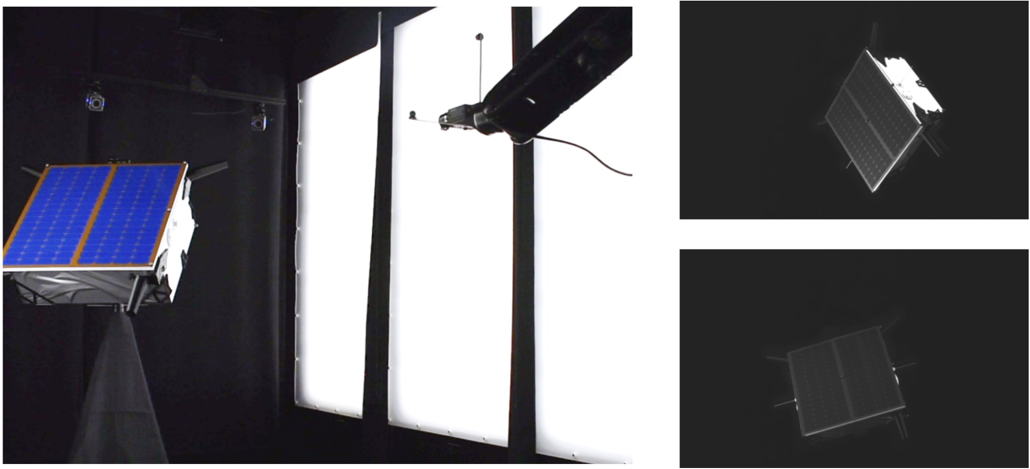
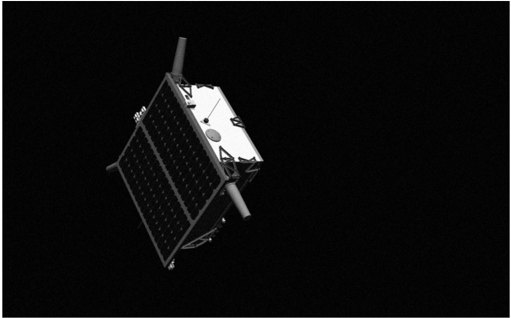
- SPEC was hosted on the ESA Kelvins platform and used the Spacecraft Pose Estimation Dataset (SPEED): synthetic images generated with an OpenGL-based optical stimulator and real images captured with the TRON facility using a Tango spacecraft mockup. The dataset contained almost 15,000 synthetic and 300 real images, partitioned into 12,000 synthetic + 5 real training images and 2,998 synthetic + 300 real test images; all images were grayscale at \(1920\times1200\) pixels.
- The competition metric combined orientation angular error and normalized position error into a single pose error, averaged over the test set. Submissions were primarily ranked on the synthetic test set and also evaluated on real images; during the competition only 20% of the test set was used for leaderboard evaluation.
- The paper analyzes submissions from 48 teams and a post-competition survey answered by 20 teams, including the top 13. It compares top submissions, top 4 approaches, PnP versus direct pose estimation, the effect of separate localization, and sample difficulty using the best prediction across submissions for each test image.
Limitations
- The paper states that real images are scarce, with only five labeled real training images, and that the real-image pose distribution is constrained by physical limitations of the TRON facility. It also notes discrepancies between synthetic and real images in texture, illumination, and eclipse of spacecraft features, and that real-image performance was weaker for most teams due to the domain gap.
- The paper states that the competition metric’s balance between position and orientation sensitivity depends on the test set’s distance distribution, and that only 20% of the test set was used during the competition to prevent overfitting.
- Evident from the text: the survey covered only 20 of 48 teams, so the approach comparison may not represent all submissions; the real test set contains 300 images and only five labeled real training images, limiting conclusions about generalization to real spaceborne imagery.
Model-written summary. Check it against the paper before relying on it.
Integrity signals
Registry
Cites
Statistics
Figures






Verification
Claims the paper makes
2 Valid · 3 Not valid · 9 Not checked · 70 Own results and interpretations
A result the paper reports from its own data — it cites no other source for it, so there is none to check. The quote shows it is in the paper.
In the paper
“These top three solutions were the only submissions to outperform the SLAB baseline.”
plain- Asserted: passes — The authors put it forward as true.
- Checkable: passes — It can be checked against evidence.
- Load-bearing: unclear — It is unclear whether the paper’s conclusions depend on it.
- Based: passes — The paper gives a reason why it holds.
A result the paper states — it cites no source for it, so there is none to check. The quote shows it is in the paper.
In the paper
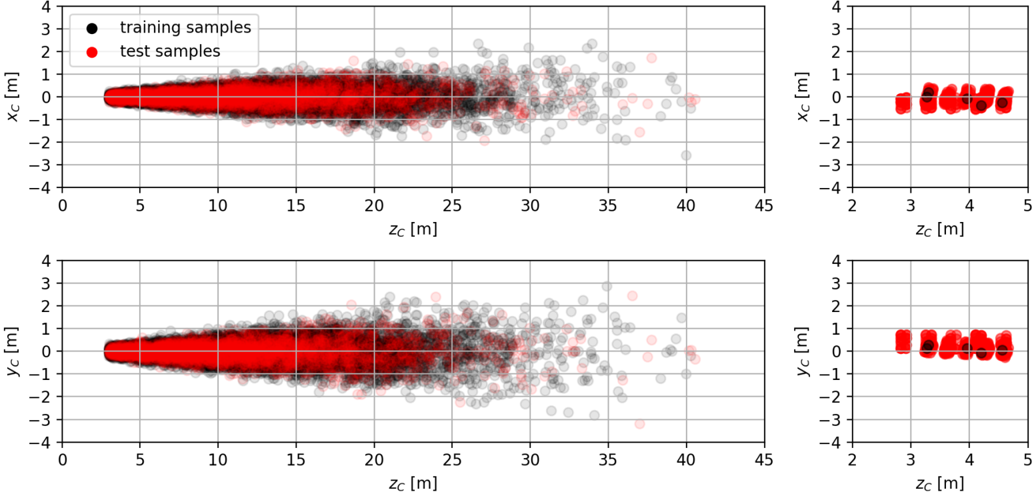
“Due to physical limitations of the TRON facility in combination with the size of the satellite mockup, the distance distribution of real images is much more constrained, ranging from 2.8 to 4.7 meters.”
plainstates a cause- Asserted: passes — The authors put it forward as true.
- Checkable: passes — It can be checked against evidence.
- Load-bearing: unclear — It is unclear whether the paper’s conclusions depend on it.
- Based: passes — The paper gives a reason why it holds.
A result the paper states — it cites no source for it, so there is none to check. The quote shows it is in the paper.
In the paper
“Results on real images are weaker compared to those on synthetic images for most teams, except for three of the solutions.”
plain- Asserted: passes — The authors put it forward as true.
- Checkable: passes — It can be checked against evidence.
- Load-bearing: unclear — It is unclear whether the paper’s conclusions depend on it.
- Based: passes — The paper gives a reason why it holds.
- Rests on an assumption not shown here.
A result the paper states — it cites no source for it, so there is none to check. The quote shows it is in the paper.
In the paper
“Including a separate detection step was also found to be an important element of high performing pose estimation pipelines.”
plainstates an association- Asserted: passes — The authors put it forward as true.
- Checkable: passes — It can be checked against evidence.
- Load-bearing: passes — The paper’s conclusions depend on it.
- Based: passes — The paper gives a reason why it holds.
A result the paper reports from its own data — it cites no other source for it, so there is none to check. The quote shows it is in the paper.
In the paper
“Likewise, 1 ◦ orientation error was shown to be equivalent to 0 . 141 m translation error in the second case.”
plainstates an associationn = 2- Asserted: passes — The authors put it forward as true.
- Checkable: passes — It can be checked against evidence.
- Load-bearing: passes — The paper’s conclusions depend on it.
- Based: passes — The paper gives a reason why it holds.
32 more claims
Create a free account to see all 84 claims and every source verdict.
- Probably not a substantial claim. 26
- It may state two separate claims as one. 24
- The quote only partly states this claim. 1
Claims other papers make about this one
Each is checked against this paper’s own text: does it say what the citing paper says it does?
The source backs part of the claim, not all of it — or backs it for a different population, condition or comparison.
In the citing paper
“The TANGO satellite [145] model used in the multiple datasets [19,20,51,51,85,132] has a coarse dimension of 80 × 75 × 32 cm will lead to the operation range of ∼10 m.”
From A survey on deep learning-based monocular spacecraft pose estimation: Current state, limitations and prospects (2023) · cites this paper as [19]
Experimental — accuracy not yet measuredThe source backs part of the claim, not all of it — or backs it for a different population, condition or comparison.
In the citing paper
“The images from SPEED and SPEED+ are validated against the real images of TANGO spacecraft from the PRISMA mission using histogram comparison [19].”
From A survey on deep learning-based monocular spacecraft pose estimation: Current state, limitations and prospects (2023) · cites this paper as [19]
Experimental — accuracy not yet measuredThe source backs part of the claim, not all of it — or backs it for a different population, condition or comparison.
In the citing paper
“Even for the standard datasets such as SPEED [19] and SPEED+ [20], the only way to use a hybrid approach is to recover the 3D locations of interested keypoints is via the 3D reconstruction methods [66].”
From A survey on deep learning-based monocular spacecraft pose estimation: Current state, limitations and prospects (2023) · cites this paper as [19]
Experimental — accuracy not yet measuredThe source backs part of the claim, not all of it — or backs it for a different population, condition or comparison.
In the citing paper
“While several attempts have been made to mitigate the domain gap between synthetic and laboratory images, there persists a oneorder-of-magnitude difference between the best pose scores in the 2019 (synthetic test images) and 2021 (laboratory test images) editions of ESA's Satellite Pose Estimation Challenge [19,20].”
From A survey on deep learning-based monocular spacecraft pose estimation: Current state, limitations and prospects (2023) · cites this paper as [19]
Experimental — accuracy not yet measuredThe source backs part of the claim, not all of it — or backs it for a different population, condition or comparison.
In the citing paper
“While synthetic data generation and laboratory data acquisition have been identified as the most tractable ways to train and test such algorithms, the model performance degrades significantly when testing real in-orbit images [3,4].”
From Pose Estimation for Cross-Domain Non-Cooperative Spacecraft Based on Spatial-Aware Keypoints Regression (2024) · cites this paper as [3]
Experimental — accuracy not yet measured
8 more claims about this paper
Create a free account to see every claim other papers make about this one.
Self-check
Percentages, sums and reported differences re-computed from the paper’s own numbers.
Each contradiction between two passages listed here was confirmed by an independent check.
Rated minor: it would not touch a result — a value no result rests on, a p-value that stays on the same side of the significance level, or a conflict that is clerical, resolved elsewhere in the paper, or outside its own findings.
In the paper
§ D. Comparing approaches
“ranking on the first, second and fourth places.”
§ C. Survey on methods
“| 4. Team Platypus | 0.0703 | 1.7201 | 3 . 11 ± 4 . 31 | 0 . 221 ± 0 . 530 | No |”
Rated minor: it would not touch a result — a value no result rests on, a p-value that stays on the same side of the significance level, or a conflict that is clerical, resolved elsewhere in the paper, or outside its own findings.
In the paper
§ E. Difficulty of samples
“the winning team UNIADELAIDE achieved 0 . 41 ◦ ± 1 . 50 ◦ orientation error and 0 . 13 ± 0 . 09 m relative position error.”
§ C. Survey on methods
“| 1. UniAdelaide [47] | 0.0094 | 0.3752 | 0 . 41 ± 1 . 50 | 0 . 032 ± 0 . 095 | Yes |”
Citations
Cites
Deep Residual Learning for Image Recognition
He, K., Zhang, X., Ren, S., & Sun, J. (2016) · 2016 IEEE Conference on Computer Vision and Pattern Recognition (CVPR) · doi:10.1109/cvpr.2016.90 · Cited by 235,474 · cited 2×
“Various architectures were used from well known pre-trained models, such as ResNets [46], Inception v3 [47], and YOLO [48], [49], to custom models trained from scratch.”
ImageNet classification with deep convolutional neural networks
Krizhevsky, A., Sutskever, I., & Hinton, G. E. (2017) · Communications of the ACM · doi:10.1145/3065386 · Cited by 112,155 · cited 3×
“It was made possible by increasing computational resources represented by the graphical processing units (GPU) and the availability of large-scale datasets to train the DNN, such as ImageNet for classification [5], MS COCO for object detection [28], and LINEMOD for pose estimation [29] of ordinary household objects.”
ImageNet: A large-scale hierarchical image database
Deng, J., Dong, W., Socher, R., Li, L.-J., Li, K., & Fei-Fei, L. (2009) · 2009 IEEE Conference on Computer Vision and Pattern Recognition · doi:10.1109/cvpr.2009.5206848 · Cited by 65,333 · cited 1×
“Starting with the success of AlexNet [5] in the ImageNet Large Scale Visual Recognition Challenge [6] in 2012, deep learning models have been outperforming traditional approaches on a number of computer vision problems.”
Distinctive Image Features from Scale-Invariant Keypoints
Lowe, D. G. (2004) · International Journal of Computer Vision · doi:10.1023/b:visi.0000029664.99615.94 · Cited by 55,589 · cited 2×
“int/ as SIFT [21], SURF [22], and ORB features [23].”
Microsoft COCO: Common Objects in Context
Lin, T.-Y., Maire, M., Belongie, S., Hays, J., Perona, P., Ramanan, D., Dollár, P., & Zitnick, C. L. (2014) · Lecture Notes in Computer Science · doi:10.1007/978-3-319-10602-1_48 · Cited by 45,460 · cited 1×
“It was made possible by increasing computational resources represented by the graphical processing units (GPU) and the availability of large-scale datasets to train the DNN, such as ImageNet for classification [5], MS COCO for object detection [28], and LINEMOD for pose estimation [29] of ordinary household objects.”
Rethinking the Inception Architecture for Computer Vision
Szegedy, C., Vanhoucke, V., Ioffe, S., Shlens, J., & Wojna, Z. (2016) · 2016 IEEE Conference on Computer Vision and Pattern Recognition (CVPR) · doi:10.1109/cvpr.2016.308 · Cited by 32,138 · cited 1×
“Various architectures were used from well known pre-trained models, such as ResNets [46], Inception v3 [47], and YOLO [48], [49], to custom models trained from scratch.”
A Computational Approach to Edge Detection
Canny, J. (1986) · IEEE Transactions on Pattern Analysis and Machine Intelligence · doi:10.1109/tpami.1986.4767851 · Cited by 30,004 · cited 1×
“oach to monocular-based pose estimation of a target spacecraft [6]–[12] would first extract hand-crafted features of the target from a 2D image. These features include Harris corners [13], Canny edges [14], lines via Hough transform [15], or scale-invariant features such as SIFT [16], SURF [17], and ORB features [18].…”
MobileNetV2: Inverted Residuals and Linear Bottlenecks
Sandler, M., Howard, A., Zhu, M., Zhmoginov, A., & Chen, L.-C. (2018) · 2018 IEEE/CVF Conference on Computer Vision and Pattern Recognition · doi:10.1109/cvpr.2018.00474 · Cited by 28,755 · cited 1×
“However, the architectures exploit depthwise separable convolution operations [55] to significantly reduce the number of parameters associated with each network.”
Fischler, M. A., & Bolles, R. C. (1981) · Communications of the ACM · doi:10.1145/358669.358692 · Cited by 25,893
YOLO9000: Better, Faster, Stronger
Redmon, J., & Farhadi, A. (2017) · 2017 IEEE Conference on Computer Vision and Pattern Recognition (CVPR) · doi:10.1109/cvpr.2017.690 · Cited by 19,892 · cited 3×
“Various architectures were used from well-known pretrained models, such as ResNets [46], Inception v3 [56], and YOLO [53], [54], to custom models trained from scratch.”
Research works printed but not linked: 4
- [9] S. Sharma, 'Pose estimation of uncooperative spacecraft using monocular vision and deep learning,' Ph.D. dissertation, Stanford University, Department of Aeronautics & Astronautics, Aug 2019. -
- [10] C. Beierle, 'High fidelity validation of vision-based sensors and algorithms for spaceborne navigation,' Ph.D. dissertation, Stanford University, Department of Aeronautics & Astronautics, Mar 2019. -
- [24] S. Sharma and S. D'Amico, 'Reduced-dynamics pose estimation for non-cooperative spacecraft rendezvous using monocular vision,' in 38th AAS Guidance and Control Conference, Breckenridge, Colorado , 2017. -
- [49] T. H. Park, S. Sharma, and S. D'Amico, 'Towards robust learningbased pose estimation of noncooperative spacecraft,' in 2019 AAS/AIAA Astrodynamics Specialist Conference, Portland, Maine , August 11-15 2019. -
Cited by
Items 101–200 of 297
Robust and efficient single-CNN-based spacecraft relative pose estimation from monocular images
Bechini, M., & Lavagna, M. R. (2025) · Acta Astronautica · doi:10.1016/j.actaastro.2025.04.016 · Cited by 13
CubeSat-CDT: A cross-domain dataset for 6-DoF trajectory estimation of a symmetric spacecraft
Musallam, M. A., Rathinam, A., Gaudillière, V., Castillo, M. O. D., & Aouada, D. (2023) · Lecture Notes in Computer Science · doi:10.1007/978-3-031-25056-9_8 · Cited by 8
Render-to-real image dataset and CNN pose estimation for down-link restricted spacecraft missions
Price, A., Uno, K., Parekh, S., Reichelt, T., & Yoshida, K. (2023) · IEEE Aerospace Conference (AERO) · doi:10.1109/aero55745.2023.10115874 · Cited by 9
“Although the dataset does not match the fidelity of state-ofthe-art Spacecraft PosE Estimation Dataset (SPEED), the dataset is highly relevant to the current and active space debris removal mission: CRD2.”
MethodInfluentialSTDSD: A Spacecraft Target Detection Framework Considering Similarity and Diversity
Liu, Y., Zhou, R., Yao, Z., She, J., & Qi, N. (2025) · IEEE Transactions on Automation Science and Engineering · doi:10.1109/tase.2025.3531720 · Cited by 7
“Among these datasets, SPEED [40], SPEED + [41] and SwissCube [45] datasets are the most widely used and applied to evaluate the proposed method.”
InfluentialWang, Y., Maestrini, M., Zexu, Z., Massari, M., & Lizia, P. D. (2025) · Aerospace Science and Technology · doi:10.1016/j.ast.2025.110338 · Cited by 13
Research Advancements in Artificial Intelligence for Space Situational Awareness
Hou, P., Wang, Z., Yu, J., Zhu, J., Chu, Q., & Li, J. (2023) · International Conference on Information Science and Technology · doi:10.1109/icist59754.2023.10366521 · Cited by 7
“To our knowledge, publicly available datasets for the 6D spacecraft pose estimation task include the spacecraft pose estimation dataset (SPEED) [13] and the unreal rendered spacecraft on-orbit (URSO) dataset [14].”
MethodClosed-loop AI-aided image-based GNC for autonomous inspection of uncooperative space objects
Brandonisio, A., Bechini, M., Civardi, G. L., Capra, L., & Lavagna, M. R. (2024) · Aerospace Science and Technology · doi:10.1016/j.ast.2024.109700 · Cited by 9
On-Ground Validation of a CNN-based Monocular Pose Estimation System for Uncooperative Spacecraft
Cassinis, L. P., Menicucci, A., Gill, E. K. A., Ahrns, I., & Fernandez, J. G. (2021) · European Conference on Space Debris · Cited by 7
Investigating vision transformers for bridging domain gap in satellite pose estimation
Lotti, A., Modenini, D., & Tortora, P. (2023) · Studies in Computational Intelligence · doi:10.1007/978-3-031-25755-1_20 · Cited by 7
In-orbit target tracking by flyby and formation-flying spacecraft
Hakima, H., & Bazzocchi, M. C. F. (2021) · Aerospace Systems · doi:10.1007/s42401-021-00111-z · Cited by 7
“There is an abundance of literature on the topic of supervised [23,24] and unsupervised [25] machine learning algorithms for extracting and inferring the motion of targets in satellite imagery, particularly for the purpose of pose estimation of uncooperative satellites [26,27] for applications such as active debris re…”
BackgroundTriM-SOD: A Multi-Modal, Multi-Task, and Multi-Scale Spacecraft Optical Dataset
Zhu, T., Li, H., & Fu, Y. (2025) · Space Science & Technology · doi:10.34133/space.0299 · Cited by 19
Tahir, H., Jabbarpour, M. R., Vo, Q. B., Kowalczyk, R., Barr, J., & Bessell, T. (2025) · IEEE Access · doi:10.1109/access.2025.3639551 · Cited by 7
“The verification and validation of learning-based anomaly detectors presents unique challenges in safety-critical space applications [158], [159], [160].”
Bridging the Domain Gap for Flight-Ready Spaceborne Vision
Park, T. H., & D’Amico, S. (2025) · Journal of Spacecraft and Rockets · doi:10.2514/1.a36130 · Cited by 18
“Many top-performing entries of SPEC2019 have adopted diverse CNN architectures and pose estimation strategies, such as probabilistic orientation estimation via soft classification [11] or estimation of 2D pixel coordinates of the designated keypoints on the spacecraft surface [37, 38].”
InfluentialSelf-citationSpaceGym: Discrete and Differential Games in Non-Cooperative Space Operations
Allen, R. E., Rachlin, Y., Ruprecht, J., Loughran, S., Varey, J., & Viggh, H. E. M. (2023) · IEEE Aerospace Conference (AERO) · doi:10.1109/aero55745.2023.10115968 · Cited by 18
“[11] provide a dataset for pose estimation, but not a benchmark simulation for decision-making and control.”
BackgroundMonocular Vision and Machine Learning for Pose Estimation
Tran, Q., Choate, J., Taylor, C. N., Nykl, S. L., & Curtis, D. H. (2023) · IEEE/ION Position Location and Navigation Symposium · doi:10.1109/plans53410.2023.10140128 · Cited by 8
Zhang, Z., & Dang, Z. (2024) · IEEE Transactions on Aerospace and Electronic Systems · doi:10.1109/taes.2024.3512533 · Cited by 6
“…they cannot automatically annotate many ground-based hardware simulation system images (such as spacecraft pose estimation dataset (SPEED) [18], [29], satellite hardware-in-the-loop rendezvous trajectories (SHIRT) [30], tango space-craft dataset for monocular pose estimation (TANGO) [19],…”
Robust pose estimation for non-cooperative space objects based on multichannel matching method
Zhang, Z., Xu, Y., & Song, J. (2025) · Scientific Reports · doi:10.1038/s41598-025-89544-6 · Cited by 9
A Review of Space Target Recognition Based on Ensemble Learning
Wang, S., Danpu, Z., Hong, H., & Sun, K. (2025) · Aerospace · doi:10.3390/aerospace12040278 · Cited by 6
Deep 1D Landmark Representation Learning for Space Target Pose Estimation
Liu, S., Zhu, X., Cao, Z., & Wang, G. (2022) · Remote Sensing · doi:10.3390/rs14164035 · Cited by 8
Synthetic Data for Semantic Image Segmentation of Imagery of Unmanned Spacecraft
Armstrong, W., Drakontaidis, S., & Lui, N. (2023) · IEEE Aerospace Conference (AERO) · doi:10.1109/aero55745.2023.10115564 · Cited by 8
“[6] present a synthetic dataset of images of unmanned spacecraft labelled for pose estimation, including images generated from 3D computer models, and hardware-in-the-loop simulation using a physical mock-up.”
MethodYe, R., Ren, Y., Zhu, X., Wang, Y., Liu, M., & Wang, L. (2023) · Remote Sensing · doi:10.3390/rs15225278 · Cited by 7
Gaudillière, V., Simon, G., & Berger, M. (2023) · International Journal of Computer Vision · doi:10.1007/s11263-023-01794-x · Cited by 6
“…while deep learning has proven to be indispensable in solving the problem of perception, it is still not the best choice in terms of accuracy throughout all steps of a pose estimation pipeline, as figured out in recent object pose estimation challenges (Kisantal et al., 2020; Park et al., 2023).”
BackgroundA Spacecraft Dataset for Detection, Segmentation and Parts RecognitionPreprint
Hoang, D. A., Chen, B., & Chin, T.-J. (2021) · arXiv (Cornell University) · doi:10.48550/arxiv.2106.08186 · Cited by 6
“The closest and the largest datasets related to this topic so far are the Spacecraft PosE Estimation Dataset (SPEED) [13] and the URSO dataset [14].”
BackgroundWu, F., Li, H., Qu, G., Zhang, C., Liu, Y., Yang, J., Yang, D., & Cheng, Y.-T. (2025) · Advances in Space Research · doi:10.1016/j.asr.2025.04.012 · Cited by 5
EPOS-Lid: Lidar benchmark dataset for pose estimation during non-cooperative rendezvous
Renaut, L., Klionovska, K., Albracht, M., & Frei, H. (2025) · Acta Astronautica · doi:10.1016/j.actaastro.2025.09.030 · Cited by 5
Event-RGB fusion for spacecraft pose estimation under harsh lighting
Jawaid, M., Märtens, M., & Chin, T.-J. (2025) · Aerospace Science and Technology · doi:10.1016/j.ast.2025.111039 · Cited by 18
“Recently, deep learning has been actively adopted to conduct vision-based pose estimation, whereby deep neural networks (DNNs) are used to predict the pose of the object in an input image [10, 11, 12].”
InfluentialSelf-citationKeypoints Filtrating Nonlinear Refinement in Spatial Target Pose Estimation with Deep Learning
Zhong, L., Chen, S., Jin, Z. J., Guo, P., & Yang, X. (2024) · IEEE Transactions on Industrial Informatics · doi:10.1109/tii.2024.3417226 · Cited by 5
“ThesoftwareusestheOpenGL-based imagerenderingpipelinetogeneratephoto-realisticimagesof theTangospacecraftwithdesiredground-truthposes[9].”
BackgroundMethodHuang, K., Zhang, Y., Ma, F., Chen, J., Tan, Z., & Qi, Y. (2024) · Acta Astronautica · doi:10.1016/j.actaastro.2024.08.045 · Cited by 7
Zhou, H., Yao, L., She, H., & Si, W. (2025) · IEEE Robotics and Automation Letters · doi:10.1109/lra.2025.3540379 · Cited by 8
“We use the evaluation metrics in the Satellite Pose Estimation Challenge (SPEC) [21] to facilitate comparison with other works.”
A ground-based dataset and diffusion model for on-orbit low-light image enhancement
Zhu, Y., Wang, L., Yuan, J., & Guo, Y. (2025) · Frontiers of Information Technology & Electronic Engineering · doi:10.1631/fitee.2400261 · Cited by 13
“SPEED is the first publicly available machine learning dataset for space-craft pose estimation, consisting of synthetic images generated with non-physically based rendering and a few real pictures taken in space missions (Kisan-tal et al., 2020).”
InfluentialOnline Test-Time Adaptation for On-Orbit Noncooperative Spacecraft Pose Estimation
Feng, S., Wang, T., Guo, Y., & Qiu, J. (2025) · IEEE Transactions on Aerospace and Electronic Systems · doi:10.1109/taes.2025.3623610 · Cited by 13
“To address these problems, researchers use rendering tools and game engines to generate synthetic images, while also building ground-based robotic testbeds to simulate space conditions [2].”
Mobile-SPEEDNet: A Lightweight Network for Non-Cooperative Spacecraft Pose Estimation
Lu, Y., She, H., Si, W., Zhou, H., Yang, B., & Xu, Z. (2024) · IEEE International Conference on Industrial Technology (ICIT) · doi:10.1109/icit58233.2024.10540873 · Cited by 5
“Our analysis is based on the evaluation metrics designed for ESA-related competitions [12].”
MethodWang, Y., Zhang, Z., Huang, Y., & Su, Y. (2024) · The Journal of the Astronautical Sciences · doi:10.1007/s40295-024-00461-8 · Cited by 5
“For instance, the Satellite Pose Estimation Challenge [3, 4] have demonstrated the effectiveness of learning-based methods.”
Multiscale Adaptively Spatial Feature Fusion Network for Spacecraft Component Recognition
Zhang, W., Shao, X., Mei, C., Pan, X., & Lu, X. (2025) · IEEE Journal of Selected Topics in Applied Earth Observations and Remote Sensing · doi:10.1109/jstars.2024.3523273 · Cited by 6
Localizing Features with Masking for Satellite and Debris Classification
Chaudhary, S., Jain, P., Jakhetiya, V., Guntuku, S. C., & Subudhi, B. N. (2021) · doi:10.1109/icipc53495.2021.9620178 · Cited by 6
A Lightweight Model for Satellite Pose Estimation
Carcagnì, P., Leo, M., Spagnolo, P., Mazzeo, P. L., & Distante, C. (2022) · Lecture Notes in Computer Science · doi:10.1007/978-3-031-06427-2_1 · Cited by 6
Augmented Maximum Correntropy Criterion for Robust Geometric Perception
Li, J., Hu, Q., Liu, X., & Zhang, Y. (2024) · IEEE Transactions on Robotics · doi:10.1109/tro.2024.3484608 · Cited by 6
“Satellite pose estimation results: We estimate the 6-DOF pose of satellites on the SPEED dataset [70], where the 11 2-D-3-D correspondences for each image are provided by the pipeline described in [5].”
Han, B., Wang, C., Zhang, X. M., Zhao, Z., Zhai, Z., Liu, J., Liu, N., & Chen, X. (2024) · IEEE Transactions on Aerospace and Electronic Systems · doi:10.1109/taes.2024.3479199 · Cited by 10
“Deep learning-based approaches first generate images or point clouds using this reference model for training and then use the trained neural network to estimate the pose [10], [11], [12], [13], [14], [15], [16], [17], [18], [19], [20], [21].”
Unknown Low-Earth-Orbital Satellite Detection by Learning-Based Methods
Huang, Y., Zhang, Z., & Cui, H. (2022) · IEEE Transactions on Aerospace and Electronic Systems · doi:10.1109/taes.2022.3228228 · Cited by 4
“We also evaluate the unknown object detection in the SPEED dataset [8].”
MethodVision Based Docking of Multiple Satellites with an Uncooperative Target
Fourlas, F., Viswanathan, V. K., Satpute, S. G., & Nikolakopoulos, G. (2023) · IFAC-PapersOnLine · doi:10.1016/j.ifacol.2023.10.1822 · Cited by 5
Zhan, G., Chen, Z., Zhang, Z., Zhan, J., Yu, W., & Li, J. (2024) · Industrial Robot the international journal of robotics research and application · doi:10.1108/ir-11-2023-0287 · Cited by 6
TYCOS: A Specialized Dataset for Typical Components of Satellites
Bian, H., Cao, J., Zhang, G., Zhang, Z., Li, C., & Dong, J. (2024) · Applied Sciences · doi:10.3390/app14114757 · Cited by 4
Issitt, A., Mahendrakar, T., Álvarez, A. P., White, R. T., & Sizemore, A. (2025) · AIAA SciTech Forum · doi:10.2514/6.2025-1780 · Cited by 8
Hematulin, W., Kamsing, P., Phisannupawong, T., Panyalert, T., Manuthasna, S., Torteeka, P., & Boonsrimuang, P. (2025) · Aerospace · doi:10.3390/aerospace12040334 · Cited by 4
“The SPEED [7], which was introduced for SPEC 2019, features images and poses of the Tango spacecraft (from the PRISMA mission) and consists of almost 15,000 synthetic and 300 real images separated into training and testing sets.”
Satellite Pose Estimation Using Modified Residual Networks
Rani, M. U., Thangavel, S. K., & Lagisetty, R. K. (2022) · Lecture notes in electrical engineering · doi:10.1007/978-981-19-2177-3_81 · Cited by 4
Wang, Z., Liu, Y., & Zhang, E. (2024) · Aerospace · doi:10.3390/aerospace11110948 · Cited by 5
Satellite Pose Set Estimation by Uncertainty-Guided Conformal Keypoint Detection
Wang, J., Li, Z., Sun, C., Guo, Y., Wang, Z., & Yu, Q. (2025) · IEEE Transactions on Neural Networks and Learning Systems · doi:10.1109/tnnls.2025.3598481 · Cited by 7
“Among deep-learning-based methods, the approaches ranking highest on Spacecraft PosE Estimation challenge Dataset (SPEED) [18] have almost rarely taken computational burden into consideration.”
InfluentialVIPE: Visible and Infrared Fused Pose Estimation Framework for Space Noncooperative Objects
Zhang, Z., Zhou, D. X., Hu, Y., Ma, W., Sun, G., & Zhang, Y. (2025) · Sensors · doi:10.3390/s25216664 · Cited by 3
“Existing datasets, such as SPEED [19] and SPEED+ [20], are limited to visible images collected in simulated environments.”
Park, T. H., & D’Amico, S. (2025) · International Conference on Space Robotics (iSpaRo) · doi:10.1109/isparo66239.2025.11437016 · Cited by 7
“In this setting, many works adopted Machine Learning (ML) and Neural Networks (NN) to perform pose estimation from a single image [9]–[20] or continuous tracking with a navigation filter in the loop given a sequence of images during RPO [21]– [24].”
Self-citationLu, Y., Wang, H., Ning, Q., Liu, Z., Zang, Y., Liao, Z., & Yan, Z. (2026) · Sensors · doi:10.3390/s26072026 · Cited by 3
“SPEED [25] and SPEED+ [26] established benchmarks for pose estimation using synthetic and Hardware-in-the-Loop (HIL) data, respectively.”
An End-to-End Pose Estimation Network for Multiscale Space Non-cooperative Objects
Cao, Y., & Cheng, X. (2023) · International Conference on Control and Robotics Engineering (ICCRE) · doi:10.1109/iccre57112.2023.10155575 · Cited by 4
“The above pose estimation methods based on the three-stage network were all verified on the SPEED dataset [8], which had the following defects.”
MethodGlobally Convergent Near-Optimal Pose and Inertia Estimation of On-Orbit Uncooperative Targets
Parreira, J. L., Lourenço, P., & Batista, P. (2024) · IEEE Transactions on Aerospace and Electronic Systems · doi:10.1109/taes.2024.3381925 · Cited by 4
“The current state-of-the-art of image processing employs convolutional neural networks [4], which were successfully applied in the past, for example, in [5], [6], [7], and [8].”
MethodResultGallet, F., Marabotto, C., & Chambon, T. (2024) · IEEE/CVF Conference on Computer Vision and Pattern Recognition Workshops (CVPRW) · doi:10.1109/cvprw63382.2024.00670 · Cited by 11
“For example, in 2019, the Spacecraft Pose Estimation Dataset (SPEED) [9] was introduced as part of the Satellite Pose Estimation Challenge (SPEC2019).”
MethodDeep-Space Background Low-Light Image Enhancement Method Based on Multi-Image Fusion
Han, F., Liu, Q., Wang, H., Ren, Z., Zhou, F., & Kang, C. (2025) · Applied Sciences · doi:10.3390/app15094837 · Cited by 3
TAP-Track: Generalizable Spacecraft Pose Tracking by Tracking Any Points
Liu, Y., Qi, Z., Chen, P., Fan, H., Zhu, Y., Yang, J., & Zhang, Y. (2025) · IEEE Transactions on Geoscience and Remote Sensing · doi:10.1109/tgrs.2025.3584925 · Cited by 4
“As demonstrated in [29], this kind of two-stage method achieves SoTA performance in accuracy and robustness.”
Uncooperative Satellite 6D Pose Estimation with Relative Depth Information
Song, J., Hao, S., & Xu, K. (2021) · Lecture notes in computer science · doi:10.1007/978-3-030-90436-4_13 · Cited by 3
Monocular 6-DoF Pose Estimation for Non-cooperative Spacecrafts Using Riemannian Regression Network
Chu, S., Duan, Y., Schilling, K., & Wu, S. (2023) · Lecture notes in computer science · doi:10.1007/978-3-031-25056-9_13 · Cited by 5
Non-cooperative satellite pose estimation based on CPMs
Zhang, H., Yi, J., Wang, L., Zeng, F., & Pan, Y. (2023) · Asia-Pacific Conference on Communications Technology and Computer Science (ACCTCS) · doi:10.1109/acctcs58815.2023.00057 · Cited by 3
“Therefore, precise pose estimation of such targets can deliver the necessary sensory data for missions like space target capture, space debris cleanup, and in-orbit services [3].”
BackgroundSpacecraft State Estimation Using Neural Radiance Fields
Heintz, A. M., & Peck, M. A. (2023) · Journal of Guidance Control and Dynamics · doi:10.2514/1.g006946 · Cited by 6
Hardware/Software Co-Design of a Feature-Based Satellite Pose Estimation System
Liu, Y., Bettens, A., & Wu, X. (2023) · IEEE Journal on Miniaturization for Air and Space Systems · doi:10.1109/jmass.2023.3328879 · Cited by 3
“The tested spacecraft objects are selected from an open-source satellite image database [10].”
BackgroundInfluentialMason, J., Allen-Blanchette, C., Zolman, N., Davison, E., & Leonard, N. E. (2023) · Aerospace · doi:10.3390/aerospace10110921 · Cited by 16
SESPnet: a lightweight network with attention mechanism for spacecraft pose estimation
Chen, C., Jing, Z., Pan, H. C., Dun, X., Huang, J., Wu, H., & Cao, S. (2023) · Aerospace Systems · doi:10.1007/s42401-023-00259-w · Cited by 4
“[ 15] proposed URSONet and obtained a prediction result with a direction error of 4 degrees and a distance error of 0.17ms on the SPEED data set (images are captured using the Point Grey Grasshopper 3 camera with a Xenoplan 1.9/17mm lens) [8].”
InfluentialChekakta, Z., & Aouf, N. (2024) · IEEE Sensors Journal · doi:10.1109/jsen.2024.3435748 · Cited by 3
“By 2019, CNNs began to be applied in the realm of spacecraft relative pose estimation for rendezvous and docking (RV), as demonstrated in the ESA Kelvins’ Satellite Pose Estimation Challenge [19].”
MethodWang, Z., Aouf, N., Pizarro, J., & Honvault, C. (2024) · Advances in Space Research · doi:10.1016/j.asr.2024.11.054 · Cited by 5
Autonomous Vision-Based Navigation around Asteroids Using Convolutional Neural Networks
der Heijden, L. V., Mooij, E., & Woicke, S. (2025) · AIAA SciTech Forum · doi:10.2514/6.2025-1699 · Cited by 3
Reviewing 6D Pose Estimation: Model Strengths, Limitations, and Application Fields
Ordoumpozanis, K., & Papakostas, G. A. (2025) · Applied Sciences · doi:10.3390/app15063284 · Cited by 11
3D-Aware Object Localization using Gaussian Implicit Occupancy Function
Gaudillière, V., Pauly, L., Rathinam, A., Garcia, A., Musallam, M. A., & Aouada, D. (2023) · IEEE/RSJ International Conference on Intelligent Robots and Systems (IROS) · doi:10.1109/iros55552.2023.10342399 · Cited by 5
“SPEED [20] and SPEED+ [13] are the standard benchmarks for spacecraft pose estimation methods, while AKM [21] is a recently released dataset featuring texture-less and symmetrical space objects [22].”
BackgroundZhao, H., Ye, D., Guo, Y., & Chen, G. (2022) · Engineering Research Express · doi:10.1088/2631-8695/ac5f65 · Cited by 2
“These include the programofHubble telescope robot repair [1], Robotic GeostationaryOrbit Restorer of European Space Agency [2], and SpaceDebris Removal Satellite of Japan [3].”
MethodSR-net: satellite relative pose estimation network for a noncooperative target via RGB images
Su, D., Zhang, C., Chen, Z., & Ji, R. (2023) · Multimedia Tools and Applications · doi:10.1007/s11042-023-14791-6 · Cited by 3
“held a competition called the Kelvins Satellite Pose Estimation Challenge and presented a public dataset, the Satellite Pose Estimation Dataset (SPEED) [5].”
BackgroundResultInfluentialJiahui, 刘. L., Yonghe, 张. Z., & Wenxiu, 张. Z. (2024) · Laser & Optoelectronics Progress · doi:10.3788/lop232418 · Cited by 2
Zhu, Y., Dong, Z., Wang, L., Yuan, J., Liu, L., & Guo, Y. (2025) · Acta Astronautica · doi:10.1016/j.actaastro.2025.06.016 · Cited by 2
Zhang, P., Zhang, N., & Baoyin, H. (2025) · IEEE Transactions on Aerospace and Electronic Systems · doi:10.1109/taes.2025.3595103 · Cited by 2
“With the rapid advancement of space technology, the near-Earth orbital environment is becoming increasingly congested [1], [2].”
Balance-URSONet: A Real-Time Efficient Pose Spacecraft Estimation Network
Bi, Z., Chen, M., Ding, G., Yan, H., Han, S., Li, Z., & Ma, R. (2025) · Aerospace · doi:10.3390/aerospace12090840 · Cited by 2
Ye, M., Zhang⋆, Y., Zhang, X., Huang, P., Yan, J., & Qin, K. (2025) · Advances in Space Research · doi:10.1016/j.asr.2025.09.077 · Cited by 2
Deep recurrent neural network-based satellite indirect pose tracking with adaptive Huber loss
Chen, Z., Li, Q., Zhong, R., & Gui, H. (2025) · Advances in Space Research · doi:10.1016/j.asr.2025.11.021 · Cited by 4
Development and validation of a physically based rendering methodology for celestial bodies
Pizzetti, A., Panicucci, P., Capolupo, F., & Topputo, F. (2026) · Acta Astronautica · doi:10.1016/j.actaastro.2026.03.003 · Cited by 5
Flow-Based 6D Pose Tracking of Uncooperative Spacecrafts
Su, Y., Zhang, Z., Yuan, M., & Wang, Y. (2023) · International Journal of Aerospace Engineering · doi:10.1155/2023/9631895 · Cited by 2
Maleki, S., Raman, A., Cheng, Y., Crassidis, J. L., & Schmid, M. (2023) · Journal of Guidance Control and Dynamics · doi:10.2514/1.g007301 · Cited by 3
Design and Verification of Spacecraft Pose Estimation Algorithm using Deep Learning
Moon, S., Park, S., Jeon, S. I., & Kang, D.-E. (2024) · Journal of Astronomy and Space Sciences · doi:10.5140/jass.2024.41.2.61 · Cited by 3
Uncooperative Spacecraft Pose Estimation With Normalized Segmentation Coordinate Space
Zhong, L., Chen, S., Wang, W., Yang, W., Yuan, G., Guo, P., Yang, X., & Zhang, X. (2024) · IEEE/ASME Transactions on Mechatronics · doi:10.1109/tmech.2024.3442570 · Cited by 5
Adaptive Granularity-Fused Keypoint Detection for 6D Pose Estimation of Space Targets
Gu, X., Yang, X., Liu, H. S., & Yang, D. (2024) · Remote Sensing · doi:10.3390/rs16224138 · Cited by 3
Jawaid, M., Talak, R., Latif, Y., Carlone, L., & Chin, T.-J. (2024) · IEEE/RSJ International Conference on Intelligent Robots and Systems (IROS) · doi:10.1109/iros58592.2024.10802404 · Cited by 8
“The importance of monocular satellite pose estimation as a research topic is underlined by several datasets [25], [10], [8] and challenges [26], [27], [9].”
FPGA Hardware Acceleration for Deep Learning-Based Satellite Relative Pose Estimation
Capuano, G. M., Capuano, V., Napolano, G., Opromolla, R., Severi, M., Strollo, A. G. M., Petra, N., Cucinello, G., Zaccagnino, E., & Varacalli, G. N. (2025) · AIAA SciTech Forum · doi:10.2514/6.2025-2715 · Cited by 2
3-D Measurement and Reconstruction of Space Target Based on RAW Images
Li, Y., Hu, Q., Ouyang, Z., Dong, F., & Li, D. (2025) · IEEE Transactions on Instrumentation and Measurement · doi:10.1109/tim.2025.3544706 · Cited by 2
“D instance or semantic segmentation [8], and complex operation tasks, such as spacecraft rendezvous and docking, on-orbit services, and space debris recycling [9], [10].”
LiDAR-Based navigation strategies for a non-cooperative target considering rendezvous trajectory
Nishishita, T., Nakajima, Y., Sasaki, T., Okamoto, H., & Nakamura, R. (2025) · Journal of Space Safety Engineering · doi:10.1016/j.jsse.2025.02.010 · Cited by 3
Data Lifecycle Management in Evolving Input Distributions for Learning-Based Aerospace Applications
Banerjee, S., Sharma, A., Schmerling, E., Spolaor, M., Nemerouf, M., & Pavone, M. (2023) · IEEE Aerospace Conference (AERO) · doi:10.1109/aero55745.2023.10115970 · Cited by 2
“, the winner of the Kelvins satellite pose estimation challenge organized by ESA and Stanford University [9].”
BackgroundMethodInfluentialA satellite component contour extraction method for lightweight space mobile platforms
Li, Q., Zhu, Z., & Liang, J. (2023) · Aircraft Engineering and Aerospace Technology · doi:10.1108/aeat-11-2022-0331 · Cited by 2
Linearized Expressions of 3D Rotational MotionPreprint
Liu, Y. (2024) · Preprints.org · doi:10.20944/preprints202405.0982.v1 · Cited by 2
A Large-Scale Synthetic Benchmark Dataset for Non-Cooperative Space Target Perception
Liu, Y., Bian, C., Nie, H., Chen, S., & Yang, Z. (2025) · Scientific Data · doi:10.1038/s41597-025-06056-8 · Cited by 6
Kinematic Batch Estimator for Angular Velocity and Associated Uncertainty
Kaki, S., & Akella, M. R. (2024) · Journal of Guidance Control and Dynamics · doi:10.2514/1.g007688 · Cited by 1
Chen, S., Guo, P., Wang, J., Xu, X., Meng, L., & Zhang, X. (2024) · Journal of Aerospace Engineering · doi:10.1061/jaeeez.aseng-5695 · Cited by 1
Wang, Y., Yao, W., Zhang, B., Sun, G., Zheng, B., & Cao, T. (2024) · Measurement · doi:10.1016/j.measurement.2024.115551 · Cited by 4
Distributed Nonlinear Filtering using Triangular Transport Maps
Grange, D., Baptisa, R., Taghvaei, A., Tannenbaum, A., & Phillips, S. A. (2024) · Proceedings of the ... American Control Conference/Proceedings of the American Control Conference · doi:10.23919/acc60939.2024.10645057 · Cited by 1
“For example, satellites in orbit can freely position themselves along six degrees of freedom, and being able to recognize the pose in addition to the instantaneous change in pose is an essential priority in space-based missions such as docking and space debris cleanup [2], [3].”
BackgroundShukla, S., Srivastava, R., Lima, R., & Bera, T. (2024) · IEEE/RSJ International Conference on Intelligent Robots and Systems (IROS) · doi:10.1109/iros58592.2024.10801805 · Cited by 1
“The Satellite Pose Estimation Challenge (SPEC) - 2019 [1] first made available the SPEED dataset [2] using a model of a Tango satellite as the target.”
Multi-Scale U-ConvNeXt Network for Spacecraft Component Recognition
Shao, X., Gao, S., Zhang, W., Guo, H., Wang, H., & Lu, X. (2024) · Asian Conference on Artificial Intelligence Technology (ACAIT) · doi:10.1109/acait63902.2024.11022202 · Cited by 1
“With the rapid development of space technology, it plays a crucial role in many key applications today, such as weather forecasting and map navigation [1].”
Zhou, Z., Wang, S., Wang, X., Zheng, W. T., & Xu, Y. (2025) · Entropy · doi:10.3390/e27090902 · Cited by 1
“A representative example is the Stanford University SPEED dataset [16], which contains both real and synthetic images of the Tango satellite under diverse scenarios.”
Tang, Q., Chen, X., Zhan, B., Lin, R., Jiang, H., & Wang, W. (2025) · Applied Optics · doi:10.1364/ao.574780 · Cited by 1
NeRF-based simultaneous pose estimation and 3D reconstruction for non-cooperative space target
Yang, D., Zhang, Y., Yu, G., Jiao, J., Huang, P., & Wang, B. (2025) · Aerospace Science and Technology · doi:10.1016/j.ast.2025.111010 · Cited by 4
Hybrid deep learning based monocular pose estimation for autonomous space docking operations
Khalil, S., Wang, Z., & Aouf, N. (2025) · Acta Astronautica · doi:10.1016/j.actaastro.2025.10.010 · Cited by 7
Zhou, Z., Wu, Y., & Chen, Q. (2025) · IFAC-PapersOnLine · doi:10.1016/j.ifacol.2025.11.319 · Cited by 1
Metadata
- Authors
- Kisantal, M., Sharma, S., Park, T. H., Izzo, D., Martens, M., & D'Amico, S.
- Affiliations
- Stanford University (US)
- European Space Agency (FR)
- Venue
- IEEE Transactions on Aerospace and Electronic Systems
- Published
- 2020-10
- Volume
- 56
- Issue
- 5
- Pages
- 4083-4098
- ISSN
- 0018-9251 (ISSN-L)
- 1557-9603
- 2371-9877
- OpenAlex
- W2988274083
- Cited by
- 304
- References
- 74
- Citations by year
- 2026: 52 · 2025: 73 · 2024: 60 · 2023: 58 · 2022: 28 · 2021: 30 · 2020: 3
- FWCI
- 17.86
- Type
- journal article
- Language
- en
- Open access
- green
- arxiv.org
- Licence
- Locations
- IEEE Transactions on Aerospace and Electronic Systems (publishedVersion)
- arXiv (Cornell University) (submittedVersion)
- arXiv (Cornell University)
- Stanford Digital Repository
- Funders
- Air Force Office of Scientific Research
- Defense University Research Instrumentation Program (FA9550-18-1-0492)
- Topics
- Physical Sciences › Engineering › Aerospace Engineering › Space Satellite Systems and Control
- Physical Sciences › Engineering › Aerospace Engineering › Spacecraft Dynamics and Control
- Social Sciences › Political Science and International Relations › Space exploration and regulation
- Keywords
- satellite pose estimation, monocular vision, on-orbit servicing, space debris removal, synthetic images, machine learning competition, performance indicators, testbed
About these checks
Registry, retraction, Cites and statistics results are computed, not judged, with one exception: a printed reference that no index lists is read once by a model before it counts as a citation error. Claims are extracted by a model and kept only when their quote appears verbatim in the text; each cited source is then checked, with a model’s help, for whether it says what the claim relies on. Those verdicts can be wrong — read the claim’s quote and the cited source before relying on one.
A language model drew the claims from the paper on 2026-10-12, under version 3 of the claim definition (model deepseek-v4.1-flash, prompt extract-v3).
A second model labelled each claim on 2026-10-12 (model jev-1.13-20260917, definition revision gold-guideline-v0.2).
Statistics and arithmetic are recomputed, not judged.
Confidence bands are shown only for fields calibrated on our annotated test set. None is calibrated yet, so no band is shown.
What counts as a claim ›How we measure confidence ›How we check this ›
Are you an author, or do you see a problem with this page? Request a review
Data sources
Bibliographic data: Semantic Scholar, OpenAlex, Crossref.
Contains information from the Semantic Scholar Academic Graph Datasets, made available under the ODC Attribution License (ODC-BY 1.0).
Semantic Scholar’s data is described in: Kinney, R., et al. (2023). The Semantic Scholar Open Data Platform. arXiv:2301.10140.
