

Satellite Pose Estimation Challenge: Dataset, Competition Design, and Results
Open accessThe DOI matches its Crossref record; 66 of the 74 references it cites were found in a registry or an index; 3 of the 15 sources its claims cite were checked for support.
Abstract
This paper describes the Satellite Pose Estimation Dataset (SPEED), the first publicly available machine learning set of synthetic and real spacecraft imagery of the Tango spacecraft. It assesses 48 competitor solutions for monocular pose estimation.
Overview
CoChat Summary
TL;DR
The Satellite Pose Estimation Challenge (SPEC) benchmarked monocular satellite pose estimation using the synthetic-and-real SPEED dataset, with 48 teams submitting results. The analysis found that PnP-based keypoint methods and a separate localization step improved accuracy, while Earth backgrounds and large target distances were the hardest conditions.
Key findings
- 48 teams participated; top teams improved by two orders of magnitude over the baseline. UniAdelaide won on the synthetic test set with \(E_{syn}=0.0094\), \(e_q=0.41\pm1.50^\circ\), and \(e_t=0.032\pm0.095\) m; EPFL_cvlab achieved the best real-image score (\(E_{real}=0.1140\)).
- PnP-based solutions significantly outperformed direct pose estimation: average orientation errors were \(9.76^\circ\pm18.51^\circ\) for direct methods versus \(1.31^\circ\pm2.24^\circ\) for PnP methods, and relative position errors were \(0.0328\pm0.0430\) m versus \(0.0083\pm0.0269\) m.
- A separate localization step improved orientation accuracy: mean orientation error was \(29.66^\circ\pm46.10^\circ\) with separate localization versus \(48.03^\circ\pm49.38^\circ\) for combined localization-and-pose architectures, while position error distributions were nearly identical.
- The most difficult samples had Earth background and small apparent target size due to large inter-spacecraft distance; black-background images were easier. The “super pose estimator” across all submissions had average orientation error \(0.34^\circ\pm0.38^\circ\) and average position error \(0.09\pm0.09\) m.
Methods
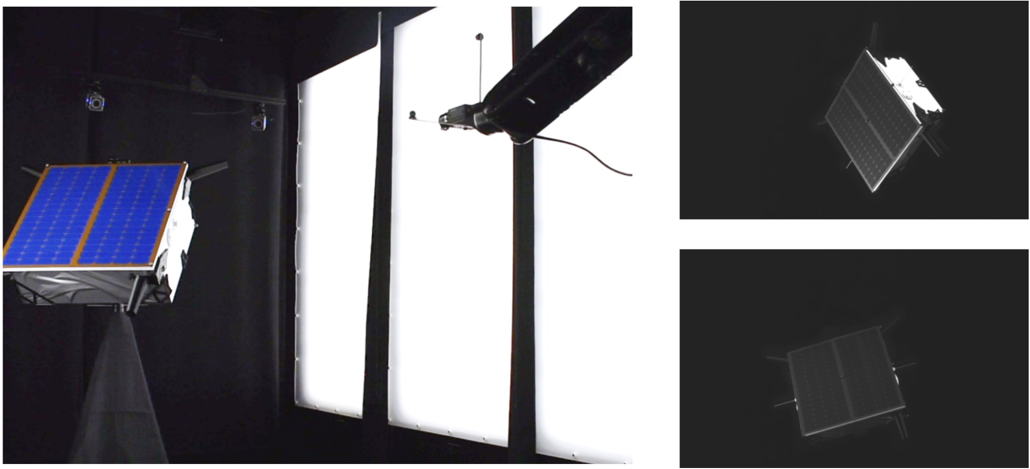
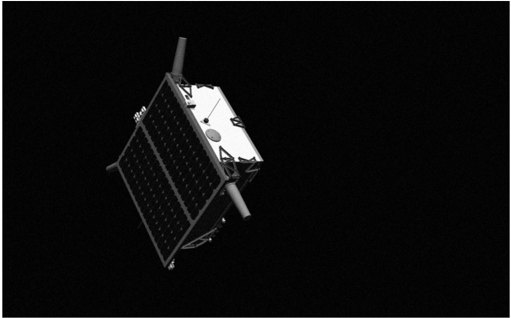
- SPEC was hosted on the ESA Kelvins platform and used the Spacecraft Pose Estimation Dataset (SPEED): synthetic images generated with an OpenGL-based optical stimulator and real images captured with the TRON facility using a Tango spacecraft mockup. The dataset contained almost 15,000 synthetic and 300 real images, partitioned into 12,000 synthetic + 5 real training images and 2,998 synthetic + 300 real test images; all images were grayscale at \(1920\times1200\) pixels.
- The competition metric combined orientation angular error and normalized position error into a single pose error, averaged over the test set. Submissions were primarily ranked on the synthetic test set and also evaluated on real images; during the competition only 20% of the test set was used for leaderboard evaluation.
- The paper analyzes submissions from 48 teams and a post-competition survey answered by 20 teams, including the top 13. It compares top submissions, top 4 approaches, PnP versus direct pose estimation, the effect of separate localization, and sample difficulty using the best prediction across submissions for each test image.
Limitations
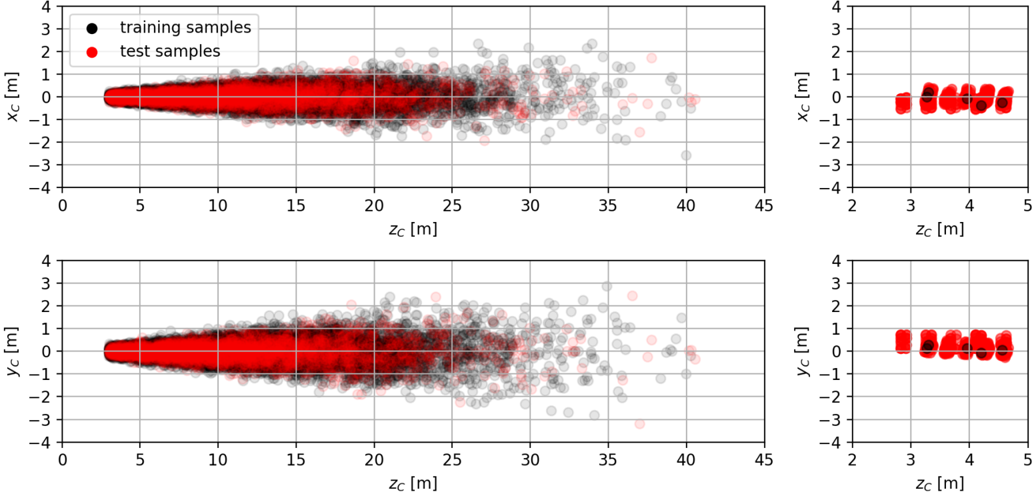
- The paper states that real images are scarce, with only five labeled real training images, and that the real-image pose distribution is constrained by physical limitations of the TRON facility. It also notes discrepancies between synthetic and real images in texture, illumination, and eclipse of spacecraft features, and that real-image performance was weaker for most teams due to the domain gap.
- The paper states that the competition metric’s balance between position and orientation sensitivity depends on the test set’s distance distribution, and that only 20% of the test set was used during the competition to prevent overfitting.
- Evident from the text: the survey covered only 20 of 48 teams, so the approach comparison may not represent all submissions; the real test set contains 300 images and only five labeled real training images, limiting conclusions about generalization to real spaceborne imagery.
Model-written summary. Check it against the paper before relying on it.
Integrity signals
Registry
Cites
Statistics
Figures






Verification
Claims the paper makes
2 Valid · 3 Not valid · 9 Not checked · 70 Own results and interpretations
A result the paper reports from its own data — it cites no other source for it, so there is none to check. The quote shows it is in the paper.
In the paper
“These top three solutions were the only submissions to outperform the SLAB baseline.”
plain- Asserted: passes — The authors put it forward as true.
- Checkable: passes — It can be checked against evidence.
- Load-bearing: unclear — It is unclear whether the paper’s conclusions depend on it.
- Based: passes — The paper gives a reason why it holds.
A result the paper states — it cites no source for it, so there is none to check. The quote shows it is in the paper.
In the paper
“Due to physical limitations of the TRON facility in combination with the size of the satellite mockup, the distance distribution of real images is much more constrained, ranging from 2.8 to 4.7 meters.”
plainstates a cause- Asserted: passes — The authors put it forward as true.
- Checkable: passes — It can be checked against evidence.
- Load-bearing: unclear — It is unclear whether the paper’s conclusions depend on it.
- Based: passes — The paper gives a reason why it holds.
A result the paper states — it cites no source for it, so there is none to check. The quote shows it is in the paper.
In the paper
“Results on real images are weaker compared to those on synthetic images for most teams, except for three of the solutions.”
plain- Asserted: passes — The authors put it forward as true.
- Checkable: passes — It can be checked against evidence.
- Load-bearing: unclear — It is unclear whether the paper’s conclusions depend on it.
- Based: passes — The paper gives a reason why it holds.
- Rests on an assumption not shown here.
A result the paper states — it cites no source for it, so there is none to check. The quote shows it is in the paper.
In the paper
“Including a separate detection step was also found to be an important element of high performing pose estimation pipelines.”
plainstates an association- Asserted: passes — The authors put it forward as true.
- Checkable: passes — It can be checked against evidence.
- Load-bearing: passes — The paper’s conclusions depend on it.
- Based: passes — The paper gives a reason why it holds.
A result the paper reports from its own data — it cites no other source for it, so there is none to check. The quote shows it is in the paper.
In the paper
“Likewise, 1 ◦ orientation error was shown to be equivalent to 0 . 141 m translation error in the second case.”
plainstates an associationn = 2- Asserted: passes — The authors put it forward as true.
- Checkable: passes — It can be checked against evidence.
- Load-bearing: passes — The paper’s conclusions depend on it.
- Based: passes — The paper gives a reason why it holds.
32 more claims
Create a free account to see all 84 claims and every source verdict.
- Probably not a substantial claim. 26
- It may state two separate claims as one. 24
- The quote only partly states this claim. 1
Claims other papers make about this one
Each is checked against this paper’s own text: does it say what the citing paper says it does?
The source backs part of the claim, not all of it — or backs it for a different population, condition or comparison.
In the citing paper
“The TANGO satellite [145] model used in the multiple datasets [19,20,51,51,85,132] has a coarse dimension of 80 × 75 × 32 cm will lead to the operation range of ∼10 m.”
From A survey on deep learning-based monocular spacecraft pose estimation: Current state, limitations and prospects (2023) · cites this paper as [19]
Experimental — accuracy not yet measuredThe source backs part of the claim, not all of it — or backs it for a different population, condition or comparison.
In the citing paper
“The images from SPEED and SPEED+ are validated against the real images of TANGO spacecraft from the PRISMA mission using histogram comparison [19].”
From A survey on deep learning-based monocular spacecraft pose estimation: Current state, limitations and prospects (2023) · cites this paper as [19]
Experimental — accuracy not yet measuredThe source backs part of the claim, not all of it — or backs it for a different population, condition or comparison.
In the citing paper
“Even for the standard datasets such as SPEED [19] and SPEED+ [20], the only way to use a hybrid approach is to recover the 3D locations of interested keypoints is via the 3D reconstruction methods [66].”
From A survey on deep learning-based monocular spacecraft pose estimation: Current state, limitations and prospects (2023) · cites this paper as [19]
Experimental — accuracy not yet measuredThe source backs part of the claim, not all of it — or backs it for a different population, condition or comparison.
In the citing paper
“While several attempts have been made to mitigate the domain gap between synthetic and laboratory images, there persists a oneorder-of-magnitude difference between the best pose scores in the 2019 (synthetic test images) and 2021 (laboratory test images) editions of ESA's Satellite Pose Estimation Challenge [19,20].”
From A survey on deep learning-based monocular spacecraft pose estimation: Current state, limitations and prospects (2023) · cites this paper as [19]
Experimental — accuracy not yet measuredThe source backs part of the claim, not all of it — or backs it for a different population, condition or comparison.
In the citing paper
“While synthetic data generation and laboratory data acquisition have been identified as the most tractable ways to train and test such algorithms, the model performance degrades significantly when testing real in-orbit images [3,4].”
From Pose Estimation for Cross-Domain Non-Cooperative Spacecraft Based on Spatial-Aware Keypoints Regression (2024) · cites this paper as [3]
Experimental — accuracy not yet measured
8 more claims about this paper
Create a free account to see every claim other papers make about this one.
Self-check
Percentages, sums and reported differences re-computed from the paper’s own numbers.
Each contradiction between two passages listed here was confirmed by an independent check.
Rated minor: it would not touch a result — a value no result rests on, a p-value that stays on the same side of the significance level, or a conflict that is clerical, resolved elsewhere in the paper, or outside its own findings.
In the paper
§ D. Comparing approaches
“ranking on the first, second and fourth places.”
§ C. Survey on methods
“| 4. Team Platypus | 0.0703 | 1.7201 | 3 . 11 ± 4 . 31 | 0 . 221 ± 0 . 530 | No |”
Rated minor: it would not touch a result — a value no result rests on, a p-value that stays on the same side of the significance level, or a conflict that is clerical, resolved elsewhere in the paper, or outside its own findings.
In the paper
§ E. Difficulty of samples
“the winning team UNIADELAIDE achieved 0 . 41 ◦ ± 1 . 50 ◦ orientation error and 0 . 13 ± 0 . 09 m relative position error.”
§ C. Survey on methods
“| 1. UniAdelaide [47] | 0.0094 | 0.3752 | 0 . 41 ± 1 . 50 | 0 . 032 ± 0 . 095 | Yes |”
Citations
Cites
Deep Residual Learning for Image Recognition
He, K., Zhang, X., Ren, S., & Sun, J. (2016) · 2016 IEEE Conference on Computer Vision and Pattern Recognition (CVPR) · doi:10.1109/cvpr.2016.90 · Cited by 235,474 · cited 2×
“Various architectures were used from well known pre-trained models, such as ResNets [46], Inception v3 [47], and YOLO [48], [49], to custom models trained from scratch.”
ImageNet classification with deep convolutional neural networks
Krizhevsky, A., Sutskever, I., & Hinton, G. E. (2017) · Communications of the ACM · doi:10.1145/3065386 · Cited by 112,155 · cited 3×
“It was made possible by increasing computational resources represented by the graphical processing units (GPU) and the availability of large-scale datasets to train the DNN, such as ImageNet for classification [5], MS COCO for object detection [28], and LINEMOD for pose estimation [29] of ordinary household objects.”
ImageNet: A large-scale hierarchical image database
Deng, J., Dong, W., Socher, R., Li, L.-J., Li, K., & Fei-Fei, L. (2009) · 2009 IEEE Conference on Computer Vision and Pattern Recognition · doi:10.1109/cvpr.2009.5206848 · Cited by 65,333 · cited 1×
“Starting with the success of AlexNet [5] in the ImageNet Large Scale Visual Recognition Challenge [6] in 2012, deep learning models have been outperforming traditional approaches on a number of computer vision problems.”
Distinctive Image Features from Scale-Invariant Keypoints
Lowe, D. G. (2004) · International Journal of Computer Vision · doi:10.1023/b:visi.0000029664.99615.94 · Cited by 55,589 · cited 2×
“int/ as SIFT [21], SURF [22], and ORB features [23].”
Microsoft COCO: Common Objects in Context
Lin, T.-Y., Maire, M., Belongie, S., Hays, J., Perona, P., Ramanan, D., Dollár, P., & Zitnick, C. L. (2014) · Lecture Notes in Computer Science · doi:10.1007/978-3-319-10602-1_48 · Cited by 45,460 · cited 1×
“It was made possible by increasing computational resources represented by the graphical processing units (GPU) and the availability of large-scale datasets to train the DNN, such as ImageNet for classification [5], MS COCO for object detection [28], and LINEMOD for pose estimation [29] of ordinary household objects.”
Rethinking the Inception Architecture for Computer Vision
Szegedy, C., Vanhoucke, V., Ioffe, S., Shlens, J., & Wojna, Z. (2016) · 2016 IEEE Conference on Computer Vision and Pattern Recognition (CVPR) · doi:10.1109/cvpr.2016.308 · Cited by 32,138 · cited 1×
“Various architectures were used from well known pre-trained models, such as ResNets [46], Inception v3 [47], and YOLO [48], [49], to custom models trained from scratch.”
A Computational Approach to Edge Detection
Canny, J. (1986) · IEEE Transactions on Pattern Analysis and Machine Intelligence · doi:10.1109/tpami.1986.4767851 · Cited by 30,004 · cited 1×
“oach to monocular-based pose estimation of a target spacecraft [6]–[12] would first extract hand-crafted features of the target from a 2D image. These features include Harris corners [13], Canny edges [14], lines via Hough transform [15], or scale-invariant features such as SIFT [16], SURF [17], and ORB features [18].…”
MobileNetV2: Inverted Residuals and Linear Bottlenecks
Sandler, M., Howard, A., Zhu, M., Zhmoginov, A., & Chen, L.-C. (2018) · 2018 IEEE/CVF Conference on Computer Vision and Pattern Recognition · doi:10.1109/cvpr.2018.00474 · Cited by 28,755 · cited 1×
“However, the architectures exploit depthwise separable convolution operations [55] to significantly reduce the number of parameters associated with each network.”
Fischler, M. A., & Bolles, R. C. (1981) · Communications of the ACM · doi:10.1145/358669.358692 · Cited by 25,893
YOLO9000: Better, Faster, Stronger
Redmon, J., & Farhadi, A. (2017) · 2017 IEEE Conference on Computer Vision and Pattern Recognition (CVPR) · doi:10.1109/cvpr.2017.690 · Cited by 19,892 · cited 3×
“Various architectures were used from well-known pretrained models, such as ResNets [46], Inception v3 [56], and YOLO [53], [54], to custom models trained from scratch.”
Research works printed but not linked: 4
- [9] S. Sharma, 'Pose estimation of uncooperative spacecraft using monocular vision and deep learning,' Ph.D. dissertation, Stanford University, Department of Aeronautics & Astronautics, Aug 2019. -
- [10] C. Beierle, 'High fidelity validation of vision-based sensors and algorithms for spaceborne navigation,' Ph.D. dissertation, Stanford University, Department of Aeronautics & Astronautics, Mar 2019. -
- [24] S. Sharma and S. D'Amico, 'Reduced-dynamics pose estimation for non-cooperative spacecraft rendezvous using monocular vision,' in 38th AAS Guidance and Control Conference, Breckenridge, Colorado , 2017. -
- [49] T. H. Park, S. Sharma, and S. D'Amico, 'Towards robust learningbased pose estimation of noncooperative spacecraft,' in 2019 AAS/AIAA Astrodynamics Specialist Conference, Portland, Maine , August 11-15 2019. -
Cited by
Neural Network-Based Pose Estimation for Noncooperative Spacecraft Rendezvous
Sharma, S., & D'Amico, S. (2020) · IEEE Transactions on Aerospace and Electronic Systems · doi:10.1109/taes.2020.2999148 · Cited by 196
Self-citationArtificial intelligence for satellite communication: A review
Fourati, F., & Alouini, M.-S. (2021) · Intelligent and Converged Networks · doi:10.23919/icn.2021.0015 · Cited by 190
“The recent proposal for satellite pose estimation from a single image via combined ML and geometric optimization by Chen et al. [183] won the first place in the recent Kelvins pose estimation challenge organized by the European Space Agency [184].”
MethodSPEED+: Next-Generation Dataset for Spacecraft Pose Estimation across Domain Gap
Park, T. H., Martens, M., Lecuyer, G., Izzo, D., & D'Amico, S. (2022) · 2022 IEEE Aerospace Conference (AERO) · doi:10.1109/aero53065.2022.9843439 · Cited by 170
“The pose error, also known as the SPEED score, was the official competition metric used in SPEC2019, chosen as it has shown to properly balance the contribution of the position and orientation errors [5].”
Self-citationWide-Depth-Range 6D Object Pose Estimation in Space
Hu, Y., Speierer, S., Jakob, W., Fua, P., & Salzmann, M. (2021) · 2021 IEEE/CVF Conference on Computer Vision and Pattern Recognition (CVPR) · doi:10.1109/cvpr46437.2021.01561 · Cited by 130
“To address such challenges, the European Space Agency (ESA) and Stanford University recently organized a satellite pose estimation challenge based on the Spacecraft Pose Estimation Dataset (SPEED) [19].”
MethodInfluentialRobust multi-task learning and online refinement for spacecraft pose estimation across domain gap
Park, T. H., & D’Amico, S. (2024) · Advances in Space Research · doi:10.1016/j.asr.2023.03.036 · Cited by 125
“Afterwards, many top-performing entries of SPEC2019 have shown diverse CNN architectures and pose estimation strategies, such as prob-ablistic orientation estimation via soft classification (Proenc¸a & Gao, 2020) or estimation of a set of designated keypoints on the spacecraft surface via direction regression (Park et…”
BackgroundInfluentialSelf-citationPauly, L., Rharbaoui, W., Shneider, C., Rathinam, A., Gaudillière, V., & Aouada, D. (2023) · Acta Astronautica · doi:10.1016/j.actaastro.2023.08.001 · Cited by 121
“The mean position and orientation error values on the SPEED [71] synthetic test set are reported where available [71].”
BackgroundMethodInfluentialSatellite Pose Estimation Competition 2021: Results and Analyses
Park, T. H., Märtens, M., Jawaid, M., Wang, Z., Chen, B., Chin, T.-J., Izzo, D., & D’Amico, S. (2023) · Acta Astronautica · doi:10.1016/j.actaastro.2023.01.002 · Cited by 91
Self-citationSpacecraft collision avoidance challenge: Design and results of a machine learning competition
Uriot, T., Izzo, D., Simões, L. F., Abay, R., Einecke, N., Rebhan, S., Martinez-Heras, J., Letizia, F., Siminski, J., & Merz, K. (2022) · Astrodynamics · doi:10.1007/s42064-021-0101-5 · Cited by 82
Self-citationDeep Learning and Artificial Neural Networks for Spacecraft Dynamics, Navigation and Control
Silvestrini, S., & Lavagna, M. R. (2022) · Drones · doi:10.3390/drones6100270 · Cited by 96
A Spacecraft Dataset for Detection, Segmentation and Parts Recognition
Dung, H. A., Chen, B., & Chin, T.-J. (2021) · 2021 IEEE/CVF Conference on Computer Vision and Pattern Recognition Workshops (CVPRW) · doi:10.1109/cvprw53098.2021.00229 · Cited by 69
“The closest and the largest datasets related to this topic so far are the Spacecraft PosE Estimation Dataset (SPEED) [13] and the URSO dataset [14].”
BackgroundPark, T. H., & D’Amico, S. (2023) · Journal of Guidance, Control, and Dynamics · doi:10.2514/1.g007387 · Cited by 63
“Key examples include OpenGL for the images of the Tango spacecraft from the PRISMA mission [9] in the SPEED dataset [3, 10, 11], Cinema 4D for the Envisat spacecraft by Pasqualetto Cassinis et al.”
BackgroundMethodSelf-citationWang, Z., Chen, M., Guo, Y., Li, Z., & Yu, Q. (2024) · IEEE Transactions on Aerospace and Electronic Systems · doi:10.1109/taes.2023.3250385 · Cited by 64
“As suggested by Kisantal et al. [11], the PnP-based methods significantly outperform direct regression in monocular satellite pose estimation.”
BackgroundMethodInfluentialMahendrakar, T., Ekblad, A., Fischer, N., White, R. T., Wilde, M., Kish, B. A., & Silver, I. M. (2022) · IEEE Aerospace Conference (AERO) · doi:10.1109/aero53065.2022.9843537 · Cited by 89
“Second, there are numerous works on spacecraft pose estimation centered around the ESA’s Pose Estimation Challenge [42], where most entrants used neural networks trained on 15000 synthetic images and 300 real images captured at the Space Rendezvous Laboratory (SLAB) at Stanford University.”
BackgroundMusallam, M. A., Gaudillière, V., Ghorbel, E., Ismaeil, K. A., Perez, M. D., Poucet, M., & Aouada, D. (2021) · 2021 IEEE International Conference on Image Processing Challenges (ICIPC) · doi:10.1109/icipc53495.2021.9620184 · Cited by 68
“It includes 10 different satellites, 12.5k images for each satellite, and 5 debris objects, with 5k images for each one, and all debris combined Dataset SPARK (Ours) SPEED [8] URSO [7] Spacecraft-Parts [11]”
MethodRevisiting Monocular Satellite Pose Estimation With Transformer
Wang, Z., Zhang, Z., Sun, X., Li, Z., & Yu, Q. (2022) · IEEE Transactions on Aerospace and Electronic Systems · doi:10.1109/taes.2022.3161605 · Cited by 59
“In the SPEC, the PnP-based methods were found to be significantly more accurate, while CNN-based methods have obtained superior performance compared with traditional ones [3].”
BackgroundMethodInfluentialPasqualetto Cassinis, L., Fonod, R., Gill, E., Ahrns, I., & Gil-Fernández, J. (2021) · Acta Astronautica · doi:10.1016/j.actaastro.2021.01.035 · Cited by 52
“…in space has already become an attractive solution in recent years, also thanks to the creation of the Spacecraft PosE Estimation Dataset (SPEED) [16], a database of highly representative synthetic images of PRISMA’s TANGO spacecraft made publicly available by Stanford’s Space Rendezvous…”
BackgroundLSPnet: A 2D Localization-oriented Spacecraft Pose Estimation Neural Network
Garcia, A., Musallam, M. A., Gaudilliere, V., Ghorbel, E., Al Ismaeil, K., Perez, M., & Aouada, D. (2021) · 2021 IEEE/CVF Conference on Computer Vision and Pattern Recognition Workshops (CVPRW) · doi:10.1109/cvprw53098.2021.00233 · Cited by 52
“The SPEC challenge involved nearly 50 teams working towards pose estimation on the SPEED dataset for 5 months.”
BackgroundMethodInfluentialA critical analysis of image-based camera pose estimation techniques
Xu, M., Wang, Y., Xu, B., Zhang, J., Ren, J., Huang, Z., Poslad, S., & Xu, P. (2023) · Neurocomputing · doi:10.1016/j.neucom.2023.127125 · Cited by 71
Intelligent recognition of spacecraft components from photorealistic images based on Unreal Engine 4
Zhao, Y., Zhong, R., & Cui, L. (2022) · Advances in Space Research · doi:10.1016/j.asr.2022.09.045 · Cited by 51
Pasqualetto Cassinis, L., Menicucci, A., Gill, E., Ahrns, I., & Sanchez-Gestido, M. (2022) · Acta Astronautica · doi:10.1016/j.actaastro.2022.04.002 · Cited by 46
“…approaches around a mockup of a target spacecraft with a monocular camera [30], e.g. the Space Rendezvous Laboratory (SLAB) at Stanford University [8], the Orbital Robotics & GNC laboratory (ORGL) at the European Space Research and Technology Centre (ESTEC) [31], and the Testbed for Robotic…”
MethodInfluentialChallenges for Monocular 6-D Object Pose Estimation in Robotics
Thalhammer, S., Bauer, D., Hönig, P., Weibel, J.-B., García‐Rodríguez, J., & Vincze, M. (2024) · IEEE Transactions on Robotics · doi:10.1109/tro.2024.3433870 · Cited by 78
PVSPE: A pyramid vision multitask transformer network for spacecraft pose estimation
Yang, H., Xiao, X., Yao, M., Xiong, Y., Cui, H., & Fu, Y. (2024) · Advances in Space Research · doi:10.1016/j.asr.2024.05.011 · Cited by 41
Deep learning for real-time satellite pose estimation on tensor processing units
Lotti, A., Modenini, D., Tortora, P., Saponara, M., & Perino, M. A. (2023) · Journal of Spacecraft and Rockets · doi:10.2514/1.a35496 · Cited by 39
On-Board Cooperative Spacecraft Relative Navigation Fusing GNSS with Vision
Capuano, V., Harvard, A., & Chung, S.-J. (2022) · Progress in Aerospace Sciences · doi:10.1016/j.paerosci.2021.100761 · Cited by 39
Perspective Flow Aggregation for Data-Limited 6D Object Pose Estimation
Hu, Y., Fua, P., & Salzmann, M. (2022) · Lecture notes in computer science · doi:10.1007/978-3-031-20086-1_6 · Cited by 65
Dataset generation and validation for spacecraft pose estimation via monocular images processing
Bechini, M., Lavagna, M. R., & Lunghi, P. (2023) · Acta Astronautica · doi:10.1016/j.actaastro.2023.01.012 · Cited by 49
“Moreover, the clouds in the SPEED images are not reproduced by textures since they are taken from actual pictures of the Earth [18], making the exact reproduction of the SPEED images with background not possible, jeop-ardizing the validation procedure.”
InfluentialMulti-Scale Deep Neural Network Based on Dilated Convolution for Spacecraft Image Segmentation
Liu, Y., Zhu, M. L., Wang, J., Guo, X., Yang, Y., & Wang, J. (2022) · Sensors · doi:10.3390/s22114222 · Cited by 46
“The European Space Agency (ESA) and Stanford University held a competition in 2019 to use supervised learning to estimate the position and attitude of a known spacecraft from an image [9].”
BackgroundMethodInfluentialRobust spacecraft relative pose estimation via CNN-aided line segments detection in monocular images
Bechini, M., Gu, G., Lunghi, P., & Lavagna, M. R. (2023) · Acta Astronautica · doi:10.1016/j.actaastro.2023.11.049 · Cited by 46
Starling Formation-Flying Optical Experiment (StarFOX): System Design and Preflight Verification
Kruger, J., Koenig, A. W., & D’Amico, S. (2023) · Journal of Spacecraft and Rockets · doi:10.2514/1.a35598 · Cited by 53
Self-citationMonocular Relative Pose Estimation Pipeline for Uncooperative Resident Space Objects
Piazza, M., Maestrini, M., & Lizia, P. D. (2022) · Journal of Aerospace Information Systems · doi:10.2514/1.i011064 · Cited by 49
“The twoCNN-based solutions reported in Table 7 correspond to the teams participating in the original Pose Estimation Challenge that have outperformed our solution on synthetic images, while only EPFL_cvlab has demonstrated higher accuracy on real test images [33].”
The OPS-SAT case: A data-centric competition for onboard satellite image classification
Meoni, G., Märtens, M., Derksen, D., See, K., Lightheart, T., Sécher, A., Martin, A., Rijlaarsdam, D., Fanizza, V., & Izzo, D. (2024) · Astrodynamics · doi:10.1007/s42064-023-0196-y · Cited by 50
“The competition was conducted on the ESA’s online platform Kelvins (cid:172) , which has hosted several challenges including the “Pose Estimation Challenge” [16, 17], “PROBA-V Super Resolution” [18], and “SpotGeo Challenge” [19].”
Self-citationCao, Y., Cheng, X., Mu, J., Li, D., & Han, F. (2023) · IEEE Transactions on Instrumentation and Measurement · doi:10.1109/tim.2023.3237809 · Cited by 42
“Due to the creation of the Spacecraft Pose Estimation Dataset (SPEED) [16], some scholars started to perform target detection on this semi-physical simulation dataset that is close to the real environment.”
BackgroundAlDahoul, N., Karim, H. B. A., Castro, A. D., & Tan, M. J. T. (2022) · Scientific Reports · doi:10.1038/s41598-022-25859-y · Cited by 44
Image-based attitude determination of co-orbiting satellites using deep learning technologies
Guthrie, B., Kim, M., Urrutxua, H., & Hare, J. S. (2021) · Aerospace Science and Technology · doi:10.1016/j.ast.2021.107232 · Cited by 39
Towards Bridging the Space Domain Gap for Satellite Pose Estimation using Event Sensing
Jawaid, M., Elms, E., Latif, Y., & Chin, T.-J. (2023) · 2023 IEEE International Conference on Robotics and Automation (ICRA) · doi:10.1109/icra48891.2023.10160531 · Cited by 32
“Similar to the setting in [17], [13], [6], [40], [41], [7], we assume that the target satellite is uncooperative, but we have knowledge of the structure of the satellite (e.”
BackgroundRGB-D based multi-modal deep learning for spacecraft and debris recognition
AlDahoul, N., Karim, H. B. A., & Momo, M. A. (2022) · Scientific Reports · doi:10.1038/s41598-022-07846-5 · Cited by 39
“Therefore, various synthetic datasets were proposed in research works for 6D pose estimation including Unreal Rendered Spacecraft On-Orbit (URSO) dataset 29 and Spacecraft pose estimation dataset (SPEED) 30,31 .”
MethodMobile-URSONet: an embeddable neural network for onboard spacecraft pose estimation
Posso, J., Bois, G., & Savaria, Y. (2022) · 2022 IEEE International Symposium on Circuits and Systems (ISCAS) · doi:10.1109/iscas48785.2022.9937721 · Cited by 27
Autonomous angles-only multitarget tracking for spacecraft swarms
Kruger, J., & D’Amico, S. (2021) · Acta Astronautica · doi:10.1016/j.actaastro.2021.08.049 · Cited by 32
Self-citationHuang, H., Zhao, G., Gu, D., & Bo, Y. (2021) · IEEE Sensors Journal · doi:10.1109/jsen.2021.3115844 · Cited by 28
“I N RECENT years, on-orbit mission concepts such as space debris removal and on-orbit servicing have gained increasing attention from academia and industry to solve the congestion in low Earth orbits and extend the lifetime of geostationary satellites [1]–[4].”
BackgroundDrone-SCNet: Scaled Cascade Network for Crowd Counting on Drone Images
Elharrouss, O., Almaadeed, N., Abualsaud, K., Al-Ali, A., Mohamed, A. M. S., Khattab, T. M., & Al-Maadeed, S. A. (2021) · IEEE Transactions on Aerospace and Electronic Systems · doi:10.1109/taes.2021.3087821 · Cited by 30
Zhang, C., Guo, Y., Meng, D., Zhu, W., Li, W., Peng, J., & Liang, B. (2023) · Aerospace Science and Technology · doi:10.1016/j.ast.2023.108484 · Cited by 28
ChiNet: Deep recurrent convolutional learning for multimodal spacecraft pose estimation
Rondao, D., Aouf, N., & Richardson, M. A. (2022) · IEEE Transactions on Aerospace and Electronic Systems · doi:10.1109/taes.2022.3193085 · Cited by 24
“As reported in [9], it was the baseline contribution of the SPEC authors, being only surpassed by three other entries.”
BackgroundMethodResultInfluentialComputer vision tasks for intelligent aerospace perception: An overview
Chen, H., Sun, Q., Li, F., & Tang, Y. (2024) · Science China Technological Sciences · doi:10.1007/s11431-024-2714-4 · Cited by 31
“Furthermore, the development of sophisticated DL algorithms has the potential to simplify computational processes, reducing complexity and the reliance on intricate dynamic models.”
Vision-based Neural Scene Representations for Spacecraft
Mergy, A., Lécuyer, G., Derksen, D., & Izzo, D. (2021) · IEEE/CVF Conference on Computer Vision and Pattern Recognition Workshops (CVPRW) · doi:10.1109/cvprw53098.2021.00228 · Cited by 33
“lighting conditions which cause strong shadow masking on the object surface [20].”
Self-citationCA-SpaceNet: Counterfactual analysis for 6D pose estimation in space
Wang, S., Wang, S., Jiao, B., Yang, D., Su, L., Zhai, P., Chen, C., & Zhang, L. (2022) · 2022 IEEE/RSJ International Conference on Intelligent Robots and Systems (IROS) · doi:10.1109/iros47612.2022.9981172 · Cited by 24
“SPEED [3].”
BackgroundMethodInfluential6D Object Pose Estimation from Approximate 3D Models for Orbital Robotics
Ulmer, M., Durner, M., Sundermeyer, M., Stoiber, M., & Triebel, R. (2023) · 2023 IEEE/RSJ International Conference on Intelligent Robots and Systems (IROS) · doi:10.1109/iros55552.2023.10341511 · Cited by 23
“Around the same time, the SPEED dataset [9] was published and the Satellite Pose Estimation Challenge (SPEC) was organized for the first time.”
BackgroundSU-Net: pose estimation network for non-cooperative spacecraft on-orbit
Gao, H., Li, Z., Wang, N., Yang, J., & Dang, D. (2023) · Scientific Reports · doi:10.1038/s41598-023-38974-1 · Cited by 28
Lessons from a Space Lab: An Image Acquisition Perspective
Pauly, L., Jamrozik, M. L., del Castillo, M. O., Borgue, O., Singh, I. P., Makhdoomi, M. R., Christidi-Loumpasefski, O.-O., Gaudillière, V., Martínez, C., Rathinam, A., et al. (2023) · International Journal of Aerospace Engineering · doi:10.1155/2023/9944614 · Cited by 26
“In the last few years, Deep Learning (DL) techniques have been proven successful in vision-based space applications such as satellite pose estimation (Dung et al., 2021) (Kisantal et al., 2020) and spacecraft navigation (Song et al., 2022).”
BackgroundMethodROV6D: 6D Pose Estimation Benchmark Dataset for Underwater Remotely Operated Vehicles
Tang, J., Chen, Z., Fu, B., Lu, W., Li, S., Li, X., & Ji, X. (2023) · IEEE Robotics and Automation Letters · doi:10.1109/lra.2023.3331624 · Cited by 26
“The vast majority of previous work about multi-robot relative localization focus on terrestrialautonomousdriving,on-orbitservicingandunmanned aerialvehicle[1],[2],[3],[4],[5].”
BackgroundAn Improved Deep Keypoint Detection Network for Space Targets Pose Estimation
Xu, J., Song, B., Yang, X. C., & Nan, X. (2020) · Remote Sensing · doi:10.3390/rs12233857 · Cited by 22
Robust On-Manifold Optimization for Uncooperative Space Relative Navigation with a Single Camera
Rondao, D., Aouf, N., Richardson, M. A., & Dubanchet, V. (2021) · Journal of Guidance Control and Dynamics · doi:10.2514/1.g004794 · Cited by 21
Advancing 6-DoF Instrument Pose Estimation in Variable X-Ray Imaging Geometries
Viviers, C. G. A., Filatova, L., Termeer, M., de With, P. H. N., & van der Sommen, F. (2024) · IEEE Transactions on Image Processing · doi:10.1109/tip.2024.3378469 · Cited by 30
“Moreover, satellite pose estimation [54], [55] is a domain that already faces this challenge and can straightforwardly benefit from the proposed approach.”
BackgroundReal-Time, Flight-Ready, Non-Cooperative Spacecraft Pose Estimation Using Monocular Imagery
Black, K., Shankar, S., Fonseka, D., Deutsch, J., Dhir, A., & Akella, M. R. (2021) · arXiv (Cornell University) · doi:10.48550/arxiv.2101.09553 · Cited by 20
Civardi, G. L., Bechini, M., Quirino, M., Colombo, A., Piccinin, M., & Lavagna, M. R. (2023) · Advances in Space Research · doi:10.1016/j.asr.2023.03.022 · Cited by 25
“These values have been obtained from the validation of the SPEED dataset images against real Tango images from Prisma mission as described in Kisantal et al. (2020), and adopted also for the validation in Bechini et al. (2023).”
MethodSajjad, N., Mirshams, M., & Hein, A. M. (2024) · Astrodynamics · doi:10.1007/s42064-023-0193-1 · Cited by 25
“This challenge is gaining momentum with algorithms that improve the accuracy and convergence under varying lighting conditions [20].”
Non-Cooperative Target Pose Estimation based on Improved Iterative Closest Point Algorithm
Zhu, Z., Xiang, W., Huo, J., Yang, M., Zhang, G., & Wei, L. (2022) · Journal of Systems Engineering and Electronics · doi:10.23919/jsee.2022.000001 · Cited by 17
Homography-Based PnP Solution to Reject Outliers
Jiang, C., Hu, Q., Li, H., & Li, D. (2022) · IEEE Transactions on Instrumentation and Measurement · doi:10.1109/tim.2022.3216085 · Cited by 18
“Considering its importance in many practical autonomous systems, such as robotics [3], [4], [5] and spacecraft navigation [6], [7], [8], many pose formulations or solutions have been extensively yielded.”
BackgroundCassinis, L. P., Park, T. H., Stacey, N., D’Amico, S., Menicucci, A., Gill, E. K. A., Ahrns, I., & Sánchez-Gestido, M. (2023) · Advances in Space Research · doi:10.1016/j.asr.2023.02.021 · Cited by 28
“These averages were computed across test images of the Tango spacecraft from the PRISMA mission D’Amico et al. (2013) as part of the Spacecraft Pose Estimation Dataset (SPEED) challenge Kisantal et al. (2020), Huo et al. (2020) (Sharma et al., 2019).”
BackgroundMethodInfluentialSelf-citationLiu, F., Zhang, Z., & Li, S. (2023) · IEEE Transactions on Aerospace and Electronic Systems · doi:10.1109/taes.2023.3332075 · Cited by 18
“To compare the benefits and drawbacks of various pose estimation approaches and overcome the limitations of the existing approaches,theEuropeanSpaceAgency’s(ESA)Advanced ConceptsTeam(ACT)andStanford’sSpaceRendezvous Laboratory(SLAB)launchedtheSatellitePoseEstimation Challenge(SPEC)in2019[12].”
BackgroundMethodInfluentialCharacterizing Satellite Geometry via Accelerated 3D Gaussian Splatting
Nguyễn, V. M., Sandidge, E., Mahendrakar, T., & White, R. T. (2024) · Aerospace · doi:10.3390/aerospace11030183 · Cited by 23
A comprehensive study on PnP-based pipeline for pose estimation of noncooperative satellite
Yu, Y., Wang, Z., Li, Z., & Yu, Q. (2024) · Acta Astronautica · doi:10.1016/j.actaastro.2024.08.027 · Cited by 21
Tao, J., Cao, Y., Ding, M., & Zhang, Z. (2022) · International Journal of Aerospace Engineering · doi:10.1155/2022/6300437 · Cited by 24
“In this paper, the noise with Gaussian blurring (σ = 1) and zero-mean, Gaussian white noise (var = 0:0022) are added to the source images referred to the SPEED datasets [56].”
BackgroundZhang, Y., Wang, J., Chen, J., Shi, D., & Chen, X. (2024) · Remote Sensing · doi:10.3390/rs16183368 · Cited by 17
“Published datasets are mainly aimed at spacecraft classification tasks [12,13], component identification, and pose estimation tasks [14], and there are no publicly available datasets for the multi-target detection task of distinguishing between satellites and debris in the space environment [15].”
Zhang, H., Zhang, Y., Feng, Q., & Zhang, K. (2023) · International Journal of Aeronautical and Space Sciences · doi:10.1007/s42405-023-00653-w · Cited by 16
“The authors reconstructed a novel dataset for spacecraft segmentation using images from Speed [90] and USRO [91] datasets.”
Cao, Y., Mu, J., Cheng, X., & Liu, F. (2024) · IEEE Sensors Journal · doi:10.1109/jsen.2023.3347584 · Cited by 19
“The current spacecraft datasets [14], [16], [17], [18] are, however, mostly composed of synthetic images, which make it difficult to reflect the real illuminations and motion states of the spacecraft.”
BackgroundRapid Abstraction of Spacecraft 3D Structure from Single 2D Image
Park, T. H., & D’Amico, S. (2024) · AIAA SciTech Forum · doi:10.2514/6.2024-2768 · Cited by 27
“These open-source benchmark datasets made possible international competitions [19, 20] which focus not only on ML-based pose estimation algorithms but also on tackling the domain gap problem that arises due to inherent difference between synthetic and spaceborne imageries.”
BackgroundMethodSelf-citationPark, T. H., & D’Amico, S. (2024) · Proceedings - IEEE International Conference on Robotics and Automation/Proceedings · doi:10.1109/icra57147.2024.10610138 · Cited by 19
“Several international competitions were also organized based on these datasets such as Satellite Pose Estimation Challenges (SPEC) [4], [29] organized by Stanford’s Space Rendezvous Laboratory (SLAB) and the European Space Agency.”
MethodSelf-citationChen, Z., Gui, H., & Zhong, R. (2024) · Advances in Space Research · doi:10.1016/j.asr.2024.11.006 · Cited by 14
Predicting uncertainty in vision-based satellite pose estimation using deep evidential regression
Dixon, T. O., Giles, S. A., & Gorodetsky, A. (2025) · Aerospace Science and Technology · doi:10.1016/j.ast.2025.110055 · Cited by 20
Pose Estimation Method for Non-Cooperative Target Based on Deep Learning
Deng, L., Suo, H., Jia, Y., & Huang, C. (2022) · Aerospace · doi:10.3390/aerospace9120770 · Cited by 12
Real-Time Image-Based Relative Pose Estimation and Filtering for Spacecraft Applications
Kaki, S., Deutsch, J., Black, K., Cura-Portillo, A., Jones, B. A., & Akella, M. R. (2023) · Journal of Aerospace Information Systems · doi:10.2514/1.i011196 · Cited by 14
AI-based monocular pose estimation for autonomous space refuelling
Rondao, D., He, L., & Aouf, N. (2024) · Acta Astronautica · doi:10.1016/j.actaastro.2024.04.003 · Cited by 14
“As outlined by Kisantal et al. [18], the optimisation step applied to the 2D–3D correspondences output by these networks enables a refinement of the solution leading in turn to a more accurate pose estimate, explaining their increased performance on the SPEC dataset.”
Shen, N., Rui, X., Gao, Y., Qian, C., & Chen, Q. (2024) · IEEE Sensors Journal · doi:10.1109/jsen.2024.3392918 · Cited by 15
“1) Dataset Construction: Currently, obtaining real satellite images based on optical systems is challenging, and most existing datasets primarily focus on pose estimation of space targets, such as SPEED [43] and SPEED + [44].”
BackgroundGraph-Based Semantic Embedding Refinement for Zero-Shot Remote Sensing Image Scene Classification
Shang, J., Niu, C., Zhou, W., Zhou, Z., & Yang, J. (2023) · IEEE Transactions on Aerospace and Electronic Systems · doi:10.1109/taes.2023.3326782 · Cited by 15
“With the advancement of satellite sensor technology [1], it is of great significance to effectively analyze and interpret the imagery with abundant ground-object information [2].”
BackgroundSpacecraft Homography Pose Estimation with Single-Stage Deep Convolutional Neural Network
Chen, S., Yang, W., Wang, W., Mai, J., Liang, J., & Zhang, X. (2024) · Sensors · doi:10.3390/s24061828 · Cited by 12
“The software uses the OpenGL-based image rendering pipeline to generate photo-realistic images of the Tango spacecraft with desired ground-truth poses [14].”
MethodInfluentialA Diverse Space Target Dataset With Multidebris and Realistic On-Orbit Environment
Zhang, Z., Deng, C., & Deng, Z. (2022) · IEEE Journal of Selected Topics in Applied Earth Observations and Remote Sensing · doi:10.1109/jstars.2022.3203042 · Cited by 16
“Spacecraft Pose Estimation Dataset, or SPEED for short, is provided by the Satellite Pose Estimation Challenge organized by ESA and Stanford University [34].”
MethodEnd-to-end Neural Estimation of Spacecraft Pose with Intermediate Detection of Keypoints
Legrand, A., Detry, R. J., & Vleeschouwer, C. D. (2023) · Lecture notes in computer science · doi:10.1007/978-3-031-25056-9_11 · Cited by 19
Monocular Satellite Pose Estimation Based on Uncertainty Estimation and Self-Assessment
Wang, J., Li, Y., Li, Z., Wang, Z., & Yu, Q. (2024) · IEEE Transactions on Aerospace and Electronic Systems · doi:10.1109/taes.2024.3441569 · Cited by 21
“As demonstrated by Kisantal et al. [10], CNNs have revolutionized satellite pose estimation by learning complex features from large-scale datasets.”
InfluentialDeep learning for efficient high-resolution image processing: A systematic review
Dede, A., Nunoo‐Mensah, H., Tchao, E. T., Agbemenu, A. S., Adjei, P. E., Acheampong, F. A., & Kponyo, J. J. (2025) · Intelligent Systems with Applications · doi:10.1016/j.iswa.2025.200505 · Cited by 33
Albanis, G., Zioulis, N., Dimou, A., Zarpalas, D., & Daras, P. (2020) · Lecture notes in computer science · doi:10.1007/978-3-030-66096-3_44 · Cited by 21
“Metrics: We report the following evaluation metrics for all of our experiments, the normalized position error (NPE), the orientation error (OE) and the combined pose error (CPE) as defined in [32], as well as the 6D Pose error [24] and the combined position and orientation accuracy metric (AccX).”
BackgroundCORTO: The Celestial Object Rendering TOol at DART Lab
Pugliatti, M., Buonagura, C., & Topputo, F. (2023) · Sensors · doi:10.3390/s23239595 · Cited by 21
“While image histogram comparison is often used as the primary method to assess the similarity between synthetic and real images [40–42], it represents the satisfaction of a necessary but not sufficient condition.”
MethodZhang, G., Zhang, Z., Lai, J., Zhang, G., Ye, H., Yang, H., Cao, J., Du, H., Zhao, Z., Chen, W., et al. (2024) · IEEE Sensors Journal · doi:10.1109/jsen.2024.3370309 · Cited by 11
“The Stanford Space Rendezvous Laboratory (SLAB) and the European Space Agency (ESA) jointly published the Spacecraft Pose Estimation Dataset (SPEED) in 2019 [26], followed by its updated version, SPEED + , in October 2021 [27].”
BackgroundFeature-aided pose estimation approach based on variational auto-encoder structure for spacecrafts
Liu, Y., Zhou, R., Du, D., Cao, S., & Qi, N. (2024) · Chinese Journal of Aeronautics · doi:10.1016/j.cja.2024.03.017 · Cited by 19
SSWS: An edge detection algorithm with strong semantics and high detectability for spacecraft
Zhao, H., Wu, B., Guo, Y., Chen, G., & Ye, D. (2021) · Optik · doi:10.1016/j.ijleo.2021.168037 · Cited by 11
STAR-24K: A Public Dataset for Space Common Target Detection
Zhang, C., Guo, B., Liao, N., Zhong, Q., Liu, H., Li, C., & Gong, J. (2022) · KSII Transactions on Internet and Information Systems · doi:10.3837/tiis.2022.02.001 · Cited by 11
“After our investigation, there are three verified data sets about satellite targets, BUAA-SID [29], SPEED [30] and SPEED+ [31].”
MethodSpace Object Recognition With Stacking of CoAtNets Using Fusion of RGB and Depth Images
AlDahoul, N., Karim, H. B. A., Momo, M. A., Escobar, F. I. F., & Tan, M. J. T. (2023) · IEEE Access · doi:10.1109/access.2023.3235965 · Cited by 12
“Other novel datasets include URSO [23] and SPEED [24], [25] for spacecraft pose estimation from laboratory-acquired or computer-generated images.”
BackgroundDomain Generalization for In-Orbit 6D Pose Estimation
Legrand, A., Detry, R., & De Vleeschouwer, C. (2025) · Journal of Aerospace Information Systems · doi:10.2514/1.i011498 · Cited by 10
“The following experiments were conducted on the SPEED [12] and SPEED + [46] datasets, used in the Spacecraft Pose Estimation Challenges (SPECs) 2019 [19] and 2021 [14], respectively, co-organized by the European Agency and Stanford University.”
Ahmed, J., Arshad, A., Bang, H., & Choi, Y. (2024) · International Journal of Aeronautical and Space Sciences · doi:10.1007/s42405-023-00703-3 · Cited by 11
“Our IOU values are better than the work presented by SPN [22] and Stanford_lab [30].”
InfluentialRevisiting the Domain Gap Issue in Non-cooperative Spacecraft Pose Tracking
Liu, K., & Yu, Y. (2024) · IEEE/CVF Conference on Computer Vision and Pattern Recognition Workshops (CVPRW) · doi:10.1109/cvprw63382.2024.00680 · Cited by 19
“[2] mentions that there are some discrepancies between synthetic and real-world image properties, such as the spacecraft’s texture and illumination.”
BackgroundImproved Space Object Detection Based on YOLO11
Zhou, Y., Zhang, T., Li, Z., & Qiu, J. (2025) · Aerospace · doi:10.3390/aerospace12070568 · Cited by 16
Global Descriptors for Visual Pose Estimation of a Noncooperative Target in Space Rendezvous
Comellini, A., Ny, J. L., Zenou, E., Espinosa, C., & Dubanchet, V. (2021) · IEEE Transactions on Aerospace and Electronic Systems · doi:10.1109/taes.2021.3086888 · Cited by 10
“, local features) from the image while the PnP solver is used to compute the pose, have recently shown very good accuracy with synthetic images [16].”
MethodCrassidis, J. L. (2022) · Journal of Guidance Control and Dynamics · doi:10.2514/1.g006817 · Cited by 16
Park, T. H., Bosse, J., & D'Amico, S. (2021) · arXiv · doi:10.48550/arxiv.2108.05529 · Cited by 10
Self-citationHigh-accuracy real-time satellite pose estimation for in-orbit applications
Wang, Z., Jinghao, W. A. N. G., Yu, J., Li, Z., & Yu, Q. (2025) · Chinese Journal of Aeronautics · doi:10.1016/j.cja.2025.103458 · Cited by 16
Kajak, K. M., Maddock, C. A., Frei, H., & Schwenk, K. (2023) · Advances in Space Research · doi:10.1016/j.asr.2023.02.024 · Cited by 10
Real-Time Stereovision-Based Spacecraft Pose Determination Using Convolutional Neural Networks
Despond, F., & Ulrich, S. (2024) · Journal of Spacecraft and Rockets · doi:10.2514/1.a35973 · Cited by 11
Robust Navigation Solution for Vision-Based Autonomous Rendezvous
Comellini, A., Mave, F., Dubanchet, V., Casu, D., Zenou, E., & Espinosa, C. (2021) · IEEE Aerospace Conference (AERO) · doi:10.1109/aero50100.2021.9438241 · Cited by 14
“Hybrid approaches, where CNNs are used to extract keypoints (i.e., local features) from the image while the PnP solver is used to compute the pose, have recently shown very good accuracy with synthetic images [20].”
Non-Cooperative Spacecraft Pose Estimation Based on Feature Point Distribution Selection Learning
Yuan, H., Chen, H., Wu, J., & Kang, G. (2024) · Aerospace · doi:10.3390/aerospace11070526 · Cited by 9
A Monocular Pose Estimation Case Study: The Hayabusa2 Minerva-II2 Deployment
Price, A., & Yoshida, K. (2021) · 2021 IEEE/CVF Conference on Computer Vision and Pattern Recognition Workshops (CVPRW) · doi:10.1109/cvprw53098.2021.00227 · Cited by 8
“While there are merits to both approaches, the landmark matching approach exhibited higher accuracy for pose estimation in the satellite pose estimation challenge benchmark [15].”
BackgroundMethodLeveraging Temporal Information for 3D Trajectory Estimation of Space Objects
Musallam, M. A., Del Castillo, M. O., Al Ismaeil, K., Perez, M. D., & Aouada, D. (2021) · 2021 IEEE/CVF International Conference on Computer Vision Workshops (ICCVW) · doi:10.1109/iccvw54120.2021.00425 · Cited by 9
“of our knowledge, existing datasets [23, 12], and more recently [10], do not provide temporal data as they were designed specifically for single image spacecraft pose estimation [6].”
Background
Metadata
- Authors
- Kisantal, M., Sharma, S., Park, T. H., Izzo, D., Martens, M., & D'Amico, S.
- Affiliations
- Stanford University (US)
- European Space Agency (FR)
- Venue
- IEEE Transactions on Aerospace and Electronic Systems
- Published
- 2020-10
- Volume
- 56
- Issue
- 5
- Pages
- 4083-4098
- ISSN
- 0018-9251 (ISSN-L)
- 1557-9603
- 2371-9877
- OpenAlex
- W2988274083
- Cited by
- 304
- References
- 74
- Citations by year
- 2026: 52 · 2025: 73 · 2024: 60 · 2023: 58 · 2022: 28 · 2021: 30 · 2020: 3
- FWCI
- 17.86
- Type
- journal article
- Language
- en
- Open access
- green
- arxiv.org
- Licence
- Locations
- IEEE Transactions on Aerospace and Electronic Systems (publishedVersion)
- arXiv (Cornell University) (submittedVersion)
- arXiv (Cornell University)
- Stanford Digital Repository
- Funders
- Air Force Office of Scientific Research
- Defense University Research Instrumentation Program (FA9550-18-1-0492)
- Topics
- Physical Sciences › Engineering › Aerospace Engineering › Space Satellite Systems and Control
- Physical Sciences › Engineering › Aerospace Engineering › Spacecraft Dynamics and Control
- Social Sciences › Political Science and International Relations › Space exploration and regulation
- Keywords
- satellite pose estimation, monocular vision, on-orbit servicing, space debris removal, synthetic images, machine learning competition, performance indicators, testbed
About these checks
Registry, retraction, Cites and statistics results are computed, not judged, with one exception: a printed reference that no index lists is read once by a model before it counts as a citation error. Claims are extracted by a model and kept only when their quote appears verbatim in the text; each cited source is then checked, with a model’s help, for whether it says what the claim relies on. Those verdicts can be wrong — read the claim’s quote and the cited source before relying on one.
A language model drew the claims from the paper on 2026-10-12, under version 3 of the claim definition (model deepseek-v4.1-flash, prompt extract-v3).
A second model labelled each claim on 2026-10-12 (model jev-1.13-20260917, definition revision gold-guideline-v0.2).
Statistics and arithmetic are recomputed, not judged.
Confidence bands are shown only for fields calibrated on our annotated test set. None is calibrated yet, so no band is shown.
What counts as a claim ›How we measure confidence ›How we check this ›
Are you an author, or do you see a problem with this page? Request a review
Data sources
Bibliographic data: Semantic Scholar, OpenAlex, Crossref.
Contains information from the Semantic Scholar Academic Graph Datasets, made available under the ODC Attribution License (ODC-BY 1.0).
Semantic Scholar’s data is described in: Kinney, R., et al. (2023). The Semantic Scholar Open Data Platform. arXiv:2301.10140.
