

The DOI matches its Crossref record; 67 of the 74 references it cites were found in a registry or an index; 3 of the 15 sources its claims cite were checked for support.
Satellite Pose Estimation Challenge: Dataset, Competition Design, and Results
Open accessAbstract
This paper describes the Satellite Pose Estimation Dataset (SPEED), the first publicly available machine learning set of synthetic and real spacecraft imagery of the Tango spacecraft. It assesses 48 competitor solutions for monocular pose estimation.
Overview
CoChat Summary
TL;DR
The Satellite Pose Estimation Challenge (SPEC) benchmarked monocular satellite pose estimation using the synthetic-and-real SPEED dataset, with 48 teams submitting results. The analysis found that PnP-based keypoint methods and a separate localization step improved accuracy, while Earth backgrounds and large target distances were the hardest conditions.
Key findings
- 48 teams participated; top teams improved by two orders of magnitude over the baseline. UniAdelaide won on the synthetic test set with \(E_{syn}=0.0094\), \(e_q=0.41\pm1.50^\circ\), and \(e_t=0.032\pm0.095\) m; EPFL_cvlab achieved the best real-image score (\(E_{real}=0.1140\)).
- PnP-based solutions significantly outperformed direct pose estimation: average orientation errors were \(9.76^\circ\pm18.51^\circ\) for direct methods versus \(1.31^\circ\pm2.24^\circ\) for PnP methods, and relative position errors were \(0.0328\pm0.0430\) m versus \(0.0083\pm0.0269\) m.
- A separate localization step improved orientation accuracy: mean orientation error was \(29.66^\circ\pm46.10^\circ\) with separate localization versus \(48.03^\circ\pm49.38^\circ\) for combined localization-and-pose architectures, while position error distributions were nearly identical.
- The most difficult samples had Earth background and small apparent target size due to large inter-spacecraft distance; black-background images were easier. The “super pose estimator” across all submissions had average orientation error \(0.34^\circ\pm0.38^\circ\) and average position error \(0.09\pm0.09\) m.
Methods
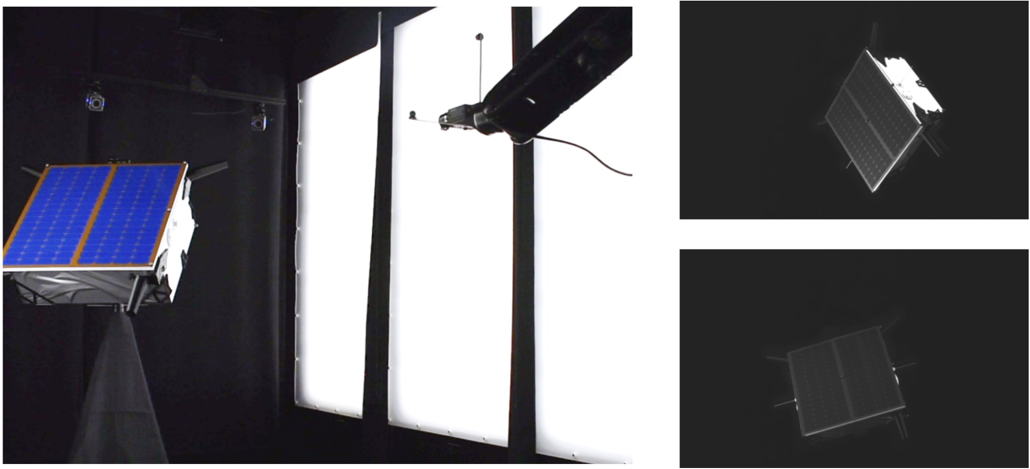
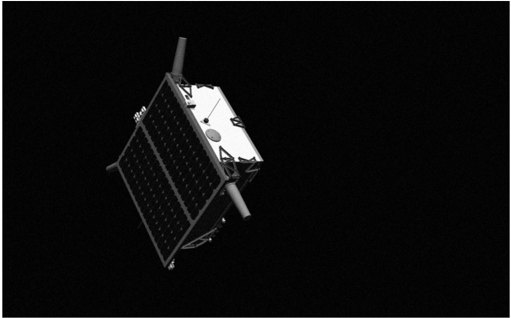
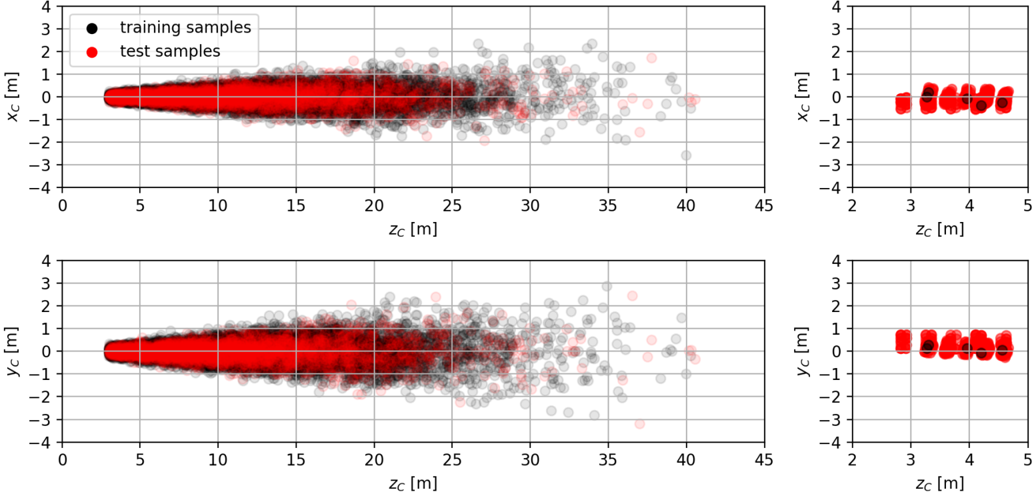
- SPEC was hosted on the ESA Kelvins platform and used the Spacecraft Pose Estimation Dataset (SPEED): synthetic images generated with an OpenGL-based optical stimulator and real images captured with the TRON facility using a Tango spacecraft mockup. The dataset contained almost 15,000 synthetic and 300 real images, partitioned into 12,000 synthetic + 5 real training images and 2,998 synthetic + 300 real test images; all images were grayscale at \(1920\times1200\) pixels.
- The competition metric combined orientation angular error and normalized position error into a single pose error, averaged over the test set. Submissions were primarily ranked on the synthetic test set and also evaluated on real images; during the competition only 20% of the test set was used for leaderboard evaluation.
- The paper analyzes submissions from 48 teams and a post-competition survey answered by 20 teams, including the top 13. It compares top submissions, top 4 approaches, PnP versus direct pose estimation, the effect of separate localization, and sample difficulty using the best prediction across submissions for each test image.
Limitations
- The paper states that real images are scarce, with only five labeled real training images, and that the real-image pose distribution is constrained by physical limitations of the TRON facility. It also notes discrepancies between synthetic and real images in texture, illumination, and eclipse of spacecraft features, and that real-image performance was weaker for most teams due to the domain gap.
- The paper states that the competition metric’s balance between position and orientation sensitivity depends on the test set’s distance distribution, and that only 20% of the test set was used during the competition to prevent overfitting.
- Evident from the text: the survey covered only 20 of 48 teams, so the approach comparison may not represent all submissions; the real test set contains 300 images and only five labeled real training images, limiting conclusions about generalization to real spaceborne imagery.
Model-written summary. Check it against the paper before relying on it.
Integrity signals
Registry
Cites
Statistics
Figures






Verification
Claims the paper makes
2 Valid · 3 Not valid · 9 Not checked · 70 Own results and interpretations
A result the paper reports from its own data — it cites no other source for it, so there is none to check. The quote shows it is in the paper.
In the paper
“These top three solutions were the only submissions to outperform the SLAB baseline.”
plain- Asserted: passes — The authors put it forward as true.
- Checkable: passes — It can be checked against evidence.
- Load-bearing: unclear — It is unclear whether the paper’s conclusions depend on it.
- Based: passes — The paper gives a reason why it holds.
A result the paper states — it cites no source for it, so there is none to check. The quote shows it is in the paper.
In the paper
“Due to physical limitations of the TRON facility in combination with the size of the satellite mockup, the distance distribution of real images is much more constrained, ranging from 2.8 to 4.7 meters.”
plainstates a cause- Asserted: passes — The authors put it forward as true.
- Checkable: passes — It can be checked against evidence.
- Load-bearing: unclear — It is unclear whether the paper’s conclusions depend on it.
- Based: passes — The paper gives a reason why it holds.
A result the paper states — it cites no source for it, so there is none to check. The quote shows it is in the paper.
In the paper
“Results on real images are weaker compared to those on synthetic images for most teams, except for three of the solutions.”
plain- Asserted: passes — The authors put it forward as true.
- Checkable: passes — It can be checked against evidence.
- Load-bearing: unclear — It is unclear whether the paper’s conclusions depend on it.
- Based: passes — The paper gives a reason why it holds.
- Rests on an assumption not shown here.
A result the paper states — it cites no source for it, so there is none to check. The quote shows it is in the paper.
In the paper
“Including a separate detection step was also found to be an important element of high performing pose estimation pipelines.”
plainstates an association- Asserted: passes — The authors put it forward as true.
- Checkable: passes — It can be checked against evidence.
- Load-bearing: passes — The paper’s conclusions depend on it.
- Based: passes — The paper gives a reason why it holds.
A result the paper reports from its own data — it cites no other source for it, so there is none to check. The quote shows it is in the paper.
In the paper
“Likewise, 1 ◦ orientation error was shown to be equivalent to 0 . 141 m translation error in the second case.”
plainstates an associationn = 2- Asserted: passes — The authors put it forward as true.
- Checkable: passes — It can be checked against evidence.
- Load-bearing: passes — The paper’s conclusions depend on it.
- Based: passes — The paper gives a reason why it holds.
32 more claims
Create a free account to see all 84 claims and every source verdict.
- Probably not a substantial claim. 26
- It may state two separate claims as one. 24
- The quote only partly states this claim. 1
Claims other papers make about this one
Each is checked against this paper’s own text: does it say what the citing paper says it does?
The source backs part of the claim, not all of it — or backs it for a different population, condition or comparison.
In the citing paper
“The TANGO satellite [145] model used in the multiple datasets [19,20,51,51,85,132] has a coarse dimension of 80 × 75 × 32 cm will lead to the operation range of ∼10 m.”
From A survey on deep learning-based monocular spacecraft pose estimation: Current state, limitations and prospects (2023) · cites this paper as [19]
Experimental — accuracy not yet measuredThe source backs part of the claim, not all of it — or backs it for a different population, condition or comparison.
In the citing paper
“The images from SPEED and SPEED+ are validated against the real images of TANGO spacecraft from the PRISMA mission using histogram comparison [19].”
From A survey on deep learning-based monocular spacecraft pose estimation: Current state, limitations and prospects (2023) · cites this paper as [19]
Experimental — accuracy not yet measuredThe source backs part of the claim, not all of it — or backs it for a different population, condition or comparison.
In the citing paper
“Even for the standard datasets such as SPEED [19] and SPEED+ [20], the only way to use a hybrid approach is to recover the 3D locations of interested keypoints is via the 3D reconstruction methods [66].”
From A survey on deep learning-based monocular spacecraft pose estimation: Current state, limitations and prospects (2023) · cites this paper as [19]
Experimental — accuracy not yet measuredThe source backs part of the claim, not all of it — or backs it for a different population, condition or comparison.
In the citing paper
“While several attempts have been made to mitigate the domain gap between synthetic and laboratory images, there persists a oneorder-of-magnitude difference between the best pose scores in the 2019 (synthetic test images) and 2021 (laboratory test images) editions of ESA's Satellite Pose Estimation Challenge [19,20].”
From A survey on deep learning-based monocular spacecraft pose estimation: Current state, limitations and prospects (2023) · cites this paper as [19]
Experimental — accuracy not yet measuredThe source backs part of the claim, not all of it — or backs it for a different population, condition or comparison.
In the citing paper
“While synthetic data generation and laboratory data acquisition have been identified as the most tractable ways to train and test such algorithms, the model performance degrades significantly when testing real in-orbit images [3,4].”
From Pose Estimation for Cross-Domain Non-Cooperative Spacecraft Based on Spatial-Aware Keypoints Regression (2024) · cites this paper as [3]
Experimental — accuracy not yet measured
8 more claims about this paper
Create a free account to see every claim other papers make about this one.
Self-check
Percentages, sums and reported differences re-computed from the paper’s own numbers.
Each contradiction between two passages listed here was confirmed by an independent check.
Rated minor: it would not touch a result — a value no result rests on, a p-value that stays on the same side of the significance level, or a conflict that is clerical, resolved elsewhere in the paper, or outside its own findings.
In the paper
§ D. Comparing approaches
“ranking on the first, second and fourth places.”
§ C. Survey on methods
“| 4. Team Platypus | 0.0703 | 1.7201 | 3 . 11 ± 4 . 31 | 0 . 221 ± 0 . 530 | No |”
Rated minor: it would not touch a result — a value no result rests on, a p-value that stays on the same side of the significance level, or a conflict that is clerical, resolved elsewhere in the paper, or outside its own findings.
In the paper
§ E. Difficulty of samples
“the winning team UNIADELAIDE achieved 0 . 41 ◦ ± 1 . 50 ◦ orientation error and 0 . 13 ± 0 . 09 m relative position error.”
§ C. Survey on methods
“| 1. UniAdelaide [47] | 0.0094 | 0.3752 | 0 . 41 ± 1 . 50 | 0 . 032 ± 0 . 095 | Yes |”
Citations
Cites
Deep Residual Learning for Image Recognition
He, K., Zhang, X., Ren, S., & Sun, J. (2016) · 2016 IEEE Conference on Computer Vision and Pattern Recognition (CVPR) · doi:10.1109/cvpr.2016.90 · Cited by 235,474 · cited 2×
“Various architectures were used from well known pre-trained models, such as ResNets [46], Inception v3 [47], and YOLO [48], [49], to custom models trained from scratch.”
ImageNet classification with deep convolutional neural networks
Krizhevsky, A., Sutskever, I., & Hinton, G. E. (2017) · Communications of the ACM · doi:10.1145/3065386 · Cited by 112,155 · cited 3×
“It was made possible by increasing computational resources represented by the graphical processing units (GPU) and the availability of large-scale datasets to train the DNN, such as ImageNet for classification [5], MS COCO for object detection [28], and LINEMOD for pose estimation [29] of ordinary household objects.”
ImageNet: A large-scale hierarchical image database
Deng, J., Dong, W., Socher, R., Li, L.-J., Li, K., & Fei-Fei, L. (2009) · 2009 IEEE Conference on Computer Vision and Pattern Recognition · doi:10.1109/cvpr.2009.5206848 · Cited by 65,333 · cited 1×
“Starting with the success of AlexNet [5] in the ImageNet Large Scale Visual Recognition Challenge [6] in 2012, deep learning models have been outperforming traditional approaches on a number of computer vision problems.”
Distinctive Image Features from Scale-Invariant Keypoints
Lowe, D. G. (2004) · International Journal of Computer Vision · doi:10.1023/b:visi.0000029664.99615.94 · Cited by 55,589 · cited 2×
“int/ as SIFT [21], SURF [22], and ORB features [23].”
Microsoft COCO: Common Objects in Context
Lin, T.-Y., Maire, M., Belongie, S., Hays, J., Perona, P., Ramanan, D., Dollár, P., & Zitnick, C. L. (2014) · Lecture Notes in Computer Science · doi:10.1007/978-3-319-10602-1_48 · Cited by 45,460 · cited 1×
“It was made possible by increasing computational resources represented by the graphical processing units (GPU) and the availability of large-scale datasets to train the DNN, such as ImageNet for classification [5], MS COCO for object detection [28], and LINEMOD for pose estimation [29] of ordinary household objects.”
Rethinking the Inception Architecture for Computer Vision
Szegedy, C., Vanhoucke, V., Ioffe, S., Shlens, J., & Wojna, Z. (2016) · 2016 IEEE Conference on Computer Vision and Pattern Recognition (CVPR) · doi:10.1109/cvpr.2016.308 · Cited by 32,138 · cited 1×
“Various architectures were used from well known pre-trained models, such as ResNets [46], Inception v3 [47], and YOLO [48], [49], to custom models trained from scratch.”
A Computational Approach to Edge Detection
Canny, J. (1986) · IEEE Transactions on Pattern Analysis and Machine Intelligence · doi:10.1109/tpami.1986.4767851 · Cited by 30,004 · cited 1×
“oach to monocular-based pose estimation of a target spacecraft [6]–[12] would first extract hand-crafted features of the target from a 2D image. These features include Harris corners [13], Canny edges [14], lines via Hough transform [15], or scale-invariant features such as SIFT [16], SURF [17], and ORB features [18].…”
MobileNetV2: Inverted Residuals and Linear Bottlenecks
Sandler, M., Howard, A., Zhu, M., Zhmoginov, A., & Chen, L.-C. (2018) · 2018 IEEE/CVF Conference on Computer Vision and Pattern Recognition · doi:10.1109/cvpr.2018.00474 · Cited by 28,755 · cited 1×
“However, the architectures exploit depthwise separable convolution operations [55] to significantly reduce the number of parameters associated with each network.”
Fischler, M. A., & Bolles, R. C. (1981) · Communications of the ACM · doi:10.1145/358669.358692 · Cited by 25,893
YOLO9000: Better, Faster, Stronger
Redmon, J., & Farhadi, A. (2017) · 2017 IEEE Conference on Computer Vision and Pattern Recognition (CVPR) · doi:10.1109/cvpr.2017.690 · Cited by 19,892 · cited 3×
“Various architectures were used from well-known pretrained models, such as ResNets [46], Inception v3 [56], and YOLO [53], [54], to custom models trained from scratch.”
YOLOv3: An Incremental Improvement
Redmon, J., & Farhadi, A. (2018) · arXiv · doi:10.48550/arxiv.1804.02767 · Cited by 17,141
A Multi-Modal Distributed Real-Time IoT System for Urban Traffic Control (Invited Paper)
Khanam, Z., Achari, V. P. S., Boukhennoufa, I., Jindal, A., & Singh, A. K. (2024) · DROPS (Schloss Dagstuhl – Leibniz Center for Informatics) · doi:10.4230/oasics.ng-res.2024.2 · Cited by 14,040
Speeded-Up Robust Features (SURF)
Bay, H., Ess, A., Tuytelaars, T., & Van Gool, L. (2008) · Computer Vision and Image Understanding · doi:10.1016/j.cviu.2007.09.014 · Cited by 13,557 · cited 2×
“These features include Harris corners [18], Canny edges [19], lines via Hough transform [20], or scale-invariant features such 3https://kelvins.esa.int/ as SIFT [21], SURF [22], and ORB features [23].”
MethodA Combined Corner and Edge Detector
Harris, C., & Stephens, M. (1988) · Procedings of the Alvey Vision Conference 1988 · doi:10.5244/c.2.23 · Cited by 12,901 · cited 1×
“These features include Harris corners [18], Canny edges [19], lines via Hough transform [20], or scale-invariant features such”
ORB: An efficient alternative to SIFT or SURF
Rublee, E., Rabaud, V., Konolige, K., & Bradski, G. (2011) · 2011 International Conference on Computer Vision · doi:10.1109/iccv.2011.6126544 · Cited by 11,037 · cited 1×
“int/ as SIFT [21], SURF [22], and ORB features [23].”
Generalizing the Hough transform to detect arbitrary shapes
Ballard, D. H. (1981) · Pattern Recognition · doi:10.1016/0031-3203(81)90009-1 · Cited by 4,371 · cited 1×
“These features include Harris corners [18], Canny edges [19], lines via Hough transform [20], or scale-invariant features such”
Deep Residual Learning for Image Recognition
He, K., Zhang, X., Ren, S., & Sun, J. (2015) · arXiv · doi:10.48550/arxiv.1512.03385 · Cited by 4,196
EPnP: An Accurate O(n) Solution to the PnP Problem
Lepetit, V., Moreno-Noguer, F., & Fua, P. (2009) · International Journal of Computer Vision · doi:10.1007/s11263-008-0152-6 · Cited by 3,298
ImageNet: A large-scale hierarchical image database
Deng, J. H., Dong, W. F., Socher, R., Li, L.-J., Li, K., & Fei-Fei, L. (2009) · IEEE Computer Society Conference on Computer Vision and Pattern Recognition/Proceedings - IEEE Computer Society Conference on Computer Vision and Pattern Recognition/Proceedings · doi:10.1109/cvprw.2009.5206848 · Cited by 2,714
Microsoft COCO: Common Objects in Context
Lin, T.-Y., Maire, M., Belongie, S., Bourdev, L., Girshick, R., Hays, J., Perona, P., Ramanan, D., Zitnick, C. L., & Dollár, P. (2014) · arXiv · doi:10.48550/arxiv.1405.0312 · Cited by 2,579
PoseNet: A Convolutional Network for Real-Time 6-DOF Camera Relocalization
Kendall, A., Grimes, M., & Cipolla, R. (2015) · 2015 IEEE International Conference on Computer Vision (ICCV) · doi:10.1109/iccv.2015.336 · Cited by 2,489 · cited 1×
“While it is not uncommon to have separate orientation and position metrics [32], a single scalar score was used instead to rank the submissions on the leaderboard.”
PoseCNN: A Convolutional Neural Network for 6D Object Pose Estimation in Cluttered Scenes
Xiang, Y., Schmidt, T., Narayanan, V., & Fox, D. (2018) · Robotics: Science and Systems XIV · doi:10.15607/rss.2018.xiv.019 · Cited by 2,139 · cited 2×
“For example, PoseCNN [37] directly regresses a 3D translation vector and a unit quaternion representing the relative attitude of the target, whereas SPN [7], [9] poses attitude prediction as a classification problem by discretizing the viewpoint space into a finite number of bins.”
Fischler, M. A., & Bolles, R. C. (1987) · Readings in Computer Vision · doi:10.1016/b978-0-08-051581-6.50070-2 · Cited by 2,122
Hinterstoisser, S., Lepetit, V., Ilic, S., Holzer, S., Bradski, G., Konolige, K., & Navab, N. (2013) · Lecture Notes in Computer Science · doi:10.1007/978-3-642-37331-2_42 · Cited by 1,161 · cited 2×
“phical Processing Units (GPU) and the availability of large-scale datasets to train the DNN, such as ImageNet for classification [5], MS COCO for object detection [28], and LINEMOD for pose estimation [29] of ordinary household objects. While various DNN-based approaches have been proposed to perform pose estimation [3…”
PVNet: Pixel-Wise Voting Network for 6DoF Pose Estimation
Peng, S., Liu, Y., Huang, Q., Zhou, X., & Bao, H. (2019) · 2019 IEEE/CVF Conference on Computer Vision and Pattern Recognition (CVPR) · doi:10.1109/cvpr.2019.00469 · Cited by 1,061 · cited 3×
“Most recently, architectures like KPD [39] and PVNet [40] have been proposed to predict the locations of the 2D keypoints on the target’s surface.”
SSD-6D: Making RGB-Based 3D Detection and 6D Pose Estimation Great Again
Kehl, W., Manhardt, F., Tombari, F., Ilic, S., & Navab, N. (2017) · 2017 IEEE International Conference on Computer Vision (ICCV) · doi:10.1109/iccv.2017.169 · Cited by 1,047
Real-Time Seamless Single Shot 6D Object Pose Prediction
Tekin, B., Sinha, S. N., & Fua, P. (2018) · 2018 IEEE/CVF Conference on Computer Vision and Pattern Recognition · doi:10.1109/cvpr.2018.00038 · Cited by 900
Rad, M., & Lepetit, V. (2017) · 2017 IEEE International Conference on Computer Vision (ICCV) · doi:10.1109/iccv.2017.413 · Cited by 843
Rethinking the Inception Architecture for Computer Vision
Szegedy, C., Vanhoucke, V., Ioffe, S., Shlens, J., & Wojna, Z. (2015) · arXiv · doi:10.48550/arxiv.1512.00567 · Cited by 741 · cited 1×
“Various architectures were used from well known pre-trained models, such as ResNets [46], Inception v3 [47], and YOLO [48], [49], to custom models trained from scratch.”
Render for CNN: Viewpoint Estimation in Images Using CNNs Trained with Rendered 3D Model Views
Su, H., Qi, C. R., Li, Y., & Guibas, L. J. (2015) · 2015 IEEE International Conference on Computer Vision (ICCV) · doi:10.1109/iccv.2015.308 · Cited by 680
High-Resolution Representations for Labeling Pixels and Regions
Sun, K., Zhao, Y. S., Jiang, B., Cheng, T., Xiao, B., Liu, D., Mu, Y., Wang, X., Liu, W., & Wang, J. (2019) · arXiv (Cornell University) · doi:10.48550/arxiv.1904.04514 · Cited by 614 · cited 2×
“The team uses HRNet [50] to regress the heatmaps associated with each landmark instead of directly regressing the 2D coordinates.”
Implicit 3D Orientation Learning for 6D Object Detection from RGB Images
Sundermeyer, M., Marton, Z.-C., Durner, M., Brucker, M., & Triebel, R. (2018) · Lecture Notes in Computer Science · doi:10.1007/978-3-030-01231-1_43 · Cited by 564
Uncertainty-Driven 6D Pose Estimation of Objects and Scenes from a Single RGB Image
Brachmann, E., Michel, F., Krull, A., Yang, M. Y., Gumhold, S., & Rother, C. (2016) · 2016 IEEE Conference on Computer Vision and Pattern Recognition (CVPR) · doi:10.1109/cvpr.2016.366 · Cited by 530 · cited 1×
“The reprojection error is the average distance between projected keypoints measured in 2-D on the image plane [45].”
YOLO9000: Better, Faster, Stronger
Redmon, J., & Farhadi, A. (2016) · arXiv · doi:10.48550/arxiv.1612.08242 · Cited by 488
Tulsiani, S., & Malik, J. (2015) · 2015 IEEE Conference on Computer Vision and Pattern Recognition (CVPR) · doi:10.1109/cvpr.2015.7298758 · Cited by 346 · cited 1×
“While various DNN-based approaches have been proposed to perform pose estimation [30]–[40], current state-of-the-art methods employ convolutional neural networks (CNNs) that directly predict the 6-D pose or an intermediate information that can be used to compute the 6-D pose, notably a set of keypoints defined a prior…”
Segmentation-Driven 6D Object Pose Estimation
Hu, Y., Hugonot, J., Fua, P., & Salzmann, M. (2019) · 2019 IEEE/CVF Conference on Computer Vision and Pattern Recognition (CVPR) · doi:10.1109/cvpr.2019.00350 · Cited by 333 · cited 10×
“Their approach is based on segmentation-driven CNN [51], which divides the image into S × S grids and has each grid predict the presence of the object (segmentation) and 2D locations of the 8 keypoints along with their confidence values.”
InfluentialKalman filtering for relative spacecraft attitude and position estimation
Kim, S.-G., Crassidis, J. L., Cheng, Y., Fosbury, A. M., & Junkins, J. L. (2007) · Journal of Guidance Control and Dynamics · doi:10.2514/1.22377 · Cited by 320 · cited 1×
“The process is crucial in providing a good initial pose estimate to the on-board vision-based navigation system [24], [25].”
Deep Learning for Spacecraft Pose Estimation from Photorealistic Rendering
Proenca, P. F., & Gao, Y. (2019) · arXiv · Cited by 251 · cited 1×
“pedro_fairspace [44] submitted the best submission that did not rely on PnP solvers, finishing on the third place.”
Deep Learning for Spacecraft Pose Estimation from Photorealistic Rendering
Proenca, P. F., & Gao, Y. (2020) · 2020 IEEE International Conference on Robotics and Automation (ICRA) · doi:10.1109/icra40945.2020.9197244 · Cited by 229 · cited 1×
“pedro_fairspace [44] submitted the best submission that did not rely on PnP solvers, finishing on the third place.”
RemoveDEBRIS: An in-orbit active debris removal demonstration mission
Forshaw, J. L., Aglietti, G. S., Navarathinam, N., Kadhem, H., Salmon, T., Pisseloup, A., Joffre, E., Chabot, T., Retat, I., Axthelm, R., et al. (2016) · Acta Astronautica · doi:10.1016/j.actaastro.2016.06.018 · Cited by 217 · cited 2×
“These include the RemoveDEBRIS mission by the Surrey Space Centre [1], the Phoenix program by the Defense Advanced Research Projects Agency [2], the Restore-L mission by NASA [3], and the on-orbit servicing programs proposed by startup companies such as Infinite Orbits1 and Effective Space.”
3D Pose Regression Using Convolutional Neural Networks
Mahendran, S., Ali, H., & Vidal, R. (2017) · 2017 IEEE Conference on Computer Vision and Pattern Recognition Workshops (CVPRW) · doi:10.1109/cvprw.2017.73 · Cited by 210
Pose estimation for non-cooperative spacecraft rendezvous using convolutional neural networks
Sharma, S., Beierle, C., & D'Amico, S. (2018) · 2018 IEEE Aerospace Conference · doi:10.1109/aero.2018.8396425 · Cited by 207 · cited 1×
“The synthetic images of the Tango spacecraft are created using the camera emulator software of the Optical Stimulator [42], [43].”
Self-citationSatellite Pose Estimation with Deep Landmark Regression and Nonlinear Pose Refinement
Chen, B., Cao, J., Parra, A., & Chin, T.-J. (2019) · 2019 IEEE/CVF International Conference on Computer Vision Workshop (ICCVW) · doi:10.1109/iccvw.2019.00343 · Cited by 203
PVNet: Pixel-Wise Voting Network for 6DoF Object Pose Estimation
Peng, S., Zhou, X., Liu, Y., Lin, H., Huang, Q., & Bao, H. (2020) · IEEE Transactions on Pattern Analysis and Machine Intelligence · doi:10.1109/tpami.2020.3047388 · Cited by 170
Pasqualetto Cassinis, L., Fonod, R., & Gill, E. (2019) · Progress in Aerospace Sciences · doi:10.1016/j.paerosci.2019.05.008 · Cited by 156
Pose estimation of an uncooperative spacecraft from actual space imagery
D', S., Amico, N. A., Benn, M., & Jørgensen, J. L. (2014) · International Journal of Space Science and Engineering · doi:10.1504/ijspacese.2014.060600 · Cited by 132 · cited 2×
“[16] were one of the first to publish pose estimation results using the Hough transform and the Canny edge detector on spaceborne images captured during the rendezvous phase of the PRISMA mission [16], [26].”
Robust Model-Based Monocular Pose Initialization for Noncooperative Spacecraft Rendezvous
Sharma, S., Ventura, J., & D’Amico, S. (2018) · Journal of Spacecraft and Rockets · doi:10.2514/1.a34124 · Cited by 128 · cited 1×
“[27], who additionally introduced weak gradient elimination technique to essentially separate the spacecraft’s edge features from the weak edge features of the background.”
Self-citationThe Restore-L Servicing Mission
Reed, B. B., Smith, R. C., Naasz, B. J., Pellegrino, J. F., & Bacon, C. E. (2016) · AIAA SPACE 2016 · doi:10.2514/6.2016-5478 · Cited by 119 · cited 1×
“in Earth orbits and extend the lifetime of geostationary satellites. These include the RemoveDEBRIS mission by Surrey Space Centre [1], the Phoenix program by DARPA [2], the Restore-L mission by NASA [3], and the on-orbit servicing programs proposed by startup companies such as Infinite Orbits1 and Effective Space2. A…”
MethodVision-based space autonomous rendezvous: A case study
Petit, A., Marchand, É., & Kanani, K. (2011) · IEEE/RSJ International Conference on Intelligent Robots and Systems (IROS) · doi:10.1109/iros.2011.6048176 · Cited by 67
Towards Robust Learning-Based Pose Estimation of Noncooperative Spacecraft
Park, T. H., Sharma, S., & D'Amico, S. (2019) · arXiv · doi:10.48550/arxiv.1909.00392 · Cited by 65 · cited 10×
“: SATELLITE POSE ESTIMATION CHALLENGE: DATASET, COMPETITION DESIGN, AND RESULTS 4089 based on the CNN, was developed during the competition by the SLAB and is used for comparison purposes.”
MethodResultInfluentialSelf-citationVision-based space autonomous rendezvous: A case study
Petit, A., Marchand, É., & Kanani, K. (2011) · IEEE/RSJ International Conference on Intelligent Robots and Systems (IROS) · doi:10.1109/iros.2011.6094568 · Cited by 45 · cited 1×
“Earlier works on initial pose estimation tended to rely on a coarse a priori knowledge of the target’s pose [11], [13], [14] or assumed the availability of active fiduciary markers or sensors on the target [12].”
Real-Time Seamless Single Shot 6D Object Pose PredictionPreprint
Tekin, B., Sinha, S. N., & Fua, P. (2017) · arXiv (Cornell University) · doi:10.48550/arxiv.1711.08848 · Cited by 41
Pose Estimation for Non-Cooperative Rendezvous Using Neural Networks
Sharma, S., & D'Amico, S. (2019) · arXiv · Cited by 40 · cited 3×
“nd a unit quaternion describing the relative orientation of the Tango spacecraft with respect to the camera, are released along with the associated training images. The readers are encouraged to read [36] and [37] for more details on the dataset. A. Creation of the synthetic dataset The synthetic images of the Tango s…”
BackgroundMethodResultInfluentialSelf-citationEstimating 6D Pose From Localizing Designated Surface KeypointsPreprint
Zhao, Z., Gao, P., Wang, H., Fang, H.-S., Li, C., & Lu, C. (2018) · arXiv (Cornell University) · doi:10.48550/arxiv.1812.01387 · Cited by 37 · cited 2×
“Most recently, architectures like KPD [39] and PVNet [40] have been proposed to predict the locations of the 2D keypoints on the target’s surface.”
DARPA Phoenix Payload Orbital Delivery System (PODs): “FedEx to GEO”
Sullivan, B. R., Barnhart, D. A., Hill, L. R., Oppenheimer, P., Benedict, B. L., van Ommering, G., Chappell, L., Ratti, J., & Will, P. M. (2013) · AIAA SPACE Conference & Exposition · doi:10.2514/6.2013-5484 · Cited by 31 · cited 1×
“These include the RemoveDEBRIS mission by the Surrey Space Centre [1], the Phoenix program by the Defense Advanced Research Projects Agency [2], the Restore-L mission by NASA [3], and the on-orbit servicing programs proposed by startup companies such as Infinite Orbits1 and Effective Space.”
Cropp, A. (2001) · Surrey Research Insight Open Access (The University of Surrey) · Cited by 30
Beierle, C., & D’Amico, S. (2019) · Journal of Spacecraft and Rockets · doi:10.2514/1.a34337 · Cited by 29
Self-citationViewpoints and KeypointsPreprint
Tulsiani, S., & Malik, J. (2014) · arXiv (Cornell University) · doi:10.48550/arxiv.1411.6067 · Cited by 29
Orbital Express Autonomous Rendezvous and Capture Sensor System (ARCSS) flight test results
Leinz, M. R., Chen, C.-T., Beaven, M. W., Weismuller, T., Caballero, D. L., Gaumer, W., Sabasteanski, P. W., Scott, P., & Lundgren, M. A. (2008) · Proceedings of SPIE, the International Society for Optical Engineering/Proceedings of SPIE · doi:10.1117/12.779595 · Cited by 26 · cited 1×
“Earlier works on initial pose estimation tended to rely on a coarse a priori knowledge of the target’s pose [11], [13], [14] or assumed the availability of active fiduciary markers or sensors on the target [12].”
Vision Based Navigation for Debris Removal Missions
Kanani, K., Petit, A., Marchand, É., Chabot, T., & Gerber, B. (2012) · HAL · Cited by 25
D’Amico, S., Bodin, P., Delpech, M., & Noteborn, R. (2013) · Distributed Space Missions for Earth System Monitoring · doi:10.1007/978-1-4614-4541-8_21 · Cited by 24
Self-citationSpacecraft Pose Estimation Dataset (SPEED)
Kisantal, M., Sharma, S. K., Park, T. H., Izzo, D., Märtens, M., & D’Amico, S. (2019) · Zenodo (CERN European Organization for Nuclear Research) · doi:10.5281/zenodo.6327546 · Cited by 17
Self-citationClosed‐form solution of monocular vision‐based relative pose determination for RVD spacecrafts
Zhang, S., & Cao, X.-B. (2005) · Aircraft Engineering and Aerospace Technology · doi:10.1108/00022660510597214 · Cited by 14 · cited 1×
“good initial pose estimate to the on-board vision-based navigation system [24], [25]. Earlier works on initial pose estimation tended to rely on a coarse a priori knowledge of the target’s pose [11], [13], [14] or assumed the availability of active fiduciary markers or sensors on the target [12]. Without making any suc…”
BackgroundVision-Based 3D Motion Estimation for On-Orbit Proximity Satellite Tracking and Navigation
Grompone, A. (2015) · Calhoun: The Naval Postgraduate School Institutional Archive (Naval Postgraduate School) · Cited by 13
Spacecraft Pose Estimation Dataset (SPEED)
(2019) · doi:10.5281/zenodo.6327547 · Cited by 12
Implicit 3D Orientation Learning for 6D Object Detection from RGB ImagesPreprint
Sundermeyer, M., Márton, Z.-C., Durner, M., Brucker, M., & Triebel, R. (2019) · arXiv (Cornell University) · doi:10.48550/arxiv.1902.01275 · Cited by 6
Satellite Pose Estimation with Deep Landmark Regression and Nonlinear Pose Refinement
Chen, B., Cao, J., Parra, A., et al. (2019) · arXiv · doi:10.48550/arxiv.1908.11542
Research works printed but not linked: 3
- Sharma, Reduced-dynamics pose estimation for non-cooperative spacecraft rendezvous using monocular vision
- 10.1109/iccvw.2017.254 · doi:10.1109/iccvw.2017.254 · Paper page
- 10.1109/aero.2018.8396425 · DOI · Paper page
Cited by
Neural Network-Based Pose Estimation for Noncooperative Spacecraft Rendezvous
Sharma, S., & D'Amico, S. (2020) · IEEE Transactions on Aerospace and Electronic Systems · doi:10.1109/taes.2020.2999148 · Cited by 196
Self-citationArtificial intelligence for satellite communication: A review
Fourati, F., & Alouini, M.-S. (2021) · Intelligent and Converged Networks · doi:10.23919/icn.2021.0015 · Cited by 190
“The recent proposal for satellite pose estimation from a single image via combined ML and geometric optimization by Chen et al. [183] won the first place in the recent Kelvins pose estimation challenge organized by the European Space Agency [184].”
MethodSPEED+: Next-Generation Dataset for Spacecraft Pose Estimation across Domain Gap
Park, T. H., Martens, M., Lecuyer, G., Izzo, D., & D'Amico, S. (2022) · 2022 IEEE Aerospace Conference (AERO) · doi:10.1109/aero53065.2022.9843439 · Cited by 170
“The pose error, also known as the SPEED score, was the official competition metric used in SPEC2019, chosen as it has shown to properly balance the contribution of the position and orientation errors [5].”
Self-citationWide-Depth-Range 6D Object Pose Estimation in Space
Hu, Y., Speierer, S., Jakob, W., Fua, P., & Salzmann, M. (2021) · IEEE Computer Society Conference on Computer Vision and Pattern Recognition/Proceedings - IEEE Computer Society Conference on Computer Vision and Pattern Recognition/Proceedings · doi:10.1109/cvpr46437.2021.01561 · Cited by 168
“To address such challenges, the European Space Agency (ESA) and Stanford University recently organized a satellite pose estimation challenge based on the Spacecraft Pose Estimation Dataset (SPEED) [19].”
MethodInfluentialRobust multi-task learning and online refinement for spacecraft pose estimation across domain gap
Park, T. H., & D’Amico, S. (2024) · Advances in Space Research · doi:10.1016/j.asr.2023.03.036 · Cited by 125
“Afterwards, many top-performing entries of SPEC2019 have shown diverse CNN architectures and pose estimation strategies, such as prob-ablistic orientation estimation via soft classification (Proenc¸a & Gao, 2020) or estimation of a set of designated keypoints on the spacecraft surface via direction regression (Park et…”
BackgroundInfluentialSelf-citation
Metadata
- Authors
- Kisantal, M., Sharma, S., Park, T. H., Izzo, D., Martens, M., & D'Amico, S.
- Affiliations
- Stanford University (US)
- European Space Agency (FR)
- Venue
- IEEE Transactions on Aerospace and Electronic Systems
- Published
- 2020-10
- Volume
- 56
- Issue
- 5
- Pages
- 4083-4098
- ISSN
- 0018-9251 (ISSN-L)
- 1557-9603
- 2371-9877
- OpenAlex
- W2988274083
- Cited by
- 304
- References
- 74
- Citations by year
- 2026: 52 · 2025: 73 · 2024: 60 · 2023: 58 · 2022: 28 · 2021: 30 · 2020: 3
- FWCI
- 17.86
- Type
- journal article
- Language
- en
- Open access
- green
- arxiv.org
- Licence
- Locations
- IEEE Transactions on Aerospace and Electronic Systems (publishedVersion)
- arXiv (Cornell University) (submittedVersion)
- arXiv (Cornell University)
- Stanford Digital Repository
- Funders
- Air Force Office of Scientific Research
- Defense University Research Instrumentation Program (FA9550-18-1-0492)
- Topics
- Physical Sciences › Engineering › Aerospace Engineering › Space Satellite Systems and Control
- Physical Sciences › Engineering › Aerospace Engineering › Spacecraft Dynamics and Control
- Social Sciences › Political Science and International Relations › Space exploration and regulation
- Keywords
- satellite pose estimation, monocular vision, on-orbit servicing, space debris removal, synthetic images, machine learning competition, performance indicators, testbed
About these checks
Registry, retraction, Cites and statistics results are computed, not judged, with one exception: a printed reference that no index lists is read once by a model before it counts as a citation error. Claims are extracted by a model and kept only when their quote appears verbatim in the text; each cited source is then checked, with a model’s help, for whether it says what the claim relies on. Those verdicts can be wrong — read the claim’s quote and the cited source before relying on one.
A language model drew the claims from the paper on 2026-10-12, under version 3 of the claim definition (model deepseek-v4.1-flash, prompt extract-v3).
A second model labelled each claim on 2026-10-12 (model jev-1.13-20260917, definition revision gold-guideline-v0.2).
Statistics and arithmetic are recomputed, not judged.
Confidence bands are shown only for fields calibrated on our annotated test set. None is calibrated yet, so no band is shown.
What counts as a claim ›How we measure confidence ›How we check this ›
Are you an author, or do you see a problem with this page? Request a review
Data sources
Bibliographic data: Semantic Scholar, OpenAlex, Crossref.
Contains information from the Semantic Scholar Academic Graph Datasets, made available under the ODC Attribution License (ODC-BY 1.0).
Semantic Scholar’s data is described in: Kinney, R., et al. (2023). The Semantic Scholar Open Data Platform. arXiv:2301.10140.
