

The DOI matches its Crossref record; 40 of the 40 references it cites were found in a registry or an index; 1 of the 23 sources its claims cite were checked for support.
Fast and Accurate Error Simulation for CNNs Against Soft Errors
Open accessAbstract
The great quest for adopting AI-based computation for safety-/mission-critical applications motivates the interest towards methods for assessing the robustness of the application w.r.t. not only its training/tuning but also errors due to faults, in particular soft errors, affecting the underlying hardware. Two strategies exist: architecture-level fault injection and application-level functional error simulation. We present a framework for the reliability analysis of Convolutional Neural Networks (CNNs) via an error simulation engine that exploits a set of validated error models extracted from a detailed fault injection campaign. These error models are defined based on the corruption patterns of the output of the CNN operators induced by faults and bridge the gap between fault injection and error simulation, exploiting the advantages of both approaches. We compared our methodology against SASSIFI for the accuracy of functional error simulation w.r.t. fault injection, and against TensorFI in terms of speedup for the error simulation strategy. Experimental results show that our methodology achieves about 99% accuracy of the fault effects w.r.t. SASSIFI, and a speedup ranging from 44x up to 63x w.r.t. TensorFI, that only implements a limited set of error models.
Overview
CoChat Summary
TL;DR
CLASSES is a cross-layer framework that derives validated functional error models for CNN operators from architecture-level GPU fault injection and uses them in a TensorFlow-based error simulator for fast reliability analysis. It reports about 99% accuracy versus SASSIFI and 44x–63x speedup versus TensorFI on smaller CNNs.
Key findings
- CLASSES achieved an average 98.72% accuracy versus SASSIFI in reproducing fault effects on the final YOLO V3 output, with about 6x speedup: 137,004 relevant error simulation experiments took about 15 hours in CLASSES versus about 92 hours for the hybrid SASSIFI configuration.
- Against TensorFI, CLASSES achieved speedups of about 44x and 63x on LeNet-5 and CIFAR10 for 10,000 error simulation experiments: TensorFI took 18 min and 40 min, while CLASSES took 0.41 min and 0.63 min, respectively.
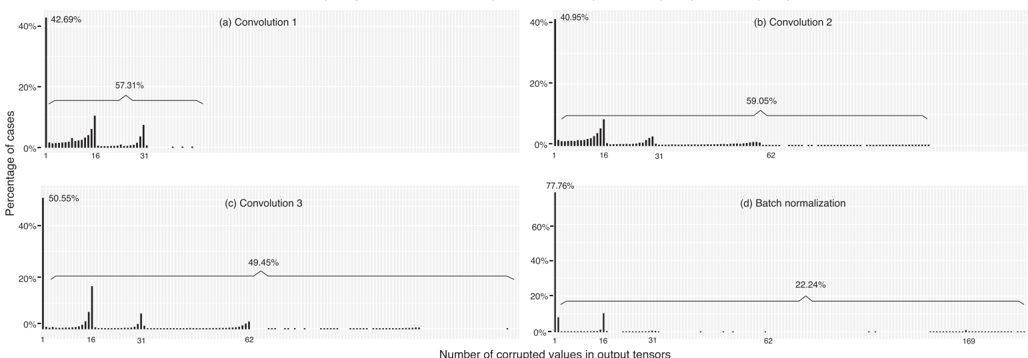
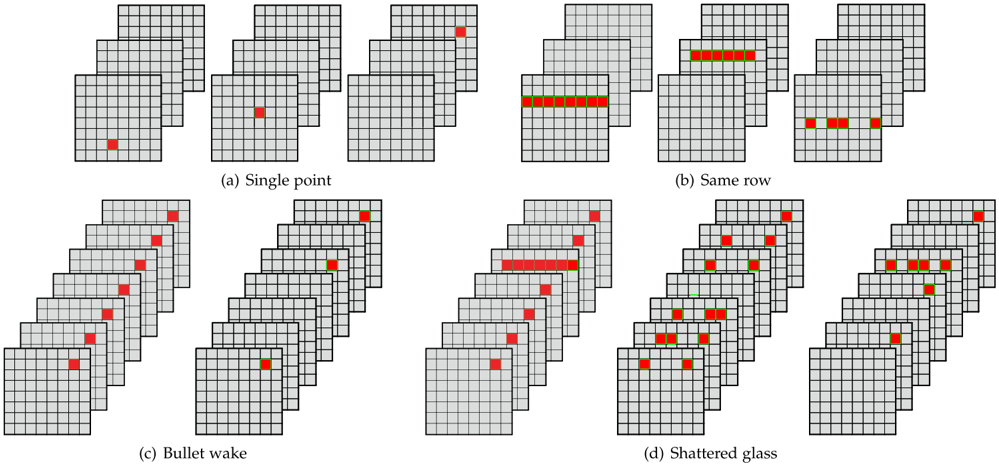
- The fault injection campaign ran 360,000 experiments and collected 137,004 corrupted tensors; for most operators, 85%–92% of corrupted output tensors contained only one erroneous value, while Convolution and Batch normalization showed multiple corrupted values in 22%–57% of cases.
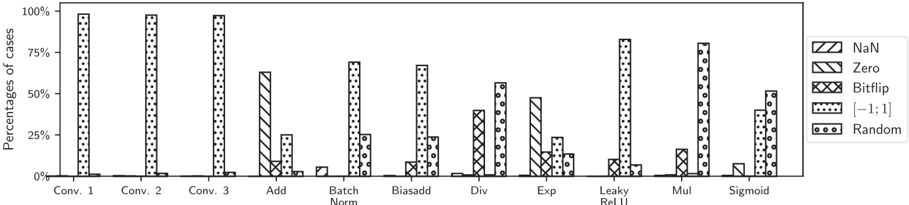
- The analysis found that 93.65% of fault effects on average caused well-identifiable spatial patterns, and random patterns had less than 6.35% incidence; no error model was defined for random patterns.
Methods
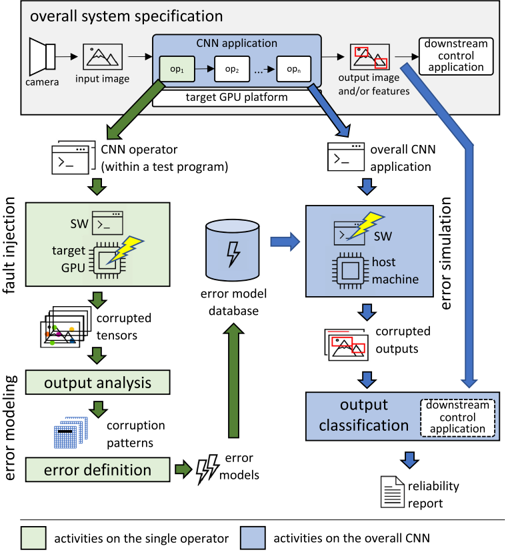
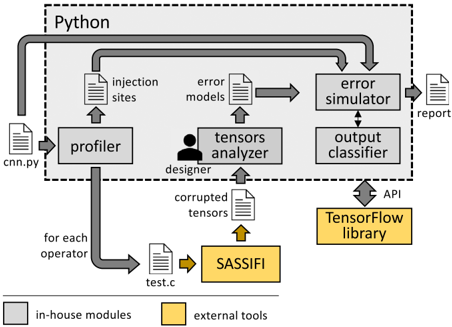
- CLASSES combines architecture-level fault injection on individual CNN operators using SASSIFI on an NVIDIA GeForce GT 750M, followed by automated analysis of corrupted tensors to derive error models based on error cardinality, value domain, and spatial distribution.
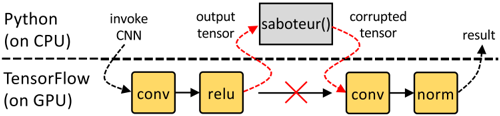
- The error models are integrated into a TensorFlow-based functional error simulator that inserts saboteurs at operator output tensors and uses a usability-based output classifier for the downstream application.
- The main case study was YOLO V3 trained on COCO, with about 6,000 operator instances and 45 operator types; 11 operator types were considered for fault injection. LeNet-5 and CIFAR10 were used for performance comparison against TensorFI, and 10,000 random error simulations were run for timing.
Limitations
- The paper states that manual inspection is required to classify corrupted tensors not handled by the automated script, and future work will automate this via data mining; random spatial patterns are not modeled, though their incidence is less than 6.35%.
- The paper states that when a new CNN is considered, the fault injection and error modeling activities may need to be re-executed to guarantee an accurate and updated error model repository; it also notes that TensorFI comparison was only performance-based because TensorFI implements a reduced subset of error models, and YOLO could not be run with TensorFI due to unsupported operators and tensor data format.
- Evident from the text: the error models were extracted from one target GPU, the NVIDIA GeForce GT 750M implementing the Kepler architecture, and the paper says future work will extend the framework to other platforms and ML algorithms, so generalization beyond this setup is not yet demonstrated.
Model-written summary. Check it against the paper before relying on it.
Integrity signals
Registry
Cites
Statistics
Figures



Verification
Claims the paper makes
1 Valid · 4 Not valid · 17 Not checked · 87 Own results and interpretations
A result the paper reports from its own data — it cites no other source for it, so there is none to check. The quote shows it is in the paper.
In the paper
“Experimental results show that our methodology achieves about 99% accuracy of the fault effects w.r.t. SASSIFI”
- Also stated in: § 1 INTRODUCTION · p. 2 · plain
“CLASSES achieves about 99% accuracy in terms of effect of the fault on the final YOLO V3 output”
plainstates an association- Asserted: passes — The authors put it forward as true.
- Checkable: passes — It can be checked against evidence.
- Load-bearing: passes — The paper’s conclusions depend on it.
- Based: passes — The paper gives a reason why it holds.
- Also stated in: § 1 INTRODUCTION · p. 2 · plain
A result the paper reports from its own data — it cites no other source for it, so there is none to check. The quote shows it is in the paper.
In the paper
“We first analyzed the number of erroneous values found in a corrupted output tensor; such a number is strongly dependent on the operator under analysis.”
boostedstates an association- Asserted: passes — The authors put it forward as true.
- Checkable: passes — It can be checked against evidence.
- Load-bearing: passes — The paper’s conclusions depend on it.
- Based: passes — The paper gives a reason why it holds.
A result the paper reports from its own data — it cites no other source for it, so there is none to check. The quote shows it is in the paper.
In the paper
“To perform the same 137,004 relevant error simulation experiments CLASSES took about 15 hours”
plain- Asserted: passes — The authors put it forward as true.
- Checkable: passes — It can be checked against evidence.
- Load-bearing: passes — The paper’s conclusions depend on it.
- Based: passes — The paper gives a reason why it holds.
A result the paper states — it cites no source for it, so there is none to check. The quote shows it is in the paper.
In the paper
“Most of the faults that cause less than 16 erroneous values in the output tensor affect only a single feature map.”
plainstates an association- Asserted: passes — The authors put it forward as true.
- Checkable: passes — It can be checked against evidence.
- Load-bearing: unclear — It is unclear whether the paper’s conclusions depend on it.
- Based: passes — The paper gives a reason why it holds.
A result the paper reports from its own data — it cites no other source for it, so there is none to check. The quote shows it is in the paper.
In the paper
“corresponding to a 6x speedup with respect to the hybrid SASSIFI configuration.”
- Also stated in: § 9 CONCLUSION · p. 13 · plain
“with about 6x speedup w.r.t. SASSIFI”
plainstates a cause- Asserted: passes — The authors put it forward as true.
- Checkable: passes — It can be checked against evidence.
- Load-bearing: passes — The paper’s conclusions depend on it.
- Based: passes — The paper gives a reason why it holds.
- Also stated in: § 9 CONCLUSION · p. 13 · plain
46 more claims
Create a free account to see all 109 claims and every source verdict.
- It may state two separate claims as one. 35
- Probably not a substantial claim. 35
Self-check
Percentages, sums and reported differences re-computed from the paper’s own numbers.
Each contradiction between two passages listed here was confirmed by an independent check.
Rated minor: it would not touch a result — a value no result rests on, a p-value that stays on the same side of the significance level, or a conflict that is clerical, resolved elsewhere in the paper, or outside its own findings.
In the paper
§ 6.3.3 Spatial Distribution · p. 10
“spatial distributions involving multiple feature maps only appear for the Convolution ( 1 , 2 , or 3 ) and the Batch normalization operators”
§ 6.4 Error Model Definition · p. 11
“| Add | 90.3% | 1.8% | 0.8% | 0.0% | 0.0% | 7.1% |”
Citations
Cites
Microsoft COCO: Common Objects in Context
Lin, T.-Y., Maire, M., Belongie, S., Hays, J., Perona, P., Ramanan, D., Dollár, P., & Zitnick, C. L. (2014) · Lecture Notes in Computer Science · doi:10.1007/978-3-319-10602-1_48 · Cited by 45,460
PyTorch: An Imperative Style, High-Performance Deep Learning Library
Paszke, A., Gross, S., Massa, F., Lerer, A., Bradbury, J., Chanan, G., Killeen, T., Lin, Z., Gimelshein, N., Antiga, L., et al. (2019) · arXiv · doi:10.48550/arxiv.1912.01703 · Cited by 31,473
YOLOv3: An Incremental Improvement
Redmon, J., & Farhadi, A. (2018) · arXiv · doi:10.48550/arxiv.1804.02767 · Cited by 17,141
Backpropagation Applied to Handwritten Zip Code Recognition
LeCun, Y., Boser, B., Denker, J. S., Henderson, D., Howard, R. E., Hubbard, W., & Jackel, L. D. (1989) · Neural Computation · doi:10.1162/neco.1989.1.4.541 · Cited by 11,891 · cited 8×
“Due to implementation limitations for existing tools, we used both the YOLO V3 CNN [24], and two smaller size benchmarks, LeNet-5 [25] and CIFAR10 [26].”
MethodResultInfluentialCaffe: Convolutional Architecture for Fast Feature Embedding
Jia, Y., Shelhamer, E., Donahue, J., Karayev, S., Long, J., Girshick, R., Guadarrama, S., & Darrell, T. (2014) · Proceedings of the 22nd ACM international conference on Multimedia · doi:10.1145/2647868.2654889 · Cited by 11,077 · cited 8×
“Nonetheless, this implementation choice considerably simplifies the development and integration in SASSIFI; Caffe is a stand-alone library accelerated onto GPU.”
MethodInfluentialTensorFlow: Large-Scale Machine Learning on Heterogeneous Distributed Systems
Abadi, M., Agarwal, A., Barham, P., Brevdo, E., Chen, Z., Citro, C., Corrado, G. S., Davis, A., Dean, J., Devin, M., et al. (2016) · arXiv · doi:10.48550/arxiv.1603.04467 · Cited by 9,408
Caffe: Convolutional Architecture for Fast Feature Embedding
Jia, Y., Shelhamer, E., Donahue, J., Karayev, S., Long, J., Girshick, R., Guadarrama, S., & Darrell, T. J. (2014) · arXiv (Cornell University) · doi:10.48550/arxiv.1408.5093 · Cited by 3,752
Microsoft COCO: Common Objects in Context
Lin, T.-Y., Maire, M., Belongie, S., Bourdev, L., Girshick, R., Hays, J., Perona, P., Ramanan, D., Zitnick, C. L., & Dollár, P. (2014) · arXiv · doi:10.48550/arxiv.1405.0312 · Cited by 2,579
NVIDIA Tesla: A Unified Graphics and Computing Architecture
Lindholm, E., Nickolls, J., Oberman, S., & Montrym, J. (2008) · IEEE Micro · doi:10.1109/mm.2008.31 · Cited by 1,362 · cited 1×
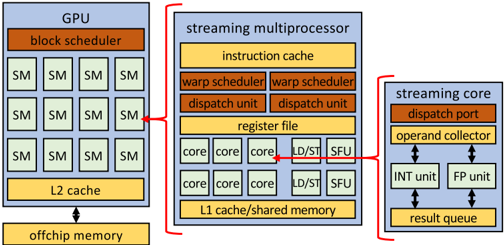
“With reference to the NVIDIA architecture [30], a GPU is a many-core organized in an array of Streaming Multiprocessors (SMs) (left-hand side of Fig.”
MethodA Survey of Techniques for Approximate Computing
Mittal, S. (2016) · ACM Computing Surveys · doi:10.1145/2893356 · Cited by 1,058 · cited 1×
“tations provide resiliency to a certain level of inexactness [8].”
BackgroundSingle event upset at ground level
Normand, E. (1996) · IEEE Transactions on Nuclear Science · doi:10.1109/23.556861 · Cited by 620 · cited 1×
“considered a concern mainly in the aerospace domain, it has been demonstrated that soft errors, such as Single Event Upsets (SEUs) [5], may interfere with the functionality of electronic systems also at the ground-level [6], with an estimated ratio of two transient faults every thousand billion hours, on average.”
BackgroundCharacterization of soft errors caused by single event upsets in CMOS processes
Karnik, T., & Hazucha, P. (2004) · IEEE Transactions on Dependable and Secure Computing · doi:10.1109/tdsc.2004.14 · Cited by 546 · cited 1×
“considered a concern mainly in the aerospace domain, it has been demonstrated that soft errors, such as Single Event Upsets (SEUs) [5], may interfere with the functionality of electronic systems also at the ground-level [6], with an estimated ratio of two transient faults every thousand billion hours, on average.”
BackgroundUnderstanding error propagation in deep learning neural network (DNN) accelerators and applications
Li, G., Hari, S. K. S., Sullivan, M., Tsai, T., Pattabiraman, K., Emer, J., & Keckler, S. W. (2017) · Proceedings of the International Conference for High Performance Computing, Networking, Storage and Analysis · doi:10.1145/3126908.3126964 · Cited by 492
Autonomous driving in urban environments: approaches, lessons and challenges
Campbell, M., Egerstedt, M., How, J. P., & Murray, R. M. (2010) · Philosophical Transactions of the Royal Society A: Mathematical, Physical and Engineering Sciences · doi:10.1098/rsta.2010.0110 · Cited by 353 · cited 1×
“As a representative example, let us consider the Advanced Driver Assistance System (ADAS) in the automotive scenario [1]; CNNs are employed to detect the lanes of the track, to identify pedestrians and obstacles, to interpret road signs and traffic lights [2], [3].”
MethodAres: a framework for quantifying the resilience of deep neural networks
Reagen, B., Gupta, U., Pentecost, L., Whatmough, P., Lee, S. K., Mulholland, N., Brooks, D., & Wei, G.-Y. (2018) · Proceedings of the 55th Annual Design Automation Conference · doi:10.1145/3195970.3195997 · Cited by 228
Analyzing and Increasing the Reliability of Convolutional Neural Networks on GPUs
Santos, F. F. D., Pimenta, P. F., Lunardi, C., Draghetti, L., Carro, L., Kaeli, D., & Rech, P. (2019) · IEEE Transactions on Reliability · doi:10.1109/tr.2018.2878387 · Cited by 226 · cited 3×
“Some of these tools, such as GPU-Qin [14], require a long profiling activity; moreover, as commented in [9], SASSIFI is the only tool”
BackgroundMethodAres: A framework for quantifying the resilience of deep neural networks
Reagen, B., Gupta, U., Pentecost, L., Whatmough, P., Lee, S. K., Mulholland, N., Brooks, D., & Wei, G.-Y. (2018) · 2018 55th ACM/ESDA/IEEE Design Automation Conference (DAC) · doi:10.1109/dac.2018.8465834 · Cited by 189
Quantifying the Accuracy of High-Level Fault Injection Techniques for Hardware Faults
Wei, J., Thomas, A., Li, G., & Pattabiraman, K. (2014) · 2014 44th Annual IEEE/IFIP International Conference on Dependable Systems and Networks · doi:10.1109/dsn.2014.2 · Cited by 182
SASSIFI: An architecture-level fault injection tool for GPU application resilience evaluation
Hari, S. K. S., Tsai, T., Stephenson, M., Keckler, S. W., & Emer, J. (2017) · 2017 IEEE International Symposium on Performance Analysis of Systems and Software (ISPASS) · doi:10.1109/ispass.2017.7975296 · Cited by 181 · cited 4×
“When considering the GPU platform, as discussed in [15], an SEU occurring in the SM may corrupt the execu-”
MethodInfluentialDeep CNN-Based Real-Time Traffic Light Detector for Self-Driving Vehicles
Ouyang, Z., Niu, J., Liu, Y., & Guizani, M. (2019) · IEEE Transactions on Mobile Computing · doi:10.1109/tmc.2019.2892451 · Cited by 162 · cited 1×
“As a representative example, let us consider the Advanced Driver Assistance System (ADAS) in the automotive scenario [1]; CNNs are employed to detect the lanes of the track, to identify pedestrians and obstacles, to interpret road signs and traffic lights [2], [3].”
MethodGPU-Qin: A methodology for evaluating the error resilience of GPGPU applications
Fang, B., Pattabiraman, K., Ripeanu, M., & Gurumurthi, S. (2014) · 2014 IEEE International Symposium on Performance Analysis of Systems and Software (ISPASS) · doi:10.1109/ispass.2014.6844486 · Cited by 142 · cited 9×
“256 13 13 256 13 13 Bias add 256 13 13 256 13 13 Div 1 10647 1 10647 Exp 1 8112 2 1 8112 2 Leaky ReLU 256 26 26 256 26 26 Slope = 0.1 Mul 1 8112 2 1 8112 2 Sigmoid 1 2028 80 1 2028 80 TABLE 2 Results From the Fault Injection Experiments Operator Number of injected faults Number of corrupted tensors Conv.”
MethodInfluentialPyTorchFI: A Runtime Perturbation Tool for DNNs
Mahmoud, A., Aggarwal, N., Nobbe, A., Vicarte, J. R. S., Adve, S. V., Fletcher, C. W., Frosio, I., & Hari, S. K. S. (2020) · 2020 50th Annual IEEE/IFIP International Conference on Dependable Systems and Networks Workshops (DSN-W) · doi:10.1109/dsn-w50199.2020.00014 · Cited by 140 · cited 1×
“A similar strategy developed for other frameworks is the one presented in [33], [37], [38], integrated in the Keras, Pytorch and Caffe frameworks, respectively.”
MethodA Reliability Analysis of a Deep Neural Network
Bosio, A., Bernardi, P., Ruospo, A., & Sanchez, E. (2019) · 2019 IEEE Latin American Test Symposium (LATS) · doi:10.1109/latw.2019.8704548 · Cited by 114 · cited 4×
“[19], [32] introduce two tools developed in Keras and Darknet, supporting only the corruption of the operator weights in the CNN.”
BackgroundMethodInfluentialSoft errors in DNN accelerators: A comprehensive review
Ibrahim, Y., Wang, H., Liu, J., Wei, J., Chen, L., Rech, P., Adam, K., & Guo, G. (2020) · Microelectronics Reliability · doi:10.1016/j.microrel.2020.113969 · Cited by 102
TensorFI: A Flexible Fault Injection Framework for TensorFlow Applications
Chen, Z., Narayanan, N., Fang, B., Li, G., Pattabiraman, K., & DeBardeleben, N. (2020) · 2020 IEEE 31st International Symposium on Software Reliability Engineering (ISSRE) · doi:10.1109/issre5003.2020.00047 · Cited by 93 · cited 5×
“– BHWC versus Batch, Channel, Height, Width – BCHW) employed by YOLO and it would have required too long execution times, according to [17].”
BackgroundMethodInfluentialNVBitFI: Dynamic Fault Injection for GPUs
Tsai, T., Hari, S. K. S., Sullivan, M., Villa, O., & Keckler, S. W. (2021) · 2021 51st Annual IEEE/IFIP International Conference on Dependable Systems and Networks (DSN) · doi:10.1109/dsn48987.2021.00041 · Cited by 93 · cited 1×
“The solution we designed is flexible, allowing the framework to integrate a different FI tool (for instance the recent [22], [23] and new ones that will emerge), based on the adopted development environment, to produce the error models required to support the FES appropriately.”
MethodBinFI: an efficient fault injector for safety-critical machine learning systems
Chen, Z., Li, G., Pattabiraman, K., & DeBardeleben, N. (2019) · Proceedings of the International Conference for High Performance Computing, Networking, Storage and Analysis · doi:10.1145/3295500.3356177 · Cited by 91 · cited 1×
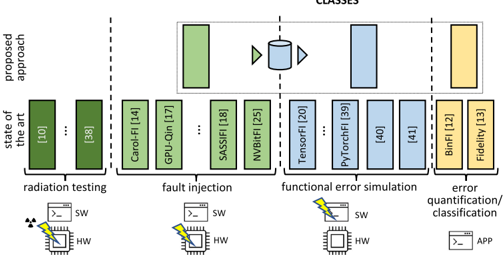
“Fidelity [11] and BinFi [12] are the most recent works similar to our proposal.”
ResultUnderstanding Error Propagation in GPGPU Applications
Li, G., Pattabiraman, K., Cher, C.-Y., & Bose, P. (2016) · SC16: International Conference for High Performance Computing, Networking, Storage and Analysis · doi:10.1109/sc.2016.20 · Cited by 89 · cited 3×
“If we exclude radiation testing, which is very expensive and does not provide enough internal controllability and observability, most relevant methods for reliability analysis fall into two main families: architecture-level Fault Injection [14], [15], [16] and application-level Fuctional Error Simulation [17], [18], […”
MethodValiente, R., Zaman, M., Özer, S., & Fallah, Y. P. (2019) · IEEE Intelligent Vehicles Symposium · doi:10.1109/ivs.2019.8814260 · Cited by 84 · cited 5×
“Based on such observations, subsequent planning modules in the ADAS take trajectory and control decisions.”
BackgroundMethodInfluentialFIdelity: Efficient Resilience Analysis Framework for Deep Learning Accelerators
He, Y., Balaprakash, P., & Li, Y. (2020) · 2020 53rd Annual IEEE/ACM International Symposium on Microarchitecture (MICRO) · doi:10.1109/micro50266.2020.00033 · Cited by 83 · cited 1×
“Fidelity [11] and BinFi [12] are the most recent works similar to our proposal.”
ResultDemystifying the System Vulnerability Stack: Transient Fault Effects Across the Layers
Papadimitriou, G., & Gizopoulos, D. (2021) · 2021 ACM/IEEE 48th Annual International Symposium on Computer Architecture (ISCA) · doi:10.1109/isca52012.2021.00075 · Cited by 74 · cited 1×
“Indeed, as discussed in [20], FES tools frequently used in past works adopt inaccurate error models; therefore, there is the necessity to fill the gap between the fault occurrence at the hardware layer and the error”
MethodSoft Error Resilience of Deep Residual Networks for Object Recognition
Ibrahim, Y., Wang, H., Bai, M., Liu, Z., Wang, J., Yang, Z., & Chen, Z. (2020) · IEEE Access · doi:10.1109/access.2020.2968129 · Cited by 72 · cited 2×
“In conclusion, due to the variety of possible internal structures and parameters of the CNNs and devices to accelerate such applications, the challenge is still open [35].”
BackgroundMethodAre CNNs Reliable Enough for Critical Applications? An Exploratory Study
Neggaz, M. A., Alouani, I., Niar, S., & Kurdahi, F. J. (2019) · IEEE Design and Test · doi:10.1109/mdat.2019.2952336 · Cited by 60 · cited 2×
“A similar strategy developed for other frameworks is the one presented in [33], [37], [38], integrated in the Keras, Pytorch and Caffe frameworks, respectively.”
BackgroundMethodUnderstanding error propagation in GPGPU applications
Li, G., Pattabiraman, K., Cher, C.-Y., & Bose, P. K. (2016) · IEEE International Conference on High Performance Computing, Data, and Analytics · doi:10.5555/3014904.3014932 · Cited by 53
The Robustness of Modern Deep Learning Architectures against Single Event Upset Errors
Arechiga, A. P., & Michaels, A. J. (2018) · 2018 IEEE High Performance extreme Computing Conference (HPEC) · doi:10.1109/hpec.2018.8547532 · Cited by 47 · cited 3×
“[19], [32] introduce two tools developed in Keras and Darknet, supporting only the corruption of the operator weights in the CNN.”
BackgroundMethodA Pipelined Multi-Level Fault Injector for Deep Neural Networks
Ruospo, A., Balaara, A., Bosio, A., & Sánchez, E. (2020) · Proceedings · doi:10.1109/dft50435.2020.9250866 · Cited by 31 · cited 1×
“Finally, the work in [39] is implemented in PyTorch and is based on a”
MethodA Neural Network Based Fault Management Scheme for Reliable Image Processing
Biasielli, M., Bolchini, C., Cassano, L., Koyuncu, E., & Miele, A. (2020) · IEEE Transactions on Computers · doi:10.1109/tc.2020.2965518 · Cited by 28 · cited 2×
“As discussed in [13], the classical strategy based on a bit-wise comparison of the results against the golden counterpart to classify the experiment as correct versus error is here not effective due to the approximate and inexact nature of CNN applications.”
Self-citationKernel and layer vulnerability factor to evaluate object detection reliability in GPUs
dos Santos, F. F., Carro, L., & Rech, P. (2018) · IET Computers & Digital Techniques · doi:10.1049/iet-cdt.2018.5026 · Cited by 27 · cited 1×
“In [34] several metrics are defined to measure the”
BackgroundEvaluation of Histogram of Oriented Gradients Soft Errors Criticality for Automotive Applications
Fernandes, F., Weigel, L., Jung, C., Navaux, P., Carro, L., & Rech, P. (2016) · ACM Transactions on Architecture and Code Optimization · doi:10.1145/2998573 · Cited by 14 · cited 1×
“As a result, it is suitable for final validation and blackbox campaigns, not for in-depth analysis and investigations [9], [36].”
BackgroundIncreasing the Efficiency and Efficacy of Selective-Hardening for Parallel Applications
Oliveira, D., Navaux, P., & Rech, P. (2019) · 2019 IEEE International Symposium on Defect and Fault Tolerance in VLSI and Nanotechnology Systems (DFT) · doi:10.1109/dft.2019.8875300 · Cited by 5 · cited 5×
“The solution we designed is flexible, allowing the framework to integrate a different FI tool (for instance the recent [22], [23] and new ones that will emerge), based on the adopted development environment, to produce the error models required to support the FES appropriately.”
BackgroundMethodInfluential
Cited by
A Systematic Literature Review on Hardware Reliability Assessment Methods for Deep Neural Networks
Ahmadilivani, M. H., Taheri, M., Raik, J., Daneshtalab, M., & Jenihhin, M. (2023) · ACM Computing Surveys · doi:10.1145/3638242 · Cited by 132
Rech, P. (2024) · IEEE Transactions on Nuclear Science · doi:10.1109/tns.2024.3349956 · Cited by 75
“2) Low Level and Software Fault Injection [154], [163], [164]: Similar to the previous hybrid approach, the RTL fault injection or low-level fault simulation is used only to characterize the fault effect at the output of basic machine instructions.”
MethodCross-Layer Reliability Evaluation and Efficient Hardening of Large Vision Transformers Models
Roquet, L., Fernandes dos Santos, F., Rech, P., Traiola, M., Sentieys, O., & Kritikakou, A. (2024) · Proceedings of the 61st ACM/IEEE Design Automation Conference · doi:10.1145/3649329.3655688 · Cited by 16
“We inject faults in general-purpose registers, memory load instructions, and arithmetic floating-point operations.”
Metadata
- Authors
- Bolchini, C., Cassano, L., Miele, A., & Toschi, A.
- Affiliations
- Politecnico di Milano (IT)
- Venue
- IEEE Transactions on Computers
- Published
- 2023-04-01
- Volume
- 72
- Issue
- 4
- Pages
- 984-997
- ISSN
- 0018-9340 (ISSN-L)
- 1557-9956
- 2326-3814
- OpenAlex
- W4281645879
- Cited by
- 1
- References
- 35
- Citations by year
- 2023: 1
- FWCI
- 0.07
- Type
- journal article
- Language
- en
- Open access
- hybrid
- doi.org
- Licence
- Locations
- IEEE Transactions on Computers (publishedVersion, cc-by-nc-nd)
- arXiv (Cornell University) (submittedVersion)
- arXiv (Cornell University)
- Topics
- Physical Sciences › Engineering › Electrical and Electronic Engineering › Radiation Effects in Electronics
- Physical Sciences › Computer Science › Hardware and Architecture › VLSI and Analog Circuit Testing
- Physical Sciences › Computer Science › Software › Software Testing and Debugging Techniques
- Keywords
- soft errors, convolutional neural networks, fault injection, error model, reliability analysis, hardware faults, safety-critical AI
About these checks
Registry, retraction, Cites and statistics results are computed, not judged, with one exception: a printed reference that no index lists is read once by a model before it counts as a citation error. Claims are extracted by a model and kept only when their quote appears verbatim in the text; each cited source is then checked, with a model’s help, for whether it says what the claim relies on. Those verdicts can be wrong — read the claim’s quote and the cited source before relying on one.
The claim verdicts this report counts are experimental: their accuracy is not yet measured.
A language model drew the claims from the paper on 2026-10-10, under version 3 of the claim definition (model deepseek-v4.1-flash, prompt extract-v3).
A second model labelled each claim on 2026-10-10 (model jev-1.13-20260917, definition revision gold-guideline-v0.2).
Statistics and arithmetic are recomputed, not judged.
Confidence bands are shown only for fields calibrated on our annotated test set. None is calibrated yet, so no band is shown.
What counts as a claim ›How we measure confidence ›How we check this ›
Are you an author, or do you see a problem with this page? Request a review
Data sources
Bibliographic data: Semantic Scholar, OpenAlex, Crossref.
Contains information from the Semantic Scholar Academic Graph Datasets, made available under the ODC Attribution License (ODC-BY 1.0).
Semantic Scholar’s data is described in: Kinney, R., et al. (2023). The Semantic Scholar Open Data Platform. arXiv:2301.10140.
