

$O(N^3)$ Measurement Cost for Variational Quantum Eigensolver on Molecular Hamiltonians
Open accessThe DOI matches its Crossref record; 88 of the 91 references it cites were found in a registry or an index, and 3 are not checked yet.
Abstract
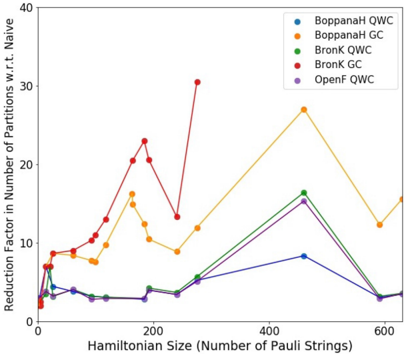
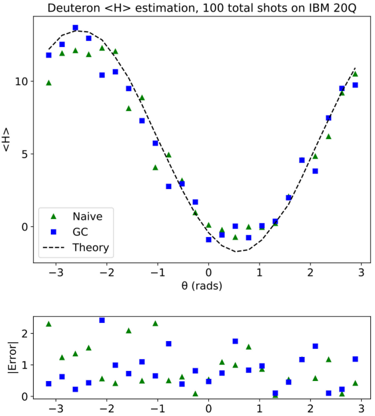
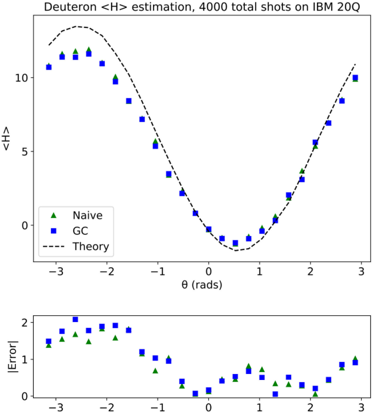
Variational quantum eigensolver (VQE) is a promising algorithm for near-term quantum machines. It can be used to estimate the ground state energy of a molecule by performing separate measurements of O(N4) terms. This quartic scaling appears to be a significant obstacle to practical applications. However, we note that it empirically reduces to O(N3) when we partition the terms into linear-sized commuting families that can be measured simultaneously. We confirm these empirical observations by studying the MIN-COMMUTING-PARTITION problem at the level of the fermionic Hamiltonian and its encoding into qubits. Moreover, we provide a fast, precomputable procedure for creating linearly sized commuting partitions by solving a round-robin scheduling problem via flow networks. In addition, we demonstrate how to construct the quantum circuits necessary for simultaneous measurement, and we discuss the statistical implication of simultaneous measurement. Our results are experimentally validated by a ground state estimation of deuteron with low shot budget on a 20-qubit IBM machine.
Overview
The claims and statistics of this paper haven’t been checked yet.
Free: it reads the open-access text and checks the first 5 claims that cite a source we can check. Create a free account to check every claim.
Integrity signals
Registry
Cites
Statistics
Figures










Verification
Claims the paper makes
The claims and statistics of this paper haven’t been checked yet.
Free: it reads the open-access text and checks the first 5 claims that cite a source we can check. Create a free account to check every claim.
Claims other papers make about this one
Each is checked against this paper’s own text: does it say what the citing paper says it does?
The cited source says what the claim attributes to it.
In the citing paper
“To this end, it has been shown that by considering general commutations (and increasing the number of gates of the circuit quadratically with n ) the scaling of the number of measurements can be reduced to n 3 [213, 214, 216-219].”
From Variational quantum algorithms (2021) · cites this paper as [217]
Self-check
Percentages, sums and reported differences re-computed from the paper’s own numbers.
The self-check needs the paper’s full text.
Citations
Cites
Kresse, G., & Furthmüller, J. (1996) · Computational Materials Science · doi:10.1016/0927-0256(96)00008-0 · Cited by 75,638 · cited 1×
“Examples include Hartree Fock (O(N(4)) runtime [15]), density functional theory (O(N(3)) runtime [16]), and coupled cluster single-double (O(N(6))+ runtime [17] only considers single and double excitations).”
BackgroundQuantum Computation and Quantum Information
Nielsen, M. A., Chuang, I., & Grover, L. K. (2002) · American Journal of Physics · doi:10.1119/1.1463744 · Cited by 21,895
Horn, R. A., & Johnson, C. R. (1985) · Cambridge University Press eBooks · doi:10.1017/cbo9780511810817 · Cited by 10,280
A fast quantum mechanical algorithm for database search
Grover, L. K. (1996) · Proceedings of the twenty-eighth annual ACM symposium on Theory of computing - STOC '96 · doi:10.1145/237814.237866 · Cited by 8,830 · cited 1×
“Although several thousand logical error-corrected qubits, backed by millions of device-level physical qubits, are needed to realize the originally envisioned quantum applications, such as factoring [2] and database search [3], a new generation of variational algorithms has been recently introduced to match the constra…”
BackgroundQuantum Computing in the NISQ era and beyond
Preskill, J. (2018) · Quantum · doi:10.22331/q-2018-08-06-79 · Cited by 8,830 · cited 1×
“The present Noisy Intermediate-Scale Quantum (NISQ) era [1] is distinguished by the advent of quantum computers comprising tens of qubits, with hundreds of qubits expected in the next five years.”
BackgroundPolynomial-time algorithms for prime factorization and discrete logarithms on a quantum computer
Shor, P. W. (1997) · SIAM Journal on Computing · doi:10.1137/s0097539795293172 · Cited by 8,472
Exploring Network Structure, Dynamics, and Function Using NetworkX
Hagberg, A. A., Schult, D. A., & Swart, P. J. (2008) · Proceedings of the Python in Science Conference · doi:10.25080/tcwv9851 · Cited by 7,477 · cited 1×
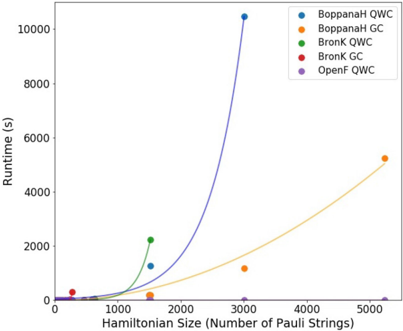
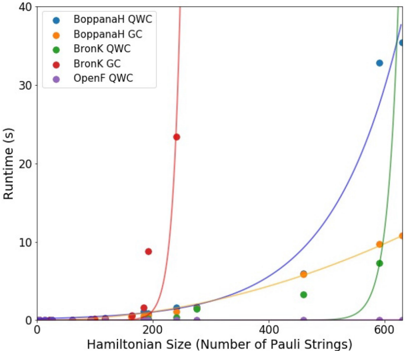
“In our benchmarking, we performed MIN-CLIQUECOVERs using the Boppana–Halldórsson algorithm [58] included in the NetworkX Python package [59], as well as the Bron–Kerbosch algorithm [60], which we implemented ourselves.”
MethodThe Activated Complex in Chemical Reactions
Eyring, H. (1935) · The Journal of Chemical Physics · doi:10.1063/1.1749604 · Cited by 5,828 · cited 1×
“The lowest eigenvalue is the ground state energy, which has important implications in chemistry such as determining reaction rates [20] and molecular geometry [21].”
BackgroundA variational eigenvalue solver on a photonic quantum processor
Peruzzo, A., McClean, J., Shadbolt, P., Yung, M.-H., Zhou, X.-Q., Love, P. J., Aspuru-Guzik, A., & O’Brien, J. L. (2014) · Nature Communications · doi:10.1038/ncomms5213 · Cited by 4,552 · cited 12×
“Since commuting families can be measured simultaneously, this constitutes a reduction in the measurement cost of VQE from O ( N 4 ) naively to O ( N 3 ) with these partitions.”
BackgroundMethodInfluentialPolynomial-time algorithms for prime factorization and discrete logarithms on a quantum computer
Shor, P. W. (1999) · SIAM Review · doi:10.1137/s0036144598347011 · Cited by 3,904
Coupled-cluster theory in quantum chemistry
Bartlett, R. J., & Musiał, M. (2007) · Reviews of Modern Physics · doi:10.1103/revmodphys.79.291 · Cited by 3,343 · cited 2×
“As discussed, we base our studies on UCCSD because the coupled cluster approach is the gold standard for quantum computational chemistry [22], [31].”
BackgroundMethodHardware-efficient variational quantum eigensolver for small molecules and quantum magnets
Kandala, A., Mezzacapo, A., Temme, K., Takita, M., Brink, M., Chow, J. M., & Gambetta, J. M. (2017) · Nature · doi:10.1038/nature23879 · Cited by 2,982
�ber das Paulische �quivalenzverbot
Jordan, P., & Wigner, E. (1928) · Zeitschrift f�r Physik · doi:10.1007/bf01331938 · Cited by 2,597
Reducibility Among Combinatorial Problems
Karp, R. M. (2010) · 50 Years of Integer Programming 1958-2008 · doi:10.1007/978-3-540-68279-0_8 · Cited by 2,490 · cited 1×
“MIN-CLIQUE-COVER, in its decision version, is one of the classic Karp NP-complete problems [55], so efficiently finding the minimal possible clique cover for a general graph is unlikely.”
BackgroundAlgorithm 457: finding all cliques of an undirected graph
Bron, C., & Kerbosch, J. (1973) · Communications of the ACM · doi:10.1145/362342.362367 · Cited by 2,452 · cited 1×
“In our benchmarking, we performed MIN-CLIQUECOVERs using the Boppana–Halldórsson algorithm [58] included in the NetworkX Python package [59], as well as the Bron–Kerbosch algorithm [60], which we implemented ourselves.”
MethodBarren plateaus in quantum neural network training landscapes
McClean, J. R., Boixo, S., Smelyanskiy, V. N., Babbush, R., & Neven, H. (2018) · Nature Communications · doi:10.1038/s41467-018-07090-4 · Cited by 2,329 · cited 2×
“Moreover, UCCSD has shown experimental and theoretical promise, unlike hardware-driven ansatz, which were shown to suffer from “barren plateaus” in the optimization landscape [22], [32].”
BackgroundThe theory of variational hybrid quantum-classical algorithms
McClean, J. R., Romero, J., Babbush, R., & Aspuru-Guzik, A. (2016) · New Journal of Physics · doi:10.1088/1367-2630/18/2/023023 · Cited by 2,227 · cited 6×
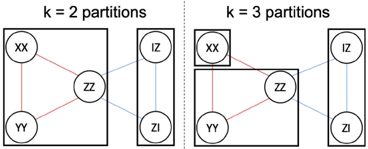
“EXAMPLE Consider the Hamiltonian, H = IZ + ZI − XX − YY + ZZ, following the example of [42].”
BackgroundMethodInfluentialPrinciples of Quantum Mechanics
Shankar, R. (1994) · Springer eBooks · doi:10.1007/978-1-4757-0576-8 · Cited by 2,015
Maximal Flow Through a Network
Ford, L. R., & Fulkerson, D. R. (2009) · Classic Papers in Combinatorics · doi:10.1007/978-0-8176-4842-8_15 · Cited by 1,829
P y SCF: the Python‐based simulations of chemistry framework
Sun, Q., Berkelbach, T. C., Blunt, N. S., Booth, G. H., Guo, S., Li, Z., Liu, J., McClain, J. D., Sayfutyarova, E. R., Sharma, S., et al. (2018) · WIREs Computational Molecular Science · doi:10.1002/wcms.1340 · Cited by 1,741
Quantum computational chemistry
McArdle, S., Endo, S., Aspuru-Guzik, A., Benjamin, S. C., & Yuan, X. (2020) · Reviews of Modern Physics · doi:10.1103/revmodphys.92.015003 · Cited by 1,621 · cited 5×
“Moreover, UCCSD has shown experimental and theoretical promise, unlike hardware-driven ansatz, which were shown to suffer from “barren plateaus” in the optimization landscape [22], [32].”
BackgroundMethodInfluentialImproved simulation of stabilizer circuits
Aaronson, S., & Gottesman, D. (2004) · Physical Review A · doi:10.1103/physreva.70.052328 · Cited by 1,515 · cited 2×
“Before proceeding, we note that this article is built upon the language of stabilizers introduced in [84] and expanded upon in [85].”
BackgroundSimulated Quantum Computation of Molecular Energies
Aspuru-Guzik, A., Dutoi, A. D., Love, P. J., & Head-Gordon, M. (2005) · Science · doi:10.1126/science.1113479 · Cited by 1,418 · cited 2×
“edu a practical challenge towards applying VQE to molecules of interest such as caffeine and cholesterol, which appear to require N numbering hundreds of qubits [3].”
MethodVolume of the set of separable states
Życzkowski, K., Horodecki, P., Sanpera, A., & Lewenstein, M. (1998) · Physical Review A · doi:10.1103/physreva.58.883 · Cited by 1,410 · cited 1×
“Theorem 3: Given M1 and M2, two commuting but nonidentical Pauli strings, E[Cov(M1,M2)] = 0, where the expectation is taken over a uniform distribution over all possible state vectors (the Haar distribution [93], [94]).”
BackgroundCleve, R., Ekert, A., Macchiavello, C., & Mosca, M. (1998) · Proceedings of the Royal Society of London. Series A: Mathematical, Physical and Engineering Sciences · doi:10.1098/rspa.1998.0164 · Cited by 1,299
Parrish, R. M., Burns, L. A., Smith, D. G. A., Simmonett, A. C., DePrince, A. E., Hohenstein, E. G., Bozkaya, U., Sokolov, A. Y., Di Remigio, R., Richard, R. M., et al. (2017) · Journal of Chemical Theory and Computation · doi:10.1021/acs.jctc.7b00174 · Cited by 1,249 · cited 1×
“The hpq and hpqrs terms can be computed classically via electron integral formulas implemented by several software packages [23]–[25].”
MethodBravyi, S. B., & Kitaev, A. Y. (2002) · Annals of Physics · doi:10.1006/aphy.2002.6254 · Cited by 1,033 · cited 3×
“We consider the most common [22] such encodings: Jordan–Wigner [28], parity [29], and Bravyi–Kitaev [30].”
BackgroundAbout the Pauli exclusion principle
Jordán, P., & Wigner, E. P. (1928) · Cited by 951
Schwinger, J. (1960) · Proceedings of the National Academy of Sciences · doi:10.1073/pnas.46.4.570 · Cited by 776
Stabilizer Codes and Quantum Error Correction
Gottesman, D. (1997) · arXiv · doi:10.48550/arxiv.quant-ph/9705052 · Cited by 753 · cited 3×
“Before proceeding, we note that this article is built upon the language of stabilizers introduced in [84] and expanded upon in [85].”
BackgroundResultQuantum optimization using variational algorithms on near-term quantum devices
Moll, N., Barkoutsos, P., Bishop, L. S., Chow, J. M., Cross, A., Egger, D. J., Filipp, S., Fuhrer, A., Gambetta, J. M., Ganzhorn, M., et al. (2018) · Quantum Science and Technology · doi:10.1088/2058-9565/aab822 · Cited by 744 · cited 2×
“This is a very generic eigenvalue problem with a wide class of applications such asmolecular ground state estimation [4], maximum three-satisfiability, market split, traveling salesperson [5], and maximum cut [6].”
BackgroundThe Solovay-Kitaev algorithmPreprint
Dawson, C., & Nielsen, M. (2005) · Quantum information & computation · doi:10.48550/arxiv.quant-ph/0505030 · Cited by 694 · cited 1×
“would be to explicitly compute the matrix of simultaneous eigenvectors and then apply one of many possible unitary decomposition techniques [78]–[83] to this matrix.”
MethodSelf-verifying variational quantum simulation of lattice models
Kokail, C., Maier, C., van Bijnen, R., Brydges, T., Joshi, M. K., Jurcevic, P., Muschik, C. A., Silvi, P., Blatt, R., Roos, C. F., et al. (2019) · Nature · doi:10.1038/s41586-019-1177-4 · Cited by 594
The Bravyi-Kitaev transformation for quantum computation of electronic structure
Seeley, J. T., Richard, M. J., & Love, P. J. (2012) · The Journal of Chemical Physics · doi:10.1063/1.4768229 · Cited by 585
Quantum measurements and the Abelian Stabilizer ProblemPreprint
Kitaev, A. (1995) · arXiv (Cornell University) · Cited by 510
Simulation of electronic structure Hamiltonians using quantum computers
Whitfield, J. D., Biamonte, J., & Aspuru-Guzik, A. (2011) · Molecular Physics · doi:10.1080/00268976.2011.552441 · Cited by 472
OpenFermion: the electronic structure package for quantum computers
McClean, J. R., Rubin, N. C., Sung, K. J., Kivlichan, I. D., Bonet-Monroig, X., Cao, Y., Dai, C., Fried, E. S., Gidney, C., Gimby, B., et al. (2020) · Quantum Science and Technology · doi:10.1088/2058-9565/ab8ebc · Cited by 464 · cited 5×
“In software implementations, both the OpenFermion [25] and Rigetti PyQuil [46] libraries include augmented with functions for simultaneous measurement via qubitwise commutation:”
BackgroundMethodInfluentialSelf-citationQuantum Chemistry Calculations on a Trapped-Ion Quantum Simulator
Hempel, C., Maier, C., Romero, J., McClean, J., Monz, T., Shen, H., Jurcevic, P., Lanyon, B. P., Love, P., Babbush, R., et al. (2018) · Physical Review X · doi:10.1103/physrevx.8.031022 · Cited by 446
Generalized Unitary Coupled Cluster Wave functions for Quantum Computation
Lee, J., Huggins, W. J., Head-Gordon, M., & Whaley, K. B. (2019) · Journal of Chemical Theory and Computation · doi:10.1021/acs.jctc.8b01004 · Cited by 432 · cited 2×
“At the quantum stage, the research works in [35] and [52] proposed improvements to ansatzes and those in [42] and [53] demonstrated procedures for error mitigation.”
BackgroundMethodLinear degree extractors and the inapproximability of max clique and chromatic number
Zuckerman, D. (2006) · Proceedings of the thirty-eighth annual ACM symposium on Theory of Computing · doi:10.1145/1132516.1132612 · Cited by 398
Cloud Quantum Computing of an Atomic Nucleus
Dumitrescu, E. F., McCaskey, A. J., Hagen, G., Jansen, G. R., Morris, T. D., Papenbrock, T., Pooser, R. C., Dean, D. J., & Lougovski, P. (2018) · Physical Review Letters · doi:10.1103/physrevlett.120.210501 · Cited by 393 · cited 4×
“just three gates (two single-qubit rotations and one CNOT), as described in [91].”
BackgroundMethodInfluentialBarkoutsos, P. K., Gonthier, J. F., Sokolov, I., Moll, N., Salis, G., Fuhrer, A., Ganzhorn, M., Egger, D. J., Troyer, M., Mezzacapo, A., et al. (2018) · Physical Review A · doi:10.1103/physreva.98.022322 · Cited by 363 · cited 1×
“relatively large number of active spaces are needed to achieve chemical accuracy [90].”
BackgroundApproximating maximum independent sets by excluding subgraphs
Boppana, R., & Halldórsson, M. M. (1992) · BIT · doi:10.1007/bf01994876 · Cited by 359
Comparison of coupled-cluster methods which include the effects of connected triple excitations
Scuseria, G. E., & Lee, T. J. (1990) · The Journal of Chemical Physics · doi:10.1063/1.459684 · Cited by 357 · cited 1×
“Examples include Hartree Fock (O(N(4)) runtime [15]), density functional theory (O(N(3)) runtime [16]), and coupled cluster single-double (O(N(6))+ runtime [17] only considers single and double excitations).”
BackgroundGround-state energy estimation of the water molecule on a trapped-ion quantum computer
Nam, Y., Chen, J.-S., Pisenti, N. C., Wright, K., Delaney, C., Maslov, D., Brown, K. R., Allen, S., Amini, J. M., Apisdorf, J., et al. (2020) · npj Quantum Information · doi:10.1038/s41534-020-0259-3 · Cited by 345
Gate-count estimates for performing quantum chemistry on small quantum computers
Wecker, D., Bauer, B., Clark, B. K., Hastings, M. B., & Troyer, M. (2014) · Physical Review A · doi:10.1103/physreva.90.022305 · Cited by 296 · cited 1×
“The second sum in (1) indicates that the fermionic form of the Hamiltonian has O(N(4)) terms [26], [27].”
BackgroundConstructions of Mutually Unbiased Bases
Klappenecker, A., & Rötteler, M. (2004) · Lecture Notes in Computer Science · doi:10.1007/978-3-540-24633-6_10 · Cited by 288 · cited 1×
“Finally, we give a brief overview of mutually unbiased bases (MUB) [36], [37], a concept in quantum information theory”
BackgroundDawson, C. M., & Nielsen, M. A. (2006) · Quantum Information and Computation · doi:10.26421/qic6.1-6 · Cited by 288
Measurement optimization in the variational quantum eigensolver using a minimum clique cover
Verteletskyi, V., Yen, T.-C., & Izmaylov, A. F. (2020) · The Journal of Chemical Physics · doi:10.1063/1.5141458 · Cited by 269 · cited 2×
“The research works in [39]–[41], which respectively consider qubitwise commutativity and general commutativity (GC) (defined in Section IV), treat measurement cost reduction as a minimum clique cover problem.”
BackgroundEfficient and noise resilient measurements for quantum chemistry on near-term quantum computers
Huggins, W. J., McClean, J. R., Rubin, N. C., Jiang, Z., Wiebe, N., Whaley, K. B., & Babbush, R. (2021) · npj Quantum Information · doi:10.1038/s41534-020-00341-7 · Cited by 256 · cited 2×
“Recent work [9] has gone deeper in this direction, by factoring molecular Hamiltonians into a form that empirically seems to have O(N) partitions.”
BackgroundMethodCartan decomposition of SU(2n) and control of spin systems
Khaneja, N., & Glaser, S. J. (2001) · Chemical Physics · doi:10.1016/s0301-0104(01)00318-4 · Cited by 232
Quantum chemistry as a benchmark for near-term quantum computers
McCaskey, A. J., Parks, Z. P., Jakowski, J., Moore, S. V., Morris, T. D., Humble, T. S., & Pooser, R. C. (2019) · npj Quantum Information · doi:10.1038/s41534-019-0209-0 · Cited by 223 · cited 2×
“Recent work has also demonstrated the experimental superiority of UCCSD to other ansatz types [33].”
BackgroundResultSimulation of Electronic Structure Hamiltonians Using Quantum Computers
Whitfield, J. D., Biamonte, J., & Aspuru‐Guzik, A. (2011) · Digital Access to Scholarship at Harvard (DASH) (Harvard University) · Cited by 218
A Practical Quantum Instruction Set Architecture
Lee, D., Perrelle, V., Valiron, B., & Xu, Z. (2016) · arXiv (Cornell University) · doi:10.4230/lipics.fsttcs.2021.51 · Cited by 217 · cited 2×
“In software implementations, both the OpenFermion [25] and Rigetti PyQuil [46] libraries include augmented with functions for simultaneous measurement via qubitwise commutation:”
BackgroundMethodEfficient quantum measurement of Pauli operators in the presence of finite sampling error
Crawford, O., Straaten, B. V., Wang, D., Parks, T., Campbell, E., & Brierley, S. (2021) · Quantum · doi:10.22331/q-2021-01-20-385 · Cited by 188
Yen, T.-C., Verteletskyi, V., & Izmaylov, A. F. (2020) · Journal of Chemical Theory and Computation · doi:10.1021/acs.jctc.0c00008 · Cited by 178 · cited 1×
“11857v1 [ qu a n t - ph ] 30 A ug 2019 strings; [6, 7] observes this scaling via least-squares fitting for molecular Hamiltonians under the Jordan-Wigner and Bravyi-Kitaev qubit encodings; and [8] makes note of increasing partition size with increasing N .”
MethodNavigating Central Path with Electrical Flows: From Flows to Matchings, and Back
Madry, A. (2013) · 2013 IEEE 54th Annual Symposium on Foundations of Computer Science · doi:10.1109/focs.2013.35 · Cited by 173
Izmaylov, A. F., Yen, T.-C., Lang, R. A., & Verteletskyi, V. (2020) · Journal of Chemical Theory and Computation · doi:10.1021/acs.jctc.9b00791 · Cited by 171 · cited 3×
“The research works in [39]–[41], which respectively consider qubitwise commutativity and general commutativity (GC) (defined in Section IV), treat measurement cost reduction as a minimum clique cover problem.”
BackgroundTapering off qubits to simulate fermionic Hamiltonians
Bravyi, S. B., Gambetta, J., Mezzacapo, A., & Temme, K. (2017) · arXiv (Cornell University) · doi:10.48550/arxiv.1701.08213 · Cited by 162 · cited 1×
“An alternative perspective on the reduction of measurement cost in VQE was introduced in [47], which takes the approach of transforming molecular Hamiltonians to create commutativity and reduce the number of qubits needed.”
Linear Least Squares Computations
Farebrother, R. W. (2018) · Routledge eBooks · doi:10.1201/9780203748923 · Cited by 159
A quantitative study of the scaling properties of the Hartree–Fock method
Strout, D. L., & Scuseria, G. E. (1995) · The Journal of Chemical Physics · doi:10.1063/1.468836 · Cited by 158 · cited 1×
“Examples include Hartree Fock (O(N(4)) runtime [15]), density functional theory (O(N(3)) runtime [16]), and coupled cluster single-double (O(N(6))+ runtime [17] only considers single and double excitations).”
BackgroundPerformance of hybrid quantum-classical variational heuristics for combinatorial optimization
Nannicini, G. (2019) · Physical Review E · doi:10.1103/physreve.99.013304 · Cited by 138 · cited 3×
“This is a very generic eigenvalue problem with a wide class of applications such asmolecular ground state estimation [4], maximum three-satisfiability, market split, traveling salesperson [5], and maximum cut [6].”
BackgroundMethodImproving quantum algorithms for quantum chemistry
Hastings, M. B., Wecker, D., Bauer, B., & Troyer, M. (2015) · Quantum Information and Computation · doi:10.26421/qic15.1-2-1 · Cited by 128 · cited 1×
“The second sum in (1) indicates that the fermionic form of the Hamiltonian has O(N(4)) terms [26], [27].”
BackgroundMeasurement reduction in variational quantum algorithms
Zhao, A., Tranter, A., Kirby, W. M., Ung, S. F., Miyake, A., & Love, P. J. (2020) · Physical Review A · doi:10.1103/physreva.101.062322 · Cited by 121 · cited 1×
“Duringthepreparation of this manuscript, we became aware of very recent work by [10] that also proves the O ( N 3 ) measurement cost for molecular Hamiltonians.”
BackgroundDensity Functional Theory Calculations for Spin Crossover Complexes
Paulsen, H., & TRAUTWEIN, A. X. (2006) · Springer eBooks · doi:10.1007/b95428 · Cited by 119 · cited 1×
“The lowest eigenvalue is the ground state energy, which has important implications in chemistry such as determining reaction rates [20] and molecular geometry [21].”
BackgroundLow-depth circuit ansatz for preparing correlated fermionic states on a quantum computer
Dallaire-Demers, P.-L., Romero, J., Veis, L., Sim, S., & Aspuru-Guzik, A. (2019) · Quantum Science and Technology · doi:10.1088/2058-9565/ab3951 · Cited by 119 · cited 1×
“At the quantum stage, the research works in [35] and [52] proposed improvements to ansatzes and those in [42] and [53] demonstrated procedures for error mitigation.”
Method(2019) · doi:10.1145/3297858.3304018 · Cited by 118 · cited 1×
“In the classical stage, the research works in [5], [42], and [49] described improvements to the classical optimizer and those in [50] and [51] presented techniques for optimized pulse-level compilation.”
MethodSelf-citationA new approach to computing maximum flows using electrical flows
Lee, Y. T., Rao, S. B., & Srivastava, N. (2013) · ACM Symposium on Theory of Computing (STOC) · doi:10.1145/2488608.2488704 · Cited by 113
Partial Compilation of Variational Algorithms for Noisy Intermediate-Scale Quantum Machines
Gokhale, P., Ding, Y., Propson, T., Winkler, C., Leung, N., Shi, Y., Schuster, D., Hoffmann, H., & Chong, F. T. (2019) · IEEE/ACM International Symposium on Microarchitecture (MICRO) · doi:10.1145/3352460.3358313 · Cited by 102 · cited 1×
“In the classical stage, the research works in [5], [42], and [49] described improvements to the classical optimizer and those in [50] and [51] presented techniques for optimized pulse-level compilation.”
MethodSelf-citationClassic Papers in Combinatorics
Gessel, I. M., & Rota, G. (1987) · Birkhäuser Boston eBooks · doi:10.1007/978-0-8176-4842-8 · Cited by 96
Sugisaki, K., Nakazawa, S., Toyota, K., Sato, K., Shiomi, D., & Takui, T. (2019) · ACS Central Science · doi:10.1021/acscentsci.8b00788 · Cited by 90 · cited 1×
“amount of molecular information into a polynomial number of qubits and thereby achieve full CI in polynomial time [19].”
BackgroundDirect dialling of Haar random unitary matrices
Russell, N. J., Chakhmakhchyan, L., O’Brien, J. L., & Laing, A. (2017) · New Journal of Physics · doi:10.1088/1367-2630/aa60ed · Cited by 78 · cited 1×
“Theorem 3: Given M1 and M2, two commuting but nonidentical Pauli strings, E[Cov(M1,M2)] = 0, where the expectation is taken over a uniform distribution over all possible state vectors (the Haar distribution [93], [94]).”
BackgroundIzmaylov, A. F., Yen, T.-C., & Ryabinkin, I. G. (2019) · Chemical Science · doi:10.1039/c8sc05592k · Cited by 76
On the Pauli graphs on N-qudits
Planat, M. R. P., & Санига, М. (2008) · Quantum Information and Computation · doi:10.26421/qic8.1-2-9 · Cited by 76
DECOMPOSITION OF UNITARY MATRICES AND QUANTUM GATES
Li, C.-K., Roberts, R., & Yin, X. (2013) · International Journal of Quantum Information · doi:10.1142/s0219749913500159 · Cited by 71
A new algorithm for producing quantum circuits using KAK decompositions
Nakajima, M. Y., Kawano, Y., & Sekigawa, H. (2006) · Quantum Information and Computation · doi:10.26421/qic6.1-5 · Cited by 67
Daskin, A., & Kais, S. (2011) · The Journal of Chemical Physics · doi:10.1063/1.3575402 · Cited by 60
Hamiltonian decompositions of complete k -uniform hypergraphs
Bailey, R. F., & Stevens, B. (2009) · Discrete Mathematics · doi:10.1016/j.disc.2009.03.047 · Cited by 57 · cited 1×
“Prior literature refers to Baranyai’s original proof as either being nonconstructive [64], [65] or providing an exponential-”
BackgroundApproximating maximum independent sets by excluding subgraphs
Boppana, R. B., & Halldórsson, M. M. (1990) · Lecture notes in computer science · doi:10.1007/3-540-52846-6_74 · Cited by 46 · cited 1×
“In our benchmarking, we performed MIN-CLIQUECOVERs using the Boppana–Halldórsson algorithm [58] included in the NetworkX Python package [59], as well as the Bron–Kerbosch algorithm [60], which we implemented ourselves.”
MethodContextuality Test of the Nonclassicality of Variational Quantum Eigensolvers
Kirby, W. M., & Love, P. J. (2019) · Physical Review Letters · doi:10.1103/physrevlett.123.200501 · Cited by 45
Accounting for errors in quantum algorithms via individual error reduction
Otten, M., & Gray, S. K. (2019) · npj Quantum Information · doi:10.1038/s41534-019-0125-3 · Cited by 43 · cited 1×
“At the quantum stage, the research works in [35] and [52] proposed improvements to ansatzes and those in [42] and [53] demonstrated procedures for error mitigation.”
MethodTerm Grouping and Travelling Salesperson for Digital Quantum SimulationPreprint
Gui, K., Tomesh, T., Gokhale, P., Shi, Y., Chong, F. T., Martonosi, M., & Suchara, M. (2020) · arXiv (Cornell University) · doi:10.48550/arxiv.2001.05983 · Cited by 39 · cited 1×
“For example, the simulation of Hamiltonian dynamics could be improved by partitioning into commuting families [76].”
BackgroundSelf-citationFlow RoundingPreprint
Kang, D., & Payor, J. (2015) · arXiv (Cornell University) · doi:10.48550/arxiv.1507.08139 · Cited by 35 · cited 1×
“However, due to work on flow rounding [72]–[75], this runtime is reduced to O(N(4) logN).”
BackgroundPauli Partitioning with Respect to Gate Sets
Jena, A., Genin, S. N., & Mosca, M. (2019) · arXiv (Cornell University) · doi:10.48550/arxiv.1907.07859 · Cited by 26 · cited 3×
“[38] mapped the measurement cost reduction goal to a graph coloring problem.”
BackgroundConstruction of mutually unbiased bases with cyclic symmetry for qubit systems
Seyfarth, U., & Ranade, K. S. (2011) · Physical Review A · doi:10.1103/physreva.84.042327 · Cited by 20
Quantum Computing for Computer Architects, Second Edition
Metodi, T. S., Faruque, A. I., & Chong, F. T. (2011) · Synthesis lectures on computer architecture · doi:10.2200/s00331ed1v01y201101cac013 · Cited by 19
Self-citationApproximate Max-Flow on Small Depth Networks
Cohen, E. (1995) · SIAM Journal on Computing · doi:10.1137/s0097539792236717 · Cited by 15
Brouwer, A., & Schrijver, A. (1979) · Centrum Wiskunde & Informatica (CWI), the national research institute for mathematics and computer science in the Netherlands · Cited by 11
Cyclic Mutually Unbiased Bases and Quantum Public-Key Encryption
Seyfarth, U. (2019) · TUbilio (Technical University of Darmstadt) · doi:10.48550/arxiv.1907.02726 · Cited by 9 · cited 4×
“The actual circuit produced by the synthesis procedure requires only O(N(2)) gates in the worst case, as also noted in related results [87], [88].”
BackgroundMethodResultInfluentialOptimal ancilla-free Clifford+V approximation of z-rotationsPreprint
Ross, N. J. (2014) · arXiv (Cornell University) · doi:10.48550/arxiv.1409.4355 · Cited by 2
Depth reduction for quantum Clifford circuits through Pauli measurementsPreprint
Zheng, Y.-C., Lai, C., Brun, T. A., et al. (2018) · arXiv (Cornell University) · doi:10.48550/arxiv.1805.12082 · Cited by 1 · cited 3×
“The actual circuit produced by the synthesis procedure requires only O(N(2)) gates in the worst case, as also noted in related results [87], [88].”
BackgroundResult
Research works printed but not linked: 3
- Z. Baranyai, "On the factorization of the complete uniform hypergraphs," in Infinite and Finite Sets, A. Hanaj, R. Rado, and V. T. Sós, Eds., Colloq. Math. Soc. Janos Bolyai, 1974, pp. 91-108.
- N. Deo and P. Micikevicius, "On one-factorization of complete 3-uniform hypergraphs," Congressus Numerantium, vol. 158, pp. 153-162, 2002.
- B. Moseley, M. Osborne, and S. Benjamin, "Bayesian optimisation for variational quantum eigensolvers," Quantum, vol. 3, pp. 4-5, 2018.
Cited by
Variational quantum algorithms
Cerezo, M., Arrasmith, A., Babbush, R., Benjamin, S. C., Endo, S., Fujii, K., McClean, J. R., Mitarai, K., Yuan, X., Cincio, L., et al. (2021) · Nature Reviews Physics · doi:10.1038/s42254-021-00348-9 · Cited by 3,385
Noisy intermediate-scale quantum algorithms
Bharti, K., Cervera-Lierta, A., Kyaw, T. H., Haug, T., Alperin-Lea, S., Anand, A., Degroote, M., Heimonen, H., Kottmann, J. S., Menke, T., et al. (2022) · Reviews of Modern Physics · doi:10.1103/revmodphys.94.015004 · Cited by 2,231
Quantum computational chemistry
McArdle, S., Endo, S., Aspuru-Guzik, A., Benjamin, S. C., & Yuan, X. (2020) · Reviews of Modern Physics · doi:10.1103/revmodphys.92.015003 · Cited by 1,621
The Variational Quantum Eigensolver: A review of methods and best practices
Tilly, J., Chen, H., Cao, S., Picozzi, D., Setia, K., Li, Y., Grant, E., Wossnig, L., Rungger, I., Booth, G. H., et al. (2022) · Physics Reports · doi:10.1016/j.physrep.2022.08.003 · Cited by 1,031
Efficient quantum measurement of Pauli operators in the presence of finite sampling error
Crawford, O., Straaten, B. V., Wang, D., Parks, T., Campbell, E., & Brierley, S. (2021) · Quantum · doi:10.22331/q-2021-01-20-385 · Cited by 188
“For the nine smallest systems, we calculate the value of R for 100 different random quantum states to quantify the improvement due to assembling the Hamiltonian into collections of commuting operators.”
MethodInfluential
Metadata
- Authors
- Gokhale, P., Angiuli, O., Ding, Y., Gui, K., Tomesh, T., Suchara, M., Martonosi, M., & Chong, F. T.
- Affiliations
- University of Chicago (US)
- University of California, Berkeley (US)
- Princeton University (US)
- Argonne National Laboratory (US)
- ORCID
- Venue
- IEEE Transactions on Quantum Engineering
- Published
- 2020
- Volume
- 1
- Pages
- 1-24
- ISSN
- 2689-1808 (ISSN-L)
- OpenAlex
- W2971147839
- Cited by
- 104
- References
- 89
- Citations by year
- 2026: 9 · 2025: 18 · 2024: 19 · 2023: 13 · 2022: 21 · 2021: 17 · 2020: 7
- FWCI
- 5.70
- Type
- journal article
- Language
- en
- Open access
- gold
- doi.org
- Locations
- IEEE Transactions on Quantum Engineering (publishedVersion, cc-by)
- arXiv (Cornell University) (submittedVersion)
- DOAJ (DOAJ: Directory of Open Access Journals) (submittedVersion, cc-by-sa)
- OSTI OAI (U.S. Department of Energy Office of Scientific and Technical Information) (submittedVersion)
- arXiv (Cornell University)
- Funders
- National Science Foundation (CCF-1730449/1730082)
- STAQ (Phy-1818914)
- U.S. Department of Energy (DE-AC02-06CH11357)
- Topics
- Physical Sciences › Computer Science › Artificial Intelligence › Quantum Computing Algorithms and Architecture
- Physical Sciences › Physics and Astronomy › Atomic and Molecular Physics, and Optics › Quantum many-body systems
- Physical Sciences › Physics and Astronomy › Atomic and Molecular Physics, and Optics › Quantum Mechanics and Applications
- Keywords
- variational quantum eigensolver, measurement cost, fermionic Hamiltonians, round robin scheduling, flow networks, simultaneous measurement, ground state energy estimation, deuteron, molecular Hamiltonian, quantum circuit construction
About these checks
Registry, retraction, Cites and statistics results are computed, not judged, with one exception: a printed reference that no index lists is read once by a model before it counts as a citation error. Claims are extracted by a model and kept only when their quote appears verbatim in the text; each cited source is then checked, with a model’s help, for whether it says what the claim relies on. Those verdicts can be wrong — read the claim’s quote and the cited source before relying on one.
Statistics and arithmetic are recomputed, not judged.
Confidence bands are shown only for fields calibrated on our annotated test set. None is calibrated yet, so no band is shown.
What counts as a claim ›How we measure confidence ›How we check this ›
Are you an author, or do you see a problem with this page? Request a review
Data sources
Bibliographic data: Semantic Scholar, OpenAlex, Crossref.
Contains information from the Semantic Scholar Academic Graph Datasets, made available under the ODC Attribution License (ODC-BY 1.0).
Semantic Scholar’s data is described in: Kinney, R., et al. (2023). The Semantic Scholar Open Data Platform. arXiv:2301.10140.
