

The DOI matches its Crossref record; 52 of the 52 references it cites were found in a registry or an index.
Aging of the skeletal muscle extracellular matrix drives a stem cell fibrogenic conversion
Open accessAbstract
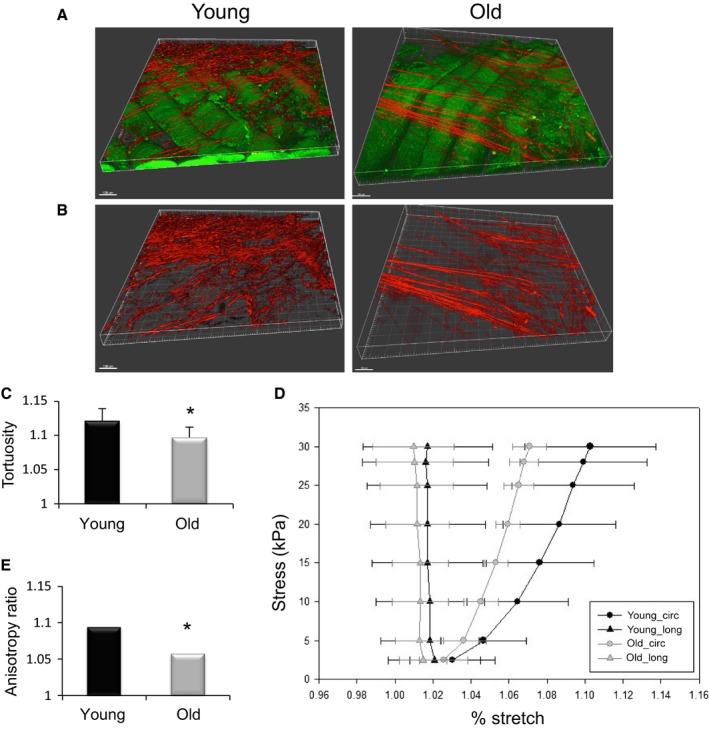
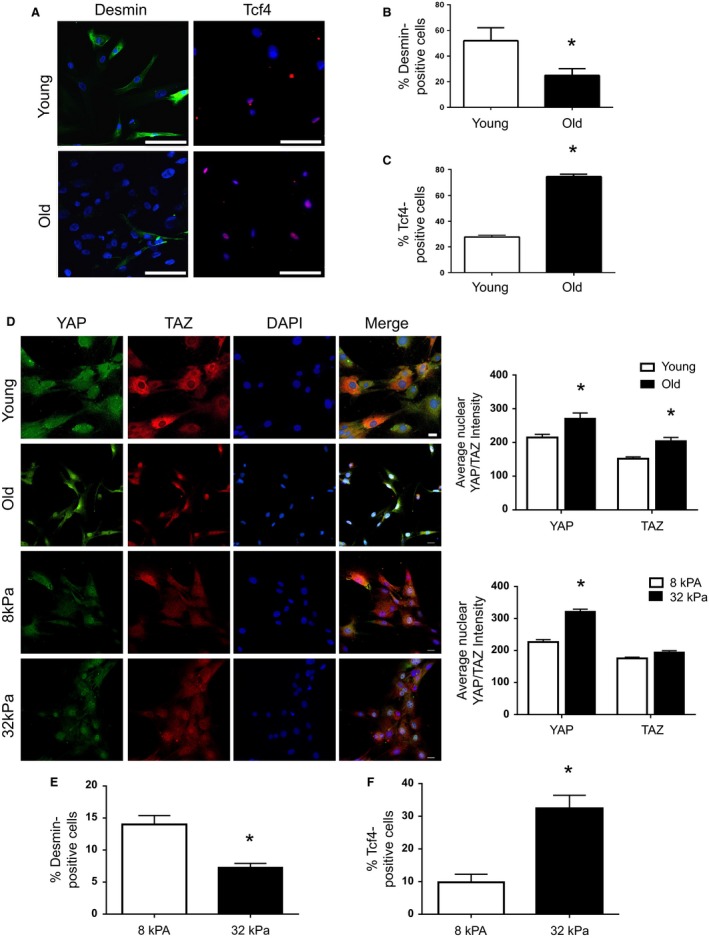
Age-related declines in skeletal muscle regeneration have been attributed to muscle stem cell (MuSC) dysfunction. Aged MuSCs display a fibrogenic conversion, leading to fibrosis and impaired recovery after injury. Although studies have demonstrated the influence of in vitro substrate characteristics on stem cell fate, whether and how aging of the extracellular matrix (ECM) affects stem cell behavior has not been investigated. Here, we investigated the direct effect of the aged muscle ECM on MuSC lineage specification. Quantification of ECM topology and muscle mechanical properties reveals decreased collagen tortuosity and muscle stiffening with increasing age. Age-related ECM alterations directly disrupt MuSC responses, and MuSCs seeded ex vivo onto decellularized ECM constructs derived from aged muscle display increased expression of fibrogenic markers and decreased myogenicity, compared to MuSCs seeded onto young ECM. This fibrogenic conversion is recapitulated in vitro when MuSCs are seeded directly onto matrices elaborated by aged fibroblasts. When compared to young fibroblasts, fibroblasts isolated from aged muscle display increased nuclear levels of the mechanosensors, Yes-associated protein (YAP)/transcriptional coactivator with PDZ-binding motif (TAZ), consistent with exposure to a stiff microenvironment in vivo. Accordingly, preconditioning of young fibroblasts by seeding them onto a substrate engineered to mimic the stiffness of aged muscle increases YAP/TAZ nuclear translocation and promotes secretion of a matrix that favors MuSC fibrogenesis. The findings here suggest that an age-related increase in muscle stiffness drives YAP/TAZ-mediated pathogenic expression of matricellular proteins by fibroblasts, ultimately disrupting MuSC fate.
Overview
The claims and statistics of this paper haven’t been checked yet.
Run the check — free, no account needed. It reads the open-access text and checks the sources it cites.
Integrity signals
Registry
Cites
Statistics
Figures
Verification
Claims the paper makes
The claims and statistics of this paper haven’t been checked yet.
Run the check — free, no account needed. It reads the open-access text and checks the sources it cites.
Claims other papers make about this one
Each is checked against this paper’s own text: does it say what the citing paper says it does?
In the citing paper
“Decreased collagen tortuosity and increased stiffness in the muscle niche are associated with aberrant MuSC differentiation82.”
From Ageing and rejuvenation of tissue stem cells and their niches (2023) · cites this paper as [82]
In the citing paper
“In muscle, quantitative proteomic studies also reveal striking remodelling in ECM during ageing66,82, and those changes can influence MuSC function.”
From Ageing and rejuvenation of tissue stem cells and their niches (2023) · cites this paper as [82]
In the citing paper
“In muscle, ECM stiffness also increases with age and is associated with decreased collagen tortuosity82. These ECM changes induce MuSCs to adopt a more fibrogenic fate, thereby diminishing their myogenic potential.”
From Ageing and rejuvenation of tissue stem cells and their niches (2023) · cites this paper as [82]
Self-check
Percentages, sums and reported differences re-computed from the paper’s own numbers.
The self-check needs the paper’s full text.
Citations
Cites
Matrix elasticity directs stem cell lineage specification
Engler, A. J., Sen, S., Sweeney, H. L., & Discher, D. E. (2006) · Cell · doi:10.1016/j.cell.2006.06.044 · Cited by 13,915
Role of YAP/TAZ in mechanotransduction
Dupont, S., Morsut, L., Aragona, M., Enzo, E., Giulitti, S., Cordenonsi, M., Zanconato, F., Le Digabel, J., Forcato, M., Bicciato, S., et al. (2011) · Nature · doi:10.1038/nature10137 · Cited by 5,979
SATELLITE CELL OF SKELETAL MUSCLE FIBERS
Mauro, A. (1961) · The Journal of Cell Biology · doi:10.1083/jcb.9.2.493 · Cited by 3,683
Rejuvenation of aged progenitor cells by exposure to a young systemic environment
Conboy, I. M., Conboy, M. J., Wagers, A. J., Girma, E. R., Weissman, I. L., & Rando, T. A. (2005) · Nature · doi:10.1038/nature03260 · Cited by 2,287
Self-citationMyotubes differentiate optimally on substrates with tissue-like stiffness
Engler, A. J., Griffin, M. A., Sen, S., Bönnemann, C. G., Sweeney, H. L., & Discher, D. E. (2004) · The Journal of Cell Biology · doi:10.1083/jcb.200405004 · Cited by 1,743
Aragona, M., Panciera, T., Manfrin, A., Giulitti, S., Michielin, F., Elvassore, N., Dupont, S., & Piccolo, S. (2013) · Cell · doi:10.1016/j.cell.2013.07.042 · Cited by 1,651
Cellular mechanotransduction: putting all the pieces together again
Ingber, D. E. (2006) · The FASEB Journal · doi:10.1096/fj.05-5424rev · Cited by 1,627
Substrate Elasticity Regulates Skeletal Muscle Stem Cell Self-Renewal in Culture
Gilbert, P. M., Havenstrite, K. L., Magnusson, K. E. G., Sacco, A., Leonardi, N. A., Kraft, P., Nguyen, N. K., Thrun, S., Lutolf, M. P., & Blau, H. M. (2010) · Science · doi:10.1126/science.1191035 · Cited by 1,587
Increased Wnt signaling during aging alters muscle stem cell fate and increases fibrosis
Brack, A. S., Conboy, M. J., Roy, S., Lee, M., Kuo, C. J., Keller, C., & Rando, T. A. (2007) · Science · doi:10.1126/science.1144090 · Cited by 1,564
Self-citationBrew, K., & Nagase, H. (2010) · Biochimica et Biophysica Acta (BBA) - Molecular Cell Research · doi:10.1016/j.bbamcr.2010.01.003 · Cited by 1,432
Notch-Mediated Restoration of Regenerative Potential to Aged Muscle
Conboy, I. M., Conboy, M. J., Smythe, G. M., & Rando, T. A. (2003) · Science · doi:10.1126/science.1087573 · Cited by 1,121
Self-citationMechanosignaling through YAP and TAZ drives fibroblast activation and fibrosis
Liu, F., Lagares, D., Choi, K. M., Stopfer, L., Marinković, A., Vrbanac, V., Probst, C. K., Hiemer, S. E., Sisson, T. H., Horowitz, J. C., et al. (2015) · American Journal of Physiology-Lung Cellular and Molecular Physiology · doi:10.1152/ajplung.00300.2014 · Cited by 874
Duchenne muscular dystrophy: Deficiency of dystrophin at the muscle cell surface
Bonilla, E., Samitt, C. E., Miranda, A. F., Hays, A. P., Salviati, G., DiMauro, S., Kunkel, L. M., Hoffman, E. P., & Rowland, L. P. (1988) · Cell · doi:10.1016/0092-8674(88)90065-7 · Cited by 626
Collagen VI regulates satellite cell self-renewal and muscle regeneration
Urciuolo, A., Quarta, M., Morbidoni, V., Gattazzo, F., Molon, S., Grumati, P., Montemurro, F., Tedesco, F. S., Blaauw, B., Cossu, G., et al. (2013) · Nature Communications · doi:10.1038/ncomms2964 · Cited by 511
Self-citationEngineering gene expression and protein synthesis by modulation of nuclear shape
Thomas, C. H., Collier, J. H., Sfeir, C. S., & Healy, K. E. (2002) · Proceedings of the National Academy of Sciences · doi:10.1073/pnas.032668799 · Cited by 489
Signaling in Fibrosis: TGF-β, WNT, and YAP/TAZ Converge
Piersma, B., Bank, R. A., & Boersema, M. (2015) · Frontiers in Medicine · doi:10.3389/fmed.2015.00059 · Cited by 465
Matrix metalloproteinase interactions with collagen and elastin
Doren, S. R. V. (2015) · Matrix Biology · doi:10.1016/j.matbio.2015.01.005 · Cited by 463
The regeneration of skeletal muscle fibers following injury
Carlson, B. M., & Faulkner, J. A. (1983) · Medicine & Science in Sports & Exercise · doi:10.1249/00005768-198315030-00003 · Cited by 420
Design and analysis of tissue engineering scaffolds that mimic soft tissue mechanical anisotropy
Courtney, T. D., Sacks, M. S., Stankus, J. J., Guan, J., & Wagner, W. R. (2006) · Biomaterials · doi:10.1016/j.biomaterials.2006.02.024 · Cited by 414
Self-citationFactors Associated with Recurrent Hamstring Injuries
Croisier, J. (2004) · Sports Medicine · doi:10.2165/00007256-200434100-00005 · Cited by 379
Connective tissue fibroblasts and Tcf4 regulate myogenesis
Mathew, S. J., Hansen, J. M., Merrell, A. J., Murphy, M. M., Lawson, J. A., Hutcheson, D. A., Hansen, M. S. T., Angus-Hill, M. L., & Kardon, G. (2010) · Development · doi:10.1242/dev.057463 · Cited by 323
Multiaxial Mechanical Behavior of Biological Materials
Sacks, M. S., & Sun, W. (2003) · Annual Review of Biomedical Engineering · doi:10.1146/annurev.bioeng.5.011303.120714 · Cited by 304
Adaptive rheology and ordering of cell cytoskeleton govern matrix rigidity sensing
Gupta, M., Sarangi, B. R., Deschamps, J. R., Nematbakhsh, Y., Callan-Jones, A., Margadant, F., Mège, R., Lim, C. T., Voituriez, R., & Ladoux, B. (2015) · Nature Communications · doi:10.1038/ncomms8525 · Cited by 294
Connective tissue changes and physical properties of developing and ageing skeletal muscle.
Alnaqeeb, M. A., Zaid, N. S. A., & Goldspink, G. (1984) · PubMed · Cited by 275
Age‐associated Changes in the Response of Skeletal Muscle Cells to Exercise and Regenerationa
Grounds, M. D. (1998) · Annals of the New York Academy of Sciences · doi:10.1111/j.1749-6632.1998.tb09894.x · Cited by 264
Kragstrup, T. W., Kjær, M., & Mackey, A. L. (2011) · Scandinavian Journal of Medicine and Science in Sports · doi:10.1111/j.1600-0838.2011.01377.x · Cited by 244
Intrinsic stiffness of extracellular matrix increases with age in skeletal muscles of mice
Wood, L. K., Kayupov, E., Gumucio, J. P., Mendias, C. L., Claflin, D. R., & Brooks, S. V. (2014) · Journal of Applied Physiology · doi:10.1152/japplphysiol.00256.2014 · Cited by 220
Role of basal lamina in neoplastic disorganization of tissue architecture.
Ingber, D. E., Madri, J. A., & Jamieson, J. D. (1981) · Proceedings of the National Academy of Sciences · doi:10.1073/pnas.78.6.3901 · Cited by 206
Yang, G., Rothrauff, B. B., Lin, H., Gottardi, R., Alexander, P. G., & Tuan, R. S. (2013) · Biomaterials · doi:10.1016/j.biomaterials.2013.08.054 · Cited by 182
Self-citationCharacterization of the complete fiber network topology of planar fibrous tissues and scaffolds
D’Amore, A., Stella, J. A., Wagner, W. R., & Sacks, M. S. (2010) · Biomaterials · doi:10.1016/j.biomaterials.2010.03.052 · Cited by 159
Self-citationA Wnt-TGFβ2 axis induces a fibrogenic program in muscle stem cells from dystrophic mice
Biressi, S., Miyabara, E. H., Gopinath, S. D., Carlig, P. M. M., & Rando, T. A. (2014) · Science Translational Medicine · doi:10.1126/scitranslmed.3008411 · Cited by 152
Self-citationBone marrow contribution to skeletal muscle: A physiological response to stress
Palermo, A. T., LaBarge, M. A., Doyonnas, R., Pomerantz, J. H., & Blau, H. M. (2005) · Developmental Biology · doi:10.1016/j.ydbio.2004.12.024 · Cited by 145
D’Amore, A., Yoshizumi, T., Luketich, S. K., Wolf, M. T., Gu, X., Cammarata, M., Hoff, R., Badylak, S. F., & Wagner, W. R. (2016) · Biomaterials · doi:10.1016/j.biomaterials.2016.07.039 · Cited by 144
Self-citationOn the biomechanical function of scaffolds for engineering load-bearing soft tissues
Stella, J. A., D’Amore, A., Wagner, W. R., & Sacks, M. S. (2010) · Acta Biomaterialia · doi:10.1016/j.actbio.2010.01.001 · Cited by 141
Self-citationGargioli, C., Coletta, M., Grandis, F. D., Cannata, S. M., & Cossu, G. (2008) · Nature Medicine · doi:10.1038/nm.1852 · Cited by 125
The pro-myogenic environment provided by whole organ scale acellular scaffolds from skeletal muscle
Perniconi, B., Costa, A., Aulino, P., Teodori, L., Adamo, S., & Coletti, D. (2011) · Biomaterials · doi:10.1016/j.biomaterials.2011.07.016 · Cited by 116
Imayama, S., & Braverman, I. M. (1989) · PubMed · Cited by 108
Fibrogenic Cell Plasticity Blunts Tissue Regeneration and Aggravates Muscular Dystrophy
Pessina, P., Kharraz, Y., Jardı́, M., Fukada, S., Serrano, A. L., Perdiguero, E., & Muñoz‐Cánoves, P. (2015) · Stem Cell Reports · doi:10.1016/j.stemcr.2015.04.007 · Cited by 101
Holloszy, J. O., & Carlson, B. M. (1995) · The Journals of Gerontology Series A · doi:10.1093/gerona/50a.special_issue.96 · Cited by 92
Ambrosio, F., Ferrari, R., Distéfano, G., Plassmeyer, J. M., Carvell, G. E., Deasy, B. M., Boninger, M. L., Fitzgerald, G. K., & Huard, J. (2009) · Tissue Engineering Part A · doi:10.1089/ten.tea.2009.0113 · Cited by 85
Self-citationHashizume, R., Fujimoto, K. L., Hong, Y., Amoroso, N. J., Tobita, K., Miki, T., Keller, B. B., Sacks, M. S., & Wagner, W. R. (2010) · Biomaterials · doi:10.1016/j.biomaterials.2010.01.051 · Cited by 84
Self-citationTissue-to-cellular level deformation coupling in cell micro-integrated elastomeric scaffolds
Stella, J. A., Liao, J., Hong, Y., Merryman, W. D., Wagner, W. R., & Sacks, M. S. (2008) · Biomaterials · doi:10.1016/j.biomaterials.2008.04.029 · Cited by 80
Self-citationThe Difference in Stiffness of the Active Plantarflexors Between Young and Elderly Human Females
BLANPIED, P. R., & Smidt, G. L. (1993) · Journal of Gerontology · doi:10.1093/geronj/48.2.m58 · Cited by 76
D’Amore, A., Amoroso, N. J., Gottardi, R., Hobson, C. M., Carruthers, C. A., Watkins, S. C., Wagner, W. R., & Sacks, M. S. (2014) · Journal of the mechanical behavior of biomedical materials/Journal of mechanical behavior of biomedical materials · doi:10.1016/j.jmbbm.2014.07.016 · Cited by 75
Self-citationZordan, P., Rigamonti, E., Freudenberg, K., Conti, V., Azzoni, E., Rovere, P. Q., & Brunelli, S. (2014) · Cell Death and Disease · doi:10.1038/cddis.2013.558 · Cited by 74
Koch, R. G., Tsamis, A., D’Amore, A., Wagner, W. R., Watkins, S. C., Gleason, T. G., & Vorp, D. A. (2014) · Journal of Biomechanics · doi:10.1016/j.jbiomech.2014.01.027 · Cited by 61
Self-citationPassive length-force properties of senescent diaphragm: relationship with collagen characteristics
Gosselin, L. E., Martinez, D. A., VAILAS, A. C., & Sieck, G. C. (1994) · Journal of Applied Physiology · doi:10.1152/jappl.1994.76.6.2680 · Cited by 55
Distéfano, G., Ferrari, R., Weiss, C. M., Deasy, B. M., Boninger, M. L., Fitzgerald, G. K., Huard, J., & Ambrosio, F. (2013) · PLoS ONE · doi:10.1371/journal.pone.0054922 · Cited by 49
Self-citationNeoplastic disorganization of pancreatic epithelial cell-cell relations. Role of basement membrane.
Ingber, D. E., Madri, J. A., & Jamieson, J. D. (1985) · PubMed · Cited by 39
Scale‐dependent fiber kinematics of elastomeric electrospun scaffolds for soft tissue engineering
Stella, J. A., Wagner, W. R., & Sacks, M. S. (2009) · Journal of Biomedical Materials Research Part A · doi:10.1002/jbm.a.32593 · Cited by 38
Self-citationTakanari, K., Hong, Y., Hashizume, R., Huber, A., Amoroso, N. J., D'Amore, A., Badylak, S. F., & Wagner, W. R. (2016) · Journal of Tissue Engineering and Regenerative Medicine · doi:10.1002/term.1834 · Cited by 35
Self-citationAmbrosio, F., Ferrari, R., Fitzgerald, G. K., Carvell, G. E., Boninger, M. L., & Huard, J. (2009) · Archives of Physical Medicine and Rehabilitation · doi:10.1016/j.apmr.2008.06.035 · Cited by 23
Self-citation
Cited by
Sorted by citations
Skeletal muscle: A review of molecular structure and function, in health and disease
Mukund, K., & Subramaniam, S. (2019) · WIREs Systems Biology and Medicine · doi:10.1002/wsbm.1462 · Cited by 789
Lin, H., Sohn, J., Shen, H., Langhans, M. T., & Tuan, R. S. (2018) · Biomaterials · doi:10.1016/j.biomaterials.2018.06.026 · Cited by 454
Self-citationAgeing and rejuvenation of tissue stem cells and their niches
Brunet, A., Goodell, M. A., & Rando, T. A. (2023) · Nature Reviews Molecular Cell Biology · doi:10.1038/s41580-022-00510-w · Cited by 407
Self-citationChemical strategies to engineer hydrogels for cell culture
Lou, J., & Mooney, D. J. (2022) · Nature Reviews Chemistry · doi:10.1038/s41570-022-00420-7 · Cited by 407
Bao, H., Cao, J., Chen, M., Min, C., Chen, W., Chen, X., Chen, Y., Chen, Y., Chen, Y., Chen, Z., et al. (2023) · Science China Life Sciences · doi:10.1007/s11427-023-2305-0 · Cited by 402
Metadata
- Authors
- Stearns-Reider, K. M., D'Amore, A., Beezhold, K., Rothrauff, B., Cavalli, L., Wagner, W. R., Vorp, D. A., Tsamis, A., Shinde, S., Zhang, C., Barchowsky, A., Rando, T. A., Tuan, R. S., & Ambrosio, F.
- Affiliations
- University of Pittsburgh (US)
- Department of Surgery; University of Pittsburgh; 450 Technology Drive, Suite 300 Pittsburgh PA 15219 USA
- University of Leicester (GB)
- VA Palo Alto Health Care System (US)
- Corresponding author
- Ambrosio, Fabrisia
- ORCID
- Venue
- Aging Cell
- Publisher
- Wiley
- Published
- 2017-03-30
- Volume
- 16
- Issue
- 3
- Pages
- 518-528
- ISSN
- 1474-9718 (ISSN-L)
- PMC
- PMC5418187
- OpenAlex
- W2601343417
- Cited by
- 265
- References
- 52
- Citations by year
- 2026: 41 · 2025: 30 · 2024: 31 · 2023: 31 · 2022: 25 · 2021: 38 · 2020: 29 · 2019: 22 · 2018: 13 · 2017: 5
- FWCI
- 7.71
- Type
- journal article
- Language
- en
- Open access
- gold
- doi.org
- Locations
- Aging Cell (publishedVersion, cc-by)
- Europe PMC (PubMed Central) (publishedVersion, other-oa)
- PubMed Central (publishedVersion, cc-by)
- PubMed (publishedVersion)
- Figshare (submittedVersion, cc-by)
- Leicester Research Archive (University of Leicester) (submittedVersion, cc-by)
- Funders
- National Institutes of Health
- National Institute on Aging (K01AG039477)
- National Institute of Environmental Health Sciences (F32ES022134, R01ES023696, R01ES025529)
- University of Pittsburgh Medical Center Rehabilitation Institute
- Topics
- Life Sciences › Biochemistry, Genetics and Molecular Biology › Molecular Biology › Muscle Physiology and Disorders
- Health Sciences › Medicine › Surgery › Tissue Engineering and Regenerative Medicine
- Life Sciences › Biochemistry, Genetics and Molecular Biology › Cell Biology › Hippo pathway signaling and YAP/TAZ
- Keywords
- skeletal muscle aging, muscle stem cells, extracellular matrix, muscle fibrosis, muscle stiffness, matricellular proteins, muscle regeneration
- MeSH terms
- YAP-Signaling Proteins, Acyltransferases, Aging, Animals, Biomechanical Phenomena, Cell Differentiation, Extracellular Matrix, Fibroblasts, Fibrosis, Gene Expression Regulation, Male, Mice, Inbred C57BL, Phosphoproteins, Stem Cells, Transcription Factors, Muscle, Skeletal, Cell Cycle Proteins, Muscle Development, Myoblasts, Adaptor Proteins, Signal Transducing, Mice, Torsion, Mechanical, Primary Cell Culture
About these checks
Registry, retraction, Cites and statistics results are computed, not judged, with one exception: a printed reference that no index lists is read once by a model before it counts as a citation error. Claims are extracted by a model and kept only when their quote appears verbatim in the text; each cited source is then checked, with a model’s help, for whether it says what the claim relies on. Those verdicts can be wrong — read the claim’s quote and the cited source before relying on one.
Statistics and arithmetic are recomputed, not judged.
Confidence bands are shown only for fields calibrated on our annotated test set. None is calibrated yet, so no band is shown.
What counts as a claim ›How we measure confidence ›How we check this ›
Are you an author, or do you see a problem with this page? Request a review
