

The DOI matches its Crossref record; 45 of the 46 references it cites were found in a registry or an index.
Colesevelam lowers glucose and lipid levels in type 2 diabetes: the clinical evidence
Open accessAbstract
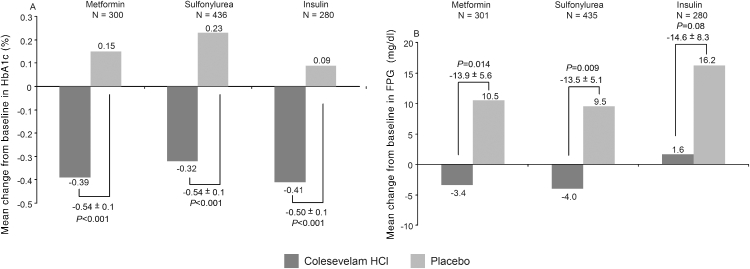
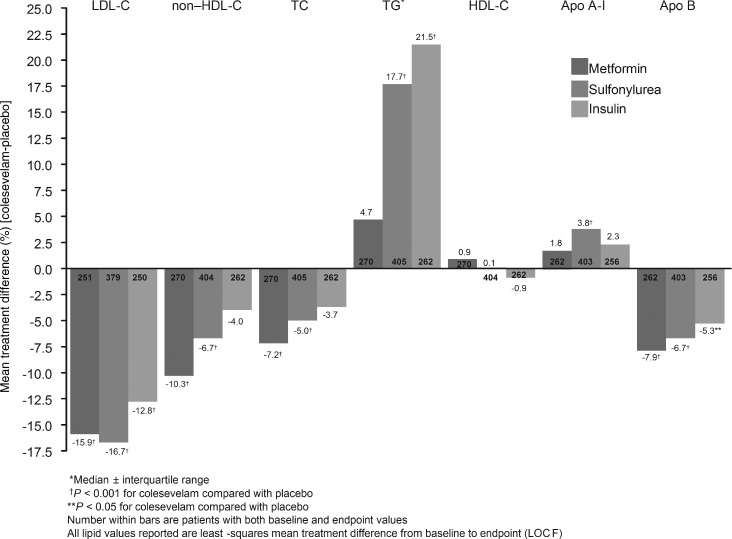
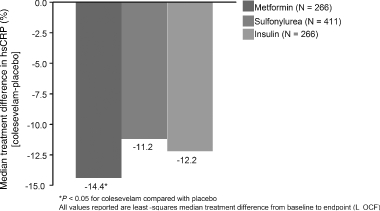
Simultaneous control of blood glucose and other risk factors such as hypertension and dyslipidaemia is essential for reducing the risk of complications associated with type 2 diabetes mellitus (T2DM). As relatively few patients with T2DM have their risk factors managed to within the limits recommended by the American Diabetes Association, American College of Endocrinology or National Cholesterol Education Program Adult Treatment Panel III guidelines, treatment that can simultaneously control more than one risk factor is of therapeutic benefit. Clinical studies have shown that bile acid sequestrants have glucose‐lowering effects in addition to their low‐density lipoprotein cholesterol‐lowering effects in patients with T2DM. The bile acid sequestrant colesevelam hydrochloride is approved as an adjunct to antidiabetes therapy for improving glycaemic control in adults with T2DM. This review examines data from three phase III clinical trials that evaluated the glucose‐ and lipid‐lowering effects of colesevelam when added to the existing antidiabetes treatment regimen of patients with T2DM.
Overview
The claims and statistics of this paper haven’t been checked yet.
Run the check — free, no account needed. It reads the open-access text and checks the sources it cites.
Integrity signals
Registry
Cites
Statistics
Figures
Verification
Claims the paper makes
The claims and statistics of this paper haven’t been checked yet.
Run the check — free, no account needed. It reads the open-access text and checks the sources it cites.
Claims other papers make about this one
Each is checked against this paper’s own text: does it say what the citing paper says it does?
The check wasn’t confident either way, so it gives no verdict — never disputed.
In the citing paper
“Risk of DKA is increased in persons using SGLT2is, especially in those being treated with insulin (especially if there has been a recent reduction in their insulin dose) and/or those with acute illnesses and prolonged fasting.1049,1050”
From American Association of Clinical Endocrinology Clinical Practice Guideline: Developing a Diabetes Mellitus Comprehensive Care Plan-2022 Update. (2022) · cites this paper as [1050]
Experimental — accuracy not yet measuredIn the citing paper
“The drug reduces LDL-C and also improves glycated haemoglobin (Hb A1C ) in patients with type 2 diabetes.109,110”
From ESC/EAS Guidelines for the management of dyslipidaemias (2011) · cites this paper as [110]
Self-check
Percentages, sums and reported differences re-computed from the paper’s own numbers.
The self-check needs the paper’s full text.
Citations
Cites
Detection, evaluation, and treatment of high blood cholesterol in adults (Adult Treatment Panel III)
Grundy, S. M., Becker, D. M., Clark, L. T., Cooper, R., Denke, M. A., Howard, J. L., Hunninghake, D. B., Illingworth, D. R., Luepker, R. V., McBride, P. E., et al. (2002) · Civil War Book Review · Cited by 12,198
Stratton, I. M. (2000) · BMJ · doi:10.1136/bmj.321.7258.405 · Cited by 9,059
Effects of Intensive Glucose Lowering in Type 2 Diabetes
(2008) · New England Journal of Medicine · doi:10.1056/nejmoa0802743 · Cited by 7,888
Intensive blood glucose control and vascular outcomes in patients with type 2 diabetes
(2008) · New England Journal of Medicine · doi:10.1056/nejmoa0802987 · Cited by 7,397
Grundy, S. M., Cleeman, J. I., Merz, C. N. B., Brewer, H. B., Clark, L. T., Hunninghake, D. B., Pasternak, R. C., Smith, S. C., & Stone, N. J. (2004) · Circulation · doi:10.1161/01.cir.0000133317.49796.0e · Cited by 6,902
Multifactorial intervention and cardiovascular disease in patients with type 2 diabetes
Gæde, P., Vedel, P., Larsen, N., Jensen, G. V. H., Parving, H.-H., & Pedersen, O. (2003) · New England Journal of Medicine · doi:10.1056/nejmoa021778 · Cited by 4,378
Basevi, V., Mario, S. D., Morciano, C., Nonino, F., & Magrini, N. (2011) · Diabetes Care · doi:10.2337/dc11-0174 · Cited by 3,058
Role of Bile Acids and Bile Acid Receptors in Metabolic Regulation
Lefebvre, P., Cariou, B., Lien, F., Kuipers, F., & Staels, B. (2009) · Physiological Reviews · doi:10.1152/physrev.00010.2008 · Cited by 1,678
Self-citationPoor Control of Risk Factors for Vascular Disease Among Adults With Previously Diagnosed Diabetes
Saydah, S. H. (2004) · JAMA · doi:10.1001/jama.291.3.335 · Cited by 1,357
Activation of the nuclear receptor FXR improves hyperglycemia and hyperlipidemia in diabetic mice
Zhang, Y., Lee, F. Y., Barrera, G., Lee, H., Vales, C., Gonzalez, F. J., Willson, T. M., & Edwards, P. A. (2006) · Proceedings of the National Academy of Sciences · doi:10.1073/pnas.0506982103 · Cited by 974
Farnesoid X receptor is essential for normal glucose homeostasis
Ma, K. (2006) · Journal of Clinical Investigation · doi:10.1172/jci25604 · Cited by 883
(2008) · PsycEXTRA Dataset · doi:10.1037/e549122009-001 · Cited by 858
Katsuma, S., Hirasawa, A., & Tsujimoto, G. (2005) · Biochemical and Biophysical Research Communications · doi:10.1016/j.bbrc.2005.01.139 · Cited by 789
Lipoprotein Management in Patients With Cardiometabolic Risk
Brunzell, J. D., Davidson, M. H., Furberg, C. D., Goldberg, R. B., Howard, B. V., Stein, J. H., & Witztum, J. L. (2008) · Diabetes Care · doi:10.2337/dc08-9018 · Cited by 716
The Farnesoid X Receptor Modulates Adiposity and Peripheral Insulin Sensitivity in Mice
Cariou, B., van Harmelen, K., Durán-Sandoval, D., van Dijk, T. H., Grefhorst, A., Abdelkarim, M., Caron, S., Torpier, G., Fruchart, J., Gonzalez, F. J., et al. (2006) · Journal of Biological Chemistry · doi:10.1074/jbc.m510258200 · Cited by 546
Self-citationCholesterol and Coronary Heart Disease: Predicting Risks by Levels and Ratios
Kinosian, B., Glick, H., & Garland, G. (1994) · Annals of Internal Medicine · doi:10.7326/0003-4819-121-9-199411010-00002 · Cited by 519 · cited 1×
“There were improvements with colesevelam in the lipoprotein ratios that are most predictive of CVD risk [29,32].”
BackgroundIs Glycemic Control Improving in U.S. Adults?
Hoerger, T. J., Segel, J. E., Gregg, E. W., & SAADDINE, J. B. (2007) · Diabetes Care · doi:10.2337/dc07-1572 · Cited by 477
Yamagata, K., Daitoku, H., Shimamoto, Y., Matsuzaki, H., Hirota, K., Ishida, J., & Fukamizu, A. (2004) · Journal of Biological Chemistry · doi:10.1074/jbc.m314322200 · Cited by 375
Clinical Utility of Bile Acid Sequestrants in the Treatment of Dyslipidemia: A Scientific Review
Insull, W. (2006) · Southern Medical Journal · doi:10.1097/01.smj.0000208120.73327.db · Cited by 308
Davidson, M. H., Dillon, M. A., Gordon, B., Jones, P., Samuels, J., Weiss, S., Isaacsohn, J., Toth, P., & Burke, S. K. (1999) · Archives of Internal Medicine · doi:10.1001/archinte.159.16.1893 · Cited by 307
Diabetic Retinopathy and the Risk of Coronary Heart Disease
Cheung, N., Wang, J. J., Klein, R., Couper, D. J., Sharrett, A. R., & Wong, T. Y. (2007) · Diabetes Care · doi:10.2337/dc07-0264 · Cited by 267
Durán-Sandoval, D., Cariou, B., Percevault, F., Hennuyer, N., Grefhorst, A., van Dijk, T. H., Gonzalez, F. J., Fruchart, J., Kuipers, F., & Staels, B. (2005) · Journal of Biological Chemistry · doi:10.1074/jbc.m501931200 · Cited by 249
Self-citationFonseca, V. A., Rosenstock, J., Wang, A. C., Truitt, K. E., & Jones, M. R. (2008) · Diabetes Care · doi:10.2337/dc08-0283 · Cited by 245
Self-citationOng, K. L., Cheung, B. M. Y., Wong, L. Y. F., Wat, N. M. S., Tan, K. C. B., & Lam, K. S. L. (2008) · Annals of Epidemiology · doi:10.1016/j.annepidem.2007.10.007 · Cited by 232
Hanefeld, M., Brunetti, P., Schernthaner, G. H., Matthews, D. R., Charbonnel, B. H., & on behalf of the QUARTET Study Group (2004) · Diabetes Care · doi:10.2337/diacare.27.1.141 · Cited by 230
Goff, D. C., Gerstein, H. C., Ginsberg, H. N., Cushman, W. C., Margolis, K. L., Byington, R. P., Buse, J. B., Genuth, S., Probstfield, J. L., & Simons-Morton, D. G. (2007) · The American Journal of Cardiology · doi:10.1016/j.amjcard.2007.03.002 · Cited by 229
Lower Baseline Glycemia Reduces Apparent Oral Agent Glucose-Lowering Efficacy
Bloomgarden, Z. T., Dodis, R., Viscoli, C. M., Holmboe, E. S., & Inzucchi, S. E. (2006) · Diabetes Care · doi:10.2337/dc06-1120 · Cited by 219
Zieve, F. J., Kalin, M. F., Schwartz, S. L., Jones, M. R., & Bailey, W. L. (2007) · Clinical Therapeutics · doi:10.1016/j.clinthera.2007.01.003 · Cited by 216
Colesevelam Hydrochloride Therapy in Patients With Type 2 Diabetes Mellitus Treated With Metformin
Bays, H. E., Goldberg, R. B., Truitt, K. E., & Jones, M. R. (2008) · Archives of Internal Medicine · doi:10.1001/archinte.168.18.1975 · Cited by 212
Retinopathy predicts cardiovascular mortality in type 2 diabetic men and women
Juutilainen, A., Lehto, S., Rönnemaa, T., Pyörälä, K., & Laakso, M. (2007) · Diabetes Care · doi:10.2337/dc06-1747 · Cited by 209
Knapp, H., Schrott, H., Ma, P., Knopp, R. H., Chin, B., Gaziano, J., Donovan, J. M., Burke, S., & Davidson, M. H. (2001) · American Journal of Medicine · doi:10.1016/s0002-9343(01)00638-6 · Cited by 201
Goldberg, R. B. (2008) · Archives of Internal Medicine · doi:10.1001/archinte.168.14.1531 · Cited by 195
Garg, A., & Grundy, S. M. (1994) · Annals of Internal Medicine · doi:10.7326/0003-4819-121-6-199409150-00004 · Cited by 187
Coadministration of colesevelam hydrochloride with atorvastatin lowers LDL cholesterol additively
Hunninghake, D. (2001) · Atherosclerosis · doi:10.1016/s0021-9150(01)00437-3 · Cited by 174
Bile Acids and the Membrane Bile Acid Receptor TGR5—Connecting Nutrition and Metabolism
Thomas, C., Auwerx, J. H., & Schoonjans, K. (2008) · Thyroid · doi:10.1089/thy.2007.0255 · Cited by 155
Insull, W., Toth, P. D., Mullican, W. S., Hunninghake, D. B., Burke, S. K., Donovan, J. M., & Davidson, M. H. (2001) · Mayo Clinic Proceedings · doi:10.4065/76.10.971 · Cited by 138
Incidence and Risk Factors for Stroke in Type 2 Diabetic Patients
Giorda, C. B., Avogaro, A., Maggini, M., Lombardo, F. L., Mannucci, E., Turco, S., Alegiani, S. S., Raschetti, R., Velussi, M., Ferrannini, E., et al. (2007) · Stroke · doi:10.1161/01.str.0000260100.71665.2f · Cited by 117
Drug Interactions with Colesevelam Hydrochloride, a Novel, Potent Lipid-Lowering Agent
Donovan, J. M., Stypinski, D., Stiles, M. R., Olson, T. A., & Burke, S. K. (2000) · Cardiovascular Drugs and Therapy · doi:10.1023/a:1007831418308 · Cited by 93
Road Maps to Achieve Glycemic Control in Type 2 Diabetes Mellitus
Jellinger, P. S., Davidson, J. A., Blonde, L., EINHORN, D. F., Grunberger, G., Handelsman, Y., Hellman, R., Lebovitz, H. E., Levy, P., & Roberts, V. L. (2007) · Endocrine Practice · doi:10.4158/ep.13.3.260 · Cited by 92
Self-citationSuzuki, T., Oba, K., Igari, Y., Matsumura, N., Watanabe, K., Futami‐Suda, S., Yasuoka, H., Ouchi, M., Suzuki, K., Kigawa, Y., et al. (2007) · Journal of Nippon Medical School · doi:10.1272/jnms.74.338 · Cited by 91
Transient impairment of the adaptive response to fasting in FXR‐deficient mice
Cariou, B., van Harmelen, K., Durán-Sandoval, D., van Dijk, T. H., Grefhorst, A., Bouchaert, E., Fruchart, J., Gonzalez, F. J., Kuipers, F., & Staels, B. (2005) · FEBS Letters · doi:10.1016/j.febslet.2005.06.033 · Cited by 81
Self-citationFXR‐deficiency confers increased susceptibility to torpor
Cariou, B., Bouchaert, E., Abdelkarim, M., Dumont, J., Caron, S., Fruchart, J., Burcelin, R., Kuipers, F., & Staels, B. (2007) · FEBS Letters · doi:10.1016/j.febslet.2007.09.064 · Cited by 36
Self-citationGiusti, J., & RIZZOTTO, J.-A. M. (2006) · Current Diabetes Reports · doi:10.1007/s11892-006-0014-y · Cited by 22
Research works printed but not linked: 5
- 2009, Diabetes Care, S13
- 2008, Diabetes Care, S12
- Braunlin W, 2000, In vitro comparison of bile acid binding to colesevelam HCl and other bile acid sequestrants, Polymer Preprints, 41, 708
- 2007, Welchol (Colesevelam Hydrochloride Tablets) Product Information
- Brunzell JD, 2008, Diabetes Care, 811
Cited by
Sorted by citations
Inzucchi, S. E., Bergenstal, R. M., Buse, J. B., Diamant, M., Ferrannini, E., Nauck, M., Peters, A. L., Tsapas, A., Wender, R., & Matthews, D. R. (2012) · Diabetologia · doi:10.1007/s00125-012-2534-0 · Cited by 3,919
ESC/EAS Guidelines for the management of dyslipidaemias
Reiner, Ž., Catapano, A. L., De Backer, G., Graham, I., Taskinen, M.-R., Wiklund, O., Agewall, S., Alegria, E., Chapman, M. J., Durrington, P., et al. (2011) · European Heart Journal · doi:10.1093/eurheartj/ehr158 · Cited by 3,549
Management of Hyperglycemia in Type 2 Diabetes: A Patient-Centered Approach
Inzucchi, S. E., Bergenstal, R. M., Buse, J. B., Diamant, M., Ferrannini, E., Nauck, M., Peters, A. L., Tsapas, A., Wender, R., & Matthews, D. R. (2012) · Diabetes Care · doi:10.2337/dc12-0413 · Cited by 3,207
2016 ESC/EAS Guidelines for the Management of Dyslipidaemias
Catapano, A. L., Graham, I., De Backer, G., Wiklund, O., Chapman, M. J., Drexel, H., Hoes, A. W., Jennings, C. S., Landmesser, U., Pedersen, T. R., et al. (2016) · European Heart Journal · doi:10.1093/eurheartj/ehw272 · Cited by 3,162
Clinical Practice Guidelines for Multiple Endocrine Neoplasia Type 1 (MEN1)
Thakker, R. V., Newey, P. J., Walls, G. V., Bilezikian, J. P., Dralle, H., Ebeling, P. R., Melmed, S. K., Sakurai, A., Tonelli, F., & Brandi, M. L. (2012) · The Journal of Clinical Endocrinology & Metabolism · doi:10.1210/jc.2012-1230 · Cited by 1,500
Metadata
- Authors
- Fonseca, V. A., Handelsman, Y., & Staels, B.
- Affiliations
- Tulane University (US)
- Inserm (FR)
- Corresponding author
- Fonseca, Vivian A.
- Venue
- Diabetes, Obesity and Metabolism
- Publisher
- Wiley
- Published
- 2010-03-30
- Volume
- 12
- Issue
- 5
- Pages
- 384-392
- ISSN
- 1462-8902 (ISSN-L)
- 1463-1326
- PMC
- PMC2871173
- OpenAlex
- W1963557257
- Cited by
- 130
- References
- 46
- Citations by year
- 2025: 1 · 2024: 4 · 2023: 3 · 2022: 6 · 2021: 4 · 2020: 10 · 2019: 6 · 2018: 9 · 2017: 5 · 2016: 11 · 2015: 13 · 2014: 11 · 2013: 12 · 2012: 16
- FWCI
- 1.53
- Type
- journal article
- Language
- en
- Open access
- bronze
- doi.org
- Locations
- Diabetes Obesity and Metabolism (publishedVersion)
- Europe PMC (PubMed Central) (publishedVersion, cc-by)
- PubMed Central (publishedVersion, cc-by)
- PubMed (publishedVersion)
- Funders
- Daiichi Sankyo Europe
- Topics
- Health Sciences › Medicine › Endocrinology, Diabetes and Metabolism › Diabetes Treatment and Management
- Health Sciences › Medicine › Endocrinology, Diabetes and Metabolism › Diabetes, Cardiovascular Risks, and Lipoproteins
- Health Sciences › Medicine › Endocrinology, Diabetes and Metabolism › Diabetes Management and Research
- Keywords
- colesevelam, type 2 diabetes, bile acid sequestrants, glucose-lowering effect, hypolipidemic effect, LDL cholesterol, glycemic control, dyslipidemia, risk factor control
- MeSH terms
- Colesevelam Hydrochloride, Adult, Allylamine, Anticholesteremic Agents, Blood Glucose, Cardiovascular Diseases, Diabetes Mellitus, Type 2, Diabetic Angiopathies, Female, Glycated Hemoglobin, Humans, Lipids, Male
About these checks
Registry, retraction, Cites and statistics results are computed, not judged, with one exception: a printed reference that no index lists is read once by a model before it counts as a citation error. Claims are extracted by a model and kept only when their quote appears verbatim in the text; each cited source is then checked, with a model’s help, for whether it says what the claim relies on. Those verdicts can be wrong — read the claim’s quote and the cited source before relying on one.
Statistics and arithmetic are recomputed, not judged.
Confidence bands are shown only for fields calibrated on our annotated test set. None is calibrated yet, so no band is shown.
What counts as a claim ›How we measure confidence ›How we check this ›
Are you an author, or do you see a problem with this page? Request a review
