

The DOI matches its Crossref record; 113 of the 113 references it cites were found in a registry or an index.
Intermittent fasting interventions for treatment of overweight and obesity in adults: a systematic review and meta-analysis
Open accessAbstract
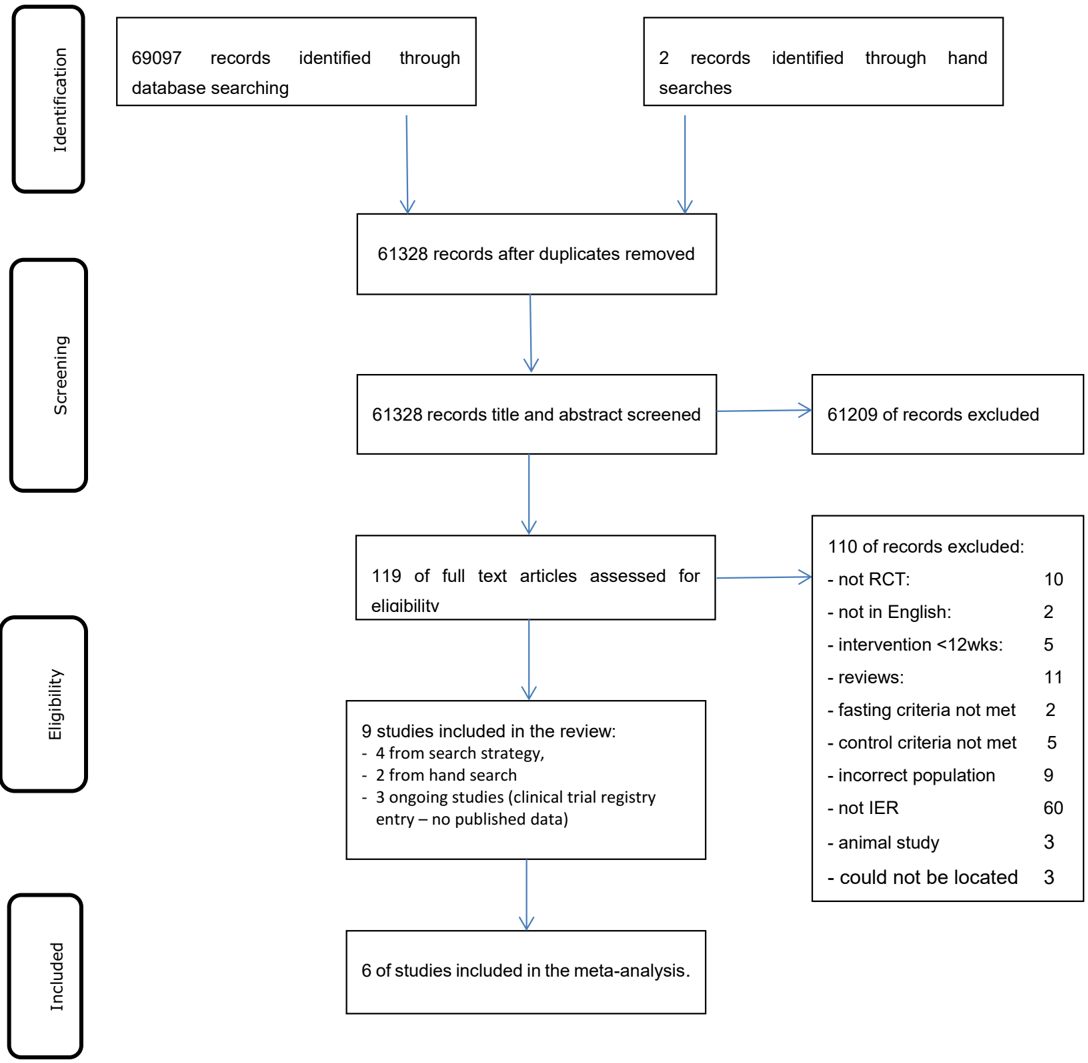
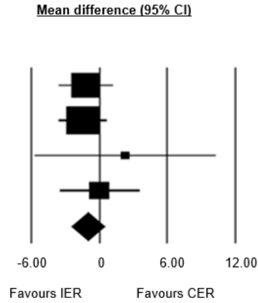
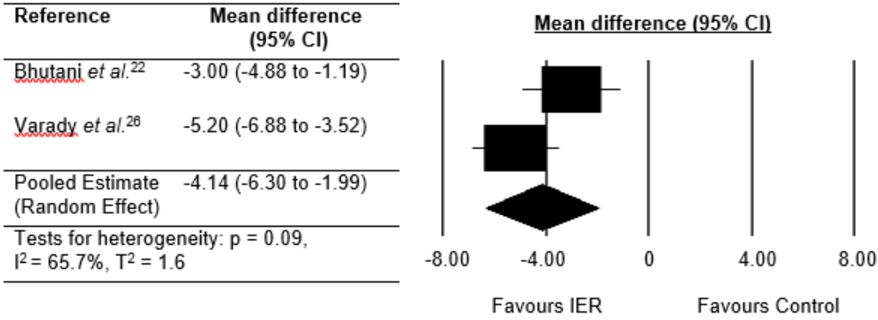
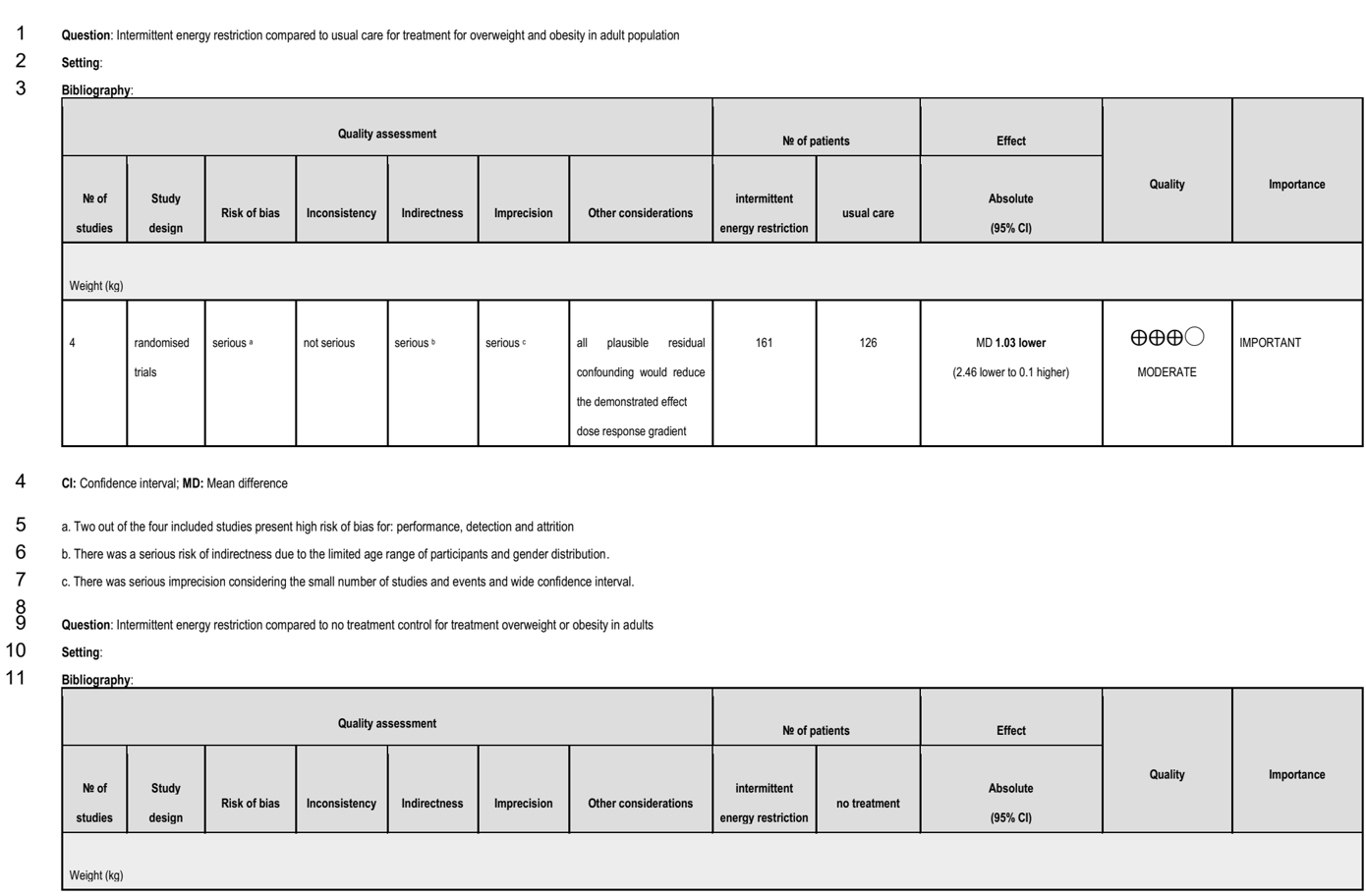
Objective: To examine the effectiveness of intermittent energy restriction in the treatment for overweight and obesity in adults, when compared to usual care treatment or no treatment. Introduction: Intermittent energy restriction encompasses dietary approaches including intermittent fasting, alternate day fasting, and fasting for two days per week. Despite the recent popularity of intermittent energy restriction and associated weight loss claims, the supporting evidence base is limited. Inclusion criteria: This review included overweight or obese (BMI ≥25 kg/m 2 ) adults (≥18 years). Intermittent energy restriction was defined as consumption of ≤800 kcal on at least one day, but no more than six days per week. Intermittent energy restriction interventions were compared to no treatment ( ad libitum diet) or usual care (continuous energy restriction ∼25% of recommended energy intake). Included interventions had a minimum duration of 12 weeks from baseline to post outcome measurements. The types of studies included were randomized and pseudo-randomized controlled trials. The primary outcome of this review was change in body weight. Secondary outcomes included: i) anthropometric outcomes (change in BMI, waist circumference, fat mass, fat free mass); ii) cardio-metabolic outcomes (change in blood glucose and insulin, lipoprotein profiles and blood pressure); and iii) lifestyle outcomes: diet, physical activity, quality of life and adverse events. Methods: A systematic search was conducted from database inception to November 2015. The following electronic databases were searched: MEDLINE, Embase, CINAHL, Cochrane Library, ClinicalTrials.gov, ISRCTN registry, and anzctr.org.au for English language published studies, protocols and trials. Two independent reviewers evaluated the methodological quality of included studies using the standardized critical appraisal instruments from the Joanna Briggs Institute. Data were extracted from papers included in the review by two independent reviewers using the standardized data extraction tool from the Joanna Briggs Institute. Effect sizes were expressed as weighted mean differences and their 95% confidence intervals were calculated for meta-analyses. Results: Six studies were included in this review. The intermittent energy restriction regimens varied across studies and included alternate day fasting, fasting for two days, and up to four days per week. The duration of studies ranged from three to 12 months. Four studies included continuous energy restriction as a comparator intervention and two studies included a no treatment control intervention. Meta-analyses showed that intermittent energy restriction was more effective than no treatment for weight loss (−4.14 kg; 95% CI −6.30 kg to −1.99 kg; p ≤ 0.001). Although both treatment interventions achieved similar changes in body weight (approximately 7 kg), the pooled estimate for studies that investigated the effect of intermittent energy restriction in comparison to continuous energy restriction revealed no significant difference in weight loss (−1.03 kg; 95% CI −2.46 kg to 0.40 kg; p = 0.156). Conclusions: Intermittent energy restriction may be an effective strategy for the treatment of overweight and obesity. Intermittent energy restriction was comparable to continuous energy restriction for short term weight loss in overweight and obese adults. Intermittent energy restriction was shown to be more effective than no treatment, however, this should be interpreted cautiously due to the small number of studies and future research is warranted to confirm the findings of this review.
Overview
The claims and statistics of this paper haven’t been checked yet.
Run the check — free, no account needed. It reads the open-access text and checks the sources it cites.
Integrity signals
Registry
Cites
Statistics
Figures
Verification
Claims the paper makes
The claims and statistics of this paper haven’t been checked yet.
Run the check — free, no account needed. It reads the open-access text and checks the sources it cites.
Claims other papers make about this one
Each is checked against this paper’s own text: does it say what the citing paper says it does?
The source backs part of the claim, not all of it — or backs it for a different population, condition or comparison.
In the citing paper
“In 3 systematic reviews and meta-analyses conducted to evaluate the effects of time-restricted eating and/or intermittent fasting (vs control) on weight loss and cardiometabolic risk factors, weight loss ranged from 1 to 4 kg and triglycerides decreased by 6 to 12 mg/dL (70-72).”
From 2021 ACC Expert Consensus Decision Pathway on the Management of ASCVD Risk Reduction in Patients With Persistent Hypertriglyceridemia (2021) · cites this paper as [70]
Experimental — accuracy not yet measuredThe source backs part of the claim, not all of it — or backs it for a different population, condition or comparison.
In the citing paper
“Triglycerides are reduced with intermittent fasting in proportion to weight loss.”
From 2021 ACC Expert Consensus Decision Pathway on the Management of ASCVD Risk Reduction in Patients With Persistent Hypertriglyceridemia (2021) · cites this paper as [70]
Experimental — accuracy not yet measured
Self-check
Percentages, sums and reported differences re-computed from the paper’s own numbers.
The self-check needs the paper’s full text.
Citations
Cites
Preferred reporting items for systematic reviews and meta-analyses: The PRISMA statement
Moher, D., Liberati, A., Tetzlaff, J., Altman, D. G., & the PRISMA Group* (2009) · Annals of Internal Medicine · doi:10.7326/0003-4819-151-4-200908180-00135 · Cited by 37,554
GRADE: an emerging consensus on rating quality of evidence and strength of recommendations
Guyatt, G. H., Oxman, A. D., Vist, G. E., Kunz, R., Falck-Ytter, Y., Alonso-Coello, P., & Schünemann, H. J. (2008) · BMJ · doi:10.1136/bmj.39489.470347.ad · Cited by 23,305
Process evaluation of complex interventions: Medical Research Council guidance
Moore, G. F., Audrey, S., Barker, M., Bond, L., Bonell, C., Hardeman, W., Moore, L., O'Cathain, A., Tinati, T., Wight, D., et al. (2015) · BMJ · doi:10.1136/bmj.h1258 · Cited by 6,204 · cited 1×
“Indeed, process evaluation has been highlighted as being of increasing importance in advancing the understanding of complex interventions.(49) Process evaluations provide opportunities to identify the successful and unsuccessful components of an intervention and are often”
BackgroundEuropean Guidelines for Obesity Management in Adults
Yumuk, V., Tsigos, C., Fried, M., Schindler, K., Busetto, L., Micic, D., & Toplak, H. (2015) · Obesity Facts · doi:10.1159/000442721 · Cited by 3,432 · cited 2×
“However, currently international clinical guidance on the treatment of adult obesity does not recommend the routine use of VLCD (defined as a hypocaloric diet of 800 or less kcal/day) for the treatment of adult obesity.(4,5,14,15) Instead, continuous energy restriction (CER) involving a daily energy deficit of 600 kca…”
BackgroundAnnual Medical Spending Attributable To Obesity: Payer-And Service-Specific Estimates
Finkelstein, E. A., Trogdon, J. G., Cohen, J. W., & Dietz, W. H. (2009) · Health Affairs · doi:10.1377/hlthaff.28.5.w822 · Cited by 2,956 · cited 1×
“Medical expenditure in the United States of America (USA) has shown to be even greater with associated costs at US$147 billion.(7) Furthermore, if trends in obesity continue to increase, it is predicted that by 2050, 50% of the population in the UK could be obese and the total costs in managing obesity could escalate…”
BackgroundSaunders, R. P., Evans, M. H., & Joshi, P. (2005) · Health Promotion Practice · doi:10.1177/1524839904273387 · Cited by 1,031
Han, T. S., Leer, E. M. V., Seidell, J. C., & Lean, M. E. J. (1995) · BMJ · doi:10.1136/bmj.311.7017.1401 · Cited by 974 · cited 2×
“These results are promising as reductions in waist circumference or central fat distribution reduce cardiovascular risk.(30) The reduction in waist circumference may partially explain the decrease in fasting insulin, although this is also likely to be associated with the periods of acute energy restriction, particular…”
BackgroundResultSelf-citationSystematic Review: An Evaluation of Major Commercial Weight Loss Programs in the United States
Tsai, A. G., & Wadden, T. A. (2005) · Annals of Internal Medicine · doi:10.7326/0003-4819-142-1-200501040-00012 · Cited by 815
Harvie, M. N., Pegington, M., Mattson, M. P., Frystyk, J., Dillon, B., Evans, G., Cuzick, J., Jebb, S. A., Martin, B., Cutler, R. G., et al. (2011) · International Journal of Obesity · doi:10.1038/ijo.2010.171 · Cited by 804 · cited 11×
“The majority of studies were in general conducted in the USA (n¼4), with the exception of two studies by Harvie et al. which were conducted in the UK.19,20 Four studies investigated the efficacy of IER interventions in comparison to CER19-21,25 and two studies included a no treatment control intervention (ad libitum d…”
BackgroundMethodInfluentialLong term pharmacotherapy for obesity and overweight: updated meta-analysis
Rucker, D., Padwal, R., Li, S. K., Curioni, C., & Lau, D. C. W. (2007) · BMJ · doi:10.1136/bmj.39385.413113.25 · Cited by 801
Cited by
Sorted by citations
Items 301–317 of 317
Zhong, F., Zhu, T., Jin, X., Chen, X., Wu, R., Shao, L., & Wang, S. (2024) · Figshare · doi:10.6084/m9.figshare.26747591
Zhong, F., Zhu, T., Jin, X., Chen, X., Wu, R., Shao, L., & Wang, S. (2024) · Figshare · doi:10.6084/m9.figshare.26747588
Empfehlungen zur Ernährung von Personen mit Typ-2-Diabetes mellitus
Skurk, T., Bosy‐Westphal, A., Grünerbel, A., Kabisch, S., Keuthage, W., Kleinridders, A., Kronsbein, P., Müssig, K., Nussbaumer, H., Pfeiffer, A. F. H., et al. (2025) · Diabetologie und Stoffwechsel · doi:10.1055/a-2592-8207
Devasena, I., Mubarak, D. G., Bhagyalakshmi, V. S., & Kumar, D. M. M. (2025) · Student s Journal of Health Research Africa · doi:10.51168/sjhrafrica.v6i12.2259
Konventionelle Diätformen und Integration von TCM bei der Therapie von (Prä‑)Adipositas
Panhofer, P., & Rothe, S. (2026) · Deutsche Zeitschrift für Akupunktur · doi:10.1007/s42212-025-00795-w
Effect of a 5:2 intermittent fasting diet on obese patients with polycystic ovary syndrome
An, W., Chen, F., Wang, B., Zhou, S., Jiang, L., An, B., Cui, Z., Ou, X., Huang, W., & Yan, H. (2026) · Frontiers in Endocrinology · doi:10.3389/fendo.2026.1758805
Vlastaridou, E., Blatsiou, S., Kosma, I., Anastasiou, C. A., & Yannakoulia, M. (2025) · Journal of Atherosclerosis Prevention and Treatment · doi:10.4103/aptj.aptj_18_25
Empfehlungen zur Ernährung von Personen mit Typ-2-Diabetes mellitus
Skurk, T., Bosy‐Westphal, A., Grünerbel, A., Kabisch, S., Keuthage, W., Kleinridders, A., Kronsbein, P., Müssig, K., Nussbaumer, H., Pfeiffer, A. F. H., et al. (2026) · Die Diabetologie · doi:10.1007/s11428-026-01472-9
Hornsby, A. K. E., Powell, O., Guschina, I. A., Williams, T. J., Lines, K., Roberts, L. D., Davies, J. S., & Wells, T. (2026) · Frontiers in Nutrition · doi:10.3389/fnut.2026.1735869
Khalafi, M., Maleki, A. H., Ehsanifar, M., Aghaeinejad, M., Sakhaei, M. H., Rosenkranz, S. K., Symonds, M. E., & Ramezani, F. (2026) · Critical Reviews in Food Science and Nutrition · doi:10.1080/10408398.2026.2681938
“Previous meta-analyses have shown IF is effective for reducing visceral fat (Khalafi et al. 2025) and body weight (Harris et al. 2018; Khalafi et al. 2024), with long-term benefits compared to control (Khalafi et al. 2025).”
Eating on camera: a creator-centric case study of mukbang engagement in India
Batra, G., Atroszko, P. A., & Kotbagi, G. (2026) · Frontiers in Psychology · doi:10.3389/fpsyg.2026.1806358
“While intermittent fasting has received clinical attention, extreme variants such as OMAD remain poorly evidenced, and prolonged fasting has been associated with muscle catabolism, micronutrient deficiency, and heightened risk of binge-restrict cycles ( Cioffi et al., 2018; Harris et al., 2018).”
Lastovka, N., Stanfar, K., Ghajar, M., Bailey, A., Byham-Gray, L. D., & Radler, D. R. (2026) · Nutrition Reviews · doi:10.1093/nutrit/nuag093
Verdi, A. M. O. H., Soares, J. M., Andrade, M. J., Mazur, C. E., & Gonçalves, D. C. (2026) · Anais da Academia Brasileira de Ciências · doi:10.1590/0001-3765202620240672
Scherkamp, D., Wachenfeld-Teschner, V., Rabe, L., Adrego, F. D. S., Freund, G., Kroh, A., Schenk, A., Beier, J. P., & Boos, A. M. (2026) · Adipocyte · doi:10.1080/21623945.2026.2719267
“Intermittent fasting programmes (e.g. 16 :8 or 5:2) are also frequently used, although no advantage in terms of weight loss or cardiometabolic parameters has been shown in comparison to continuous energy restriction [67–69].”
Ernährungsintervention zur Therapie der Adipositas
Zumblick, A., & Kabisch, S. (2026) · Adipositas - Ursachen Folgeerkrankungen Therapie · doi:10.1055/a-2892-0913
Straszewska, A., Woźniak, A., Sobantka, P., Mokrzecki, S., Król, M., Aleksandrowicz, K., Grodzka, Z., Meszka, M., Bełc, E., Brzezińska, K., et al. (2026) · International Journal of Innovative Technologies in Social Science · doi:10.31435/ijitss.3(51).2026.6182
Yeary, K. H. K., Yu, H., Hussein, A. A., Varady, K. A., DiCarlo, E., Escaldi, A., & Tang, L. (2026) · Translational Behavioral Medicine · doi:10.1093/tbm/ibag069
Metadata
- Authors
- Harris, L., Hamilton, S., Azevedo, L. B., Olajide, J., De Brún, C., Waller, G., Whittaker, V., Sharp, T., Lean, M., Hankey, C., & Ells, L.
- Affiliations
- University of Glasgow (GB)
- Teesside University (GB)
- Health and Social Care Institute, Teesside University, Middlesbrough, United Kingdom
- Independent Public Health Consultant, United Kingdom
- College of Medical, Veterinary and Life Sciences, University of Glasgow, Glasgow, United Kingdom
- Corresponding author
- Hankey, Catherine
- Ells, Louisa
- Venue
- JBI Database of Systematic Reviews and Implementation Reports
- Published
- 2018-02
- Volume
- 16
- Issue
- 2
- Pages
- 507-547
- ISSN
- 2202-4433 (ISSN-L)
- OpenAlex
- W2915213530
- Cited by
- 319
- References
- 37
- Citations by year
- 2026: 14 · 2025: 27 · 2024: 54 · 2023: 54 · 2022: 47 · 2021: 50 · 2020: 43 · 2019: 20 · 2018: 9
- FWCI
- 4.01
- Type
- journal article
- Language
- en
- Open access
- green
- eprints.gla.ac.uk
- Licence
- cc-by-sa
- Locations
- The JBI Database of Systematic Reviews and Implementation Reports (publishedVersion)
- PubMed (publishedVersion)
- ENLIGHTEN (Jurnal Bimbingan dan Konseling Islam) (submittedVersion, cc-by-sa)
- TeesRep (Teesside University) (submittedVersion, cc-by-nc-nd)
- Teesside University Research Portal (Teesside University) (submittedVersion, cc-by-nc-nd)
- International Journal of Evidence-Based Healthcare
- Funders
- Medical Research Council (MR/K02325X/1)
- Topics
- Health Sciences › Medicine › Physiology (medical) › Dietary Effects on Health
- Health Sciences › Medicine › Physiology (medical) › Diet and metabolism studies
- Health Sciences › Medicine › Public Health, Environmental and Occupational Health › Obesity, Physical Activity, Diet
- Keywords
- intermittent fasting, intermittent energy restriction, alternate-day fasting, obesity treatment, overweight, weight loss, body weight, body mass index, waist circumference, fat mass, cardiometabolic outcomes, blood glucose, insulin, lipoprotein profile, blood pressure, continuous energy restriction, lifestyle intervention, adverse events, quality of life, physical activity, dietary adherence, adults, usual care
- MeSH terms
- Adult, Diet, Reducing, Fasting, Female, Humans, Male, Obesity, Weight Loss, Treatment Outcome, Overweight
About these checks
Registry, retraction, Cites and statistics results are computed, not judged, with one exception: a printed reference that no index lists is read once by a model before it counts as a citation error. Claims are extracted by a model and kept only when their quote appears verbatim in the text; each cited source is then checked, with a model’s help, for whether it says what the claim relies on. Those verdicts can be wrong — read the claim’s quote and the cited source before relying on one.
Statistics and arithmetic are recomputed, not judged.
Confidence bands are shown only for fields calibrated on our annotated test set. None is calibrated yet, so no band is shown.
What counts as a claim ›How we measure confidence ›How we check this ›
Are you an author, or do you see a problem with this page? Request a review
