

The DOI matches its Crossref record; 113 of the 113 references it cites were found in a registry or an index.
Intermittent fasting interventions for treatment of overweight and obesity in adults: a systematic review and meta-analysis
Open accessAbstract
Objective: To examine the effectiveness of intermittent energy restriction in the treatment for overweight and obesity in adults, when compared to usual care treatment or no treatment. Introduction: Intermittent energy restriction encompasses dietary approaches including intermittent fasting, alternate day fasting, and fasting for two days per week. Despite the recent popularity of intermittent energy restriction and associated weight loss claims, the supporting evidence base is limited. Inclusion criteria: This review included overweight or obese (BMI ≥25 kg/m 2 ) adults (≥18 years). Intermittent energy restriction was defined as consumption of ≤800 kcal on at least one day, but no more than six days per week. Intermittent energy restriction interventions were compared to no treatment ( ad libitum diet) or usual care (continuous energy restriction ∼25% of recommended energy intake). Included interventions had a minimum duration of 12 weeks from baseline to post outcome measurements. The types of studies included were randomized and pseudo-randomized controlled trials. The primary outcome of this review was change in body weight. Secondary outcomes included: i) anthropometric outcomes (change in BMI, waist circumference, fat mass, fat free mass); ii) cardio-metabolic outcomes (change in blood glucose and insulin, lipoprotein profiles and blood pressure); and iii) lifestyle outcomes: diet, physical activity, quality of life and adverse events. Methods: A systematic search was conducted from database inception to November 2015. The following electronic databases were searched: MEDLINE, Embase, CINAHL, Cochrane Library, ClinicalTrials.gov, ISRCTN registry, and anzctr.org.au for English language published studies, protocols and trials. Two independent reviewers evaluated the methodological quality of included studies using the standardized critical appraisal instruments from the Joanna Briggs Institute. Data were extracted from papers included in the review by two independent reviewers using the standardized data extraction tool from the Joanna Briggs Institute. Effect sizes were expressed as weighted mean differences and their 95% confidence intervals were calculated for meta-analyses. Results: Six studies were included in this review. The intermittent energy restriction regimens varied across studies and included alternate day fasting, fasting for two days, and up to four days per week. The duration of studies ranged from three to 12 months. Four studies included continuous energy restriction as a comparator intervention and two studies included a no treatment control intervention. Meta-analyses showed that intermittent energy restriction was more effective than no treatment for weight loss (−4.14 kg; 95% CI −6.30 kg to −1.99 kg; p ≤ 0.001). Although both treatment interventions achieved similar changes in body weight (approximately 7 kg), the pooled estimate for studies that investigated the effect of intermittent energy restriction in comparison to continuous energy restriction revealed no significant difference in weight loss (−1.03 kg; 95% CI −2.46 kg to 0.40 kg; p = 0.156). Conclusions: Intermittent energy restriction may be an effective strategy for the treatment of overweight and obesity. Intermittent energy restriction was comparable to continuous energy restriction for short term weight loss in overweight and obese adults. Intermittent energy restriction was shown to be more effective than no treatment, however, this should be interpreted cautiously due to the small number of studies and future research is warranted to confirm the findings of this review.
Overview
The claims and statistics of this paper haven’t been checked yet.
Run the check — free, no account needed. It reads the open-access text and checks the sources it cites.
Integrity signals
Registry
Cites
Statistics
Figures
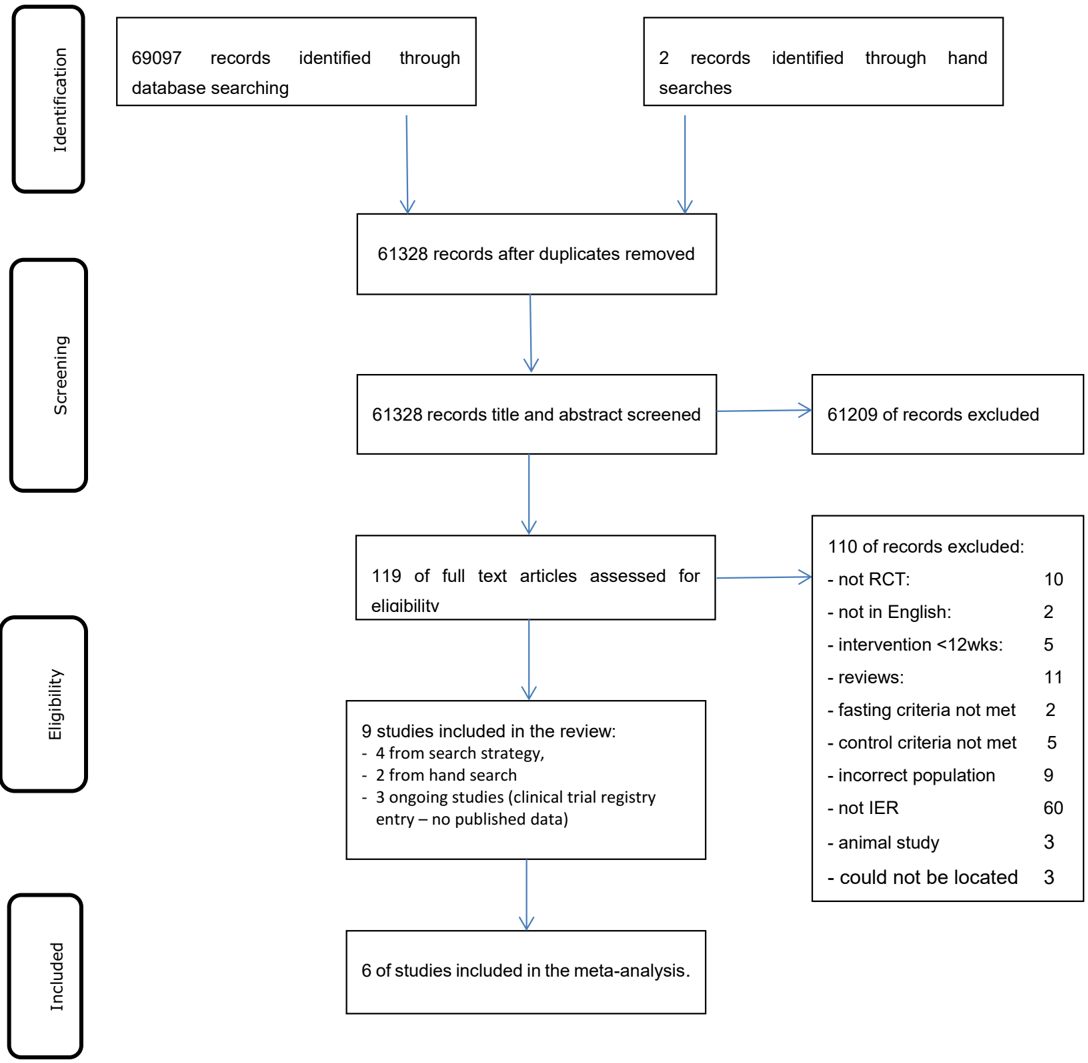
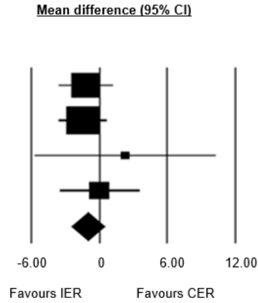
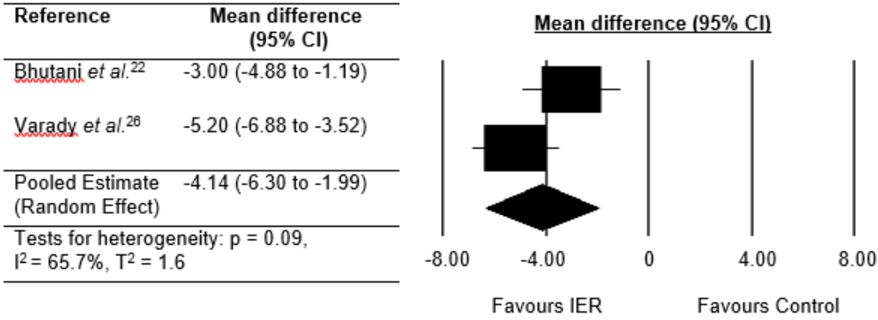
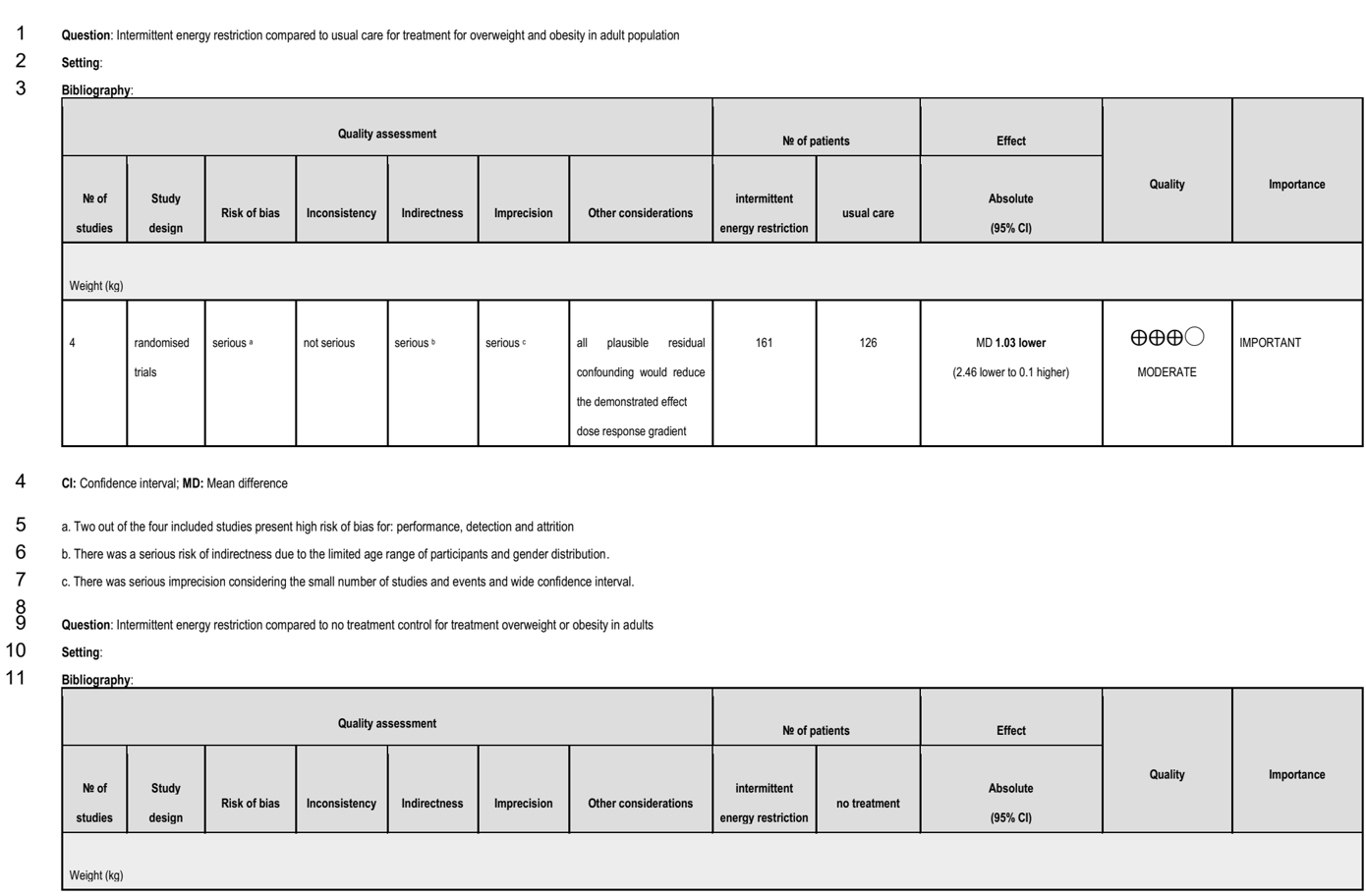
Verification
Claims the paper makes
The claims and statistics of this paper haven’t been checked yet.
Run the check — free, no account needed. It reads the open-access text and checks the sources it cites.
Claims other papers make about this one
Each is checked against this paper’s own text: does it say what the citing paper says it does?
The source backs part of the claim, not all of it — or backs it for a different population, condition or comparison.
In the citing paper
“In 3 systematic reviews and meta-analyses conducted to evaluate the effects of time-restricted eating and/or intermittent fasting (vs control) on weight loss and cardiometabolic risk factors, weight loss ranged from 1 to 4 kg and triglycerides decreased by 6 to 12 mg/dL (70-72).”
From 2021 ACC Expert Consensus Decision Pathway on the Management of ASCVD Risk Reduction in Patients With Persistent Hypertriglyceridemia (2021) · cites this paper as [70]
Experimental — accuracy not yet measuredThe source backs part of the claim, not all of it — or backs it for a different population, condition or comparison.
In the citing paper
“Triglycerides are reduced with intermittent fasting in proportion to weight loss.”
From 2021 ACC Expert Consensus Decision Pathway on the Management of ASCVD Risk Reduction in Patients With Persistent Hypertriglyceridemia (2021) · cites this paper as [70]
Experimental — accuracy not yet measured
Self-check
Percentages, sums and reported differences re-computed from the paper’s own numbers.
The self-check needs the paper’s full text.
Citations
Cites
Preferred reporting items for systematic reviews and meta-analyses: The PRISMA statement
Moher, D., Liberati, A., Tetzlaff, J., Altman, D. G., & the PRISMA Group* (2009) · Annals of Internal Medicine · doi:10.7326/0003-4819-151-4-200908180-00135 · Cited by 37,554
GRADE: an emerging consensus on rating quality of evidence and strength of recommendations
Guyatt, G. H., Oxman, A. D., Vist, G. E., Kunz, R., Falck-Ytter, Y., Alonso-Coello, P., & Schünemann, H. J. (2008) · BMJ · doi:10.1136/bmj.39489.470347.ad · Cited by 23,305
Process evaluation of complex interventions: Medical Research Council guidance
Moore, G. F., Audrey, S., Barker, M., Bond, L., Bonell, C., Hardeman, W., Moore, L., O'Cathain, A., Tinati, T., Wight, D., et al. (2015) · BMJ · doi:10.1136/bmj.h1258 · Cited by 6,204 · cited 1×
“Indeed, process evaluation has been highlighted as being of increasing importance in advancing the understanding of complex interventions.(49) Process evaluations provide opportunities to identify the successful and unsuccessful components of an intervention and are often”
BackgroundEuropean Guidelines for Obesity Management in Adults
Yumuk, V., Tsigos, C., Fried, M., Schindler, K., Busetto, L., Micic, D., & Toplak, H. (2015) · Obesity Facts · doi:10.1159/000442721 · Cited by 3,432 · cited 2×
“However, currently international clinical guidance on the treatment of adult obesity does not recommend the routine use of VLCD (defined as a hypocaloric diet of 800 or less kcal/day) for the treatment of adult obesity.(4,5,14,15) Instead, continuous energy restriction (CER) involving a daily energy deficit of 600 kca…”
BackgroundAnnual Medical Spending Attributable To Obesity: Payer-And Service-Specific Estimates
Finkelstein, E. A., Trogdon, J. G., Cohen, J. W., & Dietz, W. H. (2009) · Health Affairs · doi:10.1377/hlthaff.28.5.w822 · Cited by 2,956 · cited 1×
“Medical expenditure in the United States of America (USA) has shown to be even greater with associated costs at US$147 billion.(7) Furthermore, if trends in obesity continue to increase, it is predicted that by 2050, 50% of the population in the UK could be obese and the total costs in managing obesity could escalate…”
BackgroundSaunders, R. P., Evans, M. H., & Joshi, P. (2005) · Health Promotion Practice · doi:10.1177/1524839904273387 · Cited by 1,031
Han, T. S., Leer, E. M. V., Seidell, J. C., & Lean, M. E. J. (1995) · BMJ · doi:10.1136/bmj.311.7017.1401 · Cited by 974 · cited 2×
“These results are promising as reductions in waist circumference or central fat distribution reduce cardiovascular risk.(30) The reduction in waist circumference may partially explain the decrease in fasting insulin, although this is also likely to be associated with the periods of acute energy restriction, particular…”
BackgroundResultSelf-citationSystematic Review: An Evaluation of Major Commercial Weight Loss Programs in the United States
Tsai, A. G., & Wadden, T. A. (2005) · Annals of Internal Medicine · doi:10.7326/0003-4819-142-1-200501040-00012 · Cited by 815
Harvie, M. N., Pegington, M., Mattson, M. P., Frystyk, J., Dillon, B., Evans, G., Cuzick, J., Jebb, S. A., Martin, B., Cutler, R. G., et al. (2011) · International Journal of Obesity · doi:10.1038/ijo.2010.171 · Cited by 804 · cited 11×
“The majority of studies were in general conducted in the USA (n¼4), with the exception of two studies by Harvie et al. which were conducted in the UK.19,20 Four studies investigated the efficacy of IER interventions in comparison to CER19-21,25 and two studies included a no treatment control intervention (ad libitum d…”
BackgroundMethodInfluentialLong term pharmacotherapy for obesity and overweight: updated meta-analysis
Rucker, D., Padwal, R., Li, S. K., Curioni, C., & Lau, D. C. W. (2007) · BMJ · doi:10.1136/bmj.39385.413113.25 · Cited by 801
Cited by
Sorted by citations
Items 101–200 of 317
Metabolic changes with intermittent fasting
Lange, M. G., Coffey, A. A., Coleman, P. C., Barber, T. M., van Rens, T., Oyebode, O. O., Abbott, S., & Hanson, P. (2023) · Journal of Human Nutrition and Dietetics · doi:10.1111/jhn.13253 · Cited by 26
“11, 18, 19, 26,”
Liang, X., Chen, J., An, X., Ren, Y., Liu, Q., Huang, L., Zhang, P., Qü, P., & Li, J. (2023) · Trends in Cardiovascular Medicine · doi:10.1016/j.tcm.2023.10.002 · Cited by 23
Aragon, A. A., & Schoenfeld, B. J. (2022) · Nutrients · doi:10.3390/nu14235022 · Cited by 18
“Systematic reviews and meta-analyses consistently report a lack of serious adverse events across studies [3,62,63].”
BackgroundLiu, S., Liu, Y., Zhang, D., Li, H., Shao, X., Xie, P., & Li, J. (2023) · Environment International · doi:10.1016/j.envint.2023.108274 · Cited by 20
Wang, J., Wang, F., Chen, H., Liu, L., Zhang, S., Luo, W., Wang, G., & Hu, X. (2022) · Nutrients · doi:10.3390/nu14112315 · Cited by 17
Wang, R., Lv, X., Xu, W., Li, X., Tang, X., Huang, H., Yang, M., Ma, S., Wang, N., & Niu, Y. (2024) · Nutrition Reviews · doi:10.1093/nutrit/nuae003 · Cited by 19
Dutzmann, J., Kefalianakis, Z., Kahles, F., Daniel, J., Gufler, H., Wohlgemuth, W. A., Knöpp, K., & Sedding, D. (2024) · Circulation Heart Failure · doi:10.1161/circheartfailure.123.010936 · Cited by 18
“20 In 23 Although all of them showed a only moderate reduction in body weight by intermittent fasting, this effect was significant only in a few of these studies.”
BackgroundCheung, K., Chan, V. W.-K., Chan, S., Wong, M. M. H., Chung, G. K.-K., Cheng, W., Lo, K. K.-H., & Zeng, F. (2024) · Nutrients · doi:10.3390/nu16030357 · Cited by 16
“In another one-year observational study with 1422 participants, regardless of sex, significant reductions of SBP (from 131.6 ± 0.7 mmHg to 120.7 ± 0.4 mmHg; p < 0.001) and DBP (from 83.7 ± 0.4 mmHg to 77.9 ± 0.3 mmHg; p < 0.001) were observed and were greater among people who fasted for longer [51].”
ResultInfluentialRamadan Fasting and its Health Benefits: What’s New?
Rahman, S. (2022) · Open Access Macedonian Journal of Medical Sciences · doi:10.3889/oamjms.2022.9508 · Cited by 18
“According to certain research, adequate/excessive protein consumption during weight loss can help to prevent lean mass loss [37], [38], [39], [40], [41], [42].”
BackgroundThe Safety and Efficacy of Intermittent Fasting for Weight Loss
Aoun, A., Ghanem, C., Hamod, N., & Sawaya, S. (2020) · Nutrition Today · doi:10.1097/nt.0000000000000443 · Cited by 15
He, C., Fei, Y.-P., Zhu, C., Yao, M., Qian, G., Hu, H., & Zhai, C. (2021) · Frontiers in Cardiovascular Medicine · doi:10.3389/fcvm.2021.750714 · Cited by 15
Sofi, F. (2020) · International Journal of Food Sciences and Nutrition · doi:10.1080/09637486.2020.1746959 · Cited by 16
Antiobesity pharmacotherapy to facilitate living kidney donation
Orandi, B. J., Lofton, H. F., Montgomery, R. A., & Segev, D. L. (2023) · American Journal of Transplantation · doi:10.1016/j.ajt.2023.12.003 · Cited by 16
Enhanced weight and fat loss from long-term intermittent fasting in obesity-prone, low-fitness rats
Smyers, M. E., Koch, L. G., Britton, S. L., Wagner, J. G., & Novak, C. M. (2020) · Physiology & Behavior · doi:10.1016/j.physbeh.2020.113280 · Cited by 14
“As time-restricted eating strategies become increasingly common, evidence including clinical trials supports the safety and efficacy of many of these diets, including alternate-day fasting (1, 24, 25).”
BackgroundShort-term Intermittent Fasting for Weight Loss: A Case Report
Ooi, S. L., & Pak, S. C. (2019) · Cureus · doi:10.7759/cureus.4482 · Cited by 14
Wei, X., Cooper, A., Lee, I., Cernoch, C. A., Huntoon, G., Hodek, B., Christian, H., & Chao, A. M. (2022) · Biological Research For Nursing · doi:10.1177/10998004221078079 · Cited by 13
“Harris et al. (2018) found significant weight loss and fat mass reduction in IER when compared to a control group.”
BackgroundResultInfluentialOliveira, L. D. C., Morais, G. P., Ropelle, E. R., de Moura, L. P., Cintra, D. E., Pauli, J. R., de Freitas, E. C., Rorato, R. C., & da Silva, A. S. R. (2022) · Frontiers in Nutrition · doi:10.3389/fnut.2022.858320 · Cited by 17
Hamsho, M., Shkorfu, W., Ranneh, Y., & Fadel, A. (2024) · Nutrition Metabolism and Cardiovascular Diseases · doi:10.1016/j.numecd.2024.103805 · Cited by 15
Clinical Implications for Women of a Low-Carbohydrate or Ketogenic Diet With Intermittent Fasting
Arbour, M. W., Stec, M. A., Walker, K. C., & Wika, J. C. (2021) · Nursing for Women s Health · doi:10.1016/j.nwh.2021.01.009 · Cited by 15
Dietary recommendations for persons with type 2 diabetes mellitus
Skurk, T., Bosy‐Westphal, A., Grünerbel, A., Kabisch, S., Keuthage, W., Kleinridders, A., Kronsbein, P., Müssig, K., Nussbaumer, H., Pfeiffer, A. F. H., et al. (2022) · Experimental and Clinical Endocrinology & Diabetes · doi:10.1055/a-1624-5095 · Cited by 13
Witjaksono, F., Prafiantini, E., & Rahmawati, A. (2022) · BMC Research Notes · doi:10.1186/s13104-022-06209-7 · Cited by 16
“There haven’t been many long-term clinical trials, but the ones that have shown that intermittent fasting (IF) is superior to caloric restriction in reducing waist circumference and central fat distribution—both of which are beneficial because these parameters are essential in reducing cardiovascular risk [13, 14].”
BackgroundKhalafi, M., Rosenkranz, S. K., Ghasemi, F., Kheradmand, S., Maleki, A. H., Korivi, M., & Tsao, J.-P. (2025) · Nutrition & Metabolism · doi:10.1186/s12986-024-00885-x · Cited by 16
Bonham, M. P., Leung, G. K. W., Rogers, M., Davis, R., Clark, A. B., Davis, C., Phoi, Y. Y., Ware, R. S., El‐Heneidy, A., Kellow, N. J., et al. (2025) · EBioMedicine · doi:10.1016/j.ebiom.2025.105803 · Cited by 12
“Our data agrees with published data that typically report good adherence to modified IF protocols 23 and also data that indicate that weight change is comparable when comparing CER with modified IF interventions.”
Yan, S., Wang, C., Zhao, H., Pan, Y., Wang, H., Guo, Y., Yao, N., Li, B., & Cui, W. (2020) · Food & Function · doi:10.1039/d0fo00287a · Cited by 13
Katsarou, A. L., Katsilambros, N. L., & Koliaki, C. C. (2021) · Healthcare · doi:10.3390/healthcare9050495 · Cited by 12
“However, both meta-analyses emphasized that the observed effects of IER were not superior to those of CER [40,41].”
BackgroundResultIntermittent fasting for the prevention of cardiovascular disease
Allaf, M., Elghazaly, H., Mohamed, O. G., Fareen, M. F. K., Zaman, S., Salmasi, A.-M., Tsilidis, K. K., & Dehghan, A. (2019) · Cochrane Database of Systematic Reviews · doi:10.1002/14651858.cd013496 · Cited by 11
Kouw, I. W. K., Parr, E. B., Wheeler, M. J., Radford, B. E., Hall, R. C., Senden, J. M., Goessens, J. P. B., van Loon, L. J. C., & Hawley, J. A. (2024) · Clinical Nutrition · doi:10.1016/j.clnu.2024.09.034 · Cited by 13
Empfehlungen zur Ernährung von Personen mit Typ-2-Diabetes mellitus
Skurk, T., Bosy‐Westphal, A., Grünerbel, A., Kabisch, S., Keuthage, W., Kronsbein, P., Müssig, K., Pfeiffer, A. F. H., Simon, M., Tombek, A., et al. (2021) · Diabetologie und Stoffwechsel · doi:10.1055/a-1543-1293 · Cited by 10
Turner‐McGrievy, G. M., Wirth, M. D., Bernhart, J. A., & Aydin, H. Z. (2022) · Appetite · doi:10.1016/j.appet.2022.106135 · Cited by 13
Seimon, R. V., Gibson, A. A., Harper, C., Keating, S. E., Johnson, N. A., da Luz, F. Q., Fernando, H. A., Skilton, M. R., Markovic, T., Caterson, I. D., et al. (2018) · Healthcare · doi:10.3390/healthcare6030085 · Cited by 12
“Although a number of dietary approaches have been advocated for the treatment of obesity [16,17], the dietary interventions that induce the greatest and longest-lasting weight losses are very low energy diets (VLEDs) [18].”
BackgroundSong, H., Pang, R., Chen, Z., Wang, L., Hu, X., Feng, J., Wang, W., Liu, J., & Zhang, A. (2024) · Frontiers in Molecular Neuroscience · doi:10.3389/fnmol.2024.1466125 · Cited by 9
Psota, T., Tindall, A. M., Lohse, B., Miller, P. E., Petersen, K. S., & Kris‐Etherton, P. M. (2020) · Obesity · doi:10.1002/oby.22824 · Cited by 11
“org Weight-loss strategies are often very restrictive (3-5), difficult to follow long term (6,7), and nutritionally inadequate, which is the result of marked caloric restriction or elimination of entire food groups (5,8).”
BackgroundCaloric Restriction May Help Delay the Onset of Frailty and Support Frailty Management
Liu, P., Li, Y., & Ma, L. (2021) · Frontiers in Nutrition · doi:10.3389/fnut.2021.731356 · Cited by 9
Body mass cycling and predictors of body mass regain and its impact on cardiometabolic health
Cornejo, M. A., & Ortiz, R. M. (2021) · Metabolism · doi:10.1016/j.metabol.2021.154912 · Cited by 9
“The benefits of chronic intermittent fasting on body composition and markers of cardiometabolic health have been reviewed and the data would substantiate an approach of IF as opposed to CR for sustaining reduced BM, as the associated benefits of short term (3–12 months) reduction of waist circumference, fat mass and b…”
BackgroundZhong, F., Zhu, T., Jin, X., Chen, X., Wu, R., Shao, L., & Wang, S. (2024) · Nutrition Journal · doi:10.1186/s12937-024-00975-9 · Cited by 12
“Given that only narrative reviews on the adverse events (AEs) profile of IF [13, 14] were found, we aimed to conduct the first comprehensive meta-analysis to quantitatively assess the AEs profile of IF based on these published RCTs.”
BackgroundValenzano, A. A., Vasco, P., D’Orsi, G., Marzovillo, R. R. R., Torquato, M. T. C. G., Messina, G., Polito, R., & Cibelli, G. (2025) · Nutrients · doi:10.3390/nu17071121 · Cited by 13
“The sustained caloric deficit inherent in LCD can lower energy expenditure over time, a known metabolic adaptation that may explain the weight-loss plateau some participants experienced, aligning with observations by Harris et al. [7].”
Ribeiro, D. E., Santiago, A. F., & de Abreu, W. C. (2021) · Nutrition and Healthy Aging · doi:10.3233/nha-200106 · Cited by 9
Impact of Fasting on Cardiovascular Outcomes in Patients With Hypertension
Hammoud, S., Kurdi, M., & van den Bemt, B. J. F. (2021) · Journal of Cardiovascular Pharmacology · doi:10.1097/fjc.0000000000001097 · Cited by 10
Muresanu, C., & Егорович, Х. С. (2022) · DNA and Cell Biology · doi:10.1089/dna.2021.1118 · Cited by 9
“Carefully designed fasting protocols are known to help individuals lose weight, lowering their cardiometabolic risk (Harris et al. , 2018; Park et al. , 2020).”
Are the Modern Diets for the Treatment of Obesity Better than the Classical Ones?
Koliaki, C. C., & Katsilambros, N. L. (2022) · Endocrines · doi:10.3390/endocrines3040052 · Cited by 8
Dietary energy restriction in neurological diseases: what’s new?
Zhang, B., Huang, R., Xu, S., He, Y., Li, J., Wan, L., Xiao, B., & Luo, Z. (2022) · European Journal of Nutrition · doi:10.1007/s00394-022-03036-1 · Cited by 8
“The 5:2 diet means two continuous or discontinuous days of fasting per week, and the ADF means alternate between days of fasting and feeding, that is, fasting every other day [25].”
BackgroundLu, C., Cang, X., Liu, W., Wang, L., Huang, H., Wang, X., Zhao, L.-H., & Xu, F. (2024) · Nutrition Journal · doi:10.1186/s12937-024-00939-z · Cited by 7
Liu, F., Zhang, Z., Sun, W., & Li, T. (2025) · Nutrition Research · doi:10.1016/j.nutres.2025.04.008 · Cited by 7
Saha, A., Hamilton‐Reeves, J. M., & DiGiovanni, J. (2022) · Cancer and Metastasis Reviews · doi:10.1007/s10555-022-10056-0 · Cited by 8
Intermittent energy restriction changes the regional homogeneity of the obese human brain
Li, Z., Wu, X., Gao, H., Xiang, T., Zhou, J., Zou, Z., Tong, L., Yan, B., Zhang, C., Wang, L., et al. (2023) · Frontiers in Neuroscience · doi:10.3389/fnins.2023.1201169 · Cited by 7
DeBlauw, J. A., Churchill, A. I., Yunda, B. C., Kotarsky, C. J., Caldwell, A., & Ives, S. J. (2023) · Physiological Reports · doi:10.14814/phy2.15856 · Cited by 7
“The ketone acetoacetic acid ( p = 0.04, d = 1.0) and leptin ( p = 0.02, d = 0.6) were significantly increased in response to the 3-day CR diet in Ow/Ob men and women (Table 2).”
BackgroundInfluentialGray, K. L., Grebenshchikova, M., O'Reilly, S. L., McKellar, L. V., Clifton, P. M., & Keogh, J. B. (2021) · International Journal of Environmental Research and Public Health · doi:10.3390/ijerph18020480 · Cited by 7
Dietary Approaches and Health Outcomes: An Evidence Analysis Center Scoping Review
Handu, D., & Piemonte, T. A. (2021) · Journal of the Academy of Nutrition and Dietetics · doi:10.1016/j.jand.2021.08.106 · Cited by 7
Dietary patterns and type 2 diabetes—relationship to metabolic syndrome and inflammation
Bohn, T., Samouda, H., & Alkerwi, A. (2022) · Elsevier eBooks · doi:10.1016/b978-0-12-822130-3.00014-4 · Cited by 7
Ye, Y., Zhang, M., Lin, Z., & Tang, L. (2022) · Diabetes Metabolic Syndrome and Obesity · doi:10.2147/dmso.s376409 · Cited by 8
Aplicaciones clínicas del ayuno intermitente
Canicoba, M. (2020) · Revista de Nutrición Clínica y Metabolismo · doi:10.35454/rncm.v3n2.174 · Cited by 12
“Recientemente se publicaron dos revisiones en pacientes adultos con sobrepeso u obesidad y encontraron que el AI es tan eficaz para perder peso como las dietas estándar(16,17).”
Empfehlungen zur Ernährung von Personen mit Typ-2-Diabetes mellitus
Skurk, T., Bosy‐Westphal, A., Grünerbel, A., Kabisch, S., Keuthage, W., Kronsbein, P., Müssig, K., Nussbaumer, H., Pfeiffer, A. F. H., Simon, M., et al. (2023) · Die Diabetologie · doi:10.1007/s11428-023-01041-4 · Cited by 6
Kucuk, B., & Berg, R. C. (2022) · Journal of Nutritional Science · doi:10.1017/jns.2022.90 · Cited by 6
Ketogenic diet combined with intermittent fasting: an option for type 2 diabetes remission?
Zhou, X., Guo, K.-H., Huang, S.-F., Liu, R.-K., & Zeng, C. (2024) · Nutrition Reviews · doi:10.1093/nutrit/nuae014 · Cited by 6
Evidence gaps and potential roles of intermittent fasting in the prevention of chronic diseases
Teong, X. T., & Heilbronn, L. K. (2021) · Experimental Gerontology · doi:10.1016/j.exger.2021.111506 · Cited by 6
Gray, K. L., Clifton, P. M., & Keogh, J. B. (2021) · International Journal of Environmental Research and Public Health · doi:10.3390/ijerph181910243 · Cited by 6
“Research to date suggests that IER can achieve comparable but not superior weight loss and metabolic improvements to continuous energy restriction (CER), but long-term adherence does not appear to be improved in intermittent dieters compared with continuous dieters [10,12,13].”
BackgroundEmpfehlungen zur Ernährung von Personen mit Diabetes mellitus Typ 2
Skurk, T., Bosy‐Westphal, A., Grünerbel, A., Kabisch, S., Keuthage, W., Kronsbein, P., Müssig, K., Pfeiffer, A. F. H., Simon, M., Tombek, A., et al. (2022) · Die Diabetologie · doi:10.1007/s11428-022-00908-2 · Cited by 6
Intermittent fasting and mental and physical fatigue in obese and non-obese rats
Niepoetter, P., Butts‐Wilmsmeyer, C. J., & Gopalan, C. (2022) · PLoS ONE · doi:10.1371/journal.pone.0275684 · Cited by 7
“been studied to combat the adverse effects of obesity, including dietary measures such as intermittent fasting (IF) [5, 6].”
BackgroundDapre, E., Issa, B. G., Harvie, M., Su, T., McMillan, B., Pilkington, A., Hanna, F., Vyas, A., Mackie, S., Yates, J., et al. (2024) · BMJ Open · doi:10.1136/bmjopen-2023-078264 · Cited by 7
Intermittent Fasting and Probiotics: Synergistic Modulation of Gut Health for Therapeutic Advantages
Shehbaz, A., Afzaal, M., Akram, N., Saeed, F., Khan, W., Ahmed, F., Ahmed, A., Asghar, A., & Faisal, Z. (2024) · Probiotics and Antimicrobial Proteins · doi:10.1007/s12602-024-10358-5 · Cited by 6
“The study observed that intermittent energy restriction yielded comparable short-term weight loss results to continuous energy restriction in overweight and obese adults [21].”
Pilch, N. A., Sell, M. L., McGhee, W., & Venkataramanan, R. (2020) · Pediatric Transplantation · doi:10.1111/petr.13881 · Cited by 6
Bragazzi, N. L., Trabelsi, K., Garbarino, S., Ammar, A., Chtourou, H., Pacifico, A., Malagoli, P., Kocić, H., Conic, R. R. Z., Young Dermatologists Italian Network, et al. (2021) · Dermatologic Therapy · doi:10.1111/dth.14912 · Cited by 6
“Differently from the other types of fasting, ICF displays a unique chracteristic: it is observed from dawn to sunset, after which the fasting is broken and re-feeding is allowed.(1-3) Fasting and re-feeding are alternated for a whole lunar month, and, being meals a Zeitgeber, this has an important impact on circadian…”
BackgroundYeary, K. H. K., Johnson, D., Harris, N., Yu, H., Saad‐Harfouche, F. G., Dauphin, C., DiCarlo, E., Flores, T. F., Yao, S., Varady, K. A., et al. (2024) · Journal of the Academy of Nutrition and Dietetics · doi:10.1016/j.jand.2024.07.003 · Cited by 5
Guo, Y., Lu, L., Chen, L., Wang, Y., Zhao, F., & Jiang, Y. (2025) · International Journal of Obesity · doi:10.1038/s41366-025-01823-4 · Cited by 6
“While no signi fi cant improvements were observed in TC, LDL-C, or HDL-C, IF signi fi cantly reduced TG levels, consistent with prior meta-analyses [50, 65 – 67].”
Ullah, R., Xue, C., Wang, S., Qin, Z., Rauf, N., Zhan, S., Khan, N. U., Shen, Y., Zhou, Y., & Fu, J. (2024) · Nutrition and Diabetes · doi:10.1038/s41387-024-00335-w · Cited by 6
The efficacy of fasting regimens on health outcomes: a systematic overview
Sarro, A., Payedimarri, A. B., Concina, D., Farsoni, M., Piu, N., Rinaldi, C., & Panella, M. (2020) · Minerva Gastroenterology · doi:10.23736/s2724-5985.20.02757-9 · Cited by 5
Weinstock, M., & Mazzeo, S. E. (2022) · Eating Behaviors · doi:10.1016/j.eatbeh.2022.101671 · Cited by 5
Dietary Recommendations for Persons with Type 2 Diabetes Mellitus
Skurk, T., Bosy‐Westphal, A., Grünerbel, A., Kabisch, S., Keuthage, W., Kronsbein, P., Müssig, K., Nussbaumer, H., Pfeiffer, A. F. H., Simon, M., et al. (2024) · Experimental and Clinical Endocrinology & Diabetes · doi:10.1055/a-2166-6772 · Cited by 5
Lee, C. J., Kim, M.-J., & An, S. J. (2019) · Daehan imsang geon-gang jeungjin hakoeji/Daehan imsang geon'gang jeungjin haghoeji · doi:10.15384/kjhp.2019.19.4.171 · Cited by 5
Intermittent fasting: promising premises or broken promises?
Grosso, G. (2021) · International Journal of Food Sciences and Nutrition · doi:10.1080/09637486.2021.1967301 · Cited by 5
Cozma, D. C., Văcărescu, C., & Stoicescu, C. I. (2025) · Biomedicines · doi:10.3390/biomedicines13123079 · Cited by 5
Samkari, J. A. (2025) · Journal of Umm Al-Qura University for Medical Sciences · doi:10.1007/s44361-025-00007-z · Cited by 5
Wren, G., Koutoukidis, D. A., Scragg, J., Tsompanaki, E., Hobson, A., & Jebb, S. A. (2024) · Obesity · doi:10.1002/oby.23976 · Cited by 4
“Most previous systematic reviews and meta-analyses have reported comparable weight losses for IER compared with CER regimens [8 – 13].”
ResultThe Influence of Intermittent Fasting on Selected Human Anthropometric Parameters
Čermáková, E., Forejt, M., & Cermak, M. (2024) · International Journal of Medical Sciences · doi:10.7150/ijms.99116 · Cited by 6
“Based on the results of many studies, we know that eating according to one of the above intermittent fasting protocols can be an effective tool for weight loss [8,9].”
BackgroundFerro, V. A. R., & Maynard, D. D. C. (2020) · Research Society and Development · doi:10.33448/rsd-v9i8.6129 · Cited by 4
The effects of fasting diets on nonalcoholic fatty liver disease
Mokhtari, Z., Hosseini, E., Hekmatdoost, A., Haskey, N., Gibson, D. L., & Askari, G. (2022) · Nutrition Reviews · doi:10.1093/nutrit/nuac092 · Cited by 4
The impact of food restriction on liver enzyme levels: a systematic review and meta-analysis
Huang, H., Qiu, Y., Tang, A., Li, W., Yao, W., Zhong, M., Yang, T., & Zou, T. (2023) · Nutrition Reviews · doi:10.1093/nutrit/nuad009 · Cited by 4
Yavelberg, L., Norman, G., & Veronica, J. K. (2024) · BMC Sports Science Medicine and Rehabilitation · doi:10.1186/s13102-024-00959-6 · Cited by 4
“A systematic review and meta-analysis of 40 studies examined various TRF strategies and found that TRF can lead to significant improvements in body mass, blood pressure, insulin resistance, and oxidative stress markers [5].”
BackgroundHu, C., Lv, Z., Zhu, J., Lai, C., Guo, D., Chen, M., Cheng, X., Rao, M., Zhou, X., & Su, L. (2025) · Journal of Medical Internet Research · doi:10.2196/65868 · Cited by 4
Was ist gesichert in der Therapie der Adipositas
Bischoff, G. (2022) · Die Innere Medizin · doi:10.1007/s00108-022-01420-x · Cited by 3
“Es handelt sich umein sogenanntes restriktives Verfahren, da anschließend weniger Nahrungsaufnahme möglich ist.”
InfluentialFasting and weight loss: mobile application-based approach
Valinskas, S., Aleknavičius, K., Nakrys, M., & Jonusas, J. (2022) · BMC Nutrition · doi:10.1186/s40795-022-00645-1 · Cited by 3
“A meta-analysis of fasting interventions for the treatment of overweight and obesity in adults showed that IF is similar to continuous CR regarding short-term weight loss [10].”
MethodA Saudi Heart Association Position Statement on Obesity and Cardiovascular Disease
AlHabeeb, W., Kinsara, A. J., Bakhsh, A., Tash, A. A., Alshammary, A., Almasood, A. S., Alghalayini, K. W., Arafah, M., Hamdy, O., Alsifri, S. N., et al. (2024) · Journal of the Saudi Heart Association · doi:10.37616/2212-5043.1391 · Cited by 3
“While other dietary approaches such as intermittent fasting, ketogenic diet and very low calorie diets lead to weight reduction, they remain controversial with no evidence of long-term CV bene fi ts, as opposed to the Mediterranean and low fat diets [216,221,222].”
BackgroundEffect of sleeve gastrectomy on lipid parameters and cardiometabolic risk in young women
Rêgo, A. D. S., Zulin, A., SCOLARI, S., Cardoso, L. C. B., Sanches, R. D. C. N., Salci, M. A., & Radovanovic, C. A. T. (2020) · Revista do Colégio Brasileiro de Cirurgiões · doi:10.1590/0100-6991e-20202537 · Cited by 3
Wong–Gonzales, J., & Quispe-Palacios, J. A. (2021) · Revista de la Facultad de Medicina Humana · doi:10.25176/rfmh.v22i1.4383 · Cited by 3
Is the Ketogenic Diet an Effective and Safe Approach to Type 2 Diabetes Management and Weight Loss?
Dutta, D., Ghosh, S., Kalra, S., Maisnam, I., & Sharma, M. (2020) · US Endocrinology · doi:10.17925/use.2020.16.1.15 · Cited by 6
“Even intermittent fasting has been found to be effective for weight loss and diabetes control.(105) Critics therefore, conclude that in view of the effects, especially cardiovascular outcomes, routine use of KD cannot be recommended.”
BackgroundFallows, E., & McKenzie, H. (2021) · Elsevier eBooks · doi:10.1016/b978-0-12-821573-9.00026-6 · Cited by 3
Impact of intermittent fasting on the body weight of overweight and obese individuals
Faller, A. L. K. (2020) · Revista da Associação Médica Brasileira · doi:10.1590/1806-9282.66.2.237 · Cited by 3
Serra, M. C., Ortmeyer, H. K., & Ryan, A. S. (2023) · Contemporary Clinical Trials · doi:10.1016/j.cct.2023.107412 · Cited by 2
Dietary interventions to combat obesity in metabolic syndrome - Role of time restricted eating
Srividya, N., Haldipur, A. C., & Sanjeevi, C. B. (2024) · Elsevier eBooks · doi:10.1016/b978-0-323-85732-1.00035-9 · Cited by 2
Čermáková, E., Forejt, M., & Cermak, M. (2024) · International Journal of Medical Sciences · doi:10.7150/ijms.92107 · Cited by 3
“Intermittent fasting may be an effective tool for weight loss in people who are overweight or have obesity [1,4,5], but may also be associated with greater muscle loss compared with dietary interventions based on continuous caloric restriction [6].”
BackgroundPsychological and Socio-Religious Effects of Ramadan Fasting Among Healthy Non-Smoker Adults
Kaloda, Y. S., & Ahmed, A. A. E. (2024) · Egyptian Academic Journal of Biological Sciences. C, Physiology and Molecular Biology/Egyptian Academic Journal of Biological Sciences. C, Physiology and Molecular Biology · doi:10.21608/eajbsc.2024.366225 · Cited by 2
Empfehlungen zur Ernährung von Personen mit Typ-2-Diabetes mellitus
Skurk, T., Bosy‐Westphal, A., Grünerbel, A., Kabisch, S., Keuthage, W., Kronsbein, P., Müssig, K., Nussbaumer, H., Pfeiffer, A. F. H., Simon, M., et al. (2024) · Diabetologie und Stoffwechsel · doi:10.1055/a-2312-0040 · Cited by 2
de Zwaan, M., Hauner, H., Holzapfel, C., Engeli, S., Leitlinienkoordinator*in, S. F. A. A., & Adipositas):, V. D. K. T. (. D. Z. (2025) · Adipositas - Ursachen Folgeerkrankungen Therapie · doi:10.1055/a-2552-3990 · Cited by 2
Lara, C., López-Bermudo, L., Gómez, M. F., Cornejo, A., Berná, G., & Romero‐Gómez, M. (2023) · Elsevier eBooks · doi:10.1016/b978-0-323-98368-6.00019-7 · Cited by 3
Gopalan, C., Niepoetter, P., Butts‐Wilmsmeyer, C. J., Medavaka, S., Ogle, A., Daughrity, S., Hackmann, E., Mogan, S., & Lenz, O. (2023) · PLoS ONE · doi:10.1371/journal.pone.0293415 · Cited by 2
“Non-pharmacological methods are the most cost-effective and least invasive for individuals [11].”
BackgroundSuhaimi, S. Q. A., Mokhtar, S. S., & Rasool, A. H. G. (2024) · Obesity Medicine · doi:10.1016/j.obmed.2024.100539 · Cited by 5
Can caloric restriction improve outcomes of elective surgeries?
Caron, J. P., Ernyey, H., & Rosenthal, M. D. (2024) · Journal of Parenteral and Enteral Nutrition · doi:10.1002/jpen.2642 · Cited by 2
Faiz, A., Nawaz, S., Raza, Q., Imran, K., Batool, R., Firyal, S., Bashar, S., & Imran, M. (2024) · Cureus · doi:10.7759/cureus.74373 · Cited by 2
Hubungan Perilaku Diet Dengan Massa Lemak Tubuh Pada Remaja Putri Di SMA Negeri 5 Surabaya
Kusumawardani, W., & Farapti, F. (2020) · Amerta Nutrition · doi:10.20473/amnt.v4i1.2020.65-71 · Cited by 2
Empfehlungen zur Ernährung von Personen mit Typ-2-Diabetes mellitus
Skurk, T., Bosy‐Westphal, A., Grünerbel, A., Kabisch, S., Keuthage, W., Kronsbein, P., Müssig, K., Nussbaumer, H., Pfeiffer, A. F. H., Simon, M., et al. (2022) · Diabetologie und Stoffwechsel · doi:10.1055/a-1886-3959 · Cited by 2
Metadata
- Authors
- Harris, L., Hamilton, S., Azevedo, L. B., Olajide, J., De Brún, C., Waller, G., Whittaker, V., Sharp, T., Lean, M., Hankey, C., & Ells, L.
- Affiliations
- University of Glasgow (GB)
- Teesside University (GB)
- Health and Social Care Institute, Teesside University, Middlesbrough, United Kingdom
- Independent Public Health Consultant, United Kingdom
- College of Medical, Veterinary and Life Sciences, University of Glasgow, Glasgow, United Kingdom
- Corresponding author
- Hankey, Catherine
- Ells, Louisa
- Venue
- JBI Database of Systematic Reviews and Implementation Reports
- Published
- 2018-02
- Volume
- 16
- Issue
- 2
- Pages
- 507-547
- ISSN
- 2202-4433 (ISSN-L)
- OpenAlex
- W2915213530
- Cited by
- 319
- References
- 37
- Citations by year
- 2026: 14 · 2025: 27 · 2024: 54 · 2023: 54 · 2022: 47 · 2021: 50 · 2020: 43 · 2019: 20 · 2018: 9
- FWCI
- 4.01
- Type
- journal article
- Language
- en
- Open access
- green
- eprints.gla.ac.uk
- Licence
- cc-by-sa
- Locations
- The JBI Database of Systematic Reviews and Implementation Reports (publishedVersion)
- PubMed (publishedVersion)
- ENLIGHTEN (Jurnal Bimbingan dan Konseling Islam) (submittedVersion, cc-by-sa)
- TeesRep (Teesside University) (submittedVersion, cc-by-nc-nd)
- Teesside University Research Portal (Teesside University) (submittedVersion, cc-by-nc-nd)
- International Journal of Evidence-Based Healthcare
- Funders
- Medical Research Council (MR/K02325X/1)
- Topics
- Health Sciences › Medicine › Physiology (medical) › Dietary Effects on Health
- Health Sciences › Medicine › Physiology (medical) › Diet and metabolism studies
- Health Sciences › Medicine › Public Health, Environmental and Occupational Health › Obesity, Physical Activity, Diet
- Keywords
- intermittent fasting, intermittent energy restriction, alternate-day fasting, obesity treatment, overweight, weight loss, body weight, body mass index, waist circumference, fat mass, cardiometabolic outcomes, blood glucose, insulin, lipoprotein profile, blood pressure, continuous energy restriction, lifestyle intervention, adverse events, quality of life, physical activity, dietary adherence, adults, usual care
- MeSH terms
- Adult, Diet, Reducing, Fasting, Female, Humans, Male, Obesity, Weight Loss, Treatment Outcome, Overweight
About these checks
Registry, retraction, Cites and statistics results are computed, not judged, with one exception: a printed reference that no index lists is read once by a model before it counts as a citation error. Claims are extracted by a model and kept only when their quote appears verbatim in the text; each cited source is then checked, with a model’s help, for whether it says what the claim relies on. Those verdicts can be wrong — read the claim’s quote and the cited source before relying on one.
Statistics and arithmetic are recomputed, not judged.
Confidence bands are shown only for fields calibrated on our annotated test set. None is calibrated yet, so no band is shown.
What counts as a claim ›How we measure confidence ›How we check this ›
Are you an author, or do you see a problem with this page? Request a review
