

Mechanisms underpinning sympathetic nervous activity and its modulation using transcutaneous vagus nerve stimulation
Open accessThe DOI matches its Crossref record; 34 of the 34 references it cites were found in a registry or an index.
Abstract
New Findings: What is the topic of this review? This review briefly considers what modulates sympathetic nerve activity and how it may change as we age or in pathological conditions. It then focuses on transcutaneous vagus nerve stimulation, a method of neuromodulation in autonomic cardiovascular control. What advances does it highlight? The review considers the pathways involved in eliciting the changes in autonomic balance seen with transcutaneous vagus nerve stimulation in relationship to other neuromodulatory techniques. The autonomic nervous system, consisting of the sympathetic and parasympathetic branches, is a major contributor to the maintenance of cardiovascular variables within homeostatic limits. As we age or in certain pathological conditions, the balance between the two branches changes such that sympathetic activity is more dominant, and this change in dominance is negatively correlated with prognosis in conditions such as heart failure. We have shown that non‐invasive stimulation of the tragus of the ear increases parasympathetic activity and reduces sympathetic activity and that the extent of this effect is correlated with the baseline cardiovascular parameters of different subjects. The effects could be attributable to activation of the afferent branch of the vagus and, potentially, other sensory nerves in that region. This indicates that tragus stimulation may be a viable treatment in disorders where autonomic activity to the heart is compromised.
Overview
The claims and statistics of this paper haven’t been checked yet.
Free: it reads the open-access text and checks the first 5 claims that cite a source we can check. Create a free account to check every claim.
Integrity signals
Registry
Cites
Statistics
Figures


Verification
Claims the paper makes
The claims and statistics of this paper haven’t been checked yet.
Free: it reads the open-access text and checks the first 5 claims that cite a source we can check. Create a free account to check every claim.
Claims other papers make about this one
Each is checked against this paper’s own text: does it say what the citing paper says it does?
The cited source says what the claim attributes to it.
In the citing paper
“This nerve is an ideal candidate for supporting wellbeing, given its regulatory role over the sympathetic nervous system (Porges, 2011; Deuchars et al., 2018), hypothalamic-pituitary adrenal axis (Porges, 2011; Keller et al., 2021), immune system (Tracey, 2002; Pavlov and Tracey, 2012) and gut-brain axis (Forsythe et al., 2014; Fülling et al., 2019).”
From The Complex Construct of Wellbeing and the Role of Vagal Function (2022) · cites this paper as Deuchars et al., 2018
Self-check
Percentages, sums and reported differences re-computed from the paper’s own numbers.
The self-check needs the paper’s full text.
Citations
Cites
Akselrod, S., Gordon, D., Ubel, F. A., Shannon, D. C., Berger, A. C., & Cohen, R. J. (1981) · Science · doi:10.1126/science.6166045 · Cited by 5,079 · cited 1×
“In conscious dogs, this component is abolished by parasympathetic blockade using glycopyrrolate (Akselrod et al. 1981).”
BackgroundPlasma Norepinephrine as a Guide to Prognosis in Patients with Chronic Congestive Heart Failure
Cohn, J. N., Levine, T. B., Olivari, M. T., Garberg, V., Lura, D., Francis, G. S., Simon, A. B., & Rector, T. (1984) · New England Journal of Medicine · doi:10.1056/nejm198409273111303 · Cited by 3,125 · cited 2×
“It is well established that in heart failure, there is a chronic elevation in sympathetic activity, measured as increased plasma noradrenaline concentrations (Cohn et al. 1984; Kaye et al. 1995) or muscle sympathetic activity (Macefield et al.”
BackgroundRovere, M. T. L., Bigger, J. T., Marcus, F. I., Mortara, A., & Schwartz, P. J. (1998) · The Lancet · doi:10.1016/s0140-6736(97)11144-8 · Cited by 3,120 · cited 1×
“Overall, therefore, heart rate variability is impaired in heart failure patients (Nolan et al. 1998), with such a close correlation with mortality rate that it may be considered a predictor of prognosis after myocardial infarction (La Rovere et al. 1998). parameters (R2 = 0.19; P = 0.013).”
BackgroundInfluentialNolan, J., Batin, P. D., Andrews, R., Lindsay, S. J., Brooksby, P., Mullen, M., Baig, W., Flapan, A. D., Cowley, A., Prescott, R. J., et al. (1998) · Circulation · doi:10.1161/01.cir.98.15.1510 · Cited by 1,179 · cited 1×
“Overall, therefore, heart rate variability is impaired in heart failure patients (Nolan et al. 1998), with such a close correlation with mortality rate that it may be considered a predictor of prognosis after myocardial infarction (La Rovere et al. 1998). parameters (R2 = 0.19; P = 0.013).”
BackgroundInfluentialUmetani, K., Singer, D. H., McCraty, R., & Atkinson, M. (1998) · Journal of the American College of Cardiology · doi:10.1016/s0735-1097(97)00554-8 · Cited by 1,145 · cited 1×
“This change in autonomic balance is associated with an increased likelihood of developing cardiovascular disease (Umetani et al. 1998; Abhishekh et al. 2013), and thus, restoration of this balance in ageing has merited consideration as a therapeutic target.”
BackgroundImai, K., Sato, H., Hori, M., Kusuoka, H., Ozaki, H., Yokoyama, H., Takeda, H., Inoue, M., & Kamada, T. (1994) · Journal of the American College of Cardiology · doi:10.1016/0735-1097(94)90150-3 · Cited by 991 · cited 1×
“There is also vagal withdrawal (Eckberg et al. 1971; Imai et al. 1994), suggesting impaired parasympathetic function.”
BackgroundDefective Cardiac Parasympathetic Control in Patients with Heart Disease
Eckberg, D. L., Drabinsky, M., & Braunwald, E. (1971) · New England Journal of Medicine · doi:10.1056/nejm197110142851602 · Cited by 953 · cited 1×
“There is also vagal withdrawal (Eckberg et al. 1971; Imai et al. 1994), suggesting impaired parasympathetic function.”
BackgroundThe nerve supply of the human auricle
Peuker, E. T., & Filler, T. J. (2002) · Clinical Anatomy · doi:10.1002/ca.1089 · Cited by 779 · cited 1×
“However, this region of the ear is also innervated by the great auricular nerve and the auriculotemporal nerve (Peuker & Filler, 2002), so it is not necessarily solely vagus nerve stimulation that is eliciting these effects.”
BackgroundAdverse consequences of high sympathetic nervous activity in the failing human heart
Kaye, D. M., Lefkovits, J., Jennings, G. L., Bergin, P., Broughton, A., & Esler, M. D. (1995) · Journal of the American College of Cardiology · doi:10.1016/0735-1097(95)00332-0 · Cited by 665 · cited 2×
“…in heart failure, there is a chronic elevation in sympathetic activity, measured as increased plasma noradrenaline concentrations (Cohn et al. 1984; Kaye et al. 1995) or muscle sympathetic activity (Macefield et al. 1999; Barretto et al. 2009); both measurements positively correlated with…”
BackgroundNon-invasive Vagus Nerve Stimulation in Healthy Humans Reduces Sympathetic Nerve Activity
Clancy, J. A., Mary, D. A., Witte, K. K., Greenwood, J. P., Deuchars, S. A., & Deuchars, J. (2014) · Brain Stimulation · doi:10.1016/j.brs.2014.07.031 · Cited by 539 · cited 2×
“Adapted with permission from Clancy et al. (2014).”
MethodSelf-citationAge and gender influence muscle sympathetic nerve activity at rest in healthy humans.
Ng, A. V., Callister, R., Johnson, D. G., & Seals, D. R. (1993) · Hypertension · doi:10.1161/01.hyp.21.4.498 · Cited by 444 · cited 2×
“1995) or increased muscle sympathetic activity (Ebert et al. 1992; Ng et al. 1993).”
BackgroundKraus, T., Hösl, K., Kiess, O., Schanze, A., Kornhuber, J., & Forster, C. (2007) · Journal of Neural Transmission · doi:10.1007/s00702-007-0755-z · Cited by 408 · cited 1×
“These regions were mainly ipsilaterally activated, and their responses differed from that of Kraus et al. (2007), probably owing to differences in stimulation parameters (20 µs pulse width, 8 Hz).”
BackgroundLow-Level Transcutaneous Electrical Vagus Nerve Stimulation Suppresses Atrial Fibrillation
Stavrakis, S., Humphrey, M. B., Scherlag, B. J., Hu, Y., Jackman, W. M., Nakagawa, H., Lockwood, D., Lazzara, R., & Po, S. S. (2015) · Journal of the American College of Cardiology · doi:10.1016/j.jacc.2014.12.026 · Cited by 334 · cited 2×
“since been tested for treatment of atrial fibrillation (Stavrakis et al. 2015) as well as conditions that are not cardiovascular related, such as chronic pain, tinnitus and epilepsy (Clancy et al.”
BackgroundIncreased muscle sympathetic nerve activity predicts mortality in heart failure patients
Barretto, A. C. P., Santos, A. C., Munhoz, R., Rondon, M. U. P. B., Franco, F. G., Trombetta, I. C., Roveda, F., de Matos, L. N. J., Braga, A. M. W., Middlekauff, H. R., et al. (2009) · International Journal of Cardiology · doi:10.1016/j.ijcard.2008.03.056 · Cited by 324 · cited 1×
“…there is a chronic elevation in sympathetic activity, measured as increased plasma noradrenaline concentrations (Cohn et al. 1984; Kaye et al. 1995) or muscle sympathetic activity (Macefield et al. 1999; Barretto et al. 2009); both measurements positively correlated with increased mortality.”
BackgroundA Cardiocardiac Sympathovagal Reflex in the Cat
SCHWARTZ, P. J., PAGANI, M., LOMBARDI, F., MALLIANI, A., & BROWN, A. M. (1973) · Circulation Research · doi:10.1161/01.res.32.2.215 · Cited by 264 · cited 3×
“The tragus is innervated by a purely sensory branch of the vagus nerve, known as the auricular branch of the vagus, which could explain the significant sympatho-inhibitory effects observed with stimulating this region, considering the findings of Schwartz et al. (1973) considered above.”
BackgroundInfluentialDietrich, S., Smith, J., Scherzinger, C., Hofmann-Preiß, K., Freitag, T., Eisenkolb, A., & Ringler, R. (2008) · Biomedizinische Technik/Biomedical Engineering · doi:10.1515/bmt.2008.022 · Cited by 252 · cited 2×
“Functional MRI studies have shown in the brain that transcutaneous vagus nerve stimulation (at tragus, 250 μs pulse width, 4–8 mA) activates regions of the brain associated with the vagal afferent input synaptic pathway, such as the locus coeruleus of the brainstem, the thalamus, the prefrontal cortex, the postcentral…”
BackgroundEffects of aging on baroreflex regulation of sympathetic activity in humans
Ebert, T. J., Morgan, B. J., Barney, J. A., Denahan, T., & Smith, J. J. (1992) · American Journal of Physiology-Heart and Circulatory Physiology · doi:10.1152/ajpheart.1992.263.3.h798 · Cited by 250 · cited 2×
“1995) or increased muscle sympathetic activity (Ebert et al. 1992; Ng et al. 1993).”
BackgroundInfluence of age and gender on autonomic regulation of heart
Abhishekh, H. A., Nisarga, P., Kisan, R., Meghana, A., Chandran, S., Raju, T., & Sathyaprabha, T. N. (2013) · Journal of Clinical Monitoring and Computing · doi:10.1007/s10877-012-9424-3 · Cited by 238 · cited 2×
“Using heart rate variability and changes in respiratory sinus arrhythmia as measures of vagal tone (De Meersman & Stein, 2007; Abhishekh et al. 2013), there is a decline in parasympathetic control of the heart.”
BackgroundMethodCallister, R., Suwarno, N. O., & Seals, D. R. (1992) · The Journal of Physiology · doi:10.1113/jphysiol.1992.sp019269 · Cited by 231 · cited 2×
“Other descending pathways from a number of brain regions contribute to the overall activity, and the extent of this influence may alter in situations of mental stress (Callister et al. 1992), pathologies such as heart failure (discussed below) or as a circadian change (Grassi et al.”
BackgroundDe Meersman, R. E., & Stein, P. K. (2007) · Biological Psychology · doi:10.1016/j.biopsycho.2006.04.008 · Cited by 228 · cited 1×
“Using heart rate variability and changes in respiratory sinus arrhythmia as measures of vagal tone (De Meersman & Stein, 2007; Abhishekh et al. 2013), there is a decline in parasympathetic control of the heart.”
MethodHeart rate variability: from bench to bedside
Malliani, A. (2005) · European Journal of Internal Medicine · doi:10.1016/j.ejim.2004.06.016 · Cited by 182 · cited 1×
“The high-frequency component of heart rate variability is considered to be related to rapid variations in heart rate associated with vagally mediated respiratory sinus arrhythmia (Malliani, 2005).”
BackgroundDiurnal blood pressure variation and sympathetic activity
Grassi, G. M., Bombelli, M., Seravalle, G., Dell’Oro, R., & Quarti‐Trevano, F. (2010) · Hypertension Research · doi:10.1038/hr.2010.26 · Cited by 114 · cited 2×
“1992), pathologies such as heart failure (discussed below) or as a circadian change (Grassi et al. 2010).”
BackgroundMorphology of the human cervical vagus nerve: implications for vagus nerve stimulation treatment
Verlinden, T. J. M., Rijkers, K., Hoogland, G., & Herrler, A. (2015) · Acta Neurologica Scandinavica · doi:10.1111/ane.12462 · Cited by 112 · cited 1×
“Perhaps a greater issue is the recent report that the cervical vagus in humans may also contain sympathetic fibres (Verlinden et al. 2016), so stimulating this nerve at the neck may concomitantly activate sympathetic and parasympathetic efferent fibres.”
BackgroundEffects of aging on epinephrine secretion and regional release of epinephrine from the human heart
Esler, M. (1995) · Journal of Clinical Endocrinology & Metabolism · doi:10.1210/jc.80.2.435 · Cited by 110 · cited 2×
“Concomitantly, with ageing, there is an increase in sympathetic activity, measured as higher plasma noradrenaline concentrations (Esler et al. 1995) or increased muscle sympathetic activity (Ebert et al.”
BackgroundVagal neurostimulation in patients with coronary artery disease
Zamotrinsky, A. V., Kondratiev, B., & de Jong, J. W. (2001) · Autonomic Neuroscience · doi:10.1016/s1566-0702(01)00227-2 · Cited by 99 · cited 1×
“…nerves that run in the outer parts of the ear, based on previous studies that suggested that electroacupuncture of this region could reduce the dependence of patients with coronary artery disease on their vasodilator medication (Zamotrinsky et al. 1997, 2001) and increase their exercise tolerance.”
BackgroundMacefield, V. G., Rundqvist, B., Sverrisdottir, Y. B., Wallin, B. G., & Elam, M. (1999) · Circulation · doi:10.1161/01.cir.100.16.1708 · Cited by 96 · cited 1×
“…there is a chronic elevation in sympathetic activity, measured as increased plasma noradrenaline concentrations (Cohn et al. 1984; Kaye et al. 1995) or muscle sympathetic activity (Macefield et al. 1999; Barretto et al. 2009); both measurements positively correlated with increased mortality.”
BackgroundMurray, A. R., Atkinson, L., Mahadi, M. K., Deuchars, S. A., & Deuchars, J. (2016) · Autonomic Neuroscience · doi:10.1016/j.autneu.2016.06.004 · Cited by 95 · cited 2×
“…published by John Wiley & Sons Ltd on behalf of The Physiological Society since been tested for treatment of atrial fibrillation (Stavrakis et al. 2015) as well as conditions that are not cardiovascular related, such as chronic pain, tinnitus and epilepsy (Clancy et al. 2013; Murray et al. 2016).”
BackgroundSelf-citationGreat auricular nerve: anatomy and imaging in a case of perineural tumor spread.
Ginsberg, L. E., & Eicher, S. A. (2000) · PubMed · Cited by 78
Sympathetic Preganglionic Neurons: Properties and Inputs
Deuchars, S. A., & K. Lall, V. (2015) · Comprehensive Physiology · doi:10.1002/cphy.c140020 · Cited by 74
Self-citationAutonomic Modulation for the Management of Patients with Chronic Heart Failure
Schwartz, P. J., Rovere, M. T. L., Ferrari, G. M. D., & Mann, D. L. (2015) · Circulation Heart Failure · doi:10.1161/circheartfailure.114.001964 · Cited by 62 · cited 1×
“Similar methods, such as vagus nerve stimulation, spinal cord stimulation, renal denervation or baroreceptor activation, have been studied for treatments of heart failure but with mixed outcomes at clinical trial (Schwartz et al. 2015).”
MethodNeuromodulation of the Failing Heart
Byku, M., & Mann, D. L. (2016) · JACC: Basic to Translational Science · doi:10.1016/j.jacbts.2016.03.004 · Cited by 53 · cited 2×
“This is particularly pertinent when one considers the recent clinical trials of whole-nerve vagus nerve stimulation in the treatment of conditions such as heart failure, where the results were less promising than hoped (Byku & Mann, 2016).”
Clancy, J. A., Deuchars, S. A., & Deuchars, J. (2013) · Experimental Physiology · doi:10.1113/expphysiol.2012.064543 · Cited by 43 · cited 1×
“…published by John Wiley & Sons Ltd on behalf of The Physiological Society since been tested for treatment of atrial fibrillation (Stavrakis et al. 2015) as well as conditions that are not cardiovascular related, such as chronic pain, tinnitus and epilepsy (Clancy et al. 2013; Murray et al. 2016).”
BackgroundSelf-citationZamotrinskiĭ, A. V., Afanasiev, S. A., Karpov, R. S., & Cherniavsky, A. (1997) · PubMed · Cited by 42
Lall, V. K., Bruce, G., Voytenko, L. P., Drinkhill, M. J., Wellershaus, K., Willecke, K., Deuchars, J., & Deuchars, S. A. (2017) · The FASEB Journal · doi:10.1096/fj.201600919rr · Cited by 12 · cited 2×
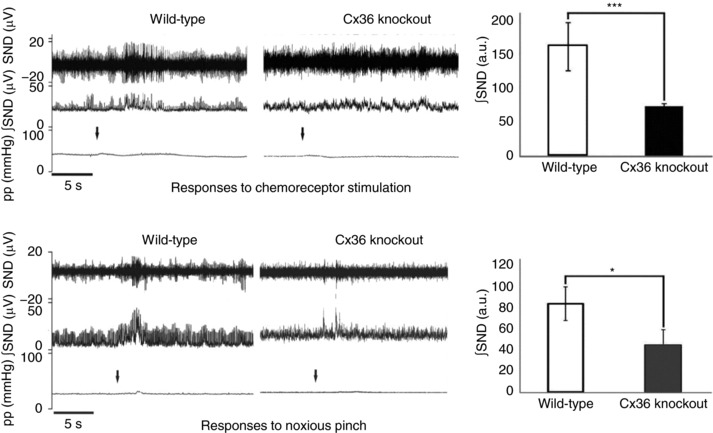
“These sympathetic preganglionic neurones are also electrically coupled through gap junctions composed of connexin 36 subunits that enable appropriately synchronized responses to specific perturbations (Lall et al. 2017).”
BackgroundSelf-citation
Cited by
Current Directions in the Auricular Vagus Nerve Stimulation I – A Physiological Perspective
Kaniusas, E., Kampusch, S., Tittgemeyer, M., Panetsos, F., Gines, R. F., Papa, M., Kiss, A., Podesser, B., Cassara, A. M., Tanghe, E., et al. (2019) · Frontiers in Neuroscience · doi:10.3389/fnins.2019.00854 · Cited by 323
TREAT AF (Transcutaneous Electrical Vagus Nerve Stimulation to Suppress Atrial Fibrillation)
Stavrakis, S., Stoner, J. A., Humphrey, M. B., Morris, L., Filiberti, A., Reynolds, J. C., Elkholey, K., Javed, I., Twidale, N., Riha, P., et al. (2020) · JACC: Clinical Electrophysiology · doi:10.1016/j.jacep.2019.11.008 · Cited by 245
Transcutaneous Auricular Vagus Nerve Stimulation: From Concept to Application
Wang, Y., Li, S.-Y., Wang, D., Wu, M.-Z., He, J.-K., Zhang, J.-L., Zhao, B., Hou, L.-W., Wang, J.-Y., Wang, L., et al. (2021) · Neuroscience Bulletin · doi:10.1007/s12264-020-00619-y · Cited by 195
Primary headaches during lifespan
Straube, A., & Andreou, A. P. (2019) · The Journal of Headache and Pain · doi:10.1186/s10194-019-0985-0 · Cited by 158
Current Directions in the Auricular Vagus Nerve Stimulation II – An Engineering Perspective
Kaniušas, E., Kampusch, S., Tittgemeyer, M., Panetsos, F., Gines, R. F., Papa, M., Kiss, A., Podesser, B. K., Cassara, A. M., Tanghe, E., et al. (2019) · Frontiers in Neuroscience · doi:10.3389/fnins.2019.00772 · Cited by 136
“The selectivity in the stimulation of Aβ and Aδ fibers highly depends on the stimulation pattern, as supported by the experimental evidence (Dietrich et al., 2008).”
Metadata
- Authors
- Deuchars, S. A., Lall, V. K., Clancy, J., Mahadi, M., Murray, A., Peers, L., & Deuchars, J.
- Affiliations
- University of Leeds (GB)
- Corresponding author
- Deuchars, Susan A.
- Venue
- Experimental Physiology
- Publisher
- Wiley
- Published
- 2017-12-03
- Volume
- 103
- Issue
- 3
- Pages
- 326-331
- ISSN
- 0958-0670 (ISSN-L)
- 1469-445X
- PMC
- PMC5887928
- OpenAlex
- W2767582057
- Cited by
- 98
- References
- 34
- Citations by year
- 2026: 6 · 2025: 17 · 2024: 9 · 2023: 14 · 2022: 11 · 2021: 10 · 2020: 18 · 2019: 8 · 2018: 5
- FWCI
- 0.82
- Type
- journal article
- Language
- en
- Open access
- hybrid
- doi.org
- Licence
- Locations
- Experimental Physiology (publishedVersion, cc-by)
- Europe PMC (PubMed Central) (publishedVersion, other-oa)
- PubMed Central (publishedVersion, cc-by)
- PubMed (publishedVersion)
- White Rose Research Online (University of Leeds, The University of Sheffield, University of York) (acceptedVersion)
- ENLIGHTEN (Jurnal Bimbingan dan Konseling Islam) (acceptedVersion, cc-by-sa)
- University of Birmingham Research Portal (University of Birmingham) (submittedVersion, cc-by)
- Funders
- Wellcome Trust (WT093072MA)
- Biotechnology and Biological Sciences Research Council (BB/E001831/1)
- British Heart Foundation (PG/08/120/26338)
- Topics
- Life Sciences › Neuroscience › Neurology › Vagus Nerve Stimulation Research
- Health Sciences › Medicine › Cardiology and Cardiovascular Medicine › Heart Rate Variability and Autonomic Control
- Health Sciences › Medicine › Cardiology and Cardiovascular Medicine › Cardiovascular Syncope and Autonomic Disorders
- Keywords
- transcutaneous vagus nerve stimulation, sympathetic activity, autonomic nervous system, parasympathetic activity, neuromodulation, autonomic cardiovascular control, aging, heart failure, sensory nerves, sympathovagal balance
- MeSH terms
- Autonomic Nervous System Diseases, Cardiovascular Diseases, Transcutaneous Electric Nerve Stimulation, Heart Rate, Humans, Sympathetic Nervous System, Vagus Nerve Stimulation
About these checks
Registry, retraction, Cites and statistics results are computed, not judged, with one exception: a printed reference that no index lists is read once by a model before it counts as a citation error. Claims are extracted by a model and kept only when their quote appears verbatim in the text; each cited source is then checked, with a model’s help, for whether it says what the claim relies on. Those verdicts can be wrong — read the claim’s quote and the cited source before relying on one.
Statistics and arithmetic are recomputed, not judged.
Confidence bands are shown only for fields calibrated on our annotated test set. None is calibrated yet, so no band is shown.
What counts as a claim ›How we measure confidence ›How we check this ›
Are you an author, or do you see a problem with this page? Request a review
Data sources
Bibliographic data: Semantic Scholar, OpenAlex, Crossref.
Contains information from the Semantic Scholar Academic Graph Datasets, made available under the ODC Attribution License (ODC-BY 1.0).
Semantic Scholar’s data is described in: Kinney, R., et al. (2023). The Semantic Scholar Open Data Platform. arXiv:2301.10140.
