

Machine learning unifies the modeling of materials and molecules
Open accessThe DOI matches its Crossref record; 70 of the 71 references it cites were found in a registry or an index.
Abstract
Statistical learning based on a local representation of atomic structures provides a universal model of chemical stability.
Overview
The claims and statistics of this paper haven’t been checked yet.
Free: it reads the open-access text and checks the first 5 claims that cite a source we can check. Create a free account to check every claim.
Integrity signals
Registry
Cites
Statistics
Figures
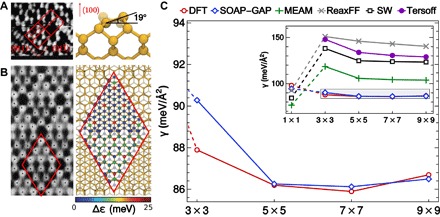
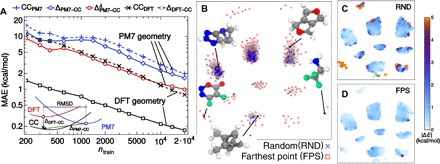
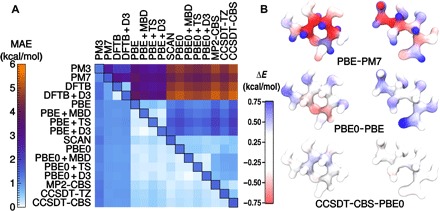
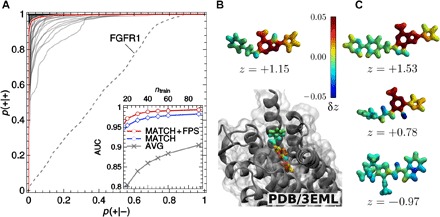
Verification
Claims the paper makes
The claims and statistics of this paper haven’t been checked yet.
Free: it reads the open-access text and checks the first 5 claims that cite a source we can check. Create a free account to check every claim.
Claims other papers make about this one
Each is checked against this paper’s own text: does it say what the citing paper says it does?
The cited source says what the claim attributes to it.
In the citing paper
“A critical assessment of the model performance as a function of the hyperparameters makes it possible to gauge the range of interactions 104 , or the locality of the physical phenomena underlying structure-property relations 105,106 for that system.”
From Unsupervised machine learning in atomistic simulations, between predictions and understanding (2019) · cites this paper as [104]
The cited source says what the claim attributes to it.
In the citing paper
“A low-dimensional representation of a dataset can help when it comes to identifying problematic regions, and understanding how a given representation 'sees' a set of structures 58,104,111 .”
From Unsupervised machine learning in atomistic simulations, between predictions and understanding (2019) · cites this paper as [104]
In the citing paper
“Gaussian process regression (GPR) was used to generate very accurate Gaussian atomic potentials (GAP) and then to train a SOAP–GAP model within a ML framework (GPR) that achieved a 99% accurate atomic-scale properties for Si surface reconstruction, stability of molecules, and protein ligands.209”
From QSAR without borders (2020) · cites this paper as [209]
In the citing paper
“To mitigate this limitation, read-across techniques are increasingly used to estimate the properties of nanomaterials.231”
From QSAR without borders (2020) · cites this paper as [231]
Self-check
Percentages, sums and reported differences re-computed from the paper’s own numbers.
The self-check needs the paper’s full text.
Citations
Cites
Density-functional thermochemistry. III. The role of exact exchange
Becke, A. D. (1993) · The Journal of Chemical Physics · doi:10.1063/1.464913 · Cited by 103,767
Self-Consistent Equations Including Exchange and Correlation Effects
Kohn, W., & Sham, L. J. (1965) · Physical Review · doi:10.1103/physrev.140.a1133 · Cited by 64,135
Hohenberg, P., & Kohn, W. (1964) · Physical Review · doi:10.1103/physrev.136.b864 · Cited by 53,541
Stephens, P. J., Devlin, F. J., Chabalowski, C. F., & Frisch, M. J. (1994) · The Journal of Physical Chemistry · doi:10.1021/j100096a001 · Cited by 23,248
Perdew, J. P., Chevary, J. A., Vosko, S. H., Jackson, K. A., Pederson, M. R., Singh, D. J., & Fiolhais, C. (1992) · Physical Review B · doi:10.1103/physrevb.46.6671 · Cited by 22,269
Development and testing of a general amber force field
Wang, J., Wolf, R. M., Caldwell, J. W., Kollman, P. A., & Case, D. A. (2004) · Journal of Computational Chemistry · doi:10.1002/jcc.20035 · Cited by 19,506
Self-consistent molecular orbital methods. XX. A basis set for correlated wave functions
Krishnan, R., Binkley, J. S., Seeger, R., & Pople, J. A. (1980) · The Journal of Chemical Physics · doi:10.1063/1.438955 · Cited by 17,772
Perdew, J. P., Chevary, J. A., Vosko, S. H., Jackson, K. A., Pederson, M. R., Singh, D. J., & Fiolhais, C. (1993) · Physical Review B · doi:10.1103/physrevb.48.4978.2 · Cited by 17,144
First principles methods using CASTEP
Clark, S. J., Segall, M. D., Pickard, C. J., Hasnip, P. J., Probert, M. I. J., Refson, K., & Payne, M. C. (2005) · Zeitschrift für Kristallographie - Crystalline Materials · doi:10.1524/zkri.220.5.567.65075 · Cited by 14,633
The Hungarian method for the assignment problem
Kuhn, H. W. (1955) · Naval Research Logistics Quarterly · doi:10.1002/nav.3800020109 · Cited by 13,120
Advances in Neural Information Processing Systems 25
Zhang, Y., Sutton, C. A., Storkey, A., & Zoubin Ghahramani, A. (2012) · Cited by 12,653
Gaussian Processes for Machine Learning
Rasmussen, C. E., & Williams, C. K. I. (2005) · doi:10.7551/mitpress/3206.001.0001 · Cited by 11,705
Learning with Kernels: Support Vector Machines, Regularization, Optimization, and Beyond
Schölkopf, B., & Smola, A. J. (2001) · The MIT Press eBooks · doi:10.7551/mitpress/4175.001.0001 · Cited by 11,703
Open Babel: An open chemical toolbox
O'Boyle, N. M., Banck, M., James, C. A., Morley, C., Vandermeersch, T., & Hutchison, G. R. (2011) · Journal of Cheminformatics · doi:10.1186/1758-2946-3-33 · Cited by 10,939
Unified Approach for Molecular Dynamics and Density-Functional Theory
Car, R., & Parrinello, M. (1985) · Physical Review Letters · doi:10.1103/physrevlett.55.2471 · Cited by 10,754
Nonlinear Component Analysis as a Kernel Eigenvalue Problem
Schölkopf, B., Smola, A., & Müller, K.-R. (1998) · Neural Computation · doi:10.1162/089976698300017467 · Cited by 8,084
ReaxFF: A Reactive Force Field for Hydrocarbons
van Duin, A. C. T., Dasgupta, S., Lorant, F., & Goddard, W. A. (2001) · The Journal of Physical Chemistry A · doi:10.1021/jp004368u · Cited by 6,402
Computer simulation of local order in condensed phases of silicon
Stillinger, F. H., & Weber, T. A. (1985) · Physical Review B · doi:10.1103/physrevb.31.5262 · Cited by 5,302
Generalized Neural-Network Representation of High-Dimensional Potential-Energy Surfaces
Behler, J., & Parrinello, M. (2007) · Physical Review Letters · doi:10.1103/physrevlett.98.146401 · Cited by 5,010
Gaussian Approximation Potentials: The Accuracy of Quantum Mechanics, without the Electrons
Bartók, A. P., Payne, M. C., Kondor, R., & Csányi, G. (2010) · Physical Review Letters · doi:10.1103/physrevlett.104.136403 · Cited by 3,242
Self-citationGaussian-3 (G3) theory for molecules containing first and second-row atoms
Curtiss, L. A., Raghavachari, K., Redfern, P. C., Rassolov, V., & Pople, J. A. (1998) · The Journal of Chemical Physics · doi:10.1063/1.477422 · Cited by 2,865
On representing chemical environments
Bartók, A. P., Kondor, R., & Csányi, G. (2013) · Physical Review B · doi:10.1103/physrevb.87.184115 · Cited by 2,572 · cited 2×
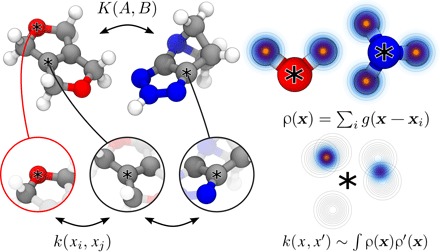
“This kernel is equivalent to the scalar product of the spherical power spectra of the neighbor density ( 39 ), which therefore constitutes a chemical descriptor of the neighbor environment.”
Self-citationL.R. (1966) · Nuclear Physics · doi:10.1016/0029-5582(66)90509-8 · Cited by 2,489
Directory of useful decoys, enhanced (DUD-E): better ligands and decoys for better benchmarking.
Mysinger, M. M., Carchia, M., Irwin, J. J., & Shoichet, B. K. (2012) · Journal of Medicinal Chemistry · doi:10.1021/jm300687e · Cited by 2,412
Stewart, J. J. P. (2013) · Journal of Molecular Modeling · doi:10.1007/s00894-012-1667-x · Cited by 2,015
Quantum chemistry structures and properties of 134 kilo molecules
Ramakrishnan, R., Dral, P. O., Rupp, M., & von Lilienfeld, O. A. (2014) · Scientific Data · doi:10.1038/sdata.2014.22 · Cited by 1,966
7 × 7 Reconstruction on Si(111) Resolved in Real Space
Binnig, G., Rohrer, H., Gerber, C., & Weibel, E. (1983) · Physical Review Letters · doi:10.1103/physrevlett.50.120 · Cited by 1,930
ANI-1: an extensible neural network potential with DFT accuracy at force field computational cost
Smith, J. S., Isayev, O., & Roitberg, A. E. (2017) · Chemical Science · doi:10.1039/c6sc05720a · Cited by 1,921 · cited 1×
“Although there have been several hints that this approach can achieve the accuracy of DFT at a fraction of the cost ( 5 – 11 ), little effort has been put into recovering the generality of quantum mechanics: atomic and molecular descriptors, as well as learning strategies have been optimized for…”
The 2.6 Angstrom Crystal Structure of a Human A 2A Adenosine Receptor Bound to an Antagonist
Jaakola, V.-P., Griffith, M. T., Hanson, M. A., Cherezov, V., Chien, E. Y. T., Lane, J. R., IJzerman, A. P., & Stevens, R. C. (2008) · Science · doi:10.1126/science.1164772 · Cited by 1,781
Electronic Structure: Basic Theory and Practical Methods
Martin, R. M. (2004) · doi:10.1017/cbo9780511805769 · Cited by 1,752
A Unifying View of Sparse Approximate Gaussian Process Regression
Quiñonero-Candela, J., & Rasmussen, C. E. (2005) · doi:10.5555/1046920.1194909 · Cited by 1,671
Empirical interatomic potential for silicon with improved elastic properties
Tersoff, J. (1988) · Physical Review B · doi:10.1103/physrevb.38.9902 · Cited by 1,570
Moment Tensor Potentials: A Class of Systematically Improvable Interatomic Potentials
Shapeev, A. V. (2016) · Multiscale Modeling & Simulation · doi:10.1137/15m1054183 · Cited by 1,510
Quantum-chemical insights from deep tensor neural networks
Schütt, K. T., Arbabzadah, F., Chmiela, S., Müller, K. R., & Tkatchenko, A. (2017) · Nature Communications · doi:10.1038/ncomms13890 · Cited by 1,445
Benchmarking sets for molecular docking.
Huang, N., Shoichet, B. K., & Irwin, J. J. (2006) · Journal of Medicinal Chemistry · doi:10.1021/jm0608356 · Cited by 1,318
Big Data Meets Quantum Chemistry Approximations: The Δ-Machine Learning Approach
Ramakrishnan, R., Dral, P. O., Rupp, M., & von Lilienfeld, O. A. (2015) · Journal of Chemical Theory and Computation · doi:10.1021/acs.jctc.5b00099 · Cited by 911
Comparing molecules and solids across structural and alchemical space
De, S., Bartók, A. P., Csányi, G., & Ceriotti, M. (2016) · Physical Chemistry Chemical Physics · doi:10.1039/c6cp00415f · Cited by 778
Self-citationMachine learning based interatomic potential for amorphous carbon
Deringer, V. L., & Csányi, G. (2017) · Physical Review B · doi:10.1103/physrevb.95.094203 · Cited by 669
Direct observation of an increase in buckled dimers on Si(001) at low temperature
Wolkow, R. A. (1992) · Physical Review Letters · doi:10.1103/physrevlett.68.2636 · Cited by 662
Prediction Errors of Molecular Machine Learning Models Lower than Hybrid DFT Error
Faber, F. A., Hutchison, L., Huang, B., Gilmer, J., Schoenholz, S. S., Dahl, G. E., Vinyals, O., Kearnes, S., Riley, P. F., & von Lilienfeld, O. A. (2017) · Journal of Chemical Theory and Computation · doi:10.1021/acs.jctc.7b00577 · Cited by 651
Comparison of Automatic Three-Dimensional Model Builders Using 639 X-ray Structures
Sadowski, J., Gasteiger, J., & Klebe, G. (1994) · Journal of Chemical Information and Computer Sciences · doi:10.1021/ci00020a039 · Cited by 646
Finding Density Functionals with Machine Learning
Snyder, J. C., Rupp, M., Hansen, K., Müller, K.-R., & Burke, K. (2012) · Physical Review Letters · doi:10.1103/physrevlett.108.253002 · Cited by 644
Molecular Dynamics with On-the-Fly Machine Learning of Quantum-Mechanical Forces
Li, Z., Kermode, J. R., & De Vita, A. (2015) · Physical Review Letters · doi:10.1103/physrevlett.114.096405 · Cited by 633
Self-citationMachine learning of molecular electronic properties in chemical compound space
Montavon, G., Rupp, M., Gobre, V., Vazquez-Mayagoitia, A., Hansen, K., Tkatchenko, A., Müller, K.-R., & Anatole von Lilienfeld, O. (2013) · New Journal of Physics · doi:10.1088/1367-2630/15/9/095003 · Cited by 623
Modelling and Simulation: Exploring Dynamic System Behaviour
Birta, L. G., & Arbez, G. (2019) · Simulation Foundations, Methods and Applications · doi:10.1007/978-3-030-18869-6 · Cited by 619
Machine Learning Energies of 2 Million Elpasolite(ABC2D6)Crystals
Faber, F. A., Lindmaa, A., von Lilienfeld, O. A., & Armiento, R. (2016) · Physical Review Letters · doi:10.1103/physrevlett.117.135502 · Cited by 409
High-dimensional neural-network potentials for multicomponent systems: Applications to zinc oxide
Artrith, N., Morawietz, T., & Behler, J. (2011) · Physical Review B · doi:10.1103/physrevb.83.153101 · Cited by 396
Brommer, K. D., Needels, M., Larson, B., & Joannopoulos, J. D. (1992) · Physical Review Letters · doi:10.1103/physrevlett.68.1355 · Cited by 374
Machine learning of molecular electronic properties in chemical compound space
Montavon, G., Rupp, M., Gobre, V. V., Vázquez‐Mayagoitia, Á., Hansen, K., Tkatchenko, A., Müller, K., & von Lilienfeld, O. A. (2013) · MPG.PuRe (Max Planck Society) · doi:10.3929/ethz-b-000071765 · Cited by 366
Simplifying the representation of complex free-energy landscapes using sketch-map
Ceriotti, M., Tribello, G. A., & Parrinello, M. (2011) · Proceedings of the National Academy of Sciences · doi:10.1073/pnas.1108486108 · Cited by 340
Self-citationAccuracy and transferability of Gaussian approximation potential models for tungsten
Szlachta, W. J., Bartók, A. P., & Csányi, G. (2014) · Physical Review B · doi:10.1103/physrevb.90.104108 · Cited by 327
Self-citationHuang, B., & von Lilienfeld, O. A. (2016) · The Journal of Chemical Physics · doi:10.1063/1.4964627 · Cited by 294
Moment Tensor PotentialsPreprint
Shapeev, A. V. (2016) · arXiv (Cornell University) · Cited by 288
Unified representation of molecules and crystals for machine learning
Huo, H., & Rupp, M. (2022) · Machine Learning: Science and Technology · doi:10.1088/2632-2153/aca005 · Cited by 276
Electronic Structure: Basic Theory and Practical Methods
Martin, R. M. (2020) · Cambridge University Press eBooks · doi:10.1017/9781108555586 · Cited by 269
Rinke, P., Janotti, A., Scheffler, M., & Van de Walle, C. G. (2009) · Physical Review Letters · doi:10.1103/physrevlett.102.026402 · Cited by 240
Behler, J., Martoňák, R., Donadio, D., & Parrinello, M. (2008) · Physical Review Letters · doi:10.1103/physrevlett.100.185501 · Cited by 233
Multiparadigm Modeling of Dynamical Crack Propagation in Silicon Using a Reactive Force Field
Buehler, M. J., van Duin, A. C. T., & Goddard, W. A. (2006) · Physical Review Letters · doi:10.1103/physrevlett.96.095505 · Cited by 231
Quantum Monte Carlo Calculations of Nanostructure Optical Gaps: Application to Silicon Quantum Dots
Williamson, A. J., Grossman, J. C., Hood, R. Q., Puzder, A., & Galli, G. (2002) · Physical Review Letters · doi:10.1103/physrevlett.89.196803 · Cited by 209
Highly optimized empirical potential model of silicon
Lenosky, T. J., Sadigh, B., Alonso, E., Bulatov, V. V., Rubia, T. D. D. L., Kim, J., Voter, A. F., & Kress, J. D. (2000) · Modelling and Simulation in Materials Science and Engineering · doi:10.1088/0965-0393/8/6/305 · Cited by 169
Marianski, M., Supady, A., Ingram, T., Schneider, M., & Baldauf, C. (2016) · Journal of Chemical Theory and Computation · doi:10.1021/acs.jctc.6b00876 · Cited by 131
Demonstrating the Transferability and the Descriptive Power of Sketch-Map
Ceriotti, M., Tribello, G. A., & Parrinello, M. (2013) · Journal of Chemical Theory and Computation · doi:10.1021/ct3010563 · Cited by 126
Self-citationSolares, S. D. J., Dasgupta, S., Schultz, P. A., Kim, Y., Musgrave, C. B., & Goddard, W. A. (2005) · Langmuir · doi:10.1021/la052029s · Cited by 86
Lagarde, N., Zagury, J.-F., & Montes, M. (2015) · Journal of Chemical Information and Modeling · doi:10.1021/acs.jcim.5b00090 · Cited by 85
Sinkhorn Distances: Lightspeed Computation of Optimal Transportation Distances
Cuturi, M. (2013) · arXiv (Cornell University) · doi:10.48550/arxiv.1306.0895 · Cited by 64
Ropo, M., Schneider, M., Baldauf, C., & Blum, V. (2016) · Scientific Data · doi:10.1038/sdata.2016.9 · Cited by 64
Unified Representation for Machine Learning of Molecules and CrystalsPreprint
Huo, H., & Rupp, M. (2017) · arXiv (Cornell University) · Cited by 34
Predicting protein–ligand affinity with a random matrix framework
Lee, A. A., Brenner, M. P., & Colwell, L. J. (2016) · Proceedings of the National Academy of Sciences · doi:10.1073/pnas.1611138113 · Cited by 27
Benchmarking platform for ligand-based virtual screening
Škoda, P., & Hoksza, D. (2016) · IEEE International Conference on Bioinformatics and Biomedicine (BIBM) · doi:10.1109/bibm.2016.7822693 · Cited by 7
Wallach, I., Dzamba, M., & Heifets, A. (2015) · arXiv · doi:10.48550/arxiv.1510.02855
Cited by
SchNet – A deep learning architecture for molecules and materials
Schütt, K. T., Sauceda, H. E., Kindermans, P.-J., Tkatchenko, A., & Müller, K.-R. (2018) · The Journal of Chemical Physics · doi:10.1063/1.5019779 · Cited by 2,217
Unke, O. T., Chmiela, S., Sauceda, H. E., Gastegger, M., Poltavsky, I., Schütt, K. T., Tkatchenko, A., & Müller, K.-R. (2021) · Chemical Reviews · doi:10.1021/acs.chemrev.0c01111 · Cited by 1,647
Graph Networks as a Universal Machine Learning Framework for Molecules and Crystals
Chen, C., Ye, W., Zuo, Y., Zheng, C., & Ong, S. P. (2019) · Chemistry of Materials · doi:10.1021/acs.chemmater.9b01294 · Cited by 1,552
Gaussian Process Regression for Materials and Molecules
Deringer, V. L., Bartók, A. P., Bernstein, N., Wilkins, D. M., Ceriotti, M., & Csányi, G. (2021) · Chemical Reviews · doi:10.1021/acs.chemrev.1c00022 · Cited by 1,221
Self-citationMachine Learning Interatomic Potentials as Emerging Tools for Materials Science
Deringer, V. L., Caro, M. A., & Csányi, G. (2019) · Advanced Materials · doi:10.1002/adma.201902765 · Cited by 1,036
Metadata
- Authors
- Bartók, A. P., De, S., Poelking, C., Bernstein, N., Kermode, J. R., Csányi, G., & Ceriotti, M.
- Affiliations
- Rutherford Appleton Laboratory (GB)
- École Polytechnique Fédérale de Lausanne (CH)
- University of Cambridge (GB)
- United States Naval Research Laboratory (US)
- University of Warwick (GB)
- Engineering Laboratory, University of Cambridge, Cambridge, UK.
- Corresponding author
- Ceriotti, Michele
- ORCID
- Venue
- Science Advances
- Published
- 2017-12
- Volume
- 3
- Issue
- 12
- Pages
- e1701816-e1701816
- ISSN
- 2375-2548 (ISSN-L)
- PMC
- PMC5729016
- OpenAlex
- W2620687153
- Cited by
- 764
- References
- 71
- Citations by year
- 2026: 43 · 2025: 79 · 2024: 67 · 2023: 91 · 2022: 96 · 2021: 114 · 2020: 130 · 2019: 90 · 2018: 52 · 2017: 2
- FWCI
- 31.56
- Type
- journal article
- Language
- en
- Open access
- gold
- doi.org
- Licence
- cc-by-nc
- Locations
- Science Advances (publishedVersion, cc-by-nc)
- PubMed Central (publishedVersion, cc-by-nc)
- PubMed (publishedVersion)
- Warwick Research Archive Portal (University of Warwick) (acceptedVersion)
- arXiv (Cornell University) (submittedVersion)
- Apollo (University of Cambridge) (submittedVersion, cc-by-nc)
- Cambridge University Engineering Department Publications Database (submittedVersion)
- Infoscience (Ecole Polytechnique Fédérale de Lausanne) (submittedVersion)
- Infoscience (Ecole Polytechnique Fédérale de Lausanne) (submittedVersion, cc-by-nc-nd)
- Science and Technology Facilities Council (submittedVersion)
- arXiv (Cornell University)
- Apollo
- Funders
- Office of Naval Research (award361580, U.S. Naval Research Laboratory, core basic research program)
- Engineering and Physical Sciences Research Council (award324327, EP/L014742/1, EP/J010847/1 and EP/J022012/1, award324329, EP/L014742/1, EP/P002188/1, award361574, EP/M022501/1, award361582, EP/K013564/1, EP/P022561/1)
- Swiss National Science Foundation (award324328, NCCR MARVEL)
- Leverhulme Trust (award361572, Leverhulme Early Career Fellowship)
- Isaac Newton Trust (award361573)
- European Research Council (award324326, 677013-HBMAP, award324330, 67658 - NOMAD)
- Topics
- Physical Sciences › Materials Science › Materials Chemistry › Machine Learning in Materials Science
- Physical Sciences › Physics and Astronomy › Atomic and Molecular Physics, and Optics › Advanced Chemical Physics Studies
- Life Sciences › Pharmacology, Toxicology and Pharmaceutics › Drug Discovery › Computational Drug Discovery Methods
- Keywords
- machine learning, molecular stability, atomistic modeling, local chemical environment, silicon surface reconstruction, protein-ligand binding, potential energy surface, quantum effects
About these checks
Registry, retraction, Cites and statistics results are computed, not judged, with one exception: a printed reference that no index lists is read once by a model before it counts as a citation error. Claims are extracted by a model and kept only when their quote appears verbatim in the text; each cited source is then checked, with a model’s help, for whether it says what the claim relies on. Those verdicts can be wrong — read the claim’s quote and the cited source before relying on one.
Statistics and arithmetic are recomputed, not judged.
Confidence bands are shown only for fields calibrated on our annotated test set. None is calibrated yet, so no band is shown.
What counts as a claim ›How we measure confidence ›How we check this ›
Are you an author, or do you see a problem with this page? Request a review
Data sources
Bibliographic data: Semantic Scholar, OpenAlex, Crossref.
Contains information from the Semantic Scholar Academic Graph Datasets, made available under the ODC Attribution License (ODC-BY 1.0).
Semantic Scholar’s data is described in: Kinney, R., et al. (2023). The Semantic Scholar Open Data Platform. arXiv:2301.10140.
