

Machine learning unifies the modeling of materials and molecules
Open accessThe DOI matches its Crossref record; 70 of the 71 references it cites were found in a registry or an index.
Abstract
Statistical learning based on a local representation of atomic structures provides a universal model of chemical stability.
Overview
The claims and statistics of this paper haven’t been checked yet.
Free: it reads the open-access text and checks the first 5 claims that cite a source we can check. Create a free account to check every claim.
Integrity signals
Registry
Cites
Statistics
Figures
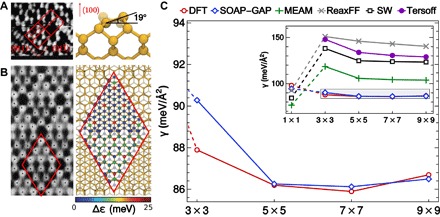
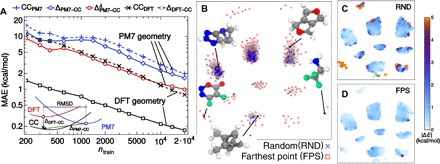
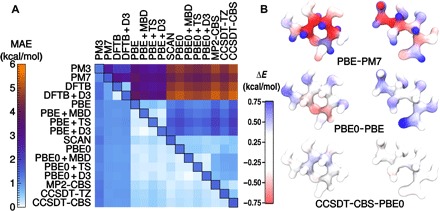
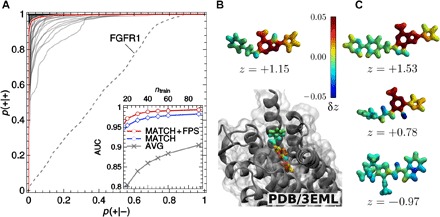
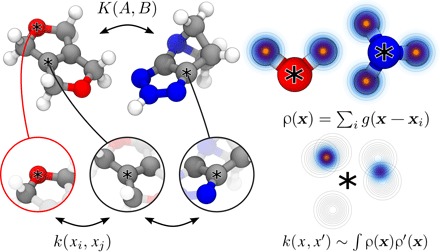
Verification
Claims the paper makes
The claims and statistics of this paper haven’t been checked yet.
Free: it reads the open-access text and checks the first 5 claims that cite a source we can check. Create a free account to check every claim.
Claims other papers make about this one
Each is checked against this paper’s own text: does it say what the citing paper says it does?
The cited source says what the claim attributes to it.
In the citing paper
“A critical assessment of the model performance as a function of the hyperparameters makes it possible to gauge the range of interactions 104 , or the locality of the physical phenomena underlying structure-property relations 105,106 for that system.”
From Unsupervised machine learning in atomistic simulations, between predictions and understanding (2019) · cites this paper as [104]
The cited source says what the claim attributes to it.
In the citing paper
“A low-dimensional representation of a dataset can help when it comes to identifying problematic regions, and understanding how a given representation 'sees' a set of structures 58,104,111 .”
From Unsupervised machine learning in atomistic simulations, between predictions and understanding (2019) · cites this paper as [104]
In the citing paper
“Gaussian process regression (GPR) was used to generate very accurate Gaussian atomic potentials (GAP) and then to train a SOAP–GAP model within a ML framework (GPR) that achieved a 99% accurate atomic-scale properties for Si surface reconstruction, stability of molecules, and protein ligands.209”
From QSAR without borders (2020) · cites this paper as [209]
In the citing paper
“To mitigate this limitation, read-across techniques are increasingly used to estimate the properties of nanomaterials.231”
From QSAR without borders (2020) · cites this paper as [231]
Self-check
Percentages, sums and reported differences re-computed from the paper’s own numbers.
The self-check needs the paper’s full text.
Citations
Cites
Density-functional thermochemistry. III. The role of exact exchange
Becke, A. D. (1993) · The Journal of Chemical Physics · doi:10.1063/1.464913 · Cited by 103,767
Self-Consistent Equations Including Exchange and Correlation Effects
Kohn, W., & Sham, L. J. (1965) · Physical Review · doi:10.1103/physrev.140.a1133 · Cited by 64,135
Hohenberg, P., & Kohn, W. (1964) · Physical Review · doi:10.1103/physrev.136.b864 · Cited by 53,541
Stephens, P. J., Devlin, F. J., Chabalowski, C. F., & Frisch, M. J. (1994) · The Journal of Physical Chemistry · doi:10.1021/j100096a001 · Cited by 23,248
Perdew, J. P., Chevary, J. A., Vosko, S. H., Jackson, K. A., Pederson, M. R., Singh, D. J., & Fiolhais, C. (1992) · Physical Review B · doi:10.1103/physrevb.46.6671 · Cited by 22,269
Development and testing of a general amber force field
Wang, J., Wolf, R. M., Caldwell, J. W., Kollman, P. A., & Case, D. A. (2004) · Journal of Computational Chemistry · doi:10.1002/jcc.20035 · Cited by 19,506
Self-consistent molecular orbital methods. XX. A basis set for correlated wave functions
Krishnan, R., Binkley, J. S., Seeger, R., & Pople, J. A. (1980) · The Journal of Chemical Physics · doi:10.1063/1.438955 · Cited by 17,772
Perdew, J. P., Chevary, J. A., Vosko, S. H., Jackson, K. A., Pederson, M. R., Singh, D. J., & Fiolhais, C. (1993) · Physical Review B · doi:10.1103/physrevb.48.4978.2 · Cited by 17,144
First principles methods using CASTEP
Clark, S. J., Segall, M. D., Pickard, C. J., Hasnip, P. J., Probert, M. I. J., Refson, K., & Payne, M. C. (2005) · Zeitschrift für Kristallographie - Crystalline Materials · doi:10.1524/zkri.220.5.567.65075 · Cited by 14,633
The Hungarian method for the assignment problem
Kuhn, H. W. (1955) · Naval Research Logistics Quarterly · doi:10.1002/nav.3800020109 · Cited by 13,120
Cited by
SchNet – A deep learning architecture for molecules and materials
Schütt, K. T., Sauceda, H. E., Kindermans, P.-J., Tkatchenko, A., & Müller, K.-R. (2018) · The Journal of Chemical Physics · doi:10.1063/1.5019779 · Cited by 2,217
Unke, O. T., Chmiela, S., Sauceda, H. E., Gastegger, M., Poltavsky, I., Schütt, K. T., Tkatchenko, A., & Müller, K.-R. (2021) · Chemical Reviews · doi:10.1021/acs.chemrev.0c01111 · Cited by 1,647
Graph Networks as a Universal Machine Learning Framework for Molecules and Crystals
Chen, C., Ye, W., Zuo, Y., Zheng, C., & Ong, S. P. (2019) · Chemistry of Materials · doi:10.1021/acs.chemmater.9b01294 · Cited by 1,552
Gaussian Process Regression for Materials and Molecules
Deringer, V. L., Bartók, A. P., Bernstein, N., Wilkins, D. M., Ceriotti, M., & Csányi, G. (2021) · Chemical Reviews · doi:10.1021/acs.chemrev.1c00022 · Cited by 1,221
Self-citationMachine Learning Interatomic Potentials as Emerging Tools for Materials Science
Deringer, V. L., Caro, M. A., & Csányi, G. (2019) · Advanced Materials · doi:10.1002/adma.201902765 · Cited by 1,036
Ouyang, R., Curtarolo, S., Ahmetcik, E., Scheffler, M., & Ghiringhelli, L. M. (2018) · Physical Review Materials · doi:10.1103/physrevmaterials.2.083802 · Cited by 944
Muratov, E. N., Bajorath, J., Sheridan, R. P., Tetko, I. V., Filimonov, D., Poroikov, V., Oprea, T. I., Baskin, I. I., Varnek, A., Roitberg, A., et al. (2020) · Chemical Society Reviews · doi:10.1039/d0cs00098a · Cited by 913
Wang, J., Gao, Y., Kong, H., Kim, J., Choi, S., Ciucci, F., Hao, Y., Yang, S., Shao, Z., & Lim, J. (2020) · Chemical Society Reviews · doi:10.1039/d0cs00575d · Cited by 884
From DFT to machine learning: recent approaches to materials science–a review
Schleder, G. R., Padilha, A. C. M., Acosta, C. M., Costa, M., & Fazzio, A. (2019) · Journal of Physics: Materials · doi:10.1088/2515-7639/ab084b · Cited by 852
Combining Machine Learning and Computational Chemistry for Predictive Insights Into Chemical Systems
Keith, J. A., Vassilev-Galindo, V., Cheng, B., Chmiela, S., Gastegger, M., Müller, K.-R., & Tkatchenko, A. (2021) · Chemical Reviews · doi:10.1021/acs.chemrev.1c00107 · Cited by 849
Data‐Driven Materials Science: Status, Challenges, and Perspectives
Himanen, L., Geurts, A., Foster, A. S., & Rinke, P. (2019) · Advanced Science · doi:10.1002/advs.201900808 · Cited by 808
Accelerating the discovery of materials for clean energy in the era of smart automation
Tabor, D. P., Roch, L. M., Saikin, S. K., Kreisbeck, C., Sheberla, D., Montoya, J. H., Dwaraknath, S., Aykol, M., Ortiz, C., Tribukait, H., et al. (2018) · Nature Reviews Materials · doi:10.1038/s41578-018-0005-z · Cited by 776
Towards exact molecular dynamics simulations with machine-learned force fields
Chmiela, S., Sauceda, H. E., Müller, K.-R., & Tkatchenko, A. (2018) · Nature Communications · doi:10.1038/s41467-018-06169-2 · Cited by 700
On-the-fly machine learning force field generation: Application to melting points
Jinnouchi, R., Karsai, F., & Kresse, G. (2019) · Physical Review B · doi:10.1103/physrevb.100.014105 · Cited by 680
Smith, J. S., Nebgen, B. T., Zubatyuk, R., Lubbers, N., Devereux, C., Barros, K., Tretiak, S., Isayev, O., & Roitberg, A. E. (2019) · Nature Communications · doi:10.1038/s41467-019-10827-4 · Cited by 664
Prediction Errors of Molecular Machine Learning Models Lower than Hybrid DFT Error
Faber, F. A., Hutchison, L., Huang, B., Gilmer, J., Schoenholz, S. S., Dahl, G. E., Vinyals, O., Kearnes, S., Riley, P. F., & von Lilienfeld, O. A. (2017) · Journal of Chemical Theory and Computation · doi:10.1021/acs.jctc.7b00577 · Cited by 651
“While finalizing our study, competitive alternatives were introduced 35,36 but have been tested only for energies (and polarizabilities).”
BackgroundJinnouchi, R., Lahnsteiner, J., Karsai, F., Kresse, G., & Bokdam, M. (2019) · Physical Review Letters · doi:10.1103/physrevlett.122.225701 · Cited by 635
A Critical Review of Machine Learning of Energy Materials
Chen, C., Zuo, Y., Ye, W., Li, X., Deng, Z., & Ong, S. P. (2020) · Advanced Energy Materials · doi:10.1002/aenm.201903242 · Cited by 609
Big-Data Science in Porous Materials: Materials Genomics and Machine Learning
Jablonka, K. M., Ongari, D., Moosavi, S. M., & Smit, B. (2020) · Chemical Reviews · doi:10.1021/acs.chemrev.0c00004 · Cited by 599
Machine-learned potentials for next-generation matter simulations
Friederich, P., Häse, F., Proppe, J., & Aspuru-Guzik, A. (2021) · Nature Materials · doi:10.1038/s41563-020-0777-6 · Cited by 560
Machine Learning for Electrocatalyst and Photocatalyst Design and Discovery
Mai, H., Le, T. C., Chen, D., Winkler, D. A., & Caruso, R. A. (2022) · Chemical Reviews · doi:10.1021/acs.chemrev.2c00061 · Cited by 552
Opportunities and Challenges for Machine Learning in Materials Science
Morgan, D., & Jacobs, R. (2020) · Annual Review of Materials Research · doi:10.1146/annurev-matsci-070218-010015 · Cited by 549
Machine Learning of Coarse-Grained Molecular Dynamics Force Fields
Wang, J., Olsson, S., Wehmeyer, C., Pérez, A., Charron, N. E., de Fabritiis, G., Noé, F., & Clementi, C. (2019) · ACS Central Science · doi:10.1021/acscentsci.8b00913 · Cited by 524
Physics-Inspired Structural Representations for Molecules and Materials
Musil, F., Grisafi, A., Bartók, A. P., Ortner, C., Csányi, G., & Ceriotti, M. (2021) · Chemical Reviews · doi:10.1021/acs.chemrev.1c00021 · Cited by 523
Self-citationActive learning of uniformly accurate interatomic potentials for materials simulation
Zhang, L., Lin, D.-Y., Wang, H., Car, R., & E, W. (2019) · Physical Review Materials · doi:10.1103/physrevmaterials.3.023804 · Cited by 521
Deep-neural-network solution of the electronic Schrödinger equation
Hermann, J., Schätzle, Z., & Noé, F. (2020) · Nature Chemistry · doi:10.1038/s41557-020-0544-y · Cited by 503
Machine Learning Methods for Small Data Challenges in Molecular Science
Dou, B., Zhu, Z., Merkurjev, E., Ke, L., Chen, L., Jiang, J., Zhu, Y., Liu, J., Zhang, B., & Wei, G.-W. (2023) · Chemical Reviews · doi:10.1021/acs.chemrev.3c00189 · Cited by 499
Machine Learning a General-Purpose Interatomic Potential for Silicon
Bartók, A. P., Kermode, J., Bernstein, N., & Csányi, G. (2018) · Physical Review X · doi:10.1103/physrevx.8.041048 · Cited by 470
Self-citationChen, X., Hou, T., Persson, K. A., & Zhang, Q. (2019) · Materials Today · doi:10.1016/j.mattod.2018.04.007 · Cited by 446
SchNetPack: A Deep Learning Toolbox For Atomistic Systems
Schütt, K. T., Kessel, P., Gastegger, M., Nicoli, K. A., Tkatchenko, A., & Müller, K.-R. (2019) · Journal of Chemical Theory and Computation · doi:10.1021/acs.jctc.8b00908 · Cited by 433
Quantum Chemistry in the Age of Machine Learning
Dral, P. O. (2020) · The Journal of Physical Chemistry Letters · doi:10.1021/acs.jpclett.9b03664 · Cited by 417
Machine Learning for Electronically Excited States of Molecules
Westermayr, J., & Marquetand, P. (2021) · Chemical Reviews · doi:10.1021/acs.chemrev.0c00749 · Cited by 398
Machine learning for high-entropy alloys: Progress, challenges and opportunities
Liu, X., Zhang, J., & Pei, Z. (2023) · Progress in Materials Science · doi:10.1016/j.pmatsci.2022.101018 · Cited by 397
Directional Message Passing for Molecular GraphsPreprint
Klicpera, J., Groß, J., & Günnemann, S. (2020) · arXiv (Cornell University) · Cited by 380
Exploring chemical compound space with quantum-based machine learning
von Lilienfeld, O. A., Müller, K.-R., & Tkatchenko, A. (2020) · Nature Reviews Chemistry · doi:10.1038/s41570-020-0189-9 · Cited by 369
Machine learning for interatomic potential models
Mueller, T., Hernandez, A., & Wang, C. (2020) · The Journal of Chemical Physics · doi:10.1063/1.5126336 · Cited by 363
SpookyNet: Learning force fields with electronic degrees of freedom and nonlocal effects
Unke, O. T., Chmiela, S., Gastegger, M., Schütt, K. T., Sauceda, H. E., & Müller, K.-R. (2021) · Nature Communications · doi:10.1038/s41467-021-27504-0 · Cited by 344
Alchemical and structural distribution based representation for universal quantum machine learning
Faber, F. A., Christensen, A. S., Huang, B., & von Lilienfeld, O. A. (2018) · The Journal of Chemical Physics · doi:10.1063/1.5020710 · Cited by 334
Imbalzano, G., Anelli, A., Giofré, D., Klees, S., Behler, J., & Ceriotti, M. (2018) · The Journal of Chemical Physics · doi:10.1063/1.5024611 · Cited by 330
Self-citationMachine learning for quantum matter
Carrasquilla, J. (2020) · Advances in Physics X · doi:10.1080/23746149.2020.1797528 · Cited by 311
Symmetry-Adapted Machine Learning for Tensorial Properties of Atomistic Systems
Grisafi, A., Wilkins, D. M., Csányi, G., & Ceriotti, M. (2018) · Physical Review Letters · doi:10.1103/physrevlett.120.036002 · Cited by 309
Self-citationDirectional Message Passing for Molecular Graphs
Gasteiger, J., Groß, J., & Günnemann, S. (2020) · arXiv (Cornell University) · doi:10.48550/arxiv.2003.03123 · Cited by 301
Machine learning-driven new material discovery
Cai, J., Chu, X., Xu, K., Li, H., & Wei, J. (2020) · Nanoscale Advances · doi:10.1039/d0na00388c · Cited by 296
An accurate and transferable machine learning potential for carbon
Rowe, P., Deringer, V. L., Gasparotto, P., Csányi, G., & Michaelides, A. (2020) · The Journal of Chemical Physics · doi:10.1063/5.0005084 · Cited by 277
Chemical shifts in molecular solids by machine learning
Paruzzo, F. M., Hofstetter, A., Musil, F., De, S., Ceriotti, M., & Emsley, L. (2018) · Nature Communications · doi:10.1038/s41467-018-06972-x · Cited by 274
Self-citationTransferable Machine-Learning Model of the Electron Density
Grisafi, A., Fabrizio, A., Meyer, B., Wilkins, D. M., Corminboeuf, C., & Ceriotti, M. (2019) · ACS Central Science · doi:10.1021/acscentsci.8b00551 · Cited by 269
Self-citationApplying machine learning techniques to predict the properties of energetic materials
Elton, D. C., Boukouvalas, Z., Butrico, M. S., Fuge, M. D., & Chung, P. W. (2018) · Scientific Reports · doi:10.1038/s41598-018-27344-x · Cited by 263
Realistic Atomistic Structure of Amorphous Silicon from Machine-Learning-Driven Molecular Dynamics
Deringer, V. L., Bernstein, N., Bartók, A. P., Cliffe, M. J., Kerber, R. N., Marbella, L. E., Grey, C. P., Elliott, S. R., & Csányi, G. (2018) · The Journal of Physical Chemistry Letters · doi:10.1021/acs.jpclett.8b00902 · Cited by 263
Self-citationJinnouchi, R., Karsai, F., Verdi, C., Asahi, R., & Kresse, G. (2020) · The Journal of Chemical Physics · doi:10.1063/5.0009491 · Cited by 256
Machine learning hydrogen adsorption on nanoclusters through structural descriptors
Jäger, M. O. J., Morooka, E. V., Federici Canova, F., Himanen, L., & Foster, A. S. (2018) · npj Computational Materials · doi:10.1038/s41524-018-0096-5 · Cited by 255
Electronic-structure methods for materials design
Marzari, N., Ferretti, A., & Wolverton, C. (2021) · Nature Materials · doi:10.1038/s41563-021-01013-3 · Cited by 253
sGDML: Constructing accurate and data efficient molecular force fields using machine learning
Chmiela, S., Sauceda, H. E., Poltavsky, I., Müller, K.-R., & Tkatchenko, A. (2019) · Computer Physics Communications · doi:10.1016/j.cpc.2019.02.007 · Cited by 247
Quantum Machine Learning in Chemical Compound Space
von Lilienfeld, O. A. (2018) · Angewandte Chemie International Edition · doi:10.1002/anie.201709686 · Cited by 245
Accelerating materials discovery using machine learning
Juan, Y., Dai, Y., Yang, Y., & Zhang, J. (2021) · Journal of Materials Science & Technology · doi:10.1016/j.jmst.2020.12.010 · Cited by 240
Identifying Pb-free perovskites for solar cells by machine learning
Im, J., Lee, S., Ko, T.-W., Kim, H. W., Hyon, Y., & Chang, H. (2019) · npj Computational Materials · doi:10.1038/s41524-019-0177-0 · Cited by 232
An accurate and transferable machine learning potential for carbon.
Rowe, P., Deringer, V. L., Gasparotto, P., Cśanyi, G., & Michaelides, A. (2020) · UCL Discovery (University College London) · doi:10.17863/cam.62482 · Cited by 231
Gkeka, P., Stoltz, G., Farimani, A. B., Belkacemi, Z., Ceriotti, M., Chodera, J. D., Dinner, A. R., Ferguson, A. L., Maillet, J., Minoux, H., et al. (2020) · Journal of Chemical Theory and Computation · doi:10.1021/acs.jctc.0c00355 · Cited by 231
Self-citationAtomic cluster expansion: Completeness, efficiency and stability
Dusson, G., Bachmayr, M., Cśanyi, G., Drautz, R., Etter, S., van der Oord, C., & Ortner, C. (2022) · Journal of Computational Physics · doi:10.1016/j.jcp.2022.110946 · Cited by 223
Machine-Learning Methods for Computational Science and Engineering
Frank, M., Drikakis, D., & Charissis, V. (2020) · Computation · doi:10.3390/computation8010015 · Cited by 223
Machine Learning Meets Quantum Physics
Schütt, K. T., Chmiela, S., von Lilienfeld, O. A., Tkatchenko, A., Tsuda, K., & Müller, K. (2020) · Lecture notes in physics · doi:10.1007/978-3-030-40245-7 · Cited by 219
Recent advances in computational modeling of MOFs: From molecular simulations to machine learning
Demir, H., Daglar, H., Gulbalkan, H. C., Aksu, G. O., & Keskin, S. (2023) · Coordination Chemistry Reviews · doi:10.1016/j.ccr.2023.215112 · Cited by 217
Machine learning for the structure–energy–property landscapes of molecular crystals
Musil, F., De, S., Yang, J., Campbell, J. E., Day, G. M., & Ceriotti, M. (2018) · Chemical Science · doi:10.1039/c7sc04665k · Cited by 216
Self-citationMachine learning enables long time scale molecular photodynamics simulations
Westermayr, J., Gastegger, M., Menger, M. F. S. J., Mai, S., González, L., & Marquetand, P. (2019) · Chemical Science · doi:10.1039/c9sc01742a · Cited by 214
Incorporating long-range physics in atomic-scale machine learning
Grisafi, A., & Ceriotti, M. (2019) · The Journal of Chemical Physics · doi:10.1063/1.5128375 · Cited by 211
Self-citationMachine learning meets volcano plots: computational discovery of cross-coupling catalysts
Meyer, B., Sawatlon, B., Heinen, S., von Lilienfeld, O. A., & Corminboeuf, C. (2018) · Chemical Science · doi:10.1039/c8sc01949e · Cited by 209
Hoja, J., Sandonas, L. M., Ernst, B. G., Vázquez‐Mayagoitia, Á., DiStasio, R. A., & Tkatchenko, A. (2021) · Scientific Data · doi:10.1038/s41597-021-00812-2 · Cited by 209
Machine learning potentials for extended systems: a perspective
Behler, J., & Csányi, G. (2021) · The European Physical Journal B · doi:10.1140/epjb/s10051-021-00156-1 · Cited by 207
De novo exploration and self-guided learning of potential-energy surfaces
Bernstein, N., Csányi, G., & Deringer, V. L. (2019) · npj Computational Materials · doi:10.1038/s41524-019-0236-6 · Cited by 205
Self-citationAccurate molecular polarizabilities with coupled cluster theory and machine learning
Wilkins, D. M., Grisafi, A., Yang, Y., Lao, K. U., DiStasio, R. A., & Ceriotti, M. (2019) · Proceedings of the National Academy of Sciences · doi:10.1073/pnas.1816132116 · Cited by 204
“Our definition of the kernel between two molecules as an average of environmental kernels means that the polarizabilities predicted by AlphaML are given as a sum of predicted polarizabilities for each environment (30).”
BackgroundMethodInfluentialSelf-citationOn-the-Fly Active Learning of Interatomic Potentials for Large-Scale Atomistic Simulations
Jinnouchi, R., Miwa, K., Karsai, F., Kresse, G., & Asahi, R. (2020) · The Journal of Physical Chemistry Letters · doi:10.1021/acs.jpclett.0c01061 · Cited by 204
Harrison, J. A., Schall, J. D., Maskey, S., Mikulski, P. T., Knippenberg, M. T., & Morrow, B. H. (2018) · Applied Physics Reviews · doi:10.1063/1.5020808 · Cited by 203
Linear Atomic Cluster Expansion Force Fields for Organic Molecules: Beyond RMSE
Kovács, D. P., van der Oord, C., Kucera, J., Allen, A. E. A., Cole, D. J., Ortner, C., & Cśanyi, G. (2021) · Journal of Chemical Theory and Computation · doi:10.1021/acs.jctc.1c00647 · Cited by 203
Molecular excited states through a machine learning lens
Dral, P. O., & Barbatti, M. (2021) · Nature Reviews Chemistry · doi:10.1038/s41570-021-00278-1 · Cited by 200
Committee neural network potentials control generalization errors and enable active learning
Schran, C., Brezina, K., & Marsalek, O. (2020) · The Journal of Chemical Physics · doi:10.1063/5.0016004 · Cited by 198
Incompleteness of Atomic Structure Representations
Pozdnyakov, S. N., Willatt, M. J., Bartók, A. P., Ortner, C., Csányi, G., & Ceriotti, M. (2020) · Physical Review Letters · doi:10.1103/physrevlett.125.166001 · Cited by 197
Self-citationMachine-guided path sampling to discover mechanisms of molecular self-organization
Jung, H., Covino, R., Arjun, A., Leitold, C., Dellago, C., Bolhuis, P. G., & Hummer, G. (2023) · Nature Computational Science · doi:10.1038/s43588-023-00428-z · Cited by 197
Coarse graining molecular dynamics with graph neural networks
Husic, B. E., Charron, N. E., Lemm, D., Wang, J., Pérez, A., Majewski, M., Krämer, A., Chen, Y., Olsson, S., de Fabritiis, G., et al. (2020) · The Journal of Chemical Physics · doi:10.1063/5.0026133 · Cited by 195
Ab Initio Machine Learning in Chemical Compound Space
Huang, B., & von Lilienfeld, O. A. (2021) · Chemical Reviews · doi:10.1021/acs.chemrev.0c01303 · Cited by 195
Combining SchNet and SHARC: The SchNarc Machine Learning Approach for Excited-State Dynamics
Westermayr, J., Gastegger, M., & Marquetand, P. (2020) · The Journal of Physical Chemistry Letters · doi:10.1021/acs.jpclett.0c00527 · Cited by 194
Modeling the Phase-Change Memory Material, Ge2Sb2Te5, with a Machine-Learned Interatomic Potential
Mocanu, F. C., Konstantinou, K., Lee, T. H., Bernstein, N., Deringer, V. L., Cśanyi, G., & Elliott, S. R. (2018) · The Journal of Physical Chemistry B · doi:10.1021/acs.jpcb.8b06476 · Cited by 191
Self-citationOuyang, R., Ahmetcik, E., Carbogno, C., Scheffler, M., & Ghiringhelli, L. M. (2019) · Journal of Physics: Materials · doi:10.1088/2515-7639/ab077b · Cited by 185
Machine learning in chemical reaction space
Stocker, S., Csányi, G., Reuter, K., & Margraf, J. T. (2020) · Nature Communications · doi:10.1038/s41467-020-19267-x · Cited by 183
Machine learning for chemical discovery
Tkatchenko, A. (2020) · Nature Communications · doi:10.1038/s41467-020-17844-8 · Cited by 183
Informing geometric deep learning with electronic interactions to accelerate quantum chemistry
Qiao, Z., Christensen, A. S., Welborn, M., Manby, F. R., Anandkumar, A., & Miller, T. F. (2022) · Proceedings of the National Academy of Sciences · doi:10.1073/pnas.2205221119 · Cited by 181
Machine learning dihydrogen activation in the chemical space surrounding Vaska's complex
Friederich, P., dos Passos Gomes, G., De Bin, R., Aspuru-Guzik, A., & Balcells, D. (2020) · Chemical Science · doi:10.1039/d0sc00445f · Cited by 179
Atom-density representations for machine learning
Willatt, M. J., Musil, F., & Ceriotti, M. (2019) · The Journal of Chemical Physics · doi:10.1063/1.5090481 · Cited by 179
Self-citationGemNet-OC: Developing Graph Neural Networks for Large and Diverse Molecular Simulation Datasets
Gasteiger, J., Shuaibi, M., Sriram, A., Günnemann, S., Ulissi, Z. W., Zitnick, C. L., & Das, A. (2022) · Transactions on machine learning research · doi:10.48550/arxiv.2204.02782 · Cited by 179
AI methods in materials design, discovery and manufacturing: A review
Papadimitriou, I., Gialampoukidis, I., Vrochidis, S., & Kompatsiaris, I. Y. (2024) · Computational Materials Science · doi:10.1016/j.commatsci.2024.112793 · Cited by 176
Graph Neural Networks for Molecules
Wang, Y., Li, Z., & Farimani, A. B. (2023) · Challenges and advances in computational chemistry and physics · doi:10.1007/978-3-031-37196-7_2 · Cited by 174
Efficient parametrization of the atomic cluster expansion
Bochkarev, A. S., Lysogorskiy, Y. V., Menon, S. K., Qamar, M., Mrovec, M., & Drautz, R. (2022) · Physical Review Materials · doi:10.1103/physrevmaterials.6.013804 · Cited by 174
Machine learning of solvent effects on molecular spectra and reactions
Gastegger, M., Schütt, K. T., & Müller, K.-R. (2021) · Chemical Science · doi:10.1039/d1sc02742e · Cited by 174
Unsupervised machine learning in atomistic simulations, between predictions and understanding
Ceriotti, M. (2019) · The Journal of Chemical Physics · doi:10.1063/1.5091842 · Cited by 173
Self-citationLanger, M. F., Goeßmann, A., & Rupp, M. (2022) · npj Computational Materials · doi:10.1038/s41524-022-00721-x · Cited by 173
Representations of Materials for Machine Learning
Damewood, J., Karaguesian, J., Lunger, J. R., Tan, A. R., Xie, M., Peng, J., & Gómez‐Bombarelli, R. (2023) · Annual Review of Materials Research · doi:10.1146/annurev-matsci-080921-085947 · Cited by 173
Guan, Y., V., S. S. S., Gallegos, L. C., John, P. C. S., & Paton, R. S. (2021) · Chemical Science · doi:10.1039/d1sc03343c · Cited by 173
Verdi, C., Karsai, F., Liu, P., Jinnouchi, R., & Kresse, G. (2021) · npj Computational Materials · doi:10.1038/s41524-021-00630-5 · Cited by 173
Zubatiuk, T. A., & Isayev, O. (2021) · Accounts of Chemical Research · doi:10.1021/acs.accounts.0c00868 · Cited by 172
Nguyen, T. T., Székely, E., Imbalzano, G., Behler, J., Csányi, G., Ceriotti, M., Götz, A. W., & Paesani, F. (2018) · The Journal of Chemical Physics · doi:10.1063/1.5024577 · Cited by 171
Self-citationMachine-learned interatomic potentials for alloys and alloy phase diagrams
Rosenbrock, C. W., Gubaev, K., Shapeev, A. V., Pártay, L. B., Bernstein, N., Cśanyi, G., & Hart, G. L. W. (2021) · npj Computational Materials · doi:10.1038/s41524-020-00477-2 · Cited by 171
Self-citationHu, D., Xie, Y., Li, X., Li, L., & Lan, Z. (2018) · The Journal of Physical Chemistry Letters · doi:10.1021/acs.jpclett.8b00684 · Cited by 168
Metadata
- Authors
- Bartók, A. P., De, S., Poelking, C., Bernstein, N., Kermode, J. R., Csányi, G., & Ceriotti, M.
- Affiliations
- Rutherford Appleton Laboratory (GB)
- École Polytechnique Fédérale de Lausanne (CH)
- University of Cambridge (GB)
- United States Naval Research Laboratory (US)
- University of Warwick (GB)
- Engineering Laboratory, University of Cambridge, Cambridge, UK.
- Corresponding author
- Ceriotti, Michele
- ORCID
- Venue
- Science Advances
- Published
- 2017-12
- Volume
- 3
- Issue
- 12
- Pages
- e1701816-e1701816
- ISSN
- 2375-2548 (ISSN-L)
- PMC
- PMC5729016
- OpenAlex
- W2620687153
- Cited by
- 764
- References
- 71
- Citations by year
- 2026: 43 · 2025: 79 · 2024: 67 · 2023: 91 · 2022: 96 · 2021: 114 · 2020: 130 · 2019: 90 · 2018: 52 · 2017: 2
- FWCI
- 31.56
- Type
- journal article
- Language
- en
- Open access
- gold
- doi.org
- Licence
- cc-by-nc
- Locations
- Science Advances (publishedVersion, cc-by-nc)
- PubMed Central (publishedVersion, cc-by-nc)
- PubMed (publishedVersion)
- Warwick Research Archive Portal (University of Warwick) (acceptedVersion)
- arXiv (Cornell University) (submittedVersion)
- Apollo (University of Cambridge) (submittedVersion, cc-by-nc)
- Cambridge University Engineering Department Publications Database (submittedVersion)
- Infoscience (Ecole Polytechnique Fédérale de Lausanne) (submittedVersion)
- Infoscience (Ecole Polytechnique Fédérale de Lausanne) (submittedVersion, cc-by-nc-nd)
- Science and Technology Facilities Council (submittedVersion)
- arXiv (Cornell University)
- Apollo
- Funders
- Office of Naval Research (award361580, U.S. Naval Research Laboratory, core basic research program)
- Engineering and Physical Sciences Research Council (award324327, EP/L014742/1, EP/J010847/1 and EP/J022012/1, award324329, EP/L014742/1, EP/P002188/1, award361574, EP/M022501/1, award361582, EP/K013564/1, EP/P022561/1)
- Swiss National Science Foundation (award324328, NCCR MARVEL)
- Leverhulme Trust (award361572, Leverhulme Early Career Fellowship)
- Isaac Newton Trust (award361573)
- European Research Council (award324326, 677013-HBMAP, award324330, 67658 - NOMAD)
- Topics
- Physical Sciences › Materials Science › Materials Chemistry › Machine Learning in Materials Science
- Physical Sciences › Physics and Astronomy › Atomic and Molecular Physics, and Optics › Advanced Chemical Physics Studies
- Life Sciences › Pharmacology, Toxicology and Pharmaceutics › Drug Discovery › Computational Drug Discovery Methods
- Keywords
- machine learning, molecular stability, atomistic modeling, local chemical environment, silicon surface reconstruction, protein-ligand binding, potential energy surface, quantum effects
About these checks
Registry, retraction, Cites and statistics results are computed, not judged, with one exception: a printed reference that no index lists is read once by a model before it counts as a citation error. Claims are extracted by a model and kept only when their quote appears verbatim in the text; each cited source is then checked, with a model’s help, for whether it says what the claim relies on. Those verdicts can be wrong — read the claim’s quote and the cited source before relying on one.
Statistics and arithmetic are recomputed, not judged.
Confidence bands are shown only for fields calibrated on our annotated test set. None is calibrated yet, so no band is shown.
What counts as a claim ›How we measure confidence ›How we check this ›
Are you an author, or do you see a problem with this page? Request a review
Data sources
Bibliographic data: Semantic Scholar, OpenAlex, Crossref.
Contains information from the Semantic Scholar Academic Graph Datasets, made available under the ODC Attribution License (ODC-BY 1.0).
Semantic Scholar’s data is described in: Kinney, R., et al. (2023). The Semantic Scholar Open Data Platform. arXiv:2301.10140.
