

The DOI matches its Crossref record; 35 of the 35 references it cites were found in a registry or an index.
Differential regulation of mTORC1 by leucine and glutamine
Open accessAbstract
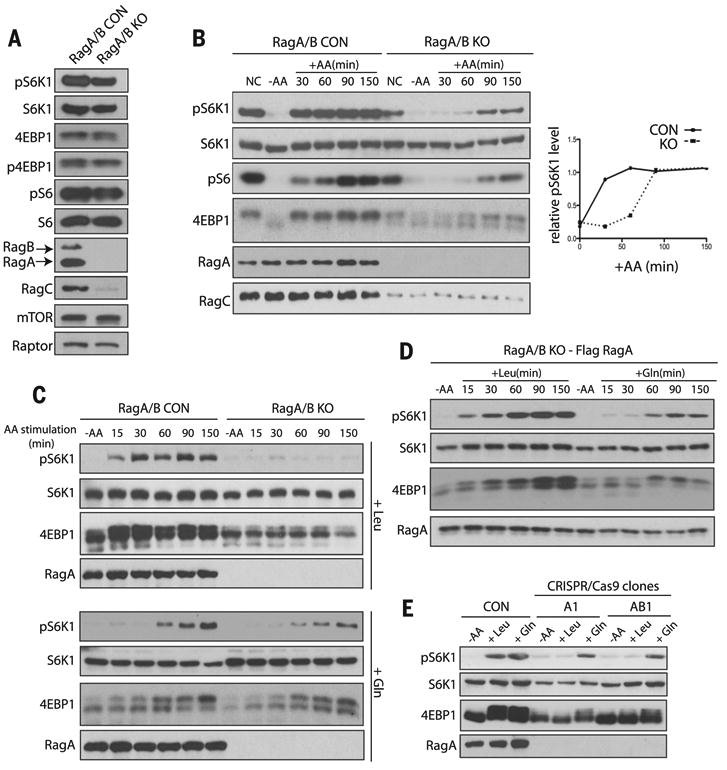
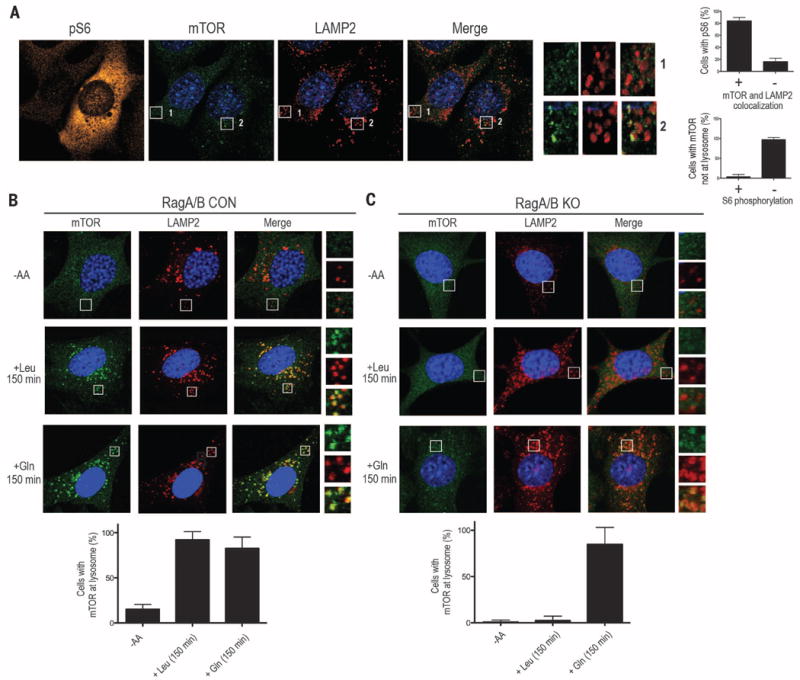
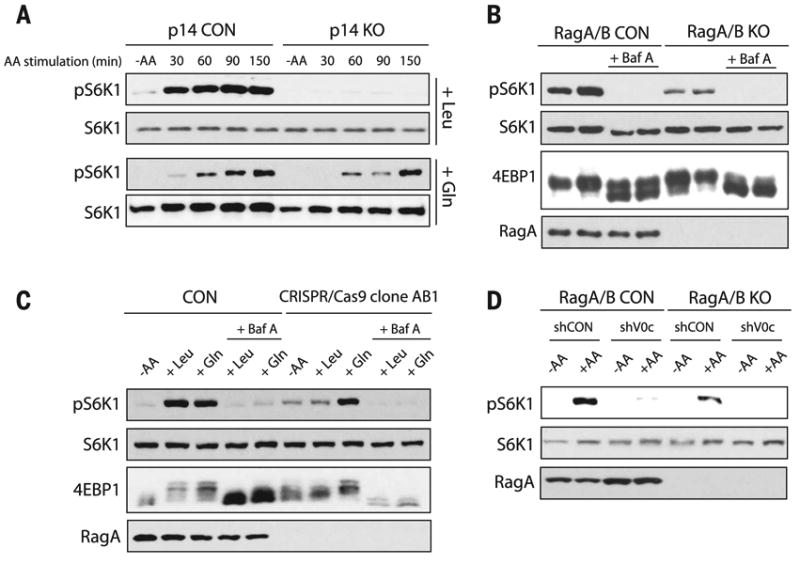
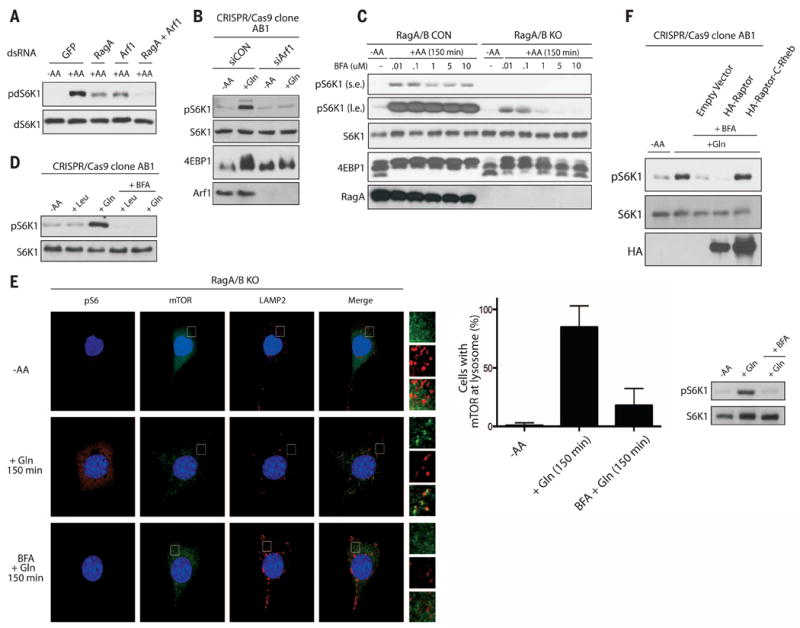
Getting specific about amino acid sensing: The protein kinase complex mTORC1 regulates growth and metabolism, and its activity is controlled in response to the abundance of cellular amino acids. Jewell et al. report that control of mTORC1 in response to glutamine does not require the Rag guanosine triphosphatase (GTPase) implicated in the sensing of other amino acids such as leucine (see the Perspective by Abraham). For sensing of glutamine, another GTPase, Arf1, was required. Distinct mechanisms thus appear to couple various amino acids to signaling by the mTORC1 complex. Science , this issue p. 194 ; see also p. 128
Overview
The claims and statistics of this paper haven’t been checked yet.
Run the check — free, no account needed. It reads the open-access text and checks the sources it cites.
Integrity signals
Registry
Cites
Statistics
Figures
Verification
Claims the paper makes
The claims and statistics of this paper haven’t been checked yet.
Run the check — free, no account needed. It reads the open-access text and checks the sources it cites.
Claims other papers make about this one
Each is checked against this paper’s own text: does it say what the citing paper says it does?
In the citing paper
“Evidence has shown that glutamine activates the mTORC1 pathway via Arf1 rather than via the Rag GTPase complex in MEFs190.”
From Glutamine reliance in cell metabolism (2020) · cites this paper as [190]
Self-check
Percentages, sums and reported differences re-computed from the paper’s own numbers.
The self-check needs the paper’s full text.
Citations
Cites
A Programmable Dual-RNA–Guided DNA Endonuclease in Adaptive Bacterial Immunity
Jinek, M., Chylinski, K., Fonfara, I., Hauer, M., Doudna, J. A., & Charpentier, E. (2012) · Science · doi:10.1126/science.1225829 · Cited by 17,116
Multiplex Genome Engineering Using CRISPR/Cas Systems
Cong, L., Ran, F. A., Cox, D., Lin, S., Barretto, R., Habib, N., Hsu, P. D., Wu, X., Jiang, W., Marraffini, L. A., et al. (2013) · Science · doi:10.1126/science.1231143 · Cited by 15,339
RNA-Guided Human Genome Engineering via Cas9
Mali, P., Yang, L., Esvelt, K. M., Aach, J., Guell, M., DiCarlo, J. E., Norville, J. E., & Church, G. M. (2013) · Science · doi:10.1126/science.1232033 · Cited by 9,210
mTOR Signaling in Growth Control and Disease
Laplante, M., & Sabatini, D. M. (2012) · Cell · doi:10.1016/j.cell.2012.03.017 · Cited by 8,509
DNA targeting specificity of RNA-guided Cas9 nucleases
Hsu, P. D., Scott, D. A., Weinstein, J. A., Ran, F. A., Konermann, S., Agarwala, V., Li, Y., Fine, E. J., Wu, X., Shalem, O., et al. (2013) · Nature Biotechnology · doi:10.1038/nbt.2647 · Cited by 4,741
The Rag GTPases Bind Raptor and Mediate Amino Acid Signaling to mTORC1
Sancak, Y., Peterson, T. R., Shaul, Y. D., Lindquist, R. A., Thoreen, C. C., Bar-Peled, L., & Sabatini, D. M. (2008) · Science · doi:10.1126/science.1157535 · Cited by 2,773
Sancak, Y., Bar-Peled, L., Zoncu, R., Markhard, A. L., Nada, S., & Sabatini, D. M. (2010) · Cell · doi:10.1016/j.cell.2010.02.024 · Cited by 2,464
RNA-programmed genome editing in human cells
Jinek, M., East, A., Cheng, A., Lin, S., Ma, E., & Doudna, J. (2013) · eLife · doi:10.7554/elife.00471 · Cited by 2,098
Bidirectional Transport of Amino Acids Regulates mTOR and Autophagy
Nicklin, P., Bergman, P., Zhang, B., Triantafellow, E., Wang, H., Nyfeler, B., Yang, H., Hild, M., Kung, C., Wilson, C., et al. (2009) · Cell · doi:10.1016/j.cell.2008.11.044 · Cited by 1,798
Zoncu, R., Bar-Peled, L., Efeyan, A., Wang, S., Sancak, Y., & Sabatini, D. M. (2011) · Science · doi:10.1126/science.1207056 · Cited by 1,673
Cited by
Sorted by citations
Items 401–500 of 764
Shih, Y., & Hsueh, Y. (2018) · Journal of Biomedical Science · doi:10.1186/s12929-017-0403-3 · Cited by 21
Ubiquitylation of the ER-Shaping Protein Lunapark via the CRL3KLHL12 Ubiquitin Ligase Complex
Yuniati, L., Lauriola, A., Gerritsen, M., Abreu, S., Ni, E., Tesoriero, C., Onireti, J., Low, T. Y., Heck, A. J. R., Vettori, A., et al. (2020) · Cell Reports · doi:10.1016/j.celrep.2020.107664 · Cited by 20
Advances in the regulatory mechanisms of mTOR in necroptosis
Xie, Y., Zhao, G., Lei, X., Cui, N., & Wang, H. (2023) · Frontiers in Immunology · doi:10.3389/fimmu.2023.1297408 · Cited by 21
Liu, Y., Shen, W., Liu, T., Mosenthin, R., Bao, Y., Chen, P., Hao, W., Zhao, L., Zhang, J., Ji, C., et al. (2022) · Agriculture · doi:10.3390/agriculture12070988 · Cited by 20
Picornavirus infection enhances aspartate by the SLC38A8 transporter to promote viral replication
Liu, H., Zhu, Z., Xue, Q., Yang, F., Cao, W., Xue, Z., Liu, X., & Zheng, H. (2023) · PLoS Pathogens · doi:10.1371/journal.ppat.1011126 · Cited by 20
Zhang, C., Yang, L., Geng, Y., An, F., Xia, Y., Guo, C., Luo, J., Zhang, L., Guo, Q., & Kong, L. (2016) · Oncotarget · doi:10.18632/oncotarget.8538 · Cited by 20
Sugiyama, M., Yoshizumi, T., Yoshida, Y., Bekki, Y., Matsumoto, Y., Yoshiya, S., Toshima, T., Ikegami, T., Itoh, S., Harimoto, N., et al. (2016) · Journal of Cellular Physiology · doi:10.1002/jcp.25653 · Cited by 20
What factors influence protein synthesis and degradation in critical illness?
Girolamo, F. G. D., Situlin, R., & Biolo, G. (2016) · Current Opinion in Clinical Nutrition & Metabolic Care · doi:10.1097/mco.0000000000000347 · Cited by 21
Shibutani, S., Okazaki, H., & Iwata, H. (2017) · Journal of Biological Chemistry · doi:10.1074/jbc.m117.776443 · Cited by 19
Li, S., Guo, Q., Li, S., Zheng, H., Chi, S., Xu, Z., & Wang, Q. (2019) · Developmental & Comparative Immunology · doi:10.1016/j.dci.2019.05.006 · Cited by 20
Chen, Y., Liu, C., Liu, H., & Wen, S. (2025) · Biomolecules · doi:10.3390/biom15040525 · Cited by 22
A proteomic adaptation of small intestinal mucosa in response to dietary protein limitation
Qin, C., Qiu, K., Sun, W., Jiao, N., Zhang, X., Che, L., Zhao, H., Shen, H., & Yin, J. (2016) · Scientific Reports · doi:10.1038/srep36888 · Cited by 19
Pinto, T. S., Martins, B. R., Ferreira, M. R., Bezerra, F., & Zambuzzi, W. F. (2022) · BioMed Research International · doi:10.1155/2022/1433221 · Cited by 19
Targeting mTOR in the Context of Diet and Whole-body Metabolism
Koundouros, N., & Blenis, J. (2022) · Endocrinology · doi:10.1210/endocr/bqac041 · Cited by 22
Ketogenic diet as a treatment and prevention strategy for cancer: A therapeutic alternative
Neha, N., & Chaudhary, R. (2024) · Nutrition · doi:10.1016/j.nut.2024.112427 · Cited by 20
Gondáš, E., Trancikova, A. K., Baranovičová, E., Šofránko, J., Hatok, J., Kowtharapu, B. S., Galanda, T., Dobrota, D., Kubatka, P., Büsselberg, D., et al. (2022) · Cancers · doi:10.3390/cancers14030585 · Cited by 18
Gerashchenko, M. V., Nesterchuk, M. V., Smekalova, E. M., Paulo, J. A., Kowalski, P. S., Akulich, K. A., Bogorad, R. L., Dmitriev, S. E., Gygi, S. P., Zatsepin, T. S., et al. (2020) · Scientific Reports · doi:10.1038/s41598-020-72399-4 · Cited by 17
Autophagy and cancer metabolism—The two‐way interplay
Yan, R.-L., & Chen, R. (2021) · IUBMB Life · doi:10.1002/iub.2569 · Cited by 20
Liu, K., Peng, Y., Lin, L., Gong, Z., Xiao, W., & Li, Y. (2022) · Nutrients · doi:10.3390/nu15010142 · Cited by 18
Ucha, M., Roura‐Martínez, D., Ambrosio, E., & Higuera‐Matas, A. (2020) · Journal of Psychopharmacology · doi:10.1177/0269881120944159 · Cited by 20
Ratnayake, L., Adhvaryu, K. K., Kafes, E., Motavaze, K., & Lakin‐Thomas, P. L. (2018) · PLoS Genetics · doi:10.1371/journal.pgen.1007457 · Cited by 18
Lobel, G. P., Han, N., Arocho, W. A. M., Silber, M., Shoush, J., Noji, M., To, T. K. J., Zhai, L., Lesner, N. P., Simon, M. C., et al. (2024) · Proceedings of the National Academy of Sciences · doi:10.1073/pnas.2412157121 · Cited by 19
Melnik, B. C., Stadler, R., Weiskirchen, R., Leitzmann, C., & Schmitz, G. (2023) · International Journal of Molecular Sciences · doi:10.3390/ijms24076102 · Cited by 21
PSMD2 contributes to the progression of esophageal squamous cell carcinoma by repressing autophagy
Liu, Y., Wu, M. Y., Xu, S., Niu, X., Liu, W., Miao, C., Lin, A., Xu, Y., & Yu, L. (2023) · Cell & Bioscience · doi:10.1186/s13578-023-01016-4 · Cited by 19
The Arf family GTPases: Regulation of vesicle biogenesis and beyond
Li, F., & Guan, K. (2023) · BioEssays · doi:10.1002/bies.202200214 · Cited by 17
Self-citationL-Phenylalanine-Templated Platinum Catalyst with Enhanced Performance for Oxygen Reduction Reaction
Wang, J., Kattel, S. P., Wang, Z., Chen, J. G., & Liu, C. (2018) · ACS Applied Materials & Interfaces · doi:10.1021/acsami.8b04578 · Cited by 17
Dairy Products: Is There an Impact on Promotion of Prostate Cancer? A Review of the Literature
Vasconcelos, A., Santos, T., Ravasco, P., & Neves, P. M. (2019) · Frontiers in Nutrition · doi:10.3389/fnut.2019.00062 · Cited by 22
Saucedo, S., González, A., Gómez, M., Contreras, R. A., Laporte, D., Sáez, C. A., Zúñiga, G. E., & Moenne, A. (2019) · BMC Plant Biology · doi:10.1186/s12870-019-1858-z · Cited by 17
Amino acid sensory complex proteins in mTORC1 and macroautophagy regulation
Seibert, M., Kurrle, N., Schnütgen, F., & Serve, H. L. (2021) · Matrix Biology · doi:10.1016/j.matbio.2021.01.001 · Cited by 18
Amino Acids as Regulators of Cell Metabolism
Nesterov, S. V., Yaguzhinsky, L. S., Gi, P., & Nartsissov, Y. R. (2020) · Biochemistry (Moscow) · doi:10.1134/s000629792004001x · Cited by 17
Lysosomal EGFR acts as a Rheb-GEF independent of its kinase activity to activate mTORC1
He, X., Wang, Q.-X., Wei, D., Lin, Y., Zhang, X., Wu, Y., Qian, X., Lin, Z., Xiao, B.-B., Wu, Q., et al. (2025) · Cell Research · doi:10.1038/s41422-025-01110-x · Cited by 21
Yoo, S. M., Latifkar, A., Cerione, R. A., & Antonyak, M. A. (2017) · Journal of Biological Chemistry · doi:10.1074/jbc.m116.769190 · Cited by 16
Changes in targeted metabolomics in lung tissue of chronic obstructive pulmonary disease
Feng, Y., Xie, M., Liu, Q., Weng, J., Wei, L., Chung, K. F., Adcock, I. M., Chang, Q., Li, M., Huang, Y., et al. (2023) · Journal of Thoracic Disease · doi:10.21037/jtd-22-1731 · Cited by 16
Obata, F., & Miura, M. (2024) · Annual Review of Genetics · doi:10.1146/annurev-genet-111523-102042 · Cited by 18
Livneh, I., Fabre, B., Goldhirsh, G., Chen, L., Zinger, A., Vainer, Y. S., Kaduri, M., Dahan, A., Ziv, T., Schroeder, A., et al. (2024) · Cell Death and Differentiation · doi:10.1038/s41418-024-01370-x · Cited by 16
Experimental Approaches in Delineating mTOR Signaling
Qian, J., Su, S., & Liu, P. (2020) · Genes · doi:10.3390/genes11070738 · Cited by 17
Dairy consumption and hepatocellular carcinoma risk
Melnik, B. C. (2021) · Annals of Translational Medicine · doi:10.21037/atm-2020-ubih-06 · Cited by 16
1-C Metabolism—Serine, Glycine, Folates—In Acute Myeloid Leukemia
Mahmood, K., & Emadi, A. (2021) · Pharmaceuticals · doi:10.3390/ph14030190 · Cited by 16
Jiang, Q., & Shi, L. (2021) · Frontiers in Immunology · doi:10.3389/fimmu.2021.711462 · Cited by 16
Loissell-Baltazar, Y. A., & Dokudovskaya, S. (2021) · Cells · doi:10.3390/cells10102689 · Cited by 16
GOLPH3 protein controls organ growth by interacting with TOR signaling proteins in Drosophila
Frappaolo, A., Karimpour-Ghahnavieh, A., Cesare, G., Sechi, S., Fraschini, R., Vaccari, T., & Giansanti, M. G. (2022) · Cell Death and Disease · doi:10.1038/s41419-022-05438-9 · Cited by 16
Banerji, J. (2015) · International Journal of Molecular Medicine · doi:10.3892/ijmm.2015.2285 · Cited by 16
Takayama, K., Muto, A., & Kikuchi, Y. (2018) · Scientific Reports · doi:10.1038/s41598-018-26664-2 · Cited by 16
Zhao, J., Lao, L., Cui, W., & Rong, J. (2019) · Journal of Neuroinflammation · doi:10.1186/s12974-019-1610-5 · Cited by 15
Branched-chain amino acids in muscle growth: mechanisms, physiological functions, and applications
Xu, S., Zhao, G., Hanigan, M. D., Cantalapiedra-Hijar, G., & Li, M. (2025) · Journal of Animal Science and Biotechnology/Journal of animal science and biotechnology · doi:10.1186/s40104-025-01300-y · Cited by 21
The AKT-independent MET–V-ATPase–MTOR axis suppresses liver cancer vaccination
Huang, X., Xu, X., Wang, X., Tang, T., Li, E., Zhang, X., Xu, J., Shen, H., Guo, C., Xu, T., et al. (2020) · Signal Transduction and Targeted Therapy · doi:10.1038/s41392-020-0179-x · Cited by 15
Moreira, D. D. P., Suzuki, Â. M., Silva, A. L. T. E., Branco, E. V., Meneghetti, M. C. Z., Kobayashi, G. S., Fogo, M. S., Ferrari, M. D. F. R., Cardoso, R. R., Lourenço, N. C. V., et al. (2022) · Frontiers in Cellular Neuroscience · doi:10.3389/fncel.2021.803302 · Cited by 15
Krokowski, D., Jobava, R., Szkop, K. J., Chen, C.-W., Xu, F., Venus, S., Guan, B., Wu, J., Gao, Z., Banaszuk, W., et al. (2022) · Cell Reports · doi:10.1016/j.celrep.2022.111092 · Cited by 14
Co-ingestion of glutamine and leucine synergistically promotes mTORC1 activation
Yoshimura, R., & Nomura, S. (2022) · Scientific Reports · doi:10.1038/s41598-022-20251-2 · Cited by 15
Wang, G., Chen, L., Qin, S., Zheng, Y., Xia, C., Yao, J., Wang, P., & Deng, L. (2022) · Molecular Nutrition & Food Research · doi:10.1002/mnfr.202200186 · Cited by 15
Glutamine and leucine administration attenuates muscle atrophy in sepsis
Hou, Y., Wu, J., Chen, K.-Y., Wu, M., Yang, P., Lee, P., Chen, P., Yeh, S., & Lin, M. (2022) · Life Sciences · doi:10.1016/j.lfs.2022.121327 · Cited by 17
Rashad, S., & Marahleh, A. (2025) · Wiley Interdisciplinary Reviews - RNA · doi:10.1002/wrna.70011 · Cited by 14
Liu, Q., Ma, Y., Zhou, X., & Furuyashiki, T. (2015) · PLoS ONE · doi:10.1371/journal.pone.0139045 · Cited by 15
Lysophosphatidic acid represses autophagy in prostate carcinoma cells
Genç, G. E., Hipolito, V. E. B., Botelho, R. J., & Gümüşlü, S. (2018) · Biochemistry and Cell Biology · doi:10.1139/bcb-2018-0164 · Cited by 15
Pathological Consequences of Hepatic mTORC1 Dysregulation
Cho, C., Kowalsky, A. H., & Lee, J. H. (2020) · Genes · doi:10.3390/genes11080896 · Cited by 15
Böhler, M., van den Berg, E. H., Almanza, M. C. T., Connelly, M. A., Bakker, S. J. L., de Meijer, V. E., Dullaart, R. P. F., Blokzijl, H., Hak, E., Hepkema, B. G., et al. (2022) · Clinical Biochemistry · doi:10.1016/j.clinbiochem.2022.01.009 · Cited by 15
Amino acid sensing and activation of mechanistic target of rapamycin complex 1
Ham, D. J., Lynch, G. S., & Koopman, R. (2015) · Current Opinion in Clinical Nutrition & Metabolic Care · doi:10.1097/mco.0000000000000240 · Cited by 16
Cell organelles and yeast longevity: an intertwined regulation
Banerjee, R., Joshi, N., & Nagotu, S. (2019) · Current Genetics · doi:10.1007/s00294-019-01035-0 · Cited by 16
Harnessing amino acid pathways to influence myeloid cell function in tumor immunity
Pan, J., Lin, Y., Liu, X., Zhang, X., Liang, T., & Bai, X. (2025) · Molecular Medicine · doi:10.1186/s10020-025-01099-4 · Cited by 16
mTORC1 senses glutamine and other amino acids through GCN2
Figlia, G., Müller, S., Cortizo, F. G., Neff, M., Klinke, G., Poschet, G., & Teleman, A. A. (2025) · The EMBO Journal · doi:10.1038/s44318-025-00505-1 · Cited by 16
Petkova, D., Stoyanova, S., Dinkov, G., & Bogdanov, M. G. (2025) · International Journal of Molecular Sciences · doi:10.3390/ijms262311264 · Cited by 18
Alcala, K., Mariosa, D., Smith-Byrne, K., Nesheli, D. N., Carreras‐Torres, R., Ardanáz, E., Bondonno, N. P., Bonet, C., Brunström, M., Bueno-de-Mesquita, B. H., et al. (2022) · International Journal of Epidemiology · doi:10.1093/ije/dyac042 · Cited by 15
Huang, J., Li, J., Ning, Y., Ren, Y., Shao, Y., Zhang, H., Zong, X., & Shi, H. (2023) · Journal of Agricultural and Food Chemistry · doi:10.1021/acs.jafc.3c00712 · Cited by 15
mTOR Complex 1 Implicated in Aphid/Buchnera Host/Symbiont Integration
James, E. B., Feng, H., & Wilson, A. C. C. (2018) · G3 Genes Genomes Genetics · doi:10.1534/g3.118.200398 · Cited by 13
Park, H. Y., Kim, M. J., Kim, Y. J., Lee, S., Jin, J., Lee, S., Choi, Y., & Park, K. (2021) · Biochemical and Biophysical Research Communications · doi:10.1016/j.bbrc.2021.04.079 · Cited by 14
Self-citationMeng, Q., Zhou, L., Liang, H., Hu, A., Zhou, H., Zhou, J., Zhou, X., Lin, H., Li, X., Jiang, L., et al. (2022) · International Journal of Oncology · doi:10.3892/ijo.2022.5337 · Cited by 14
Glutamine Produces Ammonium to Tune Lysosomal pH and Regulate Lysosomal Function
Xiong, J., Luu, T. T. T., Venkatachalam, K., Du, G., & Zhu, M. X. (2022) · Cells · doi:10.3390/cells12010080 · Cited by 15
Rags to riches: Amino acid sensing by the Rag GTPases in health and disease
Brady, O. A., Diab, H. I., & Puertollano, R. (2016) · Small GTPases · doi:10.1080/21541248.2016.1218990 · Cited by 14
Smith-Byrne, K., Cerani, A., Guida, F., Zhou, S., Agudo, A., Aleksandrova, K., Barricarte, A., Rodríguez‐Barranco, M., Bochers, C. H., Gram, I. T., et al. (2022) · Cancer Epidemiology Biomarkers & Prevention · doi:10.1158/1055-9965.epi-21-1033 · Cited by 13
Opposite feedback from mTORC1 to H-ras and K-ras4B downstream of SREBP1
Posada, I. M. D., Lectez, B. L. P., Siddiqui, F. A., Oetken-Lindholm, C., Sharma, M., & Abankwa, D. (2017) · Scientific Reports · doi:10.1038/s41598-017-09387-8 · Cited by 13
Negative regulation of amino acid signaling by MAPK-regulated 4F2hc/Girdin complex
Weng, L., Han, Y., Enomoto, A., Kitaura, Y., Nagamori, S., Kanai, Y., Asai, N., An, J., Takagishi, M., Asai, M., et al. (2018) · PLoS Biology · doi:10.1371/journal.pbio.2005090 · Cited by 13
Boku, S., Watanabe, M., Sukeno, M., Yaoi, T., Hirota, K., Iizuka-Ohashi, M., Itoh, K., & Sakai, T. (2020) · Cancers · doi:10.3390/cancers12051097 · Cited by 13
Luo, C., Peng, W., Kang, J., Chen, C., Peng, J., Wang, Y., Tang, Q., Xie, H., Li, Y., & Pan, X. (2021) · Journal of Agricultural and Food Chemistry · doi:10.1021/acs.jafc.1c02223 · Cited by 13
Thompson, C., Rahman, M. M., Singh, S., Arthur, S., Sierra-Bakhshi, C. G., Russell, R., Denning, K. L., Sundaram, U., & Salisbury, T. B. (2021) · International Journal of Molecular Sciences · doi:10.3390/ijms22136706 · Cited by 13
Self-citationA glance at the actual role of glutamine metabolism in thyroid tumorigenesis
Abooshahab, R., Hooshmand, K., Razavi, F., Dass, C. R., & Hedayati, M. (2021) · EXCLI journal · doi:10.17179/excli2021-3826 · Cited by 14
Sensing of nutrients and microbes in the gut
Bishu, S. (2016) · Current Opinion in Gastroenterology · doi:10.1097/mog.0000000000000246 · Cited by 13
N-acetylglucosamine: more than a silent partner in insulin resistance
Hesketh, G. G., & Dennis, J. W. (2017) · Glycobiology · doi:10.1093/glycob/cwx035 · Cited by 13
Zhao, J., Jia, Y., Zhao, W., Chen, H., Zhang, X., Ngo, F. Y., Luo, D., Song, Y., Lao, L., & Rong, J. (2021) · Oxidative Medicine and Cellular Longevity · doi:10.1155/2021/7716201 · Cited by 13
How Gut Microbes Nurture Intestinal Stem Cells: A Drosophila Perspective
Neophytou, C., & Pitsouli, C. (2022) · Metabolites · doi:10.3390/metabo12020169 · Cited by 14
Presnell, S. R., Spear, H. K., Durham, J., Riddle, T., Applegate, A., & Lutz, C. T. (2020) · ImmunoHorizons · doi:10.4049/immunohorizons.2000065 · Cited by 14
The Molecular Basis of Amino Acids Sensing
Jiang, C., Tan, X., Jin, J., & Wang, P. (2025) · Advanced Science · doi:10.1002/advs.202501889 · Cited by 12
The Therapeutic Potential of T Cell Metabolism
Zarrinpar, A., & Bensinger, S. J. (2016) · American Journal of Transplantation · doi:10.1111/ajt.14149 · Cited by 13
Khamsing, D., Lebrun, S., Fanget, I., Larochette, N., Tourain, C., de Sars, V., Brunstein, M., Oheim, M., Carrel, D., Darchen, F., et al. (2021) · Molecular Brain · doi:10.1186/s13041-021-00820-8 · Cited by 13
Agarwal, D., Kumari, R., Ilyas, A., Tyagi, S., Kumar, R., & Poddar, N. K. (2021) · International Journal of Biological Macromolecules · doi:10.1016/j.ijbiomac.2021.10.026 · Cited by 12
Chen, Y., Ma, Y., Ji, Q., Yang, X., Feng, X., Yao, R., Cheng, X., Li, T., Wang, Y., & Wang, Z. (2021) · Frontiers in Veterinary Science · doi:10.3389/fvets.2021.756375 · Cited by 12
Inhibition of phosphodiesterase 4D suppresses mTORC1 signaling and pancreatic cancer growth
Jeong, M.-H., Urquhart, G., Lewis, C. M., Chi, Z.-K., & Jewell, J. L. (2023) · JCI Insight · doi:10.1172/jci.insight.158098 · Cited by 13
Self-citationGlutamine Promotes Rotator Cuff Healing by Ameliorating Age-Related Osteoporosis
Wang, H., Cai, Z., Ying, M., Song, W. D., Liu, X., Wei, H., & Wang, C. (2025) · Journal of Bone and Joint Surgery · doi:10.2106/jbjs.24.00779 · Cited by 12
Multifaceted control of mRNA translation machinery in cancer
Alboushi, L., Hackett, A. P., Naeli, P., Bakhti, M., & Jafarnejad, S. M. (2021) · Cellular Signalling · doi:10.1016/j.cellsig.2021.110037 · Cited by 13
Wang, D., Wan, X., Du, X., Zhong, Z., Peng, J., Xiong, Q., Chai, J., & Jiang, S. (2021) · Biomolecules · doi:10.3390/biom11091314 · Cited by 17
Efficient cell chatting between embryo and uterus ensures embryo implantation
Deng, W., & Wang, H. (2022) · Biology of Reproduction · doi:10.1093/biolre/ioac135 · Cited by 13
Kidney growth and hypertrophy: the role of mTOR and vesicle trafficking
Al‐Awqati, Q. (2015) · Journal of Clinical Investigation · doi:10.1172/jci81508 · Cited by 12
Dhanani, Z., Mann, G., & Adegoke, O. A. J. (2019) · Physiological Reports · doi:10.14814/phy2.14299 · Cited by 11
A Snf1-related nutrient-responsive kinase antagonizes endocytosis in yeast
Tumolo, J. M., Hepowit, N. L., Joshi, S., & MacGurn, J. A. (2020) · PLoS Genetics · doi:10.1371/journal.pgen.1008677 · Cited by 12
Olaniyi, K. S., & Olatunji, L. A. (2019) · Applied Physiology, Nutrition, and Metabolism · doi:10.1139/apnm-2018-0754 · Cited by 12
Mitochondrial DNA competition: starving out the mutant genome
Spinazzola, A., Pérez‐Rodríguez, D., Ježek, J., & Holt, I. J. (2024) · Trends in Pharmacological Sciences · doi:10.1016/j.tips.2024.01.011 · Cited by 11
Zhao, J., Sun, Y., Feng, Y., & Rong, J. (2024) · Advanced Science · doi:10.1002/advs.202404188 · Cited by 11
Alborzi, P., Atrabi, M. J., Akbarinejad, V., Khanbabaei, R., & Fathi, R. (2020) · Zygote · doi:10.1017/s096719942000026x · Cited by 11
Chen, H., Miller, P. W., Johnson, D. L., & Laribee, R. N. (2020) · PLoS Genetics · doi:10.1371/journal.pgen.1009046 · Cited by 12
G-Protein Coupled Receptor Signaling and Mammalian Target of Rapamycin Complex 1 Regulation
Melick, C. H., Lama-Sherpa, T. D., Curukovic, A., & Jewell, J. L. (2021) · Molecular Pharmacology · doi:10.1124/molpharm.121.000302 · Cited by 11
Self-citationTargeting mTOR Signaling by Dietary Polysaccharides in Cancer Prevention: Advances and Challenges
Li, M., Hu, Z., Guo, T., Xie, T., Tang, Y., Wu, X., & Luo, F. (2022) · Journal of Agricultural and Food Chemistry · doi:10.1021/acs.jafc.2c06780 · Cited by 12
Metadata
- Authors
- Jewell, J. L., Kim, Y. C., Russell, R. C., Yu, F.-X., Park, H. W., Plouffe, S. W., Tagliabracci, V. S., & Guan, K.-L.
- Affiliations
- University of California San Diego (US)
- Fudan University (CN)
- Corresponding author
- Kim, Young Chul
- Russell, Ryan C.
- Guan, Kun-Liang
- ORCID
- Venue
- Science
- Published
- 2015-01-09
- Volume
- 347
- Issue
- 6218
- Pages
- 194-198
- ISSN
- 0036-8075 (ISSN-L)
- 1095-9203
- PMC
- PMC4384888
- OpenAlex
- W2157760261
- Cited by
- 757
- References
- 35
- Citations by year
- 2026: 37 · 2025: 45 · 2024: 58 · 2023: 62 · 2022: 75 · 2021: 102 · 2020: 81 · 2019: 54 · 2018: 60 · 2017: 57 · 2016: 65 · 2015: 60
- FWCI
- 35.04
- Type
- journal article
- Language
- en
- Open access
- green
- www.ncbi.nlm.nih.gov
- Locations
- Science (publishedVersion)
- PubMed (publishedVersion)
- Europe PMC (PubMed Central) (acceptedVersion, cc-by-nc)
- PubMed Central (acceptedVersion, cc-by-nc)
- eScholarship (California Digital Library) (submittedVersion, cc-by-nc)
- eScholarship (California Digital Library) (submittedVersion)
- Funders
- NIH (R01GM051586, R01CA108941, T32CA121938, T32GM007752, K99DK099254)
- Department of Defense (W81XWH-13-1-055)
- The Hartwell Foundation
- Canadian Institutes of Health Research
- Topics
- Life Sciences › Biochemistry, Genetics and Molecular Biology › Molecular Biology › PI3K/AKT/mTOR signaling in cancer
- Life Sciences › Biochemistry, Genetics and Molecular Biology › Cell Biology › Autophagy in Disease and Therapy
- Life Sciences › Biochemistry, Genetics and Molecular Biology › Molecular Biology › Metabolism, Diabetes, and Cancer
- Keywords
- mTORC1, leucine, glutamine, Rag GTPases, Ragulator complex, V-ATPase, lysosomal translocation, Arf1, amino acid signaling, cell growth regulation, raga
- MeSH terms
- Mechanistic Target of Rapamycin Complex 1, Regulatory-Associated Protein of mTOR, Animals, Enzyme Activation, Glutamine, Humans, Leucine, Lysosomes, Mice, Knockout, Monomeric GTP-Binding Proteins, ADP-Ribosylation Factor 1, Protein Transport, Multiprotein Complexes, Adaptor Proteins, Signal Transducing, Mice, Gene Knockdown Techniques, HEK293 Cells, TOR Serine-Threonine Kinases
About these checks
Registry, retraction, Cites and statistics results are computed, not judged, with one exception: a printed reference that no index lists is read once by a model before it counts as a citation error. Claims are extracted by a model and kept only when their quote appears verbatim in the text; each cited source is then checked, with a model’s help, for whether it says what the claim relies on. Those verdicts can be wrong — read the claim’s quote and the cited source before relying on one.
Statistics and arithmetic are recomputed, not judged.
Confidence bands are shown only for fields calibrated on our annotated test set. None is calibrated yet, so no band is shown.
What counts as a claim ›How we measure confidence ›How we check this ›
Are you an author, or do you see a problem with this page? Request a review
