

Scaffolding protein functional sites using deep learning
Open accessPublished version of a preprint
The DOI matches its Crossref record; 104 of the 106 references it cites were found in a registry or an index, and 2 are not checked yet; 21 of the 39 sources its claims cite were checked for support.
Abstract
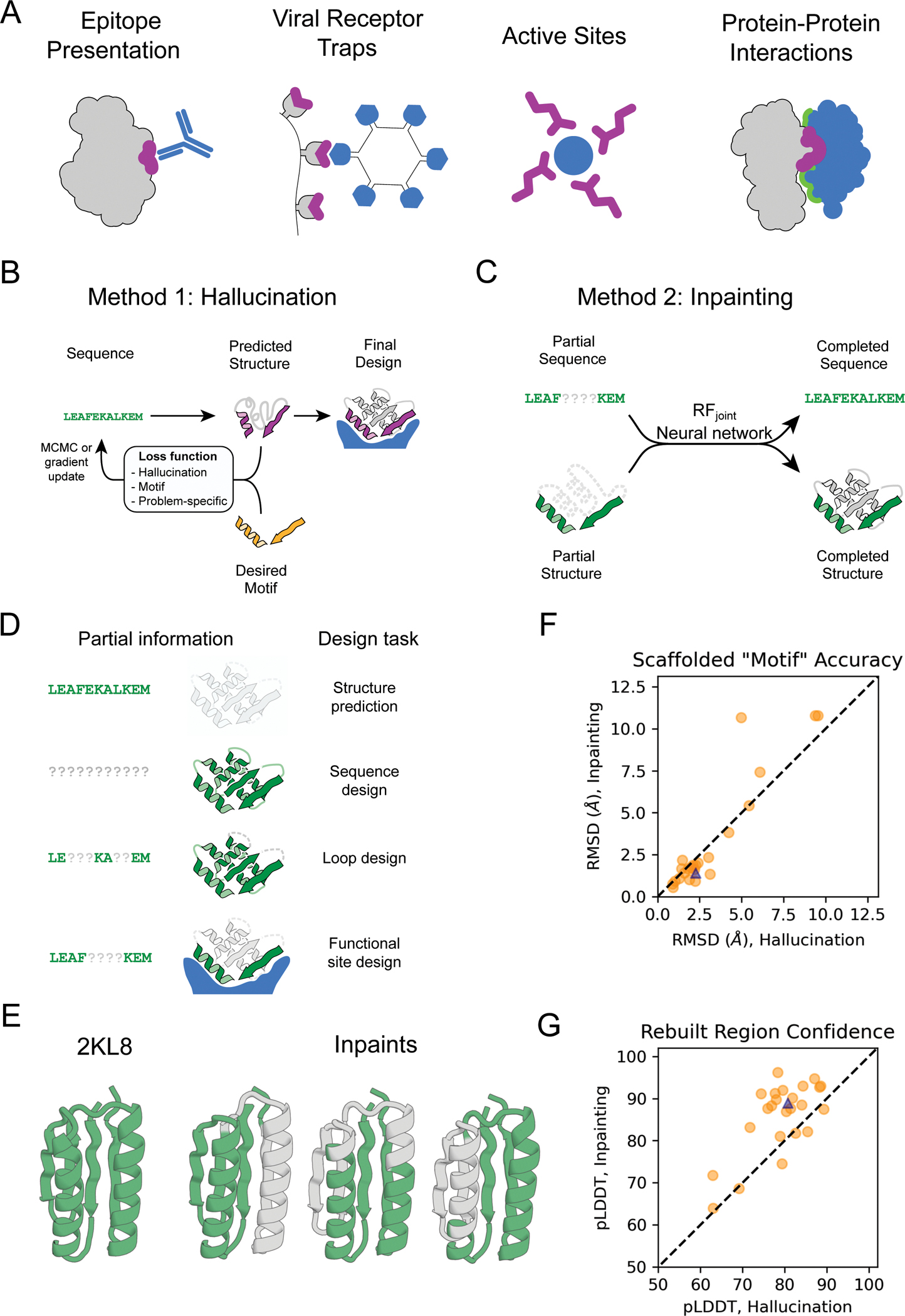
The binding and catalytic functions of proteins are generally mediated by a small number of functional residues held in place by the overall protein structure. Here, we describe deep learning approaches for scaffolding such functional sites without needing to prespecify the fold or secondary structure of the scaffold. The first approach, “constrained hallucination,” optimizes sequences such that their predicted structures contain the desired functional site. The second approach, “inpainting,” starts from the functional site and fills in additional sequence and structure to create a viable protein scaffold in a single forward pass through a specifically trained RoseTTAFold network. We use these two methods to design candidate immunogens, receptor traps, metalloproteins, enzymes, and protein-binding proteins and validate the designs using a combination of in silico and experimental tests.
Verified 2026-10-05 · 2 references not checked yet
Overview
CoChat Summary
TL;DR
The paper introduces two deep learning methods, constrained hallucination and inpainting, for scaffolding functional sites into de novo protein structures without pre-specifying scaffold fold or secondary structure. It validates designs in silico and experimentally across immunogens, receptor traps, metalloproteins, enzymes, and protein binders.
Key findings
- AlphaFold recapitulated designed structures with overall and motif RMSD typically <2 Å and <1 Å, respectively, and pLDDT >80; inpainting was much faster (1–10 s/design on an NVIDIA RTX2080 GPU) than hallucination (5–20 min/design).
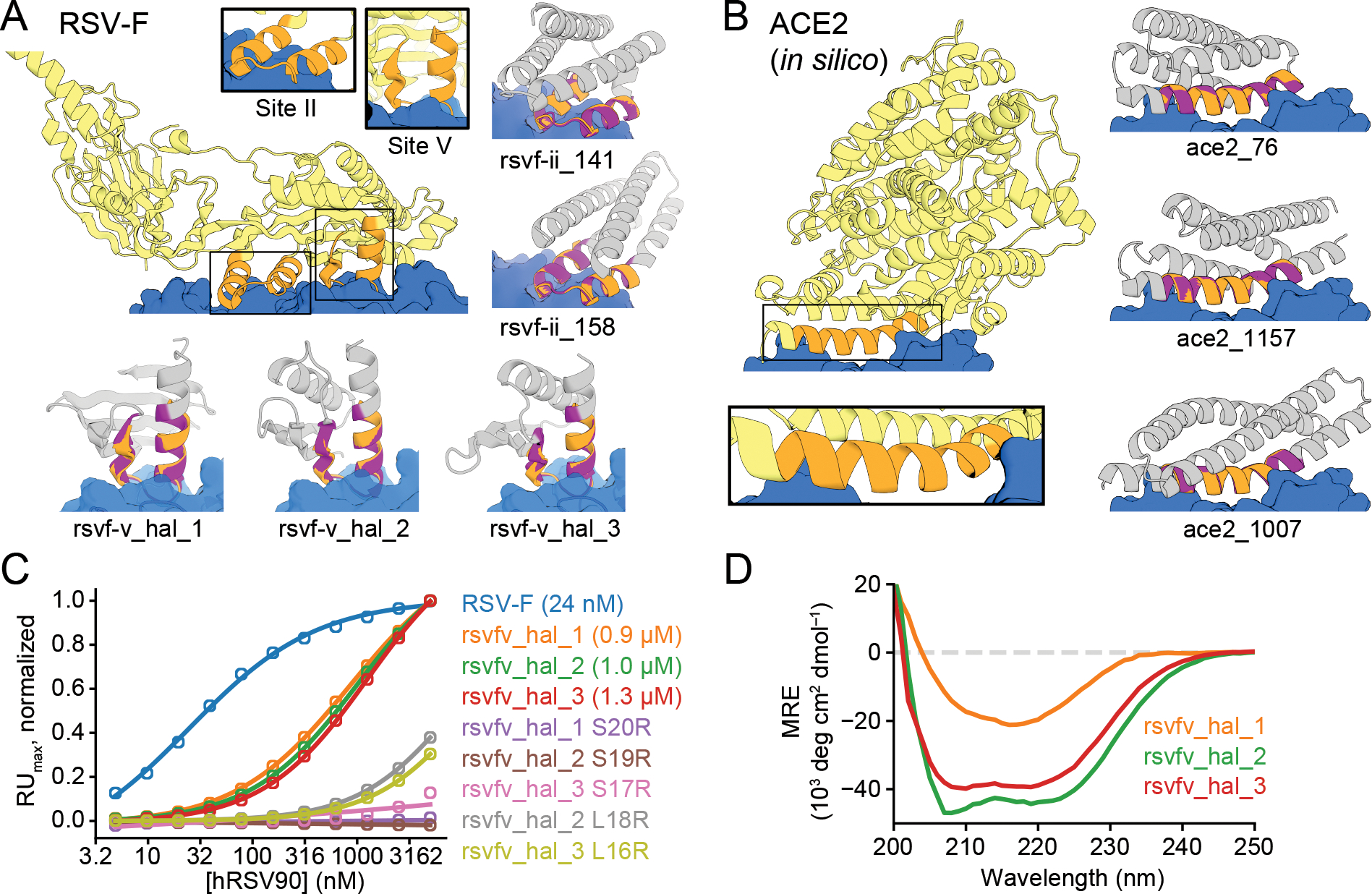
- For RSV-F site V, 37 hallucinated scaffolds were expressed in E. coli and three bound hRSV90 with Kd’s of 0.9–1.3 μM; four inpainted designs bound by yeast display but were poorly expressed in E. coli.
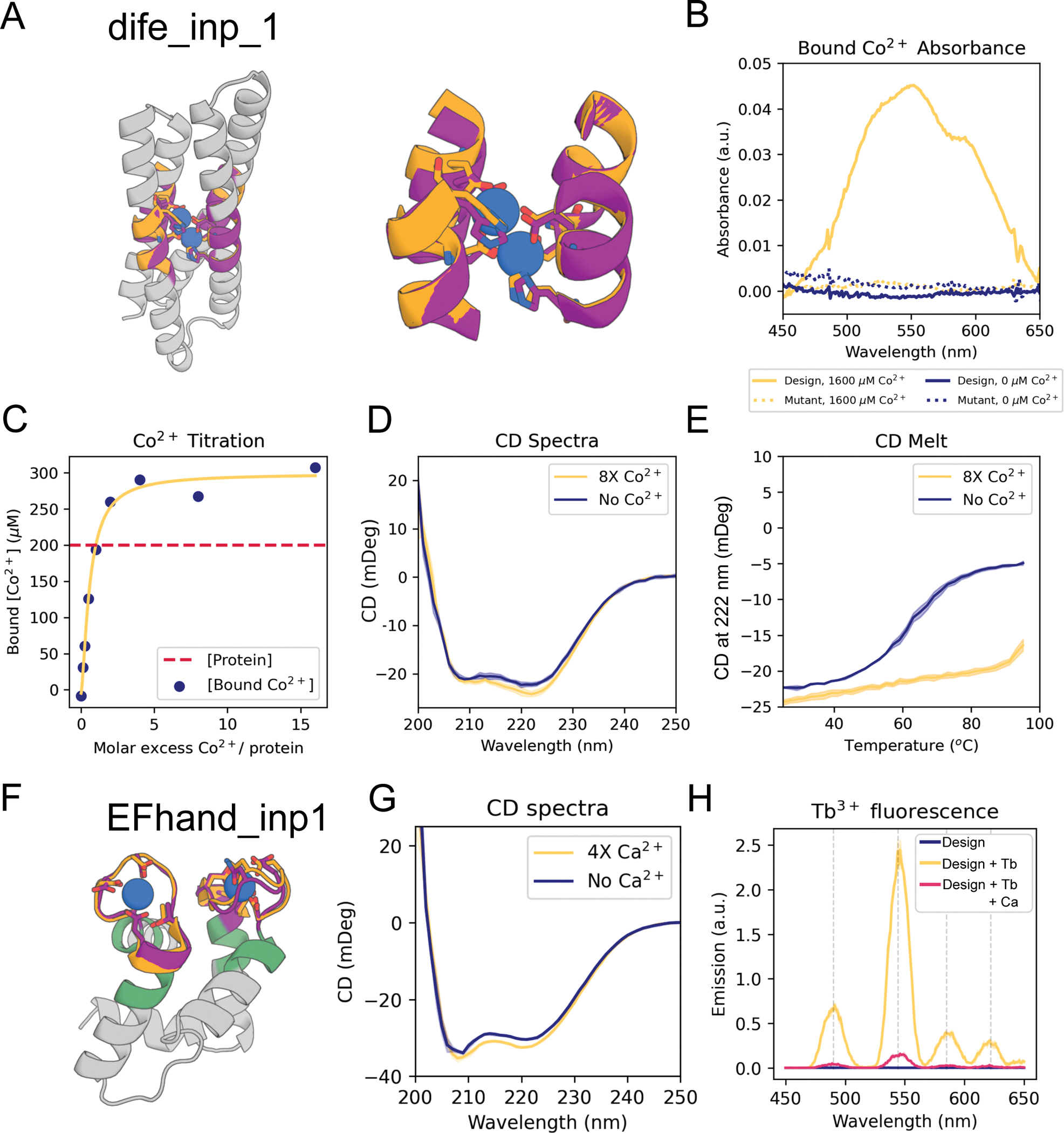
- For the E. coli bacterioferritin di-iron site, 96 inpainted designs were tested: 76 had soluble expression, at least 8 showed a Co2+-binding spectroscopic shift, and 3 had CD spectra consistent with the designed fold and were stabilized by metal binding; mutation of metal-binding residues abolished binding.
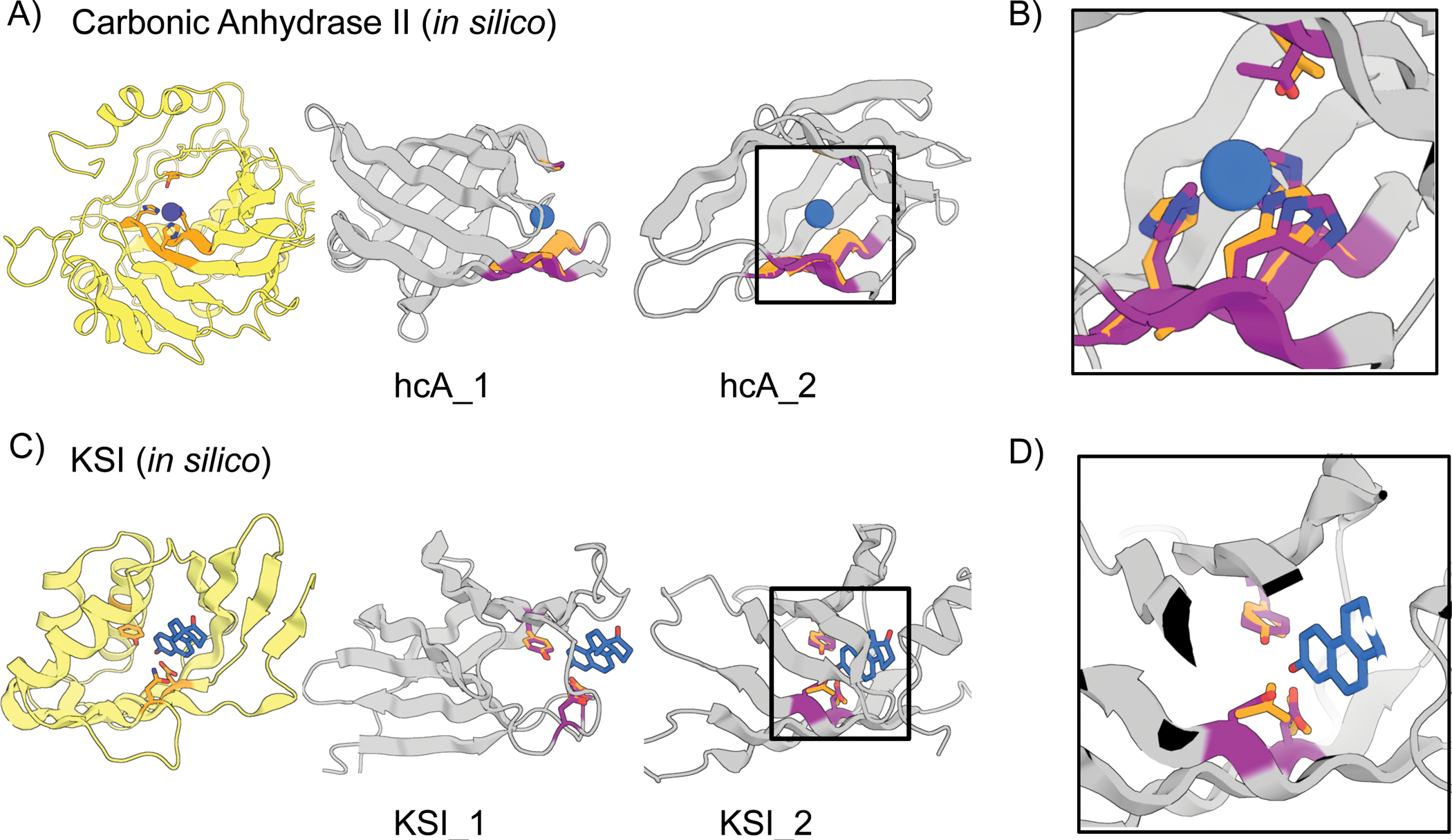
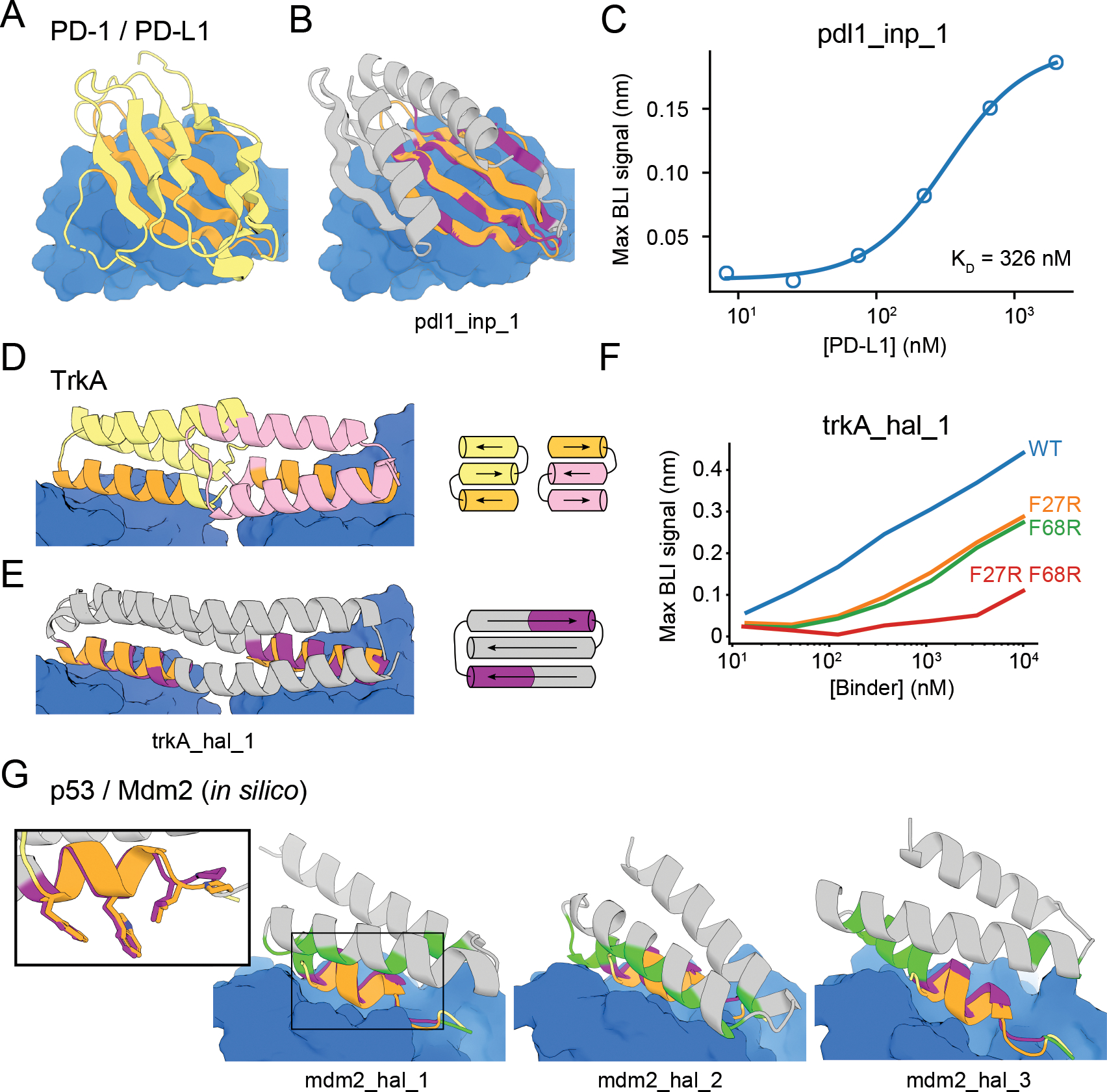
- For PD-L1, of 31 designs tested, pdl1_inp_1 bound PD-L1 with KD = 326 nM, compared with HAC PD-1 KD = 110 pM and WT PD-1 KD = 3.9 μM; carbonic anhydrase II active-site designs were <100 residues versus the 261-residue native protein.
Methods
- Constrained hallucination optimized sequences with a composite loss combining a hallucination loss and a motif reconstruction loss using trRosetta and later RosettaFold; inpainting used RFjoint, trained on masked/inpainting sequence and structure recovery, to complete missing sequence and structure in a single forward pass.
- In silico validation used AlphaFold; experimental validation for selected designs included E. coli expression, yeast display, binding assays (Kd, BLI), circular dichroism, metal/terbium fluorescence, and mutagenesis.
- Functional motifs were derived from native proteins including RSV-F sites II and V, hACE2, bacterioferritin di-iron, EF-hand, carbonic anhydrase II, Δ5-3-ketosteroid isomerase, PD-1/PD-L1, p53/Mdm2, and TrkA-NGF.
Limitations
- Stated in the paper: AlphaFold has limited ability to predict protein stability or mutational effects; hallucination is compute-intensive; inpainting usually requires larger input motifs and underperforms hallucination when the missing region is large; some inpainted RSV-F site V designs were poorly expressed in E. coli; di-iron hallucination designs were not tested due to buried polar residues; and side-chain placement for ketosteroid isomerase was difficult, requiring a two-stage approach.
- Evident from the text: many designs were validated only in silico (e.g., receptor traps, enzyme active sites, some Mdm2 binders), and experimental hit rates were often low (e.g., 3/37 RSV-F site V binders, 3/96 di-iron designs with CD/stabilization, 1/31 PD-L1 binders); inpainting also generated less structural diversity than hallucination.
Model-written summary. Check it against the paper before relying on it.
Integrity signals
Registry
Cites
Statistics
Figures
Verification
Claims the paper makes
9 Valid · 0 Not valid · 12 Not checked · 71 Own results and interpretations
Every source the paper cites for this claim was checked and supports it.
In the paper
“trRosetta can also be used to design sequences that fold into a target backbone structure by carrying out sequence optimization using a structure recapitulation loss function that rewards similarity of the predicted structure to the target structure (13).”
§ Scaffolding protein functional sites using deep learning > Abstract
What the sources say
- Supportedcites [13] Norn C, Wicky BIM, Juergens D, Liu S, Kim D, Tischer D, Koepnick B, Anishchenko I, Players F, Baker D, Ovchinnikov S, Protein sequence design by conformational landscape optimization. Proc. Natl. Acad. Sci. 118 (2021), doi: 10.1073/pnas.2017228118. PMC7980421 33712545 source
The Results and Discussions section, “Sequence Design by Gradient Backpropagation” (page not provided), describes optimizing amino acid sequences with a loss function based on the probabilities of the target structure’s observed interresidue distances and orientations. This supports the claim’s description of a structure-recapitulation loss that rewards agreement with the target backbone. (LLM, conf=0.91)
plainstates a cause- Asserted: passes — The authors put it forward as true.
- Checkable: passes — It can be checked against evidence.
- Load-bearing: passes — The paper’s conclusions depend on it.
- Based: passes — The paper gives a reason why it holds.
- Supported
The cited sources support only part of this claim — read each source’s verdict below.
In the paper
“We previously demonstrated that the trRosetta structure-prediction neural network (11) can be used to generate new proteins by maximizing the trRosetta output probability that a sequence folds to some (unspecified) three dimensional structure during Monte Carlo sampling in sequence space (12).”
§ Scaffolding protein functional sites using deep learning > Abstract
What the sources say
- Not checked yetcites [11] Yang J, Anishchenko I, Park H, Peng Z, Ovchinnikov S, Baker D, Improved protein structure prediction using predicted interresidue orientations. Proc. Natl. Acad. Sci. (2020), doi: 10.1073/pnas.1914677117. PMC6983395 31896580 source
- Partly supportedcites [12] Anishchenko I, Pellock SJ, Chidyausiku TM, Ramelot TA, Ovchinnikov S, Hao J, Bafna K, Norn C, Kang A, Bera AK, DiMaio F, Carter L, Chow CM, Montelione GT, Baker D, De novo protein design by deep network hallucination. Nature. 600, 547– 552 (2021). 34853475 PMC9293396 sourceExperimental — accuracy not yet measured
Split into 2 atoms — 1 confirmed, 1 partially supported, 0 disputed, 0 misattributed, 0 unverifiable. Expand the claim to see per-atom verdicts.
boostedstates a cause- Asserted: passes — The authors put it forward as true.
- Checkable: passes — It can be checked against evidence.
- Load-bearing: passes — The paper’s conclusions depend on it.
- Based: passes — The paper gives a reason why it holds.
The cited sources support only part of this claim — read each source’s verdict below.
In the paper
“Previous methods can scaffold functional sites made up of one or two contiguous chain segments (6–10), but with the exception of helical bundles (8) these do not extend readily to more complex sites composed of three or more chain segments, and the generated backbones are not guaranteed to be designable (encodable by some amino acid sequence).”
§ Scaffolding protein functional sites using deep learning > Abstract
What the sources say
- Supportedcites [6] Procko E, Berguig GY, Shen BW, Song Y, Frayo S, Convertine AJ, Margineantu D, Booth G, Correia BE, Cheng Y, Schief WR, Hockenbery DM, Press OW, Stoddard BL, Stayton PS, Baker D, A Computationally Designed Inhibitor of an Epstein-Barr Viral Bcl-2 Protein Induces Apoptosis in Infected Cells. Cell. 157, 1644– 1656 (2014). 24949974 PMC4079535 source
The citation to this paper is attached to the helical-bundle exception, rather than to the general claim about the limits of previous methods. In the Results sections on grafting and de novo design (page not provided), the paper describes using 3- and 4-helix bundles to build a binding interface with contacts beyond the grafted BH3 helix. (LLM, conf=0.86)
- Could not verifycites [7] Correia BE, Bates JT, Loomis RJ, Baneyx G, Carrico C, Jardine JG, Rupert P, Correnti C, Kalyuzhniy O, Vittal V, Connell MJ, Stevens E, Schroeter A, Chen M, MacPherson S, Serra AM, Adachi Y, Holmes MA, Li Y, Klevit RE, Graham BS, Wyatt RT, Baker D, Strong RK, Crowe JE, Johnson PR, Schief WR, Proof of principle for epitope-focused vaccine design. Nature. 507, 201– 206 (2014). 24499818 PMC4260937 sourceExperimental — accuracy not yet measured
The Design of Epitope-Scaffolds section describes a helix-turn-helix epitope and a three-helix-bundle template, while Computational Method describes the paper’s Fold from Loops approach. Neither passage assesses whether previous methods extend to functional sites made of three or more chain segments; searches for that limit and the helical-bundle exception found no supporting passage in our copy. (LLM, conf=0.72)
- Supportedcites [8] Silva D-A, Yu S, Ulge UY, Spangler JB, Jude KM, Labão-Almeida C, Ali LR, Quijano-Rubio A, Ruterbusch M, Leung I, Biary T, Crowley SJ, Marcos E, Walkey CD, Weitzner BD, Pardo-Avila F, Castellanos J, Carter L, Stewart L, Riddell SR, Pepper M, Bernardes GJL, Dougan M, Garcia KC, Baker D, De novo design of potent and selective mimics of IL-2 and IL-15. Nature. 565, 186– 191 (2019). 30626941 PMC6521699 source
The citation is attached to the helical-bundle exception. In “Computational design of IL-2/IL-15 mimics that bind and activate IL-2Rβγc” (page unavailable), the paper describes building a connected protein around the three helices H1, H3 and H4 that form the receptor-binding interface, supporting that exception. (LLM, conf=0.91)
- Partly supportedcites [9] Sesterhenn F, Yang C, Bonet J, Cramer JT, Wen X, Wang Y, Chiang C-I, Abriata LA, Kucharska I, Castoro G, Vollers SS, Galloux M, Dheilly E, Rosset S, Corthésy P, Georgeon S, Villard M, Richard C-A, Descamps D, Delgado T, Oricchio E, Rameix-Welti M-A, Más V, Ervin S, Eléouët J-F, Riffault S, Bates JT, Julien J-P, Li Y, Jardetzky T, Krey T, Correia BE, De novo protein design enables the precise induction of RSV-neutralizing antibodies. Science. 368 (2020), doi: 10.1126/science.aay5051. PMC7391827 32409444 sourceExperimental — accuracy not yet measured
The Introduction (page not provided) says earlier grafting work largely used simple motifs such as linear helical segments and identifies irregular, multi-segment functional sites as a challenge. The Discussion & Conclusions (page not provided) also describes limitations of template-based design. Neither passage establishes the specific three-or-more-segment threshold or identifies helical bundles as an exception. (LLM, conf=0.82)
- Not checked yetcites [10] Yang C, Sesterhenn F, Bonet J, van Aalen EA, Scheller L, Abriata LA, Cramer JT, Wen X, Rosset S, Georgeon S, Jardetzky T, Krey T, Fussenegger M, Merkx M, Correia BE, Bottom-up de novo design of functional proteins with complex structural features. Nat. Chem. Biol, 1– 9 (2021). 33398169 source
plain- Asserted: passes — The authors put it forward as true.
- Checkable: passes — It can be checked against evidence.
- Load-bearing: passes — The paper’s conclusions depend on it.
- Based: passes — The paper gives a reason why it holds.
- Supported
The cited sources support only part of this claim — read each source’s verdict below.
In the paper
“Previous methods can scaffold functional sites made up of one or two contiguous chain segments (6–10), but with the exception of helical bundles (8) these do not extend readily to more complex sites composed of three or more chain segments, and the generated backbones are not guaranteed to be designable (encodable by some amino acid sequence).”
§ Scaffolding protein functional sites using deep learning > Abstract
What the sources say
- Partly supportedcites [6] Procko E, Berguig GY, Shen BW, Song Y, Frayo S, Convertine AJ, Margineantu D, Booth G, Correia BE, Cheng Y, Schief WR, Hockenbery DM, Press OW, Stoddard BL, Stayton PS, Baker D, A Computationally Designed Inhibitor of an Epstein-Barr Viral Bcl-2 Protein Induces Apoptosis in Infected Cells. Cell. 157, 1644– 1656 (2014). 24949974 PMC4079535 sourceExperimental — accuracy not yet measured
The Results section, under “BHRF1-binding proteins created by grafting Bim-BH3 side chains to a helical scaffold” (page unavailable), describes grafting the interacting residues of a single BH3 helix onto protein scaffolds. This supports the one-contiguous-segment example, but our copy does not establish that previous methods scaffold functional sites made up of two contiguous chain segments. (LLM, conf=0.82)
- Supportedcites [7] Correia BE, Bates JT, Loomis RJ, Baneyx G, Carrico C, Jardine JG, Rupert P, Correnti C, Kalyuzhniy O, Vittal V, Connell MJ, Stevens E, Schroeter A, Chen M, MacPherson S, Serra AM, Adachi Y, Holmes MA, Li Y, Klevit RE, Graham BS, Wyatt RT, Baker D, Strong RK, Crowe JE, Johnson PR, Schief WR, Proof of principle for epitope-focused vaccine design. Nature. 507, 201– 206 (2014). 24499818 PMC4260937 source
The Abstract (page not available) says that previously developed side-chain and backbone grafting methods transplanted continuous or discontinuous epitopes onto scaffold proteins. This supports the attributed point that previous methods could scaffold functional sites comprising contiguous chain segments; the claim does not attribute a limitation to exactly two segments to this paper. (LLM, conf=0.86)
- Could not verifycites [8] Silva D-A, Yu S, Ulge UY, Spangler JB, Jude KM, Labão-Almeida C, Ali LR, Quijano-Rubio A, Ruterbusch M, Leung I, Biary T, Crowley SJ, Marcos E, Walkey CD, Weitzner BD, Pardo-Avila F, Castellanos J, Carter L, Stewart L, Riddell SR, Pepper M, Bernardes GJL, Dougan M, Garcia KC, Baker D, De novo design of potent and selective mimics of IL-2 and IL-15. Nature. 565, 186– 191 (2019). 30626941 PMC6521699 sourceExperimental — accuracy not yet measured
The computational-design section describes this paper’s method for scaffolding an IL-2 binding interface formed by three helices (H1, H3 and H4). It does not address whether previous methods could scaffold functional sites made up of one or two contiguous chain segments; searches for prior scaffolding methods found no passage establishing that point. The paper does, however, fit the helical-bundle exception separately identified in the full citing sentence. (LLM, conf=0.76)
- Supportedcites [9] Sesterhenn F, Yang C, Bonet J, Cramer JT, Wen X, Wang Y, Chiang C-I, Abriata LA, Kucharska I, Castoro G, Vollers SS, Galloux M, Dheilly E, Rosset S, Corthésy P, Georgeon S, Villard M, Richard C-A, Descamps D, Delgado T, Oricchio E, Rameix-Welti M-A, Más V, Ervin S, Eléouët J-F, Riffault S, Bates JT, Julien J-P, Li Y, Jardetzky T, Krey T, Correia BE, De novo protein design enables the precise induction of RSV-neutralizing antibodies. Science. 368 (2020), doi: 10.1126/science.aay5051. PMC7391827 32409444 source
The Introduction (page unavailable) describes earlier grafting methods using linear helical segments. The Results section, ‘De novo design of immunogens presenting structurally complex epitopes’ (page unavailable), adds that one earlier study grafted a discontinuous HIV epitope into a scaffold. Together, these support the claim that previous methods could scaffold sites comprising a single segment or more than one segment. (LLM, conf=0.85)
- Not checked yetcites [10] Yang C, Sesterhenn F, Bonet J, van Aalen EA, Scheller L, Abriata LA, Cramer JT, Wen X, Rosset S, Georgeon S, Jardetzky T, Krey T, Fussenegger M, Merkx M, Correia BE, Bottom-up de novo design of functional proteins with complex structural features. Nat. Chem. Biol, 1– 9 (2021). 33398169 source
plain- Asserted: passes — The authors put it forward as true.
- Checkable: passes — It can be checked against evidence.
- Load-bearing: passes — The paper’s conclusions depend on it.
- Based: passes — The paper gives a reason why it holds.
- Partly supported
The cited sources support only part of this claim — read each source’s verdict below.
In the paper
“Previous methods can scaffold functional sites made up of one or two contiguous chain segments (6–10), but with the exception of helical bundles (8) these do not extend readily to more complex sites composed of three or more chain segments, and the generated backbones are not guaranteed to be designable (encodable by some amino acid sequence).”
§ Scaffolding protein functional sites using deep learning > Abstract
What the sources say
- Partly supportedcites [6] Procko E, Berguig GY, Shen BW, Song Y, Frayo S, Convertine AJ, Margineantu D, Booth G, Correia BE, Cheng Y, Schief WR, Hockenbery DM, Press OW, Stoddard BL, Stayton PS, Baker D, A Computationally Designed Inhibitor of an Epstein-Barr Viral Bcl-2 Protein Induces Apoptosis in Infected Cells. Cell. 157, 1644– 1656 (2014). 24949974 PMC4079535 sourceExperimental — accuracy not yet measured
The Results section, under “In silico folding probability correlates with binding activity” (page unavailable), says that functional protein design has a low success rate and that inactive designs may fold improperly or have unstable designed states. This supports the general point that a generated design is not guaranteed to work, but it does not establish the more specific claim that a generated backbone cannot be encoded by any amino acid sequence. (LLM, conf=0.79)
- Could not verifycites [7] Correia BE, Bates JT, Loomis RJ, Baneyx G, Carrico C, Jardine JG, Rupert P, Correnti C, Kalyuzhniy O, Vittal V, Connell MJ, Stevens E, Schroeter A, Chen M, MacPherson S, Serra AM, Adachi Y, Holmes MA, Li Y, Klevit RE, Graham BS, Wyatt RT, Baker D, Strong RK, Crowe JE, Johnson PR, Schief WR, Proof of principle for epitope-focused vaccine design. Nature. 507, 201– 206 (2014). 24499818 PMC4260937 sourceExperimental — accuracy not yet measured
The Abstract (page unavailable) says the earlier grafting methods used scaffold proteins of known structure, but does not say whether their generated backbones were guaranteed to be designable. The Computational Method and Methods > Fold From Loops sections describe sequence design and filtering for the new method; a search for designability of backbones from previous methods found no passage addressing that point. (LLM, conf=0.72)
- Could not verifycites [8] Silva D-A, Yu S, Ulge UY, Spangler JB, Jude KM, Labão-Almeida C, Ali LR, Quijano-Rubio A, Ruterbusch M, Leung I, Biary T, Crowley SJ, Marcos E, Walkey CD, Weitzner BD, Pardo-Avila F, Castellanos J, Carter L, Stewart L, Riddell SR, Pepper M, Bernardes GJL, Dougan M, Garcia KC, Baker D, De novo design of potent and selective mimics of IL-2 and IL-15. Nature. 565, 186– 191 (2019). 30626941 PMC6521699 sourceExperimental — accuracy not yet measured
The Methods section (page unavailable) describes how this paper generated backbones and then performed sequence design and filtering. Searches for prior scaffolding methods and backbone designability found no passage saying that backbones generated by previous methods are not guaranteed to be designable. (LLM, conf=0.72)
- Could not verifycites [9] Sesterhenn F, Yang C, Bonet J, Cramer JT, Wen X, Wang Y, Chiang C-I, Abriata LA, Kucharska I, Castoro G, Vollers SS, Galloux M, Dheilly E, Rosset S, Corthésy P, Georgeon S, Villard M, Richard C-A, Descamps D, Delgado T, Oricchio E, Rameix-Welti M-A, Más V, Ervin S, Eléouët J-F, Riffault S, Bates JT, Julien J-P, Li Y, Jardetzky T, Krey T, Correia BE, De novo protein design enables the precise induction of RSV-neutralizing antibodies. Science. 368 (2020), doi: 10.1126/science.aay5051. PMC7391827 32409444 sourceExperimental — accuracy not yet measured
The Introduction and Discussion & Conclusions describe limitations of earlier scaffolding approaches, including destabilization and the need for extensive optimization. Neither passage says whether the generated backbones are guaranteed to be encodable by an amino acid sequence; a search for backbone designability found no such statement in our copy. (LLM, conf=0.72)
- Not checked yetcites [10] Yang C, Sesterhenn F, Bonet J, van Aalen EA, Scheller L, Abriata LA, Cramer JT, Wen X, Rosset S, Georgeon S, Jardetzky T, Krey T, Fussenegger M, Merkx M, Correia BE, Bottom-up de novo design of functional proteins with complex structural features. Nat. Chem. Biol, 1– 9 (2021). 33398169 source
plain- Asserted: passes — The authors put it forward as true.
- Checkable: passes — It can be checked against evidence.
- Load-bearing: passes — The paper’s conclusions depend on it.
- Based: passes — The paper gives a reason why it holds.
- Partly supported
59 more claims · 3 with their cited sources checked
Create a free account to see all 92 claims and to verify the 16 references still open.
- Probably not a substantial claim. 5
- It may state two separate claims as one. 23
Claims other papers make about this one
Each is checked against this paper’s own text: does it say what the citing paper says it does?
The source backs part of the claim, not all of it — or backs it for a different population, condition or comparison.
In the citing paper
“Experimental characterization showed that the method can scaffold a wide range of protein functional motifs with atomic accuracy19”
From De novo design of protein structure and function with RFdiffusion (2023) · cites this paper as [4]
Experimental — accuracy not yet measuredThe source backs part of the claim, not all of it — or backs it for a different population, condition or comparison.
In the citing paper
“but the approach fails on minimalist site descriptions that do not sufficiently constrain the overall fold and, because it is deterministic, can produce only a limited diversity of designs for a given problem.”
From De novo design of protein structure and function with RFdiffusion (2023) · cites this paper as [4]
Experimental — accuracy not yet measuredThe source backs part of the claim, not all of it — or backs it for a different population, condition or comparison.
In the citing paper
“Experimental characterization showed that the method can scaffold a wide range of protein functional motifs with atomic accuracy19”
From De novo design of protein structure and function with RFdiffusion (2023) · cites this paper as [19]
Experimental — accuracy not yet measuredThe source backs part of the claim, not all of it — or backs it for a different population, condition or comparison.
In the citing paper
“This measure of in silico success has been found to correlate with experimental success4,7,26 and is significantly more stringent than template modelling (TM)-score-based metrics used elsewhere5,16,27–29”
From De novo design of protein structure and function with RFdiffusion (2023) · cites this paper as [4]
Experimental — accuracy not yet measuredThe check wasn’t confident either way, so it gives no verdict — never disputed.
In the citing paper
“we established an in silico benchmark test (Supplementary Table 9) comprising 25 motif-scaffolding design problems addressed in six recent publications encompassing several design methodologies4,5,29,38–40”
From De novo design of protein structure and function with RFdiffusion (2023) · cites this paper as [4]
Experimental — accuracy not yet measured
Citations
Cites
Adam: A Method for Stochastic Optimization
Kingma, D. P., & Ba, J. (2014) · arXiv · doi:10.48550/arxiv.1412.6980 · Cited by 98,946
Basic local alignment search tool
Altschul, S. F., Gish, W., Miller, W., Myers, E. W., & Lipman, D. J. (1990) · Journal of Molecular Biology · doi:10.1006/jmbi.1990.9999 · Cited by 98,669
BERT: Pre-training of Deep Bidirectional Transformers for Language Understanding
Devlin, J., Chang, M.-W., Lee, K., & Toutanova, K. (2018) · arXiv · doi:10.48550/arxiv.1810.04805 · Cited by 73,173
BERT: Pre-training of Deep Bidirectional Transformers for Language Understanding
Devlin, J., Chang, M.-W., Lee, K., & Toutanova, K. (2019) · Proceedings of the 2019 Conference of the North American Chapter of the Association for Computational Linguistics: Human Language Technologies, Volume 1 (Long and Short Papers) · doi:10.18653/v1/n19-1423 · Cited by 54,325
Highly accurate protein structure prediction with AlphaFold
Jumper, J., Evans, R., Pritzel, A., Green, T., Figurnov, M., Ronneberger, O., Tunyasuvunakool, K., Bates, R., Žídek, A., Potapenko, A., et al. (2021) · Nature · doi:10.1038/s41586-021-03819-2 · Cited by 43,764
Berman, H. M. (2000) · Nucleic Acids Research · doi:10.1093/nar/28.1.235 · Cited by 40,196
Comparison of multiple Amber force fields and development of improved protein backbone parameters
Hornak, V., Abel, R., Okur, A., Strockbine, B., Roitberg, A., & Simmerling, C. (2006) · Proteins: Structure, Function, and Bioinformatics · doi:10.1002/prot.21123 · Cited by 6,914
Protein production by auto-induction in high-density shaking cultures
Studier, F. W. (2005) · Protein Expression and Purification · doi:10.1016/j.pep.2005.01.016 · Cited by 5,931
Accurate prediction of protein structures and interactions using a 3-track network
Baek, M., DiMaio, F., Anishchenko, I., Dauparas, J., Ovchinnikov, S., Lee, G. R., Wang, J., Cong, Q., Kinch, L. N., Schaeffer, R. D., et al. (2021) · doi:10.1101/2021.06.14.448402 · Cited by 5,549 · cited 3×
“Following the development of RosettaFold (RF) (16) we found that it performed better than trRosetta in guiding protein design by functional-site-constrained hallucination (Fig.”
BackgroundMethodInfluentialSelf-citationMMseqs2 enables sensitive protein sequence searching for the analysis of massive data sets
Steinegger, M., & Söding, J. (2017) · Nature Biotechnology · doi:10.1038/nbt.3988 · Cited by 4,840
Research works printed but not linked: 1
- Z. Lin T. Sercu Y. LeCun A. Rives “Deep generative models create new and diverse protein structures ” 35th Conference on Neural Information Processing Systems (NeurIPS 2021) 6 to 14 December 2021.
Cited by
Items 401–492 of 492
Review: Modeling peptide-protein complexes: docking, simulations and machine learning — R0/PR1
Mondal, A., Chang, L., & Pérez, A. (2022) · QRB Discovery · doi:10.1017/qrd.2022.14.pr1 · Cited by 1
A Generative Model for Creating Path Delineated Helical ProteinsPreprint
Kibler, R. D., Wicky, B. I. M., Coventry, B., & Woodall, N. B. (2023) · bioRxiv (Cold Spring Harbor Laboratory) · doi:10.1101/2023.05.24.542095 · Cited by 1
Self-citationSingle missense mutations in Vi capsule synthesis genes confer hypervirulence to Salmonella TyphiPreprint
Lee, G. Y., & Song, J. (2024) · bioRxiv (Cold Spring Harbor Laboratory) · doi:10.1101/2023.12.28.573590 · Cited by 1
Bifurcated Generative Flow NetworksPreprint
Li, C., Liu, C., Liu, D., Cai, Q., & Pan, L. (2024) · arXiv (Cornell University) · doi:10.48550/arxiv.2406.01901 · Cited by 1
“Similarly, this example can find analogues in other fields as well, including protein design (e.g. key motif and scaffold) (Wang et al., 2022) and materials design (e.g. key composition and dopants) (Shi et al., 2020).”
BackgroundProtein Language Models in Directed EvolutionPreprint
Maguire, R., Bloznelyte, K., Adepoju, F., Armean-Jones, M., Dewan, S., Fozzard, S., Goddard, S., Gupta, A., Ibrahimi, E., Jones, F. P., et al. (2026) · bioRxiv · doi:10.1101/2024.08.20.608752 · Cited by 3
“Whilst strides have been made in de novo protein design in recent years (Ferruz et al., 2022; Wang et al., 2022; Watson et al., 2023), directed evolution comprising iterative mutagenesis and screening remains the primary method used for the development of optimized protein variants (Arnold, 1998;…”
MethodCo-designing sequence and structure of functional de novo enzymes with EnzyGen2Preprint
Song, Z., Liu, H., Zhao, Y., Yang, Y., & Li, L. (2026) · bioRxiv (Cold Spring Harbor Laboratory) · doi:10.64898/2026.03.02.709205 · Cited by 1
“Although emergent joint sequence-structure co-design approaches have begun to address this limitation [33–36], most existing models lack explicit ligand-binding constraints.”
Altieri, N., Harman, J. L., Noble, D., Murakowska, N. S., Eng, A., McGowan, K. L., Goodnight, D., DiPeso, L., Shikany, C., Engelhart, E., et al. (2026) · bioRxiv (Cold Spring Harbor Laboratory) · doi:10.64898/2026.04.17.719295 · Cited by 1
Liu, G., He, M., Sun, L., 成福仙, & Zhang, Y. (2026) · bioRxiv (Cold Spring Harbor Laboratory) · doi:10.64898/2026.04.21.719907 · Cited by 1
Mondal, A., Chang, L., & Pérez, A. (2022) · QRB Discovery · doi:10.1017/qrd.2022.14.pr4
Mondal, A., Chang, L., & Pérez, A. (2022) · QRB Discovery · doi:10.1017/qrd.2022.14.pr5
Kartashov, O. O., Savvas, I. Κ., Mukhanova, E., Polyanichenko, D. S., Chernov, A. V., & Butakova, M. A. (2022) · Lecture notes in networks and systems · doi:10.1007/978-3-031-19620-1_25
Review: Modeling peptide-protein complexes: docking, simulations and machine learning — R0/PR2
Mondal, A., Chang, L., & Pérez, A. (2022) · QRB Discovery · doi:10.1017/qrd.2022.14.pr2
Mondal, A., Chang, L., & Pérez, A. (2022) · QRB Discovery · doi:10.1017/qrd.2022.14.pr3
PSL Chemical Biology Symposia Third Edition: A Branch of Science in its Explosive Phase
Baron, L., Hadjerci, J., Thoidingjam, L. K., Plays, M., Bucci, R., Morris, N., Müller, S., Sindikubwabo, F., Solier, S., Cañeque, T., et al. (2023) · ChemBioChem · doi:10.1002/cbic.202300093
Who Binds Better? Let Alphafold2 Decide!
Varga, J. K., & Schueler‐Furman, O. (2023) · Angewandte Chemie · doi:10.1002/ange.202303526
Quels enseignements de mathématiques pour la biologie ? / Which mathematics for teaching biology ?
Haiech, J. (2023) · Notes Académiques de l Académie d agriculture de France / Academic Notes of the French Academy of Agriculture · doi:10.58630/pubac.not.a244295
Diffusion Evolution: New Artificial Intelligence Models Break Barriers in Protein Design
Lin, F. Y.-H. (2023) · GEN Biotechnology · doi:10.1089/genbio.2023.29114.fli
Virtual Screening of Synthetic Proteins Based on ESM2 ModelPreprint
Song, H., Lin, X., Zhao, L., & Wen, Z. (2024) · Research Square · doi:10.21203/rs.3.rs-3890441/v1
ВИКОРИСТАННЯ СУЧА СНИХ ТЕХНОЛОГІЙ Д ЛЯ ДІАГНОСТИК И ТА ЛІКУВАННЯ ЗАХВОРЮВАНЬ В ОБЛАСТІ СЛУХУ
Маляренко, В., & Дзиза, А. В. (2024) · ГРААЛЬ НАУКИ · doi:10.36074/grail-of-science.12.04.2024.064
A Unified Framework of Scaffold-Lab for Critical Assessment of Protein Backbone Generation MethodsPreprint
Chen, H., Zheng, Z., Zhang, B., Zhong, B., Liu, K., Li, Z., Zhu, J., Yu, J.-L., & Wei, T. (2024) · Research Square · doi:10.21203/rs.3.rs-4249839/v1
The Luckiest Network Gives the Average Error on Disjoint Tests: Experiments
Wu, X., & Weng, J. (2024) · International Conference on Artificial Intelligence in Electronics Engineering (AIEE) · doi:10.1145/3658835.3658839 · Cited by 2
Molecular peptide grafting as a tool for creating new generation of biopeptides: A mini-review
Chernukha, I. M., Тихонов, С. Л., & Тихонова, Н. В. (2024) · Food systems · doi:10.21323/2618-9771-2024-7-2-220-224
Protein Manufacture: Protein Design Assisted by Machine Learning from Backbone to Sequence
Xu, M., Luo, Y., Jiang, J., Cui, Z., & Wu, H. (2024) · Lecture notes in computer science · doi:10.1007/978-981-97-5692-6_30
From De Novo to Xeno: Advancing Macromolecule Design beyond Proteins
Stukenbroeker, T. S. (2024) · ACS Synthetic Biology · doi:10.1021/acssynbio.4c00179
Silva, E. R., Moraes, M. C., de Souza, L. B., Tenório, F. S., Damaceno‐Rodrigues, N. R., Durigan, R. D. C. M., Casali, K. R., & Cunha, T. S. (2024) · Seven International Medical and Nursing Congress · doi:10.56238/iiicongressmedicalnursing-003
Doffini, V., & Nash, M. A. (2024) · bioRxiv (Cold Spring Harbor Laboratory) · doi:10.1101/2024.09.25.615059
“Furthermore, ML is not limited to mutagenized data but can also be utilized to generate de-novo proteins [50, 26, 54, 3].”
BackgroundDe novo Design of Supramolecular Nucleic Acid Systems Using Foundation Models
Ramlan, E. I., & Firdaus‐Raih, M. (2024) · Elsevier eBooks · doi:10.1016/b978-0-323-95502-7.00236-0
Dai, W. (2025) · Journal of Applied Statistics · doi:10.1080/02664763.2025.2460076
“…is established through constructing a CNN and developing two machine learning algorithms for a two-stage minimization-maximization optimization problem (see, e.g. Callaway [6], Dai [15], Dauparas et al. [18], Jumper et al. [26], LeChun et al. [31], Wang et al. [49], and Wicky et al. [51]).”
InfluentialYong, T., Liu, Y., Cai, M., Zhuo, L., Wu, X., Guo, H., Hu, H., Gao, Y., Chen, S., Xie, Y., et al. (2025) · Agriculture · doi:10.3390/agriculture15070686
DeepUSPS : Deep Learning‐Empowered Unconstrained‐Structural Protein Sequence Design
Ma, Z., & Yang, J. (2025) · Proteins Structure Function and Bioinformatics · doi:10.1002/prot.26847
“The Protein Hallucination and Inpainting with RoseTTAFold (RFDesign) approach [40] enables randomized sequence optimization without specified structures, facilitating the creation of protein scaffolds enriched with functional sites, but it requires substantial initial information.”
Design of TNFR peptide agonists for inducing receptor oligomerization and cell apoptosis
Liu, Y., & Wang, H. (2025) · Chemical Communications · doi:10.1039/d5cc02268a
Learning Human T Cell Behaviors Through Generative AI Embeddings of T Cell ReceptorsPreprint
Chen, D. G., Su, Y., & Heath, J. R. (2025) · bioRxiv (Cold Spring Harbor Laboratory) · doi:10.1101/2025.06.16.660016 · Cited by 1
Weng, J. (2025) · Proceedings of the 2025 International Conference on Artificial Intelligence and Computational Intelligence · doi:10.1145/3730436.3745779
When researchers don’t have the proteins they need, they can get AI to ‘hallucinate’ new structures
Anishchenko, I. V. (2022) · The Conversation · doi:10.64628/aai.e4kkyr6fs
Self-citationGenerative models for drug design
Zhou, Y., & Wang, Y. (2025) · Elsevier eBooks · doi:10.1016/b978-0-44-332908-1.00015-5
Ojima‐Kato, T., Yokoyama, G., Nakano, H., Hamada, M., & Motono, C. (2025) · RSC Chemical Biology · doi:10.1039/d5cb00199d · Cited by 1
Deep learning–enabled scaffolding of spatial arrays of PfCSP epitopes
Wu, N. R., Castro, K. M., Beutler, N., Lee, W.-H., Raghavan, S. S. R., Martin, G. M., Jain, M., Agrawal, S., Liguori, A., Kalyuzhniy, O., et al. (2026) · Proceedings of the National Academy of Sciences · doi:10.1073/pnas.2521914123
“Initially, 167 trajectories using template PDB:7RQQ (residues 106 to 111) were run using 600 steps of gradient descent with a repulsive loss ( α = 3.5 Å, weight = 2), a coordinate RMSD loss (weight = 2) and a radius of gyration loss (threshold = 16 Å, weight = 1), sampling scaffolds between 50 and…”
InfluentialSelf-citationOjima‐Kato, T., Yokoyama, G., Nakano, H., Hamada, M., & Motono, C. (2025) · bioRxiv (Cold Spring Harbor Laboratory) · doi:10.1101/2025.07.17.665026
Targeting Malaria-merozoites with virtual cyclic-peptidesPreprint
Coll, J. M. (2025) · ChemRxiv · doi:10.26434/chemrxiv-2025-9cscw · Cited by 2
Molecular Therapy Advances: Building the bridge between discovery and cure
Abou‐El‐Enein, M. (2025) · Molecular Therapy — Methods & Clinical Development · doi:10.1016/j.omtm.2025.101641
Naylor, D. (2023) · ResearchWorks at the University of Washington (University of Washington)
Generating and Harnessing Learned Embeddings for Protein Design
Mansoor, S. (2023) · ResearchWorks at the University of Washington (University of Washington)
Deep Learning and Cloud Science for the Engineering of Biological Molecules and Systems
Armer, C. (2022) · ResearchWorks at the University of Washington (University of Washington)
Computational Design of Therapeutic Peptides
Choudhury, P. R., Yadav, S., Jaiswal, S., Khanna, T., & Mathur, P. (2025) · BENTHAM SCIENCE PUBLISHERS eBooks · doi:10.2174/9798898812164125080005
Bailey, R., Kahoekapu, K., To, A., Mayerlen, L. I., Kae, H., Manninen, G., Haun, B. K., Berestecky, J. M., Shikuma, C., Lehrer, A. T., et al. (2026) · Vaccines · doi:10.3390/vaccines14010058
“Specifically, the light chain loop containing Lys126 was remodeled using the programs ColabPaint [39] based on [40] as well as ProteinMPNN [41] and AlphaFold2 [42] using ColabFold (version 1.5.5) [43].”
InfluentialSynthetic rewriting technologies in mammalian cells
Wang, Y., Cui, Y., Zhao, G.-R., Wu, Y., & Yuan, Y. (2026) · Nature Communications · doi:10.1038/s41467-025-68066-9 · Cited by 2
“Generative AI has demonstrated its potential in designing and predicting functional elements 205 – 208 .”
Spezzani, E., Capelli, L., Marzari, S., & Bertucci, A. (2026) · ChemRxiv · doi:10.26434/chemrxiv-2026-nszs1
Rousset, Y., Kroll, A., & Lercher, M. J. (2026) · bioRxiv (Cold Spring Harbor Laboratory) · doi:10.64898/2026.01.23.701068 · Cited by 1
Comparative performance of structural aligners in functional domain annotation
Borujeni, P. M., & Salavati, R. (2026) · Journal of Structural Biology · doi:10.1016/j.jsb.2026.108308
Rigidity-Aware Geometric Pretraining for Protein Design and Conformational EnsemblesPreprint
Ni, Z., Li, Y., Qiu, Z., Schölkopf, B., Guo, H., Liu, W., & Liu, S. (2026) · arXiv (Cornell University) · doi:10.48550/arxiv.2603.02406
“…been widely used for protein-related biology tasks, including de novo protein design (Bose et al., 2023; Watson et al., 2023), motif scaffolding (Wang et al., 2022a), and ensemble generation (Jing et al., 2024), showing the potential of geometric learning to model structure and dynamics at…”
Rigidity-Aware Geometric Pretraining for Protein Design and Conformational EnsemblesPreprint
Ni, Z., Li, Y., Qiu, Z., Schölkopf, B., Guo, H., Li, Z., & Liu, S. (2026) · bioRxiv (Cold Spring Harbor Laboratory) · doi:10.64898/2026.03.02.708991
“…been widely used for protein-related biology tasks, including de novo protein design (Bose et al., 2023; Watson et al., 2023), motif scaffolding (Wang et al., 2022a), and ensemble generation (Jing et al., 2024), showing the potential of geometric learning to model structure and dynamics at…”
Li, P., Wang, W., & Yu, D.-J. (2026) · Journal of Chemical Information and Modeling · doi:10.1021/acs.jcim.6c00101
Huang, Q., Yu, Y., Huang, K., Zhu, Z., Wang, X., & Song, C. (2026) · International Journal of Biological Macromolecules · doi:10.1016/j.ijbiomac.2026.151615
Deng, L., Liu, J., & Peng, Y. (2026) · Virologica Sinica · doi:10.1016/j.virs.2026.03.011
Computational Protein Design with Deep Learning and Automated Reasoning
Defresne, M. (2023) · theses.fr (ABES) · doi:10.70675/7ff841f2zb67bz4045zb373z10940e3fea00
iPalmT: a new paradigm for palmitoyltransferase discovery via end-to-end deep learning
Li, T., & Li, X. (2026) · Oncogene · doi:10.1038/s41388-026-03802-z
Minidomains from evolution for scaffold engineering
Devnath, H. S., Xie, J., Craik, D. J., & Wang, C. K. L. (2026) · Biotechnology Advances · doi:10.1016/j.biotechadv.2026.108904
GeomMotif: A Benchmark for Arbitrary Geometric Preservation in Protein GenerationPreprint
Strashnov, P., Shevtsov, A., Meshchaninov, V., Kardymon, O. L., & Vetrov, D. (2026) · bioRxiv (Cold Spring Harbor Laboratory) · doi:10.64898/2026.04.18.719378 · Cited by 3
“A central task in this field is motif scaffolding , where a new protein is generated around a specific functional fragment, preserving its precise 3D geometry (Wang et al., 2022).”
Artificial protein scaffolds for human therapeutics: drug discovery and delivery strategies
Gholap, A. D., Khuspe, P. R., & Omri, A. (2026) · Drug Discovery Today · doi:10.1016/j.drudis.2026.104689
De novo designed cyclic MC4R peptide agonist reduces food intake in micePreprint
Møller, V. E., Johansen, J. M., Mikkelsen, R. B., Tran, P., Kayed, A., Buch‐Månson, N., Jenkins, T. P., Dalbøge, L. S., Nielsen, J. C., & Nygaard, M. M. (2026) · bioRxiv (Cold Spring Harbor Laboratory) · doi:10.64898/2026.05.19.721857
STGAT : A Novel Spatiotemporal Graph Attention Approach for Dynamical Trajectory Prediction
Tong, H., Zhang, N., Lu, Z., Wei, T., & Chen, H. (2026) · Chemical Biology & Drug Design · doi:10.1111/cbdd.70319
Wang, L., Dong, S., Zhang, H., Chen, Y., Li, X., Wang, Y., & Xue, Z. (2026) · Interdisciplinary Sciences Computational Life Sciences · doi:10.1007/s12539-026-00848-1
Scaffolding Protein Mimics Using a DNA NanostructurePreprint
Sleiman, H. F., Zhao, F., Yang, T. P., Saliba, D., Das, T., Asohan, J., & Guarné, A. (2026) · Research Square · doi:10.21203/rs.3.rs-7348237/v1
Discriminator‐Guided Inverse Folding for Multi‐Property Protein Design
Zheng, Y., Liu, C., Liu, Z., Su, M., Tang, C., Zheng, X., Zhang, H., & Li, J. (2026) · Advanced Science · doi:10.1002/advs.75988
Computational design of blue melanin by motif‐scaffolding a pentapeptide‐repeat protein
Lee, D. S., Park, B., Salgado, S., Dolgin, J., & Kaplan, D. L. (2026) · Protein Science · doi:10.1002/pro.70718
Synthetic yeast-bacterium consortium enables co-inducible relayed synthesis of chemicals
Xu, M., Yu, J., Chen, X., Li, X., Guo, Y., Qian, Z., Liu, Q., Ren, Y., Lu, J., Chen, X., et al. (2026) · Metabolic Engineering · doi:10.1016/j.ymben.2026.102507
Miyoshi, H., Sakuma, K., Moriwaki, Y., Aoyama, N., Kashima, T., Terada, T., Miyanaga, A., & Fushinobu, S. (2026) · Proteins Structure Function and Bioinformatics · doi:10.1002/prot.70162
“Studying how such motif transplantation influences binding specificity, affinity, and structural stability can provide valuable insights for the next generation of functional protein engineering [5, 6].”
Ali, M., Tajwar, M. A., Ahmed, F., Hussain, M. M., Wong, W., & Xiong, H. (2026) · Medicinal Research Reviews · doi:10.1002/med.70086
Yang, M., Zheng, X., Li, Y., Zheng, Y., Koh, H. Y., Guo, Y., Gao, J., Xia, F., & Pan, S. (2026) · ACM SIGKDD Conference on Knowledge Discovery and Data Mining (KDD) · doi:10.1145/3770855.3818975
Discovery and design of potent cell surface display elements
Fang, Z., Saskin, J., Lee, S.-H., Zou, C., Xin, S., Huang, X., Pan, X., Dong, C., Abiri, A., Feng, Y., et al. (2026) · Nature Biotechnology · doi:10.1038/s41587-026-03144-x
Parwekar, P., Gourinath, S., Jain, J., Gundagatti, S., Ali, J., Gupta, P., & Butkovic, A. (2026) · PLoS ONE · doi:10.1371/journal.pone.0355853
Szataniak, I., & Packi, K. (2026) · Antibodies · doi:10.3390/antib15050081
Wu, S., Ye, F., Xin, J., Lin, X., Huang, Y., Chen, X., Li, J., Deng, J., Wang, Y., & Li, D. (2026) · International Journal of Biological Macromolecules · doi:10.1016/j.ijbiomac.2026.154347
Advances in de novo protein design for anti-infective applications
Yin, J., 顾子春, Sun, Y., & Tao, L. (2026) · Chinese Science Bulletin (Chinese Version) · doi:10.1360/csb-2026-0714
RFOptimization: Guiding Design Optimization with All-Atom Structure PredictionPreprint
Zhang, O., Wang, J., Thompson, T. R., You, Z., Song, Z., DiMaio, F., & Baker, D. A. (2026) · bioRxiv (Cold Spring Harbor Laboratory) · doi:10.64898/2026.09.04.749184
“(S17) Because the implementation does not include an explicit proposal-density ratio, this operation is a gradient-guided Metropolis-style acceptance rule rather than a general Hastings-corrected transition [9, 10].”
Self-citationMian, A., Nawaz, N., Hassan, M., Naeem, M., Rios-Escalante, P. R. D. L., & Zhang, Y. (2026) · Current Plant Biology · doi:10.1016/j.cpb.2026.100672 · Cited by 1
Recent advances in AI-driven biotherapeutic discovery using protein generative models
Kim, H., Lee, H., Song, J., & Lee, J. (2026) · Digital Discovery · doi:10.1039/d6dd00222f
Probing the sequence variability tolerance in a de novo α-helical barrel biocatalystPreprint
Elaily, W., BRAUN, M. J., Stoll, D. B., Chakatok, M., Aleotti, M., Grill, B., Bijelic, A., Hall, M., & Oberdorfer, G. (2026) · Research Square · doi:10.21203/rs.3.rs-11197390/v1
De novo design of flexible protein interactions with GuideFlipPreprint
Yi, K., Chen, Q., Zhang, D., Tian, P., Wagstaff, J. L., McLaughlin, S. H., Tate, C. G., Jamali, K., & Scheres, S. H. W. (2026) · bioRxiv (Cold Spring Harbor Laboratory) · doi:10.64898/2026.09.27.754145
“Backpropagation through differentiable structure prediction models provides one way of coupling sequence and structure during design 16,17 .”
What deep learning can and cannot (yet) do for enzyme design
Ahr, J. A., de Waal, M. M., Cotet, T., Howell, D. C., & Bunzel, H. A. (2026) · Current Opinion in Chemical Biology · doi:10.1016/j.cbpa.2026.102770
Evaluator-in-the-Loop Monte Carlo Tree Search via LLM Agents for Motif Scaffolding in Protein DesignPreprint
Hu, H., Gungordo, O., Xiong, S., & Fekri, F. (2026) · arXiv (Cornell University) · doi:10.48550/arxiv.2610.02924
“Deep-learning approaches subsequently removed the need for predefined scaffold libraries: constrained hallucination and RoseTTAFold inpainting generated structures around functional sites (Wang et al., 2022 Evaluation-guided and agentic protein design.”
MOSAIC: Addressing Space for Local, Steerable, and Scalable Atomistic GenerationPreprint
Nadkarni, I., Hamel, S., Walsh, F., & Zhou, F. (2026) · arXiv (Cornell University) · doi:10.48550/arxiv.2610.04161
Characterization of HID-1 Self-Association and Its Role in Regulated Secretory Granule Function
Stainbrook, J. (2026) · Digital Commons - DU (University of Denver) · doi:10.56902/etdcrp.2026.191
Machine Learning Empowers Enzyme Discovery, Structure Prediction, Engineering, and Design
王木强, Jiang, L., Yu, H., Yu, J., Zheng, W., & Wu, J. (2026) · ACS Catalysis · doi:10.1021/acscatal.6c07060
Niazi, S. K., Magoola, M., & Mariam, Z. (2026) · npj Drug Discovery. · doi:10.1038/s44386-026-00084-z
“Recent applications have shown success in designing neutralizing antibodies against various viral proteins, including SARS-CoV-2 variants and tumor-associated antigens, with selectivity and potency comparable to or surpassing those of naturally derived antibodies 86 .”
Rodil, A., & Deska, J. (2026) · ChemRxiv · doi:10.26434/chemrxiv.15011213/v1
Wang, S., Wang, P., Agnihotri, A. R., Xu, W., & Wang, G. (2026) · Pest Management Science · doi:10.1002/ps.71454
Evolutionary Intelligence: How Coevolution Opened the Way to the AlphaFold Revolution
Bastolla, U., Aurell, E., Cocco, S., Liberles, D. A., Micheletti, C., Orellana, L., Rojas, A., Talavera, D., & Valencia, A. (2026) · Journal of Molecular Evolution · doi:10.1007/s00239-026-10354-z
A revolução da inteligência artificial para o melhoramento de enzimas industriais.
BERGMANN, J. C., de OLIVEIRA, L. C. A., dos SANTOS, M. N., FERREIRA, V. S. R., MACHADO, K. D. S., MARINS, L. F., & Quirino, B. F. (2026) · infoteca-e (Brazilian Agricultural Research Corporation)
Artificial Intelligence-Driven Synthetic Biology Promises and Challenges
Zhao, W., Yao, T.-T., Li, H.-M., Deng, H., & Tang, Y.-J. (2026) · Advances in biochemical engineering, biotechnology · doi:10.1007/10_2026_366
Metadata
- Authors
- Wang, J., Lisanza, S., Juergens, D., Tischer, D., Watson, J. L., Castro, K. M., Ragotte, R., Saragovi, A., Milles, L. F., Baek, M., Anishchenko, I., Yang, W., Hicks, D. R., Expòsit, M., Schlichthaerle, T., Chun, J.-H., Dauparas, J., Bennett, N., Wicky, B. I. M., Muenks, A., DiMaio, F., Correia, B., Ovchinnikov, S., & Baker, D.
- Affiliations
- University of Washington (US)
- École Polytechnique Fédérale de Lausanne (CH)
- Harvard University (US)
- Howard Hughes Medical Institute (US)
- Corresponding author
- Wang, Jue
- Lisanza, Sidney
- Juergens, David
- Tischer, Doug
- Watson, Joseph L.
- Ovchinnikov, Sergey
- Baker, David
- ORCID
- Wang, Jue
- Lisanza, Sidney
- Juergens, David
- Tischer, Doug
- Watson, Joseph L.
- Castro, Karla M.
- Ragotte, Robert
- Saragovi, Amijai
- Milles, Lukas F.
- Baek, Minkyung
- Anishchenko, Ivan
- Yang, Wei
- Hicks, Derrick R.
- Expòsit, Marc
- Schlichthaerle, Thomas
- Chun, Jung-Ho
- Dauparas, Justas
- Bennett, Nathaniel
- Wicky, Basile I. M.
- Muenks, Andrew
- DiMaio, Frank
- Correia, Bruno
- Ovchinnikov, Sergey
- Baker, David
- Venue
- Science
- Published
- 2022-07-22
- Volume
- 377
- Issue
- 6604
- Pages
- 387-394
- ISSN
- 0036-8075 (ISSN-L)
- 1095-9203
- PMC
- PMC9621694
- OpenAlex
- W4286488966
- Cited by
- 487
- References
- 94
- Citations by year
- 2026: 84 · 2025: 107 · 2024: 124 · 2023: 121 · 2022: 49
- FWCI
- 32.74
- Type
- journal article
- Language
- en
- Open access
- green
- doi.org
- Licence
- cc-by-nc-nd
- Locations
- Science (publishedVersion)
- bioRxiv (Cold Spring Harbor Laboratory) (acceptedVersion, cc-by-nc-nd)
- PubMed (publishedVersion)
- PubMed Central (acceptedVersion, cc-by)
- Infoscience (Ecole Polytechnique Fédérale de Lausanne) (submittedVersion, cc-by-nc-nd)
- MPG.PuRe (Max Planck Society) (submittedVersion)
- Seoul National University Open Repository (Seoul National University) (submittedVersion)
- Funders
- Howard Hughes Medical Institute
- Washington Research Foundation
- Amgen
- Open Philanthropy Project
- Fundación Bancaria Caixa d'Estalvis i Pensions de Barcelona
- National Institutes of Health (DP5OD026389, HHSN272201700059C)
- National Institute on Aging (U19AG065156)
- National Cancer Institute (R01CA240339)
- National Institute of Allergy and Infectious Diseases (HHSN272201700059C)
- Topics
- Life Sciences › Biochemistry, Genetics and Molecular Biology › Molecular Biology › Protein Structure and Dynamics
- Life Sciences › Biochemistry, Genetics and Molecular Biology › Molecular Biology › Machine Learning in Bioinformatics
- Life Sciences › Pharmacology, Toxicology and Pharmaceutics › Drug Discovery › Computational Drug Discovery Methods
- Keywords
- protein scaffolding, protein design, deep learning, inpainting, RoseTTAFold, immunogen, metalloproteins, enzyme design, protein structure prediction
- MeSH terms
- Deep Learning, Binding Sites, Catalysis, Protein Binding, Proteins, Protein Engineering, Protein Structure, Secondary, Protein Folding
About these checks
Registry, retraction, Cites and statistics results are computed, not judged, with one exception: a printed reference that no index lists is read once by a model before it counts as a citation error. Claims are extracted by a model and kept only when their quote appears verbatim in the text; each cited source is then checked, with a model’s help, for whether it says what the claim relies on. Those verdicts can be wrong — read the claim’s quote and the cited source before relying on one.
The claim verdicts this report counts are experimental: their accuracy is not yet measured.
A language model drew the claims from the paper on 2026-10-05, under version 3 of the claim definition (model deepseek-v4.1-flash, prompt extract-v3).
A second model labelled each claim on 2026-10-05 (model jev-1.13-20260917, definition revision gold-guideline-v0.2).
Cited sources are checked with a language model’s help (gpt-6-sol).
Statistics and arithmetic are recomputed, not judged.
Confidence bands are shown only for fields calibrated on our annotated test set. None is calibrated yet, so no band is shown.
What counts as a claim ›How we measure confidence ›How we check this ›
Are you an author, or do you see a problem with this page? Request a review
Data sources
Bibliographic data: Semantic Scholar, OpenAlex, Crossref.
Contains information from the Semantic Scholar Academic Graph Datasets, made available under the ODC Attribution License (ODC-BY 1.0).
Semantic Scholar’s data is described in: Kinney, R., et al. (2023). The Semantic Scholar Open Data Platform. arXiv:2301.10140.
