

SCY-078 Is Fungicidal against Candida Species in Time-Kill Studies
Open accessThe DOI matches its Crossref record; 19 of the 19 references it cites were found in a registry or an index.
Abstract
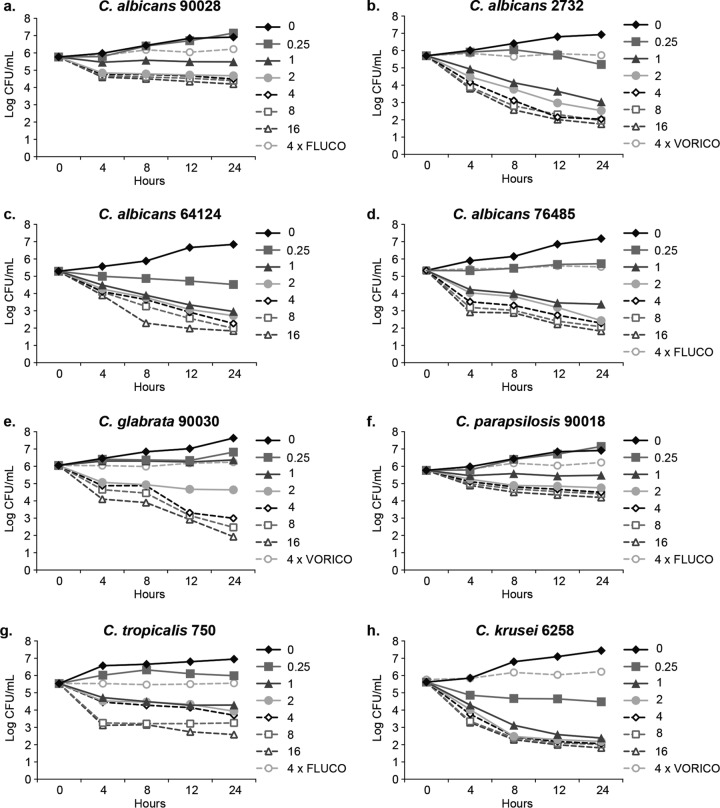
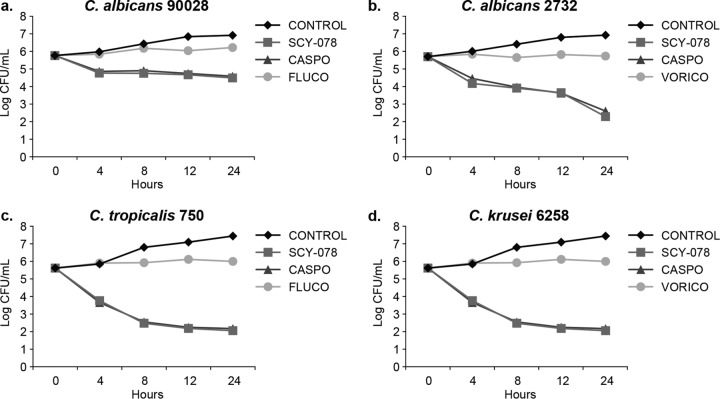
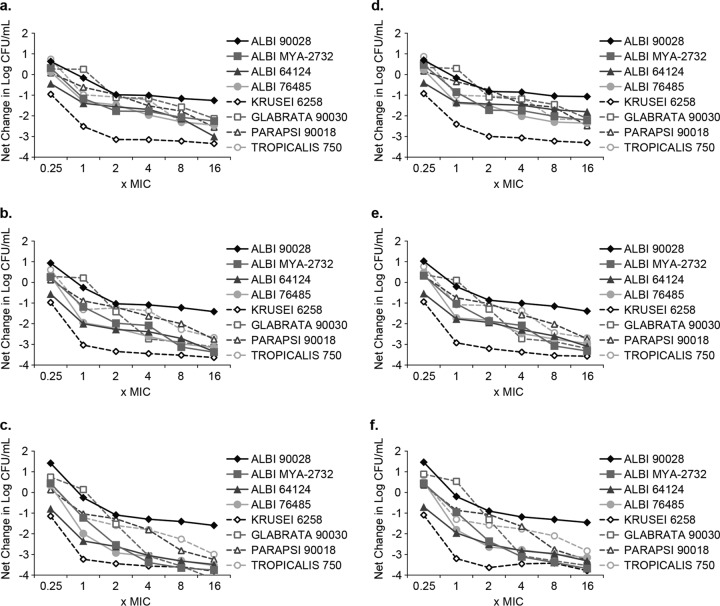
SCY-078 is an orally bioavailable ß-1,3-glucan synthesis inhibitor (GSI) and the first-in-class of structurally novel triterpene antifungals in clinical development for treating candidemia and invasive candidiasis. In vitro susceptibilities by broth microdilution, antifungal carryover, and time-kill dynamics were determined for three reference (ATCC) strains ( Candida albicans 90028, Candida parapsilosis 90018, and Candida tropicalis 750), a quality-control (QC) strain ( Candida krusei 6258), and four other strains ( C. albicans MYA-2732, 64124, and 76485 and Candida glabrata 90030). Caspofungin (CASP), fluconazole (FLC), and voriconazole (VRC) were comparators. For time-kill experiments, SCY-078 and CASP were evaluated at 0.25, 1, 2, 4, 8, and 16 times the MIC 80 , and FLU and VRC were evaluated at 4× MIC 80 . The time to reach 50%, 90%, and 99.9% reduction in the number of CFUs from the starting inoculum was determined. Net change in the number of CFU per milliliter was used to determine 50% and 90% effective concentrations and maximum effect (EC 50 , EC 90 , and E max , respectively). The SCY-078 MIC range was between 0.0625 and 1 μg/ml and generally similar to that of CASP. Antifungal carryover was not observed for SCY-078. SCY-078 was fungicidal against seven isolates at ≥4× MIC (kill of ≥3 log 10 ) and achieved a 1.7-log 10 reduction in CFU count/milliliter against C. albicans 90028. CASP behaved similarly against each isolate and achieved a 1.5-log 10 reduction in the number of CFU/milliliter against C. albicans 90028. Reductions of 50% in CFU count/milliliter were achieved rapidly (1 to 2.8 h); fungicidal endpoints were reached at 12.1 to 21.8 h at ≥4× MIC. EC 90 was reached at ∼5× MIC at each time point to 24 h. The EC 50 and EC 90 values were generally similar (8 to 24 h). Time-kill behavior of CASP was similar to that of SCY-078. FLC and VRC were fungistatic. Overall, SCY-078 has primarily fungicidal activity against Candida spp. and behaved comparably to CASP.
Overview
The claims and statistics of this paper haven’t been checked yet.
Free: it reads the open-access text and checks the first 5 claims that cite a source we can check. Create a free account to check every claim.
Integrity signals
Registry
Cites
Statistics
Figures
Verification
Claims the paper makes
The claims and statistics of this paper haven’t been checked yet.
Free: it reads the open-access text and checks the first 5 claims that cite a source we can check. Create a free account to check every claim.
Claims other papers make about this one
Each is checked against this paper’s own text: does it say what the citing paper says it does?
The cited source says what the claim attributes to it.
In the citing paper
“In time-to-kill experiments, ibrexafungerp showed mainly fungicidal activity against Candida albicans and non-albicans isolates (Scorneaux et al., 2017).”
From Fungal Cell Wall: Emerging Antifungals and Drug Resistance. (2019) · cites this paper as Scorneaux et al., 2017
Self-check
Percentages, sums and reported differences re-computed from the paper’s own numbers.
The self-check needs the paper’s full text.
Citations
Cites
Antibiotic resistance threats in the United States, 2019
(U.S.), C. F. D. C. A. P. (2019) · doi:10.15620/cdc:82532 · Cited by 5,782
Antifungal drug resistance: mechanisms, epidemiology, and consequences for treatment
Pfaller, M. A. (2012) · The American Journal of Medicine · doi:10.1016/j.amjmed.2011.11.001 · Cited by 903
Nosocomial fungal infections: epidemiology, diagnosis, and treatment
Perlroth, J., Choi, B., & Spellberg, B. (2007) · Medical Mycology · doi:10.1080/13693780701218689 · Cited by 738 · cited 2×
“, amphotericin B) are associated with high rates of toxicity and side effects, and drug-drug interactions are a major disadvantage of the azoles (1, 4).”
BackgroundResultEchinocandin resistance: an emerging clinical problem?
Arendrup, M. C., & Perlin, D. S. (2014) · Current Opinion in Infectious Diseases · doi:10.1097/qco.0000000000000111 · Cited by 299 · cited 1×
“Candida resistance to echinocandins has emerged over recent years and is most commonly associated with Candida glabrata, with resistance rates of 10% at selected institutions (7).”
BackgroundPatients at High Risk of Invasive Fungal Infections: When and How to Treat
Rüping, M. J. G. T., Vehreschild, J. J., & Cornely, O. A. (2008) · Drugs · doi:10.2165/00003495-200868140-00002 · Cited by 253
Guery, B. P., Arendrup, M. C., Auzinger, G., Azoulay, É., Borges Sá, M., Johnson, E. M., Müller, E., Putensen, C., Rotstein, C., Sganga, G., et al. (2009) · Intensive Care Medicine · doi:10.1007/s00134-008-1338-7 · Cited by 173
In vitro pharmacodynamic properties of MK-0991 determined by time-kill methods
Ernst, E. J., Klepser, M. E., Ernst, M. E., Messer, S. A., & Pfaller, M. A. (1999) · Diagnostic Microbiology and Infectious Disease · doi:10.1016/s0732-8893(98)00130-8 · Cited by 158
Ernst, E. J., Roling, E. E., Petzold, C. R., Keele, D. J., & Klepser, M. E. (2002) · Antimicrobial Agents and Chemotherapy · doi:10.1128/aac.46.12.3846-3853.2002 · Cited by 157
Jiménez-Ortigosa, C., Paderu, P., Motyl, M. R., & Perlin, D. S. (2014) · Antimicrobial Agents and Chemotherapy · doi:10.1128/aac.02145-13 · Cited by 122
Pfaller, M. A., Messer, S. A., & Coffmann, S. (1995) · Journal of Clinical Microbiology · doi:10.1128/jcm.33.5.1094-1097.1995 · Cited by 109
Research works printed but not linked: 2
- CLSI. 2008 Reference method for broth dilution antifungal susceptibility testing of yeasts; approved standard, 3rd ed CLSI document M27-A3. Clinical and Laboratory Standards Institute, Wayne, PA.
- CLSI. 2012 Reference method for broth dilution antifungal susceptibility testing of yeasts; fourth informational supplement. CLSI document M27-S4. Clinical and Laboratory Standards Institute, Wayne, PA.
Cited by
The Fungal Cell Wall: Candida, Cryptococcus, and Aspergillus Species
Garcia-Rubio, R., de Oliveira, H. C., Rivera, J., & Trevijano-Contador, N. (2020) · Frontiers in Microbiology · doi:10.3389/fmicb.2019.02993 · Cited by 917
Fungal Cell Wall: Emerging Antifungals and Drug Resistance.
Lima, S. L., Colombo, A. L., & de Almeida Junior, J. N. (2019) · Frontiers in Microbiology · doi:10.3389/fmicb.2019.02573 · Cited by 223
Antifungal drugs: What brings the future?
Van Daele, R., Spriet, I., Wauters, J., Maertens, J., Mercier, T., Van Hecke, S., & Brüggemann, R. (2019) · Medical Mycology · doi:10.1093/mmy/myz012 · Cited by 223
Update on Candida krusei , a potential multidrug-resistant pathogen
Jamiu, A. T., Albertyn, J., Sebolai, O. M., & Pohl, C. H. (2020) · Medical Mycology · doi:10.1093/mmy/myaa031 · Cited by 213
Candida auris Pan-Drug-Resistant to Four Classes of Antifungal Agents
Jacobs, S. E., Jacobs, J. L., Dennis, E. K., Taimur, S., Rana, M., Patel, D., Gitman, M., Patel, G., Schaefer, S., Iyer, K., et al. (2022) · Antimicrobial Agents and Chemotherapy · doi:10.1128/aac.00053-22 · Cited by 190
Hoenigl, M., Arastehfar, A. A., Arendrup, M. C., Brüggemann, R. J. M., Carvalho, A., Chiller, T. M., Chen, W., Egger, M., Feys, S., Gangneux, J., et al. (2024) · Clinical Microbiology Reviews · doi:10.1128/cmr.00074-23 · Cited by 187
Novel Agents and Drug Targets to Meet the Challenges of Resistant Fungi
McCarthy, M. W., Kontoyiannis, D. P., Cornely, O. A., Perfect, J. R., & Walsh, T. J. (2017) · The Journal of Infectious Diseases · doi:10.1093/infdis/jix130 · Cited by 169
A comprehensive overview of the medicinal chemistry of antifungal drugs: perspectives and promise
Howard, K. C., Dennis, E. K., Watt, D. S., & Garneau-Tsodikova, S. (2020) · Chemical Society Reviews · doi:10.1039/c9cs00556k · Cited by 140
Van Dijck, P., Sjollema, J., Camue, B. P. A., Lagrou, K., Berman, J., d’Enfert, C., Andes, D. R., Arendrup, M. C., Brakhage, A. A., Calderone, R., et al. (2018) · Microbial Cell · doi:10.15698/mic2018.07.638 · Cited by 129
Self-citationEmerging New Targets for the Treatment of Resistant Fungal Infections
Liu, N., Tu, J., Dong, G., Wang, Y., & Sheng, C. (2018) · Journal of Medicinal Chemistry · doi:10.1021/acs.jmedchem.7b01413 · Cited by 139
Ibrexafungerp: A First-in-Class Oral Triterpenoid Glucan Synthase Inhibitor
Jallow, S., & Govender, N. P. (2021) · Journal of Fungi · doi:10.3390/jof7030163 · Cited by 129
Review on Current Status of Echinocandins Use
Mroczyńska, M., & Brillowska‐Dąbrowska, A. (2020) · Antibiotics · doi:10.3390/antibiotics9050227 · Cited by 131
Antifungal Compounds against Candida Infections from Traditional Chinese Medicine
Liu, X., Ma, Z., Zhang, J., & Yang, L. (2017) · BioMed Research International · doi:10.1155/2017/4614183 · Cited by 91
Ghannoum, M., Arendrup, M. C., Chaturvedi, V. P., Lockhart, S. R., McCormick, T. S., Chaturvedi, S., Berkow, E. L., Juneja, D., Tarai, B., Azie, N., et al. (2020) · Antibiotics · doi:10.3390/antibiotics9090539 · Cited by 90
Self-citationIbrexafungerp: A novel oral glucan synthase inhibitor
Davis, M. R., Donnelley, M. A., & Thompson, G. R. (2020) · Medical Mycology · doi:10.1093/mmy/myz083 · Cited by 91
Colombian Essential Oil of Ruta graveolens against Nosocomial Antifungal Resistant Candida Strains
Donadu, M. G., Peralta-Ruiz, Y. Y., Usai, D., Maggio, F., Molina-Hernández, J. B., Rizzo, D., Bussu, F., Rubino, S., Zanetti, S., Paparella, A., et al. (2021) · Journal of Fungi · doi:10.3390/jof7050383 · Cited by 91
Rossatto, F. C. P., Tharmalingam, N., Escobar, I. E., d’Azevedo, P. A., Zimmer, K. R., & Mylonakis, E. E. (2021) · Journal of Fungi · doi:10.3390/jof7090763 · Cited by 89
Spec, A., Pullman, J., Thompson, G. R., Powderly, W. G., Tobin, E. H., Vazquez, J., Wring, S. A., Angulo, D., Helou, S., Pappas, P. G., et al. (2019) · Journal of Antimicrobial Chemotherapy · doi:10.1093/jac/dkz277 · Cited by 88
Self-citationAntifungal Agents in the 21st Century: Advances, Challenges, and Future Perspectives
Branda, F., Petrosillo, N., Ceccarelli, G., Giovanetti, M., VITO, A. D., Madeddu, G., Scarpa, F., & Ciccozzi, M. (2025) · Infectious Disease Reports · doi:10.3390/idr17040091 · Cited by 86
Schwebke, J. R., Sobel, R., Gersten, J. K., Sussman, S. A., Lederman, S. N., Jacobs, M. A., Chappell, B. T., Weinstein, D. L., Moffett, A. H., Azie, N. E., et al. (2022) · Clinical Infectious Diseases · doi:10.1093/cid/ciab750 · Cited by 82
Self-citationNovel antifungal agents in clinical trials
Jacobs, S. E., Zagaliotis, P., & Walsh, T. J. (2021) · F1000Research · doi:10.12688/f1000research.28327.1 · Cited by 83
Mambro, T. D., Guerriero, I., Aurisicchio, L., Magnani, M., & Marra, E. (2019) · Frontiers in Pharmacology · doi:10.3389/fphar.2019.00080 · Cited by 66
Larkin, E. L., Long, L., Isham, N., Borroto-Esoda, K., Barat, S., Angulo, D., Wring, S., & Ghannoum, M. (2019) · Antimicrobial Agents and Chemotherapy · doi:10.1128/aac.02611-18 · Cited by 52
Self-citationOur current clinical understanding of Candida biofilms: where are we two decades on?
Ramage, G., Borghi, E., Rodrigues, C. F., Kean, R., Williams, C., & Lopez-Ribot, J. L. (2023) · Apmis · doi:10.1111/apm.13310 · Cited by 51
Wring, S., Borroto-Esoda, K., Solon, E., & Angulo, D. (2019) · Antimicrobial Agents and Chemotherapy · doi:10.1128/aac.02119-18 · Cited by 45
Self-citationWring, S., Murphy, G., Atiee, G., Corr, C., Hyman, M., Willett, M., & Angulo, D. (2019) · Clinical Pharmacology in Drug Development · doi:10.1002/cpdd.588 · Cited by 45
Self-citationOral Ibrexafungerp: An Investigational Agent for the Treatment of Vulvovaginal Candidiasis
Azie, N., Angulo, D., Dehn, B., & Sobel, J. D. (2020) · Expert Opinion on Investigational Drugs · doi:10.1080/13543784.2020.1791820 · Cited by 46
Self-citationStanford, F. A., & Voigt, K. (2020) · Genes · doi:10.3390/genes11111296 · Cited by 47
Quindós, G., Miranda-Cadena, K., San-Millán, R., Borroto–Esoda, K., Cantón, E., Linares-Sicilia, M. J., Hamprecht, A. G., Montesinos, I., Tortorano, A. M., Prigitano, A., et al. (2022) · Frontiers in Cellular and Infection Microbiology · doi:10.3389/fcimb.2022.906563 · Cited by 46
Self-citationIbrexafungerp: A narrative overview
Ayoubi, L. W. E., Allaw, F., Moussa, E., & Kanj, S. S. (2024) · Current Research in Microbial Sciences · doi:10.1016/j.crmicr.2024.100245 · Cited by 41
Niño‐Vega, G. A., Padró-Villegas, L., & López-Romero, E. (2024) · Journal of Fungi · doi:10.3390/jof10120871 · Cited by 40
de Oliveira, J. S., Pereira, V. S., Castelo‐Branco, D. D. S. C. M., Cordeiro, R. D. A., Sidrim, J. J. C., Brilhante, R. S. N., & Rocha, M. F. G. (2020) · Canadian Journal of Microbiology · doi:10.1139/cjm-2019-0531 · Cited by 39
Eldesouky, H. E., Lanman, N. A., Hazbun, T. R., & Seleem, M. N. (2020) · Virulence · doi:10.1080/21505594.2020.1838741 · Cited by 37
Current and promising pharmacotherapeutic options for candidiasis
Scorzoni, L., Fuchs, B. B., Junqueira, J. C., & Mylonakis, E. E. (2021) · Expert Opinion on Pharmacotherapy · doi:10.1080/14656566.2021.1873951 · Cited by 36
How urgent is the need for new antifungals?
Stewart, A. G., & Paterson, D. L. (2021) · Expert Opinion on Pharmacotherapy · doi:10.1080/14656566.2021.1935868 · Cited by 36
dos Reis, T. F., Horta, M. A. C., Colabardini, A. C., Fernandes, C. M., Silva, L. P., Bastos, R. W., Fonseca, M. V. D. L., Wang, F., Martins, C., Rodrigues, M. L., et al. (2021) · mBio · doi:10.1128/mbio.01458-21 · Cited by 34
Mijatović, S., Antić‐Stanković, J., Čalovski, I. Č., Dubljanin, E., Pljevljakušić, D. S., Bigović, D., & Džamić, A. (2022) · Molecules · doi:10.3390/molecules27196300 · Cited by 34
Iontophoresis enhances voriconazole antifungal potency and corneal penetration
Gelfuso, G. M., Ferreira‐Nunes, R., Dalmolin, L. F., Ré, A. C. D. S., dos Santos, G. A., de Sá, F. A. P., Filho, M. C., Alonso, A., Mendanha, S. A., dos Anjos, J. L. V., et al. (2019) · International Journal of Pharmaceutics · doi:10.1016/j.ijpharm.2019.118991 · Cited by 33
Drugs currently under investigation for the treatment of invasive candidiasis
McCarthy, M., & Walsh, T. (2017) · Expert Opinion on Investigational Drugs · doi:10.1080/13543784.2017.1341488 · Cited by 27
Synthetic Approaches to the New Drugs Approved During 2021
McInturff, E. L., France, S. P., Leverett, C. A., Flick, A. C., Lindsey, E. A., Berritt, S., Carney, D. W., DeForest, J. C., Ding, H. X., Fink, S. J., et al. (2023) · Journal of Medicinal Chemistry · doi:10.1021/acs.jmedchem.3c00501 · Cited by 31
Lee, A., Prideaux, B., Zimmerman, M., Carter, C., Barat, S., Angulo, D., Dartois, V., Perlin, D. S., & Zhao, Y. (2020) · Antimicrobial Agents and Chemotherapy · doi:10.1128/aac.02268-19 · Cited by 26
Self-citationMelo, W. O. D. S., Júnior, E. C. F., Freire, J. C. P., Costa, B. P., Lira, A. B., Freires, I. A., Cavalcanti, Y. W., Lopes, W. S., Tavares, J. F., Pêssoa, H. D. L. F., et al. (2021) · Archives of Oral Biology · doi:10.1016/j.archoralbio.2020.104994 · Cited by 29
Silva, L. N., de Mello, T. P., Ramos, L. S., Branquinha, M. H., & dos Santos, A. L. S. (2019) · Current Topics in Medicinal Chemistry · doi:10.2174/1568026619666191025152412 · Cited by 29
Oral Ibrexafungerp for Vulvovaginal Candidiasis Treatment: An Analysis of VANISH 303 and VANISH 306
Goje, O., Sobel, R., Nyirjesy, P., Goldstein, S. R., Spitzer, M., Faught, B. M., Larson, S. B., King, T. R., Azie, N. E., Angulo, D. A., et al. (2022) · Journal of Women s Health · doi:10.1089/jwh.2022.0132 · Cited by 28
Self-citationFungicidal Activity of a Safe 1,3,4-Oxadiazole Derivative Against Candida albicans
Faria, D. R., Melo, R. C., Arita, G. S., Sakita, K. M., Rodrigues-Vendramini, F. A. V., Capoci, I. R. G., Becker, T. C. A., Mendonca, P., Felipe, M. S. S., Svidzinski, T. I. E., et al. (2021) · Pathogens · doi:10.3390/pathogens10030314 · Cited by 28
Mahmoud, D. E., Faraag, A. H. I., & Abu El-Wafa, W. M. (2021) · World Journal of Microbiology and Biotechnology · doi:10.1007/s11274-021-03158-4 · Cited by 26
Ibrexafungerp: A new triterpenoid antifungal
Sucher, A. J., Thai, A., Tran, C., Mantena, N., Noronha, A., & Chahine, E. B. (2022) · American Journal of Health-System Pharmacy · doi:10.1093/ajhp/zxac256 · Cited by 26
Khan, F., Yaqoob, S., Ali, S., Tanveer, N., Wang, Y., Ashraf, S., Hasan, K. A., Khalifa, S. A. M., Shou, Q., Ul‐Haq, Z., et al. (2022) · Molecules · doi:10.3390/molecules28010212 · Cited by 26
Emerging Diagnostics and Therapeutics for Invasive Fungal Infections
Friedman, D. Z. P., & Schwartz, I. S. (2023) · Infectious Disease Clinics of North America · doi:10.1016/j.idc.2023.05.001 · Cited by 26
Sobel, J. D., Borroto–Esoda, K., Azie, N. E., & Angulo, D. A. (2021) · Antimicrobial Agents and Chemotherapy · doi:10.1128/aac.00562-21 · Cited by 26
Self-citationChu, S., Long, L. A., Sherif, R., McCormick, T. S., Borroto–Esoda, K., Barat, S., & Ghannoum, M. A. (2020) · Antimicrobial Agents and Chemotherapy · doi:10.1128/aac.01988-20 · Cited by 24
Self-citationCandidemia in the cancer patient: diagnosis, treatment, and future directions
McCarthy, M. W., & Walsh, T. J. (2018) · Expert Review of Anti-infective Therapy · doi:10.1080/14787210.2018.1536546 · Cited by 24
New Antifungals for Vulvovaginal Candidiasis: What Is Their Role?
Sobel, J. D. (2023) · Clinical Infectious Diseases · doi:10.1093/cid/ciad002 · Cited by 23
Lu, R.-Y., Ni, T., Wu, J., Yan, L., Lv, Q., Li, L., Zhang, D., & Jiang, Y. (2019) · Antimicrobial Agents and Chemotherapy · doi:10.1128/aac.01628-19 · Cited by 22
Espinel‐Ingroff, A., & Wiederhold, N. P. (2024) · Journal of Fungi · doi:10.3390/jof10050362 · Cited by 19
Goje, O., Azie, N. E., Angulo, D. A., Sobel, R., Nyirjesy, P., & Sobel, J. D. (2025) · American Journal of Obstetrics and Gynecology · doi:10.1016/j.ajog.2025.07.040 · Cited by 18
Self-citationResveratrol-coated gold nanorods produced by green synthesis with activity against Candida albicans
do Carmo, P. H. F., Lage, A. C. P., Garcia, M. T., da Silva, N. S., Santos, D. A., Mylonakis, E. E., & Junqueira, J. C. (2024) · Virulence · doi:10.1080/21505594.2024.2416550 · Cited by 16
An evaluation of ibrexafungerp for the treatment of invasive candidiasis: the evidence to date
Colombo, R. E., & Vázquez, J. A. (2021) · Expert Opinion on Pharmacotherapy · doi:10.1080/14656566.2021.1890026 · Cited by 16
Ellagic Acid Potentiates the Inhibitory Effects of Fluconazole Against Candida albicans
Mendes, A. G. G., Campos, C. D. L., Filho, J. L. P., Pereira, A. P. A., Reis, G. S. A., Araújo, Á. W. M. D. S., Monteiro, P. D. M., Vidal, F. C. B., Monteiro, S. G., Figueiredo, I. F. D. S., et al. (2024) · Antibiotics · doi:10.3390/antibiotics13121174 · Cited by 16
Martínez, O. I. C., Angulo-Ortíz, A., & Patiño, G. S. (2022) · Heliyon · doi:10.1016/j.heliyon.2022.e11110 · Cited by 12
Small molecule II-6s synergises with fluconazole against Candida albicans
Yang, S., Peng, X., Ren, B., Luo, Y., & Xu, X. (2023) · International Journal of Antimicrobial Agents · doi:10.1016/j.ijantimicag.2023.106820 · Cited by 11
Rafiq, A., Zahid, K., Qadir, A. S., KHAN, M. N., Khalid, Z., & Ali, N. (2020) · Journal of Applied Microbiology · doi:10.1111/jam.14944 · Cited by 10
Chu, S., Long, L. A., McCormick, T. S., Borroto–Esoda, K., Barat, S., & Ghannoum, M. A. (2020) · Antimicrobial Agents and Chemotherapy · doi:10.1128/aac.01989-20 · Cited by 9
Self-citationNursidika, P., Julianti, E., & Kurniati, N. F. (2025) · Narra J · doi:10.52225/narra.v5i1.1714 · Cited by 7
Transcriptional Reprogramming of Candida tropicalis in Response to Isoespintanol Treatment
Martínez, O. I. C., Angulo-Ortíz, A., Patiño, G. S., Aviña‐Padilla, K., Velasco-Pareja, M. C., & Yasnot, M. F. (2023) · Journal of Fungi · doi:10.3390/jof9121199 · Cited by 6
Antifungal activity of medicinal and edible homologous polysaccharides and the mechanism
Fan, P., Yuan, J. J., Liu, Y., Yuan, H.-E., & Zhuang, Z. (2025) · International Journal of Biological Macromolecules · doi:10.1016/j.ijbiomac.2025.147855 · Cited by 5
Bahmaee, F., Khodavandi, P., Khodavandi, A., & Alizadeh, F. (2025) · Inorganic Chemistry Communications · doi:10.1016/j.inoche.2025.115093 · Cited by 4
do Carmo, P. H. F., Costa, M. F., Lage, A. C. P., Garcia, M. T., & Junqueira, J. C. (2025) · Biofouling · doi:10.1080/08927014.2025.2504026 · Cited by 4
Seyedmousavi, S. (2021) · Wiley eBooks · doi:10.1002/0471266949.bmc295 · Cited by 4
Khodavandi, P., Soogh, M. M., Alizadeh, F., Khodavandi, A., & Nouripour‐Sisakht, S. (2024) · Molecular Biology Reports · doi:10.1007/s11033-024-10054-1 · Cited by 3
Tagirova, L. I., Farvazova, K. R., Valeeva, D. R., Orlova, M. D., Gubaidullin, I., Tulyabaeva, A. M., Abdulmanova, A. R., Tryapko, R. V., Shelyginsky, D. A., Khanafieva, A. R., et al. (2024) · Obstetrics Gynecology and Reproduction · doi:10.17749/2313-7347/ob.gyn.rep.2024.500 · Cited by 2
Novel Antifungals for the Treatment of Vulvovaginal Candidiasis: Where Are We?
Gamal, A., authorship, T. A. H. C. E. T. T. W. A. S. F., Kadry, A., authorship, T. A. H. C. E. T. T. W. A. S. F., Elshaer, M. Y. S., & Ghannoum, M. A. (2022) · touchREVIEWS in Infectious Diseases · doi:10.17925/id.2022.1.1.16 · Cited by 2
Self-citationClinical Management of Fungal Biofilm Infections
Ramage, G., Short, B., McKloud, E., Alshanta, O. A., Butcher, M. C., McLean, W., & Brown, J. L. (2022) · Springer series on biofilms · doi:10.1007/978-3-031-10992-8_17 · Cited by 2
Drug Release, Susceptibility and Time-Kill Assays to Develop Novel Anti-Infective Drugs
Esentürk‐Güzel, İ., Durgun, M. E., Özsoy, Y., & Güngör, S. (2022) · Elsevier eBooks · doi:10.1016/b978-0-12-818731-9.00143-9 · Cited by 2
Jabrodini, A., Zareshahrabadi, Z., Khorram, M., Asadian, F., Jafari, M., Iraji, A., & Zomorodian, K. (2025) · International Journal of Biological Macromolecules · doi:10.1016/j.ijbiomac.2025.149362 · Cited by 1
Antifungal and Antivirulence Activity of Alizarin against Candida dubliniensis
Arumugam, G., Muniasamy, S., de Lima, P. M. N., Barcick, U., Zelanis, A., Barros, B. C. S. C., Pedroso, L. L. C., Borges, B. M., Preite, N. W., Loures, F. V., et al. (2026) · ACS Infectious Diseases · doi:10.1021/acsinfecdis.6c00149 · Cited by 1
Morelo, M. J., Firacative, C., García‐Effrón, G., Gómez, B. L., & Ceballos-Garzón, A. (2026) · International Journal of Antimicrobial Agents · doi:10.1016/j.ijantimicag.2026.107870 · Cited by 1
Baillod, A., Clarhaut, J. A., Moreau, J., Morin, L., Keomany, L., Prouvensier, L., Buyck, J. M., Marchand, S., & Brunet, K. (2026) · Scientific Reports · doi:10.1038/s41598-026-63581-1 · Cited by 1
Hope in the Treatment of Candida Vaginitis: Ibrexafungerp
Karakoyun, A. S. (2021) · Türk Mikrobiyoloji Cemiyeti Dergisi · doi:10.5222/tmcd.2021.71602 · Cited by 1
Brown, L. K., Stone, N. R. H., & Coughlan, C. H. (2021) · Elsevier eBooks · doi:10.1016/b978-0-12-820472-6.00165-1 · Cited by 1
Treating recurrent vulvovaginal candidiasis
Butler, S. K. (2022) · OBG Management · doi:10.12788/obgm.0238 · Cited by 1
Cotner, S. E., & Dawson, K. L. (2019) · Current treatment options in infectious diseases/Current treatment options in infectious disease · doi:10.1007/s40506-019-00208-2
NOVEL SMALL MOLECULE ANTIFUNGALS FOR INVASIVE FUNGAL INFECTIONS
Dennis, E. K. (2020) · UKnowledge (University of Kentucky) · doi:10.13023/etd.2020.506
John, C. N. (2019) · University of the Western Cape Electronic Theses and Dissertations Repository (University of the Western Cape)
da Costa, P. C. T., Santos, T. L. B., Ramos, J. F., Santos, J. A. M., de Medeiros, F. D., Freitas, J. C. R., & de Oliveira, W. A. (2023) · Brazilian Journal of Pharmaceutical Sciences · doi:10.1590/s2175-97902023e22045
Silva, G., Queila da Silva, R. O. S. A., Folly, M. L. D. C., de Freitas, G. J. C., Santos, D. A., Lang, K. L., & Ferreira, G. F. (2025) · BIOFARM - Journal of Biology & Pharmacy and Agricultural Management · doi:10.18391/biofarm.v19i1.4097
Advances in the Process Chemistry of Semisynthetic Antibiotics Based on Complex Natural Products★
Wang, H.-N., Wu, H., Zhao, Y., Gu, Y., & Chen, G. (2025) · Chinese Journal of Organic Chemistry · doi:10.6023/cjoc202506002
Mahmoudi, S. (2022) · F1000Research · doi:10.5256/f1000research.119851.r119566
Gerwen, O. T. V., KISSINGER, P. J., & Muzny, C. A. (2026) · Elsevier eBooks · doi:10.1016/b978-0-443-45863-7.00042-1
Argote-Vega, F. E., Ospina, J. D., Suárez-Montenegro, Z. J., Arteaga-Cabrera, E., Chaves‐López, C., & Pérez‐Álvarez, J. Á. (2026) · Foods · doi:10.3390/foods15132340
Antifungal Resistance and Development of Fungicidal Agents
Rahate, K., Dalvi, A., Chakraborty, S., & Idicula‐Thomas, S. (2026) · Springer eBooks · doi:10.1007/978-981-95-2300-9_32-1
Ye, Q., Wan, J., Zhang, Y., Wang, J., Lv, X., Wang, Q., Chen, Q., & Liang, Q. (2026) · Pesticide Biochemistry and Physiology · doi:10.1016/j.pestbp.2026.107343
BindingDB Entry 50002345: Emerging New Targets for the Treatment of Resistant Fungal Infections.
BindingDB (2020) · UC San Diego · doi:10.7270/q26112x4
Metadata
- Authors
- Scorneaux, B., Angulo, D., Borroto-Esoda, K., Ghannoum, M., Peel, M., & Wring, S.
- Affiliations
- Scynexis (United States) (US)
- Scynexis, Inc., Jersey City, New Jersey, USA
- Case Western Reserve University (US)
- Corresponding author
- Wring, Stephen
- Venue
- Antimicrobial Agents and Chemotherapy
- Publisher
- American Society for Microbiology
- Published
- 2017-03
- Volume
- 61
- Issue
- 3
- ISSN
- 0066-4804 (ISSN-L)
- 1098-6596
- PMC
- PMC5328566
- OpenAlex
- W2568587140
- Semantic Scholar
- 48bc13fe1616c3598da8afe3b767f2ee6f5a4bb4
- Cited by
- 88
- References
- 19
- Citations by year
- 2026: 6 · 2025: 8 · 2024: 8 · 2023: 7 · 2022: 12 · 2021: 16 · 2020: 12 · 2019: 11 · 2018: 5 · 2017: 3
- FWCI
- 6.74
- Type
- journal article
- Language
- en
- Open access
- hybrid
- doi.org
- Licence
- cc-by
- creativecommons.org/licenses/by/4.0/ (vor)
- journals.asm.org/non-commercial-tdm-license (tdm)
- Locations
- Antimicrobial Agents and Chemotherapy (publishedVersion, cc-by)
- PubMed Central (publishedVersion, cc-by)
- PubMed (publishedVersion)
- Funders
- Shandong Academy of Sciences
- Topics
- Health Sciences › Medicine › Infectious Diseases › Antifungal resistance and susceptibility
- Life Sciences › Agricultural and Biological Sciences › Plant Science › Fungal Plant Pathogen Control
- Life Sciences › Agricultural and Biological Sciences › Food Science › Essential Oils and Antimicrobial Activity
- Keywords
- Candida albicans, Candida parapsilosis, Candida tropicalis, Candida krusei, Candida glabrata, candidemia, invasive candidiasis, time-kill kinetics, fungicidal activity, caspofungin, fluconazole, voriconazole, antifungal susceptibility, oral bioavailability
- MeSH terms
- Caspofungin, Antifungal Agents, Biological Availability, Candida, Candida albicans, Candidiasis, Dose-Response Relationship, Drug, Glycosides, Humans, Microbial Sensitivity Tests, Triterpenes, Models, Statistical, Fluconazole, Candida tropicalis, Echinocandins, Lipopeptides, Voriconazole
About these checks
Registry, retraction, Cites and statistics results are computed, not judged, with one exception: a printed reference that no index lists is read once by a model before it counts as a citation error. Claims are extracted by a model and kept only when their quote appears verbatim in the text; each cited source is then checked, with a model’s help, for whether it says what the claim relies on. Those verdicts can be wrong — read the claim’s quote and the cited source before relying on one.
Statistics and arithmetic are recomputed, not judged.
Confidence bands are shown only for fields calibrated on our annotated test set. None is calibrated yet, so no band is shown.
What counts as a claim ›How we measure confidence ›How we check this ›
Are you an author, or do you see a problem with this page? Request a review
Data sources
Bibliographic data: Semantic Scholar, OpenAlex, Crossref.
Contains information from the Semantic Scholar Academic Graph Datasets, made available under the ODC Attribution License (ODC-BY 1.0).
Semantic Scholar’s data is described in: Kinney, R., et al. (2023). The Semantic Scholar Open Data Platform. arXiv:2301.10140.
