

The Fungal Pathogen Candida albicans Autoinduces Hyphal Morphogenesis by Raising Extracellular pH
Open accessThe DOI matches its Crossref record; 71 of the 71 references it cites were found in a registry or an index.
Abstract
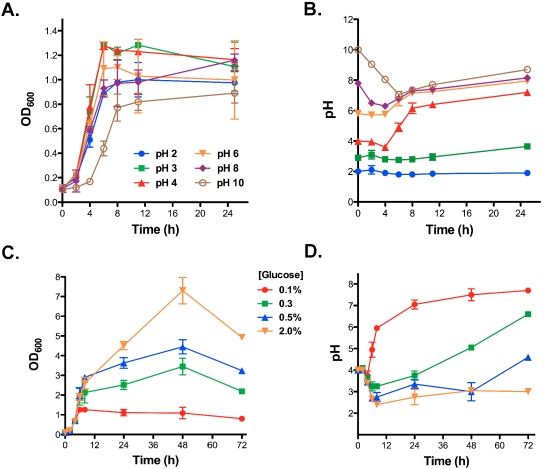
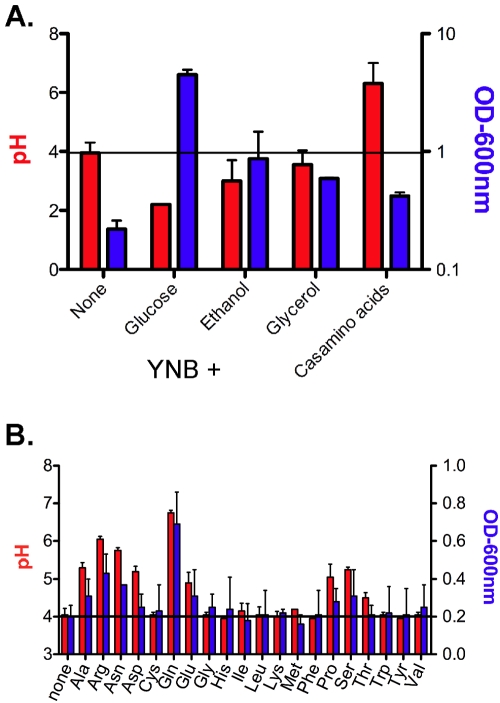
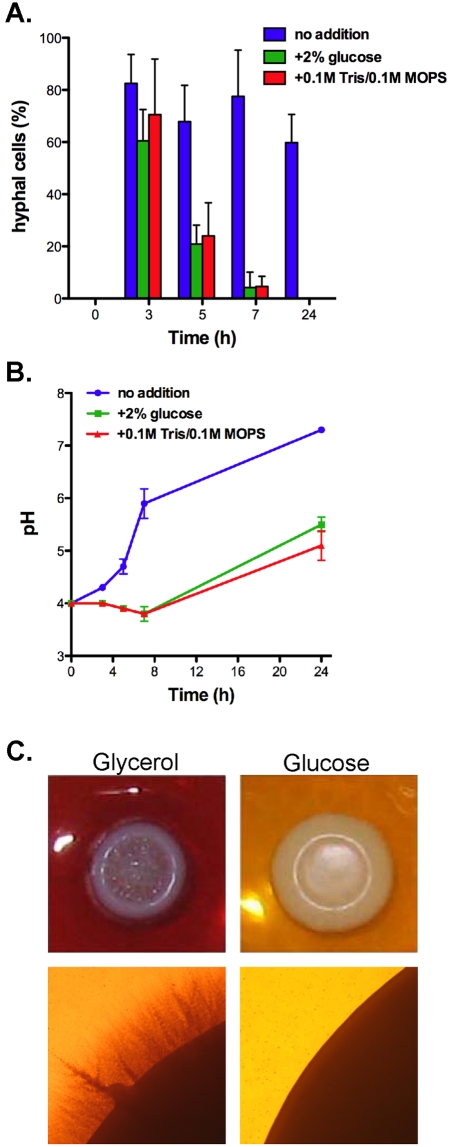
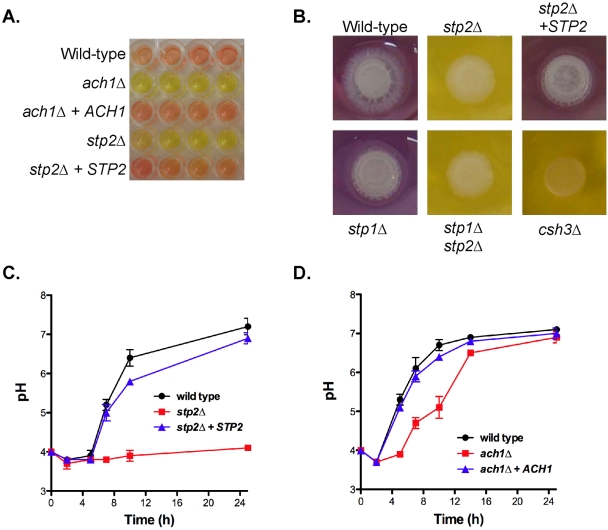
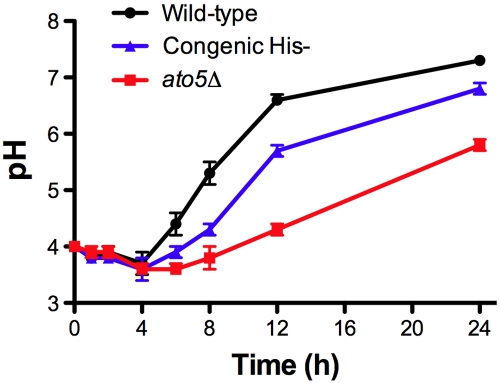
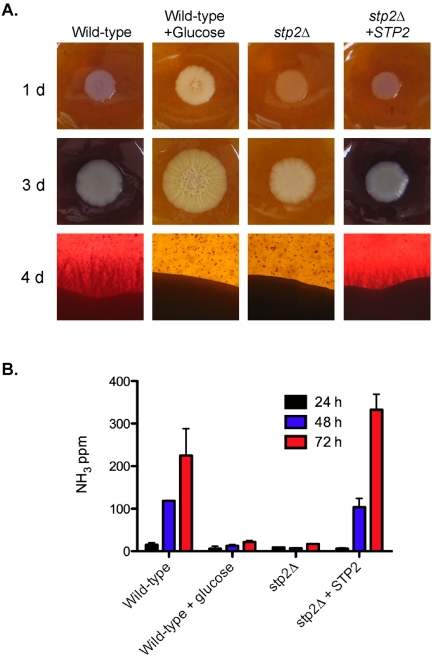
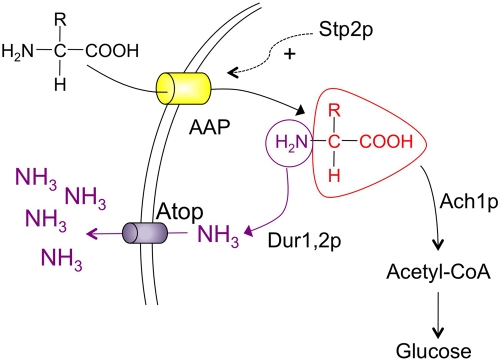
pH homeostasis is critical for all organisms; in the fungal pathogen Candida albicans , pH adaptation is critical for virulence in distinct host niches. We demonstrate that beyond adaptation, C. albicans actively neutralizes the environment from either acidic or alkaline pHs. Under acidic conditions, this species can raise the pH from 4 to >7 in less than 12 h, resulting in autoinduction of the yeast-hyphal transition, a critical virulence trait. Extracellular alkalinization has been reported to occur in several fungal species, but under the specific conditions that we describe, the phenomenon is more rapid than previously observed. Alkalinization is linked to carbon deprivation, as it occurs in glucose-poor media and requires exogenous amino acids. These conditions are similar to those predicted to exist inside phagocytic cells, and we find a strong correlation between the use of amino acids as a cellular carbon source and the degree of alkalinization. Genetic and genomic approaches indicate an emphasis on amino acid uptake and catabolism in alkalinizing cells. Mutations in four genes, STP2 , a transcription factor regulating amino acid permeases, ACH1 (acetyl-coenzyme A [acetyl-CoA] hydrolase), DUR1 , 2 (urea amidolyase), and ATO5 , a putative ammonia transporter, abolish or delay neutralization. The pH changes are the result of the extrusion of ammonia, as observed in other fungi. We propose that nutrient-deprived C. albicans cells catabolize amino acids as a carbon source, excreting the amino nitrogen as ammonia to raise environmental pH and stimulate morphogenesis, thus directly contributing to pathogenesis. IMPORTANCE Candida albicans is the most important fungal pathogen of humans, causing disease at multiple body sites. The ability to switch between multiple morphologies, including a rounded yeast cell and an elongated hyphal cell, is a key virulence trait in this species, as this reversible switch is thought to promote dissemination and tissue invasion in the host. We report here that C. albicans can actively alter the pH of its environment and induce its switch to the hyphal form. The change in pH is caused by the release of ammonia from the cells produced during the breakdown of amino acids. This phenomenon is unprecedented in a human pathogen and may substantially impact host physiology by linking morphogenesis, pH adaptation, carbon metabolism, and interactions with host cells, all of which are critical for the ability of C. albicans to cause disease.
Overview
The claims and statistics of this paper haven’t been checked yet.
Free: it reads the open-access text and checks the first 5 claims that cite a source we can check. Create a free account to check every claim.
Integrity signals
Registry
Cites
Statistics
Figures
Verification
Claims the paper makes
The claims and statistics of this paper haven’t been checked yet.
Free: it reads the open-access text and checks the first 5 claims that cite a source we can check. Create a free account to check every claim.
Claims other papers make about this one
Each is checked against this paper’s own text: does it say what the citing paper says it does?
The source backs part of the claim, not all of it — or backs it for a different population, condition or comparison.
In the citing paper
“amino acids, which are abundant inside macrophages are an important alternative carbon source for the immune evasion of C. albicans [24–28].”
From The F 1 F o -ATP synthase α subunit of Candida albicans induces inflammatory responses by controlling amino acid catabolism (2023) · cites this paper as [27]
Experimental — accuracy not yet measuredThe source backs part of the claim, not all of it — or backs it for a different population, condition or comparison.
In the citing paper
“Phagocytized C. albicans catabolizes amino acids to produce NH3 to neutralize the acidity of phagosomes [26,27], which induces filamentation for macrophage killing and escape [26,29], thus leading to host inflammatory responses [14].”
From The F 1 F o -ATP synthase α subunit of Candida albicans induces inflammatory responses by controlling amino acid catabolism (2023) · cites this paper as [27]
Experimental — accuracy not yet measuredThe source backs part of the claim, not all of it — or backs it for a different population, condition or comparison.
In the citing paper
“Phagocytized C. albicans produces NH3 through amino acid catabolism to neutralize the acidity of phagosomes, thereby inducing filamentation to destroy and escape from macrophages [26,27].”
From The F 1 F o -ATP synthase α subunit of Candida albicans induces inflammatory responses by controlling amino acid catabolism (2023) · cites this paper as [27]
Experimental — accuracy not yet measuredThe source backs part of the claim, not all of it — or backs it for a different population, condition or comparison.
In the citing paper
“C. albicans induces filamentation by neutralizing the acidity of phagosomes through amino acid catabolism [26,27].”
From The F 1 F o -ATP synthase α subunit of Candida albicans induces inflammatory responses by controlling amino acid catabolism (2023) · cites this paper as [27]
Experimental — accuracy not yet measured
Self-check
Percentages, sums and reported differences re-computed from the paper’s own numbers.
The self-check needs the paper’s full text.
Citations
Cites
Cluster analysis and display of genome-wide expression patterns
Eisen, M. B., Spellman, P. T., Brown, P. O., & Botstein, D. (1998) · Proceedings of the National Academy of Sciences · doi:10.1073/pnas.95.25.14863 · Cited by 16,184 · cited 1×
“clustering using the Cluster and TreeView algorithms (66).”
MethodSherman, F. (2002) · Methods in Enzymology · doi:10.1016/s0076-6879(02)50954-x · Cited by 4,121
[1] Getting started with yeast
Sherman, F. (1991) · Methods in Enzymology · doi:10.1016/0076-6879(91)94004-v · Cited by 4,067
Current Protocols in Molecular Biology
(2001) · John Wiley & Sons, Inc. eBooks · doi:10.1002/0471142727 · Cited by 2,398
Nonfilamentous C. albicans Mutants Are Avirulent
Lo, H.-J., Köhler, J. R., DiDomenico, B., Loebenberg, D., Cacciapuoti, A., & Fink, G. R. (1997) · Cell · doi:10.1016/s0092-8674(00)80358-x · Cited by 1,809 · cited 2×
“albicans induces hyphal morphogenesis, a key virulence trait in this species (2, 3).”
BackgroundEvolution of pathogenicity and sexual reproduction in eight Candida genomes
Butler, G., Rasmussen, M. D., Lin, M. F., Santos, M. A. S., Sakthikumar, S., Munro, C. A., Rheinbay, E., Grabherr, M., Forche, A., Reedy, J. L., et al. (2009) · Nature · doi:10.1038/nature08064 · Cited by 1,065 · cited 1×
“parapsilosis) have large Ato families, reminiscent of the expansion of gene families for a number of virulence-related traits, particularly those on the cell surface or secreted, such as secreted aspartyl proteases, lipases, and phospholipases, and GPIanchored cell wall proteins such as the ALS agglutinins (27).”
BackgroundSelf-citationOverview of manual and automated DNA sequencing by the dideoxy chain termination method
CHEN, E., KUANG, W., & LEE, A. (1991) · Methods · doi:10.1016/s1046-2023(05)80158-6 · Cited by 833
The glyoxylate cycle is required for fungal virulence
Lorenz, M. C., & Fink, G. R. (2001) · Nature · doi:10.1038/35083594 · Cited by 745
Self-citationThe SAT1 flipper, an optimized tool for gene disruption in Candida albicans
Reuß, O., Vik, Å., Kolter, R., & Morschhäuser, J. (2004) · Gene · doi:10.1016/j.gene.2004.06.021 · Cited by 742 · cited 3×
“Mutations in ARG1 and ARG3 were generated using the SAT-flipper method, as previously described (61).”
BackgroundMethodInfluentialTranscriptional Response of Candida albicans upon Internalization by Macrophages
Lorenz, M. C., Bender, J. A., & Fink, G. R. (2004) · Eukaryotic Cell · doi:10.1128/ec.3.5.1076-1087.2004 · Cited by 712 · cited 1×
“using an aminoallyl protocol (53) and hybridized to C.”
MethodSelf-citationEaton, K. A., Brooks, C. L., Morgan, D. R., & Krakowka, S. (1991) · Infection and Immunity · doi:10.1128/iai.59.7.2470-2475.1991 · Cited by 691 · cited 1×
“Helicobacter pylori tolerates the highly acidic pH of the stomach by expressing a urease, found in part on the cell surface, that produces ammonia to create microenvironments of more hospitable pH; mutants that lack urease activity are unable to colonize the stomach and are avirulent (16, 17).”
BackgroundSaville, S. P., Lazzell, A. L., Monteagudo, C., & Lopez-Ribot, J. L. (2003) · Eukaryotic Cell · doi:10.1128/ec.2.5.1053-1060.2003 · Cited by 655 · cited 2×
“albicans induces hyphal morphogenesis, a key virulence trait in this species (2, 3).”
BackgroundTilburn, J., Sarkar, S., Widdick, D. A., Espeso, E. A., Orejas, M., Mungroo, J., Peñalva, M. A., & Arst, H. N. (1995) · The EMBO Journal · doi:10.1002/j.1460-2075.1995.tb07056.x · Cited by 644
Biswas, S., Van Dijck, P., & Datta, A. (2007) · Microbiology and Molecular Biology Reviews · doi:10.1128/mmbr.00009-06 · Cited by 516
Critical Role of Bcr1-Dependent Adhesins in C. albicans Biofilm Formation In Vitro and In Vivo
Nobile, C. J., Andes, D. R., Nett, J. E., Smith, F. J., Yue, F., Phan, Q.-T., Edwards, J. E., Filler, S. G., & Mitchell, A. P. (2006) · PLoS Pathogens · doi:10.1371/journal.ppat.0020063 · Cited by 507
Fradin, C., De Groot, P., MacCallum, D., Schaller, M., Klis, F., Odds, F. C., & Hube, B. (2005) · Molecular Microbiology · doi:10.1111/j.1365-2958.2005.04557.x · Cited by 455
Niche-specific regulation of central metabolic pathways in a fungal pathogen
Barelle, C. J., Priest, C. L., MacCallum, D. M., Gow, N. A. R., Odds, F. C., & Brown, A. J. P. (2006) · Cellular Microbiology · doi:10.1111/j.1462-5822.2005.00676.x · Cited by 336
CIp10, an efficient and convenient integrating vector for Candida albicans
Murad, A. M. A., Lee, P. R., Broadbent, I. D., Barelle, C. J., & Brown, A. J. P. (2000) · Yeast · doi:10.1002/1097-0061(20000315)16:4<325::aid-yea538>3.0.co;2-# · Cited by 303
Tsuda, M., Karita, M., Morshed, M. G., Okita, K., & Nakazawa, T. (1994) · Infection and Immunity · doi:10.1128/iai.62.8.3586-3589.1994 · Cited by 295 · cited 1×
“Helicobacter pylori tolerates the highly acidic pH of the stomach by expressing a urease, found in part on the cell surface, that produces ammonia to create microenvironments of more hospitable pH; mutants that lack urease activity are unable to colonize the stomach and are avirulent (16, 17).”
BackgroundKadosh, D., & Johnson, A. D. (2005) · Molecular Biology of the Cell · doi:10.1091/mbc.e05-01-0073 · Cited by 289 · cited 1×
“Initial germ tube growth was observed in all cultures at an early time point (3 h), as has been previously reported following dilution into fresh medium (30), but hyphal induction is maintained only in the alkalinizing culture.”
BackgroundRIM101-Dependent and -Independent Pathways Govern pH Responses in Candida albicans
Davis, D., Wilson, R. B., & Mitchell, A. P. (2000) · Molecular and Cellular Biology · doi:10.1128/mcb.20.3.971-978.2000 · Cited by 285 · cited 3×
“PHR1, induced at neutral pH by Rim101p, is required for bloodstream infections but not during growth at low pH or in the vagina (8, 12, 15).”
BackgroundCandida albicans RIM101 pH Response Pathway Is Required for Host-Pathogen Interactions
Davis, D., Edwards, J. E., Mitchell, A. P., & Ibrahim, A. S. (2000) · Infection and Immunity · doi:10.1128/iai.68.10.5953-5959.2000 · Cited by 274 · cited 2×
“albicans it is required for hyphal induction by neutral pH (8, 11).”
BackgroundPHR1 , a pH-Regulated Gene of Candida albicans , is Required for Morphogenesis
Saporito-Irwin, S. M., Birse, C. E., Sypherd, P. S., & Fonzi, W. A. (1995) · Molecular and Cellular Biology · doi:10.1128/mcb.15.2.601 · Cited by 264 · cited 1×
“Mutants lacking the acid-expressed PHR2 gene are unable to grow in vitro at pHs of 5 and are avirulent in a rodent model of vaginitis, a body site with a low ambient pH, yet remain fully virulent in a bloodstream sepsis model (12, 14).”
BackgroundThe pH of the Host Niche Controls Gene Expression in and Virulence of Candida albicans
De Bernardis, F., Mühlschlegel, F. A., Cassone, A., & Fonzi, W. A. (1998) · Infection and Immunity · doi:10.1128/iai.66.7.3317-3325.1998 · Cited by 258 · cited 3×
“Mutants lacking the acid-expressed PHR2 gene are unable to grow in vitro at pHs of 5 and are avirulent in a rodent model of vaginitis, a body site with a low ambient pH, yet remain fully virulent in a bloodstream sepsis model (12, 14).”
BackgroundA screen for genes required for meiosis and spore formation based on whole-genome expression
Rabitsch, K. P., Tóth, A., Gálová, M., Schleiffer, A., Schaffner, G., Aigner, E., Rupp, C., Penkner, A. M., Moreno-Borchart, A. C., Primig, M., et al. (2001) · Current Biology · doi:10.1016/s0960-9822(01)00274-3 · Cited by 252 · cited 1×
“cerevisiae (46) and have a variety of aliases.”
BackgroundIdentification of novel factors involved in colonization and acid tolerance of Vibrio cholerae
Merrell, D. S., Hava, D. L., & Camilli, A. (2002) · Molecular Microbiology · doi:10.1046/j.1365-2958.2002.02857.x · Cited by 231
Ammonia mediates communication between yeast colonies
Palková, Z., Janderová, B., Gabriel, J., Zikánová, B., Pospíŝek, M., & Forstová, J. (1997) · Nature · doi:10.1038/37398 · Cited by 223 · cited 2×
“cerevisiae (18), in which each well contained ~2 ml of GM-BCP or”
BackgroundRubin-Bejerano, I., Fraser, I., Grisafi, P., & Fink, G. R. (2003) · Proceedings of the National Academy of Sciences · doi:10.1073/pnas.1834481100 · Cited by 223
Mühlschlegel, F. A., & Fonzi, W. A. (1997) · Molecular and Cellular Biology · doi:10.1128/mcb.17.10.5960 · Cited by 209 · cited 1×
“PHR1, induced at neutral pH by Rim101p, is required for bloodstream infections but not during growth at low pH or in the vagina (8, 12, 15).”
BackgroundA Single-Transformation Gene Function Test in Diploid Candida albicans
Enloe, B., Diamond, A., & Mitchell, A. P. (2000) · Journal of Bacteriology · doi:10.1128/jb.182.20.5730-5736.2000 · Cited by 204 · cited 2×
“albicans ATO family in a similar manner, by constructing several ATO mutants using the UAUmediated gene disruption method (47) using constructs created as Vylkova et al.”
MethodLocal Modulation of Host pH by Colletotrichum Species as a Mechanism to Increase Virulence
Prusky, D., McEvoy, J. L., Leverentz, B., & Conway, W. S. (2001) · Molecular Plant-Microbe Interactions® · doi:10.1094/mpmi.2001.14.9.1105 · Cited by 198 · cited 15×
“In some of these species, the rise in pH has been associated with the release of ammonia, a highly basic compound (18, 19, 21, 22).”
BackgroundInfluentialAdaptation to environmental pH in Candida albicans and its relation to pathogenesis
Davis, D. (2003) · Current Genetics · doi:10.1007/s00294-003-0415-2 · Cited by 196
Fonzi, W. A. (1999) · Journal of Bacteriology · doi:10.1128/jb.181.22.7070-7079.1999 · Cited by 193 · cited 1×
“albicans is found in Phr1p and Phr2p, homologous glycosidases that are inversely regulated by pH (12, 13).”
BackgroundBiswas, K., & Morschhäuser, J. (2005) · Molecular Microbiology · doi:10.1111/j.1365-2958.2005.04576.x · Cited by 185
Davis, D. A., Bruno, V. M., Loza, L., Filler, S. G., & Mitchell, A. P. (2002) · Genetics · doi:10.1093/genetics/162.4.1573 · Cited by 184
Acid tolerance of gastrointestinal pathogens
Merrell, D. (2002) · Current Opinion in Microbiology · doi:10.1016/s1369-5274(02)00285-0 · Cited by 178
How human pathogenic fungi sense and adapt to pH: the link to virulence
Davis, D. A. (2009) · Current Opinion in Microbiology · doi:10.1016/j.mib.2009.05.006 · Cited by 177
Ramírez, M. A., & Lorenz, M. C. (2007) · Eukaryotic Cell · doi:10.1128/ec.00372-06 · Cited by 174
Self-citationCotter, P. D., Emerson, N., Gahan, C. G. M., & Hill, C. (1999) · Journal of Bacteriology · doi:10.1128/jb.181.21.6840-6843.1999 · Cited by 168
Ghosh, S., Navarathna, D. H. M. L. P., Roberts, D. D., Cooper, J. T., Atkin, A. L., Petro, T. M., & Nickerson, K. W. (2009) · Infection and Immunity · doi:10.1128/iai.01452-08 · Cited by 165
An altered rpoS allele contributes to the avirulence of Salmonella typhimurium LT2
Wilmes-Riesenberg, M. R., Foster, J. W., & Curtiss, R. (1997) · Infection and Immunity · doi:10.1128/iai.65.1.203-210.1997 · Cited by 163
Leger, R. J. S., Screen, S. E., & Nelson, J. O. (1999) · Microbiology · doi:10.1099/00221287-145-10-2691 · Cited by 159
Ady2p is essential for the acetate permease activity in the yeast Saccharomyces cerevisiae
Paiva, S., Devaux, F., Barbosa, S., Jacq, C., & Casal, M. (2004) · Yeast · doi:10.1002/yea.1056 · Cited by 154
Ammonium Toxicity and Potassium Limitation in Yeast
Hess, D. C., Lu, W., Rabinowitz, J. D., & Botstein, D. (2006) · PLoS Biology · doi:10.1371/journal.pbio.0040351 · Cited by 154 · cited 1×
“High cytosolic ammonia concentrations are toxic (49), and excretion of the excess ammonia would both detoxify the cytosol and raise the extracellular pH.”
BackgroundAmmonia pulses and metabolic oscillations guide yeast colony development.
Palková, Z., Devaux, F., R̆ic̆icová, M., Mináriková, L., Le Crom, S., & Jacq, C. (2002) · Molecular Biology of the Cell · doi:10.1091/mbc.e01-12-0149 · Cited by 151 · cited 5×
“cerevisiae (19, 29, 50, 51), and alkalinzation by several dermatophyte species also occurs (20).”
BackgroundInfluentialIsolation and Recognition of Dermatophytes on a New Medium (DTM)
Taplin, D. (1969) · Archives of Dermatology · doi:10.1001/archderm.1969.01610200075012 · Cited by 142 · cited 2×
“cerevisiae (19, 29, 50, 51), and alkalinzation by several dermatophyte species also occurs (20).”
BackgroundYakoby, N., Kobiler, I., Dinoor, A., & Prusky, D. (2000) · Applied and Environmental Microbiology · doi:10.1128/aem.66.3.1026-1030.2000 · Cited by 142 · cited 16×
“In some of these species, the rise in pH has been associated with the release of ammonia, a highly basic compound (18, 19, 21, 22).”
BackgroundInfluentialMartínez, P., & Ljungdahl, P. O. (2005) · Molecular and Cellular Biology · doi:10.1128/mcb.25.21.9435-9446.2005 · Cited by 114 · cited 3×
“meases in response to extracellular amino acids (34).”
BackgroundInfluentialUrease Produced by Coccidioides posadasii Contributes to the Virulence of This Respiratory Pathogen
Mirbod-Donovan, F., Schaller, R., Hung, C.-Y., Xue, J., Reichard, U., & Cole, G. T. (2006) · Infection and Immunity · doi:10.1128/iai.74.1.504-515.2006 · Cited by 97 · cited 1×
“cerevisiae (19, 29, 50, 51), and alkalinzation by several dermatophyte species also occurs (20).”
BackgroundPeroxisomal Fatty Acid β-Oxidation Is Not Essential for Virulence of Candida albicans
Piekarska, K., Mol, E., van den Berg, M., Hardy, G., van den Burg, J., van Roermund, C., MacCallum, D., Odds, F., & Distel, B. (2006) · Eukaryotic Cell · doi:10.1128/ec.00093-06 · Cited by 93
Development of Streptococcus thermophilus lacZ as a reporter gene for Candida albicans
Uhl, M. A., & Johnson, A. D. (2001) · Microbiology · doi:10.1099/00221287-147-5-1189 · Cited by 90 · cited 1×
“Briefly, ~1,000 bp of the ACT1 promoter from pAU34 (62) was subcloned between the KpnI and XhoI sites in CIp10 (63) to generate pHZ116.”
MethodMolecular characterization of the yeast meiotic regulatory gene RIM1
Su, S. S. Y., & Mitchell, A. P. (1993) · Nucleic Acids Research · doi:10.1093/nar/21.16.3789 · Cited by 89
Brôco, N., Tenreiro, S., Viegas, C. A., & Sá-Correia, I. (1999) · Yeast · doi:10.1002/(sici)1097-0061(199911)15:15<1595::aid-yea484>3.0.co;2-6 · Cited by 87
Fernández-Arenas, E., Bleck, C. K. E., Nombela, C., Gil, C., Griffiths, G., & Diez-Orejas, R. (2009) · Cellular Microbiology · doi:10.1111/j.1462-5822.2008.01274.x · Cited by 85 · cited 1×
“albicans might interfere with normal phagosomal trafficking such that it is not always in an acidified phagolysosome (55, 56).”
BackgroundRAMPAGE: Promoter Activity Profiling by Paired-End Sequencing of 5′-Complete cDNAs
Batut, P. J., & Gingeras, T. (2013) · Current Protocols in Molecular Biology · doi:10.1002/0471142727.mb25b11s104 · Cited by 82
MNL1 Regulates Weak Acid–induced Stress Responses of the Fungal Pathogen Candida albicans
Ramsdale, M., Selway, L., Stead, D., Walker, J., Yin, Z., Nicholls, S. M., Crowe, J., Sheils, E. M., & Brown, A. J. P. (2008) · Molecular Biology of the Cell · doi:10.1091/mbc.e07-09-0946 · Cited by 79 · cited 1×
“albicans, two transcription factors have been linked to pH responses: the Rim101p/PacC pathway is required for growth at alkaline pH (reviewed in reference 25), and Mnl1p mediates adaptation to the presence of several weak acids, such as acetic and formic acids (31).”
BackgroundAlkan, N., Fluhr, R., Sherman, A., & Prusky, D. (2008) · Molecular Plant-Microbe Interactions® · doi:10.1094/mpmi-21-8-1058 · Cited by 74
Gori, K., Mortensen, H. D., Arneborg, N., & Jespersen, L. (2007) · Journal of Dairy Science · doi:10.3168/jds.2006-750 · Cited by 72 · cited 2×
“albicans cells during alkalinization was collected using acid traps as previously described (48).”
MethodLimjindaporn, T., Khalaf, R. A., & Fonzi, W. A. (2003) · Molecular Microbiology · doi:10.1046/j.1365-2958.2003.03747.x · Cited by 67 · cited 1×
“2-fold relative to the level in one nonalkalinizing culture, but a gat1 mutant (41) had no effect on alkalinization in C.”
BackgroundLactate and Amino Acid Catabolism in the Cheese-Ripening Yeast Yarrowia lipolytica
Mansour, S., Beckerich, J. M., & Bonnarme, P. (2008) · Applied and Environmental Microbiology · doi:10.1128/aem.01519-08 · Cited by 66 · cited 1×
“cerevisiae (19, 29, 50, 51), and alkalinzation by several dermatophyte species also occurs (20).”
BackgroundMartínez, P., & Ljungdahl, P. O. (2004) · Molecular Microbiology · doi:10.1046/j.1365-2958.2003.03845.x · Cited by 58 · cited 1×
“face (35); a csh3 mutation also blocked alkalinization (Fig.”
BackgroundAugstein, A., Barth, K., Gentsch, M., Kohlwein, S. D., & Barth, G. (2003) · Microbiology · doi:10.1099/mic.0.25917-0 · Cited by 49 · cited 2×
“In a parallel approach, we constructed an ATO1 allele carrying a mutation in a highly conserved motif (FGGTLN) in the amino-terminal part of the protein that has previously been identified as critical for some Ato functions and was predicted to be dominant negative (42).”
MethodRole of Heme in the Antifungal Activity of the Azaoxoaporphine Alkaloid Sampangine
Agarwal, A. K., Xu, T., Jacob, M. R., Feng, Q. F., Lorenz, M. C., Walker, L., & Clark, A. M. (2007) · Eukaryotic Cell · doi:10.1128/ec.00323-07 · Cited by 48
Self-citationChen, Y.-L., Kauffman, S., & Reynolds, T. B. (2008) · Infection and Immunity · doi:10.1128/iai.01514-07 · Cited by 47
Bon, E., Recordon-Navarro, P., Durrens, P., Iwase, M., Toh-e, A., & Aigle, M. (2000) · Yeast · doi:10.1002/1097-0061(20000930)16:13<1229::aid-yea618>3.0.co;2-q · Cited by 46
Zhou, H., & Lorenz, M. C. (2008) · Microbiology · doi:10.1099/mic.0.2007/014555-0 · Cited by 46
Self-citationRobellet, X., Flipphi, M. J. A., Pégot, S., MacCabe, A., & Vélot, C. (2008) · Biochemical Journal · doi:10.1042/bj20080124 · Cited by 38
MET15 as a visual selection marker forCandida albicans
Viaene, J., Tiels, P., Logghe, M., Dewaele, S., Martinet, W., & Contreras, R. (2000) · Yeast · doi:10.1002/1097-0061(20000930)16:13<1205::aid-yea615>3.0.co;2-c · Cited by 32
Tzschoppe, K., Augstein, A., Bauer, R., Kohlwein, S. D., & Barth, G. (1999) · Yeast · doi:10.1002/(sici)1097-0061(199911)15:15<1645::aid-yea491>3.0.co;2-g · Cited by 25
Mor, N., & Goren, M. B. (1987) · Infection and Immunity · doi:10.1128/iai.55.7.1663-1667.1987 · Cited by 23 · cited 1×
“albicans might interfere with normal phagosomal trafficking such that it is not always in an acidified phagolysosome (55, 56).”
BackgroundTsuboi, R., Matsuda, K., Ko, I., & Ogawa, H. (1989) · Archives of Dermatological Research · doi:10.1007/bf00412979 · Cited by 23 · cited 2×
“albicans has also been reported to raise extracellular pH over the course of 10 to 14 days in a minimal medium containing keratin (24).”
Background
Cited by
Normal Bone Anatomy and Physiology
Clarke, B. (2008) · Clinical Journal of the American Society of Nephrology · doi:10.2215/cjn.04151206 · Cited by 2,192
Candida albicans pathogenicity mechanisms
Mayer, F. L., Wilson, D., & Hube, B. (2013) · Virulence · doi:10.4161/viru.22913 · Cited by 1,848
Pathogenesis and virulence of Candida albicans
Lopes, J. P., & Lionakis, M. S. (2022) · Virulence · doi:10.1080/21505594.2021.2019950 · Cited by 477
d'Enfert, C., Kaune, A.-K., Alaban, L.-R., Chakraborty, S., Cole, N., Delavy, M., Kosmala, D., Marsaux, B., Fróis-Martins, R., Morelli, M., et al. (2021) · FEMS Microbiology Reviews · doi:10.1093/femsre/fuaa060 · Cited by 347
Ene, I. V., Adya, A. K., Wehmeier, S., Brand, A. C., MacCallum, D. M., Gow, N. A. R., & Brown, A. J. P. (2012) · Cellular Microbiology · doi:10.1111/j.1462-5822.2012.01813.x · Cited by 313
“…drug resistance and virulence in a fungal pathogen Iuliana V. Ene,1 Ashok K. Adya,2 Silvia Wehmeier,1 Alexandra C. Brand,1 Donna M. MacCallum,1 Neil A. R. Gow1 and Alistair J. P. Brown1* 1Aberdeen Fungal Group, School of Medical Sciences, Institute of Medical Sciences, University of Aberdeen,”
Background
Metadata
- Authors
- Vylkova, S., Carman, A. J., Danhof, H. A., Collette, J. R., Zhou, H., & Lorenz, M. C.
- Affiliations
- The University of Texas Health Science Center at Houston (US)
- Venue
- mBio
- Publisher
- American Society for Microbiology
- Published
- 2011-07
- Volume
- 2
- Issue
- 3
- Pages
- e00055-11
- ISSN
- 2150-7511 (ISSN-L)
- 2161-2129
- PMC
- PMC3101780
- OpenAlex
- W2114950068
- Cited by
- 365
- References
- 68
- Citations by year
- 2026: 22 · 2025: 24 · 2024: 22 · 2023: 24 · 2022: 28 · 2021: 29 · 2020: 41 · 2019: 27 · 2018: 22 · 2017: 24 · 2016: 20 · 2015: 24 · 2014: 28 · 2013: 15 · 2012: 10
- FWCI
- 7.15
- Type
- journal article
- Language
- en
- Open access
- gold
- doi.org
- Licence
- cc-by-nc-sa
- creativecommons.org/licenses/by-nc-sa/3.0/ (vor)
- journals.asm.org/non-commercial-tdm-license (tdm)
- Locations
- mBio (publishedVersion, cc-by-nc-sa)
- PubMed Central (publishedVersion, cc-by-nc-sa)
- PubMed (publishedVersion)
- DOAJ (DOAJ: Directory of Open Access Journals) (submittedVersion, cc-by-sa)
- Funders
- National Institutes of Health
- National Institute of Allergy and Infectious Diseases (R01AI075091, R21AI071134)
- Topics
- Life Sciences › Biochemistry, Genetics and Molecular Biology › Molecular Biology › Fungal and yeast genetics research
- Health Sciences › Medicine › Infectious Diseases › Antifungal resistance and susceptibility
- Health Sciences › Medicine › Infectious Diseases › Fungal Infections and Studies
- Keywords
- Candida albicans, extracellular alkalinization, extracellular pH, hyphal morphogenesis, yeast-to-hypha transition, pH homeostasis, amino acid catabolism, carbon source, ammonia excretion, virulence, phagocytes
- MeSH terms
- Amino Acids, Candida albicans, Carbon, Culture Media, Fungal Proteins, Humans, Hydrogen-Ion Concentration, Mutation, Virulence, Hyphae, Virulence Factors
About these checks
Registry, retraction, Cites and statistics results are computed, not judged, with one exception: a printed reference that no index lists is read once by a model before it counts as a citation error. Claims are extracted by a model and kept only when their quote appears verbatim in the text; each cited source is then checked, with a model’s help, for whether it says what the claim relies on. Those verdicts can be wrong — read the claim’s quote and the cited source before relying on one.
Statistics and arithmetic are recomputed, not judged.
Confidence bands are shown only for fields calibrated on our annotated test set. None is calibrated yet, so no band is shown.
What counts as a claim ›How we measure confidence ›How we check this ›
Are you an author, or do you see a problem with this page? Request a review
Data sources
Bibliographic data: Semantic Scholar, OpenAlex, Crossref.
Contains information from the Semantic Scholar Academic Graph Datasets, made available under the ODC Attribution License (ODC-BY 1.0).
Semantic Scholar’s data is described in: Kinney, R., et al. (2023). The Semantic Scholar Open Data Platform. arXiv:2301.10140.
