

The Fungal Pathogen Candida albicans Autoinduces Hyphal Morphogenesis by Raising Extracellular pH
Open accessThe DOI matches its Crossref record; 71 of the 71 references it cites were found in a registry or an index.
Abstract
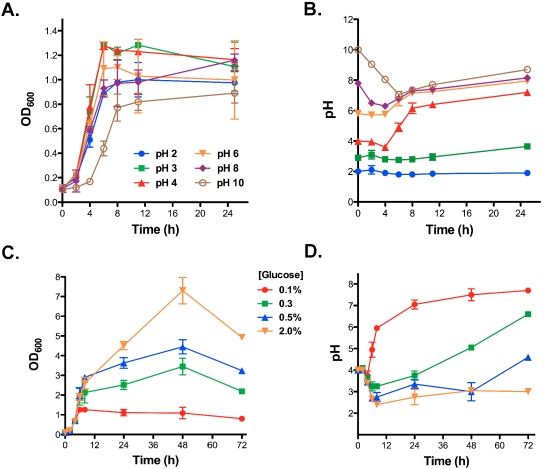
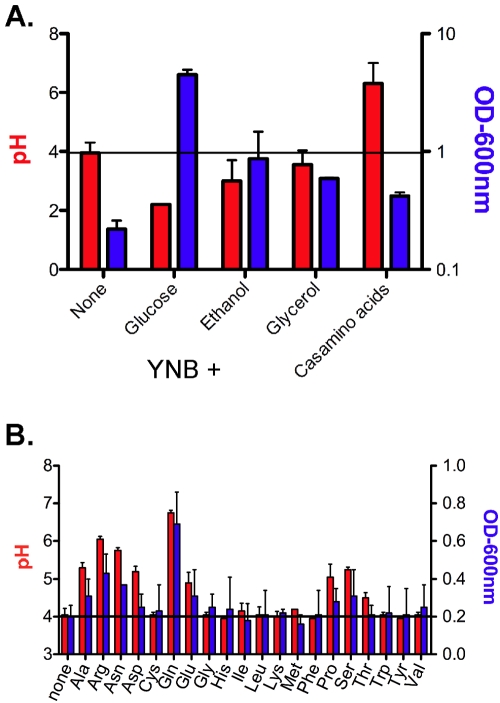
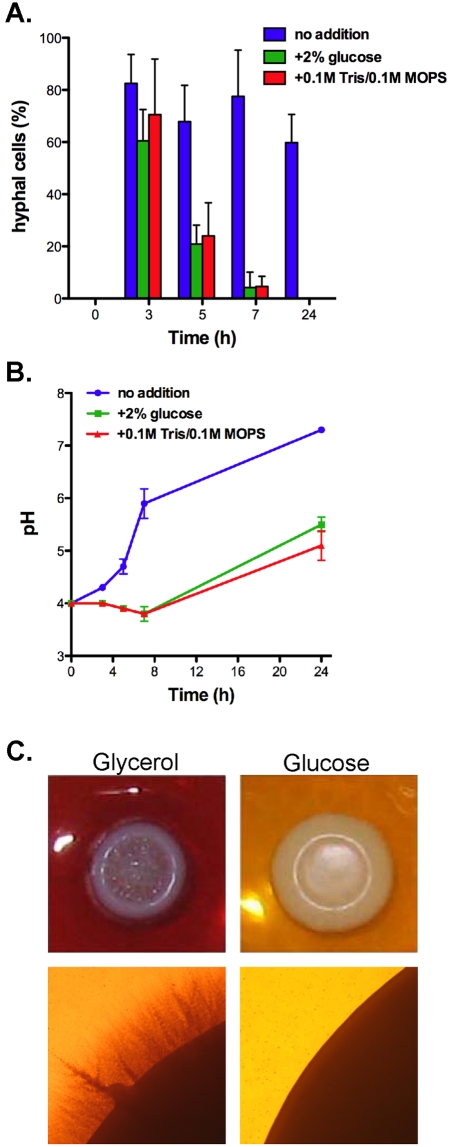
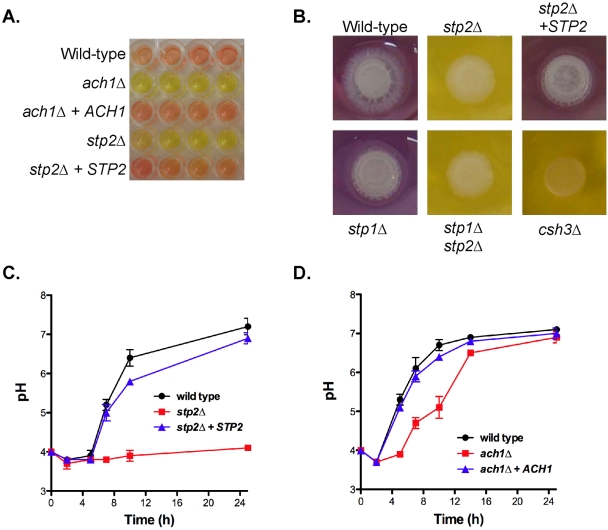
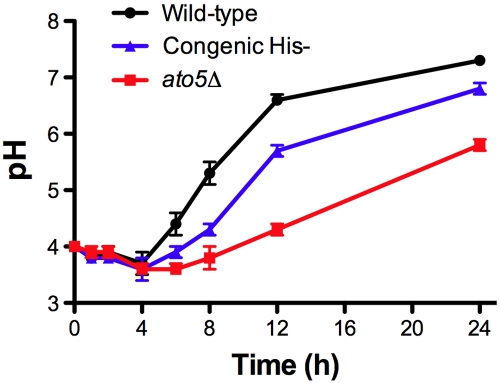
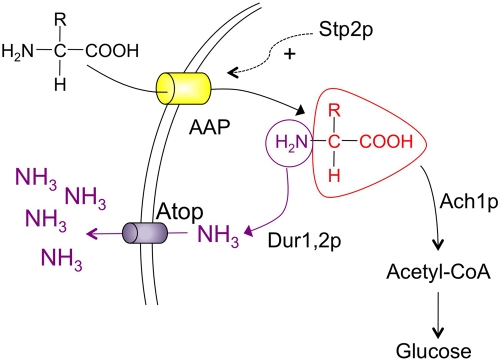
pH homeostasis is critical for all organisms; in the fungal pathogen Candida albicans , pH adaptation is critical for virulence in distinct host niches. We demonstrate that beyond adaptation, C. albicans actively neutralizes the environment from either acidic or alkaline pHs. Under acidic conditions, this species can raise the pH from 4 to >7 in less than 12 h, resulting in autoinduction of the yeast-hyphal transition, a critical virulence trait. Extracellular alkalinization has been reported to occur in several fungal species, but under the specific conditions that we describe, the phenomenon is more rapid than previously observed. Alkalinization is linked to carbon deprivation, as it occurs in glucose-poor media and requires exogenous amino acids. These conditions are similar to those predicted to exist inside phagocytic cells, and we find a strong correlation between the use of amino acids as a cellular carbon source and the degree of alkalinization. Genetic and genomic approaches indicate an emphasis on amino acid uptake and catabolism in alkalinizing cells. Mutations in four genes, STP2 , a transcription factor regulating amino acid permeases, ACH1 (acetyl-coenzyme A [acetyl-CoA] hydrolase), DUR1 , 2 (urea amidolyase), and ATO5 , a putative ammonia transporter, abolish or delay neutralization. The pH changes are the result of the extrusion of ammonia, as observed in other fungi. We propose that nutrient-deprived C. albicans cells catabolize amino acids as a carbon source, excreting the amino nitrogen as ammonia to raise environmental pH and stimulate morphogenesis, thus directly contributing to pathogenesis. IMPORTANCE Candida albicans is the most important fungal pathogen of humans, causing disease at multiple body sites. The ability to switch between multiple morphologies, including a rounded yeast cell and an elongated hyphal cell, is a key virulence trait in this species, as this reversible switch is thought to promote dissemination and tissue invasion in the host. We report here that C. albicans can actively alter the pH of its environment and induce its switch to the hyphal form. The change in pH is caused by the release of ammonia from the cells produced during the breakdown of amino acids. This phenomenon is unprecedented in a human pathogen and may substantially impact host physiology by linking morphogenesis, pH adaptation, carbon metabolism, and interactions with host cells, all of which are critical for the ability of C. albicans to cause disease.
Overview
The claims and statistics of this paper haven’t been checked yet.
Free: it reads the open-access text and checks the first 5 claims that cite a source we can check. Create a free account to check every claim.
Integrity signals
Registry
Cites
Statistics
Figures
Verification
Claims the paper makes
The claims and statistics of this paper haven’t been checked yet.
Free: it reads the open-access text and checks the first 5 claims that cite a source we can check. Create a free account to check every claim.
Claims other papers make about this one
Each is checked against this paper’s own text: does it say what the citing paper says it does?
The source backs part of the claim, not all of it — or backs it for a different population, condition or comparison.
In the citing paper
“amino acids, which are abundant inside macrophages are an important alternative carbon source for the immune evasion of C. albicans [24–28].”
From The F 1 F o -ATP synthase α subunit of Candida albicans induces inflammatory responses by controlling amino acid catabolism (2023) · cites this paper as [27]
Experimental — accuracy not yet measuredThe source backs part of the claim, not all of it — or backs it for a different population, condition or comparison.
In the citing paper
“Phagocytized C. albicans catabolizes amino acids to produce NH3 to neutralize the acidity of phagosomes [26,27], which induces filamentation for macrophage killing and escape [26,29], thus leading to host inflammatory responses [14].”
From The F 1 F o -ATP synthase α subunit of Candida albicans induces inflammatory responses by controlling amino acid catabolism (2023) · cites this paper as [27]
Experimental — accuracy not yet measuredThe source backs part of the claim, not all of it — or backs it for a different population, condition or comparison.
In the citing paper
“Phagocytized C. albicans produces NH3 through amino acid catabolism to neutralize the acidity of phagosomes, thereby inducing filamentation to destroy and escape from macrophages [26,27].”
From The F 1 F o -ATP synthase α subunit of Candida albicans induces inflammatory responses by controlling amino acid catabolism (2023) · cites this paper as [27]
Experimental — accuracy not yet measuredThe source backs part of the claim, not all of it — or backs it for a different population, condition or comparison.
In the citing paper
“C. albicans induces filamentation by neutralizing the acidity of phagosomes through amino acid catabolism [26,27].”
From The F 1 F o -ATP synthase α subunit of Candida albicans induces inflammatory responses by controlling amino acid catabolism (2023) · cites this paper as [27]
Experimental — accuracy not yet measured
Self-check
Percentages, sums and reported differences re-computed from the paper’s own numbers.
The self-check needs the paper’s full text.
Citations
Cites
Cluster analysis and display of genome-wide expression patterns
Eisen, M. B., Spellman, P. T., Brown, P. O., & Botstein, D. (1998) · Proceedings of the National Academy of Sciences · doi:10.1073/pnas.95.25.14863 · Cited by 16,184 · cited 1×
“clustering using the Cluster and TreeView algorithms (66).”
MethodSherman, F. (2002) · Methods in Enzymology · doi:10.1016/s0076-6879(02)50954-x · Cited by 4,121
[1] Getting started with yeast
Sherman, F. (1991) · Methods in Enzymology · doi:10.1016/0076-6879(91)94004-v · Cited by 4,067
Current Protocols in Molecular Biology
(2001) · John Wiley & Sons, Inc. eBooks · doi:10.1002/0471142727 · Cited by 2,398
Nonfilamentous C. albicans Mutants Are Avirulent
Lo, H.-J., Köhler, J. R., DiDomenico, B., Loebenberg, D., Cacciapuoti, A., & Fink, G. R. (1997) · Cell · doi:10.1016/s0092-8674(00)80358-x · Cited by 1,809 · cited 2×
“albicans induces hyphal morphogenesis, a key virulence trait in this species (2, 3).”
BackgroundEvolution of pathogenicity and sexual reproduction in eight Candida genomes
Butler, G., Rasmussen, M. D., Lin, M. F., Santos, M. A. S., Sakthikumar, S., Munro, C. A., Rheinbay, E., Grabherr, M., Forche, A., Reedy, J. L., et al. (2009) · Nature · doi:10.1038/nature08064 · Cited by 1,065 · cited 1×
“parapsilosis) have large Ato families, reminiscent of the expansion of gene families for a number of virulence-related traits, particularly those on the cell surface or secreted, such as secreted aspartyl proteases, lipases, and phospholipases, and GPIanchored cell wall proteins such as the ALS agglutinins (27).”
BackgroundSelf-citationOverview of manual and automated DNA sequencing by the dideoxy chain termination method
CHEN, E., KUANG, W., & LEE, A. (1991) · Methods · doi:10.1016/s1046-2023(05)80158-6 · Cited by 833
The glyoxylate cycle is required for fungal virulence
Lorenz, M. C., & Fink, G. R. (2001) · Nature · doi:10.1038/35083594 · Cited by 745
Self-citationThe SAT1 flipper, an optimized tool for gene disruption in Candida albicans
Reuß, O., Vik, Å., Kolter, R., & Morschhäuser, J. (2004) · Gene · doi:10.1016/j.gene.2004.06.021 · Cited by 742 · cited 3×
“Mutations in ARG1 and ARG3 were generated using the SAT-flipper method, as previously described (61).”
BackgroundMethodInfluentialTranscriptional Response of Candida albicans upon Internalization by Macrophages
Lorenz, M. C., Bender, J. A., & Fink, G. R. (2004) · Eukaryotic Cell · doi:10.1128/ec.3.5.1076-1087.2004 · Cited by 712 · cited 1×
“using an aminoallyl protocol (53) and hybridized to C.”
MethodSelf-citation
Cited by
Normal Bone Anatomy and Physiology
Clarke, B. (2008) · Clinical Journal of the American Society of Nephrology · doi:10.2215/cjn.04151206 · Cited by 2,192
Candida albicans pathogenicity mechanisms
Mayer, F. L., Wilson, D., & Hube, B. (2013) · Virulence · doi:10.4161/viru.22913 · Cited by 1,848
Pathogenesis and virulence of Candida albicans
Lopes, J. P., & Lionakis, M. S. (2022) · Virulence · doi:10.1080/21505594.2021.2019950 · Cited by 477
d'Enfert, C., Kaune, A.-K., Alaban, L.-R., Chakraborty, S., Cole, N., Delavy, M., Kosmala, D., Marsaux, B., Fróis-Martins, R., Morelli, M., et al. (2021) · FEMS Microbiology Reviews · doi:10.1093/femsre/fuaa060 · Cited by 347
Ene, I. V., Adya, A. K., Wehmeier, S., Brand, A. C., MacCallum, D. M., Gow, N. A. R., & Brown, A. J. P. (2012) · Cellular Microbiology · doi:10.1111/j.1462-5822.2012.01813.x · Cited by 313
“…drug resistance and virulence in a fungal pathogen Iuliana V. Ene,1 Ashok K. Adya,2 Silvia Wehmeier,1 Alexandra C. Brand,1 Donna M. MacCallum,1 Neil A. R. Gow1 and Alistair J. P. Brown1* 1Aberdeen Fungal Group, School of Medical Sciences, Institute of Medical Sciences, University of Aberdeen,”
BackgroundStress adaptation in a pathogenic fungus
Brown, A. J. P., Budge, S., Kaloriti, D., Tillmann, A., Jacobsen, M. D., Yin, Z., Ene, I. V., Bohovych, I., Sandai, D., Kastora, S., et al. (2014) · Journal of Experimental Biology · doi:10.1242/jeb.088930 · Cited by 299
“The metabolic activity of C. albicans can modify the pH of its microenvironment (Vylkova et al., 2011) adding to the dynamism of host niches.”
Forgotten fungi—the gut mycobiome in human health and disease
Huseyin, C. E., O’Toole, P. W., Cotter, P. D., & Scanlan, P. D. (2017) · FEMS Microbiology Reviews · doi:10.1093/femsre/fuw047 · Cited by 278
Kalia, N., Singh, J., & Kaur, M. (2020) · Annals of Clinical Microbiology and Antimicrobials · doi:10.1186/s12941-020-0347-4 · Cited by 275
Metabolism impacts upon Candida immunogenicity and pathogenicity at multiple levels
Brown, A. J. P., Brown, G. D., Netea, M. G., & Gow, N. A. R. (2014) · Trends in Microbiology · doi:10.1016/j.tim.2014.07.001 · Cited by 258
Control of Candida albicans Metabolism and Biofilm Formation by Pseudomonas aeruginosa Phenazines
Morales, D. K., Grahl, N., Okegbe, C., Dietrich, L. E. P., Jacobs, N. J., & Hogan, D. A. (2013) · mBio · doi:10.1128/mbio.00526-12 · Cited by 242
“Seminal studies by Vylkova and colleagues (41) showed that C.”
BackgroundMethodInfluentialHöfs, S., Mogavero, S., & Hube, B. (2016) · Journal of Microbiology · doi:10.1007/s12275-016-5514-0 · Cited by 238
“Hyphal outgrowth will lead to the piercing and eventually killing of the macrophage (Marcil et al., 2002; Ghosh et al., 2009; Vylkova et al., 2011).”
BackgroundEnvironmental pH modulation by pathogenic fungi as a strategy to conquer the host
Vylkova, S. (2017) · PLOS Pathogens · doi:10.1371/journal.ppat.1006149 · Cited by 211
Self-citationVulvovaginal Candida albicans infections: pathogenesis, immunity and vaccine prospects
Cassone, A. (2015) · BJOG: An International Journal of Obstetrics & Gynaecology · doi:10.1111/1471-0528.12994 · Cited by 196
Brennan, M. S., Matos, M. F., Li, B., Hronowski, X., Gao, B., Juhasz, P., Rhodes, K. J., & Scannevin, R. H. (2015) · PLOS ONE · doi:10.1371/journal.pone.0120254 · Cited by 188
Polke, M., Hube, B., & Jacobsen, I. D. (2015) · Advances in Applied Microbiology · doi:10.1016/bs.aambs.2014.12.002 · Cited by 184
Vylkova, S., & Lorenz, M. C. (2014) · PLoS Pathogens · doi:10.1371/journal.ppat.1003995 · Cited by 174
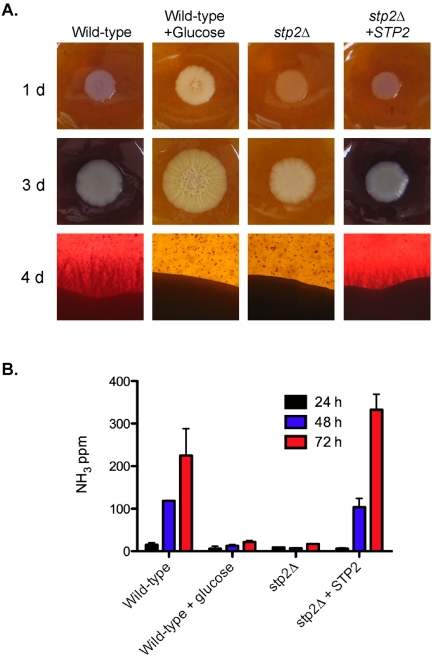
“Alkalinization is associated with extrusion of volatile ammonia [27] and nonalkalinizing stp2D mutant colonies did not release significant quantities of ammonia when grown on GM-BCP medium (Fig.”
BackgroundMethodResultInfluentialSelf-citationMetabolism in fungal pathogenesis
Ene, I. V., Brunke, S., Brown, A. J. P., & Hube, B. (2014) · Cold Spring Harbor Perspectives in Medicine · doi:10.1101/cshperspect.a019695 · Cited by 169
“The amino acids are metabolized in a glucose-repressible manner, and the excess nitrogen is excreted as ammonia via Ato5, a putative ammonia transporter, thereby raising environmental pH and autoinducing hypha formation (Vylkova et al. 2011).”
BackgroundInfluentialEne, I. V., Heilmann, C. J., Sorgo, A. G., Walker, L. A., de Koster, C. G., Munro, C. A., Klis, F. M., & Brown, A. J. P. (2012) · Proteomics · doi:10.1002/pmic.201200228 · Cited by 159
Guinan, J., Wang, S., Hazbun, T. R., Yadav, H., & Thangamani, S. (2019) · Scientific Reports · doi:10.1038/s41598-019-45467-7 · Cited by 156
Ene, I. V., Cheng, S.-C., Netea, M. G., & Brown, A. J. P. (2013) · Infection and Immunity · doi:10.1128/iai.01092-12 · Cited by 149
“Our studies underline the importance of carbon source for fungal virulence, indicating that in addition to modulating the physiological status of the fungus (12, 14, 30, 31), carbon source has a distinct effect on the host-fungus interaction.”
BackgroundCandida Vaginitis: When Opportunism Knocks, the Host Responds
Peters, B. M., Yano, J., Noverr, M. C., & Fidel, P. L. (2014) · PLoS Pathogens · doi:10.1371/journal.ppat.1003965 · Cited by 146
“albicans [39].”
From Jekyll to Hyde: The Yeast–Hyphal Transition of Candida albicans
Chow, E. W. L., Pang, L. M., & Wang, Y. (2021) · Pathogens · doi:10.3390/pathogens10070859 · Cited by 178
Digestive tract mycobiota: a source of infection
Gouba, N., & Drancourt, M. (2015) · Médecine et Maladies Infectieuses · doi:10.1016/j.medmal.2015.01.007 · Cited by 138
Xu, H., Jenkinson, H. F., & Dongari‐Bagtzoglou, A. (2014) · Molecular Oral Microbiology · doi:10.1111/omi.12049 · Cited by 131
“However, under glucoselimiting conditions, C. albicans has the ability to neutralize the environmental pH and proceed with hyphal morphogenesis by excreting ammonia into the environment (Vylkova et al., 2011).”
InfluentialpH Response Pathways in Fungi: Adapting to Host-derived and Environmental Signals
Selvig, K., & Alspaugh, J. A. (2011) · Mycobiology · doi:10.5941/myco.2011.39.4.249 · Cited by 130
“albicans cells to induce a yeast-to-hyphal transition [53].”
BackgroundLétoffé, S., Audrain, B., Bernier, S. P., Delepierre, M., & Ghigo, J. (2014) · mBio · doi:10.1128/mbio.00944-13 · Cited by 148
Gleason, J. E., Galaleldeen, A., Peterson, R. L., Taylor, A. B., Holloway, S. P., Waninger-Saroni, J., Cormack, B. P., Cabelli, D. E., Hart, P. J., & Culotta, V. C. (2014) · Proceedings of the National Academy of Sciences · doi:10.1073/pnas.1400137111 · Cited by 127
“0 and, moreover, the organism is capable of neutralizing the pH of its environment (25).”
BackgroundWagener, J., MacCallum, D. M., Brown, G. D., & Gow, N. A. R. (2017) · mBio · doi:10.1128/mbio.01820-16 · Cited by 122
“albicans genes coding for arginine import and degradation are increased after phagocytosis by macrophages (30).”
BackgroundAdapting to survive: How Candida overcomes host-imposed constraints during human colonization
Alves, R., Barata-Antunes, C., Casal, M., Brown, A. J. P., Van Dijck, P., & Paiva, S. (2020) · PLOS Pathogens · doi:10.1371/journal.ppat.1008478 · Cited by 122
Amino Acids As Mediators of Metabolic Cross Talk between Host and Pathogen
Ren, W., Rajendran, R., Zhao, Y., Tan, B., Wu, G., Bazer, F. W., Zhu, G., Peng, Y., Huang, X., Deng, J., et al. (2018) · Frontiers in Immunology · doi:10.3389/fimmu.2018.00319 · Cited by 135
“albicans exploits AA as a carbon source, excreting excess nitrogen in the form of ammonia, potentially altering the pH of the host environment, and thereby triggering hyphal development (41).”
BackgroundIntracellular survival of Candida glabrata in macrophages: immune evasion and persistence
Kasper, L., Seider, K., & Hube, B. (2015) · FEMS Yeast Research · doi:10.1093/femsyr/fov042 · Cited by 113
The Vaginal Microbiome: A Long Urogenital Colonization Throughout Woman Life
Auriemma, R. S., Scairati, R., Vecchio, G. D., Liccardi, A., Verde, N., Pirchio, R., Pivonello, R., Ercolini, D., & Colao, A. (2021) · Frontiers in Cellular and Infection Microbiology · doi:10.3389/fcimb.2021.686167 · Cited by 139
Candida albicans Hyphal Expansion Causes Phagosomal Membrane Damage and Luminal Alkalinization
Westman, J., Moran, G., Mogavero, S., Hube, B., & Grinstein, S. (2018) · mBio · doi:10.1128/mbio.01226-18 · Cited by 112
Multimodal Role of Amino Acids in Microbial Control and Drug Development
Idrees, M. M., Mohammad, A. R., Karodia, N., & Rahman, A. (2020) · Antibiotics · doi:10.3390/antibiotics9060330 · Cited by 136
Chen, Y., Li, B., Xu, X., Zhang, Z., & Tian, S. (2018) · Environmental Microbiology · doi:10.1111/1462-2920.14453 · Cited by 109
“…an important signal for a large number of cellular events, including growth, morphogenesis, membrane and cell wall stability, protein stability and function, secondary metabolism and host infection (Li et al., 2010; Zou et al., 2010; Merhej et al., 2011; Vylkova et al., 2011; Huang et al., 2015).”
BackgroundStreptomyces Exploration: Competition, Volatile Communication and New Bacterial Behaviours
Jones, S. E., & Elliot, M. A. (2017) · Trends in Microbiology · doi:10.1016/j.tim.2017.02.001 · Cited by 133
“albicans can also raise the pH of acidic medium in response to glucose starvation [55].”
BackgroundHow alkalinization drives fungal pathogenicity
Fernandes, T. R., Segorbe, D., Prusky, D., & Pietro, A. D. (2017) · PLoS Pathogens · doi:10.1371/journal.ppat.1006621 · Cited by 123
Probiotic Lactobacillus reuteri has antifungal effects on oral Candida species in vitro
Jørgensen, M. R., Kragelund, C., Jensen, P. Ø., Keller, M. K., & Twetman, S. (2017) · Journal of Oral Microbiology · doi:10.1080/20002297.2016.1274582 · Cited by 107
“krusei (i) actively produces extracellular ammonia (NH3) which will increase the surrounding pH [32,35], (ii) has less”
BackgroundThriving within the host: Candida spp. interactions with phagocytic cells
Miramón, P., Kasper, L., & Hube, B. (2013) · Medical Microbiology and Immunology · doi:10.1007/s00430-013-0288-z · Cited by 126
“It seems that CO2, a potent stimulus of filamentation [155], as well as the active neutralisation of the acidic pH [96] are two major events leading to the formation of filaments inside macrophages (Fig.”
A feast for Candida: Metabolic plasticity confers an edge for virulence
Miramón, P., & Lorenz, M. C. (2017) · PLOS Pathogens · doi:10.1371/journal.ppat.1006144 · Cited by 106
Self-citationDivergent Approaches to Virulence in C. albicans and C. glabrata: Two Sides of the Same Coin
Galocha, M., Pais, P., Cavalheiro, M., Pereira, D., Viana, R., & Teixeira, M. C. (2019) · International Journal of Molecular Sciences · doi:10.3390/ijms20092345 · Cited by 105
“Environmental alkalinization by amino acid use as carbon sources, which results in ammonia extrusion, has been acknowledged as a strategy of these pathogens to actively raise phagosome pH [199,203,204].”
BackgroundAntimicrobial lectin fromSchinus terebinthifoliusleaf
Gomes, F. S., Procópio, T. F., Napoleão, T. H., Coelho, L. C. B. B., & Paiva, P. M. G. (2012) · Journal of Applied Microbiology · doi:10.1111/jam.12086 · Cited by 156
“albicans, tolerate wide variations in pH (Gostin car et al. 2011; Vylkova et al. 2011).”
BackgroundVirulence factors in fungal pathogens of man
Brunke, S., Mogavero, S., Kasper, L., & Hube, B. (2016) · Current Opinion in Microbiology · doi:10.1016/j.mib.2016.05.010 · Cited by 128
Javed, M. T., Stoltz, E., Lindberg, S. M., & Greger, M. (2012) · Environmental Science and Pollution Research · doi:10.1007/s11356-012-1413-z · Cited by 99
Fungal Pathogens: Survival and Replication within Macrophages
Gilbert, A. S., Wheeler, R. T., & May, R. C. (2015) · Cold Spring Harbor Perspectives in Medicine · doi:10.1101/cshperspect.a019661 · Cited by 97
“ing lytic escape via macrophage membrane rupture (Vylkova et al. 2011).”
BackgroundTranscriptional control of hyphal morphogenesis in Candida albicans
Villa, S., Hamideh, M., Weinstock, A., Qasim, M. N., Hazbun, T. R., Sellam, A., Hernday, A. D., & Thangamani, S. (2020) · FEMS Yeast Research · doi:10.1093/femsyr/foaa005 · Cited by 117
Mitochondrial proline catabolism activates Ras1/cAMP/PKA-induced filamentation in Candida albicans
Silao, F. G. S., Ward, M., Ryman, K., Wallström, A., Brindefalk, B., Udekwu, K., & Ljungdahl, P. O. (2019) · PLOS Genetics · doi:10.1371/journal.pgen.1007976 · Cited by 93
Gutierrez, D., Weinstock, A., Antharam, V. C., Gu, H., Jasbi, P., Shi, X., Dirks, B., Krajmalnik‐Brown, R., Maldonado, J., Guinan, J., et al. (2019) · FEMS Microbiology Ecology · doi:10.1093/femsec/fiz187 · Cited by 107
“albicans growth and morphogenesis (Shirtliff, Peters and Jabra-Rizk 2009; Vylkova et al. 2011; Martin et al. 2013; Desai et al. 2015; Neville, d’Enfert and Bougnoux 2015; Allonsius et al. 2019; Hager et al. 2019).”
BackgroundFungal Immune Evasion in a Model Host–Pathogen Interaction: Candida albicans Versus Macrophages
Jiménez-López, C., & Lorenz, M. C. (2013) · PLoS Pathogens · doi:10.1371/journal.ppat.1003741 · Cited by 91
“lular pH [27], potentially synergizing with the vATPase defect to block acidification.”
BackgroundSelf-citationLee, S. C., Li, A., Calo, S., Inoue, M., Tonthat, N. K., Bain, J. M., Louw, J., Shinohara, M. L., Erwig, L. P., Schumacher, M. A., et al. (2015) · Molecular Microbiology · doi:10.1111/mmi.13071 · Cited by 89
“albicans hyphal growth inside of macrophages (Vylkova et al., 2011; Vylkova and Lorenz, 2014).”
BackgroundInfluentialOpportunistic yeast pathogens: reservoirs, virulence mechanisms, and therapeutic strategies
Polvi, E. J., Li, X., O’Meara, T. R., Leach, M. D., & Cowen, L. E. (2015) · Cellular and Molecular Life Sciences · doi:10.1007/s00018-015-1860-z · Cited by 106
“This may be coupled to the defect of the dur1,2 strain in auto-alkalinization of the environment [174].”
BackgroundEffects of a Novel Probiotic Combination on Pathogenic Bacterial-Fungal Polymicrobial Biofilms
Hager, C. L., Isham, N. C., Schrom, K. P., Chandra, J., McCormick, T. S., Miyagi, M., & Ghannoum, M. A. (2019) · mBio · doi:10.1128/mbio.00338-19 · Cited by 89
“Alkaline conditions favor the growth of hyphal forms over yeast forms (29), a factor which may in turn facilitate biofilm formation.”
BackgroundCandida albicansalters the bacterial microbiome of earlyin vitrooral biofilms
Janus, M. M., Crielaard, W., Volgenant, C. M. C., van der Veen, M. H., Brandt, B. W., & Krom, B. P. (2017) · Journal of Oral Microbiology · doi:10.1080/20002297.2016.1270613 · Cited by 99
“albicans can increase the external pH by producing ammonia [17], leading to less cariogenic conditions.”
Bi, F., Barad, S., Ment, D., Luria, N., Dubey, A., Casado, V., Glam-Matana, N., Mínguez, J. D., Espeso, E. A., Fluhr, R., et al. (2016) · Molecular Plant Pathology · doi:10.1111/mpp.12355 · Cited by 88
“This is highly important because fungal pathogens, such as Colletotrichum and Penicillium, may alkalinize or acidify, respectively, the host environment, thereby creating conditions that differentially modulate the pathogenicity of the species (Prusky and Yakoby, 2003; Prusky et al., 2013; Vylkova et al., 2011; Yakoby…”
BackgroundBarad, S., Espeso, E. A., Sherman, A., & Prusky, D. (2015) · Molecular Plant Pathology · doi:10.1111/mpp.12327 · Cited by 80
Phagosomal Neutralization by the Fungal Pathogen Candida albicans Induces Macrophage Pyroptosis
Vylkova, S., & Lorenz, M. C. (2017) · Infection and Immunity · doi:10.1128/iai.00832-16 · Cited by 75
“albicans utilizes amino acids as the sole carbon source, it generates excess ammonia that can raise the extracellular pH from pH 4 to pH 7 to 8 in a matter of hours; some key factors in this phenomenon have been identified via genetic and genomic approaches (8, 11).”
BackgroundSelf-citationJiménez-López, C., Collette, J. R., Brothers, K. M., Shepardson, K. M., Cramer, R. A., Wheeler, R. T., & Lorenz, M. C. (2013) · Eukaryotic Cell · doi:10.1128/ec.00290-12 · Cited by 74
“CAR1 is upregulated during this process, which is significantly slowed in a dur1,2 mutant (28), linking this phenomenon with arginine metabolism.”
BackgroundInfluentialSelf-citationLiu, J., Willems, H. M. E., Sansevere, E. A., Allert, S., Barker, K. S., Lowes, D. J., Dixson, A. C., Xu, Z., Miao, J., DeJarnette, C. A., et al. (2021) · PLoS Pathogens · doi:10.1371/journal.ppat.1009884 · Cited by 79
“albicans to alkalinize its external environment through amino acid degradation and secretion of ammonia [30].”
BackgroundRobust Extracellular pH Modulation by Candida albicans during Growth in Carboxylic Acids
Danhof, H. A., Vylkova, S., Vesely, E. M., Ford, A. E., Gonzalez-Garay, M., & Lorenz, M. C. (2016) · mBio · doi:10.1128/mbio.01646-16 · Cited by 72
“Our observations here represent the third separate mechanism—along with catabolism of amino acids and GlcNAc (14, 24, 28)—by which C. albicans can manipulate phagosomal maturation, indicative of the evolutionary pressures during the adaptation of this species to the mammalian host.”
InfluentialSelf-citationHeaney, H., Laing, J., Paterson, L., Walker, A. W., Gow, N. A. R., Johnson, E. M., MacCallum, D. M., & Brown, A. J. P. (2020) · Medical Mycology · doi:10.1093/mmy/myz127 · Cited by 61
Role of Vaginal Mucosa, Host Immunity and Microbiota in Vulvovaginal Candidiasis
Balakrishnan, S. N., Yamang, H., Lorenz, M. C., Chew, S. Y., & Than, L. T. L. (2022) · Pathogens · doi:10.3390/pathogens11060618 · Cited by 92
Self-citationMechanisms of immune evasion in fungal pathogens
Collette, J. R., & Lorenz, M. C. (2011) · Current Opinion in Microbiology · doi:10.1016/j.mib.2011.09.007 · Cited by 68
Self-citationThe Novel Candida albicans Transporter Dur31 Is a Multi-Stage Pathogenicity Factor
Mayer, F. L., Wilson, D., Jacobsen, I. D., Miramón, P., Große, K., & Hube, B. (2012) · PLoS Pathogens · doi:10.1371/journal.ppat.1002592 · Cited by 62
“7 within 12 h, thereby triggering the yeast-to-hypha transition [17].”
BackgroundMethodInfluentialLanza, M., Haro, R., Conchillo, L. B., & Benito, B. (2019) · Environmental Microbiology · doi:10.1111/1462-2920.14619 · Cited by 67
Role of Amino Acid Metabolism in the Virulence of Human Pathogenic Fungi
Garbe, E., & Vylkova, S. (2019) · Current Clinical Microbiology Reports · doi:10.1007/s40588-019-00124-5 · Cited by 59
Self-citationKasper, L., Seider, K., Gerwien, F., Allert, S., Brunke, S., Schwarzmüller, T., Ames, L., Zubiria-Barrera, C., Mansour, M. K., Becken, U., et al. (2014) · PLoS ONE · doi:10.1371/journal.pone.0096015 · Cited by 59
“albicans relied on amino acid uptake and catabolism [35].”
BackgroundLindsay, A. K., Morales, D. K., Liu, Z., Grahl, N., Zhang, A., Willger, S. D., Myers, L. C., & Hogan, D. A. (2014) · PLoS Genetics · doi:10.1371/journal.pgen.1004567 · Cited by 58
“Because pH is a strong modulator of morphology [66,67], we sought to determine if the increased extracellular pH around ssn3 mutant colonies contributed to the ability to filament in the”
BackgroundSerrano‐Fujarte, I., López-Romero, E., Reyna-López, G. E., Martínez-Gámez, M. A., Vega‐González, A., & Cuéllar‐Cruz, M. (2015) · BioMed Research International · doi:10.1155/2015/783639 · Cited by 74
“Research Article Influence of Culture Media on Biofilm Formation by Candida Species and Response of Sessile Cells to Antifungals and Oxidative Stress Isela Serrano-Fujarte,1 Everardo López-Romero,1 Georgina Elena Reyna-López,1 Ma. Alejandrina Martínez-Gámez,2 Arturo Vega-González,3 and Mayra Cuéllar-Cruz1 1Departament…”
BackgroundMuthamil, S., Prasath, K. G., Priya, A., Precilla, P., & Pandian, S. K. (2020) · Scientific Reports · doi:10.1038/s41598-020-61918-y · Cited by 70
The Candida albicans ATO Gene Family Promotes Neutralization of the Macrophage Phagolysosome
Danhof, H. A., & Lorenz, M. C. (2015) · Infection and Immunity · doi:10.1128/iai.00984-15 · Cited by 57
“We previously reported that a mutant lacking ATO5 has a defect in alkalinization in medium 199, a low-glucose tissue culture medium (24).”
BackgroundMethodInfluentialSelf-citationNutrient and Stress Sensing in Pathogenic Yeasts
Rutherford, J. C., Bahn, Y., van den Berg, B., Heitman, J., & Xue, C. (2019) · Frontiers in Microbiology · doi:10.3389/fmicb.2019.00442 · Cited by 64
“Furthermore, a link between pH and polarized growth has been identified in other fungal systems (Bowman et al., 1997; Martinez-Espinoza et al., 2004; Vylkova et al., 2011).”
BackgroundPathogenetic Impact of Bacterial–Fungal Interactions
Nogueira, F., Sharghi, S., Kuchler, K., & Lion, T. (2019) · Microorganisms · doi:10.3390/microorganisms7100459 · Cited by 69
“Repair Me if You Can”: Membrane Damage, Response, and Control from the Viral Perspective
Daussy, C. F., & Wodrich, H. (2020) · Cells · doi:10.3390/cells9092042 · Cited by 57
“This is likely to occur through mechanical pressure (filamentation) rather via a biochemical process [76].”
BackgroundKoopman, J. E., Röling, W. F. M., Buijs, M. J., Sissons, C. H., ten Cate, J. M., Keijser, B. J. F., Crielaard, W., & Zaura, E. (2014) · Microbial Ecology · doi:10.1007/s00248-014-0535-x · Cited by 65
“Although Candida species are able to cope with a wide pH range, an alkaline pH can be stressful for these fungi [51, 52].”
Barda, O., Maor, U., Sadhasivam, S., Bi, Y., Zakin, V., Prusky, D., & Sionov, E. (2020) · Frontiers in Microbiology · doi:10.3389/fmicb.2020.00210 · Cited by 55
Dynamic bacterial and fungal microbiomes during sweet sorghum ensiling impact bioethanol production
Gallagher, D., Parker, D., Allen, D. J., & Tsesmetzis, N. (2018) · Bioresource Technology · doi:10.1016/j.biortech.2018.05.053 · Cited by 54
Miramón, P., & Lorenz, M. C. (2016) · Cellular Microbiology · doi:10.1111/cmi.12600 · Cited by 53
“To exclude the possibility that the inability to manipulate the pH of the medium is due to a general fitness defect, we supplemented the medium with glycerol, a carbon source that does not interfere with the ability to neutralize the pH in response to amino acids (Vylkova et al., 2011).”
BackgroundMethodInfluentialSelf-citationFrom Genes to Networks: The Regulatory Circuitry Controlling Candida albicans Morphogenesis
Basso, V., d’Enfert, C., Znaidi, S., & Bachellier‐Bassi, S. (2018) · Current topics in microbiology and immunology · doi:10.1007/82_2018_144 · Cited by 60
Metabolic Interactions between Bacteria and Fungi in Commensal Oral Biofilms
Lof, M., Janus, M., & Krom, B. (2017) · Journal of Fungi · doi:10.3390/jof3030040 · Cited by 51
“Hereby it is able to raise the extracellular pH and subsequently promote hyphal morphogenesis [55].”
BackgroundN-acetylglucosamine Regulates Virulence Properties in Microbial Pathogens
Naseem, S., & Konopka, J. B. (2015) · PLoS Pathogens · doi:10.1371/journal.ppat.1004947 · Cited by 60
“In contrast to acidification of the environment that occurs for cells grown in glucose, growth in GlcNAc raises the pH since cells export excess nitrogen as ammonia [17].”
BackgroundEne, I. V., Lohse, M. B., Vladu, A., Morschhäuser, J., Johnson, A. D., & Bennett, R. J. (2016) · mBio · doi:10.1128/mbio.01269-16 · Cited by 59
Bandara, N., Cheung, B. P. K., Watt, R. M., Jin, L., & Samaranayake, L. P. (2013) · Journal of Investigative and Clinical Dentistry · doi:10.1111/jicd.12048 · Cited by 53
Characterization of Virulence-Related Phenotypes in Candida Species of the CUG Clade
Priest, S. J., & Lorenz, M. C. (2015) · Eukaryotic Cell · doi:10.1128/ec.00062-15 · Cited by 48
Self-citationCandida albicans in Multispecies Oral Communities; A Keystone Commensal?
Janus, M. M., Willems, H. M. E., & Krom, B. P. (2016) · Advances in experimental medicine and biology · doi:10.1007/5584_2016_5 · Cited by 65
O'Meara, T. R., & Cowen, L. E. (2014) · Cellular Microbiology · doi:10.1111/cmi.12266 · Cited by 48
“Stp2 contains a conserved PKA phosphorylation motif, but this connection to the cAMP pathway has yet to be tested (Martinez and Ljungdahl, 2005; Vylkova et al., 2011).”
BackgroundEssential Role for Vacuolar Acidification in Candida albicans Virulence
Patenaude, C., Zhang, Y., Cormack, B., Köhler, J., & Rao, R. (2013) · Journal of Biological Chemistry · doi:10.1074/jbc.m113.494815 · Cited by 48
Candida albicans Suppresses Nitric Oxide Generation from Macrophages via a Secreted Molecule
Collette, J. R., Zhou, H., & Lorenz, M. C. (2014) · PLoS ONE · doi:10.1371/journal.pone.0096203 · Cited by 47
“They also actively modulate the pH of the phagolysosome, potentially through the excretion of ammonia generated from amino acid catabolism, creating a neutral pH compartment conducive to hyphal morphogenesis [9,10].”
BackgroundSelf-citationCudowski, A., Pietryczuk, A., & Hauschild, T. (2014) · Fungal ecology · doi:10.1016/j.funeco.2014.10.002 · Cited by 47
Environmental pH adaption and morphological transitions in Candida albicans
Du, H., & Huang, G. (2015) · Current Genetics · doi:10.1007/s00294-015-0540-8 · Cited by 49
Yeast cell differentiation: Lessons from pathogenic and non-pathogenic yeasts
Palková, Z., & Váchová, L. (2016) · Seminars in Cell and Developmental Biology · doi:10.1016/j.semcdb.2016.04.006 · Cited by 53
Kämmer, P., McNamara, S., Wolf, T., Conrad, T., Allert, S., Gerwien, F., Hünniger, K., Kurzai, O., Guthke, R., Hube, B., et al. (2020) · mBio · doi:10.1128/mbio.02435-20 · Cited by 47
Nieminen, M. T., Frazer, L. N., Rautemaa, V., Rajendran, R., Sorsa, T. A., Ramage, G., Bowyer, P., & Rautemaa‐Richardson, R. (2014) · PLoS ONE · doi:10.1371/journal.pone.0097864 · Cited by 54
“albicans [7–10].”
Smith, D. F. Q., & Casadevall, A. (2021) · Pathogens and Disease · doi:10.1093/femspd/ftab013 · Cited by 57
Palmieri, F., Koutsokera, A., Bernasconi, E., Junier, P., von Garnier, C., & Ubags, N. D. J. (2022) · Frontiers in Medicine · doi:10.3389/fmed.2022.832510 · Cited by 66
Candida albicans can foster gut dysbiosis and systemic inflammation during HIV infection
Zaongo, S. D., Ouyang, J., Isnard, S., Zhou, X., Harypursat, V., Cui, H., Routy, J., & Chen, Y. (2023) · Gut Microbes · doi:10.1080/19490976.2023.2167171 · Cited by 54
The Role of Fatty Acid Metabolites in Vaginal Health and Disease: Application to Candidiasis
Baldewijns, S., Sillen, M., Palmans, I., Vandecruys, P., Van Dijck, P., & Demuyser, L. (2021) · Frontiers in Microbiology · doi:10.3389/fmicb.2021.705779 · Cited by 44
Role of Cellular Metabolism during Candida-Host Interactions
Pellón, A., Begum, N., Nasab, S. D. S., Harzandi, A., Shoaie, S., & Moyes, D. L. (2022) · Pathogens · doi:10.3390/pathogens11020184 · Cited by 50
“albicans as mutations in this pathway caused a defect in germ tube and hyphal formation [79].”
BackgroundCrystal Structure of Urea Carboxylase Provides Insights into the Carboxyltransfer Reaction
Fan, C., Chou, C., Tong, L., & Xiang, S. (2012) · Journal of Biological Chemistry · doi:10.1074/jbc.m111.319475 · Cited by 44
Hyphal growth in Candida albicans does not require induction of hyphal-specific gene expression
Naseem, S., Araya, E., & Konopka, J. B. (2015) · Molecular Biology of the Cell · doi:10.1091/mbc.e14-08-1312 · Cited by 43
“Whereas growth on dextrose acidifies the medium, growth on GlcNAc makes the medium more alkaline, likely due to release of excess nitrogen as ammonia (Vylkova et al., 2011).”
BackgroundResultInfluentialMemory in Fungal Pathogens Promotes Immune Evasion, Colonisation, and Infection
Brown, A. J. P., Gow, N. A. R., Warris, A., & Brown, G. D. (2019) · Trends in Microbiology · doi:10.1016/j.tim.2018.11.001 · Cited by 43
Metadata
- Authors
- Vylkova, S., Carman, A. J., Danhof, H. A., Collette, J. R., Zhou, H., & Lorenz, M. C.
- Affiliations
- The University of Texas Health Science Center at Houston (US)
- Venue
- mBio
- Publisher
- American Society for Microbiology
- Published
- 2011-07
- Volume
- 2
- Issue
- 3
- Pages
- e00055-11
- ISSN
- 2150-7511 (ISSN-L)
- 2161-2129
- PMC
- PMC3101780
- OpenAlex
- W2114950068
- Cited by
- 365
- References
- 68
- Citations by year
- 2026: 22 · 2025: 24 · 2024: 22 · 2023: 24 · 2022: 28 · 2021: 29 · 2020: 41 · 2019: 27 · 2018: 22 · 2017: 24 · 2016: 20 · 2015: 24 · 2014: 28 · 2013: 15 · 2012: 10
- FWCI
- 7.15
- Type
- journal article
- Language
- en
- Open access
- gold
- doi.org
- Licence
- cc-by-nc-sa
- creativecommons.org/licenses/by-nc-sa/3.0/ (vor)
- journals.asm.org/non-commercial-tdm-license (tdm)
- Locations
- mBio (publishedVersion, cc-by-nc-sa)
- PubMed Central (publishedVersion, cc-by-nc-sa)
- PubMed (publishedVersion)
- DOAJ (DOAJ: Directory of Open Access Journals) (submittedVersion, cc-by-sa)
- Funders
- National Institutes of Health
- National Institute of Allergy and Infectious Diseases (R01AI075091, R21AI071134)
- Topics
- Life Sciences › Biochemistry, Genetics and Molecular Biology › Molecular Biology › Fungal and yeast genetics research
- Health Sciences › Medicine › Infectious Diseases › Antifungal resistance and susceptibility
- Health Sciences › Medicine › Infectious Diseases › Fungal Infections and Studies
- Keywords
- Candida albicans, extracellular alkalinization, extracellular pH, hyphal morphogenesis, yeast-to-hypha transition, pH homeostasis, amino acid catabolism, carbon source, ammonia excretion, virulence, phagocytes
- MeSH terms
- Amino Acids, Candida albicans, Carbon, Culture Media, Fungal Proteins, Humans, Hydrogen-Ion Concentration, Mutation, Virulence, Hyphae, Virulence Factors
About these checks
Registry, retraction, Cites and statistics results are computed, not judged, with one exception: a printed reference that no index lists is read once by a model before it counts as a citation error. Claims are extracted by a model and kept only when their quote appears verbatim in the text; each cited source is then checked, with a model’s help, for whether it says what the claim relies on. Those verdicts can be wrong — read the claim’s quote and the cited source before relying on one.
Statistics and arithmetic are recomputed, not judged.
Confidence bands are shown only for fields calibrated on our annotated test set. None is calibrated yet, so no band is shown.
What counts as a claim ›How we measure confidence ›How we check this ›
Are you an author, or do you see a problem with this page? Request a review
Data sources
Bibliographic data: Semantic Scholar, OpenAlex, Crossref.
Contains information from the Semantic Scholar Academic Graph Datasets, made available under the ODC Attribution License (ODC-BY 1.0).
Semantic Scholar’s data is described in: Kinney, R., et al. (2023). The Semantic Scholar Open Data Platform. arXiv:2301.10140.
