

The DOI matches its Crossref record; 6 of the 6 references it cites were found in a registry or an index.
Expanded Glucose Import Capability Affords Staphylococcus aureus Optimized Glycolytic Flux during Infection
Abstract
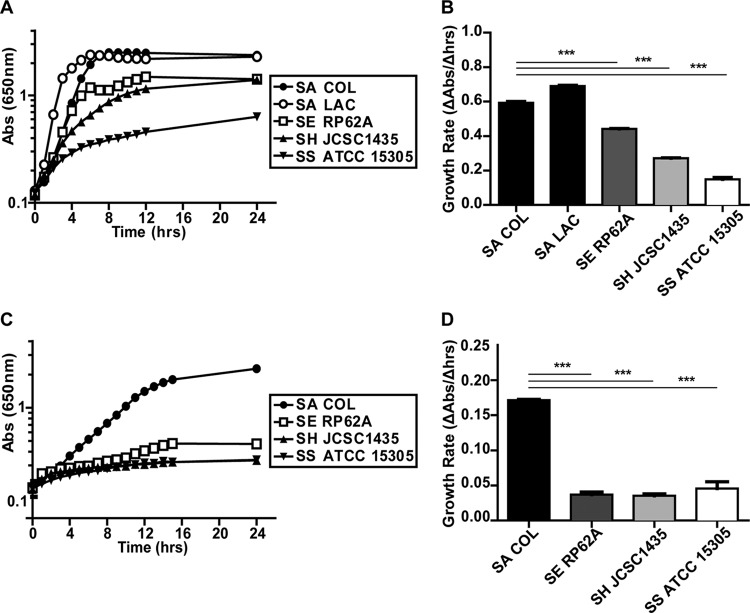
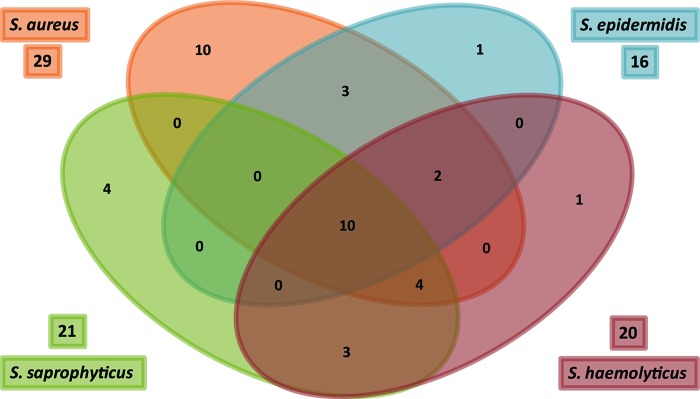
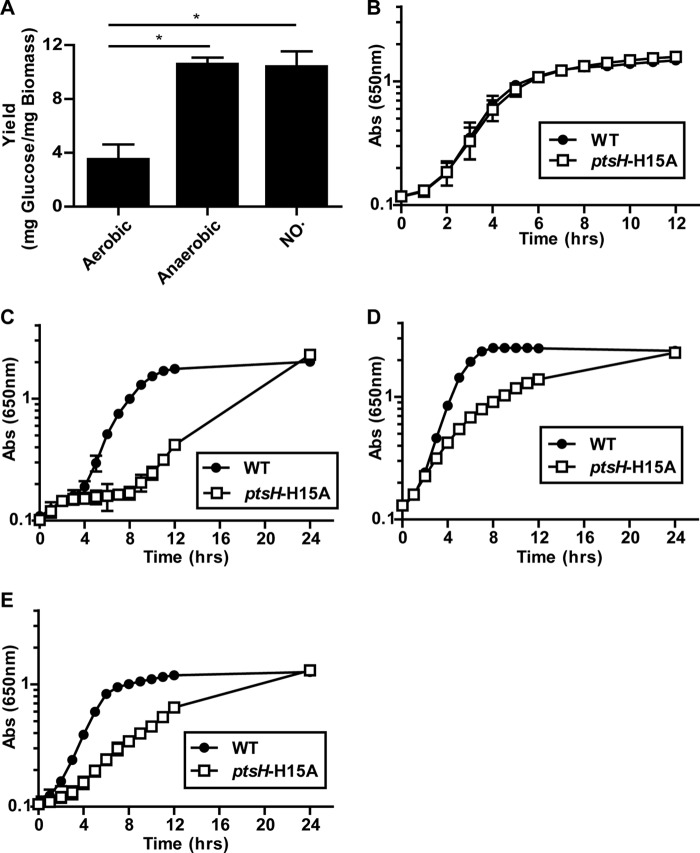
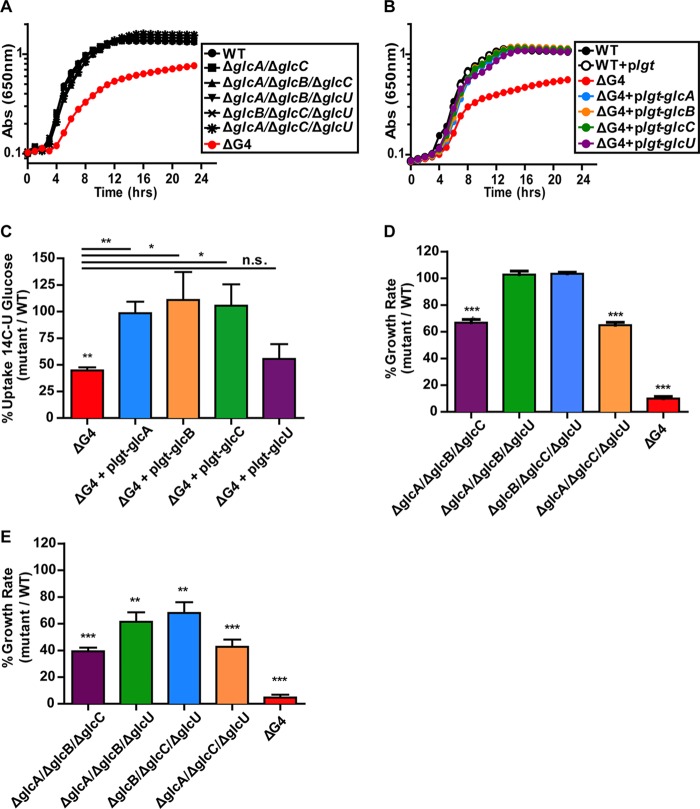
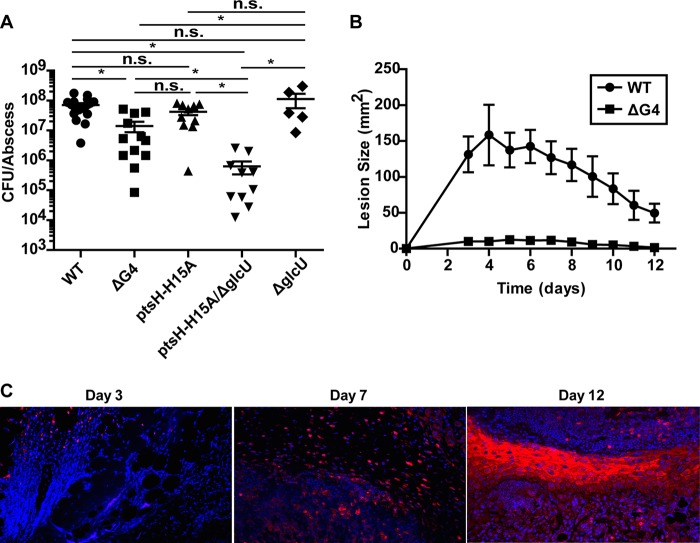
Acquisition of numerous virulence determinants affords Staphylococcus aureus greater pathogenicity than other skin-colonizing staphylococci in humans. Additionally, the metabolic adaptation of S. aureus to nonrespiratory conditions encountered during infection (e.g., hypoxia, nitric oxide, iron chelation) has been implicated as contributing to S. aureus virulence. Specifically, S. aureus has been shown to ferment glycolytic substrates in nonrespiratory environments encountered within the host. Here, we show that S. aureus has acquired unique carbohydrate transporters that facilitate the maximal uptake of host sugars and serve to support nonrespiratory growth in inflamed tissue. The carbohydrate substrates of 11 S. aureus transporters were identified, and at least four of their genes encode S. aureus glucose transporters ( glcA , glcB , glcC , and glcU ). Moreover, two transporter genes ( glcA and glcC ) are unique to S. aureus and contribute disproportionately to the nonrespiratory growth of S. aureus on glucose. Targeted inactivation of sugar transporters reduced glucose uptake and attenuated S. aureus in a murine model of skin and soft tissue infections. These data expand the evidence for metabolic adaptation of S. aureus to invasive infection and demonstrate the specific requirement for the fermentation of glucose over all other available carbohydrates. Ultimately, acquisition of foreign genes allows S. aureus to adopt a metabolic strategy resembling that of infiltrating host immune cells: high glycolytic flux coupled to lactate excretion. IMPORTANCE The bacterial pathogen Staphylococcus aureus causes a wide range of human infections that are costly and difficult to treat. S. aureus differs from closely related commensal staphylococci in its ability to flourish following the invasion of deeper tissue from the skin surface. There, S. aureus primarily uses glucose to grow under respiration-limiting conditions imposed by the immune system. It was previously unclear how S. aureus thrives in this environment when other Staphylococcus species cannot. Our results provide evidence that S. aureus has acquired an expanded repertoire of carbohydrate transporters. In particular, four glucose transporters contribute to efficient S. aureus growth during infection. Thus, S. aureus has evolved to maximize its glucose uptake abilities for enhanced glycolytic flux during tissue invasion. This dependence on glucose acquisition for S. aureus virulence may also explain links between serious infectious complications associated with diabetic patients exhibiting elevated blood glucose levels.
Overview
The claims and statistics of this paper haven’t been checked yet.
Free: it reads the open-access text and checks the first 5 claims that cite a source we can check. Create a free account to check every claim.
Integrity signals
Registry
Cites
Statistics
Figures
Verification
Claims the paper makes
The claims and statistics of this paper haven’t been checked yet.
Free: it reads the open-access text and checks the first 5 claims that cite a source we can check. Create a free account to check every claim.
Claims other papers make about this one
Each is checked against this paper’s own text: does it say what the citing paper says it does?
The cited source says what the claim attributes to it.
In the citing paper
“the ∆G4 mutant (lacking all four glucose transporters: glcA, glcB, glcC, and glcU) is specifically defective in glucose utilization (12).”
From Lack of nutritional immunity in diabetic skin infections promotes Staphylococcus aureus virulence (2020) · cites this paper as [12]
In the citing paper
“We previously showed that S. aureus has evolved a similar metabolic strategy through the genetic acquisition of two highly active glucose transporters (glcA and glcC; Fig. 6A and fig. S6A) and a highly active lactate dehydrogenase (ldh1) to resist immune radicals such as NO (12).”
From Lack of nutritional immunity in diabetic skin infections promotes Staphylococcus aureus virulence (2020) · cites this paper as [12]
In the citing paper
“two of the four S. aureus glucose transporters, GlcA and GlcC, are recent additions to the genome, as they are absent in all but two other staphylococcal species and overly contribute to glucose transport (Fig. 6A) (12).”
From Lack of nutritional immunity in diabetic skin infections promotes Staphylococcus aureus virulence (2020) · cites this paper as [12]
Self-check
Percentages, sums and reported differences re-computed from the paper’s own numbers.
The self-check needs the paper’s full text.
Citations
Cites
Staphylococcus aureus Endocarditis: A Consequence of Medical Progress
Fowler, V. G., Miro, J. M., Hoen, B., Cabell, C. H., Abrutyn, E., Rubinstein, E., Corey, G. R., Spelman, D., Bradley, S. F., Barsic, B., et al. (2005) · JAMA · doi:10.1001/jama.293.24.3012 · Cited by 1,174
Molecular Mechanisms of Staphylococcus aureus Iron Acquisition
Hammer, N. D., & Skaar, E. P. (2011) · Annual Review of Microbiology · doi:10.1146/annurev-micro-090110-102851 · Cited by 379
Richardson, A. R., Libby, S. J., & Fang, F. C. (2008) · Science · doi:10.1126/science.1155207 · Cited by 296
Self-citationStaphylococcus aureus Redirects Central Metabolism to Increase Iron Availability
Friedman, D. B., Stauff, D. L., Pishchany, G., Whitwell, C. W., Torres, V. J., & Skaar, E. P. (2006) · PLoS Pathogens · doi:10.1371/journal.ppat.0020087 · Cited by 222 · cited 2×
“Additionally, the lack of abundant iron during infection limits respiration and necessitates high glycolytic flux coupled to lactate excretion (15, 17).”
BackgroundSpecificity for human hemoglobin enhances Staphylococcus aureus infection
Pishchany, G., McCoy, A. L., Torres, V. J., Krause, J. C., Crowe, J. E., Fabry, M. E., & Skaar, E. P. (2010) · Cell Host & Microbe · doi:10.1016/j.chom.2010.11.002 · Cited by 146
Federspiel, J. J. (2012) · Archives of Internal Medicine · doi:10.1001/archinternmed.2011.1027 · Cited by 129
Research works printed but not linked: 43
- 10.7326/0003-4819-144-5-200603070-00006 · DOI · Paper page
- 10.1016/j.annemergmed.2010.11.024 · DOI
- 10.1001/jama.290.22.2976 · DOI · Paper page
- 10.1016/j.ijantimicag.2009.03.004 · DOI
- 10.1093/infdis/143.4.509 · DOI · Paper page
- 10.1128/CMR.00109-13 · DOI · Paper page
- 10.1128/IAI.70.9.4987-4996.2002 · DOI · Paper page
- 10.1016/S0966-842X(98)01400-0 · DOI · Paper page
- 10.1016/j.mib.2013.11.004 · DOI · Paper page
- 10.1016/j.tiv.2010.06.016 · DOI · Paper page
- 10.1371/journal.pone.0016957 · DOI · Paper page
- 10.1371/journal.pone.0028824 · DOI
- 10.1016/j.chom.2012.11.012 · DOI · Paper page
- 10.1128/mBio.00045-15 · DOI · Paper page
- 10.1186/gb-2009-10-6-r63 · DOI · Paper page
- Dills SS, Apperson A, Schmidt MR, Saier MH. 1980. Carbohydrate transport in bacteria. Microbiol Res 44:385–418.
- 10.1128/MR.57.3.543-594.1993 · doi:10.1128/mr.57.3.543-594.1993 · Paper page
- 10.1016/S1389-1723(01)80308-X · DOI · Paper page
- 10.1086/431587 · DOI · Paper page
- 10.1016/0304-4165(65)90096-6 · doi:10.1016/0304-4165(65)90096-6
- 10.1128/mBio.00537-12 · DOI · Paper page
- 10.1007/s00018-014-1635-y · DOI
- 10.1111/j.1365-2958.2008.06564.x · DOI
- 10.1046/j.1432-1327.2001.02265.x · DOI · Paper page
- 10.1016/j.jdiacomp.2007.07.003 · doi:10.1016/j.jdiacomp.2007.07.003
- 10.1080/00365540600617017 · DOI
- 10.1126/science.1250684 · DOI · Paper page
- 10.1186/1471-2180-9-95 · DOI · Paper page
- 10.1128/IAI.00035-08 · DOI · Paper page
- 10.1128/IAI.00724-08 · DOI
- 10.1128/iai.6.5.689-694.1972 · doi:10.1128/iai.6.5.689-694.1972
- 10.1128/iai.60.8.3381-3388.1992 · DOI · Paper page
- 10.1074/jbc.M505070200 · DOI · Paper page
- 10.1128/JB.187.23.8181-8184.2005 · DOI
- 10.1128/mBio.00241-13 · DOI · Paper page
- 10.1111/mmi.13347 · DOI
- 10.1128/mBio.00696-13 · DOI · Paper page
- 10.1111/j.1365-2958.2008.06363.x · DOI · Paper page
- 10.1161/01.CIR.0000124719.61827.7F · DOI · Paper page
- 10.1007/s00125-010-1672-5 · DOI · Paper page
- 10.1016/j.bmc.2014.01.020 · DOI
- 10.1002/9780471729259.mc09c02s28 · DOI
- 10.1371/journal.pone.0054293 · DOI
Cited by
The wound microbiota: microbial mechanisms of impaired wound healing and infection
Uberoi, A., McCready-Vangi, A., & Grice, E. A. (2024) · Nature Reviews Microbiology · doi:10.1038/s41579-024-01035-z · Cited by 864
Lack of nutritional immunity in diabetic skin infections promotes Staphylococcus aureus virulence
Thurlow, L. R., Stephens, A. C., Hurley, K. E., & Richardson, A. R. (2020) · Science Advances · doi:10.1126/sciadv.abc5569 · Cited by 116
Self-citationPotter, A. D., Butrico, C. E., Ford, C. A., Curry, J. M., Trenary, I. A., Tummarakota, S. S., Hendrix, A. S., Young, J. D., & Cassat, J. E. (2020) · Proceedings of the National Academy of Sciences · doi:10.1073/pnas.1922211117 · Cited by 73
Metadata
- Authors
- Vitko, N. P., Grosser, M. R., Khatri, D., Lance, T. R., & Richardson, A. R.
- Affiliations
- Department of Microbiology and Immunology, University of North Carolina at Chapel Hill, Chapel Hill, North Carolina, USA
- Venue
- mBio
- Publisher
- American Society for Microbiology
- Published
- 2016-07-06
- Volume
- 7
- Issue
- 3
- ISSN
- 2161-2129
- 2150-7511
- PMC
- PMC4916373
- Cited by
- 125
- References
- 6
- Language
- en
- Licence
- creativecommons.org/licenses/by/4.0/ (vor)
- journals.asm.org/non-commercial-tdm-license (tdm)
- Funders
- HHS | NIH | National Institute of Allergy and Infectious Diseases (R01-AI093613, R21-AI111707)
- American Heart Association (13PRE15200002, 13PRE19830003)
About these checks
Registry, retraction, Cites and statistics results are computed, not judged, with one exception: a printed reference that no index lists is read once by a model before it counts as a citation error. Claims are extracted by a model and kept only when their quote appears verbatim in the text; each cited source is then checked, with a model’s help, for whether it says what the claim relies on. Those verdicts can be wrong — read the claim’s quote and the cited source before relying on one.
Statistics and arithmetic are recomputed, not judged.
Confidence bands are shown only for fields calibrated on our annotated test set. None is calibrated yet, so no band is shown.
What counts as a claim ›How we measure confidence ›How we check this ›
Are you an author, or do you see a problem with this page? Request a review
Data sources
Bibliographic data: Semantic Scholar, OpenAlex, Crossref.
Contains information from the Semantic Scholar Academic Graph Datasets, made available under the ODC Attribution License (ODC-BY 1.0).
Semantic Scholar’s data is described in: Kinney, R., et al. (2023). The Semantic Scholar Open Data Platform. arXiv:2301.10140.
