

A Dysfunctional Tricarboxylic Acid Cycle Enhances Fitness of Staphylococcus epidermidis During β-Lactam Stress
Open accessThe DOI matches its Crossref record; 24 of the 24 references it cites were found in a registry or an index.
Abstract
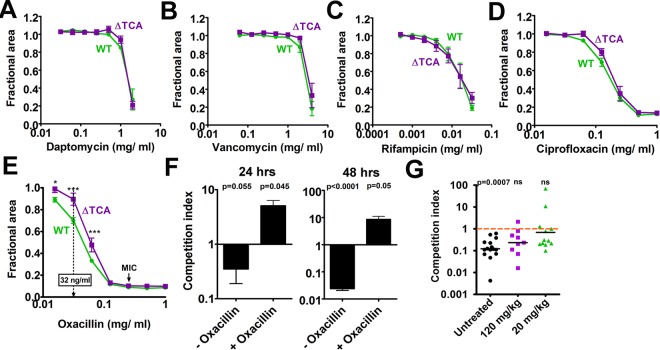
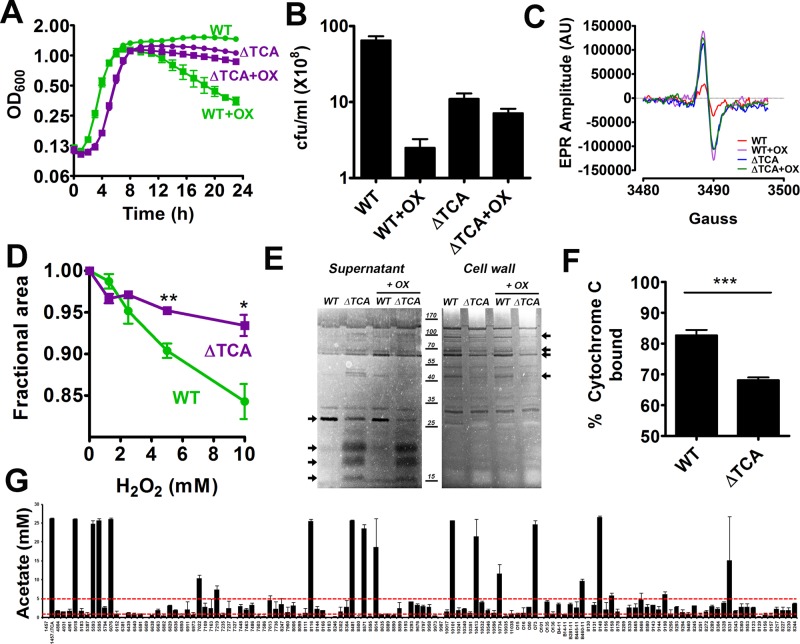
A recent controversial hypothesis suggested that the bactericidal action of antibiotics is due to the generation of endogenous reactive oxygen species (ROS), a process requiring the citric acid cycle (tricarboxylic acid [TCA] cycle). To test this hypothesis, we assessed the ability of oxacillin to induce ROS production and cell death in Staphylococcus epidermidis strain 1457 and an isogenic citric acid cycle mutant. Our results confirm a contributory role for TCA-dependent ROS in enhancing susceptibility of S. epidermidis toward β-lactam antibiotics and also revealed a propensity for clinical isolates to accumulate TCA cycle dysfunctions presumably as a way to tolerate these antibiotics. The increased protection from β-lactam antibiotics could result from pleiotropic effects of a dysfunctional TCA cycle, including increased resistance to oxidative stress, reduced susceptibility to autolysis, and a more positively charged cell surface. IMPORTANCE Staphylococcus epidermidis , a normal inhabitant of the human skin microflora, is the most common cause of indwelling medical device infections. In the present study, we analyzed 126 clinical S. epidermidis isolates and discovered that tricarboxylic acid (TCA) cycle dysfunctions are relatively common in the clinical environment. We determined that a dysfunctional TCA cycle enables S. epidermidis to resist oxidative stress and alter its cell surface properties, making it less susceptible to β-lactam antibiotics.
Overview
The claims and statistics of this paper haven’t been checked yet.
Free: it reads the open-access text and checks the first 5 claims that cite a source we can check. Create a free account to check every claim.
Integrity signals
Registry
Cites
Statistics
Figures
Verification
Claims the paper makes
The claims and statistics of this paper haven’t been checked yet.
Free: it reads the open-access text and checks the first 5 claims that cite a source we can check. Create a free account to check every claim.
Claims other papers make about this one
Each is checked against this paper’s own text: does it say what the citing paper says it does?
The cited source says what the claim attributes to it.
In the citing paper
“wild-type S. aureus exposed to H2O2 increase expression of genes associated with fermentation and a Staphylococcus epidermidis mutant lacking a functional TCA cycle displayed elevated resistance to H2O2 killing (54, 55, 84).”
From Staphylococcus aureus Adapts to Oxidative Stress by Producing H 2 O 2 -Resistant Small-Colony Variants via the SOS Response (2015) · cites this paper as [84]
The check wasn’t confident either way, so it gives no verdict — never disputed.
In the citing paper
“wild-type S. aureus exposed to H2O2 increase expression of genes associated with fermentation and a Staphylococcus epidermidis mutant lacking a functional TCA cycle displayed elevated resistance to H2O2 killing (54, 55, 84).”
From Staphylococcus aureus Adapts to Oxidative Stress by Producing H 2 O 2 -Resistant Small-Colony Variants via the SOS Response (2015) · cites this paper as [84]
Experimental — accuracy not yet measured
Self-check
Percentages, sums and reported differences re-computed from the paper’s own numbers.
The self-check needs the paper’s full text.
Citations
Cites
A Common Mechanism of Cellular Death Induced by Bactericidal Antibiotics
Kohanski, M. A., Dwyer, D. J., Hayete, B., Lawrence, C. A., & Collins, J. J. (2007) · Cell · doi:10.1016/j.cell.2007.06.049 · Cited by 2,982 · cited 3×
“In contrast to previous observations in Escherichia coli (4), time-kill studies using antibiotic doses above their MIC did not reveal any significant”
BackgroundResultHow antibiotics kill bacteria: from targets to networks
Kohanski, M. A., Dwyer, D. J., & Collins, J. J. (2010) · Nature Reviews Microbiology · doi:10.1038/nrmicro2333 · Cited by 2,258 · cited 2×
“2C), supporting observations from earlier studies (4, 14) that described a role for TCA cycle-dependent oxidative stress in antibioticmediated cell death.”
BackgroundResultCell Death from Antibiotics Without the Involvement of Reactive Oxygen Species
Liu, Y., & Imlay, J. A. (2013) · Science · doi:10.1126/science.1232751 · Cited by 593 · cited 1×
“More recently, this hypothesis has been rigorously contested and as such remains to be further clarified (6, 7).”
BackgroundVuong, C., Kocianova, S., Voyich, J. M., Yao, Y., Fischer, E. R., DeLeo, F. R., & Otto, M. (2004) · Journal of Biological Chemistry · doi:10.1074/jbc.m411374200 · Cited by 592 · cited 1×
“Although the mechanism by which the TCA mutant maintains a positively charged surface is not known, one possibility involves the diversion of carbon into the production of PIA in this mutant (9), where the deacetylation of Polysaccharide Intercellular Adhesin (PIA) gives rise to an increased positive charge (20).”
BackgroundKilling by Bactericidal Antibiotics Does Not Depend on Reactive Oxygen Species
Keren, I., Wu, Y., Inocencio, J., Mulcahy, L. R., & Lewis, K. (2013) · Science · doi:10.1126/science.1232688 · Cited by 550
Lambert, R. J. W., & Pearson, J. (2000) · Journal of Applied Microbiology · doi:10.1046/j.1365-2672.2000.01017.x · Cited by 507 · cited 3×
“(D) Sensitivity of strains to hydrogen peroxide was carried out in TSB (no glucose) using the Lambert and Pearson method (10) (n 3; Student’s t test; *, P 0.”
MethodInfluentialAt the Crossroads of Bacterial Metabolism and Virulence Factor Synthesis in Staphylococci
Somerville, G. A., & Proctor, R. A. (2009) · Microbiology and Molecular Biology Reviews · doi:10.1128/mmbr.00005-09 · Cited by 392 · cited 2×
“epidermidis to oxidize metabolically excreted acetate via the TCA cycle under aerobic conditions (1).”
BackgroundSelf-citationThe Tricarboxylic Acid Cycle, an Ancient Metabolic Network with a Novel Twist
Mailloux, R. J., Bériault, R., Lemire, J., Singh, R., Chénier, D. R., Hamel, R. D., & Appanna, V. D. (2007) · PLoS ONE · doi:10.1371/journal.pone.0000690 · Cited by 329 · cited 1×
“But one possibility lies in the depletion of a powerful antioxidant ( -ketoglutarate) in this mutant (16).”
BackgroundBiosynthesis and functions of bacillithiol, a major low-molecular-weight thiol in Bacilli
Gaballa, A., Newton, G. L., Antelmann, H., Parsonage, D., Upton, H., Rawat, M., Claiborne, A., Fahey, R. C., & Helmann, J. D. (2010) · Proceedings of the National Academy of Sciences · doi:10.1073/pnas.1000928107 · Cited by 248 · cited 1×
“Indeed, Bacillus subtilis mutants incapable of synthesizing bacillithiol exhibit increased sensitivity to penicillin (18).”
BackgroundInvolvement of Reactive Oxygen Species in the Action of Ciprofloxacin against Escherichia coli
Goswami, M., Mangoli, S. H., & Jawali, N. (2006) · Antimicrobial Agents and Chemotherapy · doi:10.1128/aac.50.3.949-954.2006 · Cited by 210
Cited by
Antibiotics induce redox-related physiological alterations as part of their lethality
Dwyer, D. J., Belenky, P. A., Yang, J. H., MacDonald, I. C., Martell, J. D., Takahashi, N., Chan, C. T. Y., Lobritz, M. A., Braff, D., Schwarz, E. G., et al. (2014) · Proceedings of the National Academy of Sciences · doi:10.1073/pnas.1401876111 · Cited by 948
Antibiotic efficacy is linked to bacterial cellular respiration
Lobritz, M. A., Belenky, P., Porter, C. B. M., Gutierrez, A., Yang, J. H., Schwarz, E. G., Dwyer, D. J., Khalil, A. S., & Collins, J. J. (2015) · Proceedings of the National Academy of Sciences · doi:10.1073/pnas.1509743112 · Cited by 773
“With regard to cellular metabolic state, the efficacy of bactericidal antibiotic therapy has been linked to carbon flux through the TCA cycle (32, 33), and environmental factors that engage with central metabolism, such as the availability of molecular oxygen to feed the electron transport chain, have also been linked…”
BackgroundThe Role of Reactive Oxygen Species in Antibiotic-Mediated Killing of Bacteria
Van Acker, H., & Coenye, T. (2017) · Trends in Microbiology · doi:10.1016/j.tim.2016.12.008 · Cited by 619
Bactericidal Antibiotics Induce Toxic Metabolic Perturbations that Lead to Cellular Damage
Belenky, P., Ye, J. D., Porter, C. B. M., Cohen, N. R., Lobritz, M. A., Ferrante, T., Jain, S., Korry, B. J., Schwarz, E. G., Walker, G. C., et al. (2015) · Cell Reports · doi:10.1016/j.celrep.2015.09.059 · Cited by 513
“Additionally, perturbations to the tricarboxylic acid (TCA) cycle have been found to reduce antibiotic sensitivity in vitro, and TCA cycle defects have been identified in numerous clinical isolates (Thomas et al., 2013; Rosato et al., 2014).”
BackgroundUnraveling the Physiological Complexities of Antibiotic Lethality
Dwyer, D. J., Collins, J. J., & Walker, G. C. (2015) · Annual Review of Pharmacology and Toxicology · doi:10.1146/annurev-pharmtox-010814-124712 · Cited by 280
Antimicrobial Tolerance and Metabolic Adaptations in Microbial Biofilms
Crabbé, A., Jensen, P. Ø., Bjarnsholt, T., & Coenye, T. (2019) · Trends in Microbiology · doi:10.1016/j.tim.2019.05.003 · Cited by 276
Painter, K. L., Strange, E., Parkhill, J., Bamford, K. B., Armstrong-James, D., & Edwards, A. M. (2015) · Infection and Immunity · doi:10.1128/iai.03016-14 · Cited by 153
Microbial Metabolism Modulates Antibiotic Susceptibility within the Murine Gut Microbiome
Cabral, D. J., Penumutchu, S., Reinhart, E. M., Zhang, C., Korry, B. J., Wurster, J. I., Nilson, R., Guang, A., Sano, W. H., Rowan-Nash, A. D., et al. (2019) · Cell Metabolism · doi:10.1016/j.cmet.2019.08.020 · Cited by 142
“Recent in vitro data indicate that active microbial metabolism contributes to beta-lactam toxicity and that reduced metabolic activity promotes tolerance and persistence (Adolfsen and Brynildsen, 2015; Amato et al., 2014; Belenky et al., 2015; Cabral et al., 2018; Conlon et al., 2016; Henry and Brynildsen, 2016; Kohan…”
BackgroundResultMetabolic aspects of bacterial persisters
Prax, M., & Bertram, R. (2014) · Frontiers in Cellular and Infection Microbiology · doi:10.3389/fcimb.2014.00148 · Cited by 121
“Retarded metabolic flux through or disruption of the TCA cycle was found in clinical S. epidermidis isolates with enhanced survival during β-lactam treatment (Thomas et al., 2013).”
BackgroundChambers, L. R., Yang, Y., Littier, H., Ray, P. P., Zhang, T., Pruden, A. J., Strickland, M. S., & Knowlton, K. F. (2015) · PLoS ONE · doi:10.1371/journal.pone.0133764 · Cited by 138
“mutant bacteria are better able to survive when exposed to β-lactam antibiotics, such as oxacillin [40].”
Van Acker, H., Gielis, J., Acke, M., Cools, F., Cos, P., & Coenye, T. (2016) · PLOS ONE · doi:10.1371/journal.pone.0159837 · Cited by 104
Antibiotic Persistence as a Metabolic Adaptation: Stress, Metabolism, the Host, and New Directions
Cabral, D. J., Wurster, J. I., & Belenky, P. A. (2018) · Pharmaceuticals · doi:10.3390/ph11010014 · Cited by 117
“Recently, TCA cycle activity and CCR linkage have been identified as the connecting mechanisms [73].”
BackgroundAntibiotic efficacy — context matters
Yang, J. H., Bening, S. C., & Collins, J. J. (2017) · Current Opinion in Microbiology · doi:10.1016/j.mib.2017.09.002 · Cited by 110
González-Jiménez, I., Perlin, D. S., & Shor, E. (2023) · Frontiers in Cellular and Infection Microbiology · doi:10.3389/fcimb.2023.1276406 · Cited by 89
Cheng, Z.-X., Yang, M., Peng, B., Peng, X., Lin, X., & Li, H. (2018) · Journal of Proteomics · doi:10.1016/j.jprot.2018.04.002 · Cited by 81
Metabolic Rewiring of Bacterial Pathogens in Response to Antibiotic Pressure—A Molecular Perspective
Acierno, C., Barletta, F., Nevola, R., Rinaldi, L., Sasso, F. C., Adinolfi, L. E., & Caturano, A. (2025) · International Journal of Molecular Sciences · doi:10.3390/ijms26125574 · Cited by 76
“This metabolic modulation reduces intracellular oxidative stress, contributing to antibiotic tolerance and survival in hostile environments [78,79].”
Biofilm formation displays intrinsic offensive and defensive features of Bacillus cereus
Caro‐Astorga, J., Frenzel, E., Perkins, J. R., Álvarez‐Mena, A., de Vicente, A., Ranea, J. A. G., Kuipers, O. P., & Romero, D. (2020) · npj Biofilms and Microbiomes · doi:10.1038/s41522-019-0112-7 · Cited by 73
“This shunt yields less 353 reducing power, and indirectly increases the concentration of NAD, which have been 354 proven to arrest superoxide production by Complex I, and complementary being 355 implicated in the level of tolerance to antibiotics [49-53].”
BackgroundRosato, R. R., Fernandez, R., Paz, L. I., Singh, C. R., & Rosato, A. E. (2014) · PLoS ONE · doi:10.1371/journal.pone.0099605 · Cited by 62
Fan, L., Pan, Z., Liao, X., Zhong, Y., Guo, J., Pang, R., Chen, X., Ye, G., & Su, Y. (2023) · Frontiers in Pharmacology · doi:10.3389/fphar.2023.1133685 · Cited by 55
Influence of Reactive Oxygen Species onDe NovoAcquisition of Resistance to Bactericidal Antibiotics
Hoeksema, M., Brul, S., & ter Kuile, B. H. (2018) · Antimicrobial Agents and Chemotherapy · doi:10.1128/aac.02354-17 · Cited by 53
Cabral, D. J., Wurster, J. I., Korry, B. J., Penumutchu, S., & Belenky, P. A. (2020) · mSystems · doi:10.1128/msystems.00317-20 · Cited by 48
“It is known that 431 nutrient availability and metabolic state are a major determinant of antibiotic susceptibility of 432 bacteria in vitro [20,60-63,91-97].”
BackgroundDotto, C., Serrat, A. L., Cattelan, N., Barbagelata, M. S., Yantorno, O. M., Sordelli, D. O., Ehling‐Schulz, M., Grunert, T., & Buzzola, F. R. (2017) · Frontiers in Microbiology · doi:10.3389/fmicb.2017.00004 · Cited by 44
“Thomas et al. (2013) determined that a dysfunctional TCA cycle makes S. epidermidis less susceptible to beta-lactam antibiotics.”
BackgroundCampbell, C., Fingleton, C., Zeden, M. S., Bueno, E., Gallagher, L. A., Shinde, D. D., Ahn, J., Olson, H. M., Fillmore, T., Adkins, J., et al. (2021) · mBio · doi:10.1128/mbio.00530-21 · Cited by 42
Self-citationBactericidal Antibiotics Increase Hydroxyphenyl Fluorescein Signal by Altering Cell Morphology
Paulander, W., Wang, Y., Folkesson, A., Charbon, G., Løbner‐Olesen, A., & Ingmer, H. (2014) · PLoS ONE · doi:10.1371/journal.pone.0092231 · Cited by 41
Chaudhari, S. S., Thomas, V. C., Sadykov, M. R., Bose, J. L., Ahn, D. J., Zimmerman, M. C., & Bayles, K. W. (2016) · Molecular Microbiology · doi:10.1111/mmi.13433 · Cited by 40
Self-citationPotential and use of bacterial small RNAs to combat drug resistance: a systematic review
Chan, H., Ho, J., Liu, X., Zhang, L., Wong, S. H., Chan, M. T. V., & Wu, W. K. K. (2017) · Infection and Drug Resistance · doi:10.2147/idr.s148444 · Cited by 33
“56 Although accumulating evidence has suggested that modulating sRNA expression alters bacterial susceptibility to antibiotics, these appear to be strain specific.”
Qi, F., Zhao, X., Kitahara, Y., Li, T., Ou, X., Du, W., Liu, D., & Huang, J. (2016) · Engineering in Life Sciences · doi:10.1002/elsc.201500143 · Cited by 34
“Actually under natural or stressful circumstances, the active citric acid cycle may enhance the fitness of microbe [41].”
BackgroundYe, J.-Z., Su, Y., Peng, X., & Li, H. (2021) · Frontiers in Microbiology · doi:10.3389/fmicb.2021.654783 · Cited by 31
“Thomas et al. (2013) showed that a dysfunctional TCA cycle enables Staphylococcus epidermidis to resist oxidative stress and alter its cell surface properties, making it less susceptible to beta-lactam antibiotics.”
Xiong, J.-Q., Qi, X., & Qin, J. (2022) · The Science of The Total Environment · doi:10.1016/j.scitotenv.2022.154436 · Cited by 29
Slachmuylders, L., Acker, H. V., Brackman, G., Sass, A. M., Nieuwerburgh, F. V., & Coenye, T. (2018) · PLoS ONE · doi:10.1371/journal.pone.0190533 · Cited by 27
Targeting bioenergetics is key to counteracting the drug-tolerant state of biofilm-grown bacteria
Donnert, M., Elsheikh, S., Arce‐Rodríguez, A., Pawar, V., Braubach, P., Jonigk, D. D., Haverich, A., Weiß, S., Müsken, M., & Häußler, S. (2020) · PLoS Pathogens · doi:10.1371/journal.ppat.1009126 · Cited by 28
Wurster, J. I., Peterson, R. L., Brown, C. E., Penumutchu, S., Guzior, D. V., Neugebauer, K. A., Sano, W. H., Sebastian, M. M., Quinn, R. A., & Belenky, P. A. (2021) · Cell Reports · doi:10.1016/j.celrep.2021.110113 · Cited by 24
“Meanwhile, fermentation, diversion away from the tricarboxylic acid (TCA) cycle, or overall reduction in metabolism can confer drug tolerance in some species (Ahn et al., 2016; Conlon et al., 2016; Lobritz et al., 2015; Meylan et al., 2017; Thomas et al., 2013).”
BackgroundSingh, K. S., Sharma, R., Keshari, D., Singh, N. K., & Singh, S. K. (2017) · Tuberculosis · doi:10.1016/j.tube.2017.07.006 · Cited by 23
Cellular Response to Ciprofloxacin in Low-Level Quinolone-Resistant Escherichia coli
Machuca, J., Recacha, E., Briales, A., Díaz-De-Alba, P., Blázquez, J., Pascual, Á., & Rodríguez-Martínez, J. M. (2017) · Frontiers in Microbiology · doi:10.3389/fmicb.2017.01370 · Cited by 29
“Drug tolerance in pathogenic clinical isolates involves mutations in the oxidative stress response and detoxifying genes (McMurry et al., 1998; Koutsolioutsou et al., 2005; Páez et al., 2010; Thomas et al., 2013).”
BackgroundAnalysis of stress response in multiple bacterial pathogens using a network biology approach
Sharma, A., Tayal, S., & Bhatnagar, S. (2025) · Scientific Reports · doi:10.1038/s41598-025-91269-5 · Cited by 29
“TCA maintains the disrupted redox balance in stress 142 .”
Maifiah, M. H. M., Zhu, Y., Tsuji, B. T., Creek, D. J., Velkov, T., & Li, J. (2022) · Journal of Biomedical Science · doi:10.1186/s12929-022-00874-3 · Cited by 23
“Antibiotic-induced cell death can be due to altered bacterial cellular respiration and central metabolism via carbon flux within the TCA cycle [77, 79, 80].”
BackgroundMartínez-García, S., Peralta, H., Cabrera, G. B., Chávez‐Galán, L., Rodríguez–Martínez, S., Cancino-Diaz, M. E., & Cancino‐Díaz, J. C. (2021) · Research in Microbiology · doi:10.1016/j.resmic.2020.103796 · Cited by 24
Liu, X., Wang, J., Chen, M., Che, R., Ding, W., Yu, F., Zhou, Y., Cui, W., Xiaoxu, X., Bello-Onaghise, G., et al. (2019) · BMC Veterinary Research · doi:10.1186/s12917-019-1959-9 · Cited by 23
“epidermidis becoming less susceptible to β-lactam antibiotics [41].”
BackgroundDittmann, K. K., Porsby, C. H., Gonçalves, P., Mateiu, R. V., Sonnenschein, E. C., Bentzon‐Tilia, M., Egan, S., & Gram, L. (2019) · Environmental Microbiology Reports · doi:10.1111/1758-2229.12771 · Cited by 19
“This mode of action has been confirmed for other species (Thomas et al., 2013; Van Acker et al., 2013), and it might explain why components of the ROS stress-response are triggered by TDA.”
BackgroundShi, J., Chen, C., Kong, P., Yu, F., Lv, Q., Wang, Z., & Liu, Y. (2025) · Advanced Science · doi:10.1002/advs.202416260 · Cited by 22
Qian, C., Jin, L., Zhu, L., Zhou, Y., Chen, J., Yang, D., Xu, X., Ding, P., Li, R., & Zhao, Z. (2022) · Frontiers in Microbiology · doi:10.3389/fmicb.2022.864246 · Cited by 18
Bischofberger, A. M., Pfrunder‐Cardozo, K. R., Baumgartner, M., & Hall, A. R. (2021) · Evolutionary Applications · doi:10.1111/eva.13200 · Cited by 17
In vitro antibacterial response of ZnO‐MgO nanocomposites at various compositions
Amir, A., Bibi, S., Nawaz, A. A., Ibrahim, A., Ashiq, M. N., Saeed, M. Q., Hamza, M., Rasheed, H. M. Z., & Islam, B. (2021) · International Journal of Applied Ceramic Technology · doi:10.1111/ijac.13734 · Cited by 17
Ohkubo, T., Matsumoto, Y., Cho, O., Ogasawara, Y., & Sugita, T. (2021) · PLoS ONE · doi:10.1371/journal.pone.0253618 · Cited by 13
Genetic Determinants of Intrinsic Antibiotic Tolerance in Mycobacterium avium
Matern, W. M., Parker, H., Danchik, C., Hoover, L., Bader, J. S., & Karakousis, P. C. (2021) · Microbiology Spectrum · doi:10.1128/spectrum.00246-21 · Cited by 12
“Pseudomonas aeruginosa (53), Staphylococcus aureus (54, 55), and Staphylococcus epidermis (56), suggesting that this pathway may be a common mechanism for promoting an-”
BackgroundGlutamate-pantothenate pathway promotes antibiotic resistance of Edwardsiella tarda
Yan, B.-B., Dong, X.-S., Wang, J., Li, X.-Y., An, L., Wang, X.-R., Zhang, L., Meng, Q., & Wang, C. (2023) · Frontiers in Microbiology · doi:10.3389/fmicb.2023.1264602 · Cited by 10
“It has been demonstrated that perturbation of the TCA cycle could reduce antibiotic sensitivity (Thomas et al., 2013), whereas promotion of the TCA cycle restores the susceptibility of bacteria to antibiotics (Peng et al.”
BackgroundHussein, M. H., Allobawi, R., Zhao, J., Yu, H. H., Neville, S. L., Wilksch, J. J., Wong, L. J. M., Baker, M. A., McDevitt, C. A., Rao, G. G., et al. (2023) · ACS Infectious Diseases · doi:10.1021/acsinfecdis.3c00264 · Cited by 10
Thomas, V. C., Chaudhari, S. S., Jones, J. P. E., Zimmerman, M. C., & Bayles, K. W. (2015) · BIO-PROTOCOL · doi:10.21769/bioprotoc.1586 · Cited by 9
Self-citationHuang, C., Liu, L., Kong, H.-K., Law, C. O. K., Pham, H. Q., Ho, P., & Lau, T. C. (2020) · RNA Biology · doi:10.1080/15476286.2020.1780040 · Cited by 9
Dixneuf, S., Chareire, A.-C., Mahé, P., Azami, M. E., Kolytcheff, C., Bellais, S., Guyard, C., Védrine, C., Mallard, F., Josso, Q., et al. (2023) · Frontiers in Microbiology · doi:10.3389/fmicb.2023.1232250 · Cited by 7
Proteomic analysis revealed the survival strategy of Coxiella burnetii to doxycycline exposure
Zúñiga-Navarrete, F., Flores‐Ramírez, G., Danchenko, M., Benada, O., Škríba, A., & Škultéty, Ľ. (2019) · Journal of Proteomics · doi:10.1016/j.jprot.2019.103479 · Cited by 10
Relationship between L-lactate dehydrogenase and multidrug resistance in Staphylococcus xylosus
Yuan, Z., Wang, J., Che, R., Bello-Onaghise, G., Zhou, Y., Dong, C., Li, L., Chen, M., Eliphaz, N., Liu, X., et al. (2021) · Archives of Microbiology · doi:10.1007/s00203-021-02625-8 · Cited by 7
Short-Term Dietary Intervention with Whole Oats Protects from Antibiotic-Induced Dysbiosis
Costa, S. K., Antosca, K. M., Beekman, C. N., Peterson, R. L., Penumutchu, S., & Belenky, P. A. (2023) · Microbiology Spectrum · doi:10.1128/spectrum.02376-23 · Cited by 6
Staphylococcus aureus Adaptation During Infection
Shopsin, B., & Copin, R. (2018) · Springer eBooks · doi:10.1007/978-3-319-78538-7_14 · Cited by 5
Wang, L., Yan, X., Yang, S., Zhang, H., Ma, L., & Shao, L. (2025) · BMC Microbiology · doi:10.1186/s12866-025-04169-z · Cited by 5
“The TCA cycle is associated with the generation of reactive oxygen species (ROS) in S. epider-midis [55].”
Qu, Q., Peng, H., Chen, M., Liu, X., Che, R., Bello-Onaghise, G., Zhang, Z., Chen, X., & Li, Y. (2024) · Archives of Microbiology · doi:10.1007/s00203-024-04093-2 · Cited by 3
“It is reported that the TCA mutant exhibited signifi - cant resistance to β -lactam in Staphylococcus epidermidis (Thomas et al. 2013).”
Cerdeira, C. D., da Silva, J. J., Netto, M. F. R., Boriollo, M. F. G., Santos, G. B., dos Reis, L. F. C., & Brigagão, M. R. P. L. (2020) · Revista Colombiana de Ciencias Químico Farmacéuticas · doi:10.15446/rcciquifa.v49n2.89894 · Cited by 3
“Over the last two decades, the underlying mechanism of action for the bactericidal ß-lactam antibiotics (including OXA) against a broader set of microorganisms has been shown to be overt dependent of reactive oxygen species (ROS) accumulation [18-20].”
BackgroundImplications of bacterial exposure to reactive oxygen and chlorine species
Donkor, G. Y., & Dahl, J. (2026) · Infection and Immunity · doi:10.1128/iai.00010-23 · Cited by 6
“It was further reported that clinical isolates accumulate TCA cycle dysfunctions as a strategy to increase fluoroquinolone resistance (158).”
Oxidative Stress as a Determinant of Antimicrobial Action, Resistance, and Treatment
Banerjee, S., Nandy, S. K., & Chakraborti, S. (2019) · Springer eBooks · doi:10.1007/978-981-13-8763-0_7 · Cited by 4
Antimicrobial-Mediated Bacterial Suicide
Hong, Y., Drlica, K., & Zhao, X. (2018) · Springer eBooks · doi:10.1007/978-3-319-78538-7_20 · Cited by 2
Wurster, J. I., Peterson, R. L., & Belenky, P. A. (2022) · Antibiotics · doi:10.3390/antibiotics11050585 · Cited by 2
Antibiotic-Induced Bacterial Cell Death: A “Radical” Way of Dying?
Farhang, P. A., Cotten, K. L., Smith, J. C., & Davis, K. M. (2025) · Current topics in microbiology and immunology · doi:10.1007/82_2024_284 · Cited by 1
Wang, P., Dai, W., Hu, J., Ma, S., Liang, Z., Zheng, B., Li, W., & Zhang, Y. (2026) · Food Bioscience · doi:10.1016/j.fbio.2026.108265 · Cited by 1
Chitosan-coated silver nanoparticles amplify glycopeptide efficacy against Staphylococcus aureus
Khairnar, S. V., Sommers, A., Muldiiarova, E., Bayles, K. W., Oupický, D., Thomas, V. C., Sadykov, M. R., & Romanova, S. (2026) · Frontiers in Microbiology · doi:10.3389/fmicb.2026.1787175 · Cited by 1
“The relative growth of JE2 (A) and UAMS-1 (B) treated with vancomycin or AgNPs/Van/CS under aerobic and anaerobic conditions was determined from the area under the OD600 growth curve at various antibiotic concentrations, as previously described (Thomas et al., 2013).”
Self-citationLi, C., Nair, S., Zhang, Z., Zhao, J., 王增萌, Zhou, C., Zhang, R., Jiao, N., & Zhang, Y. (2026) · Nature Communications · doi:10.1038/s41467-026-72596-1 · Cited by 1
Iron-dependent essential genes in Salmonella TyphimuriumPreprint
Karash, S., & Kwon, Y. M. (2017) · bioRxiv (Cold Spring Harbor Laboratory) · doi:10.1101/159921 · Cited by 1
Maifiah, M. H. M., Zhu, Y., Tsuji, B. T., Creek, D. J., Velkov, T., & Li, J. (2022) · Figshare · doi:10.6084/m9.figshare.21435578
Maifiah, M. H. M., Zhu, Y., Tsuji, B. T., Creek, D. J., Velkov, T., & Li, J. (2022) · Figshare · doi:10.6084/m9.figshare.21435581
OXA-48-producing Enterobacterales and novel molecules to combat them
Rima, M. (2023) · theses.fr (ABES) · doi:10.70675/956056e7z4a58z428fz8a38z122ed0d61d30
Kim, M., Koh, Y. K., Kim, S. J., Min, K. H., Ju, H. J., Lee, M., & Lee, Y. B. (2026) · Microorganisms · doi:10.3390/microorganisms14081631
“Prior studies have shown that TCA cycle activation in certain bacteria can enhance resilience to oxidative stress [27].”
Sirituenlee, S., Seesupa, S., & Rerkyusuke, S. (2026) · Veterinary World · doi:10.14202/vetworld.2026.4191-4209
“Staphylococcus species, including Staphylococcus epidermidis , can modulate TCA cycle activity in response to environmental stress, with potential consequences for bacterial survival and antimicrobial tolerance [47].”
Metadata
- Authors
- Chittezham Thomas, V., Kinkead, L. C., Janssen, A., Schaeffer, C. R., Woods, K. M., Lindgren, J. K., Peaster, J. M., Chaudhari, S. S., Sadykov, M., Jones, J., Mohamadi AbdelGhani, S. M., Zimmerman, M. C., Bayles, K. W., Somerville, G. A., & Fey, P. D.
- Affiliations
- Department of Pathology and Microbiology, Center for Staphylococcal Research, University of Nebraska Medical Center, Omaha, Nebraska, USA
- University of Nebraska Medical Center (US)
- Department of Microbiology and Immunology, Faculty of Pharmacy, Beni-Suef University, Beni-Suef, Egypt
- University of Nebraska–Lincoln (US)
- ORCID
- Venue
- mBio
- Publisher
- American Society for Microbiology
- Published
- 2013-08-30
- Volume
- 4
- Issue
- 4
- ISSN
- 2150-7511 (ISSN-L)
- 2161-2129
- PMC
- PMC3747581
- OpenAlex
- W2127527061
- Cited by
- 70
- References
- 24
- Citations by year
- 2026: 6 · 2025: 5 · 2024: 1 · 2023: 7 · 2022: 5 · 2021: 9 · 2020: 5 · 2019: 6 · 2018: 6 · 2017: 7 · 2016: 3 · 2015: 5 · 2014: 5
- FWCI
- 3.13
- Type
- journal article
- Language
- en
- Update notices
- correction (2014-06-03)
- Open access
- gold
- doi.org
- Licence
- cc-by-nc-sa
- creativecommons.org/licenses/by-nc-sa/3.0/ (vor)
- journals.asm.org/non-commercial-tdm-license (tdm)
- Locations
- mBio (publishedVersion, cc-by-nc-sa)
- Europe PMC (PubMed Central) (publishedVersion, cc-by-nc-sa)
- PubMed Central (publishedVersion, cc-by-nc-sa)
- PubMed (publishedVersion)
- DigitalCommons@UNMC (submittedVersion, cc-by-nc-sa)
- Lincoln (University of Nebraska) (submittedVersion)
- DOAJ (DOAJ: Directory of Open Access Journals) (submittedVersion, cc-by-sa)
- Funders
- National Institutes of Health
- National Institute of Allergy and Infectious Diseases (R21AI081101, P01AI083211)
- Topics
- Health Sciences › Medicine › Infectious Diseases › Antimicrobial Resistance in Staphylococcus
- Life Sciences › Biochemistry, Genetics and Molecular Biology › Genetics › Bacterial Genetics and Biotechnology
- Health Sciences › Medicine › Microbiology (medical) › Antibiotic Resistance in Bacteria
- Keywords
- Staphylococcus epidermidis, TCA cycle, beta-lactam antibiotics, oxacillin, reactive oxygen species, antibiotic tolerance, oxidative stress resistance, autolysis, cell surface charge, clinical isolates, medical device infections
- MeSH terms
- Anti-Bacterial Agents, Citric Acid Cycle, Humans, Microbial Sensitivity Tests, Oxacillin, Staphylococcus epidermidis, Reactive Oxygen Species, Oxidative Stress, beta-Lactams, Microbial Viability
About these checks
Registry, retraction, Cites and statistics results are computed, not judged, with one exception: a printed reference that no index lists is read once by a model before it counts as a citation error. Claims are extracted by a model and kept only when their quote appears verbatim in the text; each cited source is then checked, with a model’s help, for whether it says what the claim relies on. Those verdicts can be wrong — read the claim’s quote and the cited source before relying on one.
Statistics and arithmetic are recomputed, not judged.
Confidence bands are shown only for fields calibrated on our annotated test set. None is calibrated yet, so no band is shown.
What counts as a claim ›How we measure confidence ›How we check this ›
Are you an author, or do you see a problem with this page? Request a review
Data sources
Bibliographic data: Semantic Scholar, OpenAlex, Crossref.
Contains information from the Semantic Scholar Academic Graph Datasets, made available under the ODC Attribution License (ODC-BY 1.0).
Semantic Scholar’s data is described in: Kinney, R., et al. (2023). The Semantic Scholar Open Data Platform. arXiv:2301.10140.
