

The DOI matches its Crossref record; 81 of the 81 references it cites were found in a registry or an index.
Bacterial Adrenergic Sensors Regulate Virulence of Enteric Pathogens in the Gut
Open accessAbstract
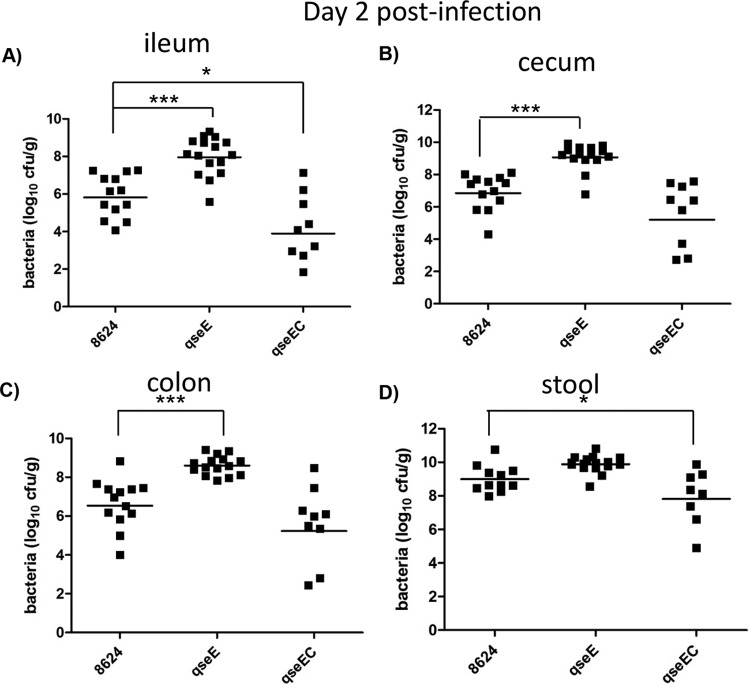
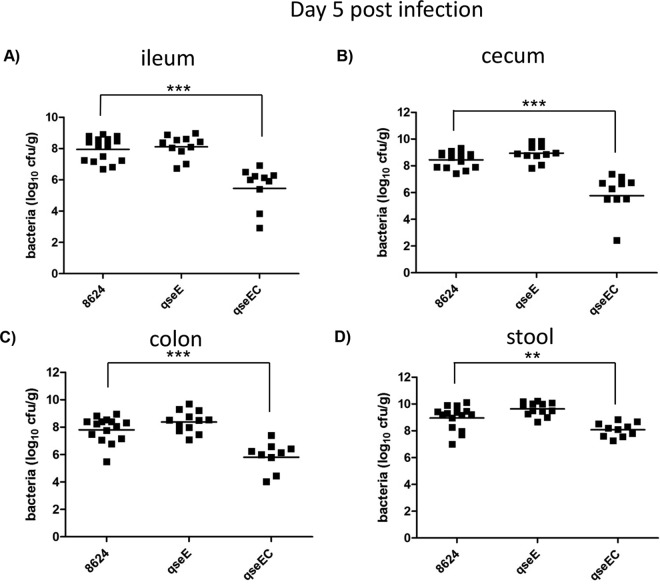
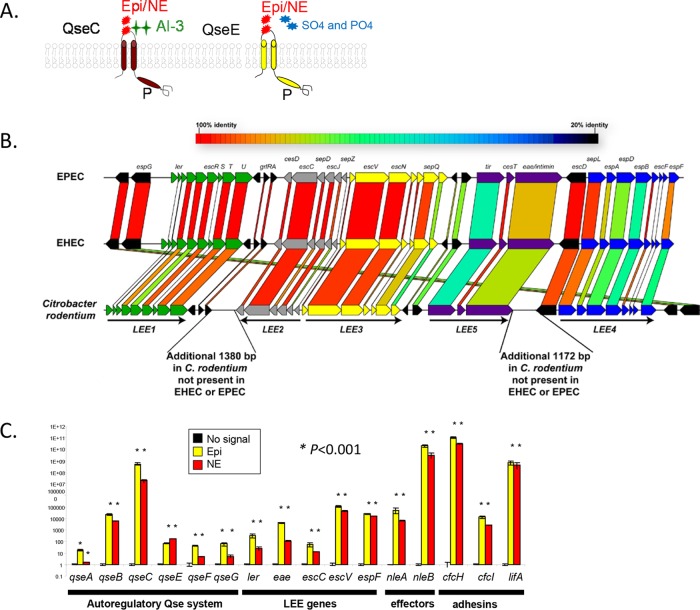
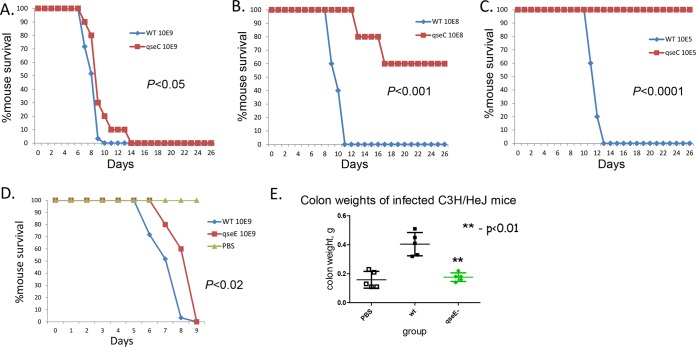
UNLABELLED: Enteric pathogens such as enterohemorrhagic Escherichia coli (EHEC) and Citrobacter rodentium, which is largely used as a surrogate EHEC model for murine infections, are exposed to several host neurotransmitters in the gut. An important chemical exchange within the gut involves the neurotransmitters epinephrine and/or norepinephrine, extensively reported to increase virulence gene expression in EHEC, acting through two bacterial adrenergic sensors: QseC and QseE. However, EHEC is unable to establish itself and cause its hallmark lesions, attaching and effacing (AE) lesions, on murine enterocytes. To address the role of these neurotransmitters during enteric infection, we employed C. rodentium Both EHEC and C. rodentium harbor the locus of enterocyte effacement (LEE) that is necessary for AE lesion formation. Here we show that expression of the LEE, as well as that of other virulence genes in C. rodentium, is also activated by epinephrine and/or norepinephrine. Both QseC and QseE are required for LEE gene activation in C. rodentium, and the qseC and qseE mutants are attenuated for murine infection. C. rodentium has a decreased ability to colonize dopamine β-hydroxylase knockout (Dbh(-/-)) mice, which do not produce epinephrine and norepinephrine. Both adrenergic sensors are required for C. rodentium to sense these neurotransmitters and activate the LEE genes during infection. These data indicate that epinephrine and norepinephrine are sensed by bacterial adrenergic receptors during enteric infection to promote activation of their virulence repertoire. This is the first report of the role of these neurotransmitters during mammalian gastrointestinal (GI) infection by a noninvasive pathogen. IMPORTANCE: The epinephrine and norepinephrine neurotransmitters play important roles in gut physiology and motility. Of note, epinephrine and norepinephrine play a central role in stress responses in mammals, and stress has profound effects on GI function. Bacterial enteric pathogens exploit these neurotransmitters as signals to coordinate the regulation of their virulence genes. The bacterial QseC and QseE adrenergic sensors are at the center of this regulatory cascade. C. rodentium is a noninvasive murine pathogen with a colonization mechanism similar to that of EHEC, enabling the investigation of host signals in mice. The presence of these neurotransmitters in the gut is necessary for C. rodentium to fully activate its virulence program, in a QseC/QseE-dependent manner, to successfully colonize its murine host. Our study data provide the first example of epinephrine and norepinephrine signaling within the gut to stimulate infection by a bacterial pathogen in a natural animal infection.
Overview
The claims and statistics of this paper haven’t been checked yet.
Run the check — free, no account needed. It reads the open-access text and checks the sources it cites.
Integrity signals
Registry
Cites
Statistics
Figures
Verification
Claims the paper makes
The claims and statistics of this paper haven’t been checked yet.
Run the check — free, no account needed. It reads the open-access text and checks the sources it cites.
Claims other papers make about this one
Each is checked against this paper’s own text: does it say what the citing paper says it does?
The source backs part of the claim, not all of it — or backs it for a different population, condition or comparison.
In the citing paper
“Also, norepinephrine can act as a quorum sensing molecule to increase the expression of bacterial virulence genes through interaction with bacterial quorum sensing histidine kinase (Curtis et al., 2014;Moreira et al., 2016).”
From The Microbiota-Gut-Brain Axis (2019) · cites this paper as Moreira et al., 2016
Experimental — accuracy not yet measured
Self-check
Percentages, sums and reported differences re-computed from the paper’s own numbers.
The self-check needs the paper’s full text.
Citations
Cites
One-step inactivation of chromosomal genes in Escherichia coli K-12 using PCR products.
Datsenko, K., & Wanner, B. (2000) · Proceedings of the National Academy of Sciences of the United States of America · doi:10.1073/pnas.120163297 · Cited by 15,902 · cited 1×
“Nonpolar mutants of qseE and qseEC in C. rodentium were constructed through the use of a lambda Red system (81).”
Kaper, J. B., Nataro, J. P., & Mobley, H. L. T. (2004) · Nature Reviews Microbiology · doi:10.1038/nrmicro818 · Cited by 5,583 · cited 2×
“rodentium, as well as EHEC, does not breach the intestinal mucosa and invade the host systemically; the bacteria are restricted to the mucosal layer of the intestine (58, 79).”
Indigenous bacteria from the gut microbiota regulate host serotonin biosynthesis
Yano, J. M., Yu, K., Donaldson, G. P., Shastri, G. G., Ann, P., Ma, L., Nagler, C. R., Ismagilov, R. F., Mazmanian, S. K., & Hsiao, E. Y. (2015) · Cell · doi:10.1016/j.cell.2015.02.047 · Cited by 3,614 · cited 1×
“This two-way-street communication is currently gaining appreciation given that there are important relationships between neurotransmitters and the GI microbiota, with the microbiota inducing biosynthesis of the serotonin neurotransmitter (72) and modulating the levels of active epinephrine and norepinephrine in the gu…”
Lupp, C., Robertson, M. L., Wickham, M. E., Sekirov, I., Champion, O. L., Gaynor, E. C., & Finlay, B. B. (2007) · Cell Host & Microbe · doi:10.1016/j.chom.2007.06.010 · Cited by 1,310 · cited 2×
“rodentium also causes significant changes in the structure of the microbial community, decreasing the number of anaerobes and increasing the numbers of -proteobacteria (73).”
Enteropathogenic E. coli (EPEC) transfers its receptor for intimate adherence into mammalian cells.
Kenny, B., Devinney, R., Stein, M., Reinscheid, D., Frey, E., & Finlay, B. (1997) · Cell · doi:10.1016/s0092-8674(00)80437-7 · Cited by 1,258
Jerse, A. E., Yu, J., Tall, B. D., & Kaper, J. B. (1990) · Proceedings of the National Academy of Sciences · doi:10.1073/pnas.87.20.7839 · Cited by 1,125 · cited 1×
“The LEE genes encode a type III secretion system (T3SS) (31), an adhesin (intimin) (32) and its receptor (Tir) (33), and transcriptional regulators, chaperones, and effector proteins (34– 38).”
Control of brain development, function, and behavior by the microbiome
Sampson, T. R., & Mazmanian, S. K. (2015) · Cell Host & Microbe · doi:10.1016/j.chom.2015.04.011 · Cited by 1,093 · cited 1×
“Neurological diseases, such as autism, depression, and neurodegenerative diseases, are often strongly influenced by intestinal factors (80).”
Stecher, B., Robbiani, R., Walker, A. W., Westendorf, A. M., Barthel, M., Kremer, M., Chaffron, S., Macpherson, A. J., Buer, J., Parkhill, J., et al. (2007) · PLoS Biology · doi:10.1371/journal.pbio.0050244 · Cited by 1,048 · cited 1×
“It is known that invading enteric pathogens such as Salmonella enterica and C. rodentium cause inflammation within the gut that in turn diminishes the overall numbers of bacteria in the microbiota, sometimes acting as a competition advantage to the pathogen (73, 74).”
Brain-gut-microbe communication in health and disease
Grenham, S., Clarke, G., Cryan, J. F., & Dinan, T. G. (2011) · Frontiers in Physiology · doi:10.3389/fphys.2011.00094 · Cited by 952 · cited 1×
“Notably, stress affects gastrointestinal (GI) function, leading to increased gastric acid production and intestinal motility, and can also alter the composition of the gut microbiota (1).”
Bacteria–host communication: the language of hormones
Sperandio, V., Torres, A. G., Jarvis, B., Nataro, J. P., & Kaper, J. B. (2003) · Proceedings of the National Academy of Sciences · doi:10.1073/pnas.1537100100 · Cited by 902 · cited 5×
“These transcription events ultimately enable the organism to form AE lesions and produce Shiga toxin (responsible for HUS), thereby leading to the clinical manifestations of infection (7, 19, 20, 23).”
InfluentialSelf-citationTypes of neurons in the enteric nervous system
Furness, J. B. (2000) · Journal of the Autonomic Nervous System · doi:10.1016/s0165-1838(00)00127-2 · Cited by 855 · cited 2×
“It is very well established that norepinephrine is present in the basolateral layer of the intestine, where it is produced by adrenergic neurons of the enteric nervous system (2).”
Inter-kingdom signalling: Communication between bacteria and their hosts
Hughes, D. T., & Sperandio, V. (2008) · Nature Reviews Microbiology · doi:10.1038/nrmicro1836 · Cited by 761 · cited 3×
“Specifically, in the GI tract, which is one of the most prominent sites in the human body where host/microbe associations are paramount, these neurotransmitters play important functions in gut homeostasis and physiology (19, 20, 71).”
Self-citationRegulated virulence controls the ability of a pathogen to compete with the gut microbiota
Kamada, N., Kim, Y.-G., Sham, H. P., Vallance, B. A., Puente, J. L., Martens, E. C., & Núñez, G. (2012) · Science · doi:10.1126/science.1222195 · Cited by 682
Asano, Y., Hiramoto, T., Nishino, R., Aiba, Y., Kimura, T., Yoshihara, K., Koga, Y., & Sudo, N. (2012) · American Journal of Physiology-Gastrointestinal and Liver Physiology · doi:10.1152/ajpgi.00341.2012 · Cited by 659 · cited 4×
“This two-way-street communication is currently gaining appreciation given that there are important relationships between neurotransmitters and the GI microbiota, with the microbiota inducing biosynthesis of the serotonin neurotransmitter (72) and modulating the levels of active epinephrine and norepinephrine in the gu…”
InfluentialElliott, S. J., Wainwright, L. A., McDaniel, T. K., Jarvis, K. G., Deng, Y., Lai, L., McNamara, B. P., Donnenberg, M. S., & Kaper, J. B. (1998) · Molecular Microbiology · doi:10.1046/j.1365-2958.1998.00783.x · Cited by 629
Dissecting virulence: Systematic and functional analyses of a pathogenicity island
Deng, W., Puente, J. L., Gruenheid, S., Li, Y., Vallance, B. A., Vázquez, A., León, J. B., Ibarra, J. A., O’Donnell, P. A., Metalnikov, P. S., et al. (2004) · Proceedings of the National Academy of Sciences · doi:10.1073/pnas.0400326101 · Cited by 626 · cited 2×
“3B) and colonizes and forms AE lesions in the colon (51, 52), which is the same GI site colonized by EHEC (58).”
Jarvis, K. G., Girón, J. A., Jerse, A. E., McDaniel, T. K., Donnenberg, M. S., & Kaper, J. B. (1995) · Proceedings of the National Academy of Sciences · doi:10.1073/pnas.92.17.7996 · Cited by 626 · cited 2×
“The LEE genes encode a type III secretion system (T3SS) (31), an adhesin (intimin) (32) and its receptor (Tir) (33), and transcriptional regulators, chaperones, and effector proteins (34– 38).”
The QseC sensor kinase: A bacterial adrenergic receptor
Clarke, M. B., Hughes, D. T., Zhu, C., Boedeker, E. C., & Sperandio, V. (2006) · Proceedings of the National Academy of Sciences · doi:10.1073/pnas.0604343103 · Cited by 621 · cited 7×
“These transcription events ultimately enable the organism to form AE lesions and produce Shiga toxin (responsible for HUS), thereby leading to the clinical manifestations of infection (7, 19, 20, 23).”
InfluentialSelf-citationTargeting QseC Signaling and Virulence for Antibiotic Development
Rasko, D. A., Moreira, C. G., Li, D. R., Reading, N. C., Ritchie, J. M., Waldor, M. K., Williams, N. S., Taussig, R., Wei, S., Roth, M. G., et al. (2008) · Science · doi:10.1126/science.1160354 · Cited by 520
Self-citationLupp, C., Robertson, M. L., Wickham, M. E., Sekirov, I., Champion, O. L., Gaynor, E. C., & Finlay, B. B. (2007) · Cell Host & Microbe · doi:10.1016/j.chom.2007.08.002 · Cited by 501
Fucose sensing regulates bacterial intestinal colonization
Pacheco, A. R., Curtis, M. M., Ritchie, J. M., Munera, D., Waldor, M. K., Moreira, C. G., & Sperandio, V. (2012) · Nature · doi:10.1038/nature11623 · Cited by 499 · cited 1×
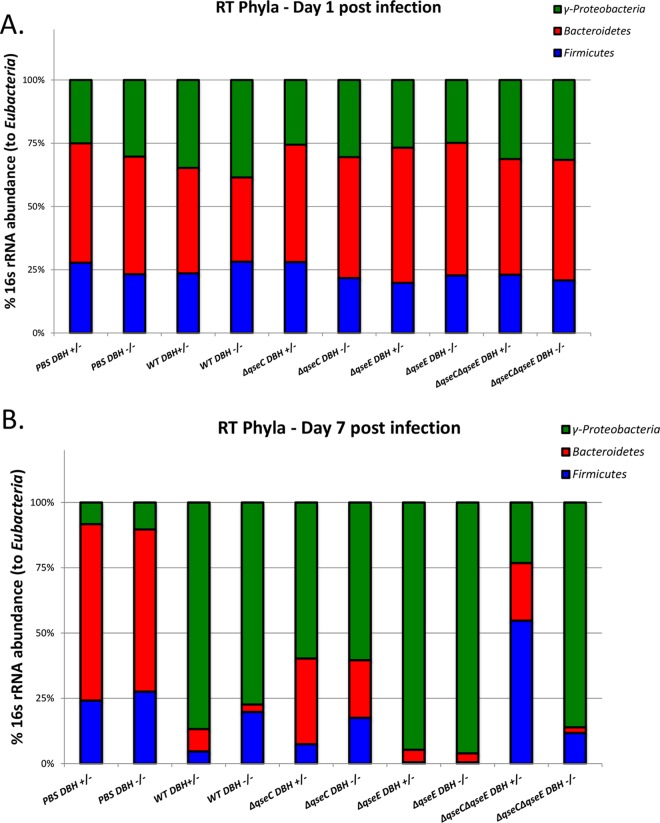
“Because the virulence and infectivity of EHEC and C. rodentium are altered by the microbiota (64, 67–69) and because the microbiota plays an important role in the availability of active epinephrine and/or norepinephrine in the lumen (5), we investigated the compositions of the mi-crobiotas of…”
Self-citationYamamoto, K., Hirao, K., Oshima, T., Aiba, H., Utsumi, R., & Ishihama, A. (2004) · Journal of Biological Chemistry · doi:10.1074/jbc.m410104200 · Cited by 441 · cited 5×
“QseE, however, exclusively phosphorylates QseF.”
InfluentialMellies, J. L., Elliott, S. J., Sperandio, V., Donnenberg, M. S., & Kaper, J. B. (1999) · Molecular Microbiology · doi:10.1046/j.1365-2958.1999.01473.x · Cited by 390 · cited 1×
“…directly by the activity of the QseC-phosphorylated response regulator KdpE in conjunction with Cra (59), activating expression of ler (59), which encodes the direct transcription activator of the LEE and nleA genes (29, 60), QseE regulation is indirectly controlled through the RcsB system (24).”
Self-citationIn vivo negative selection screen identifies genes required for Francisella virulence
Weiss, D. S., Brotcke, A., Henry, T., Margolis, J. J., Chan, K., & Monack, D. M. (2007) · Proceedings of the National Academy of Sciences · doi:10.1073/pnas.0609675104 · Cited by 317
Curtis, M. M., Hu, Z., Klimko, C., Narayanan, S. K., DeBerardinis, R. J., & Sperandio, V. (2014) · Cell Host & Microbe · doi:10.1016/j.chom.2014.11.005 · Cited by 316 · cited 13×
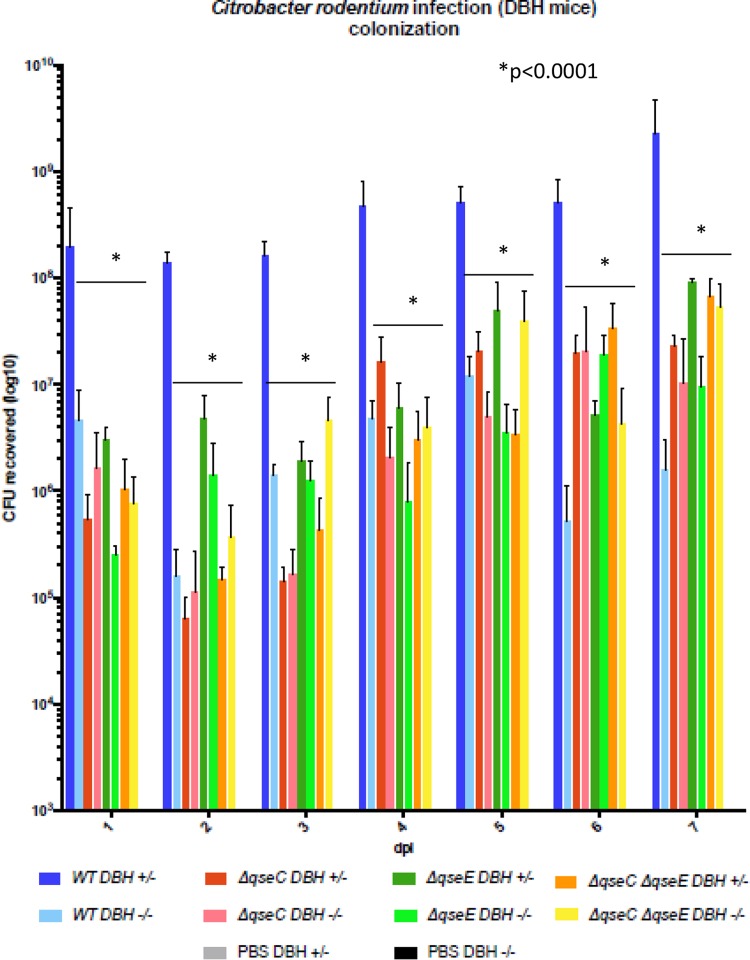
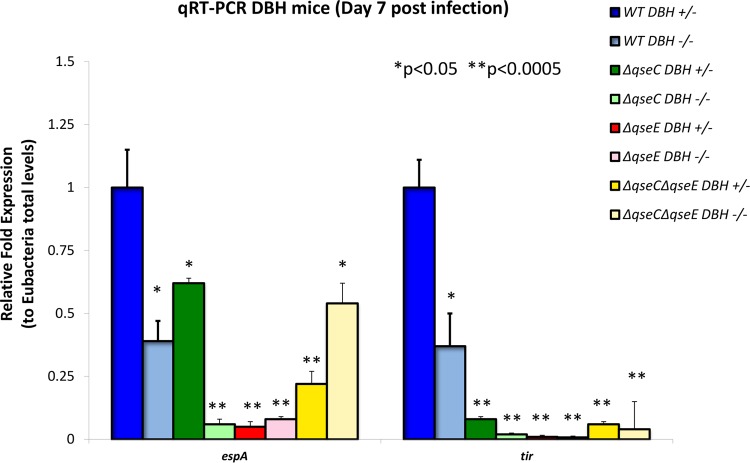
“We monitored CFU, LEE gene expression, and the composition of the microbiota in their stools during infection (Fig.”
MethodInfluentialSelf-citationSchauer, D. B., & Falkow, S. (1993) · Infection and Immunity · doi:10.1128/iai.61.6.2486-2492.1993 · Cited by 272 · cited 1×
“C. rodentium , as well as EHEC, does not breach the intestinal mucosa and invade the host systemically; the bacteria are restricted to the mucosal layer of the intestine (58, 79).”
Molecular pathogenesis of and transmissible murine colonic hyperplasia
Luperchio, S. A., & Schauer, D. B. (2001) · Microbes and Infection · doi:10.1016/s1286-4579(01)01387-9 · Cited by 270 · cited 3×
“However, unlike C3H-HeJ mice, 129x1/SvJ mice resolve and survive infection (65).”
Targeting of an enteropathogenic Escherichia coli (EPEC) effector protein to host mitochondria
Kenny, B., & Jepson, M. A. (2000) · Cellular Microbiology · doi:10.1046/j.1462-5822.2000.00082.x · Cited by 257
Escherichia coli O157:H7 Requires Intimin for Enteropathogenicity in Calves
Dean-Nystrom, E. A., Bosworth, B. T., Moon, H. W., & O’Brien, A. D. (1998) · Infection and Immunity · doi:10.1128/.66.9.4560-4563.1998 · Cited by 245
The QseC Adrenergic Signaling Cascade in Enterohemorrhagic E. coli (EHEC)
Hughes, D. T., Clarke, M. B., Yamamoto, K., Rasko, D. A., & Sperandio, V. (2009) · PLoS Pathogens · doi:10.1371/journal.ppat.1000553 · Cited by 244 · cited 7×
“QseE, however, exclusively phosphorylates QseF.”
InfluentialSelf-citationMouse model for colonization and disease caused by enterohemorrhagic Escherichia coli O157:H7
Wadolkowski, E. A., Burris, J. A., & O’Brien, A. D. (1990) · Infection and Immunity · doi:10.1128/iai.58.8.2438-2445.1990 · Cited by 239
Gruenheid, S., Sekirov, I., Thomas, N. A., Deng, W., O’Donnell, P. A., Goode, D. L., Li, Y., Frey, E. A., Brown, N. F., Metalnikov, P. S., et al. (2004) · Molecular Microbiology · doi:10.1046/j.1365-2958.2003.03911.x · Cited by 224
Pathogenicity of Escherichia coli O157:H7 in the intestines of neonatal calves
Dean-Nystrom, E. A., Bosworth, B. T., Cray, W. C., & Moon, H. W. (1997) · Infection and Immunity · doi:10.1128/iai.65.5.1842-1848.1997 · Cited by 219
Wadolkowski, E. A., Sung, L. M., Burris, J. A., Samuel, J. E., & O’Brien, A. D. (1990) · Infection and Immunity · doi:10.1128/iai.58.12.3959-3965.1990 · Cited by 205 · cited 2×
“coli K-12 strain carrying cloned stx genes (encoding Shiga toxin) (45).”
McKee, M. L., Melton‐Celsa, A. R., Moxley, R. A., Francis, D. H., & O’Brien, A. D. (1995) · Infection and Immunity · doi:10.1128/iai.63.9.3739-3744.1995 · Cited by 198
QseC Mediates Salmonella enterica Serovar Typhimurium Virulence In Vitro and In Vivo
Moreira, C. G., Weinshenker, D., & Sperandio, V. (2010) · Infection and Immunity · doi:10.1128/iai.01038-09 · Cited by 195 · cited 1×
“and Epi levels (83), as previously assayed with other enteric bacteria (8).”
Self-citationAltering Host Resistance to Infections through Microbial Transplantation
Willing, B. P., Vacharaksa, A., Croxen, M. A., Thanachayanont, T., & Finlay, B. B. (2011) · PLoS ONE · doi:10.1371/journal.pone.0026988 · Cited by 191
Elliott, S. J., Hutcheson, S. W., Dubois, M. S., Mellies, J. L., Wainwright, L. A., Batchelor, M. J., Frankel, G. M., Knutton, S., & Kaper, J. B. (1999) · Molecular Microbiology · doi:10.1046/j.1365-2958.1999.01559.x · Cited by 182
Elliott, S. J., Krejany, E. O., Mellies, J. L., Robins-Browne, R. M., Sasakawa, C., & Kaper, J. B. (2001) · Infection and Immunity · doi:10.1128/iai.69.6.4027-4033.2001 · Cited by 168
Reading, N. C., Rasko, D. A., Torres, A. G., & Sperandio, V. (2009) · Proceedings of the National Academy of Sciences · doi:10.1073/pnas.0811409106 · Cited by 167 · cited 3×
“These two neurotransmitters are sensed by the bacterial QseC and QseE sensors (20, 23).”
BackgroundSelf-citationTu, X., Nisan, I., Chen, Y., Hanski, E., & Rosenshine, I. (2003) · Molecular Microbiology · doi:10.1046/j.1365-2958.2003.03329.x · Cited by 165
Response to Shiga toxin 1 and 2 in a baboon model of hemolytic uremic syndrome
Siegler, R. L., Obrig, T. G., Pysher, T. J., Tesh, V. L., Denkers, N. D., & Taylor, F. B. (2003) · Pediatric Nephrology · doi:10.1007/s00467-002-1035-7 · Cited by 161
Ritchie, J. M., Thorpe, C. M., Rogers, A. B., & Waldor, M. K. (2003) · Infection and Immunity · doi:10.1128/iai.71.12.7129-7139.2003 · Cited by 160 · cited 3×
“The proficiency of EHEC to colonize the intestine of these mice correlates with the severity of disease; hence, the assessment of CFUs of EHEC in the intestine of these animals provides a numeric readout of disease (49, 50).”
Self-citationWalters, M., & Sperandio, V. (2006) · Infection and Immunity · doi:10.1128/iai.00099-06 · Cited by 158
Self-citationVirulence Meets Metabolism: Cra and KdpE Gene Regulation in Enterohemorrhagic Escherichia coli
Njoroge, J. W., Nguyen, Y., Curtis, M. M., Moreira, C. G., & Sperandio, V. (2012) · mBio · doi:10.1128/mbio.00280-12 · Cited by 156 · cited 4×
“It is worth noting that, while QseC LEE and nleA gene regulation occurs directly by the activity of the QseC-phosphorylated response regulator KdpE in conjunction with Cra (59), activating expression of ler (59), which encodes the direct transcription activator of the LEE and nleA genes (29, 60), QseE regulation is in…”
InfluentialSelf-citationDopamine β-hydroxylase deficiency impairs cellular immunity
Alaniz, R. C., THOMAS, S. A., Pérez‐Melgosa, M., Mueller, K., Farr, A. G., Palmiter, R. D., & Wilson, C. B. (1999) · Proceedings of the National Academy of Sciences · doi:10.1073/pnas.96.5.2274 · Cited by 155 · cited 2×
“These experiments were performed using Dbh / mice (the heterozygous mice are known to behave as WT for production of epinephrine and norepinephrine and represent the parent strain for the knockout animals), and the Dbh / mice (which do not produce any epinephrine or norepinephrine) (66).”
Kostakioti, M., Hadjifrangiskou, M., Pinkner, J. S., & Hultgren, S. J. (2009) · Molecular Microbiology · doi:10.1111/j.1365-2958.2009.06826.x · Cited by 152
McNamara, B. P., & Donnenberg, M. S. (1998) · FEMS Microbiology Letters · doi:10.1111/j.1574-6968.1998.tb13185.x · Cited by 146 · cited 1×
“The LEE genes encode a type III secretion system (T3SS) (31), an adhesin (intimin) (32) and its receptor (Tir) (33), and transcriptional regulators, chaperones, and effector proteins (34– 38).”
Reading, N. C., Torres, A. G., Kendall, M. M., Hughes, D. T., Yamamoto, K., & Sperandio, V. (2007) · Journal of Bacteriology · doi:10.1128/jb.01848-06 · Cited by 140 · cited 1×
“This is not a surprising result, because QseC activates expression of the qseEF genes, being at the top of this signaling cascade (57).”
Self-citationQseC Inhibitors as an Antivirulence Approach for Gram-Negative Pathogens
Curtis, M. M., Russell, R., Moreira, C. G., Adebesin, A. M., Wang, C., Williams, N. S., Taussig, R., Stewart, D., Zimmern, P., Lu, B., et al. (2014) · mBio · doi:10.1128/mbio.02165-14 · Cited by 136 · cited 20×
“We monitored CFU, LEE gene expression, and the composition of the microbiota in their stools during infection (Fig.”
InfluentialSelf-citationKendall, M. M., Rasko, D. A., & Sperandio, V. (2007) · Infection and Immunity · doi:10.1128/iai.00550-07 · Cited by 126 · cited 2×
“The role of epinephrine and/or norepinephrine in stimulating virulence gene expression has been extensively studied in the human enteric pathogen enterohemor-rhagic Escherichia coli (EHEC) (11, 19–21, 23, 25, 26).”
Self-citationDean-Nystrom, E. A., Gansheroff, L. J., Mills, M., Moon, H. W., & O’Brien, A. D. (2002) · Infection and Immunity · doi:10.1128/iai.70.5.2414-2418.2002 · Cited by 124
A central metabolic circuit controlled by QseC in pathogenic Escherichia coli
Hadjifrangiskou, M., Kostakioti, M., Chen, S. L., Henderson, J. P., Greene, S. E., & Hultgren, S. J. (2011) · Molecular Microbiology · doi:10.1111/j.1365-2958.2011.07660.x · Cited by 118
Ahmer, B. M. M., Thomas, M. G., Larsen, R. A., & Postle, K. (1995) · Journal of Bacteriology · doi:10.1128/jb.177.16.4742-4747.1995 · Cited by 108 · cited 1×
“ground, were generated at Emory University as previously described (82)”
Mundy, R., Pickard, D., Wilson, R. K., Simmons, C. P., Gordon Dougan, B., & Frankel, G. M. (2003) · Molecular Microbiology · doi:10.1046/j.1365-2958.2003.03470.x · Cited by 105 · cited 2×
“3B) and colonizes and forms AE lesions in the colon (51, 52), which is the same GI site colonized by EHEC (58).”
Wang, X., Wang, Q., Yang, M., Xiao, J., Liu, Q., Wu, H., & Zhang, Y. (2011) · Fish & Shellfish Immunology · doi:10.1016/j.fsi.2011.01.019 · Cited by 95
Ritchie, J. M., & Waldor, M. K. (2005) · Infection and Immunity · doi:10.1128/iai.73.3.1466-1474.2005 · Cited by 90 · cited 2×
“In the infant rabbit animal model, EHEC colonizes the large intestine, forming AE lesions and causing diarrhea (49, 50), but, unlike murine models, rabbits are genetically intractable, hampering studies assessing the host genetic contribution to EHEC intestinal infection.”
BackgroundSelf-citationNovak, E. A., Shao, H., Daep, C. A., & Demuth, D. R. (2010) · Infection and Immunity · doi:10.1128/iai.01376-09 · Cited by 86
Hfq negatively regulates type III secretion in EHEC and several other pathogens
Shakhnovich, E. A., Davis, B. M., & Waldor, M. K. (2009) · Molecular Microbiology · doi:10.1111/j.1365-2958.2009.06856.x · Cited by 83
Self-citationHfq Virulence Regulation in Enterohemorrhagic Escherichia coli O157:H7 Strain 86-24
Kendall, M. M., Gruber, C. C., Rasko, D. A., Hughes, D. T., & Sperandio, V. (2011) · Journal of Bacteriology · doi:10.1128/jb.06141-11 · Cited by 82
Self-citationHfq affects the expression of the LEE pathogenicity island in enterohaemorrhagic Escherichia coli
Hansen, A., & Kaper, J. B. (2009) · Molecular Microbiology · doi:10.1111/j.1365-2958.2009.06781.x · Cited by 78 · cited 1×
“In fact, posttranscriptional regulation has been reported to differ even within EHEC strains (76–78).”
Khajanchi, B. K., Kozlova, E. V., Sha, J., Popov, V. L., & Chopra, A. K. (2011) · Microbiology · doi:10.1099/mic.0.051805-0 · Cited by 75
Kanack, K. J., Crawford, J. A., Tatsuno, I., Karmali, M. A., & Kaper, J. B. (2005) · Infection and Immunity · doi:10.1128/iai.73.7.4327-4337.2005 · Cited by 74 · cited 1×
“The LEE genes encode a type III secretion system (T3SS) (31), an adhesin (intimin) (32) and its receptor (Tir) (33), and transcriptional regulators, chaperones, and effector proteins (34– 38).”
Njoroge, J. W., & Sperandio, V. (2011) · Infection and Immunity · doi:10.1128/iai.05921-11 · Cited by 71 · cited 8×
“The QseC tripartite signaling cascade activates LEE expression directly through KdpE and the gluconeogenesis sensor Cra (24).”
InfluentialSelf-citationMoreira, C. G., & Sperandio, V. (2012) · Infection and Immunity · doi:10.1128/iai.00803-12 · Cited by 71 · cited 3×
“The role of epinephrine and/or norepinephrine in stimulating virulence gene expression has been extensively studied in the human enteric pathogen enterohemor-rhagic Escherichia coli (EHEC) (11, 19–21, 23, 25, 26).”
Self-citationSegment-specific effects of epinephrine on ion transport in the colon of the rat
Hörger, S., Schultheiß, G., & Diener, M. (1998) · American Journal of Physiology-Gastrointestinal and Liver Physiology · doi:10.1152/ajpgi.1998.275.6.g1367 · Cited by 67 · cited 1×
“These neurotransmitters play important GI functions, modulating intestinal smooth muscle contraction, submucosal blood flow, and chloride and potassium secretion (4).”
Posttranscriptional Control of Microbe-Induced Rearrangement of Host Cell Actin
Gruber, C. C., & Sperandio, V. (2014) · mBio · doi:10.1128/mbio.01025-13 · Cited by 62 · cited 3×
“An explanation for this difference is that QseE acts indirectly and posttranscriptionally in expression of the LEE island as well as of other effectors, such as NleA (24, 61).”
Self-citationGruber, C. C., & Sperandio, V. (2015) · Infection and Immunity · doi:10.1128/iai.02918-14 · Cited by 60
Self-citationBacterial Disease in Diverse Hosts
Finlay, B. B. (1999) · Cell · doi:10.1016/s0092-8674(00)80544-9 · Cited by 57
Ünal, C., Singh, B., Fleury, C., Singh, K. D., de Paz, L. E. C., Svensäter, G., & Riesbeck, K. (2012) · International Journal of Medical Microbiology · doi:10.1016/j.ijmm.2012.07.013 · Cited by 50
Kostakioti, M., Hadjifrangiskou, M., Cusumano, C. K., Hannan, T. J., Janetka, J. W., & Hultgren, S. J. (2012) · Infection and Immunity · doi:10.1128/iai.00283-12 · Cited by 46
Spencer, H., Karavolos, M. H., Bulmer, D. M., Aldridge, P. D., Chhabra, S. R., Winzer, K., Williams, P. M., & Khan, C. M. A. (2009) · Journal of Bacteriology · doi:10.1128/jb.01329-09 · Cited by 45 · cited 1×
“A third epinephrine/ norepinephrine sensor has been suggested to exist in Salmonella enterica (70).”
Hemrajani, C., Marchès, O., Wiles, S., Girard, F., Dennis, A., Dziva, F., Best, A., Phillips, A. D., Berger, C. N., Mousnier, A., et al. (2008) · Infection and Immunity · doi:10.1128/iai.00742-08 · Cited by 42 · cited 1×
“All of the known virulence genes of EHEC have been validated in vivo using C. rodentium murine infections (52–56).”
Dean-Nystrom, E. A., Pohlenz, J., Moon, H. W., & O’Brien, A. D. (2000) · Infection and Immunity · doi:10.1128/iai.68.4.2356-2358.2000 · Cited by 42 · cited 1×
“EHEC is able to cause AE lesions in large animals such as suckling neonatal piglets (42) and neonatal calves (39).”
Woods, J. B., Schmitt, C. K., Darnell, S. C., Meysick, K. C., & O’Brien, A. D. (2002) · The Journal of Infectious Diseases · doi:10.1086/338633 · Cited by 40
THOMAS, S. A., & Palmiter, R. D. (1997) · Advances in pharmacology · doi:10.1016/s1054-3589(08)60695-x · Cited by 30 · cited 1×
“Littermate Dbh (cid:5) / (cid:4) heterozygous mice were considered controls because they had normal NE and Epi levels (83), as previously assayed with other enteric bacteria (8 The 2-way analysis-of-variance (ANOVA) multiple-comparison test was used to determine the statistical significance of the…”
García-Angulo, V. A., Martínez-Santos, V. I., Villaseñor, T., Santana, F. J., Saquero, A. H., Martínez-Chavarría, L. C., Jiménez-Mejía, R., Lara‐Ochoa, C., Téllez‐Sosa, J., Bustamante, V. H., et al. (2012) · Journal of Bacteriology · doi:10.1128/jb.00190-12 · Cited by 19 · cited 1×
“It is worth noting that, while QseC LEE and nleA gene regulation occurs directly by the activity of the QseC-phosphorylated response regulator KdpE in conjunction with Cra (59), activating expression of ler (59), which encodes the direct transcription activator of the LEE and nleA genes (29, 60), QseE regulation is in…”
Mokrievich, A. N., Kondakova, A. N., Valade, E., Platonov, М. E., Вахрамеева, Г. М., Shaikhutdinova, R. Z., Ивановна, М. Р., Blaha, D., Викторовна, Б. И., Титарева, Г. М., et al. (2010) · Biochemistry (Moscow) · doi:10.1134/s0006297910040073 · Cited by 18
Renal Prostacyclin Biosynthesis in a Baboon Model of Shiga Toxin Mediated Hemolytic Uremic Syndrome
Siegler, R. L., Pysher, T. J., Tesh, V. L., & Taylor, F. B. (2002) · The Nephron journals/Nephron journals · doi:10.1159/000063310 · Cited by 13
Purves, D. (2009) · Scholarpedia · doi:10.4249/scholarpedia.7204 · Cited by 12
The immune responses to bacterial antigens encountered in vivo at mucosal surfaces
Gordon Dougan, B., Ghaem–Maghami, M., Pickard, D., Frankel, G. M., Douce, G. R., Clare, S., Dunstan, S. J., & Simmons, C. P. (2000) · Philosophical Transactions of the Royal Society B Biological Sciences · doi:10.1098/rstb.2000.0610 · Cited by 6
Cited by
Sorted by citations
Cryan, J. F., O'Riordan, K. J., Cowan, C. S. M., Sandhu, K. V., Bastiaanssen, T. F. S., Boehme, M., Codagnone, M. G., Cussotto, S., Fulling, C., Golubeva, A. V., et al. (2019) · Physiological Reviews · doi:10.1152/physrev.00018.2018 · Cited by 5,286
The Enteric Network: Interactions between the Immune and Nervous Systems of the Gut
Yoo, B. B., & Mazmanian, S. K. (2017) · Immunity · doi:10.1016/j.immuni.2017.05.011 · Cited by 485
“Also, wild-type C. rodentium is ineffective at colonizing mice that do not express dopamine beta-hydroxylase (Moreira et al., 2016), the enzyme required for norepinephrine and epinephrine synthesis.”
BackgroundBrain–gut–microbiome interactions in obesity and food addiction
Gupta, A., Osadchiy, V., & Mayer, E. A. (2020) · Nature Reviews Gastroenterology & Hepatology · doi:10.1038/s41575-020-0341-5 · Cited by 276
Obesity and gut–microbiota–brain axis: A narrative review
Asadi, A., Mehr, N. S., Mohamadi, M. H., Shokri, F., Heidary, M., Sadeghifard, N., & Khoshnood, S. (2022) · Journal of Clinical Laboratory Analysis · doi:10.1002/jcla.24420 · Cited by 266
Citrobacter rodentium–host–microbiota interactions: immunity, bioenergetics and metabolism
Mullineaux-Sanders, C., Sanchez‐Garrido, J., Hopkins, E. G. D., Shenoy, A. R., Barry, R. E., & Frankel, G. M. (2019) · Nature Reviews Microbiology · doi:10.1038/s41579-019-0252-z · Cited by 180
Metadata
- Authors
- Moreira, C. G., Russell, R., Mishra, A. A., Narayanan, S., Ritchie, J. M., Waldor, M. K., Curtis, M. M., Winter, S. E., Weinshenker, D., & Sperandio, V.
- Affiliations
- The University of Texas Southwestern Medical Center (US)
- Kansas State University (US)
- University of Surrey (GB)
- Brigham and Women's Hospital (US)
- Emory University (US)
- Corresponding author
- Sperandio, Vanessa
- ORCID
- Venue
- mBio
- Publisher
- American Society for Microbiology
- Published
- 2016-07-06
- Volume
- 7
- Issue
- 3
- ISSN
- 2150-7511 (ISSN-L)
- 2161-2129
- PMC
- PMC4959670
- OpenAlex
- W2411358133
- Cited by
- 157
- References
- 81
- Citations by year
- 2026: 21 · 2025: 20 · 2024: 16 · 2023: 23 · 2022: 17 · 2021: 11 · 2020: 9 · 2019: 16 · 2018: 11 · 2017: 8 · 2016: 3
- FWCI
- 12.19
- Type
- journal article
- Language
- en
- Open access
- gold
- doi.org
- Licence
- Locations
- mBio (publishedVersion, cc-by)
- PubMed Central (publishedVersion, cc-by)
- PubMed (publishedVersion)
- K-State Research Exchange (Kansas State University) (submittedVersion, cc-by)
- Surrey Research Insight Open Access (The University of Surrey) (submittedVersion)
- Digital Access to Scholarship at Harvard (DASH) (Harvard University) (submittedVersion, cc-by)
- Open Research (University of Surrey) (submittedVersion, other-oa)
- DOAJ (DOAJ: Directory of Open Access Journals) (submittedVersion, cc-by-sa)
- DOAJ (DOAJ: Directory of Open Access Journals) (submittedVersion)
- eScholarship (California Digital Library) (submittedVersion, cc-by)
- UNESP Institutional Repository (São Paulo State University) (submittedVersion)
- Funders
- HHS | National Institutes of Health (T32 AI7520)
- HHS | NIH | National Institute of Allergy and Infectious Diseases (AI101472, AI05135, AI053067)
- Topics
- Life Sciences › Immunology and Microbiology › Microbiology › Escherichia coli research studies
- Life Sciences › Biochemistry, Genetics and Molecular Biology › Genetics › Bacterial Genetics and Biotechnology
- Life Sciences › Immunology and Microbiology › Microbiology › Enterobacteriaceae and Cronobacter Research
- Keywords
- QseC, epinephrine, norepinephrine, enteric pathogens, Citrobacter rodentium, enterohemorrhagic Escherichia coli, locus of enterocyte effacement, virulence gene regulation, dopamine beta-hydroxylase, intestinal colonization, attaching and effacing lesions, host-pathogen interaction
- MeSH terms
- Animals, Dopamine beta-Hydroxylase, Enterobacteriaceae Infections, Epinephrine, Escherichia coli Infections, Genes, Bacterial, Norepinephrine, Phosphoproteins, Receptors, Adrenergic, Vasoconstrictor Agents, Virulence, Gene Expression Regulation, Bacterial, Mice, Knockout, Enterocytes, Escherichia coli Proteins, Gastrointestinal Tract, Citrobacter rodentium, Mice, Enterohemorrhagic Escherichia coli, Host-Pathogen Interactions
About these checks
Registry, retraction, Cites and statistics results are computed, not judged, with one exception: a printed reference that no index lists is read once by a model before it counts as a citation error. Claims are extracted by a model and kept only when their quote appears verbatim in the text; each cited source is then checked, with a model’s help, for whether it says what the claim relies on. Those verdicts can be wrong — read the claim’s quote and the cited source before relying on one.
Statistics and arithmetic are recomputed, not judged.
Confidence bands are shown only for fields calibrated on our annotated test set. None is calibrated yet, so no band is shown.
What counts as a claim ›How we measure confidence ›How we check this ›
Are you an author, or do you see a problem with this page? Request a review
