

The DOI matches its Crossref record; 88 of the 88 references it cites were found in a registry or an index.
Biotic Interactions Shape the Ecological Distributions of Staphylococcus Species
Open accessAbstract
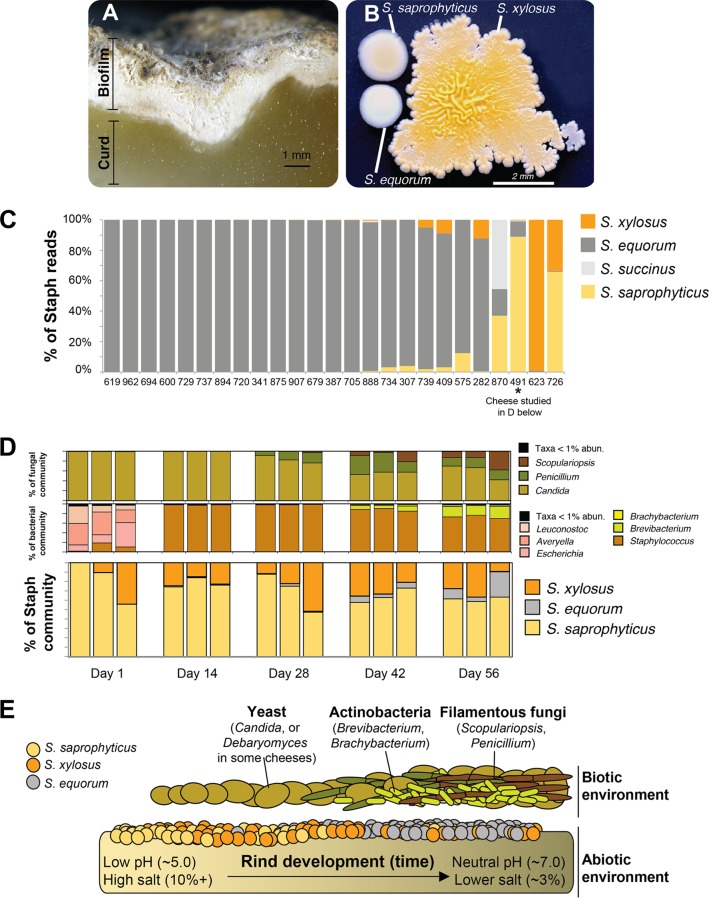
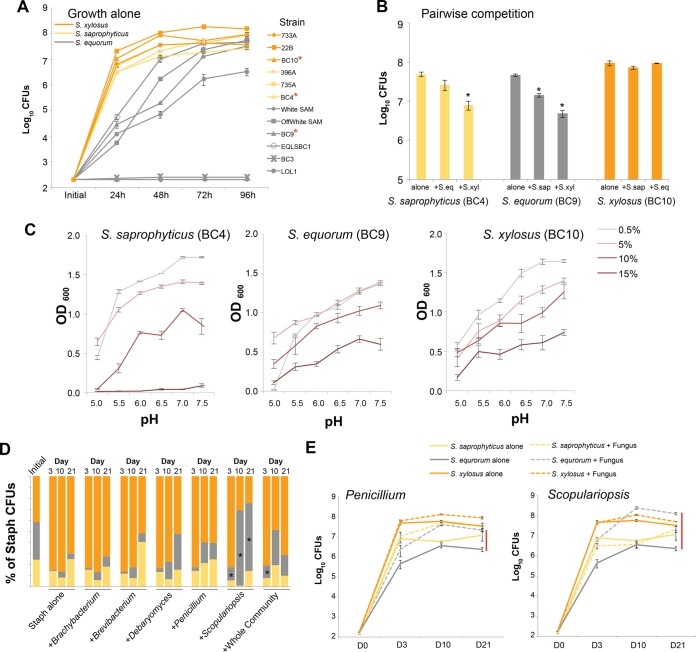
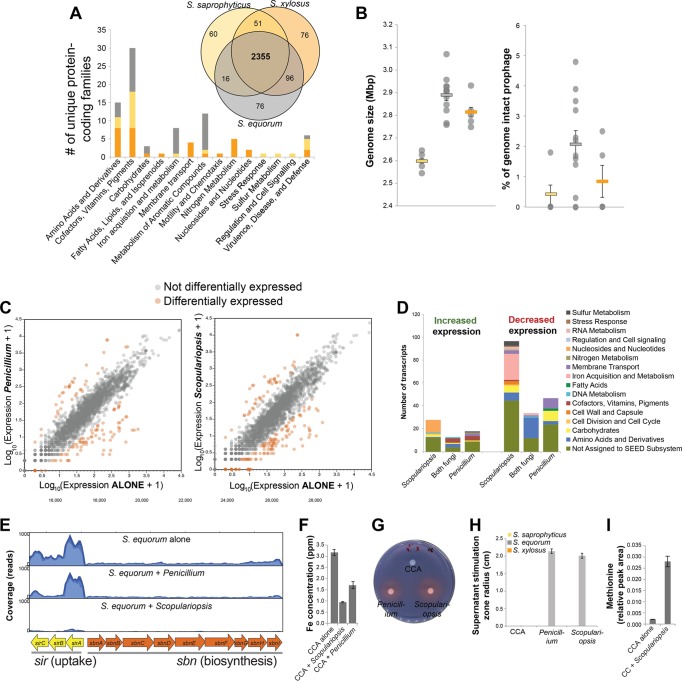
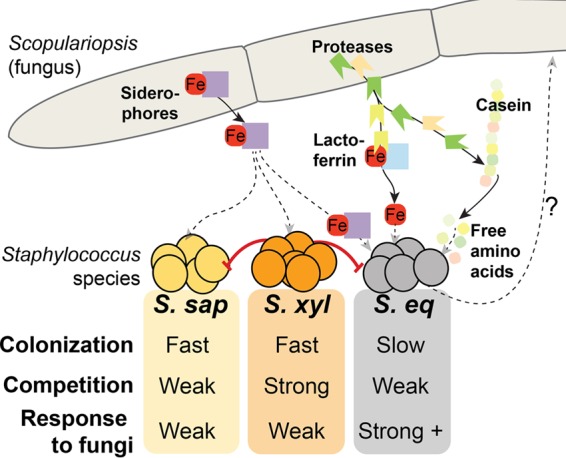
Many metagenomic sequencing studies have observed the presence of closely related bacterial species or genotypes in the same microbiome. Previous attempts to explain these patterns of microdiversity have focused on the abiotic environment, but few have considered how biotic interactions could drive patterns of microbiome diversity. We dissected the patterns, processes, and mechanisms shaping the ecological distributions of three closely related Staphylococcus species in cheese rind biofilms. Paradoxically, the most abundant species (S. equorum) is the slowest colonizer and weakest competitor based on growth and competition assays in the laboratory. Through in vitro community reconstructions, we determined that biotic interactions with neighboring fungi help resolve this paradox. Species-specific stimulation of the poor competitor by fungi of the genus Scopulariopsis allows S. equorum to dominate communities in vitro as it does in situ Results of comparative genomic and transcriptomic experiments indicate that iron utilization pathways, including a homolog of the S. aureus staphyloferrin B siderophore operon pathway, are potential molecular mechanisms underlying Staphylococcus-Scopulariopsis interactions. Our integrated approach demonstrates that fungi can structure the ecological distributions of closely related bacterial species, and the data highlight the importance of bacterium-fungus interactions in attempts to design and manipulate microbiomes. IMPORTANCE: Decades of culture-based studies and more recent metagenomic studies have demonstrated that bacterial species in agriculture, medicine, industry, and nature are unevenly distributed across time and space. The ecological processes and molecular mechanisms that shape these distributions are not well understood because it is challenging to connect in situ patterns of diversity with mechanistic in vitro studies in the laboratory. Using tractable cheese rind biofilms and a focus on coagulase-negative staphylococcus (CNS) species, we demonstrate that fungi can mediate the ecological distributions of closely related bacterial species. One of the Staphylococcus species studied, S. saprophyticus, is a common cause of urinary tract infections. By identifying processes that control the abundance of undesirable CNS species, cheese producers will have more precise control on the safety and quality of their products. More generally, Staphylococcus species frequently co-occur with fungi in mammalian microbiomes, and similar bacterium-fungus interactions may structure bacterial diversity in these systems.
Overview
The claims and statistics of this paper haven’t been checked yet.
Run the check — free, no account needed. It reads the open-access text and checks the sources it cites.
Integrity signals
Registry
Cites
Statistics
Figures
Verification
Claims the paper makes
The claims and statistics of this paper haven’t been checked yet.
Run the check — free, no account needed. It reads the open-access text and checks the sources it cites.
Claims other papers make about this one
Each is checked against this paper’s own text: does it say what the citing paper says it does?
The check wasn’t confident either way, so it gives no verdict — never disputed.
In the citing paper
“fermented meat, for instance, was characterized by L. sakei (typically present during ripening, aging, and fermentation), S. equorum , and Latilactobacillus curvatus .”
From Unexplored microbial diversity from 2,500 food metagenomes and links with the human microbiome. (2024) · cites this paper as [58]
Experimental — accuracy not yet measured
Self-check
Percentages, sums and reported differences re-computed from the paper’s own numbers.
The self-check needs the paper’s full text.
Citations
Cites
The RAST Server: Rapid Annotations using Subsystems Technology
Aziz, R. K., Bartels, D., Best, A. A., DeJongh, M., Disz, T. L., Edwards, R. A., Formsma, K., Gerdes, S., Glass, E. M., Kubal, M., et al. (2008) · BMC Genomics · doi:10.1186/1471-2164-9-75 · Cited by 11,893
Diet rapidly and reproducibly alters the human gut microbiome
David, L. A., Maurice, C. F., Carmody, R. N., Gootenberg, D. B., Button, J. E., Wolfe, B. E., Ling, A. V., Devlin, A. S., Varma, Y., Fischbach, M. A., et al. (2014) · Nature · doi:10.1038/nature12820 · Cited by 10,100
Self-citationChanges of Intestinal Functions in Liver Cirrhosis
Fukui, H., & Wiest, R. (2016) · Inflammatory Intestinal Diseases · doi:10.1159/000444436 · Cited by 6,820
Universal chemical assay for the detection and determination of siderophores
Schwyn, B., & Neilands, J. B. (1987) · Analytical Biochemistry · doi:10.1016/0003-2697(87)90612-9 · Cited by 6,581
Host-Bacterial Mutualism in the Human Intestine
Bäckhed, F., Ley, R. E., Sonnenburg, J. L., Peterson, D. A., & Gordon, J. I. (2005) · Science · doi:10.1126/science.1104816 · Cited by 5,277
Urinary tract infections: epidemiology, mechanisms of infection and treatment options
Flores‐Mireles, A. L., Walker, J. N., Caparon, M. G., & Hultgren, S. J. (2015) · Nature Reviews Microbiology · doi:10.1038/nrmicro3432 · Cited by 4,343
Microbial interactions: from networks to models
Faust, K., & Raes, J. (2012) · Nature Reviews Microbiology · doi:10.1038/nrmicro2832 · Cited by 4,268
Using network analysis to explore co-occurrence patterns in soil microbial communities
Barberán, A., Bates, S. T., Casamayor, E. O., & Fierer, N. (2012) · The ISME Journal · doi:10.1038/ismej.2011.119 · Cited by 3,044
Bacterial competition: surviving and thriving in the microbial jungle
Hibbing, M. E., Fuqua, C., Parsek, M. R., & Peterson, S. B. (2009) · Nature Reviews Microbiology · doi:10.1038/nrmicro2259 · Cited by 2,765
Competition and Biodiversity in Spatially Structured Habitats
Tilman, D. (1994) · Ecology · doi:10.2307/1939377 · Cited by 2,758
Cited by
Sorted by citations
Bacterial–fungal interactions: ecology, mechanisms and challenges
Deveau, A., Bonito, G. M., Uehling, J., Paoletti, M., Becker, M., Bindschedler, S., Hacquard, S., Hervé, V., Labbé, J., Lastovetsky, O. A., et al. (2018) · FEMS Microbiology Reviews · doi:10.1093/femsre/fuy008 · Cited by 823
Effect of Pichia on shaping the fermentation microbial community of sauce-flavor Baijiu
Zhang, H., Wang, L., Tan, Y., Wang, H., Yang, F., Chen, L., Hao, F., Lv, X., Du, H., & Xu, Y. (2020) · International Journal of Food Microbiology · doi:10.1016/j.ijfoodmicro.2020.108898 · Cited by 210
Zhang, Y., Kastman, E. K., Guasto, J., & Wolfe, B. E. (2018) · Nature Communications · doi:10.1038/s41467-017-02522-z · Cited by 149
Self-citationMayo, B., Rodríguez, J., Vázquez, L., & Flórez, A. B. (2021) · Foods · doi:10.3390/foods10030602 · Cited by 169
Unexplored microbial diversity from 2,500 food metagenomes and links with the human microbiome.
Carlino, N., Blanco-Míguez, A., Punčochář, M., Mengoni, C., Pinto, F., Tatti, A., Manghi, P., Armanini, F., Avagliano, M., Barcenilla, C., et al. (2024) · Cell · doi:10.1016/j.cell.2024.07.039 · Cited by 146
Bacterial–fungal interactions revealed by genome-wide analysis of bacterial mutant fitness
Pierce, E. C., Morin, M., Little, J., Liu, R. B., Tannous, J., Keller, N. P., Pogliano, K., Wolfe, B. E., Sanchez, L. M., & Dutton, R. J. (2020) · Nature Microbiology · doi:10.1038/s41564-020-00800-z · Cited by 145
Self-citationDesigning Metabolic Division of Labor in Microbial Communities
Thommes, M., Wang, T., Zhao, Q., Paschalidis, I. C., & Segrè, D. (2019) · mSystems · doi:10.1128/msystems.00263-18 · Cited by 140
Extensive horizontal gene transfer in cheese-associated bacteria
Bonham, K. S., Wolfe, B. E., & Dutton, R. J. (2017) · eLife · doi:10.7554/elife.22144 · Cited by 135
Self-citationMicrobiome Assembly in Fermented Foods
Louw, N. L., Lele, K., Ye, R., Edwards, C. B., & Wolfe, B. E. (2023) · Annual Review of Microbiology · doi:10.1146/annurev-micro-032521-041956 · Cited by 138
Self-citationThe microbiota of dairy milk: A review
Parente, E., Ricciardi, A., & Zotta, T. (2020) · International Dairy Journal · doi:10.1016/j.idairyj.2020.104714 · Cited by 130
From Axenic to Mixed Cultures: Technological Advances Accelerating a Paradigm Shift in Microbiology
Nai, C., & Meyer, V. (2017) · Trends in Microbiology · doi:10.1016/j.tim.2017.11.004 · Cited by 120
New opportunities for managing acute and chronic lung infections
Cookson, W., Cox, M. J., & Moffatt, M. F. (2017) · Nature Reviews Microbiology · doi:10.1038/nrmicro.2017.122 · Cited by 122
Changes in the genetic requirements for microbial interactions with increasing community complexity
Morin, M., Pierce, E. C., & Dutton, R. J. (2018) · eLife · doi:10.7554/elife.37072 · Cited by 86
Self-citationStrain-Level Diversity Impacts Cheese Rind Microbiome Assembly and Function
Niccum, B. A., Kastman, E. K., Kfoury, N., Robbat, A., & Wolfe, B. E. (2020) · mSystems · doi:10.1128/msystems.00149-20 · Cited by 85
Self-citationGuennoc, C. M., Rosé, C., Labbé, J., & Deveau, A. (2018) · FEMS Microbiology Ecology · doi:10.1093/femsec/fiy093 · Cited by 79
Opportunities and Challenges of Understanding Community Assembly in Spontaneous Food Fermentation
Sooresh, M. M., Willing, B. P., & Bourrie, B. C. T. (2023) · Foods · doi:10.3390/foods12030673 · Cited by 84
Transcriptomics Study on Staphylococcus aureus Biofilm Under Low Concentration of Ampicillin
Liu, J., Yang, L., Hou, Y., Soteyome, T., Zeng, B., Su, J., Li, L., Li, B., Chen, D., Li, Y., et al. (2018) · Frontiers in Microbiology · doi:10.3389/fmicb.2018.02413 · Cited by 74
Rapid Phenotypic and Metabolomic Domestication of Wild Penicillium Molds on Cheese
Bodinaku, I., Shaffer, J., Connors, A. B., Steenwyk, J. L., Biango‐Daniels, M. N., Kastman, E. K., Rokas, A., Robbat, A., & Wolfe, B. E. (2019) · mBio · doi:10.1128/mbio.02445-19 · Cited by 76
Self-citationMasmoudi, F., Abdelmalek, N., Tounsi, S., Dunlap, C. A., & Trigui, M. (2019) · Microbiological Research · doi:10.1016/j.micres.2019.126331 · Cited by 68
Koch, H., Germscheid, N., Freese, H. M., Noriega‐Ortega, B. E., Lücking, D., Berger, M., Qiu, G., Marzinelli, E. M., Campbell, A. H., Steinberg, P. D., et al. (2020) · Scientific Reports · doi:10.1038/s41598-020-57526-5 · Cited by 67
Putting microbial interactions back into community contexts
Pierce, E. C., & Dutton, R. J. (2021) · Current Opinion in Microbiology · doi:10.1016/j.mib.2021.10.008 · Cited by 68
Self-citationDeutscher, A. T., Burke, C., Darling, A. E., Riegler, M., Reynolds, O. L., & Chapman, T. A. (2018) · Microbiome · doi:10.1186/s40168-018-0463-y · Cited by 60
Tan, L., Zhao, F., Han, Q., Zhao, A., Malakar, P. K., Liu, H., Pan, Y., & Zhao, Y. (2018) · Frontiers in Microbiology · doi:10.3389/fmicb.2018.01881 · Cited by 61
Genomic insights into the virulence and salt tolerance of Staphylococcus equorum
Jeong, D., Heo, S., Ryu, S., Blom, J., & Lee, J. (2017) · Scientific Reports · doi:10.1038/s41598-017-05918-5 · Cited by 61
Cleary, J. L., Kolachina, S., Wolfe, B. E., & Sanchez, L. M. (2018) · mSystems · doi:10.1128/msystems.00036-18 · Cited by 61
Self-citationOccurrence of filamentous fungi in drinking water: their role on fungal-bacterial biofilm formation
Afonso, T. B., Simões, L. C., & Lima, N. (2020) · Research in Microbiology · doi:10.1016/j.resmic.2020.11.002 · Cited by 59
Does diversity beget diversity in microbiomes?
Madi, N., Vos, M., Murall, C. L., Legendre, P., & Shapiro, B. J. (2020) · eLife · doi:10.7554/elife.58999 · Cited by 62
Experimental approaches to tracking mobile genetic elements in microbial communities
Saak, C. C., Dinh, C. B., & Dutton, R. J. (2020) · FEMS Microbiology Reviews · doi:10.1093/femsre/fuaa025 · Cited by 58
Self-citationIntegrated molecular approaches for fermented food microbiome research
Walsh, A. M., Leech, J., Huttenhower, C., Delhomme-Nguyen, H., Crispie, F., Chervaux, C., & Cotter, P. D. (2023) · FEMS Microbiology Reviews · doi:10.1093/femsre/fuad001 · Cited by 56
Pham, N.-P., Layec, S., Dugat‐Bony, É., Vidal, M., Irlinger, F., & Monnet, C. (2017) · BMC Genomics · doi:10.1186/s12864-017-4322-1 · Cited by 55
Dugat‐Bony, É., Lossouarn, J., Paepe, M. D., Sarthou, A., Fedala, Y., Petit, M., & Chaillou, S. (2019) · Food Microbiology · doi:10.1016/j.fm.2019.103278 · Cited by 53
Jia, Y. P., Niu, C., Xu, X., Zheng, F., Liu, C., Wang, J., Lu, Z., Xu, Z., & Li, Q. (2021) · Food Research International · doi:10.1016/j.foodres.2021.110533 · Cited by 50
Quijada, N. M., Mann, E., Wagner, M., Rodrı́guez-Làzaro, D., Hernández, M., & Schmitz‐Esser, S. (2017) · International Journal of Food Microbiology · doi:10.1016/j.ijfoodmicro.2017.12.025 · Cited by 49
Kothe, C. I., Bolotin, A., Kraïem, B.-F., Dridi, B., FoodMicrobiome Team, & Renault, P. (2021) · International Journal of Food Microbiology · doi:10.1016/j.ijfoodmicro.2021.109312 · Cited by 49
Chen, L., Wang, G., Teng, M., Wang, L., Yang, F., Jin, G., Du, H., & Xu, Y. (2023) · Comprehensive Reviews in Food Science and Food Safety · doi:10.1111/1541-4337.13135 · Cited by 46
Directional design of a starter to assemble the initial microbial fermentation community of baijiu
Zhang, W., Si, G., Du, H., Li, J., Ping, Z., & Ye, M. (2020) · Food Research International · doi:10.1016/j.foodres.2020.109255 · Cited by 46
Yuan, S., Du, H., Zhao, D., Qiao, Z., Zheng, J., Yu, X., & Xu, Y. (2023) · Microbiology Spectrum · doi:10.1128/spectrum.05103-22 · Cited by 45
Cairns, J., Jokela, R., Hultman, J., Tamminen, M. V., Virta, M., & Hiltunen, T. (2018) · Frontiers in Genetics · doi:10.3389/fgene.2018.00312 · Cited by 44
Interaction and Application of Molds and Yeasts in Chinese Fermented Foods
Yang, Q., Yao, H., Liu, S., & Mao, J. (2022) · Frontiers in Microbiology · doi:10.3389/fmicb.2021.664850 · Cited by 42
Wolfe, B. E. (2018) · mSystems · doi:10.1128/msystems.00161-17 · Cited by 43
Self-citationLee, J., Heo, S., & Jeong, D. (2018) · BMC Genomics · doi:10.1186/s12864-018-4532-1 · Cited by 41
Experimental Microbiomes: Models Not to Scale
Chevrette, M. G., Bratburd, J. R., Currie, C. R., & Stubbendieck, R. M. (2019) · mSystems · doi:10.1128/msystems.00175-19 · Cited by 40
Biotic Interactions Are More Important than Propagule Pressure in Microbial Community Invasions
Albright, M., Sevanto, S. A., Gallegos‐Graves, L. V., & Dunbar, J. (2020) · mBio · doi:10.1128/mbio.02089-20 · Cited by 40
Novel fermentations integrate traditional practice and rational design of fermented-food microbiomes
Arrigan, D., Kothe, C. I., Oliverio, A., Evans, J. D., & Wolfe, B. E. (2024) · Current Biology · doi:10.1016/j.cub.2024.09.047 · Cited by 38
Self-citationCauses and consequences of biotic interactions within microbiomes
Cosetta, C. M., & Wolfe, B. E. (2019) · Current Opinion in Microbiology · doi:10.1016/j.mib.2019.09.004 · Cited by 37
Self-citationKamelamela, N., Zalesne, M., Morimoto, J., Robbat, A., & Wolfe, B. E. (2018) · Food Microbiology · doi:10.1016/j.fm.2018.07.011 · Cited by 37
Self-citationChai, L.-J., Shen, M.-N., Sun, J., Deng, Y.-J., Lu, Z.-M., Zhang, X.-J., Shi, J.-S., & Xu, Z.-H. (2020) · Food Microbiology · doi:10.1016/j.fm.2020.103559 · Cited by 36
Are fermented foods an overlooked reservoir of antimicrobial resistance?
Wolfe, B. E. (2023) · Current Opinion in Food Science · doi:10.1016/j.cofs.2023.101018 · Cited by 37
Self-citationCosetta, C. M., & Wolfe, B. E. (2019) · Current Protocols in Microbiology · doi:10.1002/cpmc.95 · Cited by 33
Self-citationStavropoulou, D. A., Vuyst, L. D., & Leroy, F. (2018) · Journal of Applied Microbiology · doi:10.1111/jam.14054 · Cited by 35
Pham, N.-P., Landaud, S., Lieben, P., Bonnarme, P., & Monnet, C. (2019) · Frontiers in Microbiology · doi:10.3389/fmicb.2019.01901 · Cited by 31
Parente, E., Zotta, T., & Ricciardi, A. (2022) · International Journal of Food Microbiology · doi:10.1016/j.ijfoodmicro.2022.109618 · Cited by 41
Quijada, N. M., Schmitz‐Esser, S., Zwirzitz, B., Guse, C., Strachan, C. R., Wagner, M., Wetzels, S. U., Selberherr, E., & Dzieciol, M. (2020) · Foods · doi:10.3390/foods9121851 · Cited by 31
Structure of association networks in food bacterial communities
Parente, E., Zotta, T., Faust, K., Filippis, F. D., & Ercolini, D. (2017) · Food Microbiology · doi:10.1016/j.fm.2017.12.010 · Cited by 28
Lee, K., Zhang, I., Kyman, S., Kask, O., & Cope, E. K. (2020) · Frontiers in Cellular and Infection Microbiology · doi:10.3389/fcimb.2020.00472 · Cited by 26
The Bacterial Metabolite Indole Inhibits Regeneration of the Planarian Flatworm Dugesia japonica
Lee, F. J., Williams, K. B., Levin, M. G., & Wolfe, B. E. (2018) · iScience · doi:10.1016/j.isci.2018.11.021 · Cited by 26
Self-citationAfonso, T. B., Simões, L. C., & Lima, N. (2019) · Biofouling · doi:10.1080/08927014.2019.1688793 · Cited by 25
Saak, C. C., Pierce, E. C., Dinh, C. B., Portik, D. M., Hall, R. J., Ashby, M., & Dutton, R. J. (2023) · mSystems · doi:10.1128/msystems.00701-22 · Cited by 29
Self-citationCosetta, C. M., Niccum, B. A., Kamkari, N. A., Dente, M., Podniesinski, M., & Wolfe, B. E. (2023) · The ISME Journal · doi:10.1038/s41396-023-01462-5 · Cited by 23
Self-citationTHOR’s Hammer: the Antibiotic Koreenceine Drives Gene Expression in a Model Microbial Community
Hurley, A. I., Chevrette, M. G., Rosario-Meléndez, N., & Handelsman, J. (2022) · mBio · doi:10.1128/mbio.02486-21 · Cited by 24
Microbiological safety of dry-cured fish from the raw material to the end of processing
Indio, V., Savini, F., Gardini, F., Barbieri, F., Prandini, L., Mekonnen, Y. T., Tomasello, F., Giacometti, F., Seguino, A., Serraino, A., et al. (2024) · International Journal of Food Microbiology · doi:10.1016/j.ijfoodmicro.2024.110641 · Cited by 23
Rong, L., Liu, K., An, M., Zhang, L. H., Zhang, D., Liu, W., & Li, R. (2024) · Journal of Agricultural and Food Chemistry · doi:10.1021/acs.jafc.3c08616 · Cited by 20
Calasso, M. P., Minervini, F., Filippis, F. D., Ercolini, D., Angelis, M. D., & Gobbetti, M. (2019) · Applied and Environmental Microbiology · doi:10.1128/aem.02165-19 · Cited by 20
NGS-Based Metagenomic Study of Four Traditional Bulgarian Green Cheeses from Tcherni Vit
Dimov, S., Gyurova, A., Zagorchev, L., Dimitrov, T., Miteva, D., & Peykov, S. Z. (2021) · LWT · doi:10.1016/j.lwt.2021.112278 · Cited by 21
Wu, Y., Liu, J., Liu, D., Xia, M., Song, J. T., Liang, K., Li, C., Yu, Z., & Wang, M. (2024) · Food Science and Human Wellness · doi:10.26599/fshw.2023.9250031 · Cited by 18
LaeA-Regulated Fungal Traits Mediate Bacterial Community Assembly
Tannous, J., Cosetta, C. M., Drott, M. T., Rush, T. A., Abraham, P. E., Giannone, R. J., Keller, N. P., & Wolfe, B. E. (2023) · mBio · doi:10.1128/mbio.00769-23 · Cited by 18
Self-citationMetabolomics of bacterial–fungal pairwise interactions reveal conserved molecular mechanisms
Luu, G. T., Little, J., Pierce, E. C., Morin, M., Ertekin, C., Wolfe, B. E., Baars, O., Dutton, R. J., & Sanchez, L. M. (2023) · The Analyst · doi:10.1039/d3an00408b · Cited by 18
Self-citationSpatial structuring of bacterial communities in epilithic biofilms in the Acquarossa river (Italy)
Chiellini, C., Miceli, E., Bacci, G., Fagorzi, C., Coppini, E., Fibbi, D., Bianconi, G., Mengoni, A., Canganella, F., & Fani, R. (2018) · FEMS Microbiology Ecology · doi:10.1093/femsec/fiy181 · Cited by 18
Huang, J., Cui, Y., & Chen, C. (2024) · Chemical Engineering Journal · doi:10.1016/j.cej.2024.148859 · Cited by 16
“Neanderthals, vitamin C, and scurvy”
Speth, J. D. (2018) · Quaternary International · doi:10.1016/j.quaint.2018.11.042 · Cited by 15
BLANKA: an Algorithm for Blank Subtraction in Mass Spectrometry of Complex Biological Samples
Cleary, J. L., Luu, G. T., Pierce, E. C., Dutton, R. J., & Sanchez, L. M. (2019) · Journal of the American Society for Mass Spectrometry · doi:10.1007/s13361-019-02185-8 · Cited by 16
Self-citationAdaptation to skin mycobiota promotes antibiotic tolerance in Staphylococcus aureus
Kowalski, C. H., Nguyen, U. T., Lawhorn, S., Smith, T. J., Corrigan, R. M., Suh, W. S., Kalan, L., & Barber, M. F. (2024) · Current Biology · doi:10.1016/j.cub.2025.03.055 · Cited by 15
Flörl, L., Meyer, A., & Bokulich, N. A. (2025) · Applied and Environmental Microbiology · doi:10.1128/aem.00524-25 · Cited by 15
Paillet, T., Lamy-Besnier, Q., Figueroa, C., Petit, M., & Dugat‐Bony, É. (2024) · mSystems · doi:10.1128/msystems.00201-24 · Cited by 19
Khare, A. (2021) · Trends in Microbiology · doi:10.1016/j.tim.2021.03.012 · Cited by 17
Sutthiwong, N., Sukdee, P., Lekhavat, S., & Dufossé, L. (2021) · Dairy · doi:10.3390/dairy2030031 · Cited by 14
Within-host competition causes pathogen molecular evolution and perpetual microbiota dysbiosis
Stevens, E. J., Li, J., Hector, T. E., Drew, G., Hoang, K. L., Greenrod, S. T. E., Paterson, S., & King, K. C. (2025) · The ISME Journal · doi:10.1093/ismejo/wraf071 · Cited by 14
Nones, S., Simões, F., Trindade, C. S., Matos, J., & Sousa, E. (2021) · Insects · doi:10.3390/insects12100881 · Cited by 13
Metabolic cooperation between conspecific genotypic groups contributes to bacterial fitness
Lin, L., Du, R., Wu, Q. J., & Xu, Y. (2023) · ISME Communications · doi:10.1038/s43705-023-00250-8 · Cited by 13
Microbial association networks in cheese: a meta-analysisPreprint
Parente, E., Zotta, T., & Ricciardi, A. (2021) · bioRxiv (Cold Spring Harbor Laboratory) · doi:10.1101/2021.07.21.453196 · Cited by 13
Yang, H. O., Cho, Y., Lee, J. M., & Kim, K.-D. (2023) · Journal of Microbiology and Biotechnology · doi:10.4014/jmb.2212.12026 · Cited by 12
Adaptation in a Fibronectin Binding Autolysin of Staphylococcus saprophyticus
Mortimer, T. D., Annis, D. S., O’Neill, M. B., Bohr, L. L., Smith, T. M., Poinar, H. N., Mosher, D. F., & Pepperell, C. S. (2017) · mSphere · doi:10.1128/msphere.00511-17 · Cited by 12
Chi, H., Yin, X., Zhang, X., Zhu, J., Zhao, L., Deng, Y., Liu, P., & Liu, Y. (2025) · Journal of Earth Science · doi:10.1007/s12583-024-0046-8 · Cited by 11
Ye, R., Tomo, C., Chan, N., & Wolfe, B. E. (2023) · mSphere · doi:10.1128/msphere.00047-23 · Cited by 11
Self-citationWilson, T. L., Siddiqi, M., Xi, Y., & LaPointe, G. (2024) · Frontiers in Microbiology · doi:10.3389/fmicb.2024.1404795 · Cited by 10
Zhao, S., Niu, C., Wang, Y., Zheng, F., Liu, C., Wang, J., & Li, Q. (2023) · Food Bioscience · doi:10.1016/j.fbio.2023.103019 · Cited by 10
Shoukat, M., Hervé, V., Sarthou, A., Péron, A.-C., Danel, A., Swennen, D., Bonnarme, P., & Dugat‐Bony, É. (2024) · International Journal of Food Microbiology · doi:10.1016/j.ijfoodmicro.2024.110971 · Cited by 9
Microbial and Biochemical Analyses of High-Quality, Long-Ripened, Blue-Veined Cabrales Cheese
Rodríguez, J., Suárez, P. R., Das, S., Vázquez, L., Lama, S., Flórez, A. B., Tamang, J. P., & Mayo, B. (2025) · Foods · doi:10.3390/foods14132366 · Cited by 10
Powell, M. E., & McCoy, S. J. (2024) · Journal of Phycology · doi:10.1111/jpy.13443 · Cited by 8
Genomic, transcriptomic, and ecological diversity of Penicillium species in cheese rind microbiomes
Ye, R., Biango‐Daniels, M. N., Steenwyk, J. L., Rokas, A., Louw, N. L., Nardella, R., & Wolfe, B. E. (2024) · Fungal Genetics and Biology · doi:10.1016/j.fgb.2023.103862 · Cited by 7
Self-citationFermented foods offer up a versatile microbial model system
Katsnelson, A. (2017) · Proceedings of the National Academy of Sciences · doi:10.1073/pnas.1701818114 · Cited by 7
Liang, Y., Li, B., Zhang, Q., Zhang, S., He, X., Jiang, L., & Jin, Y. (2021) · AMB Express · doi:10.1186/s13568-021-01192-x · Cited by 7
Iron-based microbial interactions: the role of iron metabolism in the cheese ecosystem
Mekuli, R., Shoukat, M., Dugat‐Bony, É., Bonnarme, P., Landaud, S., Swennen, D., & Hervé, V. (2025) · Journal of Bacteriology · doi:10.1128/jb.00539-24 · Cited by 7
Fungi shape genome evolution of bacteria even in the absence of major growth phenotypes
Putnam, E. E., May, R., Freeman, N., Arrigan, D., Boylan, A., Childs, L., & Wolfe, B. E. (2025) · The ISME Journal · doi:10.1093/ismejo/wraf081 · Cited by 6
Self-citationBacterial diversity of the rock-water interface in freshwater ecosystem
Dar, R., Bandh, S. A., Shafi, S., & Shameem, N. (2019) · Elsevier eBooks · doi:10.1016/b978-0-12-817495-1.00002-5 · Cited by 6
Kuhn, T., Mamin, M., Bindschedler, S., Bshary, R., Estoppey, A., González, D., Palmieri, F., Junier, P., & Li, X. (2022) · Royal Society Open Science · doi:10.1098/rsos.211592 · Cited by 5
Xu, J. Z., Zhao, Y., Jiang, Y., ZHANG, R.-J., Cai, F., Zhu, Z., Cao, J., Yu, Q. J., Zai-Yan, L. U. O., & Jiang-Bo, W. A. N. G. (2023) · Food Science and Technology · doi:10.1590/fst.104722 · Cited by 5
Does diversity beget diversity in microbiomes?
(21925658), N. M., (21034751), M. V., (21925661), C. M., (21925664), P. L., & (21925667), B. S. (2025) · Figshare · Cited by 5
Zhang, D., Li, R., Xu, Y., Song, F., Zhang, N., Sun, T., & Rong, L. (2025) · Food Bioscience · doi:10.1016/j.fbio.2025.107689 · Cited by 4
Effect of Xiaoning liquid on gut microbiota in asthmatic mice by 16S rDNA high-throughput sequencing
Yuanyuan, H. E., Yating, L. U. O., Huang, Q., Zhou, H., Qian, M. D., Zhiwei, G. U. A. N., Liu, Q., & Zhao, Q. (2021) · Food Science and Technology · doi:10.1590/fst.40721 · Cited by 4
Metadata
- Authors
- Kastman, E. K., Kamelamela, N., Norville, J. W., Cosetta, C. M., Dutton, R. J., & Wolfe, B. E.
- Affiliations
- Tufts University (US)
- University of California San Diego (US)
- Corresponding author
- Wolfe, Benjamin E.
- Venue
- mBio
- Publisher
- American Society for Microbiology
- Published
- 2016-11-02
- Volume
- 7
- Issue
- 5
- ISSN
- 2150-7511 (ISSN-L)
- 2161-2129
- PMC
- PMC5082897
- OpenAlex
- W2538439703
- Cited by
- 127
- References
- 88
- Citations by year
- 2026: 7 · 2025: 14 · 2024: 14 · 2023: 18 · 2022: 4 · 2021: 15 · 2020: 13 · 2019: 14 · 2018: 18 · 2017: 9 · 2016: 1
- FWCI
- 12.24
- Type
- journal article
- Language
- en
- Update notices
- correction (2017-03-21)
- Open access
- gold
- doi.org
- Licence
- Locations
- mBio (publishedVersion, cc-by)
- PubMed Central (publishedVersion, cc-by)
- PubMed (publishedVersion)
- eScholarship (California Digital Library) (submittedVersion, cc-by)
- DOAJ (DOAJ: Directory of Open Access Journals) (submittedVersion, cc-by-sa)
- DOAJ (DOAJ: Directory of Open Access Journals) (submittedVersion)
- eScholarship (California Digital Library) (submittedVersion)
- Funders
- HHS | National Institutes of Health (P50 GM068763)
- Tufts University
- UC | University of California, San Diego
- Topics
- Physical Sciences › Environmental Science › Ecology › Microbial Community Ecology and Physiology
- Life Sciences › Biochemistry, Genetics and Molecular Biology › Molecular Biology › Bacterial biofilms and quorum sensing
- Health Sciences › Medicine › Infectious Diseases › Antimicrobial Resistance in Staphylococcus
- Keywords
- Staphylococcus, Staphylococcus equorum, Staphylococcus saprophyticus, Scopulariopsis, coagulase-negative staphylococci, ecological distribution, bacterial competition, colonization, iron utilization, siderophores, microbiota composition, urinary tract infection
- MeSH terms
- Food Microbiology, Iron, Staphylococcus, Gene Expression Profiling, Genomics, Microbial Interactions, Biota, Scopulariopsis
About these checks
Registry, retraction, Cites and statistics results are computed, not judged, with one exception: a printed reference that no index lists is read once by a model before it counts as a citation error. Claims are extracted by a model and kept only when their quote appears verbatim in the text; each cited source is then checked, with a model’s help, for whether it says what the claim relies on. Those verdicts can be wrong — read the claim’s quote and the cited source before relying on one.
Statistics and arithmetic are recomputed, not judged.
Confidence bands are shown only for fields calibrated on our annotated test set. None is calibrated yet, so no band is shown.
What counts as a claim ›How we measure confidence ›How we check this ›
Are you an author, or do you see a problem with this page? Request a review
