

Heterogeneity among Isolates Reveals that Fitness in Low Oxygen Correlates with Aspergillus fumigatus Virulence
Open accessThe DOI matches its Crossref record; 78 of the 78 references it cites were found in a registry or an index.
Abstract
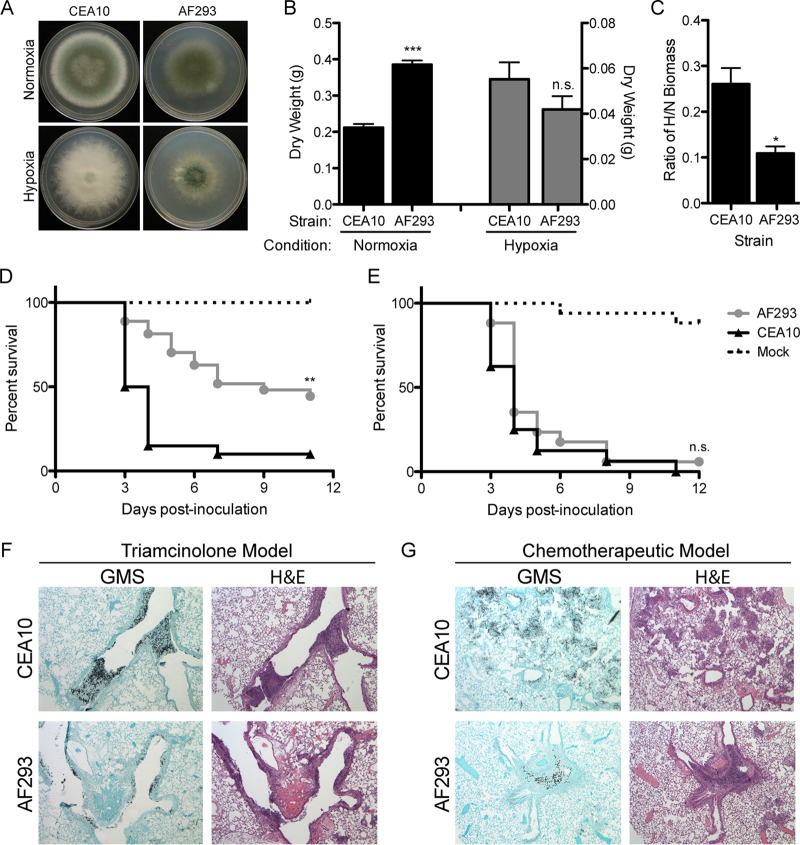
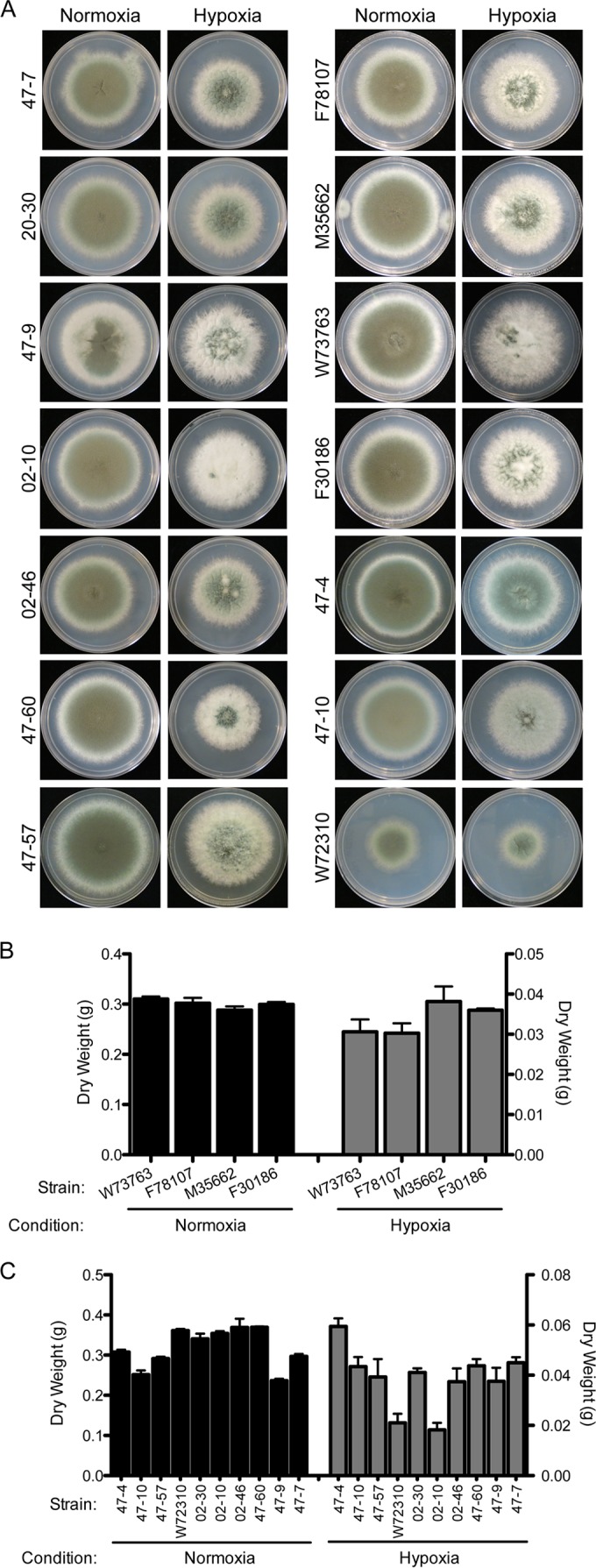
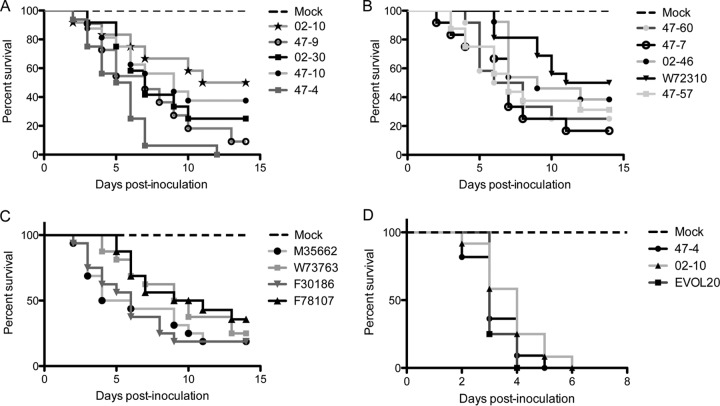
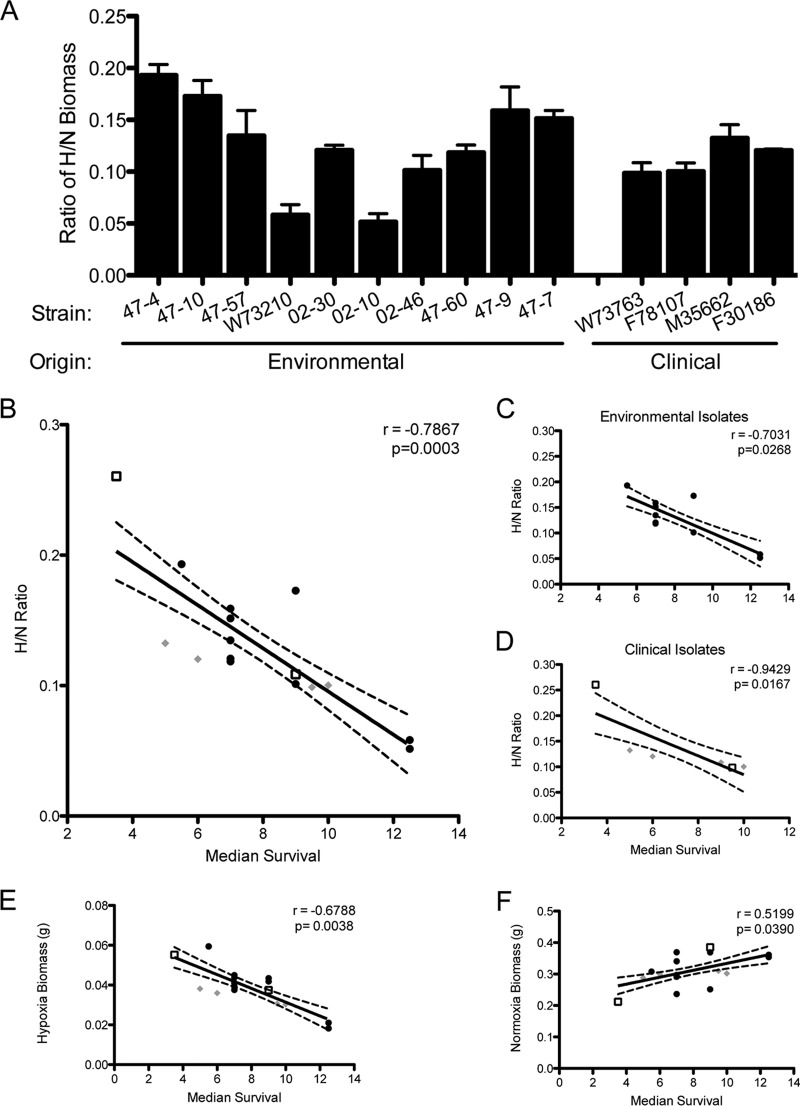
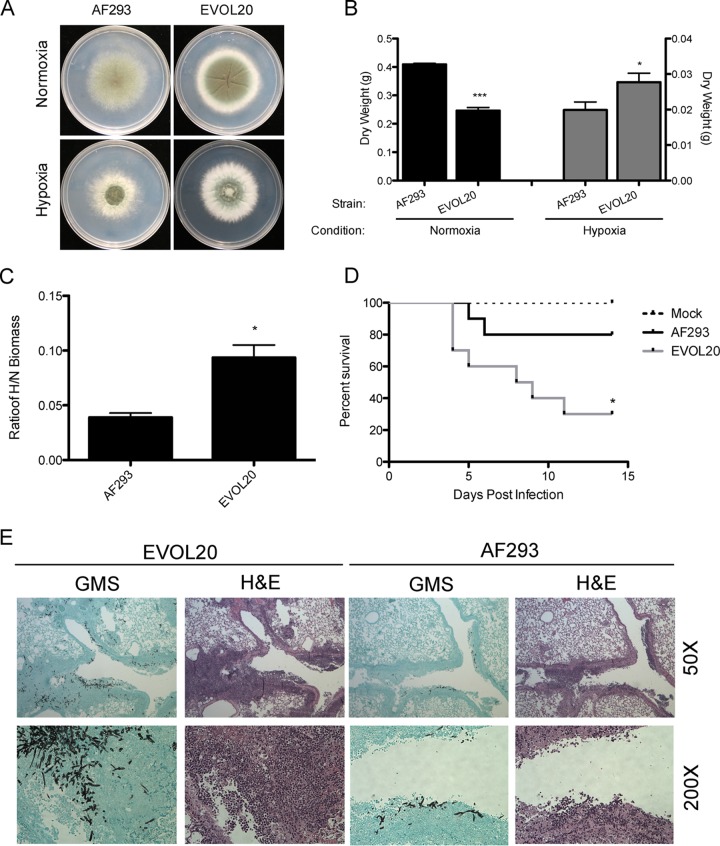
Previous work has shown that environmental and clinical isolates of Aspergillus fumigatus represent a diverse population that occupies a variety of niches, has extensive genetic diversity, and exhibits virulence heterogeneity in a number of animal models of invasive pulmonary aspergillosis (IPA). However, mechanisms explaining differences in virulence among A. fumigatus isolates remain enigmatic. Here, we report a significant difference in virulence of two common lab strains, CEA10 and AF293, in the murine triamcinolone immunosuppression model of IPA, in which we previously identified severe low oxygen microenvironments surrounding fungal lesions. Therefore, we hypothesize that the ability to thrive within these lesions of low oxygen promotes virulence of A. fumigatus in this model. To test this hypothesis, we performed in vitro fitness and in vivo virulence analyses in the triamcinolone murine model of IPA with 14 environmental and clinical isolates of A. fumigatus . Among these isolates, we observed a strong correlation between fitness in low oxygen in vitro and virulence. In further support of our hypothesis, experimental evolution of AF293, a strain that exhibits reduced fitness in low oxygen and reduced virulence in the triamcinolone model of IPA, results in a strain (EVOL20) that has increased hypoxia fitness and a corresponding increase in virulence. Thus, the ability to thrive in low oxygen correlates with virulence of A. fumigatus isolates in the context of steroid-mediated murine immunosuppression. IMPORTANCE Aspergillus fumigatus occupies multiple environmental niches, likely contributing to the genotypic and phenotypic heterogeneity among isolates. Despite reports of virulence heterogeneity, pathogenesis studies often utilize a single strain for the identification and characterization of virulence and immunity factors. Here, we describe significant variation between A. fumigatus isolates in hypoxia fitness and virulence, highlighting the advantage of including multiple strains in future studies. We also illustrate that hypoxia fitness correlates strongly with increased virulence exclusively in the nonleukopenic murine triamcinolone immunosuppression model of IPA. Through an experimental evolution experiment, we observe that chronic hypoxia exposure results in increased virulence of A. fumigatus . We describe here the first observation of a model-specific virulence phenotype correlative with in vitro fitness in hypoxia and pave the way for identification of hypoxia-mediated mechanisms of virulence in the fungal pathogen A. fumigatus.
Overview
The claims and statistics of this paper haven’t been checked yet.
Free: it reads the open-access text and checks the first 5 claims that cite a source we can check. Create a free account to check every claim.
Integrity signals
Registry
Cites
Statistics
Figures
Verification
Claims the paper makes
The claims and statistics of this paper haven’t been checked yet.
Free: it reads the open-access text and checks the first 5 claims that cite a source we can check. Create a free account to check every claim.
Claims other papers make about this one
Each is checked against this paper’s own text: does it say what the citing paper says it does?
The source backs part of the claim, not all of it — or backs it for a different population, condition or comparison.
In the citing paper
“Indeed, strain fitness in low oxygen correlates well with A. fumigatus virulence (176).”
From Aspergillus fumigatus and Aspergillosis in 2019 (2019) · cites this paper as [176]
Experimental — accuracy not yet measuredIn the citing paper
“It should be noted that the genetic background of the parental strain is important and may complicate the omics studies, since parental fungal strains may differ in virulence (176).”
From Aspergillus fumigatus and Aspergillosis in 2019 (2019) · cites this paper as [176]
In the citing paper
“The presence of these viruses may have a role in fungal virulence”
From Aspergillus fumigatus and Aspergillosis in 2019 (2019) · cites this paper as [176]
In the citing paper
“The presence of these viruses may have a role in fungal virulence, since the sequenced strain Af293, which is infected with a mycovirus, is less pathogenic than other wild-type strains (176).”
From Aspergillus fumigatus and Aspergillosis in 2019 (2019) · cites this paper as [176]
Self-check
Percentages, sums and reported differences re-computed from the paper’s own numbers.
The self-check needs the paper’s full text.
Citations
Cites
Guide for the Care and Use of Laboratory Animals: Eighth Edition
(2011) · doi:10.17226/12910 · Cited by 16,199
Guide for the care and use of laboratory animals
(1997) · Choice Reviews Online · doi:10.5860/choice.34-3310 · Cited by 2,922
Pathogenesis of Aspergillus fumigatus in Invasive Aspergillosis
Dagenais, T. R. T., & Keller, N. P. (2009) · Clinical Microbiology Reviews · doi:10.1128/cmr.00055-08 · Cited by 993 · cited 1×
“This shift in IPA patient populations highlights the relevance of the murine triamcinolone model of infection, which presents a different in vivo microenvironment than the leukopenic (neutropenic) model (26, 30).”
BackgroundHIF-1α expression regulates the bactericidal capacity of phagocytes
Peyssonnaux, C., Datta, V., Cramer, T., Doedens, A., Theodorakis, E. A., Gallo, R. L., Hurtado-Ziola, N., Nizet, V., & Johnson, R. S. (2005) · Journal of Clinical Investigation · doi:10.1172/jci23865 · Cited by 702
Tuberculous Granulomas Are Hypoxic in Guinea Pigs, Rabbits, and Nonhuman Primates
Via, L. E., Lin, P. L., Ray, S. M., Carrillo, J., Allen, S. S., Eum, S. Y., Taylor, K., Klein, E., Manjunatha, U., Gonzales, J., et al. (2008) · Infection and Immunity · doi:10.1128/iai.01515-07 · Cited by 664
Aspergillosis complicating neoplastic disease
Meyer, R. D., Young, L. S., Armstrong, D., & Yu, B. (1973) · The American Journal of Medicine · doi:10.1016/0002-9343(73)90077-6 · Cited by 523
Genomic Islands in the Pathogenic Filamentous Fungus Aspergillus fumigatus
Fedorova, N. D., Khaldi, N., Joardar, V. S., Maiti, R., Amedeo, P., Anderson, M. J., Crabtree, J., Silva, J. C., Badger, J. H., Albarraq, A., et al. (2008) · PLoS Genetics · doi:10.1371/journal.pgen.1000046 · Cited by 508 · cited 1×
“Furthermore, 41 orthologous gene pairs between the two strains do not share 100% identity, and alignment of some of these genes shows identities as low as 37% (51).”
BackgroundThe Enduring Hypoxic Response of Mycobacterium tuberculosis
Rustad, T. R., Harrell, M. I., Liao, R., & Sherman, D. R. (2008) · PLoS ONE · doi:10.1371/journal.pone.0001502 · Cited by 491
Siderophores in Fungal Physiology and Virulence
Haas, H., Eisendle, M., & Turgeon, B. G. (2008) · Annual Review of Phytopathology · doi:10.1146/annurev.phyto.45.062806.094338 · Cited by 449
Shimizu, K., & Keller, N. P. (2001) · Genetics · doi:10.1093/genetics/157.2.591 · Cited by 445
Cited by
Aspergillus fumigatus and Aspergillosis in 2019
Latgé, J.-P., & Chamilos, G. (2019) · Clinical Microbiology Reviews · doi:10.1128/cmr.00140-18 · Cited by 1,400
Evolution of the human pathogenic lifestyle in fungi
Rokas, A. (2022) · Nature Microbiology · doi:10.1038/s41564-022-01112-0 · Cited by 232
Al Abdallah, Q., Ge, W., & Fortwendel, J. R. (2017) · mSphere · doi:10.1128/msphere.00446-17 · Cited by 192
Pathogenesis of Respiratory Viral and Fungal Coinfections
Salazar, F., Bignell, E., Brown, G. D., Cook, P. C., & Warris, A. (2021) · Clinical Microbiology Reviews · doi:10.1128/cmr.00094-21 · Cited by 178
A phosphorylated transcription factor regulates sterol biosynthesis in Fusarium graminearum
Liu, Z., Jian, Y., Chen, Y., Kistler, H. C., He, P., Ma, Z., & Yin, Y. (2019) · Nature Communications · doi:10.1038/s41467-019-09145-6 · Cited by 148
Pathogenicity and virulence of Aspergillus fumigatus
Earle, K., Valero, C., Conn, D. P., Vere, G., Cook, P. C., Bromley, M., Bowyer, P., & Gago, S. (2023) · Virulence · doi:10.1080/21505594.2023.2172264 · Cited by 132
Barber, A. E., Sae-Ong, T., Kang, K., Seelbinder, B., Li, J., Walther, G., Panagiotou, G., & Kurzai, O. (2021) · Nature Microbiology · doi:10.1038/s41564-021-00993-x · Cited by 129
Oxidative responses and fungal infection biology
Warris, A., & Ballou, E. R. (2018) · Seminars in Cell and Developmental Biology · doi:10.1016/j.semcdb.2018.03.004 · Cited by 122
Macrophages inhibit Aspergillus fumigatus germination and neutrophil-mediated fungal killing
Rosowski, E. E., Raffa, N., Knox, B. P., Golenberg, N., Keller, N. P., & Huttenlocher, A. (2018) · PLoS Pathogens · doi:10.1371/journal.ppat.1007229 · Cited by 118
Hagiwara, D., Sakai, K., Suzuki, S., Umemura, M., Nogawa, T., Kato, N., Osada, H., Watanabe, A., Kawamoto, S., Gonoi, T., et al. (2017) · PLoS ONE · doi:10.1371/journal.pone.0177050 · Cited by 102
Fungal biofilm morphology impacts hypoxia fitness and disease progression
Kowalski, C. H., Kerkaert, J. D., Liu, K.-W., Bond, M. C., Hartmann, R., Nadell, C. D., Stajich, J., & Cramer, R. A. (2019) · Nature Microbiology · doi:10.1038/s41564-019-0558-7 · Cited by 101
Self-citationLofgren, L. A., Ross, B. S., Cramer, R. A., & Stajich, J. (2022) · PLoS Biology · doi:10.1371/journal.pbio.3001890 · Cited by 94
Self-citationEvasion of Immune Surveillance in Low Oxygen Environments Enhances Candida albicans Virulence
Lopes, J. P., Stylianou, M., Backman, E., Holmberg, S., Jass, J., Claesson, R., & Urban, C. F. (2018) · mBio · doi:10.1128/mbio.02120-18 · Cited by 88
“Interestingly, establishing hypoxia during initial colonization or infection is a strategy used by other microbes with a successful outcome (14, 46, 47).”
On the lineage of Aspergillus fumigatus isolates in common laboratory use
Bertuzzi, M., van Rhijn, N., Krappmann, S., Bowyer, P., Bromley, M. J., & Bignell, E. M. (2021) · Medical Mycology · doi:10.1093/mmy/myaa075 · Cited by 84
Steenwyk, J. L., Mead, M. E., Knowles, S. L., Raja, H. A., Roberts, C. D., Bader, O., Houbraken, J. A. M. P., Goldman, G. H., Oberlies, N. H., & Rokas, A. (2020) · Genetics · doi:10.1534/genetics.120.303549 · Cited by 81
Ries, L. N. A., Rocha, M. C., de Castro, P. A., Silva-Rocha, R., Silva, R. N., Freitas, F. Z., de Assis, L. J., Bertolini, M. C., Malavazi, I., & Goldman, G. H. (2017) · mBio · doi:10.1128/mbio.00705-17 · Cited by 76
“In contrast to the A. fumigatus clinical isolate Af293 (19), deletion of crzA in the clinical isolate CEA17 did not result in the loss of the CPE, indicating strain-specific differences in the response to high concentrations of caspofungin.”
InfluentialThe battle for oxygen during bacterial and fungal infections
André, A. C., Laborde, M., & Marteyn, B. (2022) · Trends in Microbiology · doi:10.1016/j.tim.2022.01.002 · Cited by 73
The Zebrafish as a Model Host for Invasive Fungal Infections
Rosowski, E. E., Knox, B. P., Archambault, L. S., Huttenlocher, A., Keller, N. P., Wheeler, R. T., & Davis, J. M. (2018) · Journal of Fungi · doi:10.3390/jof4040136 · Cited by 73
McDonough, L., Mishra, A. A., Tosini, N., Kakade, P., Penumutchu, S., Liang, S.-H., Maufrais, C., Zhai, B., Taur, Y., Belenky, P. A., et al. (2021) · mBio · doi:10.1128/mbio.02878-21 · Cited by 71
Self-citationBlachowicz, A., Raffa, N., Bok, J. W., Choera, T., Knox, B. P., Lim, F. Y., Huttenlocher, A., Wang, C. C. C., Venkateswaran, K. J., & Keller, N. P. (2020) · mBio · doi:10.1128/mbio.03415-19 · Cited by 70
Aspergillus fumigatus biology, immunopathogenicity and drug resistance
van de Veerdonk, F. L., Carvalho, A., Wauters, J., Chamilos, G., & Verweij, P. E. (2025) · Nature Reviews Microbiology · doi:10.1038/s41579-025-01180-z · Cited by 70
How Environmental Fungi Cause a Range of Clinical Outcomes in Susceptible Hosts
Denham, S. T., Wambaugh, M. A., & Brown, J. C. S. (2019) · Journal of Molecular Biology · doi:10.1016/j.jmb.2019.05.003 · Cited by 68
Tashiro, M., Takazono, T., & Izumikawa, K. (2024) · Therapeutic Advances in Infectious Disease · doi:10.1177/20499361241253751 · Cited by 65
Interleukin 1α Is Critical for Resistance against Highly Virulent Aspergillus fumigatus Isolates
Caffrey-Carr, A. K., Kowalski, C. H., Beattie, S. R., Blaseg, N. A., Upshaw, C. R., Thammahong, A., Lust, H. E., Tang, Y., Hohl, T. M., Cramer, R. A., et al. (2017) · Infection and Immunity · doi:10.1128/iai.00661-17 · Cited by 65
Self-citationInsight into the Significance of Aspergillus fumigatus cyp51A Polymorphisms
Garcia‐Rubio, R., Alcázar‐Fuoli, L., Monteiro, M. C., Monzón, S., Cuesta, I., Peláez, T., & Mellado, E. (2018) · Antimicrobial Agents and Chemotherapy · doi:10.1128/aac.00241-18 · Cited by 65
Santos, R., Steenwyk, J. L., Rivero-Menéndez, O., Mead, M. E., Silva, L. P., Bastos, R. W., Alastruey‐Izquierdo, A., Goldman, G. H., & Rokas, A. (2020) · Frontiers in Genetics · doi:10.3389/fgene.2020.00459 · Cited by 65
Ries, L. N. A., Steenwyk, J. L., de Castro, P. A., de Lima, P. B. A., Almeida, F. B. D. R., de Assis, L. J., Manfiolli, A. O., Takahashi‐Nakaguchi, A., Kusuya, Y., Hagiwara, D., et al. (2019) · Frontiers in Microbiology · doi:10.3389/fmicb.2019.00854 · Cited by 61
Self-citationPathogenic Allodiploid Hybrids of Aspergillus Fungi
Steenwyk, J. L., Lind, A., Ries, L. N. A., dos Reis, T. F., Silva, L. P., Almeida, F. B. D. R., Bastos, R. W., Fraga‐Silva, T. F. D. C., Bonato, V. L. D., Pessoni, A. M., et al. (2020) · Current Biology · doi:10.1016/j.cub.2020.04.071 · Cited by 62
Hypoxia: A Double-Edged Sword During Fungal Pathogenesis?
Chung, H., & Lee, Y. (2020) · Frontiers in Microbiology · doi:10.3389/fmicb.2020.01920 · Cited by 61
Bastos, R. W., Valero, C., Silva, L. P., Schoen, T., Drott, M., Brauer, V., Silva-Rocha, R., Lind, A., Steenwyk, J. L., Rokas, A., et al. (2020) · mSphere · doi:10.1128/msphere.00153-20 · Cited by 60
“fumigatus that have described great strain heterogeneity in 336 traits such as growth, fitness and enzyme secretion between different 337 environmental and clinical isolates (24,37).”
InfluentialMenacing Mold: Recent Advances in Aspergillus Pathogenesis and Host Defense
Tischler, B. Y., & Hohl, T. M. (2019) · Journal of Molecular Biology · doi:10.1016/j.jmb.2019.03.027 · Cited by 60
Self-citationMead, M. E., Knowles, S. L., Raja, H. A., Beattie, S. R., Kowalski, C. H., Steenwyk, J. L., Silva, L. P., Chiaratto, J., Ries, L. N. A., Goldman, G. H., et al. (2019) · mSphere · doi:10.1128/msphere.00018-19 · Cited by 57
Self-citationGarcia‐Rubio, R., Monzón, S., Alcázar‐Fuoli, L., Cuesta, I., & Mellado, E. (2018) · Genes · doi:10.3390/genes9070363 · Cited by 51
Burgain, A., Pic, É., Markey, L., Tebbji, F., Kumamoto, C. A., & Sellam, A. (2019) · PLoS Pathogens · doi:10.1371/journal.ppat.1007823 · Cited by 49
Jiménez‐Gómez, I., Valdés-Muñoz, G., Moreno-Perlín, T., Mouriño-Pérez, R. R., Sánchez‐Carbente, M. D. R., Folch‐Mallol, J. L., Pérez‐Llano, Y., Gunde‐Cimerman, N., Sánchez, N. D. C., & Batista‐García, R. A. (2020) · Journal of Fungi · doi:10.3390/jof6040316 · Cited by 49
Mateos-Hernández, L., Risco-Castillo, V., Torres-Maravilla, E., Bermúdez-Humarán, L. G., Alberdi, P., Hodžić, A., Hernández-Jarguin, A., Rakotobe, S., Galon, C., Devillers, E., et al. (2020) · Vaccines · doi:10.3390/vaccines8020285 · Cited by 46
“89 (CEA10) clinical strain was used for all experiments [35].”
MethodHeterogeneity Confounds Establishment of “a” Model Microbial Strain
Keller, N. P. (2017) · mBio · doi:10.1128/mbio.00135-17 · Cited by 46
Ergot alkaloids contribute to virulence in an insect model of invasive aspergillosis
Panaccione, D. G., & Arnold, S. L. (2017) · Scientific Reports · doi:10.1038/s41598-017-09107-2 · Cited by 44
Steenwyk, J. L., Mead, M. E., de Castro, P. A., Valero, C., Damásio, A., Santos, R., LaBella, A. L., Li, Y., Knowles, S. L., Raja, H. A., et al. (2021) · Microbiology Spectrum · doi:10.1128/spectrum.00010-21 · Cited by 43
Aspergillus fumigatus tryptophan metabolic route differently affects host immunity
Zelante, T., Choera, T., Beauvais, A., Fallarino, F., Paolicelli, G., Pieraccini, G., Pieroni, M., Galosi, C., Beato, C., LUCA, A. D., et al. (2021) · Cell Reports · doi:10.1016/j.celrep.2020.108673 · Cited by 40
Host-Derived Leukotriene B4 Is Critical for Resistance against Invasive Pulmonary Aspergillosis
Caffrey-Carr, A. K., Hilmer, K. M., Kowalski, C. H., Shepardson, K. M., Temple, R. M., Cramer, R. A., & Obar, J. J. (2018) · Frontiers in Immunology · doi:10.3389/fimmu.2017.01984 · Cited by 39
Self-citationde Assis, L. J., Manfiolli, A., Mattos, E., Fabri, J. H. T. M., Malavazi, I., Jacobsen, I. D., Brock, M., Cramer, R. A., Thammahong, A., Hagiwara, D., et al. (2018) · mBio · doi:10.1128/mbio.01952-18 · Cited by 38
“fumigatus in an infection-related context has been described before (68).”
Self-citationRegulation of gliotoxin biosynthesis and protection in Aspergillus species
de Castro, P. A., Colabardini, A. C., Moraes, M., Horta, M. A. C., Knowles, S. L., Raja, H. A., Oberlies, N. H., Koyama, Y., Ogawa, M., Gomi, K., et al. (2022) · PLoS Genetics · doi:10.1371/journal.pgen.1009965 · Cited by 39
Liu, K.-W., Grau, M. S., Jones, J. T., Wang, X., Vesely, E. M., James, M. R., Gutierrez-Perez, C., Cramer, R. A., & Obar, J. J. (2022) · mBio · doi:10.1128/mbio.02854-22 · Cited by 35
Self-citationWang, X., Caffrey-Carr, A. K., Liu, K.-W., Espinosa, V., Croteau, W., Dhingra, S., Rivera, A., Cramer, R. A., & Obar, J. J. (2020) · The Journal of Immunology · doi:10.4049/jimmunol.2000802 · Cited by 35
Self-citationIf looks could kill: Fungal macroscopic morphology and virulence
Kowalski, C. H., & Cramer, R. A. (2020) · PLoS Pathogens · doi:10.1371/journal.ppat.1008612 · Cited by 33
Self-citationKale, S. D., Ayubi, T., Chung, D., Tubau‐Juni, N., Leber, A. J., Dang, H. X., Karyala, S. V., Hontecillas, R., Lawrence, C. B., Cramer, R. A., et al. (2017) · Scientific Reports · doi:10.1038/s41598-017-17000-1 · Cited by 33
Self-citationGiant transposons promote strain heterogeneity in a major fungal pathogen
Gluck‐Thaler, E., Forsythe, A., Puerner, C. T. S., Gutierrez-Perez, C., Stajich, J., Croll, D., Cramer, R. A., & Vogan, A. A. (2025) · mBio · doi:10.1128/mbio.01092-25 · Cited by 32
Self-citationPuértolas-Balint, F., Rossen, J. W. A., dos Santos, C. O., Chlebowicz, M. A., Raangs, E. C., van Putten, M. L., Sola‐Campoy, P. J., Han, L., Schmidt, M., & García-Cobos, S. (2019) · Frontiers in Microbiology · doi:10.3389/fmicb.2019.01970 · Cited by 31
Neutrophil phagocyte oxidase activity controls invasive fungal growth and inflammation in zebrafish
Schoen, T. J., Rosowski, E. E., Knox, B. P., Bennin, D. A., Keller, N. P., & Huttenlocher, A. (2019) · Journal of Cell Science · doi:10.1242/jcs.236539 · Cited by 31
Ortiz, S. C., Pennington, K., Thomson, D. D., & Bertuzzi, M. (2022) · Journal of Fungi · doi:10.3390/jof8030264 · Cited by 31
Horta, M. A. C., Steenwyk, J. L., Mead, M. E., dos Santos, L. H. B., Zhao, S., Gibbons, J. G., Marcet‐Houben, M., Gabaldón, T., Rokas, A., & Goldman, G. H. (2022) · mBio · doi:10.1128/mbio.01519-22 · Cited by 30
Misslinger, M., Gsaller, F., Hortschansky, P., Müller, C., Bracher, F., Bromley, M., & Haas, H. (2017) · Metallomics · doi:10.1039/c7mt00110j · Cited by 30
Short-term evolution strategies for host adaptation and drug escape in human fungal pathogens
Beekman, C. N., & Ene, I. V. (2020) · PLoS Pathogens · doi:10.1371/journal.ppat.1008519 · Cited by 31
Recent developments in Aspergillus fumigatus research: diversity, drugs, and disease
Kordana, N. E., Johnson, A., Quinn, K., Obar, J. J., & Cramer, R. A. (2025) · Microbiology and Molecular Biology Reviews · doi:10.1128/mmbr.00011-23 · Cited by 29
Self-citationIdol, R. A., Bhattacharya, S., Huang, G., Song, Z., Huttenlocher, A., Keller, N. P., & Dinauer, M. C. (2022) · The Journal of Immunology · doi:10.4049/jimmunol.2200543 · Cited by 28
NLRX1 is a key regulator of immune signaling during invasive pulmonary aspergillosis
Kastelberg, B., Tubau‐Juni, N., Ayubi, T., Leung, A., Leber, A. J., Hontecillas, R., Bassaganya-Riera, J., & Kale, S. D. (2020) · PLoS Pathogens · doi:10.1371/journal.ppat.1008854 · Cited by 26
Watkins, T. N., Liu, H., Chung, M. C., Hazen, T. H., Hotopp, J. C. D., Filler, S. G., & Bruno, V. M. (2018) · Microbial Genomics · doi:10.1099/mgen.0.000154 · Cited by 25
Dhingra, S., Buckey, J. C., & Cramer, R. A. (2017) · Antimicrobial Agents and Chemotherapy · doi:10.1128/aac.01953-17 · Cited by 24
Self-citationColabardini, A. C., Wang, F., Dong, Z., Pardeshi, L. A., Rocha, M. C., Costa, J. H., dos Reis, T. F., Brown, A. C., Jaber, Q. Z., Fridman, M., et al. (2021) · Genetics · doi:10.1093/genetics/iyab183 · Cited by 25
Obar, J. J., & Shepardson, K. M. (2023) · PLoS Pathogens · doi:10.1371/journal.ppat.1011334 · Cited by 23
Self-citationRecent Advances in Understanding the Human Fungal Pathogen Hypoxia Response in Disease Progression
Puerner, C. T. S., Vellanki, S., Strauch, J. L., & Cramer, R. A. (2023) · Annual Review of Microbiology · doi:10.1146/annurev-micro-032521-021745 · Cited by 23
Self-citationKowalski, C. H., Morelli, K. A., Stajich, J., Nadell, C. D., & Cramer, R. A. (2021) · mBio · doi:10.1128/mbio.03579-20 · Cited by 23
Self-citationKeizer, E., Wösten, H. A. B., & de Cock, H. (2020) · Frontiers in Microbiology · doi:10.3389/fmicb.2020.534118 · Cited by 22
Mead, M. E., Steenwyk, J. L., Silva, L. P., de Castro, P. A., Saeed, N., Hillmann, F., Goldman, G. H., & Rokas, A. (2021) · Genetics · doi:10.1093/genetics/iyab066 · Cited by 22
Crowdsourced analysis of fungal growth and branching on microfluidic platforms
Hopke, A. R., Mela, A. P., Ellett, F. E., Carter-House, D., Peña, J. F., Stajich, J., Altamirano, S., Lovett, B., Egan, M. J., Kale, S. D., et al. (2021) · PLoS ONE · doi:10.1371/journal.pone.0257823 · Cited by 22
Winter, D. J., Weir, B. S., Glare, T., Rhodes, J., Perrott, J., Fisher, M. C., Stajich, J. E., Digby, A., Dearden, P. K., & Cox, M. P. (2022) · iScience · doi:10.1016/j.isci.2022.105470 · Cited by 21
Clark, H. R., Powell, A. B., Simmons, K., Ayubi, T., & Kale, S. D. (2019) · mSphere · doi:10.1128/msphere.00663-18 · Cited by 21
Antifungal drug screening: thinking outside the box to identify novel antifungal scaffolds
Beattie, S. R., & Krysan, D. J. (2020) · Current Opinion in Microbiology · doi:10.1016/j.mib.2020.03.005 · Cited by 21
Self-citationVariation of virulence of five Aspergillus fumigatus isolates in four different infection models
Keizer, E., Valdes, I. D., Forn‐Cuní, G., Klijn, E., Meijer, A. H., Hillman, F., Wösten, H. A. B., & de Cock, H. (2021) · PLoS ONE · doi:10.1371/journal.pone.0252948 · Cited by 22
Jones, J. T., Liu, K.-W., Wang, X., Kowalski, C. H., Ross, B. S., Mills, K. A. M., Kerkaert, J. D., Hohl, T. M., Lofgren, L. A., Stajich, J., et al. (2021) · mSphere · doi:10.1128/msphere.01250-20 · Cited by 20
Self-citationPhadke, S. S., Maclean, C. J., Zhao, S. Y., Mueller, E. A., Michelotti, L. A., Norman, K. L., Kumar, A., & James, T. Y. (2018) · G3 Genes Genomes Genetics · doi:10.1534/g3.117.300245 · Cited by 20
Pathogenic Fungal Sensing and Responses to Stressful Host Environments
Rapala, J. R., Anderson, F. M., Larkin, A., & O’Meara, T. R. (2025) · Annual Review of Microbiology · doi:10.1146/annurev-micro-051024-033116 · Cited by 19
Colabardini, A. C., Wang, F., Miao, Z., Pardeshi, L. A., Valero, C., de Castro, P. A., Akiyama, D. Y., Tan, K., Nora, L. C., Silva‐Rocha, R., et al. (2022) · PLoS Genetics · doi:10.1371/journal.pgen.1010001 · Cited by 18
Hovhannisyan, H., & Gabaldón, T. (2018) · Current topics in microbiology and immunology · doi:10.1007/82_2018_122 · Cited by 17
Rinker, D. C., Sauters, T. J. C., Steffen, K., Gumilang, A., Raja, H. A., Rangel‐Grimaldo, M., Pinzan, C. F., de Castro, P. A., dos Reis, T. F., Delbaje, E., et al. (2024) · Communications Biology · doi:10.1038/s42003-024-06756-8 · Cited by 14
Majima, H., Arai, T., Kusuya, Y., Takahashi, H., Watanabe, A., Miyazaki, Y., & Kamei, K. (2021) · Mycoses · doi:10.1111/myc.13370 · Cited by 14
Ostapska, H., Raju, D., Lehoux, M., Lacdao, I., Gilbert, S., Sivarajah, P., Bamford, N. C., Baker, P., Nguyen, T. T. M., Zacharias, C. A., et al. (2021) · mBio · doi:10.1128/mbio.02446-21 · Cited by 14
Direct Visualization of Fungal Burden in Filamentous Fungus-Infected Silkworms
Yu, Y., Wolf, A., Thusek, S., Heinekamp, T., Bromley, M., Krappmann, S., Terpitz, U., Voigt, K., Brakhage, A. A., & Beilhack, A. (2021) · Journal of Fungi · doi:10.3390/jof7020136 · Cited by 13
Bauer, I., Abt, B., Yap, A., Leuchtle, B., & Haas, H. (2022) · Journal of Fungi · doi:10.3390/jof8101013 · Cited by 12
Amarsaikhan, N., O’Dea, E. M., Tsoggerel, A., & Templeton, S. P. (2017) · Microbes and Infection · doi:10.1016/j.micinf.2017.05.001 · Cited by 12
Hagiwara, D., Takahashi, H., Takagi, H., Watanabe, A., & Kamei, K. (2018) · Medical Mycology Journal · doi:10.3314/mmj.18-00007 · Cited by 11
Aspergillus fumigatus Hypoxia Adaptation Is Critical for the Establishment of Fungal Keratitis
Lightfoot, J. D., Adams, E. M., Kamath, M. M., Wells, B. L., & Fuller, K. K. (2024) · Investigative Ophthalmology & Visual Science · doi:10.1167/iovs.65.4.31 · Cited by 10
Self-citationSensing the threat posed by Aspergillus infection
Obar, J. J. (2020) · Current Opinion in Microbiology · doi:10.1016/j.mib.2020.08.004 · Cited by 10
Self-citationStalder, L., Maurhofer, M., & Croll, D. (2025) · Microbiome · doi:10.1186/s40168-025-02206-7 · Cited by 9
Abdolrasouli, A., & Rhodes, J. L. (2022) · Mycopathologia · doi:10.1007/s11046-022-00665-2 · Cited by 9
The unfolded protein response is a potential therapeutic target in pathogenic fungi
Zhou, H., Zhang, J., Wang, R., Huang, J., Xin, C., & Song, Z. (2025) · FEBS Journal · doi:10.1111/febs.70100 · Cited by 8
El-Kamand, S., Steiner, M., Ramirez, C., Halliday, C. L., Chen, S. C. ‐., Papanicolaou, A., & Morton, C. O. (2022) · Pathogens · doi:10.3390/pathogens11040428 · Cited by 8
Neuroimmune Responses in a New Experimental Animal Model of Cerebral Aspergillosis
Sullivan, B. N., Baggett, M. A., Guillory, C., Jones, M., & Steele, C. H. (2022) · mBio · doi:10.1128/mbio.02254-22 · Cited by 8
Martín‐Vicente, A., Souza, A. C. O., Guruceaga, X., Thorn, H. I., Xie, J., Nywening, A. V., Ge, W., & Fortwendel, J. R. (2024) · Nature Communications · doi:10.1038/s41467-024-53358-3 · Cited by 8
Kusuya, Y., Bian, C., Hagiwara, D., Ban, S., & Takahashi, H. (2022) · Current Genetics · doi:10.1007/s00294-022-01250-2 · Cited by 8
Martins, C., Piontkivska, D., Mil‐Homens, D., Guedes, P. R., Jorge, J. M. P., Brinco, J., Bárria, C., Santos, A. C. F., Barras, R., Arraiano, C. M., et al. (2023) · Microbiology Spectrum · doi:10.1128/spectrum.00667-23 · Cited by 8
Examining Signatures of Natural Selection in Antifungal Resistance Genes Across Aspergillus Fungi
Santos, R., Mead, M. E., Steenwyk, J. L., Rivero-Menéndez, O., Alastruey‐Izquierdo, A., Goldman, G. H., & Rokas, A. (2021) · Frontiers in Fungal Biology · doi:10.3389/ffunb.2021.723051 · Cited by 7
Cramer, R. A., & Kowalski, C. H. (2021) · mBio · doi:10.1128/mbio.03483-20 · Cited by 6
Self-citationMead, M. E., de Castro, P. A., Steenwyk, J. L., Gangneux, J., Hoenigl, M., Prattes, J., Rautemaa‐Richardson, R., Guegan, H., Moore, C. B., Lass‐Flörl, C., et al. (2023) · Microbiology Spectrum · doi:10.1128/spectrum.05128-22 · Cited by 6
Poudyal, N. R., Mehlem, R., Doneparthi, P., Cady, T., Kaufman, G., Willger, S. D., Ortiz, M., Noorai, R. E., Stajich, J., & Dhingra, S. (2026) · Genetics · doi:10.1093/genetics/iyag152 · Cited by 5
Could the Lung Be a Gateway for Amphotericin B to Attack the Army of Fungi?
Patricio, B. F. D. C., Pereira, J. O. D. S. L., Sarcinelli, M. A., de Moraes, B. P. T., Rocha, H. V. A., & Gonçalves-de-Albuquerque, C. F. (2022) · Pharmaceutics · doi:10.3390/pharmaceutics14122707 · Cited by 5
Gibbons, J. G., D’Avino, P., Zhao, S., Cox, G. W., Rinker, D. C., Fortwendel, J. R., & Latgé, J. (2022) · Frontiers in Fungal Biology · doi:10.3389/ffunb.2022.897954 · Cited by 5
Sun, W., He, Y., Yuan, H., Lei, T., Yan, X., Yang, D., & Chen, S. (2025) · Journal of Agricultural and Food Chemistry · doi:10.1021/acs.jafc.5c02145 · Cited by 4
Dysfunction of Ras-GAP protein AfgapA contributes to hypoxia fitness in Aspergillus fumigatus
Bian, C., Kusuya, Y., Hagiwara, D., Ban, S., Lu, Y., Nagayama, M., & Takahashi, H. (2022) · Current Genetics · doi:10.1007/s00294-022-01249-9 · Cited by 4
Metadata
- Authors
- Kowalski, C. H., Beattie, S. R., Fuller, K. K., McGurk, E. A., Tang, Y.-W., Hohl, T. M., Obar, J. J., & Cramer, R. A.
- Affiliations
- Dartmouth College (US)
- Keene State College (US)
- Memorial Sloan Kettering Cancer Center (US)
- Corresponding author
- Cramer, Robert A.
- ORCID
- Venue
- mBio
- Publisher
- American Society for Microbiology
- Published
- 2016-11-02
- Volume
- 7
- Issue
- 5
- ISSN
- 2150-7511 (ISSN-L)
- 2161-2129
- PMC
- PMC5040115
- OpenAlex
- W2521757275
- Cited by
- 123
- References
- 78
- Citations by year
- 2026: 9 · 2025: 9 · 2024: 7 · 2023: 5 · 2022: 20 · 2021: 21 · 2020: 18 · 2019: 12 · 2018: 12 · 2017: 10
- FWCI
- 10.46
- Type
- journal article
- Language
- en
- Open access
- gold
- doi.org
- Licence
- cc-by
- creativecommons.org/licenses/by/4.0/ (vor)
- journals.asm.org/non-commercial-tdm-license (tdm)
- Locations
- mBio (publishedVersion, cc-by)
- PubMed Central (publishedVersion, cc-by)
- PubMed (publishedVersion)
- DOAJ (DOAJ: Directory of Open Access Journals) (submittedVersion, cc-by-sa)
- DOAJ (DOAJ: Directory of Open Access Journals) (submittedVersion)
- Funders
- HHS | NIH | National Institute of Allergy and Infectious Diseases (R01 AI081838, R01 AI093808)
- Burroughs Wellcome Fund
- Topics
- Health Sciences › Medicine › Infectious Diseases › Antifungal resistance and susceptibility
- Life Sciences › Biochemistry, Genetics and Molecular Biology › Molecular Biology › Fungal and yeast genetics research
- Health Sciences › Medicine › Infectious Diseases › Fungal Infections and Studies
- Keywords
- invasive pulmonary aspergillosis, fungal virulence, experimental evolution, strain heterogeneity, hypoxia tolerance
- MeSH terms
- Animals, Aspergillosis, Aspergillus fumigatus, Disease Models, Animal, Genotype, Humans, Oxygen, Triamcinolone, Genetic Variation, Virulence, Mice, Genetic Fitness, Cellular Microenvironment
About these checks
Registry, retraction, Cites and statistics results are computed, not judged, with one exception: a printed reference that no index lists is read once by a model before it counts as a citation error. Claims are extracted by a model and kept only when their quote appears verbatim in the text; each cited source is then checked, with a model’s help, for whether it says what the claim relies on. Those verdicts can be wrong — read the claim’s quote and the cited source before relying on one.
Statistics and arithmetic are recomputed, not judged.
Confidence bands are shown only for fields calibrated on our annotated test set. None is calibrated yet, so no band is shown.
What counts as a claim ›How we measure confidence ›How we check this ›
Are you an author, or do you see a problem with this page? Request a review
Data sources
Bibliographic data: Semantic Scholar, OpenAlex, Crossref.
Contains information from the Semantic Scholar Academic Graph Datasets, made available under the ODC Attribution License (ODC-BY 1.0).
Semantic Scholar’s data is described in: Kinney, R., et al. (2023). The Semantic Scholar Open Data Platform. arXiv:2301.10140.
