

Heterogeneity among Isolates Reveals that Fitness in Low Oxygen Correlates with Aspergillus fumigatus Virulence
Open accessThe DOI matches its Crossref record; 78 of the 78 references it cites were found in a registry or an index.
Abstract
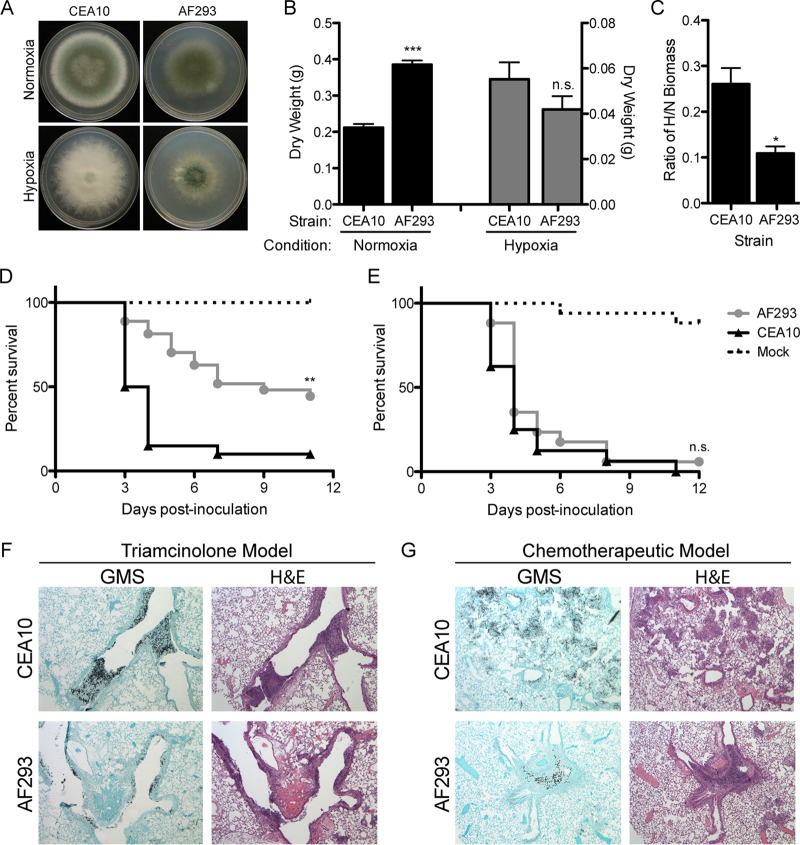
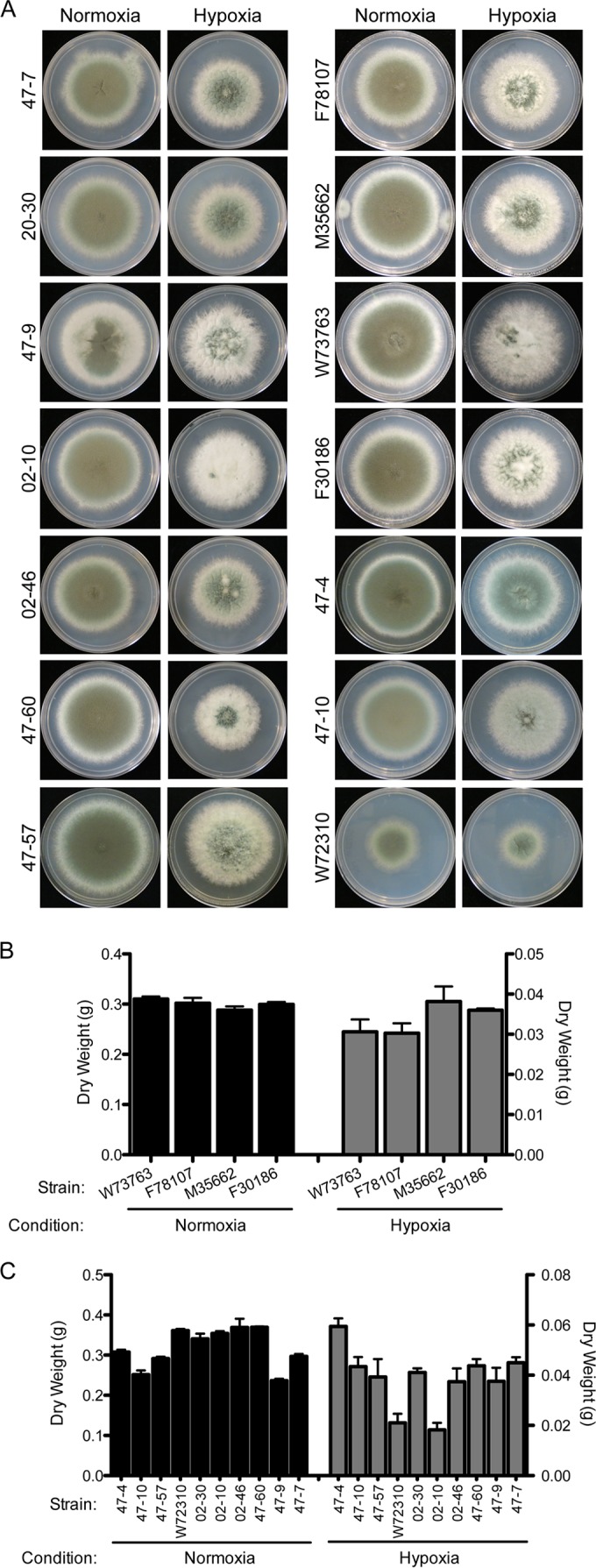
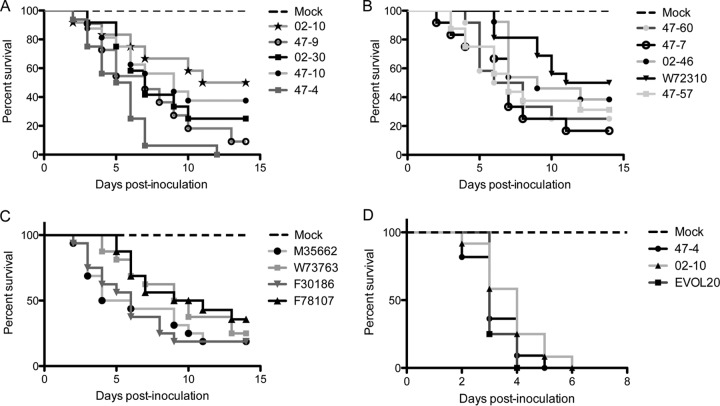
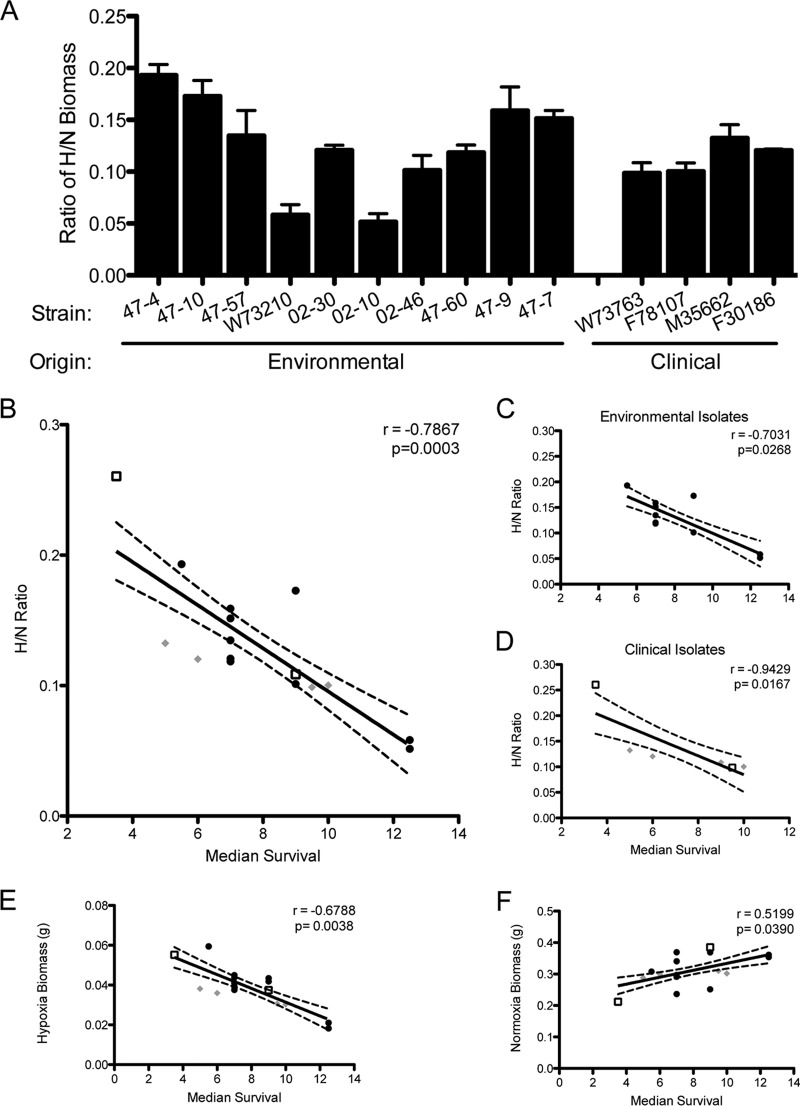
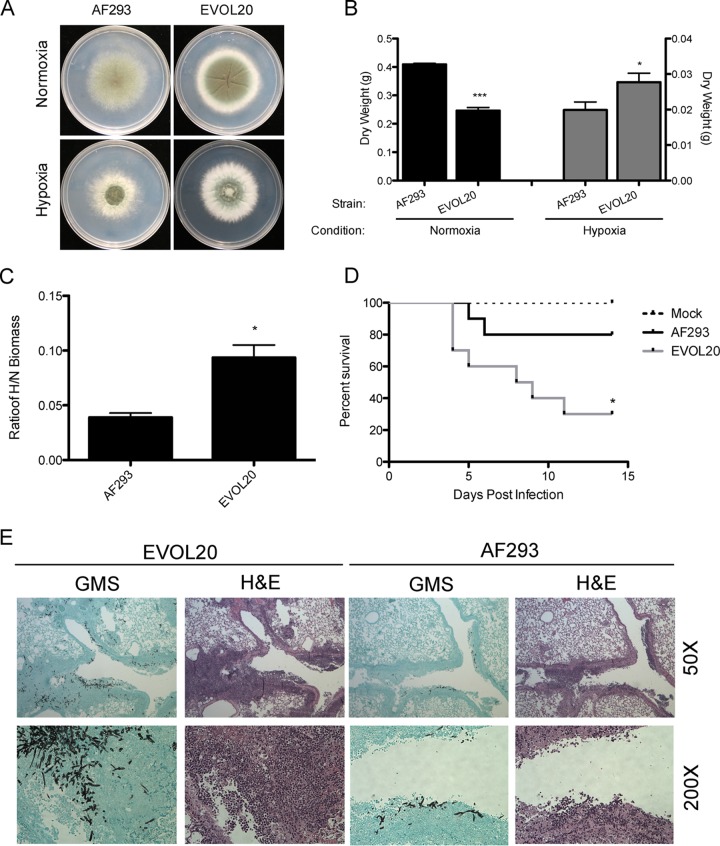
Previous work has shown that environmental and clinical isolates of Aspergillus fumigatus represent a diverse population that occupies a variety of niches, has extensive genetic diversity, and exhibits virulence heterogeneity in a number of animal models of invasive pulmonary aspergillosis (IPA). However, mechanisms explaining differences in virulence among A. fumigatus isolates remain enigmatic. Here, we report a significant difference in virulence of two common lab strains, CEA10 and AF293, in the murine triamcinolone immunosuppression model of IPA, in which we previously identified severe low oxygen microenvironments surrounding fungal lesions. Therefore, we hypothesize that the ability to thrive within these lesions of low oxygen promotes virulence of A. fumigatus in this model. To test this hypothesis, we performed in vitro fitness and in vivo virulence analyses in the triamcinolone murine model of IPA with 14 environmental and clinical isolates of A. fumigatus . Among these isolates, we observed a strong correlation between fitness in low oxygen in vitro and virulence. In further support of our hypothesis, experimental evolution of AF293, a strain that exhibits reduced fitness in low oxygen and reduced virulence in the triamcinolone model of IPA, results in a strain (EVOL20) that has increased hypoxia fitness and a corresponding increase in virulence. Thus, the ability to thrive in low oxygen correlates with virulence of A. fumigatus isolates in the context of steroid-mediated murine immunosuppression. IMPORTANCE Aspergillus fumigatus occupies multiple environmental niches, likely contributing to the genotypic and phenotypic heterogeneity among isolates. Despite reports of virulence heterogeneity, pathogenesis studies often utilize a single strain for the identification and characterization of virulence and immunity factors. Here, we describe significant variation between A. fumigatus isolates in hypoxia fitness and virulence, highlighting the advantage of including multiple strains in future studies. We also illustrate that hypoxia fitness correlates strongly with increased virulence exclusively in the nonleukopenic murine triamcinolone immunosuppression model of IPA. Through an experimental evolution experiment, we observe that chronic hypoxia exposure results in increased virulence of A. fumigatus . We describe here the first observation of a model-specific virulence phenotype correlative with in vitro fitness in hypoxia and pave the way for identification of hypoxia-mediated mechanisms of virulence in the fungal pathogen A. fumigatus.
Overview
The claims and statistics of this paper haven’t been checked yet.
Free: it reads the open-access text and checks the first 5 claims that cite a source we can check. Create a free account to check every claim.
Integrity signals
Registry
Cites
Statistics
Figures
Verification
Claims the paper makes
The claims and statistics of this paper haven’t been checked yet.
Free: it reads the open-access text and checks the first 5 claims that cite a source we can check. Create a free account to check every claim.
Claims other papers make about this one
Each is checked against this paper’s own text: does it say what the citing paper says it does?
The source backs part of the claim, not all of it — or backs it for a different population, condition or comparison.
In the citing paper
“Indeed, strain fitness in low oxygen correlates well with A. fumigatus virulence (176).”
From Aspergillus fumigatus and Aspergillosis in 2019 (2019) · cites this paper as [176]
Experimental — accuracy not yet measuredIn the citing paper
“It should be noted that the genetic background of the parental strain is important and may complicate the omics studies, since parental fungal strains may differ in virulence (176).”
From Aspergillus fumigatus and Aspergillosis in 2019 (2019) · cites this paper as [176]
In the citing paper
“The presence of these viruses may have a role in fungal virulence”
From Aspergillus fumigatus and Aspergillosis in 2019 (2019) · cites this paper as [176]
In the citing paper
“The presence of these viruses may have a role in fungal virulence, since the sequenced strain Af293, which is infected with a mycovirus, is less pathogenic than other wild-type strains (176).”
From Aspergillus fumigatus and Aspergillosis in 2019 (2019) · cites this paper as [176]
Self-check
Percentages, sums and reported differences re-computed from the paper’s own numbers.
The self-check needs the paper’s full text.
Citations
Cites
Guide for the Care and Use of Laboratory Animals: Eighth Edition
(2011) · doi:10.17226/12910 · Cited by 16,199
Guide for the care and use of laboratory animals
(1997) · Choice Reviews Online · doi:10.5860/choice.34-3310 · Cited by 2,922
Pathogenesis of Aspergillus fumigatus in Invasive Aspergillosis
Dagenais, T. R. T., & Keller, N. P. (2009) · Clinical Microbiology Reviews · doi:10.1128/cmr.00055-08 · Cited by 993 · cited 1×
“This shift in IPA patient populations highlights the relevance of the murine triamcinolone model of infection, which presents a different in vivo microenvironment than the leukopenic (neutropenic) model (26, 30).”
BackgroundHIF-1α expression regulates the bactericidal capacity of phagocytes
Peyssonnaux, C., Datta, V., Cramer, T., Doedens, A., Theodorakis, E. A., Gallo, R. L., Hurtado-Ziola, N., Nizet, V., & Johnson, R. S. (2005) · Journal of Clinical Investigation · doi:10.1172/jci23865 · Cited by 702
Tuberculous Granulomas Are Hypoxic in Guinea Pigs, Rabbits, and Nonhuman Primates
Via, L. E., Lin, P. L., Ray, S. M., Carrillo, J., Allen, S. S., Eum, S. Y., Taylor, K., Klein, E., Manjunatha, U., Gonzales, J., et al. (2008) · Infection and Immunity · doi:10.1128/iai.01515-07 · Cited by 664
Aspergillosis complicating neoplastic disease
Meyer, R. D., Young, L. S., Armstrong, D., & Yu, B. (1973) · The American Journal of Medicine · doi:10.1016/0002-9343(73)90077-6 · Cited by 523
Genomic Islands in the Pathogenic Filamentous Fungus Aspergillus fumigatus
Fedorova, N. D., Khaldi, N., Joardar, V. S., Maiti, R., Amedeo, P., Anderson, M. J., Crabtree, J., Silva, J. C., Badger, J. H., Albarraq, A., et al. (2008) · PLoS Genetics · doi:10.1371/journal.pgen.1000046 · Cited by 508 · cited 1×
“Furthermore, 41 orthologous gene pairs between the two strains do not share 100% identity, and alignment of some of these genes shows identities as low as 37% (51).”
BackgroundThe Enduring Hypoxic Response of Mycobacterium tuberculosis
Rustad, T. R., Harrell, M. I., Liao, R., & Sherman, D. R. (2008) · PLoS ONE · doi:10.1371/journal.pone.0001502 · Cited by 491
Siderophores in Fungal Physiology and Virulence
Haas, H., Eisendle, M., & Turgeon, B. G. (2008) · Annual Review of Phytopathology · doi:10.1146/annurev.phyto.45.062806.094338 · Cited by 449
Shimizu, K., & Keller, N. P. (2001) · Genetics · doi:10.1093/genetics/157.2.591 · Cited by 445
Aspergillus fumigatus: saprophyte or pathogen?
Tekaia, F., & Latgé, J.-P. (2005) · Current Opinion in Microbiology · doi:10.1016/j.mib.2005.06.017 · Cited by 387 · cited 1×
“fumigatus and that the pathology of infection cannot be described merely in terms of the host status and immune response as described previously (71).”
BackgroundJanbon, G., Ormerod, K. L., Paulet, D., Byrnes, E. J., Yadav, V., Chatterjee, G., Mullapudi, N., Hon, C.-C., Billmyre, R. B., Brunel, F., et al. (2014) · PLoS Genetics · doi:10.1371/journal.pgen.1004261 · Cited by 371
Cornillet, A., Camus, C., Nimubona, S., Gandemer, V., Tattevin, P., Belleguic, C., Chevrier, S., Meunier, C., Lebert, C., Aupee, M., et al. (2006) · Clinical Infectious Diseases · doi:10.1086/505870 · Cited by 361
Willger, S. D., Puttikamonkul, S., Kim, K.-H., Burritt, J. B., Grahl, N., Metzler, L. J., Barbuch, R., Bard, M., Lawrence, C. B., & Cramer, R. A. (2008) · PLoS Pathogens · doi:10.1371/journal.ppat.1000200 · Cited by 345 · cited 3×
“However, consistent with previous studies from several laboratories, in the chemotherapeutic model (33), the two strains display nearly identical virulence levels (P 0.”
BackgroundResultSelf-citationGenetic and phenotypic intra-species variation in Candida albicans
Hirakawa, M. P., Martinez, D. A., Sakthikumar, S., Anderson, M. Z., Berlin, A., Gujja, S., Zeng, Q., Zisson, E., Wang, J. M., Greenberg, J. M., et al. (2015) · Genome Research · doi:10.1101/gr.174623.114 · Cited by 320
Fisher, B. D., Armstrong, D., Yu, B., & Gold, J. W. M. (1981) · The American Journal of Medicine · doi:10.1016/0002-9343(81)90208-4 · Cited by 285
Karki, R., Man, S. M., Malireddi, R. K. S., Gurung, P., Vogel, P., Lamkanfi, M., & Kanneganti, T.-D. (2015) · Cell Host & Microbe · doi:10.1016/j.chom.2015.01.006 · Cited by 272
Kowalski, C. J. (1972) · Applied Statistics · doi:10.2307/2346598 · Cited by 244
Self-citationKong, T., Eltzschig, H. K., Karhausen, J., Colgan, S. P., & Shelley, C. S. (2004) · Proceedings of the National Academy of Sciences · doi:10.1073/pnas.0401339101 · Cited by 242 · cited 1×
“In particular, HIF-1 regulates neutrophil recruitment down an oxygen gradient to regions of low-oxygen tensions through the upstream regulation of 2-integrin-mediated diapedesis (67).”
BackgroundGrahl, N., Puttikamonkul, S., Macdonald, J. M., Gamcsik, M. P., Ngo, L. Y., Hohl, T. M., & Cramer, R. A. (2011) · PLoS Pathogens · doi:10.1371/journal.ppat.1002145 · Cited by 217 · cited 5×
“As we have previously observed extensive low oxygen regions within pulmonary fungal lesions in the murine triamcinolone model of IPA compared to the leukopenic model (26), we hypothesized that the increased in vitro hypoxia fitness of CEA10 would allow for increased virulence in the murine triamcinolone model of IPA.”
BackgroundInfluentialSelf-citationChang, Y. C., Bien, C. M., Lee, H., Espenshade, P. J., & Kwon‐Chung, K. J. (2007) · Molecular Microbiology · doi:10.1111/j.1365-2958.2007.05676.x · Cited by 212 · cited 1×
“neoformans is essential for formation of brain lesions in a murine model of cryptococcosis (27, 57).”
BackgroundTen years of bacterial genome sequencing: comparative-genomics-based discoveries
Binnewies, T. T., Motro, Y., Hallin, P. F., Lund, O., Dunn, D., La, T., Hampson, D. J., Bellgard, M., Wassenaar, T. M., & Ussery, D. W. (2006) · Functional & Integrative Genomics · doi:10.1007/s10142-006-0027-2 · Cited by 186
Oxygen status of lung granulomas in Mycobacterium tuberculosis‐infected mice
Aly, S., Wagner, K., Keller, C., Malm, S., Malzan, A., Brandau, S., Bange, F., & Ehlers, S. (2006) · The Journal of Pathology · doi:10.1002/path.2055 · Cited by 185
Reeves, E. P., Messina, C. G. M., Doyle, S., & Kavanagh, K. (2004) · Mycopathologia · doi:10.1023/b:myco.0000038434.55764.16 · Cited by 183
Chun, C. D., Liu, O. W., & Madhani, H. D. (2007) · PLoS Pathogens · doi:10.1371/journal.ppat.0030022 · Cited by 181 · cited 2×
“These include alternations in pH (24, 25), oxygen tensions (26, 27), and nutrient availability (28, 29), among others.”
BackgroundAbdolrasouli, A., Rhodes, J., Beale, M. A., Hagen, F., Rogers, T. R., Chowdhary, A., Meis, J. F., Armstrong-James, D., & Fisher, M. C. (2015) · mBio · doi:10.1128/mbio.00536-15 · Cited by 177
Blatzer, M., Barker, B. M., Willger, S. D., Beckmann, N., Blosser, S. J., Cornish, E. J., Mazurie, A., Grahl, N., Haas, H., & Cramer, R. A. (2011) · PLoS Genetics · doi:10.1371/journal.pgen.1002374 · Cited by 175
Self-citationGenetic diversity among clinical and environmental isolates of Aspergillus fumigatus
Debeaupuis, J. P., Sarfati, J., Chazalet, V, & Latgé, J. P. (1997) · Infection and Immunity · doi:10.1128/iai.65.8.3080-3085.1997 · Cited by 172
Franzot, S. P., Mukherjee, J., Cherniak, R., Chen, L.-C., Hamdan, J. S., & Casadevall, A. (1998) · Infection and Immunity · doi:10.1128/iai.66.1.89-97.1998 · Cited by 167
Brown, J. S., Aufauvre‐Brown, A., Brown, J., Jennings, J. M., Arst, H., & Holden, D. W. (2000) · Molecular Microbiology · doi:10.1046/j.1365-2958.2000.01953.x · Cited by 145
Krappmann, S., Bignell, E. M., Reichard, U., Rogers, T., Haynes, K., & Braus, G. H. (2004) · Molecular Microbiology · doi:10.1111/j.1365-2958.2004.04015.x · Cited by 133
Caffrey, A. K., Lehmann, M. M., Zickovich, J. M., Espinosa, V., Shepardson, K. M., Watschke, C. P., Hilmer, K. M., Thammahong, A., Barker, B. M., Rivera, A., et al. (2015) · PLOS Pathogens · doi:10.1371/journal.ppat.1004625 · Cited by 132
Self-citationpH Response Pathways in Fungi: Adapting to Host-derived and Environmental Signals
Selvig, K., & Alspaugh, J. A. (2011) · Mycobiology · doi:10.5941/myco.2011.39.4.249 · Cited by 130
Vödisch, M., Scherlach, K., Winkler, R., Hertweck, C., Braun, H.-P., Roth, M., Haas, H., Werner, E. R., Brakhage, A. A., & Kniemeyer, O. (2011) · Journal of Proteome Research · doi:10.1021/pr1012812 · Cited by 128
Barker, B. M., Kroll, K., Vödisch, M., Mazurie, A., Kniemeyer, O., & Cramer, R. A. (2012) · BMC Genomics · doi:10.1186/1471-2164-13-62 · Cited by 127
Self-citationThe Functions of Myosin II and Myosin V Homologs in Tip Growth and Septation in Aspergillus nidulans
Taheri-Talesh, N., Xiong, Y., & Oakley, B. R. (2012) · PLoS ONE · doi:10.1371/journal.pone.0031218 · Cited by 126
Feng, X., Krishnan, K., Richie, D. L., Aimanianda, V., Hartl, L., Grahl, N., Powers-Fletcher, M. V., Zhang, M., Fuller, K. K., Nierman, W. C., et al. (2011) · PLoS Pathogens · doi:10.1371/journal.ppat.1002330 · Cited by 112 · cited 1×
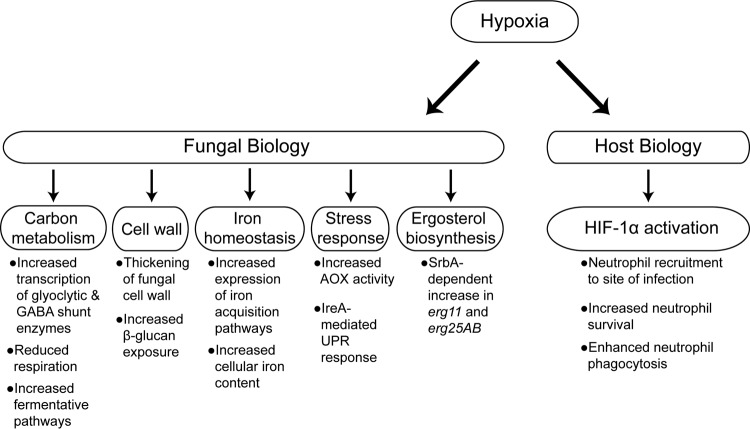
“Last, the cellular response to reactive oxygen species and endoplasmic reticulum stress is altered in hypoxia as shown by increased alternative oxidase activity (AOX) (61) and a hypoxic growth defect in ireA (74).”
BackgroundSelf-citationAlanio, A., Desnos-Ollivier, M., & Dromer, F. (2011) · mBio · doi:10.1128/mbio.00158-11 · Cited by 112
Hagiwara, D., Takahashi, H., Watanabe, A., Takahashi-Nakaguchi, A., Kawamoto, S., Kamei, K., & Gonoi, T. (2014) · Journal of Clinical Microbiology · doi:10.1128/jcm.01105-14 · Cited by 111
The Aspergillus pH‐responsive transcription factor PacC regulates virulence
Bignell, E., Negrete‐Urtasun, S., Calcagno, A. M., Haynes, K., Arst, H. N., & Rogers, T. (2005) · Molecular Microbiology · doi:10.1111/j.1365-2958.2004.04472.x · Cited by 109
Sosinska, G. J., de Groot, P. W. J., Teixeira de Mattos, M. J., Dekker, H. L., de Koster, C. G., Hellingwerf, K. J., & Klis, F. M. (2008) · Microbiology · doi:10.1099/mic.0.2007/012617-0 · Cited by 102
Beale, M. A., Sabiiti, W., Robertson, E. J., Fuentes-Cabrejo, K. M., O’Hanlon, S. J., Jarvis, J. N., Loyse, A., Meintjes, G., Harrison, T. S., May, R. C., et al. (2015) · PLOS Neglected Tropical Diseases · doi:10.1371/journal.pntd.0003847 · Cited by 101
Grahl, N., Dinamarco, T. M., Willger, S. D., Goldman, G. H., & Cramer, R. A. (2012) · Molecular Microbiology · doi:10.1111/j.1365-2958.2012.08034.x · Cited by 99
Self-citationAmich, J., Schafferer, L., Haas, H., & Krappmann, S. (2013) · PLoS Pathogens · doi:10.1371/journal.ppat.1003573 · Cited by 95
Virulence of Paracoccidioides brasiliensis: The influence of in vitro passage and storage
Brummer, E., Restrepo, A., Hanson, L. H., & Stevens, D. A. (1990) · Mycopathologia · doi:10.1007/bf00437001 · Cited by 92
The role of HIF-1α in myeloid cell inflammation
Walmsley, S. R., Cadwallader, K. A., & Chilvers, E. R. (2005) · Trends in Immunology · doi:10.1016/j.it.2005.06.007 · Cited by 91
Microevolution of Candida albicans in Macrophages Restores Filamentation in a Nonfilamentous Mutant
Wartenberg, A., Linde, J., Martin, R., Schreiner, M., Horn, F., Jacobsen, I. D., Jenull, S., Wolf, T., Kuchler, K., Guthke, R., et al. (2014) · PLoS Genetics · doi:10.1371/journal.pgen.1004824 · Cited by 86
Guzy, R. D., Mack, M. M., & Schumacker, P. T. (2007) · Antioxidants & Redox Signaling · doi:10.1089/ars.2007.1708 · Cited by 86
Strain Dependent Variation of Immune Responses to A. fumigatus: Definition of Pathogenic Species
Rizzetto, L., Giovannini, G., Bromley, M., Bowyer, P., Romani, L., & Cavalieri, D. (2013) · PLoS ONE · doi:10.1371/journal.pone.0056651 · Cited by 79
Shepardson, K. M., Jhingran, A., Caffrey, A., Obar, J. J., Suratt, B. T., Berwin, B. L., Hohl, T. M., & Cramer, R. A. (2014) · PLoS Pathogens · doi:10.1371/journal.ppat.1004378 · Cited by 79 · cited 1×
“We have also previously shown that HIF-1 is required for host protection against IPA, due to inefficient neutrophil recruitment at the site of infection (70).”
BackgroundSelf-citationHypoxia enhances innate immune activation to Aspergillus fumigatus through cell wall modulation
Shepardson, K. M., Ngo, L. Y., Aimanianda, V., Latgé, J.-P., Barker, B. M., Blosser, S. J., Iwakura, Y., Hohl, T. M., & Cramer, R. A. (2013) · Microbes and Infection · doi:10.1016/j.micinf.2012.11.010 · Cited by 75
Self-citationOxygen requirements of Aspergillus species
HALL, L. A., & DENNING, D. W. (1994) · Journal of Medical Microbiology · doi:10.1099/00222615-41-5-311 · Cited by 73
Aspergillus fumigatus metabolism: Clues to mechanisms of in vivo fungal growth and virulence
Willger, S. D., Grahl, N., Willger, S. D., Grahl, N., & Cramer, R. A. (2009) · Medical Mycology · doi:10.1080/13693780802455313 · Cited by 69
Self-citationFungal adaptation to the mammalian host: it is a new world, after all
Cooney, N. M., & Klein, B. S. (2008) · Current Opinion in Microbiology · doi:10.1016/j.mib.2008.09.018 · Cited by 68
Willger, S. D., Cornish, E. J., Chung, D., Fleming, B. A., Lehmann, M. M., Puttikamonkul, S., & Cramer, R. A. (2012) · Eukaryotic Cell · doi:10.1128/ec.00252-12 · Cited by 67
Self-citationBrunke, S., Seider, K., Fischer, D., Jacobsen, I. D., Kasper, L., Jablonowski, N., Wartenberg, A., Bader, O., Enache-Angoulvant, A., Schaller, M., et al. (2014) · PLoS Pathogens · doi:10.1371/journal.ppat.1004478 · Cited by 64
Sepúlveda, V. E., Williams, C. L., & Goldman, W. E. (2014) · mBio · doi:10.1128/mbio.01376-14 · Cited by 56
Correlation between in vitro growth rate and in vivo virulence in Aspergillus fumigatus
Paisley, D., Robson, G. D., & Denning, D. W. (2005) · Medical Mycology · doi:10.1080/13693780400005866 · Cited by 54
Longitudinal study ofAspergillus fumigatus strains isolated from cystic fibrosis patients
Neuvéglise, C., Sarfati, J., Debeaupuis, J. P., Vu-Thien, H., Just, J., Tournier, G., & Latgé, J. (1997) · European Journal of Clinical Microbiology & Infectious Diseases · doi:10.1007/bf01709257 · Cited by 50
Virulence in an insect model differs between mating types inAspergillus fumigatus
Cheema, M. S., & Christians, J. K. (2010) · Medical Mycology · doi:10.3109/13693786.2010.512301 · Cited by 49
Morphological studies on clinical isolates ofAspergillus fumigatus
Leslie, C. E., Flannigan, B., & Milne, L. J. R. (1988) · Medical Mycology · doi:10.1080/02681218880000481 · Cited by 48
Mondon, P., De Champs, C., Donadille, A., Ambroise-Thomas, P., & Grillot, R. (1996) · Journal of Medical Microbiology · doi:10.1099/00222615-45-3-186 · Cited by 47
Phenotypic Plasticity Regulates Candida albicans Interactions and Virulence in the Vertebrate Host
Mallick, E. M., Bergeron, A. C., Jones, S. K., Newman, Z. R., Brothers, K. M., Creton, R., Wheeler, R. T., & Bennett, R. J. (2016) · Frontiers in Microbiology · doi:10.3389/fmicb.2016.00780 · Cited by 47
Halliwell, S. C., Smith, M. C. A., Muston, P., Holland, S. L., & Avery, S. V. (2012) · Eukaryotic Cell · doi:10.1128/ec.05232-11 · Cited by 46
Ben‐Ami, R., Lamaris, G. A., Lewis, R. E., & Kontoyiannis, D. P. (2009) · Medical Mycology · doi:10.3109/13693780903148346 · Cited by 42
Genetic diversity of Aspergillus fumigatus in indoor hospital environments
Araujo, R., Amorim, A., & Gusmão, L. (2010) · Medical Mycology · doi:10.3109/13693780903575360 · Cited by 37
DuBois, J. C., Pasula, R., Dade, J., & Smulian, A. G. (2015) · Medical Mycology · doi:10.1093/mmy/myv073 · Cited by 32
Russo, A., Falcone, M., Vena, A., Venditti, C., Mancini, C., Morelli, A., & Venditti, M. (2011) · Journal of Chemotherapy · doi:10.1179/joc.2011.23.5.290 · Cited by 32
Duarte-Escalante, E., Zúñiga, G., Ramírez, O. N., Córdoba, S. B., Refojo, N., Arenas, R., Delhaès, L., & Reyes-Montes, M. D. R. (2009) · Memórias do Instituto Oswaldo Cruz · doi:10.1590/s0074-02762009000300005 · Cited by 31
Luo, S., Hipler, U., Münzberg, C., Skerka, C., & Zipfel, P. F. (2015) · PLoS ONE · doi:10.1371/journal.pone.0113192 · Cited by 30
ROSEHART, K., Richards, M. H., & Bidochka, M. (2002) · Journal of Medical Microbiology · doi:10.1099/0022-1317-51-12-1128 · Cited by 27
Variability of cell wall composition inParacoccidioides brasiliensis: A study of two strains
San-Blas, G., & San-Blas, F. (1982) · Medical Mycology · doi:10.1080/00362178285380061 · Cited by 26
Movahed, E., Munusamy, K., Tan, G. M. Y., Looi, C. Y., Tay, S. T., & Wong, W. F. (2015) · PLoS ONE · doi:10.1371/journal.pone.0137457 · Cited by 23
Mycobacterium tuberculosis infection induces hypoxic lung lesions in the rat
Heng, Y., Seah, P. G., Siew, J. Y., Tay, H. C., Singhal, A., Mathys, V., Kiass, M., Bifani, P. J., Dartois, V. A., & Hervé, M. (2011) · Tuberculosis · doi:10.1016/j.tube.2011.05.003 · Cited by 22
Alshareef, F., & Robson, G. D. (2014) · Microbiology · doi:10.1099/mic.0.072520-0 · Cited by 22
Genetic Diversity among Isolates of Aspergillus fumigatus in Patients with Cystic Fibrosis
Rath, P., Ratjen, F. A., & Ansorg, R. (1997) · Zentralblatt für Bakteriologie · doi:10.1016/s0934-8840(97)80012-6 · Cited by 19
Extreme DNA sequence variation in isolates of Aspergillus fumigatus
Katz, M. E., Mcloon, M., Burrows, S. R., & Cheetham, B. F. (1998) · FEMS Immunology & Medical Microbiology · doi:10.1111/j.1574-695x.1998.tb01138.x · Cited by 15
Ben‐Ami, R., Lamaris, G. A., Lewis, R. E., et al. (2009) · Medical Mycology · doi:10.1080/13693780903148346 · Cited by 5
Cited by
Aspergillus fumigatus and Aspergillosis in 2019
Latgé, J.-P., & Chamilos, G. (2019) · Clinical Microbiology Reviews · doi:10.1128/cmr.00140-18 · Cited by 1,400
Evolution of the human pathogenic lifestyle in fungi
Rokas, A. (2022) · Nature Microbiology · doi:10.1038/s41564-022-01112-0 · Cited by 232
Al Abdallah, Q., Ge, W., & Fortwendel, J. R. (2017) · mSphere · doi:10.1128/msphere.00446-17 · Cited by 192
Pathogenesis of Respiratory Viral and Fungal Coinfections
Salazar, F., Bignell, E., Brown, G. D., Cook, P. C., & Warris, A. (2021) · Clinical Microbiology Reviews · doi:10.1128/cmr.00094-21 · Cited by 178
A phosphorylated transcription factor regulates sterol biosynthesis in Fusarium graminearum
Liu, Z., Jian, Y., Chen, Y., Kistler, H. C., He, P., Ma, Z., & Yin, Y. (2019) · Nature Communications · doi:10.1038/s41467-019-09145-6 · Cited by 148
Metadata
- Authors
- Kowalski, C. H., Beattie, S. R., Fuller, K. K., McGurk, E. A., Tang, Y.-W., Hohl, T. M., Obar, J. J., & Cramer, R. A.
- Affiliations
- Dartmouth College (US)
- Keene State College (US)
- Memorial Sloan Kettering Cancer Center (US)
- Corresponding author
- Cramer, Robert A.
- ORCID
- Venue
- mBio
- Publisher
- American Society for Microbiology
- Published
- 2016-11-02
- Volume
- 7
- Issue
- 5
- ISSN
- 2150-7511 (ISSN-L)
- 2161-2129
- PMC
- PMC5040115
- OpenAlex
- W2521757275
- Cited by
- 123
- References
- 78
- Citations by year
- 2026: 9 · 2025: 9 · 2024: 7 · 2023: 5 · 2022: 20 · 2021: 21 · 2020: 18 · 2019: 12 · 2018: 12 · 2017: 10
- FWCI
- 10.46
- Type
- journal article
- Language
- en
- Open access
- gold
- doi.org
- Licence
- cc-by
- creativecommons.org/licenses/by/4.0/ (vor)
- journals.asm.org/non-commercial-tdm-license (tdm)
- Locations
- mBio (publishedVersion, cc-by)
- PubMed Central (publishedVersion, cc-by)
- PubMed (publishedVersion)
- DOAJ (DOAJ: Directory of Open Access Journals) (submittedVersion, cc-by-sa)
- DOAJ (DOAJ: Directory of Open Access Journals) (submittedVersion)
- Funders
- HHS | NIH | National Institute of Allergy and Infectious Diseases (R01 AI081838, R01 AI093808)
- Burroughs Wellcome Fund
- Topics
- Health Sciences › Medicine › Infectious Diseases › Antifungal resistance and susceptibility
- Life Sciences › Biochemistry, Genetics and Molecular Biology › Molecular Biology › Fungal and yeast genetics research
- Health Sciences › Medicine › Infectious Diseases › Fungal Infections and Studies
- Keywords
- invasive pulmonary aspergillosis, fungal virulence, experimental evolution, strain heterogeneity, hypoxia tolerance
- MeSH terms
- Animals, Aspergillosis, Aspergillus fumigatus, Disease Models, Animal, Genotype, Humans, Oxygen, Triamcinolone, Genetic Variation, Virulence, Mice, Genetic Fitness, Cellular Microenvironment
About these checks
Registry, retraction, Cites and statistics results are computed, not judged, with one exception: a printed reference that no index lists is read once by a model before it counts as a citation error. Claims are extracted by a model and kept only when their quote appears verbatim in the text; each cited source is then checked, with a model’s help, for whether it says what the claim relies on. Those verdicts can be wrong — read the claim’s quote and the cited source before relying on one.
Statistics and arithmetic are recomputed, not judged.
Confidence bands are shown only for fields calibrated on our annotated test set. None is calibrated yet, so no band is shown.
What counts as a claim ›How we measure confidence ›How we check this ›
Are you an author, or do you see a problem with this page? Request a review
Data sources
Bibliographic data: Semantic Scholar, OpenAlex, Crossref.
Contains information from the Semantic Scholar Academic Graph Datasets, made available under the ODC Attribution License (ODC-BY 1.0).
Semantic Scholar’s data is described in: Kinney, R., et al. (2023). The Semantic Scholar Open Data Platform. arXiv:2301.10140.
