

Protein Kinase A and High-Osmolarity Glycerol Response Pathways Cooperatively Control Cell Wall Carbohydrate Mobilization in Aspergillus fumigatus
Open accessThe DOI matches its Crossref record; 73 of the 73 references it cites were found in a registry or an index.
Abstract
Aspergillus fumigatus is an opportunistic human pathogen causing allergic reactions or systemic infections such as invasive pulmonary aspergillosis, especially in immunocompromised patients. The fungal cell wall is the main component responsible for recognition by the immune system, due to the specific composition of polysaccharide carbohydrates exposed on the surface of the fungal cell wall called pathogen-associated molecular patterns (PAMPs). Key enzymes in the fungal cell wall biosynthesis are a good target for fungal drug development. This report elucidates the cooperation between the HOG and PKA pathways in the mobilization of carbohydrates for fungal cell wall biosynthesis. We suggest that the reduced mobilization of simple sugars causes defects in the structure of the fungal cell wall. In summary, we propose that SakA is important for PKA activity, therefore regulating the availability and mobilization of monosaccharides for fungal cell wall biosynthesis during cell wall damage and the osmotic stress response.
Overview
The claims and statistics of this paper haven’t been checked yet.
Free: it reads the open-access text and checks the first 5 claims that cite a source we can check. Create a free account to check every claim.
Integrity signals
Registry
Cites
Statistics
Figures
Verification
Claims the paper makes
The claims and statistics of this paper haven’t been checked yet.
Free: it reads the open-access text and checks the first 5 claims that cite a source we can check. Create a free account to check every claim.
Claims other papers make about this one
Each is checked against this paper’s own text: does it say what the citing paper says it does?
In the citing paper
“However, CreA plays a major physiological role due to carbon catabolite repression and also mediates growth on various nitrogen and lipid sources, as well as playing roles in amino”
From Aspergillus fumigatus and Aspergillosis in 2019 (2019) · cites this paper as [342]
Self-check
Percentages, sums and reported differences re-computed from the paper’s own numbers.
The self-check needs the paper’s full text.
Citations
Cites
(1978) · Biochemical Education · doi:10.1016/0307-4412(78)90049-3 · Cited by 5,046
Hidden Killers: Human Fungal Infections
Brown, G. D., Denning, D. W., Gow, N. A. R., Levitz, S. M., Netea, M. G., & White, T. C. (2012) · Science Translational Medicine · doi:10.1126/scitranslmed.3004404 · Cited by 4,284 · cited 1×
“The rise in opportunistic fungal infections has become a major concern for human health, especially in immunocompromised patients (1, 2).”
The structure and synthesis of the fungal cell wall
Bowman, S. M., & Free, S. J. (2006) · BioEssays · doi:10.1002/bies.20441 · Cited by 1,317
Interactions of fungal pathogens with phagocytes
Erwig, L. P., & Gow, N. A. R. (2016) · Nature Reviews Microbiology · doi:10.1038/nrmicro.2015.21 · Cited by 626 · cited 1×
“Their activation results in immune response activation and the recruitment of mature neutrophils and macrophages, which promote degradation of fungal cells within mature phagosomal compartments and therefore clear the host of a potential infection threat (4).”
Tackling Human Fungal Infections
Brown, G. D., Denning, D. W., & Levitz, S. M. (2012) · Science · doi:10.1126/science.1222236 · Cited by 619 · cited 1×
“The rise in opportunistic fungal infections has become a major concern for human health, especially in immunocompromised patients (1, 2).”
Nutrient sensing and signaling in the yeast Saccharomyces cerevisiae
Conrad, M., Schothorst, J., Kankipati, H. N., Van Zeebroeck, G., Rubio-Texeira, M., & Thevelein, J. M. (2014) · FEMS Microbiology Reviews · doi:10.1111/1574-6976.12065 · Cited by 614 · cited 2×
“cerevisiae Snf1p, a regulator of the CRE-1 homologue Mig1p, is responsible for glycogen accumulation in the presence of low glucose concentrations that favors a shift to respiratory metabolism (44).”
Regulation of trehalose mobilization in fungi
Thevelein, J. M. (1984) · Microbiological Reviews · doi:10.1128/mmbr.48.1.42-59.1984 · Cited by 565 · cited 1×
“Trehalose serves as an energy source during fungal germination at the first stages of development (27) and has been shown to be important for fungus-mediated infections (28–30).”
Glucose Signaling in Saccharomyces cerevisiae
Santangelo, G. M. (2006) · Microbiology and Molecular Biology Reviews · doi:10.1128/mmbr.70.1.253-282.2006 · Cited by 522 · cited 1×
“PKA regulation and activation in Aspergillus and other fungi (24, 26, 44).”
Response to Hyperosmotic Stress
Saito, H., & Posas, F. (2012) · Genetics · doi:10.1534/genetics.112.140863 · Cited by 513 · cited 1×
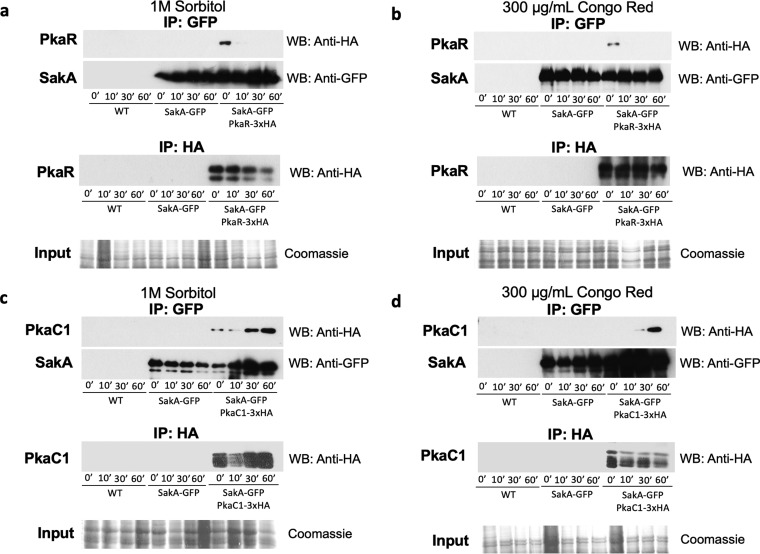
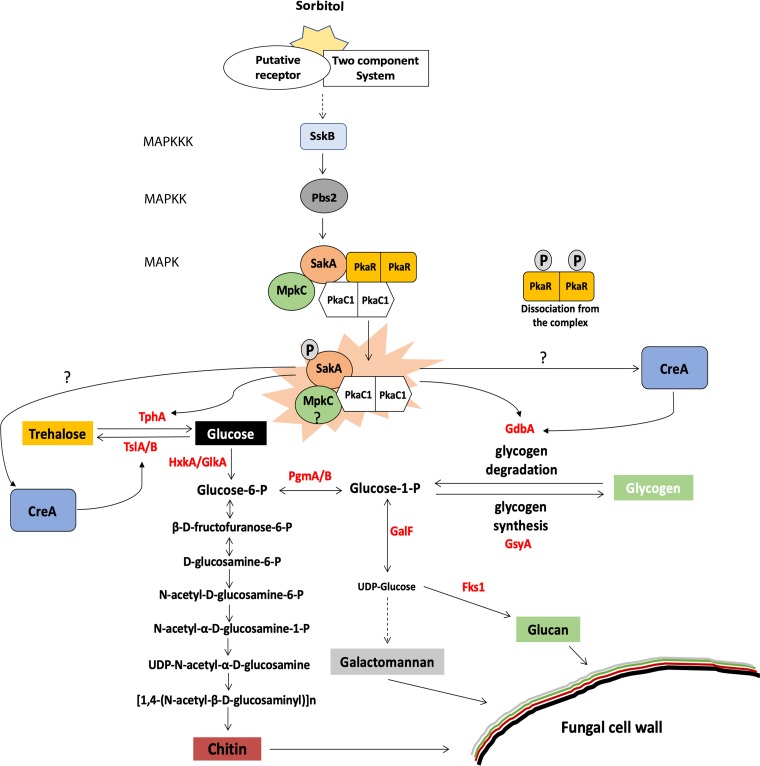
“way is activated (62, 63), resulting in SakA phosphorylation (36), which subsequently causes the dissociation of the PkaR regulatory subunit, probably as a result of SakAmediated phosphorylation, from PkaC1 (Fig.”
Aspergillus fumigatus morphology and dynamic host interactions
van de Veerdonk, F. L., Gresnigt, M. S., Romani, L., Netea, M. G., & Latgé, J.-P. (2017) · Nature Reviews Microbiology · doi:10.1038/nrmicro.2017.90 · Cited by 490
Regulation of glycogen metabolism in yeast and bacteria
Wilson, W. A., Roach, P. J., Montero, M., Baroja-Fernández, E., Muñoz, F. J., Eydallin, G., Viale, A. M., & Pozueta-Romero, J. (2010) · FEMS Microbiology Reviews · doi:10.1111/j.1574-6976.2010.00220.x · Cited by 420 · cited 1×
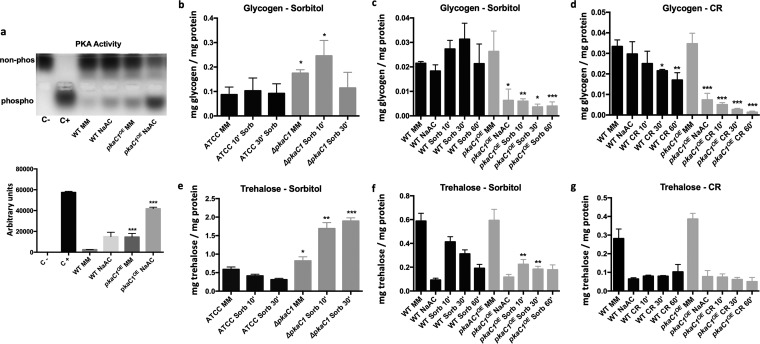
“Similarly to other fungi (21, 56–59), the PKA catalytic subunit PkaC1 was shown to be required for regulation of intracellular glycogen and trehalose levels.”
Krijgsheld, P., Bleichrodt, R., van Veluw, G. J., Wang, F., Müller, W. H., Dijksterhuis, J., & Wösten, H. A. B. (2013) · Studies in Mycology · doi:10.3114/sim0006 · Cited by 410 · cited 2×
“The presence of glucose is sensed by a heterotrimeric G-protein, with the G subunit activating adenylate cyclase, resulting in an increase in intracellular cAMP pools and subsequent PKA activation (23, 24).”
Gravelat, F. N., Beauvais, A., Liu, H., Lee, M. J., Snarr, B. D., Chen, D., Xu, W., Kravtsov, I., Hoareau, C. M. Q., Vanier, G., et al. (2013) · PLoS Pathogens · doi:10.1371/journal.ppat.1003575 · Cited by 320
The cellular basis of chitin synthesis in fungi and insects: Common principles and differences
Merzendorfer, H. (2011) · European Journal of Cell Biology · doi:10.1016/j.ejcb.2011.04.014 · Cited by 320
Fuchs, B. B., & Mylonakis, E. (2009) · Eukaryotic Cell · doi:10.1128/ec.00193-09 · Cited by 266 · cited 1×
“Often, substantial cross talk exists between these signaling pathways, governed by either direct or indirect interactions between pathway-specific proteins (37, 47, 48).”
Bai Flagfeldt, D., Siewers, V., Huang, L., & Nielsen, J. (2009) · Yeast · doi:10.1002/yea.1705 · Cited by 259
Foster, A. J. (2003) · The EMBO Journal · doi:10.1093/emboj/cdg018 · Cited by 247 · cited 2×
“Similarly, glycogen breakdown and trehalose synthesis have been shown to be important for Magnaporthe oryzae plant infection (28, 30).”
The Role of the Fungal Cell Wall in the Infection of Plants
Geoghegan, I., Steinberg, G., & Gurr, S. (2017) · Trends in Microbiology · doi:10.1016/j.tim.2017.05.015 · Cited by 217 · cited 1×
“In addition, the cell wall structure is dynamically remodeled in a condition-dependent manner, resulting in changes to cell wall carbohydrate composition (7).”
Latgé, J.-P., Beauvais, A., & Chamilos, G. (2017) · Annual Review of Microbiology · doi:10.1146/annurev-micro-030117-020406 · Cited by 207
Fillinger, S., Chaveroche, M., Shimizu, K., Keller, N., & D’Enfert, C. (2002) · Molecular Microbiology · doi:10.1046/j.1365-2958.2002.02933.x · Cited by 197
How carbohydrates sculpt cells: chemical control of morphogenesis in the yeast cell wall
Cabib, E., & Arroyo, J. (2013) · Nature Reviews Microbiology · doi:10.1038/nrmicro3090 · Cited by 188 · cited 1×
“Galactose, which is a glucose epimer, is also the major monosaccharide in galactomannans (8).”
Valiante, V., Macheleidt, J., Föge, M., & Brakhage, A. A. (2015) · Frontiers in Microbiology · doi:10.3389/fmicb.2015.00325 · Cited by 184 · cited 2×
“fumigatus encodes four MAPKs: (i) MpkA, the central regulator of the cell wall integrity (CWI) pathway that responds to drug-induced cell wall damage and reactive oxygen species; (ii) MpkB, which remains largely uncharacterized; and (iii) MpkC and SakA, the main effectors of the HOG (high-osmolarity glycerol) pathway…”
Aspergillus Fumigatus : Cell Wall Polysaccharides, their Biosynthesis and Organization
Gastebois, A., Clavaud, C., Aimanianda, V., & Latgé, J.-P. (2009) · Future Microbiology · doi:10.2217/fmb.09.29 · Cited by 179
The yeast A kinases differentially regulate iron uptake and respiratory function
Robertson, L. S., Causton, H. C., Young, R. A., & Fink, G. R. (2000) · Proceedings of the National Academy of Sciences · doi:10.1073/pnas.100113397 · Cited by 179 · cited 1×
“the degradation of glycogen and trehalose when growing on fermentable carbon sources such as glucose, sucrose, and fructose, through inhibition of the activity of enzymes involved in glycogen and trehalose synthesis and activation of enzymes involved in the breakdown of these carbohydrates (42).”
Aspergillus Cell Wall and Biofilm
Beauvais, A., Fontaine, T., Aimanianda, V., & Latgé, J. (2014) · Mycopathologia · doi:10.1007/s11046-014-9766-0 · Cited by 171 · cited 2×
“The fungal cell wall is a complex structure, consisting of linear and branched polysaccharides and proteins that present the front line in host-pathogen interactions, protecting the fungus against host-associated stresses as well as immunomodulatory and evasive properties (5, 6).”
Liebmann, B., Müller, M., Braun, A., & Brakhage, A. A. (2004) · Infection and Immunity · doi:10.1128/iai.72.9.5193-5203.2004 · Cited by 168
Valiante, V., Jain, R., Heinekamp, T., & Brakhage, A. A. (2009) · Fungal Genetics and Biology · doi:10.1016/j.fgb.2009.08.005 · Cited by 165 · cited 1×
“fumigatus encodes four MAPKs: (i) MpkA, the central regulator of the cell wall integrity (CWI) pathway that responds to drug-induced cell wall damage and reactive oxygen species; (ii) MpkB, which remains largely uncharacterized; and (iii) MpkC and SakA, the main effectors of the HOG (high-osmolarity glycerol) pathway…”
Diverse Regulation of the CreA Carbon Catabolite Repressor in Aspergillus nidulans
Ries, L. N. A., Beattie, S. R., Espeso, E. A., Cramer, R. A., & Goldman, G. H. (2016) · Genetics · doi:10.1534/genetics.116.187872 · Cited by 162 · cited 1×
“RNA extraction, cDNA synthesis, and RT-qPCR were carried out as described previously (71).”
Self-citationLafon, A., Seo, J.-A., Han, K.-H., Yu, J.-H., & d'Enfert, C. (2005) · Genetics · doi:10.1534/genetics.105.040584 · Cited by 138
d’Enfert, C., Bonini, B. M., Zapella, P. D. A., Fontaine, T., da Silva, A. M., & Terenzi, H. F. (1999) · Molecular Microbiology · doi:10.1046/j.1365-2958.1999.01327.x · Cited by 134 · cited 1×
“Similarly, trehalose is important for germination and for establishing an infection (28, 29, 69, 70).”
Thammahong, A., Puttikamonkul, S., Perfect, J. R., Brennan, R. G., & Cramer, R. A. (2017) · Microbiology and Molecular Biology Reviews · doi:10.1128/mmbr.00053-16 · Cited by 125 · cited 1×
“Similarly to other fungi (21, 56–59), the PKA catalytic subunit PkaC1 was shown to be required for regulation of intracellular glycogen and trehalose levels.”
Self-citationKowalski, C. H., Beattie, S. R., Fuller, K. K., McGurk, E. A., Tang, Y.-W., Hohl, T. M., Obar, J. J., & Cramer, R. A. (2016) · mBio · doi:10.1128/mbio.01515-16 · Cited by 123 · cited 1×
“fumigatus in an infection-related context has been described before (68).”
Self-citationDeacetylation of Fungal Exopolysaccharide Mediates Adhesion and Biofilm Formation
Lee, M. J., Geller, A. M., Bamford, N. C., Liu, H., Gravelat, F. N., Snarr, B. D., Le Mauff, F., Chabot, J., Ralph, B., Ostapska, H., et al. (2016) · mBio · doi:10.1128/mbio.00252-16 · Cited by 122 · cited 1×
“Therefore, we were specifically interested in the connection between the activation of intracellular glycogen and trehalose storage compounds and CWI pathways, since the large majority of cell wall polysaccharides are biosynthesized from the monosaccharide glucose, which can be derived from intracellular glycogen and…”
Puttikamonkul, S., Willger, S. D., Grahl, N., Perfect, J. R., Movahed, N., Bothner, B., Park, S., Paderu, P., Perlin, D. S., & Cramer Jr, R. A. (2010) · Molecular Microbiology · doi:10.1111/j.1365-2958.2010.07254.x · Cited by 119 · cited 1×
“Similarly, trehalose is important for germination and for establishing an infection (28, 29, 69, 70).”
Self-citationNutrient-Regulated Protein Kinases in Budding Yeast
Wilson, W. A., & Roach, P. J. (2002) · Cell · doi:10.1016/s0092-8674(02)01043-7 · Cited by 116
Lee, M. J., Gravelat, F. N., Cerone, R. P., Baptista, S. D., Campoli, P. V., Choe, S.-I., Kravtsov, I., Vinogradov, E., Creuzenet, C., Liu, H., et al. (2014) · Journal of Biological Chemistry · doi:10.1074/jbc.m113.522516 · Cited by 113 · cited 1×
“fumigatus genes encoding enzymes that catalyze these steps results in several cell wall defects that impact pathogenesis, highlighting the importance of intracellular sugar metabolism for fungal cell wall function and virulence (6, 14, 18, 19).”
The role of AtfA and HOG MAPK pathway in stress tolerance in conidia of Aspergillus fumigatus
Hagiwara, D., Suzuki, S., Kamei, K., Gonoi, T., & Kawamoto, S. (2014) · Fungal Genetics and Biology · doi:10.1016/j.fgb.2014.10.011 · Cited by 111 · cited 1×
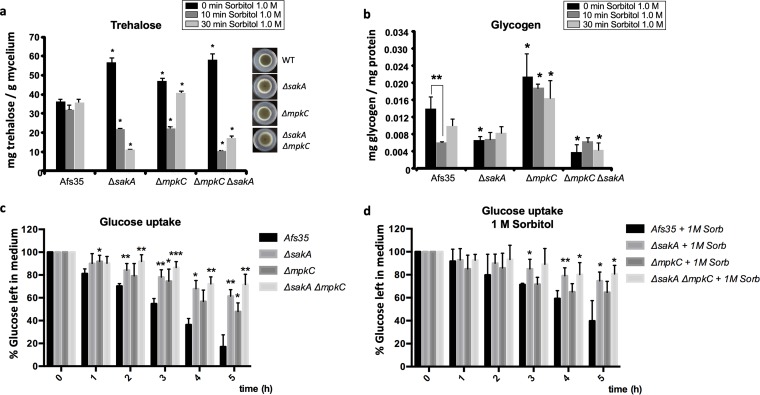
“those observed for strains deleted in the genes tslA and tslB, which encode enzymes involved in trehalose biosynthesis (45) (Fig.”
Self-citationBeattie, S. R., Mark, K. M. K., Thammahong, A., Ries, L. N. A., Dhingra, S., Caffrey-Carr, A. K., Cheng, C., Black, C. C., Bowyer, P., Bromley, M. J., et al. (2017) · PLOS Pathogens · doi:10.1371/journal.ppat.1006340 · Cited by 103 · cited 3×
“4d), which could be the reason for the increased sensitivity of this strain to cell wall-perturbing agents (60).”
Self-citationSorbitol Dehydrogenase: Structure, Function and Ligand Design
El-Kabbani, O. A. L., Darmanin, C., & Chung, R. (2004) · Current Medicinal Chemistry · doi:10.2174/0929867043455927 · Cited by 96 · cited 1×
“In A. fumigatus , the metabolism of fructose, released after the degradation of sorbitol, was shown to be dependent on hexokinase, further highlighting the importance of this enzyme for sugar utilization in Aspergillus spp. (18, 65).”
Glucose- and nitrogen sensing and regulatory mechanisms in Saccharomyces cerevisiae
Rødkaer, S. V., & Faergeman, N. J. (2014) · FEMS Yeast Research · doi:10.1111/1567-1364.12157 · Cited by 96
Zhao, W., Panepinto, J. C., Fortwendel, J. R., Fox, L., Oliver, B. G., Askew, D. S., & Rhodes, J. C. (2006) · Infection and Immunity · doi:10.1128/iai.00565-06 · Cited by 95
Aspergillus nidulans protein kinase A plays an important role in cellulase production
de Assis, L. J., Ries, L. N. A., Savoldi, M., dos Reis, T. F., Brown, N. A., & Goldman, G. H. (2015) · Biotechnology for Biofuels · doi:10.1186/s13068-015-0401-1 · Cited by 95 · cited 17×
“These studies suggest potential communication be-tween CreA-mediated carbon catabolite repression (CCR) and PKA-signaling in glucose utilization under different stress conditions.”
InfluentialSelf-citationMitogen activated protein kinases SakAHOG1 and MpkC collaborate for Aspergillus fumigatus virulence
Bruder Nascimento, A. C. M. D. O., dos Reis, T. F., de Castro, P. A., Hori, J. I., Bom, V. L. P., de Assis, L. J., Ramalho, L. N. Z., Rocha, M. C., Malavazi, I., Brown, N. A., et al. (2016) · Molecular Microbiology · doi:10.1111/mmi.13354 · Cited by 94 · cited 18×
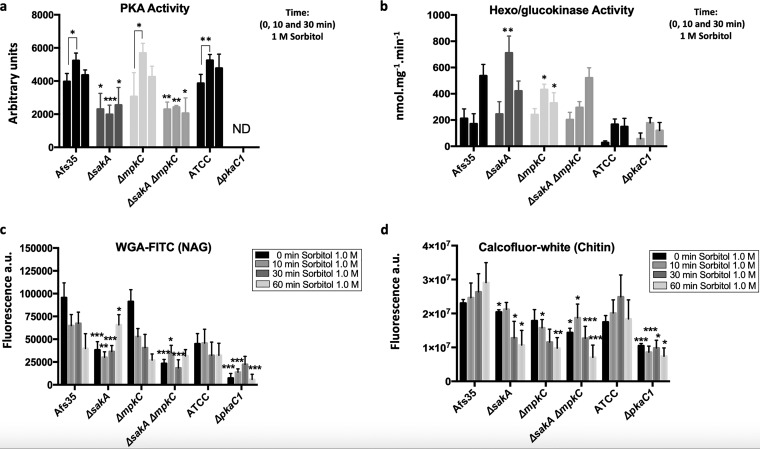
“Furthermore, SakA and MpkC are also required for correct glucose uptake and subsequent intracellular glucose signaling, as shown by a significant reduction in PKA activity in the Δ sakA and Δ sakA Δ mpkC strains under all tested conditions.”
InfluentialSelf-citationPathway engineering of Bacillus subtilis for microbial production of N-acetylglucosamine
Liu, Y., Liu, L., Shin, H., Chen, R. R., Li, J., Du, G., & Chen, J. (2013) · Metabolic Engineering · doi:10.1016/j.ymben.2013.07.002 · Cited by 93
Schiavone, M., Vax, A., Formosa, C., Martin-Yken, H., Dague, E., & François, J. M. (2014) · FEMS Yeast Research · doi:10.1111/1567-1364.12182 · Cited by 90
Onset of Carbon Catabolite Repression in Aspergillus nidulans
Flipphi, M. J. A., van de Vondervoort, P. J. I., Ruijter, G. J. G., Visser, J., Arst, H. N., & Felenbok, B. (2003) · Journal of Biological Chemistry · doi:10.1074/jbc.m209443200 · Cited by 89 · cited 1×
“shown to be crucial for carbon catabolite repression (CCR) signaling (40).”
Spatial and temporal signal processing and decision making by MAPK pathways
Atay, O., & Skotheim, J. M. (2017) · Journal of Cell Biology · doi:10.1083/jcb.201609124 · Cited by 89 · cited 1×
“proliferation and differentiation (49).”
Protein Kinase A Regulates Growth, Sporulation, and Pigment Formation in Aspergillus fumigatus
Grosse, C., Heinekamp, T., Kniemeyer, O., Gehrke, A., & Brakhage, A. A. (2008) · Applied and Environmental Microbiology · doi:10.1128/aem.00470-08 · Cited by 82
Recent advances in the understanding of the Aspergillus fumigatus cell wall
Lee, M. J., & Sheppard, D. C. (2016) · Journal of Microbiology · doi:10.1007/s12275-016-6045-4 · Cited by 77
Ries, L. N. A., Rocha, M. C., de Castro, P. A., Silva-Rocha, R., Silva, R. N., Freitas, F. Z., de Assis, L. J., Bertolini, M. C., Malavazi, I., & Goldman, G. H. (2017) · mBio · doi:10.1128/mbio.00705-17 · Cited by 76 · cited 1×
“Prolonged exposure to caspofungin results in an increase in cell wall chitin (66), ultimately indicating a deficiency in recovering from partial depletion of -1,3-glucan when glycogen is not available.”
Self-citationBadaruddin, M., Holcombe, L. J., Wilson, R. A., Wang, Z., Kershaw, M. J., & Talbot, N. J. (2013) · PLoS Pathogens · doi:10.1371/journal.ppat.1003604 · Cited by 73
García, R., Bravo, E., Díez-Muñiz, S., Nombela, C., Rodríguez-Peña, J. M., & Arroyo, J. (2017) · Scientific Reports · doi:10.1038/s41598-017-06001-9 · Cited by 71 · cited 1×
“Importantly, cross talk between the PKA pathway and the CWI and HOG pathways has been observed in several fungi (37, 38), although the mechanistic details of these interactions remain unknown in A. fumigatus .”
Wendland, J., Schaub, Y., & Walther, A. (2009) · Applied and Environmental Microbiology · doi:10.1128/aem.00053-09 · Cited by 65
de Assis, L. J., Ulaş, M., Ries, L. N. A., Elramli, N., Bayram, Ö. S., Braus, G. H., Bayram, Ö., & Goldman, G. H. (2018) · mBio · doi:10.1128/mbio.00840-18 · Cited by 65 · cited 1×
“Magnetic beads were washed two times with buffer B250 and once with protein extraction buffer (73) before samples were incubated with 20 l SDS-sample buffer and incubated at 95 ̊C for 5 min.”
Self-citationPereira Silva, L., Alves de Castro, P., dos Reis, T. F., Paziani, M. H., Von Zeska Kress, M. R., Riaño-Pachón, D. M., Hagiwara, D., Ries, L. N. A., Brown, N. A., & Goldman, G. H. (2017) · Cellular Microbiology · doi:10.1111/cmi.12681 · Cited by 57 · cited 11×
“Consistently, the RNA-seq data showed a reduction in the expression of the glucokinase-encoding gene glkA in A. fumigatus in the MAPK deletion strains under osmotic stress conditions (39) (Table S1).”
InfluentialSelf-citationFuller, K. K., Richie, D. L., Feng, X., Krishnan, K., Stephens, T. J., Wikenheiser‐Brokamp, K. A., Askew, D. S., & Rhodes, J. C. (2011) · Molecular Microbiology · doi:10.1111/j.1365-2958.2010.07509.x · Cited by 53
Fleck, C. B., & Brock, M. (2010) · Eukaryotic Cell · doi:10.1128/ec.00362-09 · Cited by 53 · cited 1×
“fumigatus genes encoding enzymes that catalyze these steps results in several cell wall defects that impact pathogenesis, highlighting the importance of intracellular sugar metabolism for fungal cell wall function and virulence (6, 14, 18, 19).”
Self-citationJaimes-Arroyo, R., Lara‐Rojas, F., Bayram, Ö., Valerius, O., Braus, G. H., & Aguirre, J. (2015) · Eukaryotic Cell · doi:10.1128/ec.00277-14 · Cited by 51 · cited 15×
“Furthermore, SakA and MpkC are also required for correct glucose uptake and subsequent intracellular glucose signaling, as shown by a significant reduction in PKA activity in the Δ sakA and Δ sakA Δ mpkC strains under all tested conditions.”
InfluentialPinchai, N., Juvvadi, P. R., Fortwendel, J. R., Perfect, B. Z., Rogg, L. E., Asfaw, Y. G., & Steinbach, W. J. (2010) · Eukaryotic Cell · doi:10.1128/ec.00378-09 · Cited by 43
Garrido-Bazán, V., Jaimes-Arroyo, R., Sánchez, O., Lara‐Rojas, F., & Aguirre, J. (2018) · Frontiers in Microbiology · doi:10.3389/fmicb.2018.02518 · Cited by 43
Freitas, F. Z., de Paula, R. M., Barbosa, L. C. B., Terenzi, H. F., & Bertolini, M. C. (2009) · Fungal Genetics and Biology · doi:10.1016/j.fgb.2009.10.011 · Cited by 42 · cited 1×
“Similarly to other fungi (21, 56–59), the PKA catalytic subunit PkaC1 was shown to be required for regulation of intracellular glycogen and trehalose levels.”
dos Reis, T. F., Nitsche, B. M., de Lima, P. B. A., de Assis, L. J., Mellado, L., Harris, S. D., Meyer, V., Santos, R., Riaño‐Pachón, D. M., Ries, L. N. A., et al. (2017) · Scientific Reports · doi:10.1038/srep45073 · Cited by 42 · cited 1×
“Intracellular glycogen levels and extracellular glucose concentrations were quantified as described previously (72).”
Self-citationSystematic Global Analysis of Genes Encoding Protein Phosphatases inAspergillus fumigatus
Winkelströter, L. K., Dolan, S. K., dos Reis, T. F., Bom, V. L. P., de Castro, P. A., Hagiwara, D., Alowni, R., Jones, G. W., Doyle, S., Brown, N. A., et al. (2015) · G3 Genes Genomes Genetics · doi:10.1534/g3.115.016766 · Cited by 40 · cited 1×
“way is activated (62, 63), resulting in SakA phosphorylation (36), which subsequently causes the dissociation of the PkaR regulatory subunit, probably as a result of SakAmediated phosphorylation, from PkaC1 (Fig.”
Self-citationThammahong, A., Caffrey-Card, A. K., Dhingra, S., Obar, J. J., & Cramer, R. A. (2017) · mBio · doi:10.1128/mbio.00056-17 · Cited by 40 · cited 1×
“Similarly, trehalose is important for germination and for establishing an infection (28, 29, 69, 70).”
Self-citationManfiolli, A. O., dos Reis, T. F., de Assis, L. J., de Castro, P. A., Silva, L. P., Hori, J. I., Walker, L. A., Munro, C. A., Rajendran, R., Ramage, G., et al. (2018) · The Cell Surface · doi:10.1016/j.tcsw.2018.03.002 · Cited by 39
Self-citationDonlin, M. J., Upadhya, R., Gerik, K. J., Lam, W., VanArendonk, L. G., Specht, C. A., Sharma, N. K., & Lodge, J. K. (2014) · mBio · doi:10.1128/mbio.01573-14 · Cited by 38 · cited 2×
“Importantly, cross talk between the PKA pathway and the CWI and HOG pathways has been observed in several fungi (37, 38), although the mechanistic details of these interactions remain unknown in A. fumigatus .”
An extreme creA mutation in Aspergillus nidulans has severe effects on D-glucose utilization
van der Veen, P., Ruijter, J. G. G., & Visser, J. (1995) · Microbiology · doi:10.1099/13500872-141-9-2301 · Cited by 34 · cited 1×
“nidulans loss-of-function creAd30 mutant (61).”
Serneels, J., Tournu, H., & Dijck, P. V. (2012) · Journal of Biological Chemistry · doi:10.1074/jbc.m112.402651 · Cited by 33
Cupertino, F. B., Virgílio, S., Freitas, F. Z., Candido, T. D. S., & Bertolini, M. C. (2015) · Fungal Genetics and Biology · doi:10.1016/j.fgb.2015.03.011 · Cited by 28 · cited 1×
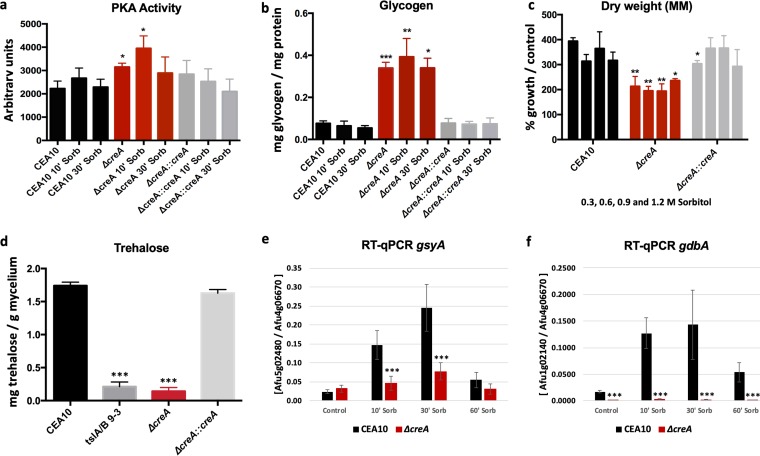
“the carbon catabolite repressor CRE-1 has been shown to be important for glycogen metabolism under nonstress conditions (43).”
Sebastián-Pérez, V., Manoli, M., Pérez, D. I., Gil, C., Mellado, E., Martínez, A., Espeso, E. A., & Campillo, N. E. (2016) · European Journal of Medicinal Chemistry · doi:10.1016/j.ejmech.2016.03.035 · Cited by 12 · cited 1×
“fumigatus glycogen synthase kinase has been proposed to be a target for treating invasive aspergillosis as it is important for Aspergillus growth (35).”
Shwab, E. K., Juvvadi, P. R., Waitt, G. M., Soderblom, E. J., Moseley, M. A., Nicely, N. I., Asfaw, Y. G., & Steinbach, W. J. (2017) · mBio · doi:10.1128/mbio.02319-16 · Cited by 10 · cited 1×
“In agreement, the Δ pkaC1 strain showed alterations in growth during the CPE, but only in liquid medium and not on solid medium (67).”
Orosz, A., Fekete, E., Flipphi, M. J. A., & Karaffa, L. (2014) · FEMS Microbiology Letters · doi:10.1111/1574-6968.12555 · Cited by 8
Shwab, E. K., Juvvadi, P. R., Waitt, G. M., Soderblom, E. J., Moseley, M. A., Nicely, N. I., & Steinbach, W. J. (2017) · FEBS Letters · doi:10.1002/1873-3468.12886 · Cited by 7 · cited 2×
“neoformans, and Mucor circinelloides and demonstrated that they are downregulated in the presence of the noncompetitive -1,3-glucan synthase inhibitor caspofungin (64).”
Cited by
Aspergillus fumigatus and Aspergillosis in 2019
Latgé, J.-P., & Chamilos, G. (2019) · Clinical Microbiology Reviews · doi:10.1128/cmr.00140-18 · Cited by 1,400
The cell wall and the response and tolerance to stresses of biotechnological relevance in yeasts
Ribeiro, R. A., Bourbon-Melo, N., & Sá‐Correia, I. (2022) · Frontiers in Microbiology · doi:10.3389/fmicb.2022.953479 · Cited by 181
“The existence of a complex interplay between the CWI pathway and other signaling pathways is also being revealed for other yeast species (Donlin et al., 2014; Valiante et al., 2015; Madrid et al., 2016; Assis et al., 2018).”
Backgroundde Assis, L. J., Silva, L. P., Bayram, Ö., Dowling, P., Kniemeyer, O., Krüger, T., Brakhage, A. A., Chen, Y., Dong, L., Tan, K., et al. (2021) · mBio · doi:10.1128/mbio.03146-20 · Cited by 99
“Intracellular glycogen and trehalose levels were measured in mycelia grown 24 h in MM supplemented with xylose as a carbon source as described previously (14).”
BackgroundMethodInfluentialSelf-citationThe high osmolarity glycerol (HOG) pathway in fungi †
Yaakoub, H., Sanchez, N. S., Ongay-Larios, L., Courdavault, V., Calenda, A., Bouchara, J.-P., Coria, R., & Papon, N. (2021) · Critical Reviews in Microbiology · doi:10.1080/1040841x.2021.2011834 · Cited by 82
“As previously shown, the crosslink between PKA subunits and SakA was essential for proper sugar mobilization and cell-wall organization even under non-stressed conditions (de Assis et al. 2018).”
BackgroundInfluentialStress-Activated Protein Kinases in Human Fungal Pathogens
Day, A. M., & Quinn, J. (2019) · Frontiers in Cellular and Infection Microbiology · doi:10.3389/fcimb.2019.00261 · Cited by 73
“Specifically, under non-stress conditions both regulatory and catalytic PKA subunits interact with SakA, but following osmotic stress the PkaR subunit dissociates, which is suggested to trigger PKA activity and trehalose and glycogen degradation (de Assis et al., 2018).”
Metadata
- Authors
- de Assis, L. J., Manfiolli, A., Mattos, E., Fabri, J. H. T. M., Malavazi, I., Jacobsen, I. D., Brock, M., Cramer, R. A., Thammahong, A., Hagiwara, D., Ries, L. N. A., & Goldman, G. H.
- Affiliations
- Faculdade de Ciências Farmacêuticas de Ribeirão Preto, Universidade de São Paulo, São Paulo, Brazil
- Universidade de São Paulo (BR)
- Universidade Federal de São Carlos (BR)
- Leibniz-Institut für Naturstoff-Forschung und Infektionsbiologie e. V. - Hans-Knöll-Institut (HKI) (DE)
- University of Nottingham (GB)
- Dartmouth College (US)
- Chulalongkorn University (TH)
- University of Tsukuba (JP)
- Corresponding author
- Goldman, Gustavo Henrique
- ORCID
- Venue
- mBio
- Publisher
- American Society for Microbiology
- Published
- 2018-12-21
- Volume
- 9
- Issue
- 6
- Pages
- e01952-18
- ISSN
- 2150-7511 (ISSN-L)
- 2161-2129
- PMC
- PMC6299480
- OpenAlex
- W2905299505
- Cited by
- 38
- References
- 73
- Citations by year
- 2025: 1 · 2024: 4 · 2023: 4 · 2022: 4 · 2021: 11 · 2020: 11 · 2019: 3
- FWCI
- 2.22
- Type
- journal article
- Language
- en
- Open access
- gold
- doi.org
- Licence
- cc-by
- creativecommons.org/licenses/by/4.0/ (vor)
- journals.asm.org/non-commercial-tdm-license (tdm)
- Locations
- mBio (publishedVersion, cc-by)
- Europe PMC (PubMed Central) (publishedVersion, cc-by)
- PubMed Central (publishedVersion, cc-by)
- PubMed (publishedVersion)
- Institutional Repositories DataBase (IRDB) (publishedVersion)
- Repository@Nottingham (University of Nottingham) (submittedVersion, other-oa)
- PEARL (University of Plymouth) (submittedVersion)
- DOAJ (DOAJ: Directory of Open Access Journals) (submittedVersion)
- DOAJ (DOAJ: Directory of Open Access Journals) (submittedVersion, cc-by-sa)
- Terrestrial Environment Research Center (University of Tsukuba) (submittedVersion)
- Greater South Information System
- Funders
- MCTI | Conselho Nacional de Desenvolvimento Científico e Tecnológico
- Fundação de Amparo à Pesquisa do Estado de São Paulo (2016/07870-9, 2014/00789-6)
- Topics
- Life Sciences › Biochemistry, Genetics and Molecular Biology › Molecular Biology › Fungal and yeast genetics research
- Health Sciences › Medicine › Infectious Diseases › Antifungal resistance and susceptibility
- Life Sciences › Biochemistry, Genetics and Molecular Biology › Genetics › Bacterial Genetics and Biotechnology
- Keywords
- Aspergillus fumigatus, protein kinase A, high-osmolarity glycerol pathway, HOG pathway, cell wall biosynthesis, Saka, osmotic stress response, pathogen-associated molecular patterns, fungal cell wall damage, invasive pulmonary aspergillosis
- MeSH terms
- Cyclic AMP, Aspergillus fumigatus, Cell Wall, Glycerol, Glycogen, Humans, Signal Transduction, Cyclic AMP-Dependent Protein Kinases, Mitogen-Activated Protein Kinases, Carbohydrate Metabolism, Gene Regulatory Networks
About these checks
Registry, retraction, Cites and statistics results are computed, not judged, with one exception: a printed reference that no index lists is read once by a model before it counts as a citation error. Claims are extracted by a model and kept only when their quote appears verbatim in the text; each cited source is then checked, with a model’s help, for whether it says what the claim relies on. Those verdicts can be wrong — read the claim’s quote and the cited source before relying on one.
Statistics and arithmetic are recomputed, not judged.
Confidence bands are shown only for fields calibrated on our annotated test set. None is calibrated yet, so no band is shown.
What counts as a claim ›How we measure confidence ›How we check this ›
Are you an author, or do you see a problem with this page? Request a review
Data sources
Bibliographic data: Semantic Scholar, OpenAlex, Crossref.
Contains information from the Semantic Scholar Academic Graph Datasets, made available under the ODC Attribution License (ODC-BY 1.0).
Semantic Scholar’s data is described in: Kinney, R., et al. (2023). The Semantic Scholar Open Data Platform. arXiv:2301.10140.
